Luxury Apartment Decor Tricks That Make Rentals Feel Custom Designed
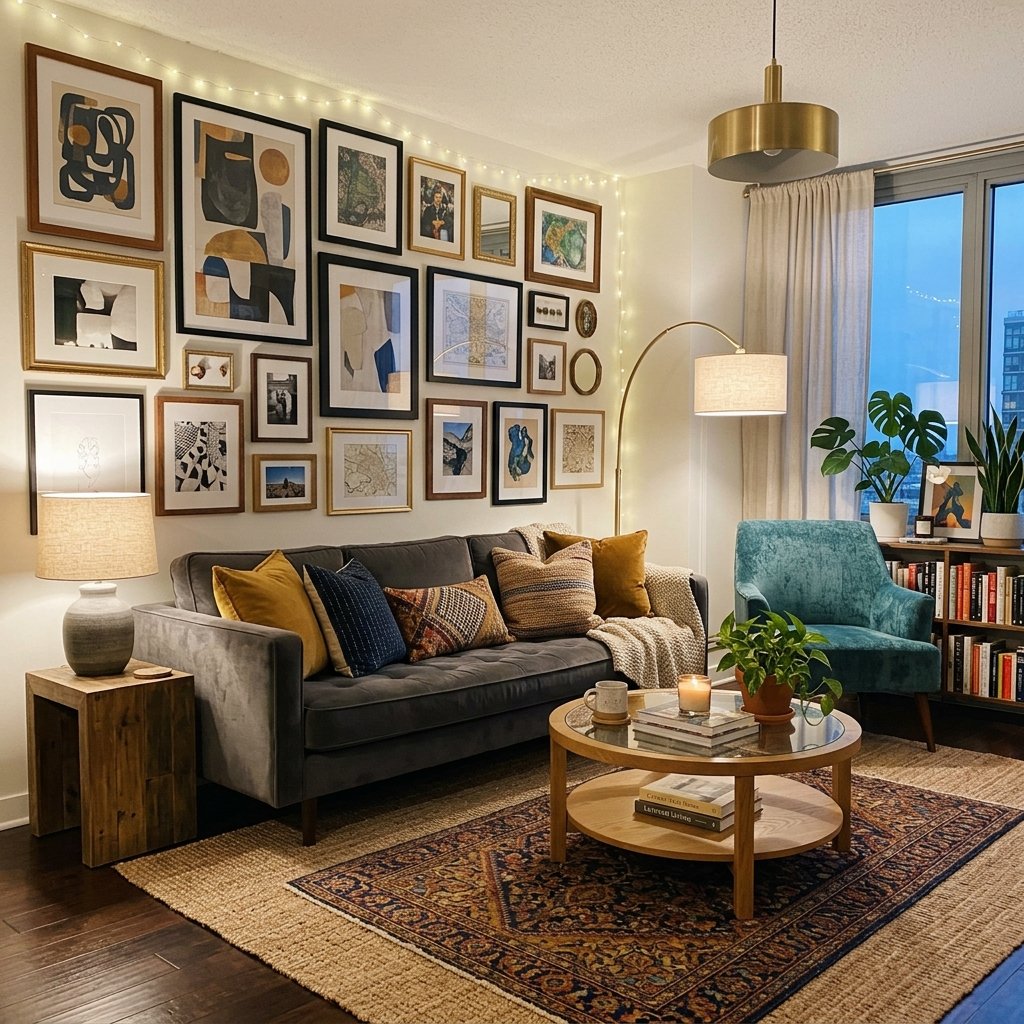
Most rental decor advice stops at throw pillows and string lights, as if the real design decisions only start once someone owns the walls. That’s backwards. A rental with no permission to paint, drill, or renovate can still look like it was designed on purpose, because almost none of the details that read as custom actually require permanent changes. They require the right sequence of decisions and a willingness to spend a little more on a few things instead of a little on everything.
This guide focuses on the specific tricks that make a rented space feel considered rather than temporary, all of them fully reversible at move-out.
Why Rentals Usually Look Unfinished
Walk into most apartments and the giveaway isn’t the furniture. It’s the overhead light doing all the work, a rug too small for the seating area, and a blank wall where art should be because nobody wanted to commit to nail holes. None of these are landlord restrictions. They’re default choices that happen when a space feels temporary, and they’re the easiest things to fix without touching a single wall.
Layer Lighting Instead of Relying on the Overhead Fixture
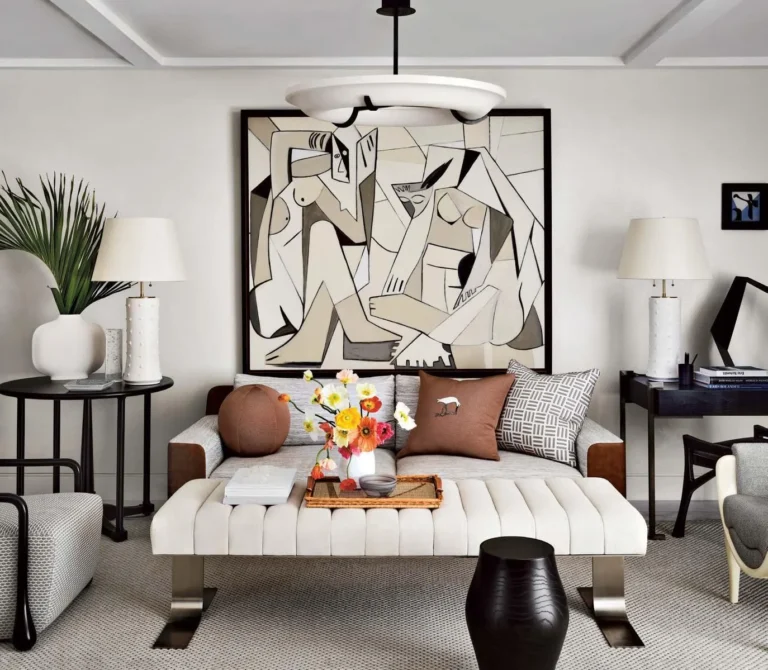
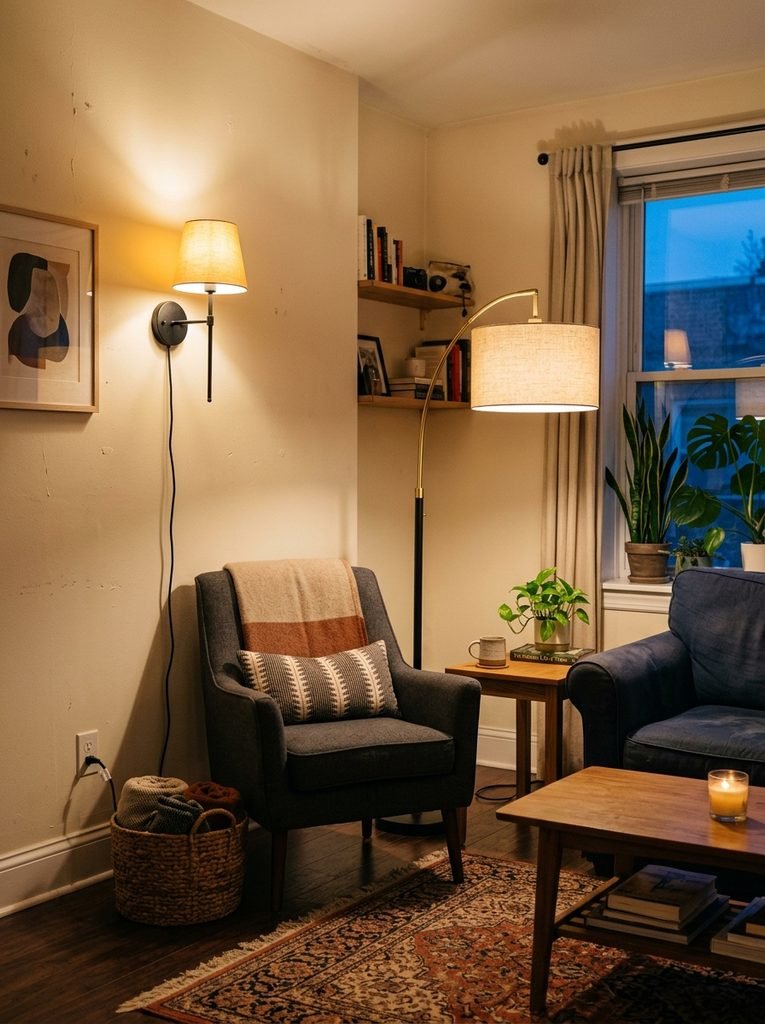
Builder-installed overhead lighting is almost always a single flat source, and it’s one of the fastest ways to make a room feel like a rental rather than a home. Custom-feeling spaces rely on layered light: a floor lamp in one corner, a table lamp near seating, and a smaller accent light somewhere the overhead fixture doesn’t reach.
Plug-in wall sconces solve the biggest rental problem here, since they mount with adhesive strips or a single small hook and run on a cord tucked along the baseboard, no electrician or landlord approval required. Swapping a harsh white bulb for a warmer temperature bulb in every fixture also does more for the mood of a room than most people expect, and it costs less than a single throw pillow.
Build a Gallery Wall With Hardware That Comes Back Off
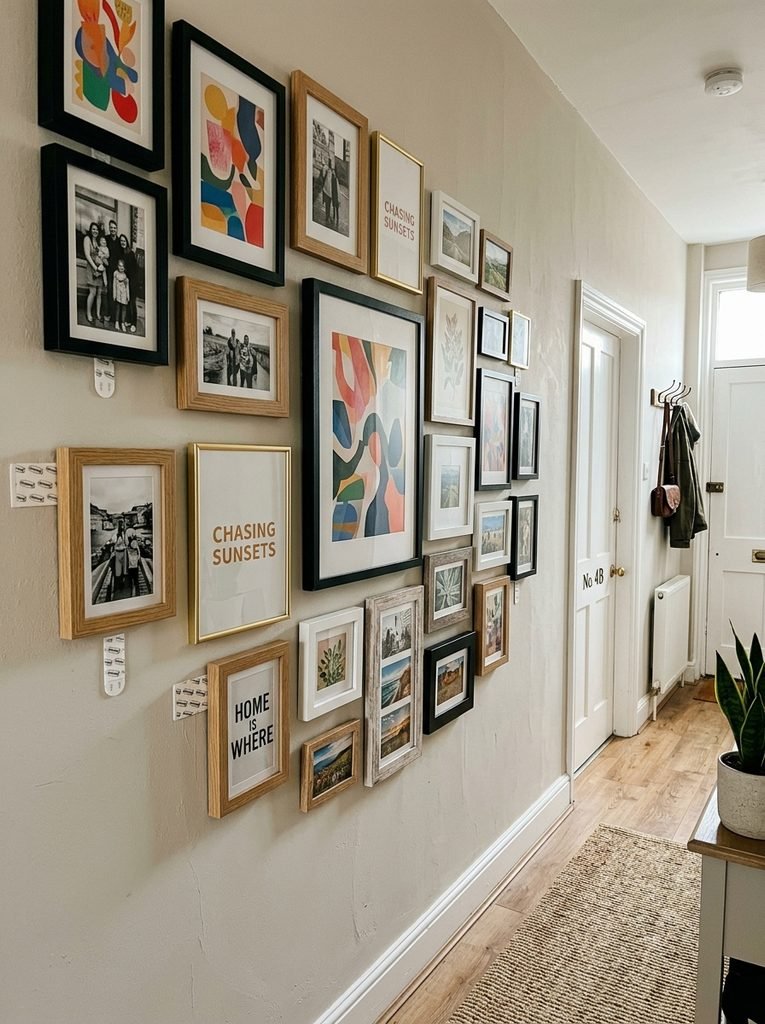
An empty wall is one of the clearest signs a space still feels temporary, and it’s usually left empty out of fear of losing a deposit over nail holes. Command-style hooks rated for framed art, along with removable adhesive strips designed for heavier pieces, solve this without a single hole. A gallery wall built this way looks exactly like one built with a hammer, as long as the spacing between frames stays consistent rather than random. Uneven gaps are what make a gallery wall look cluttered instead of curated, a detail worth getting right before hanging anything permanently or otherwise.
Mixing two or three frame finishes, rather than buying a matching set, also reads as more collected and less like a single trip to one store.
Add Architectural Detail With Rugs Instead of Renovation
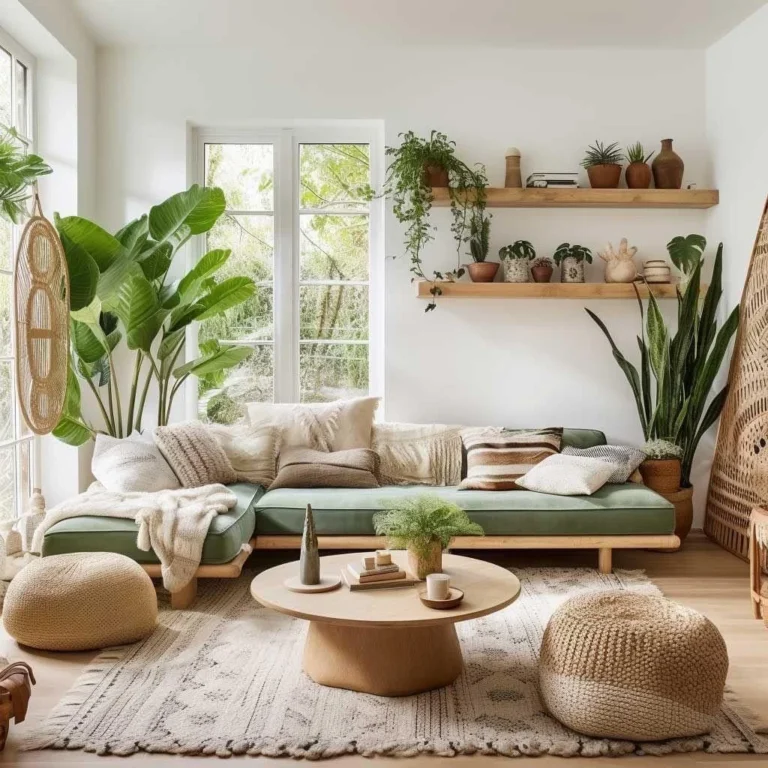
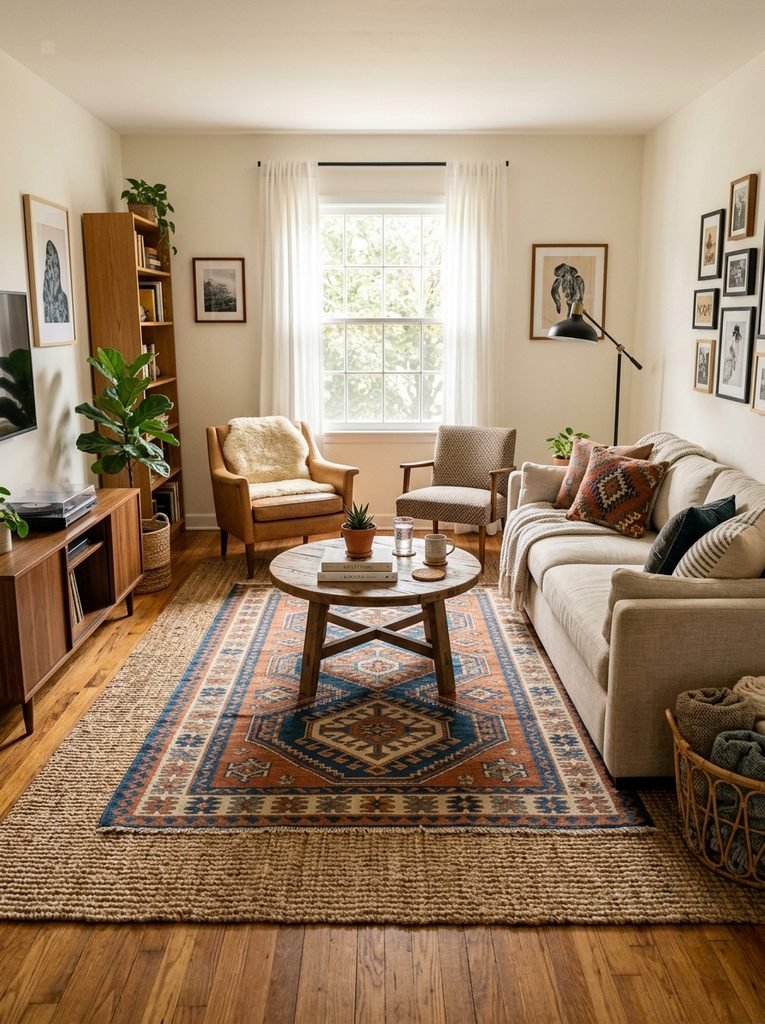
Molding, wainscoting, and statement flooring are usually off the table in a rental, but a large rug does a surprising amount of the same visual work. Most rentals are furnished with a rug that’s too small, which makes the whole seating area look like it’s floating in the middle of an empty room. Sizing up so that at least the front legs of every major piece of furniture sit on the rug instantly makes the layout look intentional.
Layering two rugs, a larger jute or flatweave base topped with a smaller patterned rug, adds texture and visual depth in the same way a stone or wood floor detail would in an owned home, without a single tool involved. This is one of the lowest-effort, highest-impact swaps in a rental, since most people already own a rug that’s simply too small for the room it’s in.
Use Removable Wallpaper on One Wall, Not the Whole Room
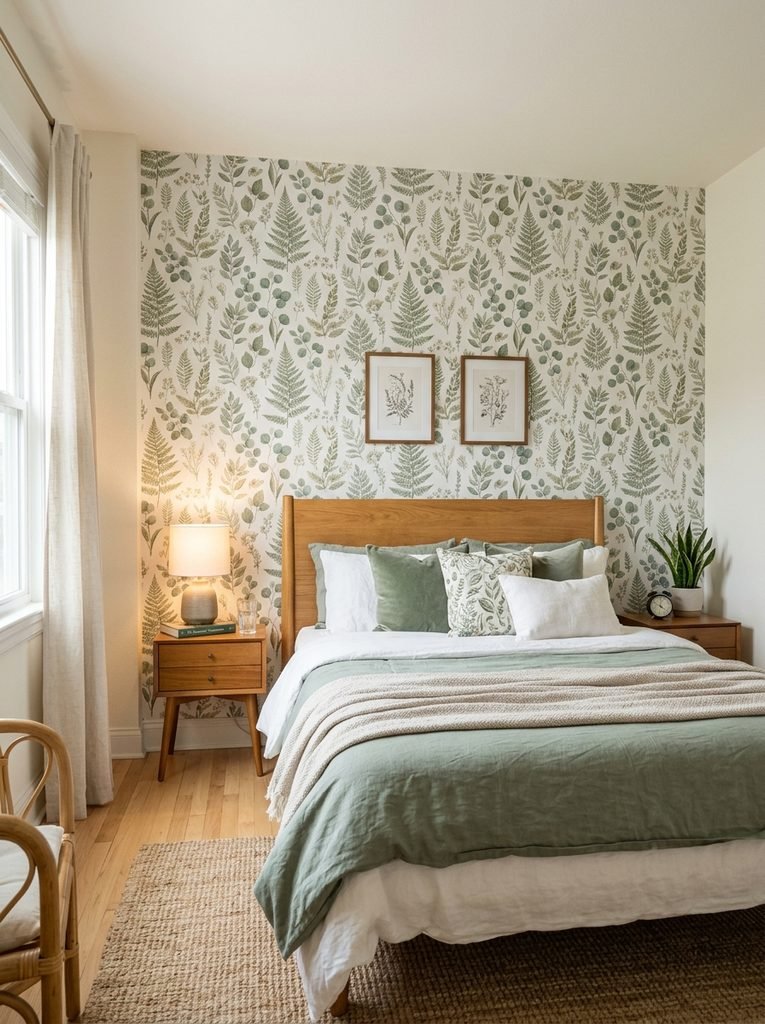
Peel-and-stick wallpaper has improved enough that a single accent wall, rather than an entire room, is often the better choice for a rental. One wall behind a bed, a sofa, or a dining table gives a strong material moment without the cost, time, or eventual removal effort of papering four walls. Choosing a subtle grasscloth-look or a soft botanical print reads as more custom than a bold, high-contrast pattern, which can look more like a temporary decorating trend than a considered design choice.
Removable wallpaper also pairs well with a floating shelf or two mounted with a small anchor, since the pattern gives the shelf’s contents a backdrop instead of a blank wall.
Swap What Comes Off, Keep What’s Underneath
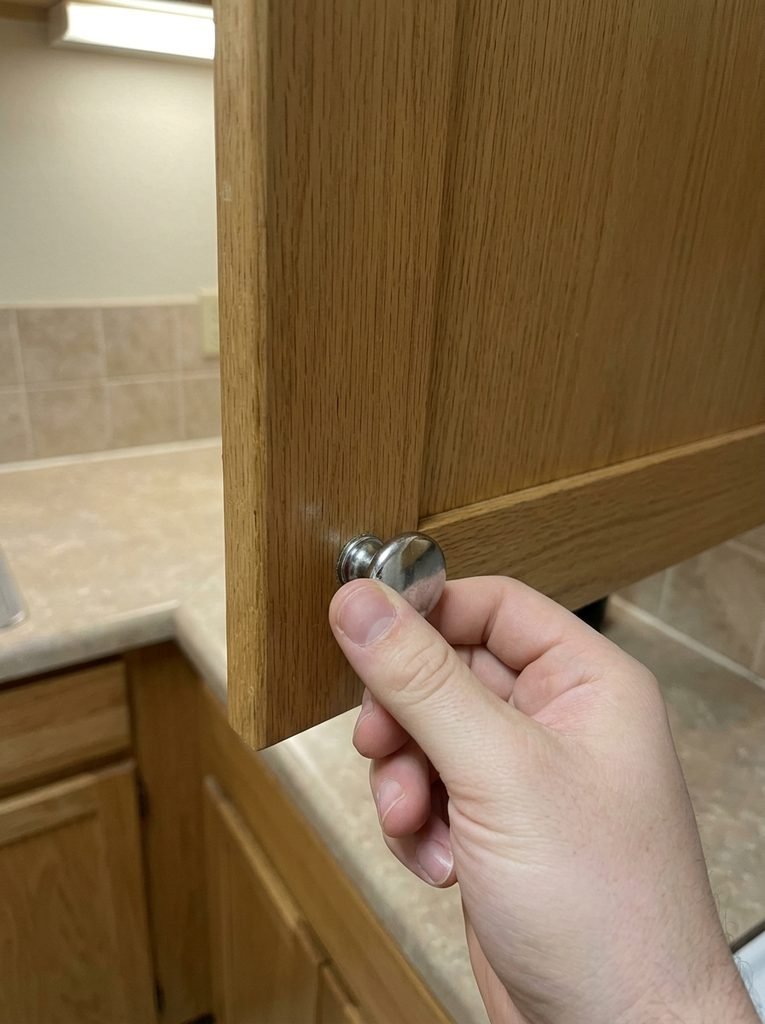
Kitchens and bathrooms carry the most obviously rental-grade finishes in most apartments, usually plain builder hardware and a basic faucet. The trick here isn’t replacing anything permanently. It’s swapping the visible hardware for something better and keeping the original pieces in a labeled box for move-out.
Cabinet pulls and knobs are held on with a single screw in almost every case, so switching them for a brass or matte black option takes an afternoon and completely changes how the cabinetry reads. The same goes for a plain white switch plate or outlet cover, which can be swapped for a matching metal finish in minutes. None of this touches the lease, and all of it reverses in the same afternoon it took to install. For more ways to apply this kind of small, reversible upgrade throughout a kitchen, this guide to affordable kitchen upgrades covers several worth trying alongside a hardware swap.
Choose One Investment Piece Instead of Filling the Room With Basics
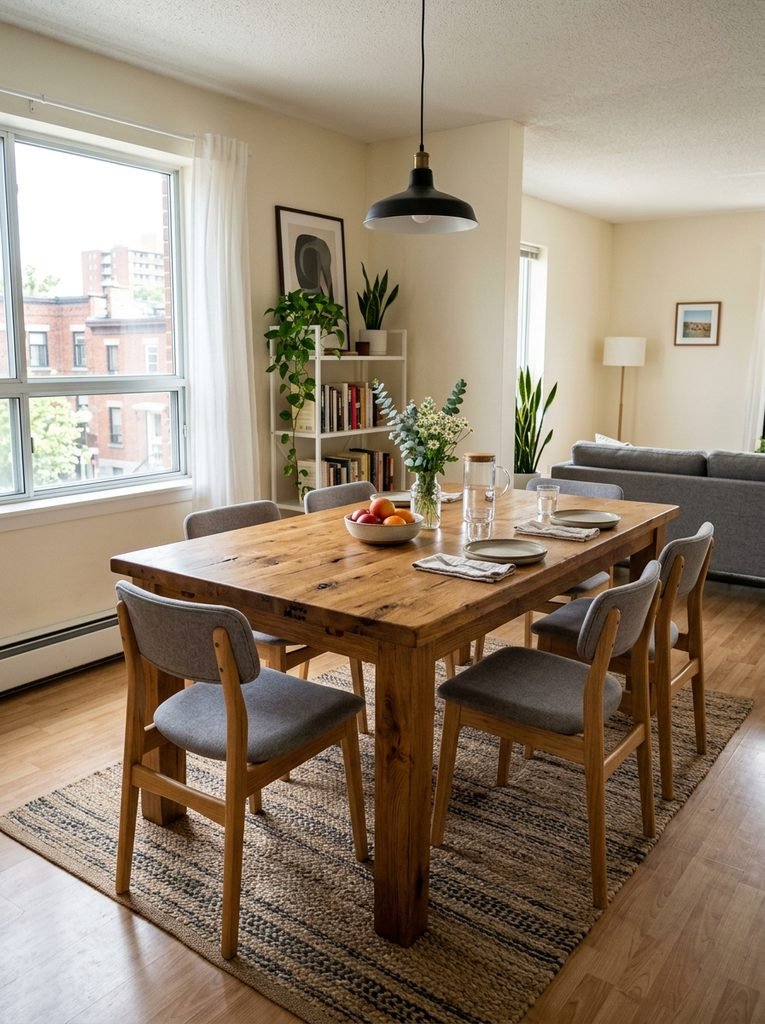
Rentals often end up furnished entirely with budget pieces bought all at once for move-in, which tends to make a room look uniformly inexpensive rather than uniformly cohesive. A more effective approach is choosing one piece, a well-made sofa, a solid wood dining table, or a substantial mirror, and letting everything else around it be simpler and less expensive.
That single piece becomes the anchor the rest of the room is judged against, and a few budget-friendly accessories read as intentional and layered instead of cheap when they’re placed next to something with real weight and quality. This is also the piece worth taking to the next apartment, since it’s the one element that isn’t tied to any specific rental’s layout or finishes.
Coordinate Metal Finishes Across Everything Removable
A kitchen with brass cabinet hardware, a bathroom with chrome fixtures, and a living room with black lamp bases and gold picture frames reads as scattered no matter how nice each individual piece is. Picking one dominant metal finish across every item that’s easy to change, hardware, lamps, frames, curtain rods, and repeating it throughout the apartment creates the sense of a unified design plan rather than a collection of separate purchases.
This is one of the least expensive tricks in this entire list, since it doesn’t require buying more, only being more deliberate about which finish gets chosen each time something is replaced.
Handle Curtains and Furniture Placement With Renter-Specific Hardware
Curtain height and length matter as much in a rental as anywhere else, and a tension rod mounted a few inches above the window frame, paired with floor-length panels, achieves the same visual lift as a drilled-in rod without a single hole. For a deeper look at getting the proportions right, this breakdown of common curtain mistakes covers the specific height and length details worth getting right.
Furniture placement deserves equal attention, particularly anything freestanding and tall, like a bookcase or dresser. Anti-tip anchor kits designed for rentals attach with adhesive rather than screws into the wall, and following basic anchoring guidance from the Consumer Product Safety Commission is worth doing regardless of whether a space is owned or leased, since tip-over risk doesn’t change based on the lease.
Mistakes That Keep a Rental Looking Temporary
A handful of habits undo an otherwise well-decorated rental, even after time and money have gone into the room.
- Leaving the original blinds as the only window treatment, with no curtains layered over them.
- Buying furniture sized for a showroom photo rather than measured against the actual room.
- Skipping wall decor entirely out of hole-anxiety, rather than using the removable hardware built for exactly this situation.
- Mixing three or more metal finishes across visible hardware and fixtures with no unifying choice.
- Treating storage bins and organizers as decor, when most of them read as utilitarian rather than styled.
Most of these cost nothing to fix beyond a bit of planning before the next purchase.
Bringing It All Together
A rental can look custom designed without a single permanent change, as long as the effort goes into the details that actually carry visual weight: layered lighting, a properly sized rug, hardware finishes that repeat on purpose, and a wall that isn’t left blank out of caution. Pick two or three of these to start, rather than everything at once, and the space will start reading as designed rather than simply lived in. Anyone working with a particularly tight footprint may also find it useful to pair these tricks with a layout-focused approach to studio living, since proportion and furniture placement matter just as much as the finishes themselves.