
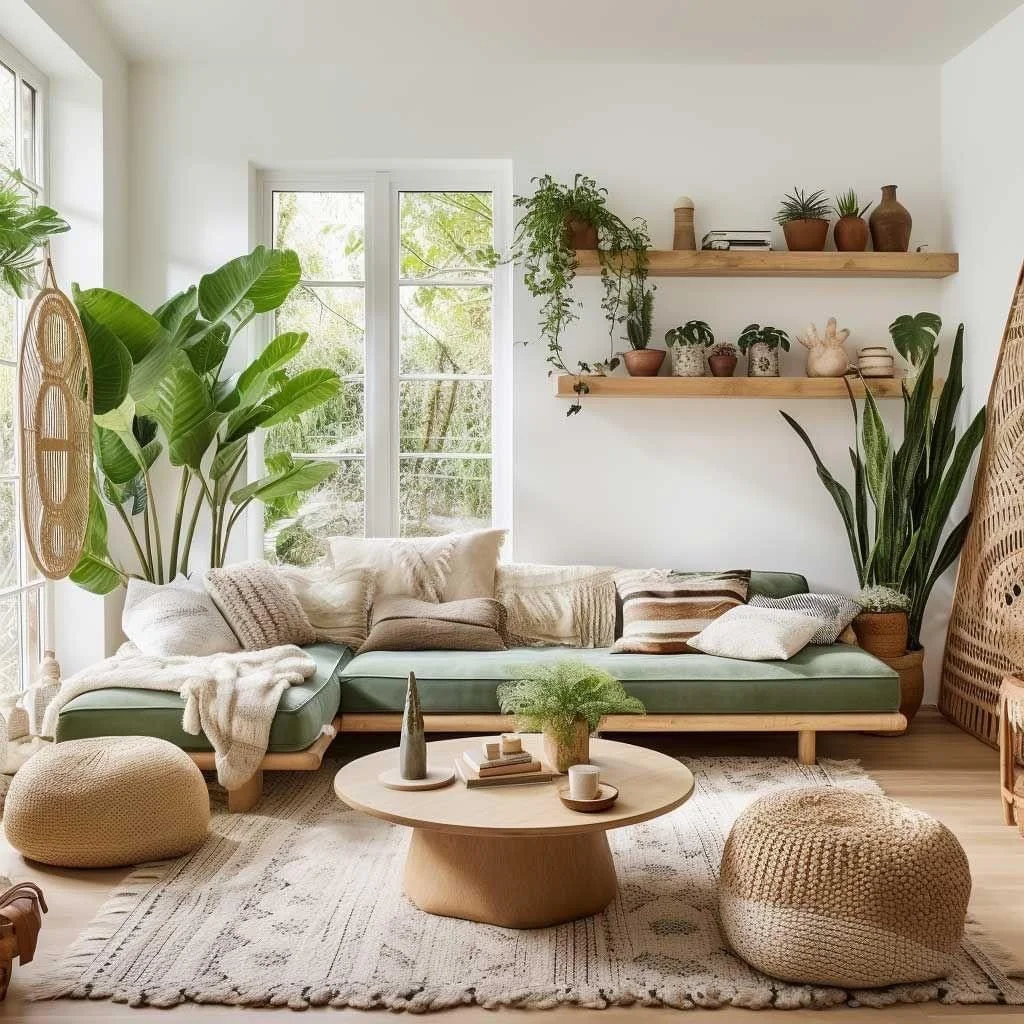
Minimalist home decor is often mistaken for empty rooms, hard white walls, and furniture chosen only because it looks simple. A calm luxury home feels edited, comfortable, and intentional, with enough empty space for the eye to rest while texture and warmth keep it personal.
Do not remove everything you own. Decide what deserves to stay visible, then give those pieces room to matter. Warm neutrals, natural materials, soft lighting, good proportions, and restrained styling can make an ordinary room feel polished without turning it into a showroom.
If you want that quiet, expensive-looking effect, start with these ten minimalist home decor tips. Each one focuses on a practical decision you can make in a bedroom, living room, entryway, or open plan space.

Start With a Warm Neutral Color Story
A minimalist room usually becomes calmer when its colors belong to the same family. Instead of combining bright white with several unrelated accent colors, build a small palette from warm white, ivory, beige, taupe, greige, or soft brown.
A useful approach is to choose one dominant wall color, one supporting furniture tone, and one darker accent. For example, warm ivory walls, oatmeal upholstery, and walnut or dark bronze details can create contrast without visual noise.
Do not assume every minimalist room needs to be white. A muted sage, dusty clay, soft mushroom, or warm gray can work just as well when the rest of the room stays restrained. Architectural Digest notes that minimalist interiors are often associated with clean lines, limited ornament, neutral colors, natural materials, and purposeful design, but the style does not have to follow one rigid color formula.
For a luxury feel, pay attention to undertones. Two beige pieces can look mismatched if one is yellow-based and the other is pink-based. Test large color samples beside your flooring, curtains, and largest furniture piece before committing.
Styling tip: Keep most of the room within two or three closely related tones, then use one deeper shade for definition.

Choose Fewer Pieces With Better Visual Weight
Minimalism becomes more luxurious when furniture looks deliberate rather than merely sparse. Instead of buying several small pieces to fill empty corners, choose fewer items that have the right scale and presence.
A substantial sofa, solid wood coffee table, wide upholstered headboard, or sculptural floor lamp can become the anchor of a room. The rest of the decor can then support that piece instead of competing with it.
In a bedroom, a simple bed with a substantial headboard can look more refined than a bed surrounded by many small decorative pieces. In a living room, one generous sofa with two well proportioned chairs often looks calmer than a collection of mismatched seating.
The luxury effect comes from editing and scale, not from buying the most expensive version of everything.
Styling tip: Before adding a new piece, ask what job it performs. If it does not provide function, comfort, storage, or a strong visual purpose, it may not need to be there.

Use Clean Furniture Shapes Without Making the Room Feel Cold
Clean lines are a useful foundation for minimalist decor, but a room can become sterile when every surface is hard, straight, and glossy. The solution is to balance simple silhouettes with softer materials.
Try a low profile sofa with rounded edges, a rectangular wood table with a natural grain, or a simple upholstered bed paired with a curved bedside lamp. These small contrasts keep the room visually quiet while adding character.
You can also mix one or two curved forms into an otherwise linear space. A round mirror, curved chair, cylindrical vase, or softly shaped ottoman can break up a room filled with rectangles without making it feel busy.
Avoid choosing every piece from the same matching collection. A perfectly coordinated furniture set can sometimes look less collected and more temporary. Minimalist rooms often feel richer when the materials and shapes relate without being identical.
Styling tip: Let one shape dominate the room and use one contrasting shape as a supporting detail.

Create Visual Breathing Room Around the Furniture
One of the biggest differences between a calm minimalist room and a crowded one is not the number of objects. It is the amount of space between them.
Give major furniture enough breathing room to remain visually distinct. Avoid pushing every piece against a wall simply because the center of the room feels empty. An open area can be useful. It gives the eye somewhere to rest and makes the furniture feel more intentional.
In a living room, keep the main walkway clear and make sure doors, drawers, and windows can open without colliding with furniture. In a bedroom, leave enough space around the bed to move easily and avoid filling every corner with storage furniture.
Wall-mounted lights and floating nightstands can be useful when floor space is limited. A larger room can benefit from a properly sized rug that visually connects the seating rather than several small rugs scattered around it.
For more small space guidance, Homedecorio’s luxury minimalist bedroom ideas focus on proportion, floating storage, layered lighting, and clutter control in compact rooms.
Styling tip: Photograph the room from the doorway. If your eye immediately lands on several competing objects, remove or reposition one before adding anything else.

Let Texture Do the Decorating
A calm minimalist room still needs visual interest. Texture is one of the easiest ways to create it without adding more colors or decorative objects.
Layer smooth and rough surfaces together. Think linen curtains beside a matte wall, a wool rug under a sleek coffee table, a ceramic vase on a wood console, or soft bedding against a woven throw.
In a living room, you might combine a cotton or linen sofa with a wool rug, a chunky throw, and a natural wood table. In a bedroom, crisp bedding can be softened with a quilt, woven bench, or textured curtain.
The important part is restraint. You do not need five different fabrics on every surface. Two or three clearly different textures are often enough to make a neutral room feel rich.
Texture also helps prevent the common problem of minimalist interiors looking flat in photographs. When light moves across linen, wood grain, stone, and matte ceramics, the room gains depth without requiring a busy color scheme.
Styling tip: For every major smooth surface, look for one nearby material with a different tactile quality.

Bring in Natural Materials for Quiet Luxury
Natural materials give minimalist interiors warmth and character. Wood, stone, linen, wool, rattan, ceramic, and aged or brushed metals can all add depth while keeping the palette restrained.
Wood is particularly useful because it softens white and gray rooms. A walnut console can add richness to a pale living room, while light oak can make a bedroom feel more relaxed. Stone can appear through a coffee table, tray, lamp base, or small accent rather than an expensive renovation.
Plants can also work well, but they should be treated as part of the composition. One tall plant in an empty corner can be more effective than several small plants scattered across shelves.
If you prefer a more polished look, combine natural materials with one refined finish. For example, warm oak with brushed brass, travertine with black metal, or linen with dark wood can feel sophisticated without looking overly formal.
Styling tip: Choose one dominant natural material and repeat it two or three times so the room feels connected.

Make Lighting Part of the Design
Good lighting can change how minimalist decor looks after sunset. A room that feels elegant in daylight can feel flat if every corner depends on one bright ceiling fixture.
Create layers instead. Use the main ceiling light for general visibility, then add a floor lamp, table lamp, wall light, or accent light where you actually need it.
Warm bulbs around 2700K to 3000K are commonly useful for living areas and bedrooms because they create a softer evening atmosphere. Dimmers are even better when available because they let the same fixture serve different moments.
The fixture itself should also support the room. A simple opal-glass lamp, slim metal floor lamp, or sculptural pendant can become a decorative focal point without needing additional wall decor.
For bedrooms, keep the light source soft and avoid placing a very bright fixture directly in the sightline from the bed. In living rooms, distribute light across different heights so the room does not have one bright center and dark corners.
Styling tip: Turn on every light in the room after sunset and remove any fixture that creates harsh glare or an unnecessary bright spot.

Use One Strong Artwork Moment Instead of Many Small Pieces
Minimalist walls do not need to be completely bare. They need enough restraint for the artwork to have impact.
One oversized abstract print, a large black and white photograph, a textured canvas, or a simple sculptural piece can create a focal point without filling the wall with small frames.
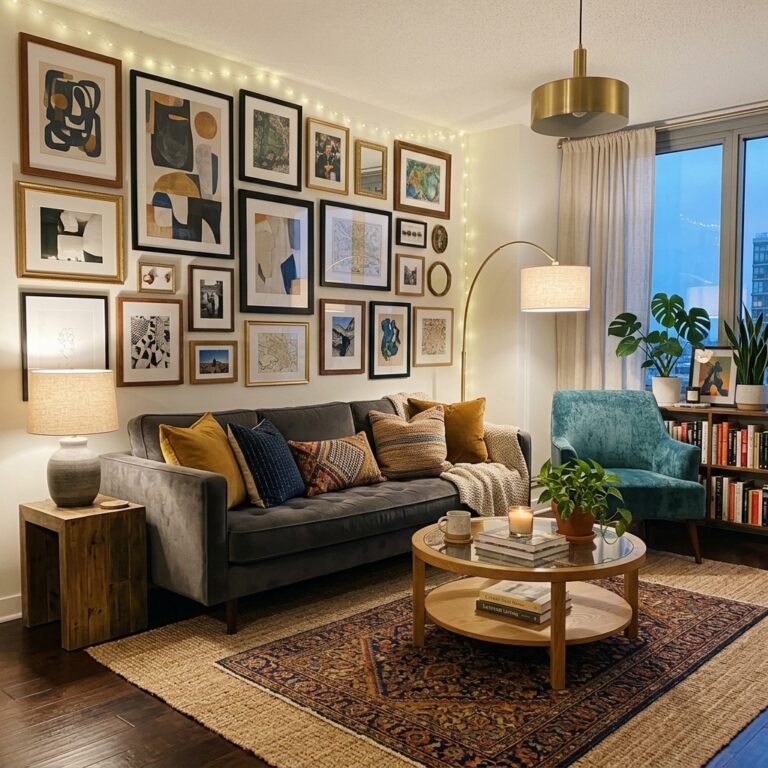
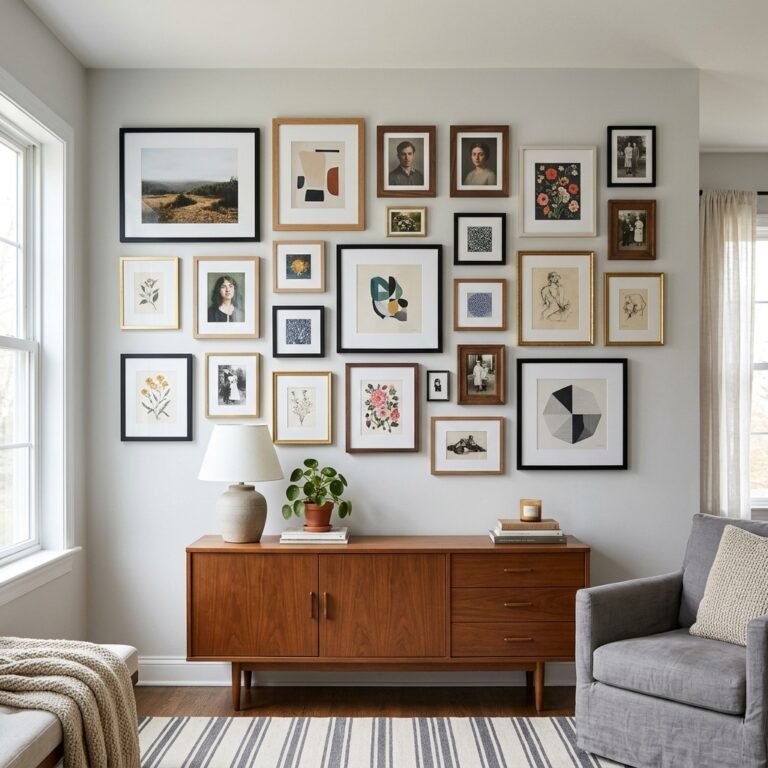
Scale matters. A tiny artwork above a large sofa can look lost, while one appropriately sized piece can visually anchor the entire seating area. If you prefer a gallery wall, keep the frame finishes, spacing, or color palette consistent so the arrangement reads as one composition.
Styling tip: Stand several feet away from the wall before deciding. The artwork should be noticeable from across the room without dominating everything around it.

Keep Storage Visually Quiet
Luxury minimalism is difficult to maintain when every day objects remain visible on every surface. Mail, chargers, remote controls, toiletries, paperwork, and small appliances can quickly undo an otherwise calm design.
The answer is not to hide everything in expensive built-ins. Start with practical storage that matches the room. Closed baskets, drawers, storage ottomans, cabinets with simple fronts, and bedside drawers can keep necessary items accessible without making them part of the visual composition.
Open shelving can work too, but it needs editing. Instead of filling every shelf, leave sections empty and group a few books, ceramics, or plants together. The empty areas are part of the design.
Use the same principle on countertops. In a kitchen or bathroom, keep the items you use every day within reach, but group them neatly on a tray or in one container rather than spreading them across the entire surface.
Styling tip: Choose a permanent home for the five items that create the most daily clutter. Good organization is often more effective than more decoration.

Finish With a Small Number of Refined Details
The final step is not adding more decor. It is choosing the few details that make the room feel finished.
A brushed metal tray, sculptural bowl, thick linen curtain, quality-looking switch plate, substantial mirror, or single ceramic vase can provide the polished finish that minimalist rooms sometimes lack.
Repeat finishes carefully. If your main lighting uses brushed brass, a small brass frame or hardware detail can echo it. If the room is built around walnut and black metal, avoid introducing several unrelated finishes just because individual objects look attractive.
Leave some surfaces intentionally empty. An empty console can look more luxurious than one covered with accessories when the furniture itself has strong proportions.
You can also use scent, soft textiles, and practical comfort as part of the final layer. A beautiful room should still be easy to live in. The goal is not to create a space where nobody can touch anything.
If you are decorating a rental, Homedecorio’s guide to luxury apartment decor tricks has additional reversible ways to make a space feel custom designed without permanent changes.
Styling tip: After styling the room, remove one decorative item from every major surface. If the room still feels complete, stop there.

How to Make Minimalist Decor Feel Luxurious Without Looking Expensive
The easiest way to create this look is to stop treating luxury as a collection of expensive products. Luxury is often perceived through proportion, consistency, material quality, lighting, and the amount of visual noise in a room.
A simple room can feel refined when the curtains hang at the right height, the rug is large enough for the furniture, the lighting is layered, and the colors relate to one another. A more expensive room can still feel chaotic if every surface is filled and every item competes for attention.
Start with the largest visual decisions first. Edit the furniture, establish the color palette, improve the lighting, and organize visible storage. Only then add artwork and accessories.
This order matters because decorative objects cannot fix poor proportions or overcrowded layouts. When the foundation is right, you need fewer finishing pieces to make the room feel complete.
FAQs
Is minimalist home decor the same as a luxury interior?
Not necessarily. Minimalism focuses on intentionality, function, and reducing unnecessary visual clutter. Luxury can be expressed through materials, craftsmanship, scale, lighting, and refined details. Combining the two creates a polished look without requiring every item to be expensive.
What colors work best for a calm minimalist home?
Warm white, ivory, beige, taupe, greige, soft gray, muted brown, and gentle earthy tones are easy starting points. You can also use muted greens or blues if they fit the overall palette. The key is keeping the colors related rather than collecting many unrelated accents.
How do I make a minimalist living room feel cozy?
Start with a properly sized rug, comfortable seating, warm layered lighting, and two or three contrasting textures. Add one meaningful artwork or sculptural object instead of filling the room with accessories. Natural wood and soft textiles can also prevent the space from feeling cold.
How many decorative items should I have in a minimalist room?
There is no fixed number. A better rule is to judge each surface by its visual weight. A console may need one large object, three small objects, or nothing at all. If several items compete with one another, remove one and reassess.
Can minimalist decor include color?
Yes. Minimalism does not require a colorless home. A single muted accent color can work beautifully against warm neutrals. Even a stronger color can remain minimalist when it is used intentionally and repeated sparingly.
Conclusion
A calm, luxury minimalist home is not created by stripping a room until nothing remains. It comes from making better decisions about what stays, how those pieces relate, and how much visual space they receive.
Start with a restrained color palette, choose furniture with good proportions, leave breathing room around major pieces, and use texture and natural materials to add warmth. Then layer the lighting, give one artwork moment enough space to matter, and keep every day clutter out of sight.
Most importantly, let the room remain personal. A few books you actually read, artwork you love, a favorite chair, or a meaningful object can make a minimalist space feel like home rather than a showroom.
When every visible piece has a reason to be there, simplicity starts to feel less like a limitation and more like luxury.
1 comment