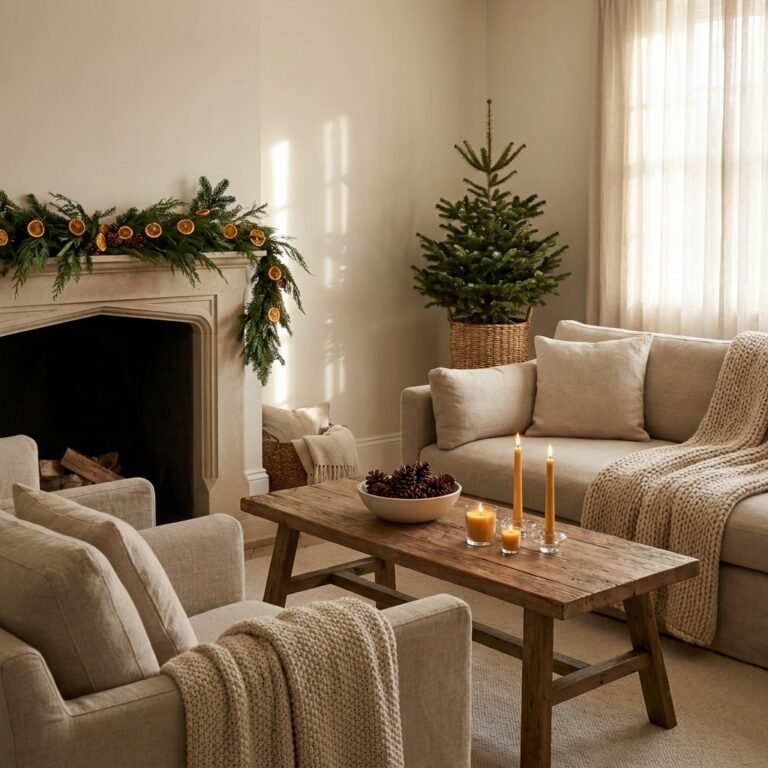

Think of the last living room that felt properly cozy at Christmas. Chances are the feeling came from a few things: a low glow from a lamp, a thick blanket within arm’s reach, a tree in the corner with branches you could smell or at least imagine smelling. It probably did not come from having forty seasonal objects spread across every flat surface.
Cozy and cluttered get confused because both involve “a lot going on.” The difference is what the room is made of. Coziness comes from touch, warm light, and a sense of enclosure. Clutter comes from the sheer number of separate things the eye has to process. This guide shows how to build the first without the second, room zone by room zone.
Where Cozy Actually Comes From
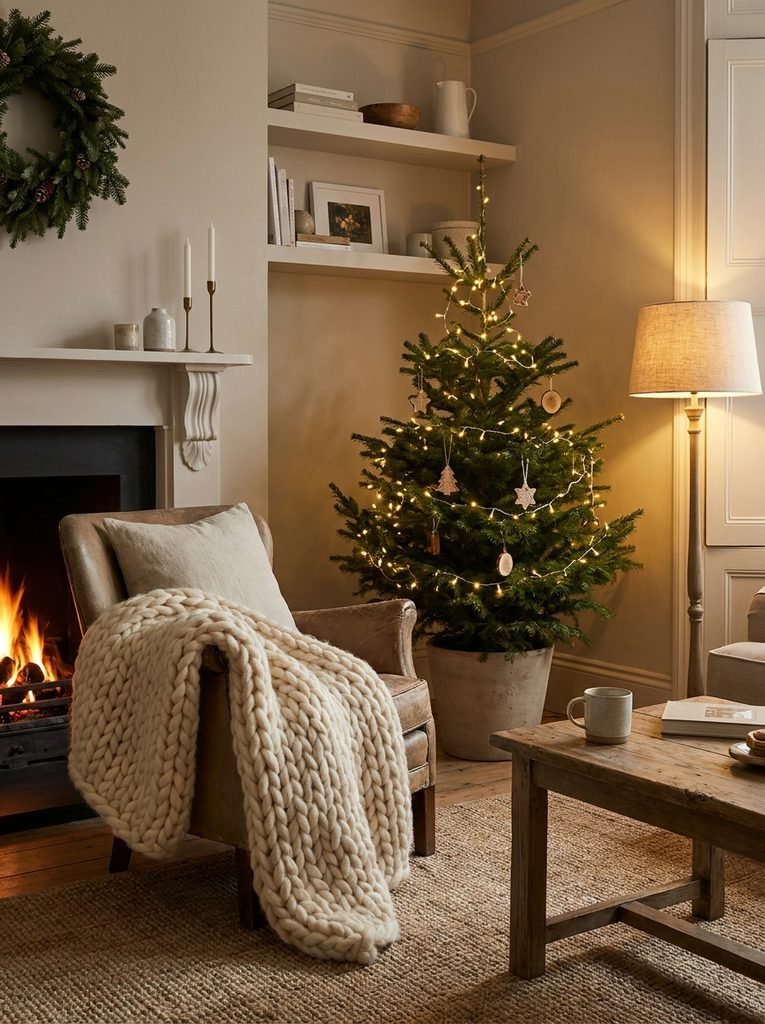
Before buying or unpacking anything, it helps to name the real sources of a cozy feeling. Four of them do nearly all the work.
- Texture you can touch: wool, bouclé, velvet, flannel, chunky knits.
- Warm, low light: lamps and string lights at or below eye level rather than a bright overhead fixture.
- A sense of enclosure: a rug that anchors the seating, curtains that soften the windows, a sofa with throws that invite sinking in.
- A few natural elements: greenery, wood, pinecones, citrus, or branches that bring the outdoors in.
Notice that none of these require a large number of decorations. If you invest in these four areas first, the room already feels seasonal, and every extra object has to earn its place.
Clear the Room Before You Decorate It
Seasonal decorating usually adds to a room that is already full. The fastest way to get a calmer result is to subtract first.
Take a slow walk around the living room and look at every flat surface: console, side tables, bookshelves, windowsills, and the coffee table. Ask which objects you would be happy to see covered by something festive. Those are the ones to pack away for the month. Candles, small trays, bowls, and extra frames are common candidates.
Hidden storage makes this easier. If the room lacks a place to tuck remote controls, game controllers, and everyday paperwork, a piece like those covered in living room storage furniture that looks like decor can keep daily life out of sight while the room is dressed up. Even a lidded basket helps.
The goal is to give each seasonal grouping some bare space around it. Space is what makes a grouping look deliberate.
Layer Textiles First, Then Add Decor
If you could only change one thing for the season, change the textiles. A sofa dressed in a chunky knit throw, a velvet pillow, and a wool blanket instantly reads as wintery, and it takes up no table space at all.
A simple approach is to choose three textile materials and repeat them across the room:
- A large chunky knit or wool throw draped over the sofa arm or folded on an ottoman
- Two or three pillow covers in velvet, bouclé, or a plaid wool, mixed with your existing pillows
- A flannel or sherpa blanket in a basket within easy reach
Pillow covers are the budget-friendly shortcut. You can swap the covers and keep your existing inserts, which means you only store flat fabric afterward. Pick covers in two tones from your palette plus one pattern, such as a small check or a subtle stripe, so the effect stays calm.
A rug can also change the mood. If your everyday rug is a cool tone, laying a smaller wool or sheepskin-style rug at the sofa’s edge adds warmth underfoot without replacing anything.

A Coffee Table With Three Objects
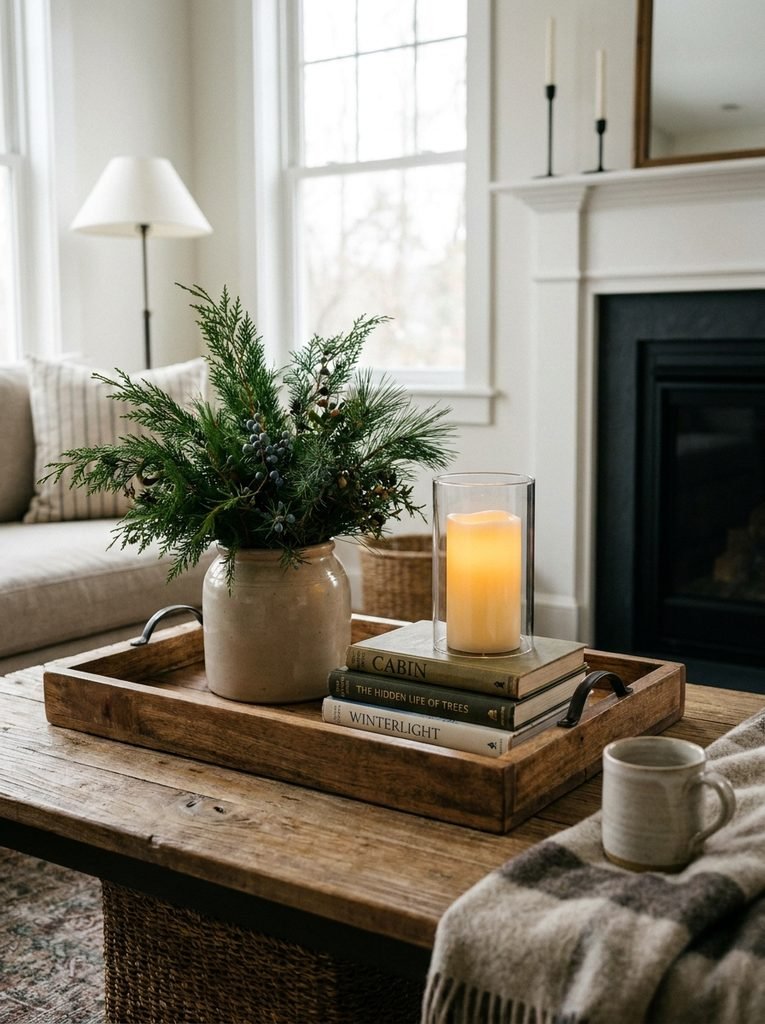
The coffee table is where seasonal clutter tends to gather fastest, because it is central and flat. A reliable formula is three objects on a tray, with the rest of the surface left open for mugs and books.
Try one of these combinations:
- Tray, small evergreen arrangement, and a stack of two books. Add a flameless candle if you want a glow.
- Wooden bowl of pinecones or ornaments, one candle, and a small piece of brass or ceramic.
- A low glass vase with cut branches, a short stack of books, and a coaster set.
Choose a height variation across the three pieces, with one taller, one medium, and one low. A tray corrals everything so it looks like one grouping rather than several scattered items.
A quick note on candles: if you use real flame, keep it away from greenery, paper, and fabric, and never leave it unattended. Flameless candles in a warm tone offer a similar look with less risk. The National Fire Protection Association publishes practical guidance at its holiday safety resource page.
Windows: Soft Light and One Simple Gesture
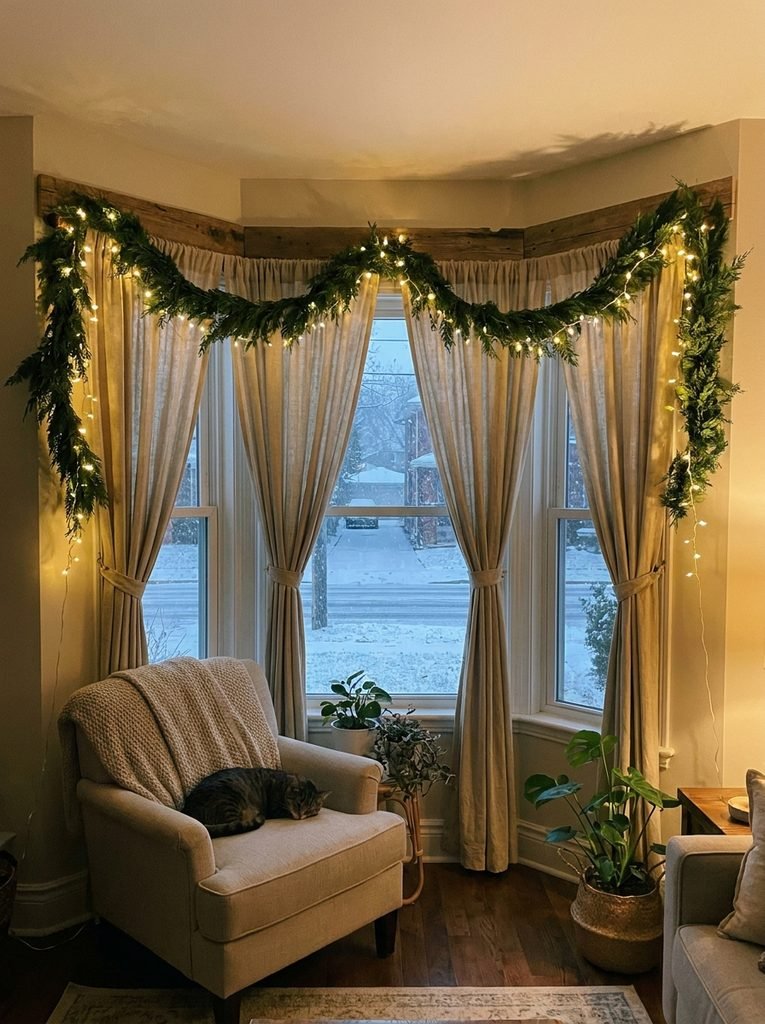
Windows are an underused part of Christmas styling. They frame the room, and at night they reflect lights back, doubling the glow.
Keep it to one gesture. Options include a single strand of warm white lights tucked along the top of the curtain rod, a narrow garland draped across the top of the window frame, or a wreath hung on each sash with simple ribbon. Avoid combining all three. Pick the one that suits the window’s shape.
If the curtains are light and sheer, lights behind them create a soft haze that looks especially pretty from inside and outside. For heavier curtains, a garland draped over the rod adds a natural line without hiding the fabric.
Windowsills can hold a short row of small items, such as three small glass jars with greenery, but only if the sill is deep enough and the room needs the extra detail. A bare sill is a perfectly good choice.
One Seasonal Shelf, Not Every Shelf
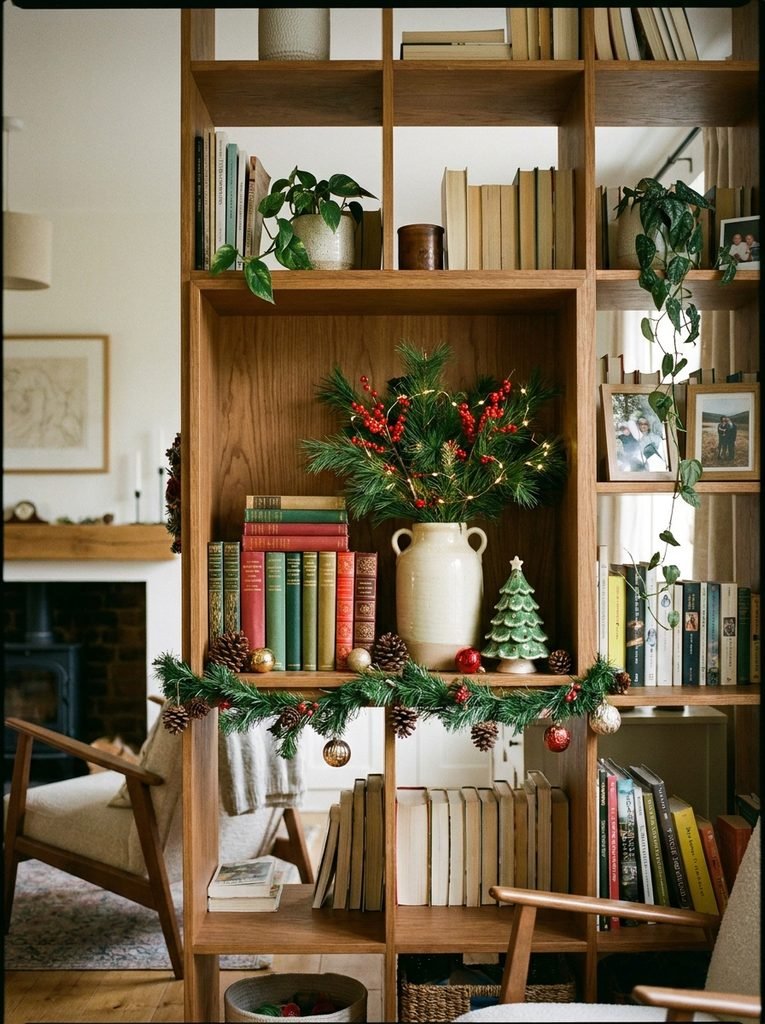
Bookshelves and open shelving invite overdecorating. A better approach is to pick one shelf, or one section, and treat it as the Christmas shelf. Leave the rest of the shelving as it is, perhaps with a single sprig of greenery tucked in.
On the chosen shelf, use no more than five items. For example, a small framed winter print, a vase with branches, a stack of books in seasonal colors turned spine-out, a ceramic tree, and a candle holder. Keep the colors tied to your palette so it looks coordinated.
For a console or sideboard, a similar rule applies. Lean one piece of art or a mirror against the wall, place a lamp on one side, and balance it with a low arrangement on the other. A strand of lights draped across the mirror frame adds sparkle without adding objects.
A Tree Corner That Doesn’t Take Over the Room
A tree is the largest single decoration, and it determines how crowded the room feels. Placement matters as much as decoration.
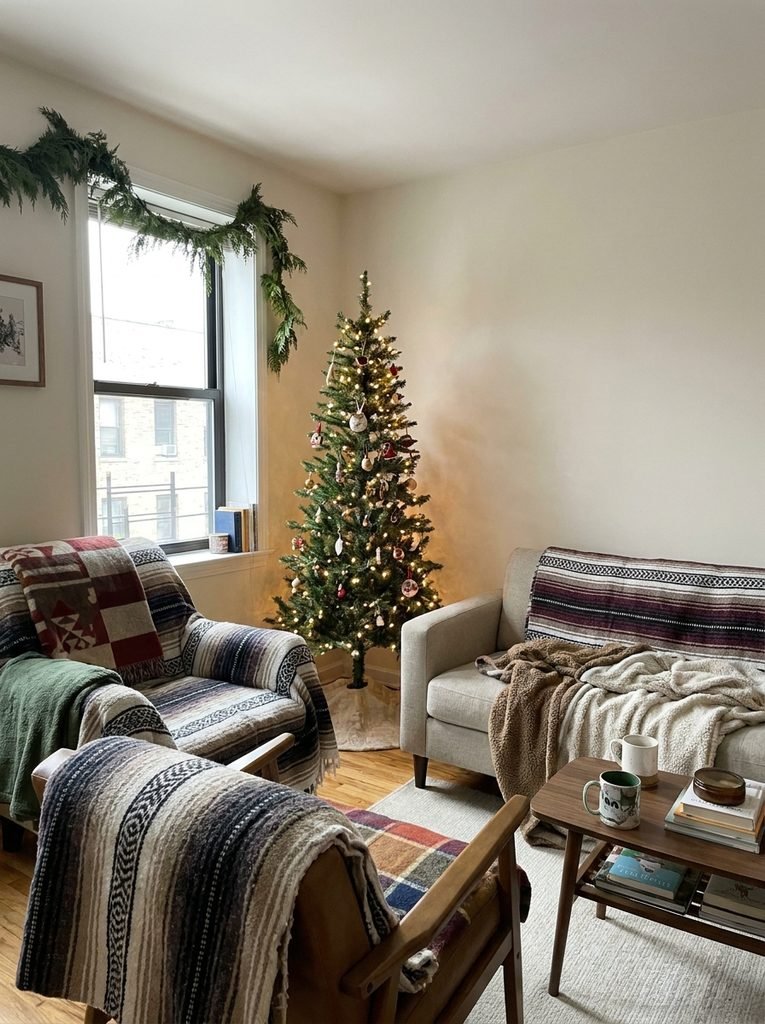
Pick a corner or an alcove near a window so the tree sits against walls rather than floating in the middle of the room. If foot traffic is an issue, a slim tree uses less floor space while still reading as a proper tree. Keep the tree at least three feet from fireplaces, radiators, and other heat sources, and make sure it does not block an exit.
On the tree itself, limit the palette to three or four colors and repeat them from the room. If you need help choosing tones that look good both in daylight and at night, the guide to living room color combinations that hold up after dark is a useful starting point.
Gifts under the tree can easily add to visual noise. Wrap them in two coordinating papers, such as kraft paper with a cream ribbon, rather than a dozen patterns. Or tuck gifts into a large basket beside the tree so they stay contained.
Light the Room in Layers
Lighting does more for coziness than almost any object, and it adds nothing physical to the room. The idea is to turn off the harsh overhead light in the evening and build the glow from several lower sources.
A useful combination includes:
- A floor lamp beside the sofa for reading light.
- A table lamp on a console or side table for mid-height glow.
- String lights on the tree, in a window, or along a shelf for sparkle.
- Flameless candles in a lantern or on the coffee table for a soft flicker effect.
Choose bulbs of a similar warm color temperature, typically around 2700K, so the room does not look patchy. Placing a dimmer on one or two lamps lets you adjust the mood as the evening goes on. The same principle appears in luxury apartment decor tricks that make rentals feel custom designed, where layered light does a lot to lift an ordinary room.
Always turn off tree lights and decorative lighting when you leave the house or go to bed.

Greenery That Goes Beyond Garland
Garland is a good tool, but it is not the only way to bring in greenery, and relying on it alone can lead to the same look in every room. A few alternatives add variety without more clutter.
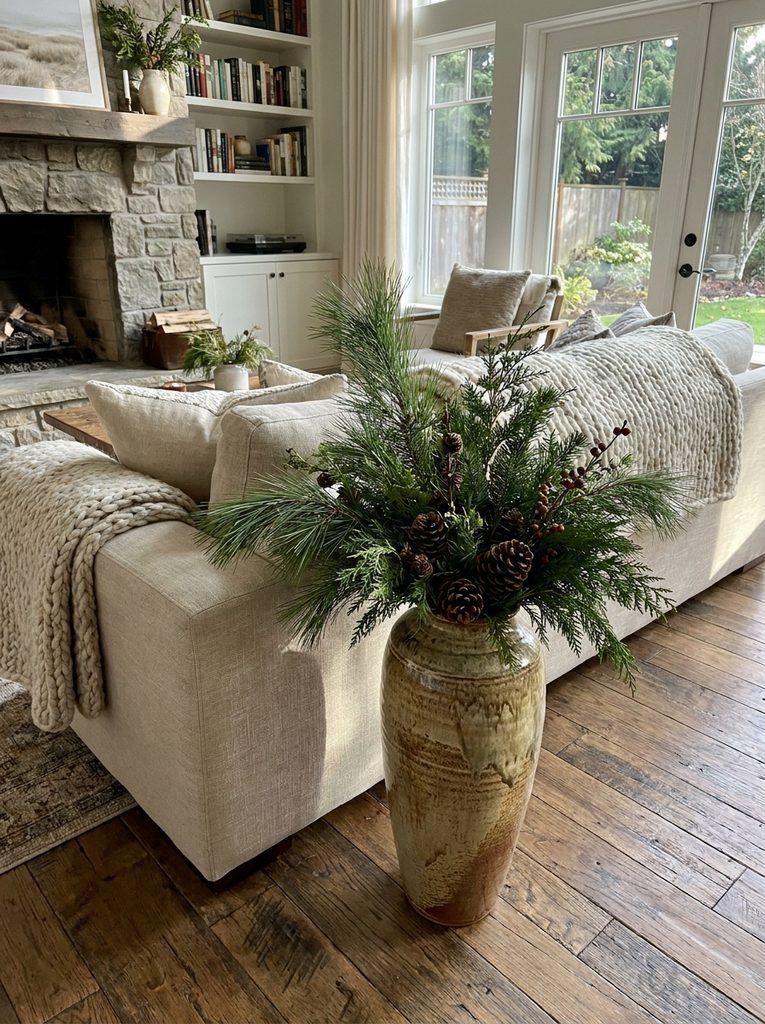
Cut branches in a large vase. Pine, cedar, fir, or eucalyptus in a tall ceramic vase near the sofa adds height and scent, and takes up almost no surface space.
A wreath on a mirror or cabinet. Hang a simple wreath with a ribbon on a mirror, or lean one against a sideboard.
A bowl of citrus or pinecones. Oranges, clementines, or pinecones in a wooden bowl look festive and natural. Replace the fruit as needed.
Dried elements. Bundles of dried grasses, wheat, or eucalyptus last through the season and need no upkeep.
Pick one or two of these rather than all of them. If your fireplace is also part of the room, follow the editing principle in the Christmas mantel guide and keep the mantel to a few well-chosen elements so it does not compete with the tree.
Three Color Plans for Three Types of Rooms
A small set of ready-made plans can save time. Match your choice to the room you already have.
Light and neutral rooms. Combine cream, soft green, natural wood, and a touch of brass. Rely on texture such as knits and linen rather than strong color.
Dark or moody rooms. Use deep green, burgundy, and antique gold. Velvet pillows, dark candles, and dried botanicals suit these spaces.
Colorful or eclectic rooms. Pick two colors already in the room, such as rust and teal, and repeat them in ribbons and pillow covers. Avoid adding a new color that does not appear anywhere else.
In all three, the principle is the same: borrow colors from what already lives in the room.
Small Living Rooms and Rentals
Small spaces feel crowded sooner, so the edit has to be tighter. Skip anything that requires floor space, and rely on vertical and soft elements.
A slim tree in a corner, a garland hung across a window, and a handful of textile swaps often provide enough seasonal feeling. Use removable adhesive hooks for wreaths and lightweight decorations, checking the manufacturer’s weight limits and surface guidance first.
If seating is limited, resist the urge to add a decorative chair or large basket. Instead, use a sofa tray as a small seasonal display, or swap your regular table lamp shade for a warmer tone.
A Gentle Edit Before Guests Arrive
On the day you host, walk through the room once more with one question: what is the eye landing on first? It should be something you chose, such as the tree, a lamp glow, or a wreath, rather than a pile of leftover items.
Remove anything that fights for attention. Pack stray boxes out of view, clear the coffee table of everyday clutter, and fluff the pillows. Put a small basket by the door or in a nearby room for the things guests bring in.
Then sit down on the sofa and look around. If your shoulders drop slightly, the room is doing its job. If something feels busy, take one item away, and check again.