Home Office Design Ideas That Make Working From Home Feel More Inspiring
Working from a laptop propped on a kitchen table can get the job done, but it rarely gets you excited to sit down each morning. A home office does not need a big budget or a spare room to feel like a place you actually want to work in. It needs light that flatters the space, a color story that matches how your brain works, and a few personal details that remind you this room belongs to you and not to a generic catalog.
This guide walks through the design choices that turn a home office from a place you tolerate into a space that quietly motivates you, room size and budget included.
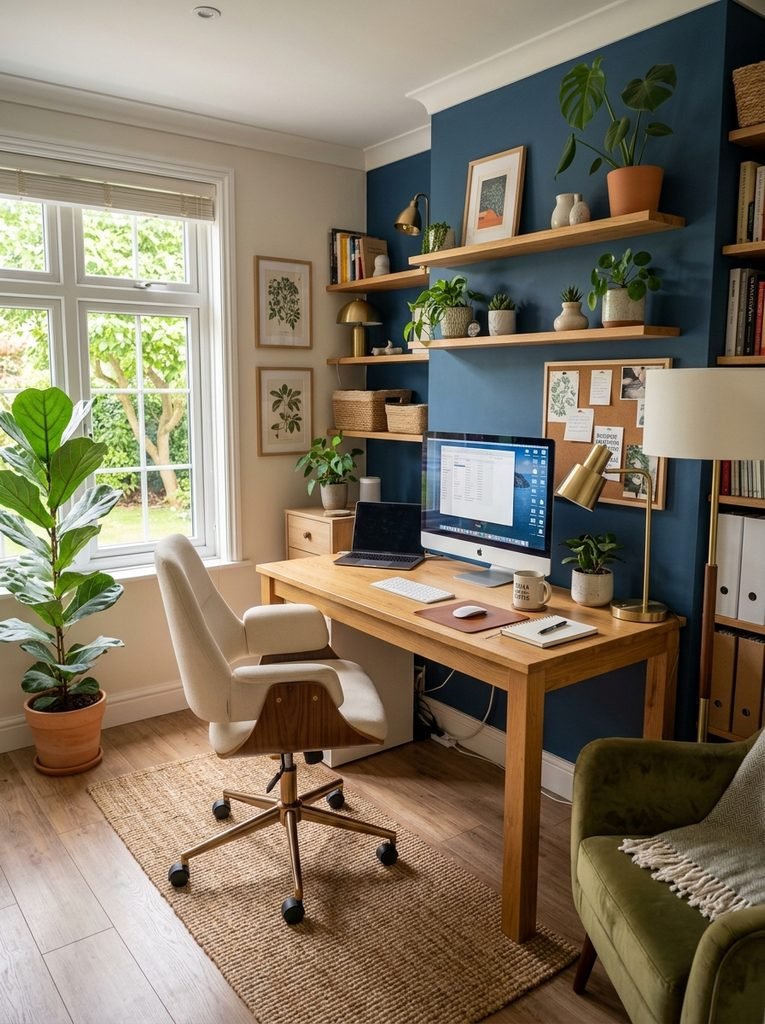
Start With Light, Not Furniture
Most people plan a home office by picking a desk first. Flip that order. Light shapes how a room feels far more than any single piece of furniture, and it is usually the cheapest thing to fix.
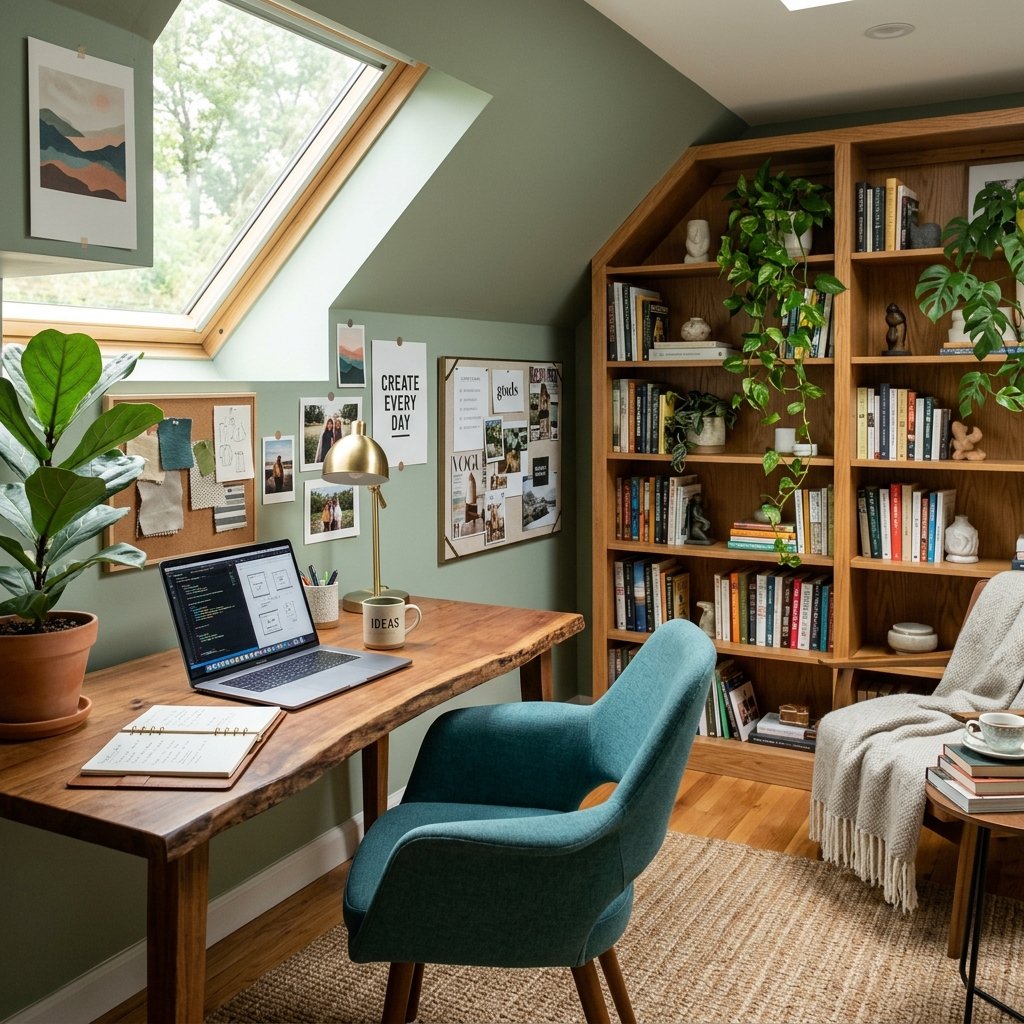
If you have a window, position your desk so the light falls from the side rather than directly behind or in front of your screen. Light behind you creates glare on the monitor, and light directly in front of you can wash out your face on video calls and strain your eyes over a full day. Research on workplace lighting has linked strong daylight exposure to measurable gains in focus and mood, which is one more reason to treat window placement as a design priority rather than an afterthought, as outlined in this overview of how lighting and other environmental factors influence office productivity and wellbeing.
For evening hours or rooms without much natural light, layer three light sources instead of relying on one overhead fixture: a task lamp aimed at your work surface, a warmer ambient lamp somewhere in the room, and a small accent light near a shelf or piece of art. This layering avoids the flat, clinical look that a single ceiling light tends to create, and it lets you adjust the mood depending on whether you are grinding through spreadsheets or taking a relaxed video call.
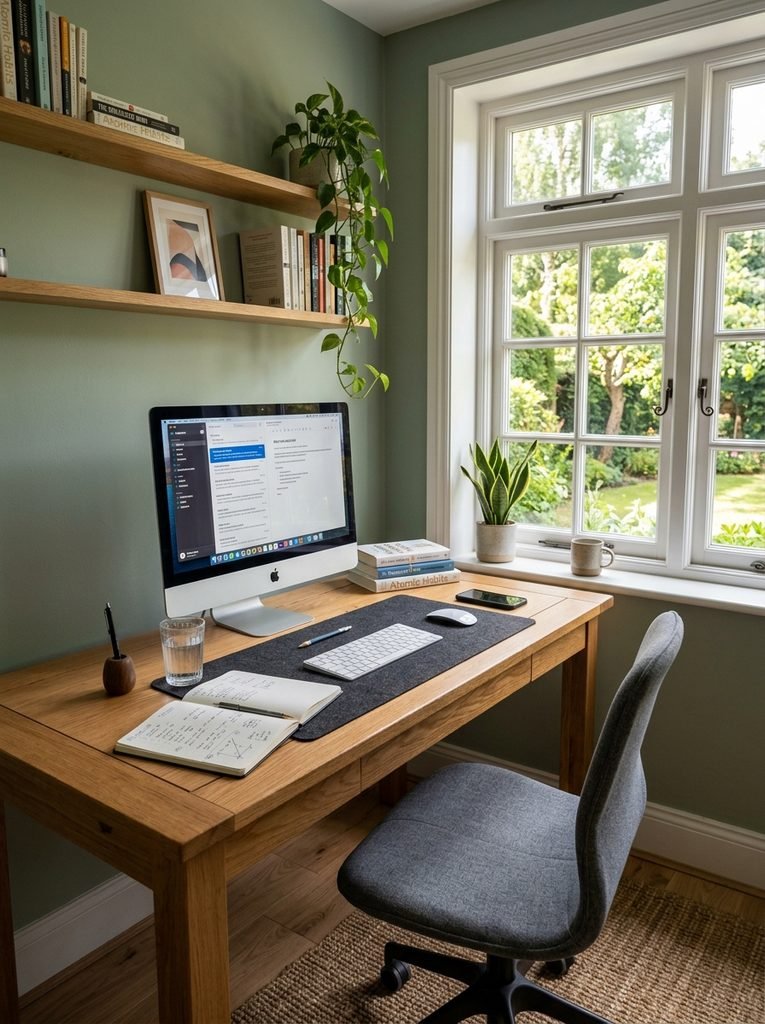
Choose a Color Palette That Matches How You Actually Work
Color is one of the fastest ways to shift how a room feels, and it is worth choosing on purpose rather than defaulting to white because it seemed safe. Paint and design researchers have found that different colors trigger different mental states, with cooler tones like blue and soft green generally supporting calm focus, while warmer tones like terracotta or ochre bring energy into a space, a pattern documented in Sherwin-Williams’ research on how workplace color affects mood and performance.
If your work involves long stretches of deep concentration, lean toward a muted palette: sage green, dusty blue, warm greige, or soft clay. These colors sit in the background instead of competing for attention. If your work is more creative or client-facing, a bolder accent wall in a rich color like deep terracotta or forest green can make the room feel more like a studio and less like a storage closet that got a desk.
A practical middle ground many home offices use well is a neutral base (warm white, oatmeal, soft taupe) paired with one saturated accent, whether that is a painted bookshelf, a patterned rug, or a single wall behind the desk. This keeps the room from feeling either sterile or overwhelming.
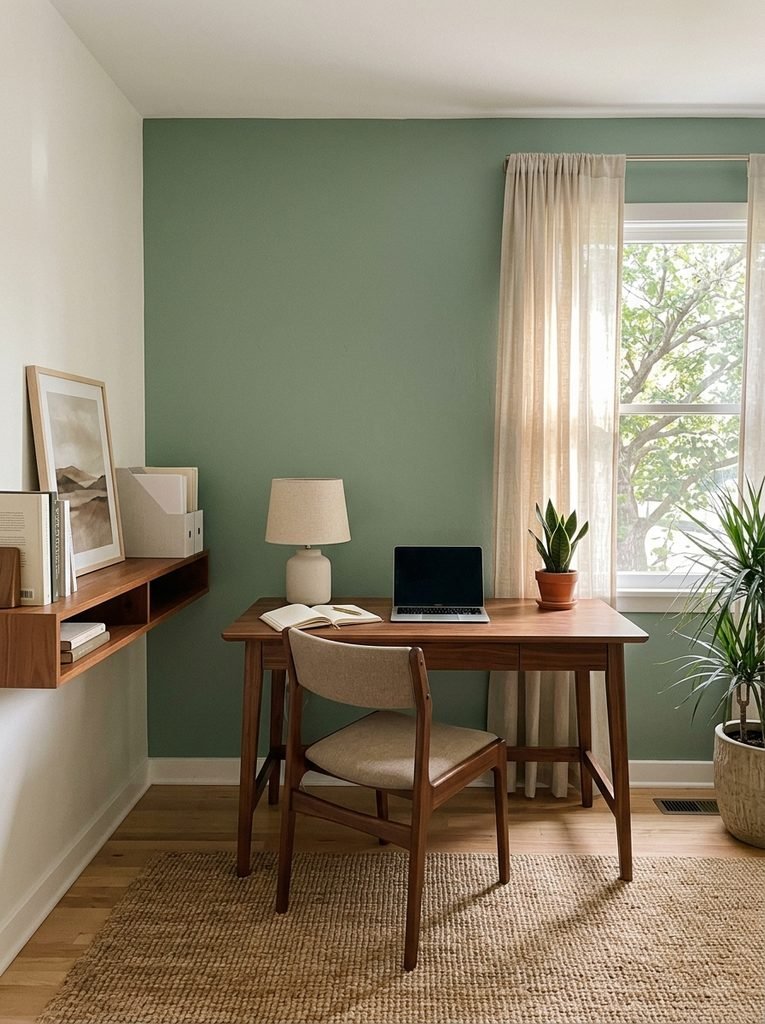
Build a Personal Focal Wall Instead of a Generic Gallery
Most home office advice suggests a “gallery wall” without explaining why so many end up feeling like filler. The fix is to design one wall around a single idea rather than a scattered collection of unrelated frames.
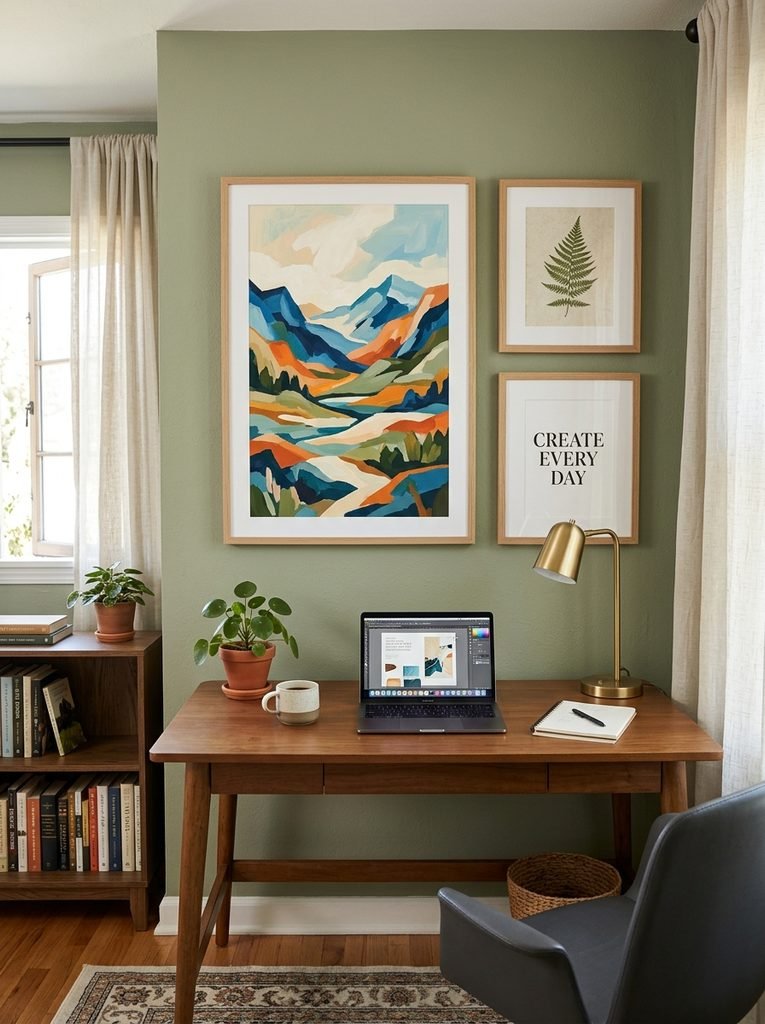
Pick a theme that actually reflects your work or interests: a wall of framed travel maps if you plan to work remotely from different places, a curated set of black-and-white botanical prints if you want calm, or a large piece of abstract art paired with two smaller complementary pieces if you want a bolder statement. Limiting the wall to one visual idea, rather than five unrelated ones, makes the whole room look intentional instead of assembled in a hurry.
If you are short on wall space, a single oversized print above the desk often reads as more polished than a cluster of small frames. Scale matters here. A piece that is roughly two-thirds the width of your desk tends to feel proportionate rather than lost.
For more layout thinking on how to keep a small display area from feeling cluttered, the corner-styling approach in this guide on decorating small kitchen counter corners is worth borrowing, since the same principle of grouping fewer, more intentional objects applies just as well to a desk corner as it does to a kitchen counter. You can read the full breakdown in 15 Kitchen Counter Corner Decor Ideas to Copy Now.
Layer Textures So the Room Doesn’t Feel Like a Cubicle
A home office that relies only on a desk, a chair, and a laptop tends to feel functional but cold, closer to a cubicle than a room in a home. Texture is what closes that gap.
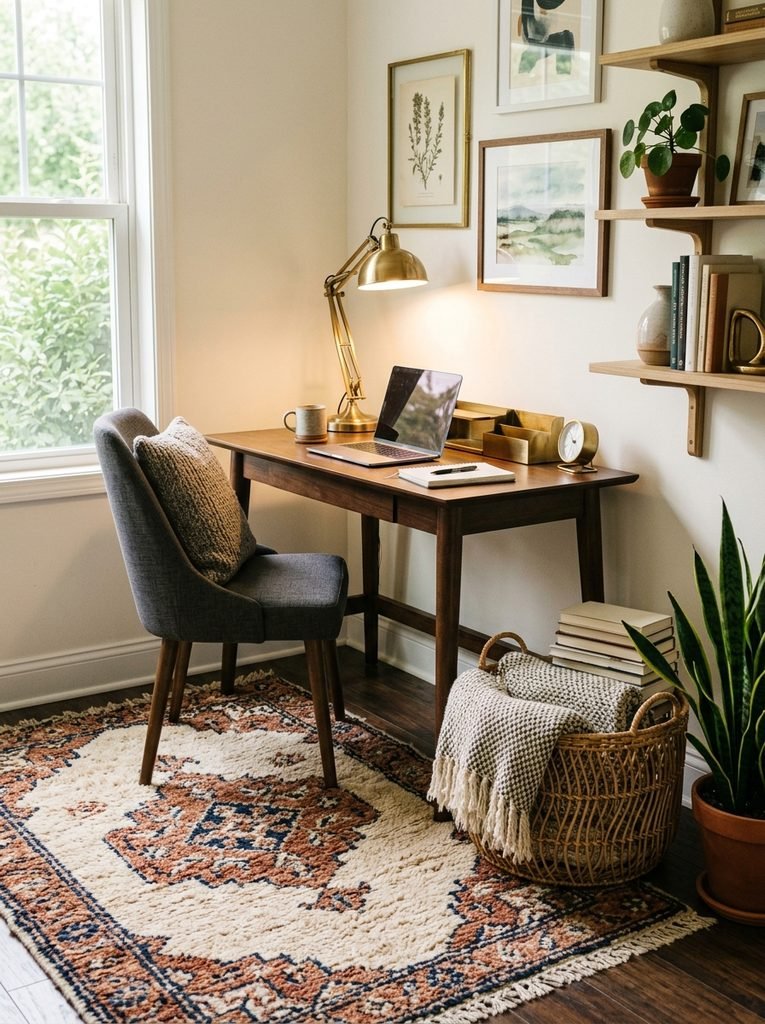
Bring in at least three different materials: something soft (a wool throw on a reading chair, a woven basket for cables or files), something warm (wood grain on the desk or shelving), and something with a bit of shine or contrast (a brass lamp, a black-framed mirror, a ceramic vase). This mix keeps the eye interested without adding clutter, and it borrows the same layering logic that makes a living room feel finished rather than half-decorated, a principle covered in Details That Make a Living Room Look Million-Dollar Luxury.
A rug is one of the single most effective texture additions in a home office, especially if the room has hard flooring. Beyond softening the space visually, it also muffles the click of a chair rolling across the floor. If your desk sits inside a larger room, like a corner of a living room or bedroom, positioning a rug specifically under the desk area helps define it as its own zone rather than letting it blur into the rest of the room, a technique explained further in Rug Placement Ideas That Instantly Upgrade Your Living Room.
Small-Space Home Office Ideas for Apartments and Shared Rooms
Not everyone has a spare room to convert. If your workspace has to share square footage with a bedroom, living room, or hallway nook, the goal shifts from decorating a full room to designing a self-contained “work zone” that can visually close down at the end of the day.
A few approaches work particularly well in tight footprints:
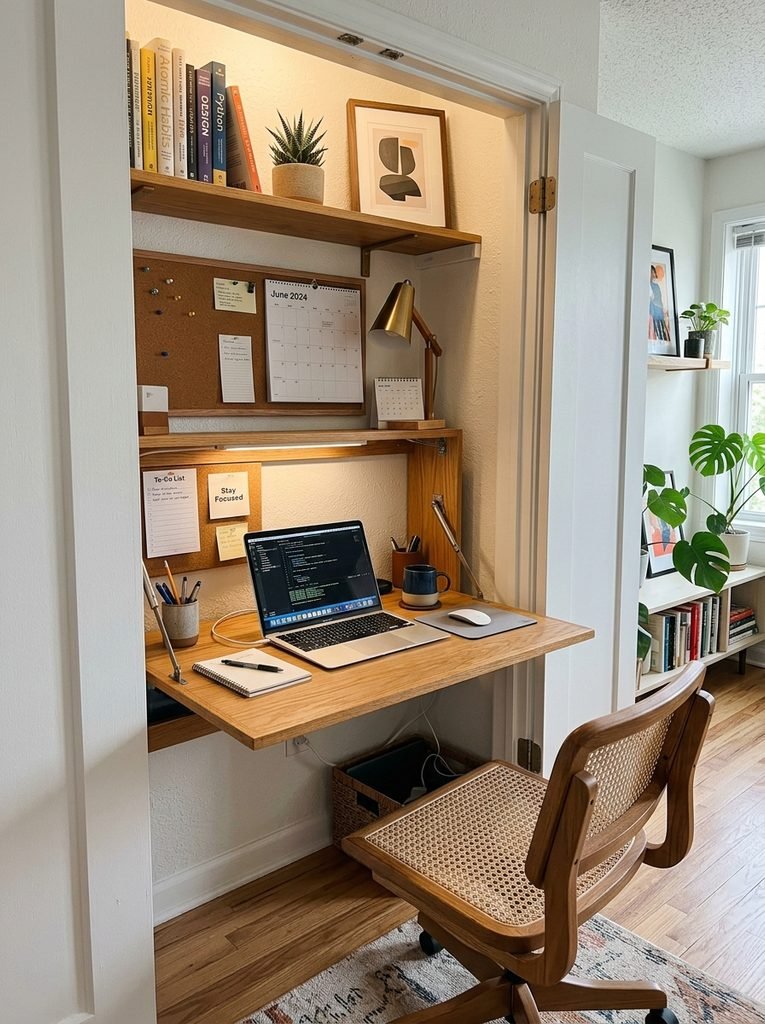
- A wall-mounted, foldable desk that tucks flat against the wall when not in use, freeing floor space for other activities.
- A narrow console table repurposed as a desk, paired with a chair that can slide fully underneath.
- A closet converted into a compact “cloffice,” using the existing shelving for storage and a slim pull-out or fixed desk surface at door height.
- A room divider, curtain, or open bookshelf placed behind the desk to create a visual boundary between work and rest, which helps mentally close the workday even in a studio apartment.
Foldable and wall-mounted desk solutions in particular have become popular in compact living situations for exactly this reason, and the same space-saving logic used for tight bedroom layouts applies directly to a small office nook. You can see it applied in a different but closely related context in Yacht Bedroom Ideas to Maximize Comfort and Storage, where foldable desks solve a nearly identical space problem.
Bring in Natural Elements Without Overdoing It
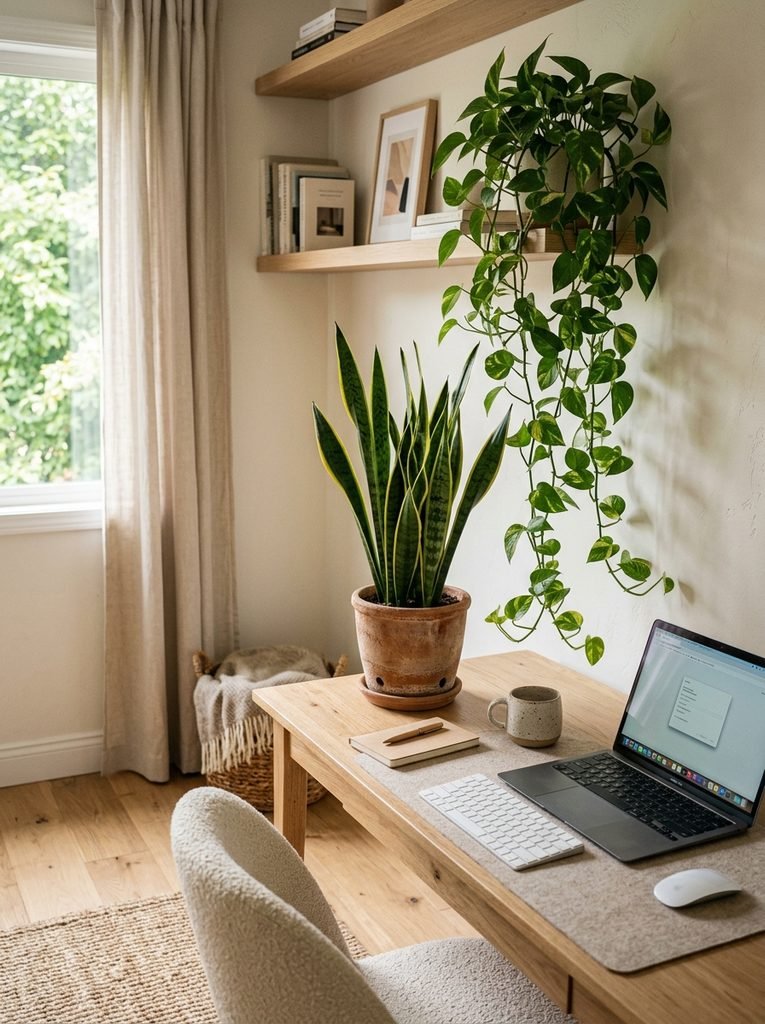
Plants and natural materials soften the sometimes rigid feel of desks, monitors, and cables. A single well-placed plant, like a snake plant or a pothos on a shelf, does more for the warmth of a room than several scattered smaller ones. Low-maintenance varieties are worth prioritizing here, since a wilting plant next to your monitor undercuts the calm you are trying to create rather than adding to it.
Beyond live plants, natural materials like a wood desk, a cane-backed chair, or a linen curtain add warmth without requiring upkeep. If your home office window faces a busy street or a wall, even a framed photo of a landscape can offer a small mental break during long work sessions, something increasingly recognized in workplace design research as a way to reduce visual fatigue over the course of a workday.
Sound and Scent: The Senses Most Home Offices Ignore
Visual design gets most of the attention in home office planning, but sound and scent shape how a room feels just as strongly, and they are two of the cheapest details to adjust.
If your workspace has hard floors and bare walls, sound tends to bounce and feel harsh, especially during video calls. A rug, curtains, and even a fabric-covered bulletin board all absorb sound and make the room feel calmer without any structural changes. If you take frequent calls, positioning your desk away from a hard, flat wall directly behind you can noticeably improve how your voice sounds to the person on the other end.
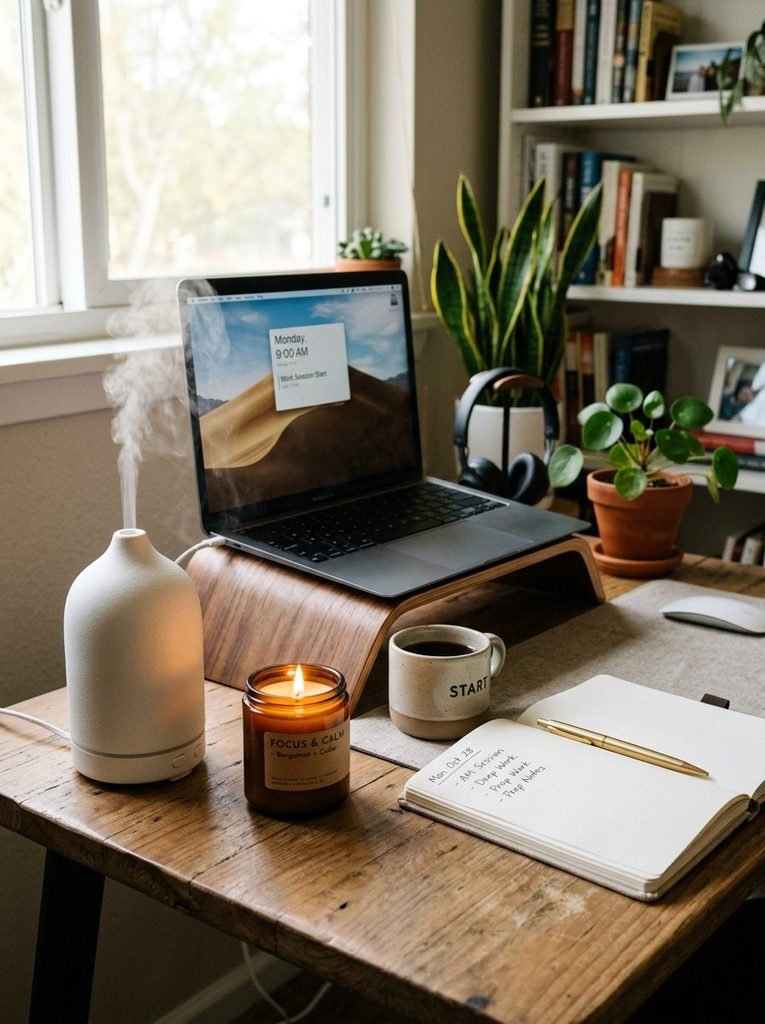
Scent is easy to overlook entirely, but a subtle one, like a beeswax candle, a small diffuser, or simply cracking a window for fresh air, can mark the start of a work session in the same way that closing your laptop marks its end. This kind of small ritual helps create a mental boundary between “home mode” and “work mode,” which matters more when the two happen in the same building.
Storage That Looks Like Design, Not Filing
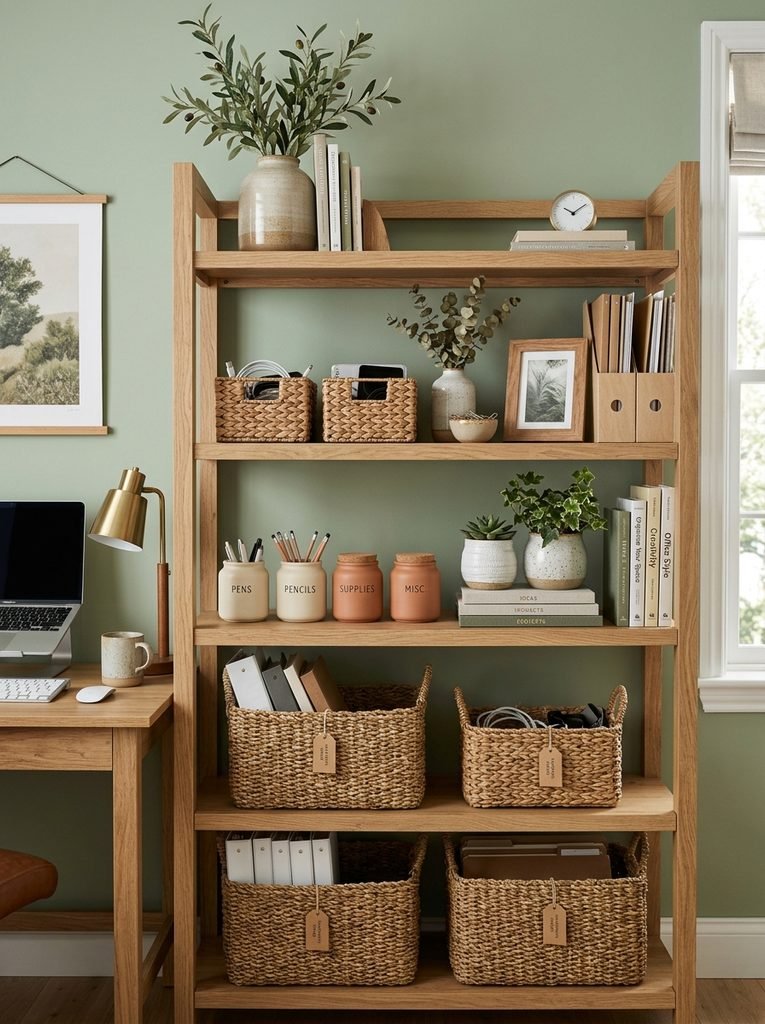
Paper piles, tangled cables, and loose office supplies are the fastest way to undo an otherwise well-designed room. The fix is choosing storage that doubles as decor rather than storage that looks purely functional.
Woven baskets, closed cabinets, and labeled ceramic or glass containers keep supplies out of sight while still contributing to the room’s texture and color story. A vertical shelving unit uses wall space instead of floor space, which matters in smaller rooms, and it gives you a place to mix functional storage (binders, files) with decorative objects (a small plant, a stack of art books, a ceramic bowl for loose items).
Cable management deserves specific attention, since visible cords are one of the quickest ways to make an otherwise styled desk look messy. A simple under-desk cable tray or a fabric cord sleeve solves this in minutes and costs very little.
Seasonal Refreshes to Keep the Space Feeling New
A home office that never changes can start to feel stagnant after months of daily use. Small seasonal swaps keep the space feeling current without requiring a full redesign.
In cooler months, add a chunky throw on a nearby chair, swap in a warmer-toned candle, and bring in richer accent colors like deep green or burgundy through a single cushion or small object. In warmer months, lighten the palette with linen textures, swap heavier textiles for lighter ones, and add a fresh plant or two to echo the season outside the window. These changes take an afternoon, not a renovation, and they give you a small reason to look forward to sitting down at your desk again.
Common Home Office Design Mistakes to Avoid
A few recurring mistakes show up across home offices of every size and budget, and most are easy to fix once you notice them.
Placing the desk facing a blank wall. This can feel isolating over long stretches, especially for people who work alone most of the day. Angling the desk toward a window or a piece of art, even slightly, makes a real difference in how the room feels.
Choosing style over ergonomics. A beautiful chair that causes back pain after two hours is not a good trade. Support and adjustability should come before aesthetics when selecting a desk chair, and monitor height should sit roughly at eye level to avoid neck strain, guidance echoed in ergonomic recommendations for home workstations from occupational therapy specialists.
Overcrowding a small space with too much furniture. In a compact office, every extra piece of furniture competes for visual and physical space. It is usually better to have fewer, more considered pieces than to fill every available inch.
Ignoring the view behind you on video calls. With remote work now involving frequent video meetings, the wall behind your desk functions as a backdrop whether you plan for it or not. A tidy shelf or a simple piece of art behind you reads far better on camera than a cluttered corner or a bare wall.
Skipping a boundary between work and rest. Especially in studio apartments or shared rooms, failing to create any visual separation between the workspace and the rest of the room can make it harder to mentally clock out at the end of the day.
Working through these adjustments one at a time, rather than trying to fix everything in a single weekend, tends to produce a home office that actually gets used and enjoyed rather than one that looks good in photos and gets abandoned within a month.