
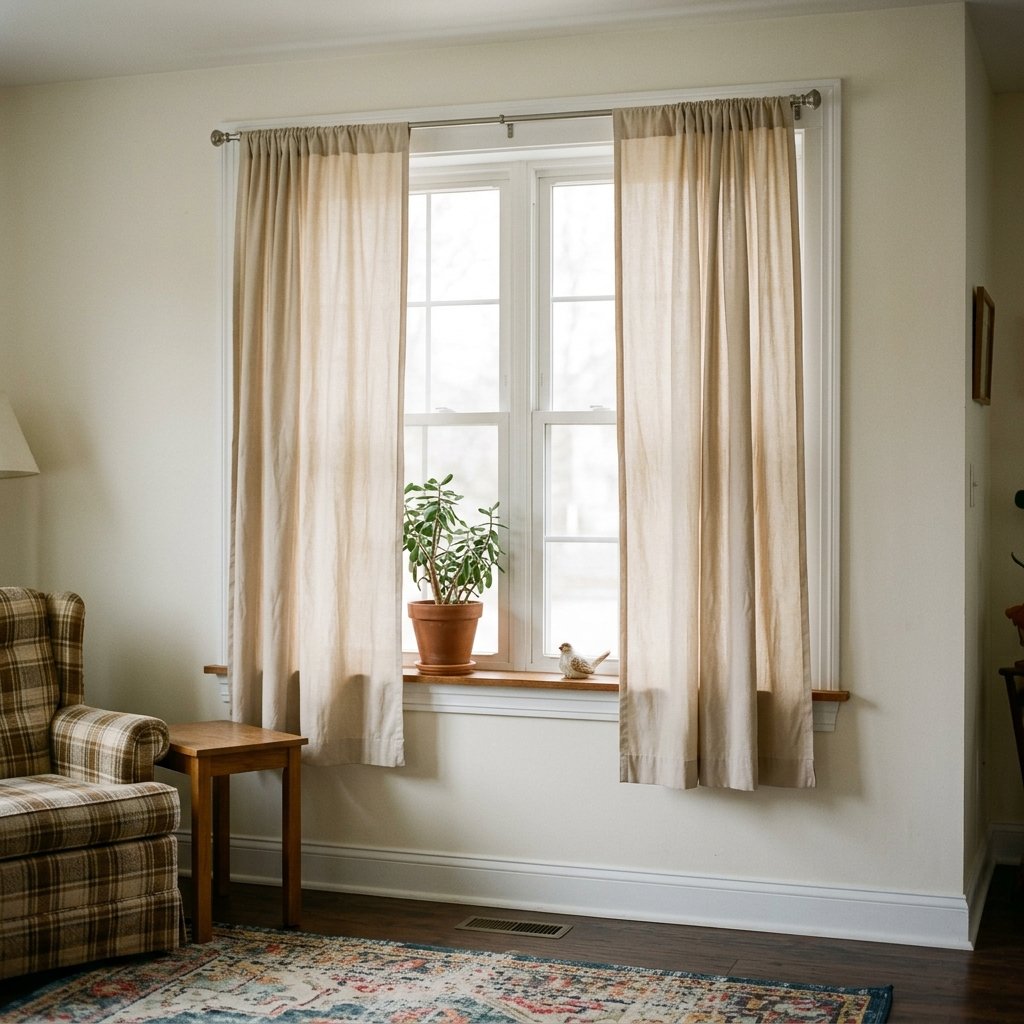
You finally picked out curtains. You compared five different shades of “greige,” read way too many reviews, and pulled the trigger on a pair that looked amazing in the product photos.
Then you hang them up and something feels off.
The room doesn’t look pulled together. It looks like you grabbed whatever was on sale at a big box store and called it a day. And here’s the annoying part: it’s probably not the fabric, the color, or even the brand. It’s the length.
Curtain length is the single most overlooked detail in home decorating, and it’s quietly wrecking the look of more living rooms and bedrooms than people realize. The good news is that once you know what to look for, it’s one of the easiest things to fix.

Why Length Does More Work Than You Think
Most people assume curtains are mostly about color and pattern. Fair enough, that’s what catches your eye first. But length is what your brain registers before it even processes the design.
Short curtains, or curtains hung at the wrong height, send a subtle signal that something is cheap or unfinished, even if the fabric itself is nice. Long, well-proportioned curtains do the opposite. They make a window look taller, a ceiling look higher, and a whole room feel more expensive than it actually was.
This is why designer rooms in magazines always look so effortless. It’s rarely about spending more money on the curtains themselves. It’s about hanging them correctly.
The Mistake: Curtains That Stop Too High
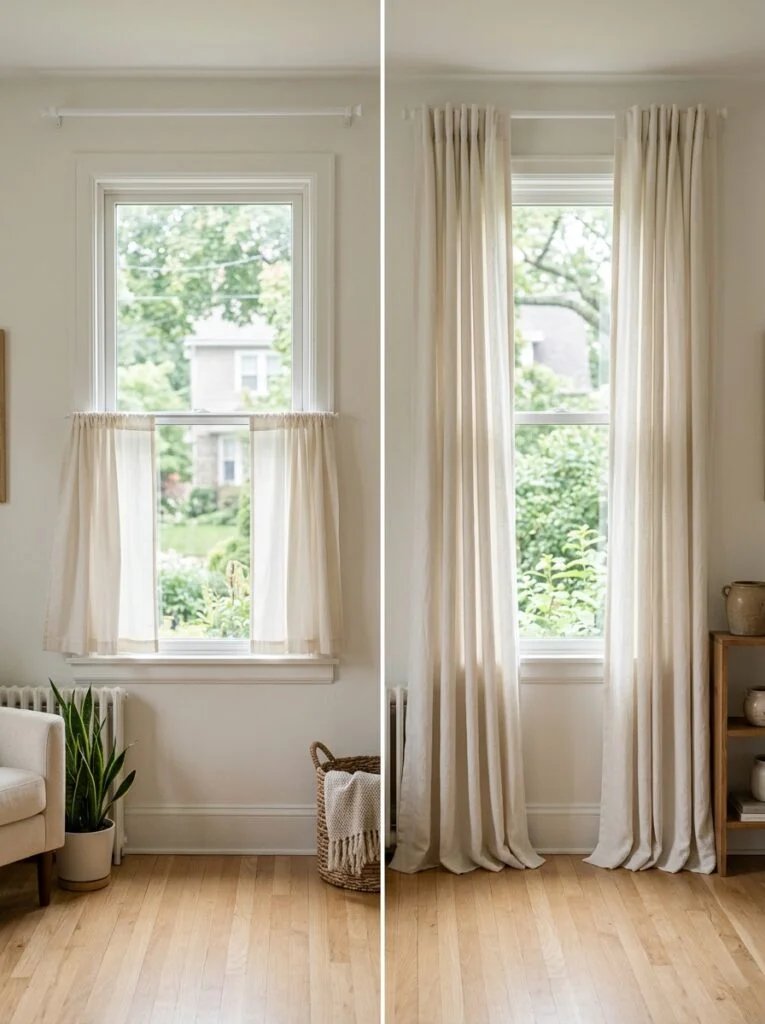
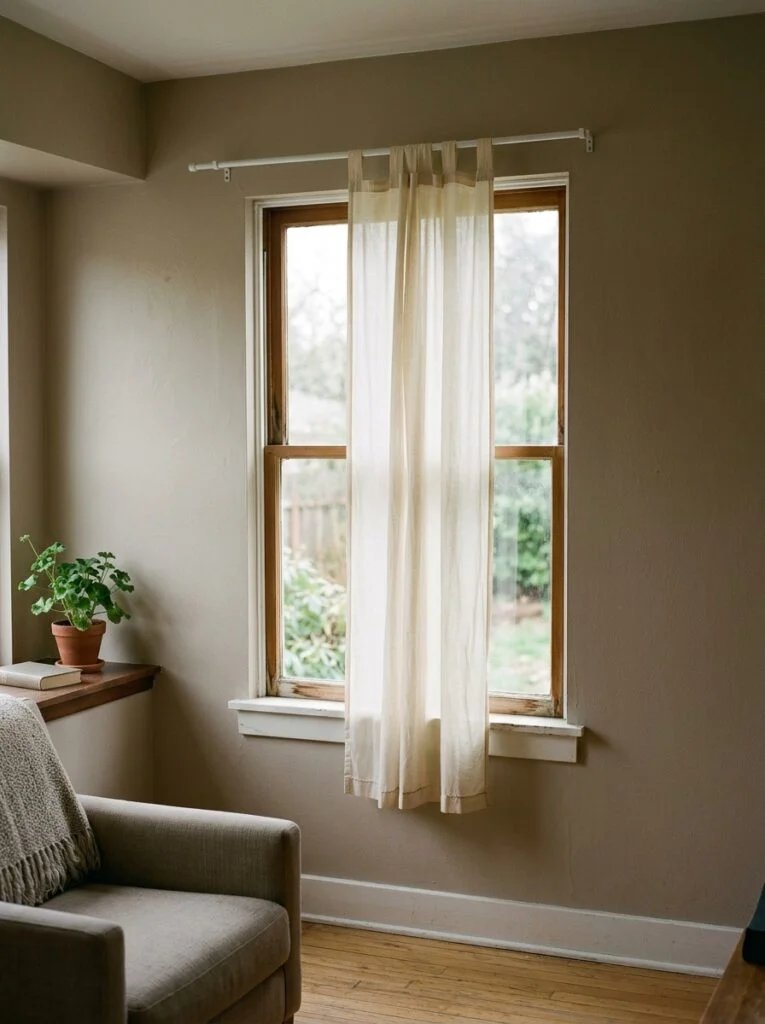
Here’s the culprit in plain terms. Most people hang curtains that end somewhere between the windowsill and their ankles when standing in front of the window. It’s the “floating” length, where the fabric just stops in mid-air a few inches or even a foot above the floor.
This happens for a few reasons:
- The curtains came in a standard length like 63 or 84 inches, and that’s just what got hung up.
- Nobody measured the actual window before buying.
- There’s a fear that longer curtains will “puddle” too much or look messy.
Whatever the reason, this in-between length is the number one thing making windows look budget rather than boutique. It’s such a common issue that once you start noticing it, you’ll spot it in half the rooms you scroll past online.
What It Should Look Like Instead
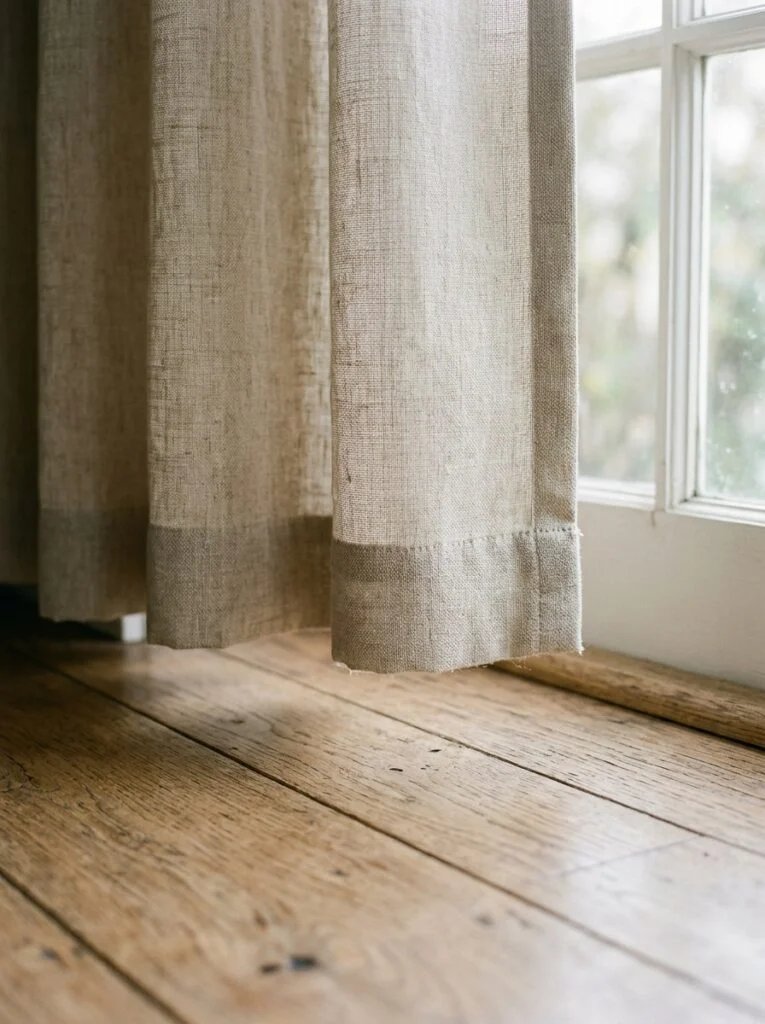
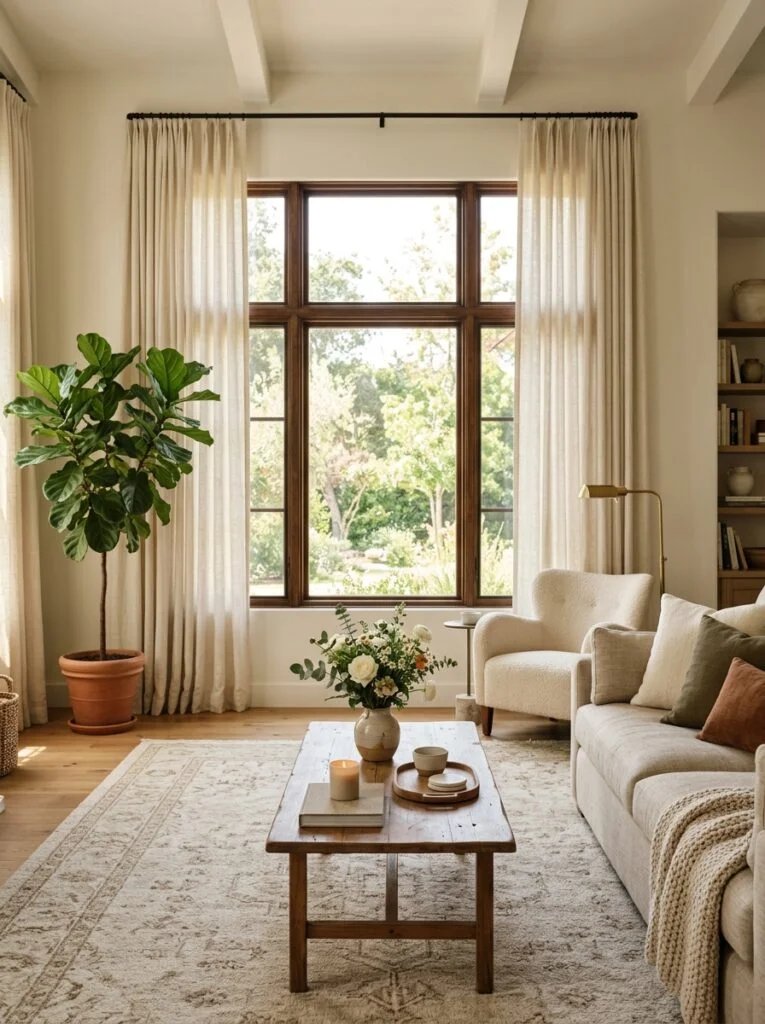
There isn’t only one correct curtain length, but there are a few that actually work, and they all have one thing in common. They go all the way down, or close to it.
Here are the lengths that read as intentional rather than accidental:
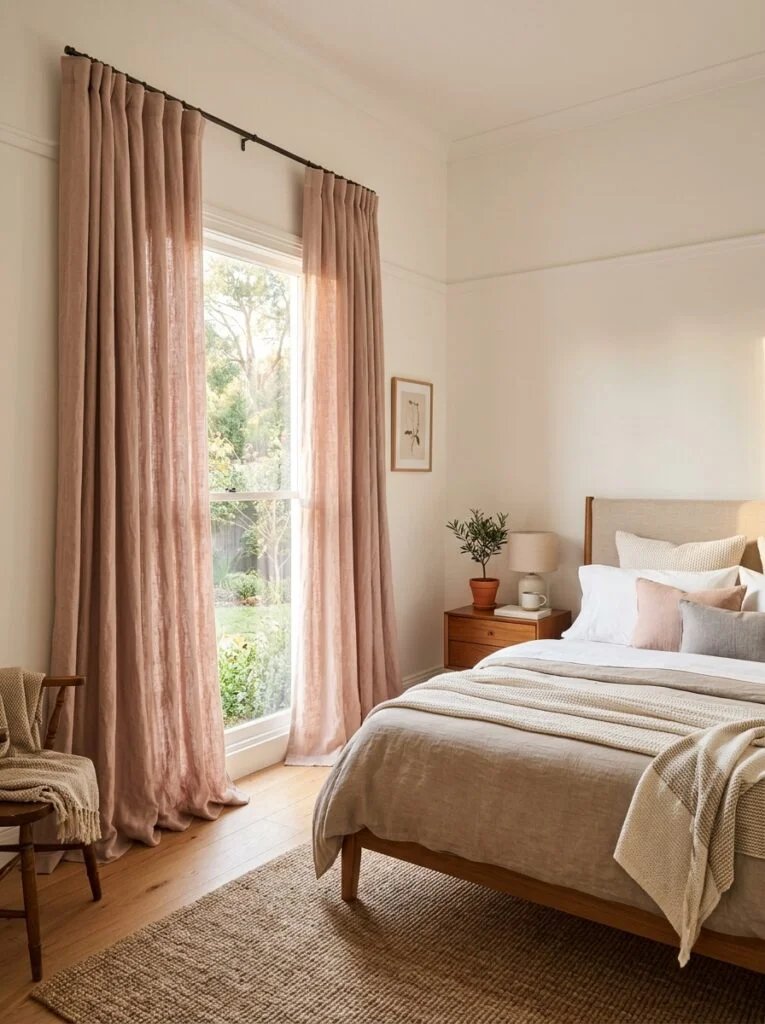
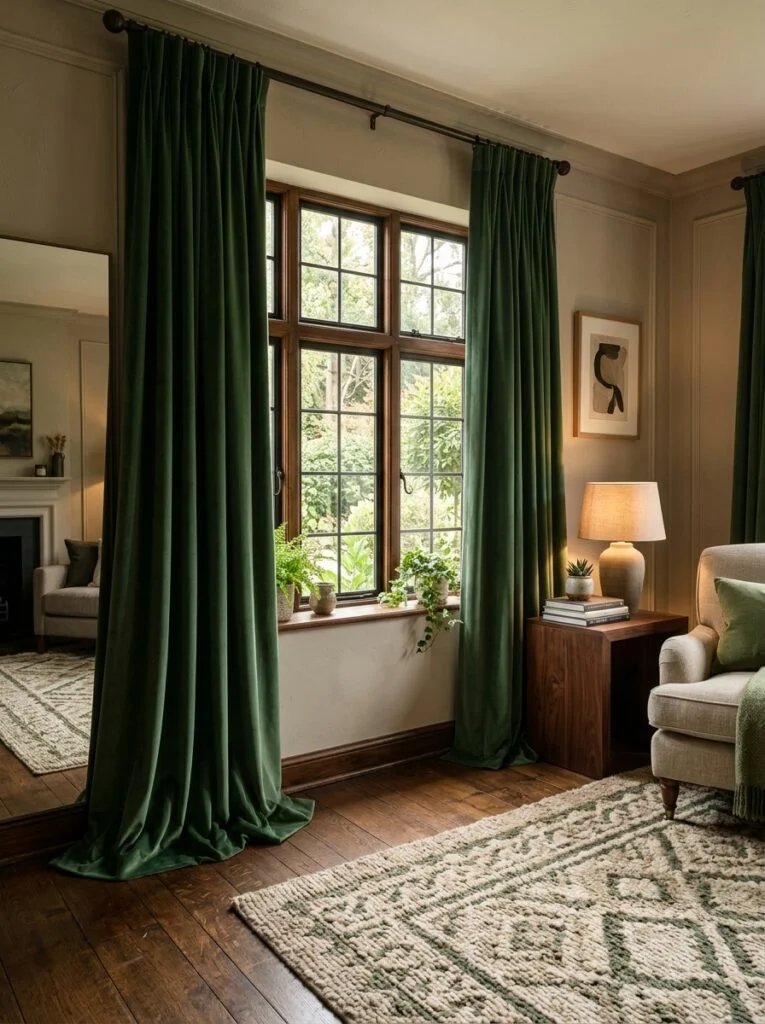
- Kissing the floor. The hem just barely grazes the floor. This is the safest, most universally flattering option for most rooms.
- A slight break. Similar to how pants pool slightly over shoes, the curtain has an extra inch or so of fabric that softly folds at the bottom.
- Puddle length. Several extra inches pool onto the floor. This works beautifully in formal living rooms or bedrooms, but it’s not practical for high traffic areas or homes with pets and kids.
- Above the floor by half an inch. Clean and tailored looking, this is a good option if you want a crisper, more modern feel and still want the curtains to clear the floor for cleaning.
Notice what’s missing from that list. Anything that stops several inches short, hovering awkwardly above the baseboard. That gap is where the “cheap” feeling comes from.
A Quick Story to Illustrate the Difference
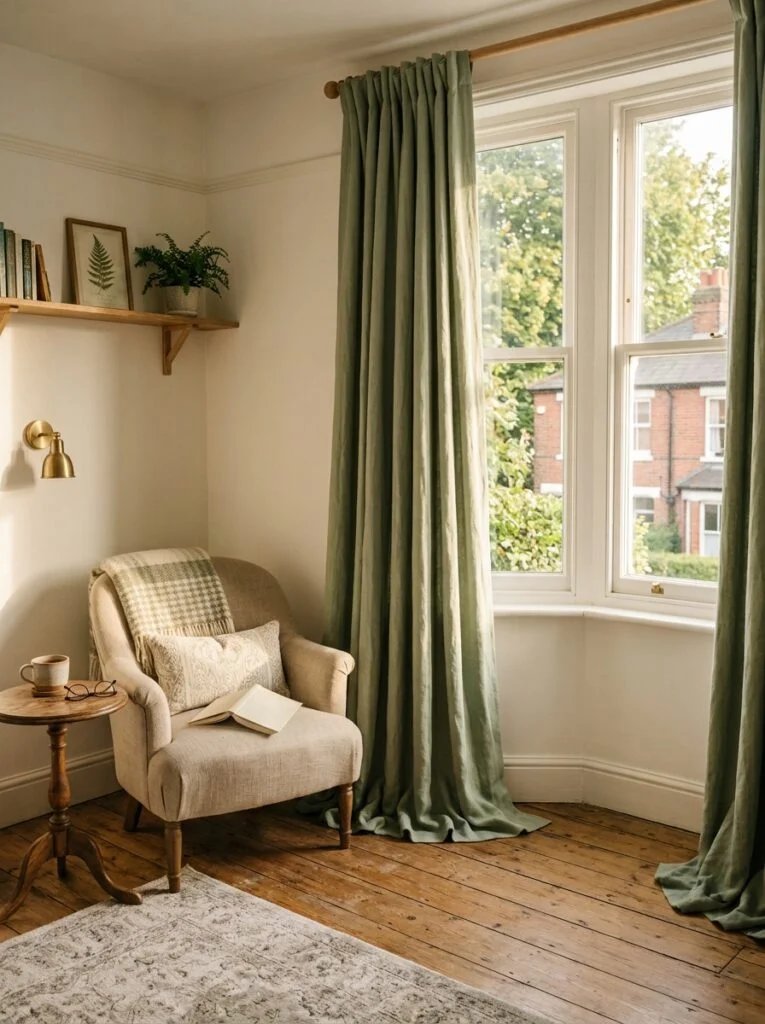
A friend of mine redid her living room a while back. Same sofa, same rug, same paint color. The only thing she changed was swapping her old curtains, which stopped a good eight inches above the floor, for new ones that touched down properly.
She didn’t spend more money. She actually bought a similar quality panel, just in a longer length and mounted the rod higher and wider than before.
The transformation was almost funny. The room looked like it had been professionally styled, and multiple people asked if she’d gotten new flooring or repainted, when really nothing else had changed. That’s how much of a visual difference proper length makes.
If you’re in the middle of a refresh yourself, it’s worth checking out this guide on <a href=”https://homedecorio.com/how-to-hang-curtains-to-make-ceilings-look-higher”>hanging curtains to make your ceilings look taller</a>, since rod height and curtain length work together to create that stretched, expensive look.
How to Actually Measure for the Right Length
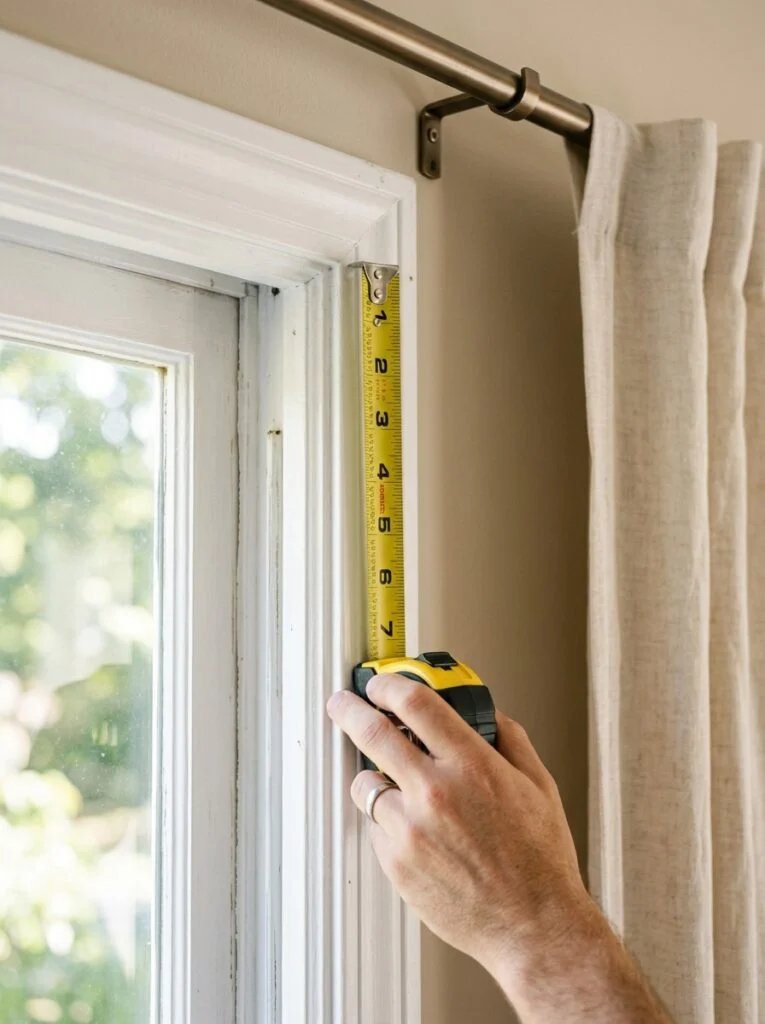
This part trips people up more than it should. Here’s a simple way to get it right without guessing.
- Decide where you want the rod. Mount it 4 to 6 inches above the window frame, or closer to the ceiling if you want extra height.
- Measure from the bottom of the rings or clips down to the floor.
- Add your desired amount depending on the style you want. Add nothing for a floor-kissing look, one inch for a slight break, or several inches if you’re going for puddle length.
- Round up, not down. It’s much easier to hem curtains shorter than to add length to fabric that’s already too short.
If your window is a standard size, ready made curtains in the 96 inch length usually work for 8 foot ceilings. Taller ceilings or higher mounted rods often need 108 inch panels, and some rooms genuinely call for custom lengths.
Common Mistakes That Make the Problem Worse
The wrong length rarely travels alone. A few other habits tend to show up alongside it, and together they make the issue even more obvious.
Hanging the rod directly on top of the window frame. This shortens the visual height of the window and makes any curtain length look more cramped than it is.
Buying curtains too narrow for the window. Skimpy panels that barely cover the glass when closed look thin and unfinished, no matter how long they are.
Mixing curtain lengths in the same room. If one window has floor length panels and another has shorter ones, the mismatch draws attention to itself.
Ignoring how the fabric behaves. Heavier fabrics like velvet or cotton blends drape properly at floor length. Very lightweight sheers sometimes look better with a small puddle since they don’t hold as much shape.
Practical Tips for Getting It Right Without Overspending
You don’t need a custom drapery budget to fix this. A few small adjustments go a long way.
- If your curtains are too short, try mounting the rod higher instead of buying new panels. Sometimes a few extra inches of rod height solves the whole problem.
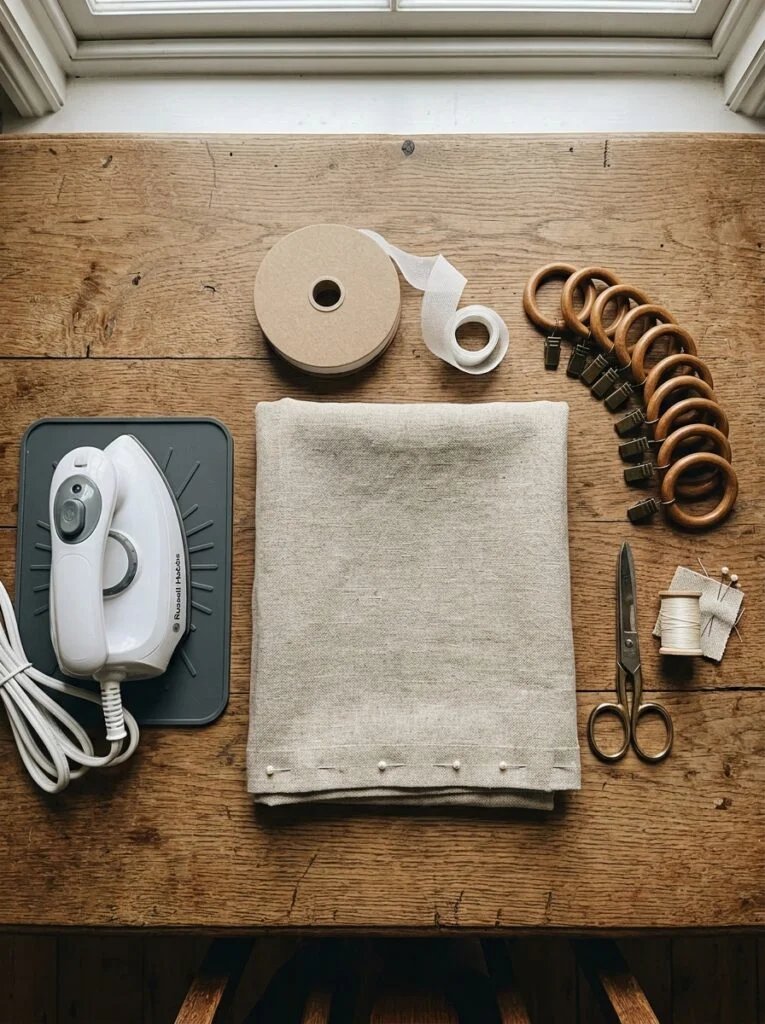
- Iron-on hem tape is a cheap and surprisingly durable way to add length using a second panel or extra fabric, no sewing machine required.
- Curtain rings with clips let you adjust hanging height more easily than sewn-in rod pockets.
- Steam or press curtains after hanging them. Fabric that’s been folded in a package for weeks needs a little help to hang straight and look intentional rather than wrinkled.
- If you’re not confident about length, hang the curtains and live with them for a few days before hemming anything. Fabric settles and drapes differently once it’s actually up and exposed to gravity for a while.
- Check your curtains at different times of day. Natural light changes how a hem looks, and what seems fine in the morning might look off under evening lamp light.
Another Real-Life Example: The Bedroom Fix
A reader once messaged me frustrated that her bedroom still looked unfinished even after she’d painted, added a new rug, and swapped out her lamps. Everything else in the room had been upgraded, but it still felt like something from a starter apartment.
Turns out her curtains were the standard 63 inch length hung on a rod mounted right above a window that sat fairly high on the wall. The result was curtains that stopped nearly a foot and a half above the floor, hovering in this awkward middle zone.
She swapped them for 96 inch panels and lowered nothing about the rod itself, just let the extra length do its job. The window instantly looked bigger, the ceiling felt taller, and the whole room read as more put together, even though she didn’t touch another single item in the space.
This is such a common scenario because standard curtain lengths sold in stores are often designed for standard 8 foot ceilings and standard window heights. The moment your room deviates even slightly, which is more common than you’d think, that standard length stops working.
Does Curtain Length Matter More in Some Rooms Than Others
Not every room needs the same approach, and that’s worth knowing before you buy anything.
Living rooms usually benefit the most from longer, more dramatic curtains since they’re often the most seen and photographed space in the home. Floor length or a slight break tends to look the most polished here.
Bedrooms can go either way depending on the vibe you’re going for. A soft puddle feels cozy and romantic, while a clean floor-length hem feels more tailored and calm.
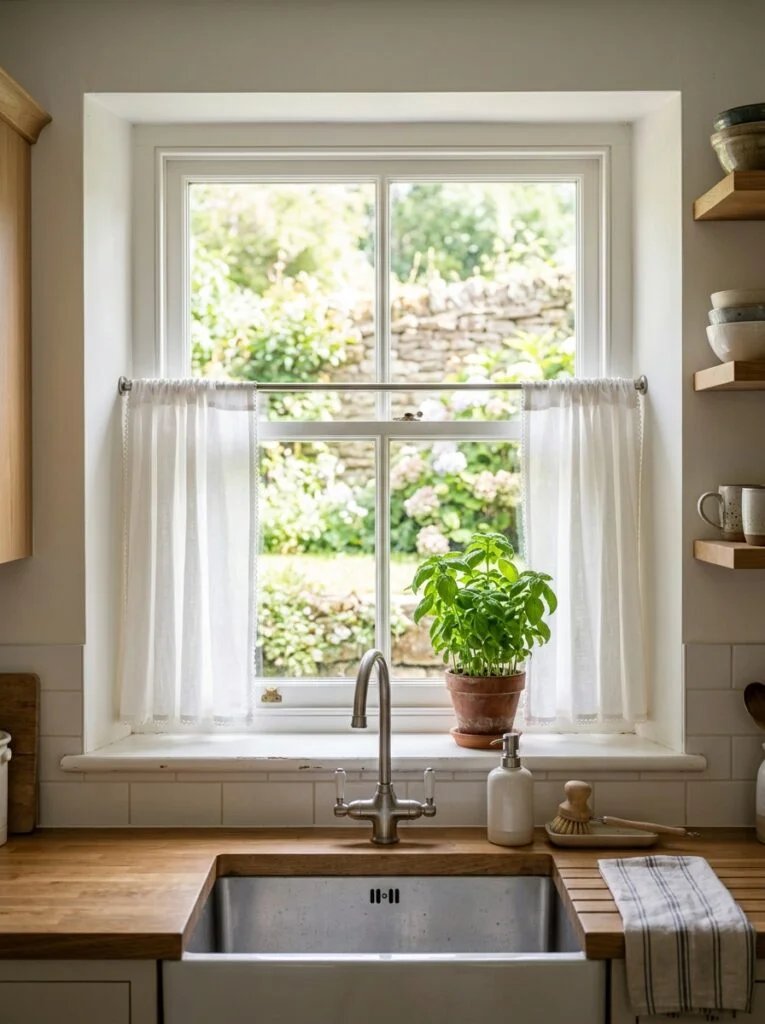
Kitchens and bathrooms are the exception to the “longer is better” rule. In these spaces, practicality wins. Sill length or apron length curtains, which stop right at or just below the windowsill, make more sense since you’re dealing with sinks, counters, and moisture.
Kids’ rooms often do better with a length that clears the floor by an inch or two, mostly for safety and to prevent constant dragging and dirt buildup.
Knowing this ahead of time saves you from applying a one size fits all rule to a house that actually has different needs room to room.
Signs Your Current Curtains Are the Problem
Not sure if length is actually your issue? Here are a few signs it probably is.
- The room feels smaller than it should, even though nothing is cluttered.
- Your windows look shorter or squattier than they are in real life.
- Guests compliment your furniture or paint color but never mention the windows.
- You’ve rearranged furniture multiple times trying to fix a feeling you can’t quite name, and nothing has worked.
If any of that sounds familiar, it’s worth taking five minutes to actually measure your current curtain length against the floor before assuming the issue is something bigger and more expensive to fix.

A Few Style Notes Worth Knowing Before You Shop
Once you’ve nailed down the right length, a couple of smaller details can push the whole look even further.
Width matters almost as much as length. A single narrow panel stretched across a wide window looks stingy no matter how long it is. As a general rule, your total curtain width should be about two to two and a half times the width of the window when closed, so the fabric has some fullness instead of hanging flat.
Color also plays a role in how length reads. Darker or richer colors tend to make any gap between the hem and the floor more obvious, since the contrast against the baseboard draws the eye. Lighter, softer colors are a little more forgiving if you’re not quite ready to commit to a full floor length hem.
And don’t underestimate lining. Lined curtains hang with more weight and drape more evenly, which makes even a modest floor length look more substantial and less flimsy. If your current curtains feel thin or a little limp no matter how you hang them, adding a simple liner might solve two problems at once.
None of these details matter as much as getting the length right first, but they’re worth keeping in mind once you’ve got that foundation sorted out.
FAQs
Should curtains always touch the floor?
Not always, but it’s the safest bet for most living spaces and bedrooms. The main exception is kitchens, bathrooms, or rooms where floor length fabric would be impractical.
How much extra fabric do I need for a puddle look?
Anywhere from 2 to 6 inches extra is typical. Start with 2 to 3 inches if you’re new to the look, since it’s easier to add more later than to trim it back.
Are standard curtain lengths from stores ever long enough?
Sometimes, but only if your ceiling height and window placement match the standard assumptions those lengths were designed around. Always measure your specific window and rod placement before assuming a standard size will work.
Can I hem curtains myself without a sewing machine?
Yes. Iron-on hem tape works well for most fabric types and holds up surprisingly well through regular washing, as long as you follow the instructions on the packaging.
Does curtain length actually affect how big a room feels?
It does, more than most people expect. Longer curtains draw the eye upward and create the illusion of higher ceilings and taller windows, which makes the whole room feel more spacious.
What if my ceilings are low and I’m worried long curtains will look overwhelming?
Mount the rod as close to the ceiling as reasonably possible and choose a light, airy fabric. This actually helps low ceilings look taller instead of making the room feel more cramped.
Wrapping It Up
The gap between your curtains and your floor is doing more damage than you probably realized. It’s a small detail, but it’s one of those things your eye picks up on instantly, even if your brain can’t quite explain why a room feels off.
The fix doesn’t require a full redecorating budget or a trip to a custom drapery shop. Most of the time it just means remeasuring, mounting the rod a little higher, or swapping in a longer panel that actually reaches where it should.
Take a look at your windows today. If your curtains are floating somewhere above the floor, that’s probably the missing piece you’ve been looking for all along.


7 comments