Your apartment came with beige carpet, a landlord-special ceiling light, and walls you’re not allowed to paint. It’s clean, it’s fine, and it has the personality of a waiting room. Art Deco is a good antidote, because it was built for this exact problem: make a plain room feel grand with shape, shine, and symmetry rather than extra square footage.
The twenty styles below translate 1920s glamour into apartment reality. Each one gives you a measurement, a swap, or a rule of thumb, and most have a renter-friendly route. Pick the two or three that suit your rooms. You don’t need all twenty, and the best Deco spaces never use them all.

What Makes Art Deco Timeless?
The style took its name from the 1925 Paris exposition of decorative and industrial arts. The Metropolitan Museum of Art notes that the fair drew more than 16 million visitors over seven months, and that the look was already mature by then. That mix of machine-age geometry and rich materials is why it still works. A sunburst or stepped line looks as sharp on a rental wall as it did in a 1920s lobby.
The style also bends to your budget. You can go full lacquer and chrome, or use a single brass mirror. The trick is discipline: repeat one motif or one metal instead of mixing everything at once.

Why Modern Apartments Are Embracing Art Deco
Apartments reward Deco’s best tricks. Low ceilings, small rooms, and one window are exactly what mirrors, vertical lines, and glossy surfaces help with. Stepped shapes and vertical channels pull the eye upward, which makes an eight-foot ceiling feel taller. Reflective finishes carry a single window’s light deeper into the room.
The style also depends on a few strong pieces rather than many small ones. Think one lacquered console, not a whole suite of furniture. If you want a shorter, fix-it-first list, our guide to Neo-Deco upgrades for homes that look too basic sorts options by effort.

Glamorous Gold Accents in Living Rooms
Gold works best when it repeats. Choose three pieces, such as a mirror frame, a side-table base, and a lamp, and set them at different heights so the eye travels around the room. Brushed or satin gold looks modern and hides fingerprints. Polished brass feels closer to the 1920s original. Keep the metals in one family, since yellow gold beside cool silver in a single seating area looks accidental. Put at least one gold piece near a window or lamp where it can catch light.

Velvet Upholstery for Statement Furniture
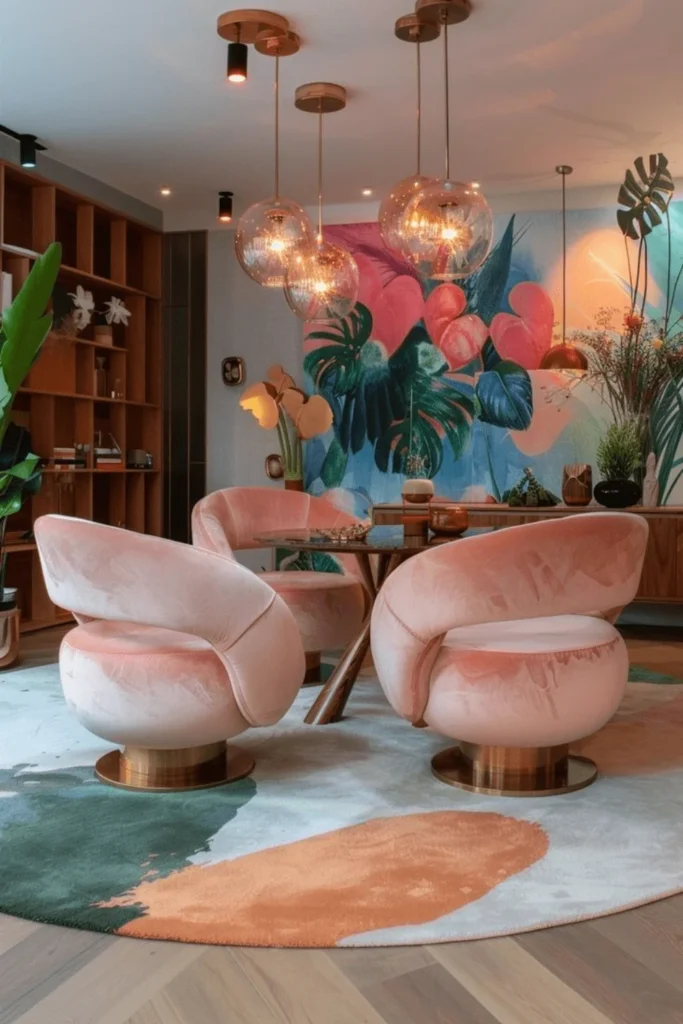
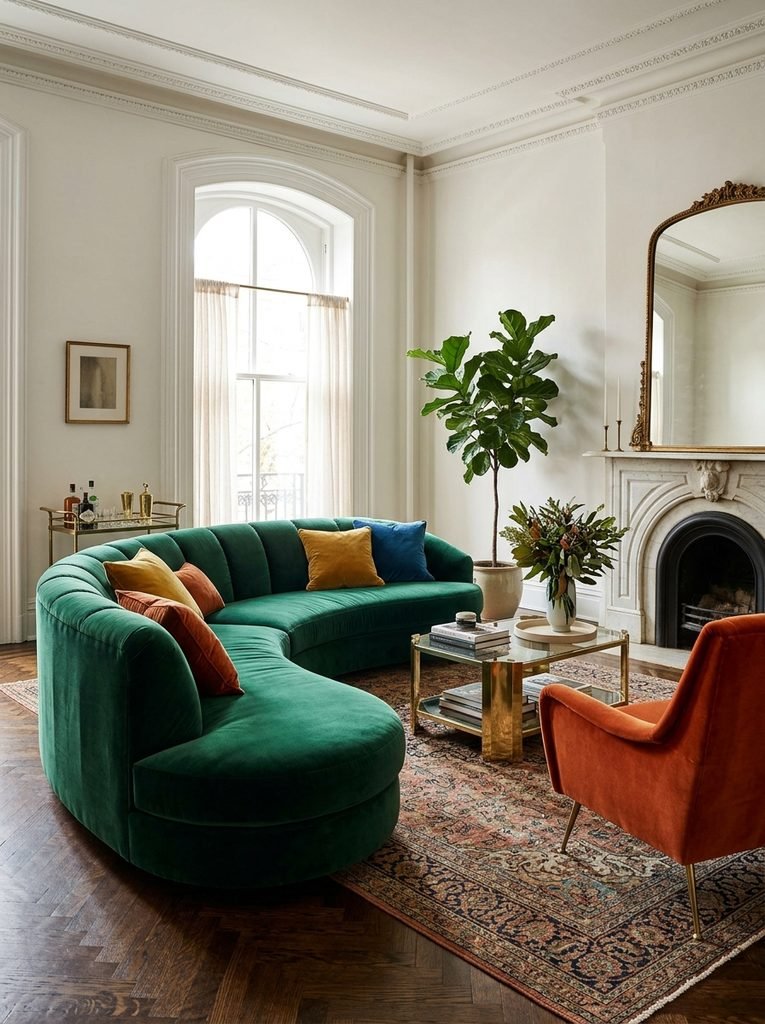
A velvet sofa is the biggest style move in a living room, so test the fabric first. Check the abrasion rating: 15,000 double rubs is a common minimum for home use, and 30,000 is safer for a daily sofa. Ask for a swatch and look at it under lamplight. Deep green, navy, and burnt orange read as classic Deco. If a sofa feels like too much commitment, a pair of velvet chairs about 28 inches wide gives the same effect.
Mirrored Walls and Furniture for Opulence
Mirror glass is the original small-space trick. Mirrored side tables and cabinets bounce light without adding visual weight, and an antiqued or bronze-tinted mirror feels softer than clear glass. The renter version is a full-length mirror leaned on the wall, or mirror tiles on a removable backing. Place it beside or opposite a window, not straight across from the front door, where it only reflects shoes. Spray cleaner on the cloth rather than the glass, so liquid doesn’t creep behind the edges.

Black and White Checkerboard Floors
Checkerboard is the Deco floor, and you can get it without tearing anything up. Peel-and-stick vinyl tiles, usually 12 by 12 inches, go down in an afternoon over clean, flat flooring and lift when you move. Check your lease first. Lay them on the diagonal to make a room feel wider, or straight for a calmer look. Snap a chalk line and start from the center, not a wall, so cut tiles land evenly on both sides.

Geometric Wallpaper for Feature Walls
Pick the wall you see first when you walk in, then stop there. Removable wallpaper commonly comes in rolls about 20.5 inches wide, so divide your wall width by that number to count panels. A 10-foot wall needs about six. Sunbursts, scallops, and chevrons in navy and gold, or black and cream, are the classic picks. Tape a sample up for two days and check it in morning and evening light. Avoid busy patterns on more than one wall.

Brass and Chrome Kitchen Details
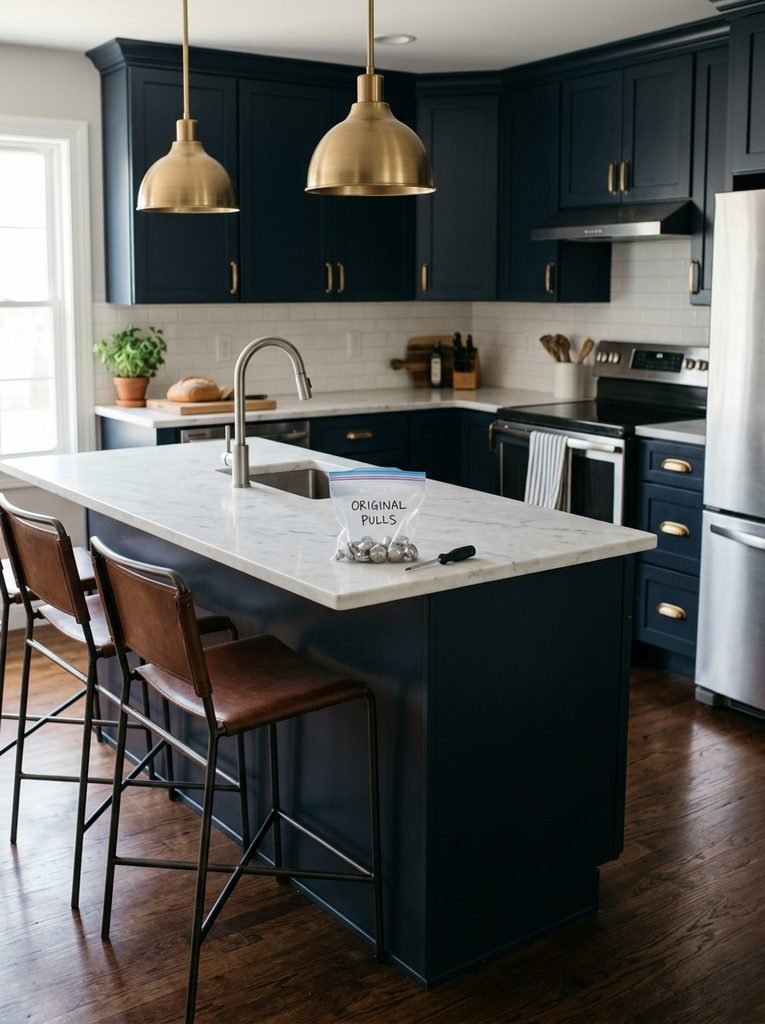
Hardware, faucets, and lighting give the biggest kitchen upgrade per dollar. Use brass for pulls and pendants, and keep the faucet chrome or stainless to match your appliances. Mixing two metals works when one clearly dominates. Bar stools with a metal frame should match your counter: 24 to 26 inches for a 36-inch counter. Renters can swap pulls and keep the originals in a labeled bag to reinstall at move-out.
Luxe Art Deco Bathrooms with Marble
Marble is hard to fake in a rental bathroom and easy to damage in a real one. Use it in small doses: a marble-look peel-and-stick vanity top, or a real marble tray by the sink. If you own, seal real marble as the installer recommends and wipe up toothpaste quickly, since it can etch the surface. Pair it with a brass or chrome faucet, a round mirror in a thin metal frame, and a pair of wall sconces rated for damp locations.

Statement Lighting with Chandeliers
Apartment ceilings change the rules. With an eight-foot ceiling, choose a semi-flush or flush fixture, and keep its lowest point above 7 feet so tall guests don’t duck. Over a dining table, hang the fixture 30 to 36 inches above the surface. Tiered glass, linear brass, and stepped shapes all read as Deco. If you can’t swap the ceiling fixture, a plug-in pendant on a ceiling hook delivers the look without an electrician.

Curved Furniture for Flowing Elegance
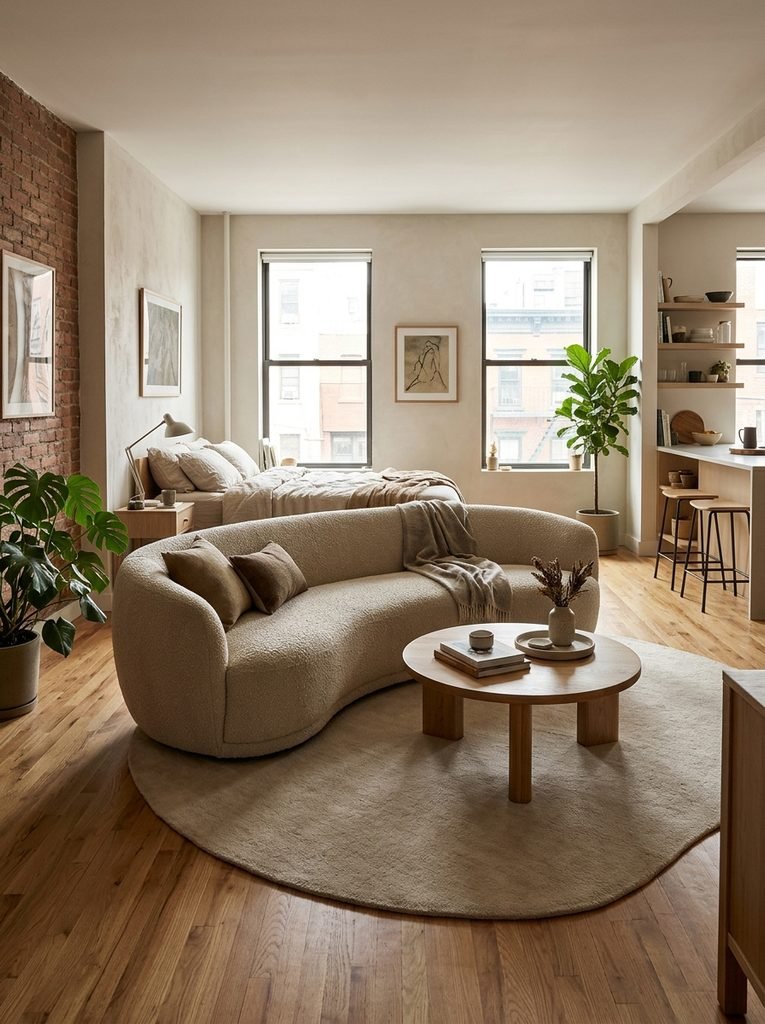
Curves earn their keep in tight layouts. A kidney-shaped or curved sofa can float in a studio and mark the living zone without a wall. Keep 30 to 36 inches of walkway around it. Measure carefully, because curved sofas can take more floor space than their length suggests. Pair one with a round or oval coffee table 30 to 36 inches across so nothing competes for the curve.
Bold Jewel-Toned Interiors
Deep color looks richer in warm light and flatter in cool light, so use bulbs around 2,700K. Emerald, sapphire, and amethyst can feel heavy in a small room, so put them where light is best. If you can’t paint, bring color in through a velvet sofa, curtains, and one large painting. If you can, try the lower two-thirds of the wall in the deep shade and keep the top in white, which helps the ceiling feel tall.

Sculptural Décor Pieces
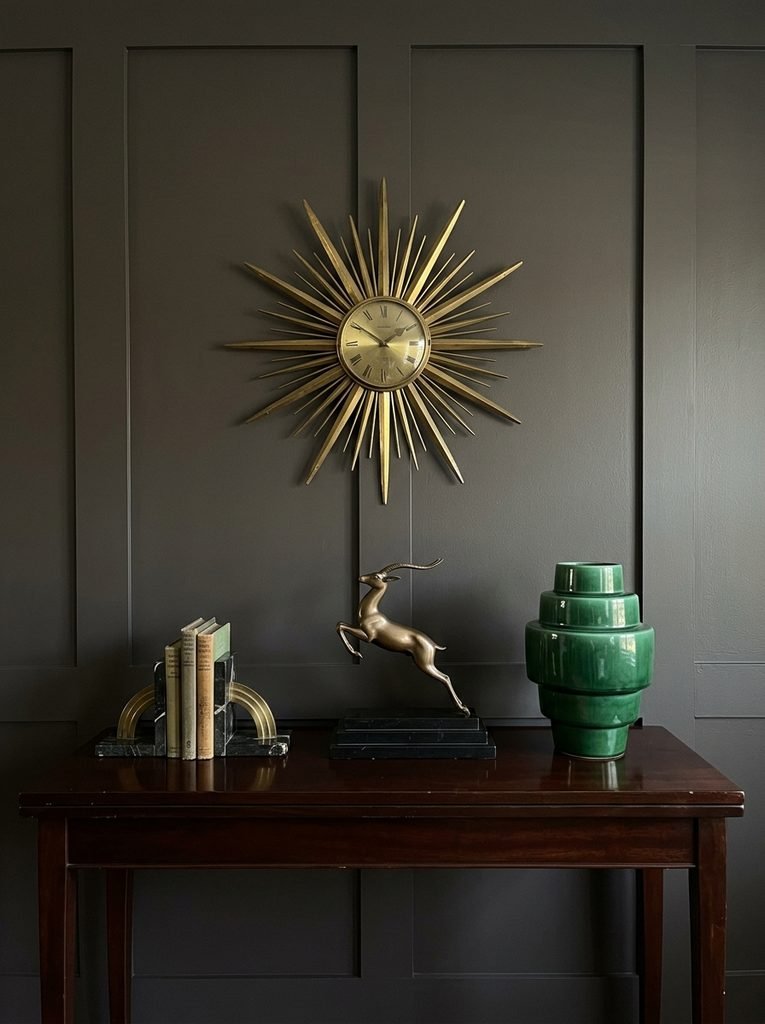
Deco objects are all about silhouette: stepped vases, sunburst clocks, and streamlined figures. Choose pieces 12 to 18 inches tall for a console or mantel, and use one strong object per group rather than a crowd. A pair of identical bookends or candlesticks adds the symmetry the style loves. Secondhand shops often carry 1930s-style pieces for less than new reproductions. Check the base for felt pads so brass and stone don’t scratch your furniture.
Monochrome with Metallic Highlights
If color feels risky, go black, white, and one metal. Use a 60-30-10 split: 60 percent white or cream, 30 percent black or charcoal, and 10 percent metal. That ratio keeps a small room from turning cave-like. Add texture so it doesn’t look flat, such as a bouclé chair, a ribbed velvet pillow, and a glossy lacquer tray. If the palette starts to feel cold, add one warm element like a wood frame.
Glass-Front Cabinets and Display Units
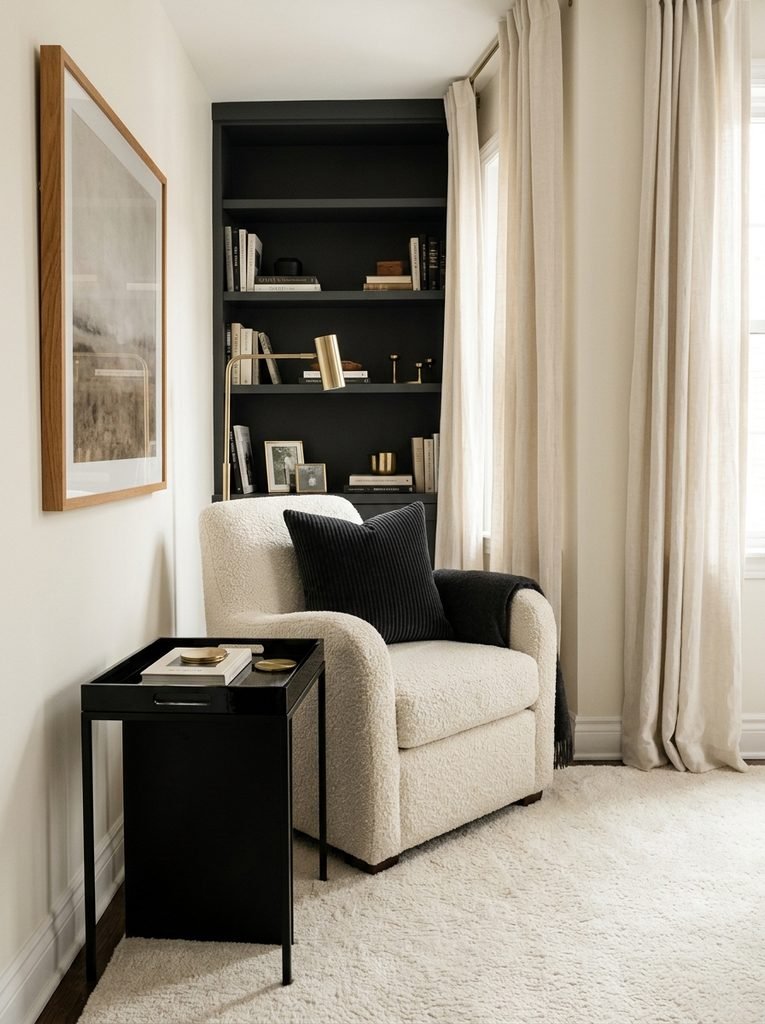
Glass doors turn storage into display, but only if you edit what’s inside. Group items by color, leave about 2 inches of air between objects, and paint or mirror the back panel to bounce light. Fluted or reeded glass hides clutter while still glowing. The renter route is a freestanding display cabinet with glass doors, plus battery-powered LED puck lights stuck inside, so there’s nothing to wire.
Black Lacquered Furniture for Drama
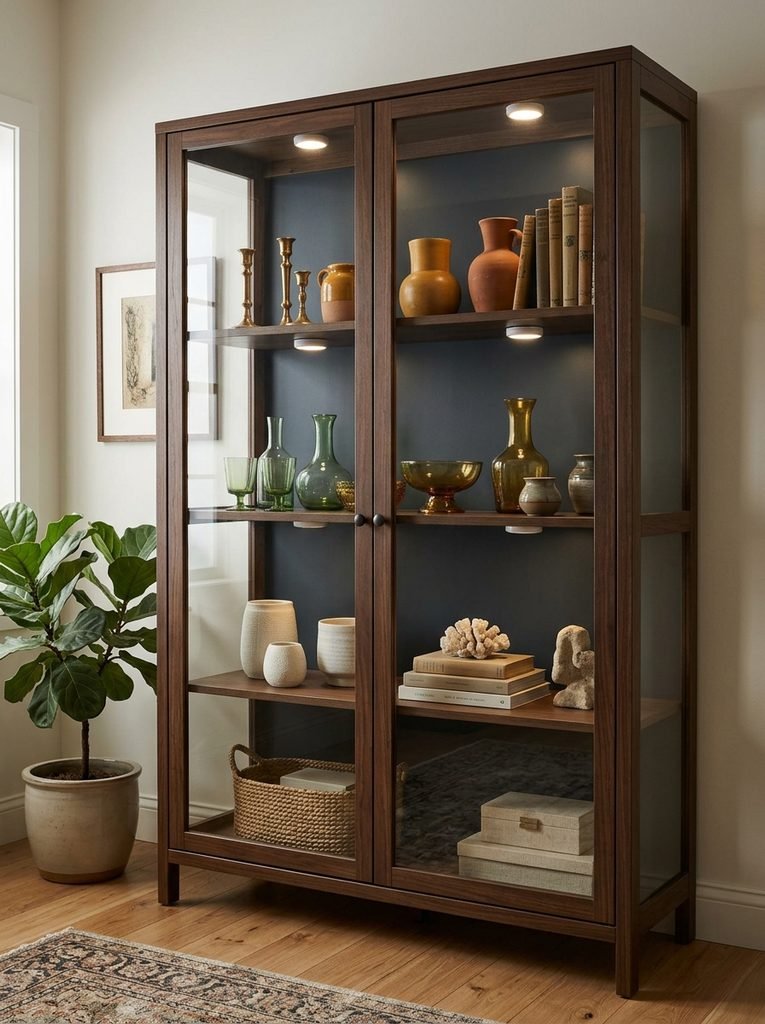
Lacquer shows every fingerprint, so choose its location carefully. A console or sideboard that nobody leans on works better than a coffee table. Dust with a soft microfiber cloth, since paper towels can scratch the finish. Add a matte element nearby, such as a wool rug or velvet pillow, so the gloss doesn’t feel cold. A secondhand wood piece can be repainted in high-gloss enamel with a fine foam roller for a convincing wet-look finish.
Textured Rugs and Cushions for Comfort
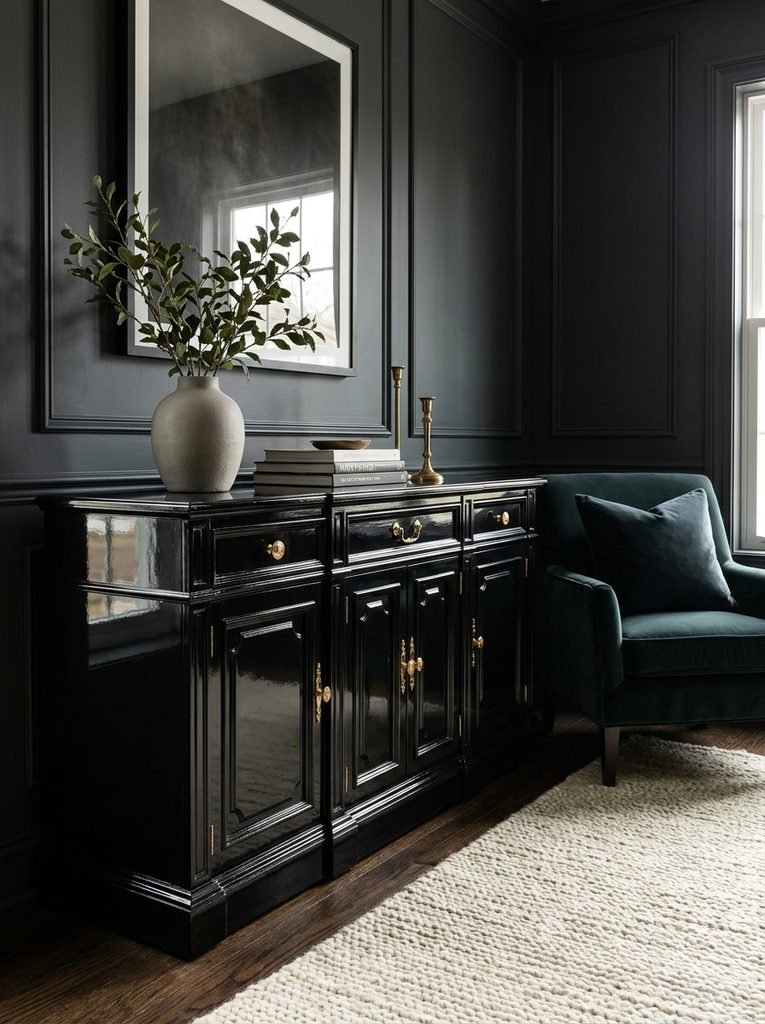
Pick rug pile by traffic. Use low pile, under half an inch, near the door and under chairs so legs don’t snag, and save shaggy pile for beside the bed. In a living room, set at least the front legs of the sofa on the rug. For cushions, mix three textures in two colors, such as ribbed velvet, smooth silk, and long-pile faux fur, and add a rug pad so everything stays put.
Streamlined Art Deco Entryways
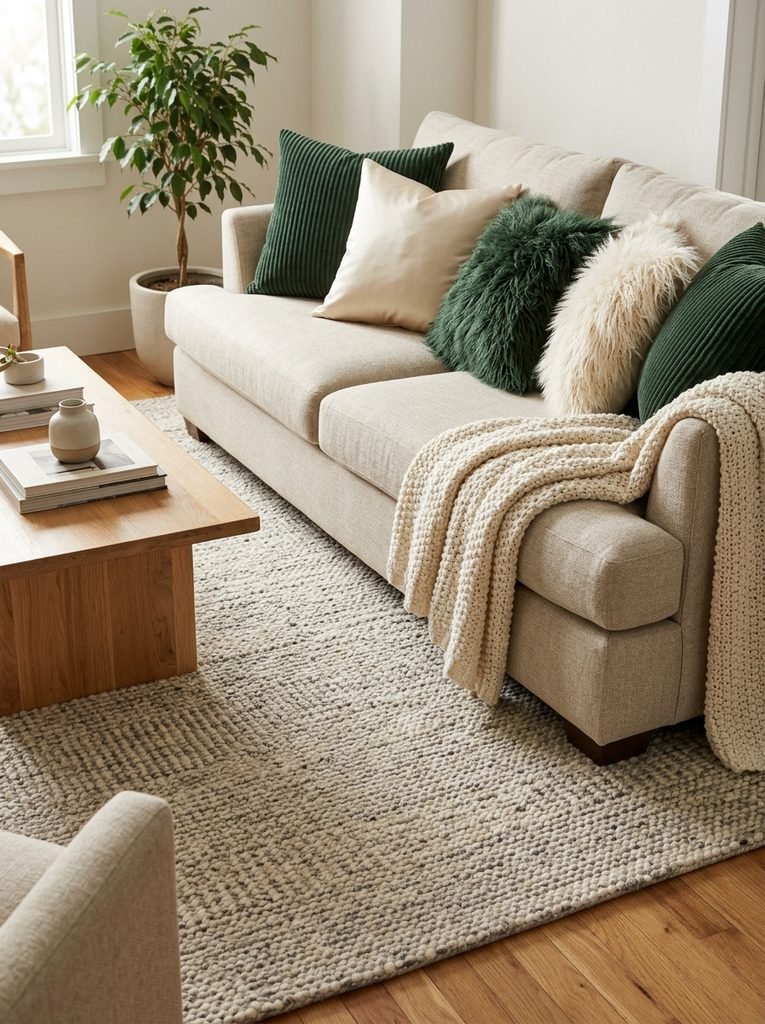
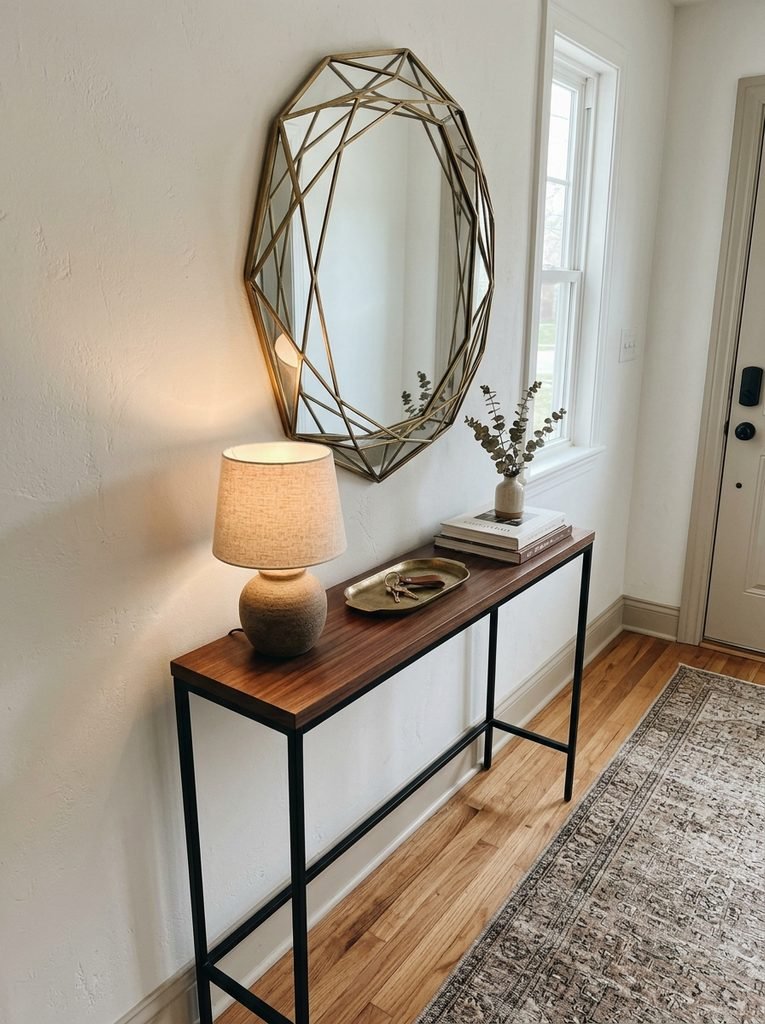
Most apartment entries are a door and a wall. A console 8 to 10 inches deep fits where a bigger one won’t, and a floating shelf mounted at 34 inches works when floor space is gone. Add a mirror with its center at 57 to 60 inches, a small tray for keys, and one plug-in sconce or lamp. Keep everything within a clear 36 inches of walking space.
Statement Headboards in Bedrooms
In a small bedroom, a tall headboard raises the ceiling visually. Aim for 54 to 60 inches high, and measure your wall before ordering anything floor to ceiling. Vertical channel tufting reinforces height, and chevron stitching adds pattern. Renters can use a freestanding headboard that bolts to the bed frame. Keep nightstands about 24 inches wide or smaller so the bed wall doesn’t crowd the room.

Open-Plan Spaces with Symmetry
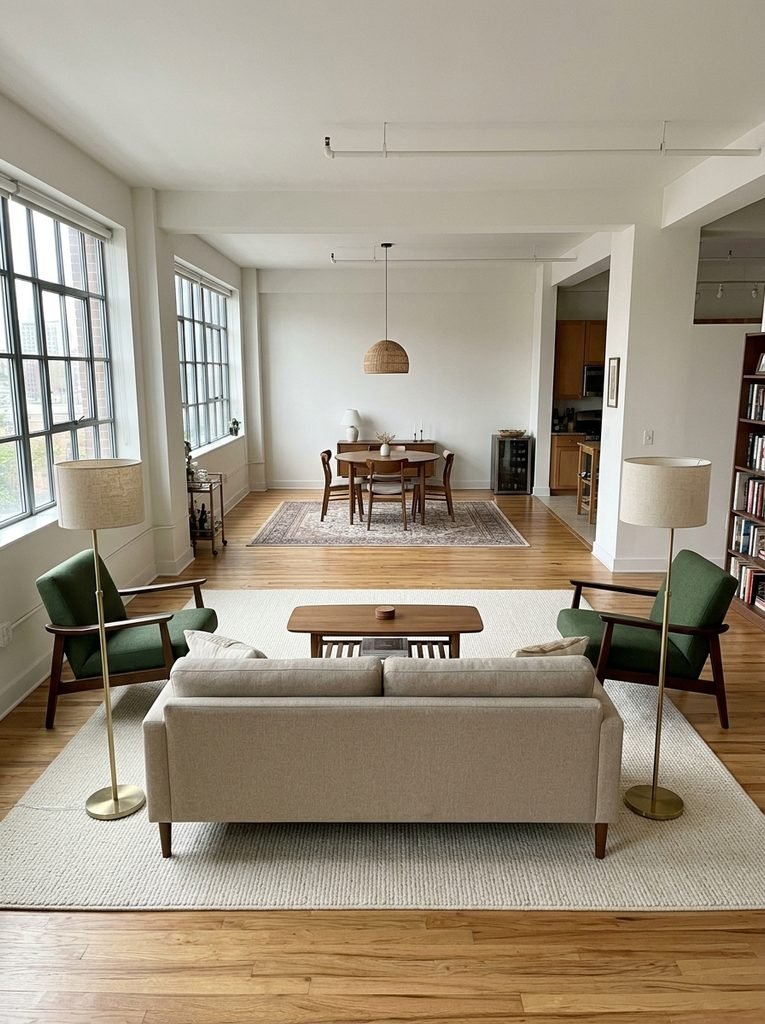
In a studio or open-plan apartment, symmetry sorts one big room into zones. Place two matching armchairs and a pair of identical lamps to define the living area, then use a round table and a single pendant for dining. Let rug edges act as invisible walls. Leave 18 to 24 inches between the rug edge and the nearest piece of furniture so each zone reads as its own space.
Artwork with Geometric Patterns
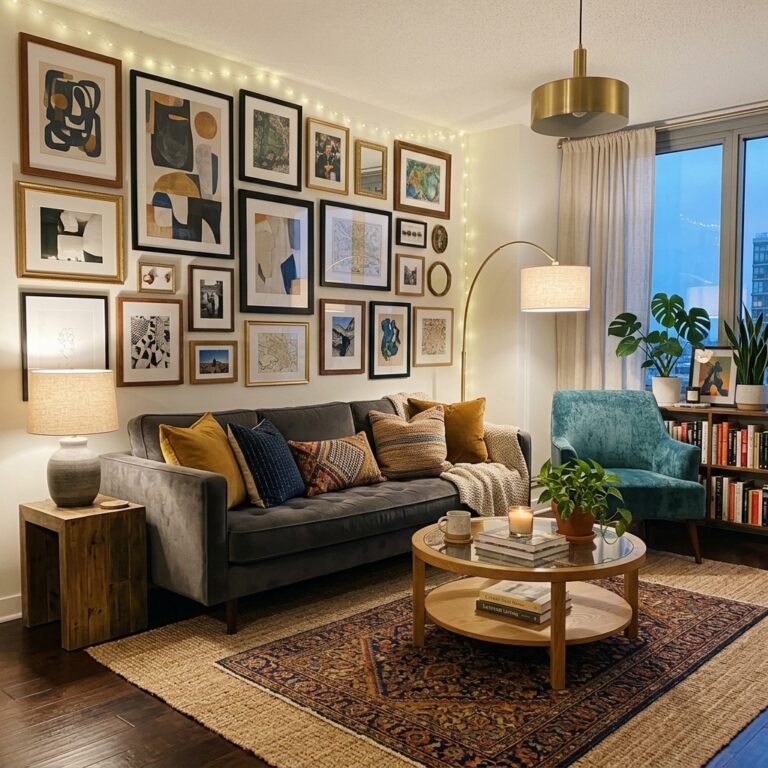
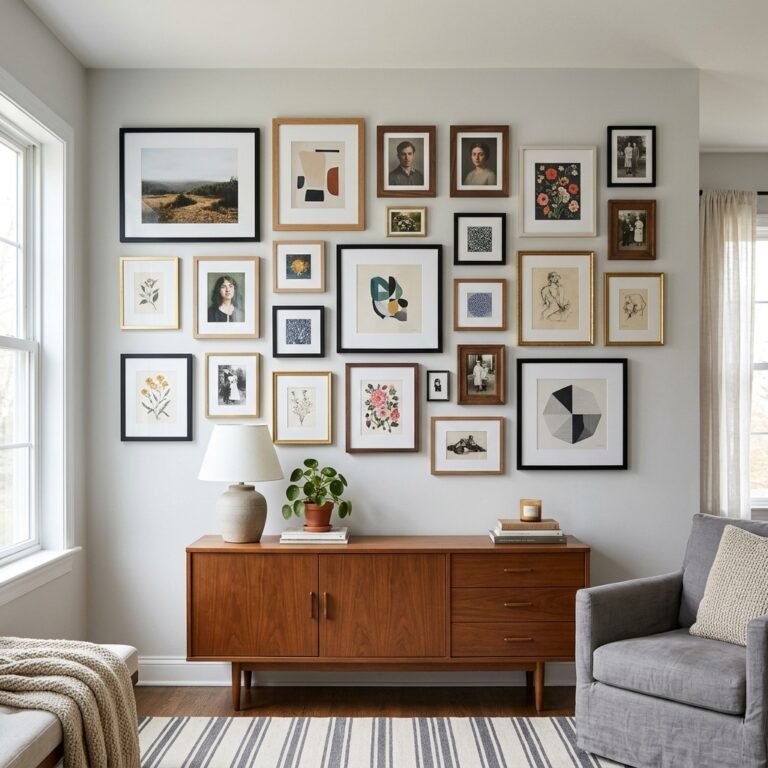
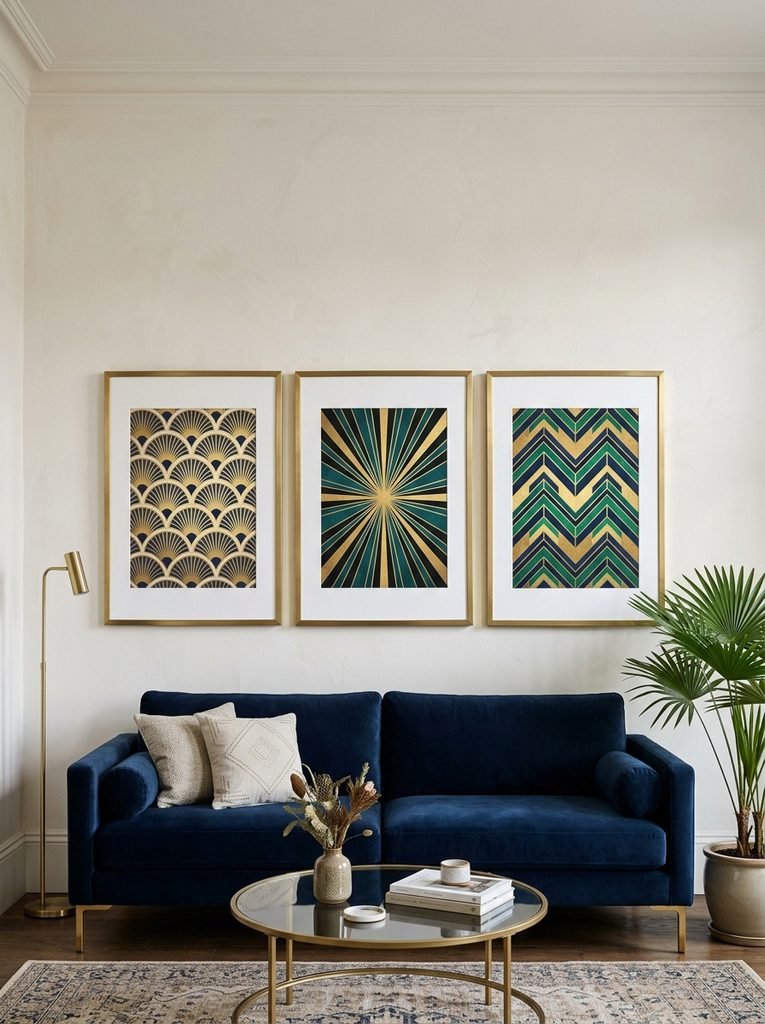
Chevrons, fans, and sunbursts are the Deco shortlist. Size art about two-thirds the width of the sofa below it and hang it with the center near 57 inches. For a gallery wall, use three matching frames spaced about 2 inches apart so the grid reads as one piece. Brass or black frames reinforce the look. Removable adhesive strips rated for the frame’s weight keep rental walls intact.
Indoor Plants for Fresh Glamour
Plants soften all that geometry. A Kentia palm tolerates low light and is generally listed as safe for pets, while a snake plant survives dim corners but is mildly toxic to cats and dogs. Put plants in black or metallic glazed pots, 12 to 14 inches wide, and slip a plastic nursery pot inside so you can drain it. Use odd numbers, and keep the tallest plant in a corner where it frames the room.

Tips for Pulling Off Art Deco in Small Apartments
Balancing Boldness with Minimalism
Use a one-statement-per-room rule. Choose lighting, a bold sofa, or a mirrored wall, then keep everything else simple. If you can’t explain what a piece adds in one sentence, leave it out. Edit before you buy, because Deco looks best when each piece has room around it.
Using Mirrors and Light Strategically
Place mirrors beside or opposite windows, add reflective furniture, and layer lighting at three heights. Use warm bulbs and put lamps on dimmers, so the gold and glass glow in the evening. Even a compact apartment can feel open and bright when light has somewhere to bounce.
Conclusion
Modern Art Deco is a good fit for apartments because it works with limits, not against them. Start with light, a mirror, and one rich material, then add pattern in a single place. If you rent, our guide to making a rental look custom designed shows more no-drill options. Edit often, repeat your metals, and let a few strong pieces carry the room.