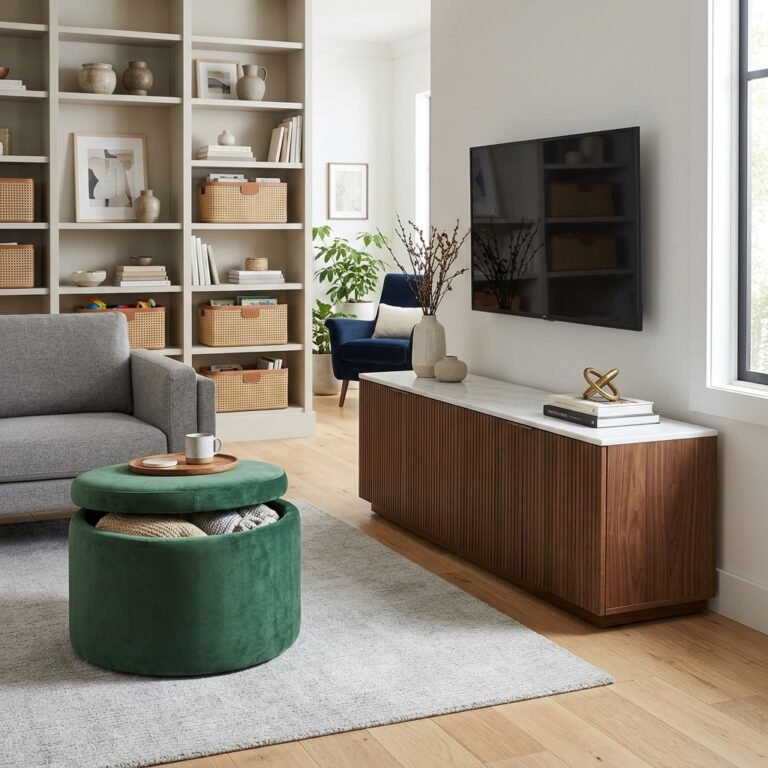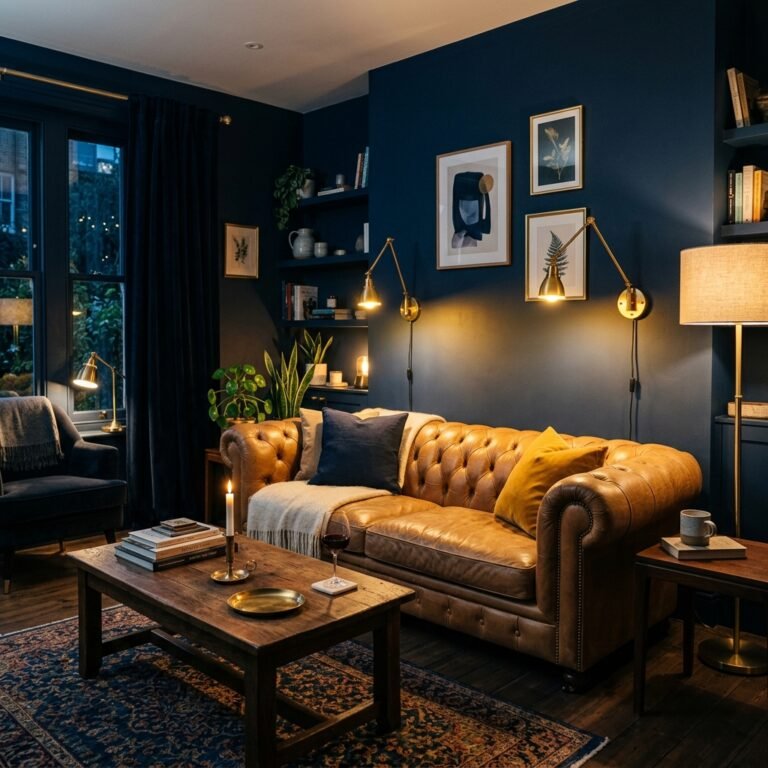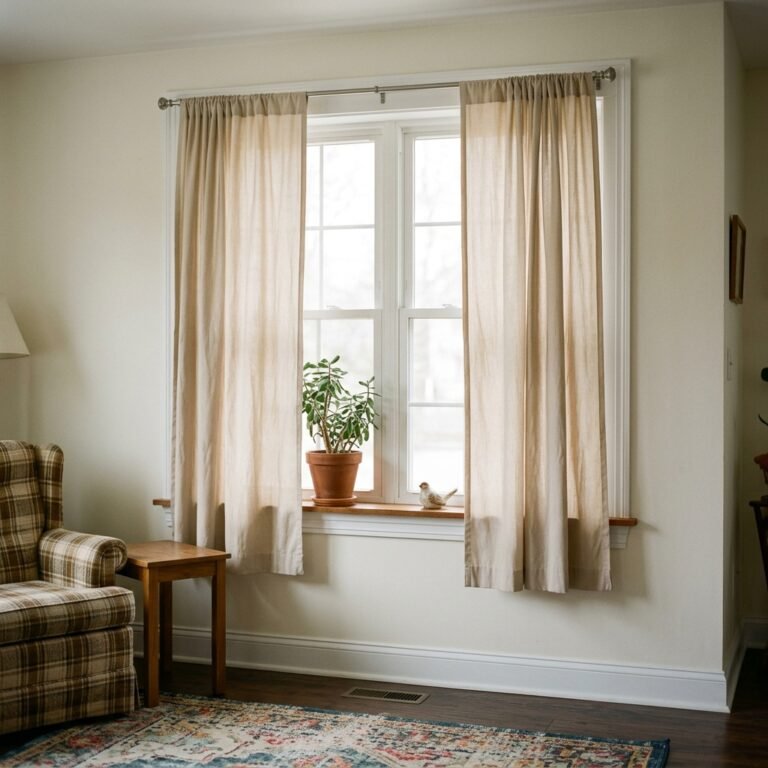
Most living rooms with an accent chair have the same problem. The chair is nice, the sofa is nice, and yet the two never look like they were chosen together. The room reads as a set of purchases rather than a plan.
Professionally styled rooms rarely rely on a more expensive chair. They rely on decisions made in a specific order: what the chair is for, how big it should be, where it should face, and what surrounds it. Fabric and color come after those choices, not before.
This guide follows that order. It covers the practical measurements and layout moves that make an accent chair look intentional, plus the fabric, rug, lighting, and small-space details that finish the job.
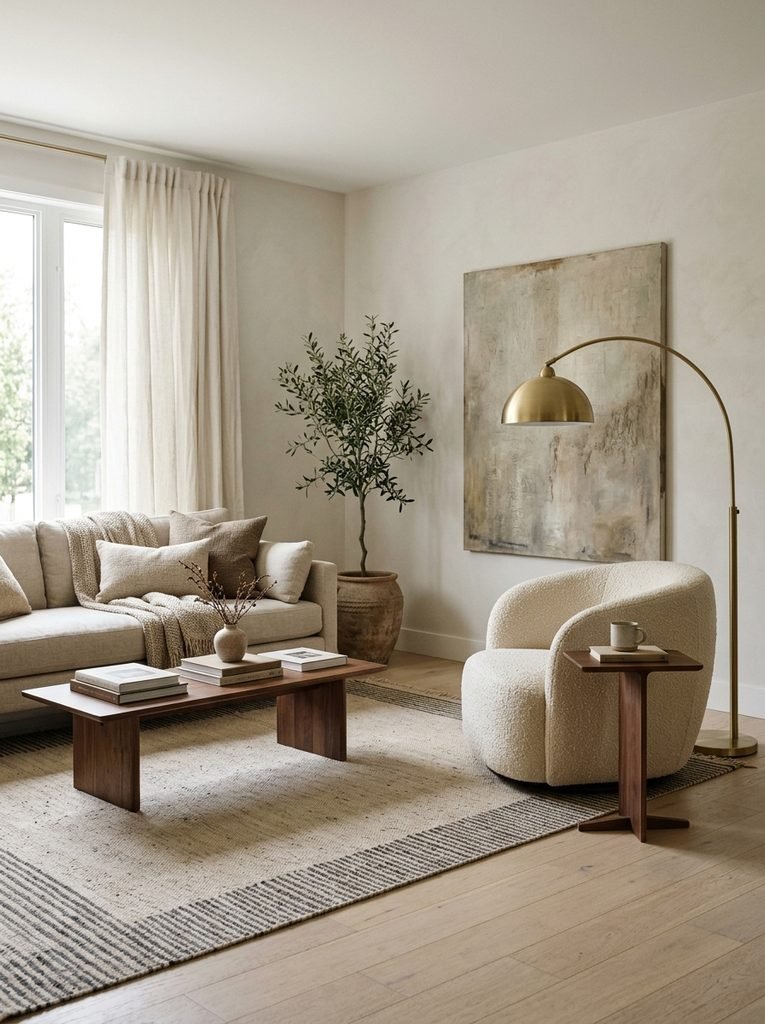
Decide What the Chair Is Actually For
A chair with no job tends to drift. It ends up in whatever corner is empty and looks like overflow seating. A chair with a clear role gets a clear position, and the position is what makes it look planned.
Most accent chairs do one of four jobs. Naming yours first narrows every other choice.
The Conversation Chair
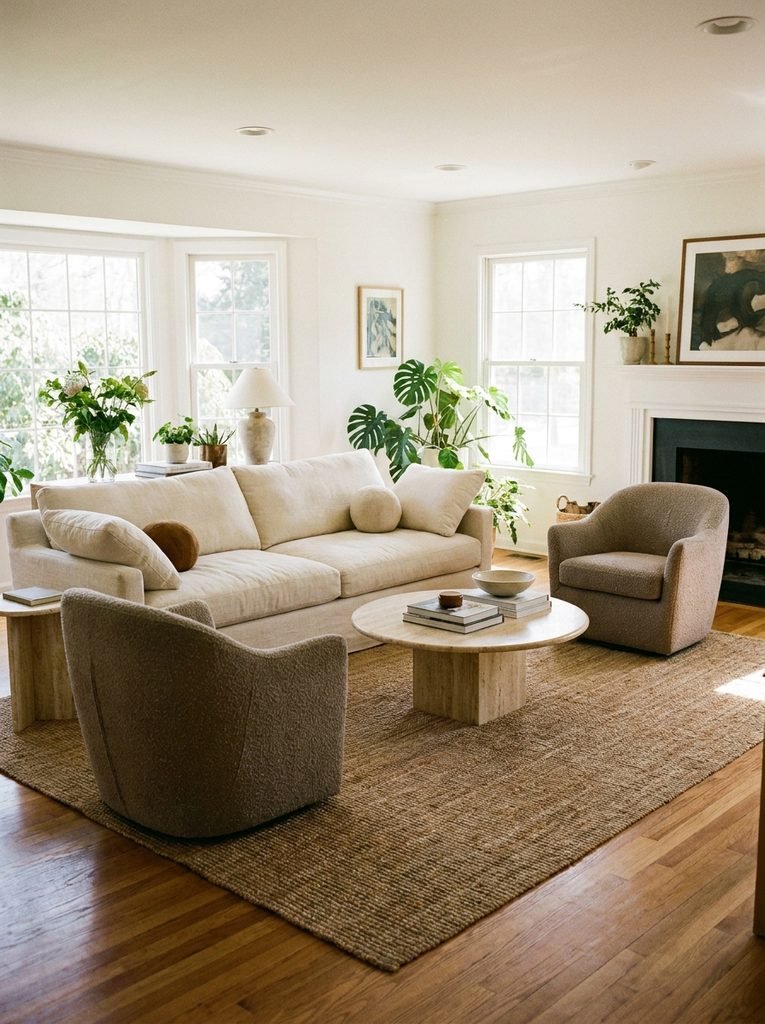
This chair completes the seating group and faces the sofa across the coffee table. It needs to be comfortable for an hour of talking, so look for a supportive back and arms at a usable height. Pairs of conversation chairs work especially well opposite a sofa.
The Reading Chair
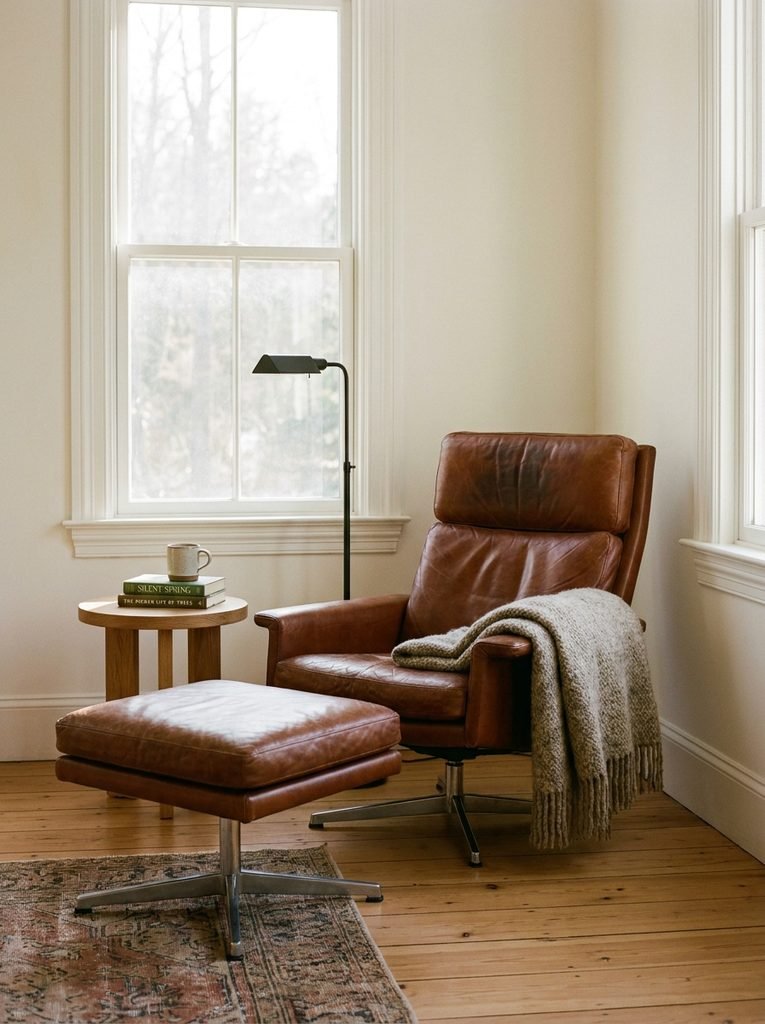
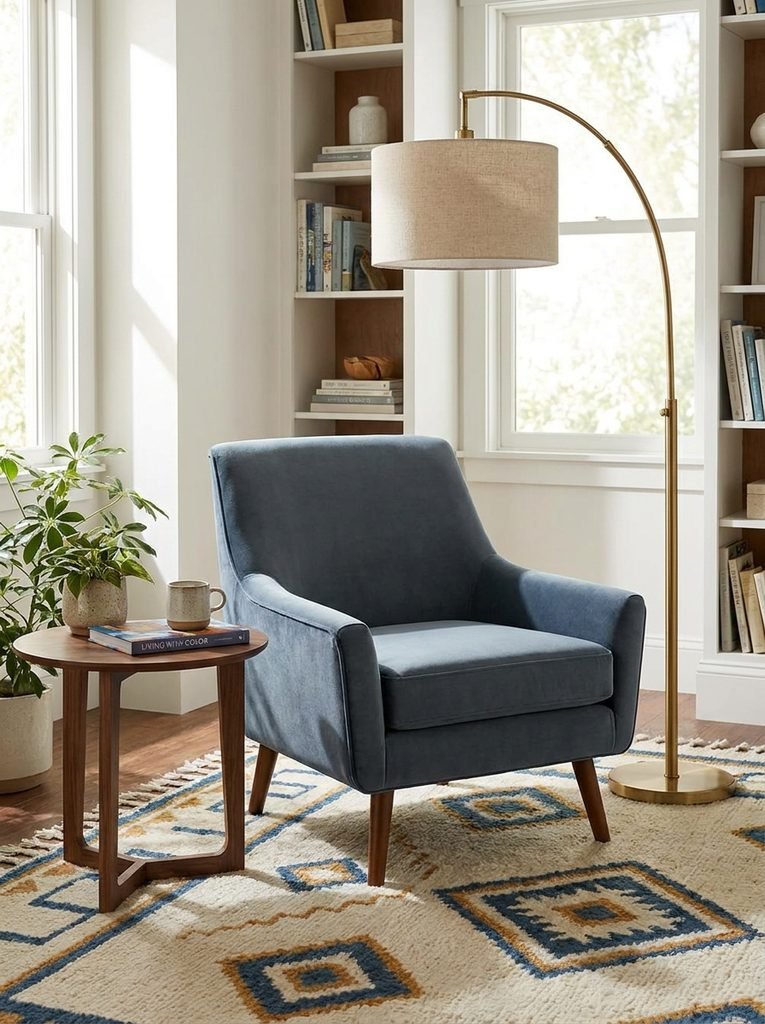
A reading chair sits slightly apart, usually near a window or beside a bookshelf. It needs a lamp, a side table, and a seat deep enough to curl into. This is where a lounge-style chair or a chair with a footstool earns its space.
The Balance Chair
Some rooms lean to one side because the sofa, the TV, and the heaviest furniture all sit along a single wall. A balance chair offsets that weight. Its job is visual, so a lighter frame or a sculptural shape often works better than a bulky one.
The Corner Filler
A chair in a dead corner can soften a sharp angle and give the eye somewhere to land. It does not need to be the most comfortable seat in the room, but it should still be one people would actually use. A chair nobody sits in becomes a coat rack within a month.
Get the Scale Right Before You Think About Fabric
Scale is the reason many chairs look wrong in a room even when the color is right. A chair that is too bulky crowds the sofa, and one that is too small looks like a stray piece from another room. Getting proportion right does more for the final look than any fabric choice.
Match Visual Weight, Not Exact Size
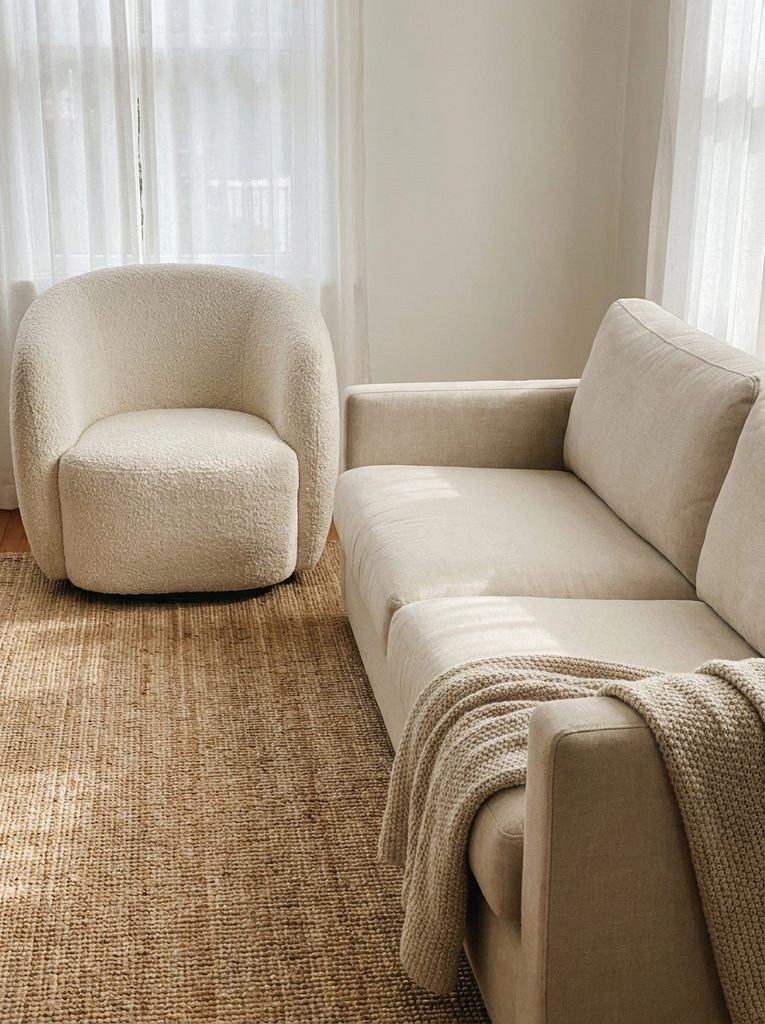
The chair does not need to be the same size as the sofa, but it should feel like it belongs to the same room. A chunky, low sofa pairs well with a chair that has some heft, like a barrel or a rounded lounge shape. A sofa with slim legs and a tight back pairs well with a chair on open legs, which keeps the sightline clear to the floor.
Seat height matters too. When the chair seat sits noticeably higher or lower than the sofa seat, the group looks uneven from across the room. Aim for seat heights within a couple of inches of each other.
Respect the Distances
A few rough spacing guidelines help a seating group feel comfortable. Leave roughly 14 to 18 inches between a chair and the coffee table so people can reach a drink without leaning. Keep main walkways around 30 to 36 inches wide. These are general ranges, so adjust them to your room and how you move through it.
Seating that is too far apart makes conversation feel awkward. As a loose guide, people in a group should be able to talk without raising their voices, which usually means keeping the whole arrangement within about eight to ten feet.
Check the Chair on the Floor Before You Buy
Cut a piece of cardboard or tape the chair’s footprint on the floor using the listed dimensions. Walk around it for a day. This simple test reveals blocked doors, tight corners, and awkward turns that a product photo never will.
Choose a Layout That Looks Planned
Placement is where a chair stops looking like an afterthought. Designers tend to use a handful of arrangements again and again, because they solve real problems while looking deliberate. The right one depends on your room’s shape and where people enter.
Facing the Sofa Across the Coffee Table
This is the classic arrangement, and it works because it creates a clear conversation zone. Use one chair if the room is narrow, or two if there is space. When using two chairs, they do not need to match perfectly, but they should share a color family or a material.
Angled Toward the Sofa in a Corner
Turning the chair about 30 to 45 degrees toward the seating group softens a corner and invites people in. It also prevents the stiff, pushed-against-the-wall look. Leave a few inches of breathing room behind the chair so it does not look jammed in.
A Pair at the End of the Sofa
Two chairs placed at the open end of a sofa form a U shape around the table. This layout suits larger rooms and anchors a seating group without needing a second sofa. It works best when the chairs are a little smaller than the sofa so the group stays balanced.
Floating by a Window
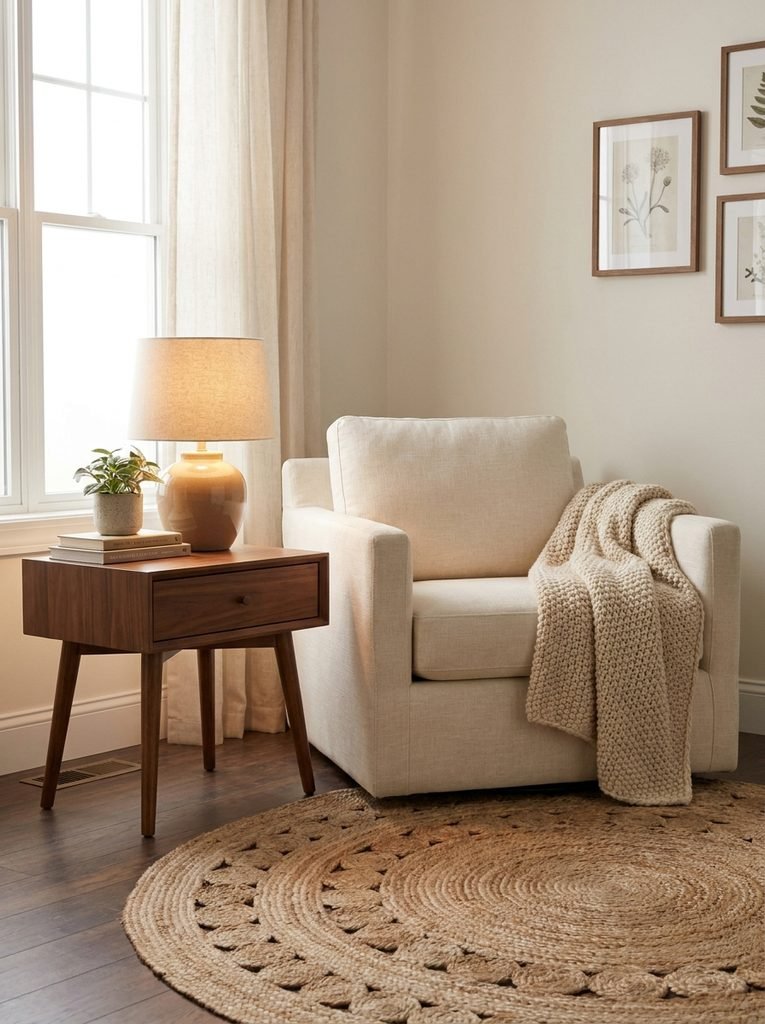
A chair set slightly away from the wall, with a small table and lamp, creates a standalone corner that feels like part of the room’s design. This arrangement works well when the room has a bay window or a deep sill. The chair should still relate to the main seating group through color or shape, so it does not look like it belongs to a different room.
Connect the Chair to the Sofa Without Matching It
A designer-styled room rarely uses a chair that matches the sofa exactly. It also rarely uses a chair that fights the sofa. The goal is a relationship, one that the eye can read in a second.
Use One Shared Element
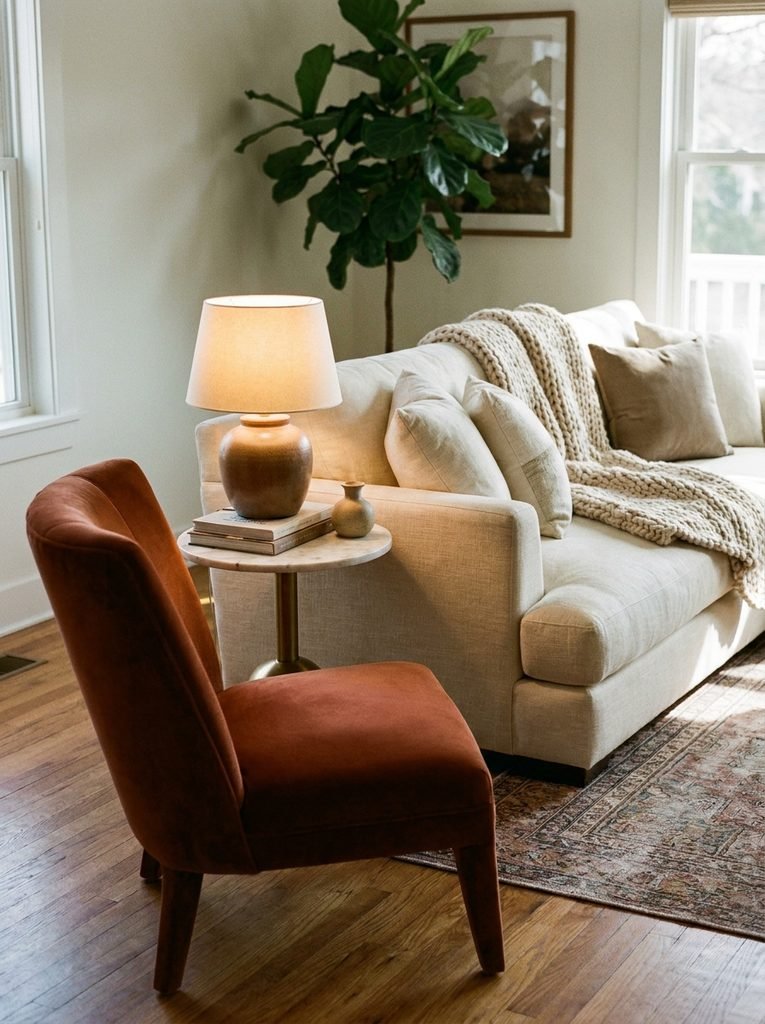
Pick one thing that links the two pieces. It could be a color undertone, a wood finish, a leg shape, or a repeated texture. A warm gray sofa and a chair in warm camel share an undertone even though the colors differ. A sofa with dark walnut legs and a chair with a walnut frame share a material.
Try a Simple Contrast Rule
If the sofa is a quiet neutral, the chair can carry more color or pattern. If the sofa is already bold, keep the chair calm. This balance is what keeps a room from feeling either flat or noisy.
A few combinations that tend to work:
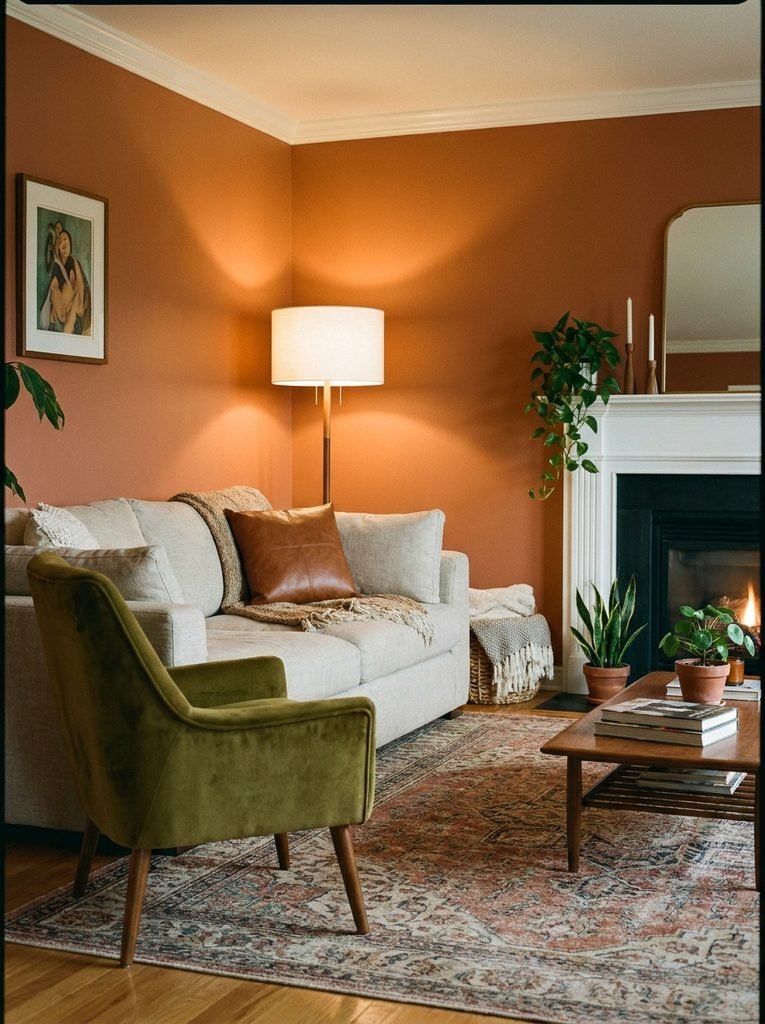
- Oatmeal sofa with a deep green or rust chair
- Charcoal sofa with a cream boucle chair and a warm wood frame
- Navy sofa with a cognac leather chair
- Warm white sofa with a black-framed chair in natural linen
Check the Colors in Evening Light
Chair colors can shift a lot between daylight and lamplight. A green that looks fresh at noon may turn muddy after dark. The guidance in living room color combinations that hold up day and night is worth reading before you commit to a bold upholstery shade.
Pick a Fabric That Adds Texture and Holds Up
Fabric choice changes how a chair looks and how long it lasts. It also decides whether the chair adds depth to the room or just more of the same surface. The most polished rooms mix textures deliberately.
Contrast the Sofa’s Surface
If the sofa is smooth, like a tight-weave linen or a cotton blend, a chair in boucle, chenille, or wool adds visual depth. If the sofa is already textured, a smoother chair in leather or velvet gives the eye a rest. Matching textures exactly tends to make a room look flat.
Match the Fabric to How the Chair Will Be Used
A reading chair that gets daily use needs a durable, tightly woven fabric. Performance fabrics, which are made to resist stains and wear, are a practical choice for homes with children or pets. Leather develops a lived-in surface over time and tends to suit chairs that see heavy use.
Light boucle and loose weaves look inviting but can snag and show marks more easily, so they suit lower-traffic spots. Always check a fabric sample in your own room, and read the manufacturer’s care and durability information before buying.
Look at the Frame and Legs
Exposed wood, metal, or cane frames add a second material to the chair. A wood frame brings warmth to a cool-toned room. A slim metal frame keeps a small room feeling open. Cane or rattan panels add a handmade quality that pairs nicely with smooth upholstery.
Build the Supporting Pieces Around the Chair
A chair alone is a piece of furniture. A chair with a rug, a table, and a light source becomes a styled corner. These supporting pieces are what viewers notice when a space looks finished.
Anchor It With a Rug
The chair should have a clear relationship to the rug. Placing at least the front legs on the rug ties the chair to the seating group visually. If the chair floats in its own nook, a small rug beneath it can mark the corner as a separate zone. The tips in rug placement ideas for the living room cover how to size the rug so the chair does not end up half on and half off in an awkward way.
Add a Side Table at the Right Height
The side table should sit at or slightly below the height of the chair’s arm. A table much taller than the arm looks clumsy, and one much lower is hard to reach. Round tables work well beside rounded chairs because they save corners and make walking past easier. Leave room for a drink, a lamp, or a small stack of books.
Give It Its Own Light
Light is the detail that most often goes missing. A floor lamp or an arc lamp beside the chair makes the corner usable after dark and adds a warm glow that photographs well. Place the lamp so the bulb sits roughly at shoulder height when you are seated, which keeps glare off the page if you are reading.
Finish With One or Two Soft Layers
A throw over one arm and a single lumbar pillow are usually enough. Piling several cushions on a chair makes it look crowded and makes it uncomfortable. Choose pieces that repeat a color or texture found elsewhere in the room.
Think About the Back of the Chair
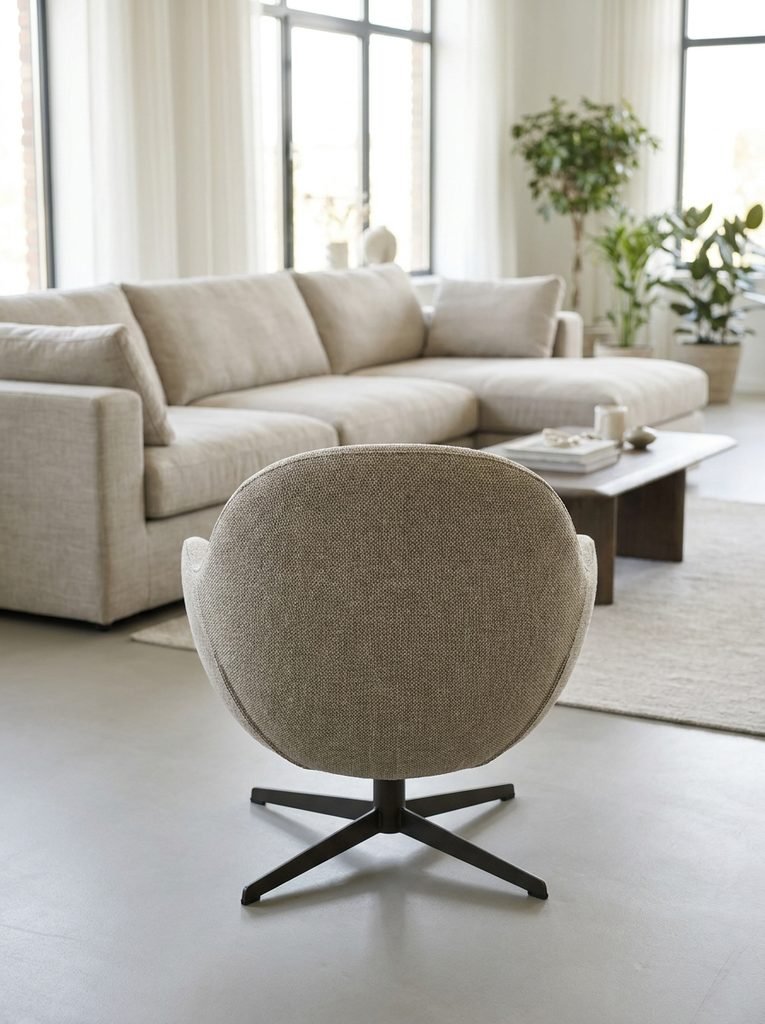
Many chairs are only judged from the front, but in an open room people see them from behind, from the side, and from the doorway. A chair that looks great head-on but has a plain, shapeless back can undermine a carefully styled room.
Choose a Chair That Looks Good From Every Angle
If the chair will float in the room, check how the back is upholstered. Look for a finished, shaped back rather than a flat panel. Curved frames, tufting at the back, or a visible wood or cane detail all help a chair look good when viewed from the hall.
Use the Back as a Design Feature
A chair placed with its back toward a hallway or dining area can serve as a soft divider in an open plan. In that case, the back of the chair becomes the first thing visitors see, so it deserves as much attention as the front. A simple console or a slim bench behind a floating chair can also help ground it visually.
Swivel Chairs Offer Flexibility
A swivel chair can face the sofa for conversation and then turn toward a window or TV. This makes it useful in open rooms where the chair has to serve two zones. Choose a base that feels stable and check that the swivel mechanism suits the weight of the people who will use it.
Make It Work in a Small Living Room or Rental
Small rooms can still carry an accent chair if the choice is careful. The mistake is using a chair that is too large and too dark, which swallows the room. A few adjustments keep the chair looking planned instead of squeezed in.
Choose Open Legs and a Compact Footprint
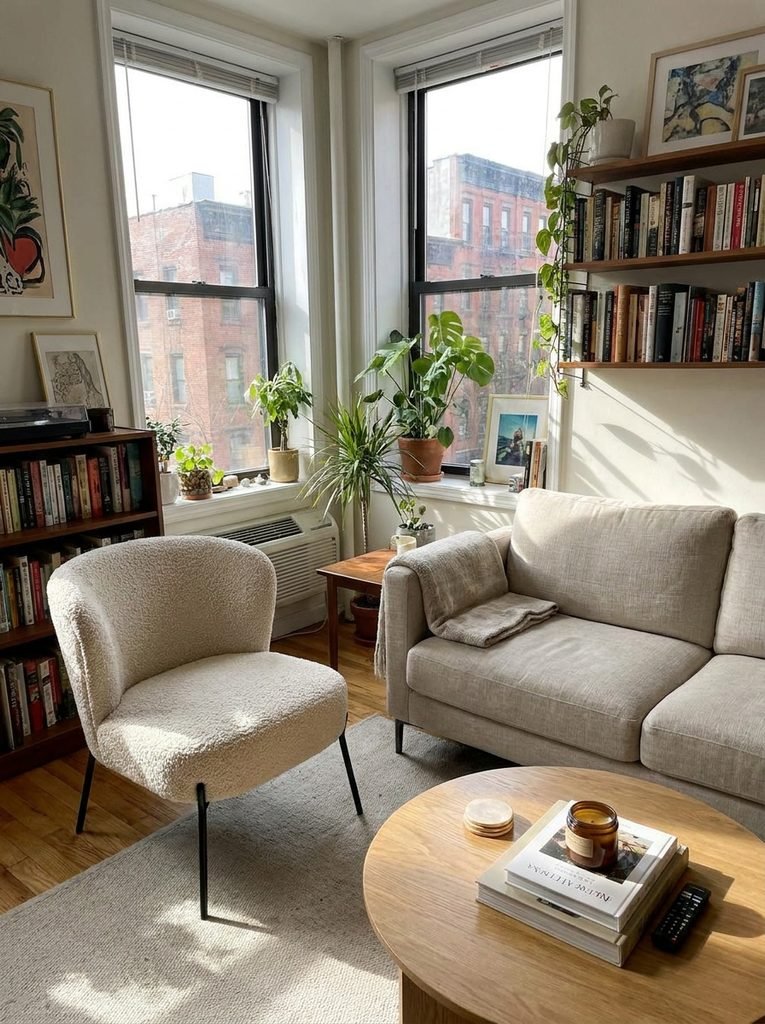
Chairs on slim legs let light and sightlines pass underneath, which makes a small room feel less filled. Look for chairs with a depth of around 28 to 32 inches, and avoid wide, skirted bases that take up floor space. A rounded back also saves corners in tight walkways.
Use the Chair to Solve a Layout Problem
A single chair can replace a second sofa in a narrow room. It can also fill a gap beside a door or fit between a window and a radiator. The ideas in tiny living room layouts for awkward doors, radiators, and windows show how a small chair can solve these problems without crowding the floor.
Keep Renters Flexible
In a rental, a chair is one of the easiest ways to add personality without touching the walls. Choose neutral upholstery and a simple frame so the chair can move between rooms and homes. If the budget is tight, a well-shaped secondhand chair can be reupholstered or covered with a fitted slipcover. Prices vary widely by region and retailer, so compare a few options before deciding.
Mistakes That Make an Accent Chair Look Like an Afterthought
Even a well-chosen chair can look wrong if a few common slips creep in. These are the ones worth checking before you call the room finished.
- Pushing the chair flat against the wall. A slight angle or a few inches of space gives it presence.
- Choosing a chair that is a different scale from everything else. Too large crowds, too small looks lost.
- Matching the sofa exactly. It reads as a set rather than a styled room.
- Leaving the chair with no light or table. The corner looks unfinished and is hard to use.
- Using too many patterns at once. One patterned piece is usually enough in a living room.
- Ignoring the chair’s comfort. A beautiful chair nobody sits in stops looking beautiful quickly.
- Forgetting the rug. A chair floating off the rug looks disconnected from the group.
A Quick Checklist Before You Settle on a Chair
Run through these questions in the store or before you click buy. They take a few minutes and catch most problems.
- What is the chair’s job in the room?
- Do the dimensions fit with 30 to 36 inches of walkway left over?
- Is the seat height close to the sofa’s?
- Does one element, such as color, wood, or texture, connect it to the sofa?
- Is there a spot for a side table and a light source?
- Does the back look good from where people will see it?
- Is the fabric suited to how the chair will be used?
If the answer to most of these is yes, the chair is likely to look like part of a plan. If several answers are no, a different chair or a different position will probably serve the room better.
A well-placed accent chair rarely draws attention to itself. It makes the sofa look better, the rug look more deliberate, and the whole room easier to read. Start with the job, measure the space, choose the angle, and let the finishing details follow.