Your front door gets seen more than any other part of your Christmas decor. Delivery drivers, neighbors, and guests all meet it before they ever see the tree. Yet it is often the last thing to get attention, and it usually ends up with one wreath hung slightly off-center and a string of lights on the railing.
A well-styled entrance does not need much more than that. It needs the right size, the right colors for your particular door, and lighting that works at night. This guide starts with how to read your own entrance, then moves through wreaths, framing, planters, lighting, and options for apartments and rentals.
Read Your Entrance Before You Buy Anything
Four quick observations will shape every decision that follows.
Door color. Dark doors such as black, navy, and deep green show off light or bright decor. Light doors in white, cream, or pale gray can handle deeper wreaths and bolder ribbon. A red door suits green and natural tones, though too much red on red can blur together.
Porch depth. A deep, covered porch can handle real greenery, ribbon, and delicate ornaments. An open stoop with no cover needs weather-hardy materials.
Sun and rain exposure. South-facing doors get strong sun that can fade ribbon and dry out fresh greenery. Doors exposed to rain or snow need waterproof pieces.
Door material and hardware. A glass panel door, a paneled wood door, and a flat steel door all hang wreaths differently, and some surfaces should not be marked or drilled.
Take a photo of the door in daylight and another at dusk. The photos will show contrast problems more clearly than standing in front of it.
Pairing Your Wreath With Your Door Color
The wreath is the center of the look, so its color relationship to the door matters. These pairings tend to work well.
- Red door: Natural green with a touch of white, cream, or gold. Skip red ribbon, which blends in.
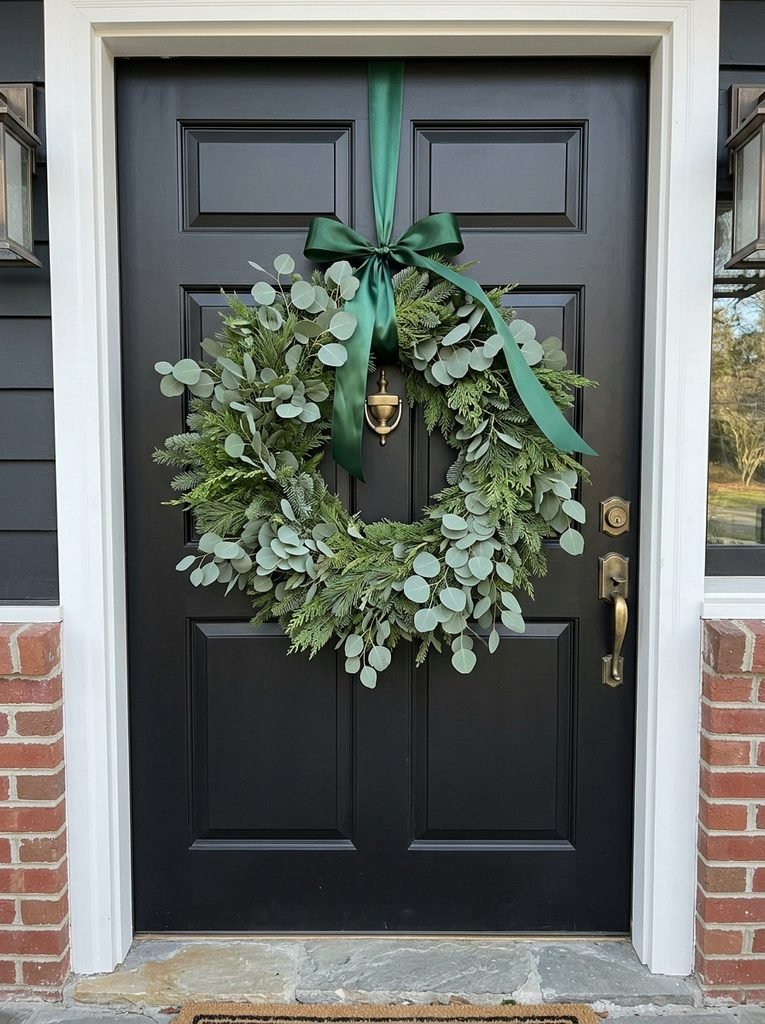
- Black door: Almost anything. Light eucalyptus, white berries, or a gold ribbon stand out sharply against black.
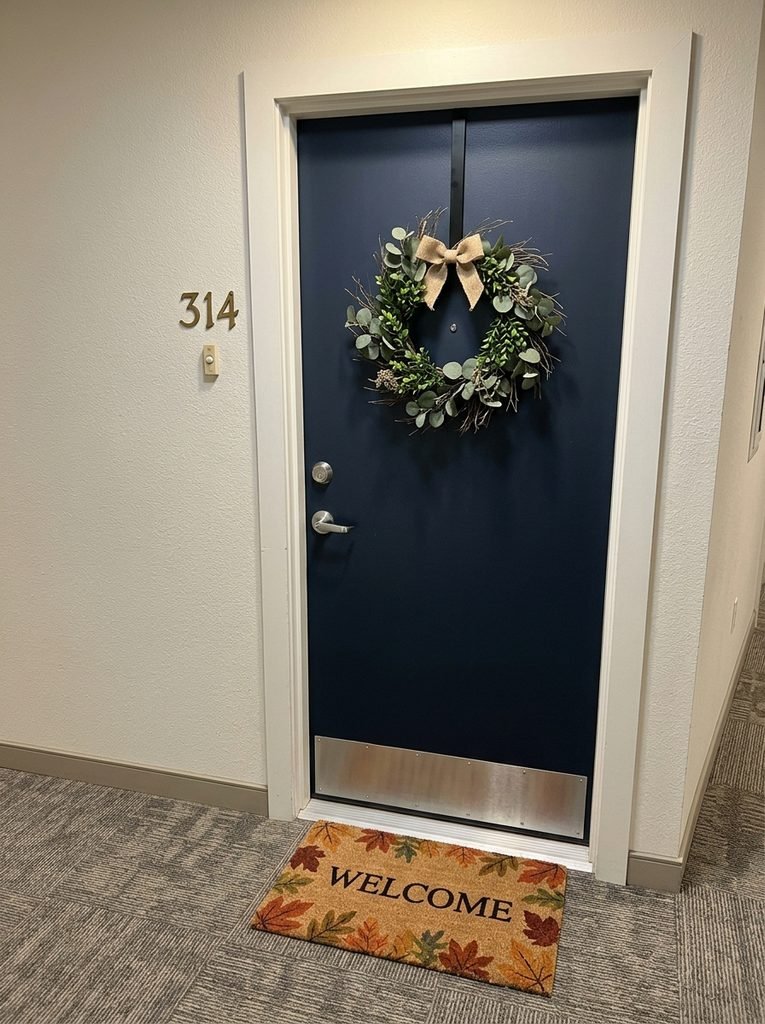
- Navy or blue door: Warm tones such as copper, rust, or ivory create a contrast. Silver-toned greenery can also look good.
- Green door: Choose a wreath with variation in the green, adding berries, pinecones, or cream ribbon so it does not vanish.
- White or cream door: Deep green with red berries, or a dark plaid ribbon, gives clear contrast.
- Natural wood door: Simple evergreen with a linen or velvet ribbon suits the grain.
- Gray door: Both warm and cool schemes work. A wreath with white and green looks fresh, while one with rust and gold looks warmer.
If you are not sure, hold the wreath against the door and step back to the sidewalk. If it fades into the door at that distance, add contrast.
Size and Placement: Where Most Wreaths Go Wrong
A wreath that is too small looks lost, and one that is too large crowds the door. As a rough guide, aim for a wreath that covers about half to two-thirds of the width of the door panel or glass area. A standard single door often suits a wreath of about 24 to 30 inches across, while narrower doors do better with something smaller.
Hang the wreath at about eye level, or slightly above if the door has a window in the upper half. Center it in the open panel, not just on the door. If your door has sidelights or a transom, think about whether the wreath should align with those lines.
Hanging options include:
- A wreath hanger that fits over the top of the door, which is the simplest choice for most doors.
- A satin ribbon looped over the top, adding a decorative touch.
- A magnetic hook, useful on steel doors.
- An adhesive hook for smooth surfaces, checking the weight limits listed on the package.
Make sure the door still closes properly and that the wreath does not bang against the frame.
Frame the Door, Not Just the Wreath
Decorating the area around the door gives the entrance more presence. The simplest way to do this is to create a frame.
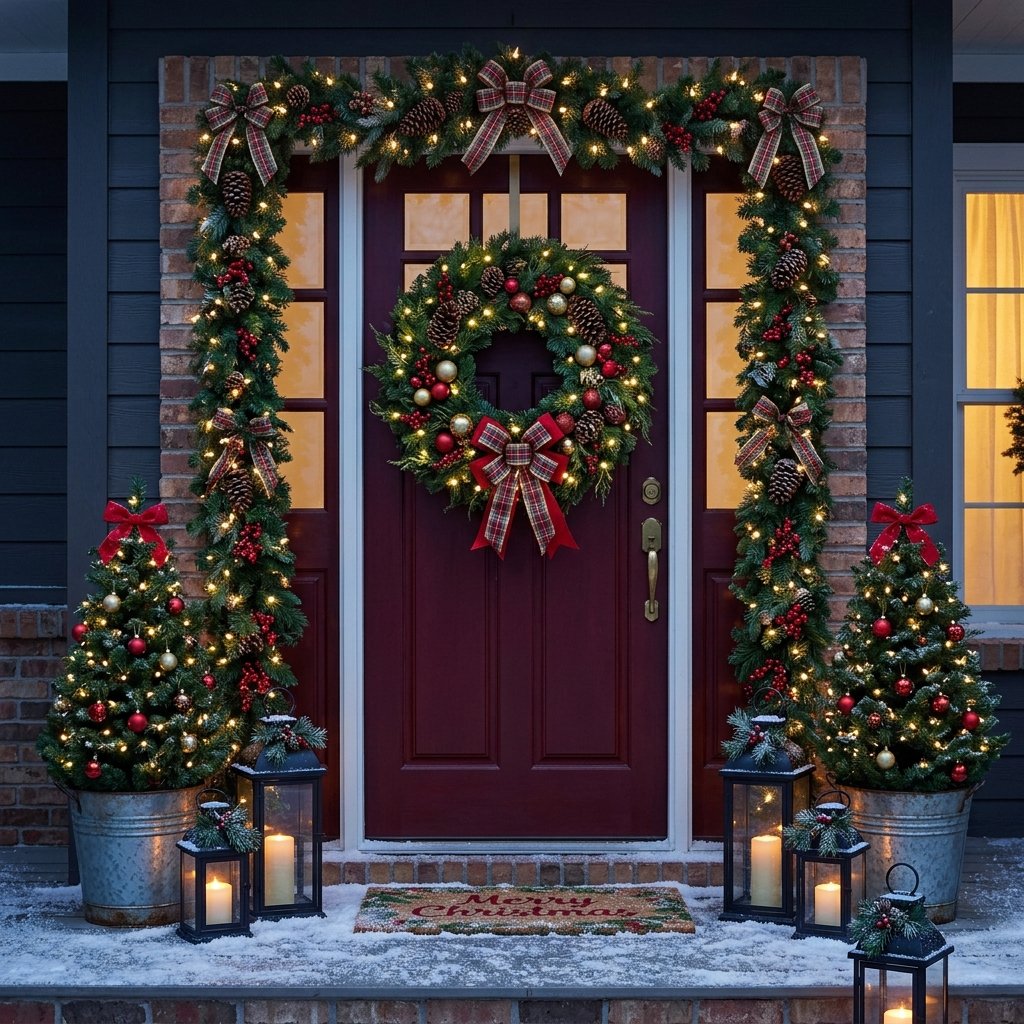
Garland around the door. Draping a narrow garland along the sides and top of the door frame draws the eye to the entrance. Attach it with clips or removable hooks suited to the surface. Choose a style that matches the wreath so the whole look feels connected.
Paired lanterns. Two matching lanterns on either side of the door add symmetry and a warm glow. Fill them with flameless candles for safety, or use battery-operated string lights.
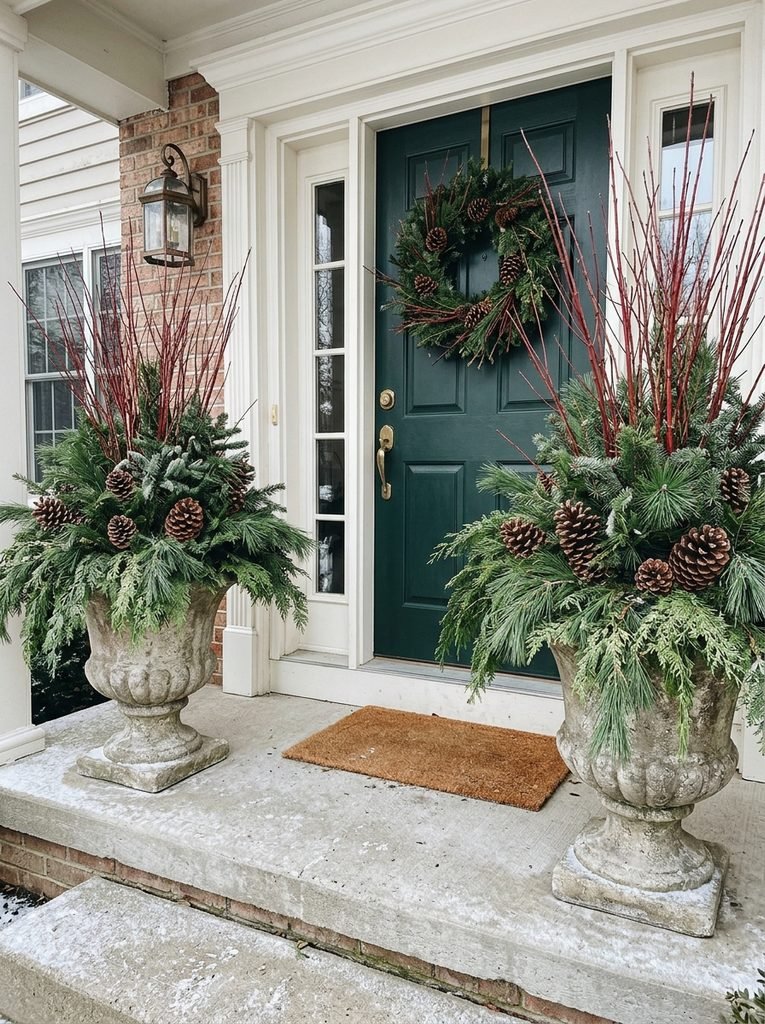
Matching planters. A pair of planters on either side of the door has a similar framing effect and can hold the winter greenery described below.
You do not need all three. Choose one or two based on your space. A door that is already framed by columns or an arched surround may need very little.
For a related approach to restraint, the logic in the Christmas mantel guide applies at the front door as well: a few well-chosen elements usually look better than a crowd.
Planters and Urns for the Season
Planters are a good way to extend the decoration beyond the door itself, and they can last the entire winter.
A simple recipe for a winter container:
- Base: Fill the pot with soil or a block of floral foam, or tuck in a weighted insert.
- Tall element: Insert branches such as red twig dogwood, birch, or curly willow at the back or center.
- Evergreen fill: Add cuttings of pine, cedar, fir, or boxwood around the base so they cascade over the edge.
- Accents: Add berries, pinecones, or dried hydrangea heads.
- Optional lights: Wrap battery-powered lights around the branches.
Fresh greenery stays good longer in cold weather, as long as the soil is moist enough to prevent drying out. In warmer climates, it may fade more quickly, so you might prefer faux stems or a mix of both.
If you already have live potted plants, such as a small evergreen, simply tie a ribbon around the pot or add a few ornaments to the plant. Check that ornaments will not damage the plant.
Lighting That Works After Dark
During December, most people see your front door in the dark. That makes lighting the most important part of the display.
A few principles keep it simple:
- Choose warm white. Warm white bulbs flatter greenery, brick, and wood, and look softer than cool white.
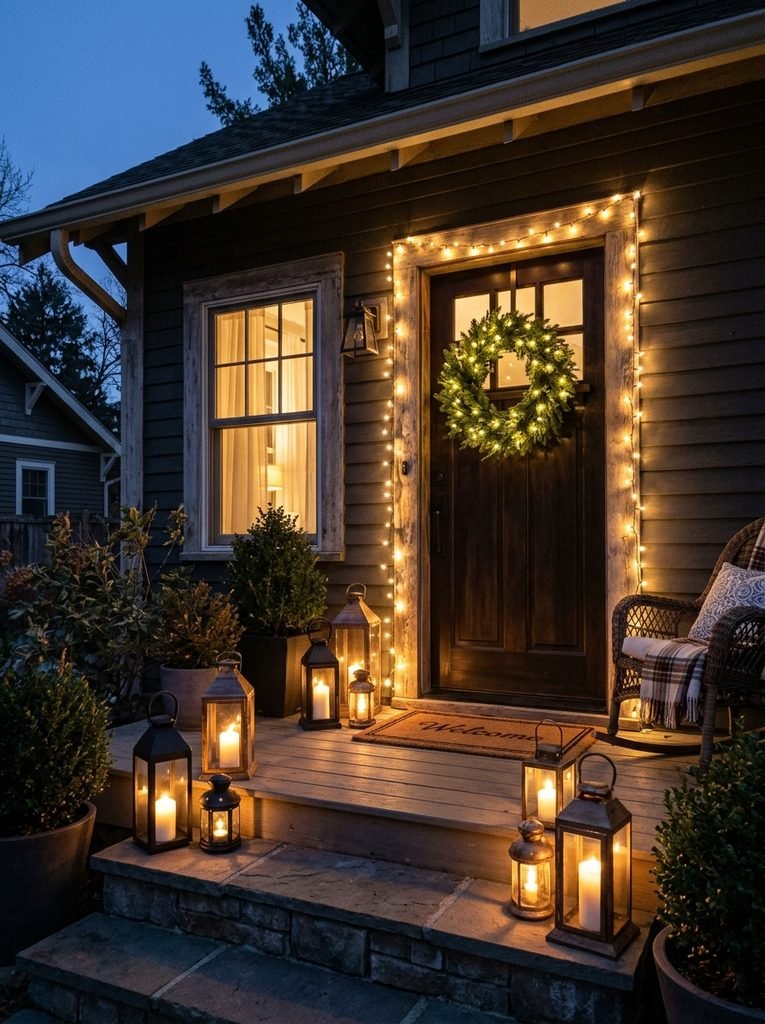
- Light one feature at a time. String lights along the door frame or porch rail, a spotlight on the wreath, or lanterns on the steps, but not all at once.
- Use outdoor-rated products. The National Fire Protection Association notes that some lights are made only for indoor use or only for outdoor use, so check the label. Their holiday safety resources have more guidance.
- Use a timer. A plug-in timer or smart plug turns the lights on at dusk and off at bedtime, so you do not have to remember.
- Check cords and connections. Avoid running cords through doors in a way that prevents them from closing properly or creates a trip hazard.
If your porch light is a harsh bulb, consider swapping to a warmer tone for the season. Light color affects how the whole entry looks, a point explored in living room color combinations that look good after dark.
Three Complete Door Looks
If you would rather follow a plan than assemble pieces, these three combinations suit different homes.
The Classic Welcome
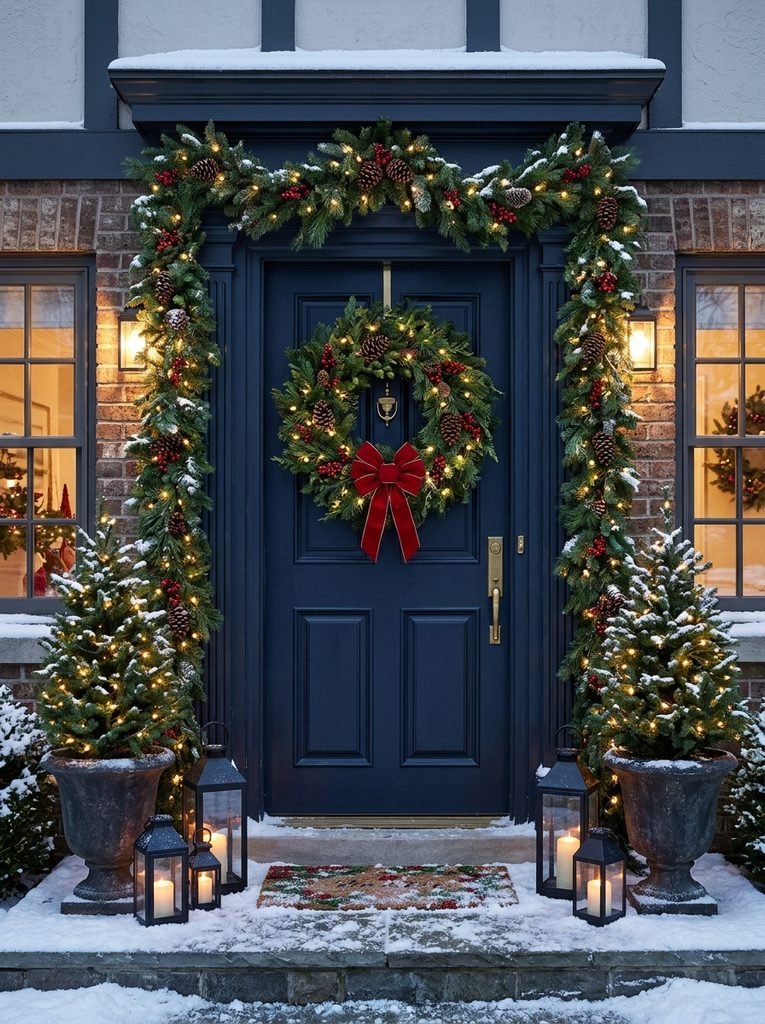
Use a full evergreen wreath with a red velvet bow, a garland around the door with small lights, and two lanterns with candles on the steps. Add a pair of potted evergreens on either side. This look suits traditional homes, brick fronts, and painted wood doors.
The Modern Minimal Door
Hang a single large wreath of eucalyptus or olive branches in a simple round shape with no bow. Place one tall planter with white branches on one side and a plain lantern on the other. Keep colors to green, white, and black. This look suits flat-panel doors, clean-lined homes, and dark doors.
The Cottage or Farmhouse Door
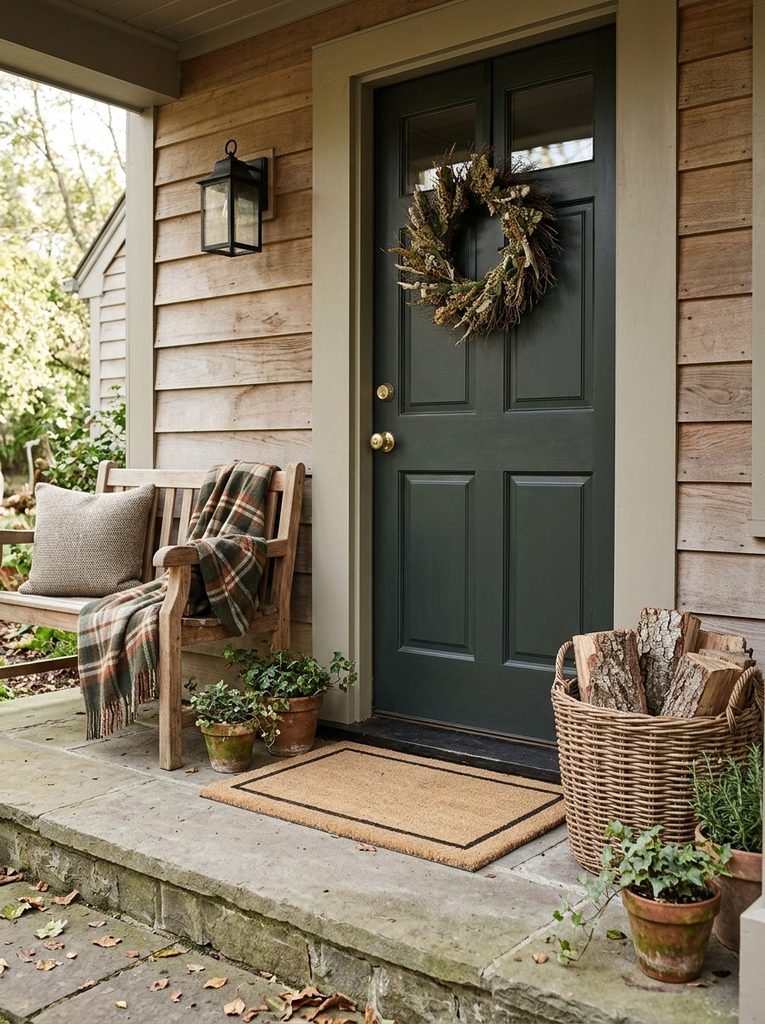
Combine a wreath with pinecones, berries, and plaid ribbon with a basket of logs or a wooden crate holding greenery. Add a small bench with a wool blanket and a few lanterns. This approach suits wooden doors, covered porches, and country-style houses.
Apartments, Rentals, and Shared Hallways
Many buildings restrict what you can hang on or around the door, so check your lease or building rules first. Some places ban nails, adhesive, or anything left in the hallway. The principles in luxury apartment decor tricks that make rentals feel custom designed apply here as well: work with removable, low-impact items.
Options that rarely cause problems:
- An over-the-door hanger for a wreath, which leaves no marks.
- A magnetic hook on metal doors.
- A small doormat with a simple seasonal design.
- A battery-operated light string along the inside of a window or on a small interior shelf.
- A garland over the interior side of the door, if the exterior is off limits.
If you have a balcony or patio door, the same approach works. For tips on outdoor spaces, the balcony decor mistake that makes apartments look unfinished offers useful context.
Weatherproofing: Real Versus Faux
Outdoor decorations face rain, wind, sun, and temperature swings, so materials matter.
Fresh greenery looks and smells wonderful and tends to last well in cold weather. In mild or sunny conditions it dries out faster. Mist it lightly and keep it out of direct sun if possible.
Faux greenery holds its shape and color for the whole season and can be reused. Look for pieces with varied shades and realistic textures rather than a uniform, shiny finish.
Ribbon should be outdoor-rated, ideally wired and water-resistant, so it keeps its shape in damp weather. Fabric ribbon can sag or fade.
Ornaments should be shatterproof if the wreath will hang in wind or near foot traffic.
A mix often works best, such as faux for the wreath and fresh cuttings in planters.
Details Guests Notice Without Realizing It
The small elements near the door contribute to a polished impression.
- A clean doormat. Replace a worn one with a simple, neutral design.
- Visible house numbers. Make sure they are easy to read, especially at night.
- Clear steps and walkways. Sweep leaves, shovel snow, and add a mat or traction if needed.
- A place for coats or boots. A small bench or basket under cover keeps wet items off the floor.
- A pleasant scent. Fresh pine or cedar near the door carries its own natural fragrance.
If you are expecting deliveries, place decor so that it does not block the doorbell or get in the way of packages.
Keeping It Affordable
You can create a good-looking entrance without much expense.
- Start with the wreath. One well-made wreath is more effective than several cheap items.
- Cut your own greenery. If you have trees or shrubs, trim cuttings for planters or garlands. Check that the plants are safe to handle and that you have permission if the land is not yours.
- Reuse what you have. Lanterns, baskets, and planters from other rooms or seasons often fit.
- Buy in off-peak times. Prices for wreaths and lights often drop after the holiday, though selection and prices vary by store.
- Add one element each year. Build your collection gradually.
A Final Walk-By Before You Call It Done
Finish by checking the view from the street or the sidewalk. Look at the door in daylight, then again at dusk. Ask whether the wreath is centered, the lights are warm and even, and the colors stand out against the door.
If something looks off, adjust one element at a time. Often a small shift in height, a trimmed ribbon, or a swap to a warmer bulb is all it takes. A welcoming entrance should feel inviting in the first few seconds, and it should still look good once the novelty has worn off.