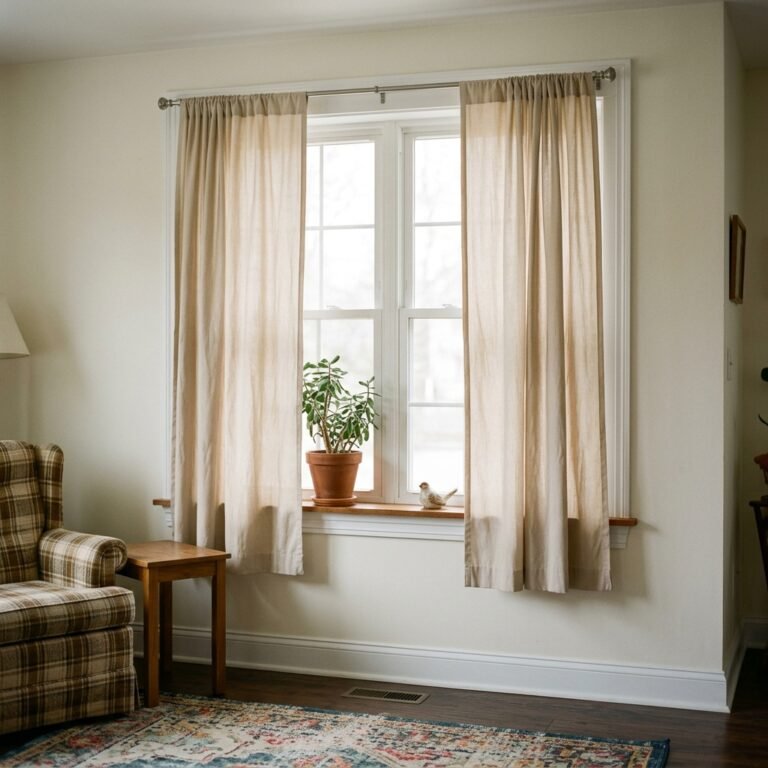
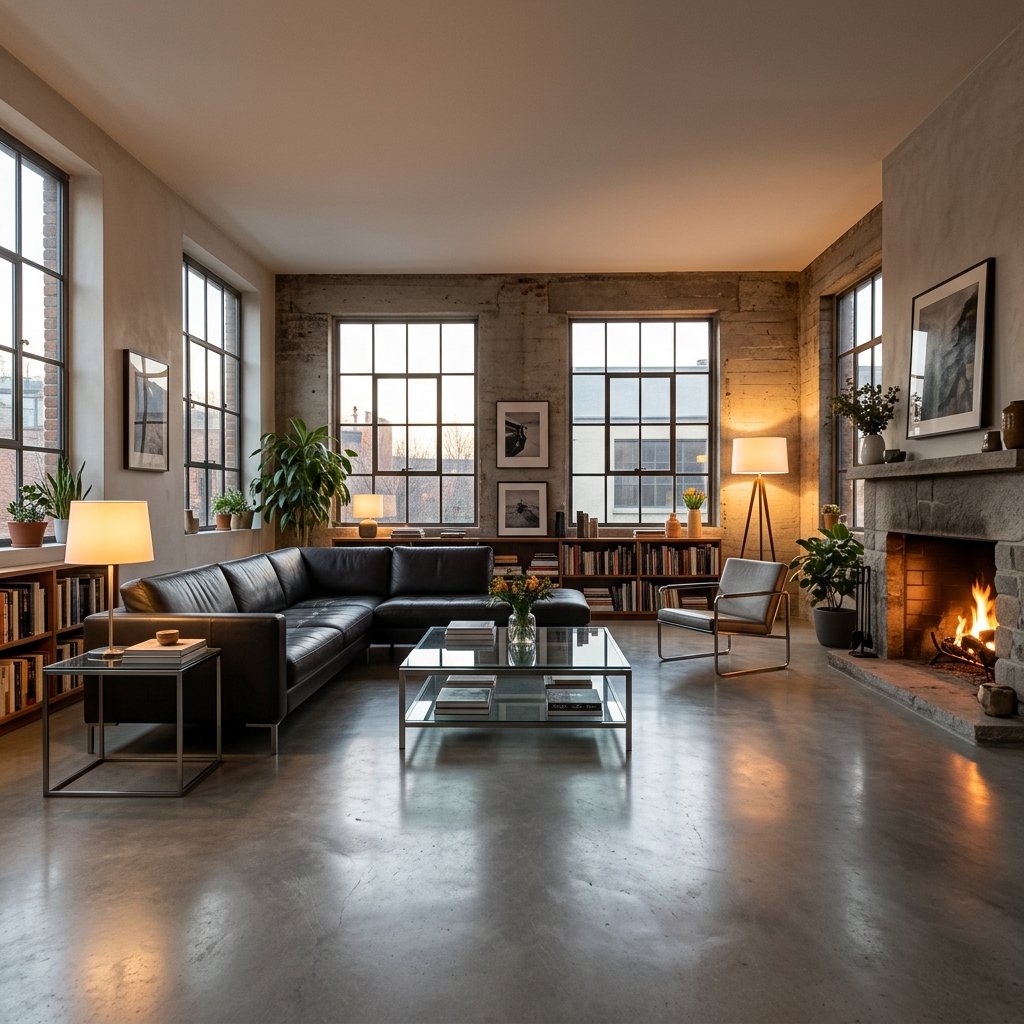
You hang the last lamp, fold the throw over the sofa arm, and step back. The room matches the photo you saved. Then you say something across the room, and your voice comes back thin and a half-beat late. Ten minutes later your feet are cold on the floor and your shoulder feels a chill from the window.
The room looks cozy. It does not feel cozy. That gap is not a missing cushion. Most cozy advice styles what you see, while your body also reads what you hear, what you touch, and how the air moves. This guide covers the mistake behind the gap: decorating for the eye in a room full of hard surfaces, drafts, and cold glass.
You can test for the problem right now, and most fixes cost less than $150. If the visual layers are still missing, this room-by-room guide to cozy decorating ideas built on lamps, throws, and warm textures covers them. This one covers what those layers cannot fix.
Why a Room Can Look Cozy and Still Feel Cold
A room feels cozy through three channels at once. Sound should be soft and close, with no ring. Surfaces should not pull heat from your skin. Air should sit still at an even temperature. A photo captures none of these.
A bare, drafty room can be styled perfectly and still fail all three. The mistake is spending the budget on things you look at, like pillows, art, and lamps, while the hard floor, bare walls, uncovered glass, and leaky seams stay exactly as they were. Each fix below targets one channel, so you can find the weak one first and spend money only there.
The Clap Test You Can Run Right Now
Stand in the middle of the room and clap once, sharply. Listen to what happens after the clap. A short, dull pop means the room absorbs sound well. A ring, or a fast buzzing flutter that lingers, means sound is bouncing between hard surfaces. Acousticians call that flutter echo, and it usually shows up between two facing walls.
Repeat the clap from the sofa, then near the window wall, then near the barest wall. The spot where the buzz is loudest points at your worst surface.
Two more checks take a minute each. Stand barefoot on the bare floor, away from any rug, and notice how fast your feet cool. Then, on a cold evening, press your palm flat against the window glass and then against the nearest exterior wall. A big gap in temperature tells you where your shoulder is losing heat.
Counting the Hard Surfaces
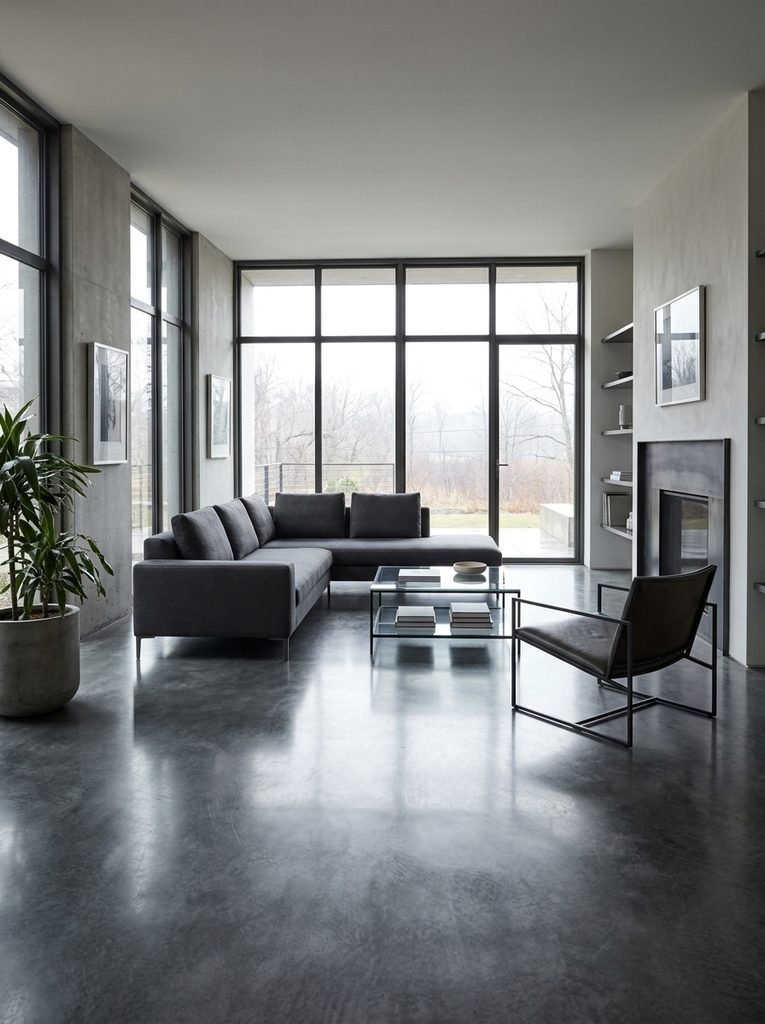
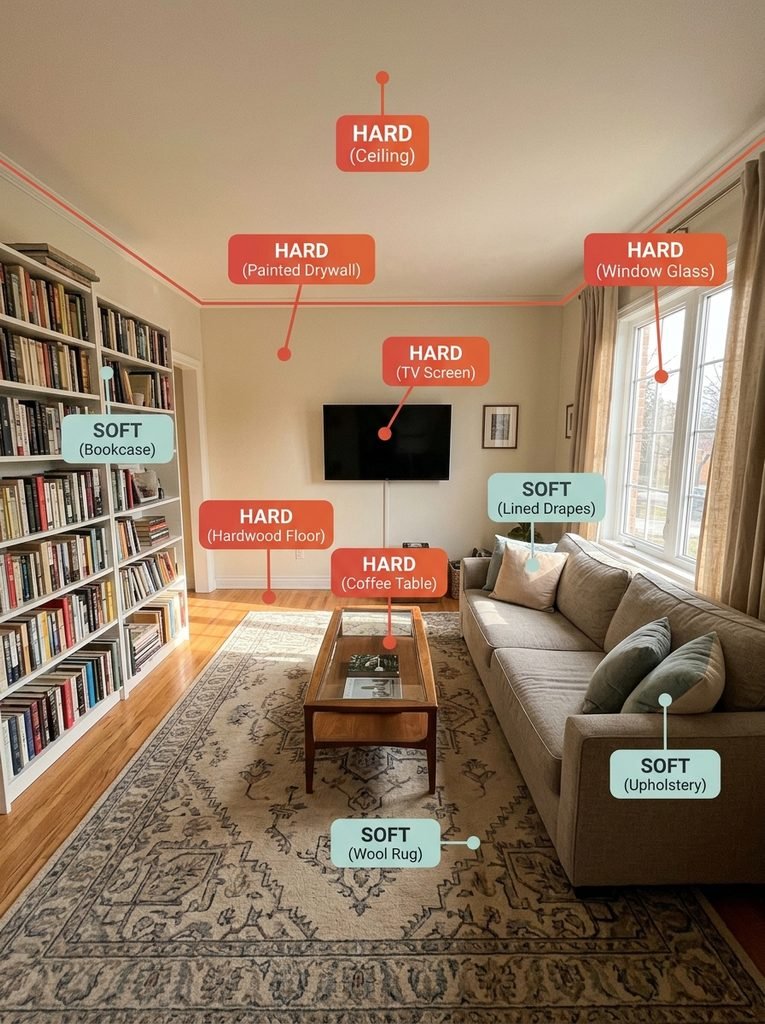
Walk the room and tag every large surface as hard or soft. Hardwood, tile, vinyl plank, painted drywall, window glass, and TV screens all reflect nearly all the sound that hits them. Upholstery, wool rugs, lined drapes, and a full bookcase absorb or scatter it.
The floor is the biggest offender. In a 14-by-18-foot room, it measures 252 square feet, and the ceiling matches it. Add roughly 500 square feet of wall, and you can see why a few pillows barely register.
Tables count too. A wood, glass, or stone coffee table top is a small hard plane at ear height when you sit, and it throws sound straight back at the sofa. It matters far less than the floor. In an otherwise bare room, it still adds to the ring.
Rugs and Carpet That Quiet a Room, Not Just Decorate It
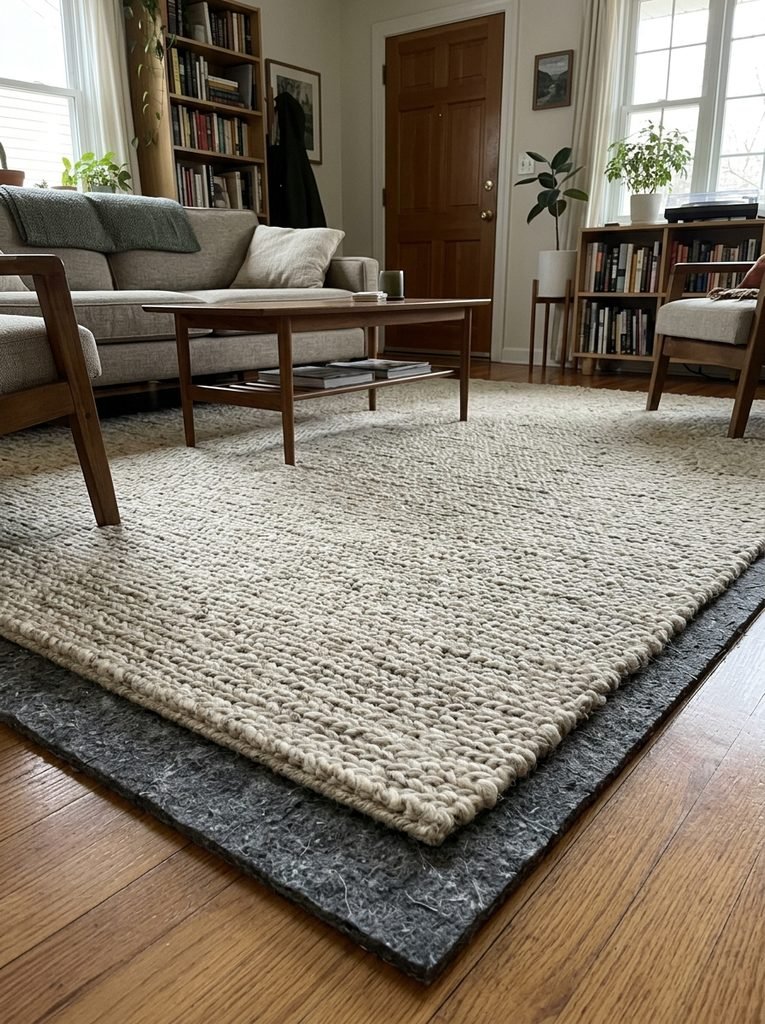
Start at the floor, because it is the largest surface and the cheapest to fix. Size does the heavy lifting. A 6-by-9 rug in that 14-by-18 room covers 54 square feet, about a fifth of the floor. A 9-by-12 covers 108, or roughly 43 percent. The more floor you cover, the less sound bounces back.
Material matters too. A dense wool or wool-blend weave absorbs more than a thin polyester flatweave. Then add the unglamorous part: a felt-and-rubber pad, about a quarter to three-eighths of an inch thick. It adds cushion and absorption, and it keeps your feet warmer. Expect to pay roughly $60 to $140 for a 9-by-12 pad. Measure your door clearance first, because a thick rug on a pad can catch the bottom of a door.
Wall-to-wall carpet absorbs the most. Renters can get close with interlocking carpet tiles that lay loose without adhesive, often $2 to $5 per square foot. Lay them under the sofa and coffee table first, then work outward as the budget allows.
Walls That Soak Up Sound Without Looking Like a Studio
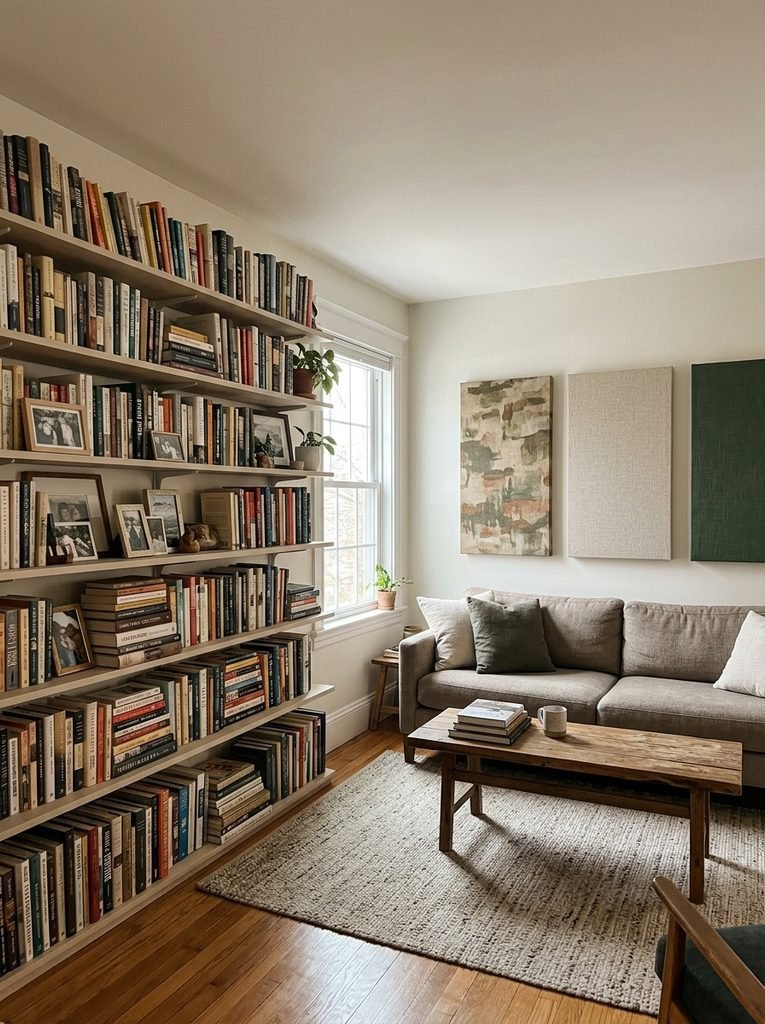
Two bare painted walls facing each other are the classic cause of flutter echo. Interrupting one wall of the pair is often enough to dull the buzz. You have two easy ways to do it.
A full bookcase is the simplest. Books of different depths scatter sound instead of reflecting it in one direction. A shelf that is half empty does little, so fill at least two-thirds of it and mix in framed photos and keepsakes.
Fabric panels work harder and can pass as art. Build a 2-by-4-foot frame from 1-by-3 pine, fit a 2-inch slab of rigid mineral wool or fiberglass inside, and stretch a breathable fabric over the front. If you can blow through the fabric, sound can get through it too. Materials run about $50 to $90 per panel, while ready-made fabric panels cost roughly $80 to $200 each. Wear gloves, long sleeves, and a dust mask when you cut the board, and wrap every edge so no fibers escape.
Hang each panel centered near 48 inches from the floor, lower than standard gallery height, so it sits in the path of sound between the sofa and the wall. Start with one on each of two facing walls. Clap again before you buy more.
The Over-Edited Room
Decluttering advice backfires here. A room with nothing on its surfaces gives sound nothing to scatter, so minimal rooms often echo more than collected ones. That does not mean piling on objects. It means putting soft mass in the right places.
Swap a metal side table for an upholstered ottoman with a tray on top. Choose a sofa with full, loose cushions over a sleek frame of wood and leather. Add a few large, well-stuffed pillows instead of many small flat ones. Each choice keeps the clean look and removes one reflective surface.
Windows, Where the Cold and the Echo Both Come In
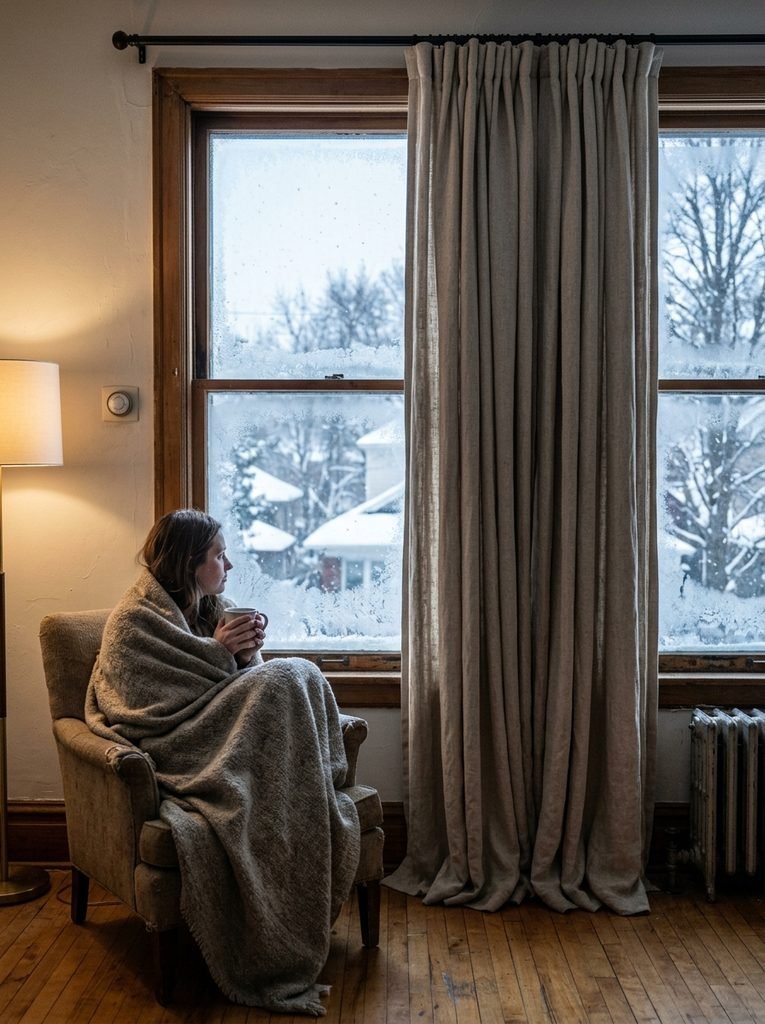
Glass reflects sound, and it also steals heat from you. Sit close to a cold window in winter and you feel chilled even when the air is warm, because your body radiates heat toward the cold surface. A thermostat reading will never show it.
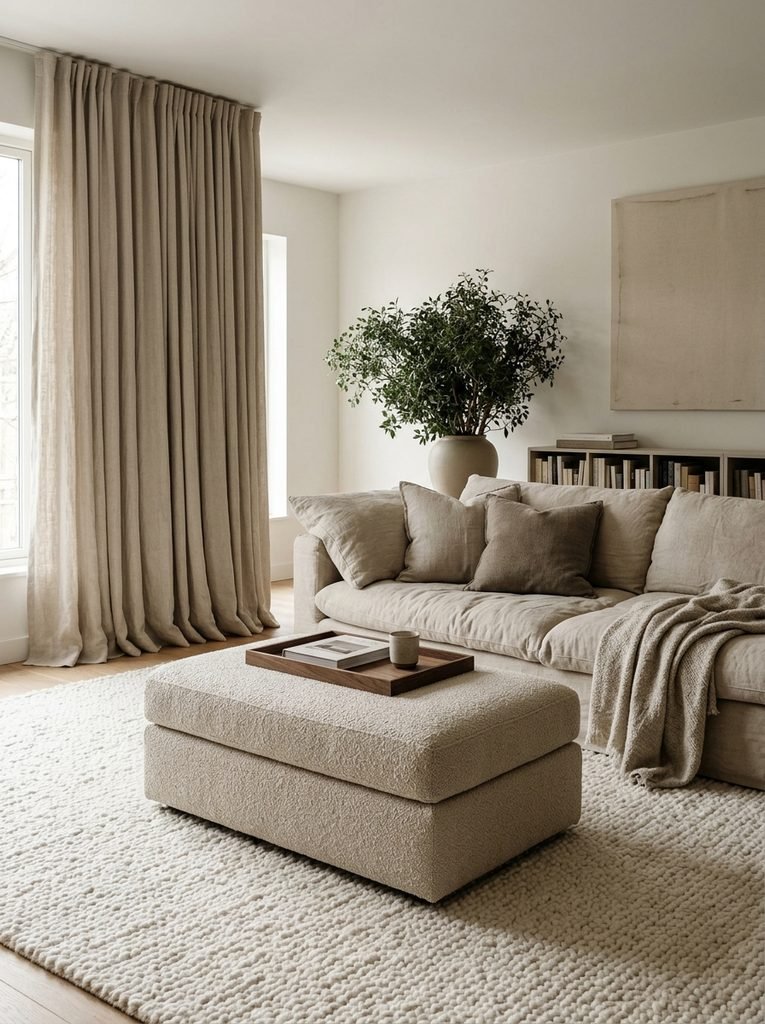
Lined curtains fix both problems when they have enough fabric. Buy panels totaling two to two and a half times the width of the window, so the folds stay deep when closed. Deep folds absorb more sound than flat fabric and trap a layer of still air against the glass. Close them at dusk. For hanging height and length, the curtain length mistake guide shows what to measure.
Two cheaper options help with the glass itself. Cellular shades run roughly $40 to $200 per window, depending on size. Clear indoor shrink film costs about $15 to $25 for a multi-window kit and suits single-pane rental windows.
Drafts No Throw Blanket Can Fix
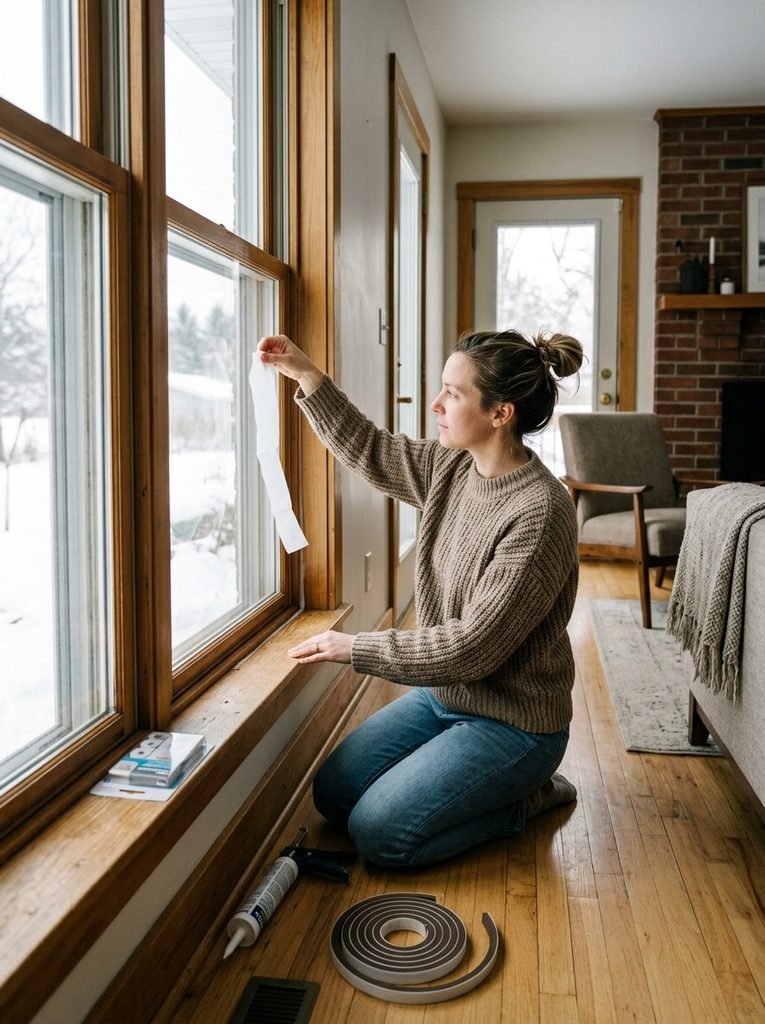
Moving air feels colder than still air at the same temperature. On a windy day, hold a strip of tissue along the bottom of exterior doors, around window sashes, and over outlet plates on exterior walls. If it flutters, air is moving through. ENERGY STAR lists drafts around closed windows and doors among the clearest signs of leaks, and it describes sealing the gap behind trim with non-expanding foam or caulk.
Cheap fixes handle most leaks. A door sweep costs $10 to $25. Foam weatherstripping tape runs $8 to $15 a roll. Foam gaskets behind outlet plates on exterior walls cost $5 to $12 a pack, and you should switch off the breaker before you remove a plate. A tube of paintable caulk, about $5 to $10, closes the hairline gap between trim and wall.
Check the fireplace too. An unused fireplace with a worn damper pulls warm air up the flue all winter. Close the damper fully. If it still leaks, a removable inflatable chimney balloon or a fitted insert costs roughly $50 to $120. Remove it before you ever light a fire.
Cold air also pools near the floor. A low sofa or floor cushions sit in the coldest layer of the room, so seal the draft first. Then pick seating with visible legs, which lifts you a few inches into warmer air.
Soft Surfaces Where Your Body Actually Touches
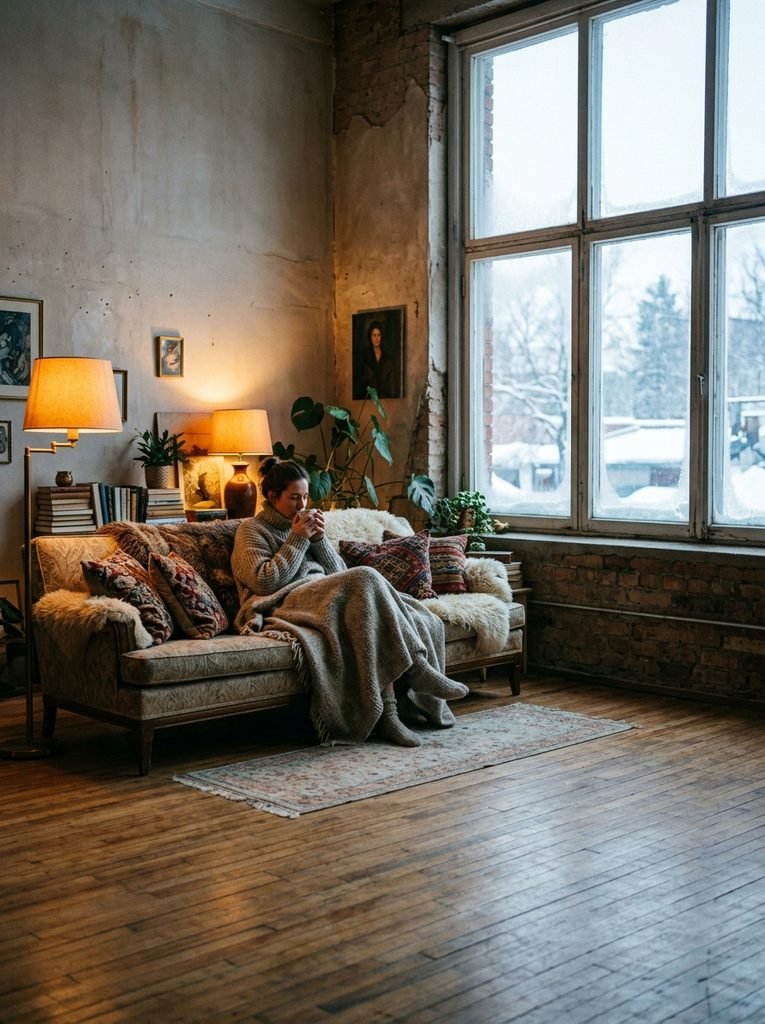
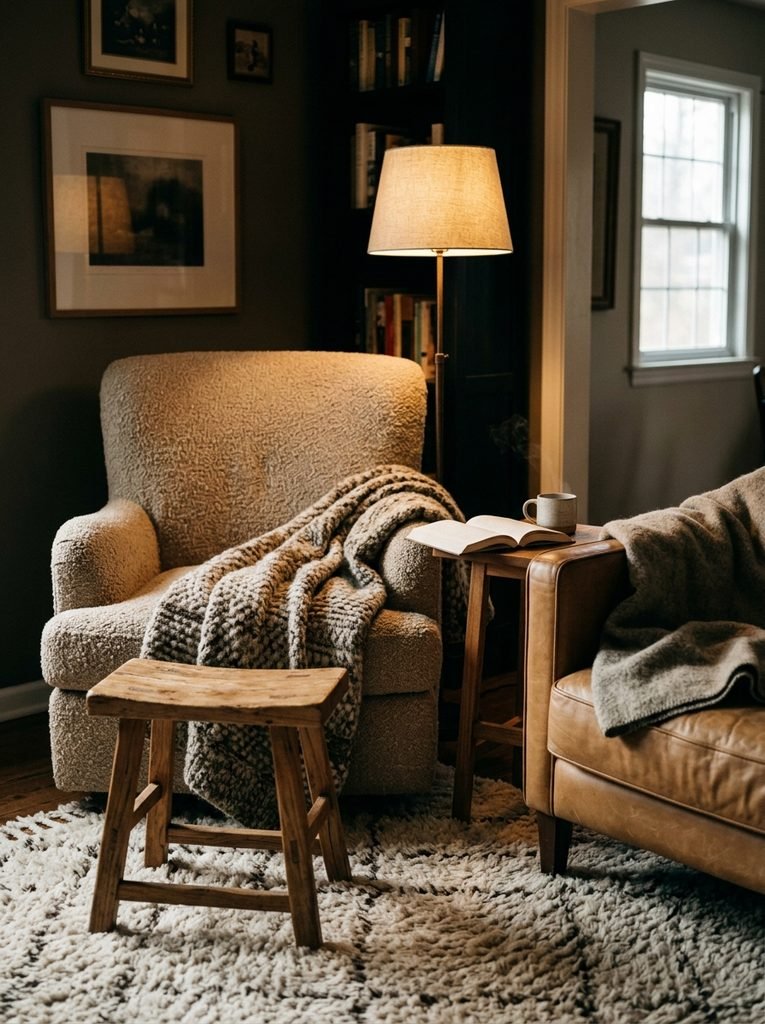
List your contact points: the seat, the arm you lean on, the back, and your feet. Leather, vinyl, and metal feel cold at first because they draw heat from skin quickly. Wool, bouclé, chenille, and thick cotton feel warm on contact. If you love a leather sofa, keep a throw on the seat and on the arm you rest on, not draped over the back for display.
Where you place a chair matters as much as what covers it. Exterior walls and window corners run cooler than interior walls. Put the reading chair against an interior wall, and give it a lamp, a small side table, and a wood stool rather than a metal one. Wood feels warmer than metal at the same temperature.
Cozy Habits That Do Less Than You Think
Some classic cozy moves change how a room looks, not what your body senses. Warm 2700K bulbs make a room look warmer, but they do not raise the air temperature. A candle adds a trace of heat. A few potted plants scatter a little sound, nowhere near enough to quiet a hard room. Keep them for the glow and the greenery. Just do not count on them to solve a room that rings, chills, or leaks.
What to Fix First, by Budget
A Free Afternoon
- Run the clap, bare-foot, and tissue tests, and write down which channel fails.
- Move chairs off exterior walls and away from the window.
- Close the fireplace damper and check that it seals.
A Modest Weekend
- Caulk, weatherstrip, and gasket every draft point the tissue found.
- Put a felt-and-rubber pad under the rug you already own.
- Build one or two fabric panels for facing walls, at about $50 to $90 each.
A Real Purchase
- Replace a small rug with a 9-by-12 wool blend, typically $350 to $1,200.
- Hang lined curtains at two times fullness, roughly $120 to $400 a pair.
- Add cellular shades where glass is the problem.
A Worked Example in a Large Rectangular Living Room
Picture a 14-by-18-foot room with hardwood floors, a 6-by-9 rug, bare walls, a 65-inch TV, two uncovered windows, a glass coffee table, and a front door that whistles in the wind. The clap rings, the floor is cold, and the sofa near the window feels breezy.
Weekend one costs about $200 and targets air and walls: weatherstripping, a door sweep, and outlet gaskets, plus two fabric panels on the facing long walls. Weekend two handles the floor and glass. A 9-by-12 wool-blend rug goes down on a felt pad, and lined curtains go up at two times fullness. The glass table gives way to an upholstered ottoman with a tray, and a large woven basket holds the throws.
Total spend lands between roughly $700 and $1,900, and the rug sets most of that range. The palette can stay cream and oat, because nothing in the plan touches the color story.
Clap again. The room looks the same in a photo. It simply stops ringing.
Frequently Asked Questions
Why does my living room echo even with furniture in it?
Furniture only helps if it is soft and spread through the room. A sofa and a TV console leave the floor, walls, and glass bare. A rug that covers less than half the floor still leaves the rest reflecting. Add a 9-by-12 rug and one fabric panel on a facing wall, then clap again to hear the change.
Does a rug pad really make a difference?
Yes. A felt-and-rubber pad adds both cushion and sound absorption. Rubber-only pads grip well but add little padding, so choose a blend about a quarter inch thick. Cut it one inch smaller than the rug on every side so the edges never peek out.
How can I make my living room warmer without raising the thermostat?
Stop the heat loss first by closing lined curtains at dusk and sealing door and window gaps. Then run a ceiling fan on its lowest speed in clockwise winter mode, which gently pulls air down without a breeze. Most fans have a small direction switch on the motor housing.
Can I hang acoustic panels in a rental without damaging the walls?
Often yes, with limits. A 2-by-4-foot panel with a 2-inch core weighs roughly 5 to 8 pounds, which is too heavy for most adhesive strips. Use two picture hooks rated well above that weight, or lean the panel on a console. Small nail holes patch easily with spackle.
Why do my feet stay cold on a hardwood floor in winter?
Wood draws heat from bare feet faster than carpet does, and floors above a crawl space or garage run colder than floors over heated rooms. A wool rug on a felt pad helps right away. If the cold persists, insulation under the floor is the bigger fix, usually a contractor job.