
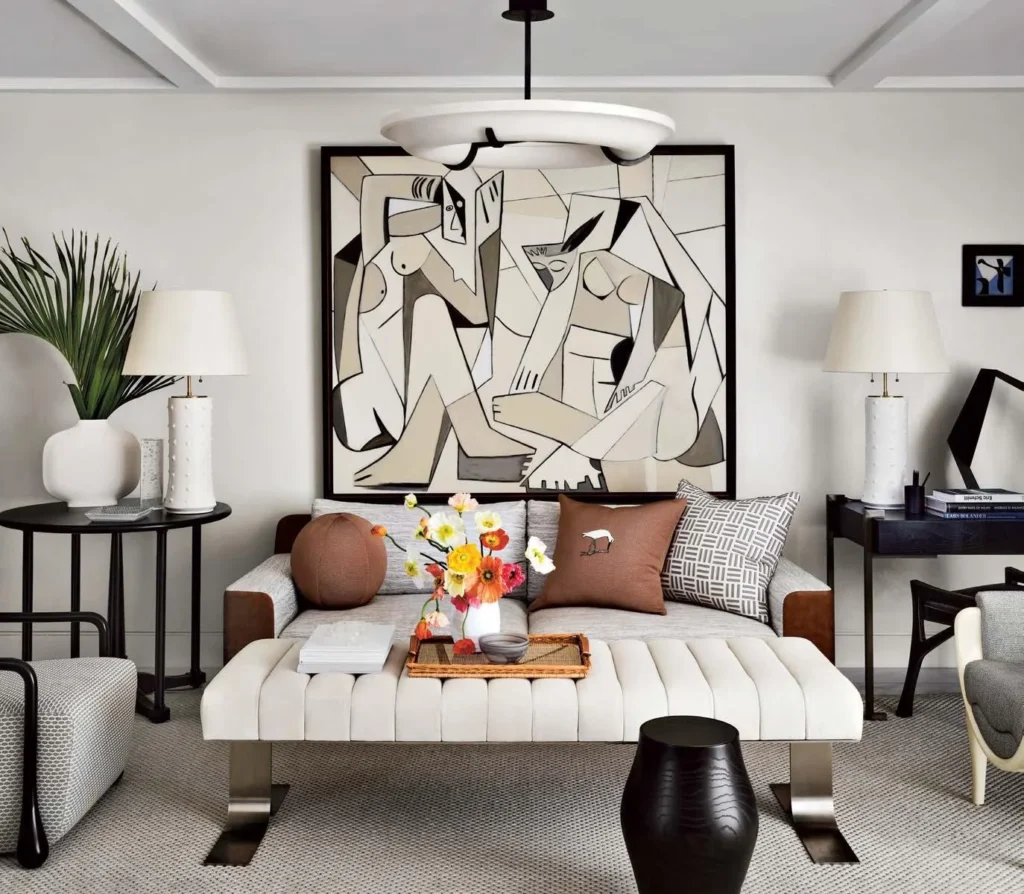
You don’t own the walls, you can’t drill into the ceiling, and your security deposit is non-negotiable but you still want your living room to feel like it belongs in a boutique hotel, not a starter apartment. That’s the real test for Neo-Deco: can you get the geometric glamour, the brass glow, and the tailored velvet without a single trip to the hardware store’s paint-mixing counter? You can, and it usually costs less than one piece of new furniture. Below are 20 ways to get the “million-dollar” Neo-Deco look using peel-and-stick materials, thrifted finds, and swaps you can undo before your lease is up. Most of these ideas cost under $100 individually, and none of them involve a hole in the wall you can’t patch before your final walkthrough.
What Makes Neo-Deco Renter-Friendly
Neo-Deco leans on geometry, symmetry, and a handful of signature materials brass, marble, velvet, fluting rather than full-room built-ins, which is exactly why it adapts so well to a budget or a rental. Designers quoted in Better Homes & Gardens’ 2026 furniture trend coverage point to clean shapes, arches, and symmetry as the real hallmarks of the style, not expensive custom millwork. That means most of what makes a room read as Neo-Deco can be added, swapped, or peeled off again: a rug, a mirror, a coat of paint on furniture you already own.
Peel-and-Stick Fluted Wall Panels
Real MDF fluting means construction adhesive and, usually, a landlord’s permission. Peel-and-stick fluted wall panels get you the same vertical rhythm and shadow play for a fraction of the cost and none of the commitment. Most brands install with adhesive strips instead of glue, so they come down clean at move-out. Stick to a small zone behind a headboard or around a doorway rather than an entire wall, which keeps the material cost under roughly $150 and avoids the “installed a fake wall” look that happens when the panels run edge to edge. Measure the wall in sections before ordering most panel kits sell in 6 to 8-inch-wide strips, and buying two extra strips beyond your measurement covers cutting mistakes without a second order.

Faux Marble Contact Paper
Real marble slab runs into the thousands; marble-look contact paper runs about $15 to $25 a roll and applies to a coffee table, a nightstand, or a rental kitchen counter in under an hour. Wipe the surface clean, apply in one continuous motion to avoid air bubbles, and trim the edges with a utility knife for a finish that photographs convincingly from a normal viewing distance. It won’t survive a hot pan directly on the surface, so treat it as decorative rather than heat-resistant. A rubber squeegee or an old gift card smooths bubbles out far better than your hand, and starting from the center of the surface and working outward keeps the pattern from shifting halfway through.

Plug-In Statement Lighting
Hardwired chandeliers need an electrician; plug-in pendant kits need an outlet and a hook. Look for a swag-style pendant with a fabric-covered cord you can run along the ceiling to a nearby outlet, and choose a geometric or fan-shaped shade in brass or frosted glass to keep the Neo-Deco silhouette. This is the single highest-impact, lowest-effort swap on this list one bold fixture does more visual work than a shelf full of smaller decor. Route the cord along the ceiling line using small adhesive cable clips rather than letting it hang loose across the room, which is the detail that separates “intentional swag light” from “extension cord emergency.”

Removable Wallpaper Accent Walls
Paint requires a landlord’s sign-off in most leases; peel-and-stick wallpaper generally doesn’t. Look for a geometric or fan-motif print in a black-and-gold or emerald-and-brass colorway, and apply it to just one wall usually behind the bed or the sofa so the pattern reads as an intentional feature rather than a full-room commitment. Budget for roughly $40 to $80 per roll depending on the brand, and always order a spare roll in case of pattern-matching mistakes at the seams. Smooth the paper on with a plastic smoothing tool rather than your hands, working from the center outward, and test-remove a small corner after 24 hours to confirm your specific wall finish won’t pull off paint underneath.

Command-Strip Symmetry
Symmetry is what makes a Neo-Deco room feel calm and expensive, and it costs nothing extra to arrange you just can’t always drill for it in a rental. Heavy-duty picture-hanging strips rated for 16 pounds or more will hold a pair of matching mirrors or framed prints on either side of a headboard or console without a single nail hole. Measure twice before you stick: strips don’t reposition as forgivingly as a nail does.

Renter-Safe Arched Mirrors
An arched mirror softens a boxy rental room and bounces light around a space that often only has one window. Lean a large arched mirror against the wall on the floor instead of hanging it this is both the cheapest option, since you can buy a bigger size for the same money as a smaller hung one, and the safest for a security deposit. Anchor the base with furniture wax or museum putty so it can’t tip.

Slipcovers Instead of New Furniture
A velvet or boucle slipcover updates a sofa or chair you already own for a tenth of the cost of replacing it, and it comes off entirely when you move. Measure your specific piece before ordering slipcovers sized for “standard” sofas rarely fit an actual standard sofa and choose a jewel tone or a textured neutral rather than a busy print, which keeps the Neo-Deco read intact even on furniture that wasn’t built for the style. Look for a slipcover with a separate cushion cover rather than one continuous stretch panel it holds its shape through daily use far better and is easier to wash without the whole thing losing its fit.

A Budget Paint Palette for Furniture, Not Walls
If your lease won’t let you touch the walls, paint what you can move instead: a thrifted side table, a plain dresser, a dated nightstand. A quart of paint in deep emerald, charcoal, or burgundy covers two to three small furniture pieces and costs less than a single new accent table. Two thin coats with light sanding in between will outlast one thick, drippy coat by years.

Style What You Already Own First
Before buying anything new, do one pass through your own home: group your existing objects by material instead of by room. Anything glass or mirrored goes on one surface, anything brass or gold-toned on another. You’ll often find you already have three or four pieces that read as Neo-Deco once they’re grouped and edited down, rather than scattered one per shelf across the apartment.

Thrifted Frames, Spray-Painted Gold
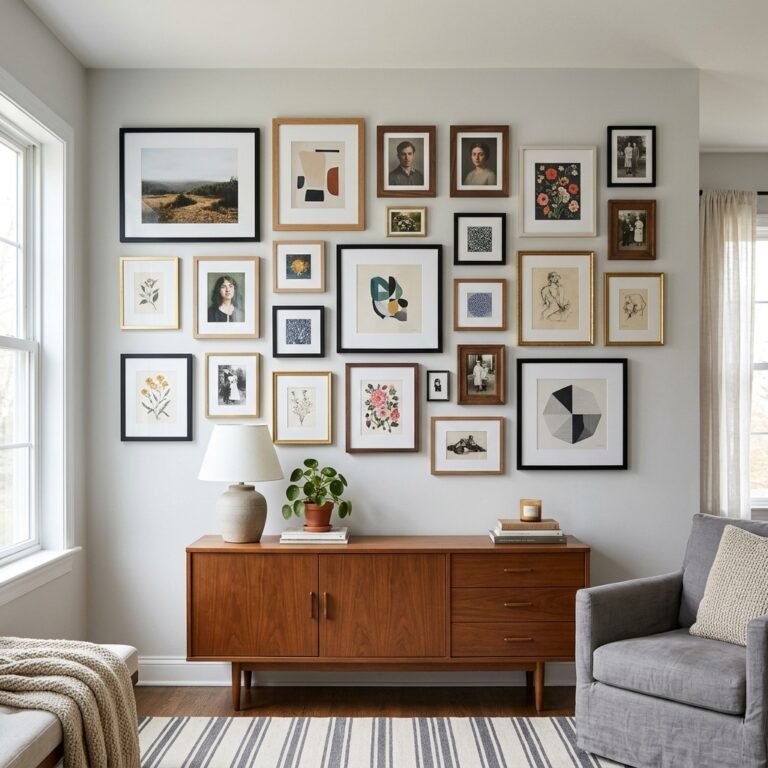
Mismatched picture frames from a thrift store cost a dollar or two each; a single can of gold or brass metallic spray paint unifies them into a set. Sand lightly, wipe off the dust, and apply two light coats outdoors or in a ventilated space. Group three to five framed prints in a tight gallery cluster rather than spreading them out, which reads as a single intentional piece rather than a random assortment.

One Splurge Rug, Zero New Flooring
Skip the tile and the flooring entirely a single well-chosen area rug delivers the geometric grounding a Neo-Deco room needs and travels with you when you move. Spend your budget here rather than spreading it thin across a dozen small accessories; a rug is the item guests notice first and the one that’s hardest to fake with a cheaper substitute.

Tension-Rod Console Styling
No drilling, no shelf brackets: a tension rod wedged between two walls in a narrow entryway can hold a curtain, a hanging planter, or even a small floating shelf bracket designed for tension mounting. It’s a workaround for renters who want console-style symmetry in a hallway too narrow for actual furniture.

Spray-Painted Cabinet Hardware
New brass hardware costs $4 to $10 per pull; a can of brass or gold spray paint costs about the same and refinishes every pull, knob, and hinge in the kitchen for one flat fee. Remove the hardware, clean off grease, and apply thin coats thick coats are what make spray-painted hardware look cheap rather than intentional. Keep the original hardware in a labeled bag so you can swap back before you move out. Use painter’s tape to mask any part of the hardware that contacts the cabinet face, and let each coat cure a full 24 hours before reinstalling rushing this step is the most common reason spray-painted hardware chips within a month.

A DIY Fabric Headboard
An upholstered arched headboard can run several hundred dollars retail. A plywood arch cut to size, wrapped in batting and a velvet or boucle fabric, and stapled to the back costs a fraction of that in materials and mounts to the wall with a simple French cleat you can remove without a trace. It’s a weekend project, not a professional one. Use a jigsaw to cut the arch shape from a template drawn with a string-and-pencil compass, and staple the fabric to the back of the plywood in small sections working from the center out, so the fabric stays taut and wrinkle-free across the curve.

Layered Lighting Without an Electrician
You don’t need hardwired fixtures to layer light. A plug-in floor lamp, a battery-operated table lamp, and an adhesive-backed LED strip along the back of a bookshelf or under a floating shelf give you the same three-source depth as a full renovation, and every piece unplugs and comes with you when you leave.

Peel-and-Stick High-Gloss Laminate
High-gloss lacquer finishes usually mean a professional refinishing job. Peel-and-stick high-gloss laminate sheets get a similar reflective finish on a flat-front cabinet door or a sideboard top for the cost of a few rolls of material. It works best on flat surfaces without heavy grain or hardware in the way, so test a small hidden section first before committing to the whole piece.

Dollar-Store and Thrift Vase Dupes
The sculptural, ridged, or fluted vase silhouette matters more than the brand behind it. Thrift stores and dollar stores regularly carry plain ceramic or glass vases in the right shapes; a coat of matte black or metallic spray paint on an otherwise forgettable vase gets you 90% of the designer look for a few dollars in materials.

Tension-Rod Floor-to-Ceiling Curtains
Floor-to-ceiling drapery makes a standard 8-foot ceiling feel taller, and you don’t need a drilled curtain rod to get there a tension rod mounted just below the ceiling line holds a full curtain panel without a single screw. Hang the panel as close to the ceiling as the rod allows, and let it pool slightly at the floor rather than stopping short, which is what creates the height illusion.

One Splurge Item, Everything Else Budget
Pick a single piece worth spending real money on a sofa, a rug, or a bed frame and let every other item on this list be the budget version. Trying to make everything in the room a “statement” flattens the effect; one genuine investment piece surrounded by smart, low-cost swaps reads as curated rather than cheap.

Getting the Look Without the Reno
None of these swaps require a landlord’s permission, a contractor, or a renovation budget most can be undone in an afternoon if you move out. Pick two or three that fit the room bothering you most, spend your real budget on the one splurge item, and let paint, peel-and-stick materials, and a can of spray paint carry the rest. Photograph the original state of anything you modify hardware, walls, fixtures before you start, so a move-out inspection is a formality instead of a negotiation. For the full range of Neo-Deco materials and finishes if you do own your space and want to go further, see our home decor ideas hub.


1 comment