
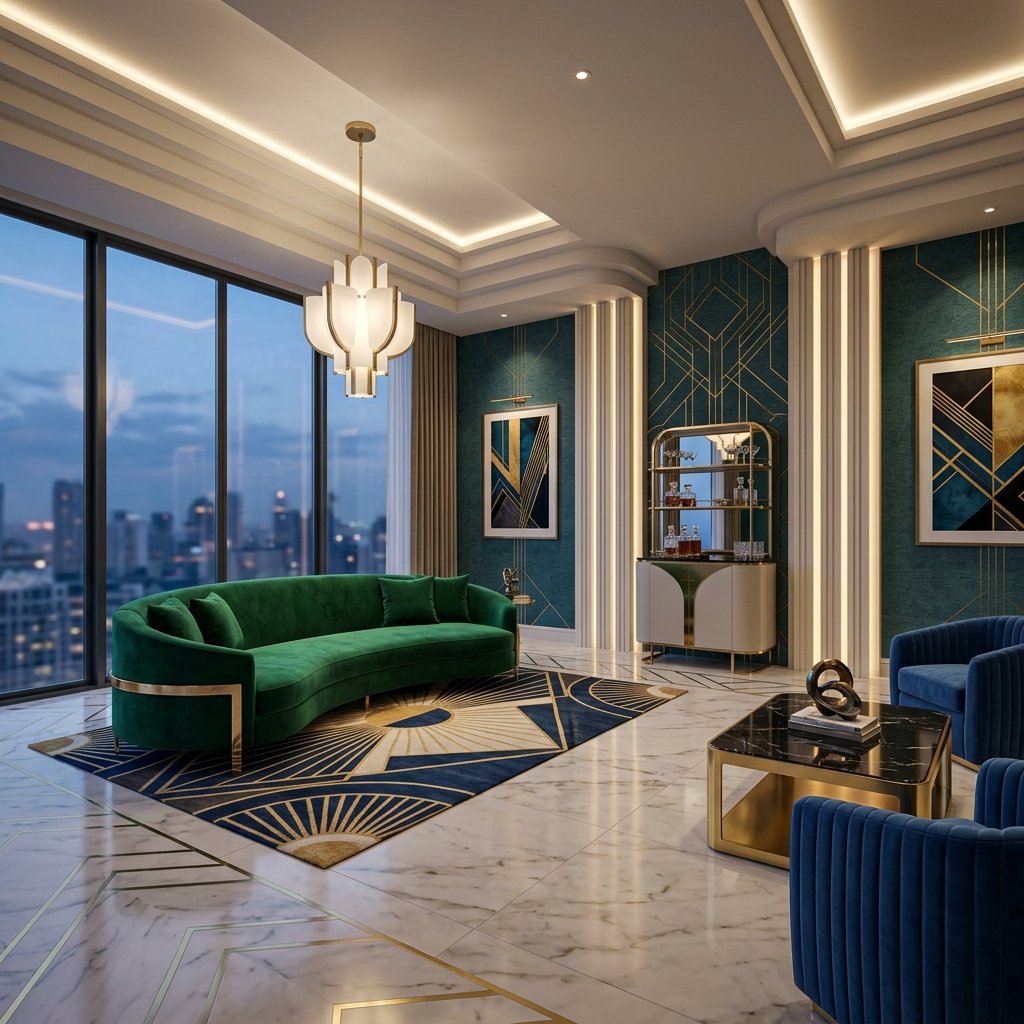
Picture walking into your own living room and getting the same hit of glamour you’d feel stepping into a boutique hotel lobby: geometric lines, warm metal, and just enough contrast to make the space feel considered. That’s Neo-Deco, and it’s the interior design trend Pinterest Predicts flagged as one of 2026’s defining looks with designers reporting a real jump in Deco-inspired lighting requests toward the end of last year. Apartment Therapy’s editors have been calling this comeback for a while, pointing to details like reeded glass creeping back into homes well before the trend had a name. Unlike the original 1920s movement, Neo-Deco isn’t about recreating a speakeasy. It borrows the era’s confidence symmetry, rich materials, a willingness to be a little dramatic and edits it down for a home you actually live in. Below are 20 ways to work the look into any room, whether you’re renovating from scratch or upgrading one console table at a time.
Sunburst Mirrors for Statement Walls
A sunburst mirror does more work than a plain round one. The radiating spokes act like architecture, pulling the eye toward a single focal point instead of just reflecting light. Choose a version with thin brass or chrome spokes rather than a thick, carved vintage frame, which can read heavy or dated in a modern room. Hang it 55–60 inches from the floor to the center point, which keeps it at natural eye level for most adults. Ground it with a console or a sofa underneath a sunburst mirror floating on an otherwise bare wall looks unfinished, not intentional.

A Black-and-Brass Color Foundation
Black and brass is the easiest way into Neo-Deco because it gives you contrast without clutter. Use matte black on the big-ticket items a sofa, a console, a media cabinet since it reads as architectural rather than trendy. Brass or gold hardware and lighting add warmth so the room doesn’t feel cold or corporate. Keep metallic finishes to roughly 15–25% of the room’s visible surface area; go higher than that and the space can start to feel like a showroom instead of a home. Soft cream, beige, or warm white on the walls keeps the palette from tipping into heavy.

Painted Arch Backdrops
An arch backdrop is a paint trick, not a construction project, and it’s one of the highest-impact, lowest-cost ideas on this list. Start with a soft neutral or deep emerald base coat, then use painter’s tape and a string-and-pencil guide to mark a clean, symmetrical curve. Paint the inside of the arch one shade darker or lighter than the wall around it that subtle value shift is what makes the shape read as depth instead of a flat decal. Finish by placing a console, chair, or mirror inside the arch so the furniture looks like it was built for the space.

Channel-Stitched Velvet Furniture
Channel stitching parallel seams running the length of a cushion or backrest is what keeps velvet furniture from looking overstuffed. The vertical lines create a tailored, almost architectural texture instead of a soft, shapeless one, and they trick the eye into reading your ceilings as taller. Look for curved or scalloped silhouettes, which soften the geometry elsewhere in the room. Deep jewel tones like emerald, burgundy, and navy lean glamorous; cream and charcoal keep the same shape more restrained if you want the furniture to read as neutral.

Marble Surfaces (or Convincing Stand-Ins)
Marble is still the fastest visual shorthand for expensive, mostly because it reflects light in a way that photographs well and reads as high-end even in a small room. Real slab is a splurge, so if the budget doesn’t stretch that far, marble-look laminate, peel-and-stick vinyl wraps for a tired tabletop, or porcelain and ceramic tile with realistic veining get you most of the way there for a fraction of the cost. Use it in doses a coffee table top, a tray, a backsplash rather than trying to cover an entire room, which is where the budget versions start to look like what they are.
Sculptural Vases Inspired by Deco Geometry
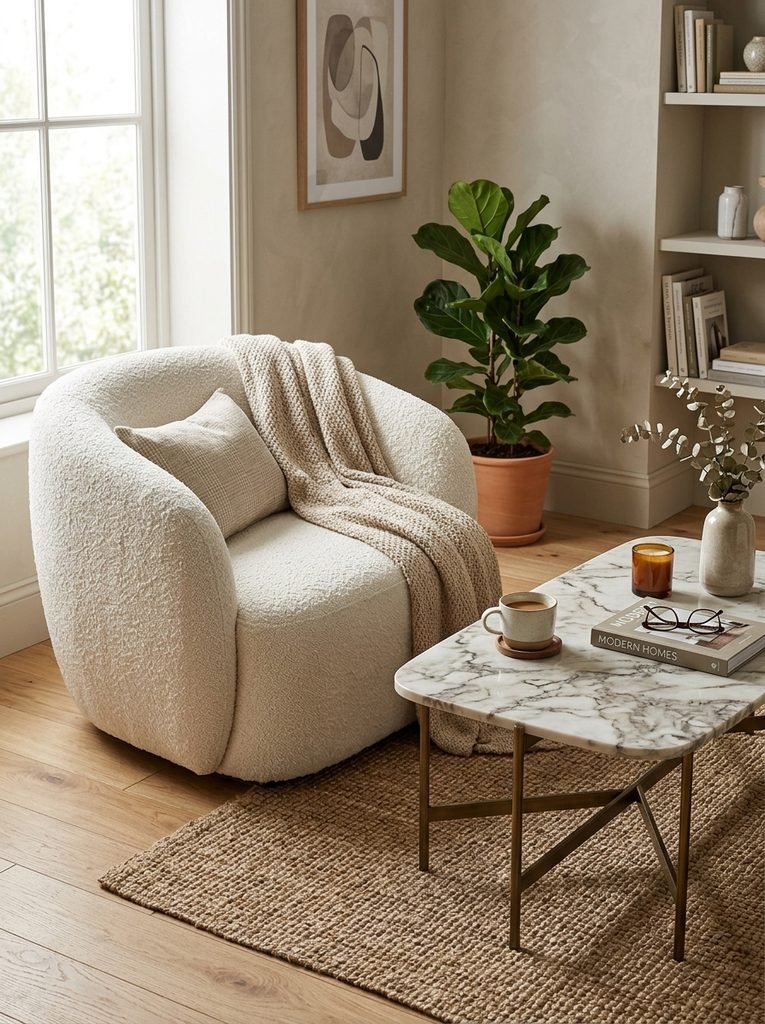
Skip the ornate, hand-painted vase and look for silhouette instead: ridged columns, stacked spheres, and fluted ceramics all read as sculpture rather than a container for flowers. Frosted or smoked glass adds texture without competing for attention with anything else on the shelf. Go tall where you can a vase in the 14 to 20-inch range commands more visual weight on a console or mantel and photographs better than a squat one lost among other objects.

Linear Brass or Chrome Chandeliers
A linear chandelier reads as suspended architecture rather than plain lighting, which is exactly the job it needs to do in a Neo-Deco room. Center it precisely over the dining table or kitchen island rather than the middle of the ceiling off-center lighting is one of the fastest ways to make a room look unplanned. Brass gives a warmer, more traditional glow; chrome leans crisper and more futuristic. Either way, hang it 30 to 34 inches above the table surface so it doesn’t crowd sightlines across the table.

Wall Sconces in Perfect Symmetry
Sconces hung as a matched pair look editorial in a way a single fixture never quite does, because symmetry signals intention. Flank a mirror, a piece of large-scale art, or a headboard with two identical fixtures spaced evenly on either side. Frosted globe shades in brass or chrome finish the Neo-Deco look and diffuse light softly, which avoids the harsh shadows that bare bulbs or narrow shades can throw across a wall.

Console Styling Using the Rule of Three
An entryway console gets cluttered fast, and the Rule of Three is the quickest fix: one lamp for height and light, one sculptural object for texture, and one vase or small plant for something organic. Vary the height of the three pieces so the eye has somewhere to travel across the surface, and leave visible negative space between them a console packed edge to edge with small objects reads as clutter, not curation. If you want a more formal, symmetrical look, use two matching lamps at either end and apply the Rule of Three to the space between them.

Fluted or Ridged Wall Texture
Vertical fluting adds architectural rhythm to a wall that would otherwise be flat and forgettable. MDF slats installed with construction adhesive give you a permanent finish; foam or 3D stick-on panels are the renter-friendly version and can go up in an afternoon. Paint the ridges in matte black or deep green rather than a light color the shadows the ridges cast are what give the wall its depth, and that effect is far more visible in a dark, matte finish. Add a gold-framed piece of art on top of the texture, and the metallic frame pops hard against the flat, dark background.

Gold Hardware for Cabinets and Wardrobes
Swapping cabinet hardware is one of the cheapest, fastest updates on this list, and it changes the entire feel of a kitchen, bathroom, or bedroom wardrobe in an afternoon. T-bar handles or curved, minimalist pulls in a brushed brass finish look intentional; polished, high-shine gold can tip into dated territory fast. Brushed brass also hides fingerprints better than a mirror finish, which matters in a kitchen. Check our bathroom decor ideas for more ways to carry the same hardware finish into a vanity.

Chevron or Geometric Flooring
Flooring is the boldest, most permanent move on this list, so it needs the rest of the room to stay relatively quiet. High-contrast black-and-white chevron tile gives you sharp, graphic energy; geometric stone tile with subtle veining is a softer, more textural option. If tile isn’t in the budget or you’re renting, a geometric Deco rug in a 2:3 ratio gets you the same grounding effect underfoot without the renovation, and you can swap it out if you move or change the room’s color story later.

Neo-Deco Area Rugs
A rug does more heavy lifting in a Neo-Deco room than almost any other single piece, because it ties furniture that might otherwise feel disconnected into one composition. Semi-circle and fan-shaped patterns nod to classic Art Deco architecture while still reading as current. A soft gold linework pattern on a neutral base adds shimmer without overwhelming the room; a black-and-cream contrast rug is the bolder, more graphic option if your furniture is already fairly neutral.

High-Contrast Accent Walls
A saturated accent wall is the fastest way to give a flat room some architectural definition. Matte black, emerald, deep navy, and charcoal all work, but the finish matters as much as the color matte hides imperfections and reads as intentional, while a glossy finish in a dark shade can look unfinished under regular lighting. Balance the darker wall with metallic decor, a mirror, or vertical lighting nearby; without something reflective in the room, a dark wall can start to feel like a cave rather than a statement.

Boucle and Metal Mix
Pairing boucle with metal gives you the contrast Neo-Deco relies on soft, nubby texture next to something hard and reflective. A boucle chair next to a brass side table feels warm and traditional; a boucle sofa with chrome lamps leans more futuristic. Marble accents bridge the two materials nicely, since marble shares boucle’s organic, natural quality while keeping the cool, hard surface of the metal pieces around it. For more pairing ideas by room, see our living room decor guide.

Arch Mirrors for Hallways and Entryways
An arched mirror does two jobs a rectangular one can’t: its curved top bounces light both up and out, which is exactly what a narrow hallway or entryway needs to feel wider. Pair it with a linear console or a set of symmetrical sconces underneath the straight lines of the furniture provide a deliberate contrast to the mirror’s soft curve, rather than everything in the space feeling equally round or equally sharp.

Glass and Chrome Decor Accents
Glass and chrome keep a Neo-Deco room from feeling heavy, since both materials read as light and airy even in a dark palette. Smoked glass vases and mirrored trays add depth and reflection without the visual weight of solid ceramic or wood pieces. Chrome candle holders or a glass globe lamp finish the look with a sleek, polished edge that still feels rooted in Deco-style geometry rather than generic modern.

Minimal Deco Posters in Metallic Frames
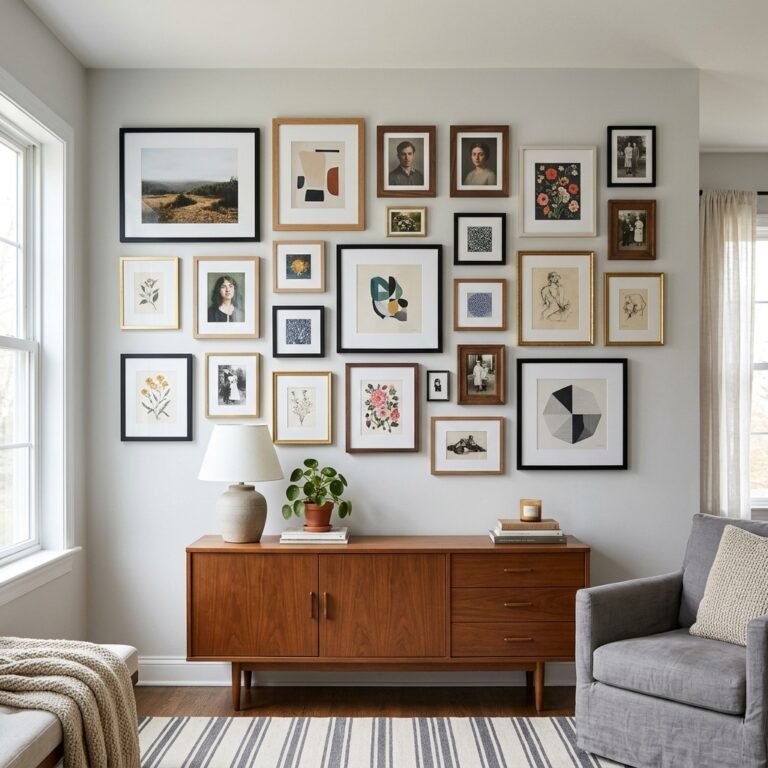
You don’t need an expensive original to get a gallery-worthy wall line-based, geometric prints inspired by Deco architecture do the job for a fraction of the cost. Symmetrical metallic frames matter more than the art itself here, since they’re what gives the wall its clean, rhythmic look. Hang these against a black or dark matte wall rather than a light one; the contrast is what lets the fine lines and metallic frame edges actually read from across the room.

The Small Apartment Neo-Deco Formula
If you’re working with limited square footage, don’t try to do everything on this list at once five moves is plenty. Pick one saturated accent wall for depth, one statement mirror to expand the visual footprint, one curved chair to soften rigid lines, one floating console to keep the floor visually clear, and one layered light source for evening ambience. That short list solves the two most common small-apartment complaints “it feels too small” and “it feels generic” without adding a single extra piece of furniture that eats up floor space.

Layered Lighting for Depth and Ambience
A single overhead fixture is the single biggest reason a room feels flat in photos and in person. Layer three sources instead: one overhead fixture for general scale, one floor lamp anchoring a corner, and one table lamp for warm, eye-level light near seating. If you want an extra touch, an LED accent strip behind a TV or under a floating console adds a soft evening glow that traces the room’s architectural lines after dark.

Bringing It Together
Neo-Deco works best as a strategy, not a shopping list pick a palette, choose two or three “moments” from this list rather than all twenty, and let symmetry and material contrast do the rest of the work. You don’t need a full renovation or a five-figure budget to get there: a painted arch, a rug, and the right pair of sconces can shift an entire room’s feel in a weekend. Start with whichever idea matches the room that bothers you most, and build outward from there.
1 comment