
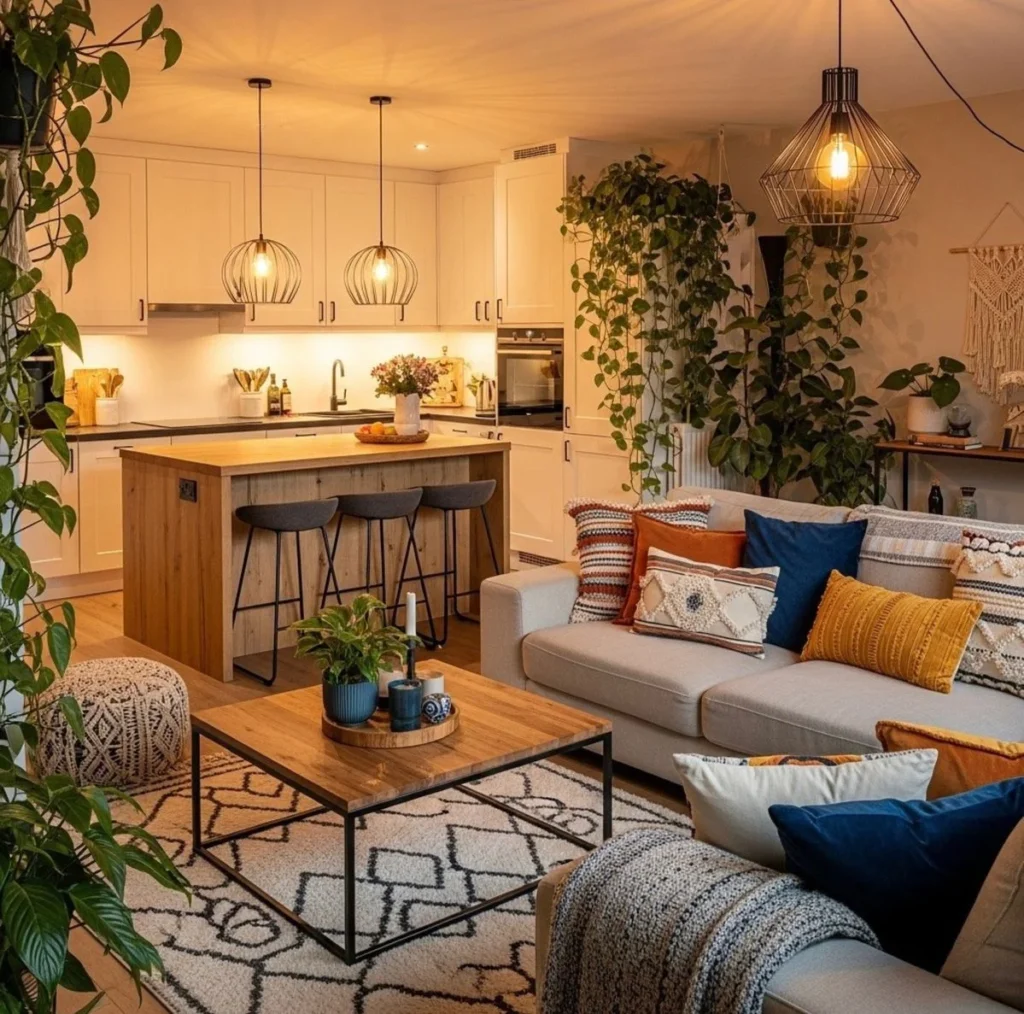
You know the morning routine by heart. You open the bedroom door, it stops against the bed frame, and you squeeze through the gap sideways. Then you step over a laundry basket to reach the dresser. Nothing in the room is broken. There is simply no slack left.
That is what a small home really costs you. It is not the square footage. It is the daily friction of furniture fighting over the same patch of floor. The good news is that most fixes are cheap. A set of hooks can free a counter. A well-placed mirror can lift a dim corner. Below are twenty affordable ideas covering storage, layout, light, and comfort. Pick the two that fix your biggest annoyance first, and ignore the rest until those work.

Before You Buy Anything
Spend ten minutes with a tape measure first. Write down the width, depth, and ceiling height of each room, plus door widths and window sills. Note where outlets and radiators sit. Then tape furniture outlines on the floor to test walking paths. Most people skip this step and pay for it in returns. A sofa that fits the room may still fail the stairwell. Keep this note on your phone and refer to it every time a tempting sale pops up.
Build Up with Tall Furniture
Floor space is fixed, but wall height is free. A bookcase 72 to 84 inches tall holds roughly twice what a 36-inch unit does on the same footprint. Choose narrow models, about 10 to 12 inches deep, so walkways stay clear. Paint the case the same color as the wall and it nearly disappears. Keep the top shelf for light, rarely used items like baskets or luggage. One safety step matters here. The Consumer Product Safety Commission notes that existing furniture can be anchored with inexpensive anti-tip brackets. Screw yours into a wall stud.

Squeeze In a Coffee Bar
You don’t need a full kitchen counter for good coffee. A 24-inch-wide console, a slim cart, or the top of a low dresser can hold a machine, a canister, and a tray. Mount one shelf, 6 to 8 inches deep, above it for mugs. Corral syrups and filters in a small tray so the surface reads as tidy. Keep the station near an outlet and away from sink splashes. If your kitchen corner is already crowded, our guide to kitchen counter corner decor ideas shows how to style the space you have.

Buy Furniture That Does Two Jobs
Every piece in a small home should earn its footprint twice. A sofa bed turns a living room into a guest room. A drop-leaf table can serve as a desk on Tuesday and a dinner table on Saturday. Nesting tables give you three surfaces that stack into one. Before you buy, check both the closed and open dimensions. Many sofa beds need seven feet or more of clear floor to unfold. Mark that clearance with painter’s tape first, so you know it fits.

Try Open Shelving Carefully
Open shelves make walls feel farther away because there are no doors to stop the eye. They also expose everything you own. Fill about two-thirds of each shelf and leave the rest empty. Group objects in threes, such as a plant, a stack of books, and a bowl. Keep everyday dishes on the lowest shelf so they stay reachable. Stick to one or two container finishes to calm the look. If you own a lot of stuff, mix in a few lidded baskets to hide the overflow.

Swap Swinging Doors for Sliding Ones
A standard 30-inch door needs about 5 square feet of clear floor to swing. In a tiny bathroom, that is the difference between fitting a vanity and skipping it. A pocket door slides into the wall and vanishes. A barn-style slider hangs from a track and needs free wall beside the opening about equal to the door’s width. Renters can start cheaper with a curtain on a tension rod. Frosted glass panels let light through while keeping things private.

Fit In a Dining Spot That Folds Away
A dining table doesn’t have to be permanent. A wall-mounted fold-down table sits only a few inches deep when closed. Pair it with stackable chairs or a bench that pushes flush to the wall. A round table, 30 to 36 inches across, seats two comfortably and has no corners to bump. Place it near a window for the best light. If you already eat at your desk, that counts too. One surface with two roles is still efficient.

Use the Space Under the Bed
Most bed frames leave 6 to 12 inches of clearance, and that gap is usually full of dust. Flat rolling bins hold off-season sweaters, spare sheets, or shoes. Bed risers add another 4 to 6 inches, though they make the bed sit taller. A storage bed with built-in drawers costs more but keeps everything closed and tidy. Label each bin so you don’t dump them all out searching. For the same trick in an even tighter room, see our yacht bedroom storage ideas.

Create a Compact Home Office
A laptop desk only needs to be 16 to 20 inches deep. A wall-mounted or fold-down desk, set at 28 to 30 inches high, fits in a hallway, beside a window, or inside an open closet. Add one floating shelf for supplies and a clip-on lamp so the surface stays clear. Choose a chair that pushes fully under the desk, or use a stool. When work ends, fold the desk up or cover it with a tray. That small ritual helps your brain switch off.

Hang Mirrors Where They Earn Their Keep
A mirror only helps when it reflects something worth doubling. Hang one opposite a window and it bounces daylight deeper into the room. Hang one facing a blank wall and you simply double the blank. A leaning floor mirror, about 60 inches tall, costs less than a wall-mounted one and needs no drilling. Avoid reflecting clutter, like an open closet or a messy desk. In a narrow hallway, a mirror on the long wall makes the passage feel wider.

Divide the Room Without Building Walls
In a studio, a bed in plain view of the couch can feel unsettled. Zoning fixes that. An open-back bookcase separates sleeping from living while still passing light. A ceiling-mounted curtain track lets you close off the bed at night and open it by day. A folding screen, about 60 inches tall, works when you only need occasional privacy. If your room is dim, choose a divider under 60 inches so you don’t block the window’s light.

Paint Light and Add Contrast
Light colors bounce light. Paint brands rate this with light reflectance value, or LRV, on a scale from 0 to 100. Colors above roughly 70 reflect enough daylight to lift a dim room. Try soft white, pale greige, or warm cream. Then add contrast so the room doesn’t feel flat, such as a dark picture frame, a black metal lamp, or a deep green pillow. Test samples on two walls and check them in the morning and again at night.

Put Hooks and Pegboards to Work
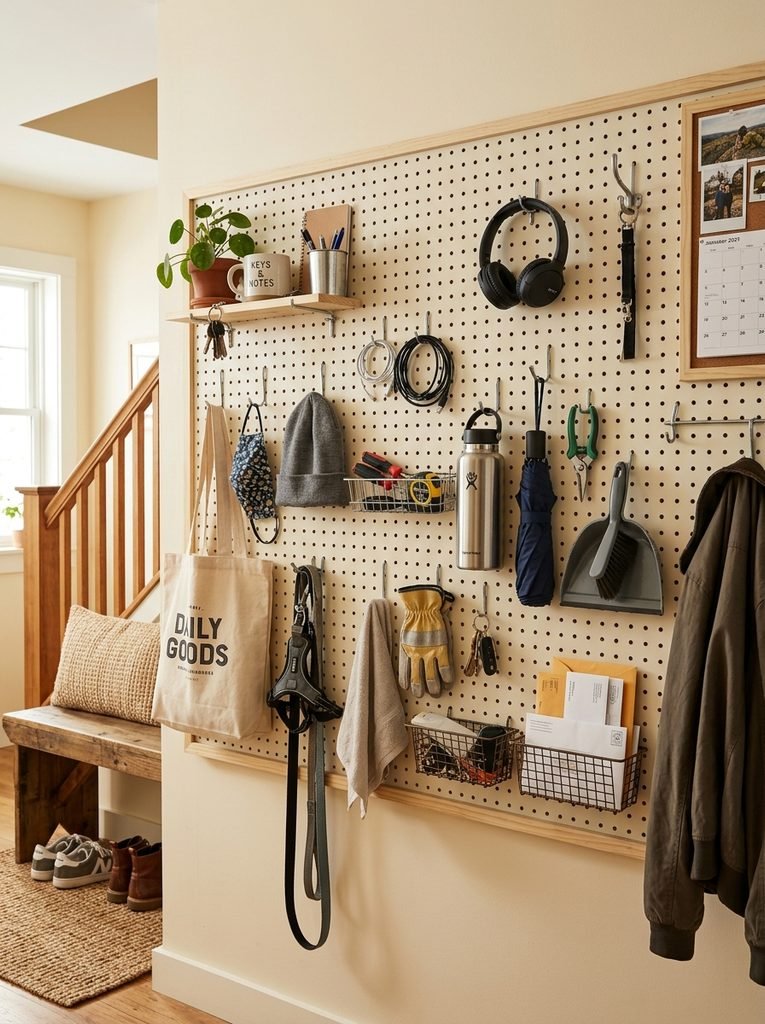
Hooks are the cheapest storage you can buy. Mount coat hooks about 60 inches high in an entryway, then add a lower row at 40 inches for bags and kids’ jackets. In the kitchen, a pegboard painted to match the wall holds pans, utensils, and cutting boards. At a desk, a small pegboard keeps cables, scissors, and headphones off the surface. Adhesive hooks suit rentals, but check the weight rating. For anything heavier than a tote bag, screw into a stud.
Choose Furniture with Storage Built In
Storage that looks like furniture keeps clutter out of sight. A lift-top coffee table hides remotes and blankets. A storage bench by the door swallows shoes. An ottoman around 30 by 18 inches holds a throw and a few board games while doubling as extra seating. Check that the lid opens fully in your layout. A hinged top that hits the wall is a wasted purchase. Soft-close hinges keep fingers safe.

Float Furniture Off the Floor
When you can see the floor running under a piece, the room reads larger. Wall-mounted nightstands, floating shelves, and a hung TV console all leave that floor visible. Keep the bottom of each unit at least 8 to 10 inches off the ground so a vacuum can pass underneath. Anchor into studs, not just drywall. Check each bracket’s weight rating before loading it. A simple wall shelf is one of the cheapest upgrades on this list.

Grow Plants Upward
Plants add softness without using floor space. Hang trailing pothos or philodendron from a ceiling hook near a window. Mount a rail with small pots along a wall. Or use a narrow plant stand that holds three pots in one 12-inch footprint. Wet soil is heavy, so match your hooks to the pot’s weight. Pick plants for your light. A north-facing room suits snake plants and ZZ plants better than herbs.

Double Your Closet with Organizers
Most closets waste their top and bottom. Add a second hanging rod at about 40 inches to double the room for shirts and folded pants. Use shelf dividers so stacks don’t slump. A tiered shoe rack handles the floor, and an over-the-door organizer claims the back of the door. Slim hangers fit more clothes on the same rod. Then edit. If you haven’t worn something in a year, it is costing you space.

Tuck In a Reading Nook
A nook needs three things: a seat, a light, and a surface. A slim armchair in a window corner works well. Add a floor lamp with a warm 2700K bulb and a stool for your tea. A narrow shelf, about 8 inches deep, holds the books you are actually reading. Even a 3-by-3-foot corner qualifies. A throw and a small rug mark the zone, so it feels like a place instead of leftover space.

Scale Furniture to the Room
Oversized furniture makes a small room look packed. Look for sofas around 70 to 76 inches long with slim arms and visible legs. Leave about 30 inches for walkways and 14 to 18 inches between the sofa and coffee table. Consider two smaller pieces, like a loveseat and an armchair, instead of one big sofa. Tape the outline on the floor before buying. If you can’t walk around the tape comfortably, the piece is too big.

Use Rugs to Zone the Space
In an open plan, a rug tells the eye where each zone begins. Put at least the front legs of the sofa and chairs on a 5-by-8 rug to tie the group together. In the dining area, choose a rug that extends about 24 inches past the table so chairs stay on it when pulled out. Flat weaves like jute or wool blends slide easily and clean well. A rug that is too small makes the room feel chopped up.

Add Art and Personal Touches
A small home needs personality, or it just feels tight. Hang art with its center about 57 inches from the floor. Try a gallery wall of five or six frames in one or two colors, and plan it with paper templates first. A tall, narrow arrangement pulls the eye upward. Leave some blank wall as breathing room. Choose objects with a story, like a travel print or a family photo, over generic decor.

Where to Start
Twenty ideas can feel like a lot. You don’t need all of them. Walk through your home once and notice where you bump, stack, or search for things. Fix that spot first. If the floor is the problem, go up or float. If clutter is the problem, choose hooks and hidden storage. If the room feels dim, start with paint and mirrors. One change a month beats a weekend of impulse buying. Measure twice, tape it out, and keep the receipts for anything you’re unsure about. Small rooms also change with the seasons of your life. A desk that mattered last year may become a crib corner next year. Revisit your layout every six months and move what no longer earns its place.

3 comments