
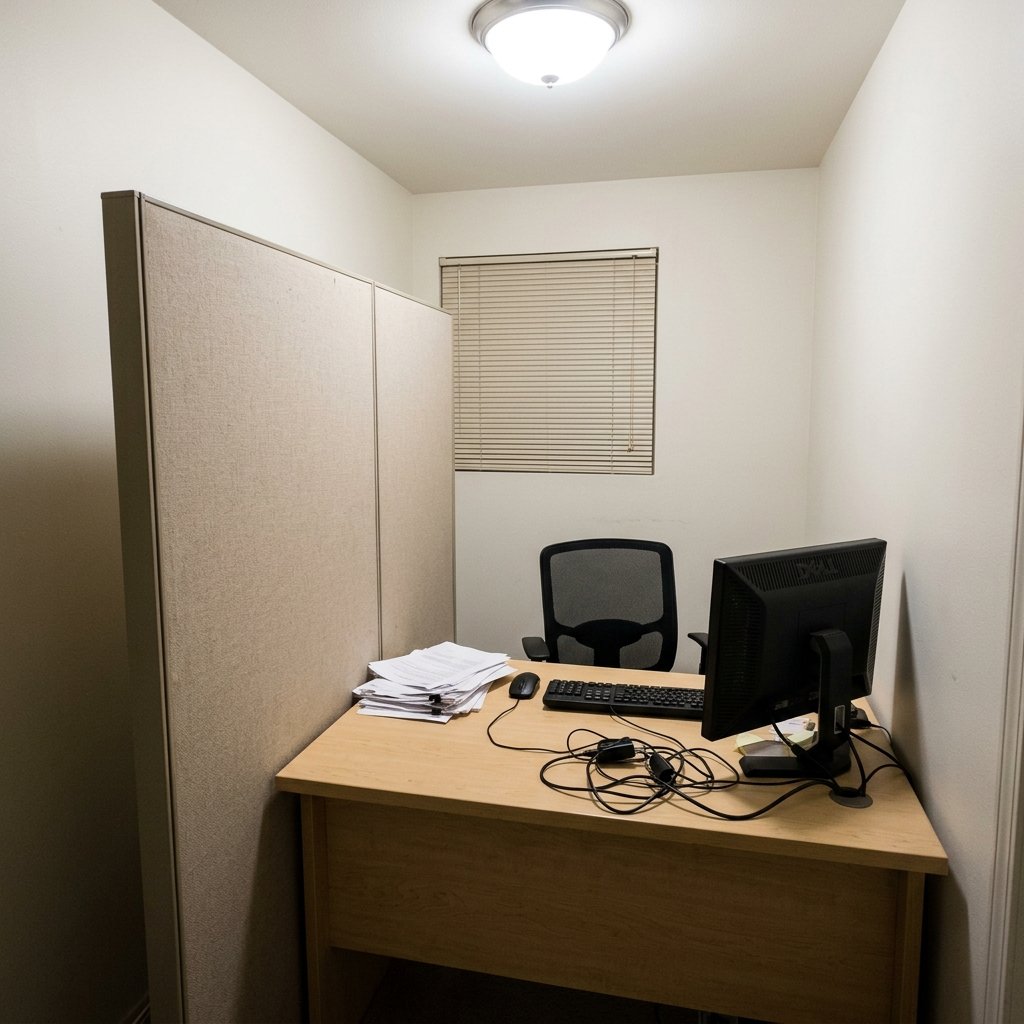
You finally carved out a little home office. Maybe it’s a corner of the bedroom, a nook in the living room, or that weird dead space by the stairs nobody knew what to do with. You were excited. You pictured yourself sipping coffee, feeling productive, maybe even a little proud of the setup.
Then you sat down to actually work in it, and something felt off. Not bad exactly, just… flat. Boxed in. Like you’d been transported straight into a beige cubicle from 2004, minus the fabric walls.
If that sounds familiar, you’re not imagining things. There’s one specific decision that turns a small home office into something that feels stiff and joyless, and almost everyone makes it without realizing.
The Mistake Is Facing a Blank Wall
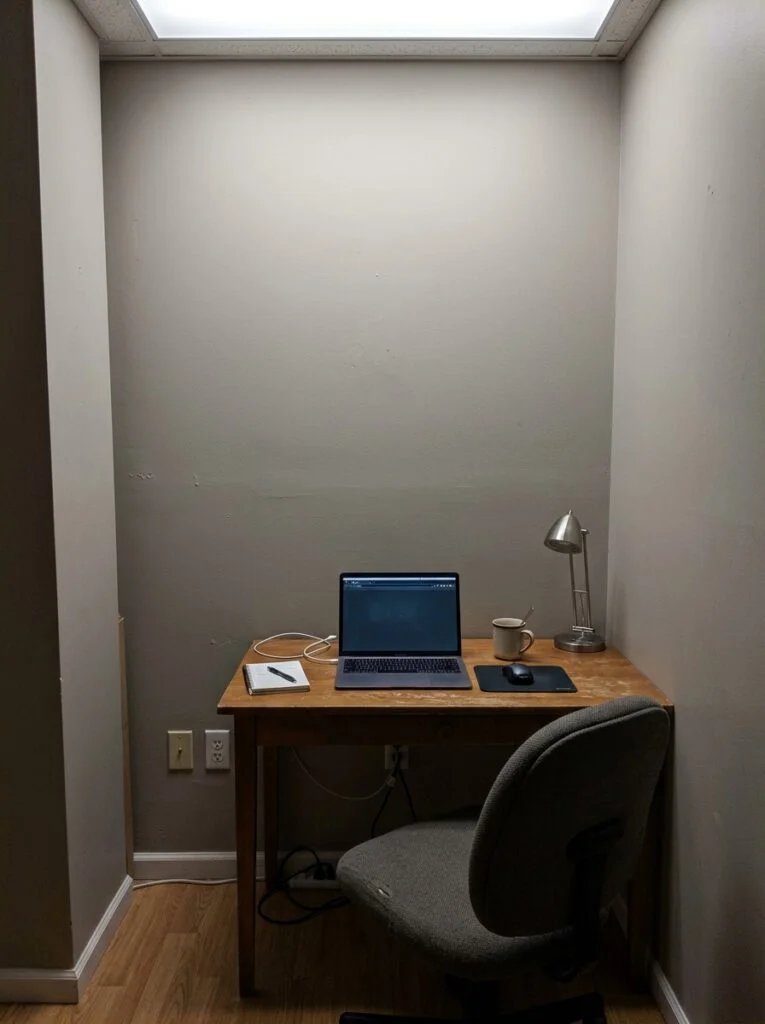
Here it is, plain and simple. Most people push their desk right up against the nearest wall and call it a day. It seems logical. Walls are usually where the outlets are, it’s the most obvious “empty spot,” and it feels like the tidiest way to use limited square footage.
But sitting with your nose a foot away from drywall, for hours at a time, is basically the definition of a cubicle experience. No view, no depth, no sense of the room around you. Just you and a wall having a staring contest for eight hours.
Offices designed this way exist because companies needed to cram as many desks as possible into open floor plans. It was never actually good for focus or mood. It was good for real estate math. And somehow that layout got copied into millions of homes, including yours, without anyone ever stopping to ask if it was the right call for a space where you’re supposed to feel relaxed and human.
Why We All Default to the Wall
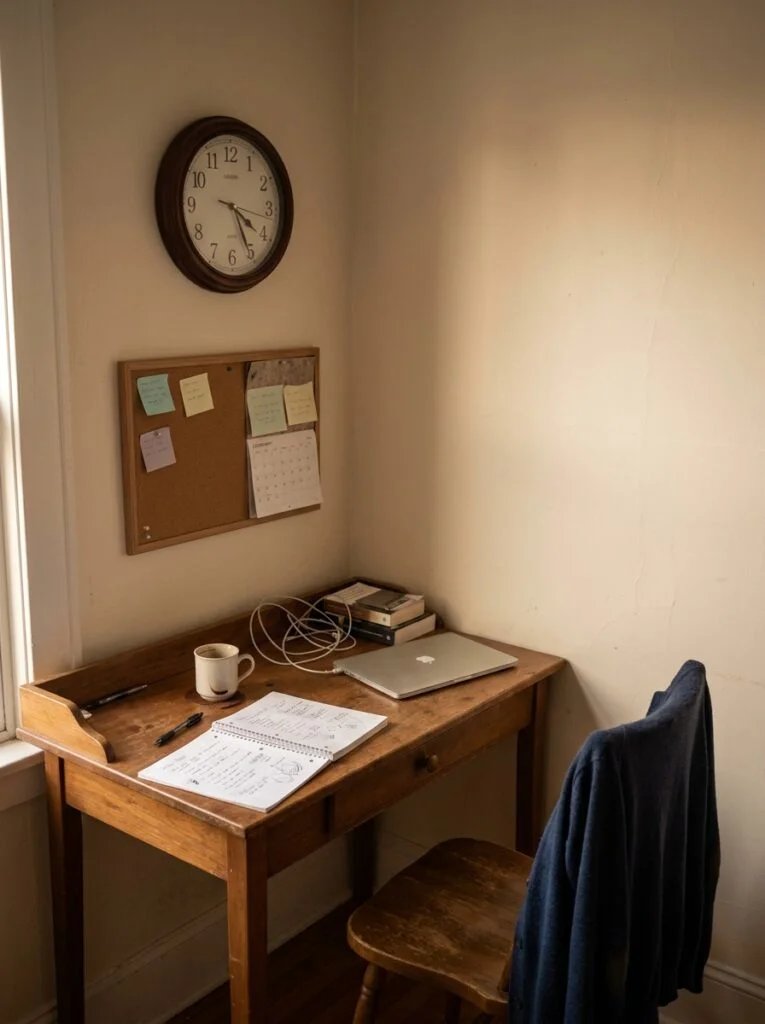
I get why it happens. When you’re staring at a small room trying to figure out where a desk even fits, the wall feels like the safe choice. It’s out of the walking path. It doesn’t block a door. It looks neat from the doorway.
There’s also this quiet assumption that facing a wall means facing your work, like it will keep you from getting distracted. In practice it just makes the room feel smaller and the hours feel longer.
A friend of mine set up her desk this way in the corner of her spare room right after she started working remotely. She told me later that she used to get this weird restless feeling by two in the afternoon every single day, like she needed to escape the room even though nothing was actually wrong. It wasn’t the job. It was the wall.
What a Cubicle Feeling Actually Comes From
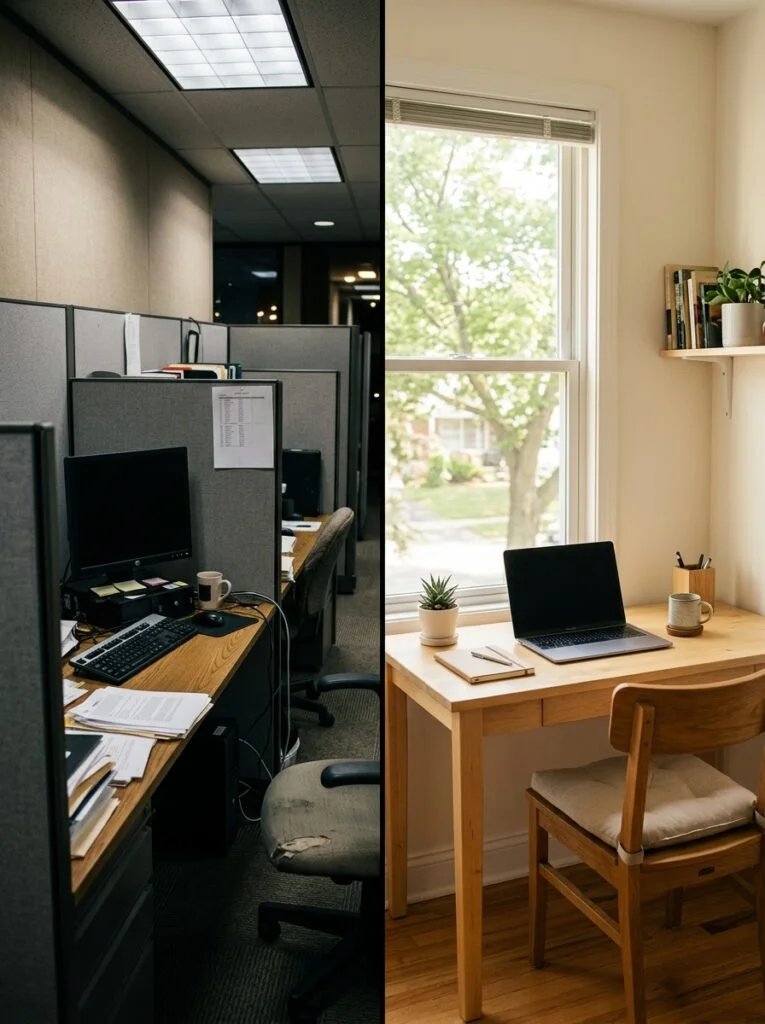
It’s worth understanding why this specific setup feels so draining, because once you see it, you can’t unsee it.
A cubicle strips away three things your brain quietly relies on: a view, a sense of depth, and any connection to natural light or movement. When you sit facing a blank wall in a small room, you accidentally recreate all three problems at once. The wall removes your view. The tight space removes depth. And desks pushed into corners often end up with your back to the window, which cuts you off from daylight completely.
None of this is dramatic on its own. But stacked together, hour after hour, it creates that flat, closed-in feeling that makes four in the afternoon feel like it should be midnight.
A Quick Gut Check Before You Rearrange Anything
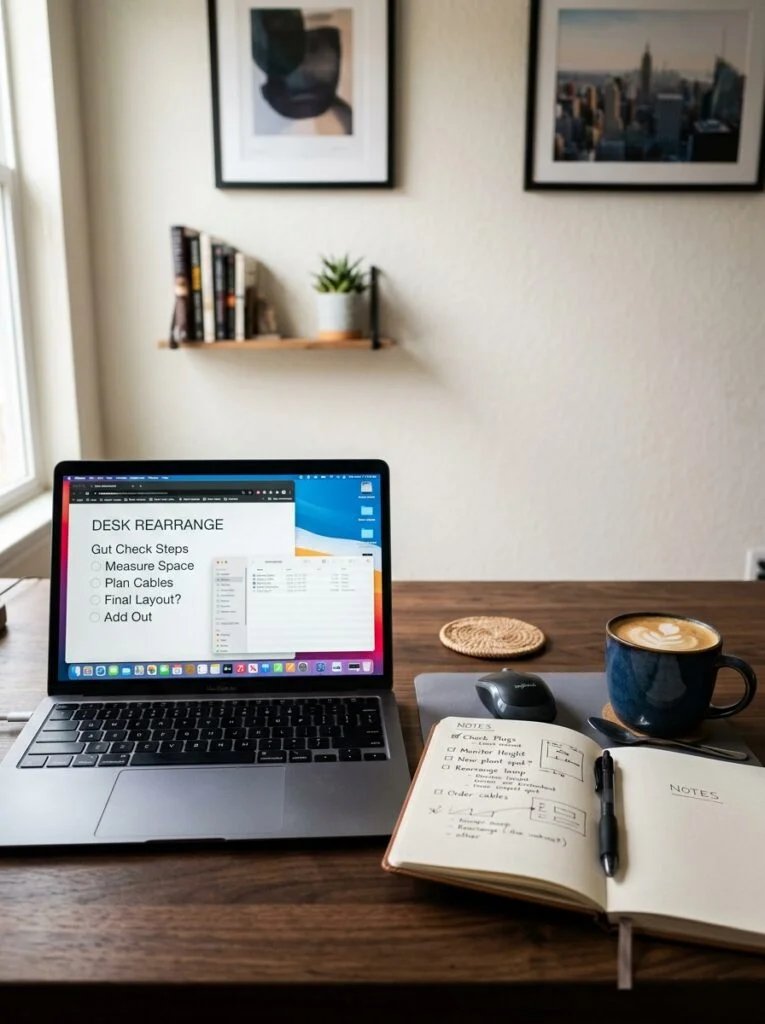
Before you start moving furniture around, ask yourself these questions. They take about thirty seconds and they’ll tell you a lot.
- When you sit at your desk right now, what’s directly in front of your eyes?
- Can you see a window, doorway, or any part of the room from your seat?
- Is your back facing the main entrance to the space?
- Do you feel a small urge to leave the room after less than an hour of sitting there?
If your answers point to “a wall,” “no,” “yes,” and “honestly, yeah,” you’ve found your culprit.
The Fix Isn’t Complicated
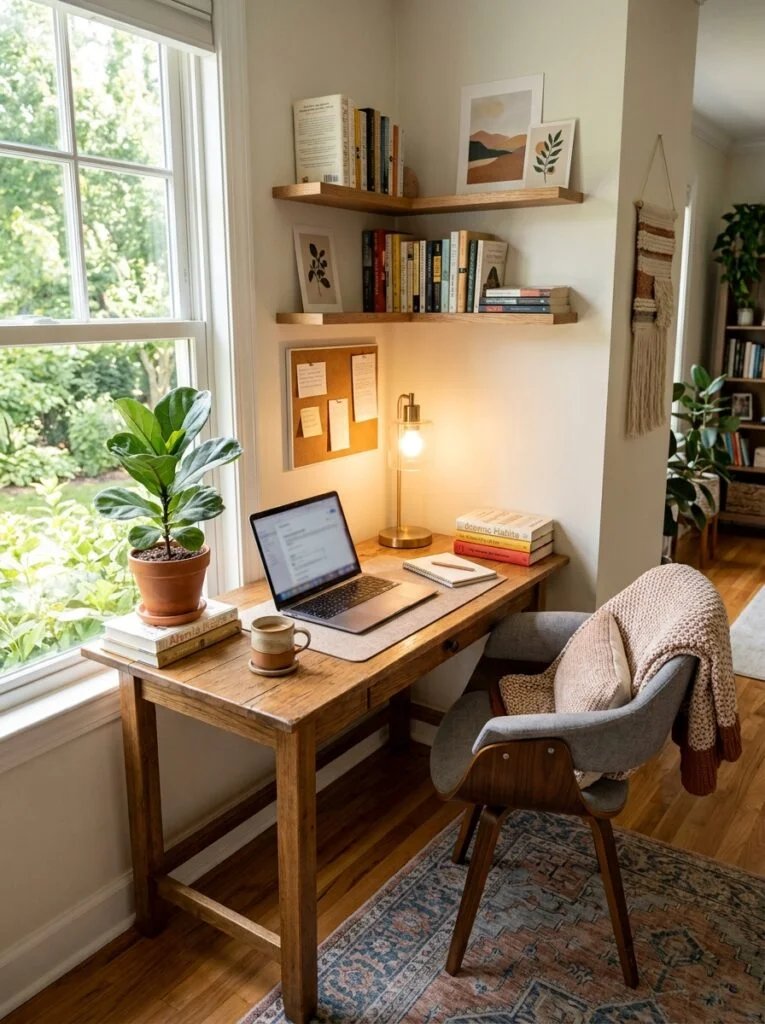
You don’t need a bigger room or a fancy desk. You need a different angle, and sometimes just a few feet of repositioning.
Angle the desk instead of squaring it off. Even a 45 degree turn toward the room changes everything. You still keep the desk tucked in a corner or against furniture for stability, but your eyeline opens up to the room instead of a slab of drywall.
Face a window whenever you possibly can. Natural light does more for focus and mood than almost any productivity hack out there. If a full window view isn’t possible, even a side view where you can glance over and see daylight makes a difference.
Let your back face the wall instead of your front. This one small swap does more than people expect. When your back is protected and your front is open to the room, it mimics the kind of seating arrangement that naturally feels calmer, the same instinct that makes you pick a booth in a restaurant instead of a stool facing the counter.
Use a room divider or bookshelf as a soft boundary, not a blank wall. If you genuinely have no other layout option, put something with texture and depth in front of you instead of flat paint. A low bookshelf, a plant, even a corkboard with photos gives your eyes somewhere to land that isn’t just empty space.
Borrow depth from the rest of the room. If your desk has to face inward, position it so you can still see the far end of the room, a hallway, or an open door. Any visual depth at all breaks up that boxed in feeling.
I actually ran into this problem myself in an apartment a few years back. The only logical spot for a desk was this narrow strip between a closet and the wall, and every arrangement felt like squeezing into a hallway. It turns out that same kind of tricky, easy to overlook spot shows up in almost every small home, and once I read through this breakdown of the most commonly wasted corner in small homes, I realized I had been ignoring the one layout option that actually made sense the whole time.
Real Examples From Real Small Spaces
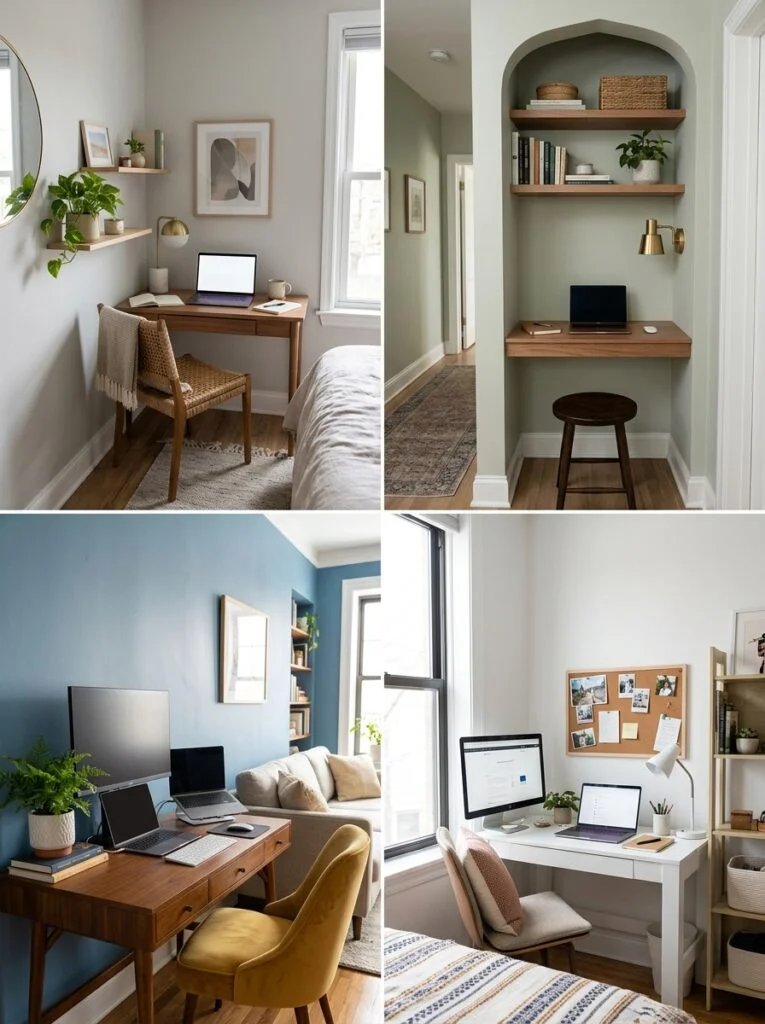
Let’s walk through a few common setups, because “small space” means something different depending on your home.
The bedroom corner office. This is probably the most common home office in existence right now. If the desk faces the wall next to the closet, it feels like a study carrel in a library basement. Turn it so you’re facing the bed and the window instead, and suddenly the same ten square feet feels like an actual room within a room.
The hallway nook. Some homes have this awkward little alcove near the front door or between rooms. Facing a desk straight into the wall here makes it feel like a broom closet with a laptop. Angling it slightly so you can see down the hallway, even just a sliver of it, adds a surprising amount of breathing room.
The living room corner. If your office lives in the corner of your living room, you’ve got an advantage most people don’t realize. You’re probably already near open space. Don’t waste it by turning your back on the room. Face inward, even partially, so you can see the couch, the light, the life of the space instead of the corner seam of two walls.
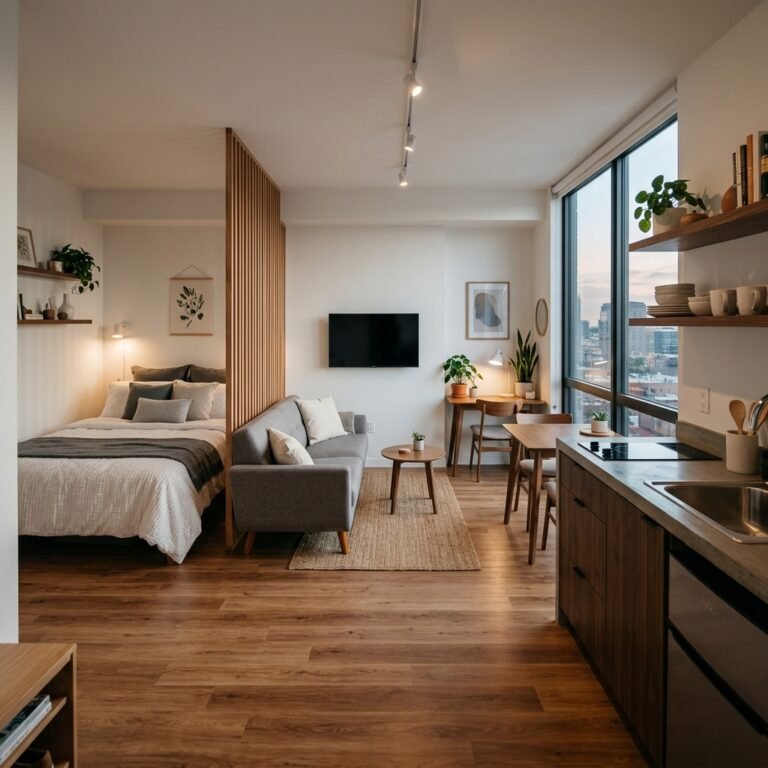
The studio apartment setup. This is the trickiest one because every inch counts and there’s rarely a spare wall to spare. If you’re working with this kind of layout, it helps to think about the whole floor plan rather than just the desk. This guide on how to separate sleep and living zones in a studio apartment has some smart layout logic that applies directly to figuring out where a desk can breathe instead of getting crammed into a corner as an afterthought.
Common Mistakes That Make It Worse
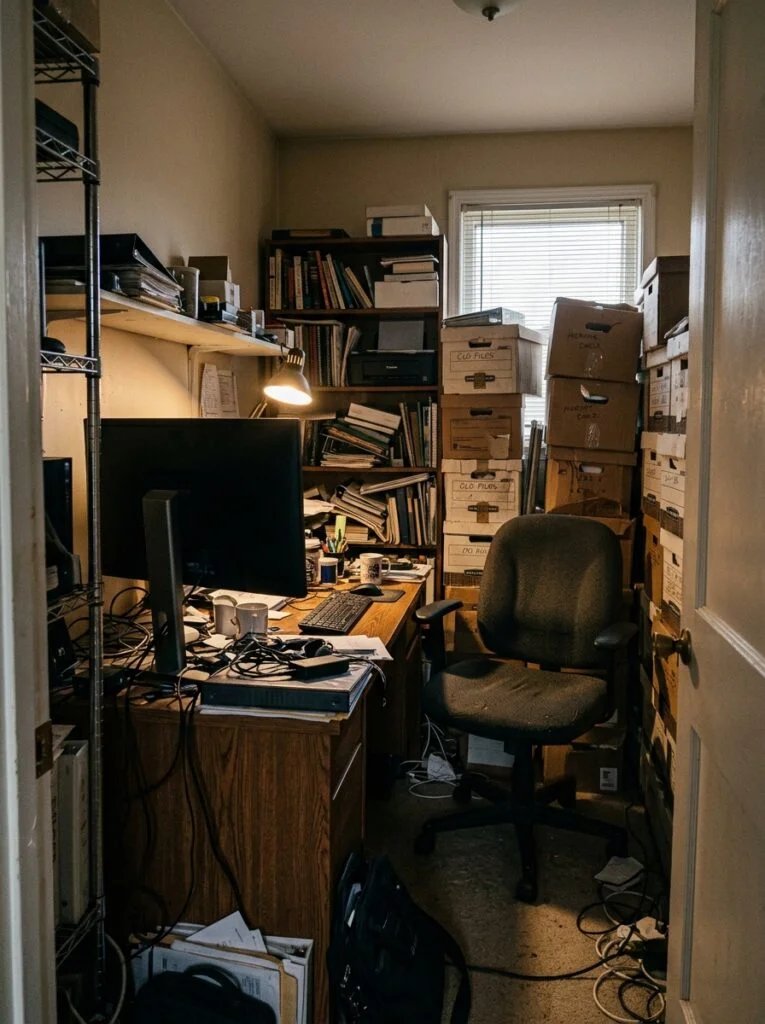
Even after people fix the wall problem, a few other habits tend to sneak back in and undo the progress.
- Piling storage boxes or shelves directly behind the chair, which recreates that boxed in feeling from a different angle
- Choosing a desk that’s too deep for the space, which pushes the chair closer to the wall than it needs to be
- Skipping a lamp because “there’s a window,” even though most small home offices only get good light for part of the day
- Leaving the wall in front of the desk completely bare, which feels more sterile than people expect
- Positioning the monitor so it blocks the one sightline into the room that was actually working
None of these are dramatic mistakes. They’re just small choices that quietly rebuild the same problem you were trying to fix.
Little Touches That Make a Big Difference
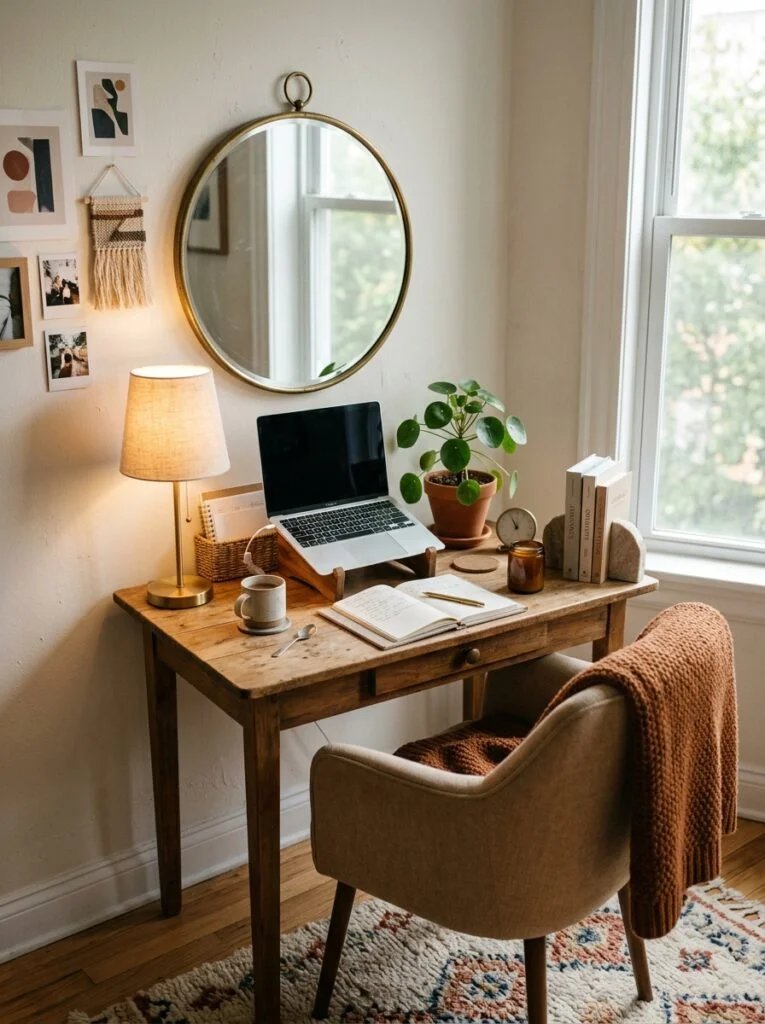
Once the layout itself is sorted, a few small additions genuinely change how the space feels day to day.
A single plant at eye level does more for a tiny office than people give it credit for. It adds color, a bit of movement, and something alive to look at besides a screen.
A mirror placed to reflect a window or doorway can trick a cramped corner into feeling twice as open. This works especially well in that hallway nook setup, where there’s no room to physically face outward.
Warm lighting instead of one harsh overhead bulb changes the entire mood of the space within minutes. Cubicles are famous for flat, cold lighting, so avoiding that alone helps distance your setup from the feeling you’re trying to escape.
A rug under the desk, even a small one, adds a defined sense of “this is a room” rather than “this is a corner where a desk got shoved.” It sounds minor, but it genuinely shifts how the whole area reads.
FAQs
Is it really that big of a deal which way my desk faces?
Yes, more than most people expect. It’s not about superstition or feng shui rules, it’s about what your eyes and brain are dealing with for hours every day. A blank wall versus an open sightline is a bigger mood difference than most furniture swaps you could make.
What if my only outlet is on the wall I don’t want to face?
An extension cord or a cable management box solves this in about ten minutes. Don’t let outlet placement dictate your entire daily mood. It’s genuinely one of the easiest fixes on this list.
My desk has to be against a wall no matter what. Any options?
Angle it, even slightly. A straight-on wall setup and a 30 to 45 degree angle feel completely different, even though the desk hasn’t actually moved very far. You can also add depth in front of you with a shelf, art, or plant instead of leaving bare paint as your view.
Does this apply to closet offices too?
Especially closet offices. Since you’re already working with limited depth, angling the desk or leaving the closet doors open during work hours to extend the sightline into the room helps a lot. A closed door plus a wall is basically a double cubicle effect.
I don’t have a window at all in my office space. What then?
Focus on light temperature and a visual focal point instead. A warm desk lamp and something with depth in front of you, like a piece of art with actual dimension or a small shelf display, can stand in for the psychological benefit a window usually provides.
Wrapping This Up
Small home offices don’t have to feel like a punishment shift at a call center. The fix usually isn’t more square footage or a better desk. It’s just paying attention to what’s actually in front of your eyes when you sit down.
Turn the desk. Chase the light. Give yourself something to look at besides a blank wall. It costs nothing but a bit of rearranging, and it’s one of those changes where you genuinely notice the difference on day one.
If you’ve been putting off fixing your setup because it felt like a bigger project than it actually is, this is your sign to just move the desk this weekend and see how different the room feels.

2 comments