You pull the last string of lights off the mantel on January 2nd, and suddenly the living room looks bare. The tree is gone, the ribbon is boxed up, and the room feels flat instead of festive. That blank-slate feeling is actually a gift. January is the one month when your home has permission to be quiet, and a quiet home can still feel warm if you decorate on purpose instead of by default.
This guide walks through ten specific, low-lift ways to make that happen. Each idea includes real numbers paint sheens, rug sizing, bulb temperatures so you can act on it today instead of just feeling inspired by it. Whether you’re working with a studio apartment or a full house, the goal is the same: fewer things, better chosen, so your space can act as a genuine reset instead of a half-decorated leftover from December.

Embrace Neutral Color Palettes
A neutral palette is the fastest way to reset a room after the visual noise of the holidays. Instead of vague advice to “go neutral,” aim for a light reflectance value (LRV) between 55 and 75 on your main wall color that range reads as soft and warm rather than stark or clinical. Benjamin Moore’s White Dove (OC-17) and Sherwin-Williams’ Agreeable Gray (SW 7029) are two dependable starting points if you want a warm white and a warm greige, respectively, without hiring a color consultant to test a dozen swatches.
You don’t need to repaint to get the effect. Swap in cream linen pillow covers, a light-taupe throw, or a set of unbleached cotton curtains, and the room already reads calmer. Neutral surfaces also do double duty during winter’s shorter daylight hours: lighter walls and fabrics bounce the available afternoon sun back into the room instead of absorbing it, which is especially useful in north-facing rooms that lose direct light by early afternoon. That reflectivity is part of why a “less is more” palette makes even a compact apartment feel bigger you’re not fighting the room’s few hours of daylight, you’re working with it.

Add Cozy Knit Throws
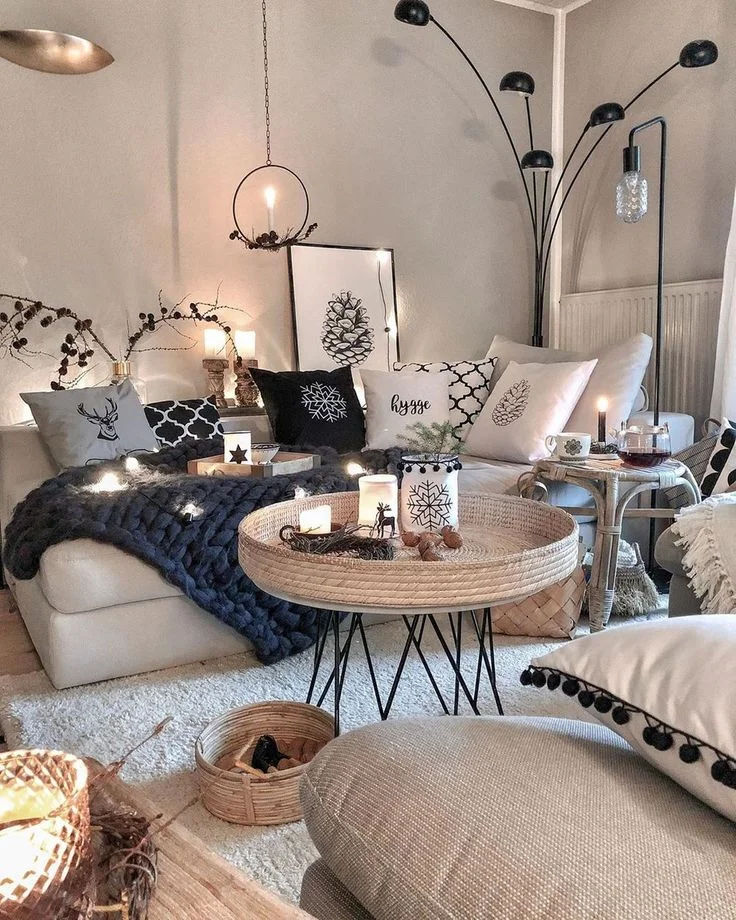
A chunky knit throw does more visual work per dollar than almost anything else on this list. For a sofa, look for a throw in the 50-by-60-inch range anything smaller reads as a decorative afterthought rather than something you’d actually use on a cold evening. Drape it loosely over one arm of the sofa rather than folding it flat; the looser fold catches shadow and reads as lived-in instead of staged. At the foot of the bed, a 60-by-80-inch throw gives enough coverage to look intentional without swallowing the whole bedspread.
Fiber matters more than color here. Wool and cotton-wool blends trap warmth without adding bulk, while a bouclé or chenille throw brings texture without looking heavy in a small room. If you’re layering two throws on one piece of furniture, pair a smooth material like a linen-cotton blend with a heavier cable knit; the contrast in texture is what makes the layering look designed rather than accidental. Budget-wise, a well-made cotton-blend throw typically runs $35–$70, while wool versions run higher; either is a smaller investment than most furniture swaps for the amount of warmth it adds to a room.
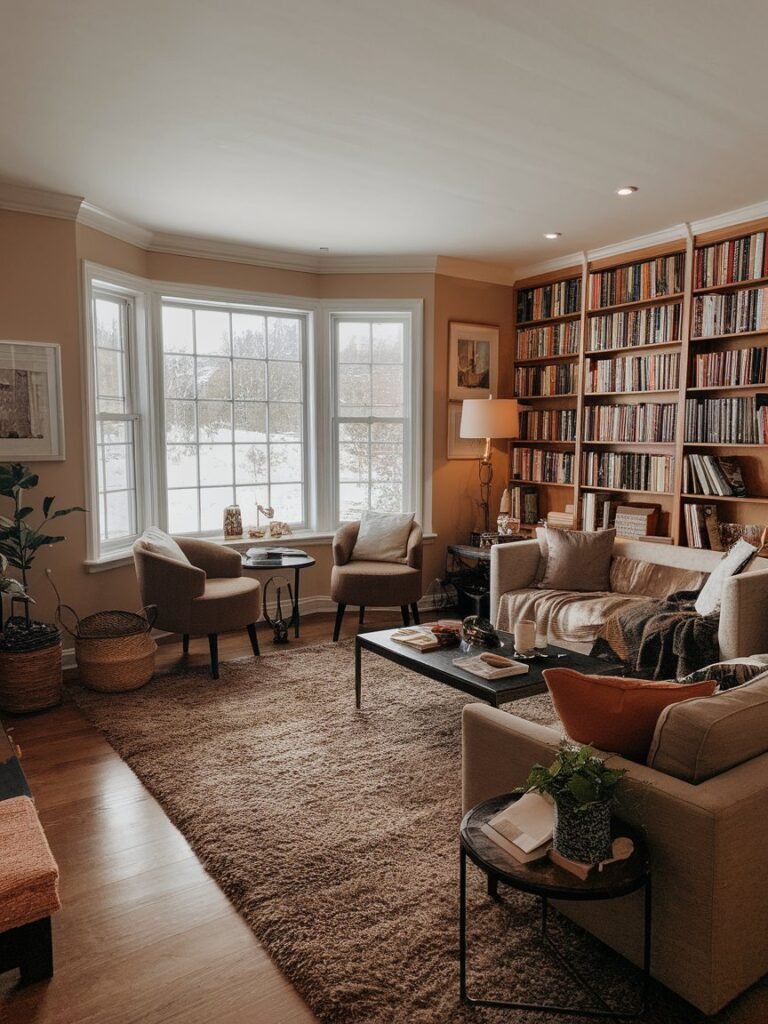
Use Warm Ambient Lighting
Overhead lighting is the single most common reason a room feels harsh in January. According to Consumer Reports’ lightbulb testing guidance, bulbs marked around 2,700 K read as warm and inviting, while anything from 3,500 K up starts to look cool and bright. Warmer bulbs flatter skin tones and fabrics better, while cooler light is better reserved for tasks that need higher contrast, like reading fine print or prepping food. In practice, that means checking the Kelvin rating on the box before you buy replacement bulbs — a 2,700K bulb will read as soft and amber, while anything above 4,000K will feel closer to office lighting.
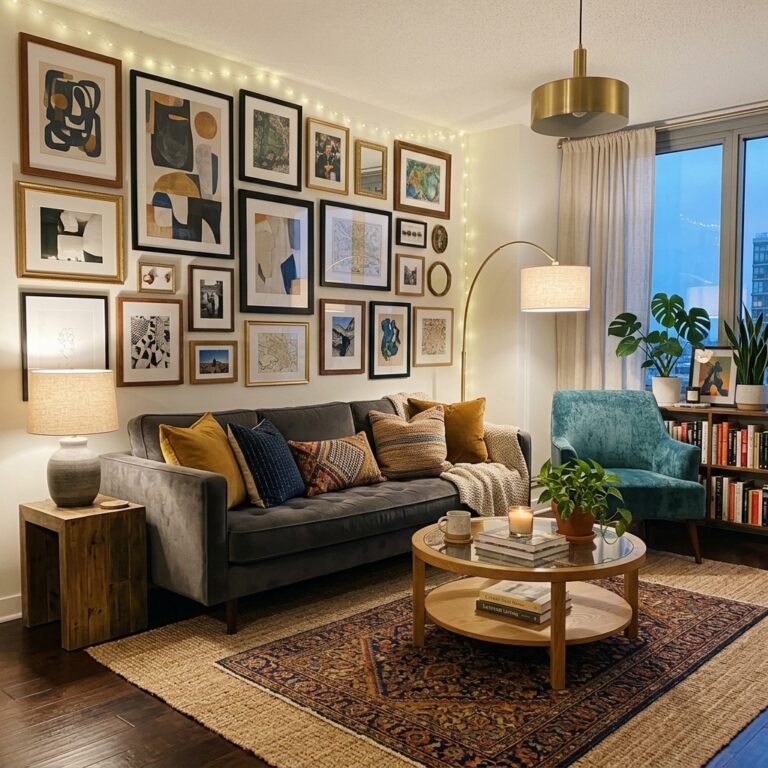
Layer your light sources instead of relying on one ceiling fixture. A table lamp on a side table, a floor lamp beside a reading chair, and a scattering of flameless LED candles on a mantel together create depth that a single overhead bulb can’t match. Aim for at least two light sources per seating area at different heights — eye level and below eye level — so the room has shadow and softness instead of one flat wash of brightness. This is also the easiest place in the whole list to spend under $50 and see an immediate difference: swapping a handful of 5,000K bulbs for 2,700K ones changes a room’s mood more than most furniture purchases will.

Declutter Holiday Decor Thoughtfully
Stripping a room bare the day after New Year’s usually backfires it trades holiday clutter for a different kind of visual emptiness. Instead, sort decor into three labeled bins as you take it down: “holiday-specific” (ornaments, red ribbon, themed figurines) goes into storage immediately; “winter-neutral” (pinecones, white candles, evergreen stems, plain garland) stays out through February; and “donate or toss” covers anything that didn’t get used this season. Give yourself a firm deadline the first two weeks of January so the transition doesn’t stall out with half-packed boxes sitting in a corner.
Clear your primary flat surfaces first: the coffee table, the mantel, and one entryway console. A cluttered surface is the fastest way to make a whole room read as messy, even if every other surface is tidy. Leaving roughly 30 percent of a shelf or table empty rather than filling every inch is what interior stylists mean by “breathing room,” and it’s the difference between a display that looks curated and one that looks like storage overflow. The payoff isn’t just aesthetic: a clear flat surface is one less visual decision your brain has to process every time you walk into the room, which is part of why decluttered spaces genuinely feel calmer to live in, not just look tidier in photos.

Choose Minimal Wall Art
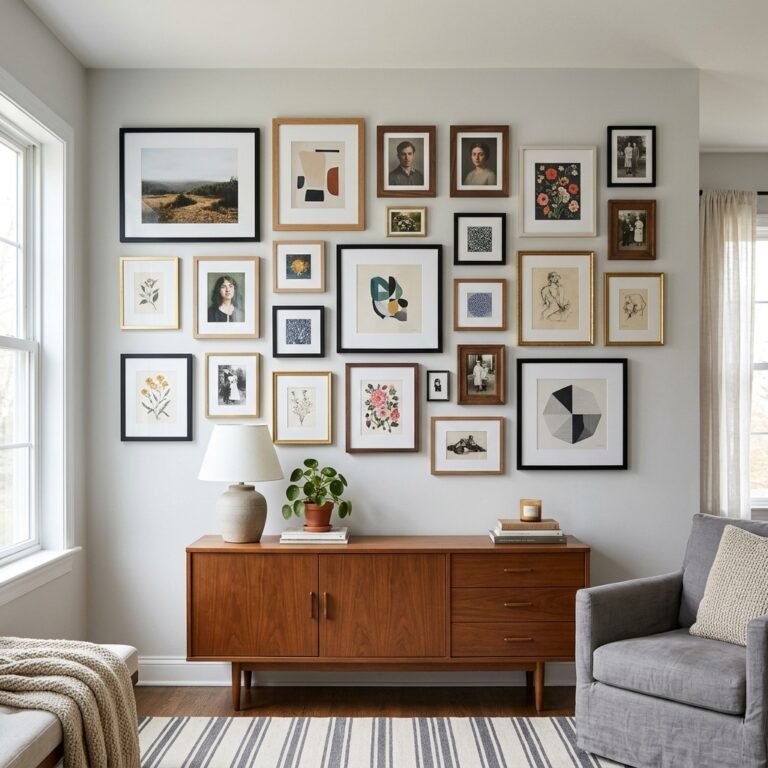
Your walls should feel as edited as your surfaces. Rather than a dense gallery wall, hang two or three pieces with real breathing room between them leave 3 to 5 inches of clear wall space around a single framed piece, or 2 to 3 inches between frames if you’re grouping a small cluster. For a solo piece above a sofa, center it so the middle of the frame sits roughly 57 inches from the floor, which is the standard eye-level height designers use for a reason: it reads correctly whether you’re sitting or standing.
For January specifically, lean toward pieces with low visual density a soft abstract print, a single-line botanical drawing, or a black-and-white photograph over busy patterns or saturated color. These read as restful rather than stimulating, which matters more in winter when you’re spending more waking hours indoors under artificial light. If you already own a gallery wall’s worth of art, consider rotating half of it into storage for the season rather than removing it all; a smaller, more spaced-out arrangement of your existing pieces costs nothing and instantly feels more intentional.

Introduce Wooden Furniture Accents
Wood tones ground a neutral room so it doesn’t drift into feeling sterile. You don’t need new furniture to get the effect a light oak side table, a reclaimed-wood tray on the coffee table, or a set of walnut picture frames does most of the work. If your existing furniture already includes wood, the trick is restraint around it: keep the surrounding decor simple so the grain and tone of the wood stay visible instead of getting buried under other objects.
Pay attention to undertone when you’re mixing wood species in the same room. White oak and rattan both lean warm and pale, while walnut and cherry lean deep and reddish; mixing one light wood with one dark wood in a single space usually looks more intentional than three different mid-tone woods that compete with each other. A single well-placed wood accent — even something as small as a $20 tray does more to warm up an all-neutral room than adding another textile.

Layer Soft Area Rugs
A rug is one of the few upgrades that changes how a room feels underfoot, not just how it looks. For a living room, the rug should extend at least 6 to 10 inches beyond the front legs of your main seating so the furniture feels anchored rather than floating on bare floor. Wool rugs hold up best in high-traffic rooms and resist crushing, plush shag adds the most tactile warmth for a bedroom, and a low-pile neutral pattern is the easiest option to layer without adding visual bulk.
For the layered look, put a smaller, more textured rug an 4-by-6 sheepskin or a patterned runner on top of a larger, plainer 8-by-10 rug rather than the reverse; the eye reads the bigger neutral rug as the “base” and the smaller one as the accent. Always add a rug pad underneath, even on carpet a 1/4-inch felt pad prevents slipping and adds a noticeable layer of cushioning against cold winter floors, which is really the whole point of adding a rug in January in the first place.

Style With Scented Candles
Scent is the fastest sense to trigger a feeling of calm, so it’s worth being specific about which ones you reach for in January. Vanilla and amber read warm and cocooning, sandalwood and cedar lean grounding rather than sweet, and lavender or soft citrus work well in a bathroom or bedroom where you want something calming without it feeling heavy. Stick to one dominant scent per room mixing three strong candles in an open-plan space usually competes rather than layers.
Display matters as much as scent. Group two or three candles of varying heights in a ceramic or glass holder rather than scattering single candles across every surface; the cluster reads as styled, while lone candles read as afterthoughts. For safety, keep any lit candle at least 12 inches from anything flammable, including throws and curtains, and trim the wick to about a quarter-inch before each burn so it doesn’t smoke or flare. If you’re decorating a shelf where a candle won’t get lit often, a flameless LED version gives you the same visual warmth without the upkeep.

Create Organized Shelving
Open shelving is either your home’s best styling opportunity or its most obvious clutter magnet the difference comes down to a few specific ratios. Try the “rule of three”: group objects in odd numbers, and vary their height so the tallest piece is roughly twice the height of the shortest. Stack a few books horizontally and use the flat top as a small pedestal for a candle or a small object; it breaks up the monotony of a row of vertical spines.
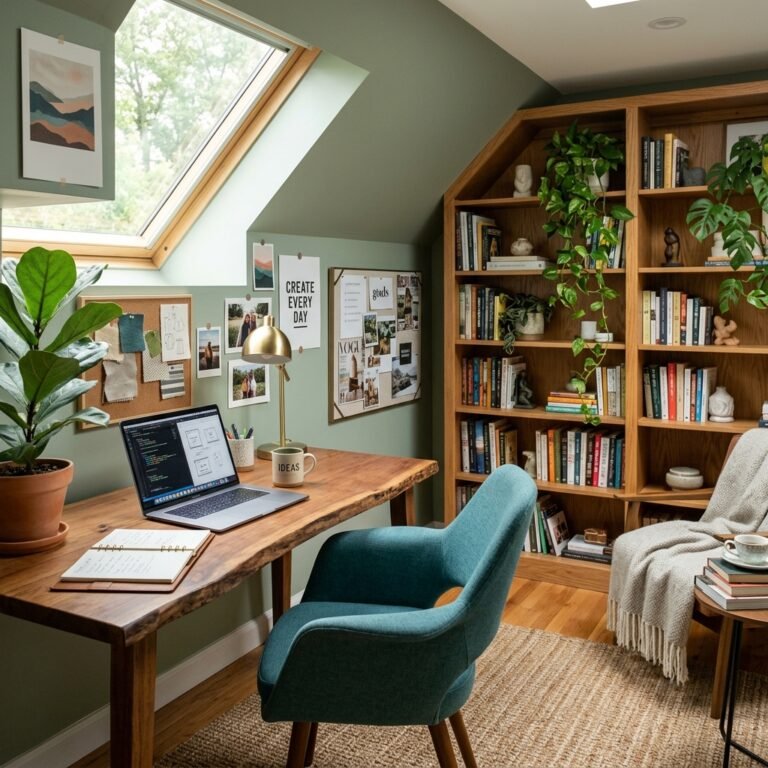
Use closed storage a woven basket or a lidded box for anything you need to access often but don’t want visible, like chargers or mail. And resist the urge to fill every shelf: leaving roughly one shelf in three mostly empty, or leaving clear space at the end of each shelf, is what keeps the whole unit from reading as cluttered even when it’s holding a lot of stuff. This is especially useful in small apartments, where shelving often has to double as both storage and display.

Design a Cozy Reading Corner
A reading corner needs surprisingly little to function: one comfortable chair with a seat depth of at least 20 inches so you can tuck your legs up, a throw or cushion within reach, a small side table for a mug, and a lamp that puts out roughly 450–800 lumens bright enough to read by without lighting the whole room. If you have the option, position the chair near a window so you get natural light during the day and switch to the lamp once it gets dark.
The corner doesn’t need to be large. A 4-by-4-foot footprint next to a window is enough for a chair, a small table, and a floor lamp without feeling cramped. Keep a small stack of two or three books on the side table rather than a full shelf it signals “this spot is for reading” without turning into another cluttered surface. The goal is a spot you’ll actually sit in on a cold evening, not a styled corner that looks good in photos but never gets used.

Final Thoughts: Start the New Year With Calm, Cozy Style
None of these changes require a renovation or a big budget. A few new bulbs, one well-placed throw, a rug pad, and an afternoon spent editing your shelves will do more for how your home feels in January than any single big purchase would. The through-line across all ten ideas is restraint: fewer things, chosen more deliberately, so your home can actually function as the calm reset the new year is supposed to bring.
If you’re working room by room, pair this refresh with a closer look at small-space living room layouts if square footage is tight, or with a deeper dive into building a reading nook if that’s the corner you’re most excited to finish first.
Here’s to a calm, cozy, and beautifully styled new year.