
It is 8 p.m., and you have switched off the overhead light because it flattens everything. One lamp is left, and it lights a circle about the size of a dinner table. The sofa you spent weeks choosing sinks into shadow, and the shelf beside the TV is just a dark rectangle. Most small living rooms fail this way, in the numbers rather than the style. Seat depth, bulb output, and shelf depth decide whether a room works long before paint color does. This guide takes furniture, lighting, and storage one measurement at a time, with typical prices where they help. For visual tricks like paint and mirrors, our guide to small living room ideas that instantly look bigger and brighter covers that side.
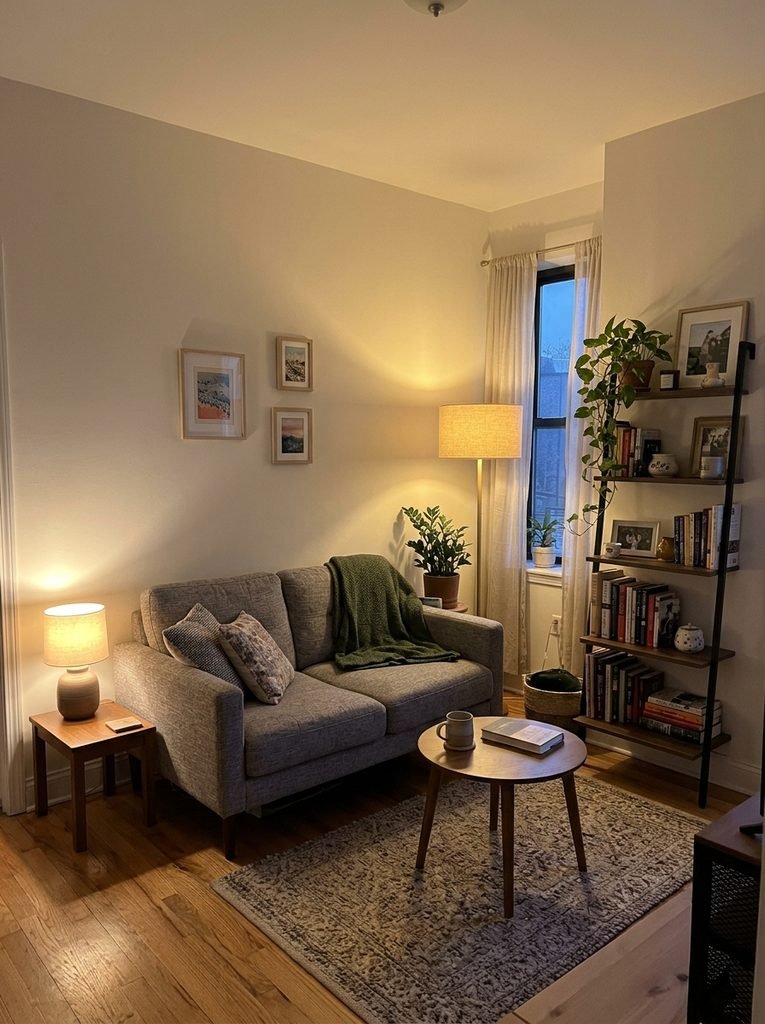
Furniture That Fits: Seat Depth Beats Total Depth
Product pages list total depth, which includes the back cushions, arms, and frame. You never sit on those. Check seat depth instead. A seat around 21 to 22 inches deep suits upright sitting and often gives a sofa about 33 to 35 inches deep overall. Deep lounge seats of 24 inches or more can push the total past 38. In a 10-foot room, that difference is a full extra three inches. In a showroom, sit with your back flat against the cushion. You want roughly two fingers of space behind your knee. Sit for five minutes, not thirty seconds. Also check the arm: a rolled arm can eat 4 inches of seat width compared with a slim track arm, and in a 72-inch loveseat that is the difference between two comfortable seats and two cramped ones. Bring a tape measure to the store and write the numbers down before the salesperson talks you into delivery dates.
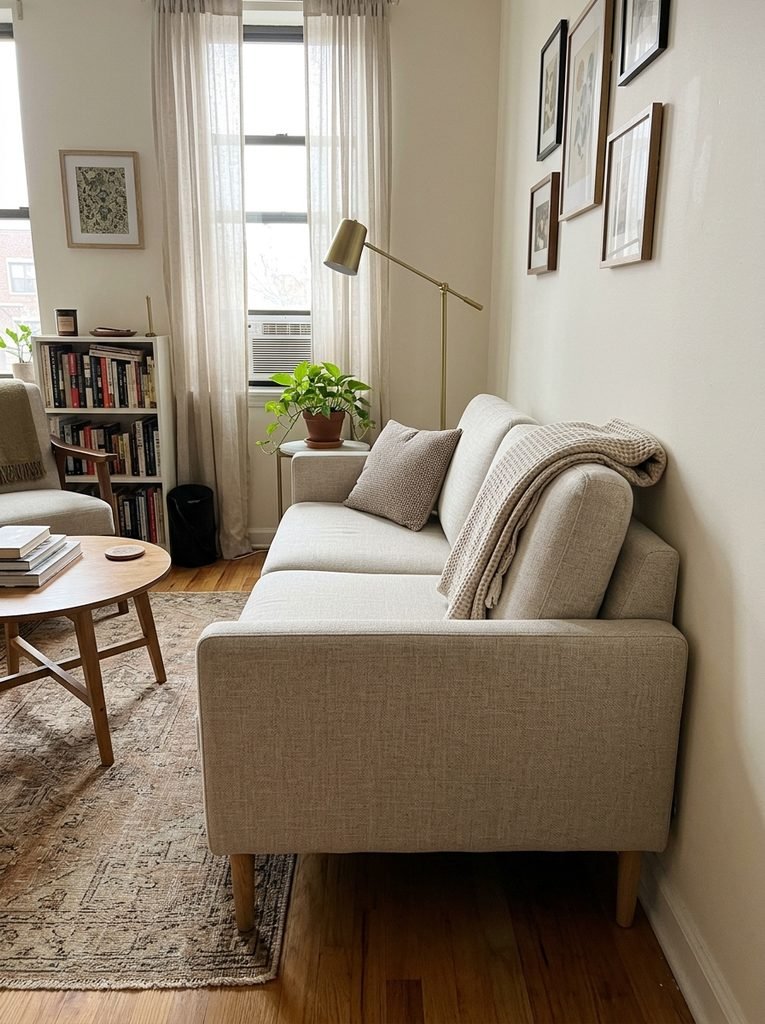
Fabric Rated for a Room With Only One Sofa
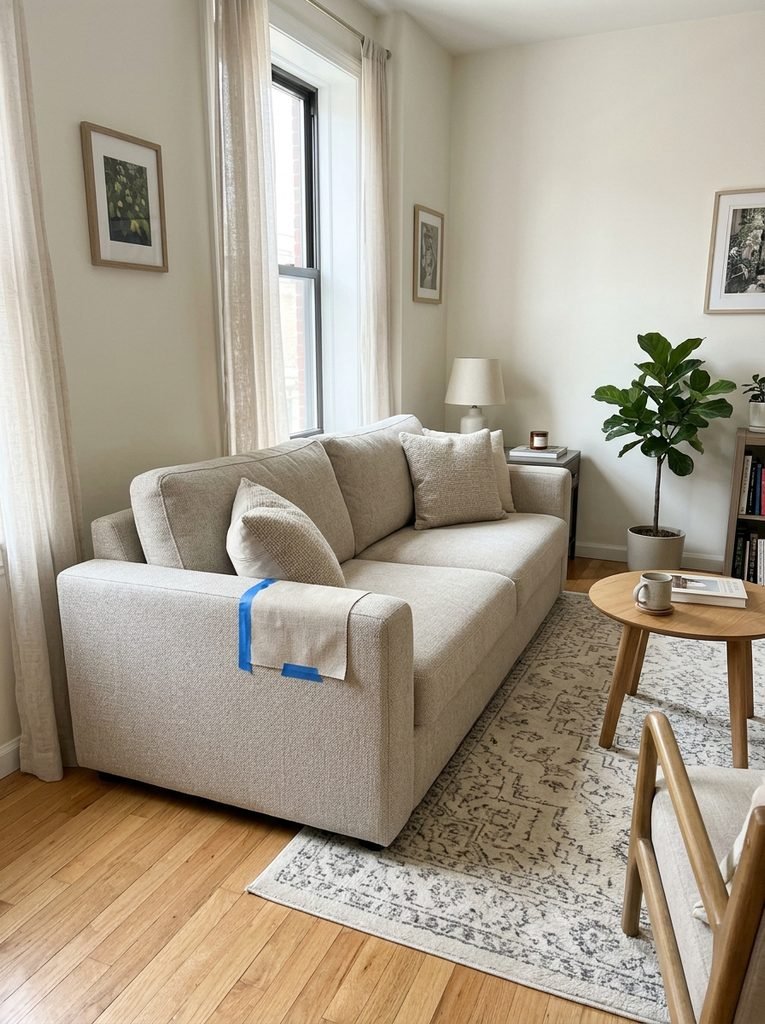
In a small living room, one sofa handles guests, naps, laptops, and the occasional pizza. A decorative linen that suits a formal room will pill within a year. Look for performance fabric with a rub rating of 15,000 double rubs or more, which is commonly treated as heavy-duty residential use. Order the swatch, tape it to the arm, and look at it in morning and evening light. Oat and stone weaves hide wear better than flat white. If the sofa you love has a delicate cover, a fitted slipcover usually costs less than reupholstering. Check cushion fill too. Foam wrapped in a feather blend keeps its shape and holds a little give, while all-feather cushions need plumping every day, which most people stop doing by month two.
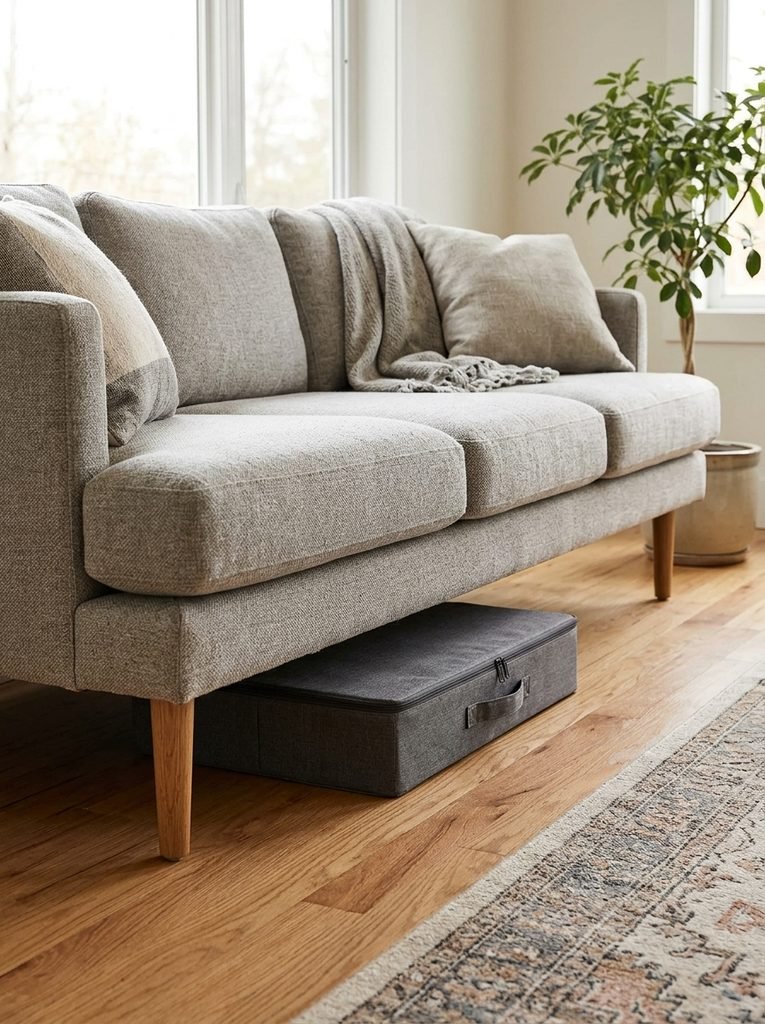
Legs Tall Enough for a Robot Vacuum
Raised legs make a sofa look lighter, but pick the height with a purpose. Robot vacuums are often 3 to 4 inches tall, so a 6-inch leg gap lets one pass underneath without getting stuck. That same gap holds flat storage bins, provided each bin stands 5 inches tall or less. If your sofa sits lower, 2-inch furniture risers often cost $10 to $20 for a set. On hard floors, put felt under each riser. Without it, a riser under a heavy sofa leaves marks in the finish. Do a floor test before you buy: slide a flat ruler under each leg position. If it catches on a rug edge or a heating vent, you have found a spot where a bin or vacuum won’t fit.
One Flex Seat at Exactly Seat Height
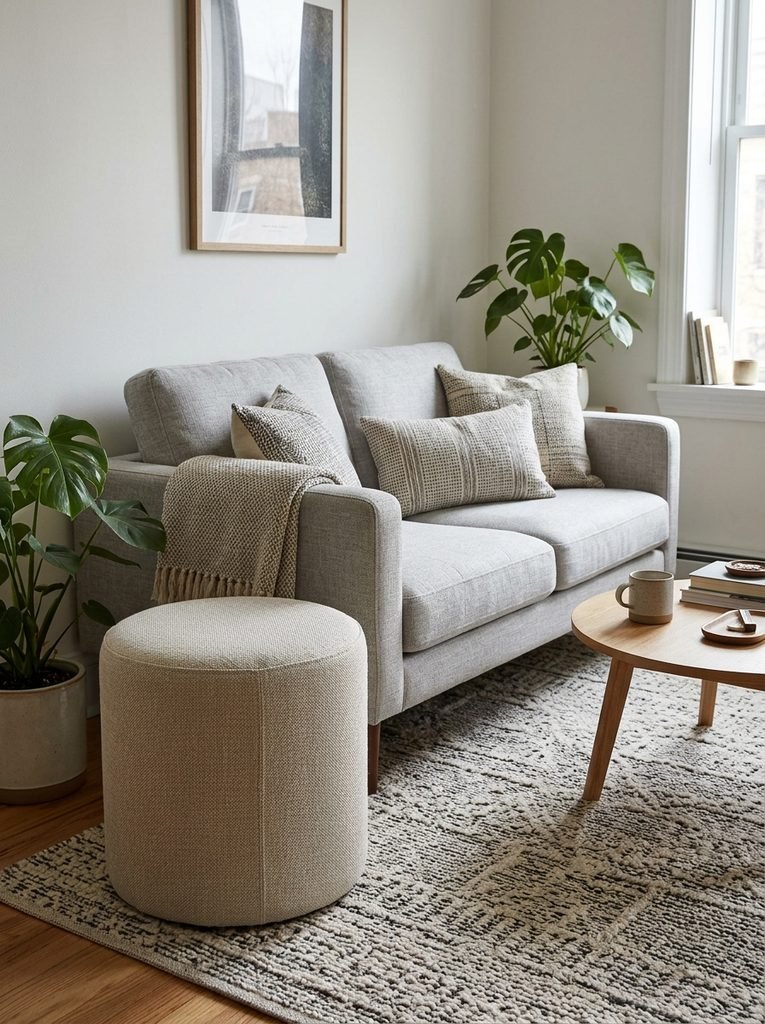
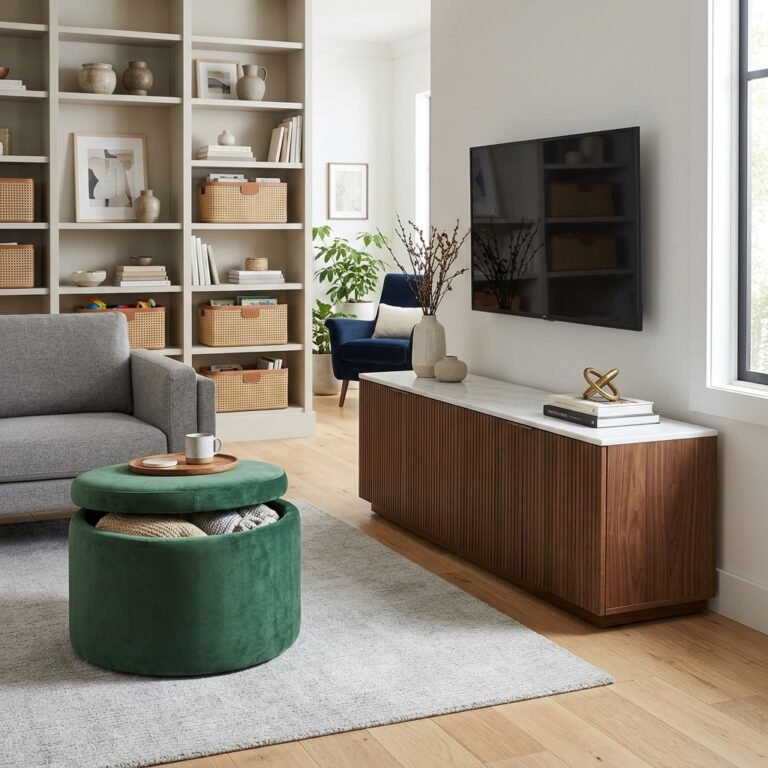
A firm pouf or stool that matches your sofa seat height, around 17 to 18 inches, does three jobs. It becomes the extra chair when four people come over. It works as a footrest the rest of the week. With a tray on top, it turns into a side table. Keep it under about 10 pounds so a guest can carry it across the room without asking. Store two of them, if you have room, beneath a console. A pouf that sits lower than the sofa feels like a toy, while one that sits higher cuts into your knees. A leather or wool top wipes clean more easily than a boucle one when a mug lands on it, which in a small room it eventually will.
A Lumen Budget You Can Calculate in One Minute
Most small living rooms are under-lit, and nobody notices because nobody counts. Multiply the floor area by 10 to 20, the foot-candle range the U.S. Department of Energy associates with living rooms. A 10 by 12 foot room covers 120 square feet, so you need about 1,200 to 2,400 lumens in total. A standard 60-watt-equivalent LED bulb gives roughly 800. Three of those, spread across lamps, reach the middle of the range. Read lumens on the box, not watts. If the walls are dark, aim for the top of the range. The same logic works in reverse: pale walls reflect more light, so a room with white walls can sit near the bottom of the range and still feel bright. After you add up your bulbs, stand in the doorway at night and look at the corners. The darkest one tells you where the next lamp goes. The Energy Saver section of Energy.gov explains how to read a bulb label.
Lamp Heights That Keep the Glare Out of Your Eyes
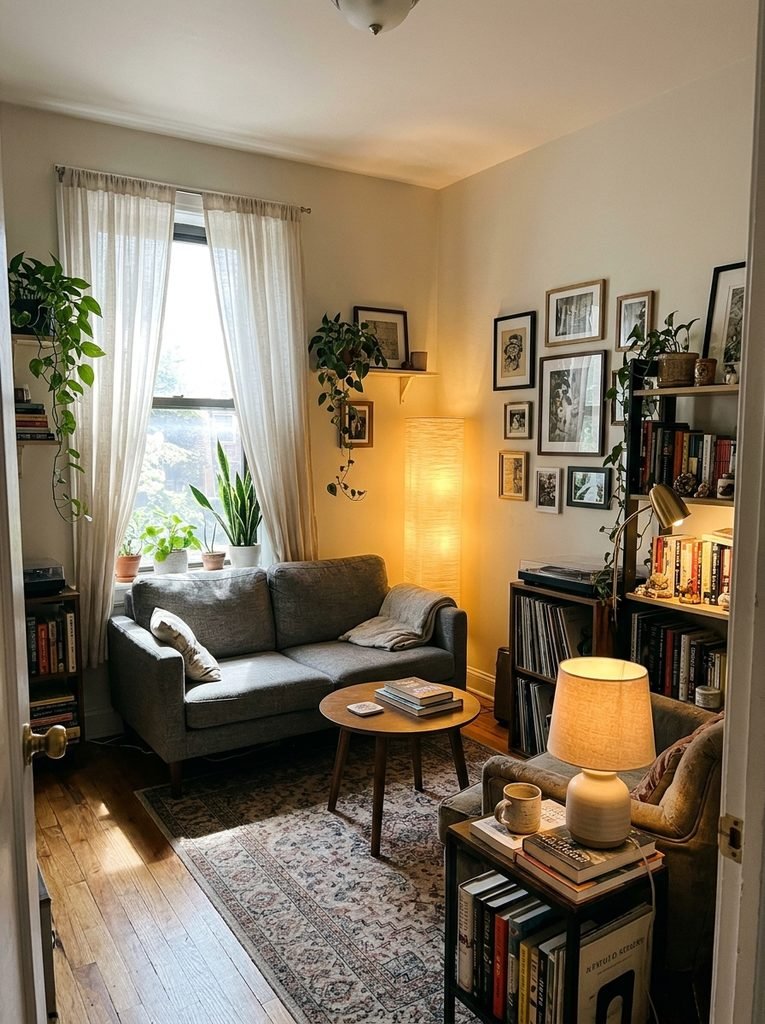
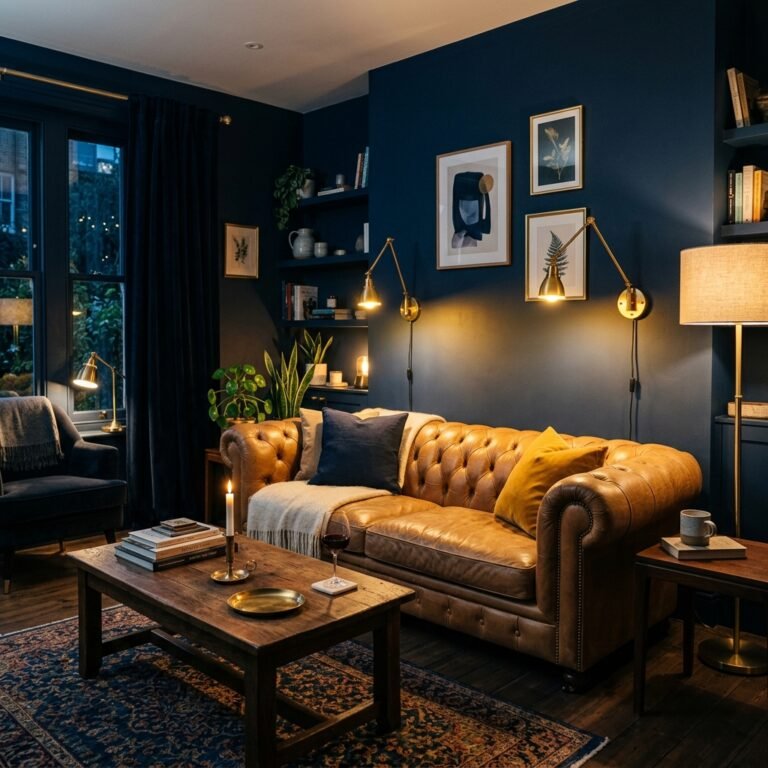
A floor reading lamp usually stands 58 to 64 inches tall. The goal is for the bottom edge of the shade to sit at or just below your seated eye level, so you never see the bare bulb. Put it slightly behind your shoulder, not beside the TV. Choose a base footprint under 10 inches so it fits between the sofa arm and the wall. Table lamps on end tables should look balanced, with the shade roughly as wide as the table is deep. A lamp that towers over a tiny table looks wobbly even when it isn’t. If the only outlet sits on the far wall, run the cord along the baseboard rather than across the rug, where it becomes a trip hazard for guests who don’t know the room.
One Bulb Temperature, Everywhere
Mix a 2700K bulb with a 4000K one, and the wall shows stripes of yellow and white. Buy all the bulbs for the room in the same temperature, ideally from one brand, since “warm white” varies between manufacturers. Pick 2700K for a cozy glow or 3000K for a crisper look. Then check the CRI, which measures how faithfully a bulb shows color. A CRI of 90 or higher keeps your sage cushions green instead of gray. Bulbs with a high CRI often cost a little more, but in a room where you sit every evening, the difference shows. Keep one spare bulb of the same type in a drawer. Bulbs from different production batches can vary slightly in tone, and a mismatched replacement is easy to spot against a cream wall.
One Tap for Every Lamp
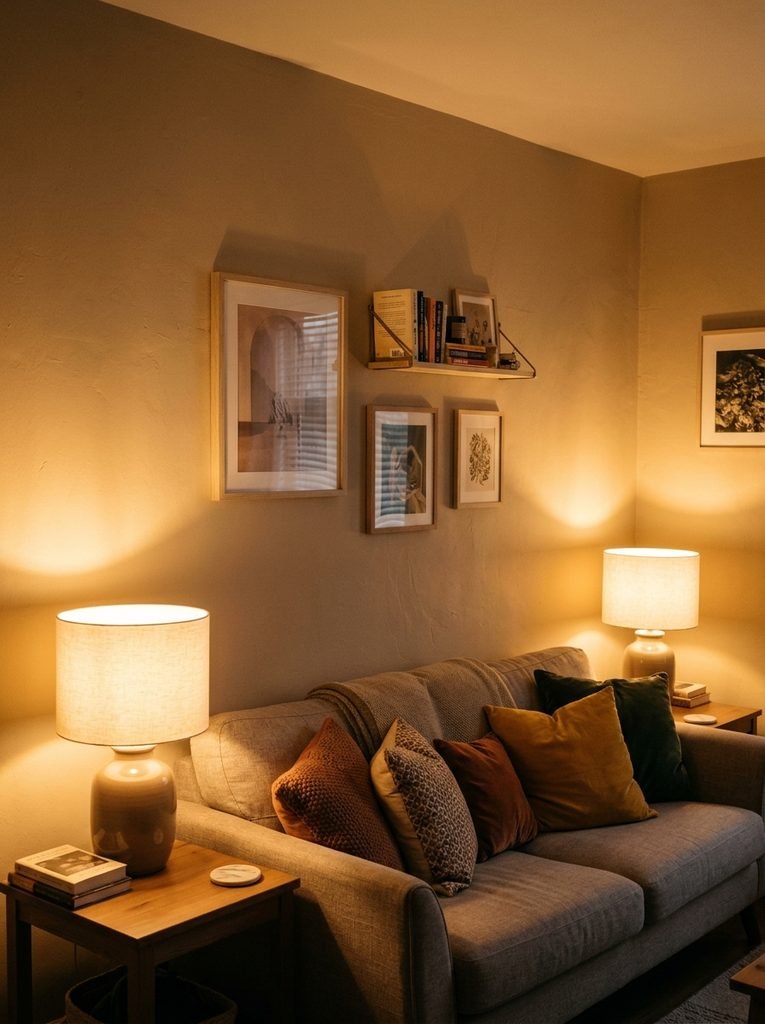
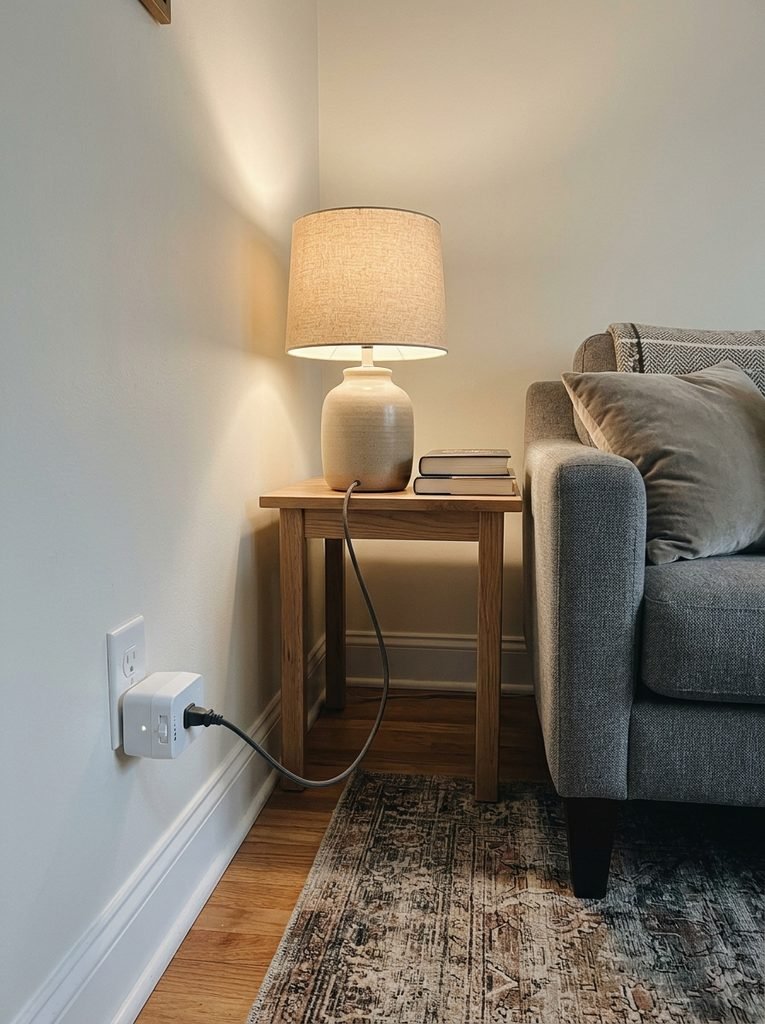
Lamps that need to be switched on one by one stay off. Plug them into a wall-switched outlet if your room has one. If it doesn’t, smart plugs often cost $10 to $15 each, and a schedule can turn everything on at sunset. For dimming, a plug-in dimmer between the lamp and the wall usually runs $10 to $20. Check the bulb box first, because only bulbs labeled dimmable will work with one. The wrong pairing buzzes or flickers. A single tap that brings up all the lamps to a low level makes the evening room feel finished. Set the evening scene once, at roughly a third of full brightness, and leave it. Most people find that a low level looks warmer and hides the clutter that bright light exposes.
Use the Thirteen-Inch Cube as Your Measuring Unit
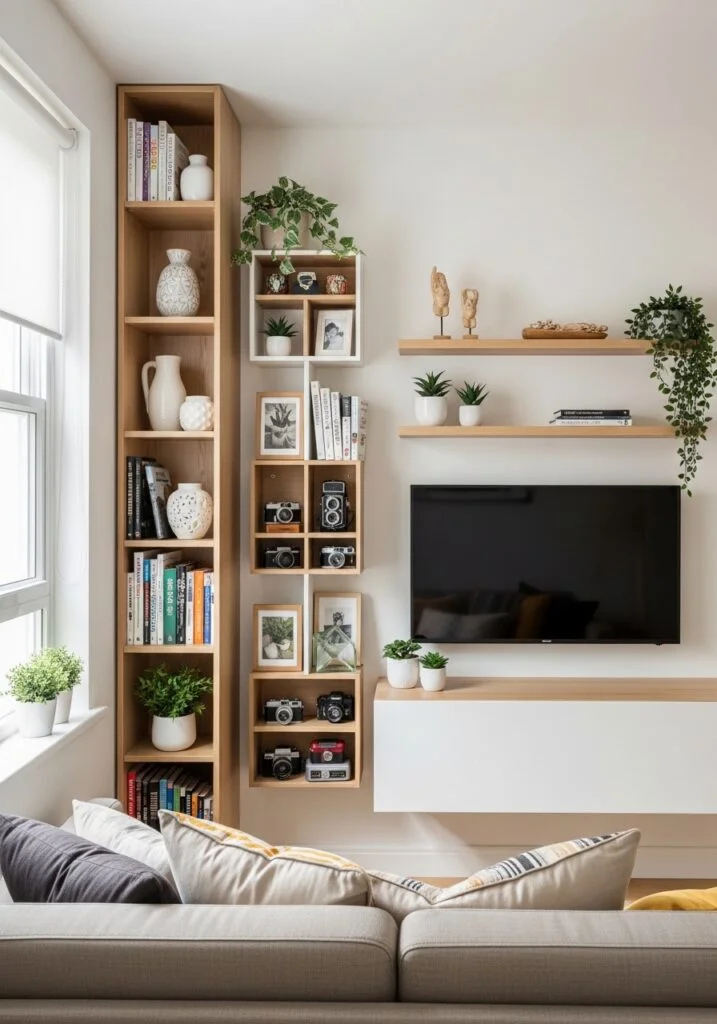
Cube shelving units are built around cubes about 13 inches square inside. That size fits 12-inch records, board games lying flat, and 12-inch fabric bins. A common two-by-four unit stands about 30 inches wide and 58 inches tall. The trade-off is depth. Cubes run roughly 15 inches front to back, deeper than a slim bookcase. Turn a two-by-two unit on its side and you get a low console about 15 inches high, which works under a window. Put bins in half the cubes and leave the other half open, and the whole unit reads as a plan instead of a pile. Anchor it to the wall with the strap that comes in the box, since a tall unit with uneven loads tips more easily than you would expect, and a tipped shelf is the quickest way to learn why this matters.
Count What You Own Before You Buy a Shelf
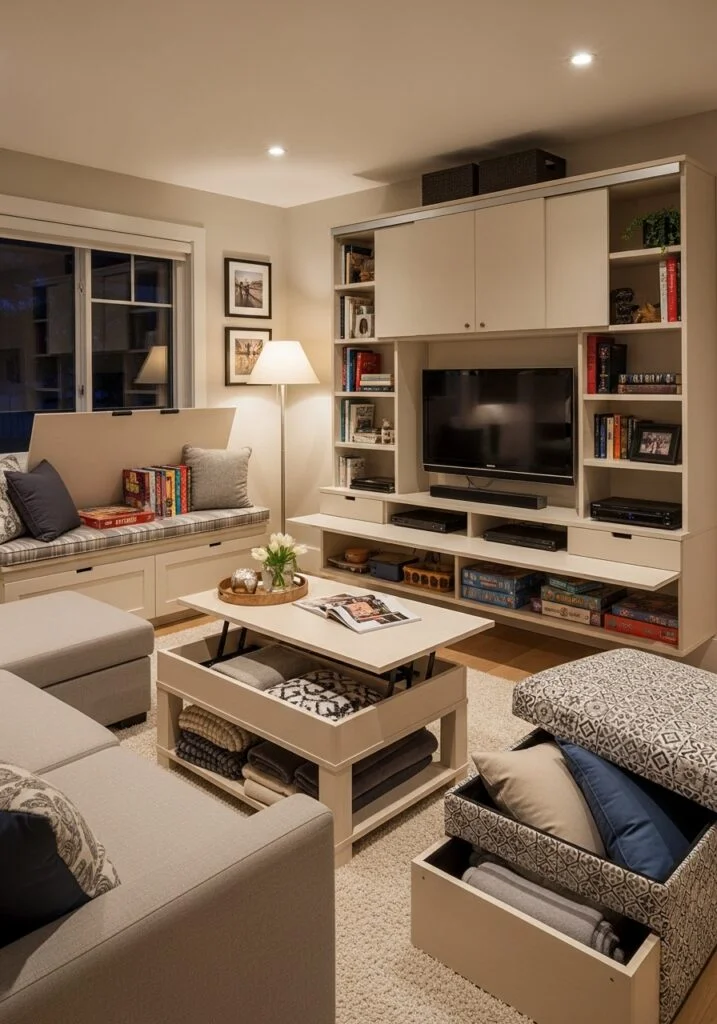
Storage purchases go wrong when they are sized to the empty wall instead of the pile. Gather every loose item in the room into laundry baskets by category: throws, remotes, games, magazines, chargers. Count the full baskets. Then buy storage that holds them with about a quarter of the space left empty. A shelf filled to the edge has nowhere to put next month’s purchases. For furniture that holds the pile without announcing it, see our guide to living room storage furniture that looks like decor.
Picture Ledges Four Inches Deep
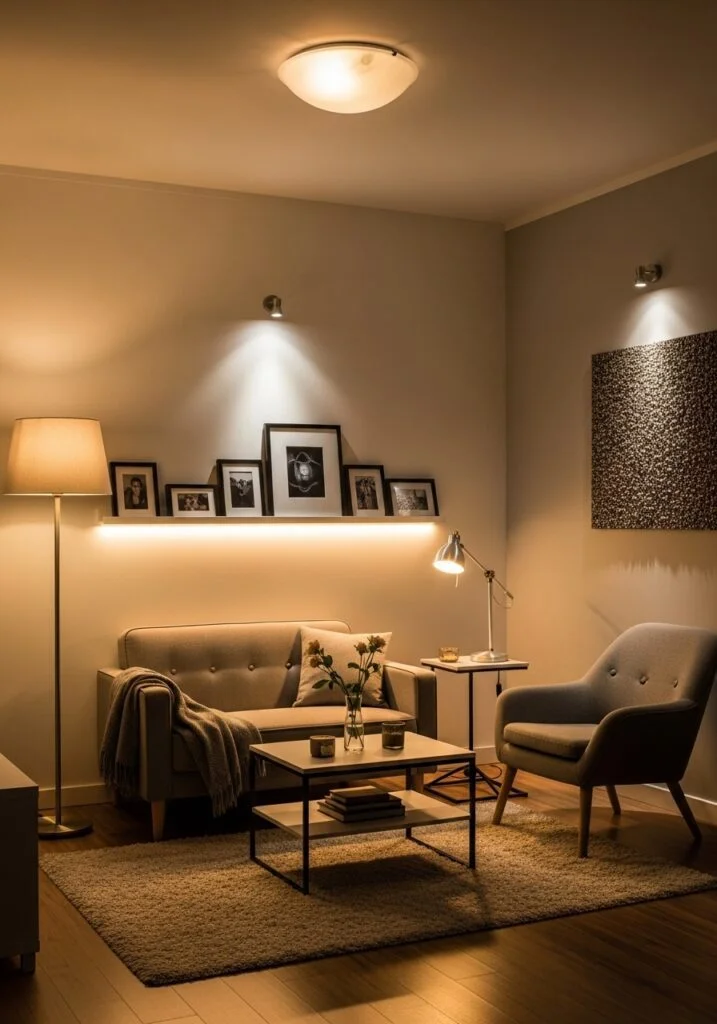
A picture ledge about 4 inches deep takes almost no floor space, holds framed art and a few paperbacks, and lets you swap pieces without drilling again. Look for a lip of about an inch so frames don’t slide. Hang one 6 to 10 inches above the back of the sofa, and keep the pieces on it in two or three sizes. Mount into studs or use anchors rated well above the load, because a ledge of books weighs more than it looks. Skip ledges above the spot where you stretch your arms out on the sofa. Keep the heaviest frame in the middle of the ledge and the lightest at the ends, which also stops the whole row from looking top-heavy against the wall. A level that costs a few dollars is worth owning for this job, because a ledge that is off by a quarter inch shows from across the room.
Cord Raceways That Disappear Into the Wall Color
Loose cables make the cleanest room look cluttered. A paintable cord cover, usually 0.5 to 1 inch wide, sticks to the wall and hides cables from the TV to the outlet. A six-foot length often costs $10 to $20. Paint it the exact wall color and it vanishes. Put the router and streaming box in a cabinet with a gap of an inch or two at the back, because trapped heat shortens their life. Check the adhesive on a hidden patch first if you rent, and warm it with a hair dryer when you peel it off. For a corner run, buy the matching elbow piece instead of bending the cover, since a bent cover pops off within weeks. Leave one open end near the floor so you can slide a new cable in later without removing the whole run.
Spend in This Order
If you can’t change everything at once, change things in order of cost per effect. Start with matching bulbs and a plug-in dimmer, usually under $60 together. Then add one or two lamps at the heights above, often $40 to $120 each. Next, buy cord covers and one cube unit or picture ledge, typically $60 to $150 combined. Only then replace furniture, because a sofa is the largest bill and the hardest to undo. Write your measurements on an index card: seat depth, leg height, total lumens, bulb temperature, shelf depth, and the empty space you want to keep. Shop only against that card.
Frequently Asked Questions
How many lamps does a small living room need?
Plan on three or four light sources, such as two table lamps and one floor lamp, with no light shining from only one side. The lumen total matters more than the count: a 10 by 12 foot room needs roughly 1,200 to 2,400 lumens combined. Add a 400 to 800 lumen reading lamp if anyone reads on the sofa.
How high should a TV be mounted in a small living room?
Mount it so the center of the screen sits near seated eye level, which is often about 42 inches from the floor. That keeps your neck neutral during a long movie. If the TV sits on a console, pick one around 18 to 24 inches high, then test the height by sitting on your sofa before you drill.
Can renters use wall sconces?
Yes, plug-in sconces need no wiring. Mount them about 60 to 66 inches from the floor and run the cord down inside a paintable cord cover, which keeps it from hanging loose. Expect to pay roughly $25 to $60 per sconce. Check your lease before drilling, or choose a model with a flat back that hangs on a single screw.
How can I tell if my living room is bright enough?
Use a free light-meter app on your phone as a rough check. Hold the phone at seat height facing the ceiling and aim for the 10 to 20 foot-candle range. Phone sensors vary, so repeat the reading at two spots, and compare the result against the lumen total on your bulb boxes.
How tall should a table lamp be on a side table?
Aim for roughly 24 to 30 inches including the shade, so the bottom of the shade lands near the seated eye line. A slim drum shade under 14 inches wide suits a small side table. Check clearance before buying: the cord, switch, and shade should all sit away from the sofa arm so you can reach them.
3 comments