
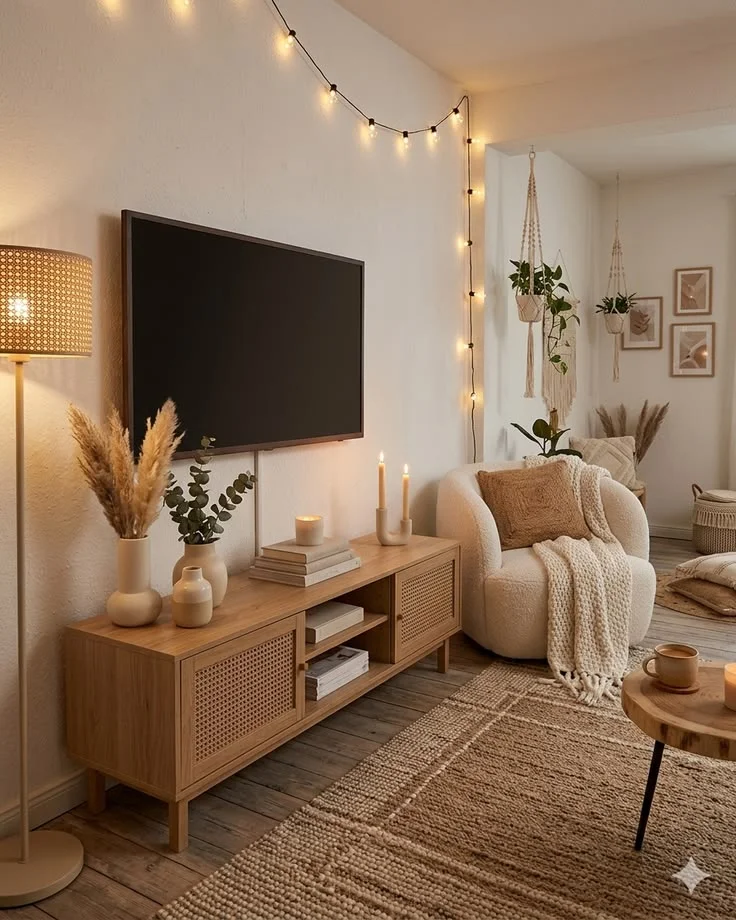
Home Decor Guide · Cozy Living Room Decorating Ideas
There is a moment, right after you sink into a well-placed sofa surrounded by warm light and soft textures, when a living room stops being a space and becomes a feeling. That feeling is what every home deserves. Whether you are starting from scratch or just trying to breathe new life into a tired room, these cozy living room decorating ideas are your roadmap. No expensive renovations, no interior design degree required. Just real, practical warmth you can create this weekend.
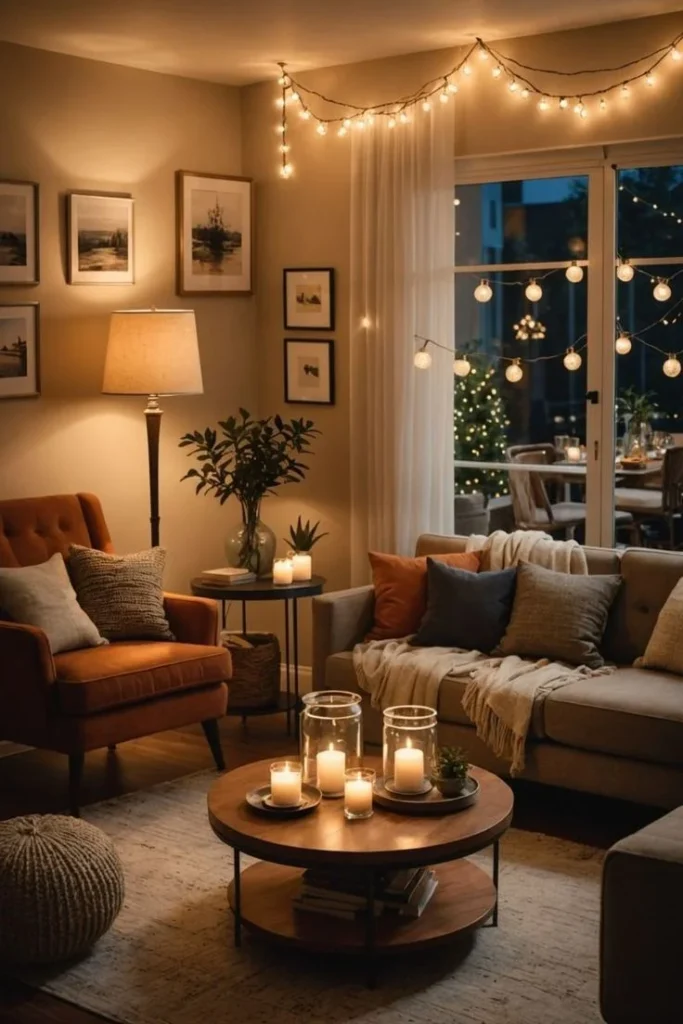
1. Layer Your Rugs Like a Pro
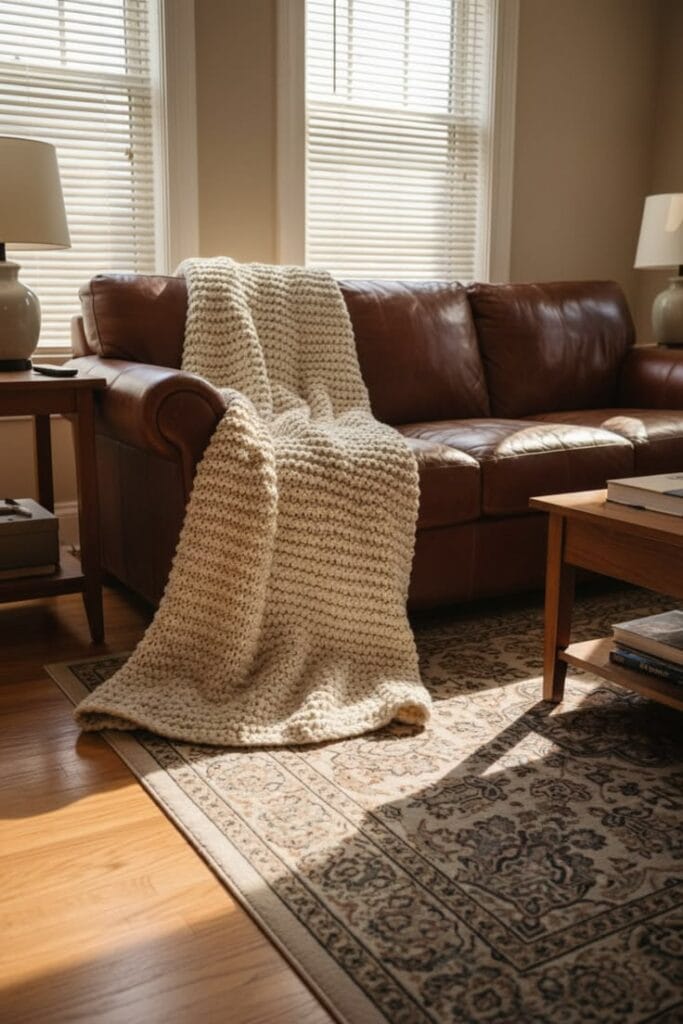
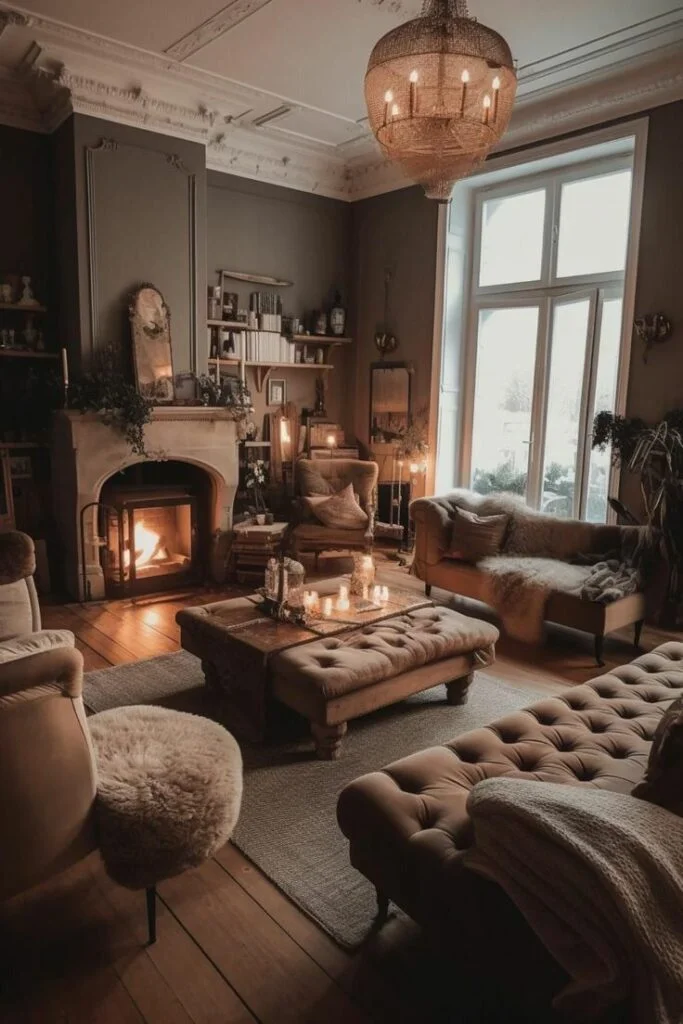
A single rug does its job. Two rugs layered together? That is where the magic happens. This is one of the most effective cozy living room decorating ideas because it immediately adds depth, texture, and that collected-over-time feeling that no single purchase can fake. Start with a large neutral jute or sisal rug as your base. It grounds the room and adds organic texture underfoot. Then layer a smaller, softer rug on top, perhaps a vintage-style Persian, a Moroccan beniourain, or even a sheepskin. The contrast between the two materials creates visual richness. Position the top rug so it anchors the sofa and coffee table area. The result is a layered, editorial look that makes the room feel curated rather than decorated. The extra softness also absorbs sound, which quietly makes the whole space feel more intimate and enclosed.
Styling Tips
- Base rug should be at least 8×10 ft to anchor the seating area
- Top rug should be 50–60% the size of the base rug
- Rotate the top rug at a slight angle for a relaxed, organic look
- Mix a flat-weave base with a high-pile or shag top layer
Best Materials & Colors
- Jute, sisal, or seagrass for the base layer
- Wool, cotton, or sheepskin for the top layer
- Colors: warm ivory, camel, rust, sage, or terracotta
- Why it works: mixed textures signal comfort to the eye before you even sit down
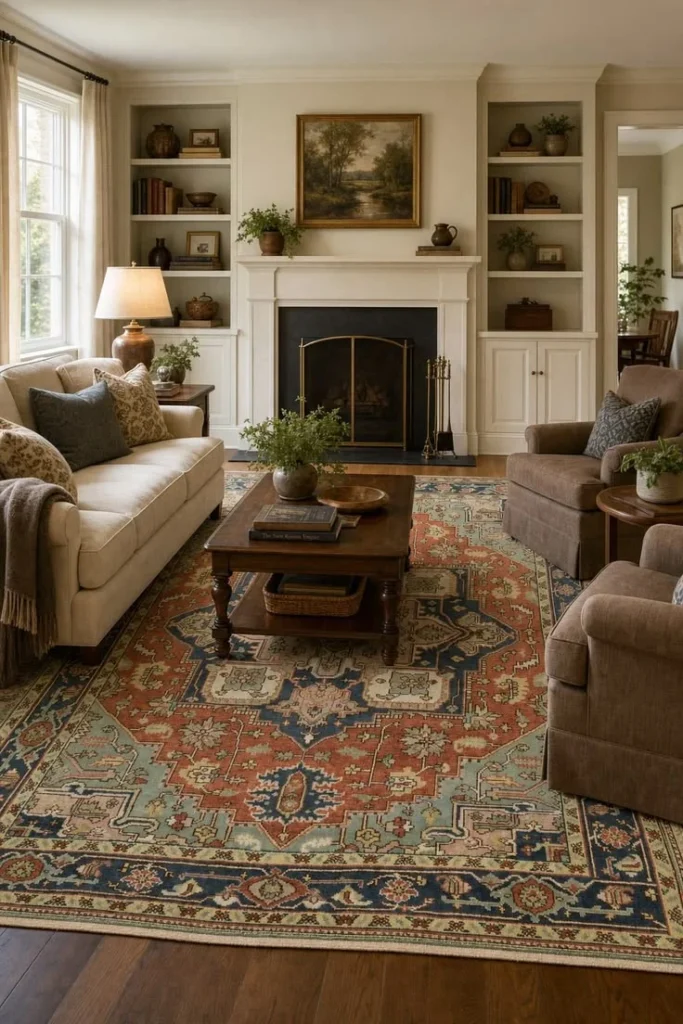
2. Swap Every Bulb for Warm Light
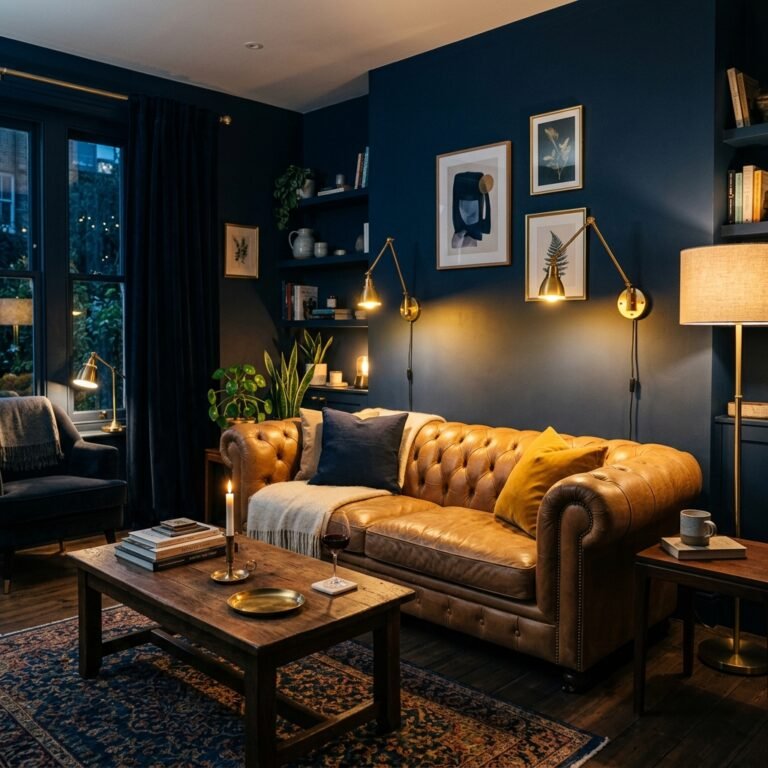
Lighting is the single most underrated element in cozy living room decorating, and it costs almost nothing to fix. Overhead white light is the enemy of warmth. It flattens everything and makes a room feel like a waiting area. The solution is layering warm-toned light sources at multiple heights. Replace cool or daylight bulbs with warm white bulbs rated between 2700K and 3000K throughout every lamp and fixture. Then add floor lamps tucked behind sofas for uplighting, table lamps on side tables for intimate pools of light, and string lights or Edison bulbs for ambient sparkle. The goal is to have five or six light sources throughout the room, none of them directly overhead. When you dim them collectively in the evening, the room transforms into something genuinely inviting. Warm light mimics candlelight and firelight, both of which the human brain is wired to associate with safety and rest.
Styling Tips
- Aim for at least 4 separate light sources at varying heights
- Use dimmers wherever possible, especially for overhead lighting
- Place a floor lamp behind or beside the sofa, never in front
- Cluster table lamps with books or plants to create vignettes
Best Bulbs & Tones
- Bulb color: 2700K–3000K warm white or amber
- Lamp shades: linen, cotton, or rattan diffuse light softly
- Avoid: cool white (4000K+), bare LED strips, and strong spotlights
- Why it works: layered warm light creates depth and a sense of enclosure
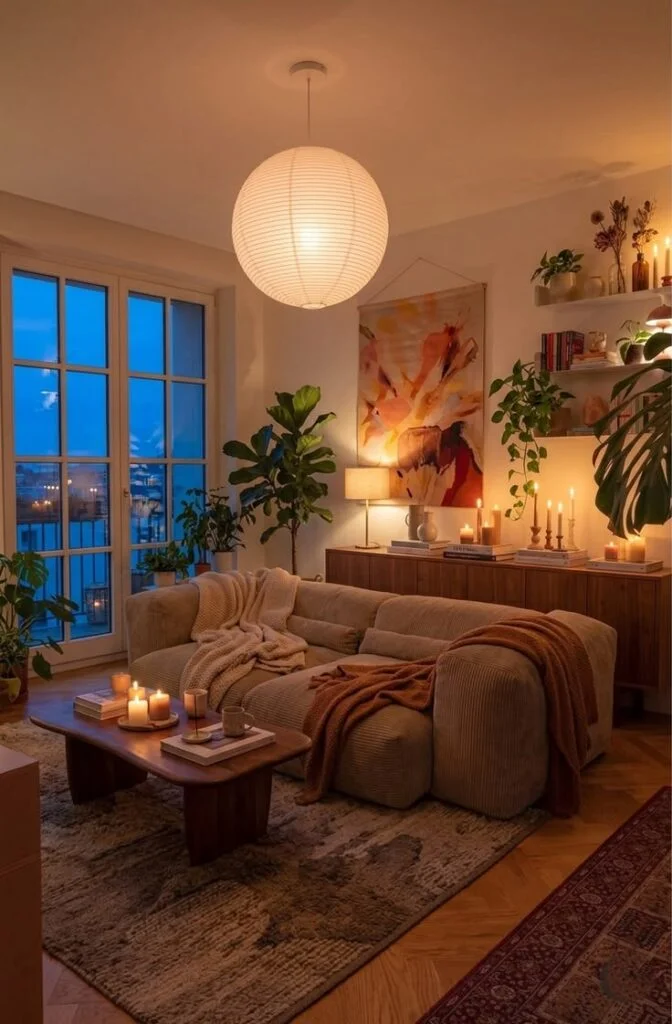
3. Stack Throw Blankets Everywhere
Nothing says “settle in” quite like a casually draped throw blanket. It is a visual cue that this room is meant for relaxation, and it is one of the easiest cozy living room decorating ideas to execute in an afternoon. The key is abundance and variety. Do not tuck one throw neatly over an armrest and call it done. Instead, layer three or four across different seats. Drape one loosely over the back of the sofa, letting it pool slightly. Fold another into thirds and lay it across the armchair. Stack a chunky knit near the coffee table within arm’s reach. Each throw should differ slightly in texture, whether waffle-knit, chunky cable, velvety fleece, or lightweight linen muslin, so the overall look feels collected rather than matched. Stick to a tonal color story, shades of cream, oat, terracotta, forest green, or slate, and the whole arrangement will look intentional and editorial.
Styling Tips
- Never fold throws too neatly — intentional looseness reads as lived-in warmth
- Use a mix of three textures: chunky knit, woven cotton, and a soft fleece
- Store extras in a wicker basket beside the sofa for easy access
- Match throw colors loosely to the cushion palette for cohesion
Best Materials & Colors
- Chunky wool or acrylic blend for visual texture and warmth
- Washed cotton or linen for lightweight layering
- Colors: warm neutrals, rust, deep olive, dusty blush
- Why it works: textiles are the fastest way to signal physical comfort
4. Build a Fireplace Focal Point (Even Without One)
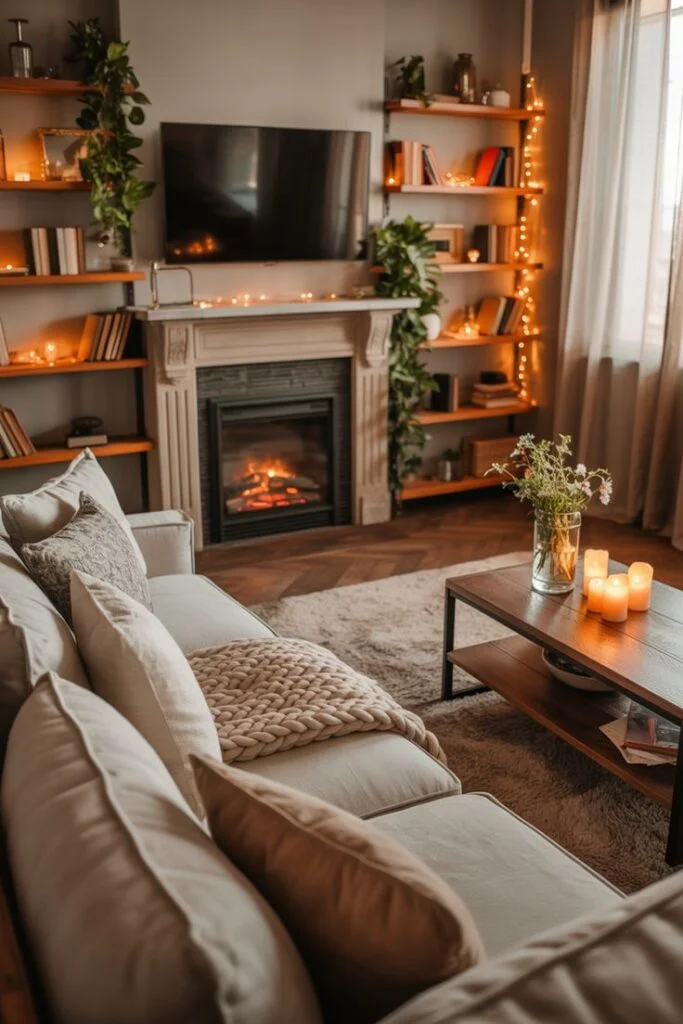
A fireplace is the ultimate cozy living room feature, but most rooms do not have one. The good news is that the magic is not in the flames, it is in the focal point itself. If you have a fireplace, celebrate it: paint the surround a contrasting color, add a thick wooden mantel, and style the hearth with stacked logs, candles of varying heights, and one or two objects with personal meaning. If you do not have a fireplace, create the same visual weight using a large mirror, an oversized piece of art, or an electric fireplace unit set into a built-in shelving arrangement. The principle is the same: give the room one commanding vertical anchor that everything else faces. Arrange your sofa and chairs toward it. Add a console or low cabinet beneath the focal point to add horizontal weight. This arrangement instantly makes a room feel purposeful, grounded, and warm.
Styling Tips
- Style the mantel in odd numbers: 1 large piece + 2 smaller objects
- Add depth with objects at different heights and depths
- Use dried botanicals, candles, and framed art as mantel elements
- For no-fireplace rooms, try a faux shiplap wall panel as a backdrop
Best Materials & Colors
- Painted brick in off-white, charcoal, or warm greige
- Reclaimed wood mantels add rustic warmth instantly
- Electric fireplace inserts with realistic flame effects work beautifully
- Why it works: focal points give the eye a destination, making rooms feel complete
5. Carve Out a Reading Nook in the Corner
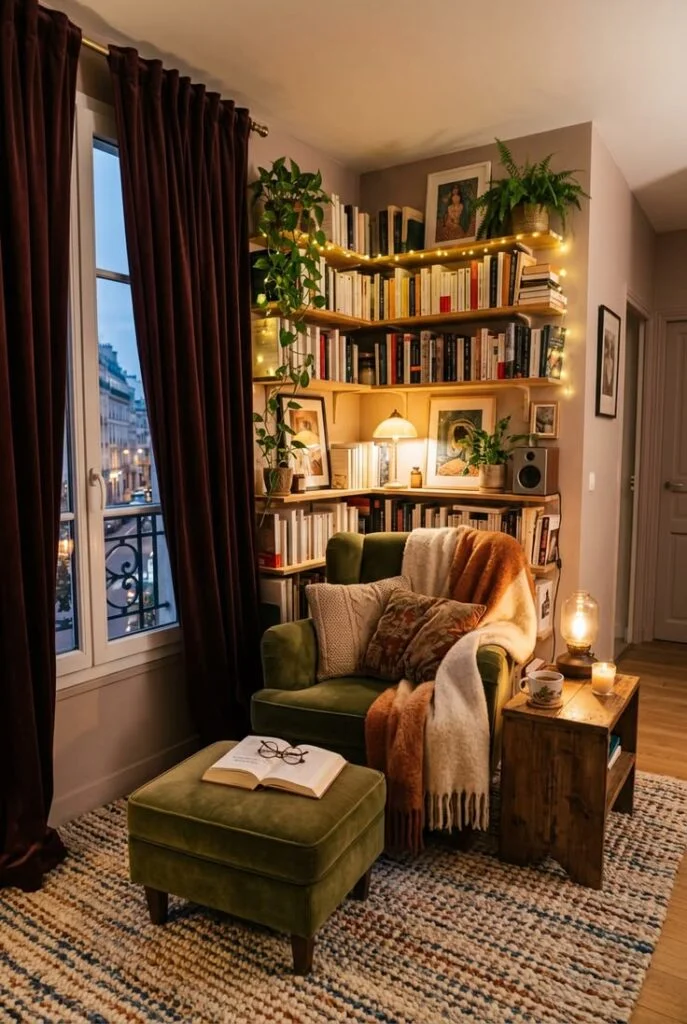
A reading nook does something remarkable to a living room. It does not just add seating, it creates intimacy within the larger space. Even in a modest-sized room, carving out one dedicated corner for quiet, private moments transforms how the whole room feels. Choose a corner that receives natural light during the day and place a deep, cushioned armchair or a curved egg chair there. Add a small side table for a cup of tea and a stack of current reads. A floor lamp positioned just behind and to the side of the chair gives perfect reading light without spilling into the rest of the room. Complete the nook with a small bookshelf or a simple floating shelf filled with spines and a trailing plant. The act of defining this corner with a rug, a lamp, and purposeful furniture tells everyone who enters: this is a room that values rest.
Styling Tips
- Use a small accent rug to physically define the nook from the main space
- Position the chair at a slight angle away from the room for privacy
- Add a pegboard or gallery-style shelf above for personal touches
- A sheer curtain hung from a ceiling track can enclose the nook further
Best Materials & Colors
- Chair upholstery: boucle, velvet, or worn leather all work beautifully
- Walls inside the nook: a slightly deeper tone creates enclosure
- Colors: deep teal, warm mushroom, forest green, cognac leather
- Why it works: defined intimate spaces within open rooms create emotional contrast
6. Build Your Room Around an Earthy Palette
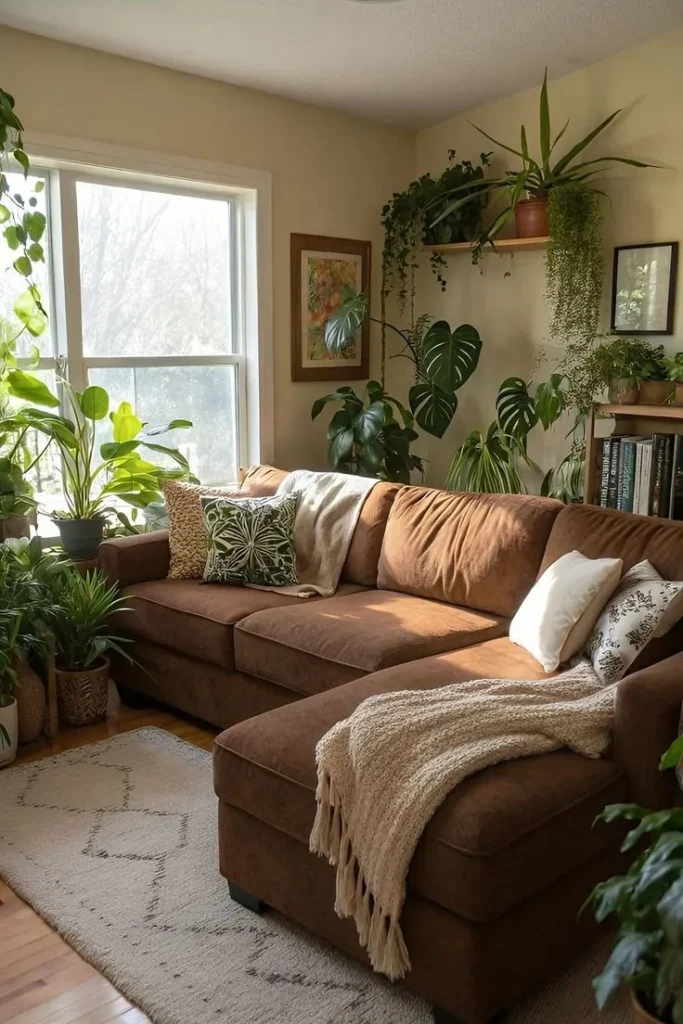
Color is invisible when it works and jarring when it does not. The most reliably cozy living room decorating ideas are rooted in earth tones because these colors mimic the natural world: soil, bark, stone, dried leaves, and warm sand. The human brain processes these hues as safe and familiar. Start by choosing one anchor color for your largest surface, whether that is the walls, the sofa, or a large rug. Warm terracotta, deep ochre, soft sage, dusty clay, and warm greige are all excellent foundations. Build outward from there using tonal companions. A terracotta wall pairs beautifully with linen cream, warm brown leather, and dried grass tones. A sage sofa sings alongside beeswax yellow, natural wood, and dusty blush. The trick is to stay within the same warmth family. Mixing cool and warm tones in equal measure creates visual tension rather than calm.
Styling Tips
- Follow the 60-30-10 rule: dominant / secondary / accent color
- Test paint colors in A3-size swatches on the actual wall before committing
- Bring in three to four earth tones and repeat each at least twice
- Natural materials (wood, rattan, linen) add earthy tone without paint
Best Palette Combos
- Warm white + terracotta + warm brown + dried grass
- Greige walls + sage textiles + warm oak + mustard accents
- Charcoal + cream + rust + natural linen
- Why it works: earth tones create psychological warmth before a single object is placed
7. Invest in Deeply Comfortable Seating
Cozy cannot be faked when the furniture is uncomfortable. The sofa is the emotional center of the living room, and it deserves the most considered investment of the entire space. When shopping for a cozy sofa, prioritize depth over length. A deep-seated sofa (at least 24 inches from front to back) allows you to truly settle in, legs tucked up, rather than perching on the edge. Choose cushion fill that has some give: a blend of down and foam holds its shape while still feeling sumptuous. Upholstery material matters enormously. Linen and boucle have a soft, inviting texture that looks relaxed. Velvet absorbs light and creates visual warmth. Performance fabrics in oat, cream, or terracotta are practical without sacrificing comfort. Arrange seating so that conversation is possible without shouting: two sofas facing each other or a sofa paired with two armchairs in a U-shape are both deeply sociable and welcoming layouts.
Styling Tips
- Sofa seat depth of 24–26 inches allows for truly relaxed sitting
- Keep furniture legs visible to create a sense of spaciousness
- Add a matching or contrasting ottoman to extend the comfort zone
- Arrange seating to face the focal point and each other, not the TV
Best Fabrics & Fills
- Boucle, washed linen, or performance velvet for upholstery
- Down-wrapped foam cushions for the best sit-feel balance
- Colors: warm oat, creamy white, dusty sage, charcoal, cognac
- Why it works: physical comfort reassures the body, which relaxes the mind
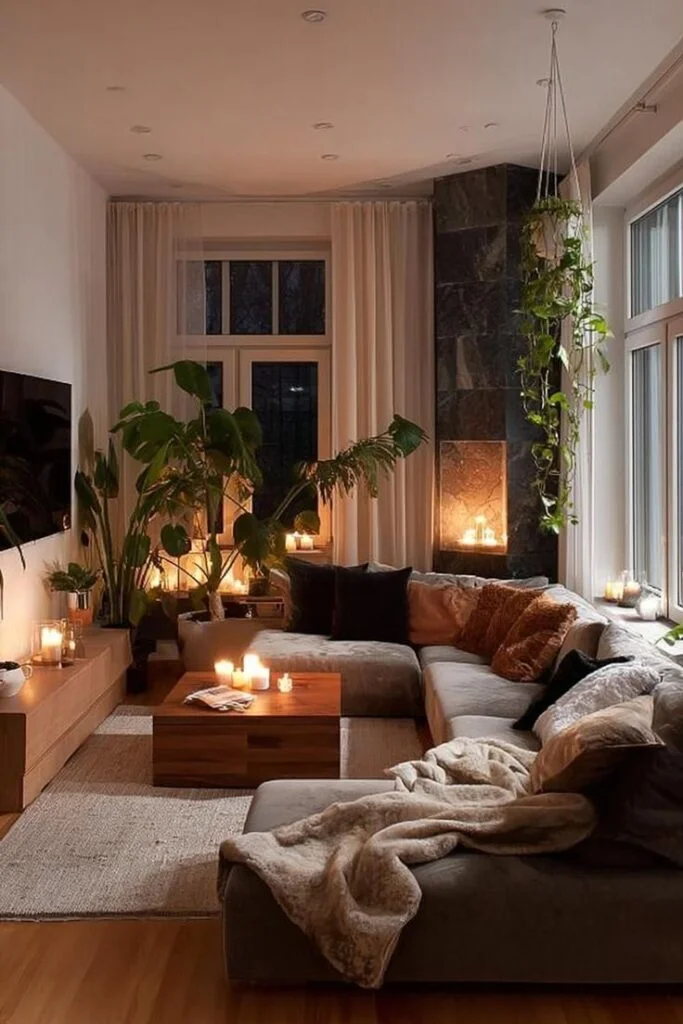
8. Hang Curtains Floor to Ceiling
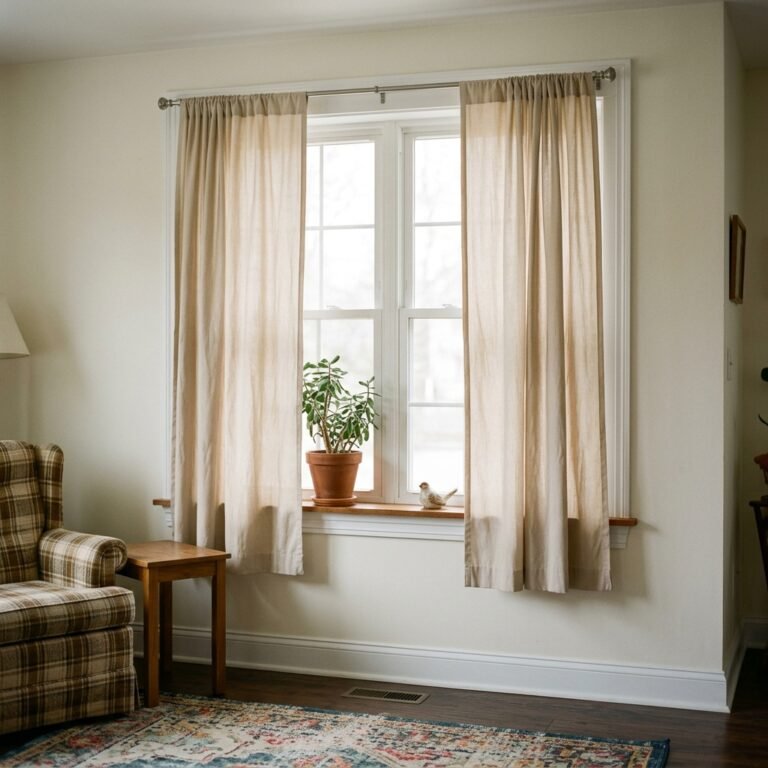
The single quickest way to make a living room feel grander, warmer, and more finished is to hang curtains as high and as wide as possible. Most people hang curtains at the window frame, which creates a boxy, cramped look. Instead, mount your curtain rod as close to the ceiling as possible, ideally just two to three inches below the crown molding. Extend the rod at least 12 inches beyond the window on each side. This creates the illusion of a much larger window and floods the room with drama and height. For maximum coziness, choose curtains in heavy, light-absorbing fabrics like velvet, linen, or a cotton-linen blend in warm, muted tones. Let them puddle slightly on the floor or break just at the baseboard. This small detail signals softness and intention. When closed in the evening, floor-to-ceiling curtains envelop the room in warmth and cut out cold drafts from the windows.
Styling Tips
- Mount rods 2–4 inches from ceiling, not above the window
- Rod should extend 12–18 inches past the window frame on each side
- Use eyelet or pinch pleat headers for a clean, full drape
- Hang two panels per window even for narrow windows for fullness
Best Fabrics & Colors
- Linen for airy warmth; velvet for dramatic coziness
- Thermal-lined versions add insulation and block drafts
- Colors: warm ivory, deep terracotta, forest green, dusty slate
- Why it works: height creates grandeur; weight and warmth create enclosure
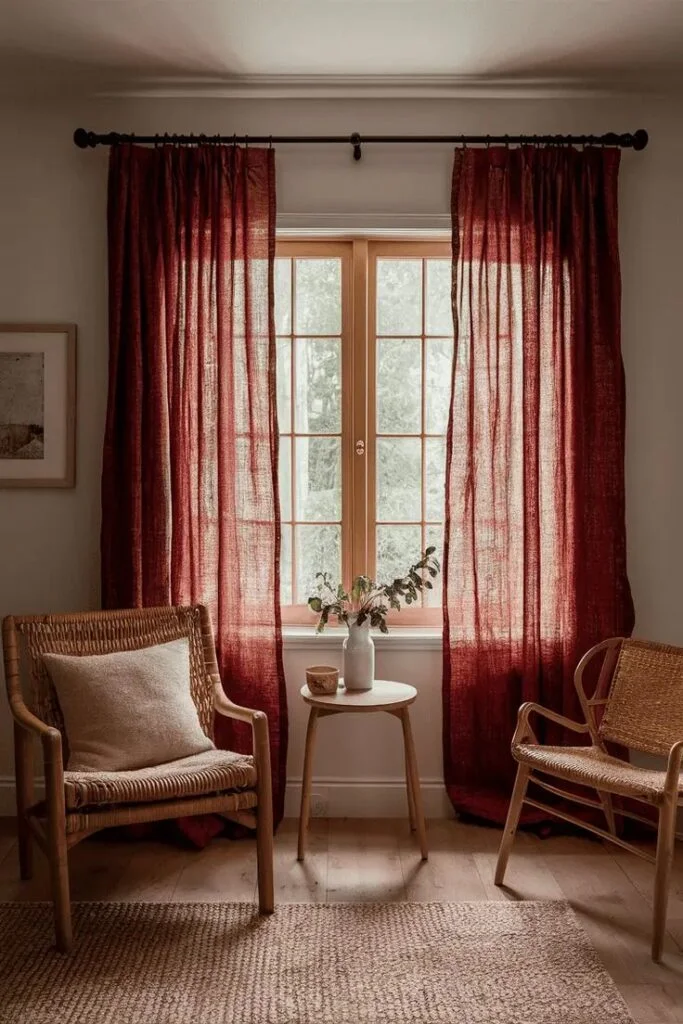
9. Bring the Outside In with Greenery
Plants do something to a living room that no piece of furniture or paint color fully replicates: they make it feel alive. A room with plants in it signals that life is being cared for there, and that sense of quiet nurturing is deeply cozy. You do not need a jungle. Three to five well-chosen plants placed at different heights create a lush, layered effect without overwhelming the space. A large fiddle-leaf fig or olive tree in the corner brings vertical drama. A trailing pothos or string of pearls on a bookshelf adds cascading softness. A cluster of smaller succulents or herbs on the windowsill creates a micro-landscape. Use pots in earthy tones, terracotta, matte black, cream, or aged stone, rather than plastic nursery containers. The material of the pot contributes to the overall warmth of the room just as much as the plant itself. Pair plants with wooden plant stands to add another layer of natural texture.
Styling Tips
- Group odd numbers of plants together: 3 or 5 looks natural
- Vary heights: use tall stands, mid-height shelves, and floor placement
- Use terracotta pots without saucers on wooden trays for a collected look
- Choose plants based on your actual light conditions, not aesthetics alone
Best Plants & Containers
- Easy-care warm picks: pothos, snake plant, ZZ plant, rubber tree
- Statement plants: fiddle-leaf fig, olive tree, monstera
- Pots: raw terracotta, matte ceramic, aged concrete
- Why it works: organic life makes spaces feel inhabited and cared for
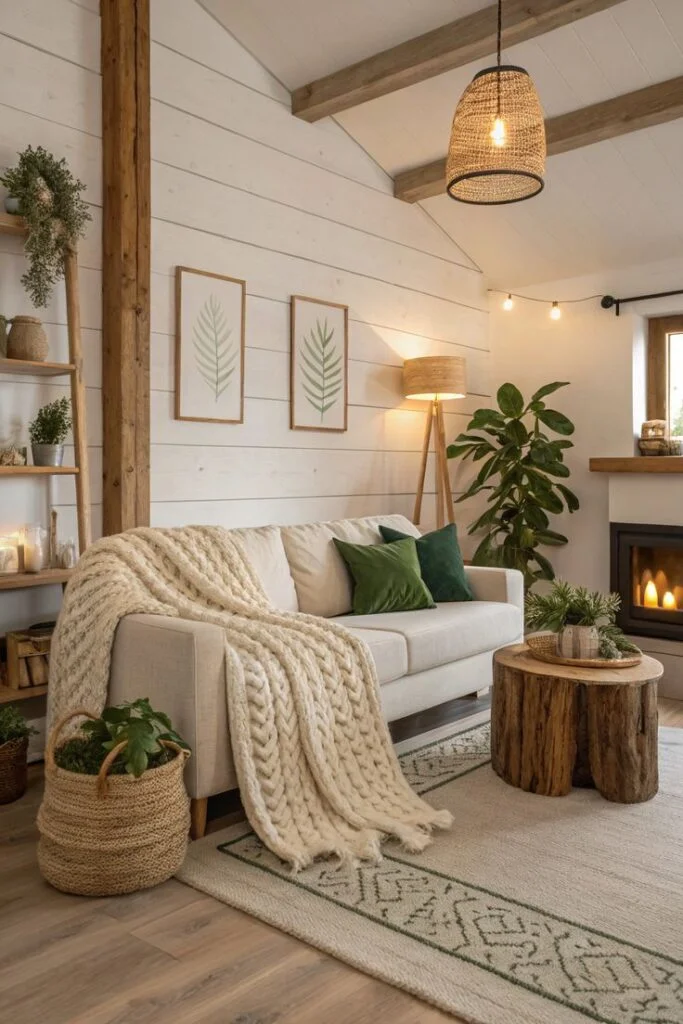
10. Create a Personal Gallery Wall That Tells Your Story
Bare walls are the most common reason a living room feels cold and unfinished. A gallery wall is the remedy, but it only becomes truly cozy when it feels personal rather than Pinterest-perfect. The key is to mix rather than match. Combine framed family photographs with pieces of art you bought on travels, pages torn from coffee table books, children’s drawings, pressed botanical prints, and handwritten quotes on card stock. The variety in subject matter creates warmth that a uniform set of prints can never achieve. Use frames in similar tones, warm wood, antique brass, or matte black, to unify the mixed content. Lay the arrangement out on the floor first and photograph it before committing to the wall. Start from the center and work outward. Leave two to three inches between frames for breathing room. A gallery wall that includes your actual life in it makes guests feel immediately welcomed into yours.
Styling Tips
- Mix frames from 2 to 3 finishes: warm wood + antique brass, for example
- Include at least one oversize piece (16×20 or larger) to anchor the arrangement
- Vary orientations: portrait, landscape, and square frames together look rich
- Use picture-hanging strips for renters or frequent rearrangers
Best Content & Frames
- Mix photographs, art prints, botanical illustrations, and personal mementos
- Frame finishes: warm oak, walnut, antique gold, or matte black
- Mat in warm white or cream for a gallery feel
- Why it works: personal objects create emotional warmth that generic decor cannot
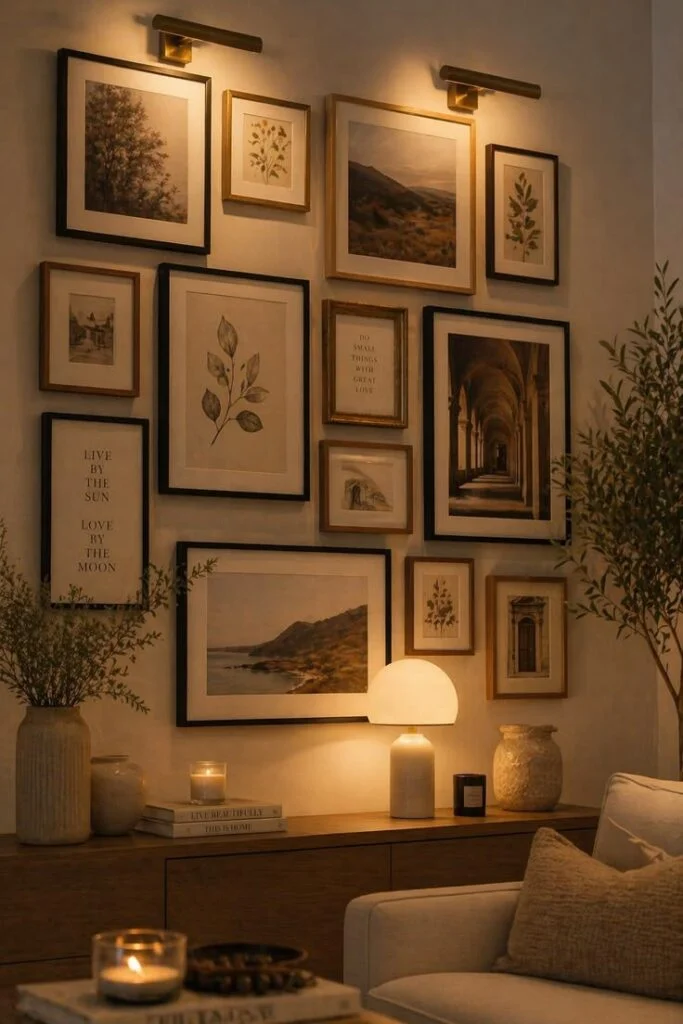
11. Let Candles Do the Heavy Lifting
Scent is the most overlooked dimension of a cozy home, and candles address it while simultaneously contributing warm, flickering light that no light bulb can replicate. A well-placed grouping of candles on a coffee table or mantel does three things at once: it provides intimate ambient light, it introduces fragrance that triggers memory and emotion, and it creates a focal point within the room that draws the eye naturally. Collect candles of different heights and widths and group them in clusters of three or five on heat-safe surfaces. Mix unscented pillar candles with one or two scented jar candles so the fragrance remains subtle rather than overpowering. Choose scents that feel seasonal and grounding: cedarwood and amber in winter, citrus and linen in summer, clove and cinnamon through autumn. Place tall glass hurricanes or lanterns around candles for safety and visual elegance. Flameless LED candles with realistic flicker are an excellent option for households with children or pets.
Styling Tips
- Cluster 3 or 5 candles together rather than scattering single candles
- Vary heights dramatically: 3-inch, 6-inch, and 10-inch together look beautiful
- Place on a wooden tray or slate tile to define the grouping
- Use candle snuffers rather than blowing to keep wax clean and walls soot-free
Best Scents & Vessels
- Cozy scents: cedarwood, amber, sandalwood, vanilla, beeswax
- Vessels: raw beeswax pillars, matte black jars, clear glass hurricanes
- Materials: soy or beeswax burn cleaner and longer than paraffin
- Why it works: flickering light and grounding scent engage two senses at once
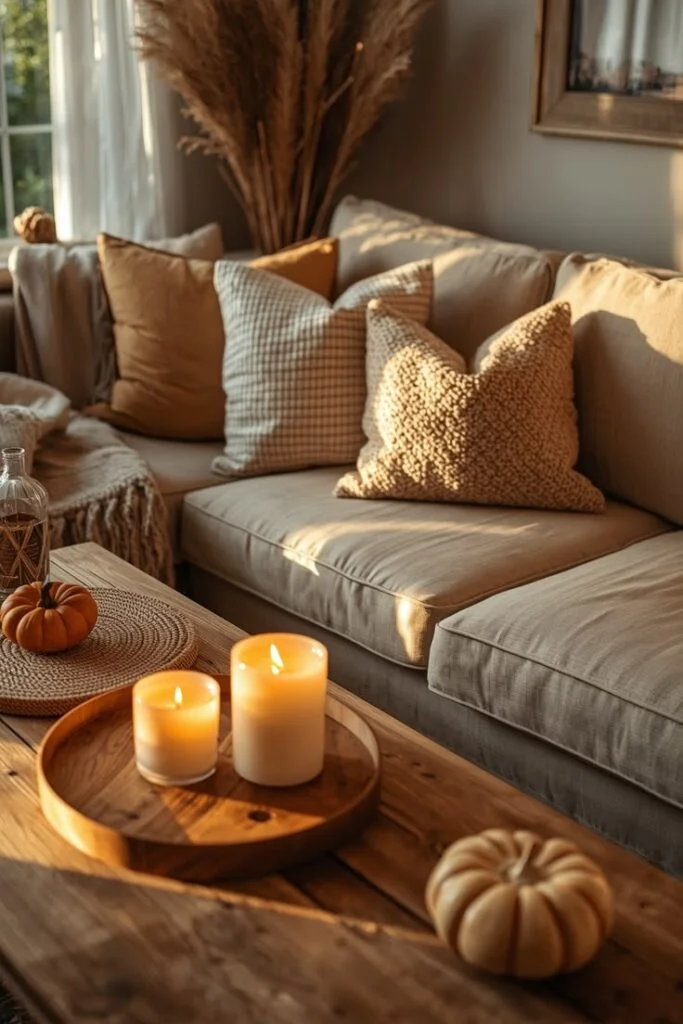
12. Weave in Natural Wood at Every Opportunity
Wood is one of the most powerful materials for creating warmth in an interior, and the good news is that you do not need to rip out your floors or replace your furniture to bring it in. Natural wood accents work quietly but effectively: a coffee table with a live-edge top, a side table in warm walnut, picture frames in raw oak, a wooden fruit bowl on the counter, or a ladder shelf propped against the wall. Each small addition of real wood grain adds organic texture that reads as warmth to the eye. The most important thing is to use wood tones that feel genuinely warm rather than orange or yellow. Medium to dark walnut, aged oak, and honey-toned pine all work beautifully. Pair warm wood tones with linen, leather, and woven textiles for a look that feels grounded, collected, and genuinely comfortable. Driftwood, reclaimed lumber, and burl wood pieces add character that polished wood alone cannot achieve.
Styling Tips
- Mix two wood tones maximum: one warm light and one warm dark
- Use wooden trays to corral coffee table objects and add texture
- A single live-edge wood element adds artisanal character to any room
- Wicker, rattan, and bamboo count as natural wood-family materials
Best Wood Tones
- Warm: honey oak, walnut, teak, reclaimed pine
- Character pieces: live-edge slabs, burl, driftwood, reclaimed beams
- Finish: matte or satin oil finishes over glossy lacquers for warmth
- Why it works: natural materials signal authenticity and biological comfort
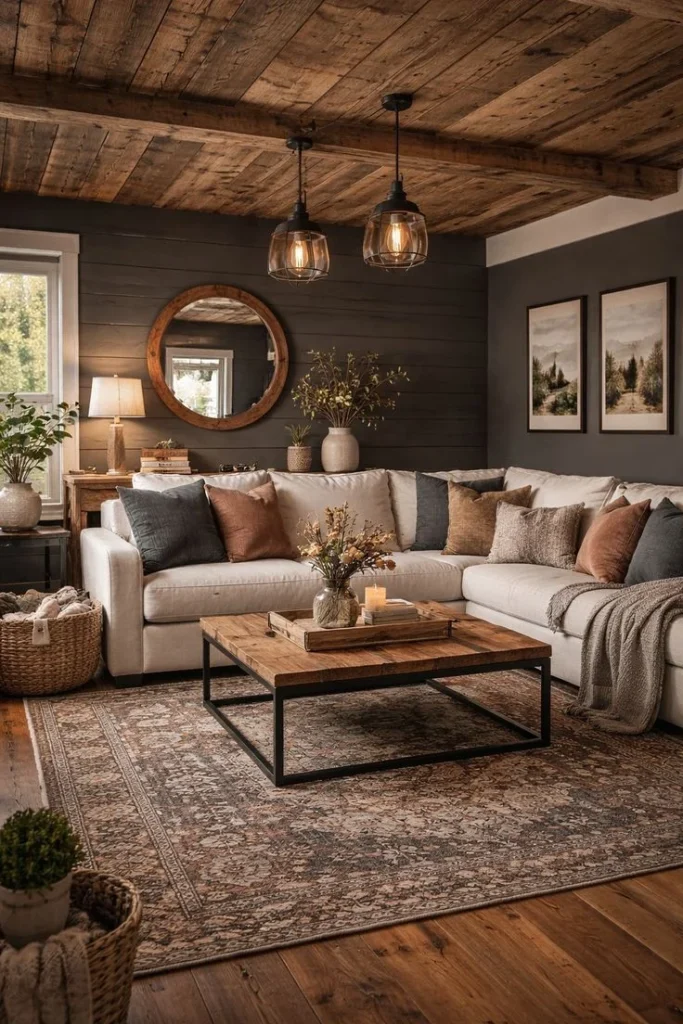
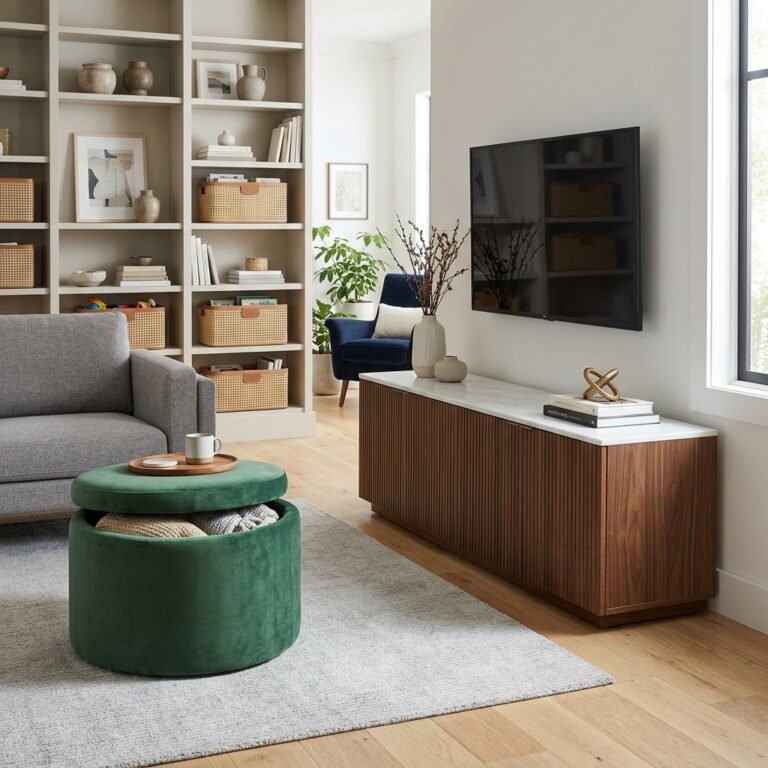
13. Style Your Bookshelf Like a Living ThingA bookshelf packed wall-to-wall with books in rigid rows looks organized. A bookshelf styled with personality looks lived-in and warm. The difference is in the intentional mix of objects between the books. Pull some books forward so their spines are at different depths. Turn others spine-in, showing their pages, for a neutral linen-like texture. Lay a few flat and use them as platforms for small objects: a trailing plant, a found stone, a small sculpture, a framed photograph. Add one or two baskets on lower shelves to store remote controls or throw blanket extras neatly. Incorporate candles, small potted plants, and objects collected from travels. The goal is a shelf that looks like it evolved over time rather than being arranged in an afternoon. Limit the color palette of objects to three or four tones so that the visual variety feels curated rather than cluttered.
Styling Tips
- Fill no more than 70% of the shelf space to avoid visual noise
- Use the top shelf for oversize books and sculptural objects only
- Group books by color family for a visually harmonious arrangement
- Vary between vertical stacks, horizontal piles, and leaning arrangements
Best Objects to Mix In
- Small trailing plants in terracotta pots
- Sculptural objects: ceramic vessels, carved wood, found stones
- Framed personal photos, postcards, or small prints
- Why it works: personal objects between books tell the story of who lives there
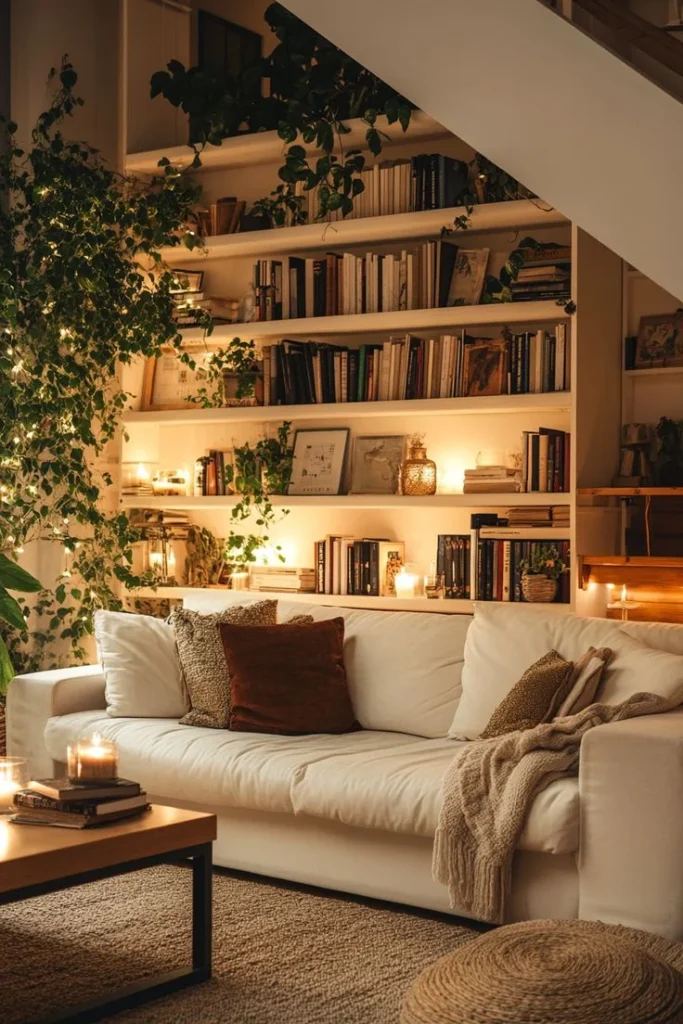
14. Pile on Textured Cushions in Odd Numbers
Cushions are the fastest and most affordable way to transform the look and feel of a sofa, and yet most people do not use enough of them or mix them with enough confidence. The rule is simple: odd numbers always look more natural and relaxed than even ones. Five cushions on a three-seat sofa is the sweet spot. The key to avoiding a chaotic look is to vary texture while maintaining color harmony. Choose one large cushion in a plain, chunky texture as the anchor. Add two medium cushions in a subtle pattern or weave. Finish with two smaller cushions in contrasting textures, perhaps velvet against boucle, or a knitted cover against a flat linen. Keep the color story tight: two neutrals plus one warm accent color is a reliable formula. Arrange them from largest at the back corners to smallest in the front center. The result looks effortlessly luxurious rather than set-dressed.
Styling Tips
- Use 5 cushions on a 3-seater and 3 on a 2-seater for balance
- Vary sizes: 60cm anchor + 50cm mid + 40cm accent is a classic trio
- Mix textures more than patterns for a sophisticated cozy look
- Chop cushions (karate-chop the center crease) for a relaxed, plush look
Best Fabrics & Colors
- Boucle, velvet, chunky knit, woven cotton, and embroidered linen
- Use feather inserts for the most luxurious plump look
- Palette: 2 neutrals + 1 warm accent (rust, dusty rose, deep teal)
- Why it works: tactile variety invites touch and signals physical comfort
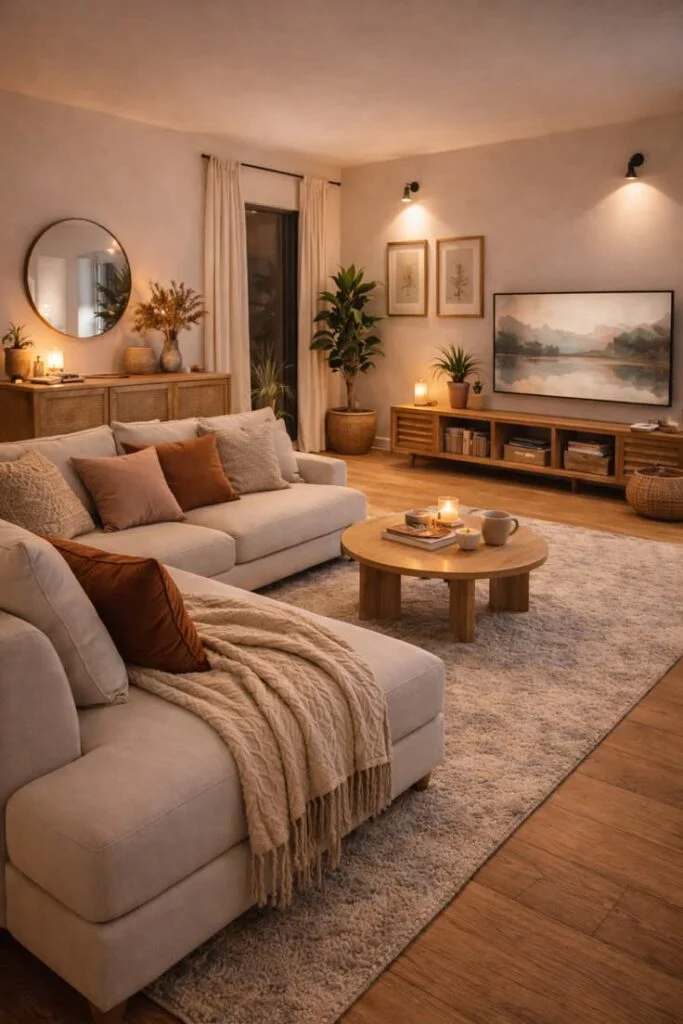
15. Style a Coffee Table Vignette Worth Lingering Over
The coffee table is the heartbeat of the living room. It is touched, looked at, and gathered around more than any other surface in the space. A beautifully styled coffee table vignette elevates the entire room, signaling that someone who cares about beauty lives here. The formula is reliable: start with a tray or a stack of large coffee table books as your base layer. This defines the zone and prevents objects from scattering. On top of or beside the books, add a small potted plant or a bud vase with dried stems. Then place a candle at a height that contrasts with the plant. Finally, add one personal object: a sculptural piece, a beautiful stone, an interesting bowl, or an heirloom object. Leave empty space around the vignette. Blank surface is not wasted space, it is breathing room. The restraint is what makes the curated objects sing. Change the vignette seasonally to keep the room feeling fresh and intentional.
Styling Tips
- Keep 60% of the table surface clear for practical use and visual breathing room
- Use a tray to contain 2/3 of the objects into one visual unit
- Stack 2–3 large coffee table books as a platform for smaller objects
- Vary heights: short books + medium candle + tall stem is a classic combo
Best Objects to Use
- Wooden, ceramic, or marble tray as the base layer
- Dried botanicals, sculptural candles, small terracotta pots
- One personal or travel object for warmth and story
- Why it works: a curated vignette shows intentionality, which reads as care
Conclusion:Your Coziest Room Is One Decision Away
You do not need a full renovation, a new sofa, or a decorator on speed dial to create a living room that feels genuinely warm. The ideas in this guide prove that coziness is built in layers: a rug here, a warmer bulb there, a throw draped with intention, a shelf that tells your story. Start with the one idea that resonates most and build from there. That is how the best rooms come together, not in a single weekend shopping trip, but in the slow accumulation of things that matter.
Pick your first idea and do it this weekend. Your home is waiting to feel more like you.
4 comments