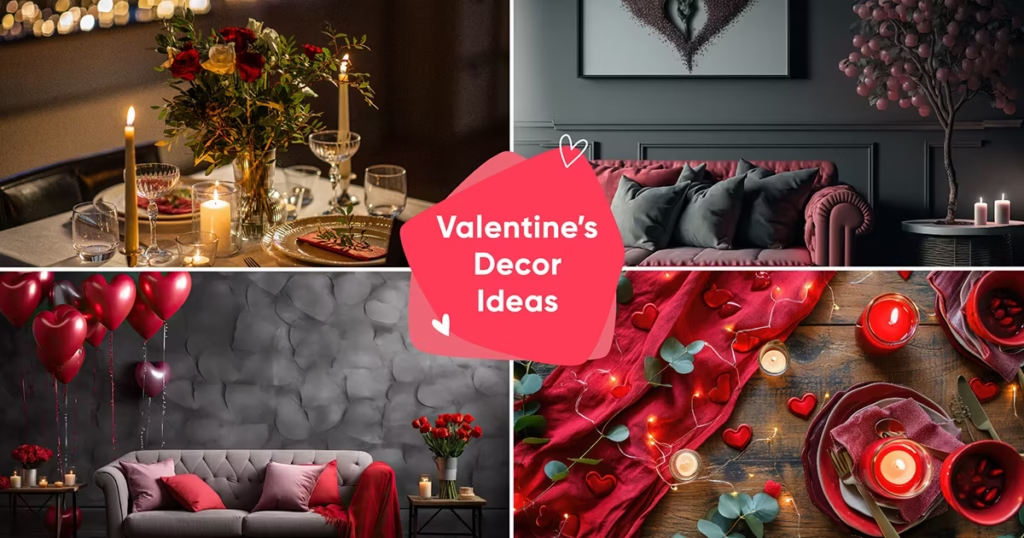
Valentine’s Day decor doesn’t have to mean neon reds, oversized hearts, or a cluttered mantel. The most elegant Valentine’s home decor ideas are quiet ones. They lean on color, texture, and light instead of novelty items, and they blend into a room rather than taking it over.
Done well, romantic home decor should feel warm and intimate, not like a seasonal costume stretched over your living room. This guide focuses on modern seasonal styling that still looks like your home in March, not a pop-up holiday display.
Below are ten specific ways to bring warmth into your home for February, each with real quantities, product details, and simple swaps you can make in an afternoon. Whether you’re working with a studio apartment or a full house, these ideas layer onto almost any existing color scheme without a full redecorate.
Most of the ideas below cost less than $50 to pull off, and none of them require a trip further than a home goods store or a paint counter. The goal isn’t to check off a decoration list — it’s to end up with a room that still looks good in the spring, once the holiday-specific pieces come down.

Use Soft Pink & Beige Accents
Skip the bold red and reach for a gentler palette instead. Soft pinks, warm beige, and creamy neutrals read as romantic without feeling seasonal or temporary, which is exactly what you want from a decor choice you’ll live with past February 14.
Paint brands back this up with real numbers. Benjamin Moore’s Warm Blush 892, for example, has a light reflectance value (LRV) of roughly 80, meaning it stays soft and pale even under dim winter light instead of turning dusty or muddy in a north-facing room. That kind of specificity matters when you’re choosing an accent tone that has to work well beyond one holiday.
You don’t need to repaint a wall to use this palette. Two or three blush or beige throw pillows on a neutral sofa is enough on its own. Add a soft pink ceramic vase or a pair of unscented cream pillar candles on a console table, and swap in one light-toned table runner for dinner.
This approach works in a studio apartment as easily as a full house, because none of these pieces need to be boxed up after the holiday. They read as a year-round upgrade to a neutral room, not a decoration you have to store come March.
Keep Heart Decor Minimal
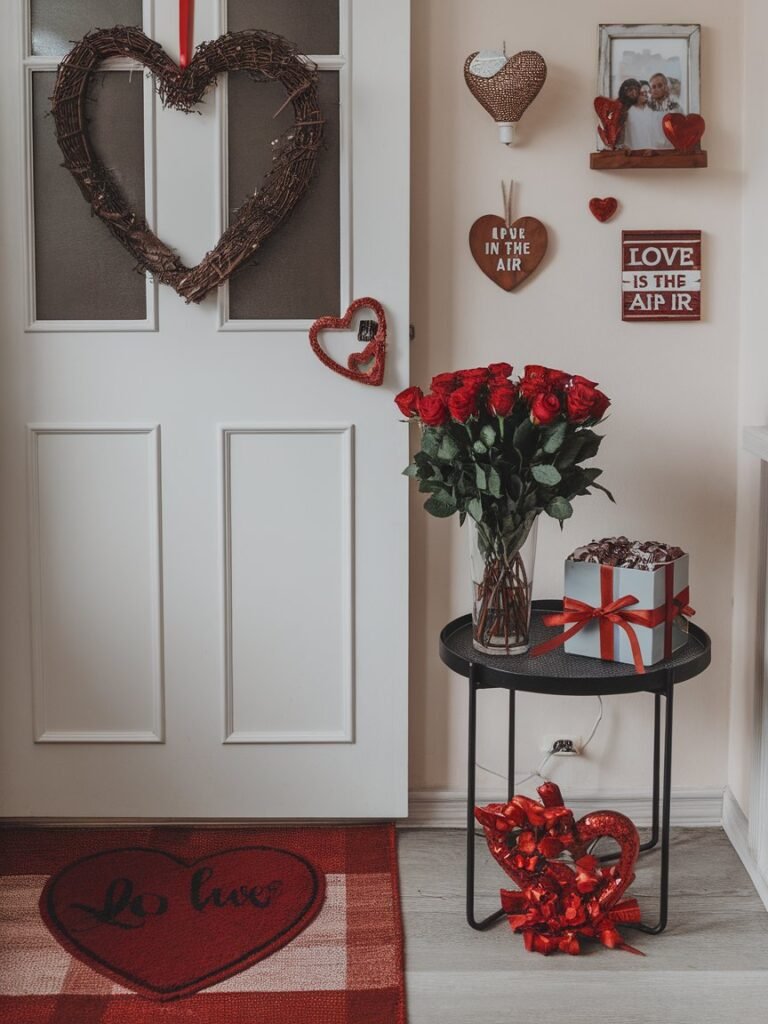
Heart motifs are the fastest way to make Valentine’s decor look cheap if you use too many of them at once. One or two pieces, chosen carefully, read as intentional. Ten scattered across a room read as clutter.
Pick a single small ceramic heart for a styled bookshelf, or hang one piece of subtle heart-shaped wall art in a neutral tone. A pair of linen pillows with faint heart stitching works too, as long as you don’t layer a third pattern on top of it.
Here’s a simple test: if a guest needs a few seconds to notice the heart shape, it’s doing its job. If it’s the first thing they see when they walk in, it’s too much. That restraint is what separates a home that feels curated from one that feels like a seasonal aisle at a big-box store.
Save the louder, more literal hearts for a kid’s room or a craft project, and keep your main living spaces down to one or two quiet nods to the holiday.

Create Romantic Candle Displays
Candles do more work per dollar than almost any other Valentine’s decor item. They add warmth, scent, and soft light without taking up shelf space or looking dated once the holiday passes.
Group candles in odd numbers, three or five, for a display that feels balanced rather than accidental. Vary the heights by two to four inches so the eye has somewhere to travel across a mantel or dining table. Stick to warm white or soft blush candles in glass, ceramic, or stone holders for a look that stays elegant instead of themed.
Styling aside, candle safety is worth a mention here. The National Fire Protection Association recommends keeping any burning candle at least a foot away from anything that can catch fire, and blowing candles out before leaving the room or going to sleep. Sturdy holders that catch dripping wax also cut down on both mess and risk near curtains, bedding, or table linens.
If you’d rather skip the open flame altogether, battery-powered flameless candles in the same warm-white tone deliver most of the visual effect with none of the risk, which matters most in bedrooms or homes with kids or pets.
On scent, one fragrance family per room is plenty. A warm vanilla or amber candle in the living room and an unscented or very light option in the bedroom keeps the two spaces from competing with each other when doors are open between them.

Style Floral Centerpieces Thoughtfully
A dozen bright red roses in cellophane can look more like a grocery-store display than a design choice. For a more elevated take, choose muted-tone roses, tulips, or ranunculus instead of anything oversized or overly saturated.
Faux florals in soft neutrals are a practical option if you want the look to last past mid-February. High-quality stems in blush or ivory tones hold up well next to real greenery, and they skip the daily water change.
Keep the arrangement low and loose rather than tall and tight. A centerpiece under eight inches tall lets people actually see each other across the table, which matters more during a dinner than it sounds like it would. Five to seven stems in a single vase, arranged loosely instead of packed tight, tends to read as more expensive than a dense, symmetrical bouquet.
This kind of restraint is what separates a florist-style arrangement from a gas-station bouquet. You’re going for one natural-looking cluster of blooms, not a full dome of flowers.

Cozy Up Your Bedroom Styling
The bedroom does more heavy lifting for Valentine’s Day than any other room in the house, so small updates here go further than a themed throw pillow in the living room.
Layer in soft blush or cream bedding, ideally mixing two textures, like a linen duvet with a velvet lumbar pillow. Add one textured throw at the foot of the bed, folded rather than draped flat, for a hotel-room finish. Swap harsh overhead lighting for two bedside lamps with warm-toned (2700K) bulbs, which cast a noticeably softer glow than the cooler 5000K bulbs many overhead fixtures ship with.
For more ways to make a small or awkward bedroom layout feel intentional rather than crowded, see our small bedroom styling ideas.
A soft area rug on either side of the bed, even a small 2-by-3-foot runner, adds warmth underfoot and finishes the room without introducing any new color or pattern to manage.
None of this needs to look overtly like a holiday display. The goal is a room that feels like a retreat in February and still looks intentional in July. Prioritize fabric quality and warm light over anything printed with a heart, and the room stays a year-round upgrade rather than a decoration you swap out.

Add Subtle Valentine’s Wall Art
Wall art is a low-clutter way to bring in seasonal color, since it doesn’t compete for shelf or surface space the way objects do.
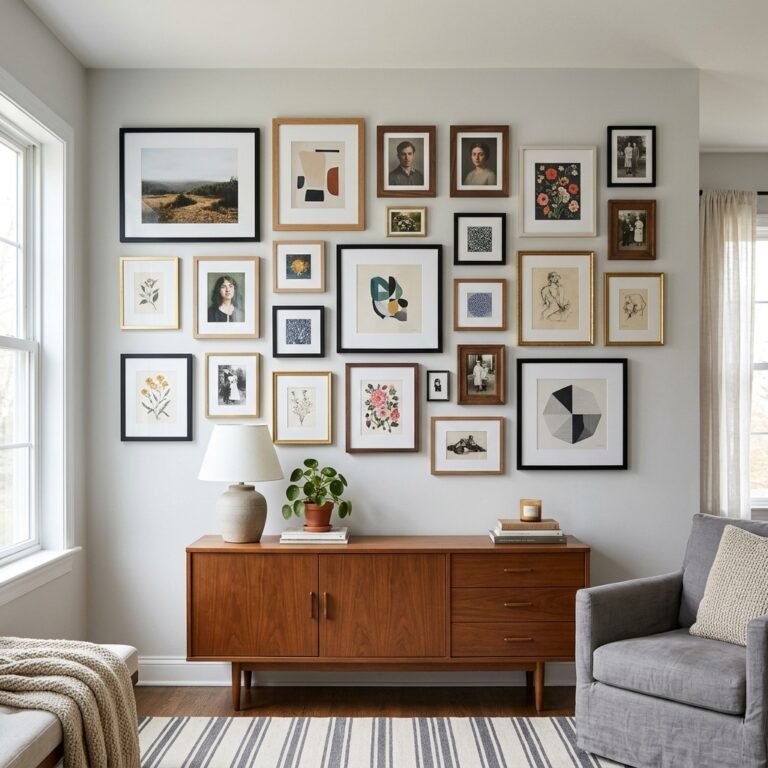
Limit yourself to one or two pieces per room. An abstract print in blush or beige tones adds a wash of color without being literal about the holiday. Delicate line art with a subtle romantic theme, like two interlocking shapes, works well in a hallway or reading nook. Soft typography prints in a serif font, framed in warm wood or brushed brass rather than stark black, keep the look from reading as a dorm-room poster.
Hang art at true eye level, about 57 to 60 inches from the floor to the center of the piece, which is the standard museum-hanging height most galleries use. A single well-placed print at the right height reads as far more intentional than three mismatched pieces scattered across a wall.

Style Your Table for Romance
A tablescape doesn’t need a dozen components to feel special. Start with one neutral table runner, roughly 12 to 14 inches wide, to anchor the setting without covering the whole table.
Add a small vase with five or six stems of fresh flowers, kept low enough that people can still see each other across the table. Two or three taper or pillar candles, staggered in height, add warmth without requiring a full centerpiece. Crisp linen napkins, folded simply and tied with a single piece of twine or ribbon, round out the look.
Skip the confetti, the printed placemats, and the themed napkin rings. A table with four or five well-chosen elements photographs better, and feels more intentional, than one with ten scattered accents. This same setup works for an ordinary weeknight dinner, not just February 14, which is part of what makes it worth setting up in the first place.

Introduce Romantic Cushions
Swapping cushion covers is one of the cheapest ways to shift a room’s mood, and it takes about ten minutes per cushion.
Mix two or three tones, like blush, beige, and cream, rather than a single flat color across every pillow. Vary the texture too: pair one velvet cover with one linen or bouclé cover on the same sofa. Two to four cushions per sofa is usually the sweet spot; beyond that, a sofa starts to look overcrowded instead of styled.
Stick to solid colors or subtle woven textures instead of printed patterns. A busy print competes with the texture you’re trying to highlight, and it dates faster than a solid color does. Because covers alone cost a fraction of new pillows, this is one of the easiest updates on this list to undo in March if you want a different palette for spring.

Layer Soft Throws for Warmth
A single throw, draped casually rather than folded into a tight square, does more to soften a room than almost any other textile.
Choose a tactile material a chunky knit, a faux fur, or a lightweight wool blend all work, as long as the texture reads differently from your sofa or chair fabric. Drape it over one arm of the sofa, letting it fall unevenly rather than lining it up with the cushion seams. On a bed, fold it in thirds and lay it across the foot rather than tucking it under the pillows.
One throw per seating piece is usually enough. Two on the same sofa, unless they’re in noticeably different textures, starts to look like laundry rather than styling. This is a small, low-cost change, but it’s one of the few on this list that also adds real, functional warmth on a cold February evening.

Focus on Atmosphere, Not Themes
The most elegant Valentine’s homes aren’t decorated for a single day. They’re set up to feel good, which is a different goal than looking seasonal.
Warm lighting does more for atmosphere than any single decor object. Swap two or three bulbs to a warmer color temperature, dim the overheads, and let lamps handle more of the lighting in the evening. Uncluttered surfaces matter just as much: a console table with three objects on it reads as calm, while one with eight reads as chaotic, no matter how nice each individual piece is.
Scent rounds out the picture. A single warm scent, like amber, sandalwood, or a soft vanilla, in one or two rooms is enough. Running the same scent through every room in the house tends to feel overwhelming rather than cozy.
For more ways to layer warmth and light into your main living space, see our living room decor ideas..
This is the idea that ties the other nine together. Skip the red hearts and the printed banners, and build a home that feels intimate instead of themed.

Final Thoughts: Romance Through Simplicity
Elegant Valentine’s home decor comes down to restraint: soft colors, real texture, and warm light, layered onto your existing style rather than dropped on top of it.
None of the ten ideas above require redecorating a room from scratch, and most of them the throws, the candles, the cushion covers stay useful well past February. That’s really the test for whether a seasonal update is worth doing: does it still look good in April?
If you only have time for two or three of these, start with the candles and the throw blankets. They’re the cheapest to try, the fastest to set up, and the most likely to still be sitting out well after February ends.
If these ideas gave you a starting point, save this post for reference and take a look at more of our home decor guides for room-by-room styling advice. A little warmth and intention goes a long way this time of year.