
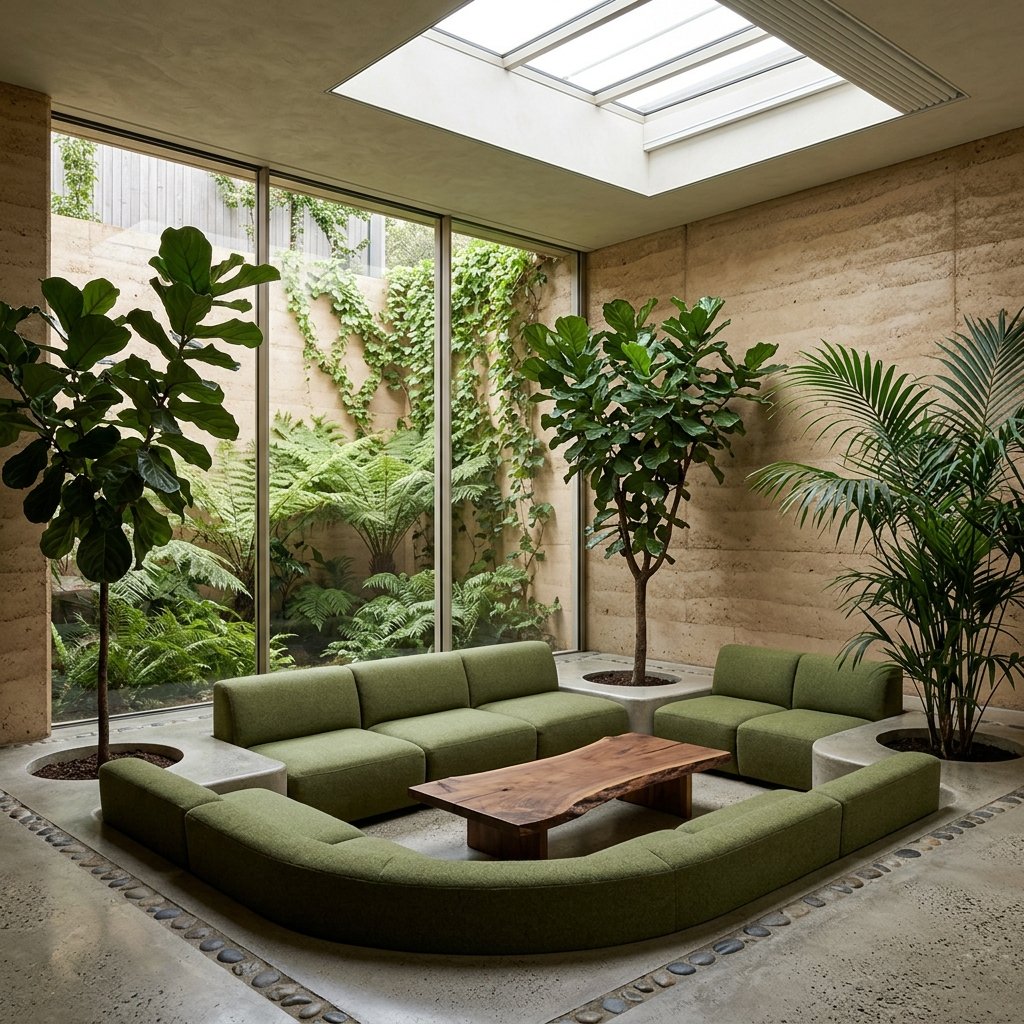
You scroll past the fifth “trending now” living room of the week. Every one has a beige sofa, a wavy mirror, and a single olive branch in a vase. You like them. You also suspect that in two years they will look as dated as a gray sectional from 2017.
That worry is fair, and it is the right question to ask before you spend anything. Some 2026 trends are really old design principles wearing new names. Others are fast-moving fashion that will need replacing.
This guide sorts them out. Each of the ten trends below explains what it is, why it is spreading, how to do it with real measurements, and where it goes wrong. The goal is a modern living room that still feels right when the trend cycle moves on.
One theme runs through all of it. The American Society of Interior Designers released its 2026 Trends Outlook report in January. It points to a return of maximalism and to pricing volatility driven by tariffs, materials, and labor. In plain terms, people want more personality, and they want to spend less often. Both ideas shape the advice here.

Timeless Neutral Color Palettes with Depth
Flat white and cool gray are fading. Warm neutrals with visible depth are replacing them. Think oatmeal, stone, taupe, and cream, layered together instead of matched.
The trick is undertone. Pick one, warm or cool, and hold it across the walls, the sofa, and the rug. A yellow-leaning beige next to a pink-leaning greige looks muddy, even when both are “neutral.”

Depth comes from contrast in value and texture, not from adding color. Use three tones: a light wall, a mid-tone sofa, and one darker anchor such as a charcoal side table. Then add texture through linen, wool, and matte ceramics.
Test paint the way designers do. Roll a large sample onto two walls and look at it at 8 a.m., noon, and 8 p.m. North-facing rooms pull colors cooler, so lean warmer there.
Rugs are the easiest place to build depth. A wool rug with a slightly different weave from your sofa fabric adds contrast without adding color. Choose a size where at least the front legs of every seat sit on the rug. In most living rooms that means 8 by 10 feet or larger.
The trap is going so soft that nothing has an edge. If the room feels sleepy, add one black or deep brown element. A picture frame or lamp base is enough.
Textured Accent Walls for Modern Character
A painted accent wall is out. A wall with real surface texture is in. Limewash, microcement, plaster effects, and fluted wood panels all give a wall depth that paint cannot.

Limewash is the easiest entry point. It is a mineral-based finish that dries with soft, cloudy movement. It needs a porous surface, so most painted drywall needs a primer first. Plan on two to three coats and a wide brush.
Fluted panels suit a wall behind a sofa or a TV. Half-round dowels or ready-made slat panels work for DIY. Mount them on a flat wall, and keep the spacing even. Uneven gaps are the first thing visitors notice.
Microcement looks beautiful, but it is a trade job. Poor application cracks, and repairs show. Hire a pro or skip it.
Choose one wall only. Texture on all four walls turns a living room into a spa lobby. The wall that already holds your eye, usually behind the sofa or the fireplace, is the right one.
Smart Space Planning for Small Living Rooms
Small rooms rarely need less furniture. They need better-placed furniture. This trend is about layout rules that make 150 square feet feel calm.

Start with clearances. Keep 30 to 36 inches for main walkways. Leave 14 to 18 inches between the sofa and coffee table. Anything tighter makes you shuffle sideways.
Choose an apartment-size sofa, about 72 to 80 inches wide, with slim arms. Raised legs let floor show underneath, and visible floor reads as more space. A sofa pushed flat against every wall usually makes the room feel smaller. Pull it a few inches away and see how the room changes.
Go vertical. Wall-mounted shelves and slim media units free the floor. If books are your storage problem, the ideas in our guide to living room bookshelves for stylish, smart storage show how to keep shelving tidy.
Choose furniture that does two jobs, like a lidded ottoman or nesting tables. Avoid modular sets that are sold as flexible but never actually get rearranged.
Curved Furniture for Soft Modern Elegance
Rounded sofas, oval coffee tables, and arched shelving are replacing sharp corners. The reason is practical as well as visual. Curves soften a room full of rectangles: doors, windows, screens, and rugs.

You do not need a full curved sofa. One curved piece per room is plenty. A round coffee table is the safest choice, especially in a tight space, because nobody bangs a shin on it.
Check the scale before buying. Curved sofas take up more floor depth than they appear to in photos. Tape the outline on the floor and live with it for a day.
Placement matters too. Curved pieces work best when they float in the room, not when they are wedged into a corner. Leave a few inches of air around them so the silhouette reads clearly. A round rug under a round table repeats the shape without making the room feel themed.
Fabric matters. Tight curves in cheap upholstery bunch and pull. Look for dense weaves like boucle or performance velvet, and ask about the rub count. A curved sofa that wrinkles after six months will not stay timeless.
Layered Lighting for a Refined Atmosphere
Most living rooms rely on one overhead fixture. It flattens everything. Layered lighting fixes that with three levels: ambient, task, and accent.

Ambient light is the general glow, from a ceiling fixture or a large shade. Task light sits where you read, such as a floor lamp beside the sofa. Accent light picks out art, shelves, or a textured wall.
Aim for at least three light sources at different heights. Put them on separate switches or dimmers. A dimmer is the cheapest upgrade in this whole guide.
Color temperature is where most people slip. Choose bulbs between 2700K and 3000K for a warm evening feel. Look for a color rendering index of 90 or higher, so fabrics and wood look natural.
Think about where each light lands. A table lamp should put its shade bottom at about eye level when you sit, so the bulb never glares. Wall sconces work well beside a sofa when you have no space for side tables. Plug-in versions with a cord cover mean no electrician is needed.
LED strips inside a shelf or cove are lovely when hidden. Exposed diodes look cheap. Use a diffuser channel, and place the strip so you never see the source.
Natural Materials for a Balanced Interior
Wood, stone, linen, wool, and leather are back because they age well. A worn oak table looks better with use. A laminate one just looks worn.

The practical rule is to mix three materials, not seven. Try one wood tone, one stone or ceramic, and one soft textile. Repeat each at least twice in the room so the pairing feels planned.
Match wood undertones. Red-toned walnut and yellow-toned pine fight each other. If your floor is already set, choose furniture one shade lighter or darker rather than the same shade.
Real materials cost more up front. Solid wood, natural stone, and wool rugs can be refinished, cleaned, or repaired, which is where the value comes from. For more ways to add rich detail without overspending, see the details that make a living room look luxurious.
Watch out for stone-look prints and wood-look vinyl on cheap furniture. They mimic the trend but not the aging.
Personalized Wall Decor with Artistic Appeal
Blank walls and identical framed prints both feel impersonal. The 2026 approach is fewer, larger, more meaningful pieces. It fits the return of maximalism that ASID describes, but with edited restraint.

Use the sofa as your ruler. Art above it should span about two-thirds of the sofa’s width. Hang it 6 to 8 inches above the back. Center pieces about 57 inches from the floor, which is roughly gallery eye level.
For a gallery wall, lay everything on the floor first. Trace each frame on paper, tape the paper to the wall, and move things until the gaps are even. Two to three inches between frames works well.
Make it personal. A framed fabric scrap, a child’s drawing, a vintage map, or a print from a trip all beat mass-produced art. Mat everything in the same color so different pieces feel like one collection.
Biophilic Design for a Healthier Living Space
Biophilic design just means bringing nature indoors. Plants are the obvious route, but light, natural texture, and views count too.

Match the plant to your light. A fiddle-leaf fig wants bright, indirect light and dislikes moving. In a dim corner, choose a snake plant, ZZ plant, or pothos. Plants that struggle look worse than none.
Vary height. One large floor plant, one mid-height plant on a stand, and one trailing plant on a shelf give a room a layered, lived-in feel. Three to five plants is plenty for an average living room.
If you have pets, check toxicity first. Several popular houseplants, including pothos, are harmful to cats and dogs when chewed. The ASPCA keeps a searchable plant list.
Give plants a routine that fits your life. Water on a fixed day, and check the soil with a finger before pouring. Overwatering kills more houseplants than neglect does. Use pots with drainage holes, and place a saucer underneath to protect wood floors.
Not a plant person? Use dried stems, a wood bowl, a jute rug, or a large window left uncovered. The look comes from the natural feel, not from a jungle.
Seamless Technology Integration
The 2026 goal is technology you notice less. Screens and speakers are being tucked into the room instead of staged in it.

Start with cables. Route them inside the wall with a rated in-wall kit, or use a paintable cord cover. Visible wires ruin an otherwise calm wall faster than any clashing color.
Art-style televisions display artwork when idle and use a matte screen that resists glare. They cost more than standard sets, so consider whether you watch enough TV to justify it. For the height, place the middle of the screen near seated eye level, usually around 42 inches from the floor.
In-ceiling and in-wall speakers remove the need for floor units. They are best planned before painting or renovating. Retrofitting means opening walls.
Smart bulbs that shift color temperature through the day are the easiest upgrade. Pair them with the layered lighting above. Choose products from brands with a good update record, since tech ages faster than furniture.
This is the trend most likely to date. Spend on the wiring and the walls, which last, and rent or replace the gadgets.
Blending Modern and Classic Elements
A room made only of new furniture can feel like a showroom. Mixing new with vintage adds depth and a sense of history. It is also the most budget-friendly trend on this list.

Costs matter here. ASID’s report notes that nearly three-quarters of firms raised prices to cover rising costs. Buying secondhand pieces sidesteps some of that pressure, and older solid-wood furniture often outlasts newer flat-pack alternatives.
Follow a simple ratio. About 70 percent should be clean and modern, with 30 percent vintage or traditional. Anchor the room with modern upholstery, then add character through a mirror, a chest, or a brass lamp.
Tie old and new together with a repeated element. That could be a shared metal finish, a common wood tone, or one color echoed in a rug and a painting.
Shop at estate sales, auctions, and local resale shops. Check drawers, joints, and legs for damage, and skip anything that smells strongly of smoke or mildew.
Which Trends Are Worth Your Money
You do not need all ten. Trying to adopt every trend produces a room with no point of view.
Spend on the durable ones first. Good lighting, natural materials, a well-chosen sofa, and a solid layout will still work in 2030. Spend lightly on the fast-moving ones, such as bold textured walls, smart gadgets, and trend-specific colors.
Pick three trends that fit your home and your habits. A small apartment might combine warm neutrals, smart layout, and layered lighting. A larger family room might lean on natural materials, curved seating, and vintage pieces.
Above all, keep one or two objects that are truly yours. They are what make a modern living room feel like a home, and they will outlast any trend.
6 comments