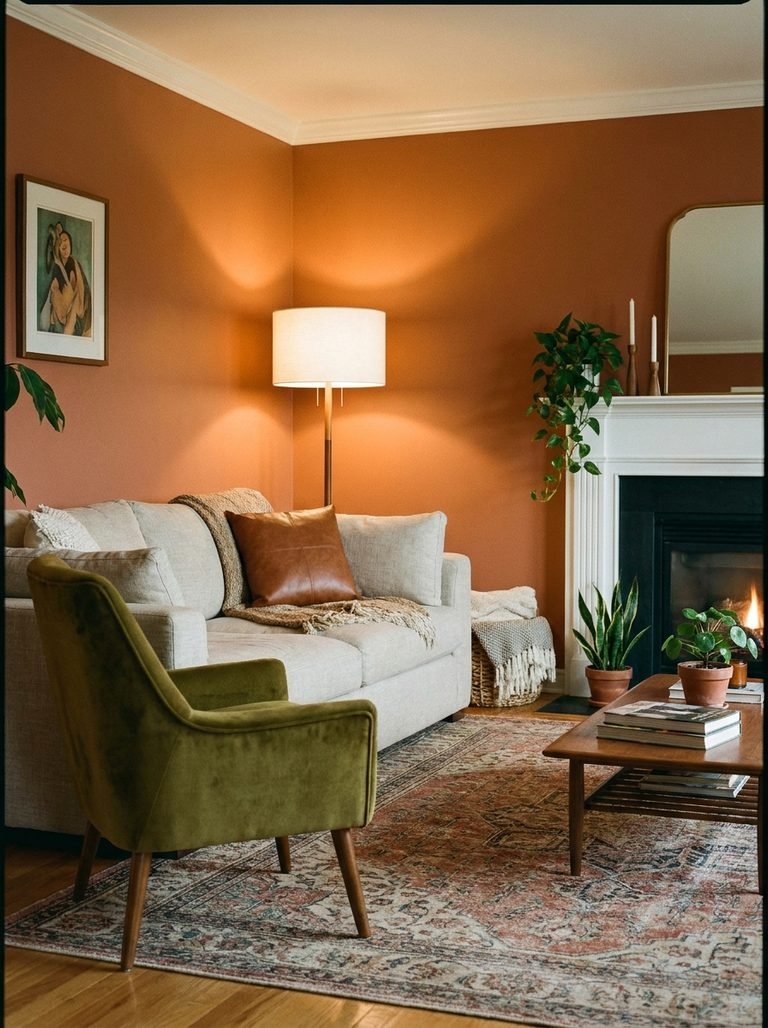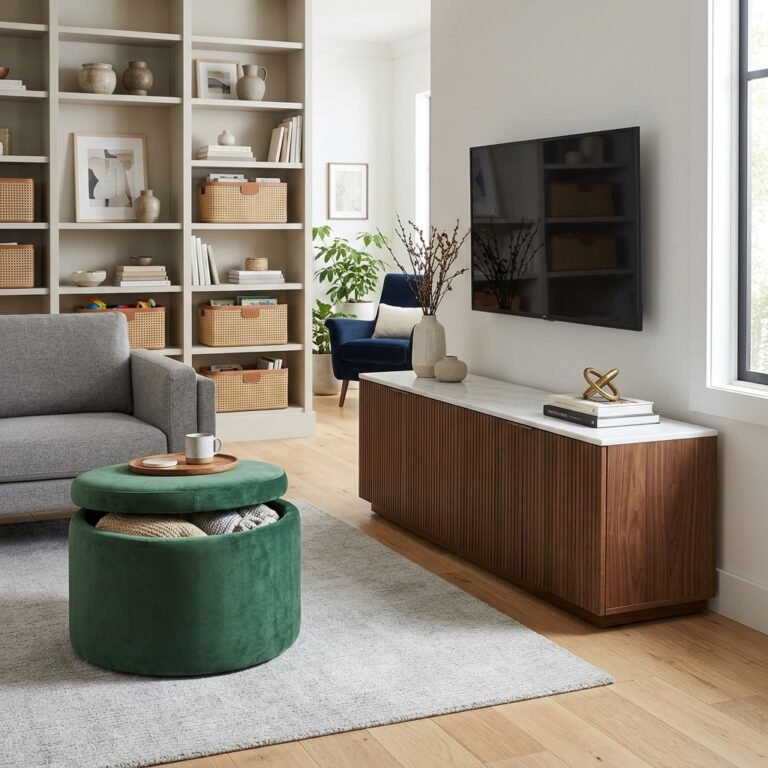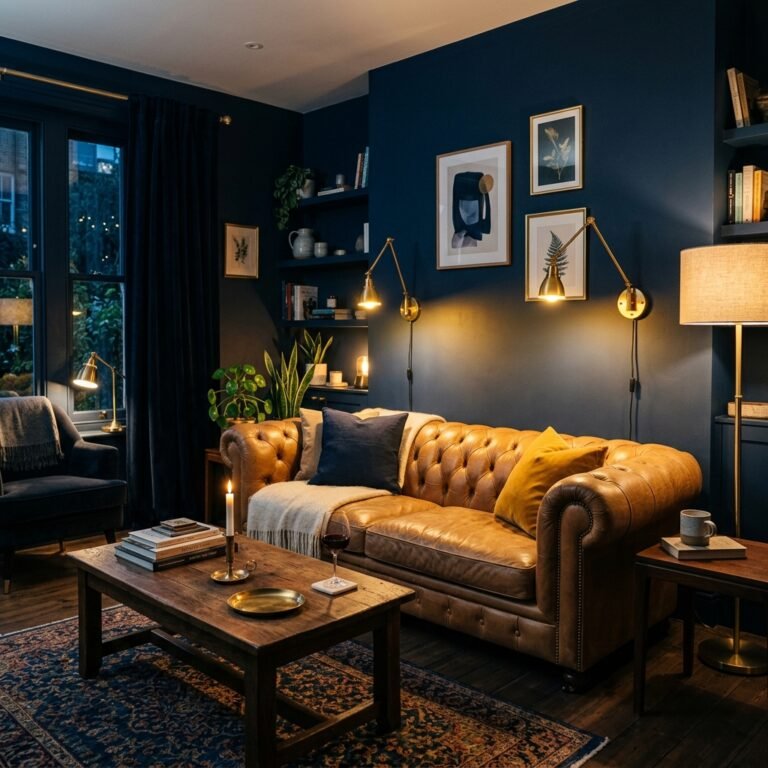

The modern living room formula gaining attention in 2026 is less about collecting trend pieces and more about combining a few strong design decisions. Warm neutrals create the base. Soft furniture shapes add comfort. Tactile materials bring depth. Layered lighting gives the room flexibility. Personal objects keep the result from feeling staged.
This approach also answers a common problem with modern interiors: a room can look polished in photographs yet feel cold in everyday life. The strongest version of the 2026 look keeps clean lines while adding softness, natural materials, useful storage, and visual warmth. The result suits a compact apartment as well as a larger open-plan home.

The Living Room Look Everyone Is Saving in 2026
The strongest 2026 living rooms share a calm visual rhythm. Instead of relying on one dramatic color or a crowded collection of accessories, the room builds interest through contrast between materials, shapes, and light. A warm upholstered sofa can sit beside a stone or wood table. Linen can soften a smooth cabinet. A sculptural lamp can become the focal point without competing with wall art.
The formula also leaves room for technology without making technology the visual center. Media equipment can sit inside cabinetry or against a restrained wall composition. Smart lighting can support different moods while remaining visually quiet. ENERGY STAR explains that smart lighting can be controlled remotely or by schedule and can also tune light color, making connected lighting a practical part of a flexible home environment. smart lighting can support that approach.
The important distinction is restraint. A modern living room does not need every 2026 trend at once. A coherent palette, one clear furniture focal point, several tactile layers, and controlled lighting usually create a stronger result than a room filled with competing statements.

How the Modern Living Room Formula Comes Together
The biggest shift is emotional rather than decorative. Modern interiors once leaned heavily on hard surfaces, sharp geometry, and very limited color. The current direction keeps the clarity of modern design but introduces more tactile and organic elements.
Warm wood, woven textiles, stone, ceramics, linen, and softly upholstered furniture help balance architectural lines. The effect is especially useful in rooms with large windows, polished floors, or extensive built-ins. Those features can make a space feel visually crisp, while texture keeps the composition grounded.
Personal objects also matter. A room becomes more convincing when books, collected ceramics, framed photographs, or inherited pieces connect the space to real life. The goal is not maximal decoration. The goal is a small number of meaningful details placed where they contribute to the overall composition.
This approach separates the article from Homedecorio’s broader 2026 living-room trend coverage, which already addresses trend forecasting and style directions. The formula here focuses on how the individual ingredients work together. That distinction also reduces overlap with the site’s cozy living-room content, where texture and warmth are already central topics.

Build a Warm Neutral Base
A warm neutral base gives the room enough visual quiet for sculptural furniture and textured accessories to stand out. Creamy white, beige, warm taupe, sand, and muted clay tones can work together without creating a flat monochrome scheme.
The strongest palette usually includes several related values rather than one repeated shade. A pale wall can support a medium-toned sofa. A darker wood table can anchor the seating area. Curtains can sit between the wall and upholstery values, creating a soft transition rather than a hard contrast.
Natural materials add another layer of variation. Wood introduces grain. Stone adds mineral variation. Woven pieces create small-scale pattern. Ceramics can bridge the two through their matte or irregular surfaces.
Color should also be judged under the room’s actual lighting. Artificial light changes how neutral finishes appear. ENERGY STAR notes that lower Kelvin values produce warmer-looking white light, while higher values appear cooler and bluer. Warm residential lighting commonly falls around 2700K to 3000K, so a neutral paint or fabric should be assessed under the lighting that will actually illuminate it. ENERGY STAR lighting guidance provides the relevant color-temperature framework.

Choose Soft, Sculptural Furniture
Furniture supplies the largest shapes in a living room, so its silhouette has an outsized effect on the overall mood. The 2026 formula favors curved sofas, rounded chairs, softened coffee tables, and modular seating that can adapt to different arrangements.
One substantial sculptural piece can establish the room’s character. A curved sofa can become the focal point when the surrounding furniture stays visually simple. A rounded coffee table can soften a room built around a long sofa and straight media console. A sculptural chair can add shape without requiring a complete furniture replacement.
Modularity is especially useful in rooms that serve several purposes. Seating can support everyday lounging, conversation, reading, and occasional entertaining. A flexible arrangement also allows the room to evolve without replacing every piece.
Scale remains more important than trend labels. Large furniture can overwhelm a compact room, while undersized furniture can make a generous room feel unfinished. The best arrangement follows the room’s proportions and preserves clear movement paths around the main seating group.
Layer Texture Instead of Adding More Decor
Texture creates depth without requiring a complicated color scheme. A modern living room can combine linen, wool, bouclé, wood, stone, ceramic, and woven fibers while keeping the palette restrained.
The key is contrast. Smooth wood can sit beside a nubby textile. A soft rug can ground a hard coffee table. A matte ceramic object can break up the shine of polished stone. A woven basket can introduce a relaxed note beside tailored upholstery.
Rugs deserve particular attention because they visually connect the seating group. A rug that is too small can make furniture look disconnected. A larger rug that accommodates the main seating pieces usually creates a more unified composition. The exact size should follow the room and furniture dimensions rather than a universal rule.
Texture also supports the room’s acoustic comfort. Soft furnishings, rugs, curtains, and upholstered pieces can reduce the amount of exposed hard surface. This makes the space feel less stark and can improve the overall sense of softness.

Use Intentional Wall Decor and Layered Lighting
Wall decor works best when it supports the furniture composition instead of competing with it. One oversized artwork, a restrained pair of prints, or a textured wall treatment can create a stronger focal point than a crowded gallery wall.
Placement should follow the main furniture group. Artwork that relates to the sofa or console feels connected to the room. Pieces that sit too high or too far from the furniture can appear disconnected, even when the artwork itself is attractive.
Lighting needs the same layered thinking. Ambient lighting provides general illumination. Task lighting supports reading or focused activities. Accent lighting highlights artwork, shelving, architecture, or decorative objects.
Warm light can reinforce a neutral palette during evening hours. ENERGY STAR identifies 2700K to 3000K as warmer color appearances and notes that lower Kelvin values look more yellow or warm. That makes color temperature an important consideration when a room relies on creamy walls, wood, beige upholstery, or terracotta accents.

Style the Room for Real Life
A successful modern living room should function between photographs. Everyday objects need practical homes, and decorative choices should not block the way the room operates.
Closed storage can hide cables, remotes, chargers, and less attractive equipment. Decorative trays can collect small objects on a coffee table. Baskets can hold throws while contributing texture. A low console can provide storage without dominating the room.
Small rooms benefit from this edited approach. The small-space category already covers multifunctional furniture, vertical storage, and visual openness, so this article keeps its small-room advice focused on applying the broader modern formula rather than repeating a full space-saving guide.
Open-plan rooms need a slightly different strategy. Furniture can define zones without adding walls. A rug can establish the living area. A sofa can create a visual boundary. Lighting can distinguish the seating zone from dining or circulation areas.

Room Size and Placement
The formula changes slightly with room scale, but the design logic stays consistent. Compact rooms need fewer competing pieces. Larger rooms need stronger zoning so the furniture does not appear scattered across the floor.
In a small living room, the main seating group should establish the room’s purpose first. A sofa, coffee table, and one secondary seat can often create a clearer composition than a collection of small pieces. Low-profile furniture can also preserve more visual floor area, especially when the room already contains strong architectural features.
In a larger room, the seating group can become a defined zone instead of sitting against every wall. A rug can visually connect the main pieces. A console or bookcase can support a secondary wall. A reading chair can create a smaller activity zone without breaking the overall palette.
Clearance should follow the furniture arrangement rather than a generic measurement. Doors, windows, walkways, radiators, and media equipment all affect placement. Measuring the actual room before buying large furniture prevents a beautiful piece from creating an awkward traffic path.
The same principle applies to the coffee table. It should relate to the sofa and surrounding seats without blocking movement. Side tables should remain reachable from the primary seats. The goal is a room that looks composed because the furniture naturally supports how the space is used.
Budget and Material Guide
A polished modern living room does not require every material to be premium. Budget allocation works better when the largest visual elements receive the most attention. Seating, rugs, lighting, and storage shape the room more strongly than small decorative objects.
A restrained budget can start with existing furniture. Rearranging the seating, editing accessories, changing lamp shades, adding textiles, and improving storage can refresh the room without replacing its foundation. Neutral throws, cushions, baskets, and ceramics can introduce texture at a smaller scale.
A mid-range refresh can focus on one major upgrade. A sculptural chair, a well-sized rug, a substantial lamp, or a better media console can change the room’s visual balance. Keeping the remaining pieces simple prevents the new item from looking isolated.
A larger investment can prioritize durable materials and flexible furniture. Wood, stone, quality upholstery, and modular seating can support multiple styling directions. Material selection should also reflect maintenance needs. Busy households may favor surfaces that tolerate frequent use, while quieter rooms can accommodate more delicate finishes.
Material mixing is more important than material quantity. One wood tone can repeat across a table and cabinet. One stone or ceramic finish can echo that wood. Soft textiles can bridge the harder surfaces. This approach makes a modest material palette look deliberate rather than incomplete.
Common Mistakes That Weaken the Formula
Mistake: Repeating one neutral everywhere.
A single beige or cream can flatten the room. The fix is to vary value and texture while keeping the undertone consistent.
Mistake: Making every piece a statement.
Too many focal points create visual competition. The fix is to choose one dominant shape and let supporting pieces stay quieter.
Mistake: Treating lighting as an afterthought.
A beautiful palette can look harsh under unsuitable light. The fix is to test the room under its evening lighting before finalizing paint and fabric choices.
Mistake: Choosing a rug by appearance alone.
A rug can look beautiful online yet fail to connect the seating group. The fix is to measure the furniture arrangement first and select a size that visually anchors it.
Mistake: Hiding all personality.
Minimal styling can become anonymous when every object comes from the same visual language. The fix is to add a few meaningful vintage, handmade, or collected pieces.
A Modern Living Room That Feels Collected, Not Staged
The most useful lesson from the 2026 modern living room formula is that sophistication comes from coordination. Warm neutrals establish calm. Sculptural furniture supplies character. Texture adds depth. Lighting controls the mood. Practical storage keeps everyday life from overwhelming the composition.
That combination also makes the trend easier to adapt. A compact apartment can use the same principles with fewer pieces. A large open-plan room can expand the palette through zoning and larger furniture. A traditional home can introduce the formula through lighting, textiles, and one contemporary focal piece.
For related inspiration, Homedecorio’s 2026 living room decor trends guide covers the wider trend landscape, while 22 cozy living room decor ideas explores texture and comfort from a broader angle.
The formula works best when it serves the people using the room. A polished living room still needs comfortable seating, useful surfaces, practical storage, and lighting that changes with the day. That balance gives the 2026 look its strongest quality: modern style that still feels like home.
Quick Answers About the Modern Living Room Formula
What colors work best with the modern living room formula?
Warm neutrals form the strongest base for this modern living room formula. Creamy white, beige, warm taupe, sand, muted clay, and restrained charcoal can create depth without visual noise. Natural wood and stone add variation through material rather than stronger color. The final palette should also account for the room’s natural and artificial light.
Can curved furniture work in a small living room?
Curved furniture can work in a small living room when the scale stays appropriate. Rounded edges can soften circulation and reduce the visual weight of large pieces. A compact curved chair or gently rounded sofa often works better than several oversized sculptural pieces. The layout should preserve comfortable movement around the seating group.
Which lighting temperature suits a warm neutral room?
Warm white lighting usually suits a warm neutral room because it reinforces creamy, beige, taupe, and wood tones. ENERGY STAR identifies roughly 2700K to 3000K as warm-looking white light. The final choice should match the room’s finishes and activities. Dimmable or tunable fixtures can provide greater flexibility across the day.
How does texture make a modern living room feel less cold?
Texture breaks up large smooth surfaces and adds tactile variation. Linen, wool, bouclé, woven fibers, wood, stone, and ceramics can create depth without adding many colors. A restrained palette therefore gains interest from material contrast. This strategy works particularly well when the room already contains clean architectural lines or minimalist furniture.
Does modern living room decor need smart technology?
Modern living room decor does not require smart technology. Connected lighting or concealed media equipment can improve convenience, but the design works without them. The stronger principle is visual restraint. Technology should support the room’s function without becoming its focal point. Storage and cable management can keep devices visually quiet when technology is present.
How long can a modern living room formula stay relevant?
A modern living room formula can remain relevant when it relies on durable design principles rather than short-lived novelty. Warm neutrals, comfortable furniture, layered lighting, useful storage, and natural materials have broad stylistic flexibility. Trend-sensitive pieces can then change gradually without forcing a complete redesign. This creates a more adaptable room over time.