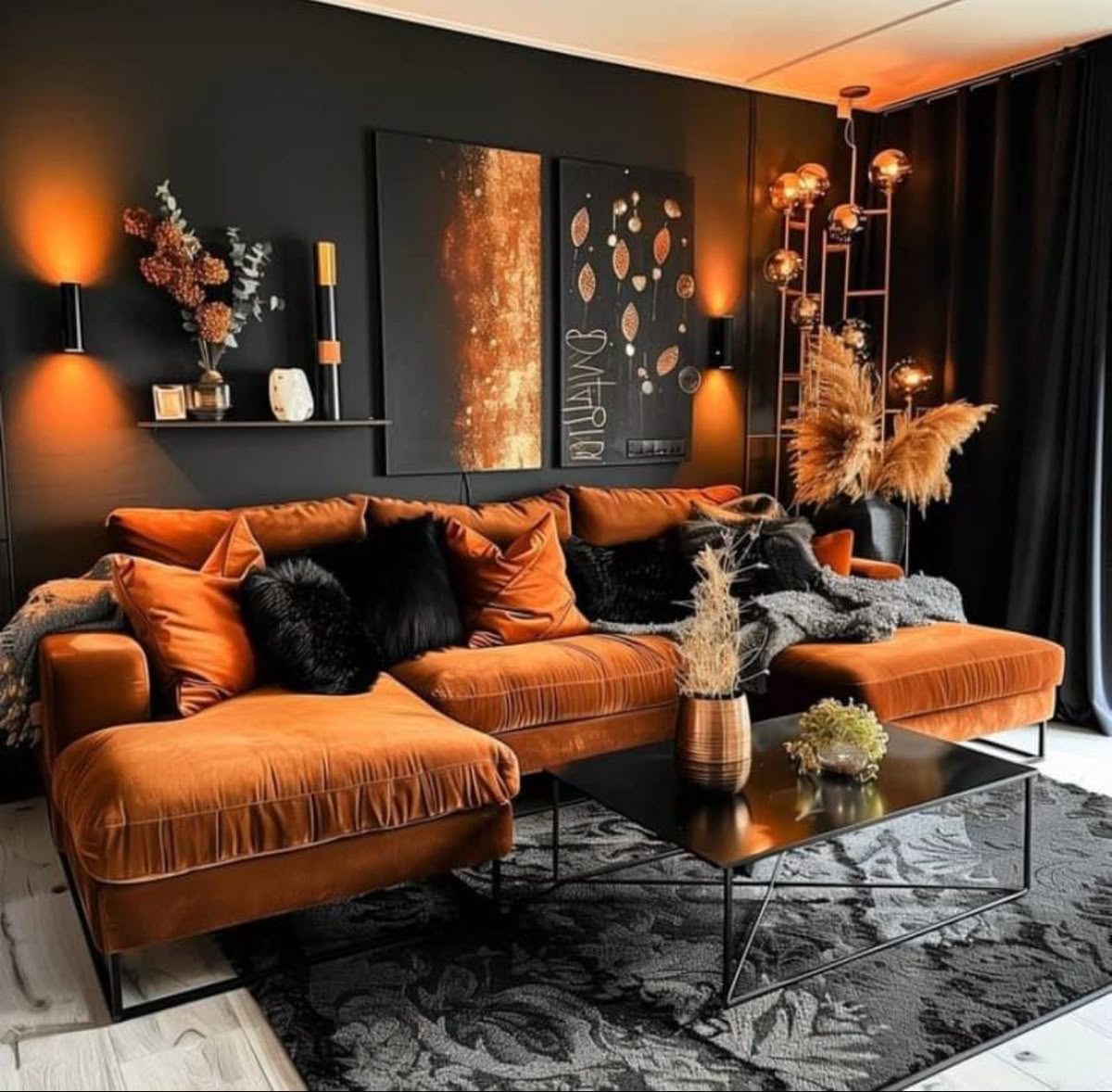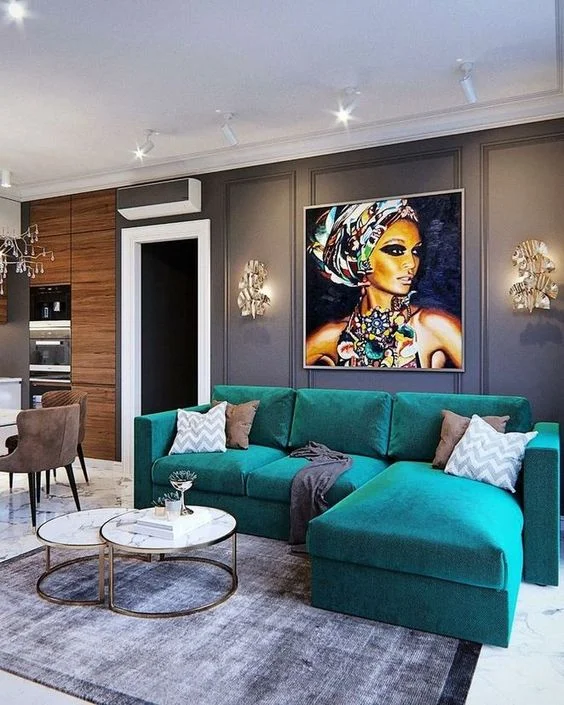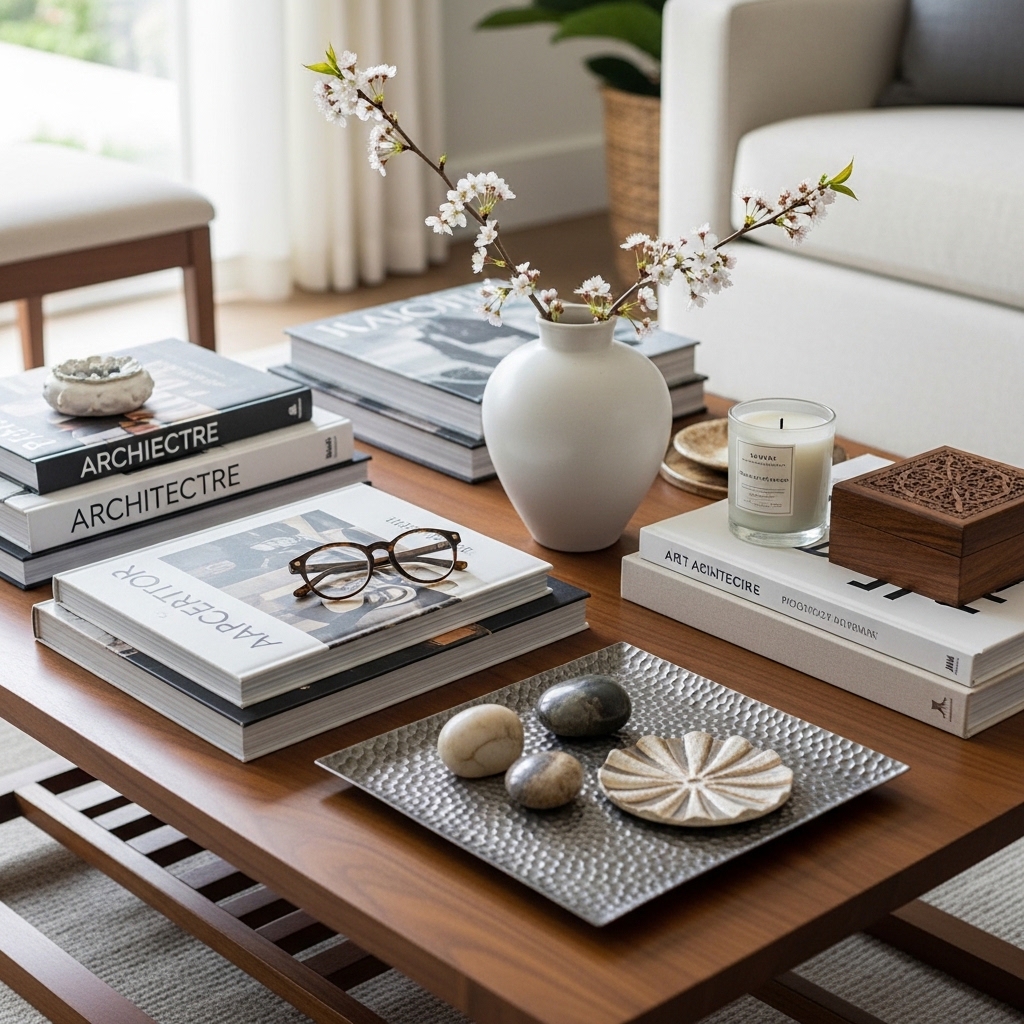
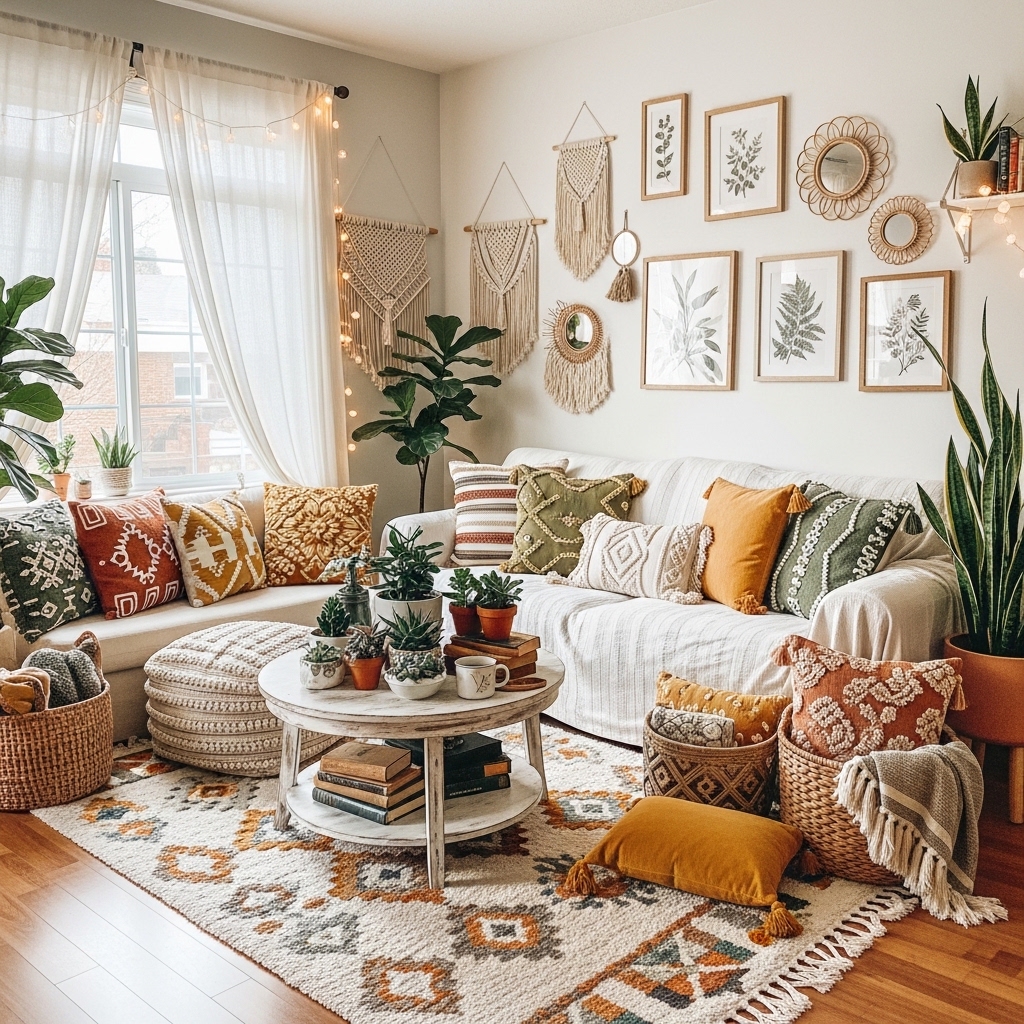
A boho living room is a celebration of curated soul, where warmth, creativity, and a relaxed spirit converge to form a sanctuary of artistic expression. Drawing inspiration from nature and global travel, bohemian interiors eschew the rigid rules of traditional “matched” decor in favor of a lived-in, effortless aesthetic. Designers achieve this tactile richness by masterfully layering contrasting textiles—think chunky knit throws paired with vintage Persian rugs—and integrating organic materials like rattan, jute, and reclaimed wood. The infusion of lush greenery and botanical elements is a hallmark of the style, grounding the room in a vibrant, earth-connected energy. Whether your personal palette leans toward sun-drenched desert tones, serene monochromatic neutrals, or bold, eclectic pops of color, the goal is to create a space that feels deeply personal and storied. By mixing artisanal woven wall hangings with salvaged vintage finds, you transform a standard living area into a cozy, inviting retreat that prioritizes comfort and character over perfection. Ultimately, a well-executed boho space is a reflection of your unique journey, offering a visually rich and high-personality environment that feels both sophisticated and completely unpretentious.
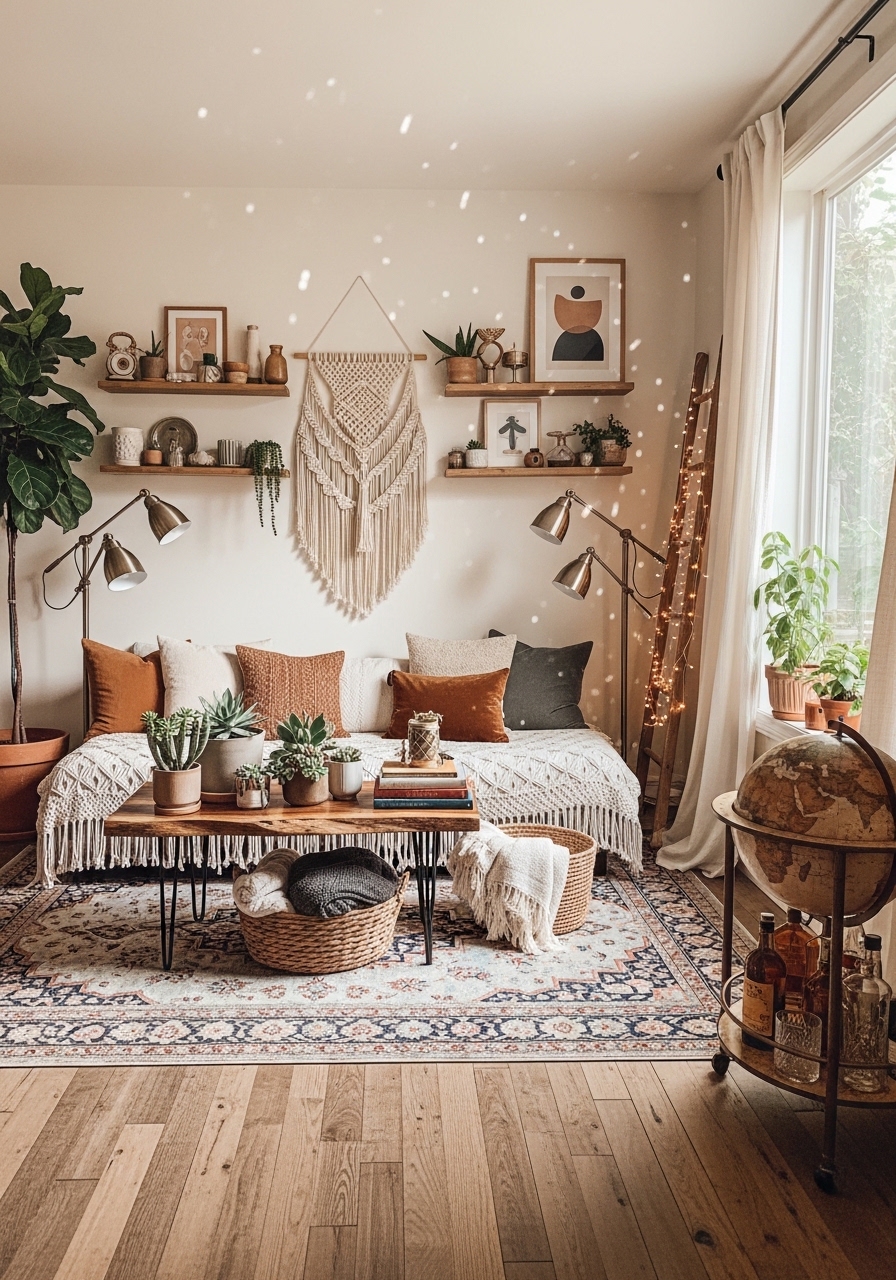
1. Layer Soft Textiles
The art of layering soft textiles is the tactile heartbeat of a boho living room, instantly transforming a standard space into a multidimensional retreat of depth and comfort. Interior designers master this “more-is-more” approach by stacking contrasting materials—such as chunky wool knits, breezy cotton linens, and intricate woven rugs—to build a rich, sensory landscape. Rather than seeking a perfectly matched set, the bohemian aesthetic thrives on a curated mix of subtle patterns and grounded, earthy tones like terracotta, sage, and sand. These layers serve a dual purpose: they provide physical warmth while visually softening the room’s harder architectural lines. Even a minimalist sofa can be elevated into a bohemian centerpiece by draping a fringed throw over the arm and clustering pillows of varying sizes and textures. This intentional “piling on” of fabrics creates an inviting, lived-in atmosphere that prioritize relaxation over formality. By prioritizing touch and visual weight, you craft a sanctuary that feels both high-end and profoundly cozy. Ultimately, masterful textile layering is the fastest way to inject a soul-soothing energy into your home, ensuring every corner feels curated, comfortable, and ready for lounging.
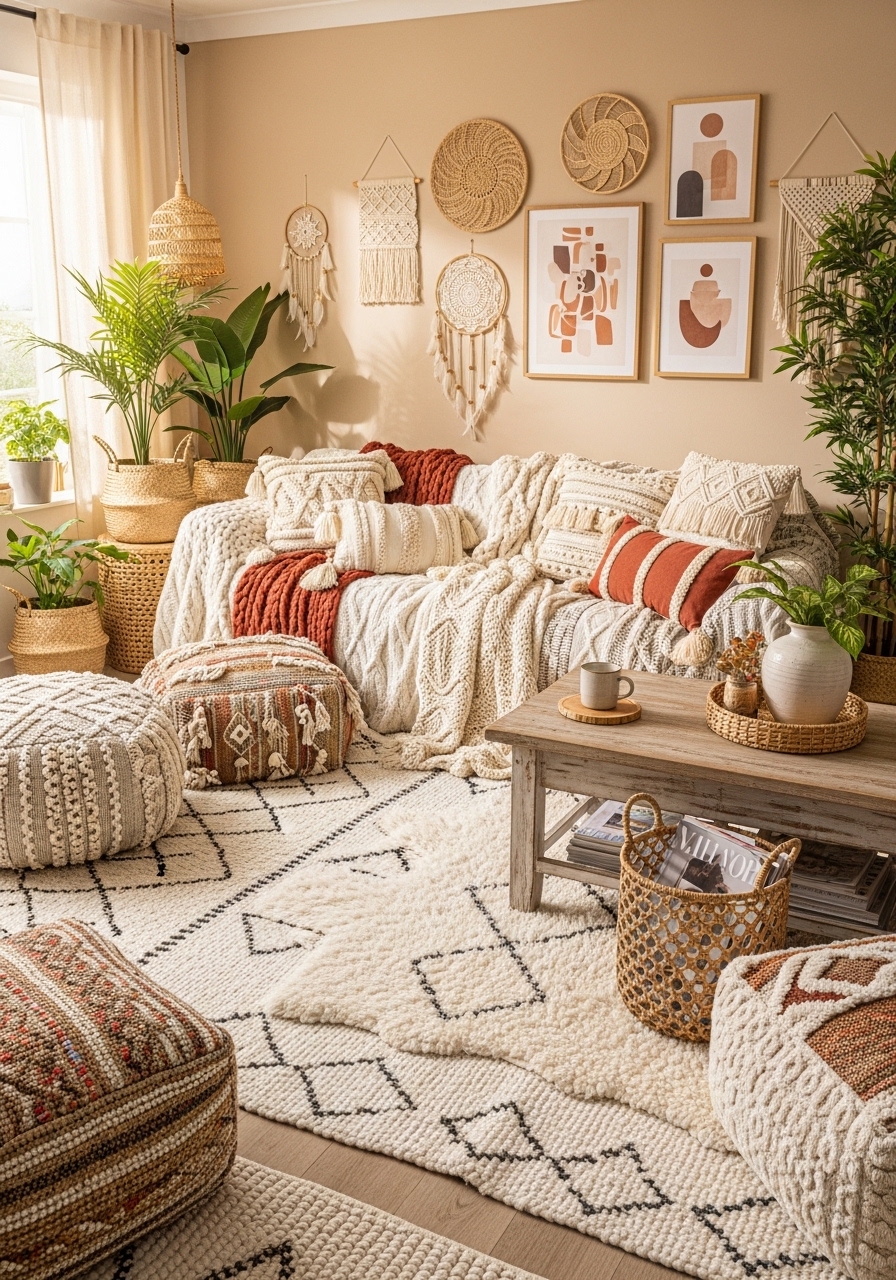
2. Add Natural Wood Furniture
Natural wood furniture serves as the essential grounding element in a boho living room, infusing the space with an earthy authenticity that synthetic materials simply cannot replicate. By introducing organic textures through a raw-edge coffee table, reclaimed wood shelving, or hand-carved side tables, you create a visual bridge between woven decor and soft textiles. Interior designers often favor unfinished, matte, or lightly stained woods, as these finishes celebrate the unique knots and grains that give the material its “perfectly imperfect” character. This woody foundation acts as a sophisticated neutral, balancing the vibrant energy of colorful pillows and lush indoor plants while providing a sturdy, functional anchor for the room’s more ethereal elements. Choosing pieces with clean, simple silhouettes ensures the atmosphere remains relaxed and unpretentious, reflecting the core bohemian philosophy of natural living. Whether it’s a vintage teak chair or a light oak console, the presence of real wood adds a layer of warmth that makes the entire environment feel more established and inviting. Ultimately, integrating natural timber is the most effective way to transition a room from a mere collection of decor to a soulful, high-end sanctuary.
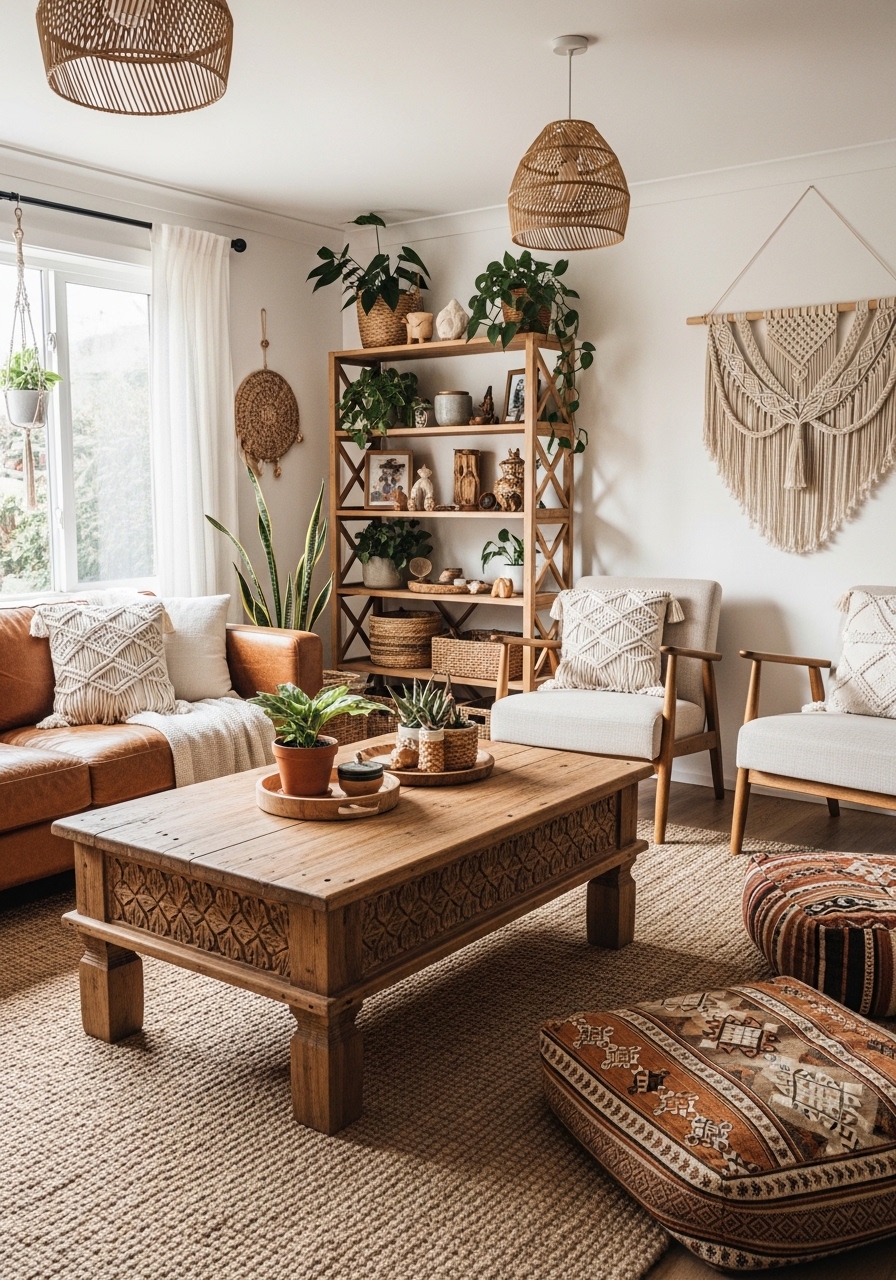
3. Decorate with Indoor Plants
Indoor plants are the literal “living” heartbeat of bohemian design, transforming a static room into a vibrant, oxygen-rich sanctuary. To capture that sought-after tropical boho vibe, interior designers lean into large-scale greenery—think the architectural leaves of a monstera, the stately height of a fiddle leaf fig, or the feathery fronds of a majestic palm. By layering smaller succulents or trailing vines on bookshelves and side tables, you create a rhythmic “jungle” effect that draws the eye to every level of the space. The magic of this botanical approach lies in the vessels: mixing artisanal ceramic pots, rustic terracotta, and tactile woven baskets adds a curated, globetrotter aesthetic. Beyond their visual beauty, plants perform the crucial task of softening sharp furniture angles and blurring the lines between indoors and out, resulting in a room that feels profoundly calm and welcoming. Whether hanging from macramé or clustered in a sunlit corner, greenery provides a natural texture that balances wood and textiles perfectly. Ultimately, integrating diverse plant life is the most effective way to breathe freshness and vitality into your home, ensuring your living space feels both effortlessly chic and deeply restorative.
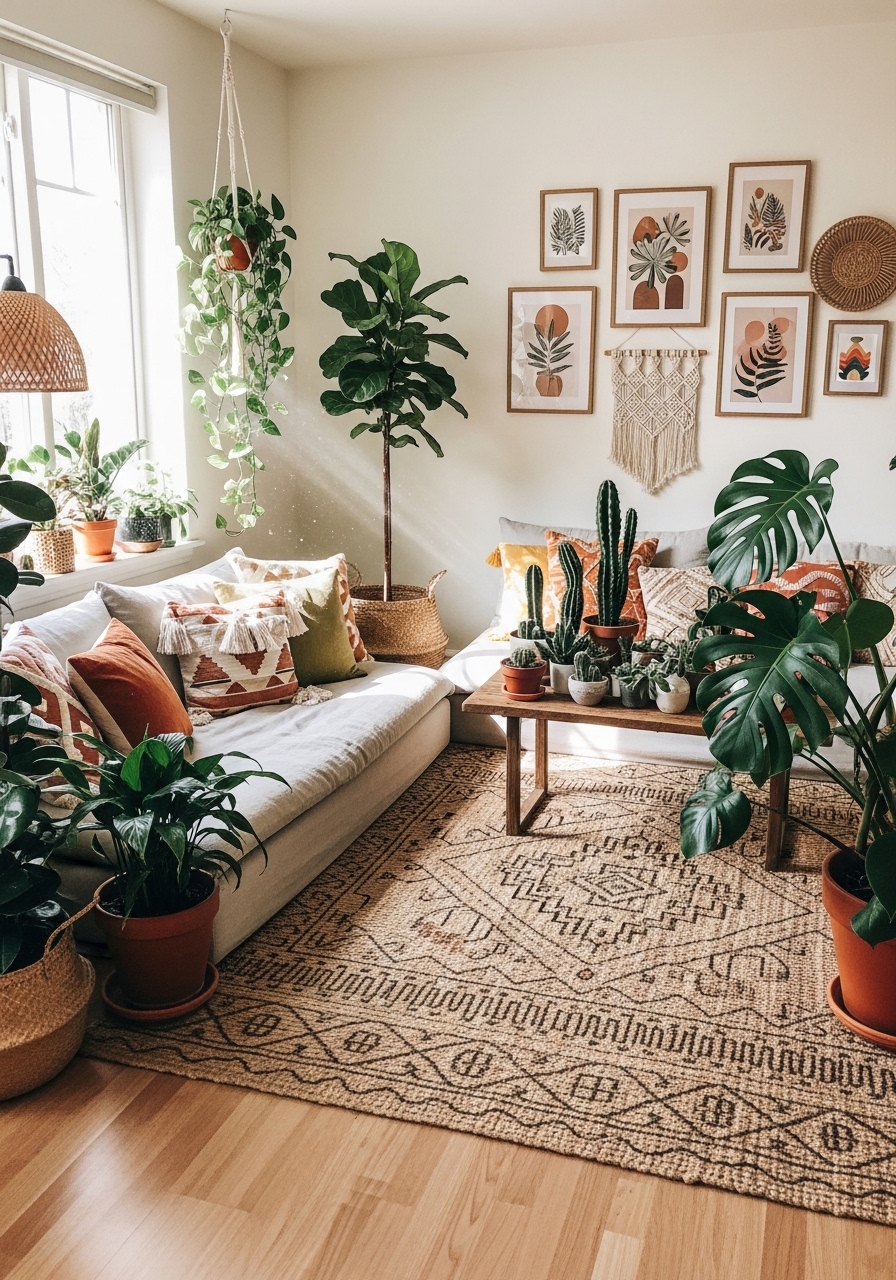
4. Use Woven Decor
Woven decor is the quintessential finishing touch in bohemian design, providing the tactile richness and handcrafted soul that defines the aesthetic. By integrating natural materials like rattan, seagrass, and jute, you introduce a layer of organic texture that softens modern architecture and adds immediate visual interest. Interior designers frequently utilize macramé wall hangings or woven baskets as artisanal focal points, often positioning them above a sofa to draw the eye and add vertical depth. Beyond mere decoration, pieces like rattan side chairs or woven coffee tables contribute a “perfectly imperfect” handcrafted feel that balances the softness of layered textiles. These elements are not only stylish but highly functional; a large seagrass basket can elegantly hide clutter while reinforcing the room’s earthy palette. This commitment to natural fibers helps achieve an authentic bohemian atmosphere that feels warm, storied, and effortlessly curated rather than mass-produced. Ultimately, incorporating woven accents is the most effective way to anchor your living room in the boho tradition, creating a space that feels deeply connected to nature and global craftsmanship.
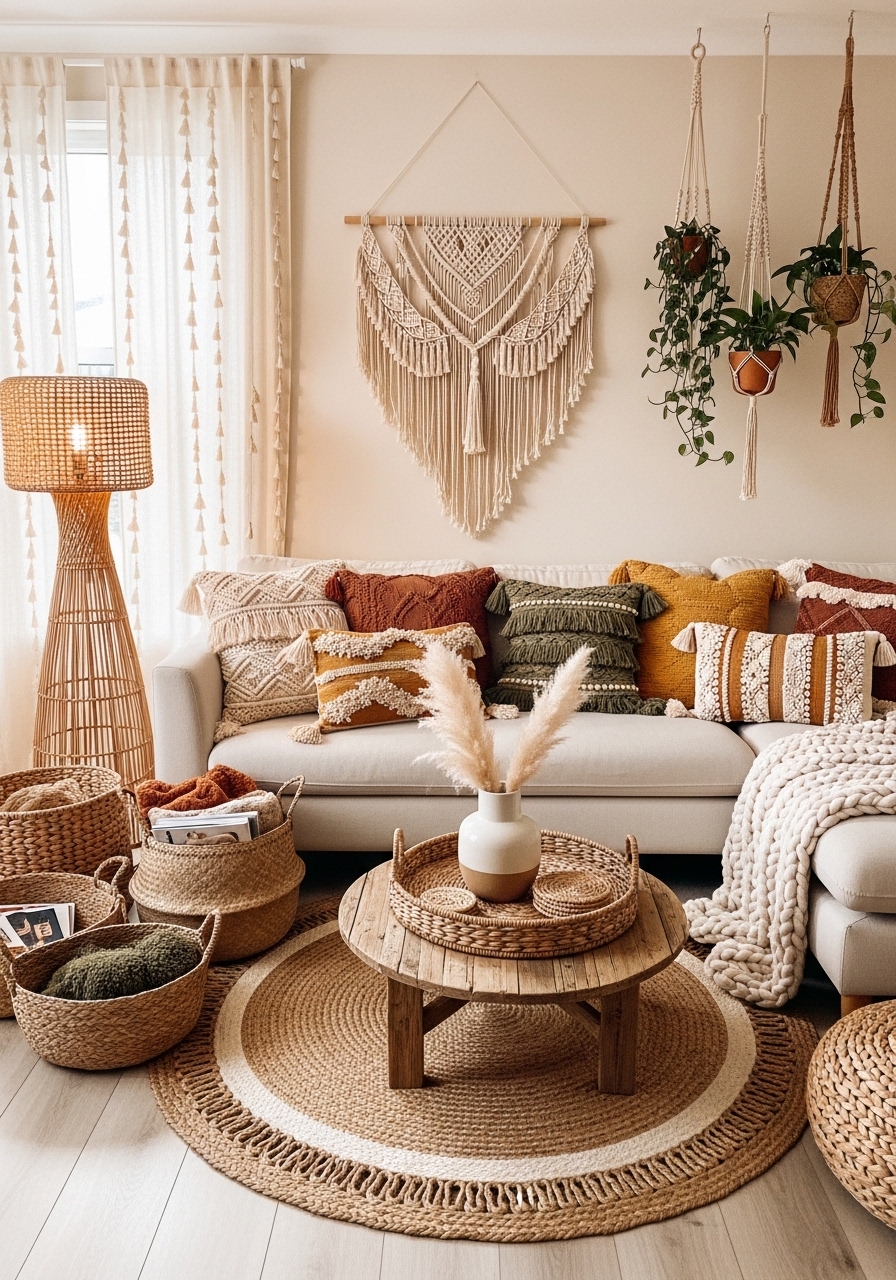
5. Choose Earthy Color Palettes
An earthy color palette is the soulful foundation of bohemian design, acting as the visual glue that binds together varied textures and global accents. By embracing a spectrum of terracotta, muted beige, deep olive, and sun-drenched browns, interior designers create a sophisticated, low-contrast environment that feels inherently calming. These organic hues are particularly effective because they mimic the natural world, instantly grounding a room and making it feel like a cozy, sheltered retreat. When applied to large-scale elements like plush sofas, hand-knotted rugs, or textured lime-wash walls, these tones establish a warm, “golden hour” glow that persists throughout the day. Furthermore, earthy pigments provide the perfect tonal bridge between raw wood furniture and tactile woven decor, ensuring the space feels cohesive rather than chaotic. This disciplined approach to color allows for a rich layering of patterns without overwhelming the senses, maintaining a serene and inviting atmosphere. Ultimately, a palette rooted in the earth transforms a living room into a restorative sanctuary, proving that a high-end boho aesthetic is best achieved through a harmonious connection to nature’s most comforting shades.
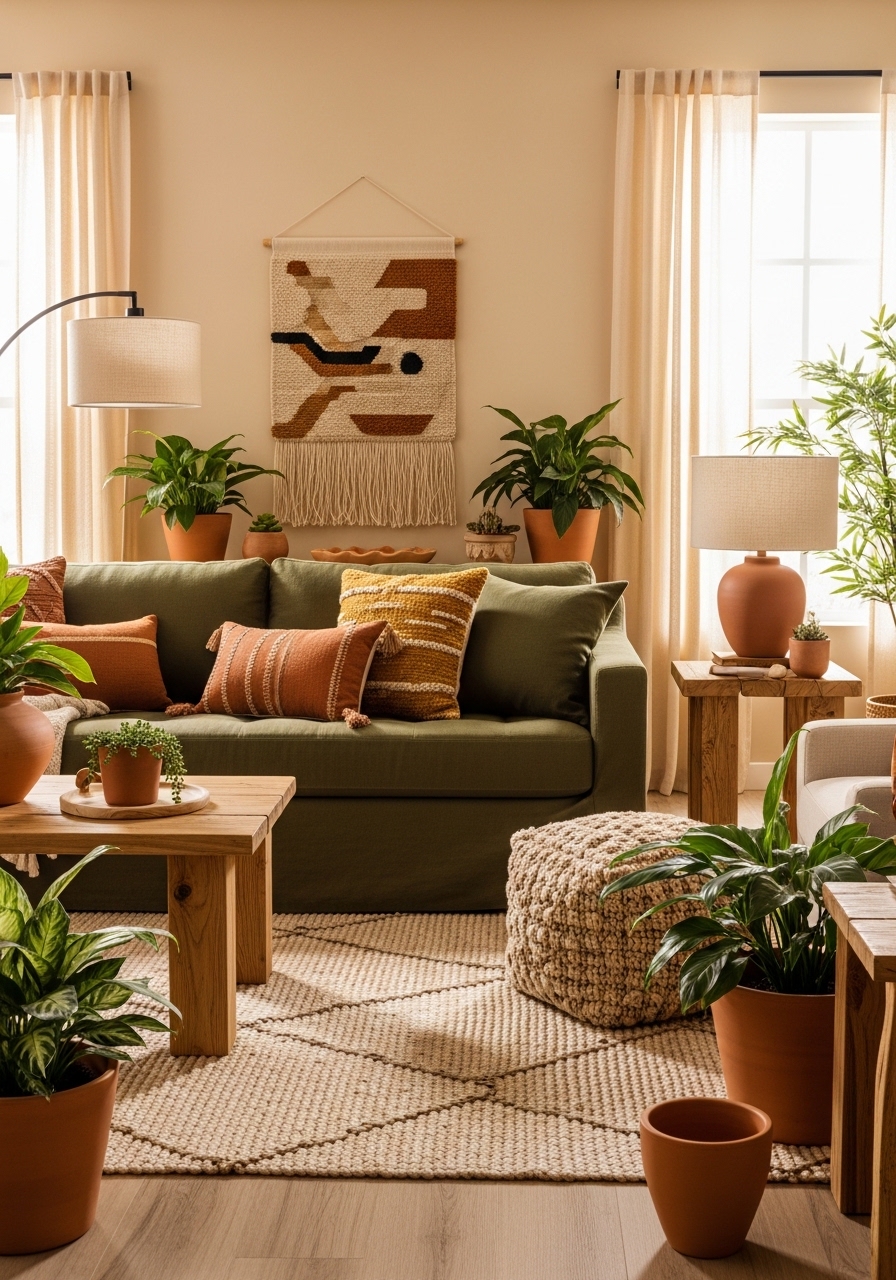
6. Add Vintage Decor Pieces
Vintage decor is the soulful “X-factor” that elevates a boho living room from a showroom catalog to a storied, high-character sanctuary. Because bohemian design champions individuality over mass-production, integrating pieces with a past—such as a weathered wooden trunk used as a coffee table or an ornate antique mirror—infuses the space with an immediate sense of history and depth. Interior designers master this look by intentionally mixing eras; pairing a sleek, modern sofa with a pair of 1970s vintage lamps or a distressed Persian rug creates a “collected over time” aesthetic that feels authentic rather than forced. These one-of-a-kind finds serve as unique focal points that spark conversation and ground the room’s lighter, more ethereal elements like macramé and plants. By prioritizing “found” objects, you ensure your home reflects a personal narrative that can’t be replicated. Ultimately, the juxtaposition of old and new is what gives a boho space its sophisticated, layered edge, proving that the most beautiful rooms are those that tell a story.
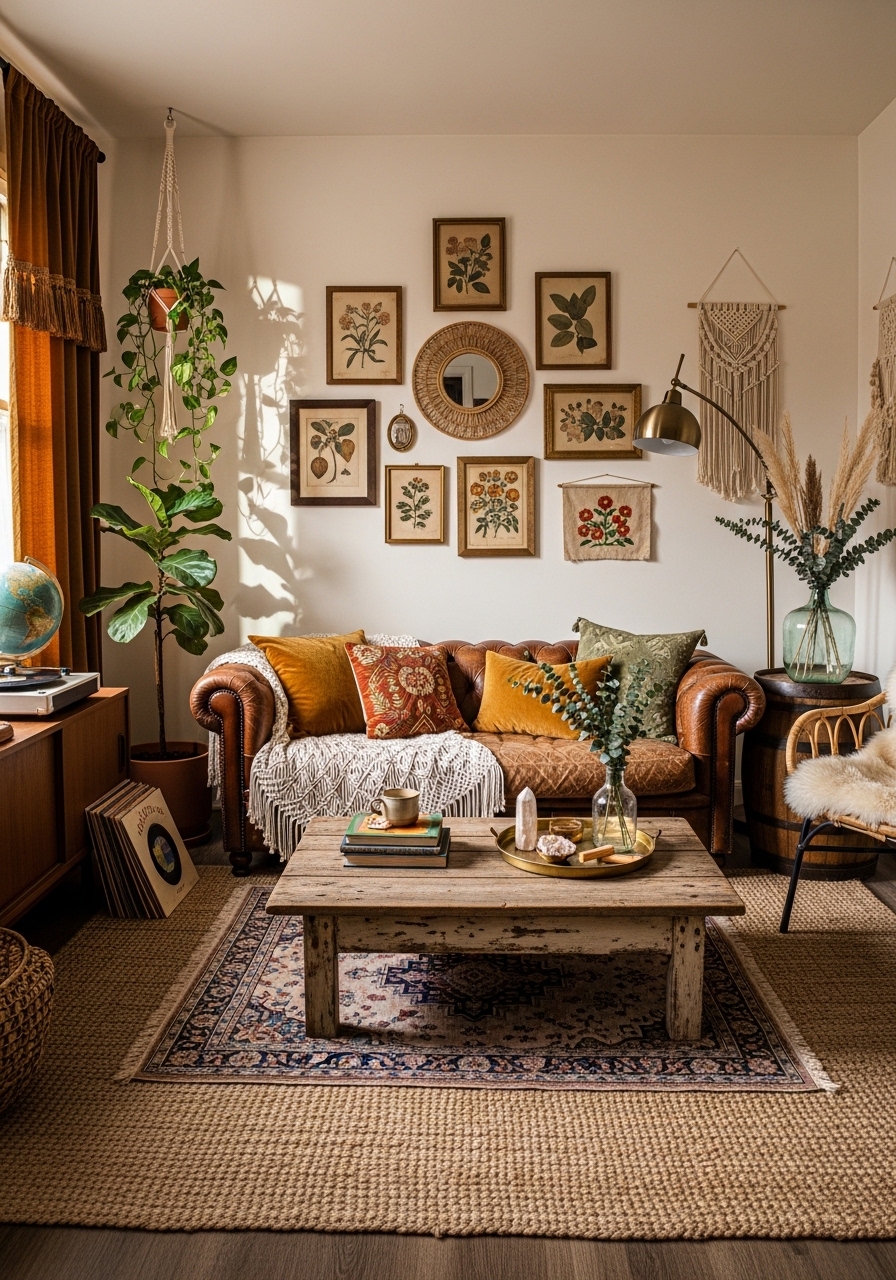
7. Use a Statement Rug
A statement rug is the “anchor” of the bohemian living room, serving as the visual foundation that unifies disparate furniture pieces into a single, cohesive sanctuary. Interior designers frequently turn to Persian-inspired motifs or plush, geometric Moroccan weaves because their intricate patterns and rich, time-worn colors provide an instant sense of history and warmth. By selecting an oversized rug that extends well beyond the edges of the sofa and chairs, you create a defined “island” of comfort that makes even a large, open-concept room feel intimate and intentional. Beyond its aesthetic impact, a high-quality rug adds essential acoustic softening and a luxurious “underfoot” experience that encourages the relaxed, floor-level lounging synonymous with boho living. Whether you opt for a vibrant, saturated weave or a more muted, stonewashed antique look, the rug acts as the “connective tissue” that pulls together your wood furniture, layered textiles, and botanical accents. Ultimately, a bold rug isn’t just a floor covering; it’s a piece of art that sets the tonal frequency for the entire room.
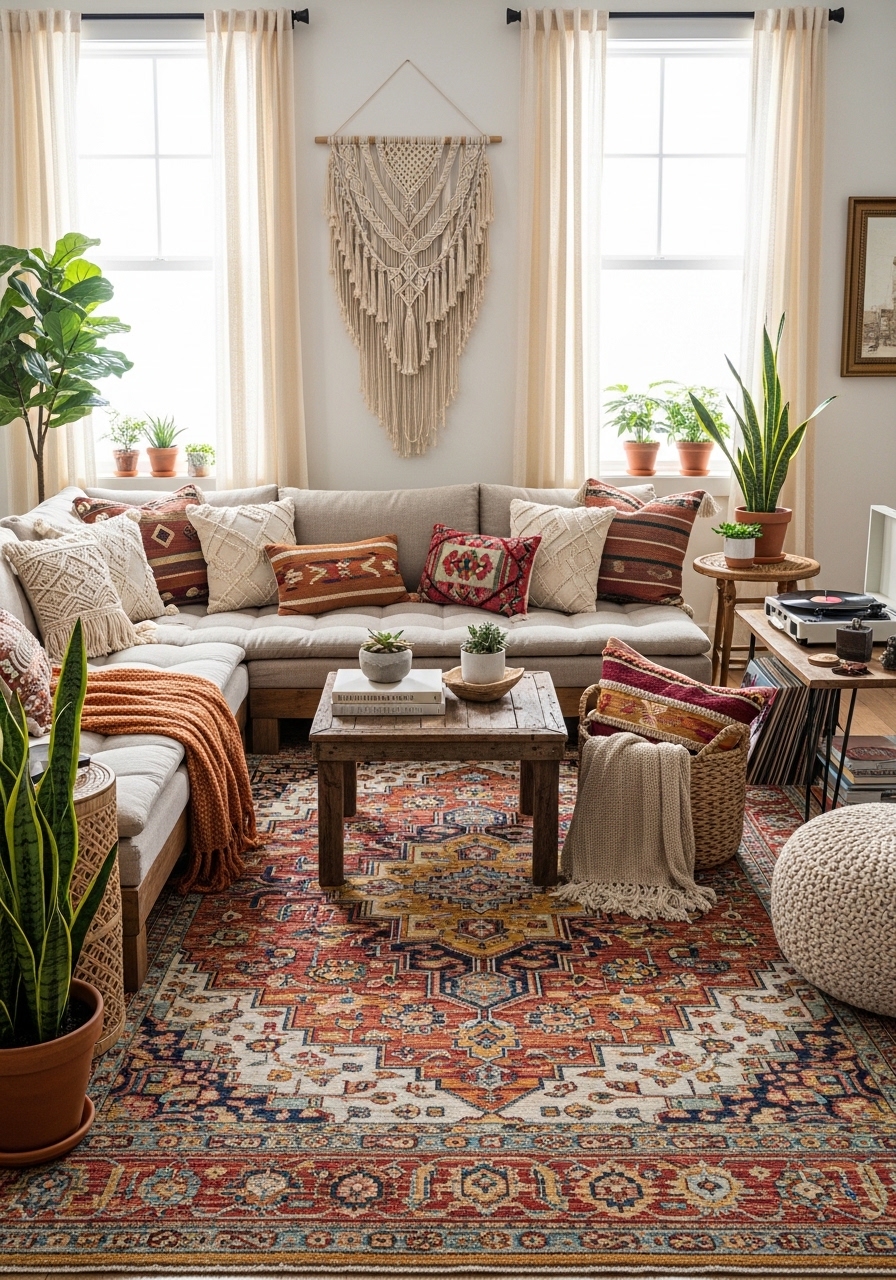
8. Create a Cozy Floor Seating Area
Floor seating is the ultimate expression of the “low-slung” bohemian lifestyle, shifting the room’s energy from formal and upright to relaxed and intimate. By introducing oversized floor cushions, Moroccan leather poufs, or plush low ottomans, you instantly break down the traditional barriers of a living room, inviting guests to settle in and linger. Interior designers master this look by clustering these soft seating options around a low-profile coffee table or a vintage wooden trunk, creating a dedicated “conversation pit” that feels grounded and cozy. This strategic layering of heights—mixing standard sofas with floor-level textiles—adds a dynamic architectural quality to the room without requiring heavy renovations. Beyond its aesthetic charm, floor seating is incredibly practical for small spaces, as poufs can be tucked under tables or moved aside when extra floor space is needed. Whether you choose richly patterned kilim fabrics or soft, neutral linens, this casual arrangement signals that your home is a place for authentic connection and unhurried comfort. Ultimately, a well-designed floor seating area transforms a standard living room into a soulful, high-personality lounge that feels both worldly and deeply welcoming.

9. Hang Macrame Wall Art
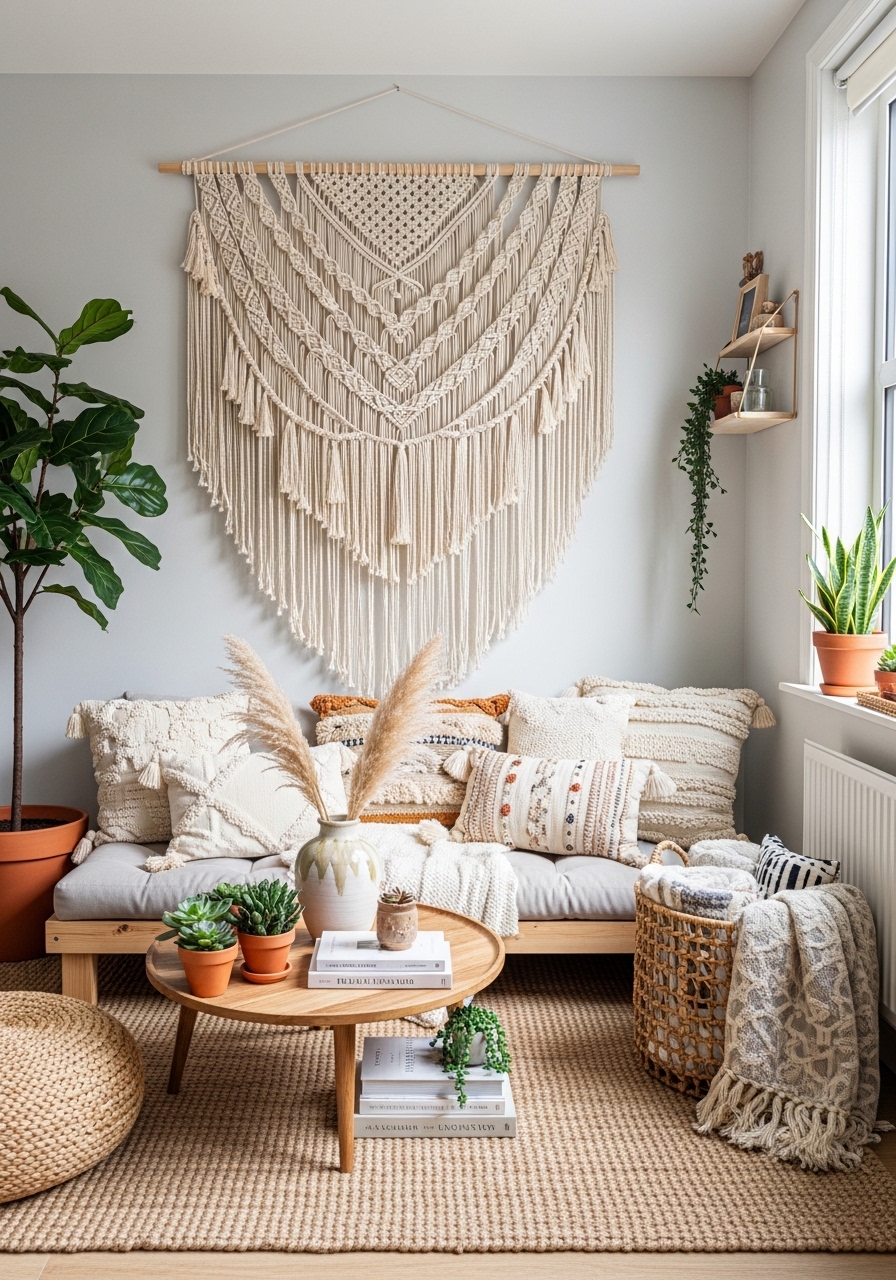
Macramé wall art is the quintessential “fiber soul” of a bohemian living room, transforming a sterile, flat wall into a gallery of handcrafted texture. By introducing these intricate, knotted cotton or jute designs, you add an immediate layer of three-dimensional depth that framed prints simply can’t provide. Interior designers frequently use oversized macramé pieces as a “soft headboard” effect above a sofa or as the primary focal point on an accent wall to break up the monotony of paint and drywall. This artistic flair honors the traditional craftsmanship that defines the boho aesthetic, lending the room a sense of global history and tactile warmth. Whether you choose a minimalist, monochromatic cream piece for a modern boho look or a dip-dyed version for a splash of earthy color, macramé serves as a visual bridge between your soft textiles and natural wood furniture. Ultimately, hanging a statement fiber piece is the fastest way to signal a curated, artistic atmosphere that feels both high-end and deeply personal.
10. Mix Patterns and Textures
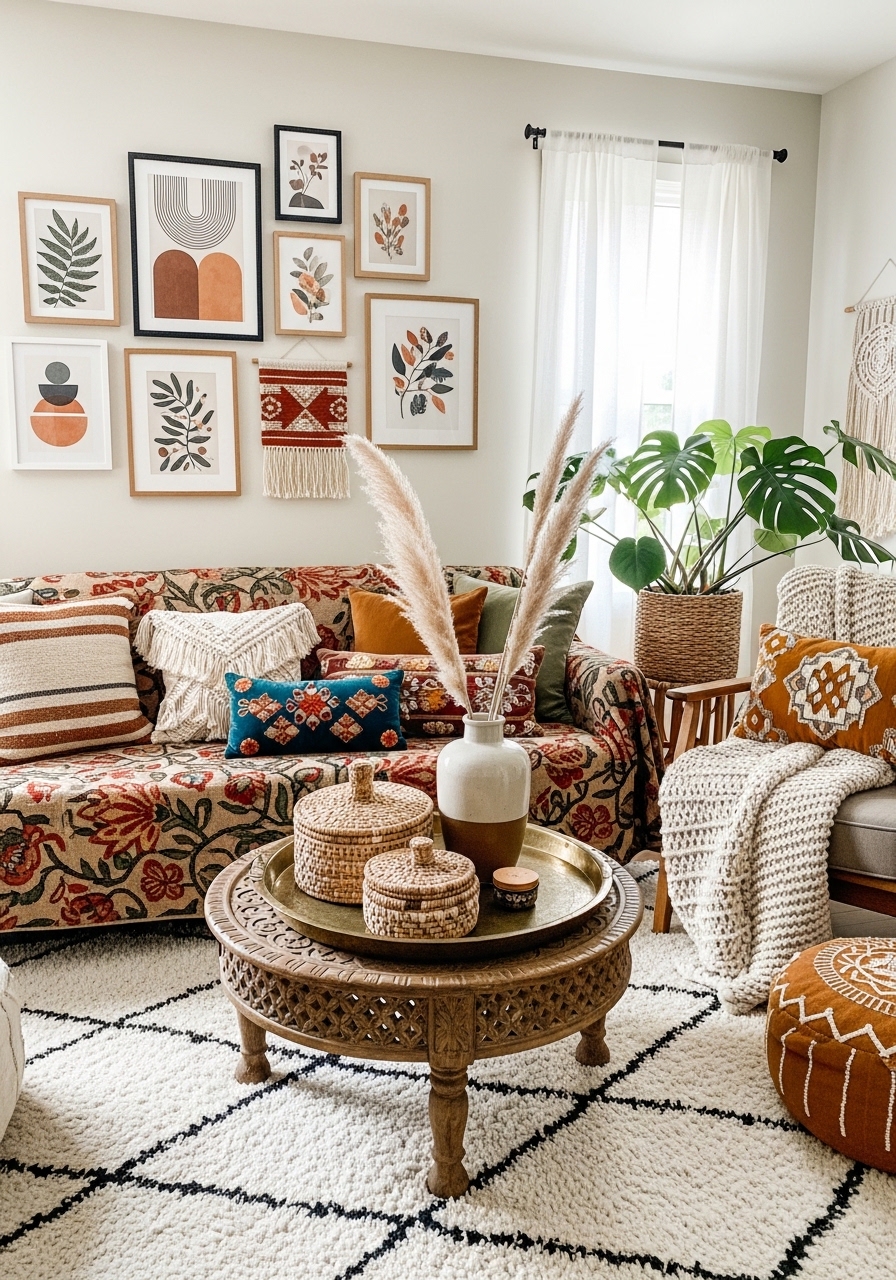
Mastering the art of mixing patterns and textures is the creative engine of boho design, transforming a static room into a high-energy, visually rich sanctuary. To avoid the trap of visual clutter, interior designers anchor diverse prints—such as bold tribal motifs, crisp geometric lines, and intricate botanical weaves—within a cohesive color palette, ensuring that even the most eclectic combinations feel intentional. The secret lies in balancing scale and surface, pairing large-scale graphic rugs with medium-scale patterned pillows and tactile fabrics like high-pile shag or smooth velvet to create a sophisticated “visual rhythm.” This fearless juxtaposition guides the eye across the room, signaling a confident, artistic personality that feels curated over time rather than mass-produced. Ultimately, a thoughtful mix of patterns and textures provides the necessary depth to make a living space feel both vibrant and expertly balanced.
11. Add Warm Lighting
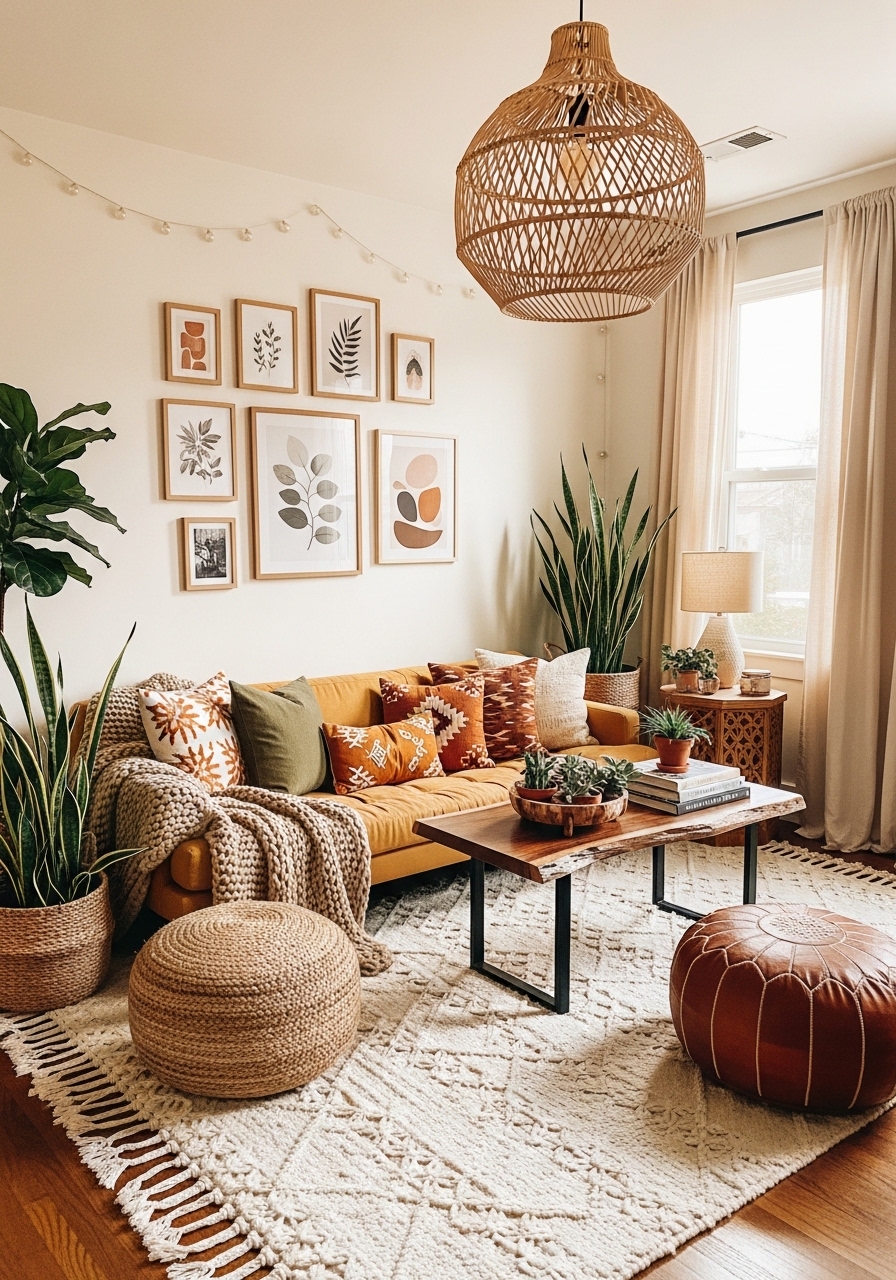
Soft, warm lighting is the invisible “golden thread” that weaves together a cozy boho living room, transforming a collection of decor into a truly restorative sanctuary. To avoid the sterile, flat feel of standard overhead fixtures, interior designers utilize layered lighting—combining the amber glow of vintage-inspired Edison bulbs, the flickering charm of Moroccan lanterns, and the focused warmth of brass table lamps—to create a dynamic sense of depth and mood. By scattering light sources at varying heights, such as a floor lamp tucked behind a fiddle leaf fig or a cluster of candles on a low wooden trunk, you eliminate harsh shadows and replace them with a soft, inviting radiance that enhances the natural textures of wood and woven textiles. This intentional approach to illumination doesn’t just brighten the room; it sets a rhythmic “sunset” energy that encourages relaxation and intimate conversation. Ultimately, mastering warm lighting is the most effective way to elevate your space’s comfort level, ensuring your living room feels like a glowy, high-end retreat the moment the sun goes down.
12. Use Decorative Poufs
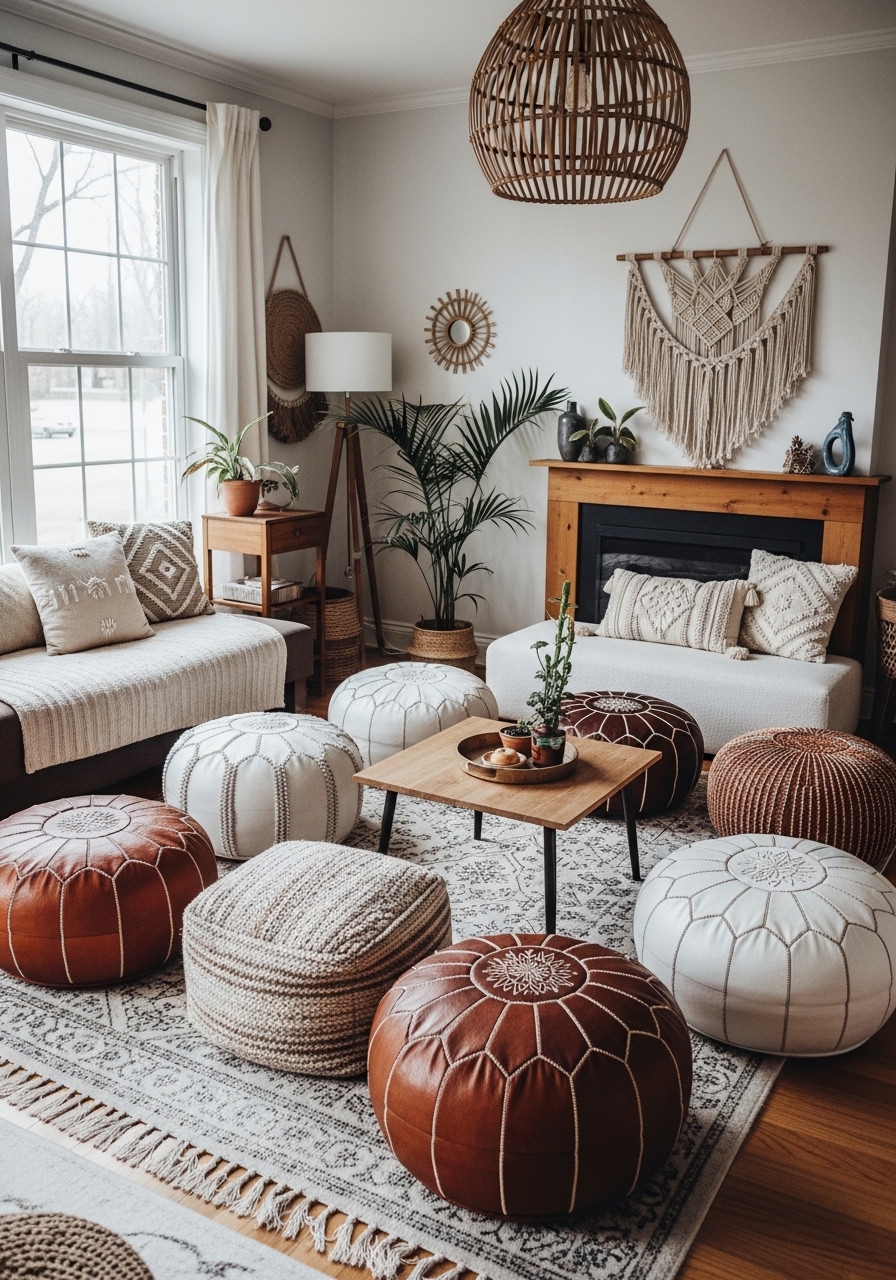
Decorative poufs are the versatile “workhorses” of bohemian design, seamlessly blending utilitarian seating with a high-texture, global aesthetic. Interior designers frequently deploy leather Moroccan poufs or chunky woven jute versions to introduce a grounded, artisanal element that softens the more structured lines of a sofa or armchair. These compact pieces serve a triple purpose: they provide an immediate, casual seating option for guests, act as a comfortable footrest for relaxation, and—when topped with a small tray—can even function as a makeshift side table. By scattering poufs of varying heights and materials throughout the room, you create a layered, “low-slung” visual rhythm that feels effortlessly lived-in and inviting. Whether you choose a richly patinated tan leather to add warmth or a neutral cream macramé for tactile depth, poufs are the perfect tool for filling awkward floor gaps while reinforcing your room’s curated, nomadic spirit. Ultimately, integrating decorative poufs is a masterclass in functional style, ensuring your living space remains flexible, comfortable, and undeniably chic.
13. Add Wall Gallery Art
A gallery wall is the definitive “visual biography” of a boho living room, transforming a blank expanse into a vibrant narrative of personality and history. To achieve that authentic, high-end bohemian look, interior designers move away from rigid, symmetrical grids in favor of a “collected over time” approach—artfully mixing sleek modern frames with ornate vintage finds, raw wooden borders, and even frameless hanging canvases. By blending professional art prints with intimate travel photography and tactile handmade pieces like small macramé charms or pressed botanicals, you create a multi-dimensional display that feels deeply personal rather than mass-produced. The secret to a balanced gallery is to maintain a loose “anchor” color or theme while letting the diverse shapes and sizes provide a rhythmic, organic flow across the wall. This intentional layering of art not only serves as a stunning focal point above a sofa or console but also bridges the gap between your sleek furniture and rustic decor. Ultimately, a well-curated wall gallery is the most effective way to infuse your home with soul, turning your living space into a sophisticated reflection of your unique journey and creative spirit.
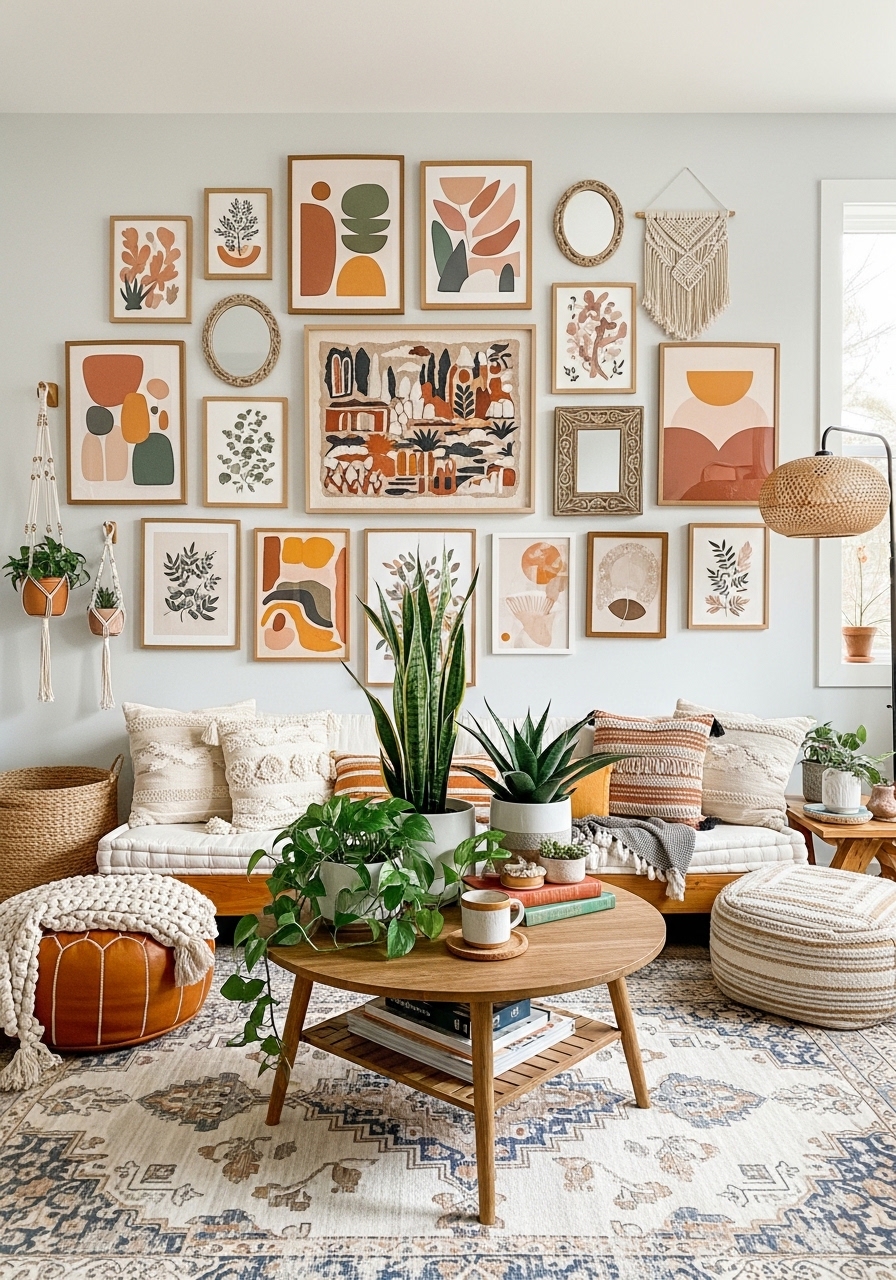
14. Use Natural Fiber Rugs
Natural fiber rugs, such as jute and sisal, serve as the indispensable “organic foundation” of a bohemian living room, providing a durable and tactile base that anchors the entire design. Interior designers favor these materials for their raw, honey-toned palettes and chunky weaves, which introduce a coarse, earthy texture that beautifully offsets the softness of layered velvet pillows and linen throws. By placing a large, wall-to-wall jute rug underfoot, you create a neutral canvas that highlights the intricate grains of natural wood furniture and the delicate craftsmanship of woven decor. These rugs are particularly prized for their “perfectly imperfect” aesthetic, featuring subtle variations in tone and fiber that reinforce a relaxed, unpretentious atmosphere. Beyond their visual appeal, natural fibers are incredibly resilient, making them a practical choice for high-traffic areas while maintaining a high-end, grounded feel. Ultimately, incorporating a jute or sisal rug is the most effective way to harmonize your room’s botanical elements and textile layers, ensuring the space feels connected to the natural world from the ground up.

15. Include Cozy Throw Blankets
Cozy throw blankets are the essential “soft architecture” of a bohemian living room, instantly transforming a structured furniture piece into a warm, tactile retreat. Interior designers strategically drape these blankets—whether chunky hand-knit wool, fringed cotton, or intricate kantha embroidery—over the arms of sofas or the backs of accent chairs to create a “perfectly undone” aesthetic that signals comfort and relaxation. By layering a heavy, textured throw against a smooth leather chair or a linen sofa, you introduce a sensory contrast that adds immediate depth and visual weight to your seating arrangement. These textiles are more than mere decoration; they serve as a functional layer that invites guests to linger, reinforcing the core boho philosophy of an unhurried, lived-in home. Choosing blankets in earthy ochres, deep forest greens, or soft neutrals allows you to subtly pull together the room’s color story while grounding the lighter elements like plants and woven wall art. Ultimately, integrating high-quality throw blankets is the most effective way to “soften” the edges of your living space, ensuring it feels both effortlessly stylish and deeply restorative.
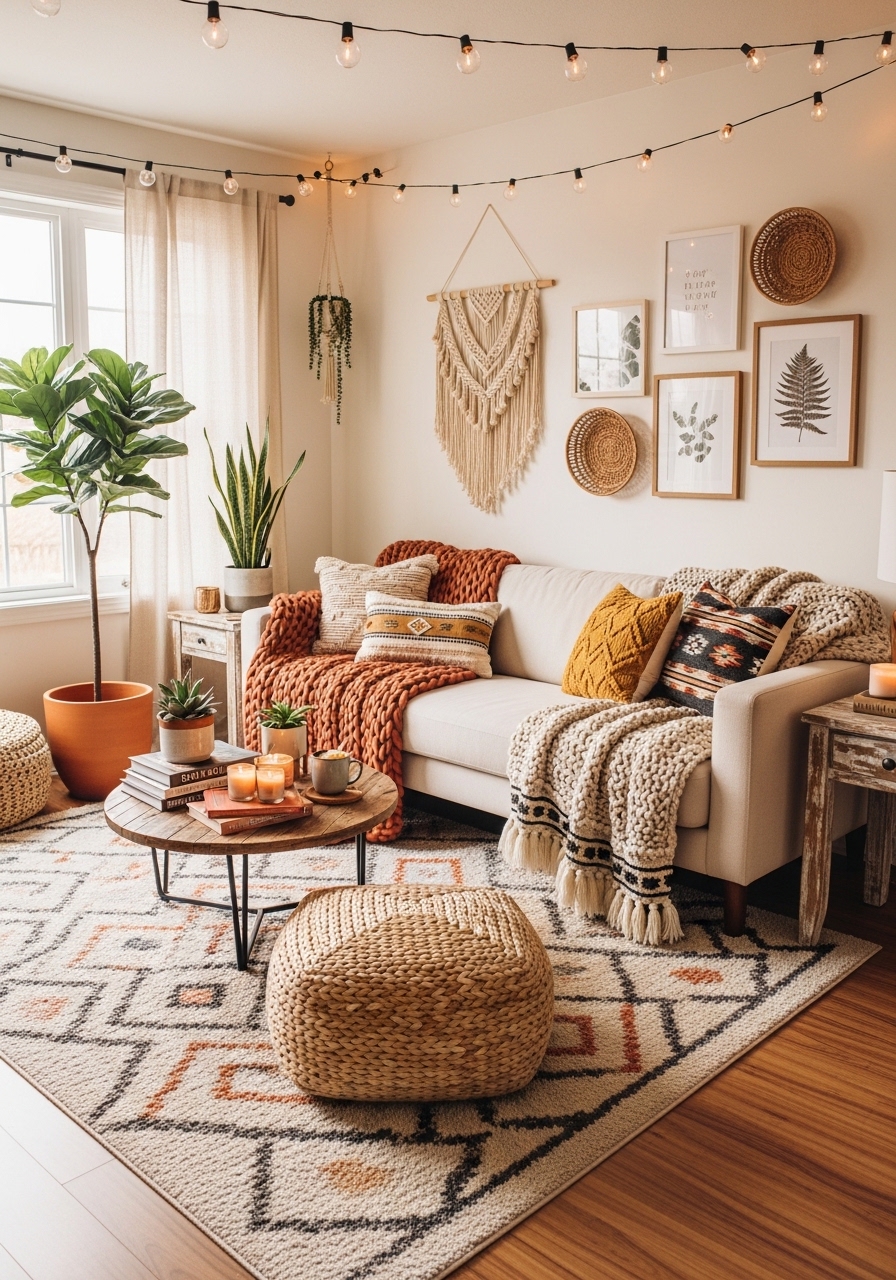
16. Decorate with Handmade Pieces
Handcrafted decor serves as the “artistic heartbeat” of a bohemian living room, injecting a sense of authenticity and human touch that mass-produced items simply cannot replicate. By integrating one-of-a-kind pottery, intricately woven baskets, and hand-painted or sculpted art pieces, interior designers create a space that feels personal and deeply storied. These elements introduce a variety of raw textures—from the gritty, organic feel of unglazed ceramic to the tactile complexity of hand-knotted fibers—that add layers of visual interest and character. Placing a hand-thrown vase on a reclaimed wood mantle or hanging a bespoke piece of wall art creates a focal point that sparks conversation and reflects a commitment to traditional craftsmanship. This “perfectly imperfect” aesthetic is central to the boho philosophy, as it values the unique marks of the maker over factory-made precision. Ultimately, incorporating handmade pieces is the most effective way to curate a home that feels like a true sanctuary of self-expression, ensuring your living space is as unique as the stories behind the objects within it.
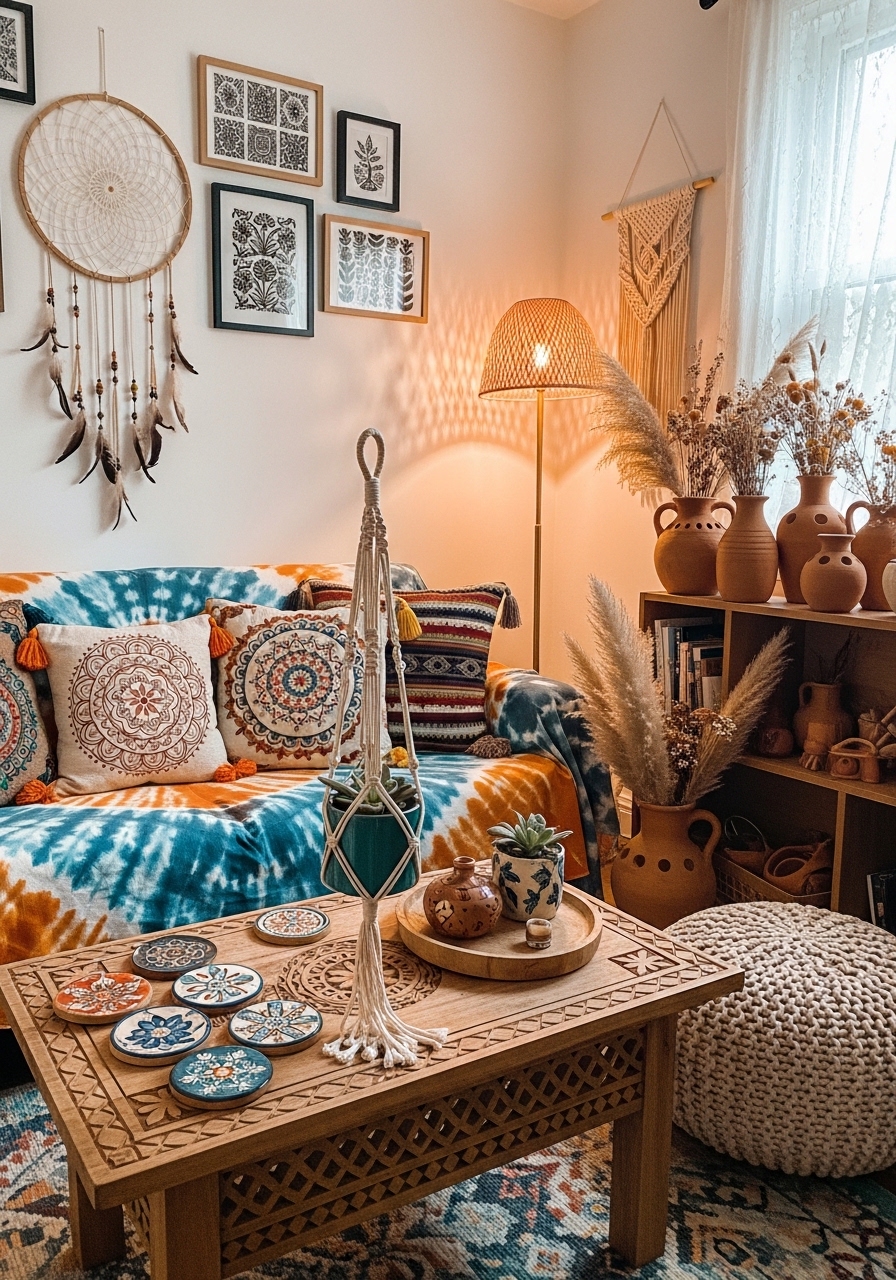
17. Use Open Shelving
Open shelving serves as the “living canvas” of a bohemian interior, offering a curated platform to showcase the plants, books, and artisanal treasures that define a home’s personality. Unlike traditional cabinetry that hides items away, open shelves encourage a relaxed, breathing arrangement where functional kitchenware or a personal library can mingle with cascading greenery and vintage finds. Interior designers master this look by employing a “high-low” styling technique—mixing practical everyday objects like ceramic mugs or stacked journals with purely decorative elements like brass figurines or small woven baskets. This layering of varied heights and textures creates a rhythmic visual interest that prevents the shelves from feeling cluttered or static. By incorporating trailing plants like Pothos or String of Pearls, you soften the hard lines of the shelving, adding a vibrant, organic energy that bridges the gap between the furniture and the decor. Ultimately, open shelving is the most effective way to maintain an airy, expansive feel in a room while ensuring every shelf tells a unique, “collected-over-time” story that is quintessentially boho.
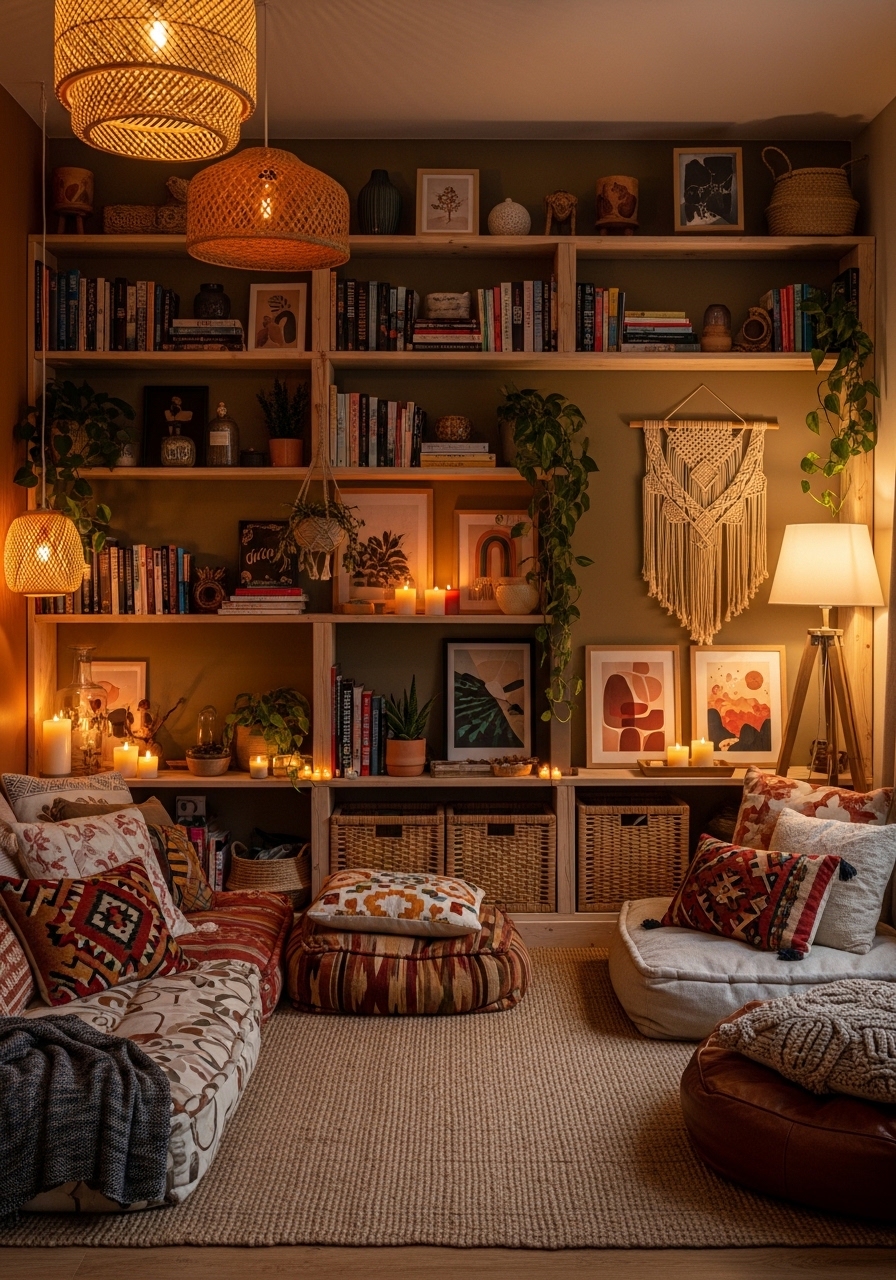
18. Add Rattan Chairs
Rattan chairs serve as the “sculptural breath” of a bohemian living room, offering a unique combination of intricate texture and visual lightness that traditional upholstery often lacks. Interior designers favor these pieces—ranging from iconic peacock chairs to sleek, mid-century-inspired bistro seats—because their airy, open-weave construction allows light to pass through, making even a small living space feel expansive and unburdened. By introducing the warm, honeyed tones of natural rattan, you create a sophisticated contrast against plush textiles like velvet or sheepskin, grounding the room in an organic, coastal-inspired aesthetic. These chairs are more than just seating; they are functional art pieces that bridge the gap between indoor comfort and outdoor serenity, reinforcing the “nature-in” philosophy central to boho living. Whether tucked into a cozy reading nook or paired with a modern sofa, a rattan chair adds a rhythmic, artisanal quality that feels both timeless and effortlessly relaxed. Ultimately, incorporating rattan is the most effective way to infuse your space with a sense of breezy, high-end wanderlust that remains structurally light yet visually captivating.

19. Display Travel Souvenirs
Travel souvenirs act as the “narrative soul” of a bohemian living room, transforming a decorated space into a vivid map of personal history and global exploration. Rather than hiding these treasures in boxes, interior designers treat them as high-impact accents—like a hand-carved mask from a local market, a vibrant textile from a high-altitude village, or a collection of smooth beach stones—to infuse the room with a sense of worldly wonder. By integrating objects from diverse cultures and terrains, you create a sophisticated “curiosity cabinet” effect that naturally defies the predictability of retail trends. The secret to styling these pieces without overwhelming the room is to group them by texture or color story, allowing a Turkish brass plate to harmonize with a rustic wooden shelf or a framed vintage postcard. This intentional display of “found objects” creates an authentic, lived-in atmosphere that sparks conversation and anchors the room in a deep sense of place. Ultimately, showcasing travel souvenirs is the most powerful way to ensure your home reflects your unique journey, proving that the most beautiful interiors are those that tell a story of a life well-traveled.
20. Keep the Space Relaxed and Personal
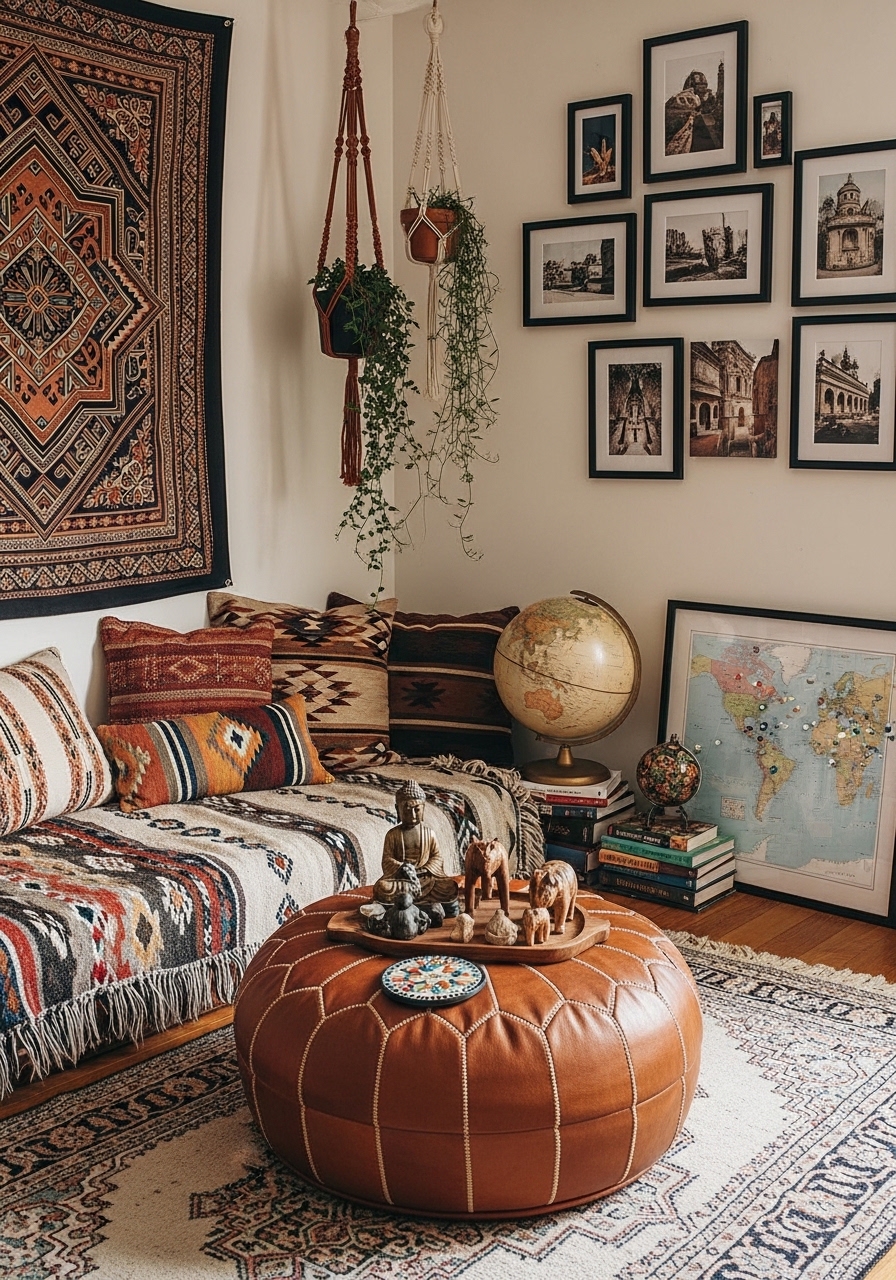
The “relaxed and personal” philosophy is the heartbeat of bohemian design, liberating you from the rigid rules of traditional interiors to create a space that breathes with your own life story. Interior designers prioritize comfort and emotional resonance over fleeting trends, encouraging a “living room” in the truest sense—a sanctuary that evolves organically as you collect new treasures, books, and memories. By intentionally combining the heirlooms you love with contemporary accents and natural elements, you cultivate a sophisticated “perfectly imperfect” aesthetic that feels authentically lived-in rather than staged. This approach values the “patina of life”—the frayed edge of a favorite throw or the soft wear on a leather pouf—as a mark of a home well-loved. Ultimately, a successful boho interior isn’t defined by a specific catalog look, but by the palpable sense of ease and soul that invites anyone who enters to kick off their shoes and stay awhile.

Conclusion
A cozy boho living room blends natural materials, layered textures, and personal decor to create a space that feels warm and welcoming. By mixing plants, textiles, vintage pieces, and earthy colors, you can design a living room that reflects your personality while maintaining the relaxed bohemian aesthetic. The key is balance—combining different textures and patterns while keeping the atmosphere comfortable and inviting. With these boho living room ideas, you can transform your space into a cozy retreat that feels stylish, creative, and perfectly suited for everyday living.