
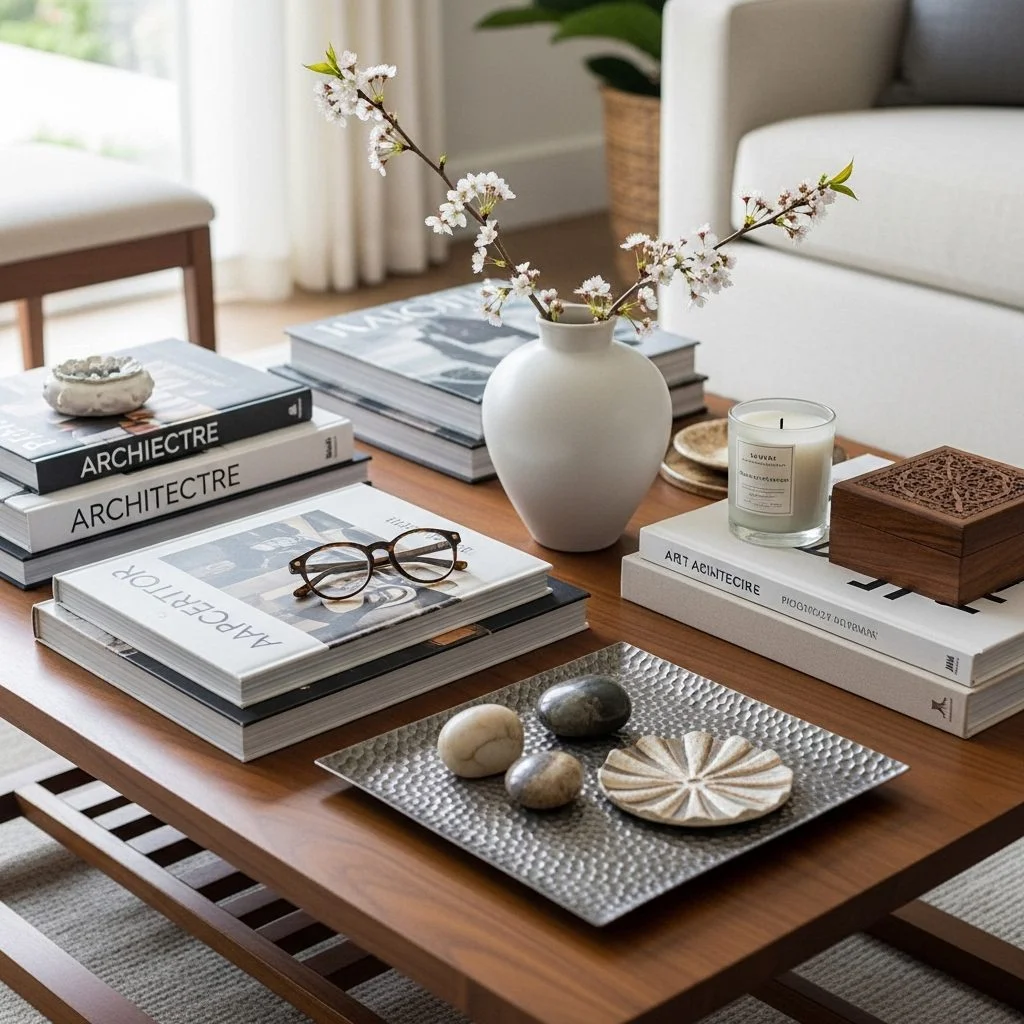
Grab a tape measure and run it from the floor to the top of your sofa cushion. Most seats land between 17 and 19 inches. Now measure your coffee table. If it sits under 16 inches, or it is the glass-and-brass piece you bought for your first apartment, the standard styling advice you have read probably does not fit it. A vase that looks right on an 18-inch wood drum looks like a lamp on a 13-inch low table. A stack of books that anchors a rigid table wobbles on an ottoman the moment the cat jumps up. The ideas below start with the table, not the objects. Find the one that matches yours, borrow the setup, and adjust the numbers to your room.

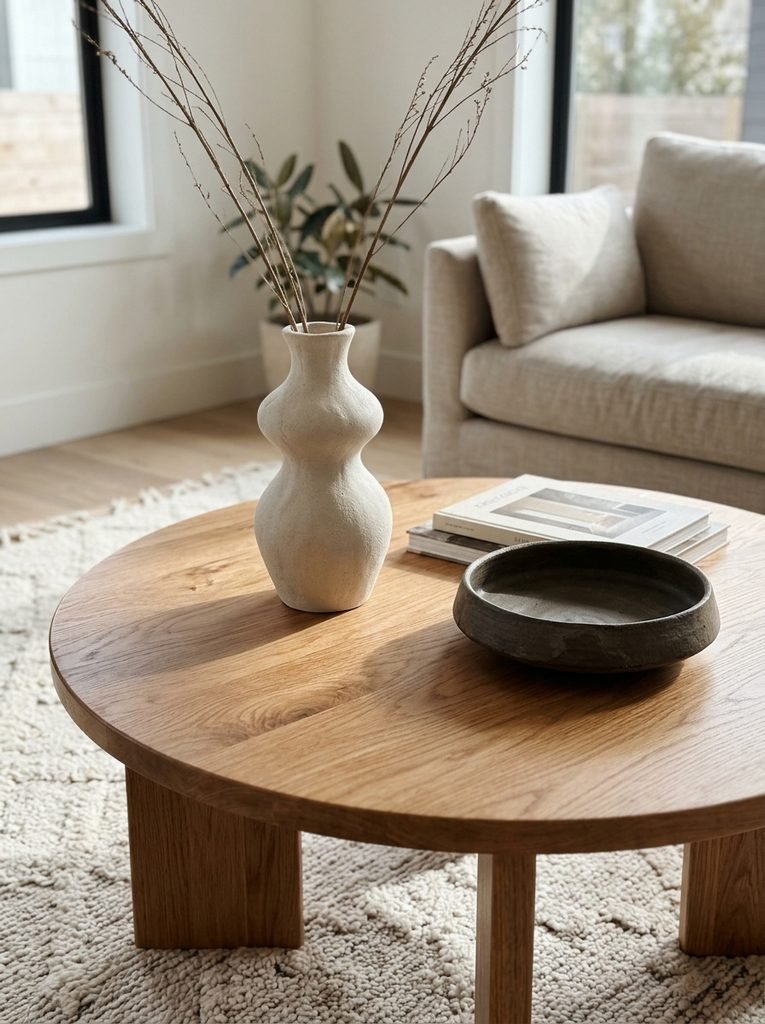
Round Wood Table: Offset One Tall Piece and Leave the Edge Bare
A round table has no front, so an object in the exact center looks like a bullseye. Slide your tallest piece, such as a 10 to 12 inch ceramic vase, about a third of the way off center. Set one low object on the opposite side, at least 6 inches from the rim. The bare wood left over is part of the design. On a 36 to 42 inch round, you should still see a ring of open surface roughly a hand’s width wide almost all the way around.
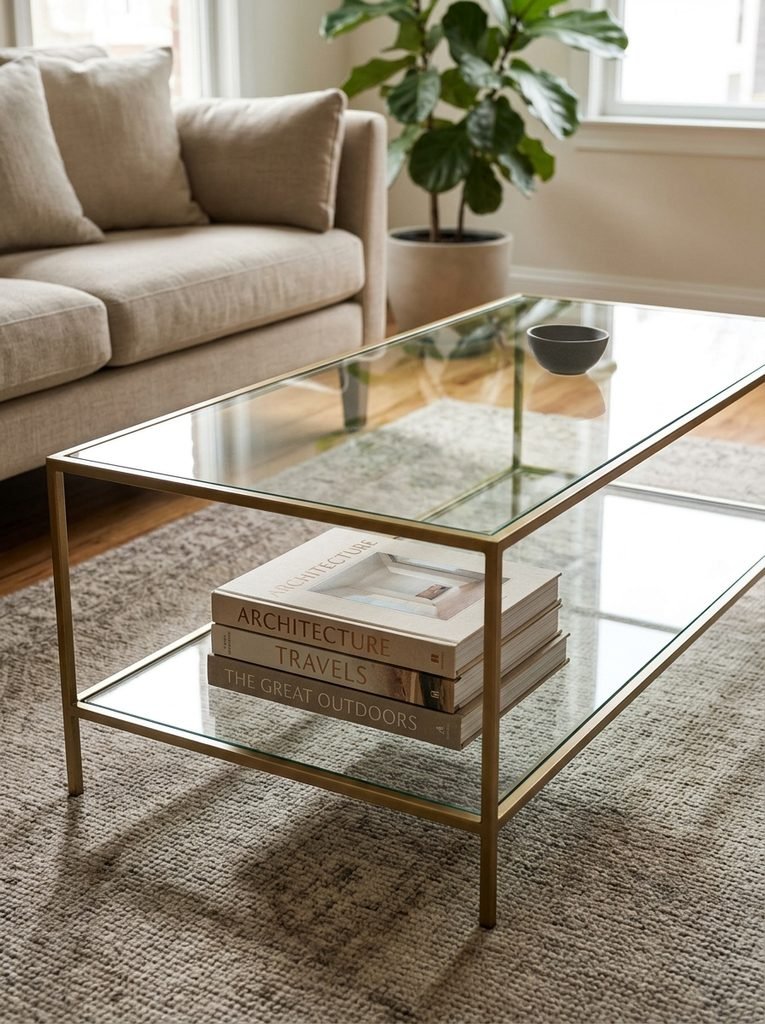
Glass-Top Table: Style the Shelf Below Before the Top
Everything on a glass table gets seen twice, once from above and once straight through the glass. So start underneath. Limit the lower shelf to one woven basket holding a throw, or a short stack of books with the spines turned out in a single color family. A shelf of loose magazines reads as clutter through clear glass in a way it never would on wood. Keep the top sparse: one tray, one low object. Put self-adhesive felt dots under every base, because glass shows every scratch forever.
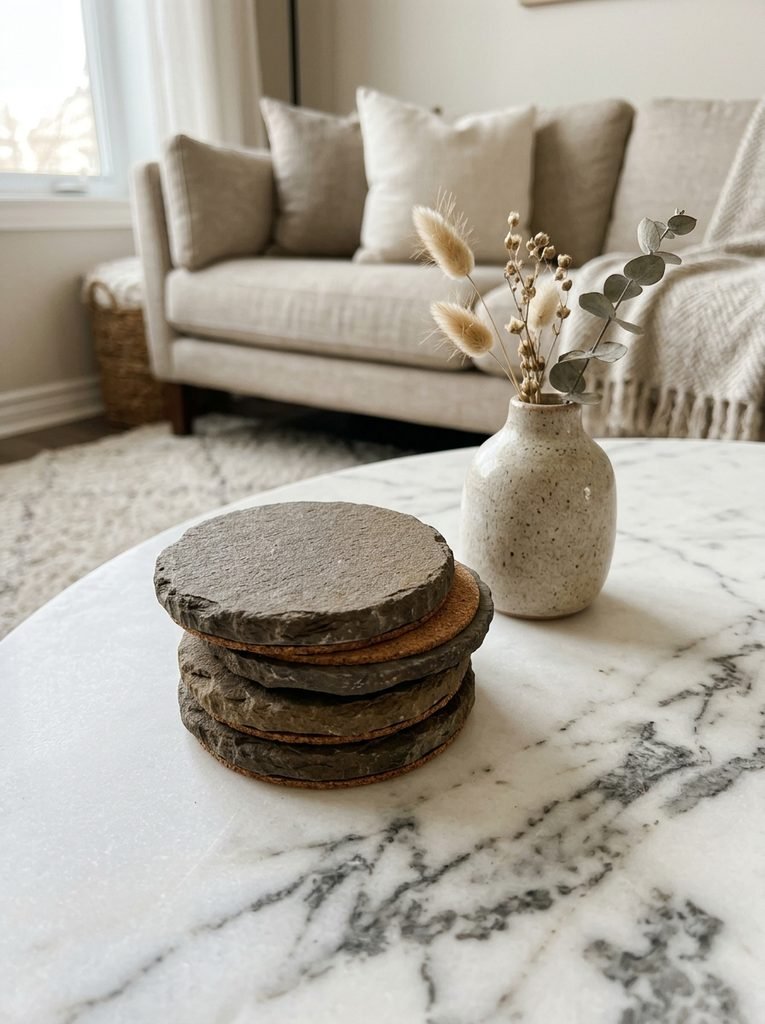
Marble Top: Choose Objects With Felt or Cork Bases
Marble looks expensive and punishes casual use. Lemon, wine, and many cleaners leave dull etch marks, and sealer slows staining but does not stop etching. The fix is to make sure raw bases and wet glasses never touch the stone. Use cork-backed coasters, a felt-lined tray, and vases with a felt pad stuck to the foot. A pack of felt pads costs a few dollars. Treat the tray as the one landing zone, and keep every drink on it.
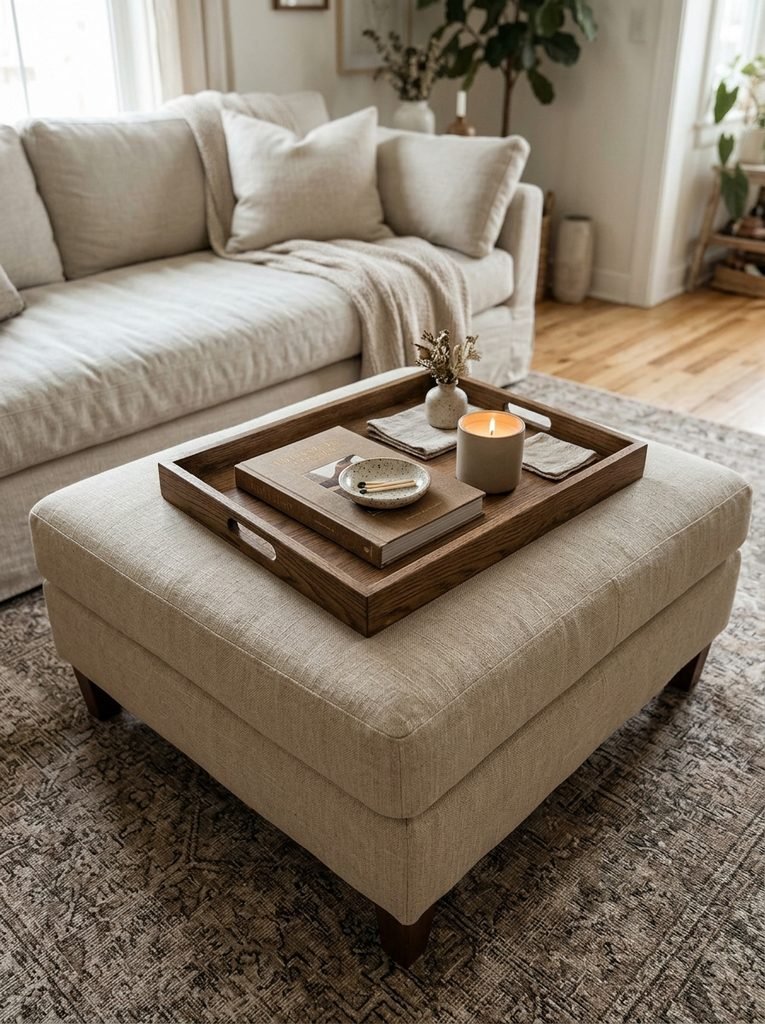
Ottoman Table: Build Everything on One Rigid Tray
Set a glass on a tufted ottoman and watch it lean. Soft surfaces need a hard base, so pick a tray with a flat bottom, roughly 18 by 14 inches, with a rim of 1 to 2 inches. Wood, lacquered, and metal versions often run between $35 and $90. Style only the tray: a candle, a small dish, one book. Nothing else touches the cushion. When someone wants to put their feet up, lift the tray with both hands and park it on a side table. If the underside is slick, add rubber dots so it does not slide on velvet.
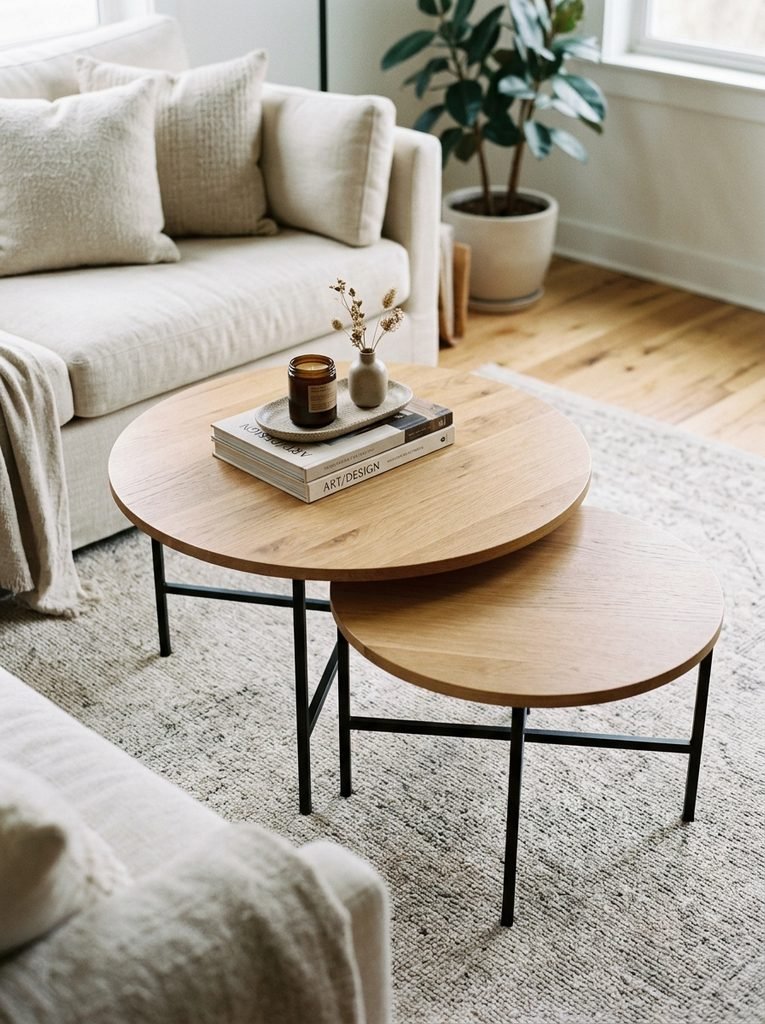
Nesting Tables: Style Only the Larger Table
Most people dress both tops of a nesting set, and it ends up looking like a shelf. Treat the larger table as the stage and give it one grouping of two or three pieces. Leave the smaller table bare so it can hold a phone or a mug. That empty top is useful, and it keeps the pair reading as furniture. Pull the small one out about 8 to 10 inches so the stepped heights show, and skip anything taller than the gap between the two surfaces.
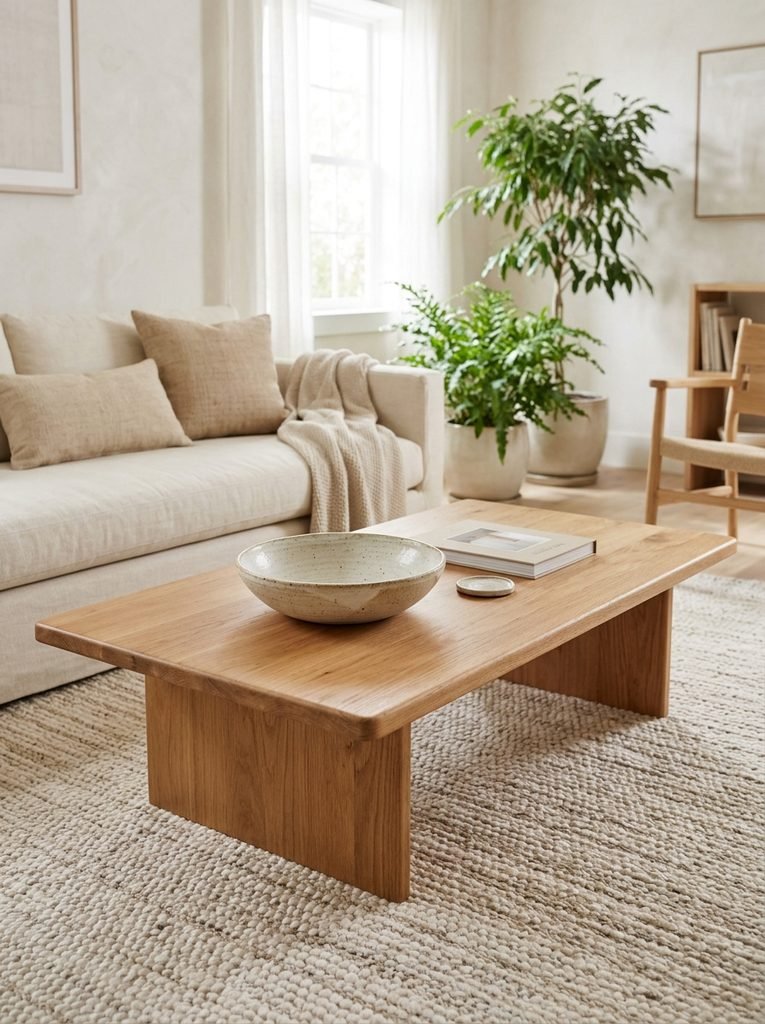
Low Japandi Table: Keep Every Object Under Ten Inches
Tables around 12 to 14 inches high are seen from a floor cushion or a low sofa, where a 12-inch vase hides the person across from you. Cap every object at about 10 inches. Favor wide, horizontal shapes: a shallow ceramic bowl, a flat stone, a tray with a teapot and two cups. Leave at least two-thirds of the surface empty. On a table this low, the clean silhouette does most of the decorating, and one extra object breaks it.
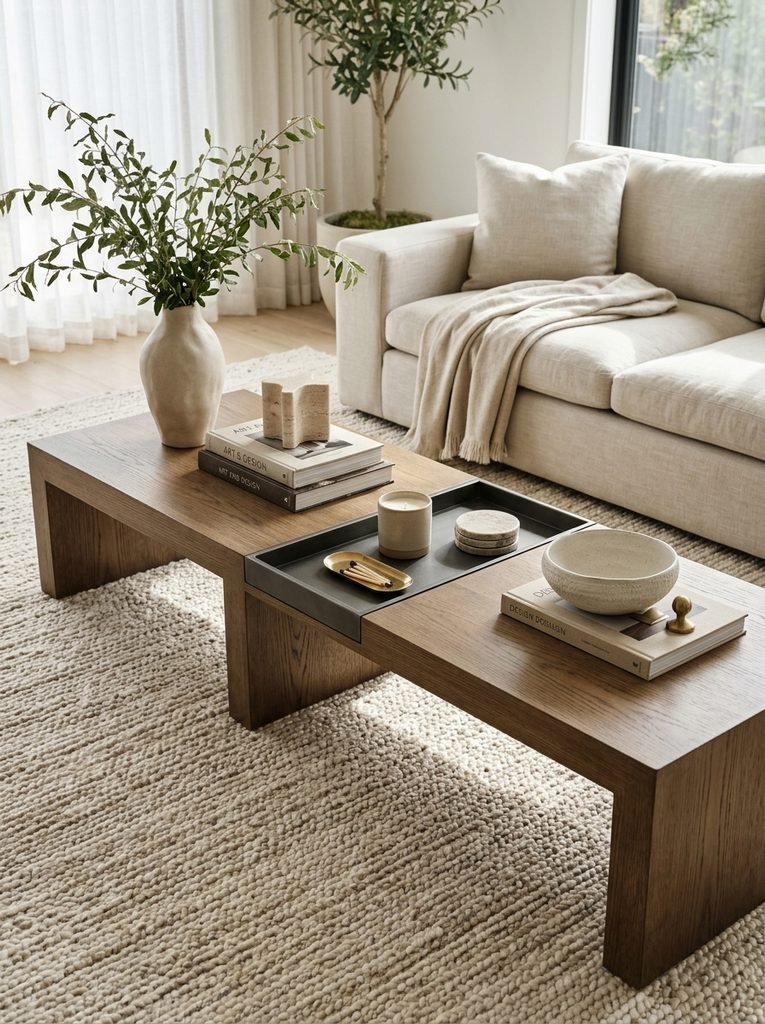
Oversized Rectangle: Two Zones and a Bridge
On a 54-inch or longer table, one grouping in the middle looks lost. Split the styling into two zones, each about a quarter of the way in from the ends, with 12 to 18 inches of clear space between them. Then link them with a bridge: a shallow tray or wooden bar around 20 inches long laid across the gap. Make one zone taller, with a vase and a book, and the other lower, with a bowl. The eye then reads a slope instead of two bookends. A table this big also needs seating pulled in close, which is where our guide on placing an accent chair so the seating reads as one group helps.
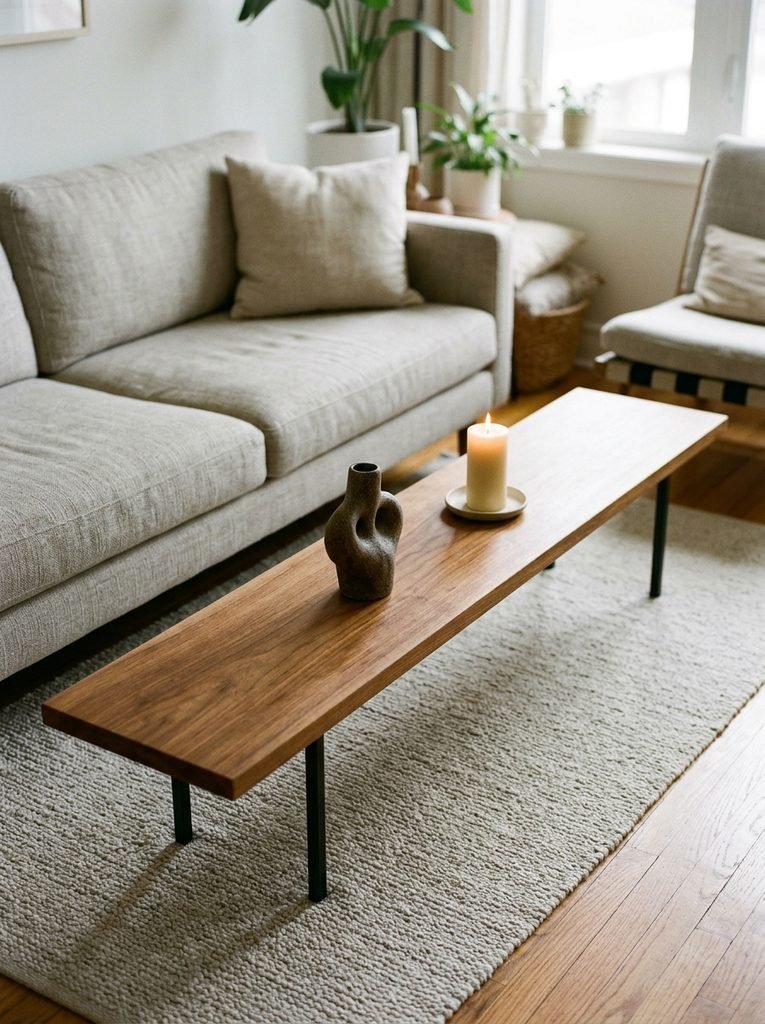
Narrow Table: Style in a Single Line
A table only 16 to 20 inches deep cannot hold a cluster. Style in a row instead, running left to right along the length. Keep each object under 8 inches wide and hold back 4 inches from the long edges, so a mug still has somewhere to land. Skip the standard tray, since a 14-inch-deep one leaves no room for cups. A slim runner tray about 24 by 8 inches fits, as does a long sculptural piece with a small candle at one end.
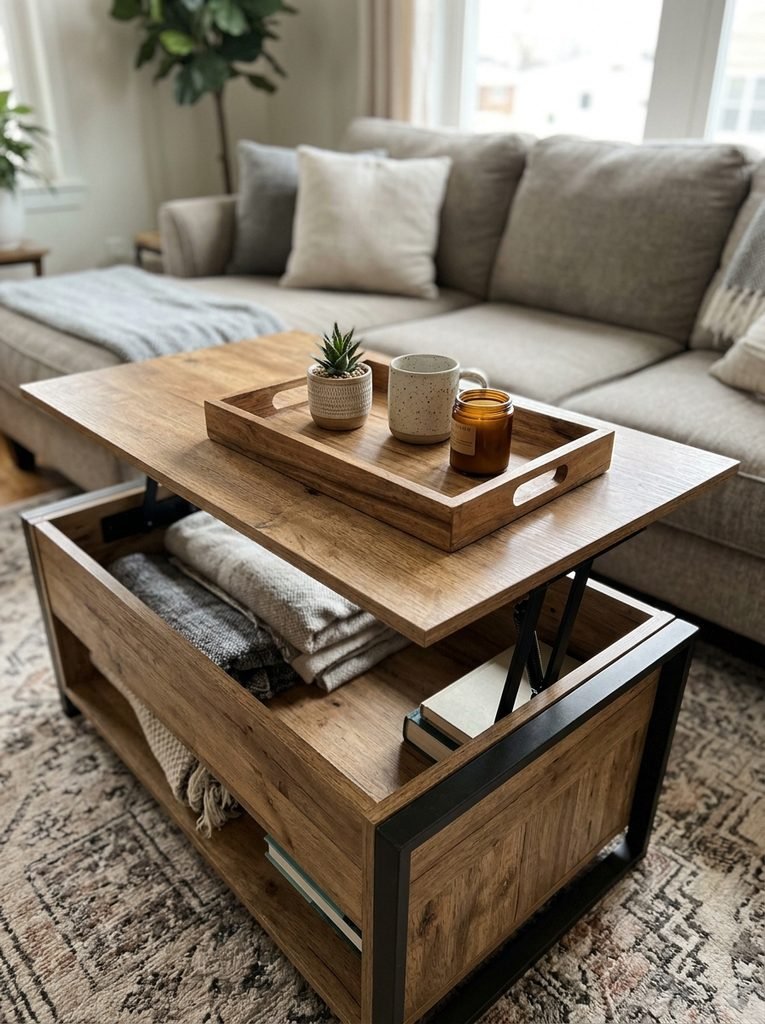
Lift-Top Table: Style for the Moment It Rises
A lift-top rises and tilts toward you, which sends loose objects sliding into your lap. Treat the top as one movable unit. Put three pieces on a single 12 by 12 inch tray: a lidded candle, a coaster, a small book. Lift the whole tray off with both hands before you raise the top, and set it on the sofa arm. Anything breakable or tippy, like a bud vase, belongs somewhere else. Three light pieces on one tray take about ten seconds to move.
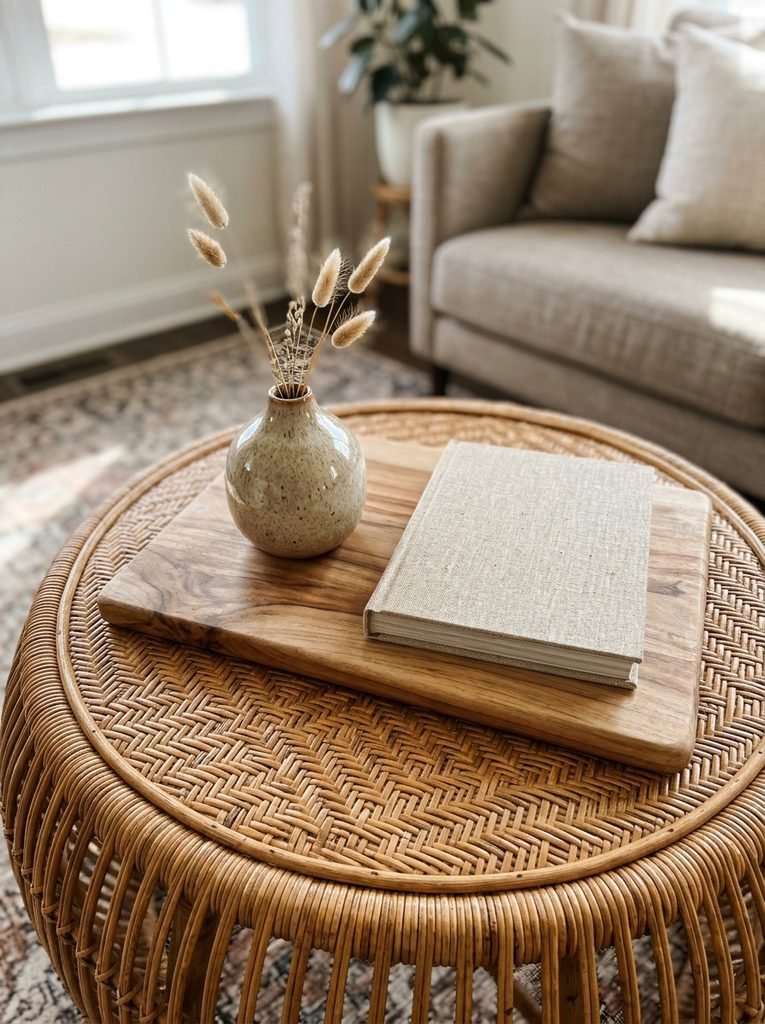
Rattan and Woven Tables: Give the Weave a Flat Landing Pad
Open weave looks relaxed and behaves badly. Vases rock on the gaps, and small items drop through. Put a flat slab under everything: a wooden board, a stone tray, or a round of glass at least 10 inches across. Then style that slab as if it were its own small table. Pick smooth, glazed ceramics to sit against the weave. Adding a second woven piece, such as a seagrass basket, turns the whole thing into one noisy texture.
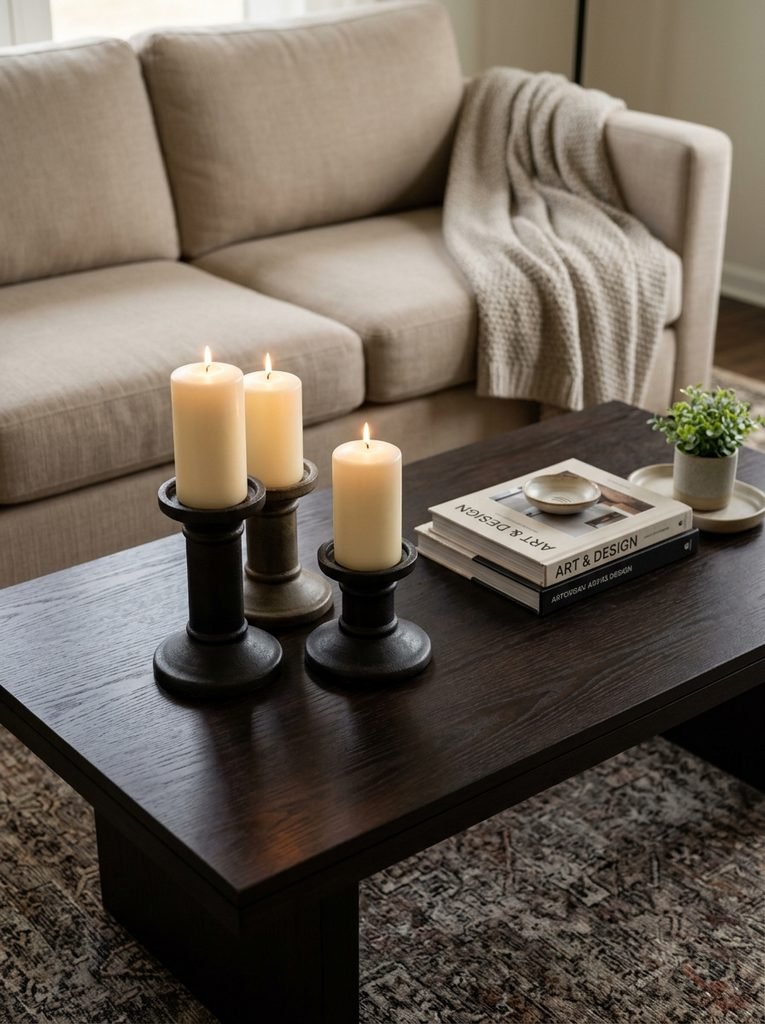
Black or Espresso Table: Go Pale and Keep Flames Clear
Dark tables show dust within a day, and dark objects disappear on them. Use cream ceramic, travertine, or white pillar candles so the pieces stand out. If you burn candles, the National Fire Protection Association advises keeping them at least 12 inches from anything that can burn, and its candle safety page also stresses sturdy holders. A standard ruler is 12 inches. Check where the sofa throw and the magazines sit before you light anything. Flameless candles in a pale finish solve the problem entirely.
Scratched or Water-Marked Table: Style the Damage Away
Before you buy anything new, sit where you normally sit and look at the table. Where are the scratches? Put the main grouping directly over them, ideally on a felt-lined tray in the $25 range. On a round or square table, also rotate it a quarter or half turn so the worst wear faces the wall side. Add one handmade or travel piece, since an object with a story draws the eye away from the flaws. If the table fills up again within a week, our guide to the coffee table styling mistake that makes living rooms look cluttered goes deeper on keeping it clear.
Low-Light Rooms: Match the Plant to the Window
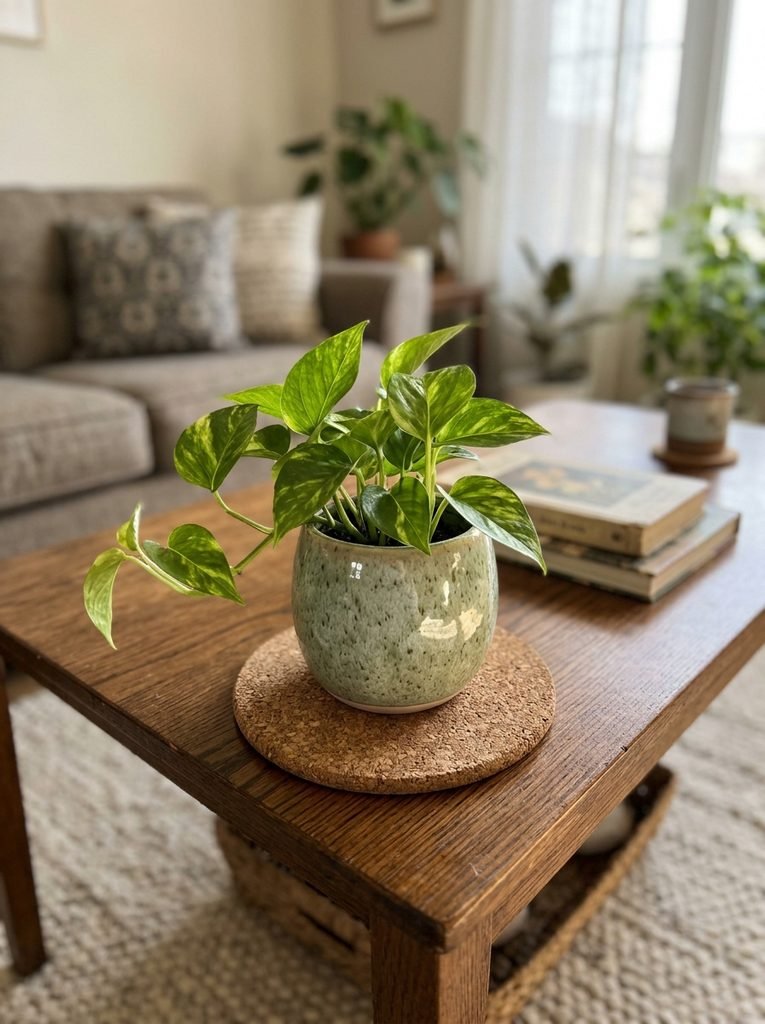
Check the light first. Many coffee tables sit several feet from the nearest window. A pothos or a snake plant copes with that. A succulent stretches, flops, and tips over within weeks unless it gets a few hours of bright light. Choose a pot with a saucer, and stand it on a cork or silicone mat so water rings never reach the wood. Carry it to the sink to water instead of pouring in place. If the corner is truly dark, use a good faux plant or a dried branch in a heavy vase.
Homes With Cats: Choose Flowers That Are Safe
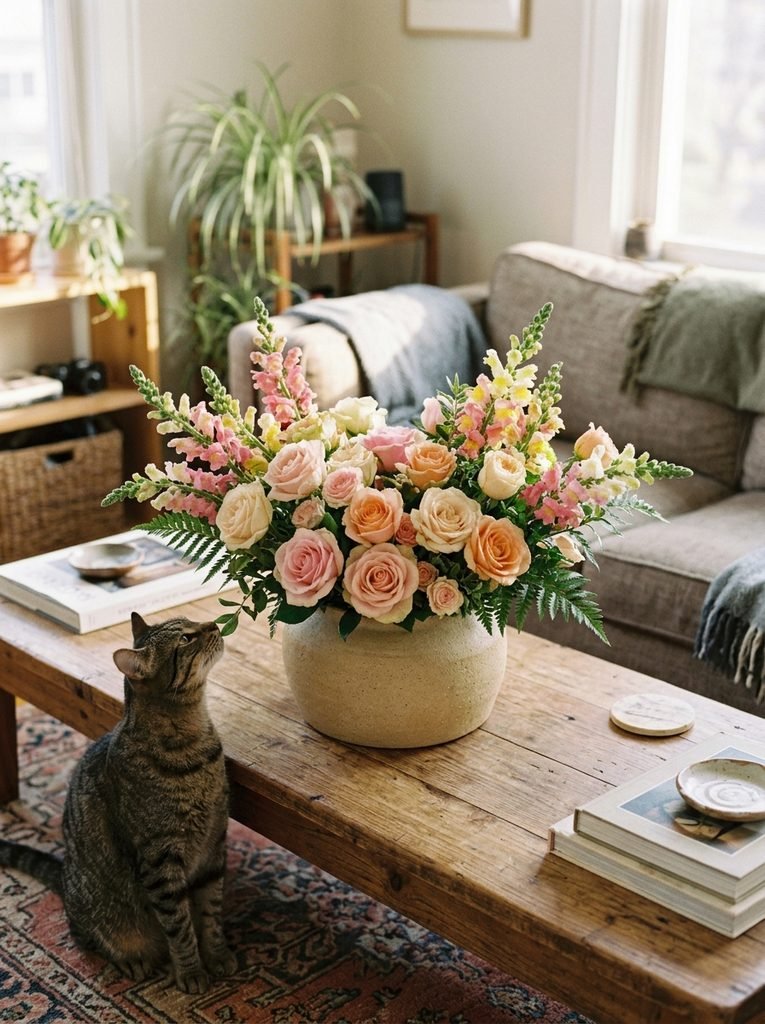
Lilies are the one flower to skip around a cat. Pollen and even vase water can cause serious kidney damage. Eucalyptus, which appears in many store bouquets, is also toxic to cats and dogs. Safer choices include roses, sunflowers, and snapdragons, and the ASPCA keeps a searchable plant list worth checking before you buy. Pull any lilies out of a grocery bouquet that usually costs $8 to $15. Use a heavy vase with a base wider than its mouth so a curious paw cannot tip it.
Seasonal Swaps: A Four-Piece Kit You Store in a Shoebox
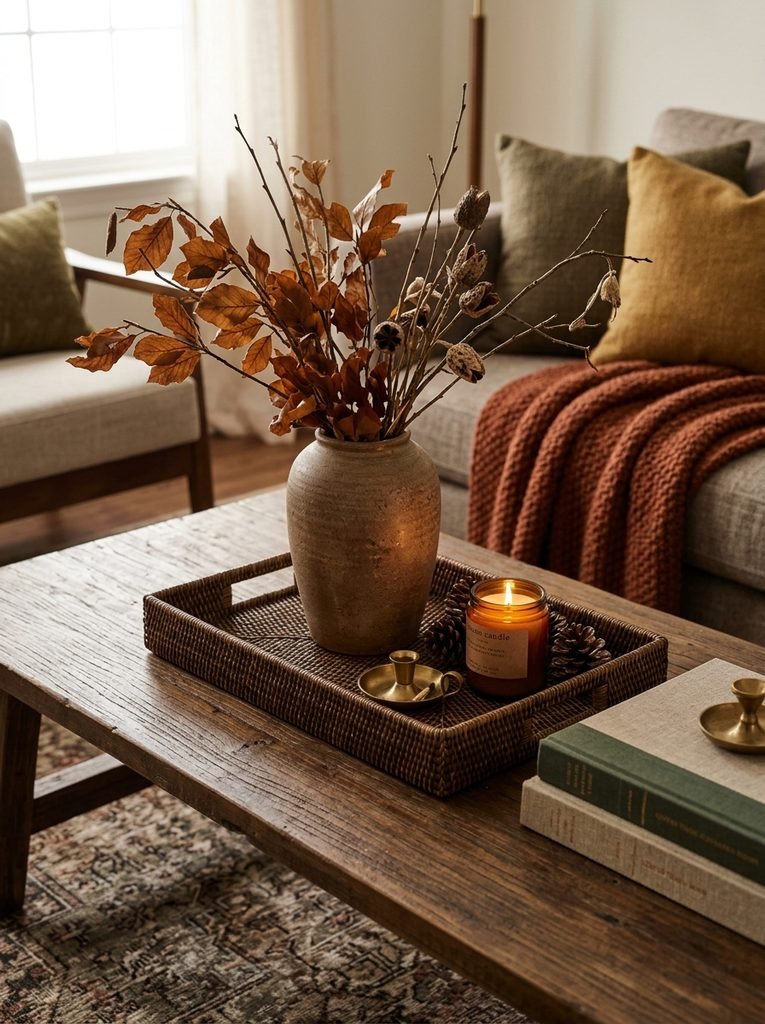
Skip redecorating four times a year. Keep a permanent base on the table: one tray, one vessel, one large book. Then rotate two items per season from a shoebox. Spring can be tulips in the vessel and a pale linen coaster set. Summer works with a shallow dish of shells. Fall brings a dried branch and a rust-colored candle. Winter calls for a brass holder with a taper. Budget roughly $40 to $80 per season, and expect each swap to take under five minutes.
Tables That Double as Desks: Reserve a Clear Zone
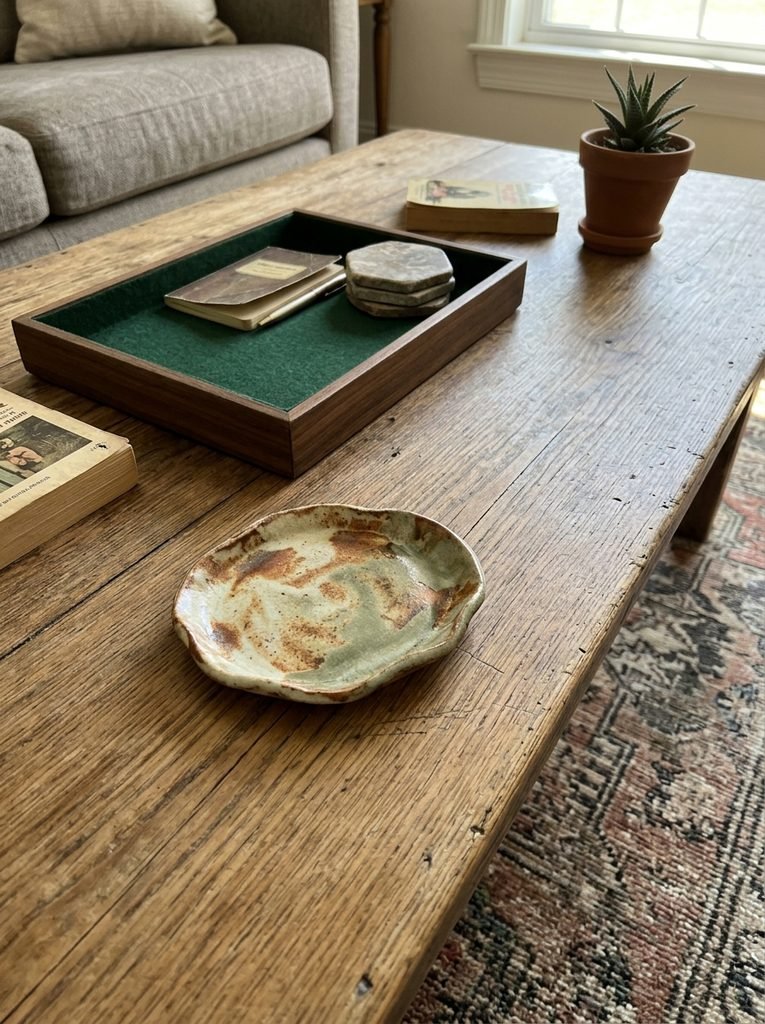
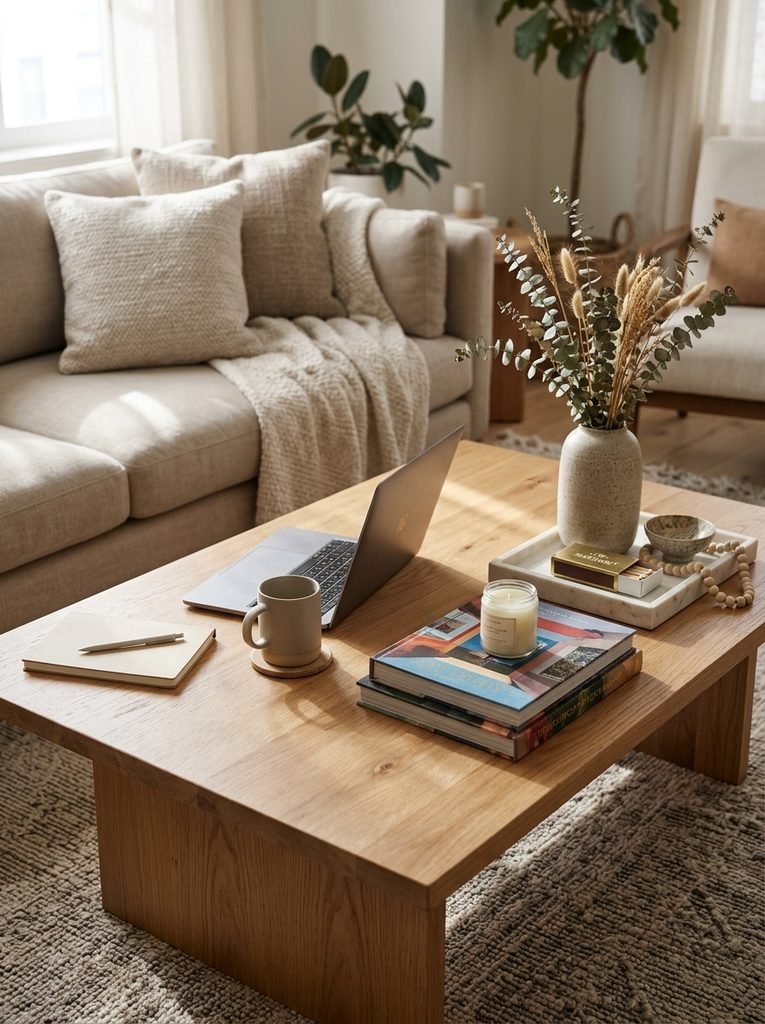
If you answer email from the sofa, plan a clear rectangle before placing a single object. Allow about 20 inches wide by 14 inches deep, enough for a 14-inch laptop and a mug. Park the styling at one end, ideally the end nearest the wall. Keep the pieces in that corner low and stable, because a bumped vase is a spilled-laptop story waiting to happen. A small cork lap tray stored under the table gives you a second work surface.
Run a Ten-Minute Fit Test Before You Shop
Trace the outline of each object you own on scrap paper and cut it out. Lay the cutouts on your table and move them around until a clear zone survives. Measure the leftover open space with a tape. Then sit on the sofa and photograph the table from your usual seat. The photo shows what the room sees, and it exposes crowding faster than standing over the table ever will. Send yourself the picture, check it again tomorrow morning, and remove the one object you keep looking past.
Frequently Asked Questions
What height should a coffee table be compared to the sofa?
Aim for a table the same height as your sofa seat or 1 to 2 inches lower. Most seat cushions sit around 17 to 19 inches high, so tables between 16 and 18 inches suit most sofas. A table taller than the seat makes you lift your elbow for every sip and crowds the room.
How far should a coffee table be from the sofa?
Leave 14 to 18 inches between the sofa edge and the table. That gap lets you stand up and walk past with a drink, yet keeps your mug within reach. In a tight room, choose a round or oval table, since it gives up the sharp corners people tend to bump.
How long should a coffee table be for my sofa?
Plan on roughly two-thirds the length of the sofa. An 84-inch sofa pairs well with a table around 48 to 56 inches long. Anything much shorter looks undersized, while a table that nearly matches the sofa blocks the ends and makes it hard to slide in or out.
What can I put on a coffee table with a toddler?
Choose pieces that survive being thrown and cost little to replace: a wooden tray, a felt-bottomed bowl, a faux plant in a plastic-lined pot. Add corner guards, usually $10 to $15 per set, to any rectangular table. Keep candles and glass vases on a high shelf until your child is older.
Should a coffee table sit completely on the rug?
Yes, when the rug is large enough. All four legs on the rug stop the table from rocking across an edge. An 8 by 10 rug usually holds the table and the sofa’s front legs. On a 5 by 8, keep the table fully on the rug and let the sofa sit just off its edge.
4 comments