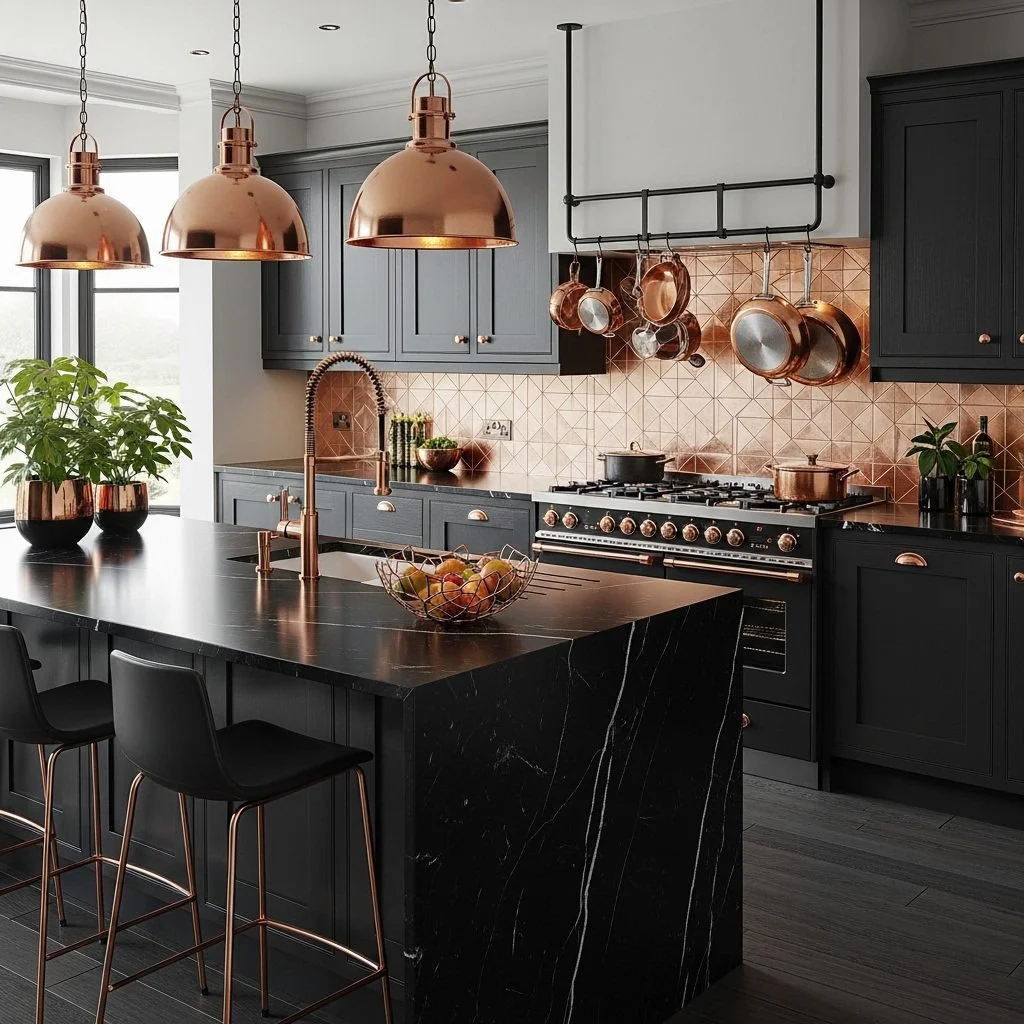
Black and copper make one of the most dramatic pairings in kitchen design. Matte black supplies depth and a calm, shadowy backdrop. Copper answers with a warm metallic glow that shifts from bright penny orange to deep brown over time. Together, the two materials suit modern industrial rooms, dark farmhouse kitchens, and sleek minimalist spaces alike.
This guide covers 24 ways to use the combination, from cabinets and counters to tile, lighting, hardware, and storage. Each idea explains how the look works, where it fits, and what practical details deserve attention before purchase. Dark finishes reward planning. Light, texture, and a few well-placed warm materials keep a black kitchen inviting instead of heavy.
Copper is best treated as a finish with a personality. It darkens, patinas, and changes with use. Some owners love that evolution, and others prefer sealed surfaces that hold one tone. Both approaches appear throughout the ideas below.

Matte Black Cabinets with Copper Countertops
Matte black cabinets give a copper countertop a quiet, non-reflective backdrop. The pairing suits kitchens that have outgrown all-white schemes. Copper is a living finish. Unlacquered sheets move from bright penny orange to deep brown, and green verdigris can appear near sinks. Daily use, water, and acidic foods all shape the pattern, so no two counters age alike. Sealed or waxed copper slows the change for owners who prefer a steadier tone. Copper sheet is soft and dents easily, so fabricators should confirm thickness and support. Readers weighing black against other lasting colors can compare options in kitchen cabinet colors that feel timeless instead of trendy for one season.

Copper Penny Tile Backsplash Design
Copper penny tile turns a backsplash into a field of small reflections. Round mosaics catch light at many angles and cast a warm amber glow onto dark cabinets. Real copper tiles develop a patina over time, while copper-finished porcelain keeps a constant shine. Sheet-mounted mosaics speed installation, though the many grout joints need regular cleaning behind a range. Running the tile from counter to ceiling creates a feature wall. Limiting it to the cooktop zone keeps costs and glare lower. Dark grout makes each circle look sharper, while copper-toned grout blends the pieces into one continuous surface.

Black Island with Copper Pendant Lighting
A black island anchors the room, and copper pendants give it a focal point overhead. Shades with a bright or brushed interior bounce light down onto the work surface, which warms the dark top. Pendants over an island should follow its length and leave clear sightlines across the kitchen. Odd numbers of fixtures often look balanced, though the island’s length decides the final count. Warm-white bulbs flatter copper more than cool white ones. A dimmer lets the same fixtures serve bright prep work at noon and soft light for quiet dinners at night.

Hammered Copper Range Hood Centerpiece
A hammered copper hood brings texture to the busiest wall in the kitchen. The dimpled surface scatters light softly and contrasts with flat black cabinetry. Heat and steam darken copper over time, so an unlacquered hood slowly shifts toward bronze. A hood still has to do its job. Airflow performance, duct size, and venting to the outdoors depend on the insert and the range, so the decorative metal shell should be paired with a properly rated ventilation insert. Custom makers can build the shell around the insert that the installer selects.

Copper Farmhouse Sink Integration
A copper apron-front sink links dark lower cabinets with lighter uppers in a two-tone scheme. The deep basin handles large pots, and the warm metal softens the contrast between the two cabinet colors. Copper dents and darkens with use, which many owners welcome as character. Acidic foods and harsh cleaners can leave marks, so mild soap and a soft cloth suit daily care. Hammered finishes hide scratches better than smooth ones. Any hygiene claim should come from the manufacturer’s documentation rather than from the color of the metal alone.

Industrial Black and Copper Kitchen
An industrial kitchen leans on black steel, concrete, and exposed hardware. Copper pipe accents, pot racks, and caged lights add warmth to those hard materials. Exposed plumbing should be installed by a licensed plumber, since visible runs must meet the same code as hidden ones. Steel-framed shelving and cabinet doors read as workshop-inspired but often cost more than standard cabinetry. Concrete counters and floors need sealing. A few wood elements, such as a thick butcher block or a timber shelf, keep the room from feeling cold.

Copper Cabinet Hardware Accents
Copper pulls and knobs are the smallest way to bring the metal into a black kitchen. Knurled bars suit modern rooms, while round knobs suit vintage-inspired ones. Hardware is also the most-touched part of any cabinet, which explains why copper’s antimicrobial reputation attracts so much attention. The EPA-registered label for antimicrobial copper alloys describes the surface as a supplement to, not a substitute for, routine cleaning and disinfection. Only registered alloys carry that claim, so manufacturers should confirm that copper-colored hardware qualifies. Unlacquered pieces darken with handling, while lacquered ones hold a steady color.

Mixed Metal Kitchen Design Approach
Mixed metals work when one finish leads. Matte black can dominate the large surfaces, copper can handle the main accents, and a third finish, such as brushed brass or stainless steel, can add small touches. Repeating each metal at least twice across the room ties the scheme together. Finishes with similar warmth, like copper and brass, blend easily. Cooler metals such as stainless steel work best on appliances, where they appear naturally. Natural materials such as oak or stone can soften the metal mix, as shown in the rustic and earthy kitchen ideas guide.

Copper Cookware Display Kitchen
Hanging copper cookware turns everyday tools into decor. A black wall or backsplash makes the warm metal stand out. A sturdy rail or ceiling rack keeps the pans within reach of the range and frees cabinet space. Weight matters, so fixings should anchor into studs or ceiling joists. Displayed cookware also collects kitchen grease, so occasional cleaning keeps it bright. Linings and care rules vary by maker, and the manufacturer’s instructions should guide use and cleaning. A single row of pans looks intentional, while an overcrowded rack can look cluttered.

Black Subway Tile with Copper Grout
Black subway tile with copper-toned grout turns a familiar shape into a glowing grid. The grout lines outline each tile and add a subtle shimmer. Metallic grout comes in several formulations, and each type has its own cleaning needs, so installers should follow the product directions. Narrow joints give a refined look, while wider joints show off the copper. Glossy black tile reflects more light, while matte black tile feels softer. A horizontal layout can also make a wall look wider, which helps in narrow kitchens.

Copper Pot Filler Installation
A copper pot filler adds a sculptural line above the cooktop. Against a black backsplash, the arm reads like a piece of jewelry. The fixture also saves trips to the sink with heavy pasta pots. Installation needs a water line behind the range, so planning belongs in the early stage of a remodel, before walls close. A licensed plumber should handle the connection. Folding arms save space, while fixed arms feel more solid. The finish can match the sink faucet, or it can contrast with it on purpose.

Modern Minimalist Black and Copper Kitchen
A minimalist black and copper kitchen relies on restraint. Handleless cabinet fronts, flat panels, and concealed storage keep the surfaces calm. Copper then appears in only a few places, such as a faucet, a single pendant, or a slim backsplash strip. Anti-fingerprint matte finishes help hide smudges, though samples should be tested in the real kitchen. Push-to-open mechanisms depend on quality hardware, and cheap versions can fail over time. Hidden storage keeps counters clear. The result feels quiet, with copper acting as the only warm voice in the room.

Copper Ceiling Beam Accents
Copper-wrapped beams add a metallic canopy above black cabinetry. Hollow faux beams are lighter and easier to clad than solid timbers, which makes them the practical choice for most remodels. Real structural beams should never be altered without an engineer’s approval. In open-plan homes, a row of beams can define the cooking zone without walls. Copper above pendant lights reflects their glow back into the room, adding warmth to the ceiling plane. Because the ceiling sits far from daily contact, a living patina there ages quietly and rarely needs attention.

Black Quartz with Copper Veining
Engineered quartz comes in black bases with copper or bronze veining. These slabs mimic the movement of natural stone while offering consistent patterns and easy upkeep. Because the material is manufactured, slabs from one lot match closely, so long runs and large islands look uniform. Quartz is bound with resin, so trivets protect the surface from hot pans. Samples viewed in the kitchen’s own light show how the veining will read. Veining that repeats the hardware tone ties pulls, pendants, and countertops into one scheme.

Vintage Copper Light Fixtures
Vintage copper fixtures bring age into a new kitchen. Salvaged pieces carry dents and patina that reproductions only imitate. Old fixtures often need rewiring to meet current standards, so an electrician should inspect them before installation. Reproductions arrive with new wiring and tested parts. Aged copper gives a softer glow than polished chrome, which suits dark cabinets well. Pairing one vintage piece with simpler new lighting avoids a theme-park effect and keeps the room feeling collected over time.

Copper Open Shelving Display
Copper-framed open shelves replace heavy upper cabinets and open the walls to light. A matte black backsplash turns the shelves into a stage for plates and glassware. Brackets should anchor into studs and match the weight of the dishes they carry. Open shelves collect grease near the cooktop, so they suit zones away from the range. Cream or white dishware stands out against black and copper. In compact kitchens, removing upper boxes can improve sightlines and make the room feel larger.

Black Appliance Copper Trim Integration
Black appliances can disappear into dark cabinetry when styled with care. Copper handles, knobs, or banding add a thread of warmth. Some manufacturers sell custom handle options, and aftermarket trim kits exist for others. Aftermarket pieces should not block vents or interfere with doors, and warranty terms deserve a check before anything is drilled or glued. Matching the copper tone to the hardware elsewhere keeps the trim from looking random. The goal is a cohesive set of finishes rather than a single decorative surprise.

Copper Wine Storage Solutions
Copper racks or copper-framed glass enclosures turn wine into a design feature. Dark walls make both bottles and metal stand out. Placement matters more than metal. Bottles keep better away from ovens, direct sun, and dishwasher heat. Dedicated wine refrigerators handle temperature control, and copper trim can integrate them into the cabinet run. A narrow rack beside the island or a floating shelf above a bar sink keeps wine near the entertaining zone without crowding the main work area.

Textured Black Walls with Copper Details
Textured black surfaces add depth that flat paint cannot. Lime-wash creates a cloudy, matte effect, and fluted paneling casts soft shadows. Three-dimensional wallpaper suits dry zones, but splash areas near the sink and range need washable finishes. Copper strips, molding, or inlays set into the texture create fine lines of light. Placing the copper at consistent heights gives the wall a tailored rhythm. Warm lighting across the surface brings out the texture and keeps the dark color from feeling flat.

Copper Bar Cart and Serving Areas
A copper bar cart extends the scheme beyond the cabinets. It moves, so it can sit beside the island during gatherings and tuck away afterward. Lockable casters keep it steady and protect floors. Trays, bottle holders, and ice buckets in hammered copper echo the kitchen’s hardware. Serving pieces that touch food or drink should follow the manufacturer’s guidance on suitable use. A black wall behind the cart makes the metal glow, and a small lamp nearby adds evening warmth.

Geometric Copper Tile Patterns
Geometric copper tiles bring rhythm to a backsplash. Hexagons, diamonds, and chevrons create honeycomb and zigzag effects that shift with the light. Pattern scale matters. Large shapes read calm and architectural, while small shapes read busier. Layout planning avoids awkward cuts at edges and corners. A single geometric feature behind the range, with plain black cabinets around it, keeps the room balanced. Real copper tiles patina, while copper-finished ceramic holds its color, so the choice depends on how much change the owner wants.

Copper Corner Accents and Details
Corners are often the weakest part of a kitchen layout. Blind corner cabinets waste storage unless they use pull-out trays or rotating shelves. Copper corner shelves, brackets, or trim turn that awkward spot into a feature. L-shaped open shelving can wrap a corner and display small bowls or jars. Copper edging on black cabinet corners adds a fine, tailored outline. Placing a small pendant or sconce nearby highlights the metal. The detail works best when the copper tone matches the pulls and faucet elsewhere in the room.

Mixed Finish Copper Elements
Copper comes in polished, brushed, hammered, and aged finishes, and mixing them adds richness. Distribution by zone keeps the effect deliberate. Lighting might use polished or brushed copper, plumbing might use hammered pieces, and hardware might use aged tones. Finishes within the same copper family stay harmonious, while very different undertones can clash. Samples placed side by side in the kitchen’s real light show how each finish reads. Against matte black, the variety creates a layered look without introducing new colors.

Smart Storage Copper Solutions
Hidden storage can hold a surprise. Black cabinet faces stay sleek while copper-toned drawer inserts, dividers, or paint reveal warmth when opened. Real copper-lined drawers cost more, and copper-toned laminate or metallic paint delivers a similar effect for less. Pull-out spice racks and tiered dividers keep contents visible. Warm LED strips inside deep drawers add a soft glow that makes the interior feel finished. Consistency matters, so the interior color should echo the hardware and lighting used on the outside of the cabinetry.

Final Thoughts on Black and Copper Kitchen Design
Black and copper succeed through contrast. Matte black supplies depth and calm, while copper brings warmth, reflection, and change over time. The most successful rooms limit the number of copper moments, repeat the same tone across lighting, hardware, and fixtures, and balance dark surfaces with light, texture, and a few natural materials.
Practical choices matter as much as style. Copper darkens, soft metals dent, and dark surfaces show dust, so samples and manufacturer guidance prevent most surprises. Starting with one large statement, such as a hood or backsplash, and adding smaller copper details in stages keeps the project manageable. The finished kitchen should feel dramatic at night and welcoming every morning.