Your living room is the first room guests see. It’s also the room your family logs the most hours in. A genuinely impressive living room doesn’t need an unlimited budget. It needs a handful of high-impact, well-executed choices the right lighting layer, one bold surface, a rug sized correctly for the furniture on top of it.
These 33 living room ideas are built around that principle. Each one is a specific, doable move. Make it this weekend, or plan for it over a season. It works whether you’re renting and need reversible upgrades, or you own the place and want something bolder. Pick five or six that fit your space and budget. You’ll notice the difference before you finish the last one.
Incorporate a Bold Accent Wall
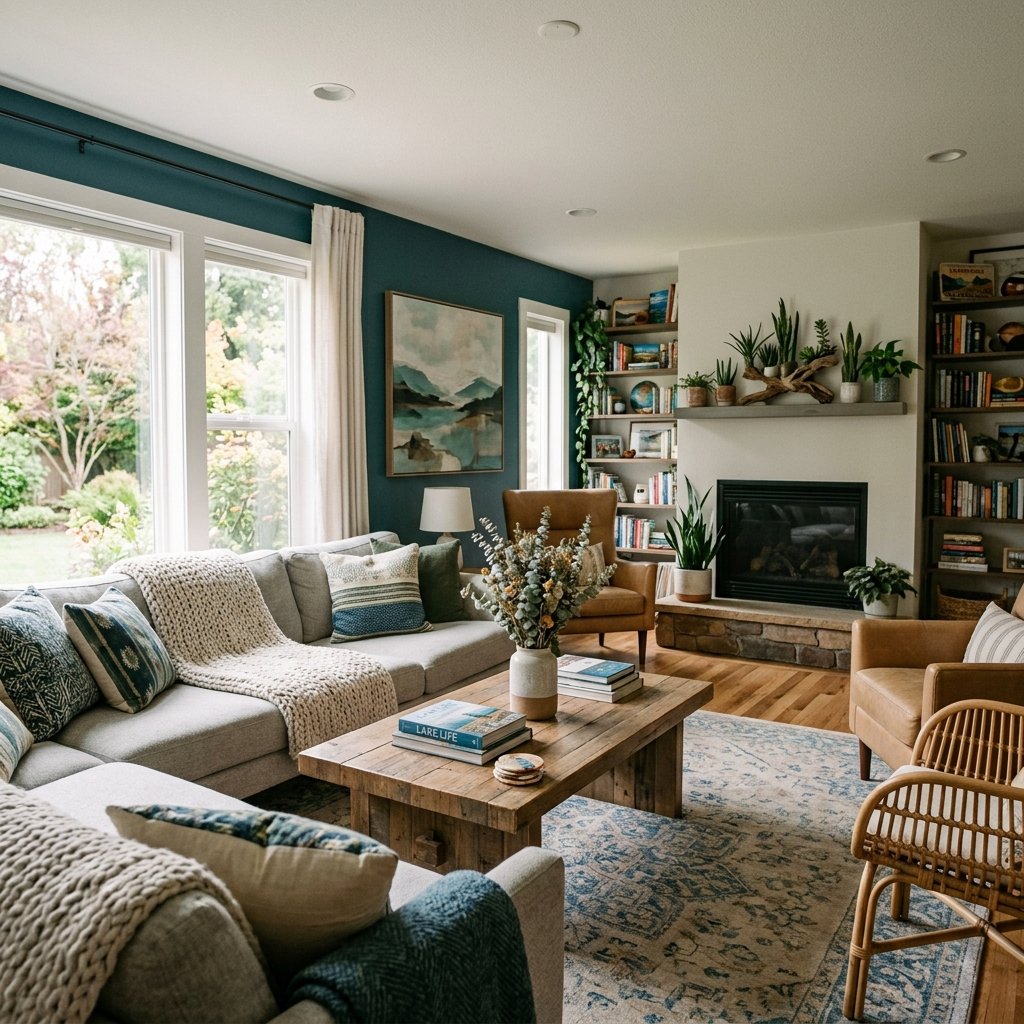
One wall in a saturated paint color, a textured wallpaper, or tongue-and-groove wood paneling gives the eye a place to land. It instantly makes the room feel designed instead of default. Pick the wall behind the sofa, or the one facing the entry so it reads from the doorway. A gallon of deep paint runs $40–$60 and covers roughly 400 square feet, making this one of the cheapest ways to change a room’s entire mood.

Hang Large-Scale Art
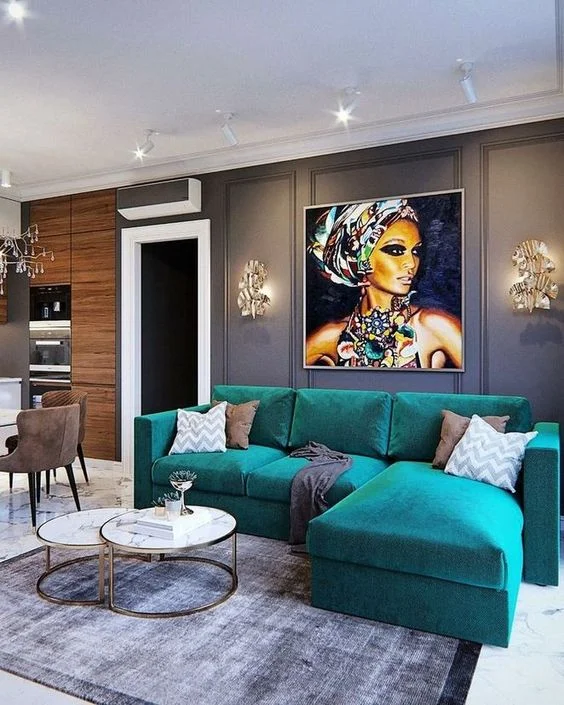
One oversized canvas does more for a wall than four small frames scattered across it. Aim for artwork that spans about two-thirds the width of the sofa or console beneath it. Hang the center of the piece around 57–60 inches from the floor, standard eye-level height in galleries. A single 40-by-60-inch piece over the sofa reads as a deliberate choice, not an afterthought.

Use Modern Lighting Fixtures
A statement pendant or sculptural chandelier works as both light source and centerpiece. Size it to the room: add the room’s length and width in feet, then use that number in inches as the fixture’s diameter. A 12-by-16-foot room calls for a fixture around 28 inches across. Pair it with two floor lamps so you’re never relying on one harsh overhead source alone.

Invest in a Statement Sofa
Your sofa sets the tone for every other decision in the room. It’s worth spending more here than on any single accessory. A tight-back velvet sofa in a saturated color reads as intentional. A neutral bouclé or linen blend gives you a quieter backdrop for rotating pillows each season. Either way, prioritize a hardwood frame and high-density foam. That’s the difference between a sofa that holds its shape for 15 years and one that sags in three.
Install Floating Shelves
Floating shelves add storage and display space without eating into floor area. That’s useful in any living room, essential in a small one. Space shelves 10–12 inches apart for books and small objects. Stagger two or three at slightly different heights instead of lining them up even. Mix in a plant, a stack of hardcovers, and one taller object per shelf so it reads as curated, not cluttered.

Create a Cozy Reading Nook
An unused corner is often the easiest square footage in the house to upgrade. Add a slipper chair or wingback, a floor lamp with an adjustable arm, and a knit throw folded over the armrest. That combination turns dead space into the spot people fight over. Keep at least 30 inches of clearance in front of the chair so it still functions as a walking path, not just a photo op.

Add a Pop of Color With Throw Pillows
Pillows are the cheapest, fastest way to test a color or pattern before committing to it on furniture. Try this formula: two large solid pillows, two medium patterned ones, and one small lumbar pillow in a contrasting texture like chunky knit or velvet. Swap the covers seasonally for under $60 total. You get a new-feeling room without touching the sofa itself.

Go for a Statement Rug
An undersized rug is one of the most common living room mistakes. It visually shrinks the space instead of grounding it. The rug should extend at least 12–18 inches beyond the front legs of your sofa and chairs. For a standard-size room, that usually means an 8-by-10-foot or 9-by-12-foot rug. If your seating group is large, let all four legs of every piece sit on the rug, not just the front two.

Incorporate a Fireplace
A wood-burning fireplace, a gas insert, or a wall-mounted electric unit all give a room a natural focal point. Furniture arrangement can build around it. A minimalist mantel a single floating wood shelf rather than an ornate surround keeps the look current. Flank it with matching shelving or a large mirror to emphasize it without adding clutter.

Use Reflective Surfaces
Mirrors, polished brass, and glass tabletops bounce available light around a room instead of absorbing it. Size a mirror to roughly two-thirds the width of the console or mantel it sits above. Hang it directly across from a window and it works as a functional second light source during the day. Mixed-metal accents, like a brass lamp base next to a nickel frame, read as intentional rather than mismatched.

Create a Minimalist Space
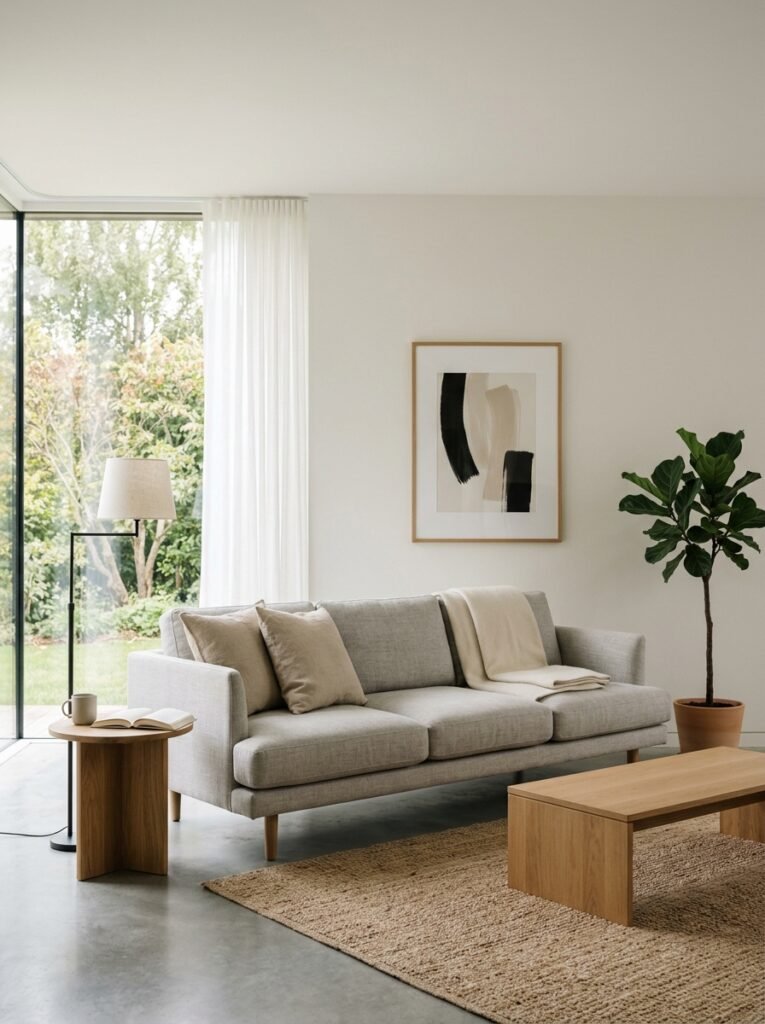
Minimalism works because restraint highlights quality. A single well-made chair reads as a statement when it isn’t competing with six other pieces. Keep visible surfaces to three or four objects each. Store daily clutter behind closed cabinet doors. Choose furniture with exposed legs so light passes underneath. The payoff is a room that’s genuinely easier to clean, not just easier to photograph.
Incorporate Greenery
Plants add texture and life that no accessory can fake. They only work if you match the plant to your actual light. A fiddle leaf fig or rubber plant needs bright, indirect light near a south- or west-facing window. A pothos or snake plant tolerates the low light of an interior corner. Group three plants at staggered heights floor, side table, shelf instead of scattering single pots around the room.

Go for a Gallery Wall
A gallery wall turns a blank stretch of wall into a personal timeline. Lay the frames out on the floor first. Keep 2–3 inches of space between each one. Unify a mismatched collection with one consistent frame color. A precise grid reads modern and controlled. An offset, asymmetrical layout reads collected-over-time and more relaxed pick the version that matches the rest of the room.

Add Texture With Throw Blankets
A chunky knit or faux-fur throw does what a flat sofa surface can’t. It breaks up a large piece of furniture with texture and shadow. Drape one diagonally over an arm, or fold a fringed throw in thirds at the end of a chaise. One throw per seat is plenty. More than that starts to look like laundry that hasn’t been put away.

Choose Bold, Floor-to-Ceiling Curtains
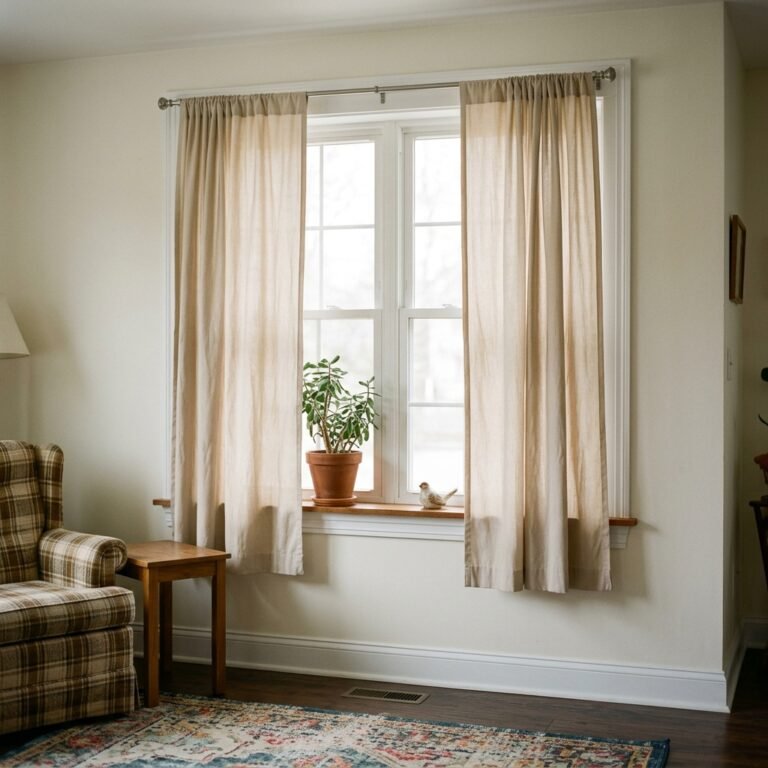
Hang curtains at the ceiling line instead of just above the window frame. It adds height and makes standard 8-foot ceilings feel taller. Mount the rod 4–6 inches above the window, and extend it 4–8 inches past the frame on each side. That way the curtains clear the glass entirely when open. A heavier fabric like velvet or lined linen also absorbs sound, softening a room with a lot of hard flooring.

Use Unique Furniture Pieces
One or two “hero” pieces do more for a room’s personality than an entire matched furniture set. Think a live-edge side table, a sculptural accent chair, or an artisan-made stool. Look for an unusual silhouette or material — raw wood, woven rattan, hammered metal. Let it stand slightly apart from the rest of the furniture instead of blending in.

Install a Built-In Entertainment Center
Custom or semi-custom cabinetry around the television hides cords and clutter behind closed doors. It also adds architectural weight to the wall. Even a modular version from stock cabinetry can achieve the look for a fraction of a fully custom build. Leave at least 3 inches of ventilation space behind any enclosed electronics compartment so equipment doesn’t overheat.

Play With Bold Patterns
Pattern adds energy that solid colors alone can’t. It works best at contrasting scales. Pair one large-scale motif a big floral or geometric on the rug or drapery with one small-scale print on a pillow. Keep everything else solid. Two large patterns in the same room tend to compete instead of complement.

Create a Multi-Use Space
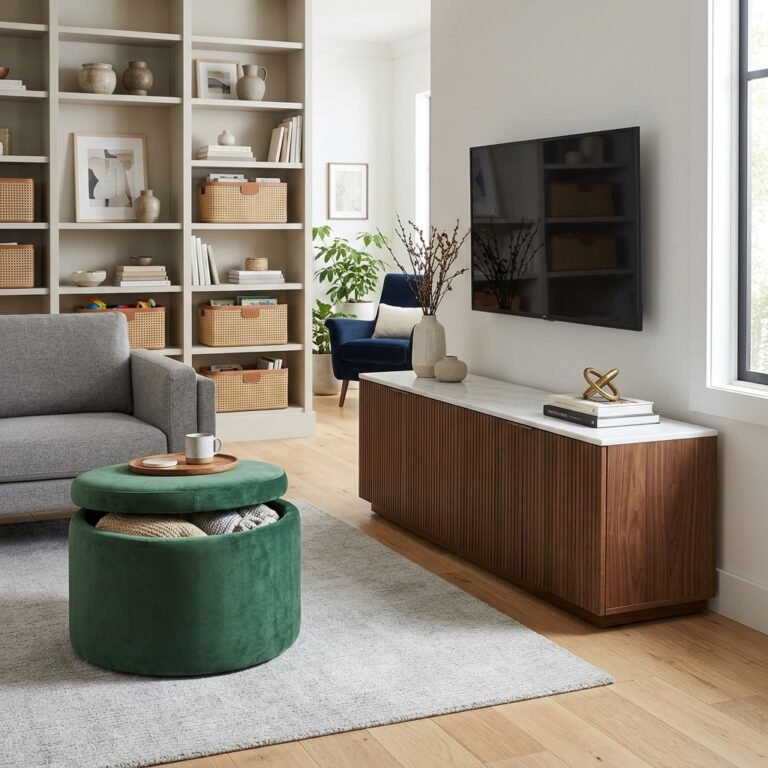
In a smaller home, your living room may need to double as a guest room or home office. A sofa bed with a real innerspring or memory-foam mattress sleeps a guest comfortably — skip the thin futon pad. A slim console desk that folds flat against the wall disappears when it’s not in use. Storage ottomans double as extra seating and a place to stash blankets or work files.

Add Vintage or Antique Items
A single vintage piece reads as more original than an entire room of new furniture. Think a mid-century sideboard, a weathered brass lamp, or a hand-carved side table. Mixing eras also solves the “showroom” problem. A room where everything was bought at once often looks staged. One older piece signals the space was actually lived in and collected over time.

Upgrade to High-End Textiles
Fabric quality shows up faster than almost anything else in a room. A linen-blend sofa cover, a mohair throw pillow, or leather on a single accent chair each add a texture polyester can’t replicate. Natural fibers also tend to age with more character instead of pilling. If budget only allows one upgrade, put it on the piece you touch most — the sofa or the throw pillows, not the curtains.
Create a Luxurious Entertainment Area
For a household that hosts regular movie nights, dedicate one wall to the setup. Use a screen at least 65 inches for a standard-size room, plus a soundbar or small surround system. Add a dimmable lighting circuit so the room can go from bright to theater-dark with one switch. Keep seating no more than 8–10 feet from the screen so the picture doesn’t feel distant.
Add Architectural Interest With Wainscoting
Board-and-batten or wainscoting installed to chair-rail height, about 32–36 inches, adds dimension to a flat wall. It skips the commitment of a full accent color. Paint it a shade or two darker than the wall above for subtle contrast, or match it exactly for a quieter look. It’s a weekend project for a DIYer, and one of the few upgrades that reliably adds resale value.
Add a Statement Console or Credenza
A console table behind the sofa, or a low credenza against a long wall, gives you a surface for lamps, books, and decor. It doesn’t crowd the seating area. Choose one with drawers or doors for hidden storage of remotes and chargers. Leave at least 3 feet of walking clearance behind it if it doubles as a divider between the living room and an open dining area.
Introduce Open Shelving for Books and Decor
Open shelving works best with a “rule of three”: group books, a plant, and one decorative object together instead of lining books up alone. Turn a few spines inward and stack others horizontally to break up the visual rhythm. Leave roughly 20 percent of each shelf empty. A fully packed shelf reads as storage, not display.
Embrace a Monochromatic Palette
A single color family — soft grays, warm whites, or muted sage — creates a calm, cohesive room. It needs at least three distinct tonal values, light, medium, and dark, or it flattens out. Add texture through nubby wool, smooth linen, and matte ceramic. That way a one-color room still has visual depth, even without a contrasting accent shade.
Choose a Sculptural Coffee Table
A coffee table with an unusual shape or material earns its place as a focal point instead of disappearing under clutter. Think a fluted travertine drum, a live-edge slab, or nesting tables in mixed metals. Size it to roughly two-thirds the length of the sofa. Keep the top height within 1–2 inches of the seat cushion for practical use.
Build a Layered Lighting Setup
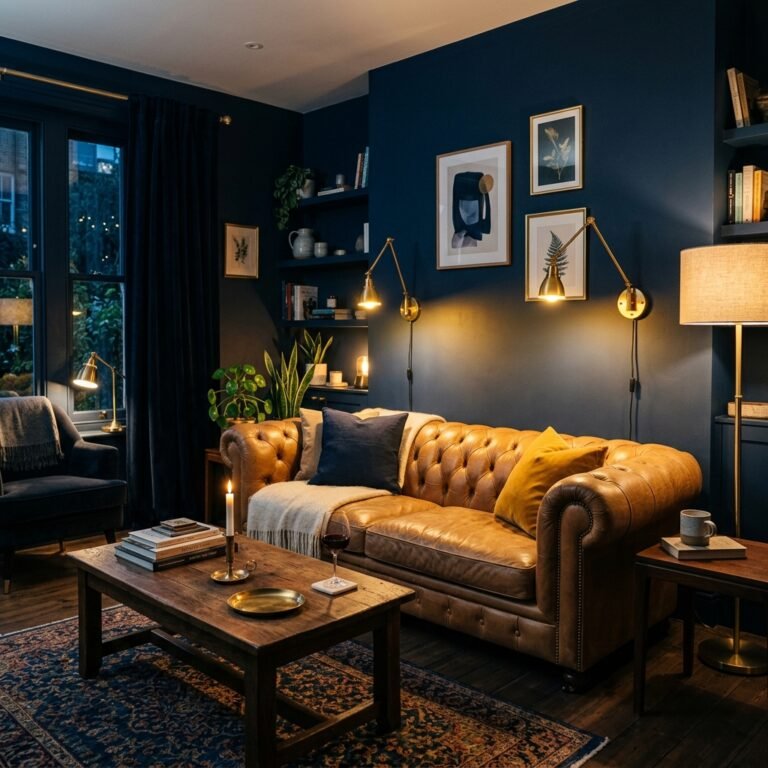
Relying on a single ceiling fixture is a common living room lighting mistake. It casts flat light and leaves the corners dark. Combine an ambient overhead source with task lighting, like a floor lamp by the reading chair, and accent lighting, like a picture light or sconce. That lets you dial the mood up or down for movie night versus a dinner party. For bulbs, ENERGY STAR notes that a warm 2,200–3,000 Kelvin range reads closest to incandescent light generally the most flattering choice for a living room.
Layer in Warm Metallic Accents
Brass, gold, and warm bronze finishes act like jewelry for a room. A small dose goes a long way. Repeat the same metal finish across two or three items — a lamp base, drawer pulls, a picture frame instead of mixing four different metals, which tends to look accidental. Warm metallics read especially well against deep, saturated wall colors or dark wood furniture.

Add a Statement Chair
A single chair in a bold color or an iconic mid-century silhouette breaks the symmetry of a standard sofa-and-two-chairs layout. It gives the eye a second focal point. Angle it slightly toward the seating area instead of squaring it off. Leave at least 15–18 inches between it and the nearest table so it stays part of the conversation, not stranded in a corner.

Integrate Technology Smartly
A slim, low-profile television and hidden cord management keep the room from feeling like an electronics showroom. Route cables through a fabric sleeve, or inside the wall where local code allows, instead of letting them hang visibly. Choose smart bulbs or plugs so lighting adjusts from a phone instead of a wall full of switches. The goal is technology you use constantly but rarely notice.
Choose a Performance-Fabric Sofa for Real Life
If pets, kids, or red wine are a regular part of your living room, fabric matters more than style. A performance fabric is a tightly woven synthetic blend engineered to resist stains and abrasion. Most wipe clean with water and typically outlast standard cotton or linen upholstery by several years of daily use, without giving up the look of a higher-end fabric.

Personalize With Unique Decor Pieces
Finally, add the two or three objects that have nothing to do with a trend and everything to do with you. A ceramic vase from a specific trip. A sculptural bust. A coffee table book stack that reflects an actual interest. These are the details that keep a well-designed room from reading as generic — and they’re usually the pieces guests ask about first.

Conclusion
You don’t need all 33 of these ideas to see a real change. Five or six chosen deliberately do more than a dozen picked at random. Start with what solves an actual problem in your space an undersized rug, one harsh overhead light, a wall that’s felt empty for a year and build outward. The living room that gets the “wow” isn’t the one with the most decor. It’s the one where every choice was made on purpose.