
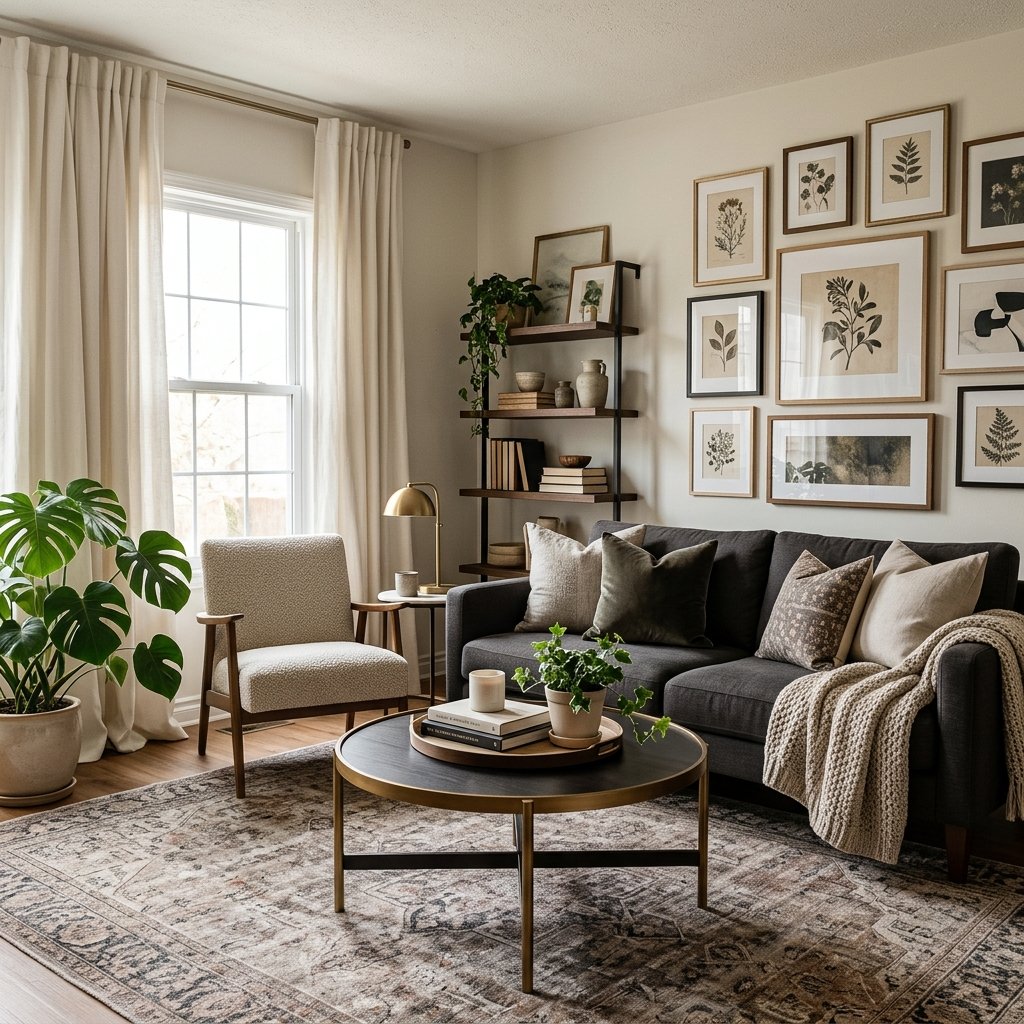
Picture two living rooms. Both measure 12 by 14 feet. Both have builder-beige walls and a single ceiling light. In one, you sit down and feel like you checked into a boutique hotel. In the other, you start writing a shopping list in your head.
The gap between them is rarely money. It comes down to a handful of cues your eye reads in about three seconds. How does the light fall? Does the rug fit? How high do the curtains hang? How many objects are competing for attention? Get those right and a $600 sofa looks like it cost more. Get them wrong and a $3,000 sofa looks lost.
This guide covers 14 of those cues. Each one comes with the measurement that makes it work and a ballpark cost. Prices are rough US estimates and vary by store and region. Several ideas cost nothing, so start there and spend only where the payoff is biggest.
Use Neutral Color Palettes
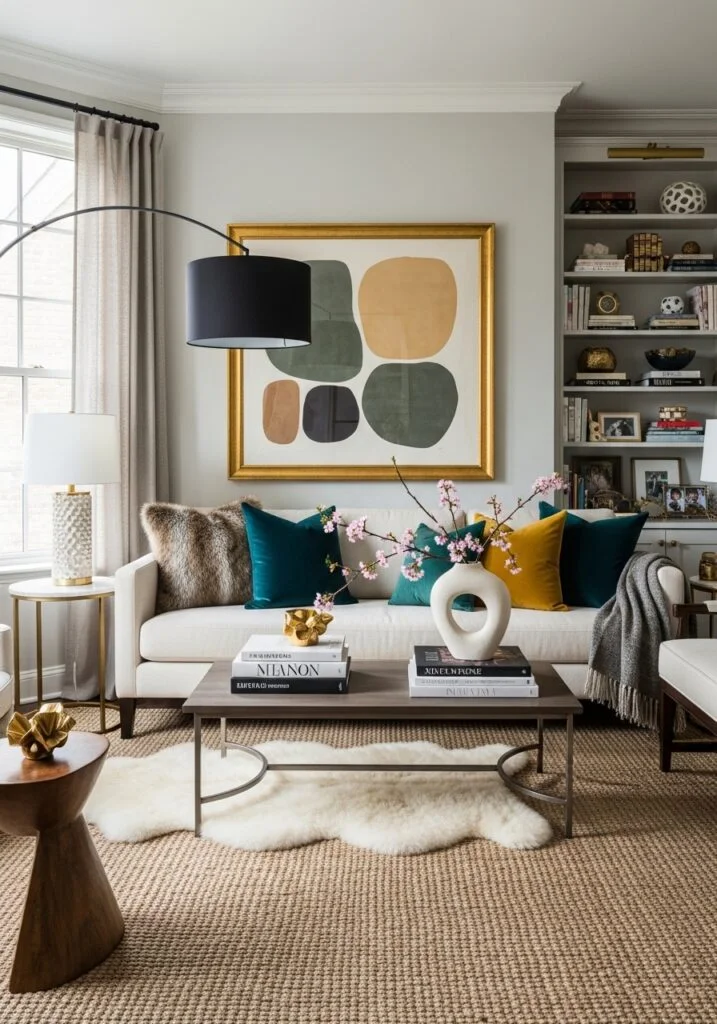
Most neutral rooms fail for one reason. The neutrals do not share an undertone. A warm cream wall next to a cool gray sofa looks muddy, and you can feel it before you can explain it.
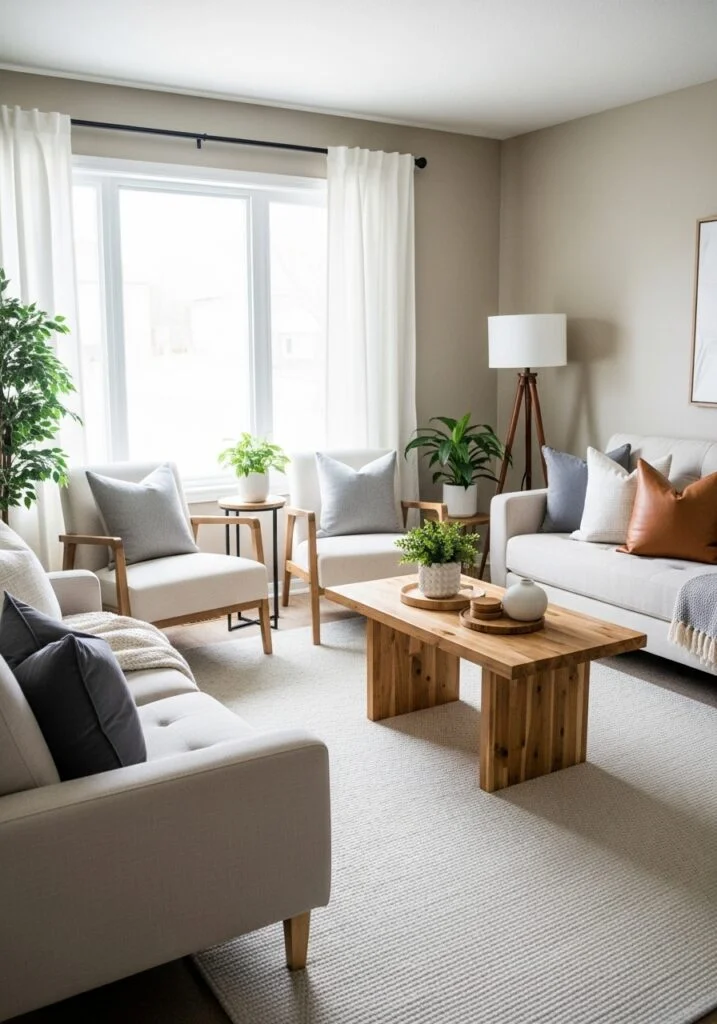
Pick one undertone and stay with it. If your walls lean yellow-cream, choose beige, oatmeal, and warm white elsewhere. If they lean gray, keep everything cool. A simple split helps: about 60 percent of the room in your main neutral, 30 percent in a second shade, and 10 percent in a darker accent such as walnut or charcoal.
Test paint samples on two walls and look at them in the morning and after dark. Light changes a neutral more than any other color. Our guide to living room color combinations that hold up after dark shows how to run that test properly.
Ballpark spend: $5 to $10 per sample pot, $30 to $60 per gallon if you repaint.
Add Statement Throw Pillows
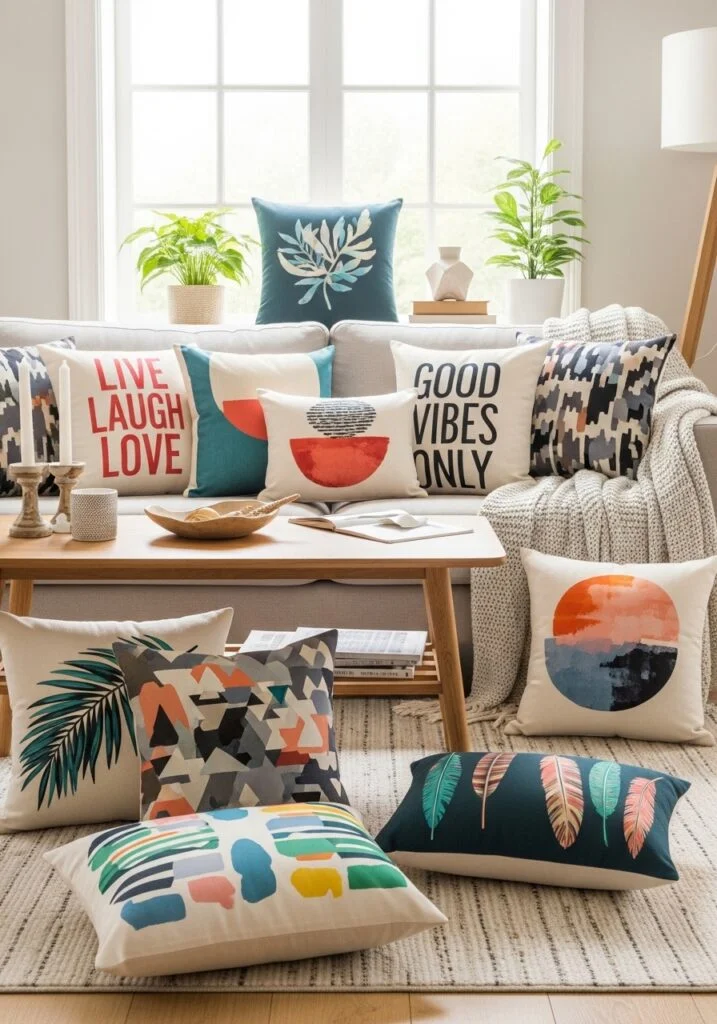
Pillows are the cheapest way to make a plain sofa look custom. The trick is the filling, not the fabric. Flat pillows look budget. Full ones look tailored.
Buy inserts one size larger than the cover. A 22-inch insert inside a 20-inch cover gives you crisp corners and a plump center. Then build a group of three. Use one large solid pillow in a heavy texture, one mid-size pillow with a quiet pattern, and one smaller accent in a contrasting fabric such as velvet against linen.
Skip the matching set from the same box. A set reads as “bought together.” A mix reads as collected. Buy covers only and reuse the inserts you already own if they still hold their shape.
Ballpark spend: $10 to $25 per cover, $8 to $15 per new insert.
Upgrade Your Lighting
If your living room has one ceiling light, it will look flat no matter how nice the furniture is. Overhead light flattens texture and casts shadows under your eyes. Expensive rooms rarely rely on it.
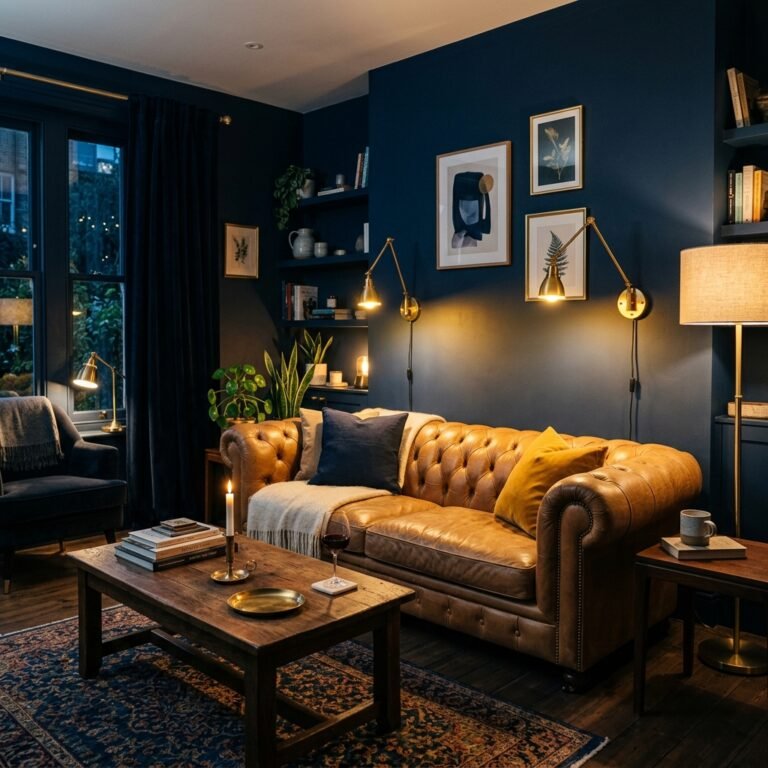
Aim for at least three light sources at three different heights. A floor lamp covers the tall level. A table lamp on a console or side table covers the middle. A small lamp on a shelf or sideboard covers the low level. Switch the overhead light off in the evening and see how much calmer the room feels.
Check the bulb box for color temperature. Choose 2700K for a warm glow. Many bulbs labeled “daylight” sit at 5000K and make a living room feel like an office. A plug-in dimmer is an easy upgrade on any lamp.
Ballpark spend: $2 to $5 per bulb, $10 to $15 for a plug-in dimmer, $15 to $40 for a thrifted lamp.
Use Large Wall Art
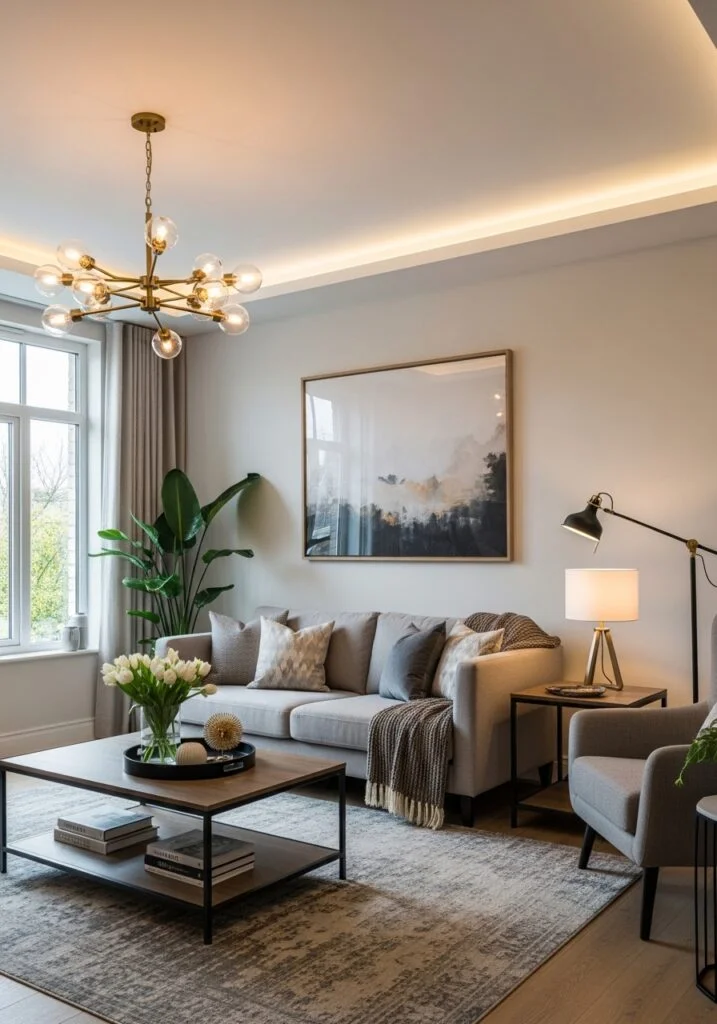
You have probably seen the sad version of this: three small frames floating above a big sofa. Small art on a big wall looks timid. One large piece looks deliberate.
Size the art to about two-thirds the width of the sofa below it. Hang it 6 to 10 inches above the sofa back so the two read as one unit. On a wall with no furniture, set the center of the piece at roughly 57 inches from the floor, which is average eye level.
Framing does the rest. A modest print inside an oversized frame with a wide white mat looks like a gallery purchase. Many online print shops will enlarge a digital file to 24 by 36 inches for a modest fee. Pair it with a ready-made frame and mat.
Ballpark spend: $40 to $120 for a large print, frame, and mat combined.
Style a Coffee Table Like a Designer
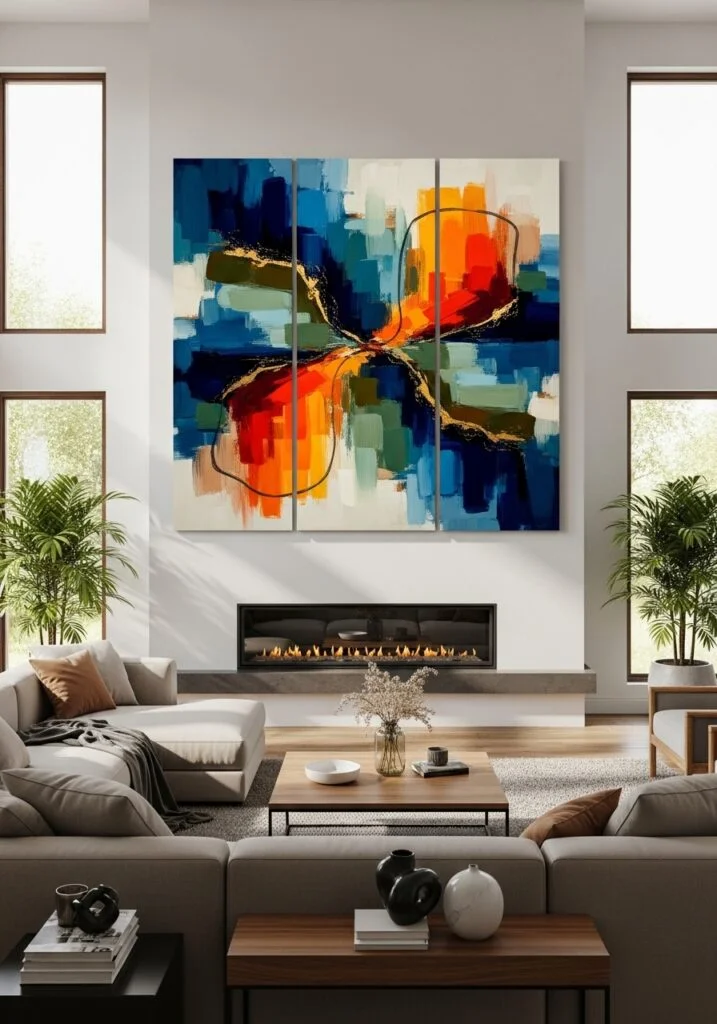
A coffee table is where cheap rooms give themselves away. Mail, remotes, and a random candle make it look like a landing strip. A tidy arrangement costs almost nothing and changes the whole room.
Use three items with different heights. Put a tray down first to hold everything together. Stack two hardcover books on one side. Add one small living or sculptural piece, such as a plant or a ceramic bowl. Thrift stores often sell hardcovers for a dollar or two, and a plain tray can be found for under $20.
Leave about half the surface empty. That empty space is what makes the arrangement look confident. If you want more arrangements to try, our coffee table styling ideas go deeper on trays, books, and candles.
Ballpark spend: $0 if you shop your home, up to $35 for a tray and thrifted books.
Add a Large Area Rug
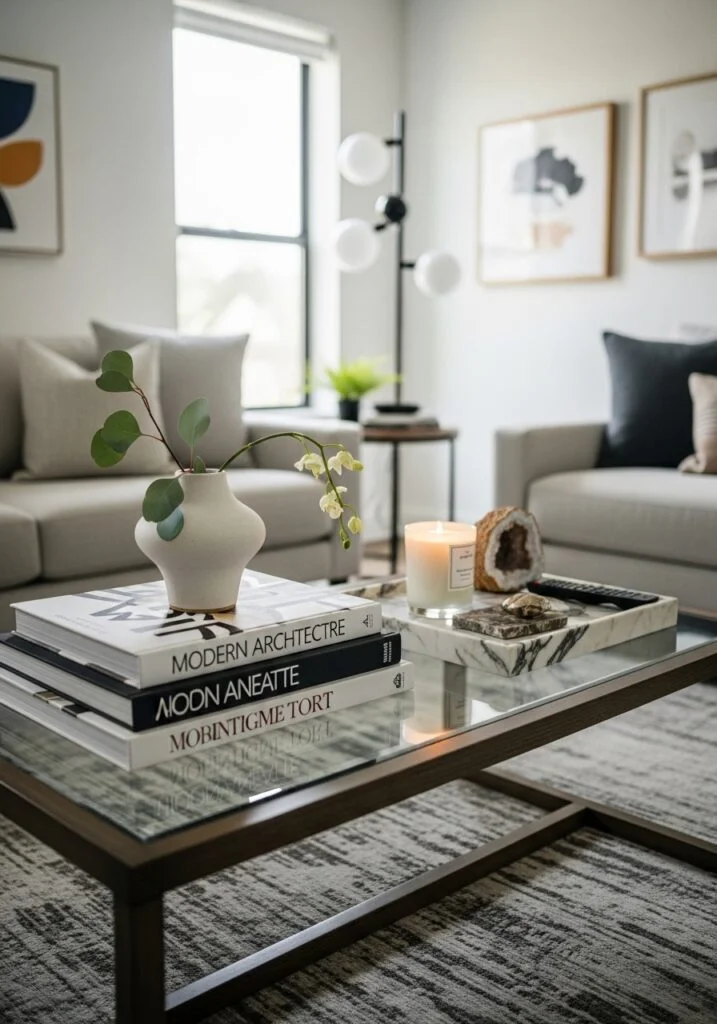
A rug that is too small is the most common mistake in budget living rooms. It makes the sofa and chairs look like they are drifting. A rug that is large enough pulls the whole seating area together.
In an average living room, an 8 by 10 rug is the usual starting point. Make sure at least the front legs of the sofa and chairs sit on it. If you have the space, put all the legs on the rug. Houzz also advises going slightly larger when you are unsure, because tucking more rug under furniture is easier than stretching a small one.
Budget rugs often feel thin. A rug pad fixes that. It adds cushion, stops slipping, and makes a $200 rug feel much richer underfoot. Stick with a flat weave in cream, oatmeal, or faded gray so the rug supports the room rather than competing with it.
Ballpark spend: $150 to $400 for an 8 by 10 rug, plus $30 to $60 for a pad.
Use Mirrors to Reflect Light
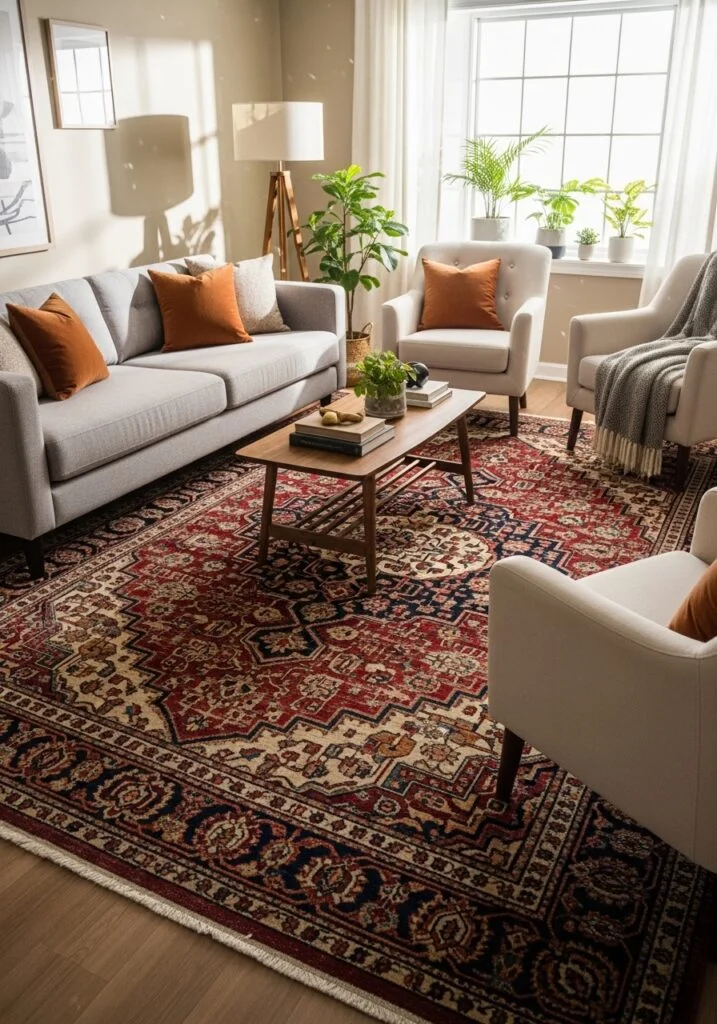
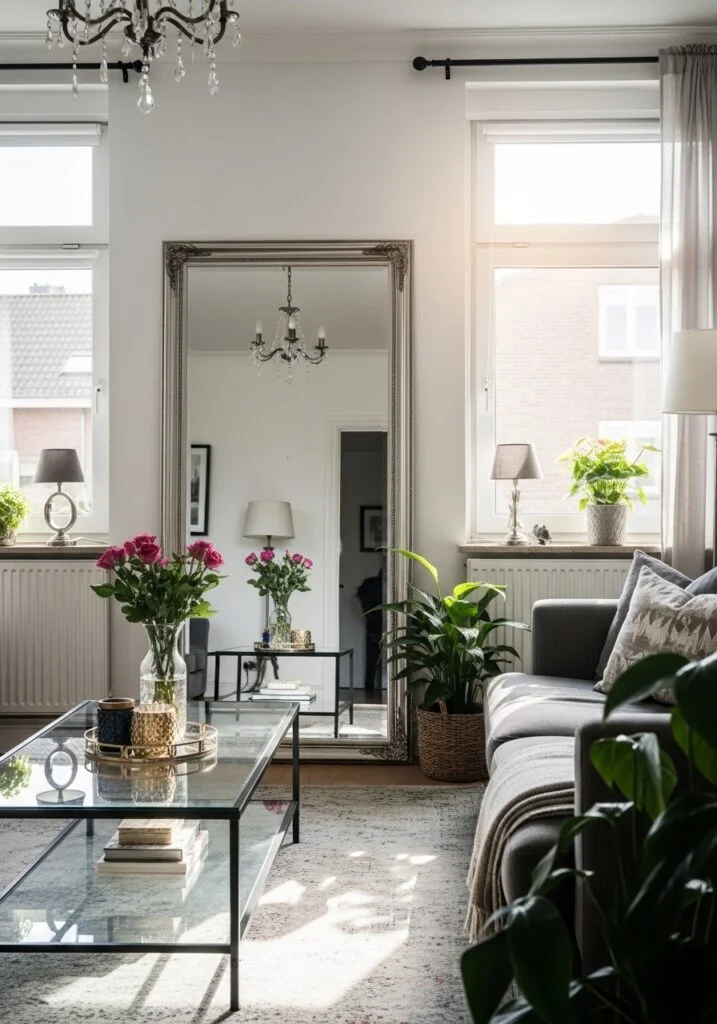
A mirror works like a second window, but only if you hang it where it can catch something worth reflecting. Across from a window is the strongest spot. It bounces daylight into the far corner, and the room feels brighter within minutes.
Check what the mirror will show before you commit. A mirror opposite a messy bookshelf doubles the mess. Lean a tall floor mirror against the wall for a relaxed look, or hang a large round one above a console for a more formal feel.
Frames are where money gets wasted. Thrift stores sell heavy, ornate mirrors for $15 to $30. A can of matte black or brass spray paint turns a dated frame into something that looks custom. Tape off the glass first and spray in thin coats.
Ballpark spend: $15 to $30 for a thrifted mirror, $8 to $12 for spray paint.
Declutter for a Minimal Look
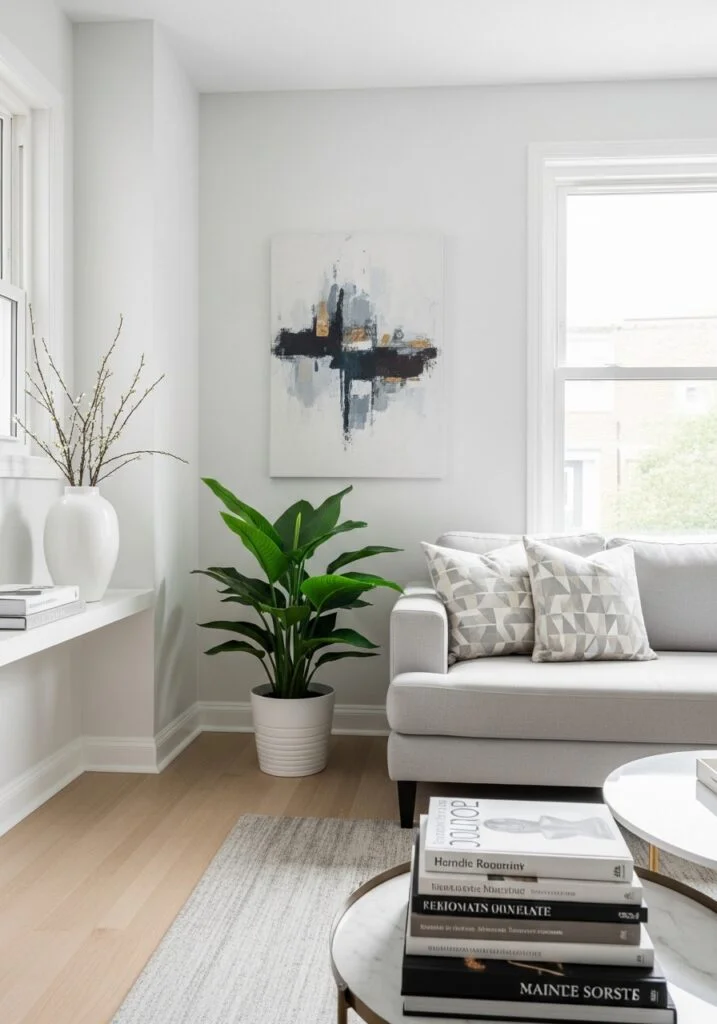
This is the cheapest idea on the list, and often the most effective. Expensive rooms are rarely empty. They are edited.
Try a one-week test. Clear every flat surface into a box: shelves, console, side tables, windowsills. Then put back only what you love or use daily. Most people return about half. Whatever stays in the box after seven days can be donated or stored elsewhere.
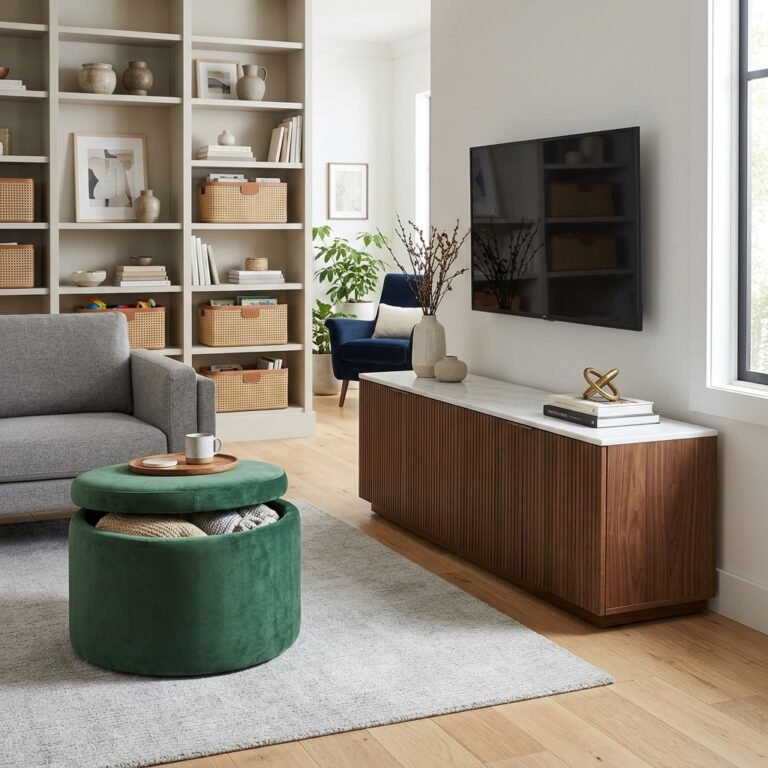
On shelves, fill about two-thirds of the space and leave the rest open. Group objects by color or material instead of scattering them evenly. A shelf with three grouped pieces looks styled. A shelf with twelve scattered ones looks like storage.
Ballpark spend: Free.
Add Indoor Plants
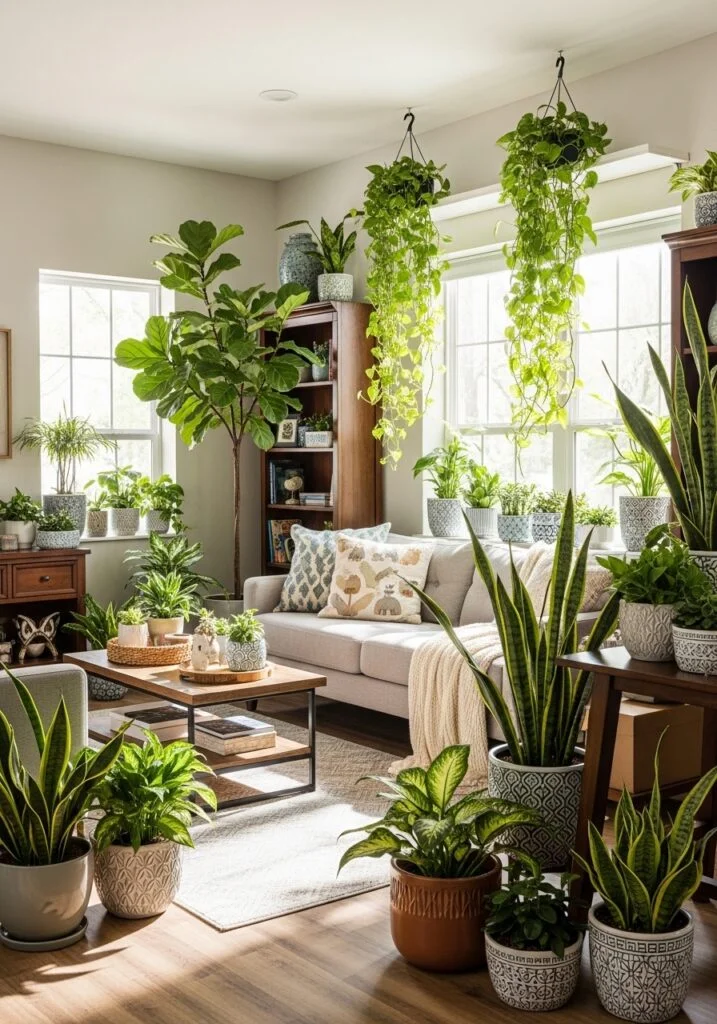
Real plants add something no accessory can: they look alive and slightly different every week. They also soften the hard edges of a room full of furniture.
Group plants in odd numbers and vary their height. Place one tall plant on the floor, one mid-size plant on a console or side table, and one trailing plant on a shelf. A snake plant or ZZ plant handles low light well. Pothos trails nicely and forgives missed waterings. A fiddle leaf fig looks stunning, but it sulks when moved or drafted, so choose it only if you have bright light.
Hide plastic nursery pots inside ceramic planters, baskets, or terracotta. This detail alone makes a $20 plant look like a $60 one. In a dark corner where nothing survives, a good faux plant is a better choice than a dying real one.
Ballpark spend: $15 to $40 per plant, $10 to $25 per planter.
Use Decorative Curtains
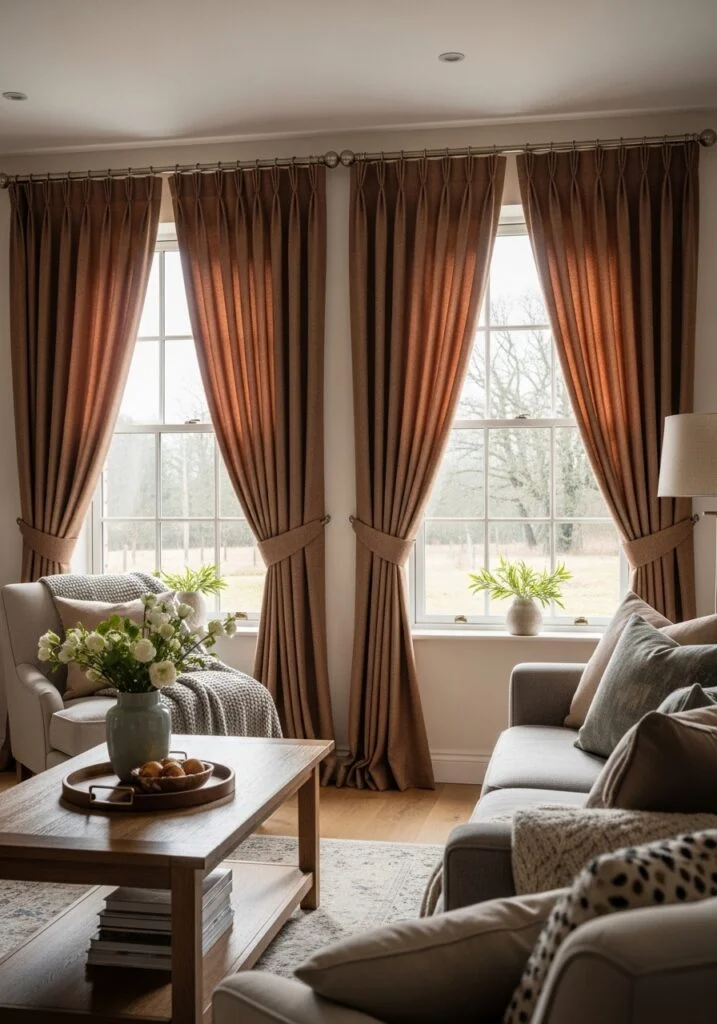
Standard windows with a rod set right above the frame make a room look shorter. Raise the rod, and the ceiling seems to rise with it.
Mount the rod 4 to 6 inches above the window frame, or even closer to the ceiling if you have room. Let it extend 8 to 12 inches past each side of the frame. When the curtains are open, they then stack against the wall instead of covering glass, and the window looks larger. Choose floor-length panels that just brush the floor or hover about half an inch above it.
Fullness matters as much as length. Buy panels with a combined width of about twice the window. Thin, flat curtains look cheap even when the fabric is nice. Linen-look or light cotton in a shade close to your wall color gives the cleanest result. Steam them before hanging.
Ballpark spend: $25 to $60 per panel, $20 to $40 for a rod.
Incorporate Metallic Accents
Metal catches light, and light is what makes a room feel expensive. You do not need much. Three small touchpoints usually do the job.
Pick one finish and repeat it. Brushed brass is warm and forgiving. Matte black is crisp and modern. Mixing three finishes in a small room looks busy. A tray on the coffee table, a lamp base, and a picture frame in the same brass will tie the room together.
You can also change what you already own. Spray paint turns a dated lamp base into brass or black in an afternoon. New pulls on a media console or sideboard cost about $20 to $40 for a set and change the furniture completely. Look for clean, simple shapes rather than anything ornate.
Ballpark spend: $8 to $12 for spray paint, $20 to $40 for new hardware.
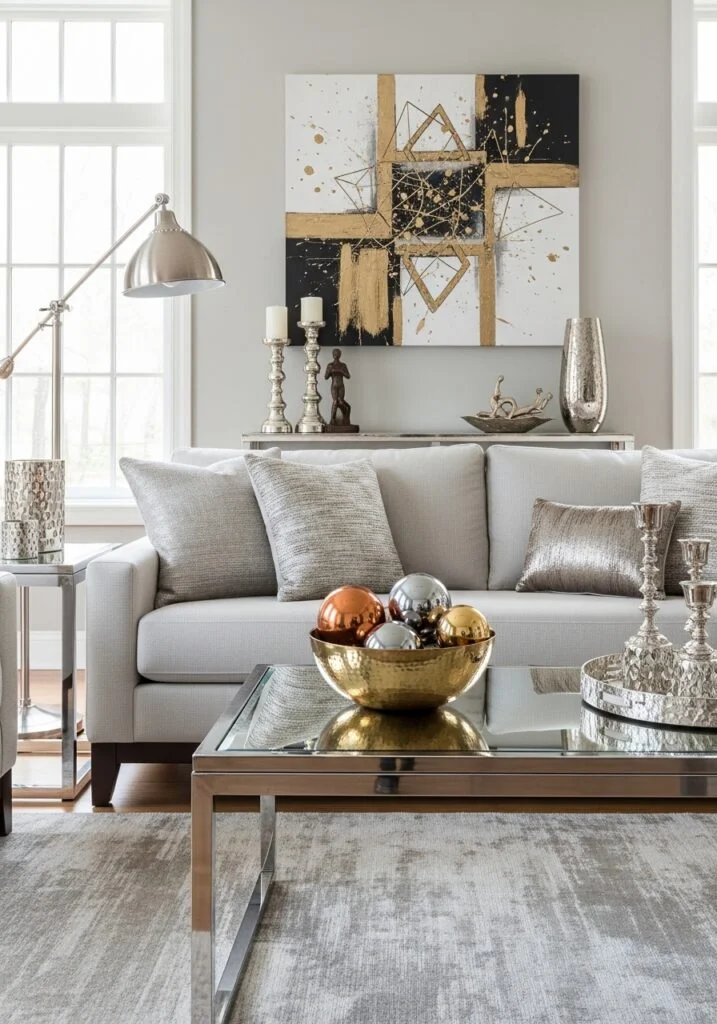
Layer Textures for Depth
Neutral rooms get their richness from texture. Without it, even a beautiful palette looks like a showroom no one lives in.
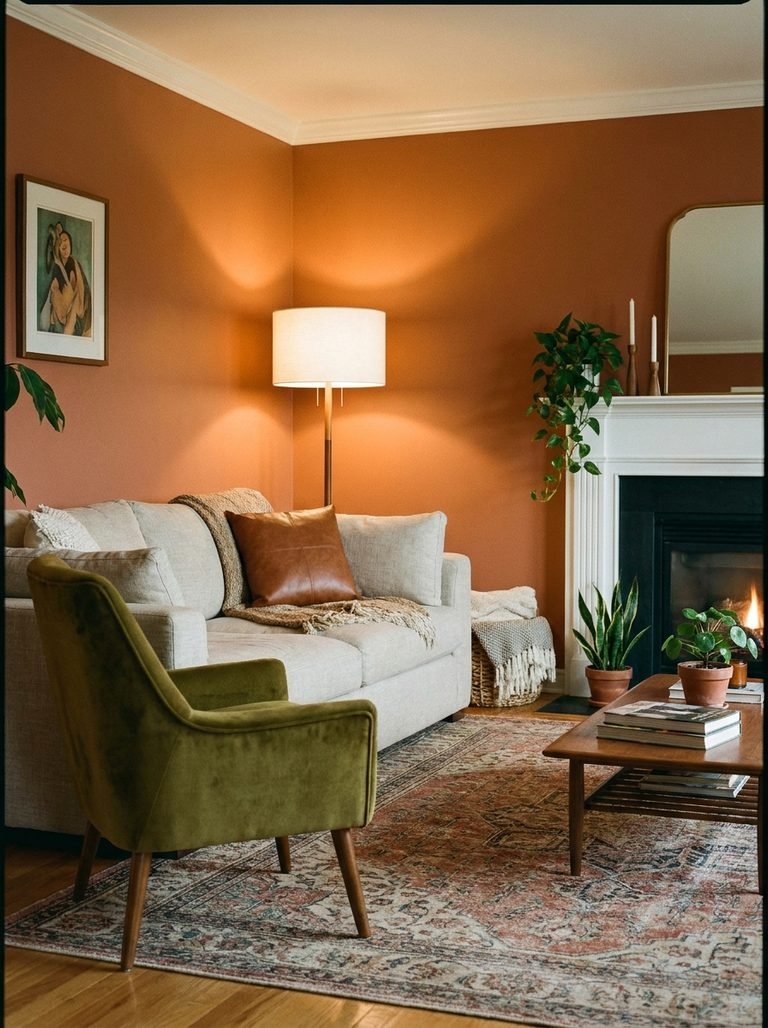
A good rule is to use at least four different materials in sight at once. For example: a chunky wool or knit throw, a linen sofa, a wood side table, and a woven basket. Pair something hard with something soft. Put a heavy throw over a leather sofa, or tuck a seagrass basket under a smooth oak table.
Thrift stores and flea markets are good for baskets, wooden bowls, and ceramic pieces that bring natural texture cheaply. A large basket beside the sofa also hides a throw blanket, which keeps the room tidy. Avoid shiny synthetics next to natural fibers. The contrast between rough and polished is what looks rich.
Ballpark spend: $5 to $15 for thrifted baskets, $25 to $50 for a chunky throw.
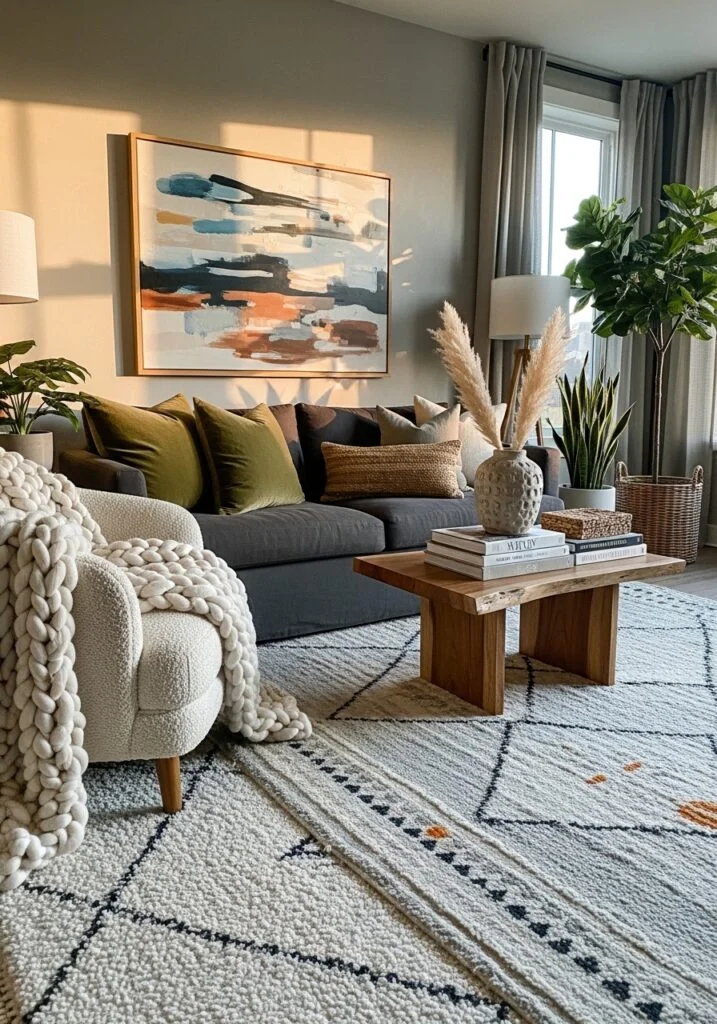
Create a Gallery Wall
A gallery wall can look expensive or chaotic. The difference is planning. Hanging pieces one at a time with a hammer is how you end up with extra nail holes.
Cut paper templates for each frame and tape them to the wall with painter’s tape. Move them around until the layout feels balanced, then hammer the nails through the paper. Keep the gaps between frames equal, usually 2 to 3 inches. Center the whole group at roughly 57 inches from the floor.
Frame consistency makes cheap art look intentional. Use frames in one color, such as black, natural wood, or thin white. Mix in personal photos, thrifted prints, and a few printed pages from old art books. A grid looks clean and formal. A balanced cluster looks relaxed. Both work if the spacing stays even.
Ballpark spend: $5 to $15 per frame, plus printing costs.
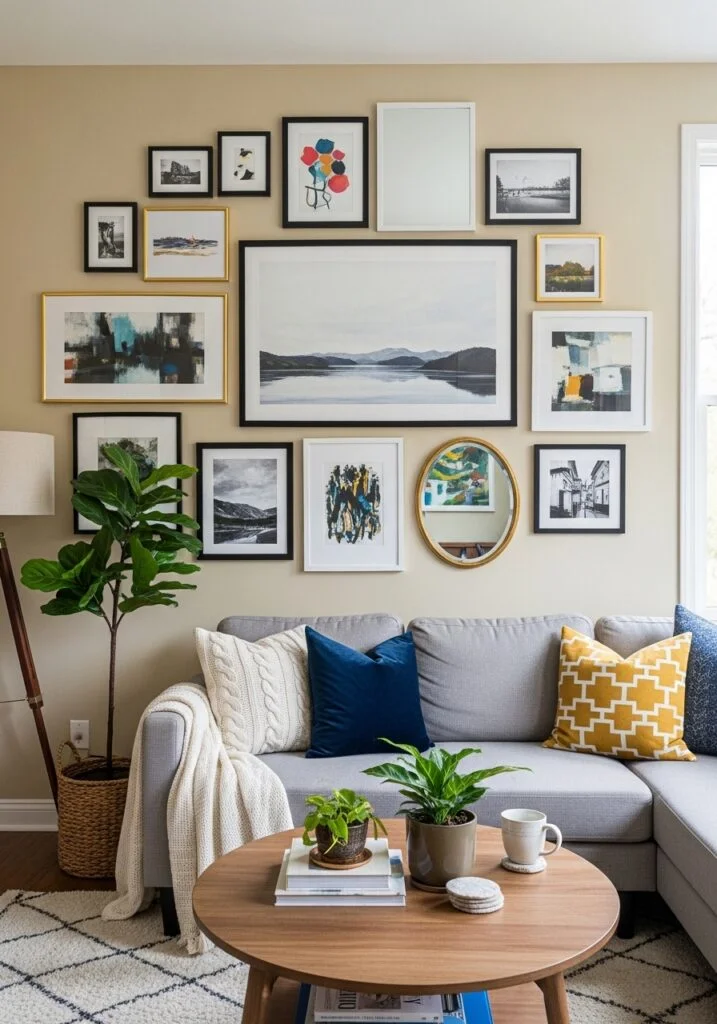
Rearrange Furniture for Better Flow
You walk into your living room and turn sideways to get past the armchair. You have done it so many times you no longer notice. A designer would notice immediately.
Start by pulling the furniture away from the walls. Even a few inches of space behind the sofa makes the room feel less crammed. Then group the seating so people can talk without raising their voices. Keep seats within about 8 feet of each other. Leave 14 to 18 inches between the sofa and the coffee table, and keep main walkways 30 to 36 inches wide.
Try two or three layouts before you decide. Angle a chair toward the sofa instead of lining everything up along the walls. Furniture sliders cost a few dollars and save your back and floors. It costs nothing, and it often fixes problems that no accessory can.
Ballpark spend: Free, or about $10 for furniture sliders.
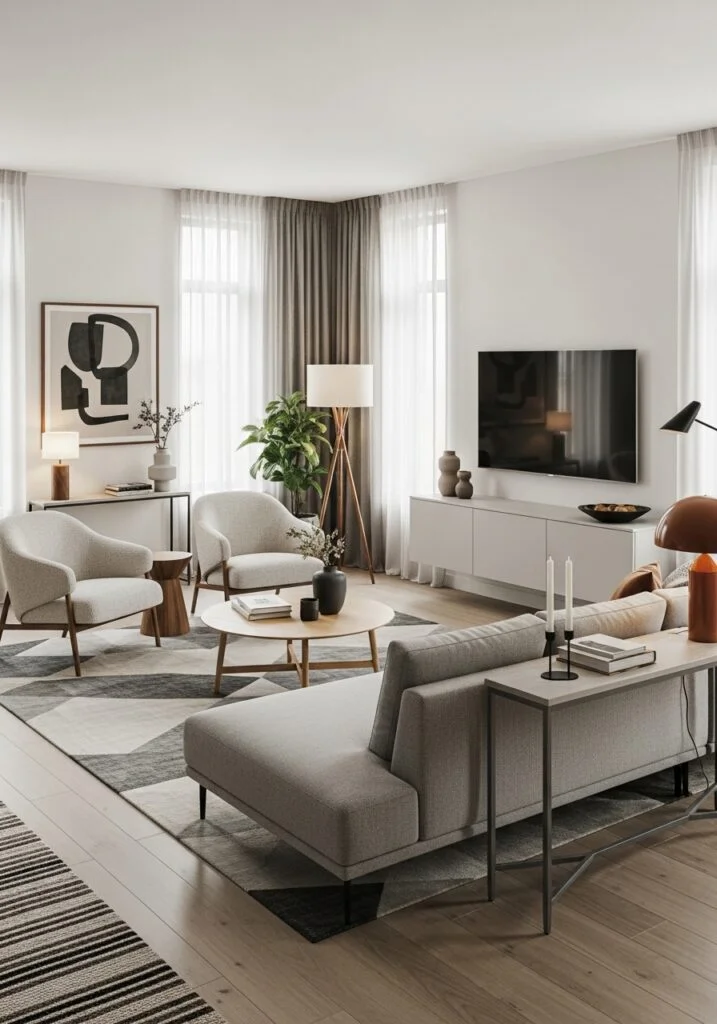
Where to Spend Your First Dollars
If you cannot do everything, order matters. Start with the free fixes: rearrange the furniture and clear the surfaces. Next, swap in warm 2700K bulbs and add one more lamp. Then hang curtains higher and wider than the window. Last, save for the rug, because it is the biggest purchase and the one that most changes how the room looks.
That sequence gets you most of the way to an expensive-looking room for well under what most people expect to spend. Everything else on this list is polish.
Conclusion
A room looks expensive when it looks considered. Light is layered, the rug fits, the art is sized to the wall, and nothing is fighting for attention. None of that requires a big budget.
Pick three ideas from this list and finish them this weekend. A rearranged layout, warmer bulbs, and a decluttered coffee table will change how the room feels by Monday. Add the rest as your budget allows, and the whole space will keep getting better.
1 comment