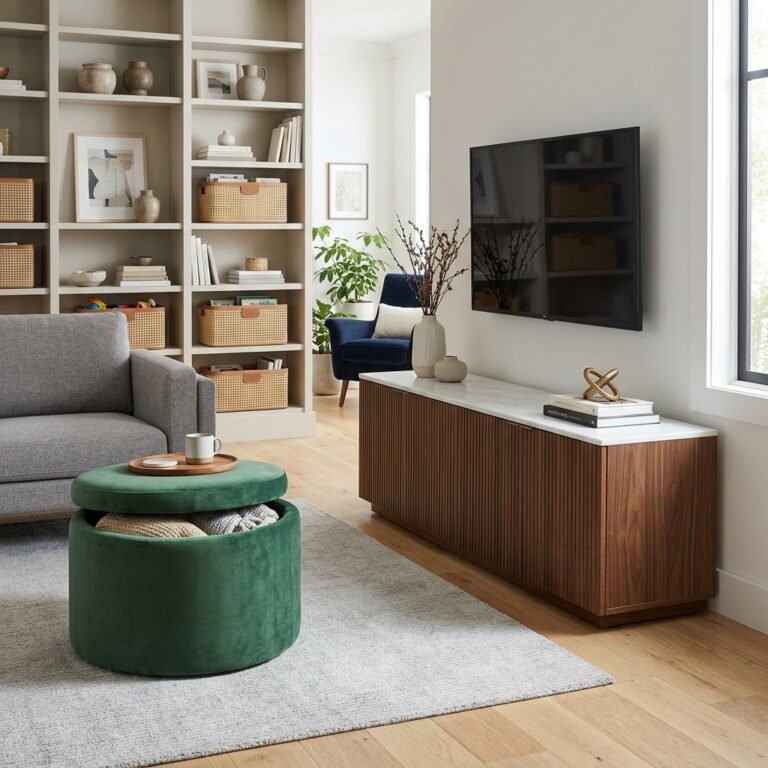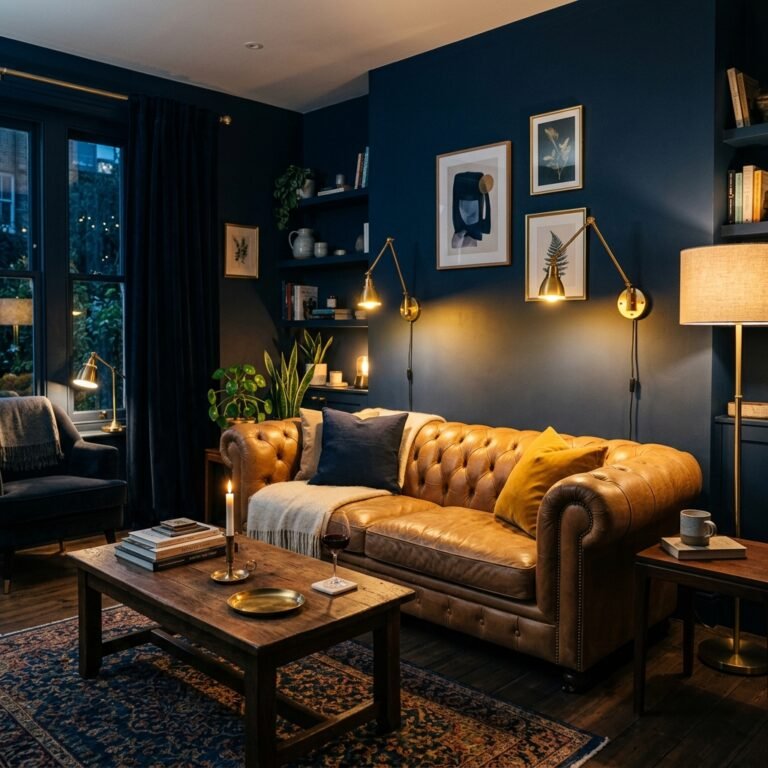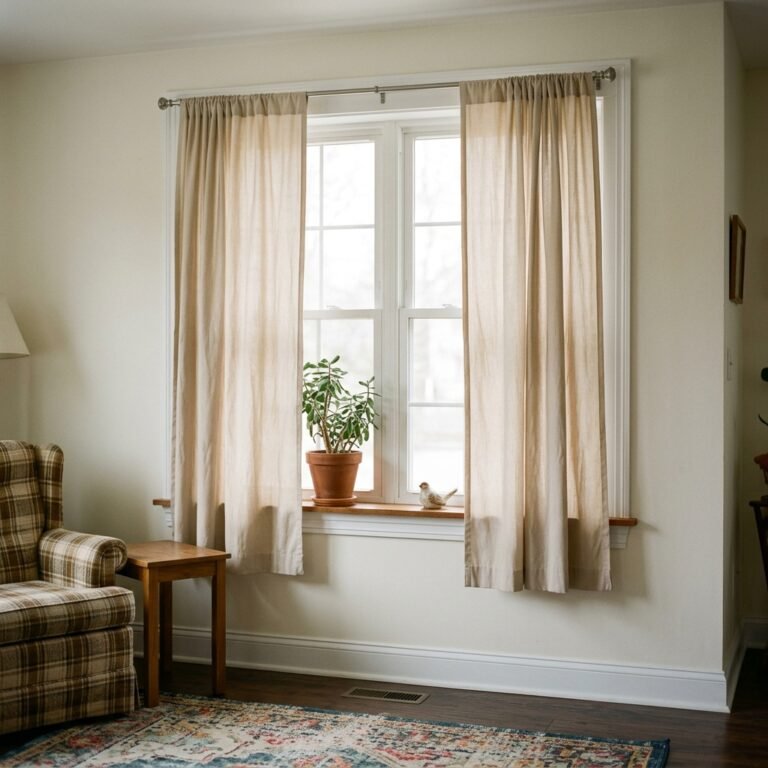
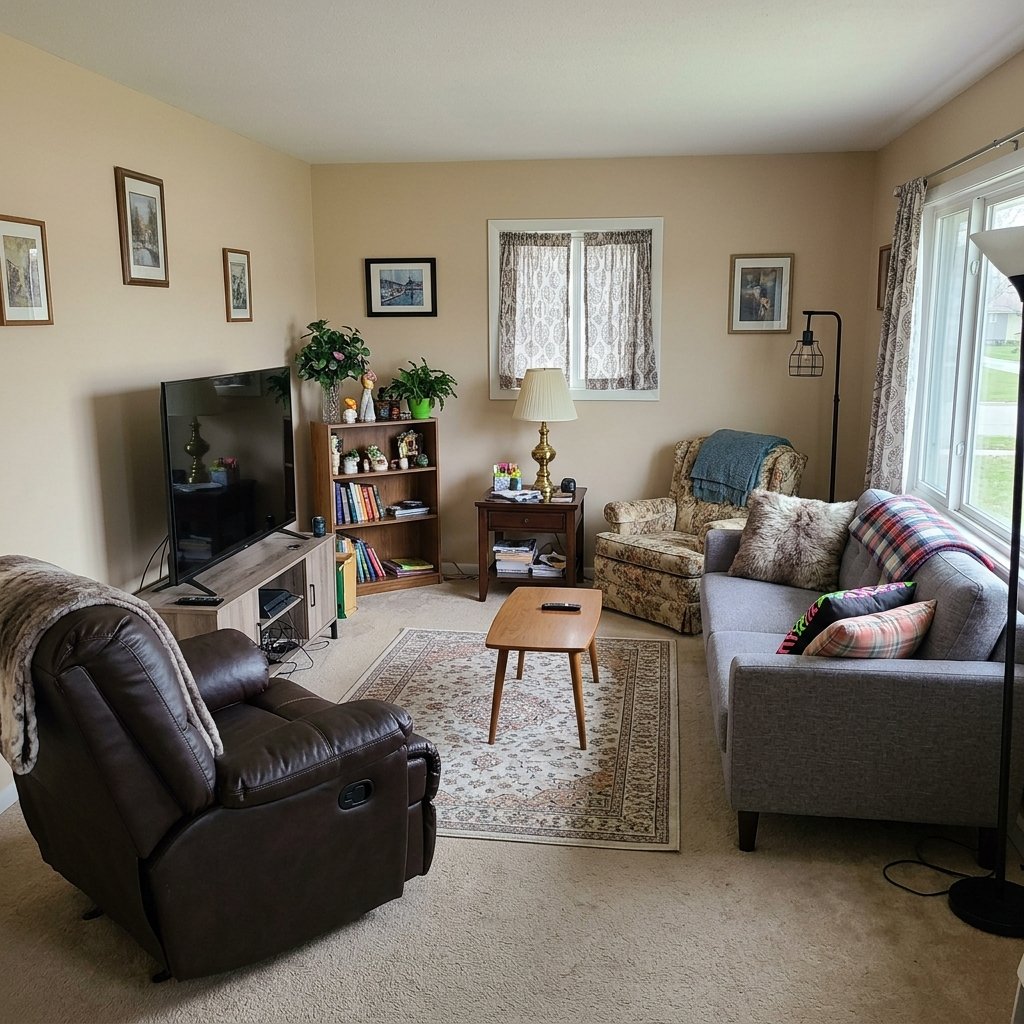
Picture two living rooms with the same gray sofa. In the first, the owner bought six throw pillows, a gallery-wall set, and a brass lamp before the sofa arrived. In the second, the owner measured, drew a floor plan, and ordered the rug and paint first. Six months later, the first room has everything it needs and still looks pieced together. The second looks like a designer planned it.
The difference is not taste. It is order. Every decor choice only makes sense next to something already decided. A pillow can’t match a sofa you haven’t chosen. A lamp can’t light a seat that hasn’t been placed. Start with the small things and you end up making the big decisions around them, which is backwards and expensive.
This guide walks through the sequence that avoids that trap: what to settle first, what waits, and what you can safely leave for last.
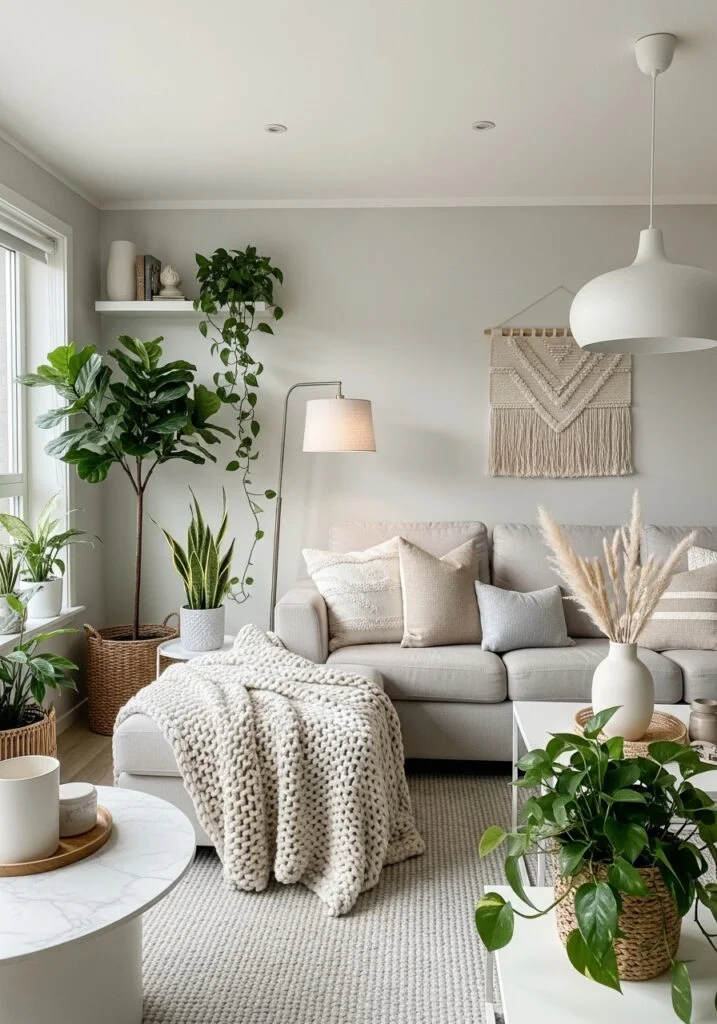
Why Pieced-Together Rooms Happen
Small purchases are fun, cheap, and instant. The sofa is none of those. So most people start with a vase and a pillow, then spend months fitting the big pieces around them.
The result is a room where every item was judged on its own. The pillow looked great in the store. The lamp was on sale. Nothing was ever checked against a plan, so nothing agrees with anything else.
Reversing the order costs less in practice. Returns, restocking fees, and the second pillow you buy to rescue the first all disappear. Large items also have long lead times, so deciding them early keeps the timeline honest. Made-to-order sofas often take eight to twelve weeks to arrive, which leaves plenty of time to settle paint and lighting.
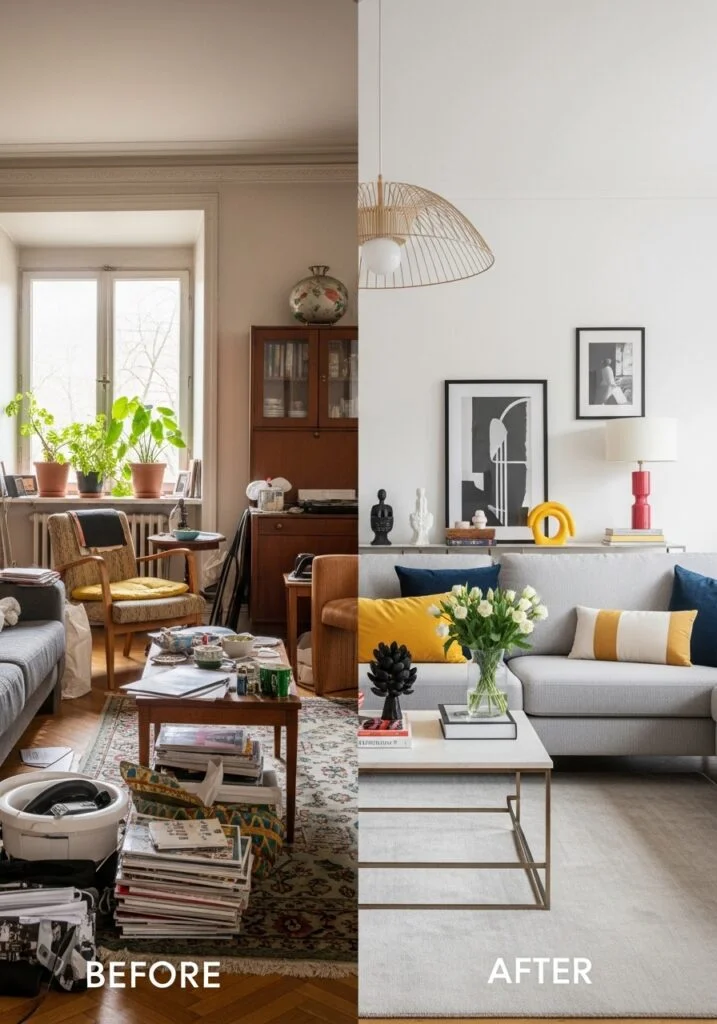
Start With the Floor Plan, Not the Furniture
Measure before anything else. Write down wall lengths, window widths, door swings, and the location of every outlet, vent, and light switch. A floor vent behind the sofa, for instance, will blow warm air into the cushions all winter.
Sketch the room on graph paper at a quarter inch per foot. Cut scrap-paper shapes for each large piece and slide them around. This takes twenty minutes and costs nothing. It prevents the most common expensive mistake: a sofa that technically fits but strangles the room.
Decide how the room is used before you decide how it looks. A room for movie nights wants deep seating angled toward a screen. A room for guests wants seats facing each other. Pick the main use, then arrange for it.
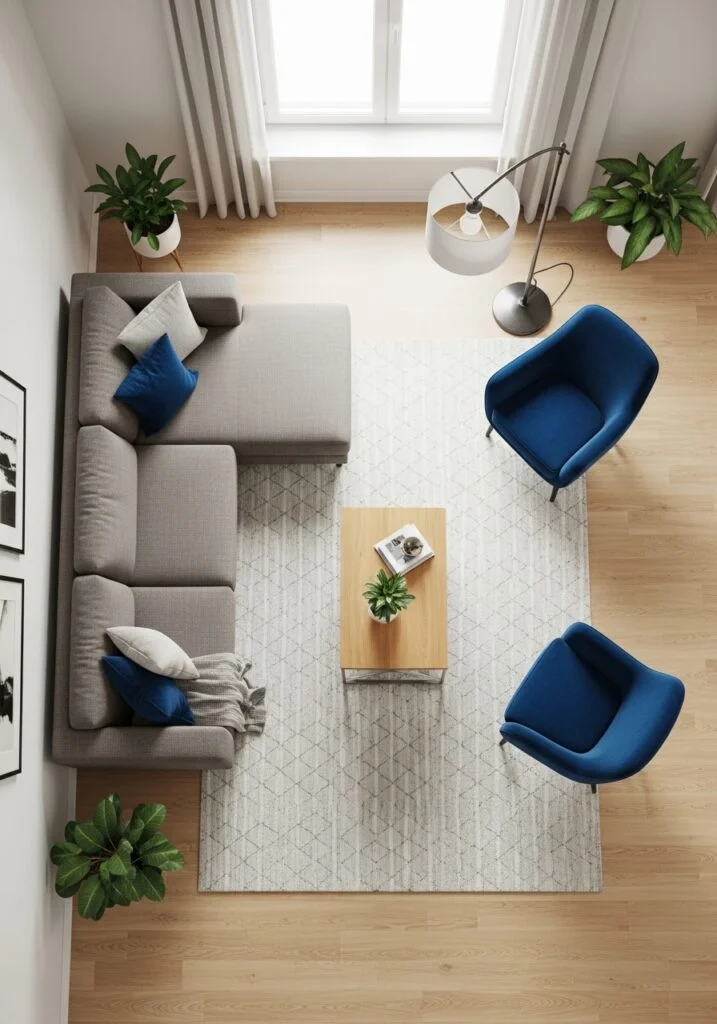
Our guide to walkway clearances in a small living room lists the exact gaps to hold while you shuffle those paper shapes. Check outlet distance too. Most lamp cords reach about six feet, so a floor lamp across the room from the nearest outlet becomes a trip hazard.
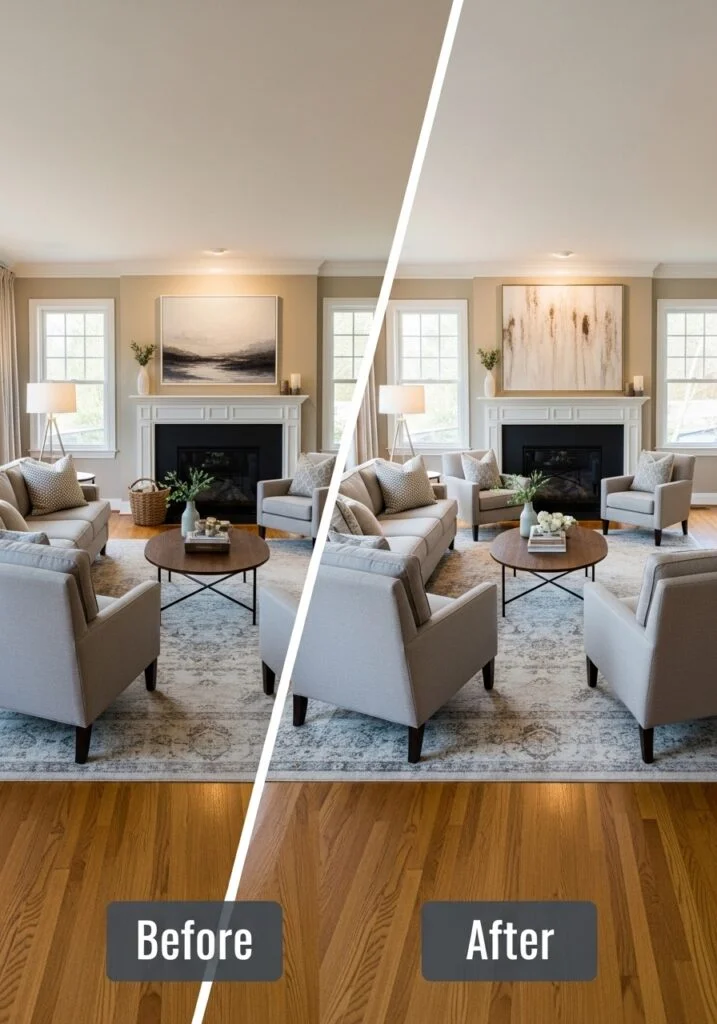
Pick the One Thing the Room Faces
Every living room needs a single place the eye lands first. Many have two competing ones: a fireplace on one wall, a TV on another.
Choose a winner. If the TV wins, give it the main wall and let the fireplace play a supporting role. The common compromise, mounting the TV above the fireplace, usually puts the screen center at 60 inches or more. That is too high for seated viewing, and your neck pays for it. A screen center near 42 to 48 inches from the floor is far more comfortable.
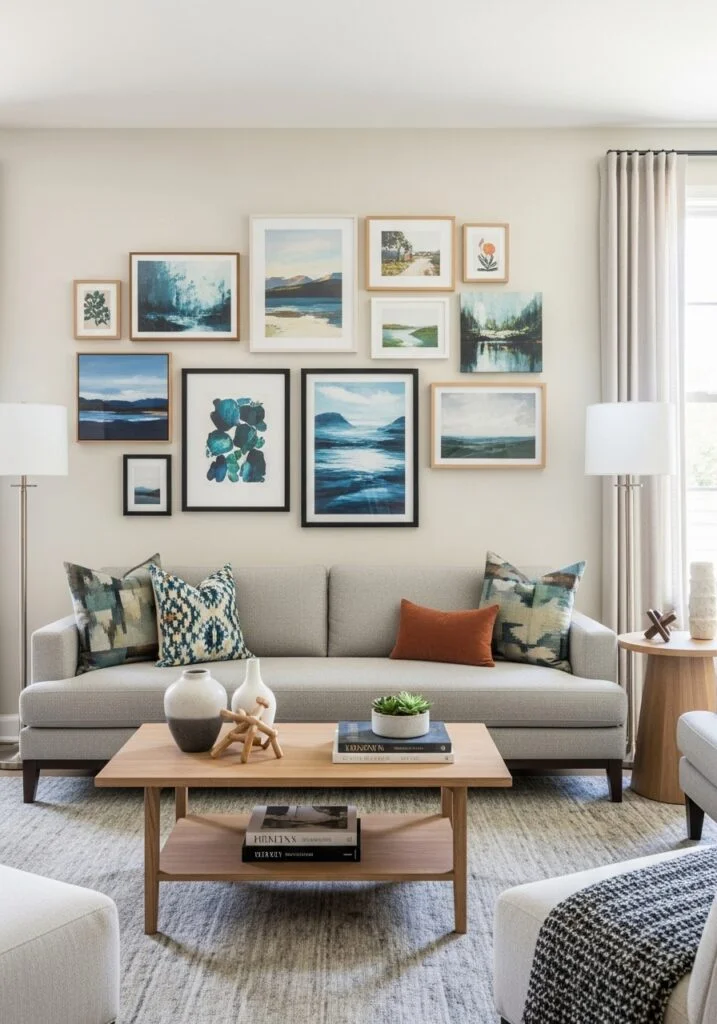
If the window wins, angle the sofa toward it and put the TV on an adjacent wall. If the room has no natural focal point, create one with a large piece of art, a bookcase wall, or a wide console flanked by a lamp pair.
Buy the Big Pieces in a Fixed Order
Sofa first. It is the largest item, the longest wait, and the piece everything else responds to. Order fabric swatches and leave them in the room for a few days, checking them in morning light and under your lamps. Mid-range sofas often run $1,200 to $2,500, and the fabric choice matters as much as the frame.
Rug second. The sofa’s width sets the rug size. An 8-by-10 works under the front legs of most seating groups, provided you left a border of bare floor when you drew the plan. Wool rugs in that size commonly cost $400 to $1,200. Polypropylene costs less and shrugs off spills.
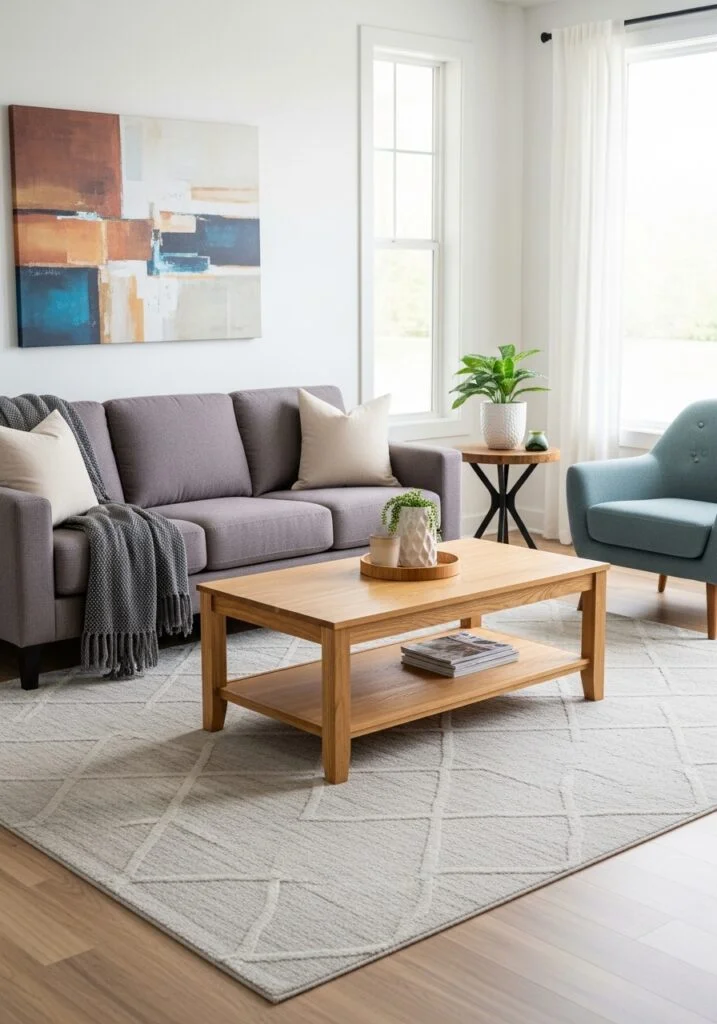
Coffee table third, because its size depends on the sofa and the rug. Accent chairs come last. Sit in them before you buy. A seat height around 17 to 19 inches suits most people, and a chair that sits much lower than your sofa looks wrong however nice it is.
This order is not arbitrary. Each purchase narrows the next. A table bought before the rug can’t be judged against the rug. A chair bought before the sofa often clashes in height, color, or both.
Lock the Color Plan Before the Paint Goes On
Most people paint first, then hunt for a sofa that matches. Flip it. A sofa and rug are harder to change than a wall, so let them set the palette. Pull two or three colors from them, then choose paint that supports those colors.
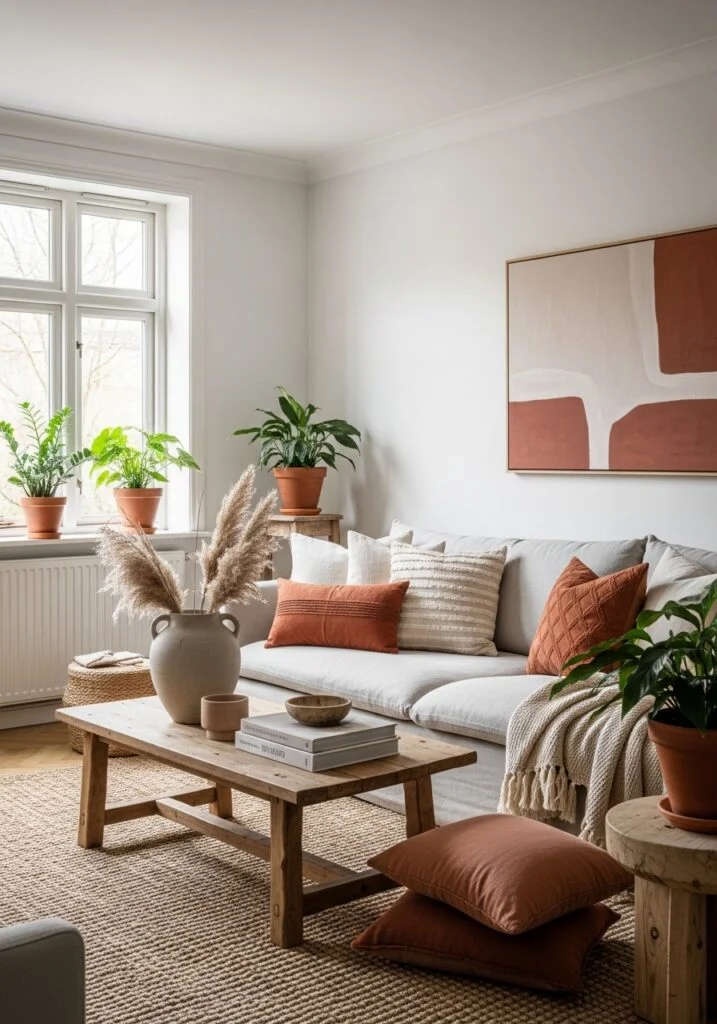
The 60-30-10 rule keeps the result calm. About 60 percent of the room goes to a dominant color, 30 percent to a secondary one, and 10 percent to an accent. Walls and a large rug usually carry the 60. Sofa and curtains often carry the 30. Pillows, art, and small objects carry the 10.
Test paint properly. Roll two-foot-square samples on two different walls and watch them for three days, in daylight and after dark. Our guide to living room color combinations that hold up at night covers undertones and bulb temperatures, so this page won’t repeat it.
Budget the quantity honestly. A 12-by-14-foot room with 8-foot ceilings has roughly 350 to 400 square feet of wall after openings, and one gallon covers about that much per coat. Two coats means two gallons, usually $40 to $80 each. Then ventilate. The EPA’s indoor painting guidance advises keeping fresh air moving for two or three days after you finish, and says an air conditioner is no substitute for open windows.
Layer the Lighting While the Walls Are Still Bare
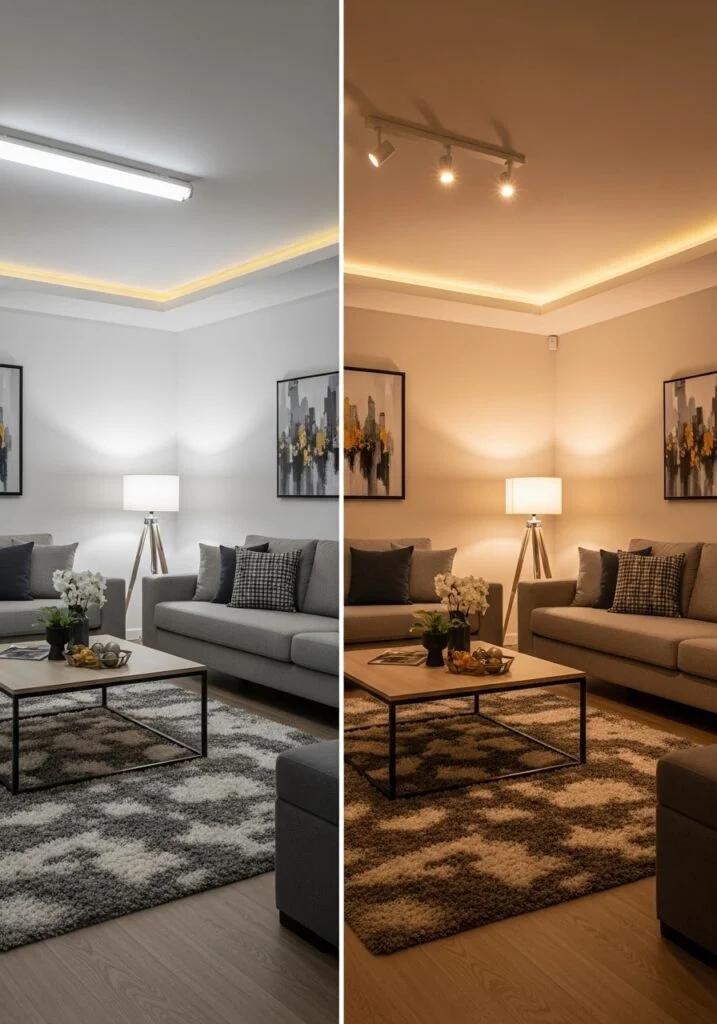
Lighting is easiest to plan before art goes up, since sconces, cord covers, and outlet positions all live on the walls. Aim for three layers: a general light, task lights where you read or work, and an accent glow that shapes the room at night.
Start with the cheapest upgrade, a dimmer on the overhead fixture. The usual stumbling block is a mismatched dimmer. Standard dimmers often buzz or flicker with LED bulbs, so buy one rated for LEDs. They cost about $20 to $40, and installing one means switching off the breaker first.
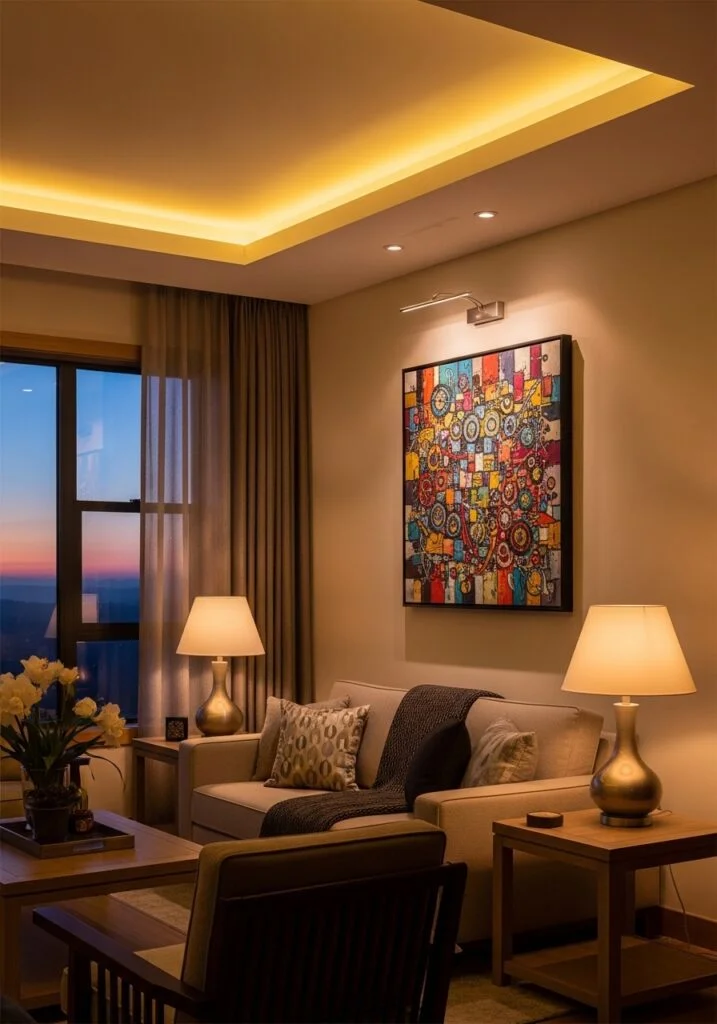
Then add lamps by seat, not by symmetry. Every spot where someone sits should have a light within arm’s reach. A table lamp’s shade bottom should sit near eye level when you’re seated, which keeps the bare bulb out of your sightline. Smart plugs, about $10 to $15 each, let you switch several lamps from one tap and make a three-lamp plan painless.
Walls and Art Come After the Furniture Settles
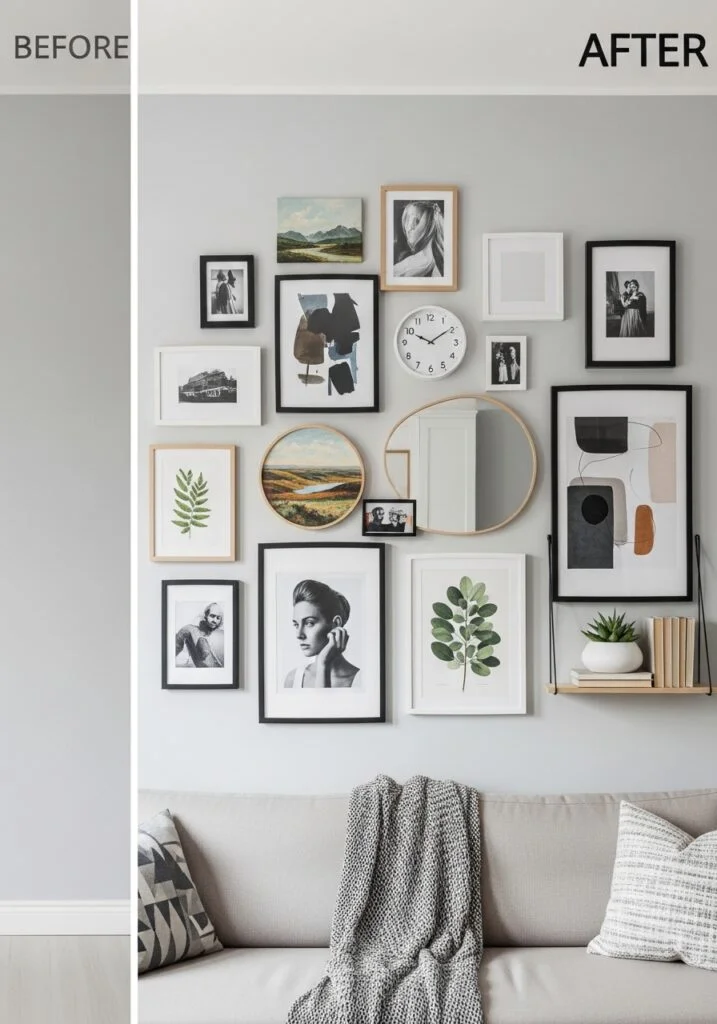
Wait about two weeks of normal living before hanging anything. You will learn where the glare lands, which wall the sofa really dominates, and where bags and coats collect.
Then plan on paper. Cut kraft paper to the size of each frame and tape it up with painter’s tape. Art over a sofa usually looks best when it spans roughly two-thirds of the sofa’s width and hangs six to ten inches above the back. Leave the paper up for a day before you drill.
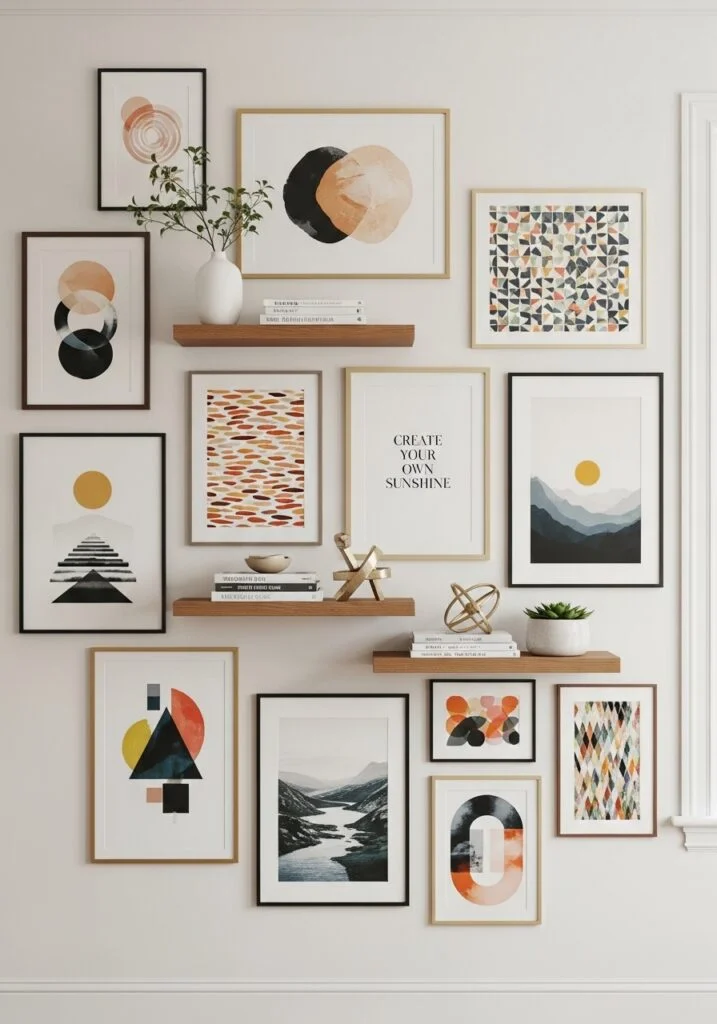
Match the hardware to the weight. A heavy mirror or large framed piece, anything over about 20 pounds, needs a stud or a rated anchor, not a plain nail. Anchors are sold by weight limit, so read the package before you commit.
Texture and Seasonal Swaps Go Last
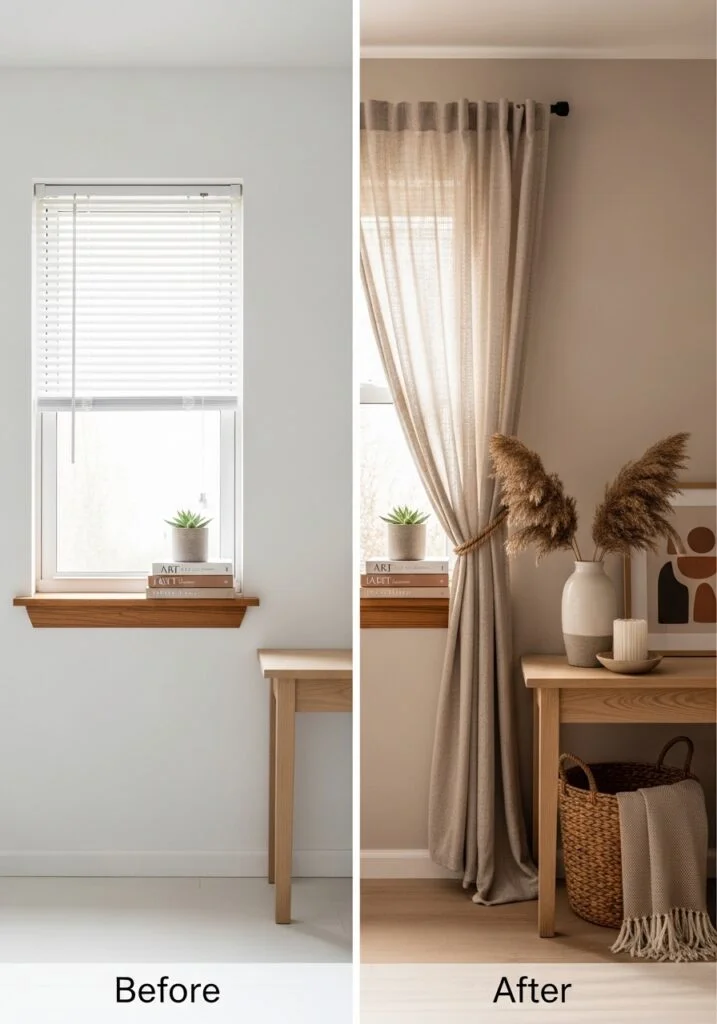
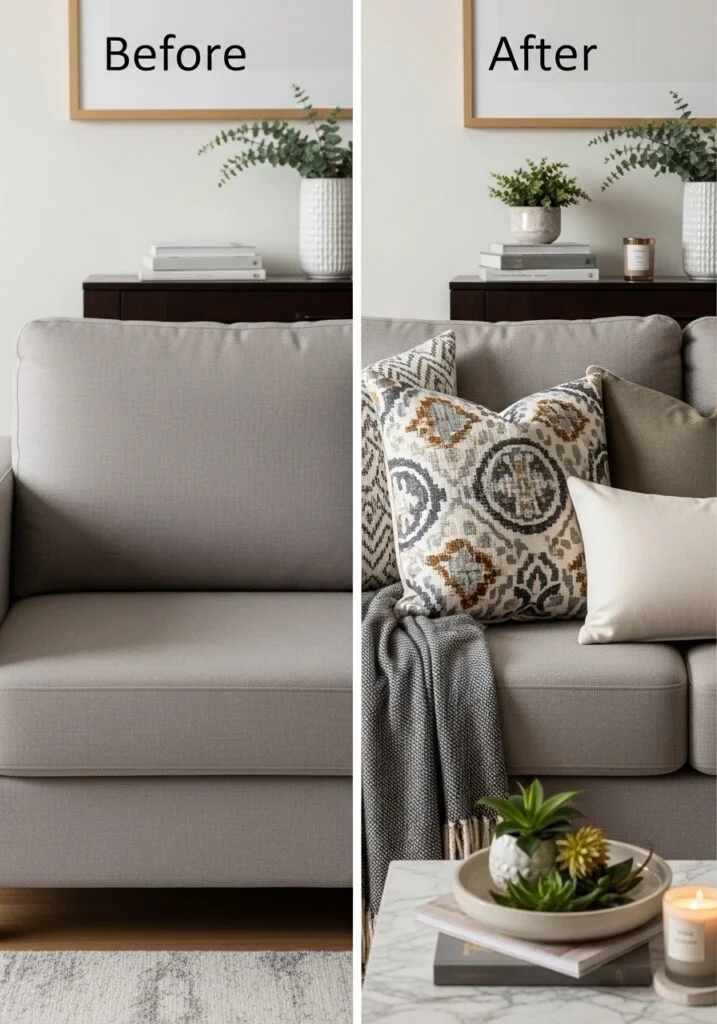
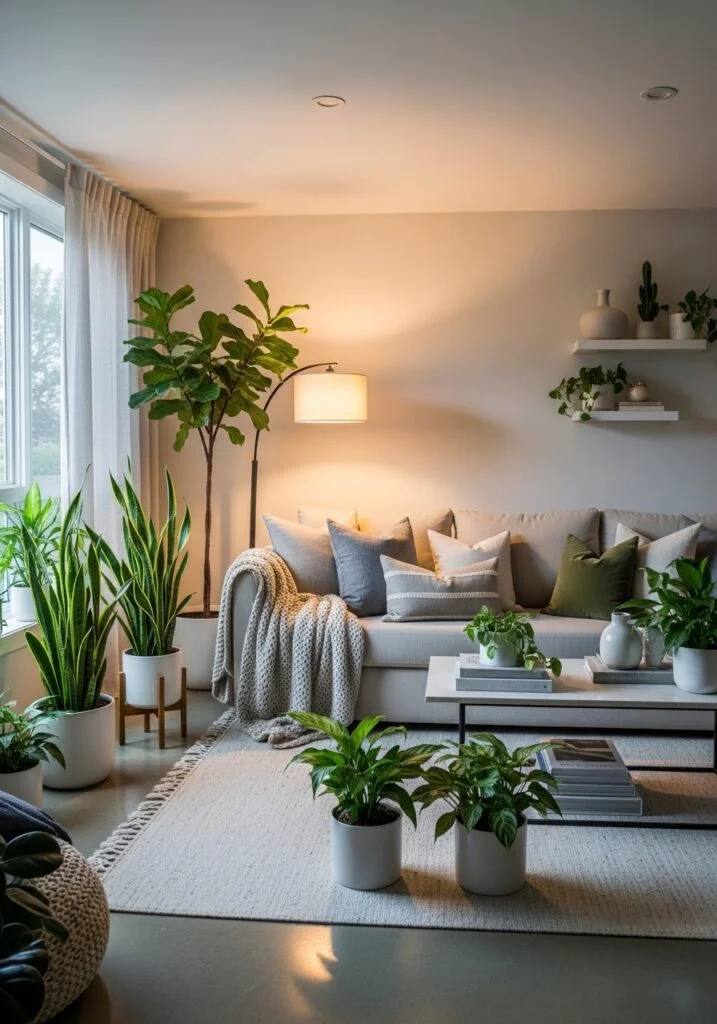
Textiles are the cheapest and most reversible layer, so they belong at the end. Add two or three materials that differ from the sofa: a chunky knit throw, linen curtains, a woven basket, a velvet pillow. Mixed finishes keep a neutral room from reading flat.
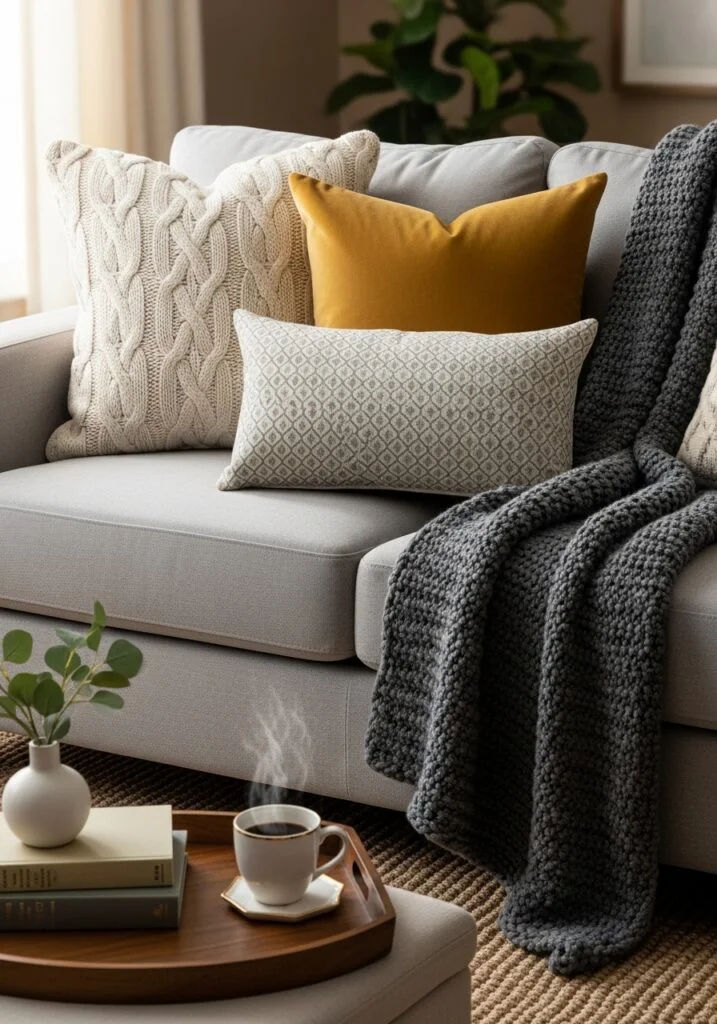
Keep the rotation simple. Buy pillow inserts once, around $15 to $25 each, and swap the covers by season at roughly $12 to $30 apiece. A spring-to-autumn change then costs less than a new vase, and the covers fold flat into a single storage bag.
Plants belong in this layer too. A single large plant in a 12-to-14-inch pot fills a corner without stealing floor. It needs a spot near a window, so it comes after the lighting plan, not before.
What to Do When You Already Bought the Small Stuff
Most readers arrive with a closet full of pillows and a lamp they love. Don’t panic and don’t return everything. Sort what you own into three piles.
Keep pile one: items that suit the sofa and rug you now plan to buy. Hold pile two: items you like but can’t judge yet. Box them and park them out of sight until the big pieces arrive. Return pile three: anything you bought on impulse that fights your palette. Many stores allow returns for about thirty days, but policies vary, so check dates before the window closes.
Boxing the maybes is the useful trick. A room without clutter is easier to judge, and a pillow you miss after a month earns its place back. Anything you don’t miss goes to donation, and you’ve saved yourself from fitting a room around it.
The Small-Room Exception
Small rooms follow the same order with one change: furniture count becomes the first decision. Before you pick a palette, decide what the room can lose. One sofa, one table, and one or two chairs is often the ceiling. The paper-template step matters more here, since a two-inch error shows up in every walkway.
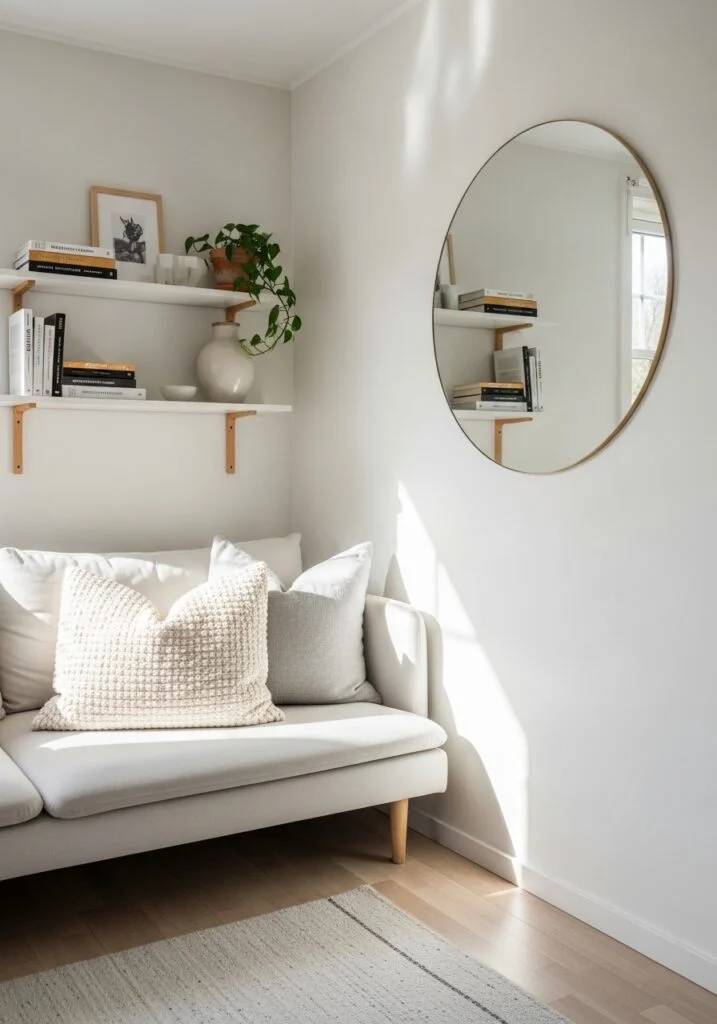
Light walls, sheer curtains, and a glass-topped table help, but only after the layout works. Settle the clearances first, then add those finishing touches.
Three Questions That Tell You the Room Is Finished
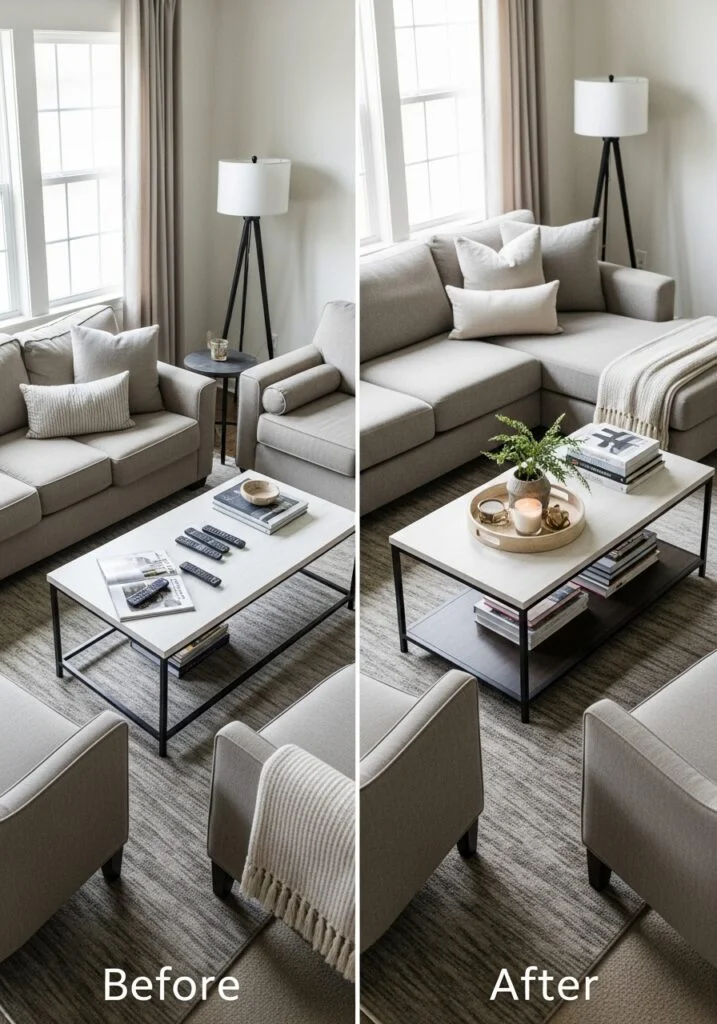
You can stop when you can answer yes to three questions. Can two people walk through the room carrying something without turning sideways? Does every seat have a light within reach? Could you remove any single object without anyone noticing?
If the third answer is yes, take that object out. If either of the first two is no, go back to the stage that owns the problem: the floor plan for the first, the lighting for the second. Everything else is optional polish, and it can wait until next season.
Frequently Asked Questions
How much should I budget for a living room refresh?
Plan the biggest share for the sofa and rug, since those are hardest to replace. For a 12-by-14-foot room, paint, a rug, two lamps, and swapped textiles often land around $800 to $2,000 before a new sofa. Costs vary widely by region and materials, so price the big items first.
Can I decorate a living room without painting the walls?
Yes, and renters do it constantly. Let a large rug, floor-length curtains, and one oversized artwork carry the palette instead. A 9-by-12 rug and two curtain panels cost less than a full paint job, and they travel with you. Peel-and-stick samples let you test any wall color first.
How many lamps does a living room need?
Most 12-by-14-foot rooms need three to five light sources in addition to the overhead fixture. Place one within arm’s reach of each seat and one to wash a dark corner. If any corner stays dim after dark, the room reads smaller, so add a lamp there first.
Is it okay to mix wood tones in a living room?
Yes. Mixing keeps a room from looking like a furniture showroom. Limit yourself to two or three tones, make one dominant, and match undertones, either warm and reddish or cool and gray. Repeat each tone at least twice, say a coffee table and a picture frame, so the mix looks planned.
How do I make an open-plan living area feel like its own room?
Define the edges with a rug and the back of a sofa. A rug large enough for all front legs marks the floor boundary, and a sofa back or low console marks the side. Add a lamp pair behind the sofa so the zone also has its own glow at night.