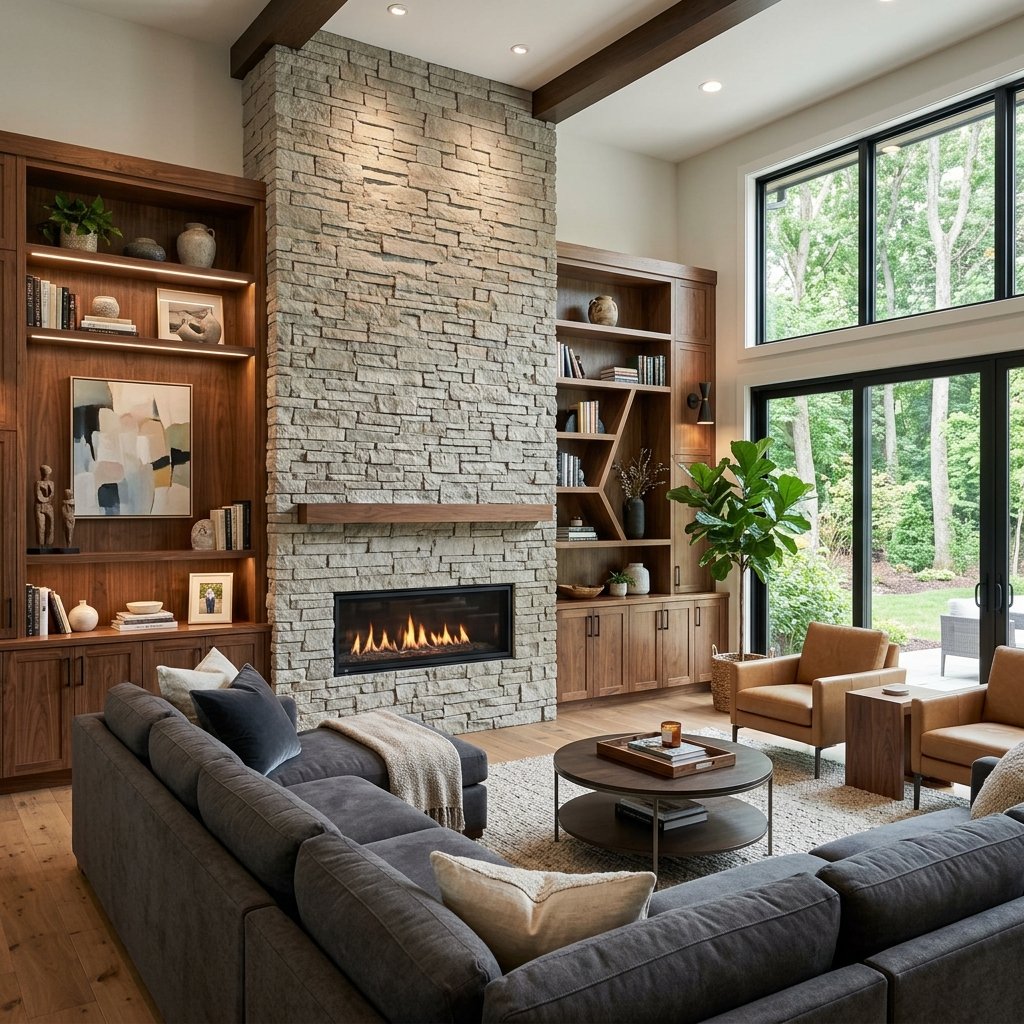
Fireplace Wall Ideas That Turn a Plain Focal Point Into a Statement
A fireplace gives a room a natural place to look. That doesn’t mean the wall around it automatically looks finished a plain painted surround can fade into the background, and an over-decorated one can end up feeling cluttered instead of cozy.
The fix usually isn’t more decoration. It’s treating the whole wall as one composition instead of a fireplace with some accessories tacked on.
That could mean running stone from floor to ceiling, wrapping the surround in warm plaster, adding a well-proportioned wood panel, or simply using light to bring out the architecture once the sun goes down. The point isn’t to dress up the mantel it’s to give the entire wall a shape that makes sense.
This matters more than it might seem, because the fireplace wall is often the visual center of the living room. Furniture gets arranged around it, conversations happen in front of it, and more often than not, the TV ends up on the same wall too. Get the wall right and you’ve solved several layout problems at once.
Below are ten ways to think about a fireplace wall through architecture, material, proportion, lighting, and storage rather than just another list of things to put on the mantel.
Start by Deciding What the Wall Actually Needs to Do
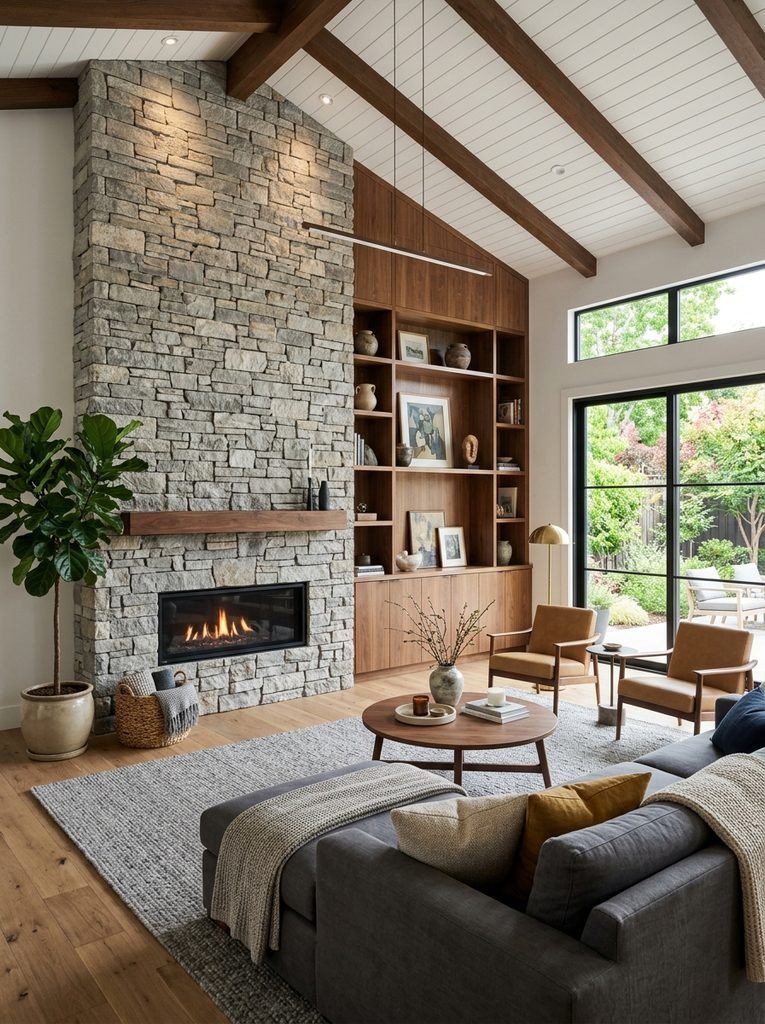
Before you get anywhere near swatches or shelving, figure out the job the wall has to do.
In some living rooms the fireplace is the only thing anchoring the space. In others it’s sharing the wall with a television, or it needs to carry storage on either side while the rest of the room stays visually light.
Stand at the entrance to the room, then sit where you’d normally sit, and notice where your eye actually lands each time. That’s the zone that deserves the strongest architectural treatment everything else can support it.
A few questions worth answering first:
- Does this wall need to hold storage, or just presence?
- Is a television part of the composition, whether you like it or not?
- Should the finished look feel bold, quiet, traditional, or more architectural?
The answers set the scale. A tall room can absorb a floor-to-ceiling stone surface without feeling heavy. A narrow apartment living room usually does better with a simple painted surround and one well-placed piece of art.
Above all, avoid treating the fireplace, the TV, the shelves, and the artwork as five separate decisions. They need a hierarchy something has to lead, and everything else has to support it.
If the TV is part of your equation and space is tight, our small living room TV placement guide is a good next stop before you commit to a layout.
Let Stone Run Past the Fireplace, Not Just Around It
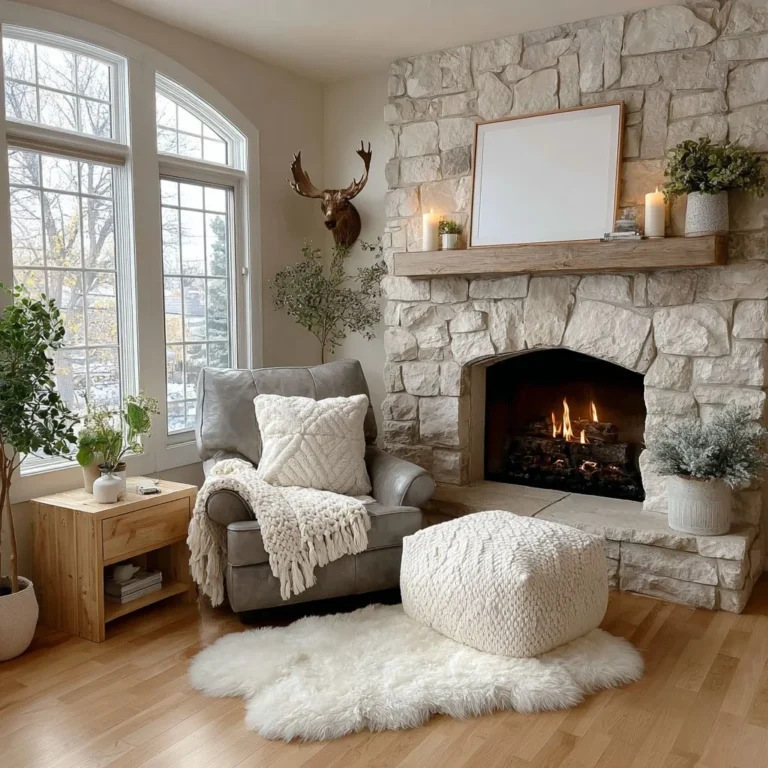
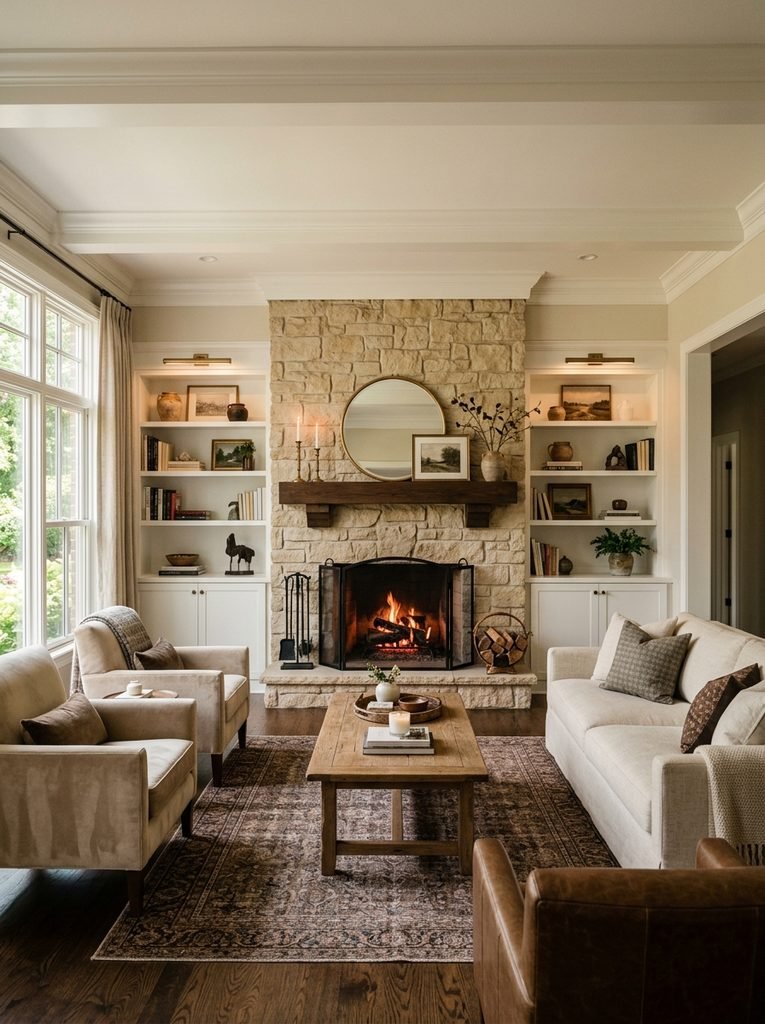
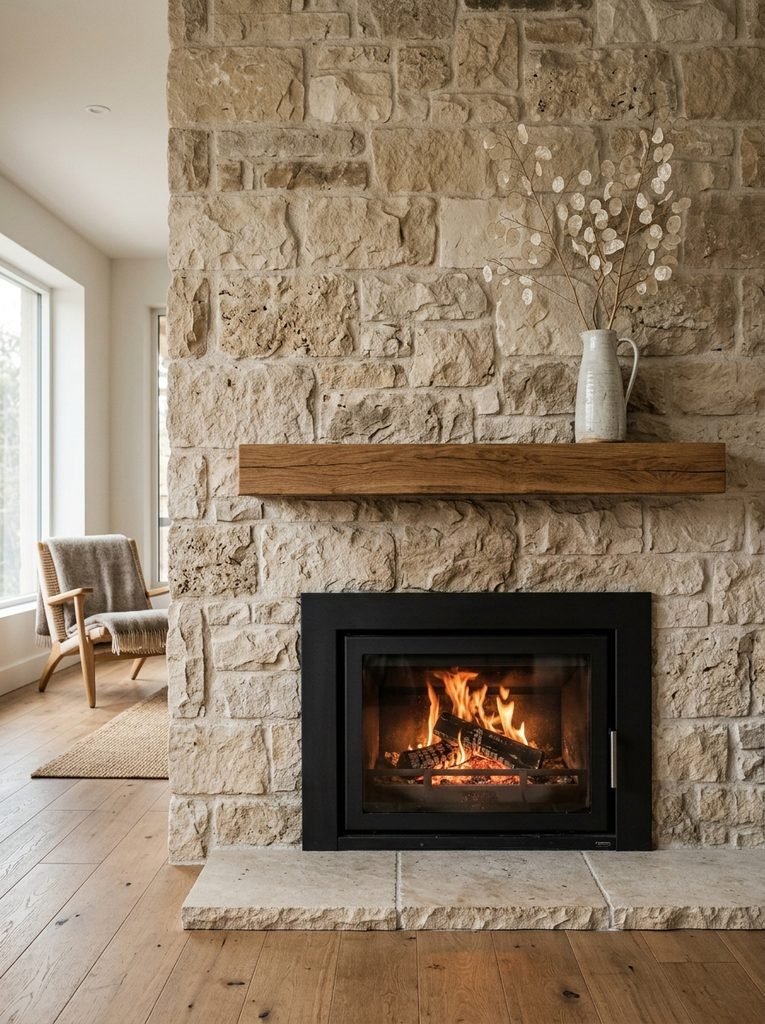
One of the more reliable ways to make a fireplace feel architectural rather than decorative is to let the material keep going past the firebox up the wall, and sometimes across it.
Honed limestone suits a quiet, contemporary room. Rougher fieldstone leans rustic. Large-format porcelain with soft veining can get you most of the visual weight of stone without the irregularity of smaller masonry.
Scale matters here as much as color does. Small stone pieces with heavy grout lines read as busy and a little dated. Bigger slabs, or panels that are carefully aligned, calm the whole wall down.
A few neutral pairings that tend to work:
- Cream limestone with walnut furniture
- Beige travertine with soft black accents
- Pale gray stone with oak and charcoal upholstery
- Warm ivory porcelain with aged brass details
You don’t need to stone the entire room one vertical plane behind the fireplace is usually enough contrast to define the whole seating area.
If your current fireplace is already white and just feels flat, changing the material can do more than adding another round of mantel decor. Our white fireplace ideas roundup is worth a look if you’re weighing lighter treatments before going full stone.
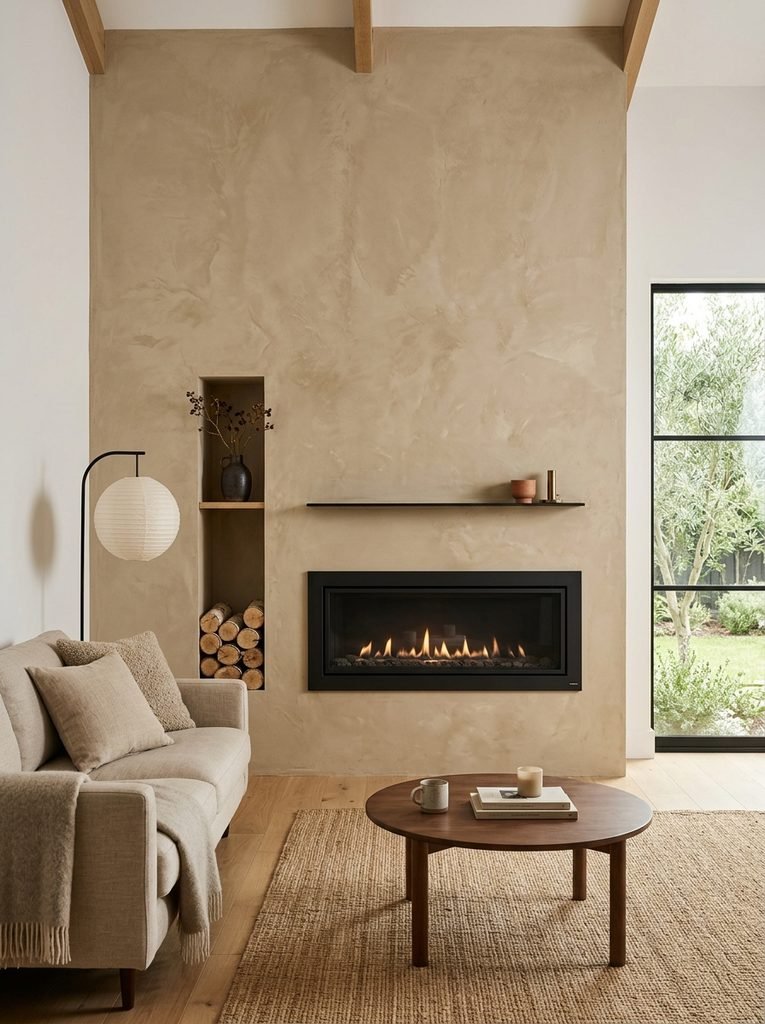
Try Plaster for a Softer, More Monolithic Look
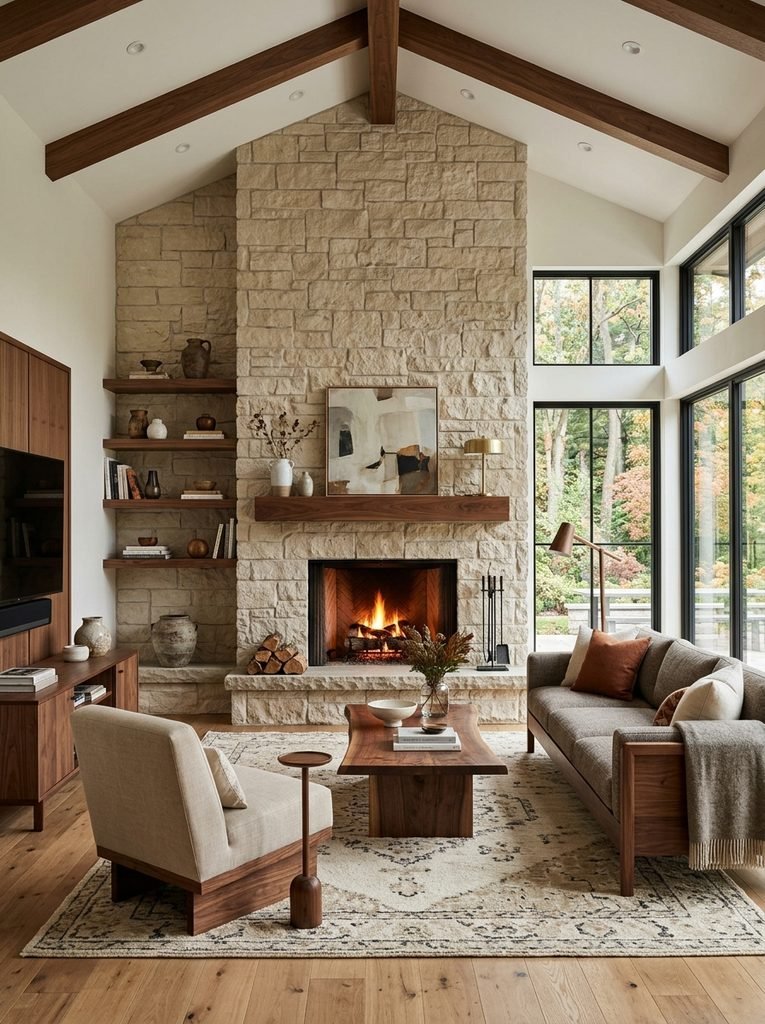
Stone isn’t the only route to presence. Plaster does something quieter it feels integrated rather than applied, which suits homes where you want texture without an obvious pattern.
A warm limewash or mineral-style finish creates gentle variation across a large wall, so instead of a bold pattern you get a surface that changes as the light moves across the room during the day.
This pairs especially well with a simple fireplace opening. A broad plaster wall with a thin black firebox can look complete on its own no big mantel, no collection of objects required.
Colors that tend to hold up well:
- Warm ivory
- Mushroom beige
- Clay
- Soft taupe
- Muted olive-gray
Let the furniture carry the texture the wall doesn’t: a chunky stone coffee table, a linen sofa, a natural oak chair, a handmade ceramic lamp. None of it needs to shout.
Lighting matters more here than with most other finishes. A concealed uplight or a narrow beam grazing the plaster at night is often what reveals the texture that gets lost in flat daylight photos.
Build a Wood-Panel Wall With Some Restraint
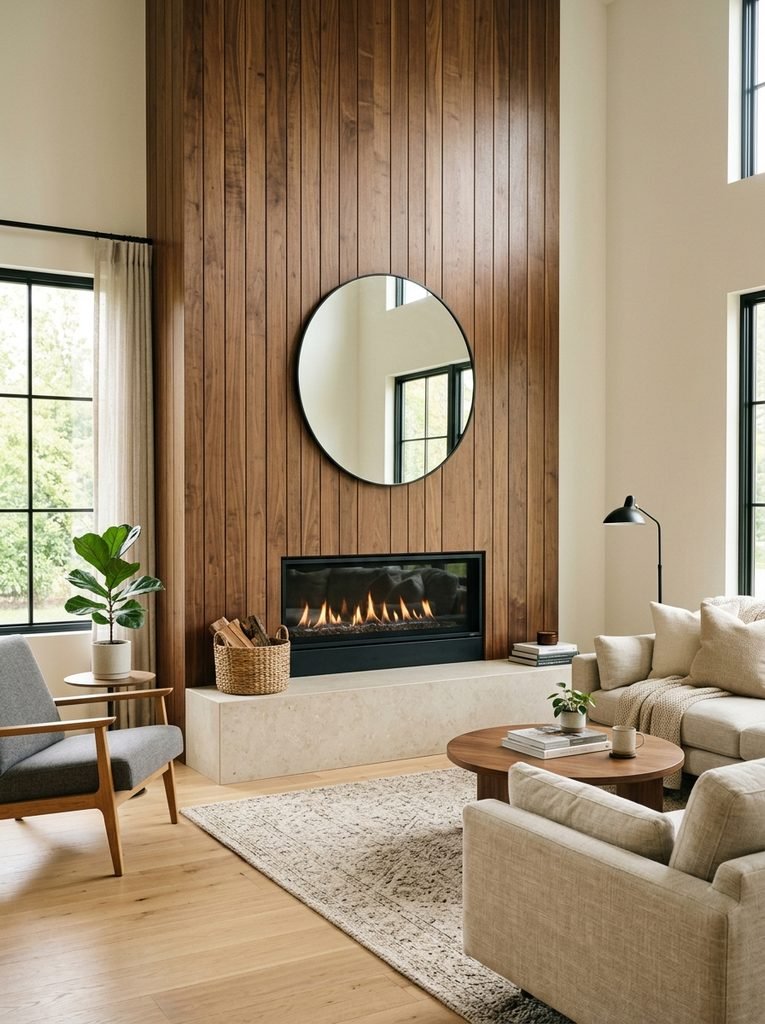
Wood gives a fireplace wall weight without the heaviness of masonry. Vertical oak or walnut panels work particularly well when the ceiling is tall, since the grain pulls the eye upward and reinforces the height you already have.
The trick is not layering pattern on pattern. If the wood grain is already doing a lot of visual work, keep the furniture around it simple.
A few combinations to consider:
Light oak + charcoal fireplace — clean and a little Scandinavian. Add cream upholstery and black fixtures for contrast.
Walnut + limestone — walnut cabinetry next to a pale stone surround gives you a richer, more layered look.
Smoked oak + bronze — darker and more dramatic, best in rooms that get plenty of natural light to balance it out.
You can also break up the wood with a narrow stone or plaster section directly around the firebox, so the wall doesn’t start reading as one long cabinet.
In a smaller room, using wood only directly behind the fireplace rather than across the full wall creates a defined zone without shrinking the space visually.
Add Built-Ins Without Turning the Wall Into a Media Cabinet
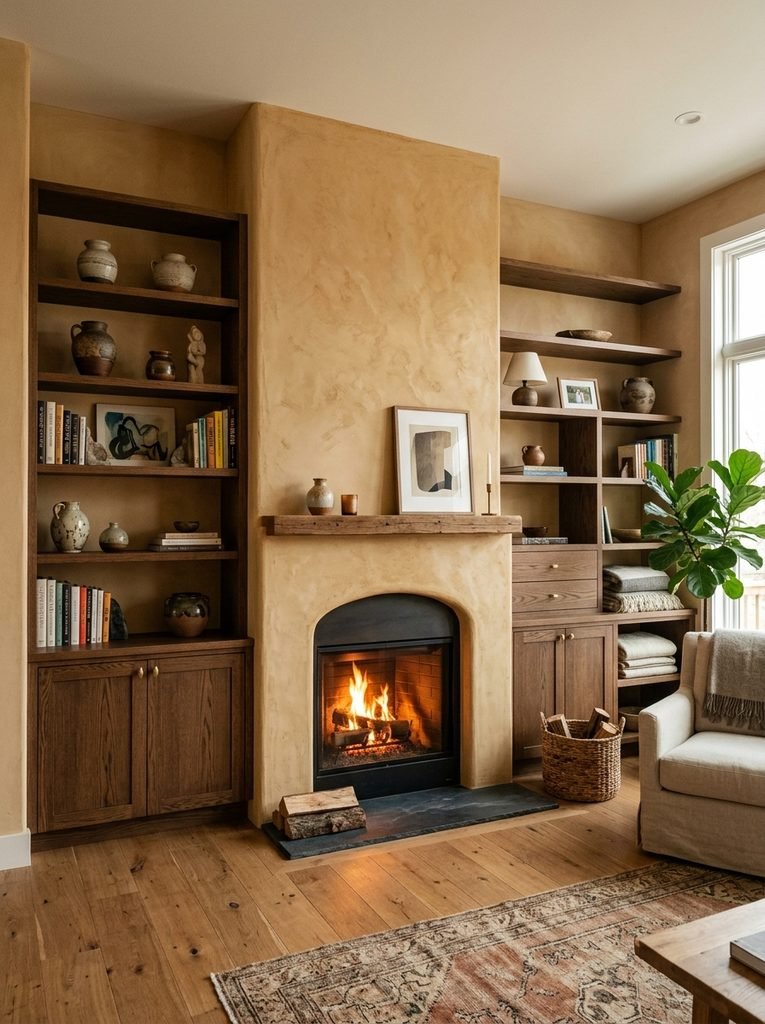
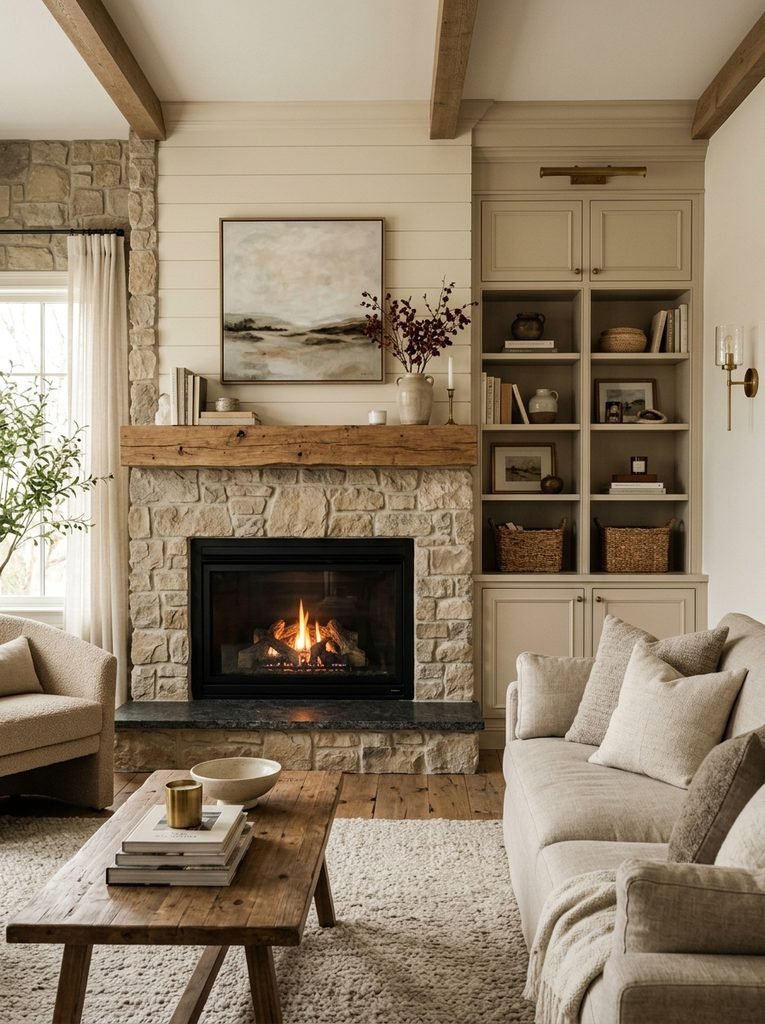
Built-in shelving around a fireplace is practical, but it’s an easy way to end up with a wall that looks like one giant entertainment unit rather than a fireplace with storage nearby.
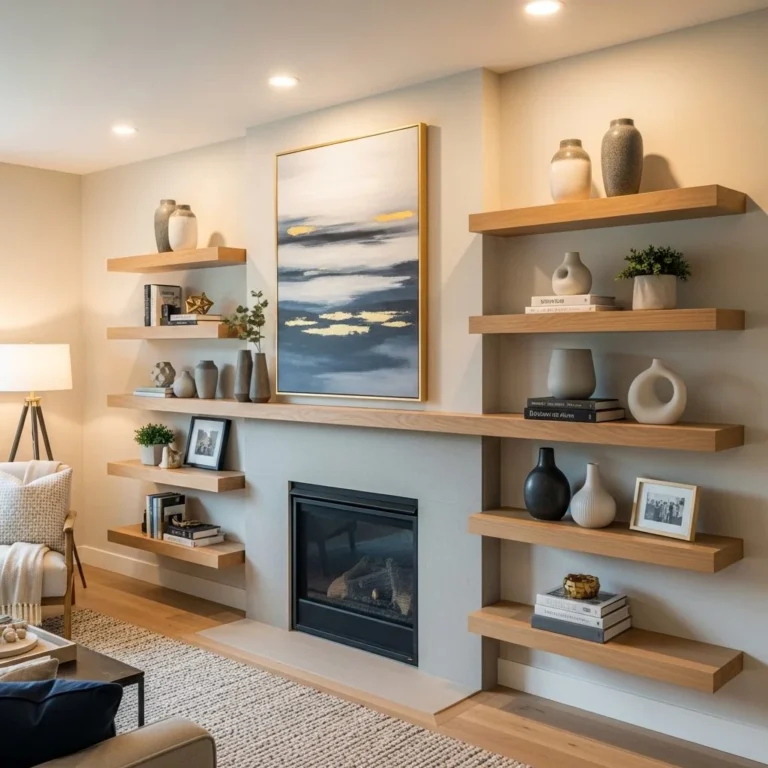
Give the fireplace room to stand on its own. Leave a clear vertical zone around the firebox and treat the built-ins as support, not competition closed cabinets low, open shelving above where the visual weight can be lighter.
Proportion is the whole game. Narrow shelves crammed with small objects make the wall look busy fast. Wider niches let books, art, and ceramics actually breathe.
Asymmetry helps too a full-height cabinet on one side and open shelving on the other tends to read as custom rather than off-the-shelf.
When it comes to styling, resist filling every shelf. A few books, one large ceramic vessel, a framed piece of art leaning rather than hung, and a single sculptural object can carry an entire section. For more on getting the proportions right, see our guide to floating shelves around a fireplace.
Go Dark and Let the Firebox Do the Glowing
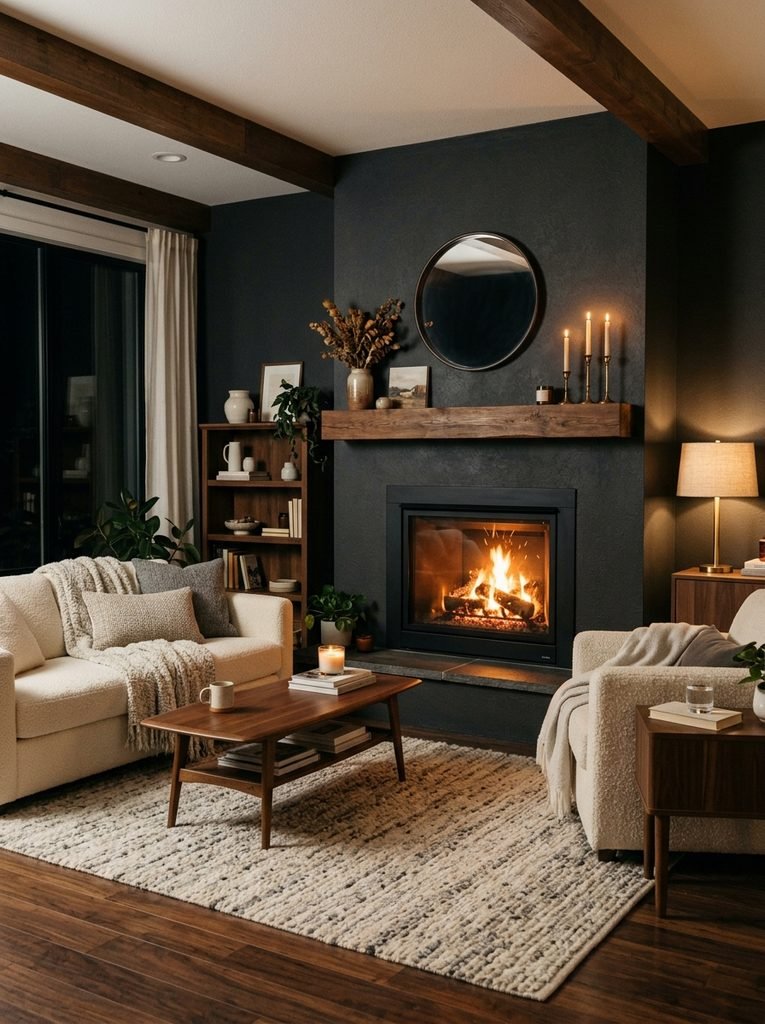
A dark fireplace wall changes the whole mood of a room. Charcoal, deep brown, muted black, or even a dark green can give the fireplace real presence without a single extra decorative object and it tends to work best in rooms that already get plenty of daylight or have pale flooring and upholstery to play off of.
The trick isn’t darkening everything around the fireplace it’s contrast. A charcoal wall against a cream sofa creates real tension in a good way. Bring in natural oak or walnut so the room doesn’t tip into feeling stark, and let a touch of brass or aged bronze sconces, hardware, fireplace tools add warmth back in.
Finish matters more than you’d think. Matte absorbs light and keeps the wall quiet; a subtly textured finish keeps a dark color from going flat and lifeless.
At night, the fire itself becomes the main light source in the room. Pair it with warm sconces or concealed lighting around the wall instead of leaning on overhead fixtures, which tend to flatten the mood a dark wall is trying to create. This works especially well in open-plan spaces, where a dark fireplace wall can anchor the whole seating area on its own see our piece on layered lighting in modern living rooms for more on getting that balance right.
Give a Small Fireplace More Height Than It Actually Has
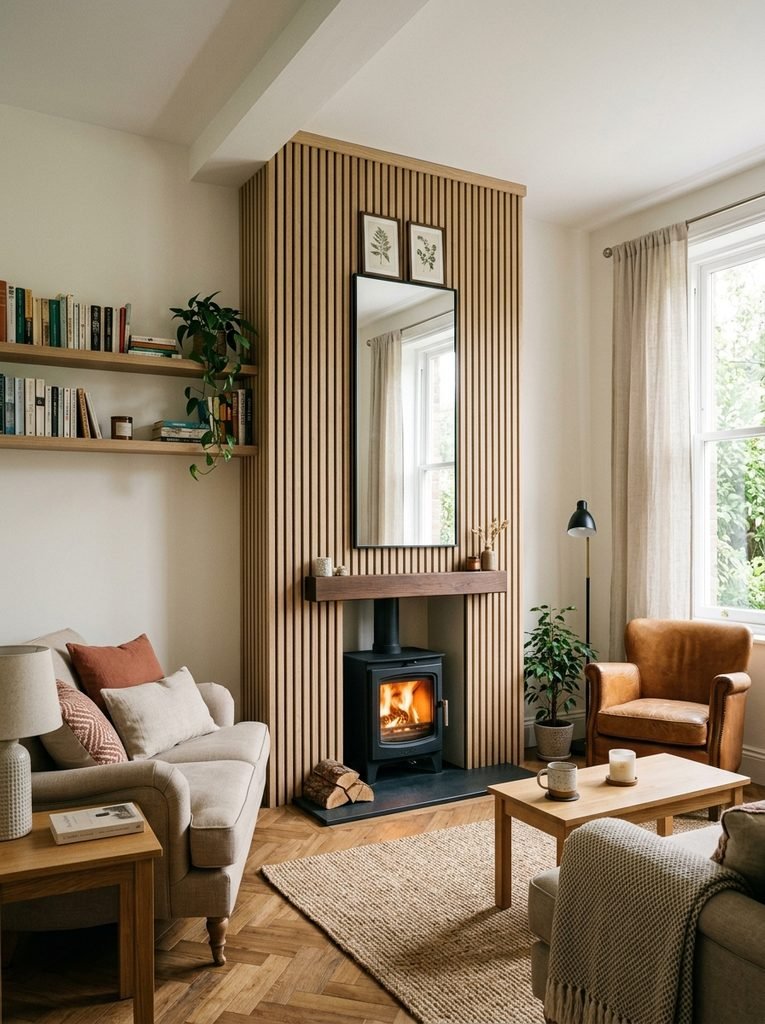
A small firebox doesn’t have to look small. If your room has generous ceiling height but a modest fireplace, use vertical elements to visually connect the two a tall plaster surround, vertical tile, narrow wood slats, or a full-height painted panel running from the fireplace to the ceiling.
Another option is a tall piece of art or a mirror above the fireplace, but scale is everything here. A small frame over a wide fireplace tends to make the whole arrangement look undersized rather than intentional.
In compact rooms, fewer materials read as more considered. One wall finish, one fireplace finish, one furniture tone that’s usually enough to make the composition feel clean rather than sparse.
If you’re integrating a TV, avoid lining everything up at exactly the same width. A little variation between the fireplace, the panel, and the screen tends to look more like architecture and less like a kit.
Give the Fireplace and TV a Real Hierarchy
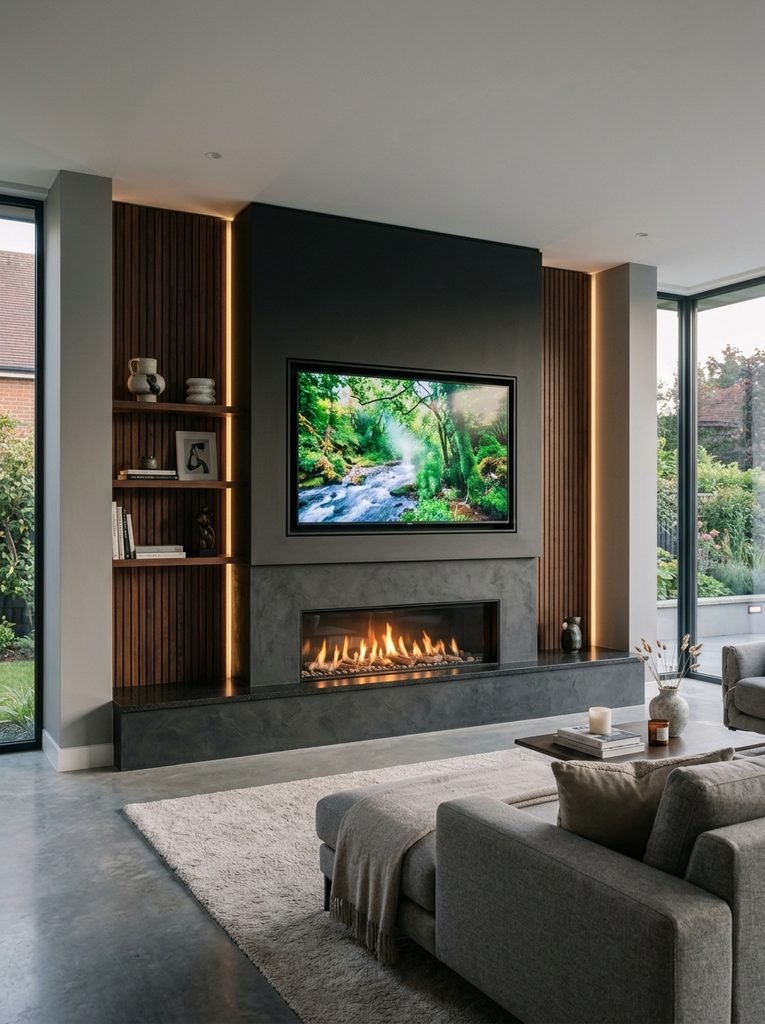
Mounting a TV above the fireplace is practical, but it can also leave you with two competing rectangles fighting for attention on the same wall.
More decoration isn’t the fix. What actually works is giving the pair a hierarchy a long horizontal fireplace under a modestly sized screen, tied together with a stone, plaster, or wood background so they read as one thing rather than two.
You can also frame both elements inside a larger rectangle of cabinetry or open shelving, which makes the whole setup feel designed rather than just mounted. Keep the zone immediately around the screen fairly quiet small decorative objects near a TV get distracting fast, especially in a smaller room.
Worth double-checking before you finalize the layout: viewing height and the manufacturer’s heat clearance guidelines. A wall can look great on paper and still be a bad place to actually watch television. If space is at a premium, our small living room layout guide covers how to balance the screen against seating and circulation.
Use Tile to Get Pattern Without Overdoing the Room
Tile is a good option when the rest of the room is fairly restrained and you want the fireplace wall to carry some personality on its own.
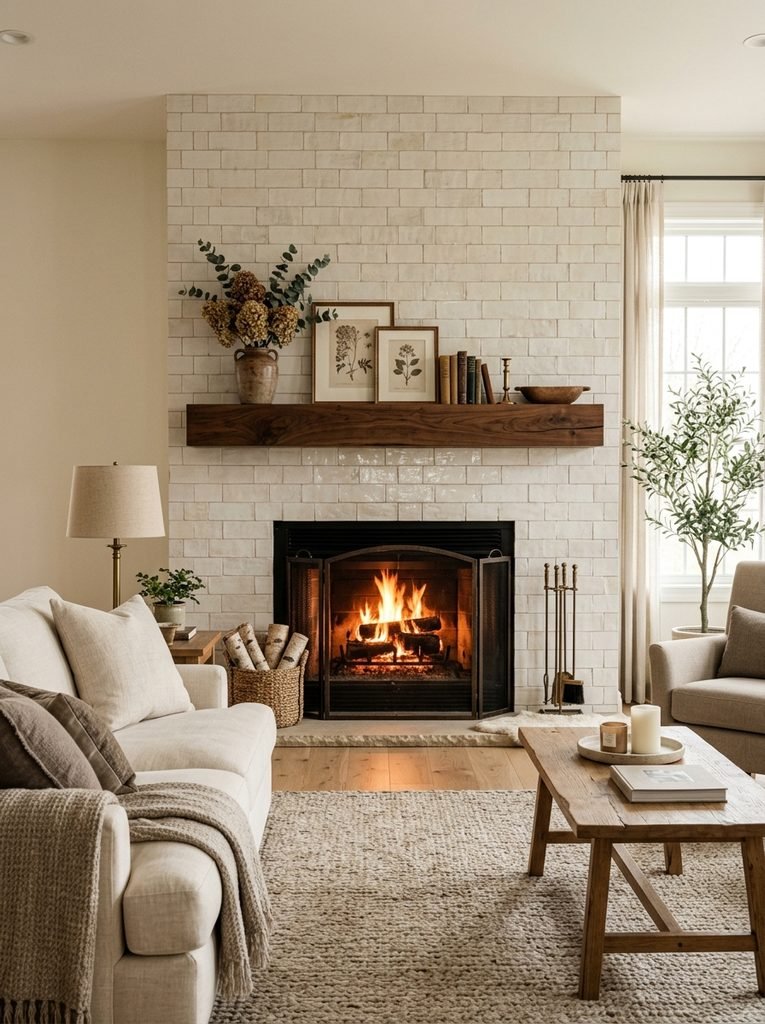
Large-format tile stays calm and architectural. Smaller handmade tiles bring in variation and a sense of craft. Vertical rectangular tiles emphasize height; horizontal layouts can visually widen a narrow wall.
The best-looking results usually let the tile provide the pattern and keep everything else simple:
- Cream zellige-style tile with dark grout
- Soft green handmade tile with natural oak
- Warm terracotta tile with ivory plaster
- Large beige stone-look porcelain with black metal
- Muted blue-gray tile with walnut cabinetry
The tile doesn’t need to run to the ceiling a proportioned surround with a painted wall above can look intentional, and it’s often a better fit for lower-ceilinged rooms anyway.
Scale is the thing to get right. Tiny, high-contrast tiles around a small fireplace tend to fragment the whole wall visually. Larger formats almost always read calmer.
Plan for How the Wall Looks After Dark
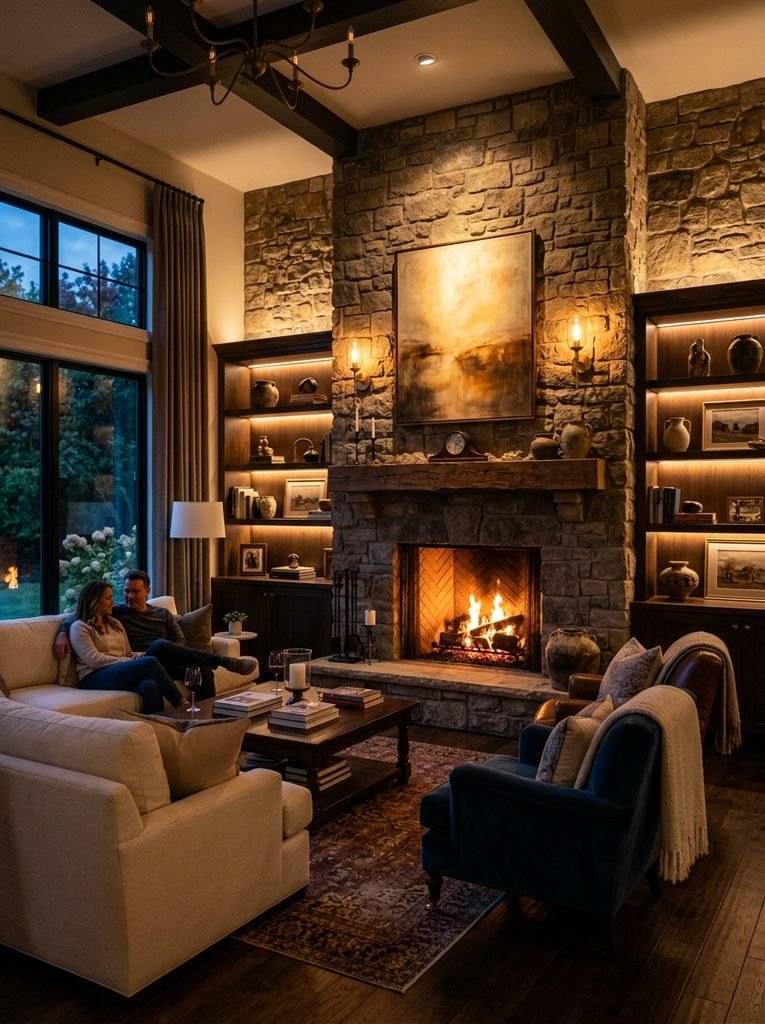
A fireplace wall should hold up at night, not just in daytime photos. This is where lighting can make an otherwise simple material feel genuinely architectural the trick is revealing specific surfaces rather than flooding the whole wall with light.
Wall-washing fixtures bring out texture in stone or plaster. Picture lights do the same for artwork. Recessed spots can pick out shelving or one particularly good section of material.
If the fireplace already casts a warm glow, don’t fight it with cool white bulbs elsewhere on the wall warm light throughout the seating area reads as one cohesive space rather than two competing light sources. Hidden LED strips under a mantel or inside built-in niches add depth without the fixture itself becoming visible.
It helps to think of the lighting in three layers: general room light for everyday use, task lighting where people actually read or work, and accent lighting aimed specifically at the fireplace wall. We go into this in more depth in our piece on layered lighting and warm materials.
Once the Wall Is Doing the Work, Let the Mantel Rest
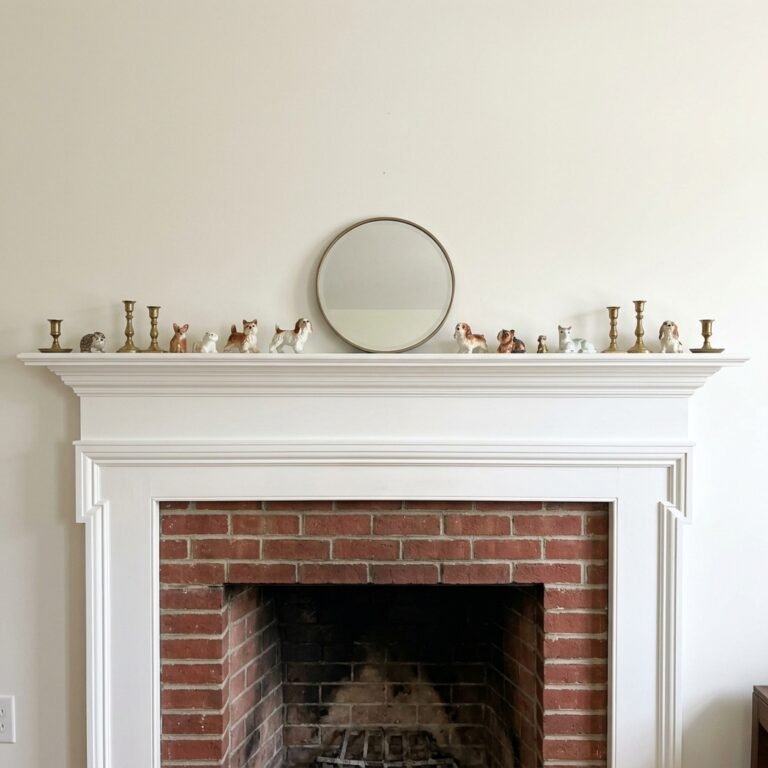
A strong fireplace wall doesn’t need a busy mantel to match it. If anything, the opposite is true the more architectural the wall, the less the mantel needs to do.
A full-height stone surface, dramatic tile, dark plaster, or a large wood panel is already carrying plenty of visual weight. Ten small objects on top of that can bury the very feature you built the wall around.
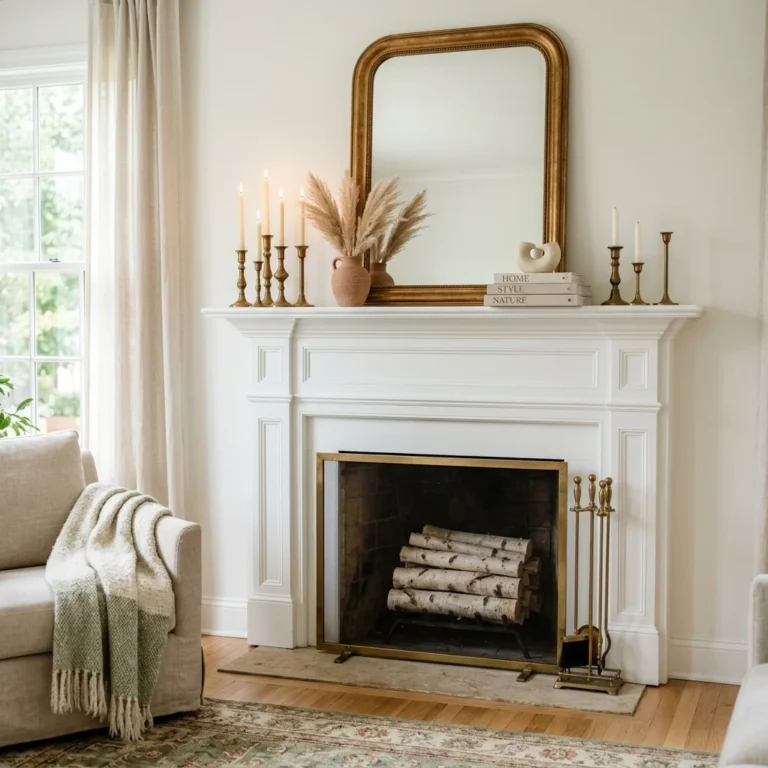
One substantial object, or a small and deliberate grouping, usually beats a crowd: a wide ceramic vessel, a large piece of art, a simple pair of candlesticks, one branch in a tall vase.
Empty space on the mantel isn’t a gap to fill — it can be part of the composition. This matters even more on narrower mantels, where clutter shows up faster. Our piece on the mantel styling mistake that makes fireplaces look unfinished goes deeper into getting those proportions right.
Fireplace Wall Ideas by Home Style
The same principles hold up across very different homes it’s the finish that needs to shift to match what’s already around it.
Modern Homes
Large-format stone, smooth plaster, concrete-look porcelain, or slim wood panels all work well. Keep the fireplace opening simple and resist the urge to add decorative objects just because there’s room for them. A long, horizontal fireplace pairs naturally with low furniture and wide rooms.
Traditional Homes
Painted millwork, classic marble, brick, and natural limestone are all safe bets. A substantial mantel can work here, but it needs to match the scale of the room and the existing trim warm metals and framed artwork reinforce the traditional feel without tipping into formal.
Rustic Homes
Natural stone, reclaimed wood, lime plaster, and textured masonry do most of the work on their own. Let the irregularities in these materials stay visible instead of covering them up with decor a simple wood mantel and a few woven baskets are usually enough.
Apartments
Lean lighter: painted plaster, slim electric fireplaces, shallow built-ins, vertical paneling, and large-format tile can all create real impact without eating into floor space. If you’re renting, reversible treatments and freestanding furniture make more sense than anything permanent our guide to decorating a rented apartment to look custom has more ideas along these lines.
Mistakes That Undercut an Otherwise Good Fireplace Wall
A statement wall should feel intentional, not complicated. A handful of common decisions tend to work against that.
Turning every surface into a feature. Stone, bold wallpaper, dark cabinetry, patterned tile, brass, dramatic art, and colorful accessories can all look great on their own put them all in one place and they start competing instead of cooperating.
Ignoring how tall the room actually is. A strong vertical material that stops halfway up a tall wall tends to look unfinished rather than deliberate.
Undersized furniture. A big fireplace wall needs furniture with enough visual weight to hold its own against it. Small side tables and narrow seating just make the wall look more dominant than it needs to.
Filling every niche. Built-ins need negative space as much as they need objects. A handful of larger pieces usually reads better than a shelf packed with small ones.
Not checking materials under different light. Stone that looks warm and creamy in daylight can go gray under cool artificial light at night. Test samples both ways before committing.
Forgetting how people actually move through the room. A beautiful wall still has to coexist with real foot traffic keep walkways clear and think through how people sit, watch TV, and get past each other.
Treating the fireplace as the only decision that matters. The wall needs to connect to the flooring, sofa, lighting, curtains, and nearby art a fireplace can look impressive in isolation and still feel disconnected from the rest of the room.
Building a Statement Wall Without a Full Renovation Budget
A dramatic fireplace wall doesn’t require expensive stone or custom cabinetry to work.
Paint alone can shift the whole feel a deeper tone behind a simple fireplace creates real contrast for very little cost. Another option is upgrading just the immediate surround with something more distinctive while leaving the rest of the wall painted; large-format porcelain, simple tile, or a well-finished plaster surface can carry the architecture without covering the whole room.
Wood trim is flexible too. Narrow vertical battens or basic panel molding add rhythm to a wall without requiring full custom millwork.
If you’re renting or just want to test an idea before committing, a freestanding electric fireplace with removable wall treatment lets you try the look before making it permanent.
The best use of a limited budget is usually spending on whatever occupies the most visual area. If the fireplace wall is the first thing people see when they walk in, a better wall finish will do more than a stack of new accessories ever will.
The Last Thing: Give the Wall Room to Breathe
A fireplace becomes a statement once the wall around it has a clear idea behind it the quiet variation of plaster, the grain running through walnut, the irregularity of natural stone, the geometry of tile, or the contrast of a dark wall against a glowing firebox. The strongest versions of this all pick one architectural language and let everything else in the room support it.
Start with the wall’s proportions. Decide how the fireplace relates to the TV or to any storage it needs to carry. Choose materials that actually fit the room’s existing palette. Then bring in lighting to make sure the whole thing still works after dark.
Once the architecture is carrying its share of the weight, styling gets a lot easier often with fewer accessories, fewer colors, and fewer competing features than you’d expect going in.
The result is a wall that reads well from across the room and still holds up when you’re standing right in front of it.