Apartment Bedroom Ideas for Creating a Boutique Hotel Feel at Home
A boutique hotel bedroom feels polished because someone has edited it carefully. The furniture fits the footprint, the sightlines are controlled, the materials relate to each other, and every useful object looks like it has a deliberate place to live.
That approach translates especially well to an apartment bedroom, where square footage is limited and a full renovation usually isn’t on the table. Rather than trying to recreate a hotel room piece by piece, focus on the decisions that make a compact bedroom feel composed rather than just full.
Work with the architecture you already have. In a rental, that mostly means removable upgrades; if you own the place, you’ve got more room to play with lighting, cabinetry, wall treatments, and built-ins. Either way, proportion does more of the work than the number of decorative objects ever will.
The ideas below focus on layout, furniture scale, visual zoning, materials, storage, window treatments, and the small details that make a bedroom feel intentionally designed rather than just filled in.
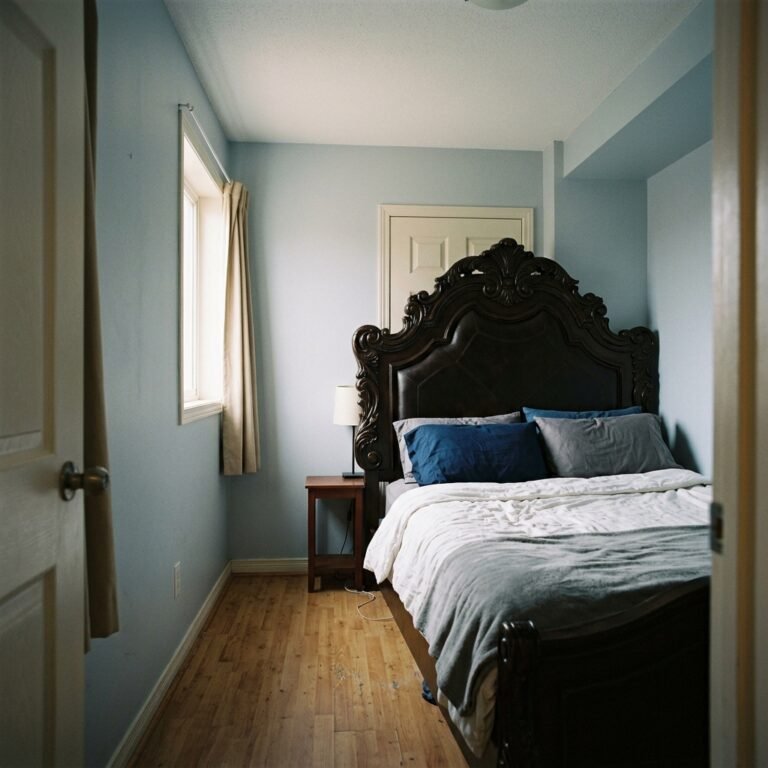
Start With the View From the Bedroom Door
Before you buy anything, stand at the entrance and look straight into the room.
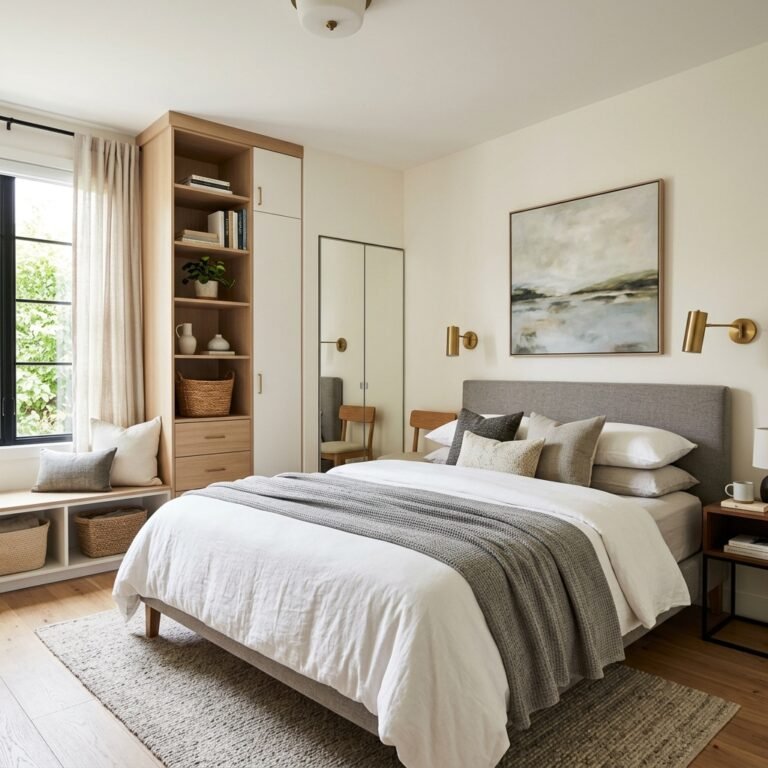
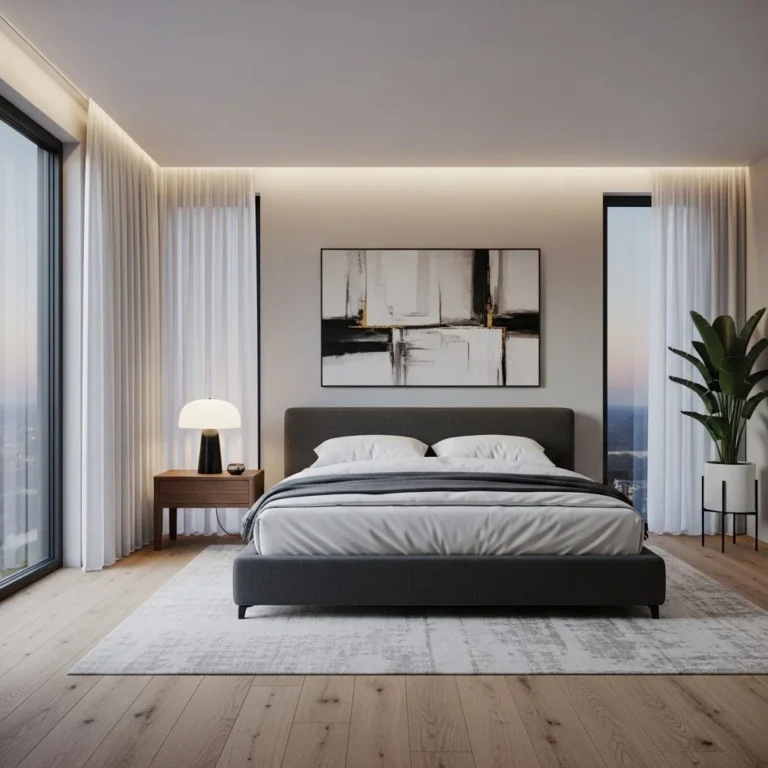
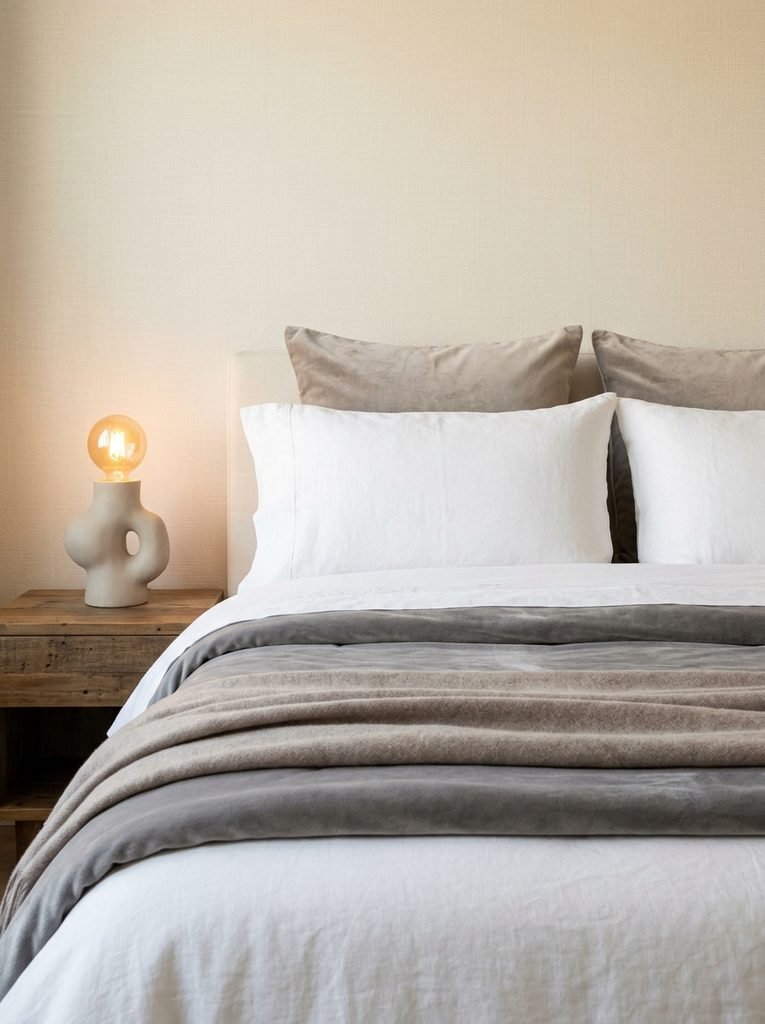
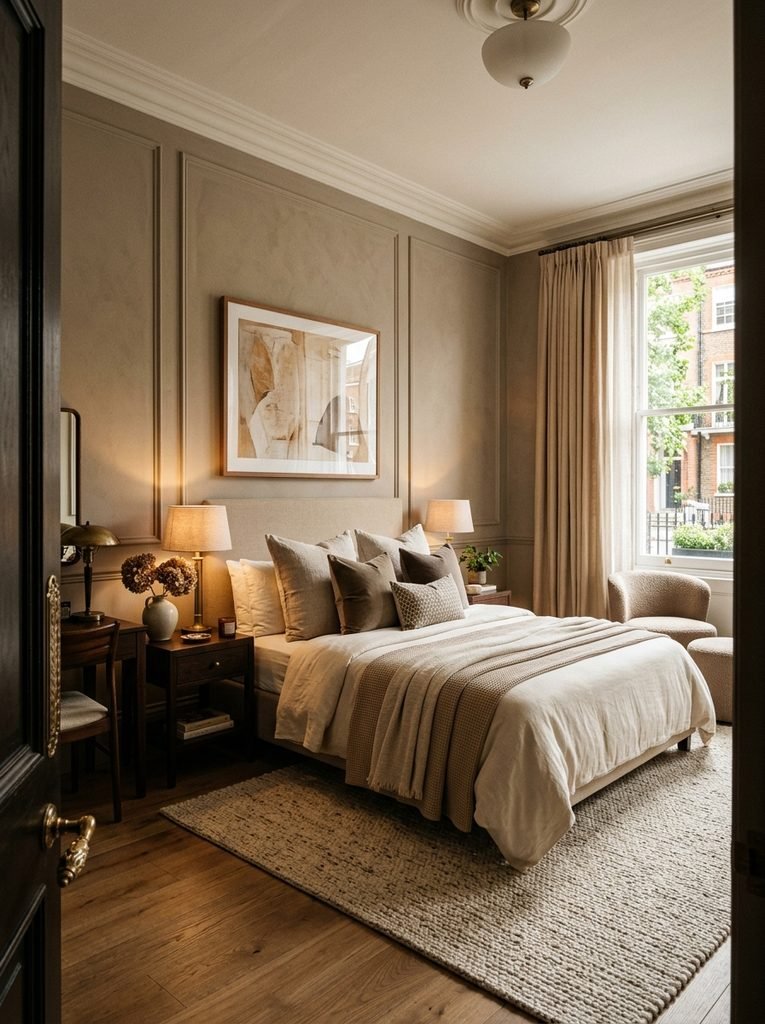
This one exercise tells you more than scrolling through a hundred inspiration photos. The first view into the room should lead your eye somewhere specific — the bed, an upholstered headboard, a piece of art, or an architectural feature. One clear destination.
If there’s another option, don’t let a tall wardrobe, open shelving, a laundry basket, or a stray chair sit directly in that sightline. The first few feet inside the door should feel visually quiet.
This matters even more in an apartment, where the entrance often opens straight toward the bed. Instead of scattering several small objects across the visible wall, give the eye one strong place to land.
A composition that tends to work:
- A substantial upholstered headboard
- Two restrained bedside surfaces
- One large artwork or a simple architectural wall treatment
- A limited palette of warm neutrals
- Clear floor space around the main furniture
The room doesn’t need to be big. It needs a clear order to it.
Choose the Bed Around the Room, Not the Other Way Around
The bed is usually the biggest object in an apartment bedroom, so its size ends up dictating how everything else works which is exactly why it’s worth getting right before anything else.
A common mistake is buying the largest bed that technically fits and only realizing afterward that there’s barely room to walk around it. A boutique-style room needs some air around its main furniture, even when space is tight.
Measure the room first. Mark the proposed bed footprint on the floor with painter’s tape and actually live with it for a day walk around it, open the wardrobe, pull out drawers, stand beside the bed like you’re making it, check the path between the door and the window. It’s a small step, but it can save you from an expensive mistake. Most interior designers point to roughly 24 to 30 inches of clearance on the sides and foot of the bed as the range that keeps a room feeling livable rather than cramped, so use that as your rough target when you’re taping out the floor.
If the room is narrow, a lower-profile bed helps preserve openness. In a larger bedroom, a taller upholstered headboard can turn the bed into the room’s actual centerpiece.
The headboard should scale to the width of the bed and the walls around it an oversized design can look dramatic in photos and heavy in real life, especially in a compact apartment. Our piece on the headboard mistake that makes small bedrooms feel cramped is worth a read before you commit to a size.
If you’re renting, a freestanding upholstered headboard, removable padded wall panels, or a fabric-covered panel system can all add height without any permanent construction.
Build the Room Around Three Functional Zones
A boutique hotel room works because each activity has its own defined place. You can borrow that idea for an apartment bedroom without adding a single wall.
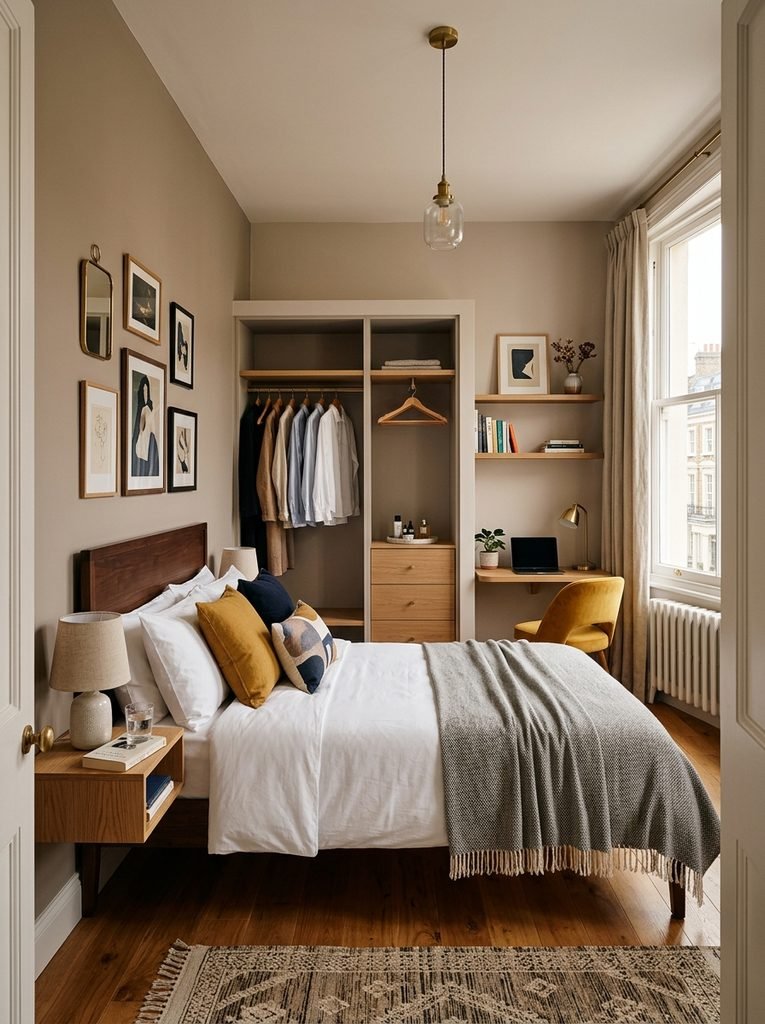
Think of the room in three parts:
The sleeping zone
The visual center of the room. Keep the bed, bedside furniture, and the wall immediately around them cohesive.
The dressing zone
Wardrobe, dresser, mirror, clothing storage. Group these together rather than letting storage drift around the room in pieces.
The arrival zone
Whatever’s closest to the entrance. Give it a job a small bench, a narrow console, wall hooks, a mirror, somewhere specific for a bag and everyday items.
None of these zones need physical boundaries. Their whole purpose is keeping the bedroom from turning into a pile of unrelated furniture.
A narrow bedroom might put the bed on the long wall, the wardrobe directly opposite, and a slim bench near the door. A square room often works better with the bed centered on one wall and the dressing area tucked into whichever corner gets seen least. Planned this way, storage is much less likely to slowly creep into the sleeping area over time.
Let the Wall Behind the Bed Carry the Architecture
Most apartments don’t come with the architectural detail you’d find in a boutique hotel plain drywall, a standard ceiling, not much built-in character to work with.
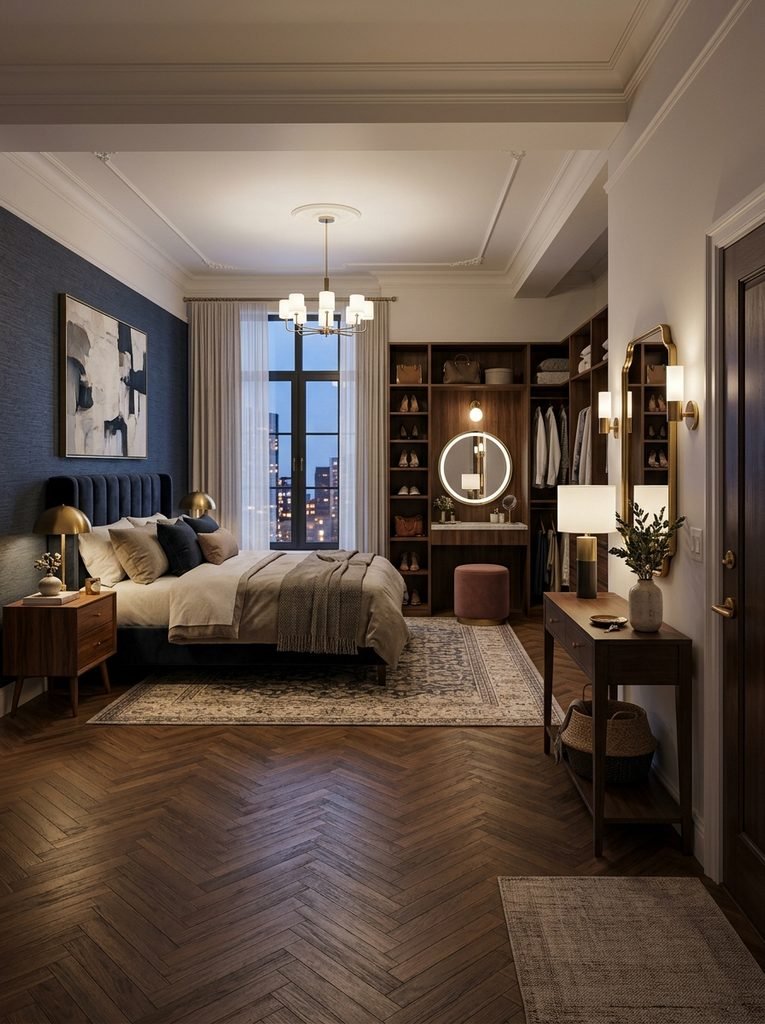
The wall behind the bed is your best chance to introduce some of that structure yourself.
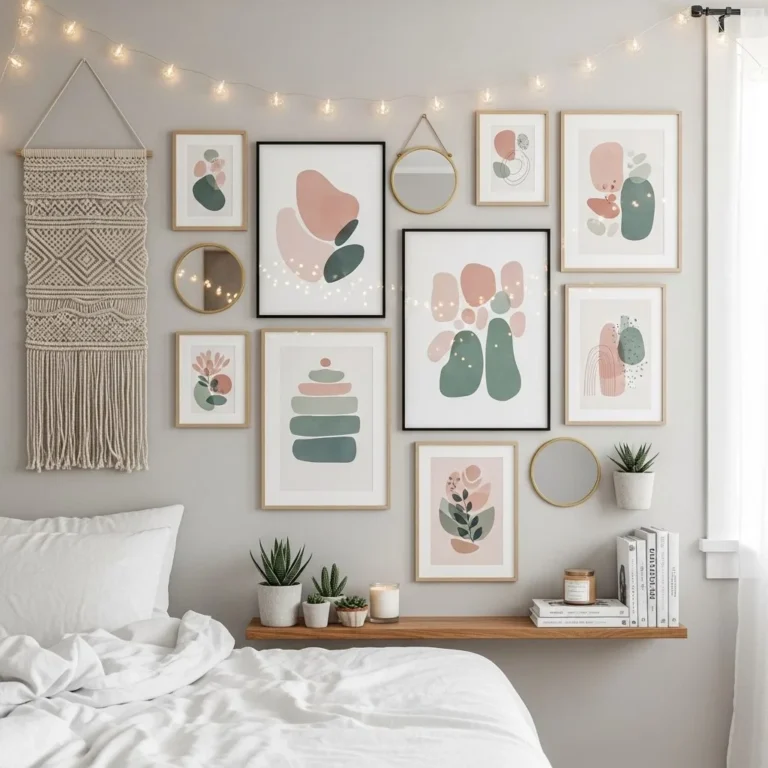
Rather than covering it with several small decorative pieces, pick one strong treatment:
- Full-height upholstered panels
- A wide painted color block
- Removable wallpaper
- Vertical wood slats
- A limewash-style removable finish
- A large framed textile
- Simple picture-frame molding, where it’s allowed
- A broad upholstered headboard that extends past the mattress
Whatever you choose should reinforce the width of the bed rather than compete with it.
In a small apartment, vertical lines emphasize ceiling height, while horizontal emphasis can make a narrow room read as wider. One large continuous surface often looks calmer than a cluster of small frames ever could.
If you’re renting, removable wallpaper or freestanding panels give you the same effect without touching the actual wall. The goal isn’t to make your apartment look like a hotel set it’s to give the bed wall enough presence that the rest of the room can afford to stay quiet.
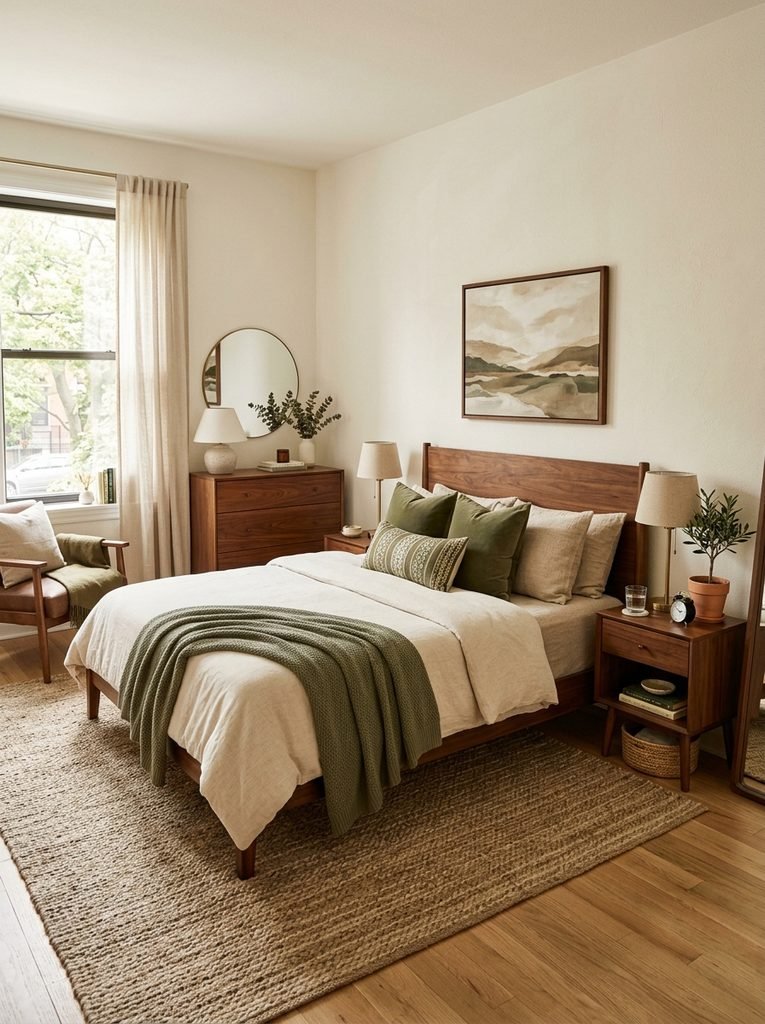
Use a Narrow Palette With One Deeper Accent
A boutique feel doesn’t require an all-white room.
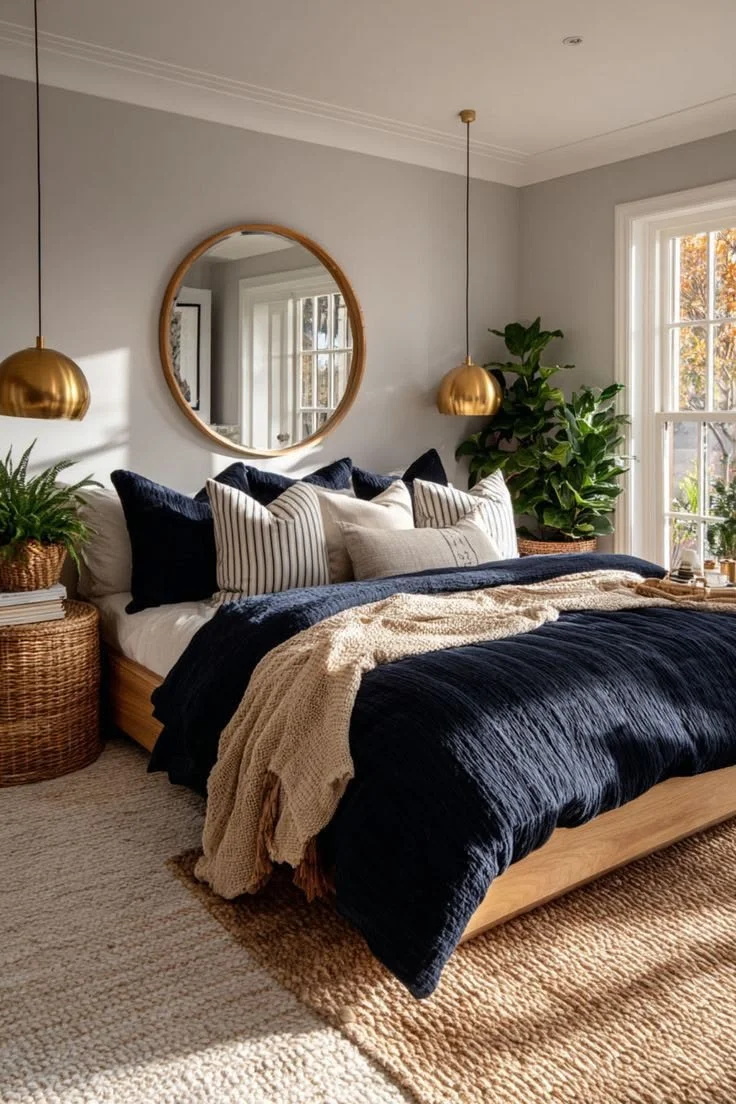
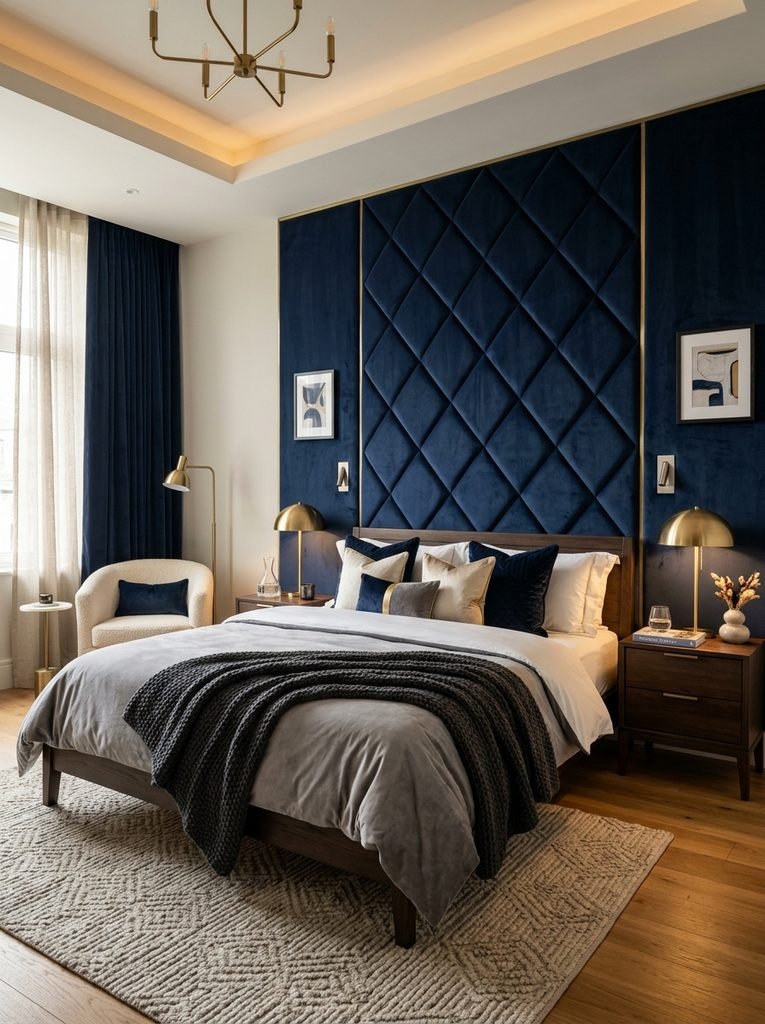
In an apartment especially, a restrained palette makes a room feel more deliberate, simply because there’s less competing for your attention. Start with two or three base colors:
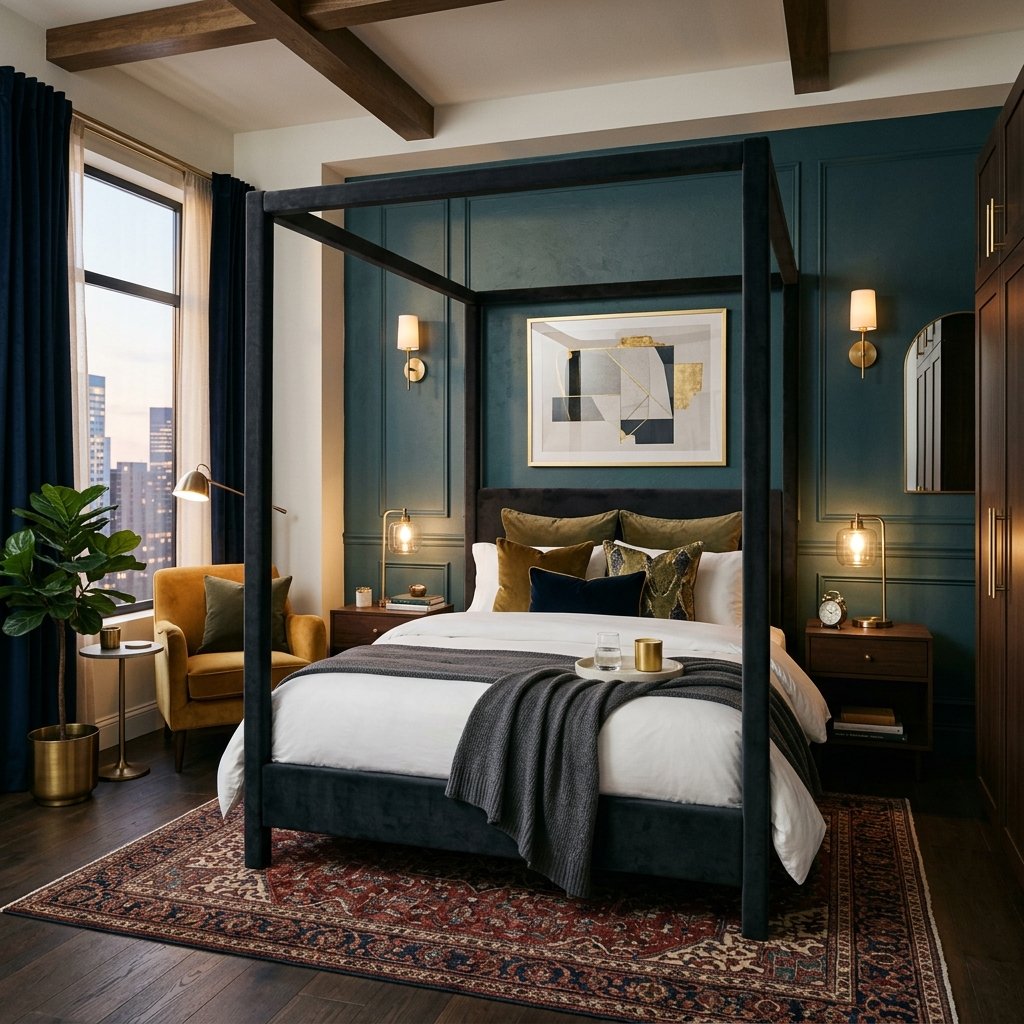
Warm neutral: ivory, cream, sand, or soft beige Natural material: oak, walnut, rattan, stone, or linen Accent: chocolate brown, muted olive, charcoal, dusty blue, or aged brass
Cream walls, walnut furniture, ivory bedding, and one deep olive accent will usually feel richer than a room with five or six unrelated colors competing for attention.
Tonal layering is another route several shades from the same family, like warm white, oatmeal, camel, and taupe, where the interest comes from texture rather than contrast.
If your apartment doesn’t get much natural light, test paint samples at different times of day before you commit. A color that looks soft in the afternoon sun can turn noticeably darker under artificial light at night. And in a small room, keeping the ceiling and trim relatively quiet helps the whole space read as one continuous field instead of a series of fragments.
Treat Curtains as Architecture, Not an Afterthought
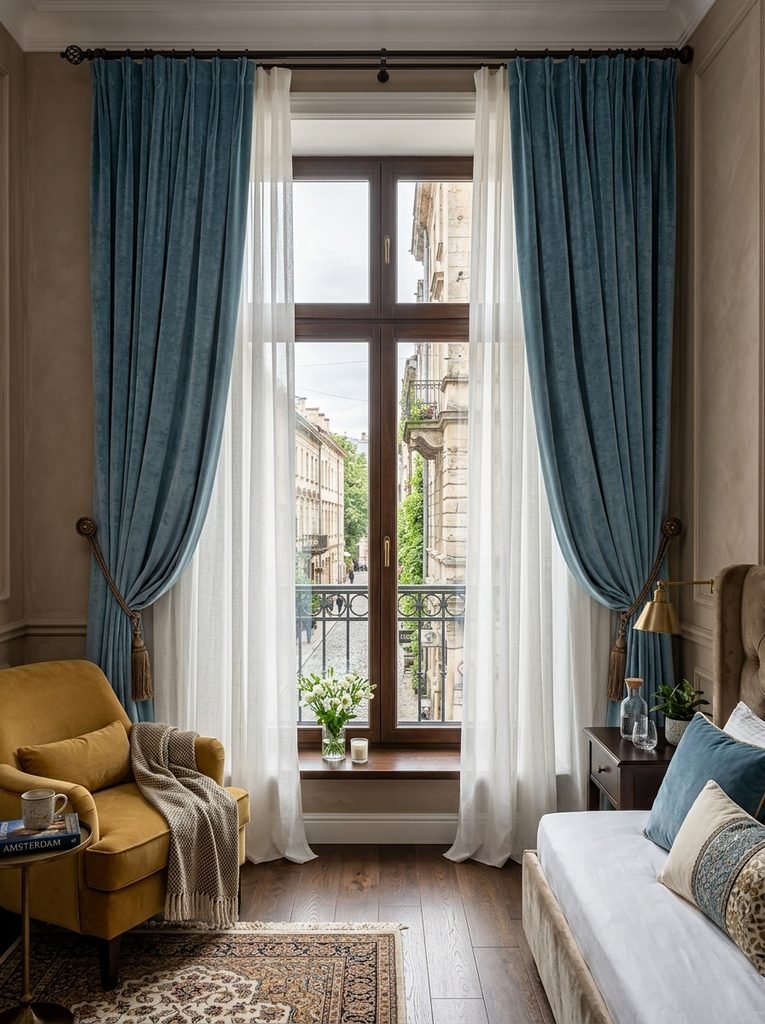
Window treatments often get added at the very end, almost as an accessory but in a small bedroom, they can shift the whole feel of the room more than almost anything else you buy.
Hang curtains higher and wider than the window opening itself wherever you can. It’s a small trick that makes the treatment read as a real architectural element instead of a frame stuck around the glass. Crate & Barrel’s own curtain-hanging guide makes the same point mount in relation to the ceiling, not the window, and let the panel just brush the floor.
Floor-length panels almost always look more finished than curtains that stop a few inches short of the sill, or hover well above the floor.
For a boutique-inspired room, two layers tend to work well:
- A lighter daytime fabric, like linen or a linen-look panel.
- A practical privacy or blackout layer closer to the glass.
The exact setup depends on your apartment and whatever hardware you’re allowed to install tension rods and other removable options work fine for renters.
Keep the curtain color related to the wall rather than introducing a whole new color into the room. A warm ivory panel against a beige wall adds depth without breaking up the space. And if the bedroom faces a neighboring building, privacy should win out over pure styling a beautiful room still has to work once the lights are off.
Make the Bedside Setup Look Built In
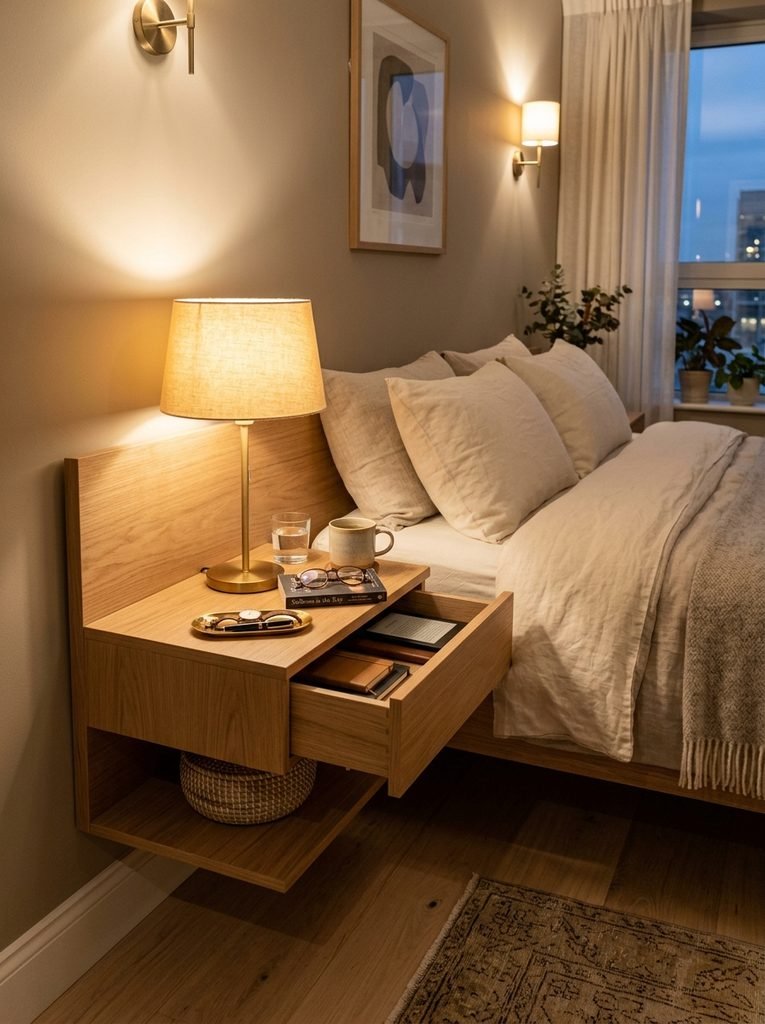
You don’t need custom cabinetry to make a bedside arrangement feel like it was planned rather than assembled the trick is really just repetition.
If both sides of the bed carry similar visual weight, the room reads as organized almost immediately. In a small space, that doesn’t have to mean identical nightstands. You could just as easily use:
- Two slim wood nightstands
- One floating shelf on each side
- Matching wall-mounted shelves
- A narrow drawer unit paired with a floating surface
- A built-in-style ledge running behind the bed
What actually matters is height and reach your lamp, book, phone, and anything else you need at night should be within arm’s length, not something you have to sit up and stretch for.
Keep cables out of sight where you can. A small cable channel, a rear opening, or a hidden power strip goes a long way toward keeping the bedside area from looking messy. A tray is useful for containing loose objects, but don’t let it turn into a landing pad for everything you happen to carry into the room.
The goal is a bedside setup that looks effortless because the practical problems were already solved before you started decorating.
Trade the Single Ceiling Light for an Actual Lighting Plan
Lighting can change the entire character of an apartment bedroom without touching the footprint at all.
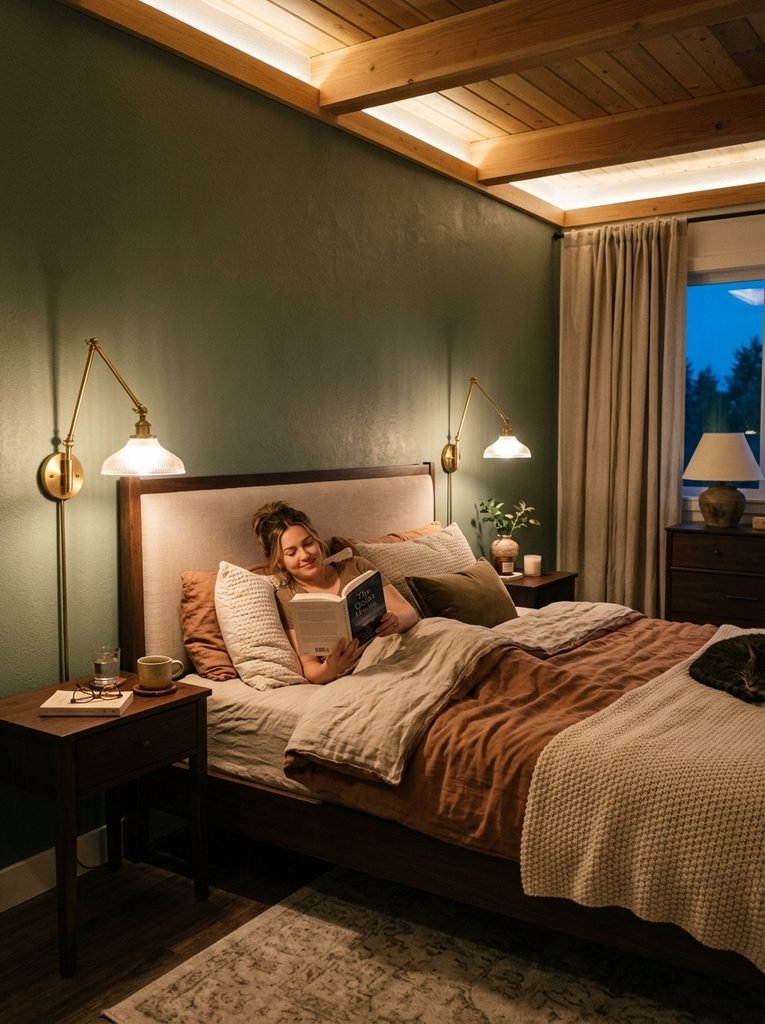
Instead of asking which single ceiling fixture looks best, ask how many different lighting situations the room actually needs to cover. Realistically, that’s usually:
- Soft general light for cleaning and everyday tasks
- Focused bedside light for reading
- Gentle light near a wardrobe or dressing mirror
- Low light for the evening
- Whatever natural daylight comes in during the morning
A small room can cover most of this with a ceiling fixture, two bedside lamps, and one more light near the dressing area. A larger bedroom has room for a floor lamp or an accent fixture too.
Plug-in sconces are especially useful if you want the hotel-inspired look but can’t rewire the apartment they free up the nightstand from a bulky lamp and give the bed wall a stronger, more composed look. Our guide to budget apartment decor hacks that look expensive goes further into renter-friendly lighting if you want more ideas along these lines.
Pick the bulb and the fixture together, with the mood you actually want in mind, rather than choosing them separately. Warm, comfortable light almost always suits a bedroom better than something cool and harsh.
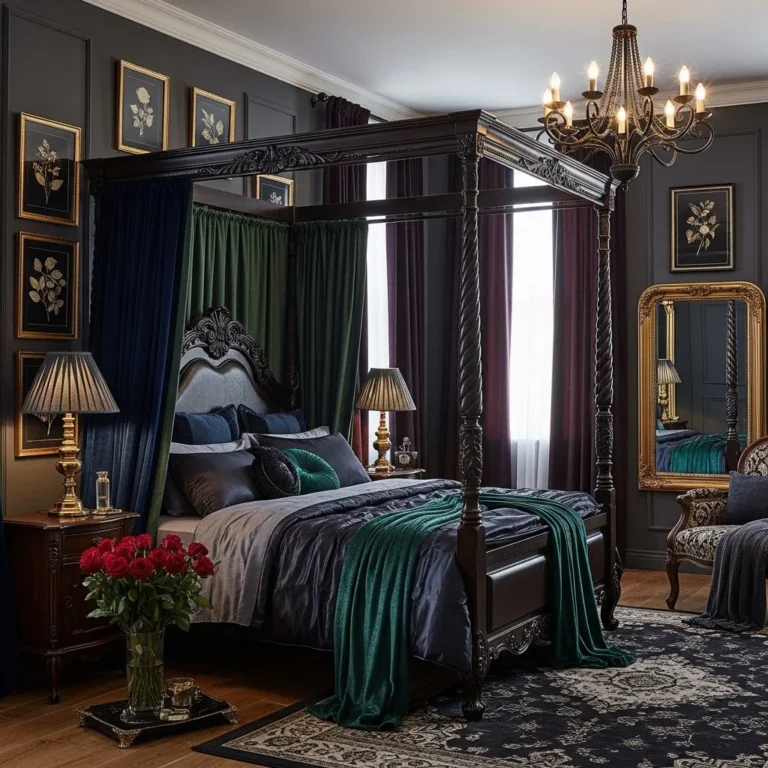
Give the Room One Genuine Hotel-Lobby Moment
Boutique hotels usually have one memorable object that gives the whole room its character and an apartment bedroom can borrow the same trick.
That could be a sculptural lounge chair, an oversized mirror, a stone side table, a vintage-looking chest, or a large piece of art. Just pick one.
A common mistake is trying to make every item interesting. When everything’s competing for attention, nothing actually becomes the focal point.
A single substantial mirror tends to work especially well in an apartment, since it combines real function with visual scale a full-height mirror near the wardrobe does double duty, serving the dressing area while making the whole room feel bigger. It’s a trick we also lean on in our budget apartment decor guide, and it adapts to a bedroom just as easily.
If the room is genuinely small, pick a statement piece that also does something useful rather than one that’s purely decorative. The best choice is usually something you’d still want even if the room were bigger.
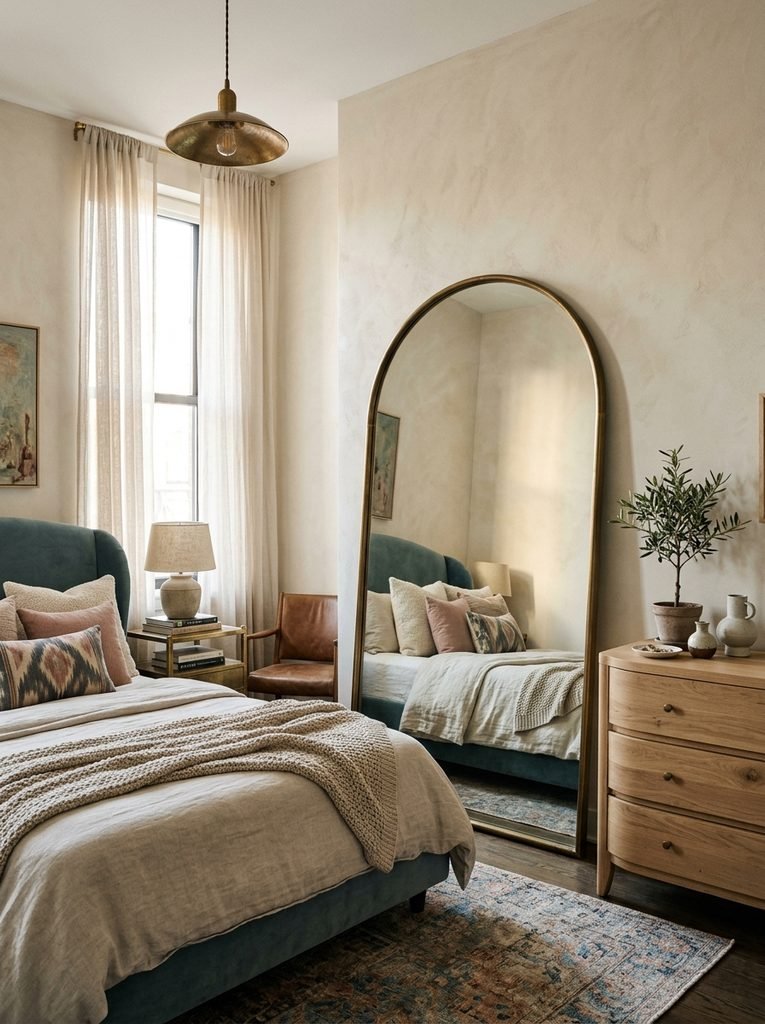
Give the Practical Stuff a Home Before You Add More Decor
Hotel rooms feel composed partly because the practical objects are kept out of sight. An apartment bedroom, unlike a hotel room, actually has a lot of stuff in it the answer isn’t to pretend it doesn’t exist, it’s to decide where it lives.
Send the least visible parts of the room to work on:
- Extra bedding
- Travel bags
- Chargers
- Seasonal clothing
- Shoes
- Laundry
- Everyday paperwork
- Spare toiletries
Under-bed storage earns its keep in a small apartment, especially once it’s actually hidden from view. Our small-space organization guide covers this and a few other compact storage tricks in more detail.
If there’s a dresser in the room, save its visible top for a small, deliberate arrangement rather than a catch-all. If you genuinely need more storage than that, look up before you add another low cabinet vertical space usually solves more than another surface does.
A calm-looking room is much easier to keep that way when the storage actually matches how you live day to day.
Choose Materials That Get Better With Use
Boutique styling doesn’t have to mean fragile furniture or expensive finishes if anything, an apartment bedroom benefits from materials built to handle daily life.
Natural wood, woven textiles, linen-look fabrics, matte ceramics, brushed metal, and textured upholstery all add depth without needing much extra decoration. A combination worth building around:
- Upholstered headboard for softness
- Oak bedside tables for warmth
- Linen bedding for relaxed texture
- Wool or wool-look rug underfoot
- Matte ceramic accessories
- Brushed brass or dark metal for small hardware details
Don’t try to introduce every material at once four or five related ones are usually plenty to give a bedroom real dimension. Texture matters even more when the color palette is restrained: an all-beige room can go flat fast, while beige paired with wood grain, woven fabric, brushed metal, and a softly patterned rug has a lot more going on.
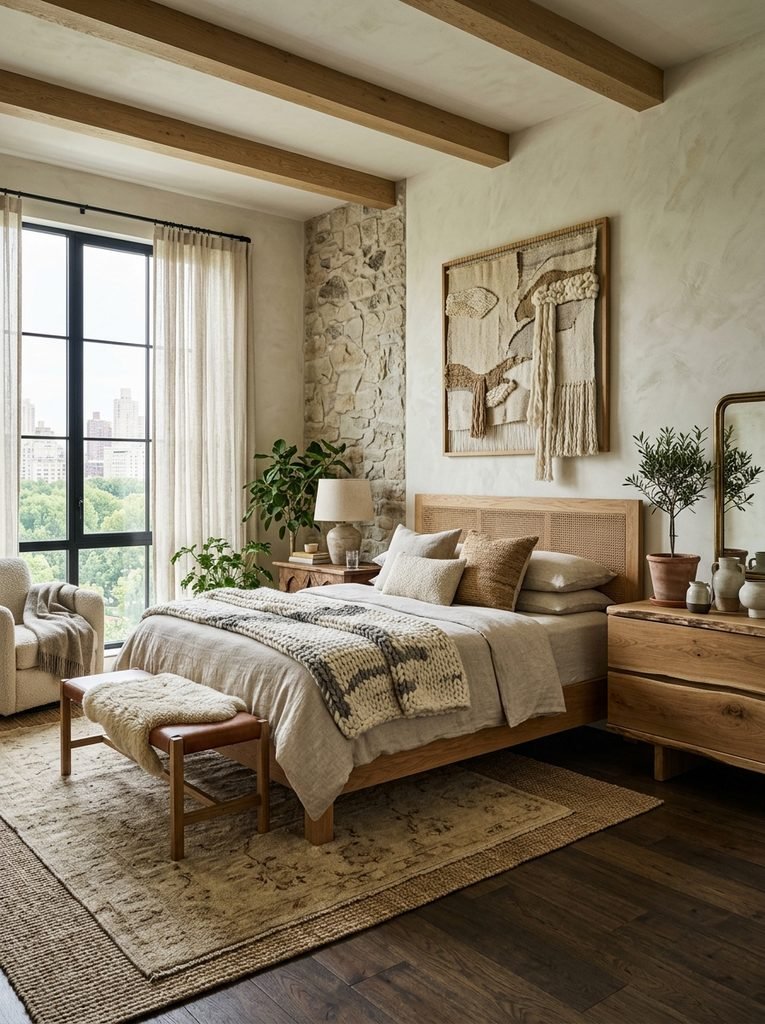
Make Small Bedrooms Feel Intentional, Not Miniature
A small bedroom shouldn’t be trying to imitate the proportions of a large hotel suite it should scale to what it actually has.
Choose a slim nightstand over a deep one. Use wall-mounted lighting instead of a floor lamp where space is tight. Pick a rug that genuinely relates to the size of the bed, rather than a smaller decorative one just because it’s cheaper.
Keep the paths through the room open. If there’s only room for one chair, make it a chair you’ll actually use. If a bench is blocking a wardrobe door, take it out. If two bedside tables make the room impossible to walk through, switch to floating shelves instead. Our guide to smart small-space design covers this same idea in more depth furniture placement and multi-use pieces matter more as square footage drops, not less.
The hotel feeling comes from a room that’s genuinely easy to use, not from squeezing luxury furniture into every last corner.
Rental-Friendly Changes That Actually Make a Difference
If you’re decorating a rental, prioritize the things you can take with you when you move.
Good candidates:
- Freestanding upholstered headboards
- Plug-in wall sconces
- Removable wallpaper
- Large rugs
- Full-length curtains
- Freestanding mirrors
- Removable wall hooks
- Decorative hardware that can be swapped back before move-out
- Portable bedside tables
- Art hung with the right removable hardware
Spend on pieces that don’t depend heavily on the exact floor plan of this apartment a well-made mirror or an upholstered bench will settle into your next place just as easily as this one. Our guide to luxury apartment decor tricks that make rentals feel custom-designed has more reversible upgrades that apply well beyond the bedroom.
Common Mistakes That Undercut the Boutique Hotel Look
A polished bedroom can lose its sense of calm through a handful of small, easy-to-make decisions.
Furniture that’s too large. A beautiful bed or wardrobe is still the wrong bed or wardrobe if it eats every usable pathway in the room.
Too many small decorations. A handful of tiny objects usually creates more visual noise than one substantial piece ever would.
A rug that’s too small. It should genuinely relate to the bed and the furniture around it, not sit there like an island on its own.
Cables left in plain sight. Visible charging wires can undo an otherwise carefully styled bedside area in a second.
Mixed visual languages. A traditional headboard, an industrial nightstand, coastal accessories, and contemporary lighting can each look fine on their own and still fight when combined.
Ignoring the entrance. The room should look considered from the doorway, not only from whatever angle you’d use for a photo.
Decorating before planning storage. If clothes and everyday objects don’t have anywhere to go, the styling disappears under clutter within a week.
A Simple Order for Decorating Your Apartment Bedroom
You don’t need to buy everything at once. Working roughly in this order tends to prevent the classic problem of buying nice accessories first and then discovering the big furniture doesn’t actually fit:
- Measure the room and identify the main walking paths.
- Decide where the bed should sit.
- Plan wardrobe and dressing storage.
- Establish the wall behind the bed.
- Choose the main color and material palette.
- Select the rug and window treatments.
- Add bedside furniture and lighting.
- Introduce one statement piece.
- Organize hidden storage.
- Add only the decorative objects that genuinely improve the composition.
The boutique hotel effect is mostly a matter of editing. Get the big decisions right and the smaller styling choices tend to sort themselves out.
The Boutique Feeling Comes From Better Decisions, Not More Stuff
An apartment bedroom can feel sophisticated without looking staged or expensive.
Start with proportion. Give the bed room to breathe. Build a strong focal wall. Keep the palette controlled. Use lighting for the different things you actually do in the room, instead of relying on one ceiling fixture to cover everything. Give clothing and everyday objects a real place to go. Then add a few materials and accessories that bring in character without covering every surface.
The most convincing boutique-inspired bedrooms still look like homes books, wardrobes, personal objects, furniture you actually use. The difference is that all of it has been given a clear place inside the overall composition.
Treat the bedroom as one complete environment instead of a pile of individually nice products, and even a modest apartment can pick up the calm, polished quality that makes boutique hotels so appealing in the first place.