
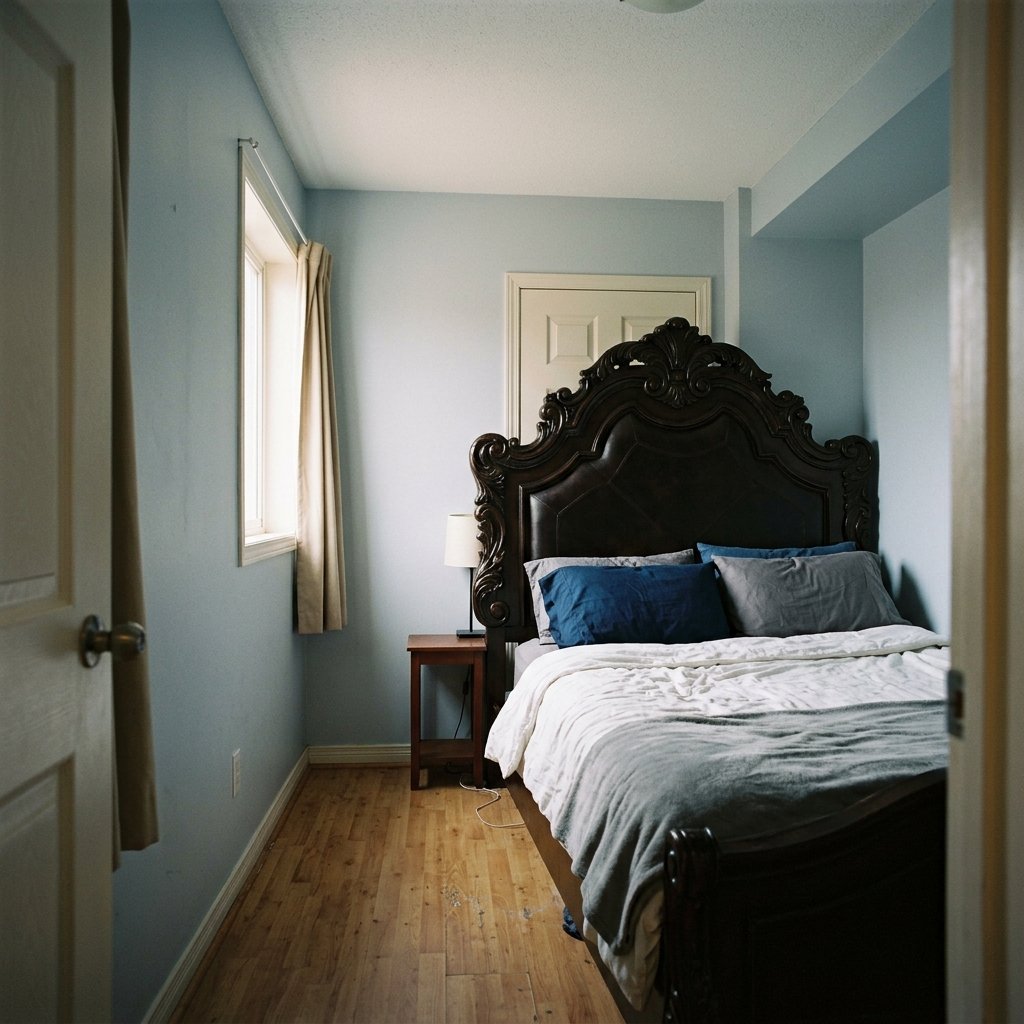
Bigger headboard, bigger impact, right? That’s the idea a lot of us walk away with after scrolling through enough bedroom inspiration photos. Those tall, dramatic, upholstered headboards look incredible in hotel suites and oversized primary bedrooms, so it seems like a safe bet to bring that same energy home.
Except in a small bedroom, that exact move often backfires. Instead of looking luxurious, the room starts to feel tight, heavy, and a little claustrophobic. And most people never think to blame the headboard, because it seems like such a small detail compared to the bed itself, the paint color, or the furniture layout.
It’s not a small detail. It might be the single biggest thing working against you in a tight bedroom.
The Assumption Versus What Actually Happens
The logic behind going big makes sense on paper. A statement headboard is supposed to act like a piece of art, something that gives the room personality and makes the bed feel like the star of the show.
In a spacious bedroom, that works beautifully because there’s enough surrounding space to balance out the visual weight. Your eye has room to breathe before it hits a wall or a piece of furniture.
In a small bedroom, there’s no buffer. The headboard often stretches close to nearby walls, sits just a few feet from the doorway, or towers most of the way up toward the ceiling. Instead of reading as a stylish focal point, it reads as one giant, heavy object dominating a room that doesn’t have the square footage to support it.
Is Your Headboard Actually the Problem?
Before assuming this is your issue, it helps to check for a few telltale signs. If a couple of these sound familiar, your headboard is very likely part of what’s making the room feel smaller than it is.
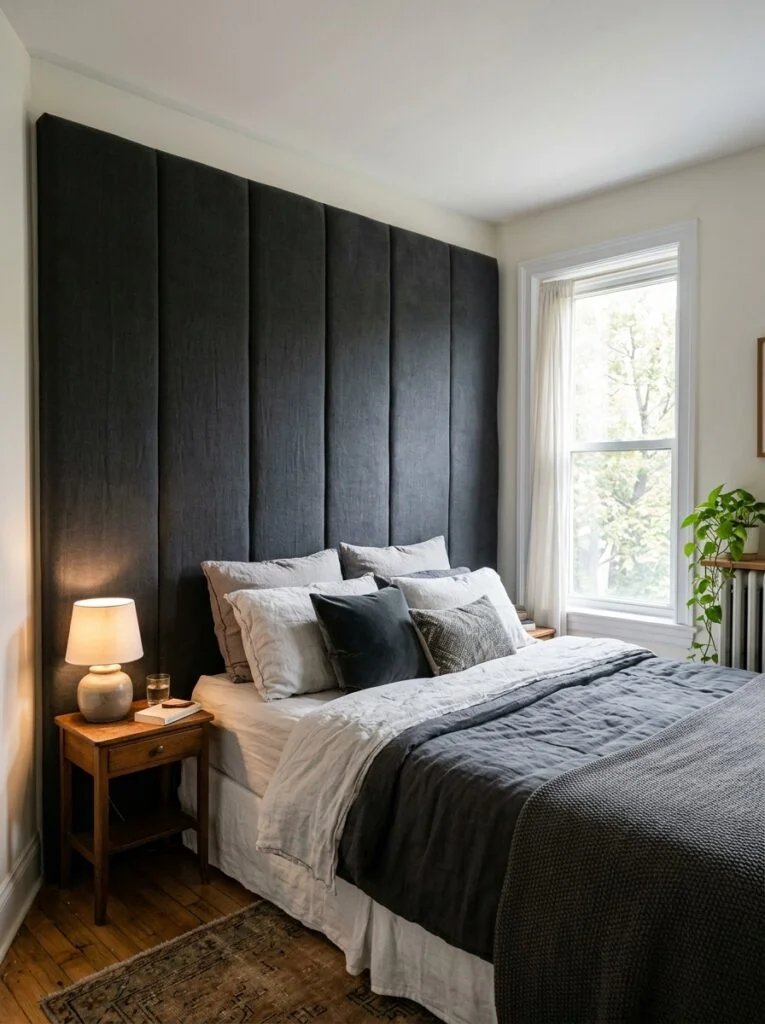
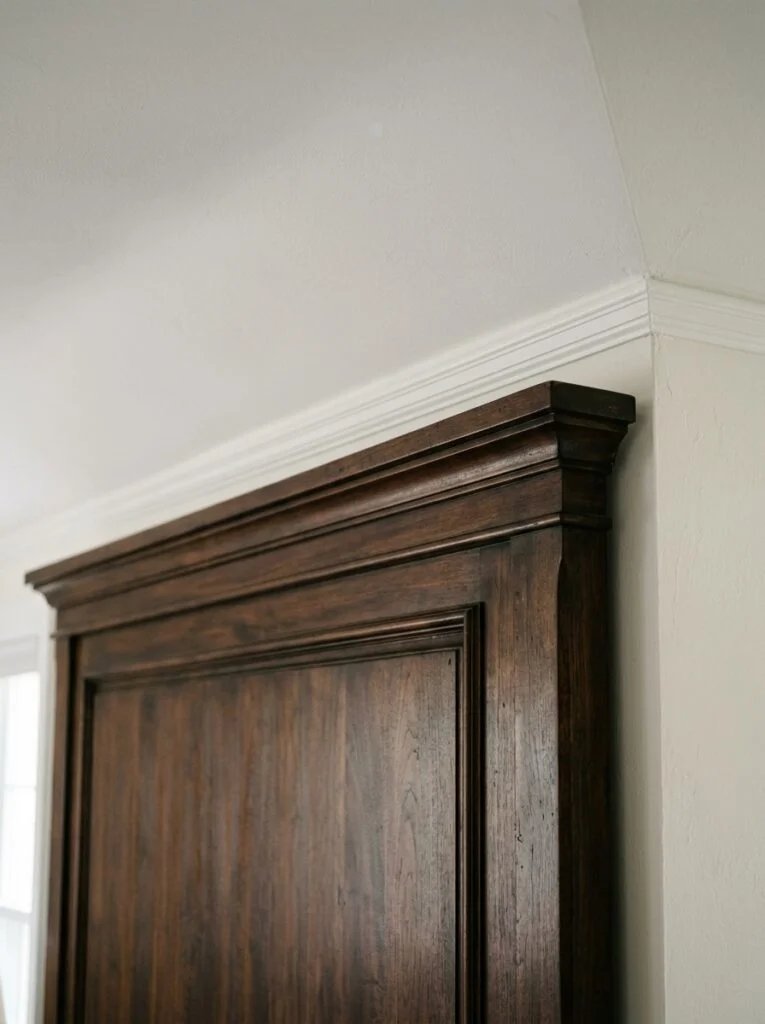
- The top of your headboard sits close to the ceiling, leaving very little visible wall space above it.
- Your headboard is noticeably wider than your mattress and frame, extending several extra inches on each side.
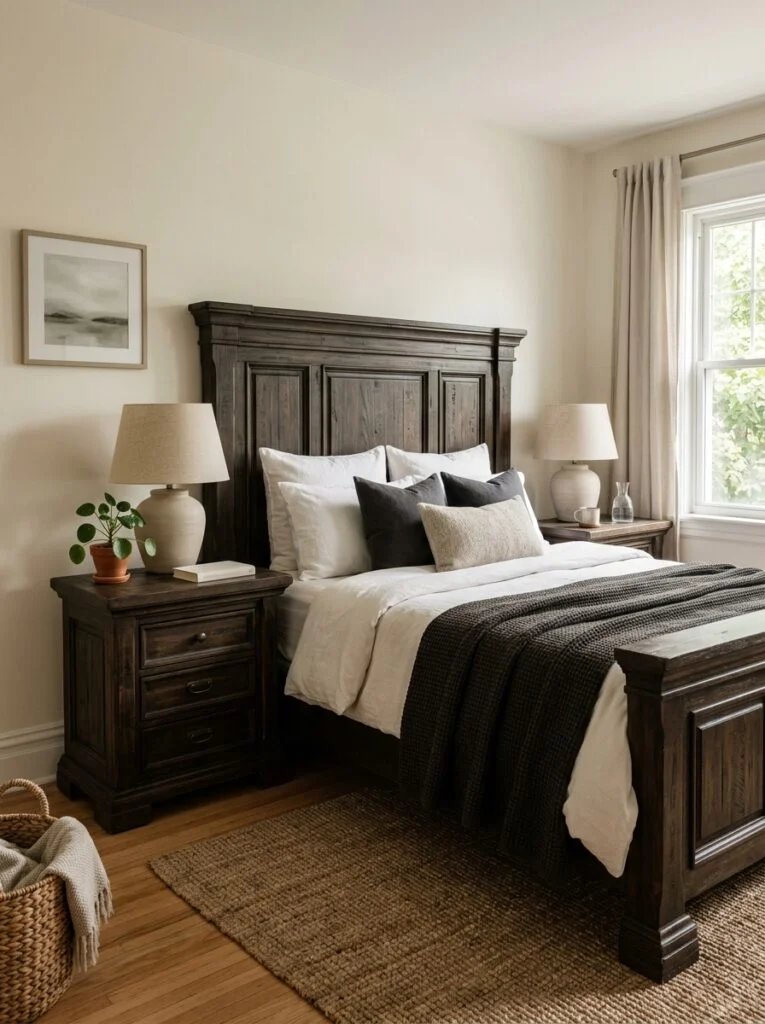
- It’s upholstered in a dark, heavy fabric or finished in a deep wood tone that reads as visually dense.
- There’s barely any wall space visible on either side of the bed once the headboard is in place.
- The room felt more open before this specific piece of furniture went in, even though nothing else changed.
If you’re nodding along to most of that list, the good news is this is one of the more fixable problems in a small bedroom. It usually doesn’t require moving furniture around or repainting anything.
Why Scale Matters More in Small Rooms Than Big Ones
This comes down to something interior designers talk about a lot but rarely explain simply: proportion relative to the room, not just to the bed.
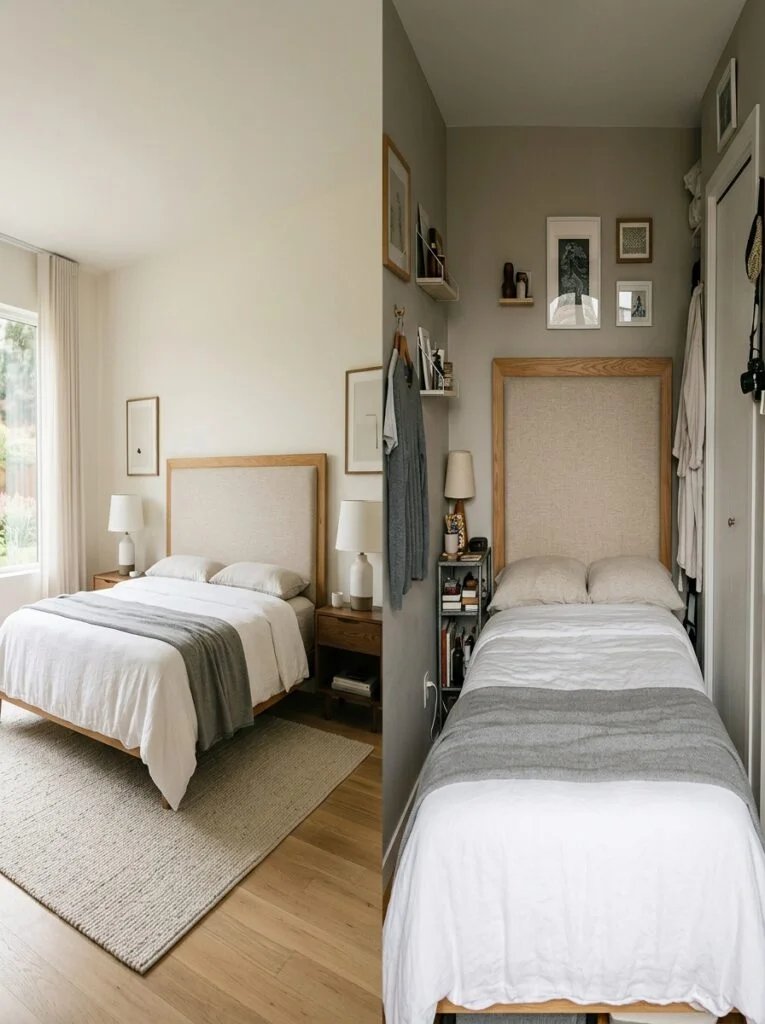
A queen headboard that looks perfectly reasonable in a 200 square foot primary suite can look enormous in a 100 square foot guest room, even though it’s the exact same piece of furniture. The room around it hasn’t changed size, but the ratio of furniture to open space has shifted dramatically.
Small rooms have very little margin for error here. Every extra inch of height or width on a single piece of furniture takes up a bigger percentage of the total visual space in the room. That’s why a headboard choice that seems totally reasonable in a showroom or a big house can feel completely different once it’s actually installed in a smaller bedroom.
What Better Proportions Actually Look Like
You don’t need to give up on having a nice headboard altogether. You just need one that’s scaled appropriately for the room it’s actually going into.
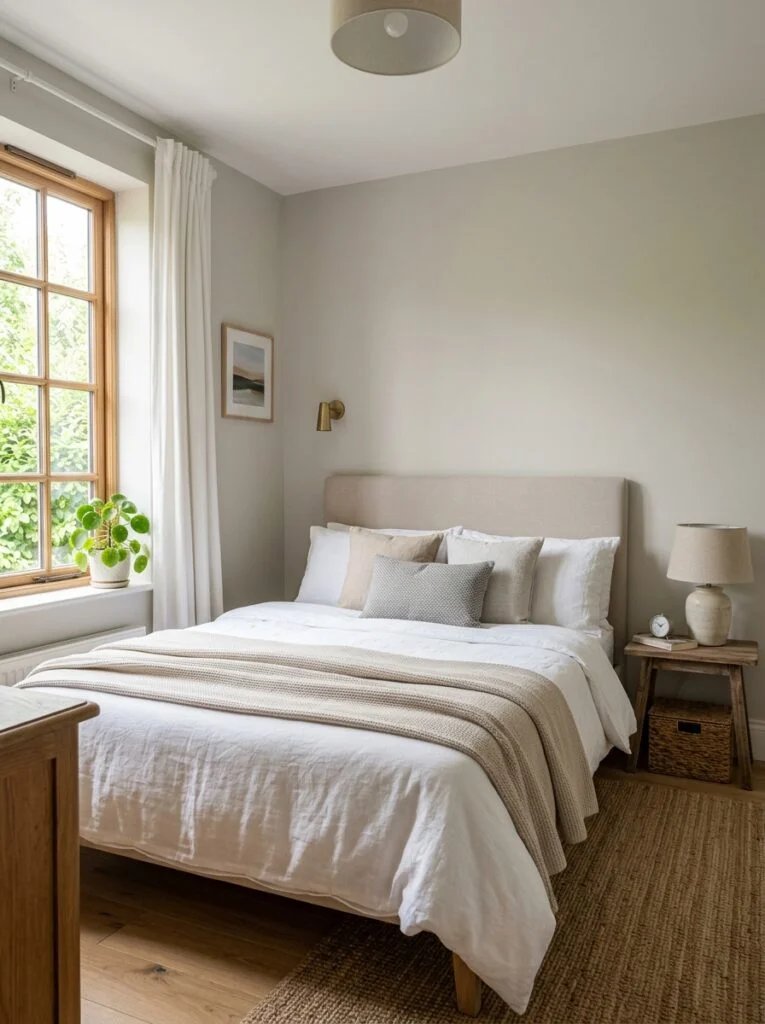
A good general guideline is to keep the headboard height to roughly a third or less of the distance between the floor and the ceiling, rather than letting it climb most of the way up the wall. This leaves visible breathing room above it, which makes the ceiling feel higher and the room feel less boxed in.
Width matters just as much. A headboard that extends only slightly beyond the mattress, rather than several inches to a foot on each side, keeps the overall footprint closer to the actual size of the bed instead of exaggerating it.
If you’re working with a full or queen bed in a genuinely small room, it’s worth considering whether a slightly smaller frame size might actually serve the space better than squeezing in the largest bed that technically fits.
Color and Material Choices That Help
Beyond size, the visual weight of a headboard plays a bigger role than most people expect.
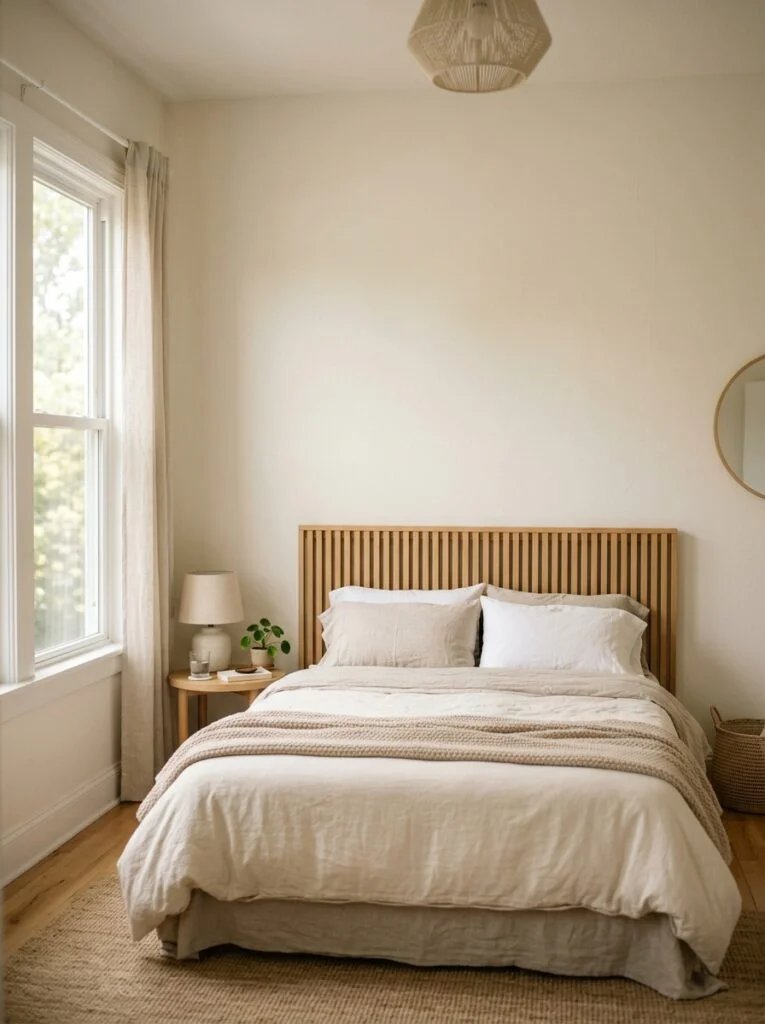
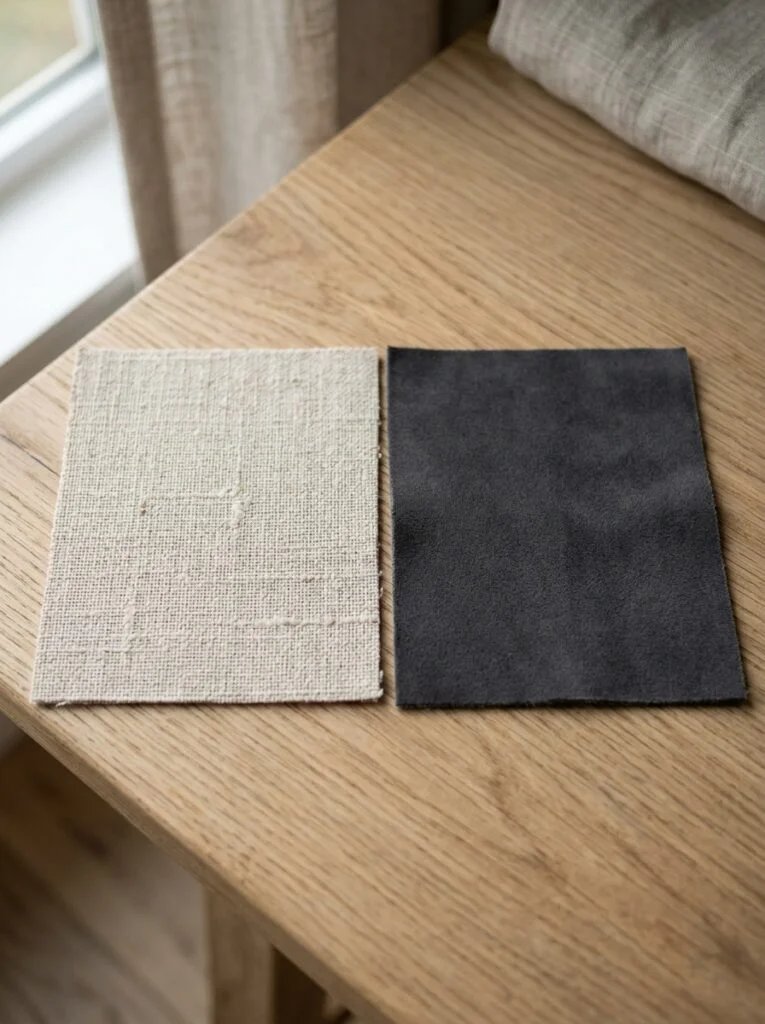
Light, soft fabrics and pale wood tones read as airy, even when the physical dimensions are on the larger side. Dark, heavily textured fabrics or deep, saturated wood tones tend to visually advance toward the eye, making the piece feel closer and bulkier than it actually is.
Open designs, like slatted wood headboards or ones with visible negative space built into the frame, let light and wall color show through, which softens the overall effect. Solid upholstered slabs, especially in dark colors, block that visual continuity completely and end up reading as one dense wall of fabric.
If you already own a headboard that checks a lot of the wrong boxes here, this doesn’t necessarily mean starting over. Sometimes a lighter fitted slipcover or a change in surrounding wall color can shift how heavy the piece feels without replacing it entirely.
A Real Example Worth Sharing
Someone once wrote in describing her guest bedroom, a genuinely tiny space that barely fit a full size bed and a narrow dresser. She’d added a tall, dark upholstered headboard that she loved in the store, thinking it would make the room feel more finished and hotel-like.
Instead, the room felt noticeably smaller the moment it went in. Guests commented on how tight the space felt, even though the bed itself wasn’t actually taking up any more floor space than before.
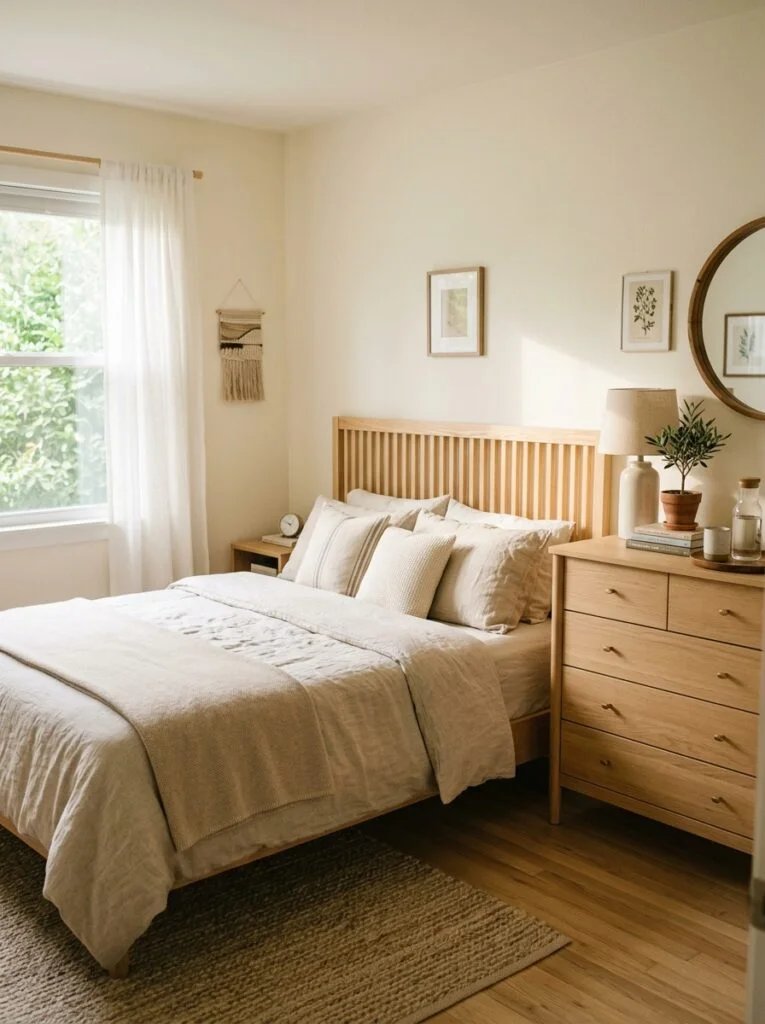
She swapped it for a simple slatted wood headboard in a lighter natural tone, sized closer to the width of the mattress instead of extending well beyond it. The floor space didn’t change at all, but the room immediately felt more open. The ceiling read as higher, the walls felt farther apart, and the whole space breathed in a way it hadn’t before.
This kind of low effort, high impact swap comes up constantly in small space design, and it’s part of why thinking through scale before buying furniture matters so much. We cover a similar approach to choosing appropriately sized pieces in this guide on common furniture sizing mistakes in small rooms, which goes beyond just headboards into the rest of the furniture in a tight space.
Other Mistakes That Often Show Up Alongside This One
The headboard rarely acts alone. A few related habits tend to compound the cramped feeling even further.
Blocking too much wall space with nightstands to match. Oversized nightstands flanking an already large headboard multiply the visual weight instead of balancing it. Smaller, leggier nightstands tend to work better in tight rooms.
Pushing the bed frame flush against every nearby wall. Leaving even a small gap on at least one side, if the room allows it, keeps the whole setup from feeling boxed in.
Choosing bedding that matches the headboard too closely in tone. When the bedding and headboard blend into one dark mass, the whole bed area reads as heavier than it needs to. A slight contrast between the two breaks that up visually.
Skipping a mirror or reflective surface nearby. A well placed mirror across from or beside the bed helps counterbalance a solid headboard by bouncing light back into the room, something that matters more in small spaces than larger ones.
If You’re Not Ready to Replace It
Buying new furniture isn’t always realistic, and there are a few smaller adjustments that can soften an oversized headboard without starting from scratch.
- Swap dark bedding for lighter tones to reduce the overall visual weight sitting at that end of the room.
- Add a lighter colored throw or slipcover if the headboard is upholstered and removable.
- Hang curtains or artwork nearby in lighter tones to draw the eye elsewhere instead of concentrating all the visual weight in one spot.
- Keep the area directly around the headboard as clutter free as possible, since extra objects nearby only add to the sense of a crowded corner.
None of these fully solve the underlying proportion issue, but they can meaningfully soften it while you’re saving up or waiting for the right replacement piece.
Alternatives Worth Considering for Tight Spaces
If you’re starting from scratch, a few headboard styles tend to work particularly well in small bedrooms without sacrificing style.
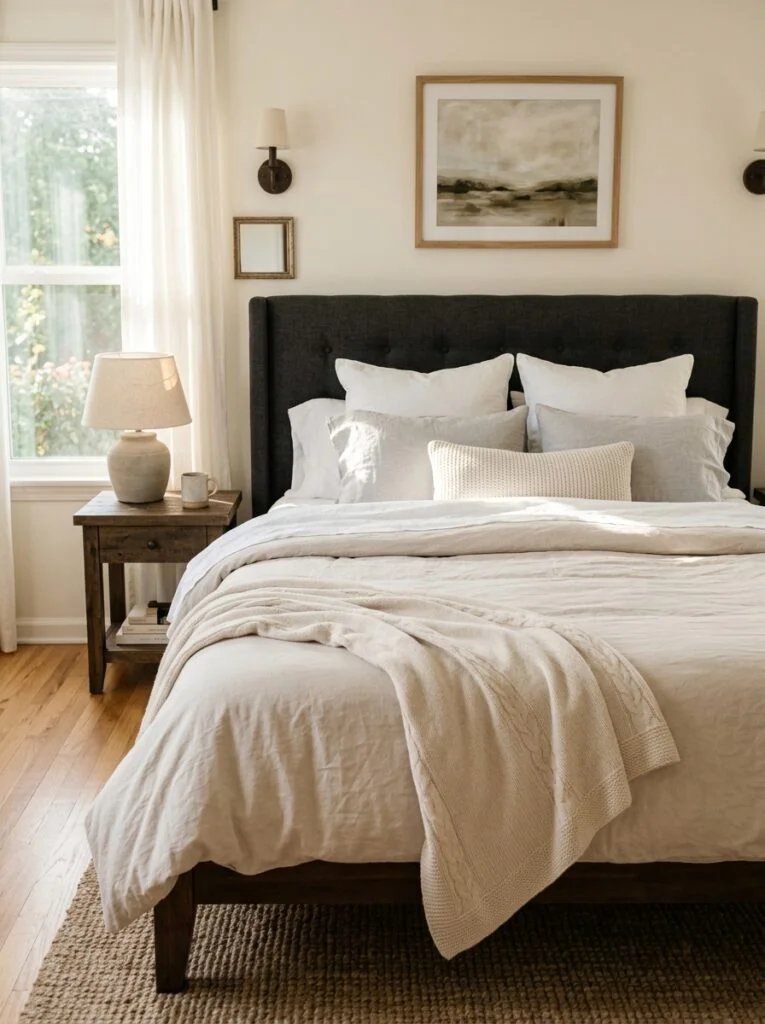
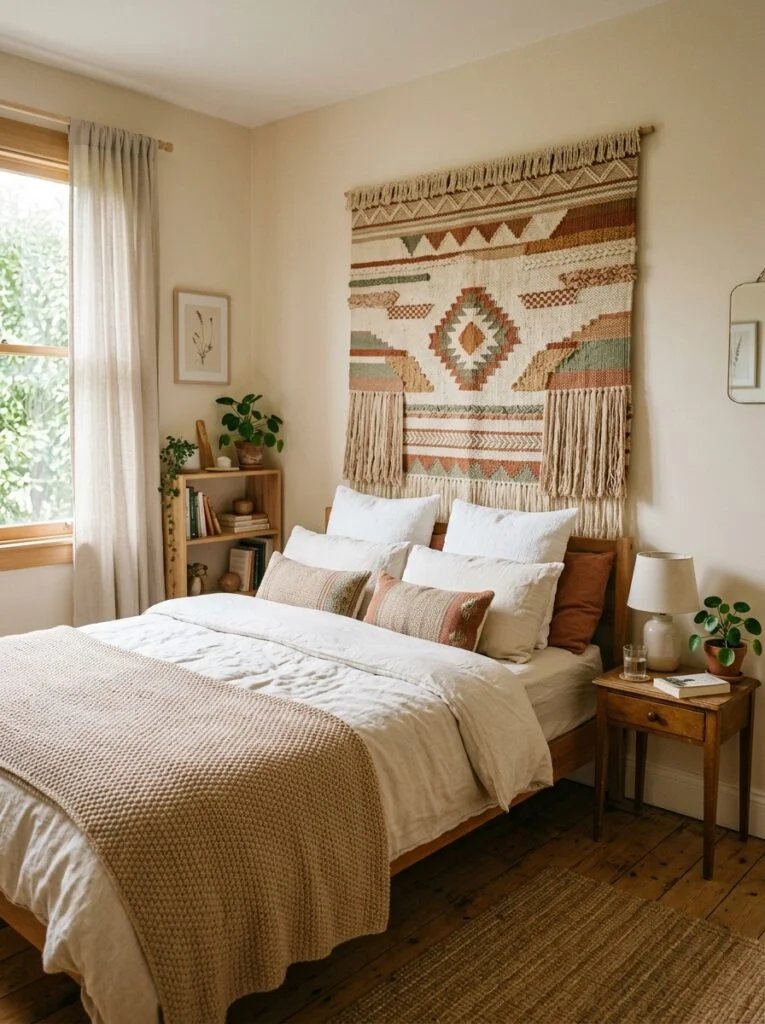
A low profile upholstered headboard, kept to a modest height, still adds softness and comfort against the wall without climbing toward the ceiling. A simple wood slat design lets light pass through visually, which almost always reads as more open than a solid piece of the same size. And for genuinely tight spaces, some people skip a traditional headboard altogether in favor of a large piece of art or a woven wall hanging mounted at headboard height, which creates a similar visual anchor without adding actual bulk to the room.
Placement Matters Almost as Much as Size
Even a well proportioned headboard can still make a room feel tight if it’s placed in a way that fights against the room’s layout.
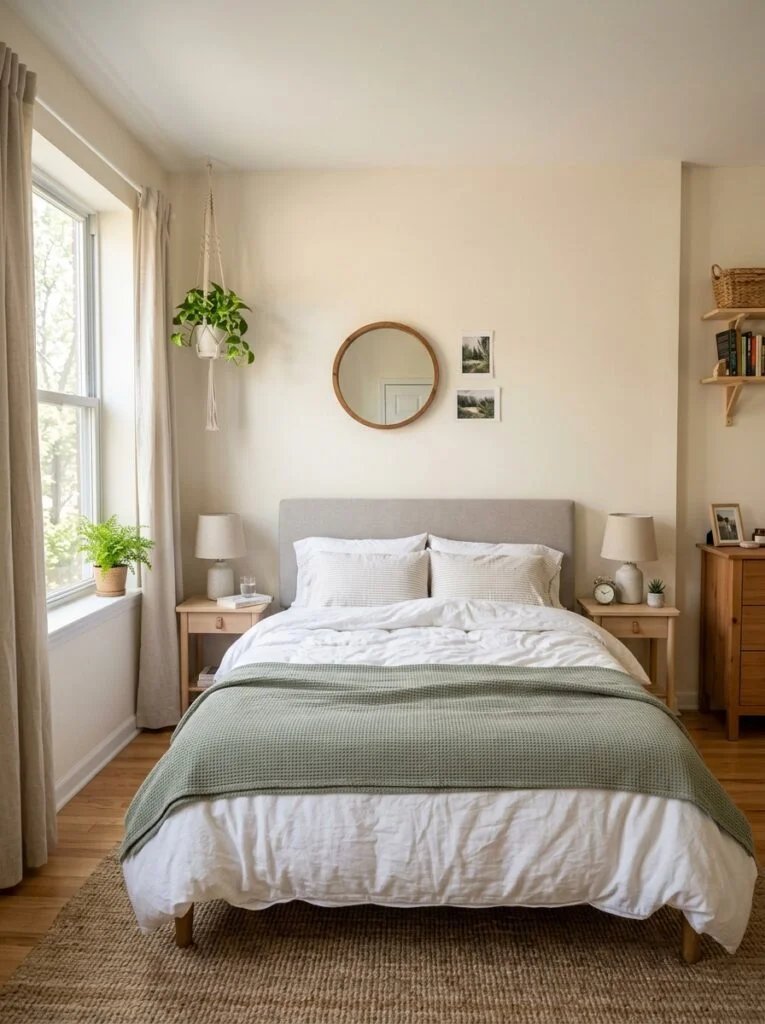
Centering the bed on the longest available wall, rather than tucking it into a corner or squeezing it between a window and a door, gives the headboard room to sit without crowding anything else. When a headboard sits directly beside a doorway or blocks part of a window, it tends to draw attention to how little space is actually available, which makes the whole setup feel more cramped than the headboard’s actual size would suggest on its own.
If your small bedroom only has one usable wall for the bed, try to keep at least a few inches of clearance on either side of the headboard rather than letting it run edge to edge across the entire wall. That small margin does a surprising amount to keep the piece from feeling like it’s wedged into place.
A Simple Way to Test Before You Buy
If you’re shopping for a new headboard and want to avoid repeating this mistake, there’s an easy way to test proportions before committing to anything.
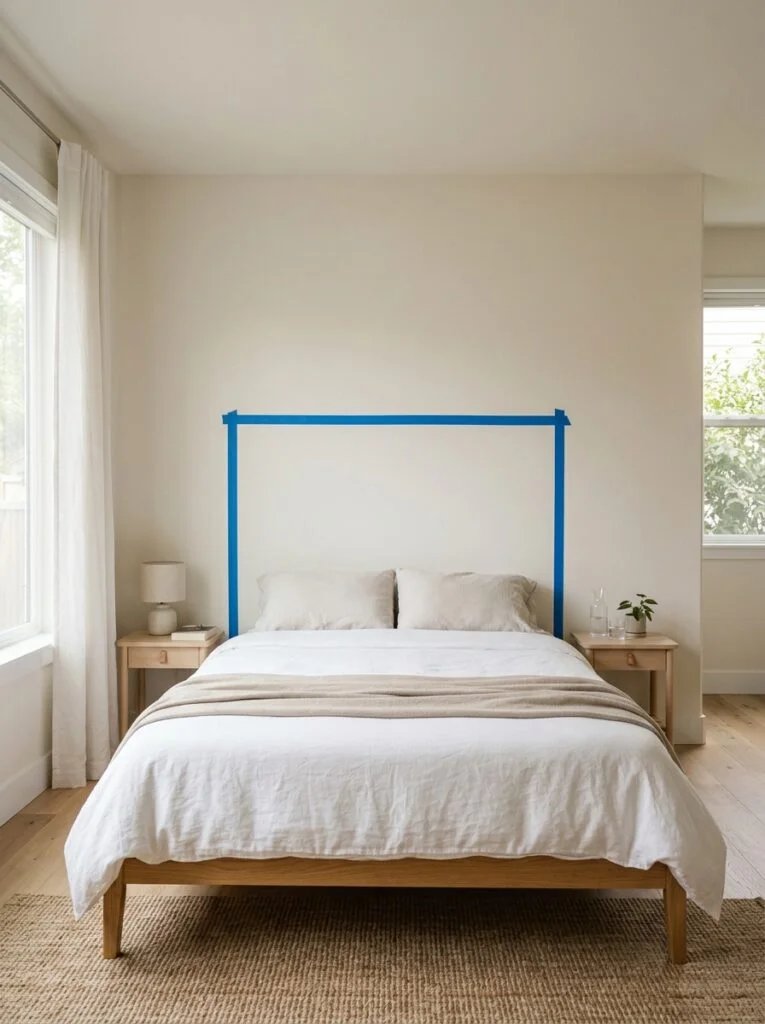
Use painter’s tape on the wall to outline the exact height and width of the headboard you’re considering, based on the dimensions listed by the retailer. Stand at the doorway of the room and look at the outline from a normal viewing distance, the way you’d actually experience the space day to day, rather than standing right up close to the wall.
This rough mockup makes oversized proportions obvious in a way that product photos and showroom displays never quite capture, since those spaces are usually much larger than the average small bedroom. It takes five minutes and can save you from an expensive return down the line.
FAQs
Does headboard size really make that much of a difference in a small room?
Yes, more than most people expect. Because small rooms have less surrounding space to absorb visual weight, an oversized headboard takes up a much larger percentage of the room’s total visual footprint than the same piece would in a larger space.
What’s the ideal headboard height for a small bedroom?
A good general target is keeping the headboard to roughly a third or less of the distance from the floor to the ceiling, which leaves visible wall space above it and helps the room feel taller.
Are dark headboards always a bad idea in small rooms?
Not always, but they do tend to read as heavier and closer than lighter tones. If you love a dark headboard, balancing it with lighter bedding, walls, and nearby decor can help offset the effect.
Is it better to skip a headboard entirely in a small bedroom?
Not necessarily. A well proportioned, appropriately scaled headboard can still make a small room feel finished. The issue is almost always size and visual weight, not whether a headboard exists at all.
Can changing the headboard alone really make a room feel bigger without other changes?
In a lot of cases, yes. Since headboards are typically the single largest piece of furniture against a wall in a bedroom, adjusting its size or visual weight tends to have an outsized effect compared to smaller decor changes.
Wrapping Up
A cramped feeling bedroom doesn’t always mean you need to get rid of furniture or knock down a wall. Sometimes it really does come down to one oversized, heavy piece sitting at the head of the bed, quietly working against everything else in the room.
If your small bedroom has never quite felt as open as it should, take a hard look at your headboard before blaming anything else. Scaling it back, lightening it up, or simply choosing a more proportionate size next time around might be the single easiest fix available to you.


3 comments