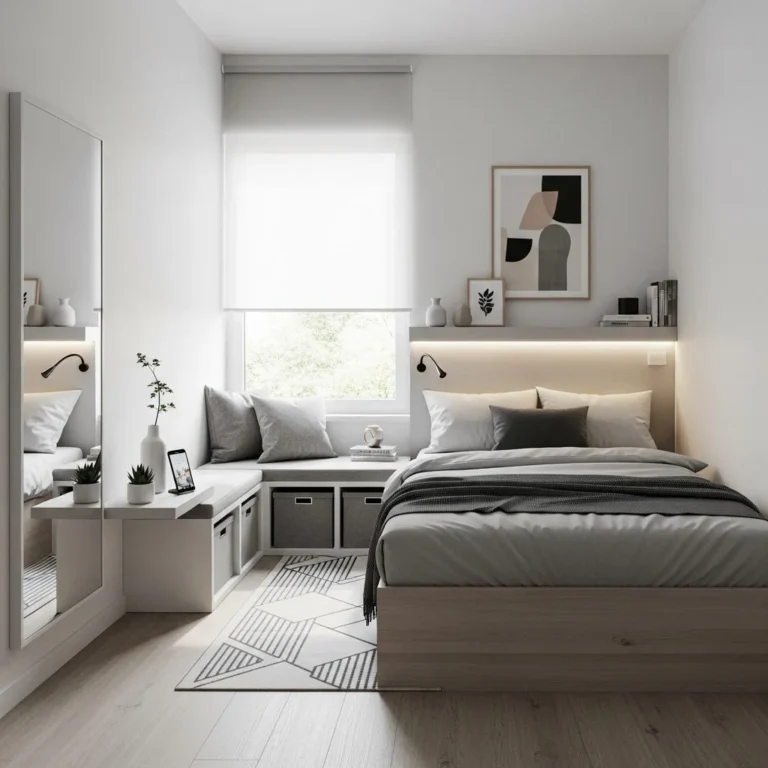
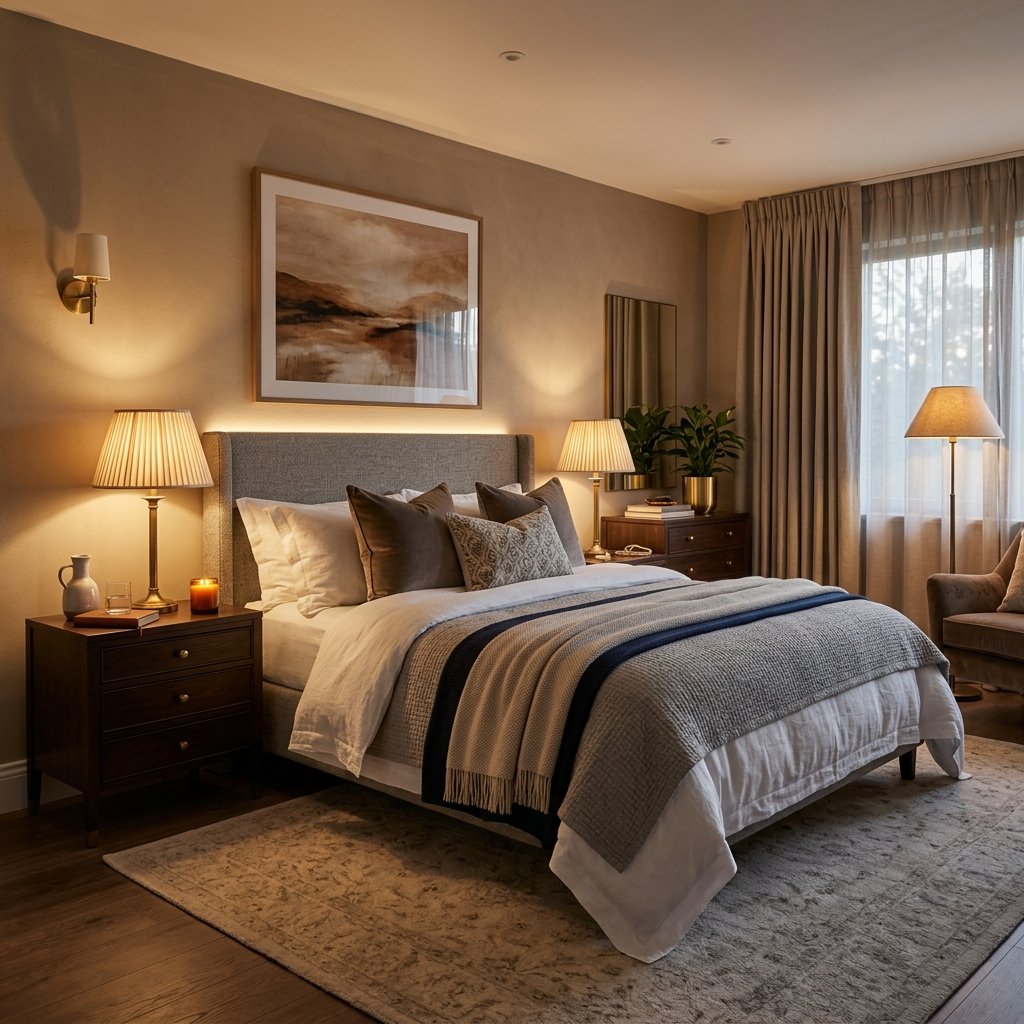
The Bedroom Details That Make a Home Feel Like a Boutique Hotel
Walk into a well-designed boutique hotel room and something clicks within the first ten seconds, even before you set your bag down. It is not the thread count, and it is usually not the artwork. It is a set of small, repeatable design decisions working together: the way the bed is built, where the light comes from, what is sitting on the surfaces around you, and just as importantly, what is not.
Most home bedrooms are missing these details, not because they require a big budget, but because nobody points them out. This guide breaks down the specific techniques hospitality designers rely on, room by room element, so you can borrow the ones that fit your own space.
The Bed Is Built in Layers, Not Just Made
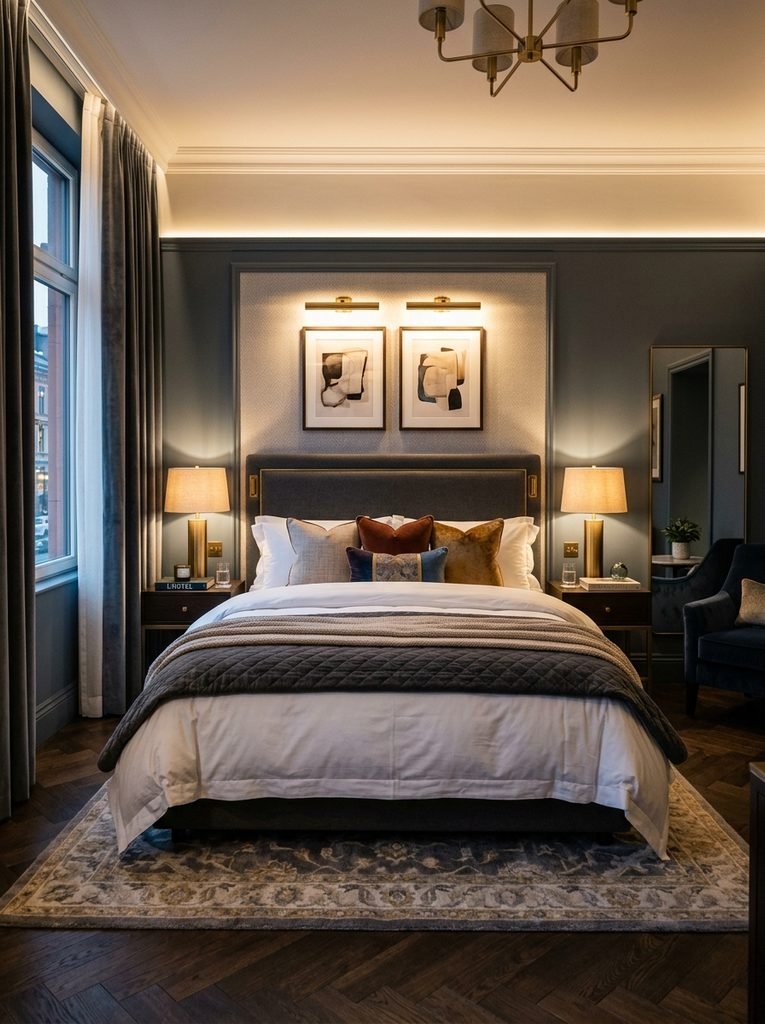
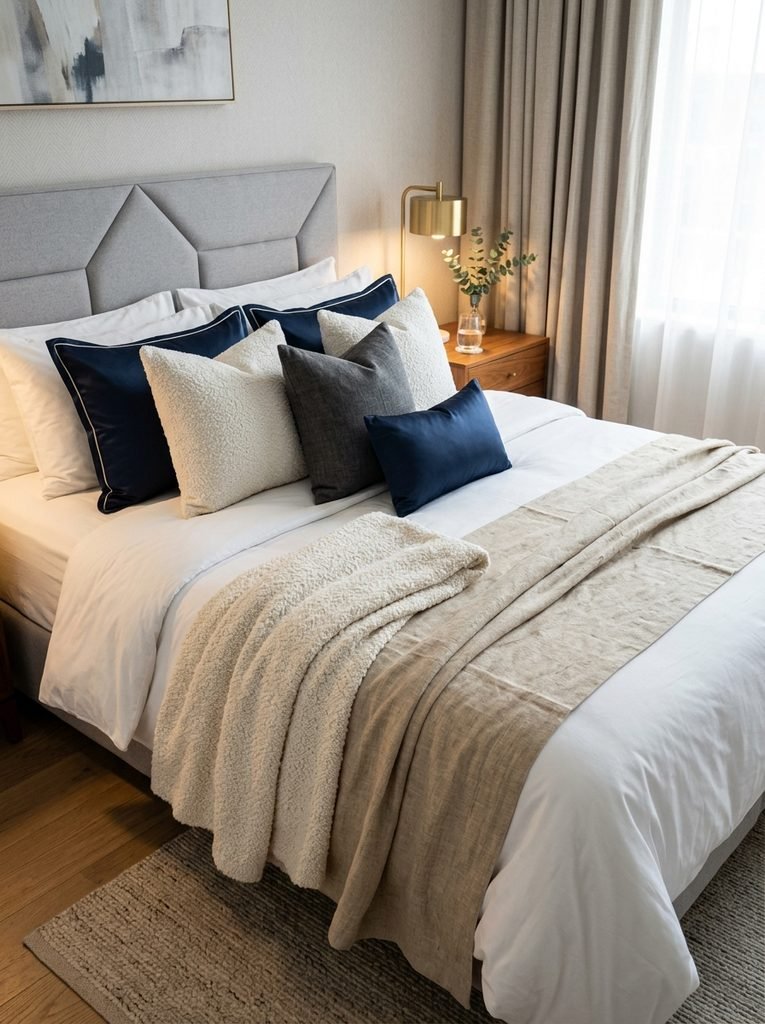
A hotel bed rarely uses a single comforter. It is built the way a good outfit is put together, one layer at a time, each one visible.
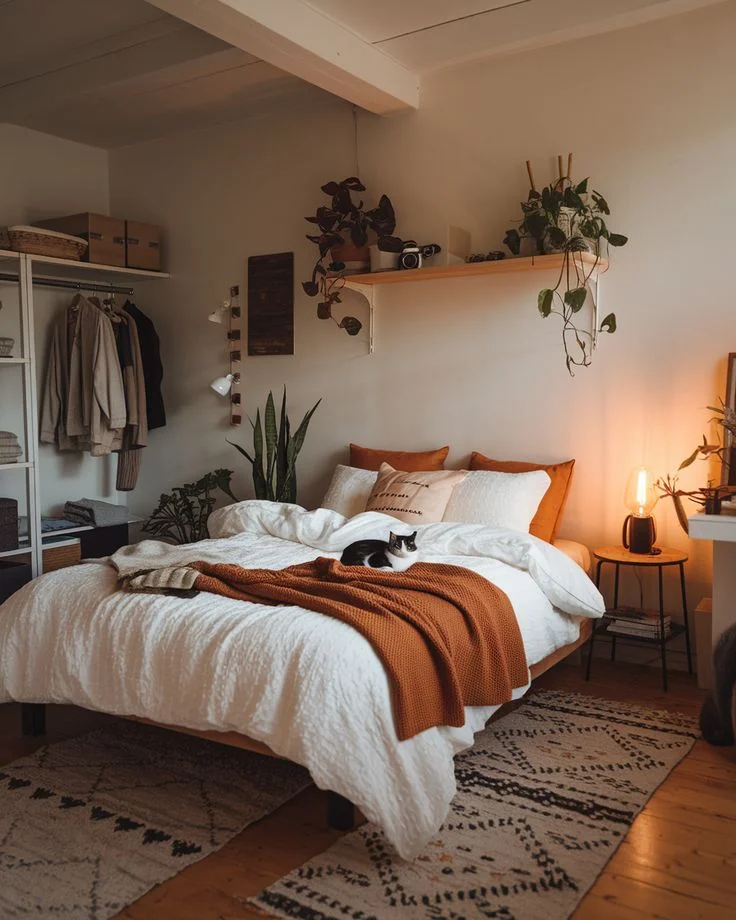
A typical stack starts with a fitted sheet and a flat sheet, then a duvet folded back about a third of the way, then a coverlet or blanket draped across the foot of the bed, and finally a mix of sleeping pillows and smaller decorative pillows in front of them. Nothing about this is complicated. What makes it read as intentional is that each layer is a slightly different texture or weight, so the eye can actually tell them apart.
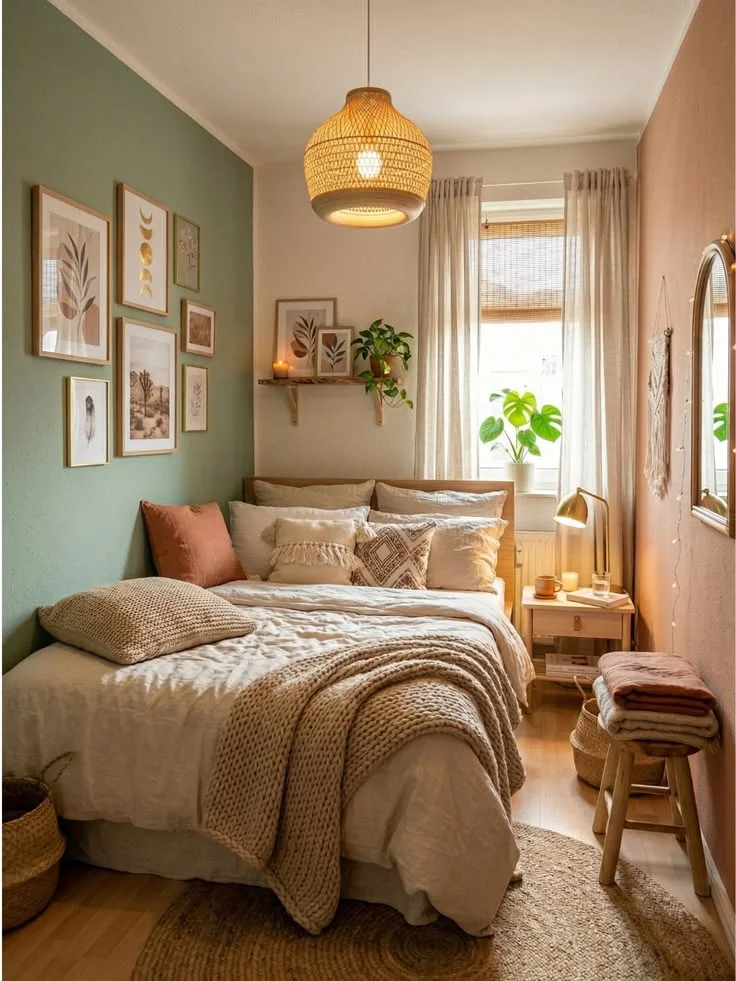
At home, this translates into buying a coverlet or a folded throw specifically for the foot of the bed, rather than treating the comforter as the only layer. A waffle-weave blanket over a smooth duvet, or a linen throw over a quilted coverlet, gives the same effect without adding much cost. Keep the color palette tight here. Two or three tones repeated across the layers looks curated. Five competing patterns looks like laundry day.
Symmetry Does More Work Than People Think
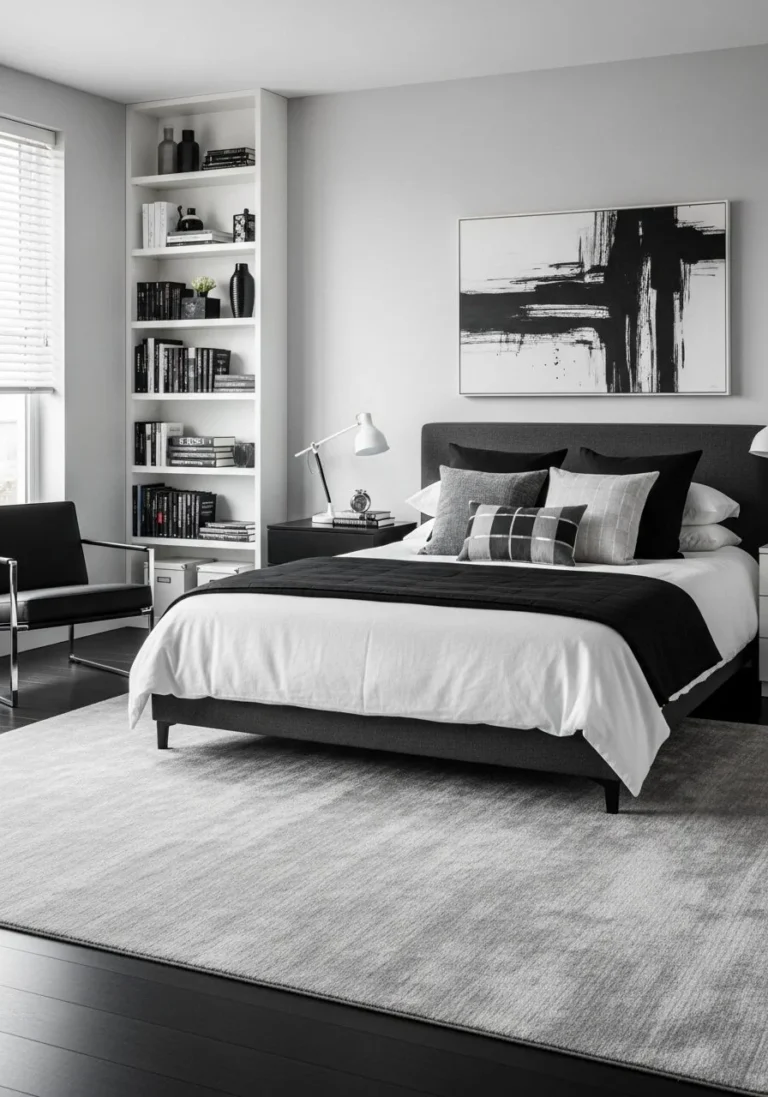
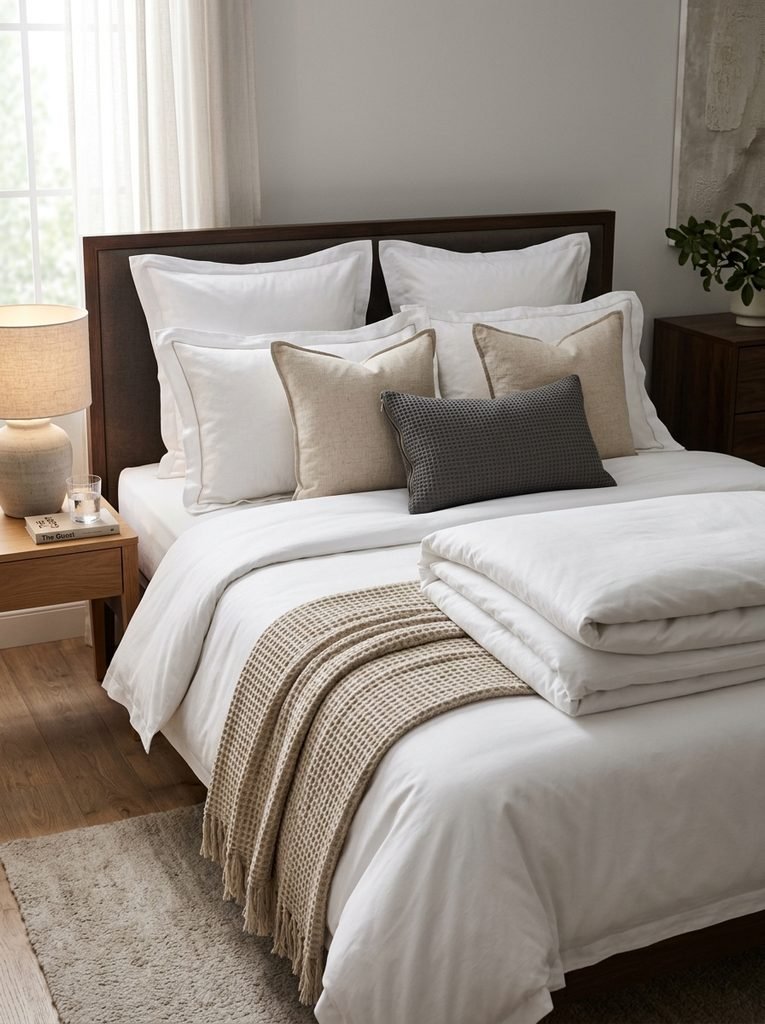
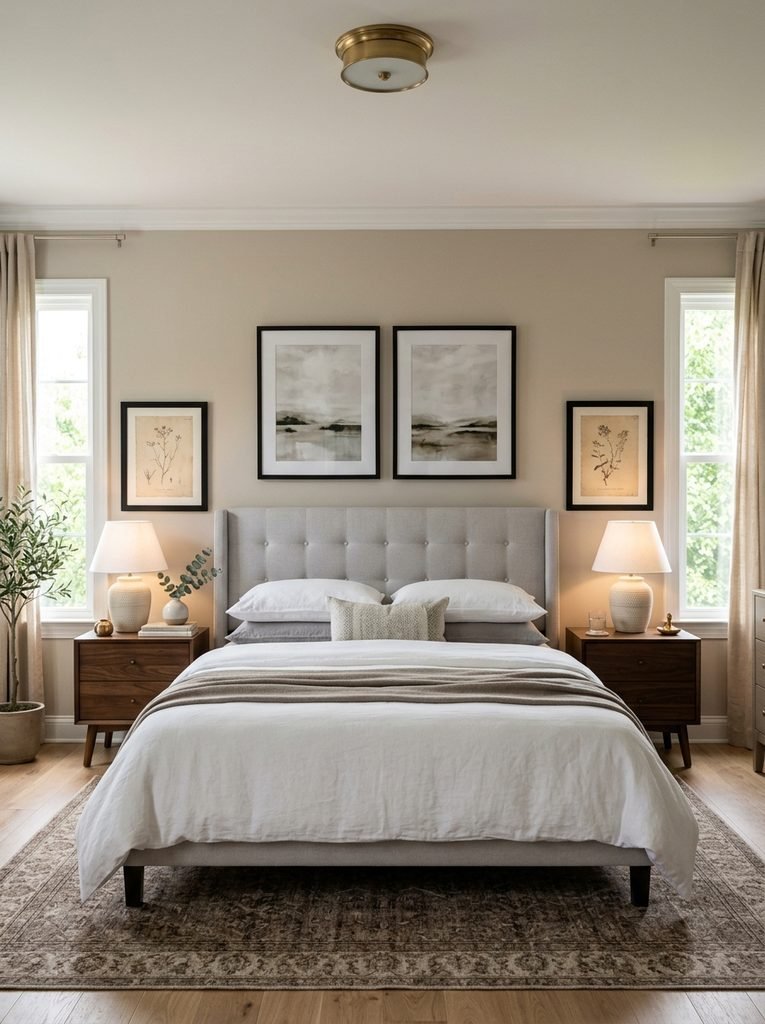
Almost every hotel room is built around a mirrored layout. Matching nightstands, matching lamps, matching art on either side of the headboard. It sounds obvious, but it is one of the most skipped details in home bedrooms, usually because one nightstand got replaced at some point and nobody replaced the other.
Symmetry works because it removes visual noise. Your eye does not have to work out why one side of the room is taller, brighter, or busier than the other, so the whole space reads as calmer and more finished, even if nothing else in the room changed.
If a perfect matching pair is not realistic right now, aim for balance instead of an exact match. Two lamps of the same height and similar tone, even from different collections, will read as intentional. Two nightstands with the same silhouette in different finishes can work too, as long as the overall proportions line up. What breaks the effect is one side noticeably heavier, taller, or more cluttered than the other.
Surfaces Stay Almost Empty On Purpose
This is the detail most people get backward. A hotel nightstand is not empty because there is nothing to put on it. It is empty because someone decided in advance what belongs there and removed everything else.
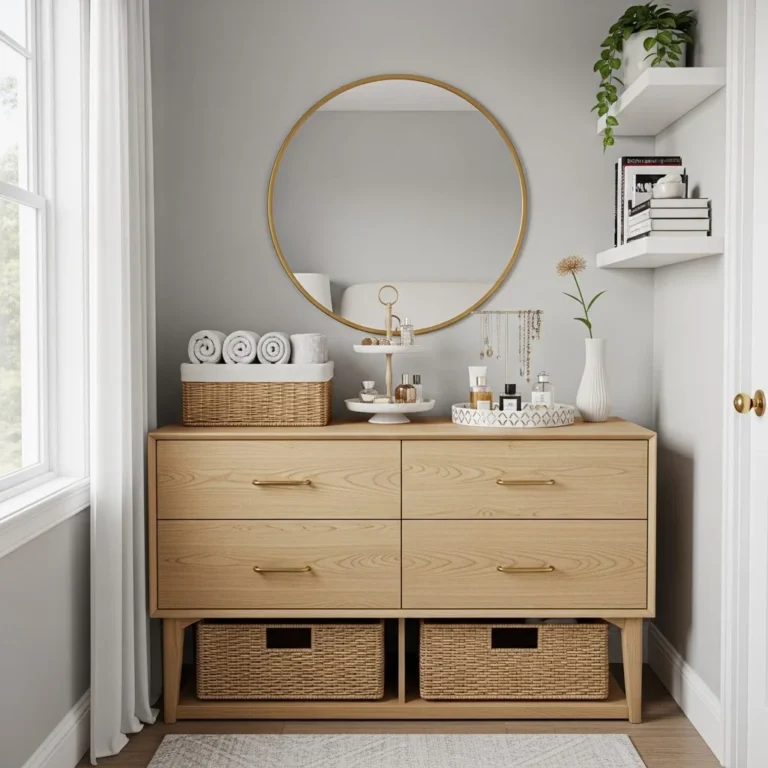
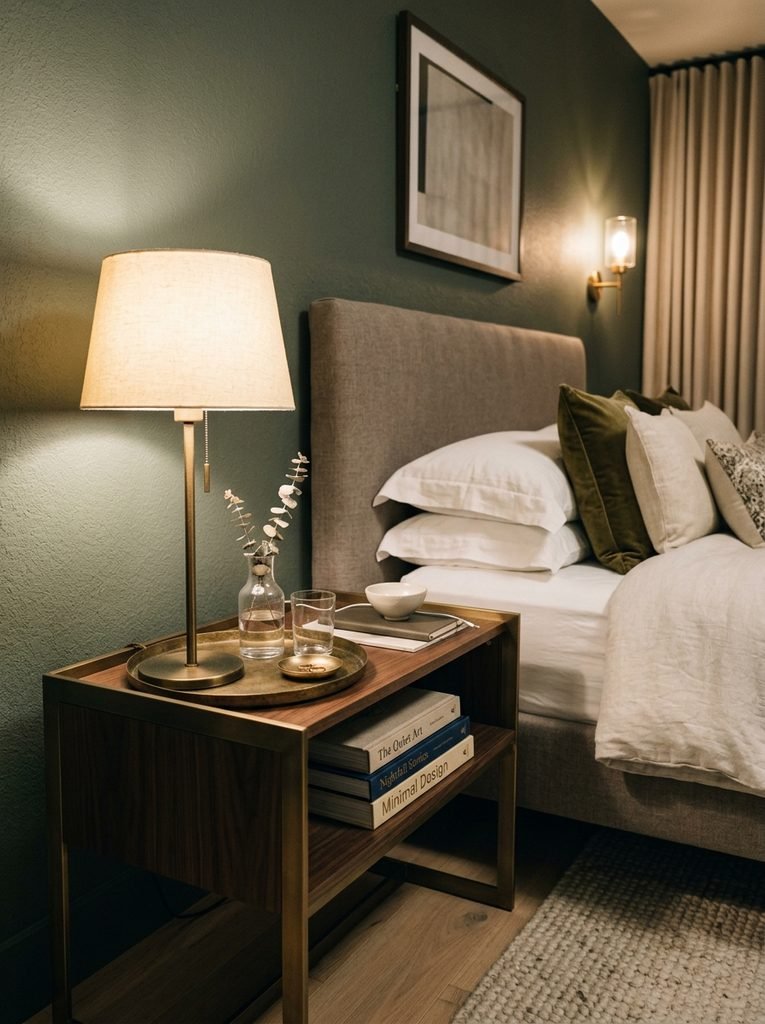
A typical hotel nightstand holds a lamp, a small tray or coaster, and maybe a single decorative object like a small vase or a stack of two books. That is it. There is no phone charger cable visible, no half-used lip balm, no random receipt. The dresser top follows the same rule: a tray, maybe a small plant, and open space around both.
At home, the fix is not about owning fewer things. It is about giving everyday items a drawer instead of a surface. A shallow top drawer in the nightstand can hold the charger, the lip balm, and the reading glasses, so the surface itself only shows what you actually want to look at. If you check where your storage space is actually being wasted, you will often find enough hidden capacity to clear every visible surface in the room without buying new furniture.
Lighting Comes From Three Places, Never Just One
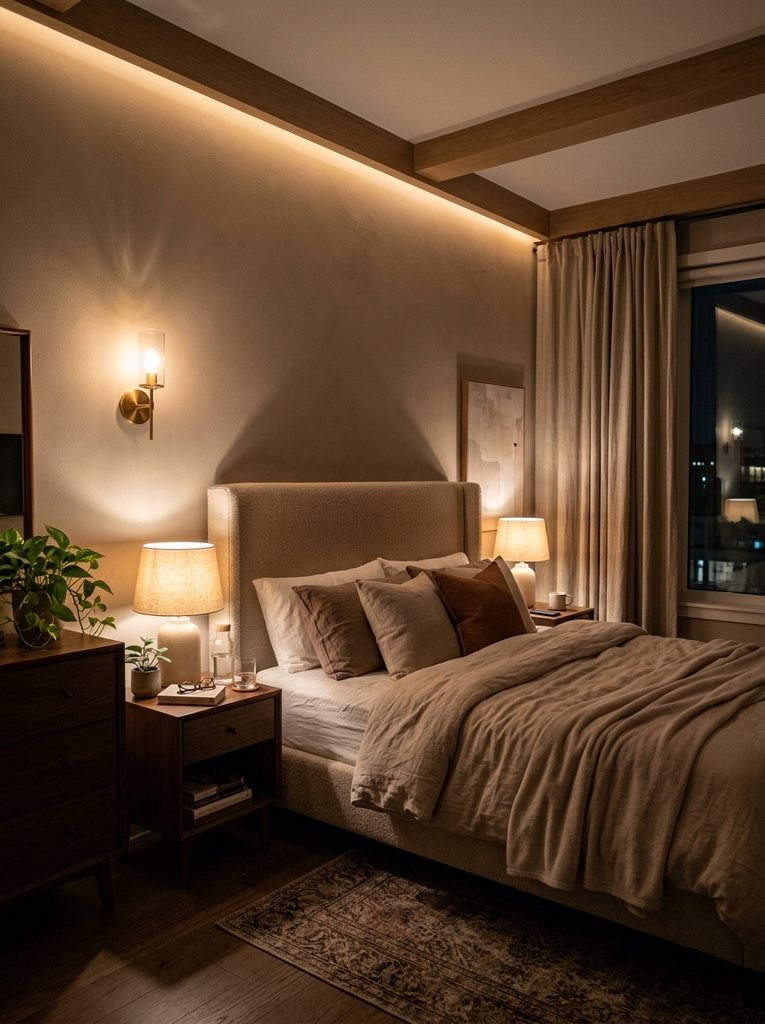
If a bedroom only has one overhead light, it will never feel like a hotel room, no matter how nice the bedding is. Hospitality lighting is layered on purpose, because a single source creates flat, uneven light that makes a room feel more like an office than a retreat.
The standard hotel setup uses at least three light sources: a pair of table lamps on the nightstands, a floor lamp or wall sconce somewhere across the room, and dimmable overhead or cove lighting used only when needed, usually at its lowest setting in the evening. Warm bulbs, generally in the 2700K to 3000K range, are used throughout rather than the cooler white light common in kitchens and bathrooms.
For a home bedroom, this does not require an electrician in most cases. Plug-in sconces or wall-mounted battery lights can stand in for hardwired fixtures, and a simple lamp dimmer switch lets you drop the light level in the evening without replacing anything. The goal is to be able to light the room without ever needing the main ceiling light on.
A Blackout Layer Behind the Pretty Curtain
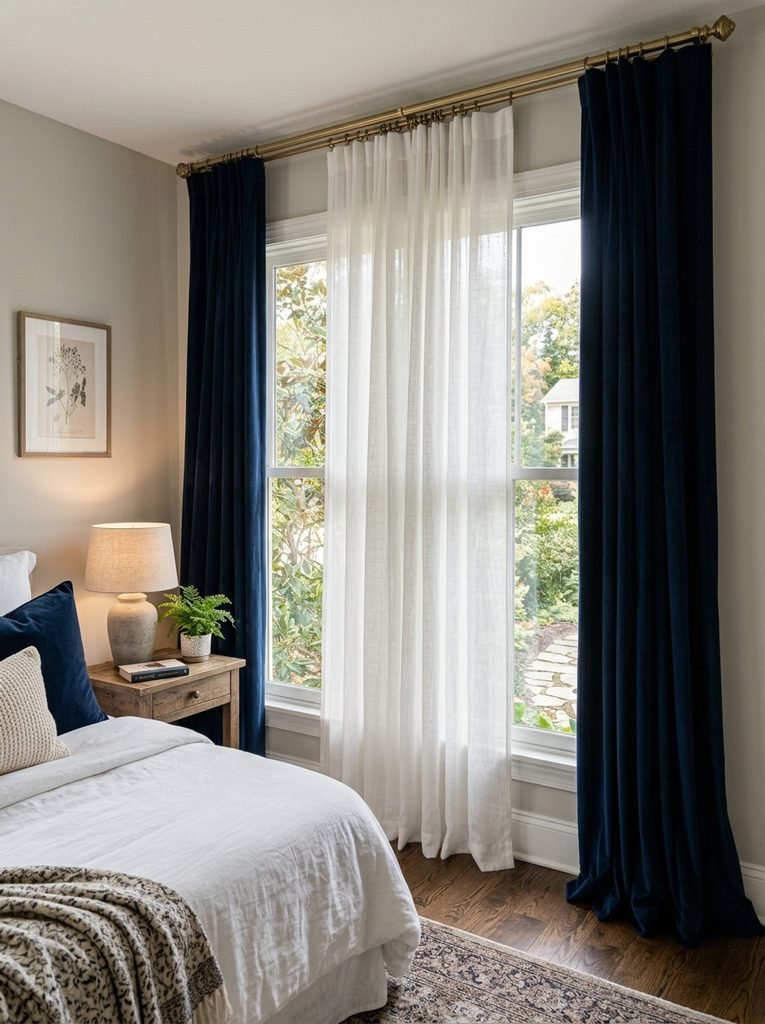
Hotel guests expect the room to go fully dark, regardless of the time zone they flew in from, and designers solve this with a two-layer window treatment rather than relying on one curtain to do both jobs. A sheer or decorative drapery panel handles the look during the day, while a separate blackout lining or a second blackout panel behind it handles the dark.
This detail is easy to miss because the blackout layer is not meant to be seen. It usually hangs closest to the glass, mounted on its own track or rod, with the decorative curtain layered in front on a wider rod so both can move independently.
Research on sleep environments generally points to darker rooms supporting more consistent rest, which is part of why hotels treat this as a baseline requirement rather than an upgrade. At home, blackout curtain liners are inexpensive and can be added behind curtains you already own, so this is one of the more budget-friendly details on this list. Pay attention to how the curtain length itself affects the finished look, since a blackout layer hung too short will show light gaps along the floor and sides no matter how heavy the fabric is.
One Textile Story, Repeated Instead of Matched
Hotel rooms rarely use a single matching bedding set the way many home bedrooms do. Instead, they build what designers sometimes call a textile story, a small group of two or three materials that repeat across the bedding, the curtains, and any upholstered furniture in the room.
A common combination is linen, a nubby bouclé or wool blend, and a smooth cotton sateen. The bedding might mix a linen duvet cover with a bouclé lumbar pillow and a cotton sateen sheet peeking out at the top. The curtains repeat the linen. A bench or chair repeats the bouclé. Nothing matches exactly, but everything belongs to the same family, which reads as more expensive than a perfectly matched three-piece set from a single package.
If you are working with what you already own, look at the textures already in the room and ask which two or three you want to keep visible. Removing one competing texture, like a shiny satin throw pillow in an otherwise matte, textured room, often does more than adding something new.
A Landing Zone Near the Door
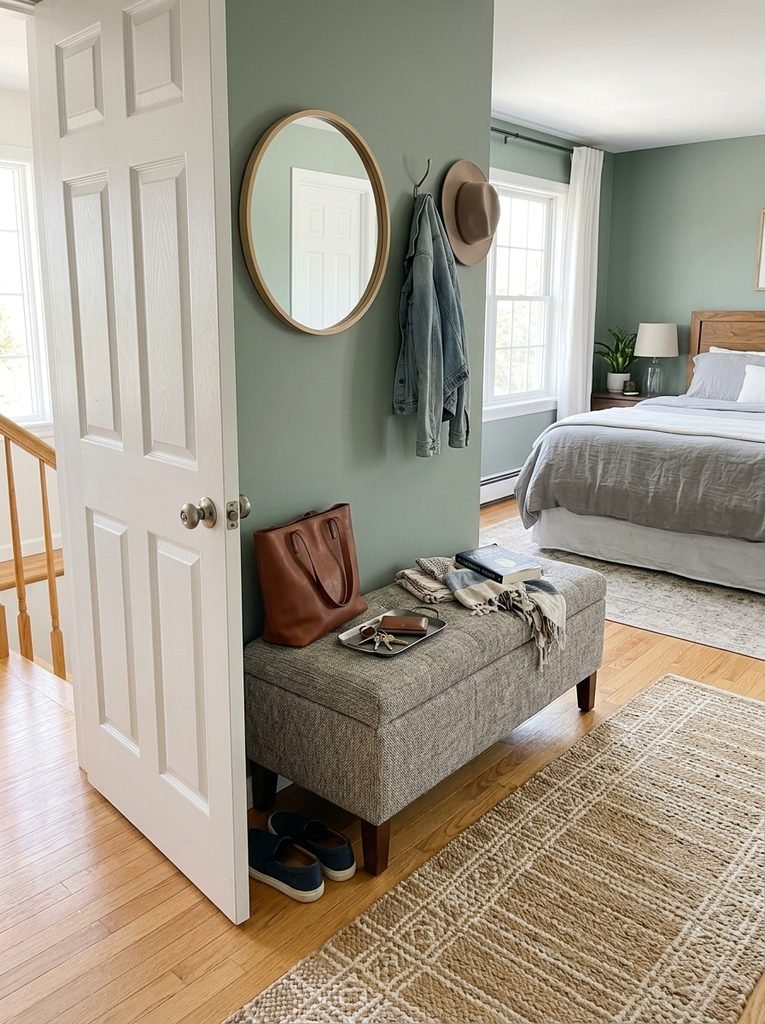
Every hotel room has a spot for a suitcase, whether it is a folding luggage rack, a bench at the foot of the bed, or a low console near the entry. It exists so guests have somewhere to put things down that is not the bed and not the floor, and it quietly signals that the room was designed with an actual routine in mind.
Home bedrooms usually skip this, and bags, jackets, and gym clothes end up on a chair that was meant for something else, or on the floor by the door. Adding a small bench, a narrow console table, or even a single well-placed chair near the entry gives daily items a home before they pile up elsewhere in the room.
This piece does not need to be large. A 30 to 36 inch bench at the foot of the bed handles both a moment to sit down and put on shoes and a temporary landing spot for a bag, which is exactly the job it does in a hotel room.
Hardware and Metal Finishes Stay Consistent
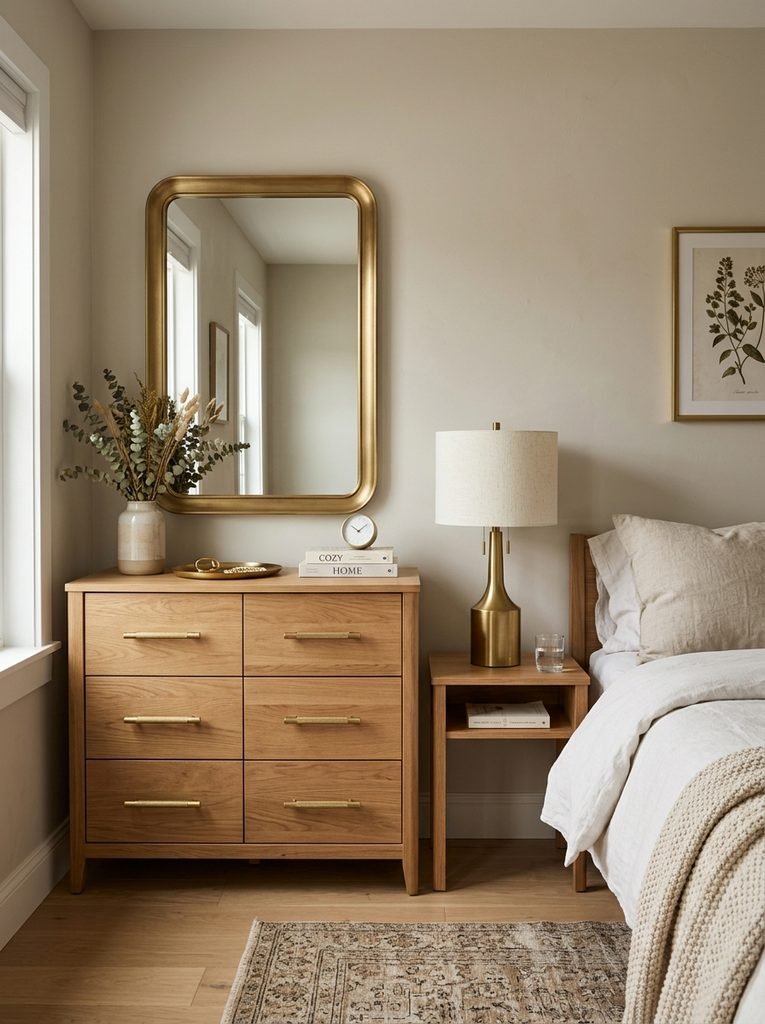
Lamp bases, drawer pulls, curtain rods, mirror frames, and light fixtures in a hotel room are almost always the same metal finish throughout the space, whether that is brushed brass, matte black, or brushed nickel. This is one of the least noticed details until it is missing, at which point a room can feel slightly off without an obvious reason why.
Home bedrooms tend to accumulate mismatched metals over time. A silver lamp bought years ago, brass drawer pulls added during a recent update, a black curtain rod chosen separately. None of these pieces are wrong individually, but together they create a low-level visual static.
A full hardware replacement is not usually necessary to fix this. Picking one finish going forward, then slowly swapping the most visible pieces first, like lamp bases and curtain rods, closes most of the gap. Drawer pulls are a relatively inexpensive final step once the larger, more visible pieces are aligned.
Scent as a Design Element
Many boutique hotels use a signature scent throughout guest rooms, often through a reed diffuser, a scented candle, or a linen spray used on the bedding itself. It is a deliberate part of the design, not an afterthought, because scent is tied closely to how a space is remembered.
At home, this can be as simple as choosing one consistent scent for the bedroom rather than switching between whatever candle is on hand. A reed diffuser on the dresser or nightstand provides a steady, low-level presence without an open flame, which also makes it a practical option for a room used every night. Keeping the scent consistent over time, rather than changing it with every season, is part of what makes it feel considered rather than random.
Small Bedroom Adaptations
Most of these details scale down without losing their effect, which matters since not everyone is working with a spacious primary suite.
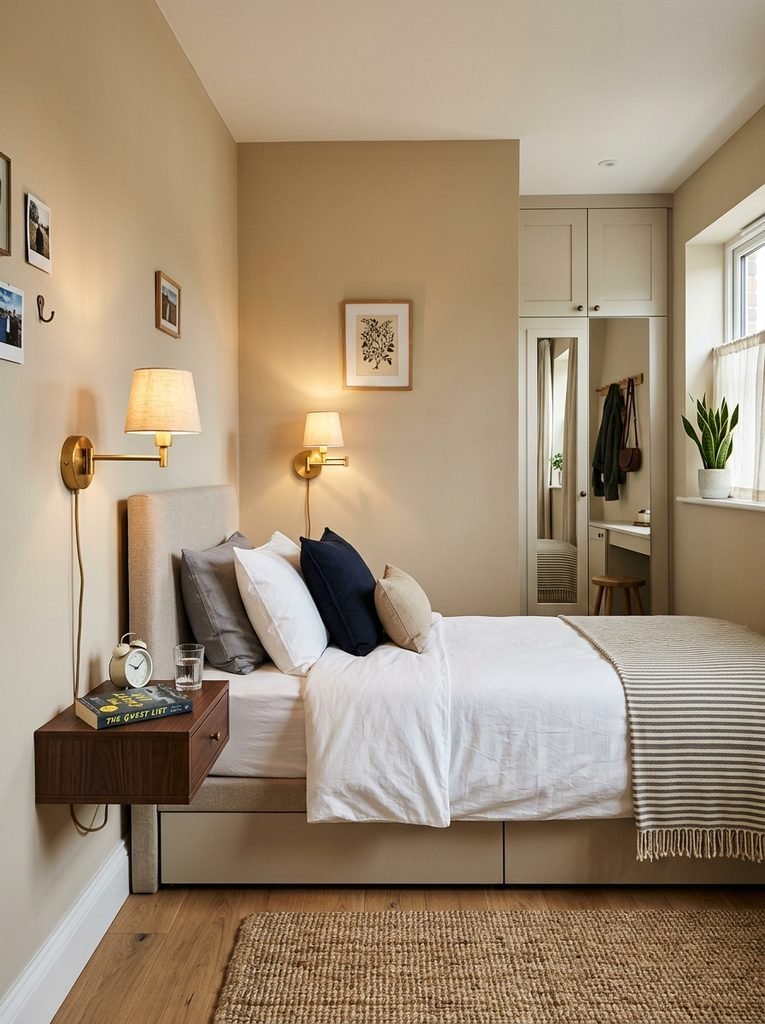
- Symmetry in a small room can be achieved with a single nightstand and a matching wall sconce on the opposite side instead of a second piece of furniture, keeping the balanced look without the footprint.
- Layered lighting in a small room often works best with one plug-in wall sconce beside the bed and a single warm lamp, since floor space for a second lamp or floor light may not exist.
- The landing zone can shrink to a wall hook and a small tray on the dresser rather than a full bench, if floor space near the door is limited.
- Blackout layering still works with a single blackout roman shade mounted close to the glass, paired with a lighter curtain panel for daytime softness, which uses less depth than two full-length curtain rods.
The goal in a smaller room is choosing two or three of these details to execute well rather than attempting all of them at once. A room with excellent lighting and a genuinely restrained nightstand will feel more considered than a room that tries every idea on this list halfway.
Mistakes That Undo the Hotel Effect
A few habits tend to cancel out everything else on this list, even in an otherwise well-decorated room.
Overloading the bed with too many decorative pillows is one of the most common. Past six or seven total pillows, most people stop actually using the bed as styled and end up throwing the extras on the floor every night, which defeats the purpose. Another is choosing cool white lighting for bedside lamps, which fights against the warm, relaxed mood the rest of the room is working toward. A third is treating the closet or an awkward unused corner as overflow storage that spills visibly into the bedroom itself, since a hotel room never lets its storage areas compete with the main space for attention.
Finally, resist styling a room entirely around a photograph rather than how it will actually be used. A hotel room is stocked with what a guest needs during a short stay. A home bedroom needs to support years of actual daily habits, so any detail that looks good but makes the room harder to live in on a Tuesday morning is worth reconsidering before it goes in.
Bringing It Together
None of these details are expensive on their own, and most homes already have two or three of them by accident. What separates a bedroom that feels like a boutique hotel from one that does not is usually not any single element, but the consistency across all of them, the same warm light temperature throughout, the same metal finish, the same two or three textures repeated instead of scattered.
Start with whichever detail is easiest to fix in your own room this week, whether that is clearing a nightstand, adding a blackout liner, or swapping one mismatched lamp, and build from there. For more ways to bring a similar sense of calm into the rest of the space, this guide to soft, neutral bedroom palettes and this roundup of luxury bedroom decor ideas both pair naturally with the techniques covered here.