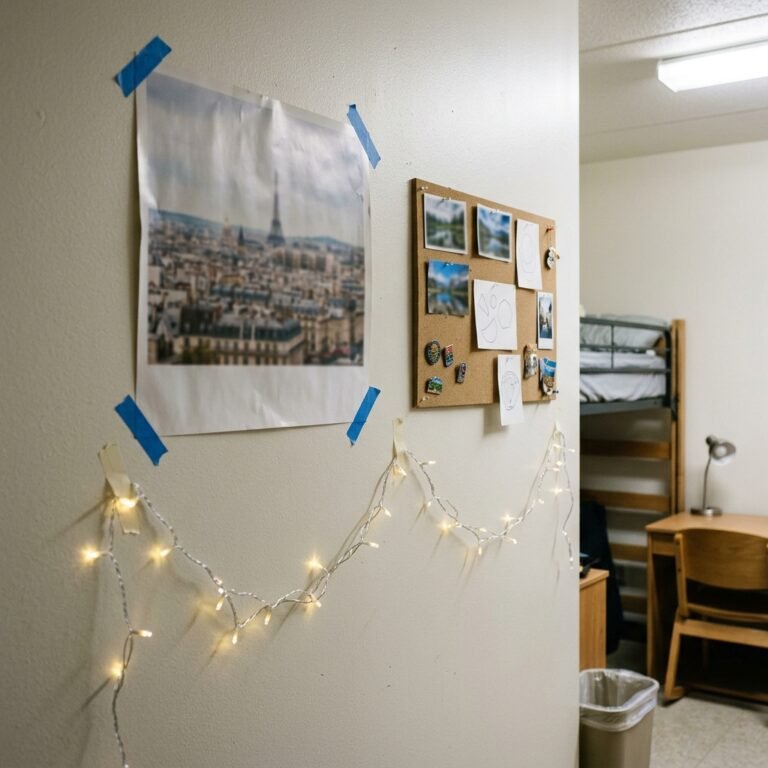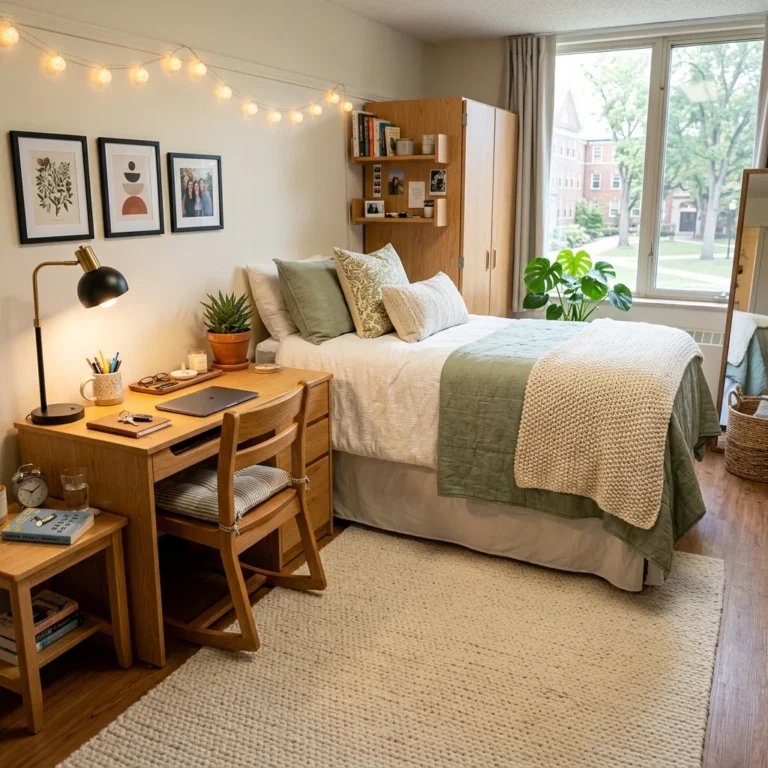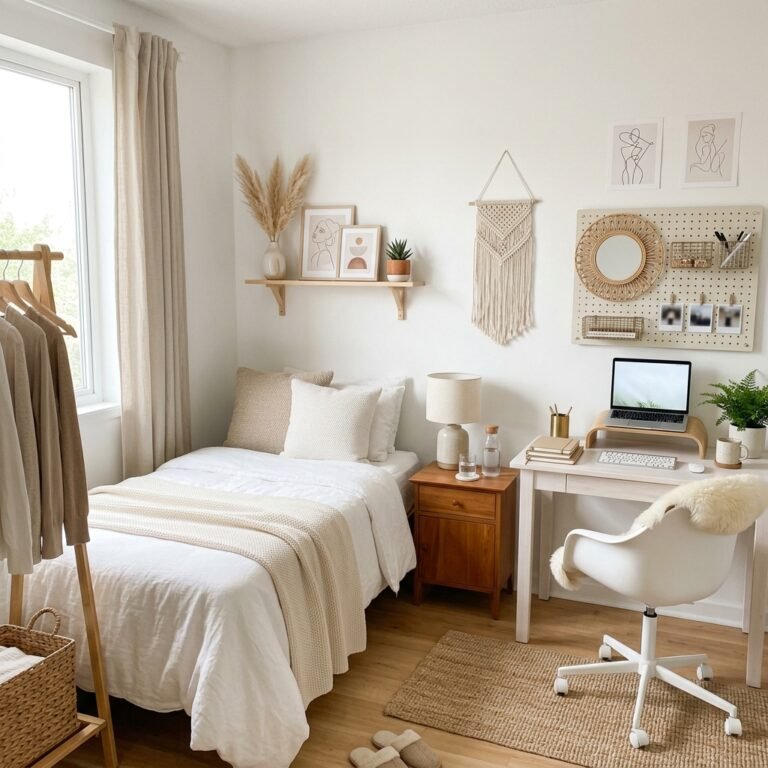
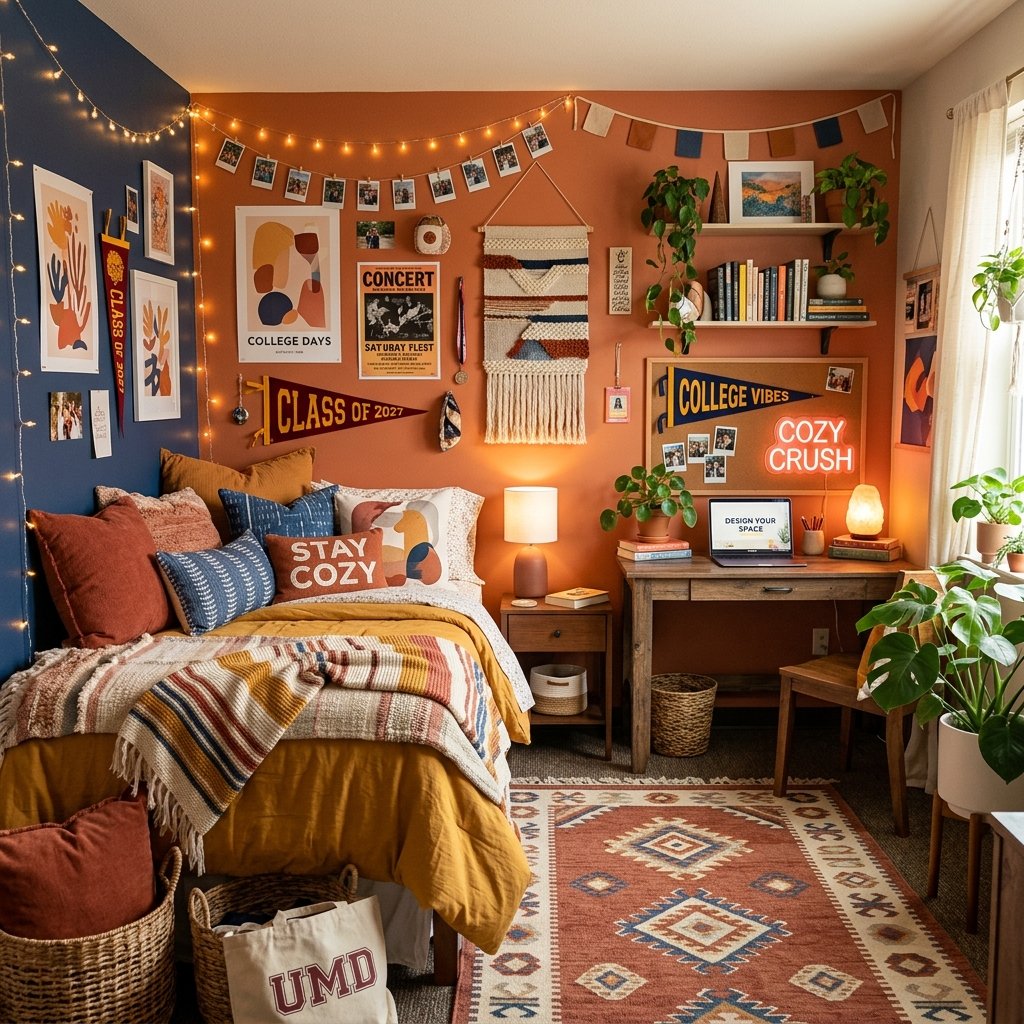
You unlock your dorm room door for the first time. Four cinderblock walls stare back, painted the same flat eggshell as every other room on the floor. Your RA already mentioned during move-in orientation that painting is off-limits. Unauthorized paint jobs show up on more end-of-year damage bills than almost anything else colleges charge for. So the mood board full of sage green accent walls and terracotta paint pours you saved all summer suddenly feels useless. The room starts to feel like it belongs to the university, not you.
Here’s the part nobody tells you at orientation: you don’t need a paintbrush to make a dorm room feel like yours. Color comes from what you layer on top of the walls, not what you do to the walls themselves. Most housing contracts only restrict permanent alterations. They rarely say anything about the furniture, textiles, and lighting you bring in on your own. Before you commit to anything below, check your specific housing handbook, since a few campuses do restrict items like open-flame candles or halogen bulbs for fire-safety reasons. The 15 ideas below are ranked roughly by how much color impact they deliver for how little commitment they require. Start with the easy wins in week one, then build up to bigger swings once you know your roommate’s tolerance for a full-color rug.
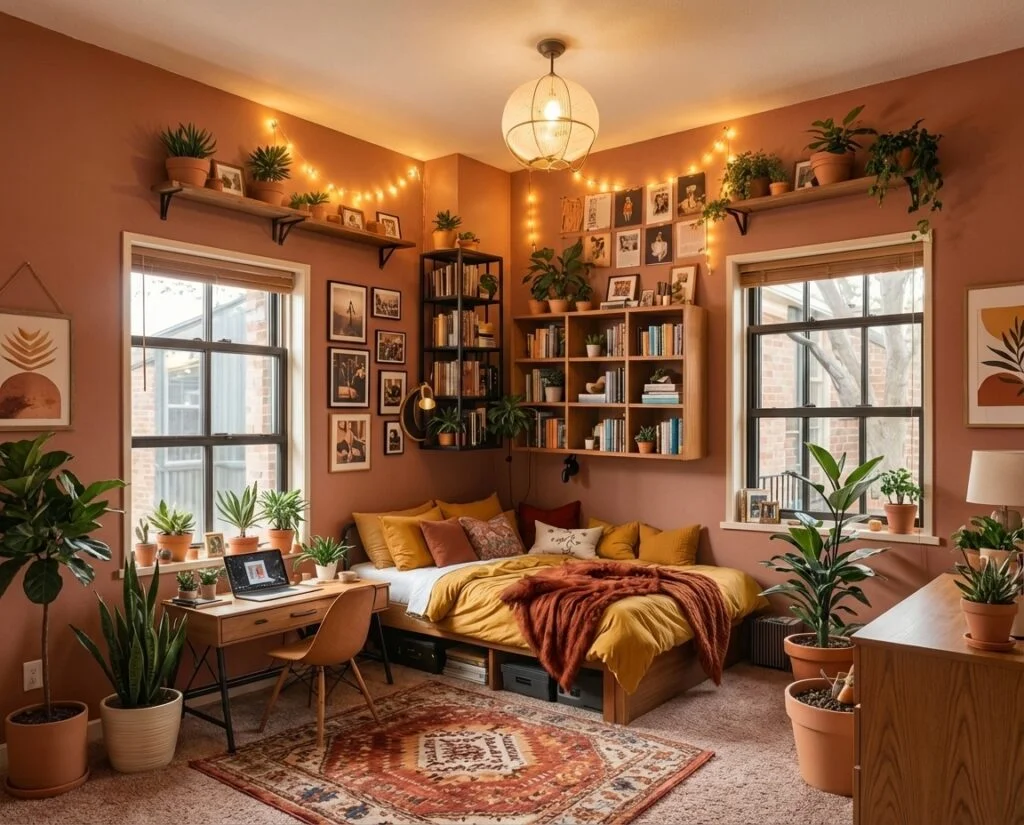
Peel-and-Stick Wallpaper on One Accent Panel
Full-wall wallpaper can be tricky to remove cleanly from cinderblock. Some housing offices flag it as a wall alteration no matter what the adhesive claims. A single panel behind your desk or headboard sidesteps that problem entirely. Cut a 2-by-3-foot section and apply it to a flat piece of foam board or poster board instead of the wall itself. Lean the board against the wall, or mount it with Command strips rated for its weight. You get a bold color block without a single adhesive strip touching the actual surface. It comes down in seconds at move-out with nothing left to patch.
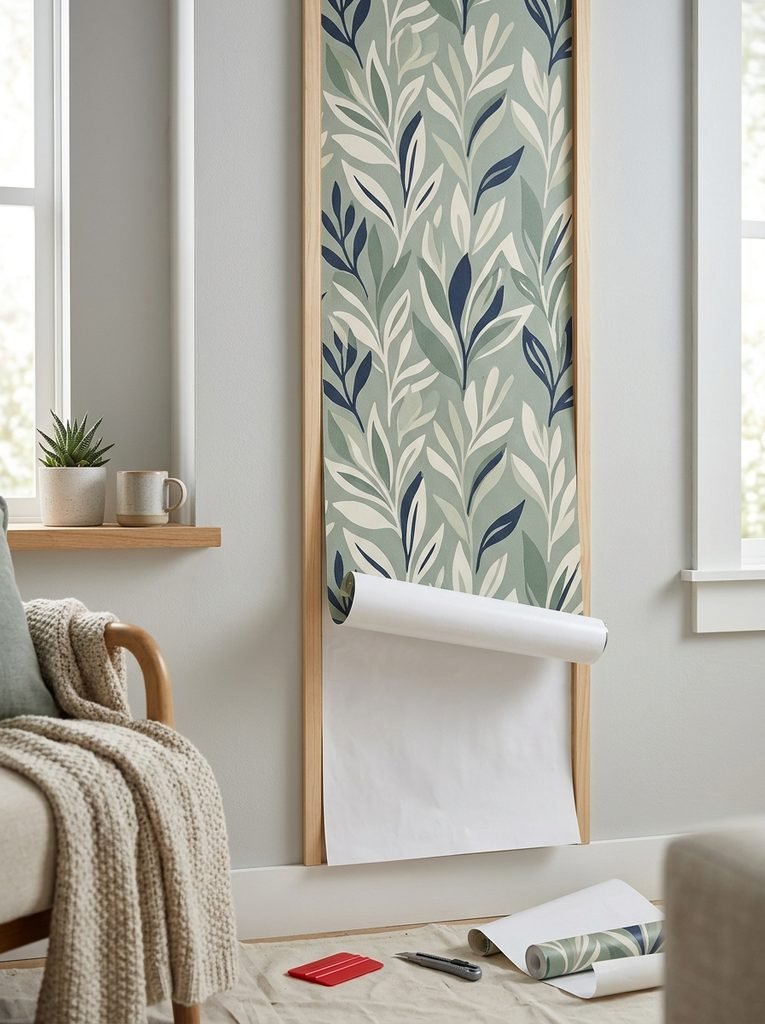
The 60-30-10 Textile Rule
Interior designers use a simple ratio to keep a color scheme from looking accidental: roughly 60 percent dominant color, 30 percent secondary, and 10 percent accent. In a dorm, that translates easily to real items. Bedding becomes your 60, say a deep terracotta comforter. A rug or curtains become your 30, in cream or oatmeal. Throw pillows or a desk lamp carry the 10, in mustard or teal. Decide on this split before you shop, and assign each item its share in advance. That planning step is what separates a coordinated room from one where everything fights for attention. It also saves money, since you’re shopping against a list instead of grabbing whatever colorful item catches your eye in a dorm-decor aisle two weeks before move-in.
Warm-Temperature Lighting Instead of the Default Overhead Fixture
Most dorm ceiling fixtures run at 5000K or higher. That’s a cool, bluish-white light that washes out warm colors and can make a carefully chosen palette look flat. Swap in a plug-in lamp or string lights rated around 2700K instead. That’s the warm range most manufacturers label “soft white,” and it’s the baseline ENERGY STAR uses for standard residential bulbs. This one change makes terracotta look richer and sage look calmer. Blush pink stops looking washed out and starts looking intentional. The fix costs about as much as a single lightbulb.
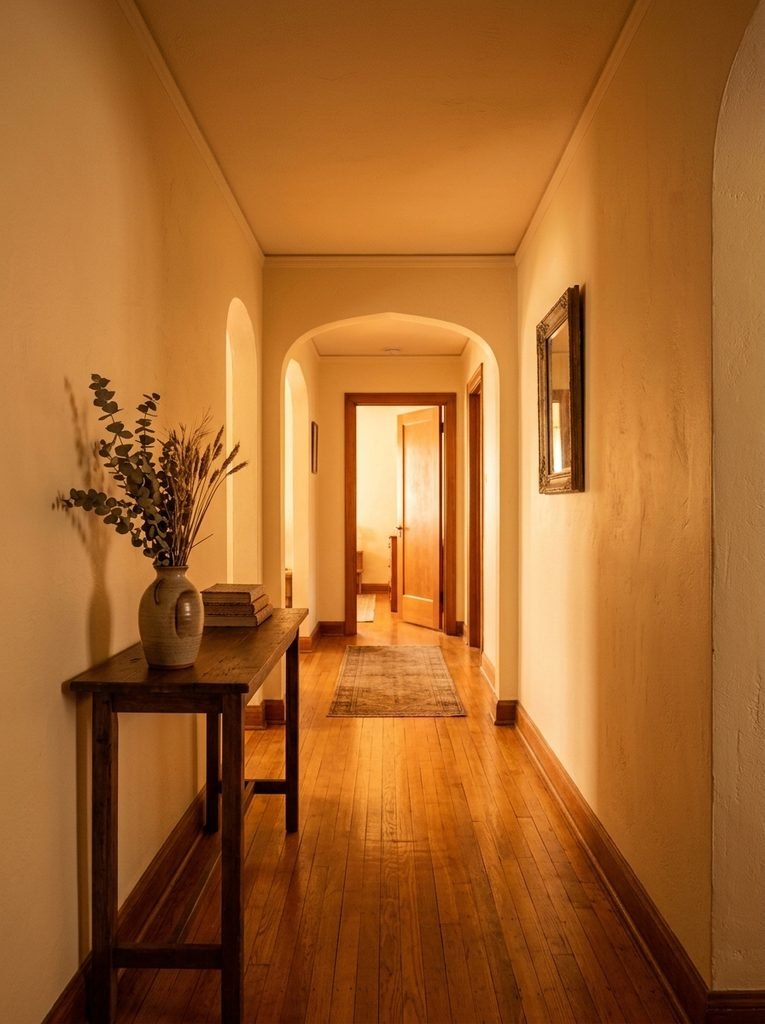
Painted or Wrapped Panels Inside Your Bookshelf
Check the back of your dorm-provided bookshelf. If it’s open or backed with thin cardboard, that panel isn’t part of the room’s actual wall, so it’s fair game. Paint it directly with leftover craft paint, or wrap a cut piece of cardboard in fabric or spare wallpaper and slide it in as a removable insert. Either way, it reads as a built-in color feature every time someone looks at the shelf. Because the insert isn’t fixed in place, you can swap it out completely if your palette changes mid-semester.
A Gallery Wall Anchored by Frame Color, Not Photo Subject
Most dorm gallery walls end up looking cluttered, usually because the photos and posters inside clash with each other. Skip that problem by choosing frames in one consistent color family instead. Try three or four shades of terracotta, or a mix of brass and cream. Hang them with Command strips rated for each frame’s specific weight. The frame color does the visual work of tying the whole wall together. That means the photos inside can be anything, from concert tickets to family snapshots, without breaking the palette.
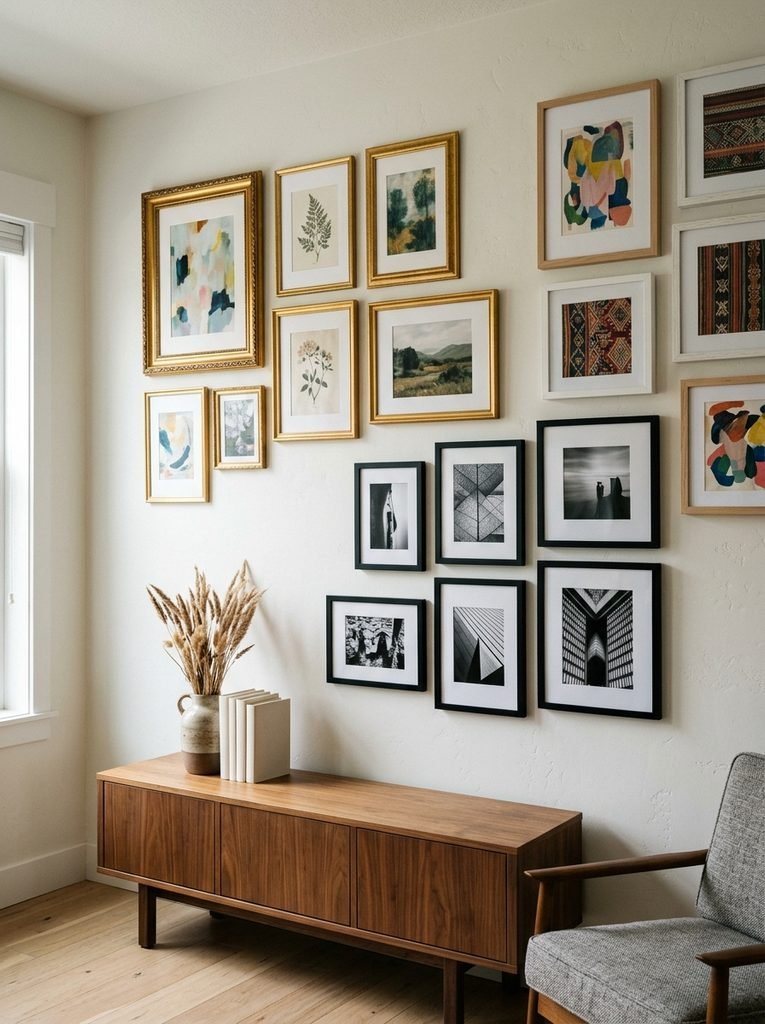
A Tapestry Used as a Headboard, Not Just a Wall Hanging
A large tapestry pinned or hooked behind your bed does double duty. It covers a wide stretch of cinderblock, and it acts as an oversized color block that a standard poster can’t match in scale. Choose one in your dominant palette color. Let it stand in for the accent wall you’re not allowed to paint. Place Command hooks evenly along the top edge rather than relying on tape alone. That keeps the fabric flat and prevents the sagging, wrinkled look that shows up within a week of tape-only hanging.
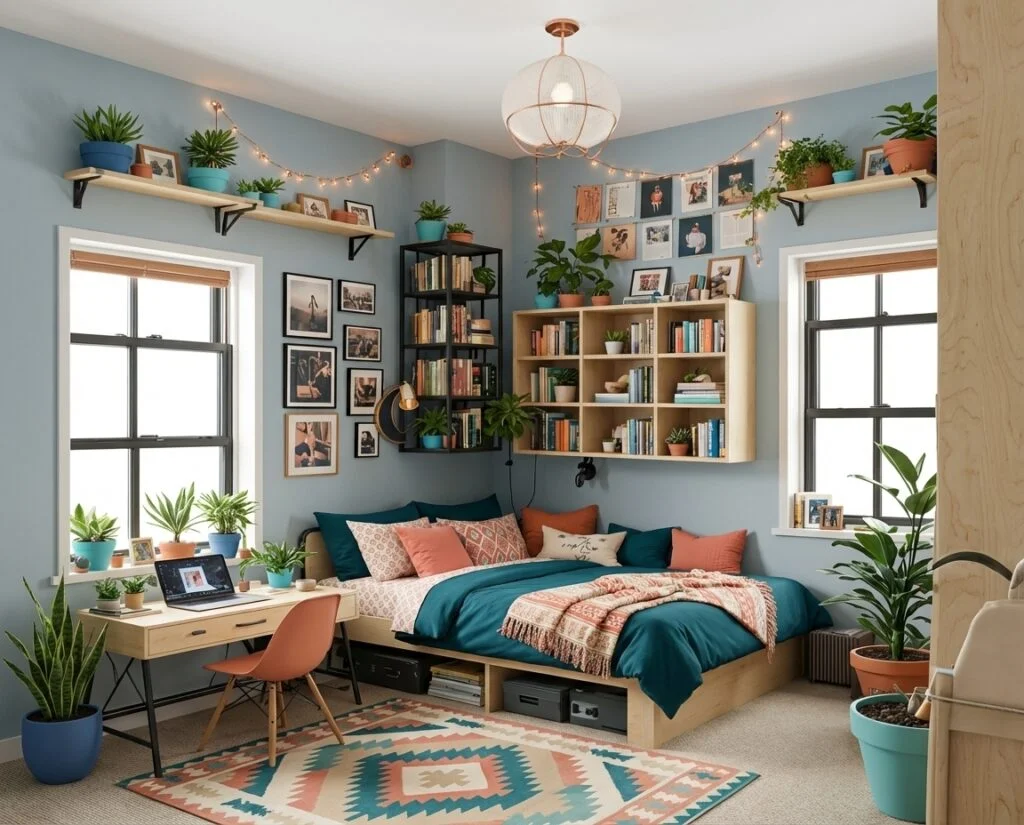
A Rug Sized to Cover Most of the Visible Floor
Dorm carpet is almost always a neutral, low-pile commercial grade. It photographs gray or beige no matter what color it technically is. A rug sized to cover most of your visible floor area works differently than a small accent mat placed in the middle of the room. It changes the color of the entire floor plane at once. Floor space makes up a large percentage of what you see when you first walk in, so this single item has an outsized effect on how finished the whole room feels.
Floor-to-Ceiling Curtains in an Accent Color
Dorm windows tend to be small and set high, which can make a room feel boxy no matter what color scheme you choose. Try mounting the curtain rod a few inches above the actual window frame. Let the panels run all the way to the floor. This makes the window, and the color you chose for it, look taller and more deliberate than the room’s real proportions suggest. Pick a curtain in your accent color rather than your dominant one. A smaller amount of a bold hue reads as a styling choice, not an overwhelming one.
One Piece of Furniture You Own and Paint Yourself
Dorm-issued furniture is off-limits for paint, but anything you bring from home is fair game since it belongs to you. A small side table, a stool, or an old lamp base painted in your accent color gives you a genuine furniture-level color moment. There’s no repair fee risk involved, because it’s your own property. Chalk-style paint needs no primer and dries within a couple of hours. That timeline makes it realistic to finish before your first week of classes even starts.
Color-Blocked Bedding Instead of a Single All-Over Print
A duvet cover split into two or three solid color blocks reads as more intentional than a busy all-over print. It also gives you more direct control over your palette, since you’re choosing exact colors instead of hoping a pattern’s mix works with everything else in the room. Bedding covers the single largest surface in most dorm rooms. Of everything on this list, it’s one of the highest-impact, lowest-effort choices you can make.
Color-Coordinated Desk Accessories
A pen cup, a desk lamp, a mouse pad, and a small file organizer are items you’re buying regardless of color. There’s no added cost to choosing them within one or two shades from your palette instead of picking them at random. Doing this turns a purely functional corner of the room into a styled one. It’s often the small detail that makes a dorm room look put-together in photos, rather than merely lived-in.
Ceramic or Painted Planters in an Accent Shade
A plant in its original plastic nursery pot tends to disappear visually against everything else in the room. Repot the same plant into a terracotta, sage, or cobalt ceramic planter instead. It becomes a color anchor you can move from a windowsill to a desk to a shelf as your layout shifts across the semester. That portability makes it one of the few color elements on this list that genuinely travels with you around the room.
Color-Changing LED Strips Behind the Bed Frame or Desk Shelf
LED strips mounted along the back edge of a bed frame, or the underside of a desk shelf, cast a soft wash of color onto the wall behind them. No mark gets left on the surface itself. Set the strip to a warm or single-color setting rather than cycling through the full rainbow, so it reads as intentional accent lighting rather than a dorm-room disco. This idea does come with a safety note worth taking seriously. The National Fire Protection Association tracks an average of roughly 3,800 structure fires in college housing each year, and electrical overload from strips, cords, and adapters is a recurring cause. Use a single UL-listed power strip with a built-in circuit breaker, rather than chaining multiple extension cords together. Unplug LED strips whenever you leave the room for the day.
A Colorful Interior on the Closet Door
The inside of a closet door is almost always overlooked. In most housing agreements, it genuinely counts as part of the furniture rather than the room’s wall. A strip of leftover wallpaper, a cork board painted in your accent color, or a sheet of colored contact paper turns that wasted surface into a hidden pop of color. You’ll see it every time you open the door, and it’s invisible to anyone doing a quick end-of-year wall inspection.
Conclusion
None of these fifteen ideas require a paintbrush, a landlord’s sign-off, or a security-deposit gamble. What they do require is picking one dominant color and letting your bedding, lighting, and a handful of key accents carry it through the room consistently. That’s a different approach than buying colorful items at random and hoping they end up working together. A dorm room without a paint allowance can still look like a space you chose on purpose. You’re just building the color from the layers on top of the walls, instead of the walls themselves, and most of those layers travel with you to your next room too. If you’re sharing the space, walk through this list with your roommate before buying anything. Agreeing on one dominant color together avoids the split-down-the-middle look that happens when two people decorate their own halves independently.
If you’re starting from a completely blank room, pair these no-paint methods with a broader look at minimal and aesthetic dorm room ideas for overall layout inspiration. Or read up on the most common wall decor mistake that makes dorm rooms feel temporary before you commit to a single gallery wall style.