Dorm Decor Mistakes Every First-Year Gets Wrong
Nobody warns you about the dorm room. They talk about the coursework, the cafeteria food, the roommate situation. But nobody sits you down and says, hey, that tiny concrete box you are about to move into is going to feel like a storage unit if you are not careful, and most of what you think you need is going to make it worse, not better.
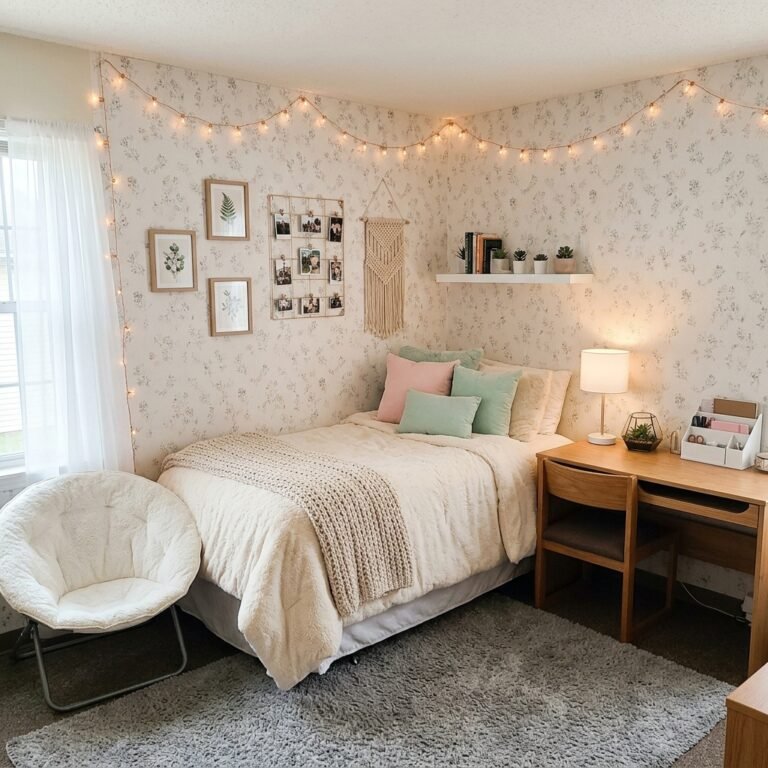
First-year students walk into their dorms with the best intentions. They have mood boards saved, they have gone on three separate Target runs, they have more string lights than any one person should legally own. And then the room is still somehow uncomfortable. Still somehow feels like it belongs to no one. Still somehow looks like a department store threw up in a twelve-by-twelve space.
The decorating mistakes are almost universal, which is actually great news. It means they are entirely avoidable. Whether you are heading into your first semester or trying to salvage a room that already feels off, these are the dorm decor mistakes that trip up nearly every first-year, and exactly what to do instead.
Buying Everything Before You See the Room
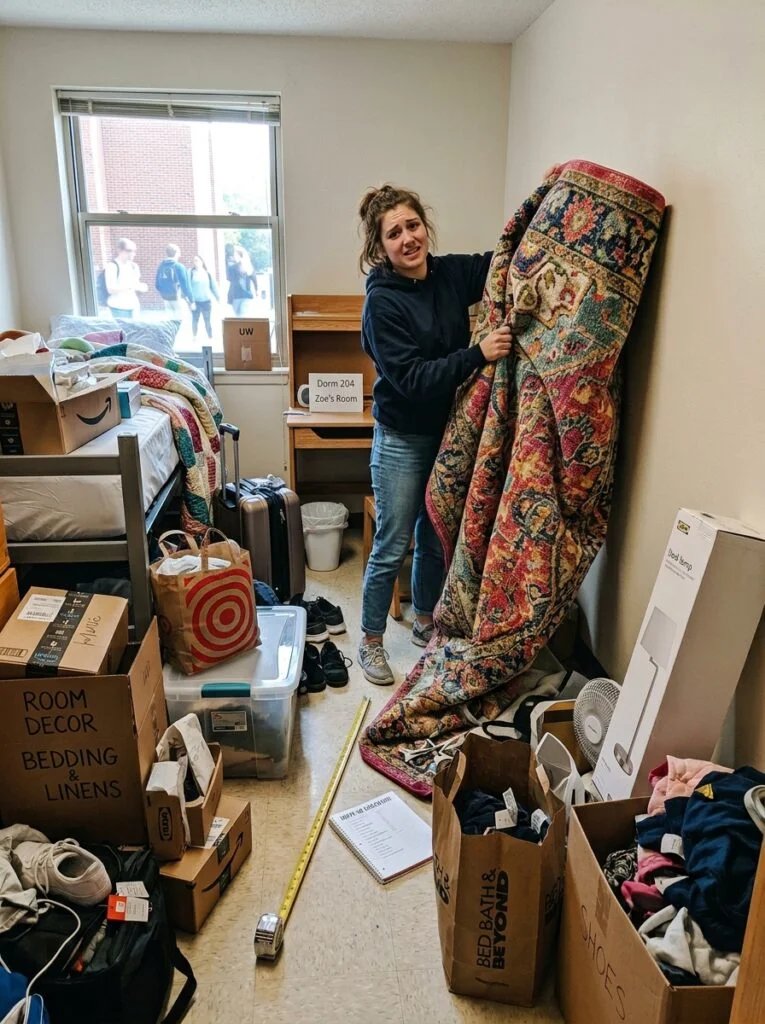
This is the big one. The mistake that costs the most money and causes the most regret. You see the dorm on a tour, or maybe just in photos online, and you go shopping based on a general impression. You buy a rug in a specific size, curtains in a specific length, storage in specific dimensions, and then you show up on move-in day and none of it fits the way you imagined.
Every dorm room is different. Window placements vary. Ceiling heights vary. Some rooms have built-in shelving that makes half your purchased storage redundant. Some have oddly placed outlets that determine where your furniture can actually go.
The smarter move is to buy the big stuff after you arrive. Bring a tape measure, take photos of every wall and corner, note where the windows are and which direction they face. Then shop. For the weeks before move-in, focus only on bedding, towels, and a few personal items that will fit regardless of the room layout. Everything else can wait forty-eight hours.
If you absolutely must pre-shop, stick to things with easy return policies and avoid anything that comes in a specific size.
Overloading on Trends Instead of Personal Style
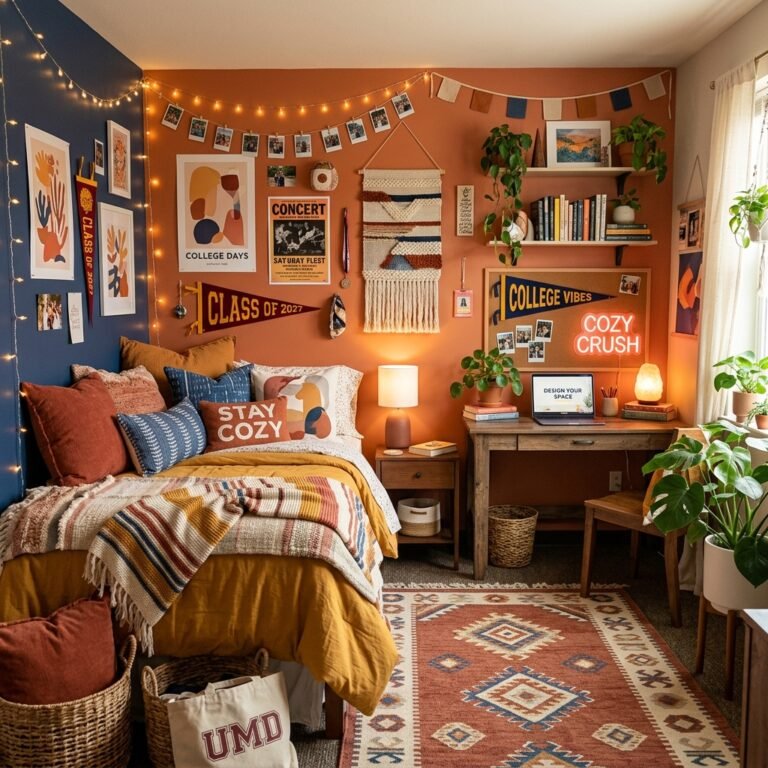
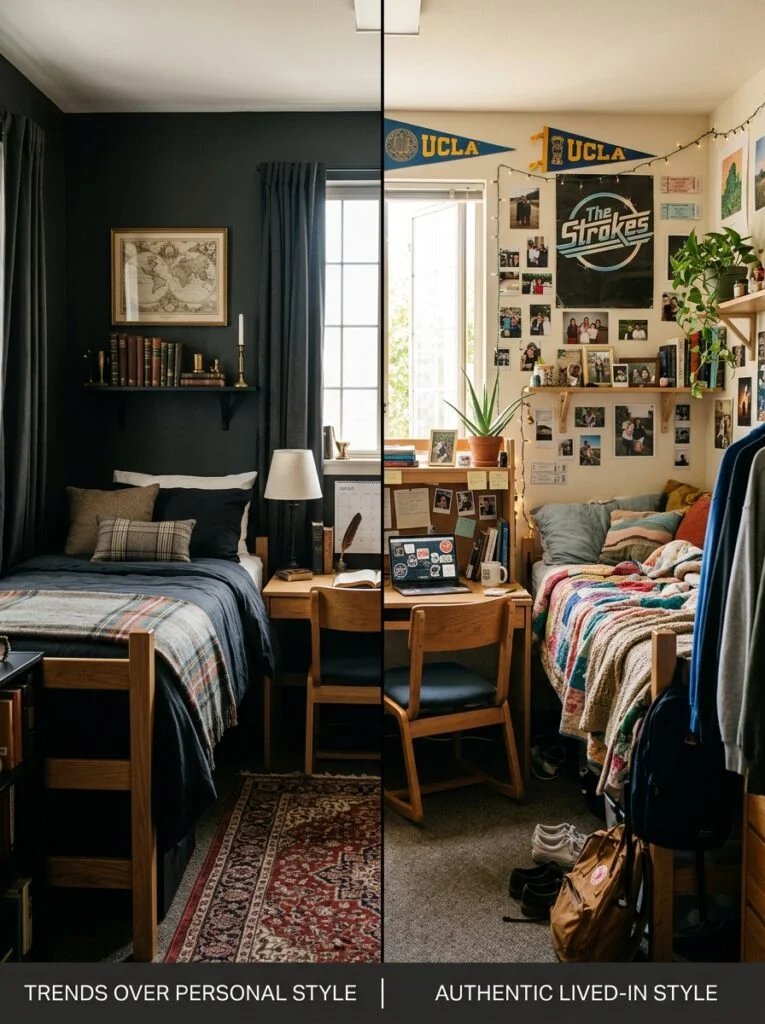
Social media has created a generation of students who decorate for the aesthetic rather than for themselves. The dorm looks great in photos. It photographs beautifully for the first-day post. And then they have to actually live in it for nine months and realize they do not actually like the dark academia vibe, they just liked how it looked on someone else’s feed.
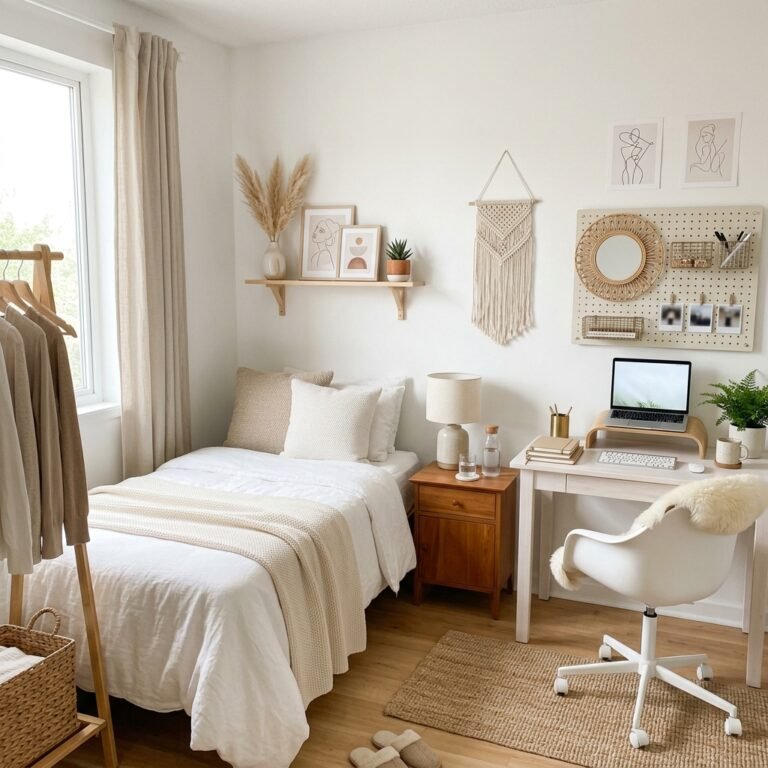
The rooms that feel the best to live in are the ones that reflect the actual person living in them. Not a Pinterest board. Not a TikTok trend. The person.
That sounds obvious but it requires a little honesty. Do you actually like minimalism, or do you just think you should? Do you genuinely love plants, or did you buy five of them because a room tour made them look easy? Are you a person who naturally keeps things tidy, or are you buying into an aesthetic that requires a level of organization you have never maintained?
Decorate for who you actually are and how you actually live. Bring things that mean something to you. A photo from a trip you took, a poster of a band that has been your favorite since middle school, a blanket your grandmother gave you. Those things create comfort. Trends create content.
Ignoring the Vertical Space
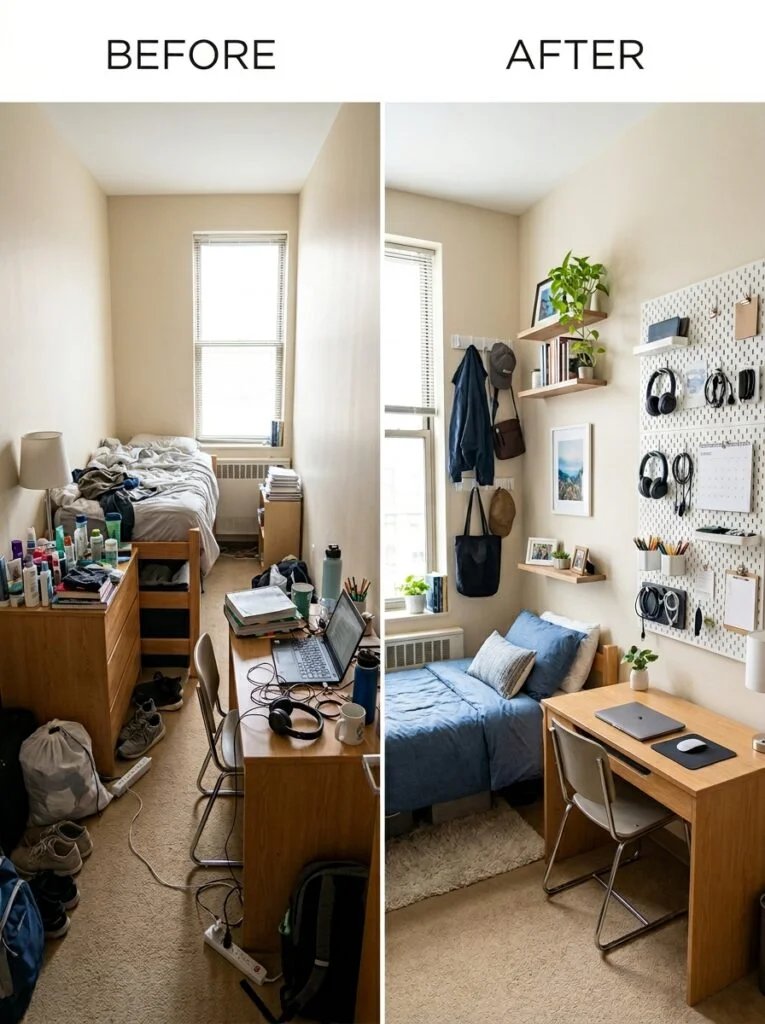
Dorm rooms are small. Most students respond to this by trying to fit as much as possible onto every horizontal surface and then complaining that the room feels cluttered. The actual solution is to go vertical.
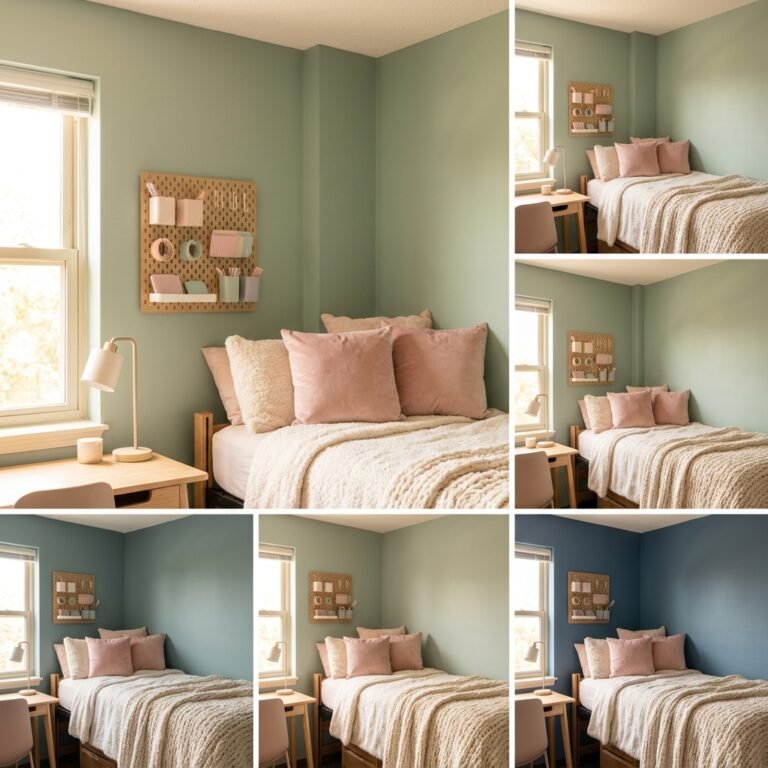
Walls are the most underused real estate in any dorm room. Command hooks and strips, removable wallpaper panels, floating shelves where they are permitted, over-the-door organizers, wall-mounted pegboards. These solutions move storage and display up off the floor and surfaces, which immediately makes the room feel more open.
Think about what is sitting on your desk that could be on the wall above it. Think about what is piled on your dresser that could hang nearby. Think about shoes on the floor that could live in an over-the-door organizer. Every item that moves off a horizontal surface gives the room more visual breathing room, and in a small space, visual breathing room is everything.
Vertical thinking also applies to decor. A gallery wall or a collection of hanging objects draws the eye up and makes ceilings feel higher. A single piece of art hung at eye level on an otherwise bare wall does more for a dorm room than a shelf full of knickknacks.
Buying the Wrong Sized Rug
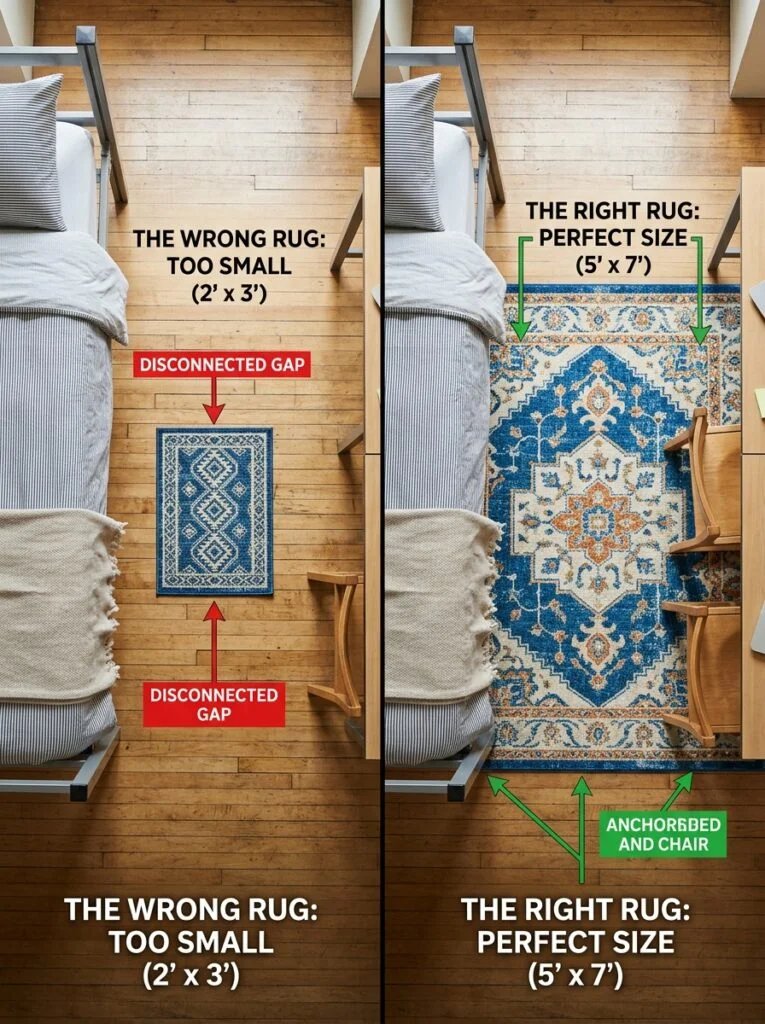
The rug is arguably the single most important purchase for a dorm room, and it is almost universally bought in the wrong size. Students gravitate toward small rugs, usually somewhere around two feet by three feet, because small seems appropriate for a small room. It is not.
A rug that is too small looks like a bath mat that wandered into the wrong room. It sits in the middle of the floor disconnected from everything, making the space feel more awkward rather than pulled together.
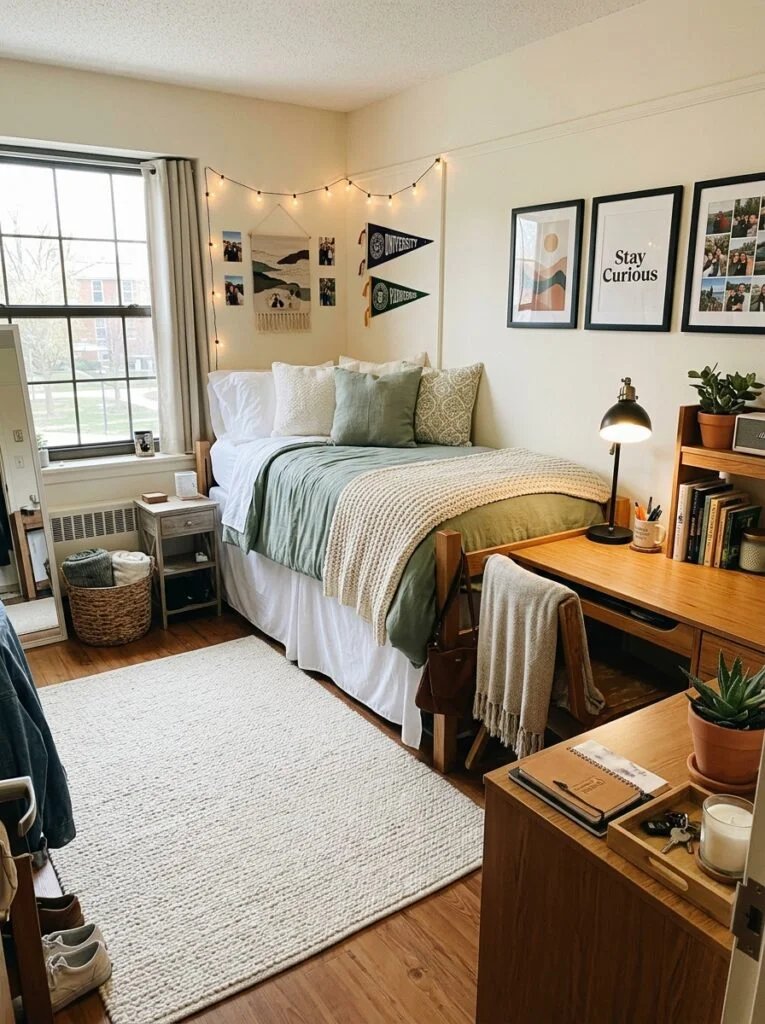
In a dorm room, you have two options that actually work. The first is a large area rug, typically five feet by seven feet or even larger, that anchors the main living area and tucks under the front legs of the bed and desk chair. The second is a runner or two medium rugs placed intentionally, like one beside the bed and one under the desk area.
What you want is for the rug to connect pieces of furniture rather than float between them. When a rug touches the furniture around it, even just the front legs, the whole room snaps together visually. When it does not, nothing feels grounded.
Going Overboard With String Lights
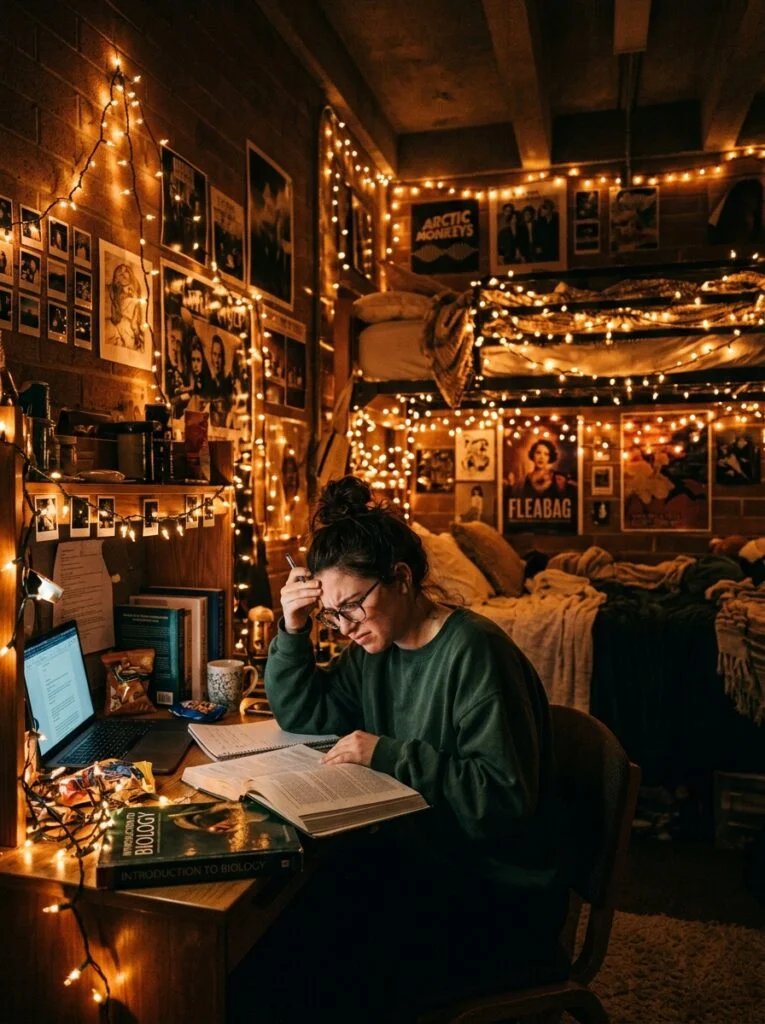
String lights are not the problem. The problem is relying on string lights as your only light source and then being confused about why the room feels like a cave.
Dorm rooms have notoriously harsh overhead lighting or, in older buildings, barely any overhead lighting at all. Students respond to this by buying string lights, which create ambiance beautifully but provide essentially no functional light. You cannot study under string lights. You cannot do your makeup under string lights. You cannot see the color of what you are wearing under string lights.
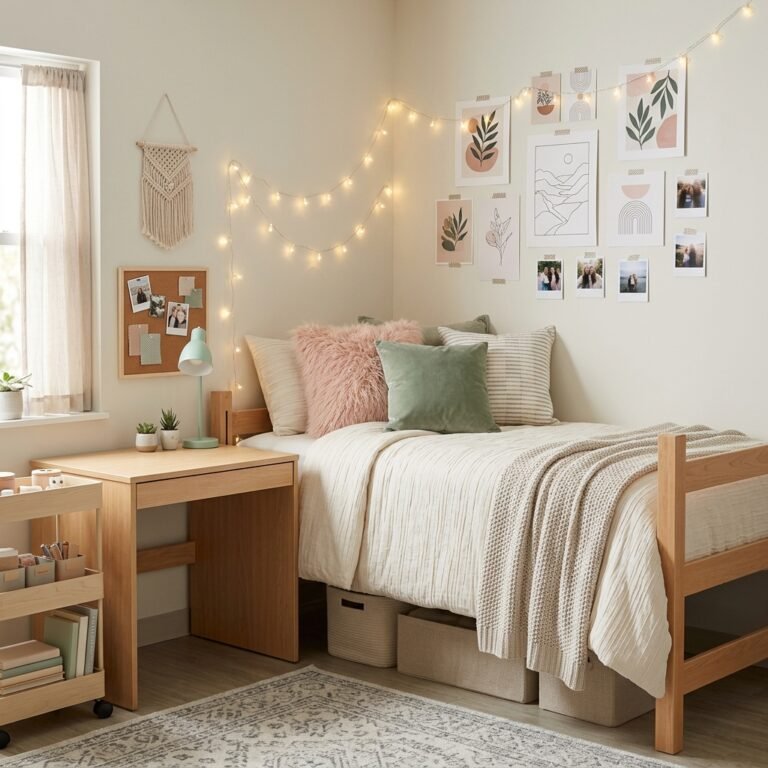
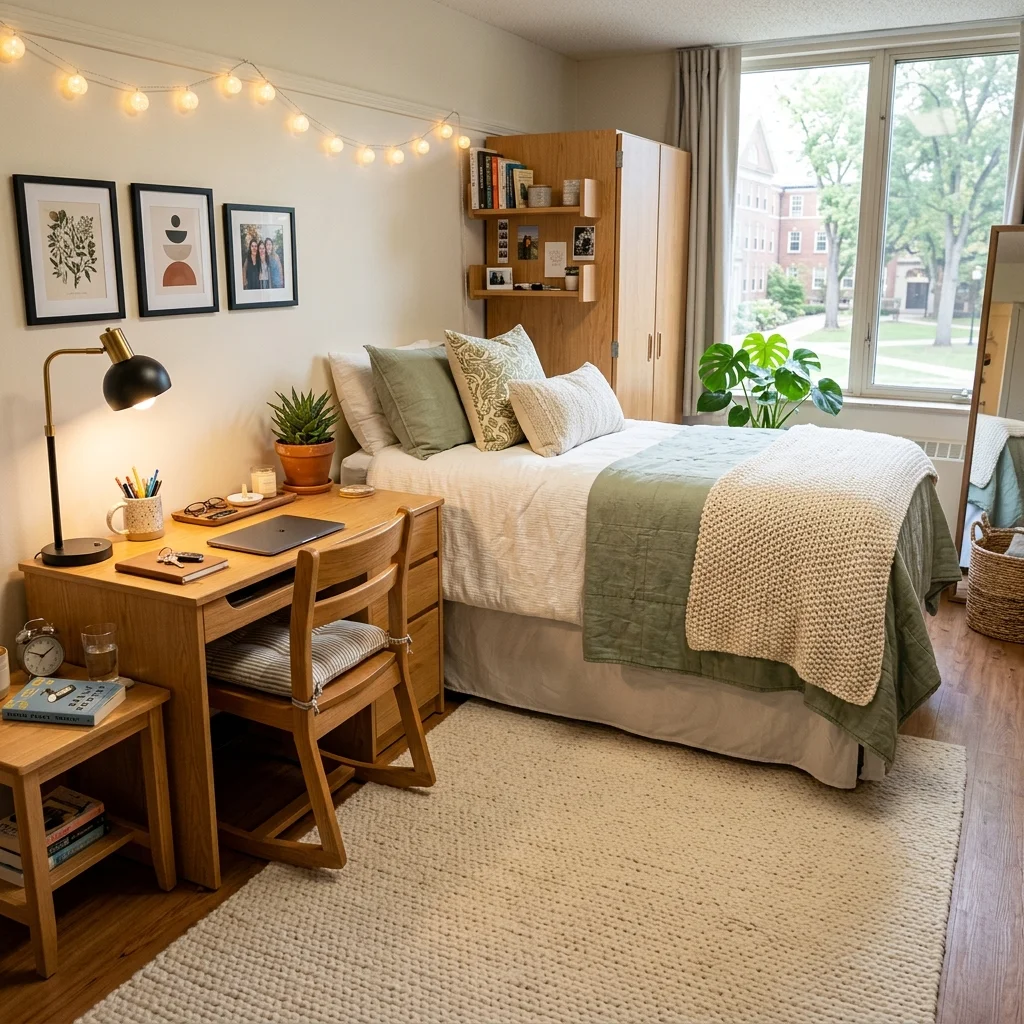
A well-lit dorm room has layers. String lights or a LED strip for ambient mood lighting. A solid desk lamp with adjustable brightness for task lighting. Possibly a floor lamp if the room allows it. These three levels, ambient, task, and accent, work the same way in a dorm as they do in a professionally designed room.
String lights stay. They are great. But they need backup.
Neglecting the Smell of the Room
This sounds minor until you spend three weeks in a dorm room that smells like old takeout and damp laundry, at which point it feels like the most important thing in the world.
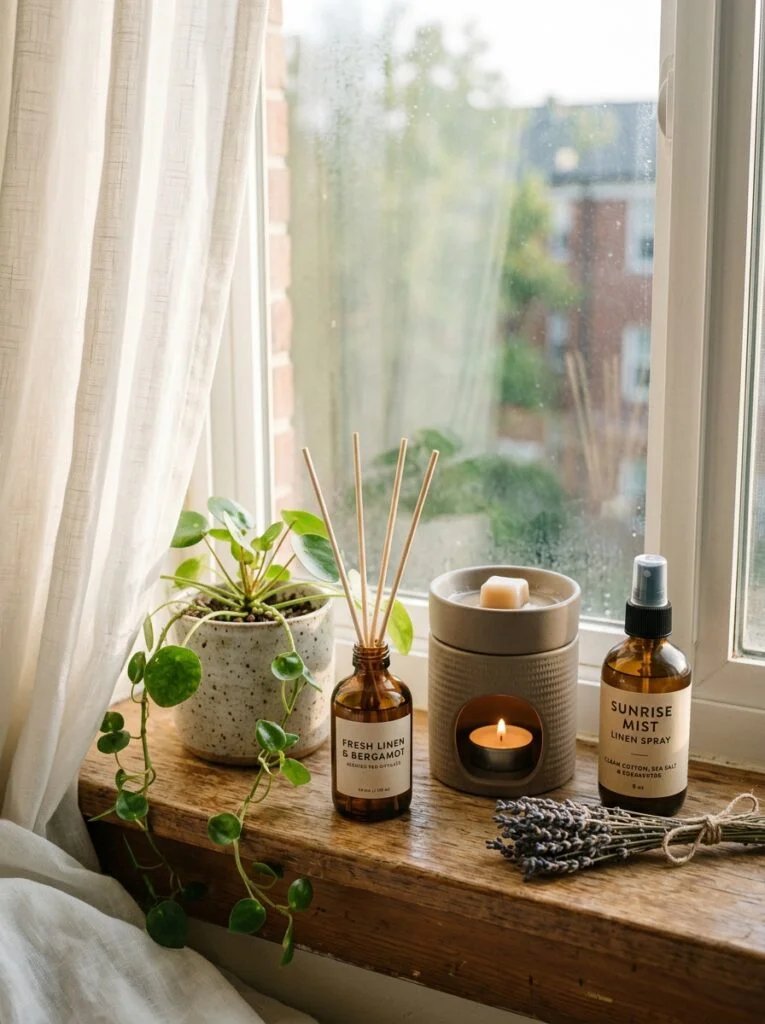
Dorm rooms have poor air circulation, they share walls with other dorm rooms, and they accumulate the smell of daily life very quickly. Trash, laundry, food, sneakers. The room you are so proud of decorating will not feel welcoming if it does not smell like somewhere you want to be.
A small reed diffuser, a plug-in scent diffuser, a linen spray, or a wax warmer (where permitted) can make an enormous difference. Keep a small trash can with a lid. Wash laundry before it piles up. Air the room out when the weather allows. These are small habits that preserve the atmosphere of a space you have put real effort into.
The rooms that feel the most like home almost always smell like something intentional.
Forgetting to Make the Bed Feel Like a Bed
In a dorm room, the bed is not just where you sleep. It is your sofa, your reading nook, your Zoom background, your primary seating when friends come over. Treating it like a place to throw a comforter and call it done is a massive missed opportunity.
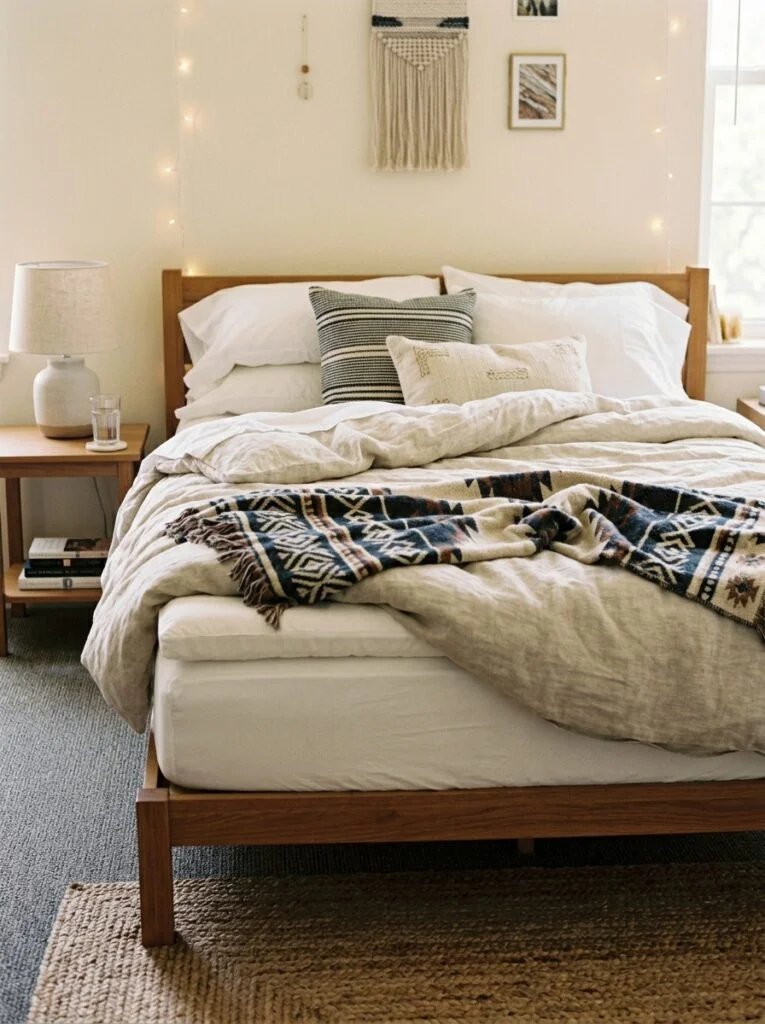
The bed should be your first priority and your biggest investment in terms of comfort and visual impact. Start with a quality mattress topper because dorm mattresses are notoriously awful and this one addition will genuinely improve your sleep. Then layer your bedding properly: a fitted sheet, a flat sheet or top layer, a comforter or duvet, and at least two to three throw pillows beyond your sleeping pillows.
A well-made bed with layered bedding immediately makes a dorm room look more pulled together. It also makes the whole room feel more intentional. When the bed looks like it belongs in a real bedroom, the rest of the room rises to meet it.
Add a throw blanket draped casually across the foot and you have transformed your sleeping space into something that actually invites you to spend time there.
Buying Cheap Storage That Falls Apart by October
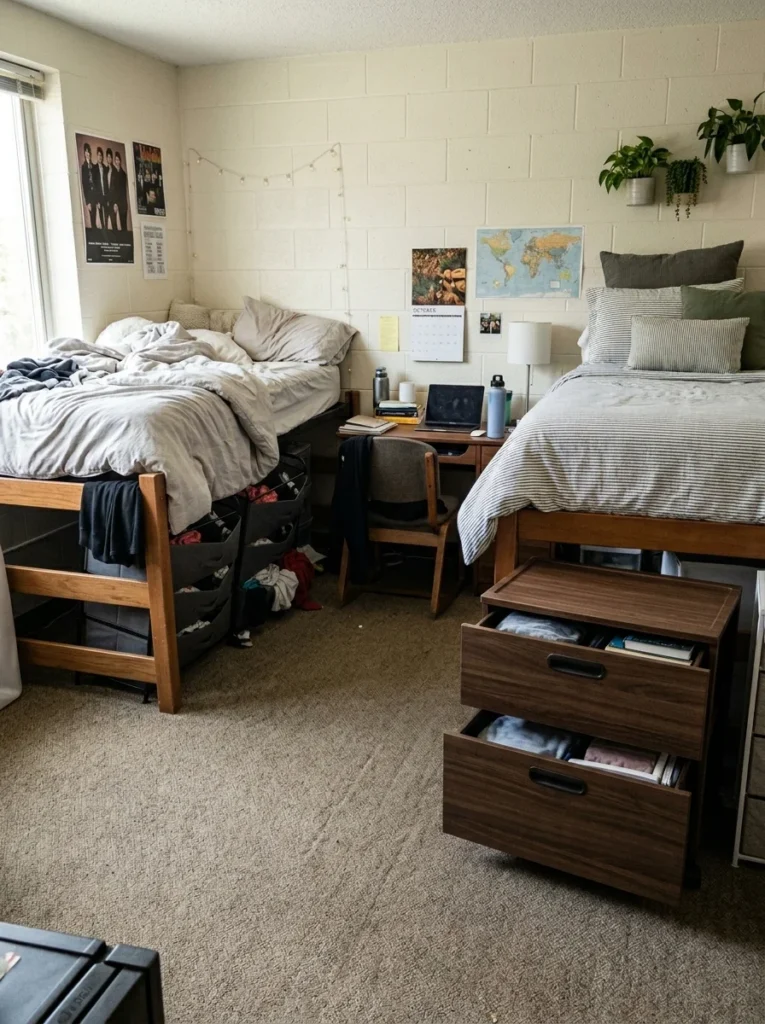
Storage is the most functional category in dorm shopping and the most commonly skimped on. Students buy the cheapest plastic drawers or the flimsiest fabric cubes, and by October those things are warped, sagging, or held together with optimism and a piece of tape.
Invest in storage that is actually sturdy. Under-bed rolling drawers in a solid plastic or wood-look finish. A real bedside caddy that attaches to the bed frame rather than flopping sideways. Stackable bins with lids for things you do not access daily. A few baskets in a material that holds its shape.
The test for any storage item is whether it would survive being moved. Dorm rooms get rearranged. People visit and bump into things. If it is going to collapse the moment it has to carry actual weight or gets nudged by a backpack, it is not worth the space it takes up.
Good storage is invisible when it works. You stop thinking about it and just live. Bad storage becomes a source of daily low-level irritation and an ongoing reminder that you should have bought the better version.
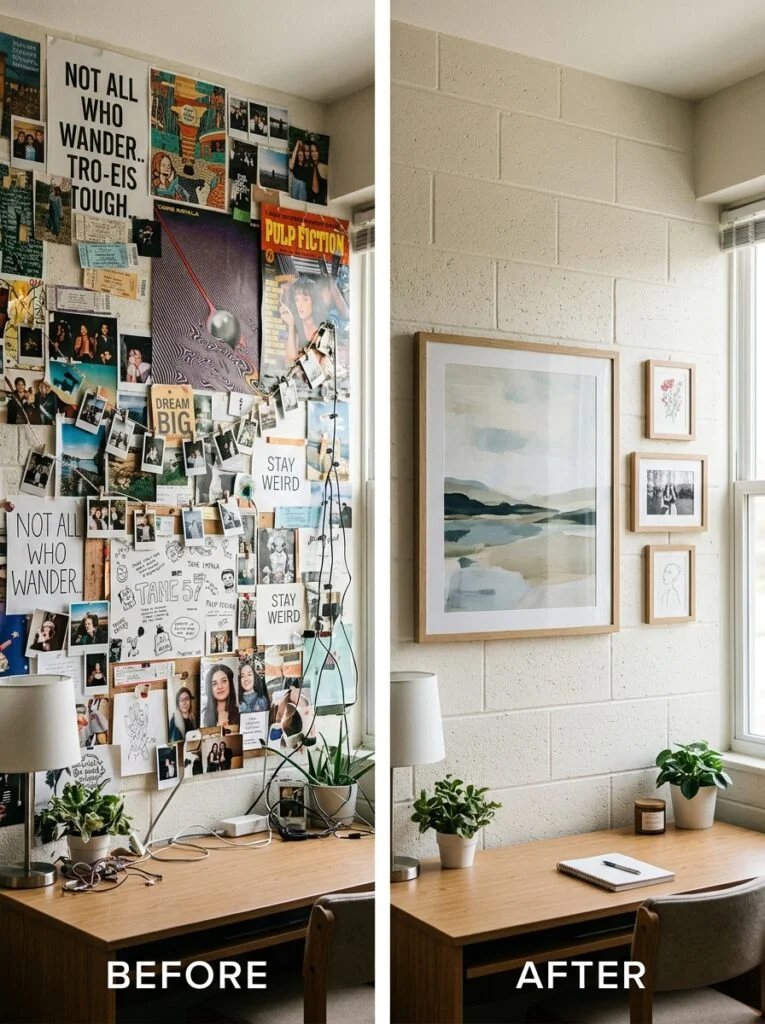
Plastering Every Inch of Wall Space
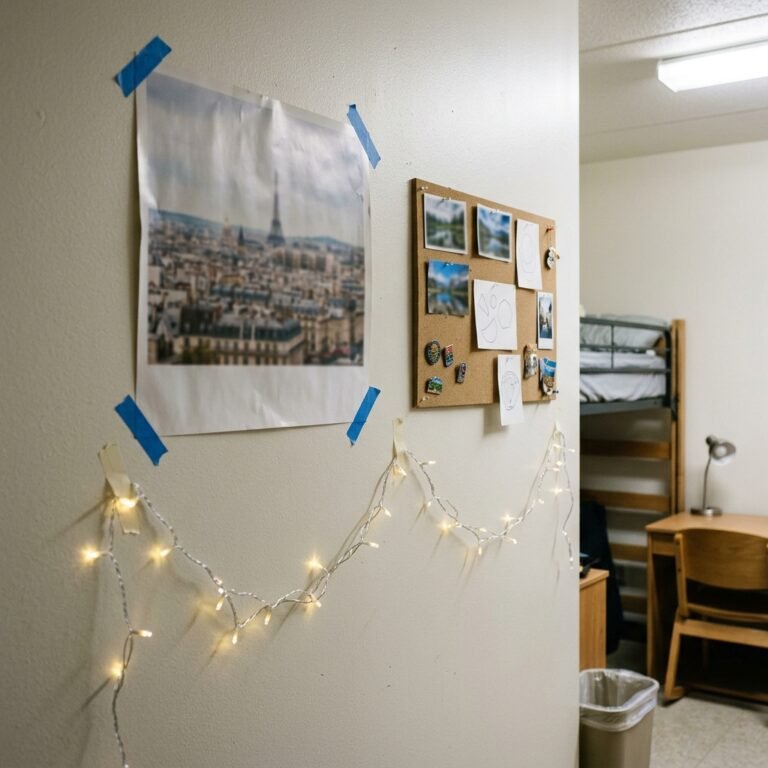
There is a version of a decorated dorm room where every wall is covered from corner to corner, and it is genuinely overwhelming to be inside. Too many posters, too many prints, too many photos on a string, too many tapestries layered behind each other. The room stops feeling curated and starts feeling like a collage project.
White space on a wall is not emptiness. It is breathing room. It is what lets the things you do hang actually be seen. When everything competes for attention, nothing gets it.
A better approach is to choose one or two walls to do something with and leave the others largely bare. A gallery wall behind the desk. A single large tapestry or piece of fabric art above the bed. A small collection of framed prints grouped tightly together on one section of wall. These focused moments feel considered and personal. They also leave room for the eye to rest.
Less really is more here, and the rooms that feel the most intentional are almost always the most edited ones.
Skipping the Details That Make It Feel Like Home
You can do everything right in terms of furniture placement, storage, lighting, and rugs, and the room can still feel transient. Like someone is just passing through rather than actually living there. What closes that gap is the small personal details that most first-years either forget about or think of as unnecessary.
A small tray on the desk that holds your daily items. A ceramic mug holding your pens. A framed photo of your family or your best friend from home. A book you love displayed on a little stand rather than shoved in a drawer. A scented candle on the windowsill even if you never light it in the room. These tiny choices communicate to your brain that this space is yours.
Psychologists who study environmental design will tell you that personalization directly affects how comfortable and settled people feel in a space. Your nervous system responds to cues that say you belong somewhere. In a dorm room that could belong to anyone, those personal details are what make it yours.
Do not skip them because they seem too small to matter. They are often the most important things of all.

Common Dorm Decor Mistakes to Avoid at a Glance
A quick reference for what trips up first-year students most often:
- Shopping for everything before seeing the actual room
- Choosing trendy aesthetics over personal comfort
- Using only small rugs that float in the middle of the floor
- Relying solely on string lights for all lighting needs
- Ignoring vertical wall space and storage opportunities
- Buying flimsy storage that will not survive the semester
- Covering every wall surface without leaving visual breathing room
- Forgetting to prioritize the bed as your main piece of furniture
- Neglecting ambient scent and air quality in a small space
- Skipping the small personal touches that make a room feel lived-in
Frequently Asked Questions
- What is the first thing I should set up in my dorm room? Start with the bed. It is the largest piece in the room and once it is made properly, it anchors everything else. Getting the bed right first gives you a base to work from and means that even if nothing else gets finished that first day, you have somewhere comfortable to sleep.
- How do I make a small dorm room feel bigger? Go vertical with storage and decor, choose a large area rug instead of a small one, keep the floor as clear as possible, use light and neutral bedding, and make sure you have multiple light sources rather than relying on one harsh overhead bulb. Mirrors are also genuinely useful in small spaces because they reflect light and create the visual impression of more space.
- Can I use Command strips in my dorm room? Most dorms permit Command strips and hooks because they are designed to come off without damaging walls. Always check your specific dorm policy before putting anything up, and when you remove them at the end of the year, pull them straight down slowly as directed to avoid peeling paint.
- How much should I spend on dorm room decor? Be realistic about the fact that you are furnishing a temporary space and will likely not be able to take everything with you after one year. Focus your budget on the items that most affect daily comfort: bedding, a mattress topper, a good desk lamp, and one quality rug. Those are worth spending on. Decorative objects and trendy extras can be sourced cheaply or borrowed.
- How do I decorate a dorm room with a roommate? Communication first. Have a conversation before either of you buys much. Agree on a general color palette or at least a few anchor colors so your sides of the room do not look like two completely different spaces shoved together. Each person should personalize their own side, but shared items like a rug or common area decor should be decided together.
The Bottom Line
A dorm room is not just a place to sleep between classes. For most first-year students, it is the first space that is entirely their own, the first place they have had to make decisions about independently, and the place where a lot of the emotional work of transitioning to college life actually happens. Getting it right matters more than it might seem.
The mistakes are easy to make because they are easy to avoid once you know what they are. Buy big, not small. Personalize, not perform. Edit your walls. Layer your lighting. Invest where it counts.
You are going to spend a lot of hours in that room. Make it feel like somewhere you actually want to be.