
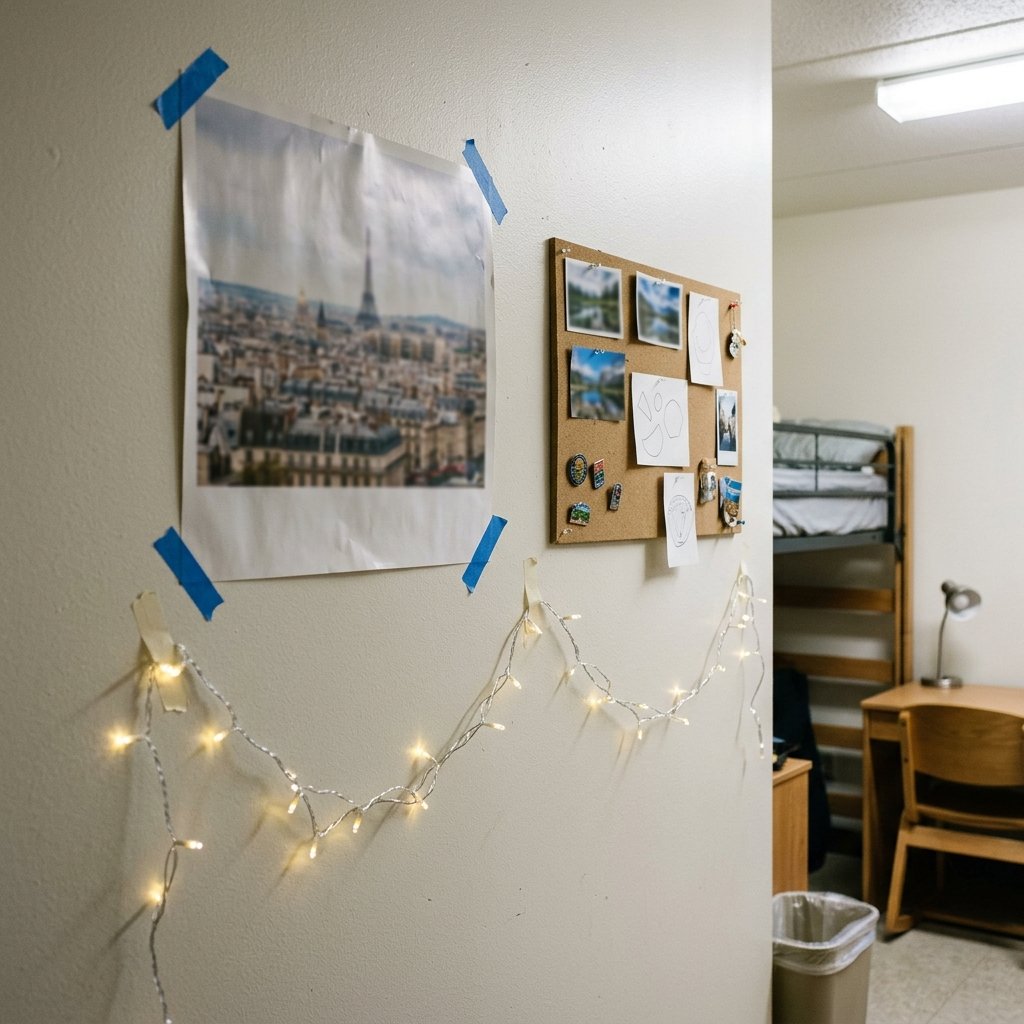
There’s a specific feeling that comes with walking into a dorm room that hasn’t quite been “claimed” yet. The bed is made, there might be a few posters up, but something about it still feels like a hotel room somebody’s just passing through. You can live in a space for an entire semester and still walk in every day feeling like a guest in your own room.
More often than not, the wall decor is the reason why. Walls take up more visual real estate than almost anything else in a small dorm room, and how you handle them has a huge effect on whether the space feels like yours or like it’s just being borrowed for a few months.
The frustrating part is that most people aren’t doing nothing. They’ve got a poster or two, maybe a string of lights, maybe a flag from their favorite team. The walls aren’t bare. But there’s one specific habit that keeps even a decorated dorm room feeling impersonal and temporary, and it’s worth understanding before you tape up one more thing.
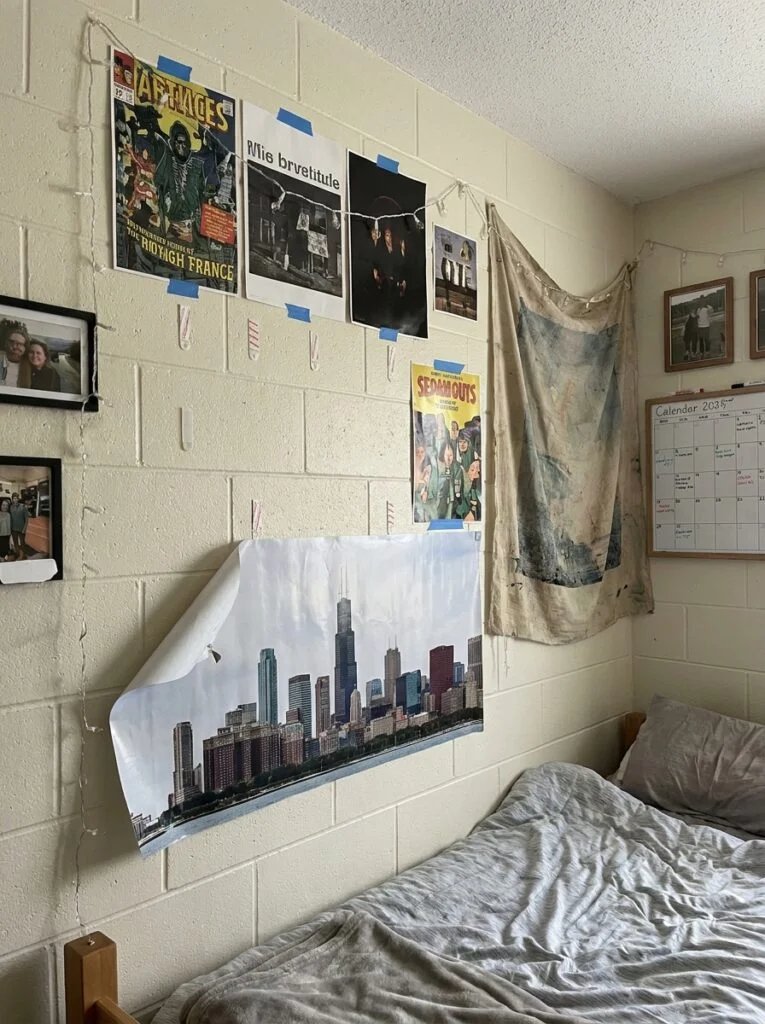
The Wall Decor Mistake That Keeps Dorm Rooms Feeling Temporary
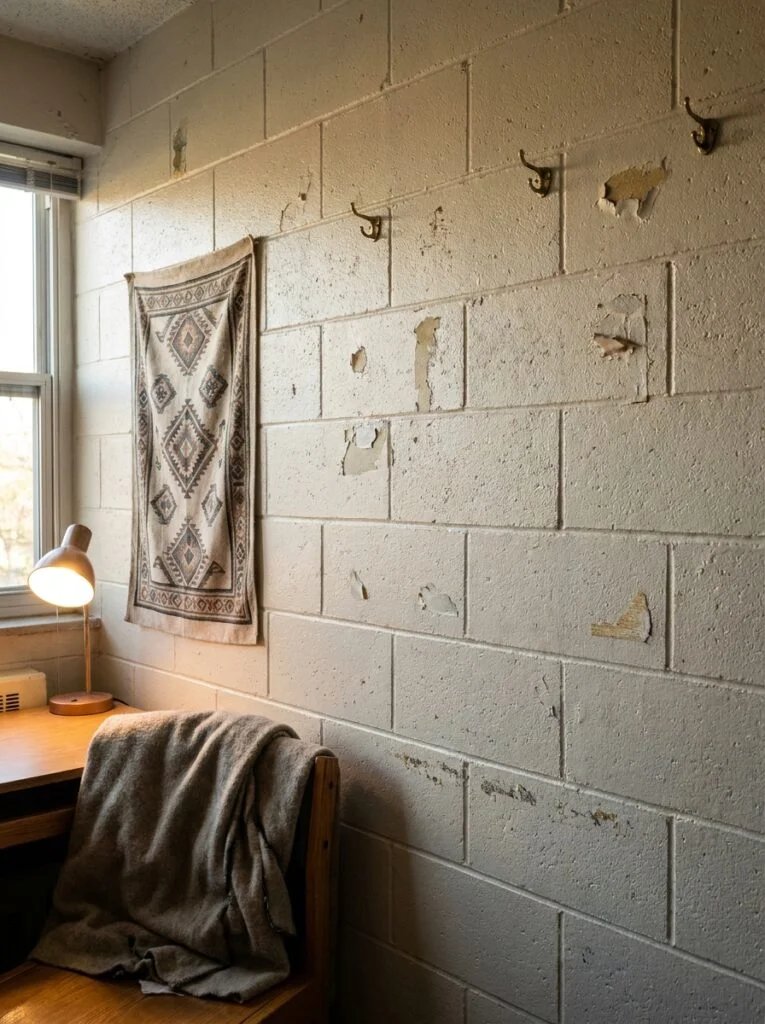
Here’s the mistake in plain terms: scattering a handful of disconnected items across the walls with no unifying thread between them, and leaving huge stretches of bare wall in between.
Picture a typical dorm wall. One poster in the top corner, left over from a store run during move in week. A flag or pennant taped up somewhere in the middle. A single string of fairy lights draped loosely along the ceiling line. Maybe a photo or two taped directly to the wall without any frame. Each item exists on its own, with no relationship to the items around it, and there’s a lot of plain, empty wall visible in between.
None of these individual choices are wrong. The problem is that none of them are talking to each other. A poster in one corner and a flag in another don’t create a “look,” they just create two random objects on an otherwise blank wall. And blank walls, more than almost anything else in a dorm room, are what make a space feel unfinished and impersonal, like nobody’s really settled in yet.
This is different from the “too much stuff” clutter problems that show up in coffee tables or open shelves. Dorm rooms usually have the opposite issue. Not too much decor, but too little of it working together, with too much unclaimed wall space left in between.
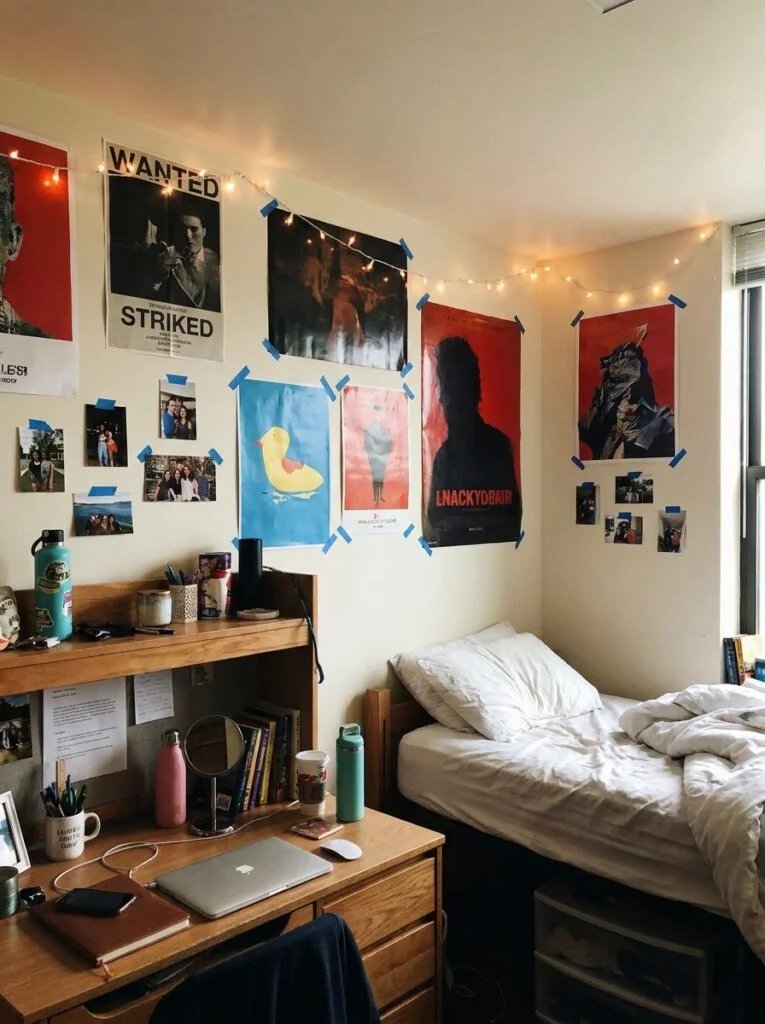
Why This Happens So Often in Dorm Rooms
Dorms come with real constraints that make good wall decor genuinely harder to pull off than in a house or apartment.
Move in week is chaotic, and decorating usually happens in a rush somewhere between unpacking boxes and figuring out where the nearest dining hall is. A poster gets picked up because it was available, not because it was chosen carefully. It goes up wherever there’s space, and that’s often the end of the thought process for the semester.
There’s also the temporary mindset that comes with dorm living itself. It’s easy to think “I’m only here for a few months, why put a lot of effort into the walls,” which becomes a bit of a self fulfilling prophecy. The less effort that goes in, the more temporary the room feels, which reinforces the idea that it’s not worth the effort, and the cycle continues.
Budget plays a role too. Wall decor can feel like an unnecessary expense on a student budget, so a lot of people default to whatever is cheapest and most available, a single poster, a flag from home, string lights bought in bulk at the start of the year. These items aren’t bad, but without any planning behind how they work together, they end up scattered rather than styled.
And finally, there are the physical restrictions that come with most dorms. No painting, limited or no nail holes allowed, and strict rules from housing departments about what can go on the walls. This makes some students hesitant to commit to any real decorating plan at all, since it feels like extra effort for something that has to come down again in a few months anyway.
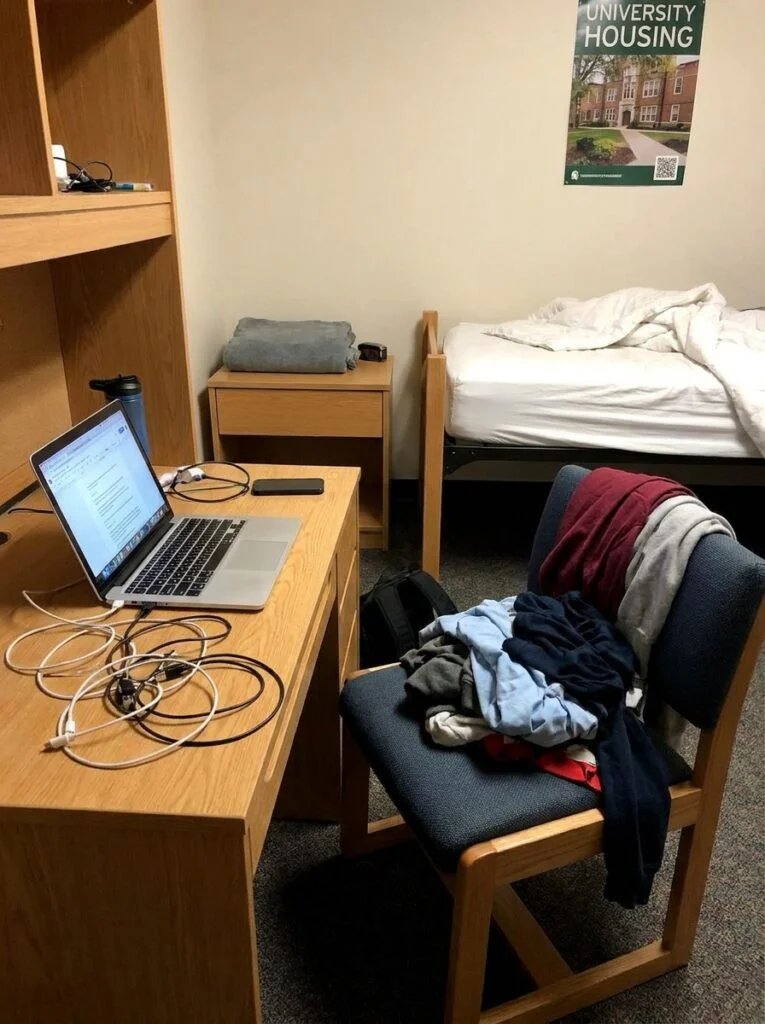
What Makes a Dorm Wall Feel Like Home Instead of a Hotel
The difference between a wall that feels intentional and one that feels temporary usually comes down to coverage, cohesion, and personal connection.
Coverage matters more in a dorm room than in a full sized bedroom, simply because the walls are smaller and every bare patch is more noticeable. A wall with large empty gaps between a few scattered items will almost always look less finished than a wall where the decor is grouped together with intention, even if the total number of items is similar.
Cohesion is just as important. A wall that mixes one poster, one flag, and a random assortment of photos with no visual thread between them reads as thrown together. A wall where those same types of items share a loose color palette, a similar framing approach, or a clear grouping style reads as curated, even if it’s made up of budget friendly pieces.
And then there’s personal connection, which is honestly the piece that matters most for making a dorm room actually feel like home. Generic posters and mass produced decor can look fine, but a wall built around photos of actual friends, ticket stubs, postcards, and things with real meaning almost always feels warmer and more “lived in” than a wall of store bought prints alone, even if the store bought prints are objectively nicer looking.
The Gallery Wall Approach for Dorm Rooms
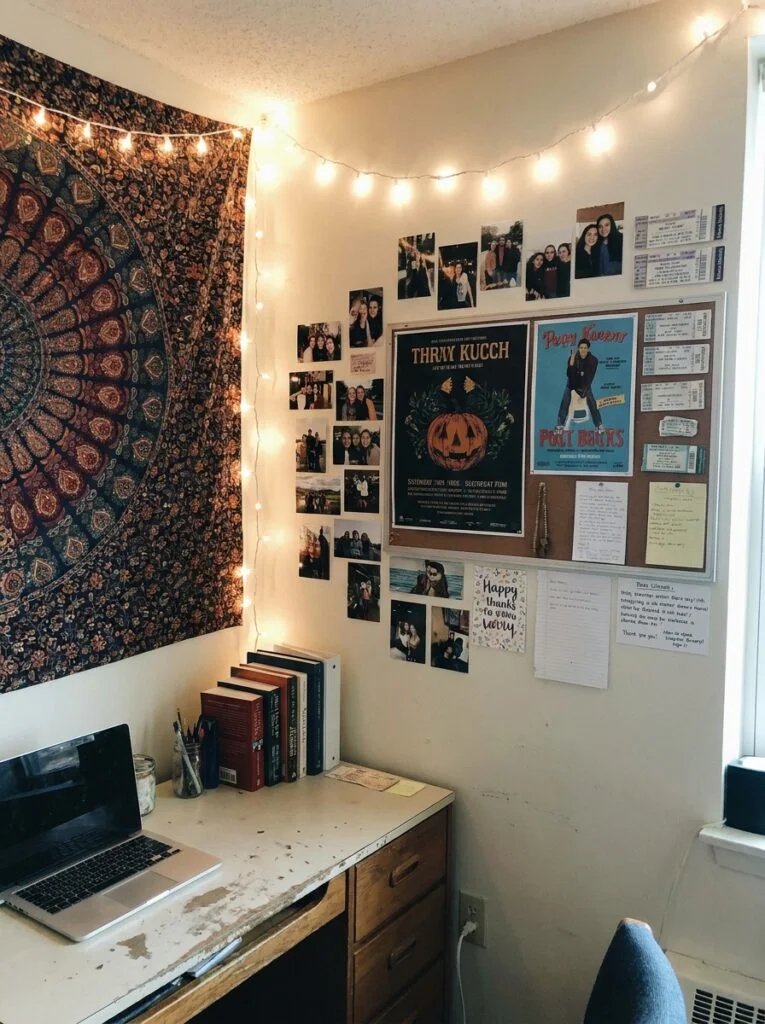
If there’s one styling method that solves the scattered wall problem better than any other, it’s building a proper gallery wall instead of hanging individual pieces at random.
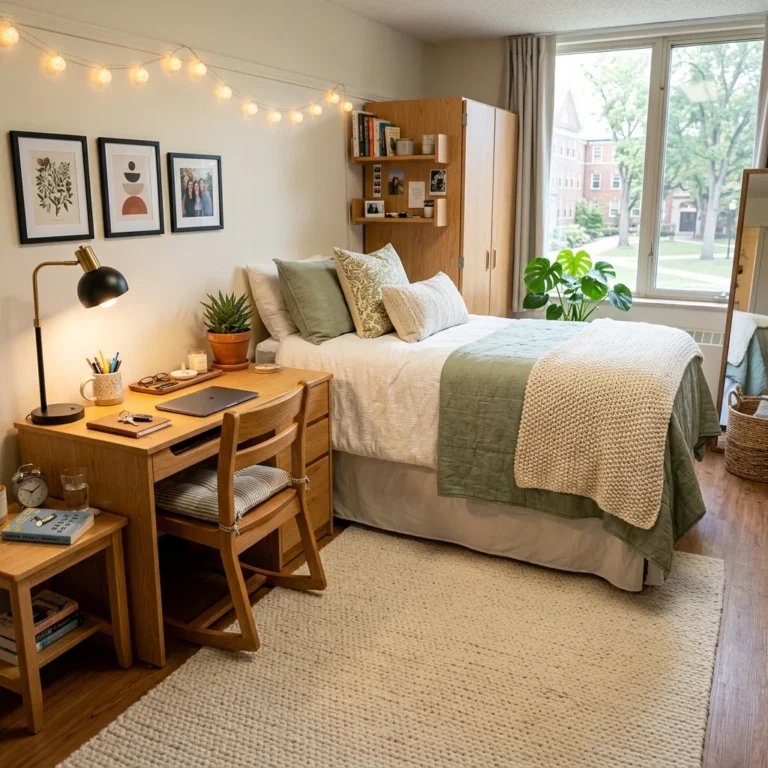
A gallery wall groups multiple items together in one cohesive cluster rather than spreading them thinly across the whole wall. This might sound like it takes up more space, but it actually does the opposite. A tightly grouped gallery wall makes the rest of the room feel more open and intentional, because the eye reads it as one designed feature instead of several unrelated afterthoughts.
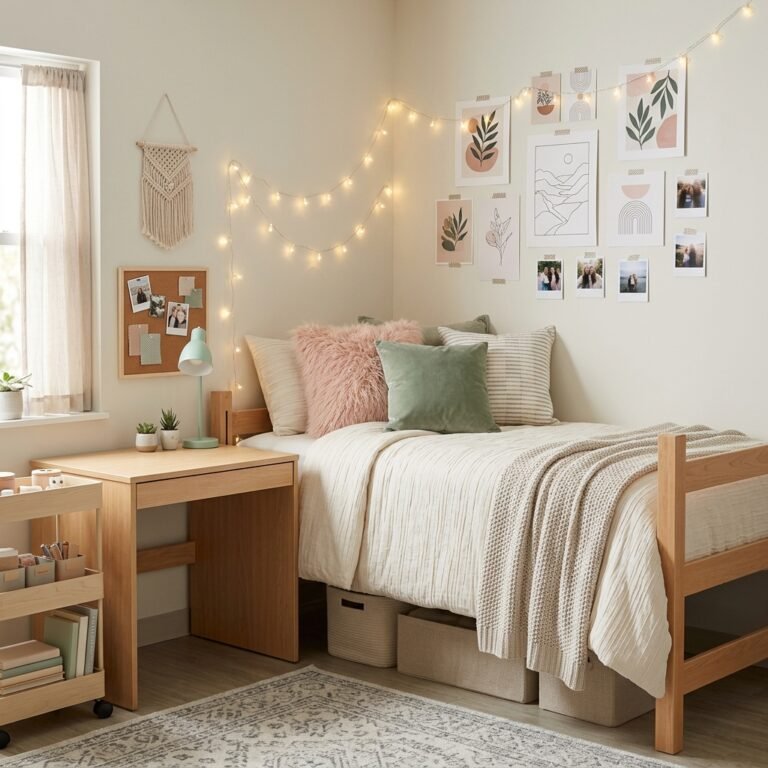
The easiest way to start is by gathering everything you want to display in one place before you hang anything. Photos, a poster, postcards, a small tapestry, whatever you’re working with. Lay it all out on the floor first and arrange it into a shape you like, whether that’s a loose grid, an organic cluster, or a mix of both. This lets you experiment freely without committing to tape or adhesive strips until you’re happy with the layout.
Once you’ve got a layout you like, keep the spacing between items fairly tight and consistent, generally a couple of inches at most. Dorm room gallery walls look best when they read as one solid grouping rather than individual items with a lot of breathing room around each one. This is actually the opposite approach from styling a coffee table or open shelf, where negative space is the goal. On a dorm wall, a denser, more connected cluster is usually what creates that lived in feeling.
Mixing Personal Items With Store Bought Decor
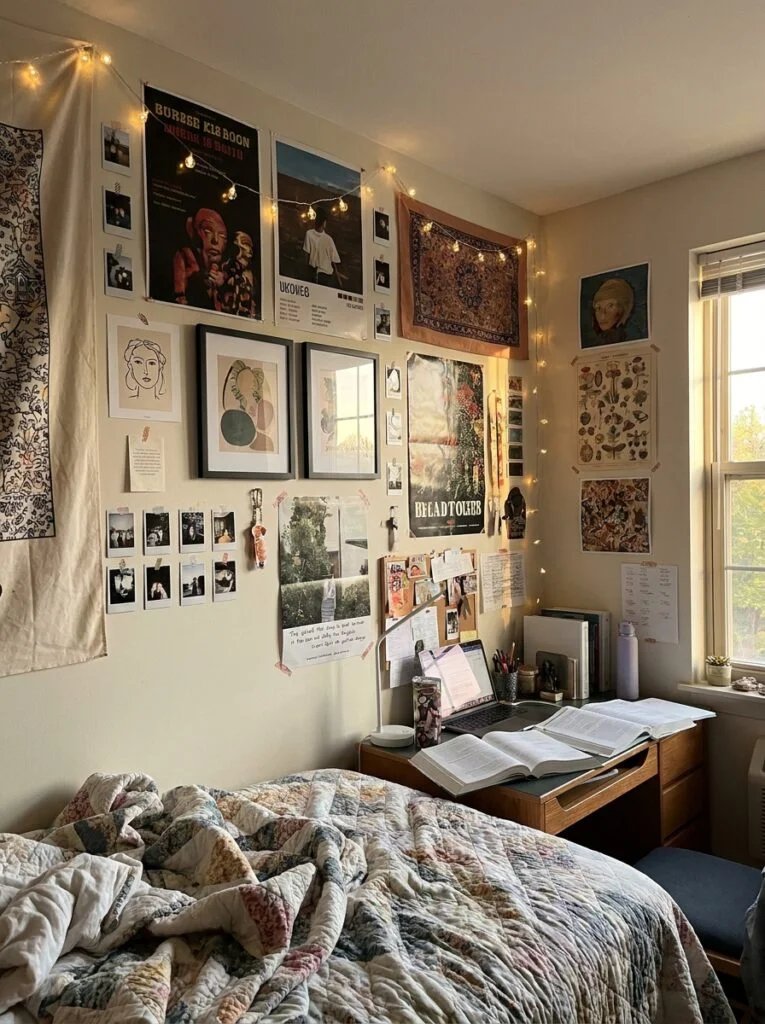
The most successful dorm walls almost always combine personal items with a few purchased pieces, rather than relying entirely on one or the other.
Purchased posters, prints, or tapestries are useful because they add color, size, and visual anchor points that personal items alone often can’t provide. A larger printed piece can act as a base layer for your gallery wall, giving you a starting point to build the rest of the collection around.
Personal items, on the other hand, are what actually make the room feel like yours specifically, rather than a generic dorm room that could belong to anyone. Printed photos of friends and family, ticket stubs from concerts or games, postcards from trips, and small mementos all add a layer of authenticity that store bought decor simply can’t replicate on its own.
A good general approach is to let one or two larger purchased pieces anchor the wall, then fill in around them with smaller personal items. This keeps the wall from feeling like either a dorm room poster sale or an overwhelming scrapbook, striking a balance between polished and personal.
Working Within Dorm Rules Without Sacrificing Style
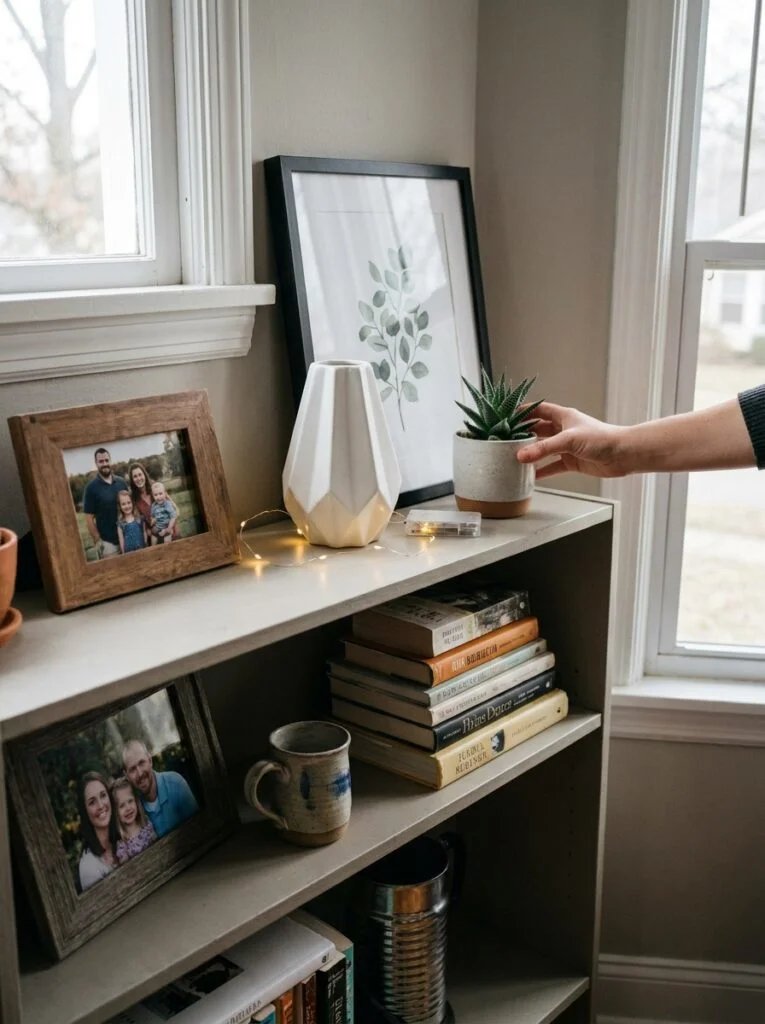
Most dorms restrict nail holes and heavy adhesives, but this doesn’t mean your decorating options are actually limited. It just means you need to choose the right tools.
Removable mounting strips and hooks are strong enough to hold posters, small frames, and lightweight decor without damaging the wall, and they’ve become reliable enough that they’re the standard choice for dorm decorating at this point. For heavier items, look for strips rated for a higher weight capacity rather than assuming all removable adhesive products are interchangeable.
Washi tape is another dorm room staple worth using intentionally rather than as an afterthought. Beyond just holding up photos, using a consistent tape color or pattern across your gallery wall can actually reinforce that sense of cohesion, since it becomes a small repeated visual detail rather than a random assortment of whatever tape was on hand.
Command style hooks work well for slightly heavier or dimensional items, like a small shelf, a tapestry rod, or string lights that need more support than tape alone can offer. Just make sure to follow the weight guidelines on the packaging, since overloading these can lead to items falling and potentially damaging both the decor and the wall.
Lighting and Texture on Dorm Walls
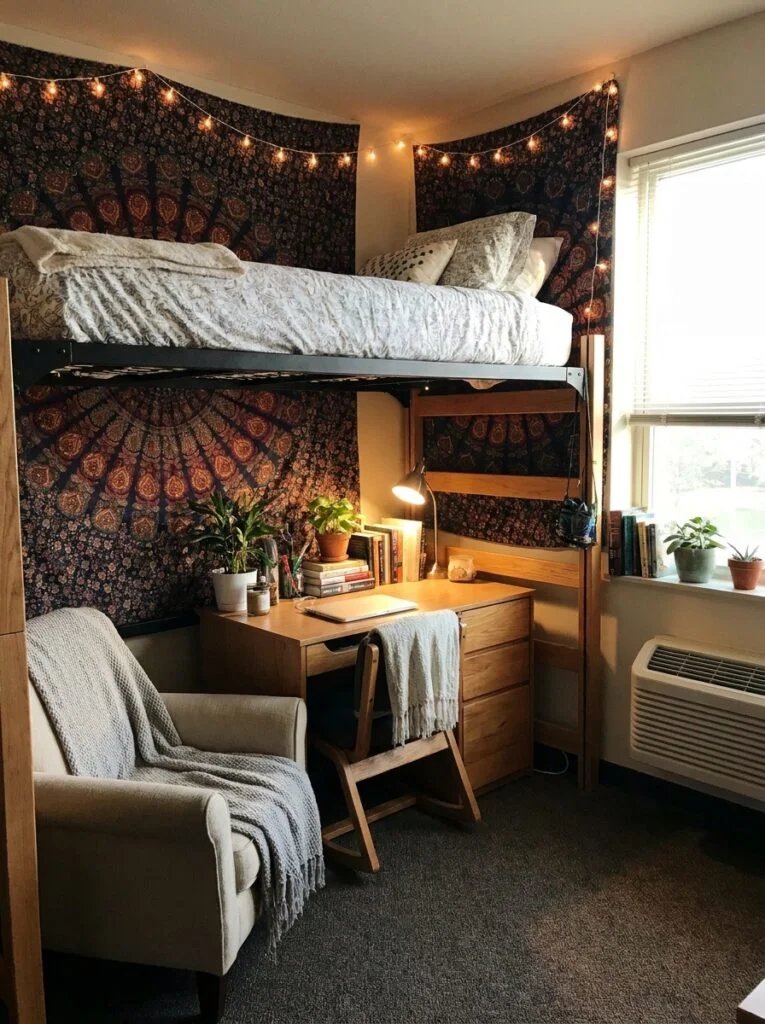
Flat, two dimensional decor is the easiest starting point, but adding a bit of texture and dimension is what really pushes a dorm wall from “decorated” to “cozy.”
String lights remain a dorm room classic for a reason, but the difference between a temporary looking string of lights and a cozy one usually comes down to placement. Draping lights loosely along the top of a wall with no real shape often looks like an afterthought. Weaving them intentionally around a section of your gallery wall, or framing a specific grouping of photos, gives them a purpose beyond just ambient glow.
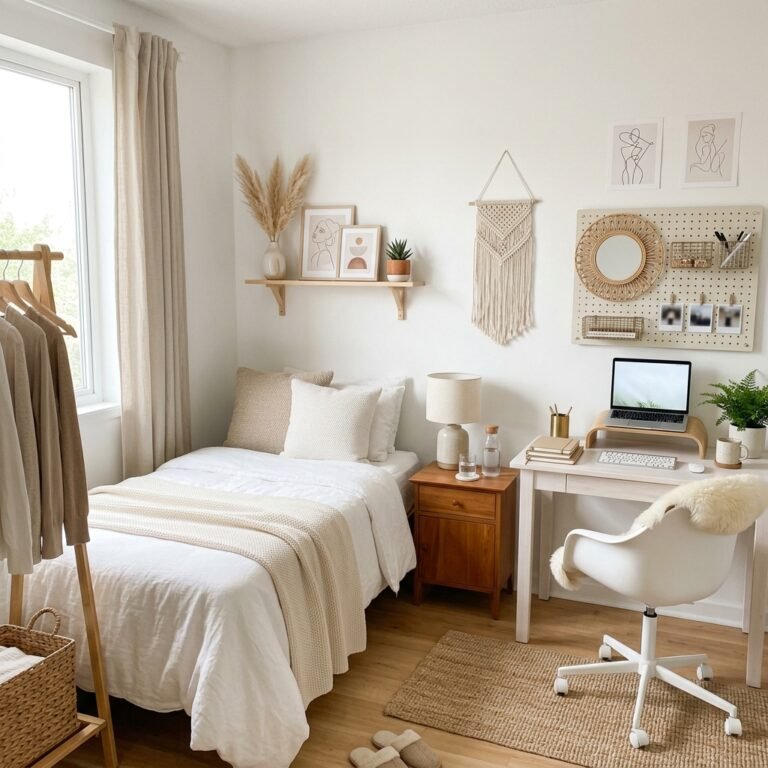
A small woven tapestry or fabric hanging adds texture that flat posters and photos can’t provide on their own. Even a relatively small piece can anchor an entire wall and give the room a softer, warmer feel compared to a wall covered exclusively in flat paper prints.
A floating style shelf, even a small removable one, adds a layer of dimension to an otherwise flat wall and gives you a spot to display small objects, a plant, a few books, or a candle, which brings in some of that layered depth that makes a space feel considered rather than thrown together.
Common Dorm Wall Decor Mistakes to Avoid
A few other habits tend to work against a cozy, personalized dorm room, beyond the scattered decor issue itself.
Buying decor that doesn’t reflect your actual taste, just because it’s popular or trending, tends to leave rooms feeling generic rather than personal. It’s worth taking a bit of time to figure out what colors, styles, and images you’re actually drawn to, rather than grabbing whatever’s easiest at a big box store during move in weekend.
Leaving decorating until the last minute, or treating it as an afterthought entirely, is one of the biggest reasons dorm walls end up sparse and scattered in the first place. Even a slow, gradual approach, adding a few personal photos over the first several weeks of the semester, results in a much more intentional feeling wall than a single rushed shopping trip.
Ignoring the ceiling and door as extensions of your decorating space is a missed opportunity too. In a room as small as a typical dorm, string lights along the ceiling or a small decorated space on the back of your door can extend that personalized feeling beyond just the main wall, making the whole room feel more thoroughly claimed.
How to Plan a Dorm Wall Step by Step
If you want a clear approach to follow, here’s a simple process that works well regardless of your dorm’s specific layout or rules.
Start by gathering everything you might want to display before you commit to hanging anything. This includes purchased posters or prints, personal photos, and any small mementos or keepsakes you want included.
Next, pick one anchor piece, usually your largest poster or print, and decide roughly where it will sit on the wall. This becomes the foundation the rest of your gallery wall builds around.
Then, lay out your remaining items on the floor near that spot, experimenting with different arrangements until you find a layout that feels balanced and cohesive rather than random. Taking a photo of your floor layout before hanging anything makes it much easier to recreate once you start taping things to the wall.
After that, start hanging from your anchor piece outward, working in small sections rather than trying to place everything at once. This keeps your spacing consistent and makes it easier to adjust as you go.
Finally, leave a little room to grow. Dorm walls are rarely finished on day one, and leaving a small amount of space within your gallery wall for photos or mementos you’ll collect throughout the semester keeps the room from feeling static, while still giving you that cohesive, intentional look from the start.
Frequently Asked Questions
What’s the best way to decorate dorm room walls without damaging them?
Removable mounting strips, washi tape, and command style hooks rated for the appropriate weight are the most reliable options for most dorm decorating rules.
How many items should be on a dorm room gallery wall?
There’s no strict number, but most cohesive dorm gallery walls include somewhere between ten and twenty smaller items grouped closely together around one or two larger anchor pieces.
Should I decorate my dorm room walls all at once or gradually?
A gradual approach often looks more natural and personal, though starting with one anchor piece and a basic layout at move in, then adding photos and mementos throughout the semester, tends to work best.
How do I make a rented dorm room feel more personal?
Mixing personal items, like photos, ticket stubs, and postcards, with a few purchased posters or prints tends to make a space feel far more personal than store bought decor alone.
Is it better to spread decor across the whole wall or group it together?
Grouping decor together in a tighter cluster, similar to a gallery wall, almost always looks more intentional and finished than spreading a few items thinly across a large wall.
Final Thoughts
A dorm room stops feeling temporary the moment its walls start telling an actual story instead of holding a few disconnected items with a lot of bare space in between. The fix isn’t about spending more money or covering every inch of wall space. It’s about grouping what you have with intention and mixing in the personal pieces that make a room feel unmistakably yours.
Start with one anchor piece, build a gallery wall around it, and let it grow throughout the semester as you collect more photos and memories worth displaying. Once your walls feel connected and personal, the rest of the room tends to follow, and that hotel room feeling disappears a lot faster than you’d expect.
4 comments