
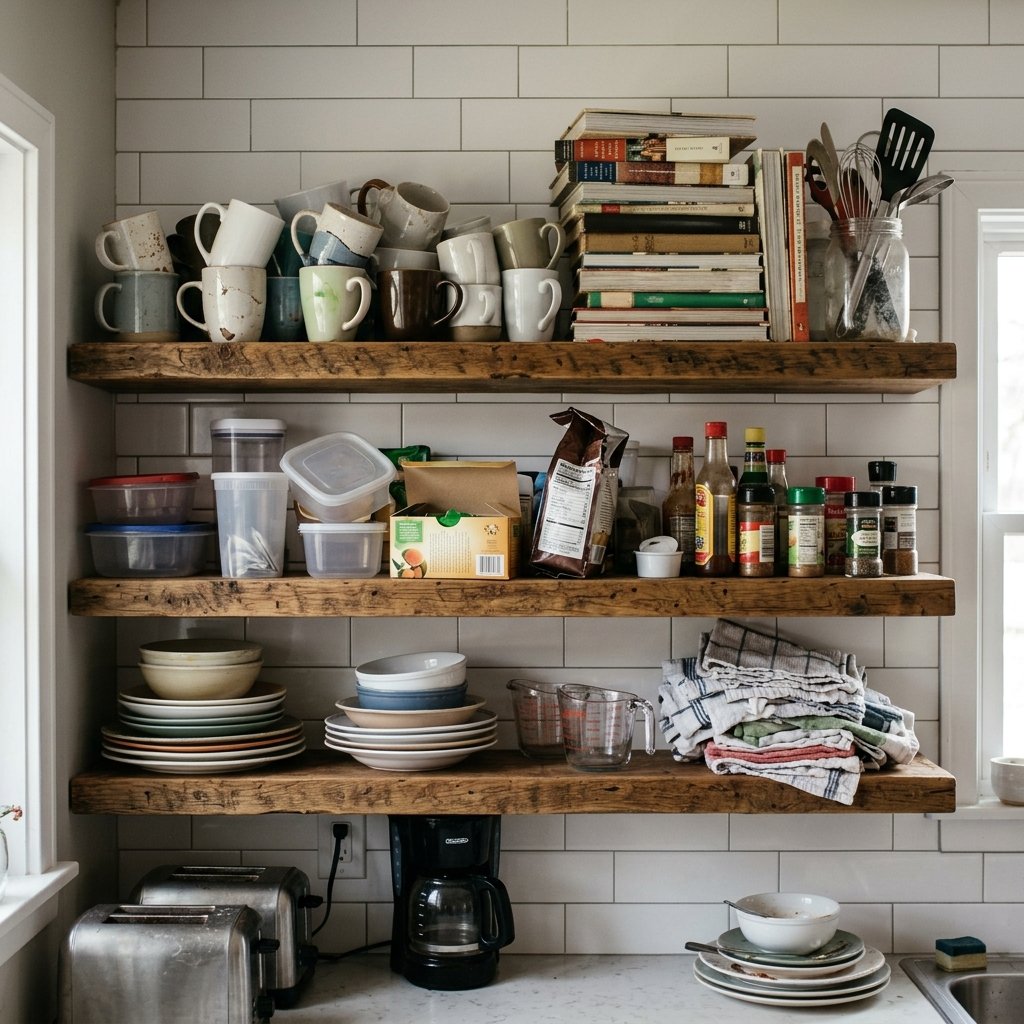
Open shelving has been all over kitchen design for years now, and it’s easy to see why. There’s something about seeing your favorite dishes and glassware out in the open that feels warm and personal, like the kitchen belongs to someone who actually cooks and lives there. But if you’ve ever tried it yourself and ended up with something that looks more chaotic than charming, you’re definitely not alone.
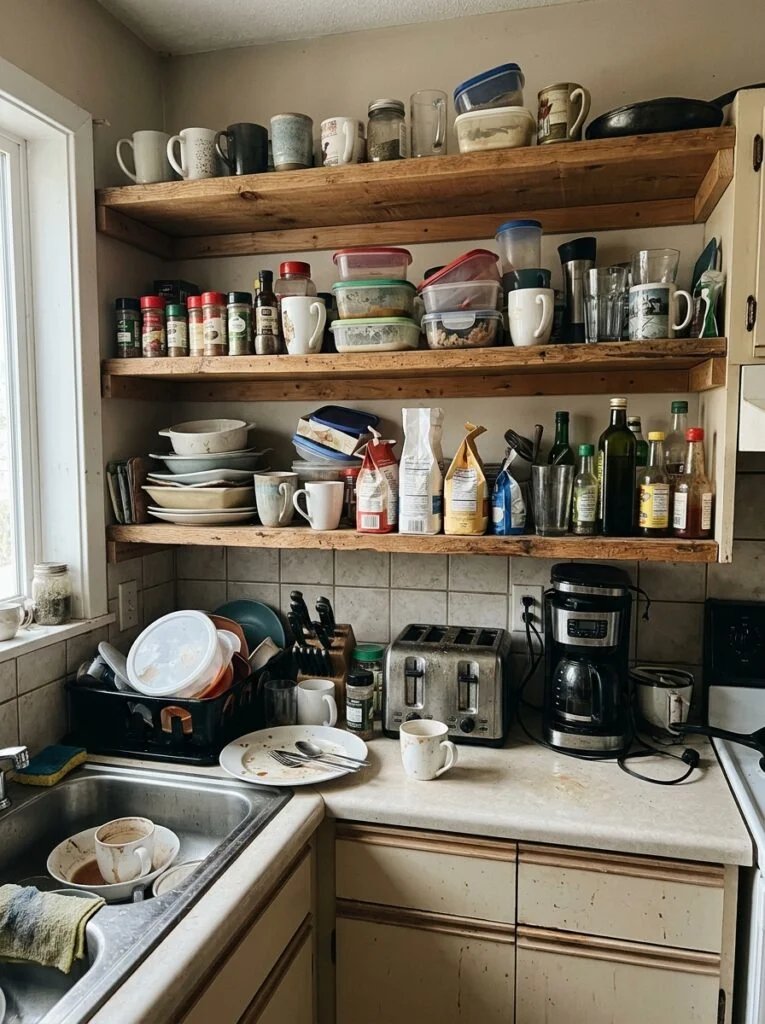
Open shelves are unforgiving. Unlike closed cabinets, they don’t hide your mistakes. Every mismatched mug, every awkward gap, every stack of plates that’s a little too tall gets put on full display. And when that happens, a kitchen that was supposed to feel cozy and inviting starts to feel cluttered and overwhelming instead.
The frustrating part is that most people don’t do anything drastically wrong. It’s usually one specific habit that quietly turns open shelving from a design feature into a source of visual stress. Let’s talk about what that mistake actually is, why it happens so easily, and how to fix it so your shelves finally look the way you pictured them.
The Open Shelf Mistake Everyone Makes Without Realizing It
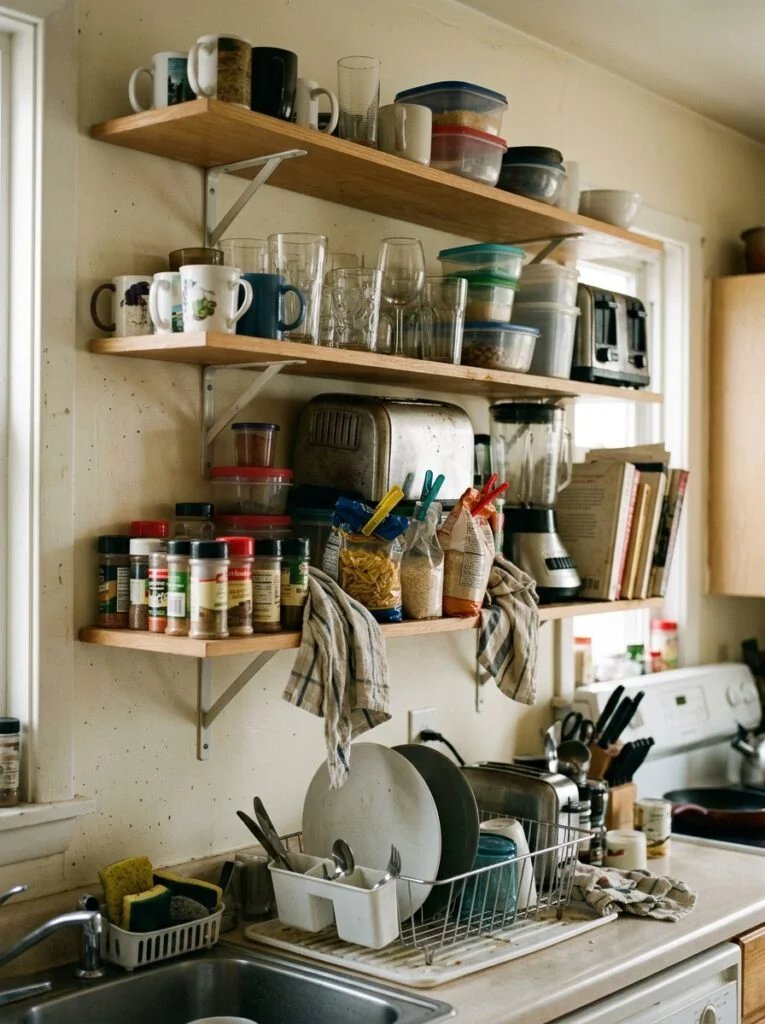
Here’s the mistake in plain terms: treating open shelves like storage instead of display.
Closed cabinets exist to hold everything, the everyday stuff, the rarely used stuff, the mismatched stuff you inherited from a relative. Open shelves need to be treated differently. The moment you start using them the same way you’d use a cabinet, packing them full and prioritizing function over how things look together, they stop reading as styled and start reading as cluttered.
This shows up in small ways. A shelf with fifteen mugs hanging under it. Plates stacked so high they look like they might topple. Every single glass you own crammed onto one shelf because that’s where glasses go. None of these choices are wrong in a cabinet. On an open shelf, they create visual chaos because there’s nowhere for the eye to rest.
The irony is that open shelving is supposed to make a kitchen feel more curated and intentional, not less. When it’s done well, it actually looks effortless. When it’s done by cramming in everything you own, it looks like the opposite of effortless, even if you spent a long time arranging it.
Why Open Shelves Get Overloaded So Easily
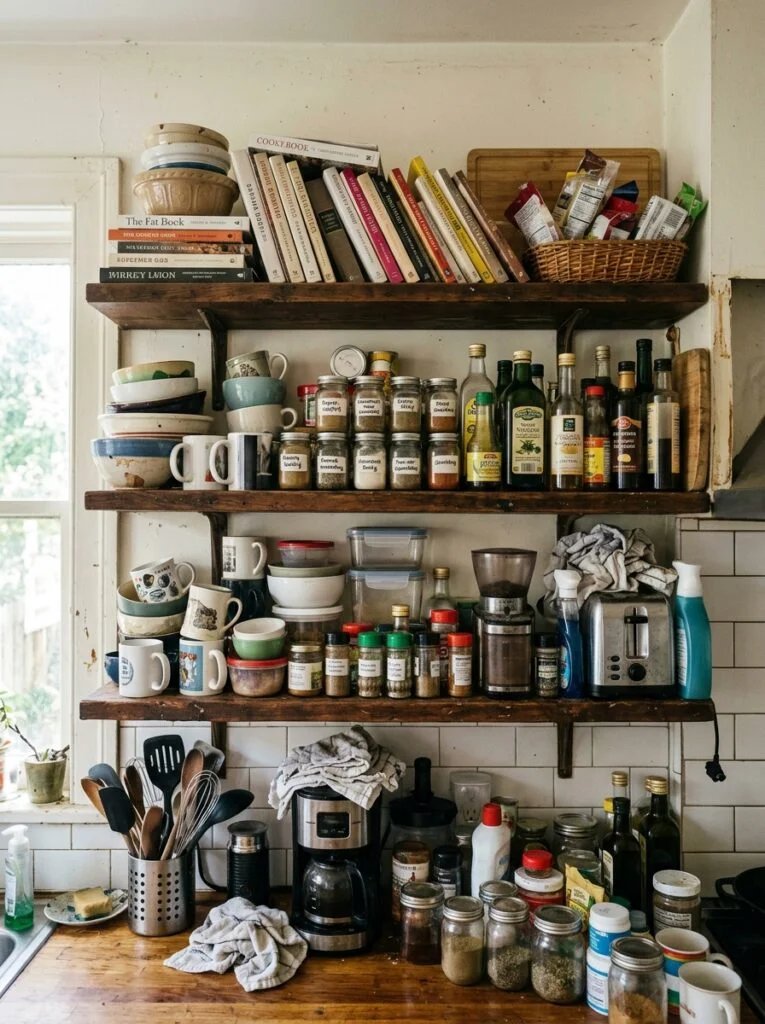
Open shelves have a way of becoming a dumping ground for the same reason coffee tables do. They’re right there, they’re easy to reach, and it feels natural to put things where they’re used most often.
There’s also a very understandable instinct behind the overloading. Empty shelf space can feel wasteful, especially in smaller kitchens where storage is already tight. If you’ve got the space, why not use it? So the second mug joins the first, then a third, then a stack of bowls, and before long the shelf that was supposed to showcase a few beautiful pieces has turned into general storage with no editing at all.
Real life plays a role too. Kitchens get used constantly, and open shelves are functional whether you want them to be or not. Coffee mugs pile up because that’s where the coffee station is. Everyday plates end up there because they’re the ones in rotation. It’s practical, but it’s also exactly how a styled shelf turns into a messy one without anyone intending it to happen.
What Makes a Shelf Look Cozy Versus Cluttered
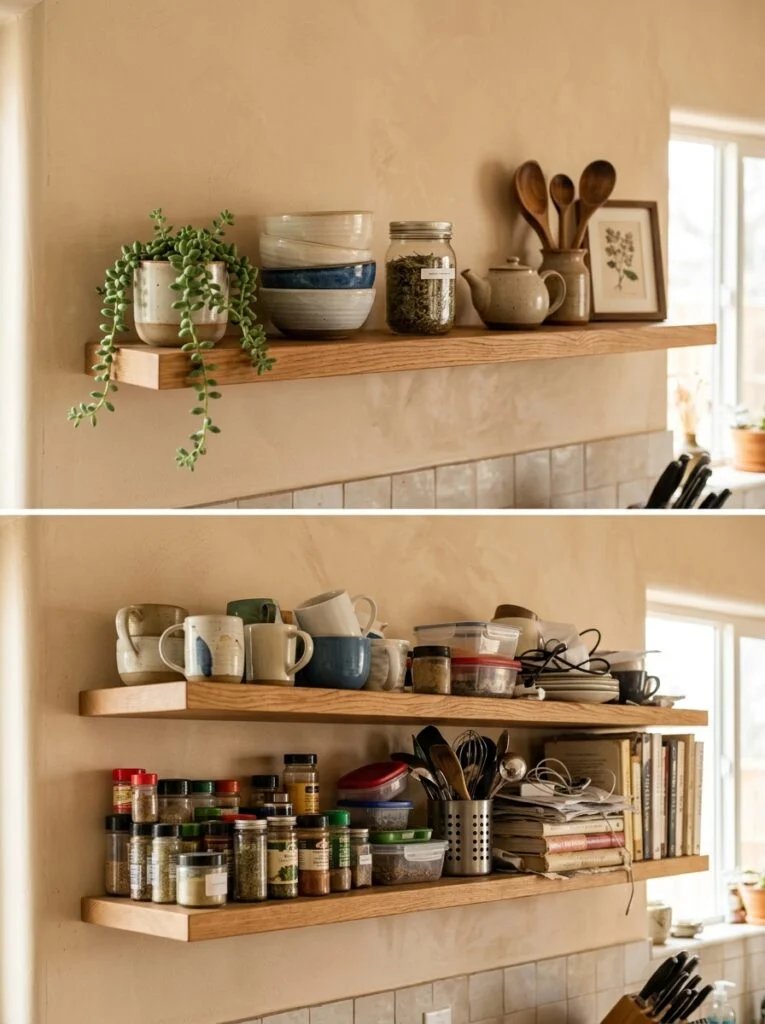
The difference between a cozy open shelf and a cluttered one usually comes down to three things: quantity, variety, and breathing room.
A cozy shelf has fewer items than you’d expect, arranged with intention. A cluttered shelf has more items than the eye can comfortably process, arranged out of necessity rather than design.
Cozy shelves also tend to mix categories thoughtfully. A stack of plates next to a small plant, next to a couple of interesting mugs, next to a cutting board leaning upright creates visual interest. A shelf packed edge to edge with fifteen matching mugs, while technically organized, reads as repetitive and overwhelming rather than warm.
And then there’s spacing. This is the piece people skip most often. A shelf where every inch is filled will always feel busier than a shelf with visible gaps, even if the gapped shelf technically holds fewer beautiful items. Negative space is what allows your eye to actually appreciate what’s there instead of scanning past it in a blur.
In short, cozy shelves feel edited. Cluttered shelves feel like everything you own got shoved onto a horizontal surface because there was nowhere else for it to go.
The One Third Rule for Open Shelves
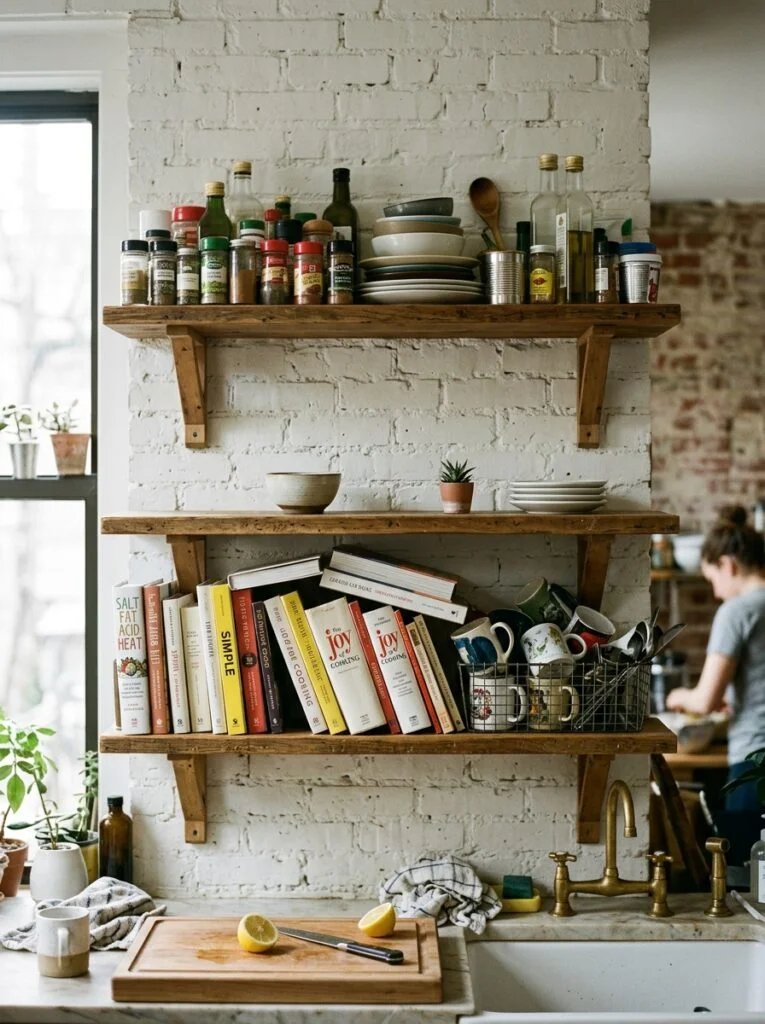
If there’s a single rule to keep in mind when styling open shelves, it’s this: aim to fill each shelf about two thirds full, leaving roughly a third of the space open.
This might feel counterintuitive, especially if your instinct is to maximize storage. But that empty third is doing a lot of visual work. It gives your eye somewhere to land, keeps the shelf from feeling crowded, and makes whatever you do display feel more special and intentional.
A simple way to apply this is to pick your favorite items in each category rather than displaying everything you own. If you have twelve mugs, choose your four or five favorites for the shelf and store the rest in a cabinet. If you have three sets of everyday dishes, pick the one with the nicest color or texture to feature, and tuck the others away for backup.
This approach does double duty. It makes your shelves look better, and it also means the items you do see every day are ones you actually love looking at, instead of just whatever happened to be within reach when you were unpacking boxes.
Mixing Height, Shape, and Texture the Right Way
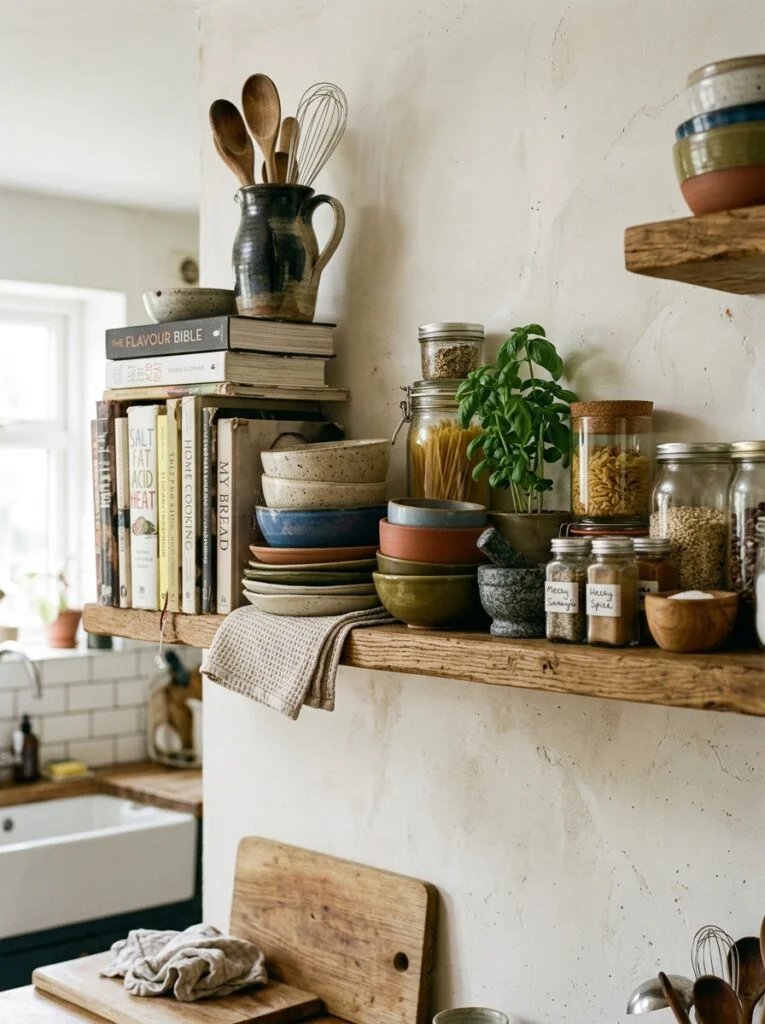
Once you’ve edited down what’s on the shelf, the next step is arranging it so it has visual rhythm instead of feeling flat or repetitive.
A shelf full of items that are all the same height and shape, like a row of identical mugs or a stack of matching plates, can look monotonous even when it’s tidy. The fix is to introduce variation without letting it become chaotic.
A well-balanced shelf usually includes:
- A taller item, like a pitcher, a vase, or a stack of cookbooks, to create visual height
- A few flatter or lower items, like a stack of bowls or a cutting board, to ground the arrangement
- Something with texture or organic shape, like a wooden bowl, a woven basket, or a small plant
Leaning a cutting board or a couple of plates upright against the wall instead of stacking everything flat is a simple trick that adds instant visual interest and breaks up the repetition of horizontal stacks.
Color matters here too. Shelves with a lot of clashing colors and patterns tend to look busier than shelves that stick to a loose, cohesive palette. This doesn’t mean everything needs to match. It just means it helps to have some kind of common thread, whether that’s a similar tone of white and cream, a mix of natural wood and ceramic, or one or two accent colors that repeat here and there.
Items That Almost Never Belong on Open Shelves
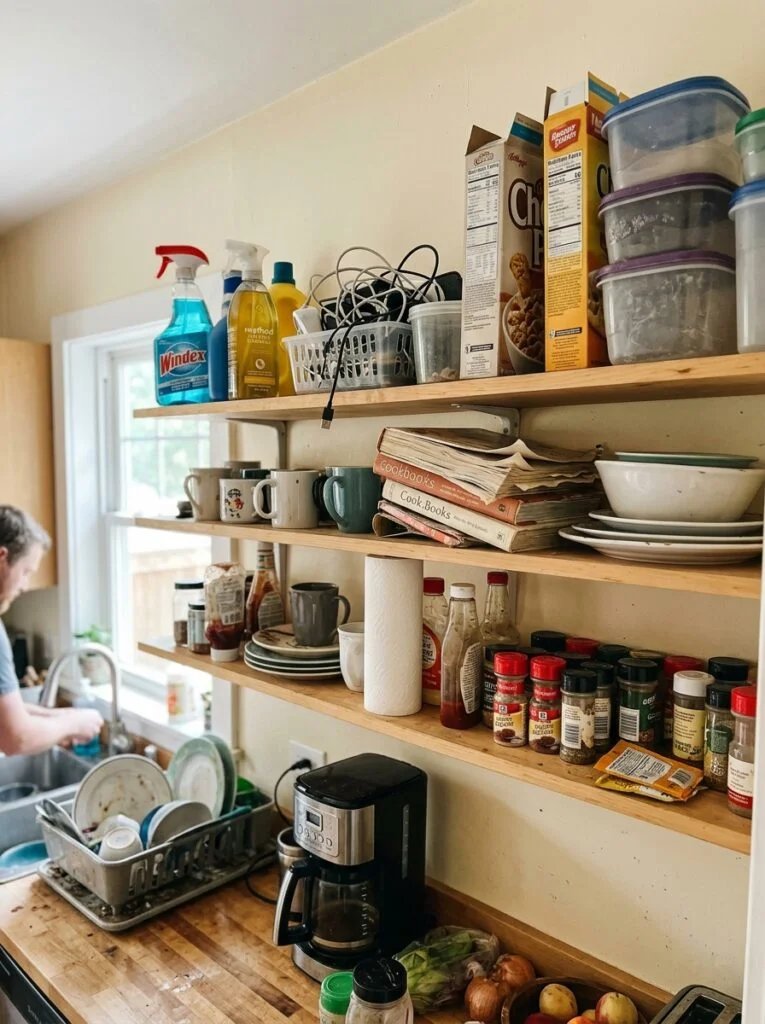
Some items are simply better suited for closed storage, no matter how tempting it is to keep them within easy reach.
Everyday mismatched dishware. If your day to day dishes are a hodgepodge of hand me downs, chipped pieces, and mismatched sets, they’ll read as clutter no matter how you arrange them. Save open shelving for pieces you actually like looking at.
Small appliances and gadgets. Toasters, blenders, and other equipment belong on the counter or in a cabinet, not on display shelving. They break up the visual flow and instantly make a shelf feel more like a storage unit than a styled feature.
Excessive duplicates. You don’t need every mug, bowl, or glass you own visible at once. Pick a small curated set and store the extras elsewhere.
Random pantry items. Cereal boxes, spice jars, and food packaging almost always look cluttered on open shelves because of their busy branding and inconsistent shapes. These are much better suited to closed cabinets or a dedicated pantry.
Anything you don’t actually enjoy looking at. If a piece is just there because it’s always been there, it might be time to let it move to a cabinet or find a new home altogether.
How to Style Open Shelves Step by Step
If you want a clear process to follow, here’s one that works well no matter the size of your kitchen.
Start by removing everything from the shelves completely. This gives you a true blank slate and stops you from just shuffling around existing clutter.
Next, sort through everything and choose your favorites in each category. Be honest about what you actually love versus what’s just filling space. This step is usually the hardest part, but it’s also the one that makes the biggest difference.
Then, place your larger, functional items first. Plates, bowl stacks, or a pitcher can act as anchors for each shelf, similar to how you’d start styling a coffee table with the bigger pieces before adding smaller details.
After that, add in a few decorative or textural pieces to break up the practicality of the functional items. A small plant, a wooden board, or an interesting vase works well here.
Finally, step back and check your spacing. If a shelf feels tight or overwhelming, remove one item rather than trying to rearrange around it. As with most styling projects, editing down usually solves more problems than adding more ever will.
Other Common Open Shelf Mistakes
Beyond overloading, a few other habits tend to work against a cozy, put together look.
Ignoring the wall color and lighting behind the shelves is easy to overlook. Dark, cramped corners make even well-styled shelves look muddled, while good lighting helps everything feel more intentional and easier to see.
Forgetting that shelves still need to function is another common trap. If everything on display is purely decorative and impractical to use, you’ll end up reaching around it constantly, which leads right back to clutter as things get shuffled and shoved aside.
Spacing shelves too closely together can also make even a well edited display feel cramped, since taller items have nowhere to go. If you’re installing new shelves, leaving enough vertical clearance makes a noticeable difference in how open and breathable the whole area feels.
Styling Tips for Different Kitchen Layouts
Small kitchens benefit most from restraint. A single shelf with a tight, curated selection will always look better than multiple shelves stuffed with everything you own. When space is limited, less really is more.
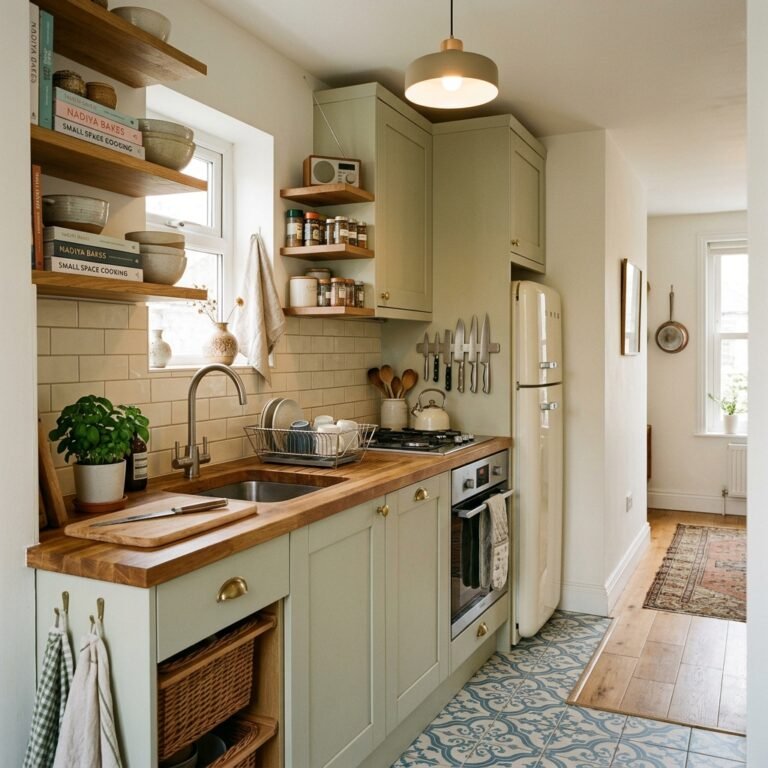
Galley kitchens with shelving on both sides should avoid symmetry that’s too rigid. A little variation between the two sides feels more natural and less like a display case.
Kitchens with a mix of open shelves and closed cabinets have the easiest job, honestly. Use the open shelves purely for your favorite, most visually appealing pieces, and let the closed cabinets absorb everything else. This combination gives you the charm of open shelving without the pressure of it holding your entire kitchen’s contents.
Frequently Asked Questions
How many items should be on an open kitchen shelf?
There’s no exact number, but a good guideline is to fill each shelf about two thirds full, leaving roughly a third of the space open for visual breathing room.
What should I avoid putting on open shelves?
Mismatched everyday dishes, small appliances, food packaging, and excessive duplicates tend to make open shelves look cluttered rather than styled.
Is open shelving impractical for daily use?
Not if it’s styled thoughtfully. The key is choosing pieces you actually use regularly, rather than treating the shelves as purely decorative or purely functional storage.
How do I keep open shelves from looking cluttered again?
Get in the habit of putting items back in their designated spot rather than wherever is closest, and periodically edit down anything that’s crept back onto the shelf over time.
Should open shelves match the rest of the kitchen decor?
They don’t need to match exactly, but sticking to a loose, cohesive color palette and a few repeated materials, like wood and ceramic, helps everything feel intentional rather than random.
Final Thoughts
Open shelving can genuinely transform a kitchen, giving it that warm, personal feeling that closed cabinets just can’t replicate. But it only works when the shelves are treated as a curated display rather than an extension of your regular storage.
The fix isn’t complicated. Edit down to your favorites, leave some open space, mix in a little variety, and be willing to move the rest to a cabinet where it belongs. Once you make that shift, your open shelves will finally look the way they were always meant to, cozy, welcoming, and effortlessly put together.
1 comment