

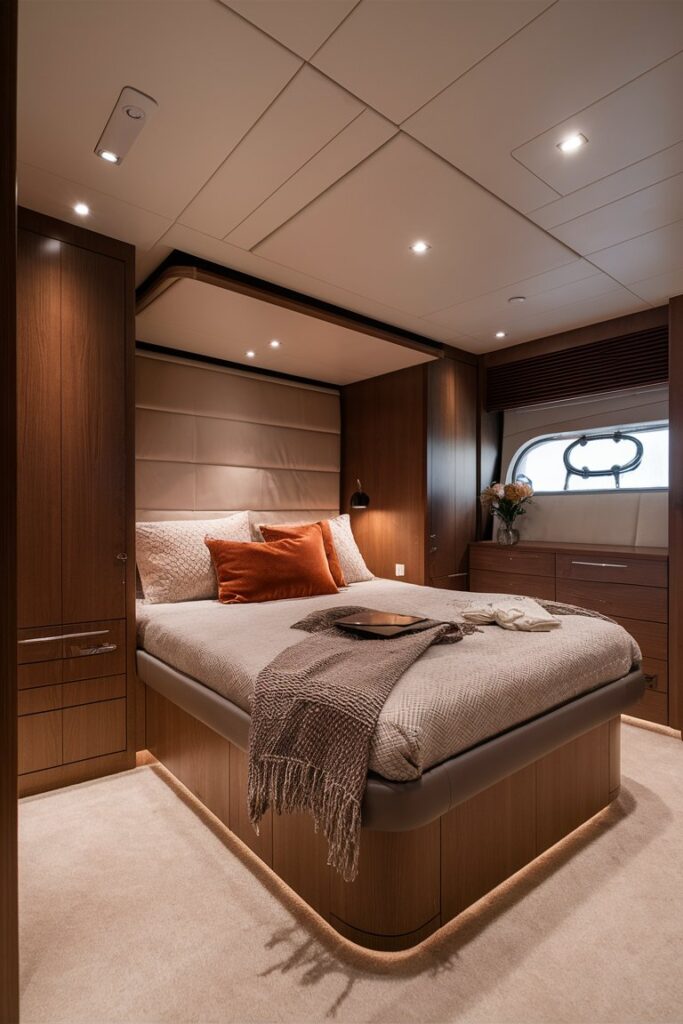
A double berth on a 40-foot cruising yacht often gives you five to six feet of width at the shoulders, about six and a half feet of length, and a foot end that tapers to a foot or two. In that same cabin, designers still find room for a week of clothes, spare bedding, books, and a reading light that points where you need it. They do it with repeatable habits. Every surface does two jobs. Every door has a positive latch. Nothing is deeper than it needs to be.
The ideas below borrow those habits for yacht cabins and for land bedrooms that need to hold more than they look like they can. Each one comes with a real dimension, material, or trade-off, so you can plan before you buy anything.
Corner Berths With a Tapered Foot
Yacht berths sit tight against the hull so the aisle stays clear. You can copy the move by pushing the head of the bed into a corner and one long side against a wall. That alone can free an aisle about 24 inches wide.
The trade-off is access. With one side blocked, you make the bed from the open side only, so swap tucked sheets for a duvet. A partner on the wall side climbs over you or the footboard, which gets old fast if one of you rises early. Also leave a gap of about two inches between the mattress and the wall. Bedding jams without it, and cold wall surfaces can sweat onto fabric pressed against them.
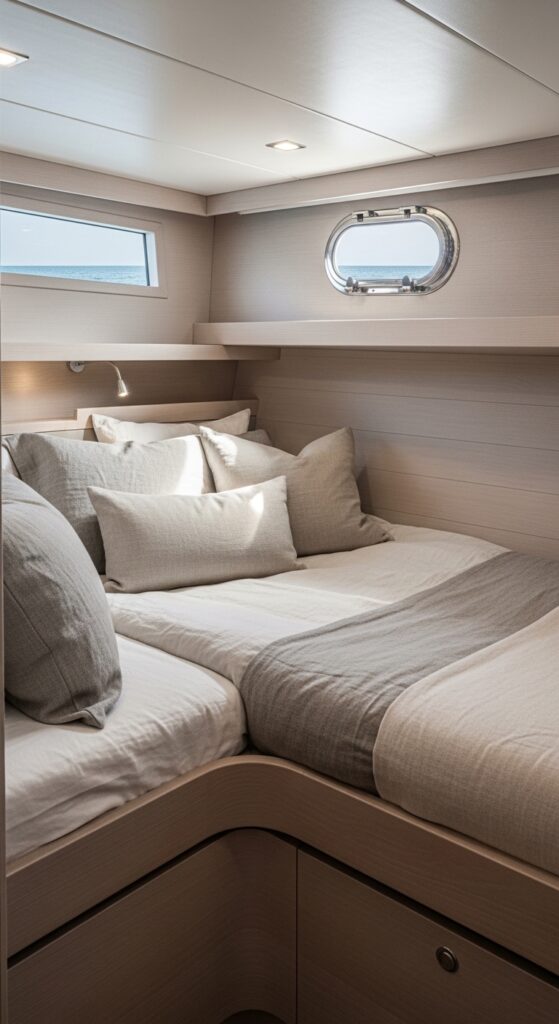
If the cabin is truly tight, trim the mattress. Foam cuts cleanly with an electric carving knife, and taking six or eight inches off each foot corner opens a diagonal walkway. Standard fitted sheets bunch on a cut corner, so budget for a seamstress or order custom linens.
Lift-Up Bed Bases Instead of Drawers
Drawers look neat, but each one needs floor clearance equal to its length, and the runners steal two to three inches of depth. A lift-up base uses the whole footprint under the mattress. Gas struts do the lifting, and you choose them by weight. A queen platform with its mattress can pass 100 pounds, so check the strut rating before you buy.
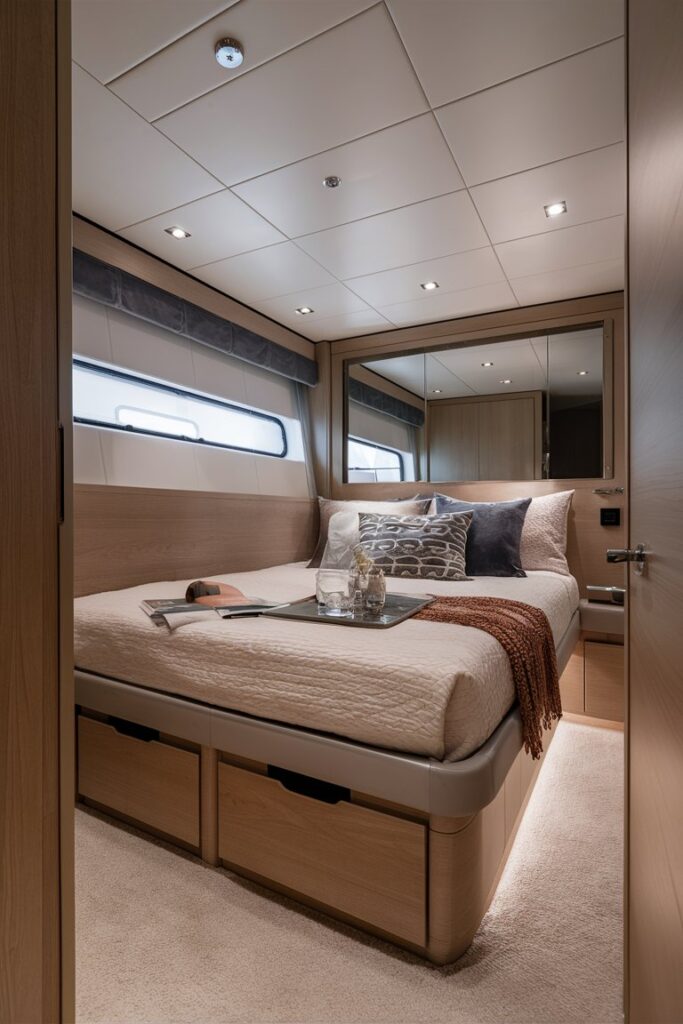
A lift-up base swallows the awkward things, like a rolled duvet or a carry-on suitcase. It also demands a clear side. Keep a nightstand or lamp from blocking the lid, or the storage turns into decoration.
Ventilate it. A solid plywood deck traps moisture under foam, so drill a grid of two-inch holes or add a breathable mesh underlay.
Shelves With a Raised Lip
On a boat, every shelf has a fiddle, a raised edge an inch or so high that keeps things put when the water moves. On land, the same lip stops your phone, glasses, and paperbacks from sliding off a shelf near the bed. Add one with a thin wood strip or a metal angle, and round the front corners so nobody clips a hip.
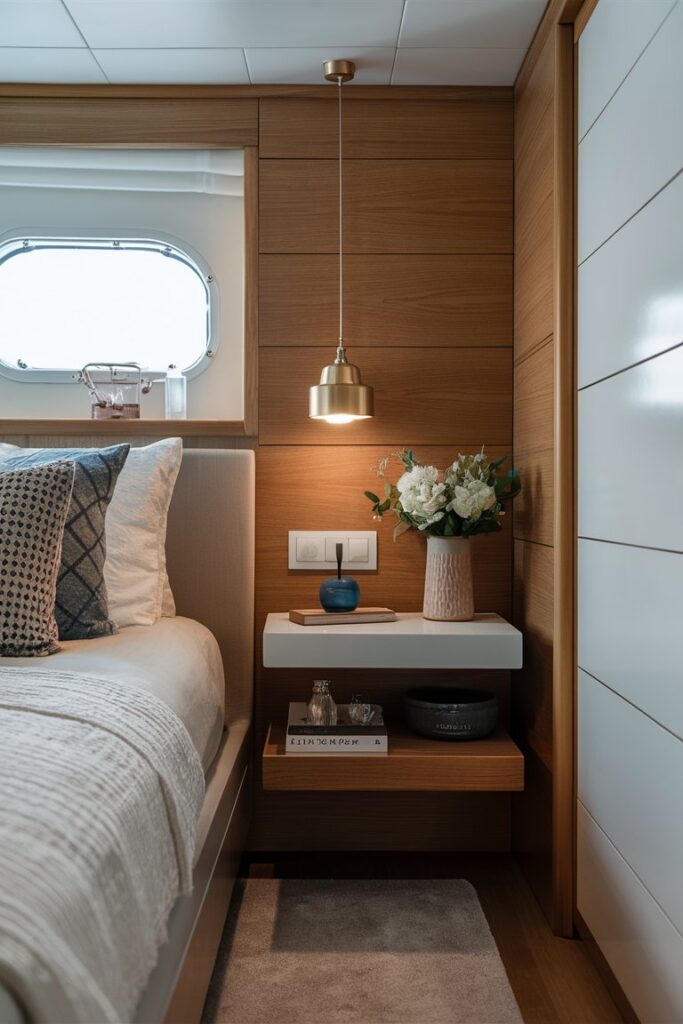
Mount the underside of the shelf at least 40 inches above the mattress if you sit up to read. Lower than that and you will meet it with your head. Keep depth to six or eight inches, because anything deeper juts into the room.
Weight is the hidden problem. A foot of paperbacks weighs roughly 15 to 20 pounds, so screw into studs, not plastic anchors.
Hanging Lockers That Run Front to Back
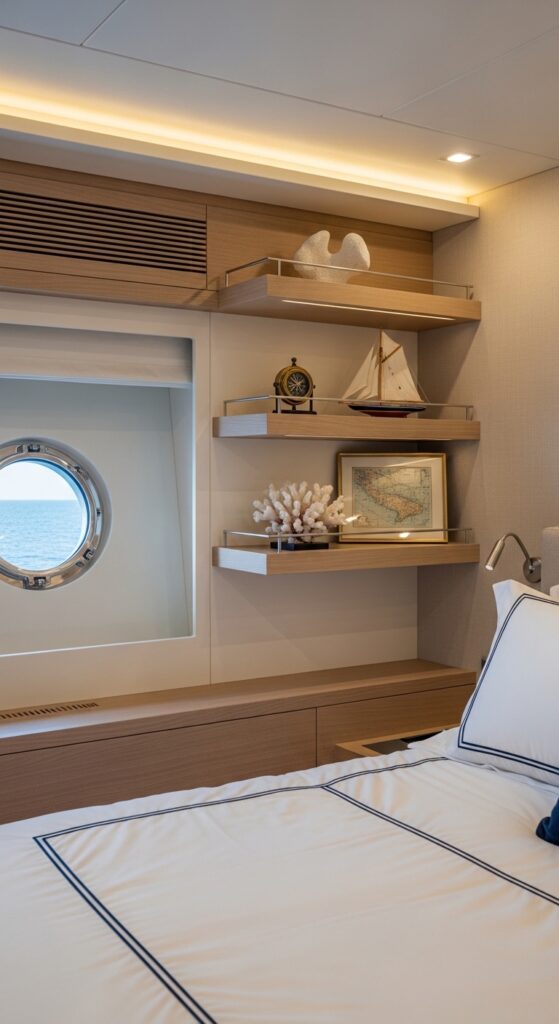
Yacht hanging lockers are often only 12 to 14 inches deep, far narrower than a standard 24-inch wardrobe. The trick is turning the rod 90 degrees so clothes hang sideways on slim hangers. You lose the easy flip through shirts. In return, you recover about ten inches of floor.
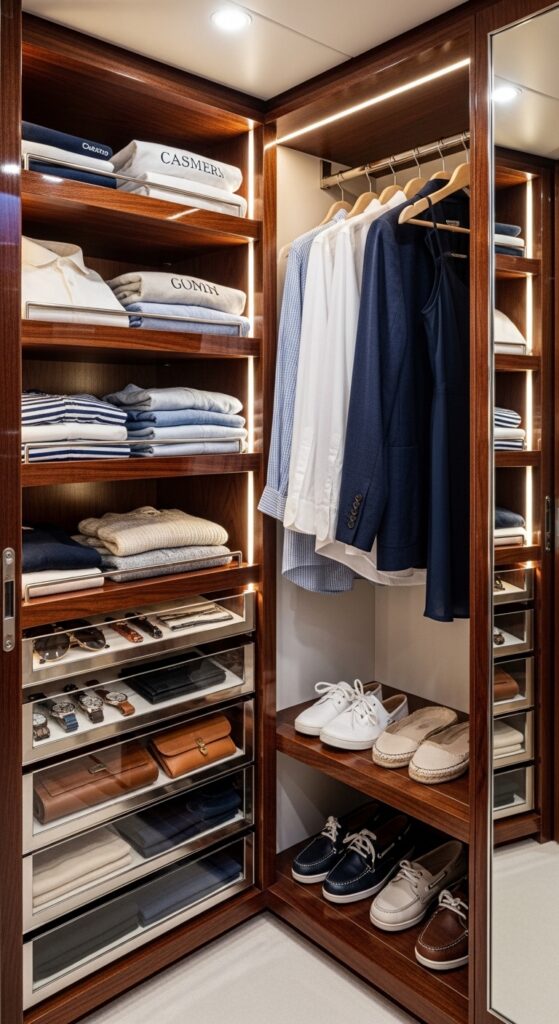
Give the doors air. Louvered or slatted panels keep closed clothing from smelling stale, which matters in any small, sealed room. Sliding doors save swing clearance, but the track cuts into your opening, so expect to lose a few inches of reach at the center.
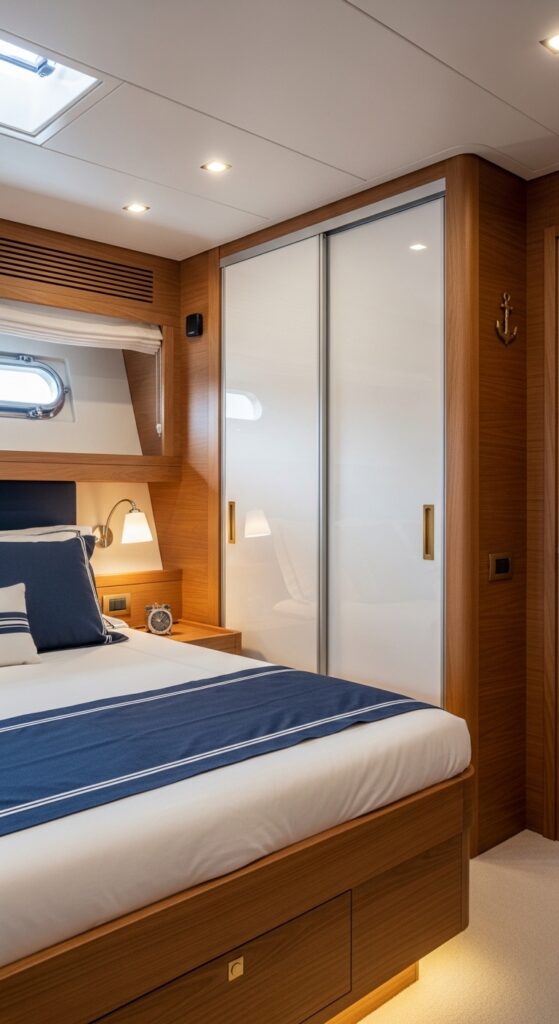
If you also want to double your hanging space, this guide on how to split a closet rod into two heights covers the drop measurements.
Flush Built-Ins With Positive Latches
A built-in works when it disappears. Scribe the cabinet sides to the wall so no gap collects dust, paint it the wall color, and keep the depth between 12 and 16 inches. Tall, slim units beat wide ones because they use height without crowding the floor.
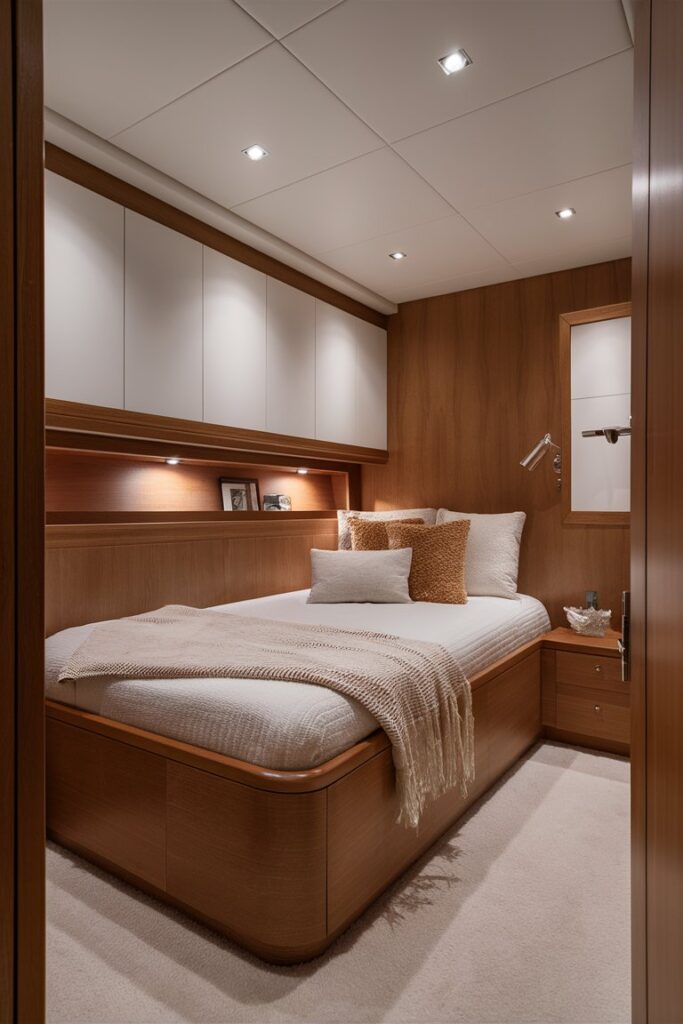
Choose latches by how you live. Push-to-open catches look clean, but a loaded door can pop open when someone bumps it. A positive latch holds. You notice the extra second once a day and the benefit for years.
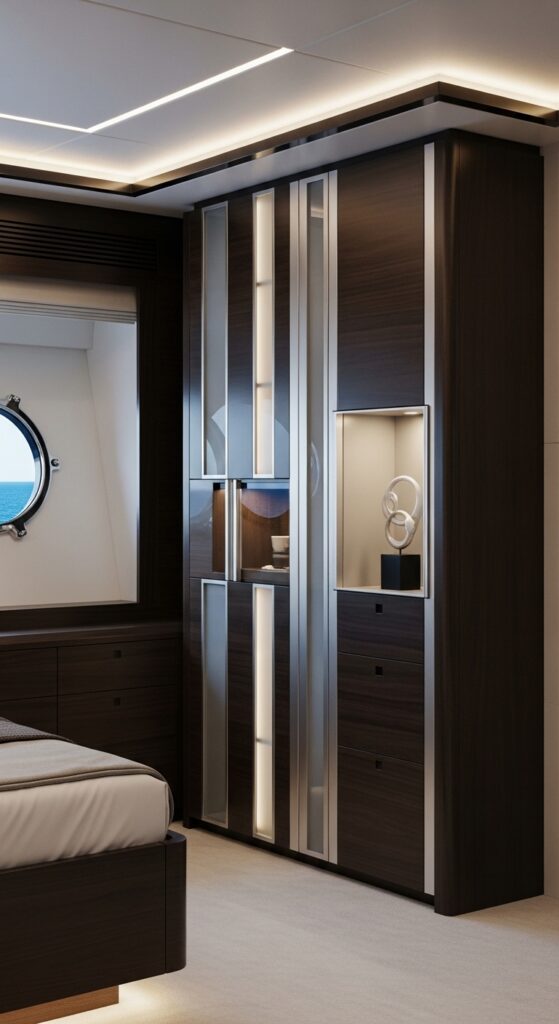
Inside one door, mount a magnetic strip about 18 inches long for tweezers, hairpins, keys, and watch tools. Keep it away from bank cards and phones.
A Headboard That Works as a Control Panel
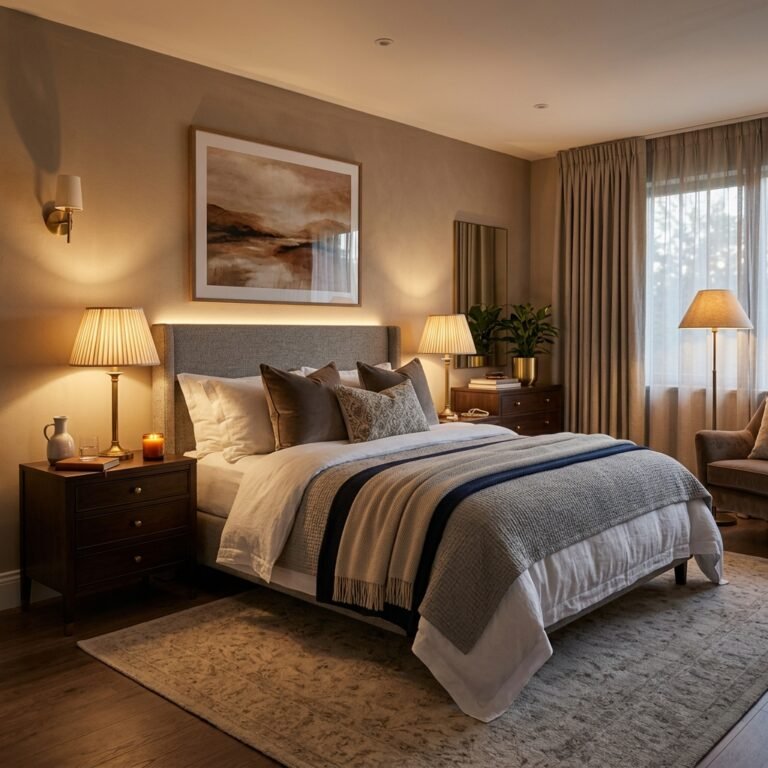
A boat headboard is a utility wall: shelf, light, and charging point in one. Build a cavity six to eight inches deep behind the pillows, add a lip, and mount the light on the wall above the shelf. Add a USB-C charging outlet inside the cavity, with a cutout about two inches wide, so phone cables stay behind the headboard instead of dangling across the pillow.
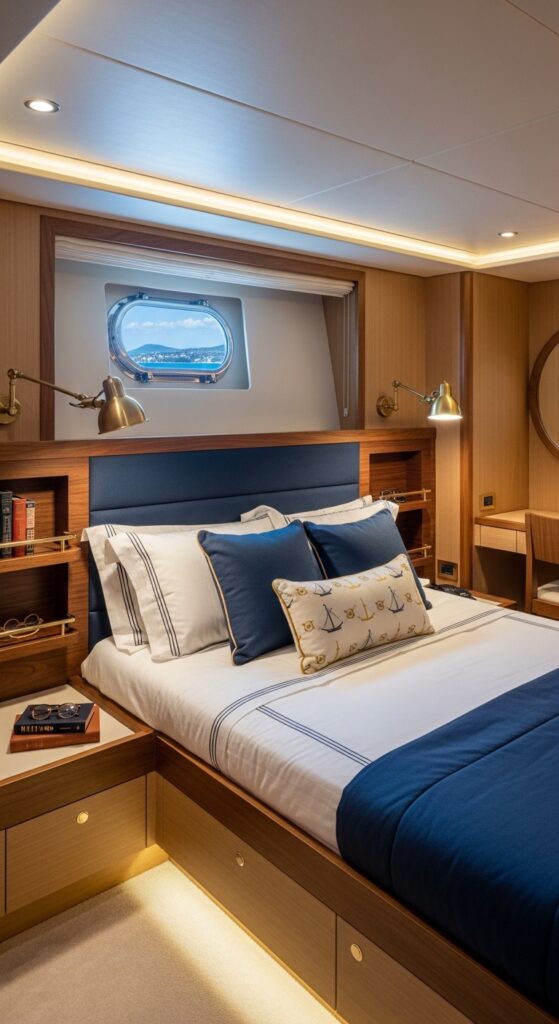
Place the light so the bulb sits roughly 30 to 36 inches above the mattress. Any lower and it glares in your eyes. Any higher and the page falls into shadow. Pick dimmable LEDs around 2700 kelvin, which read as warm, and a swing arm so one person can read while the other sleeps.
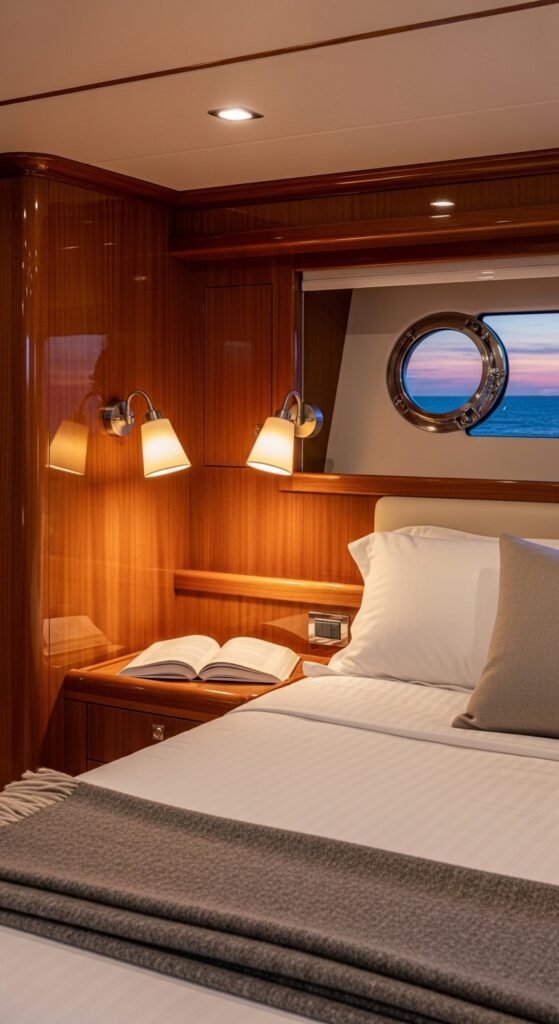
Renters can fake the hardwired look. Use plug-in sconces and run each cord inside a paintable cord cover, which keeps the wall clean without an electrician.
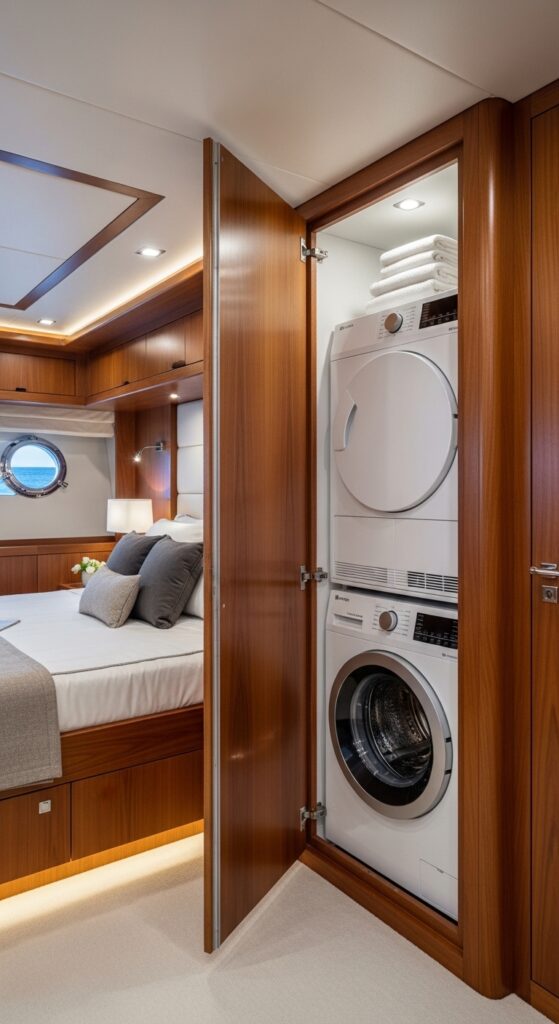
Hatch Storage and Hidden Laundry, With Airflow
Boats store heavy things below the floor, behind lids that sit flush with the surface. On land, cutting into a subfloor is a structural job. A raised platform, even four inches high, gives you the same hatch without touching the joists.
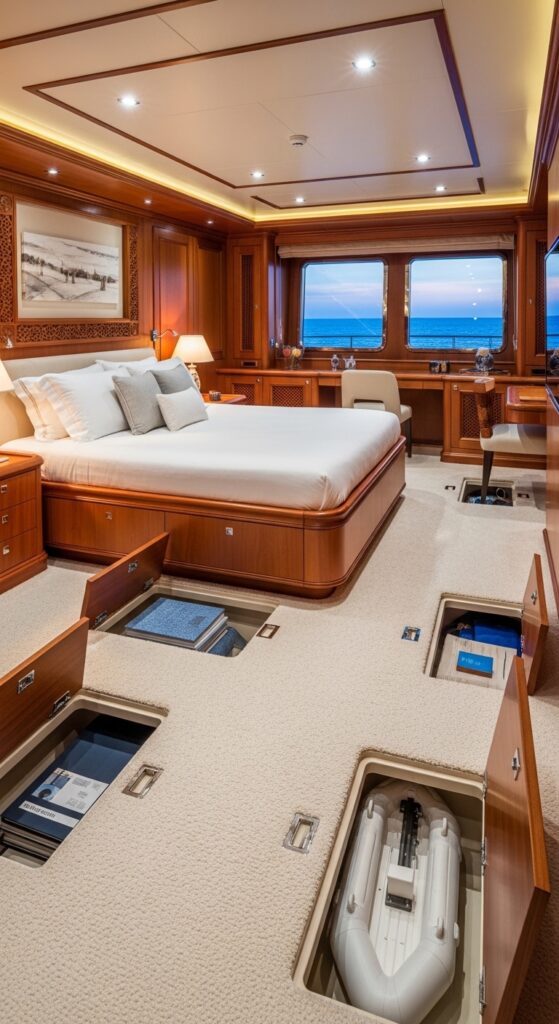
Hidden spaces fail in one specific way: moisture. The EPA’s guide to mold and moisture recommends keeping indoor humidity below 60 percent, ideally between 30 and 50, and drying spills and damp materials within a day or two. A hygrometer costs $10 to $50, which is cheap insurance.
For the laundry bin, pick a pull-out basket with perforated sides and a gap behind it. Never close damp towels inside a sealed drawer.
Fold-Down Beds and Desks That Share a Wall
A wall bed makes sense when the cabin works as an office by day. A queen unit usually needs a cabinet roughly 16 to 20 inches deep, plus ceiling height near eight feet if it folds vertically. Check the stated weight rating, and favor gas pistons over springs you adjust by hand.
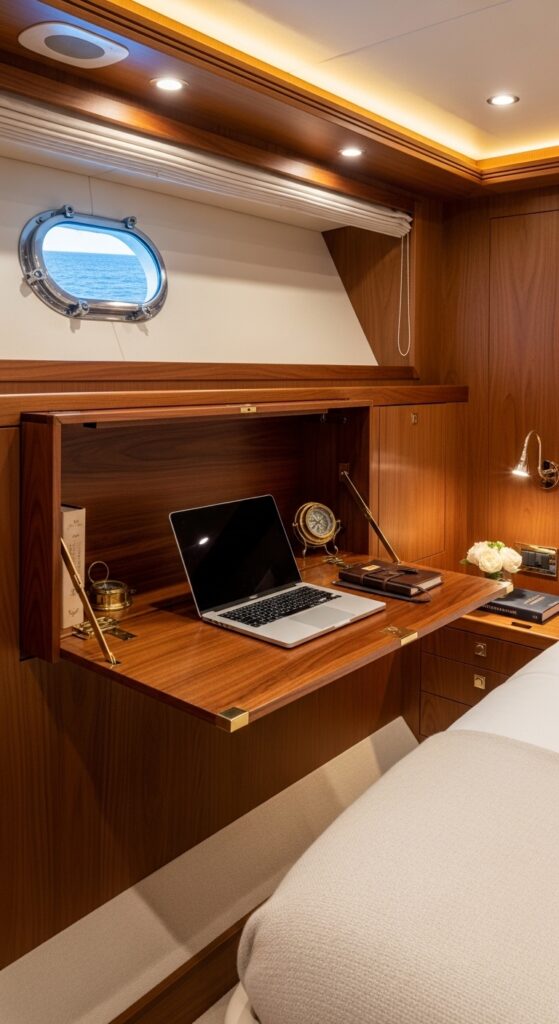
The desk is simpler. A fold-down desk 16 to 20 inches deep fits a laptop and a mug, nothing more. Screw its bracket into studs, since a leaning elbow loads the hinge more than the laptop does. Mount it on a wall the bed frame does not cross when it folds down.
Bunks and Sofa Beds for Guest Cabins
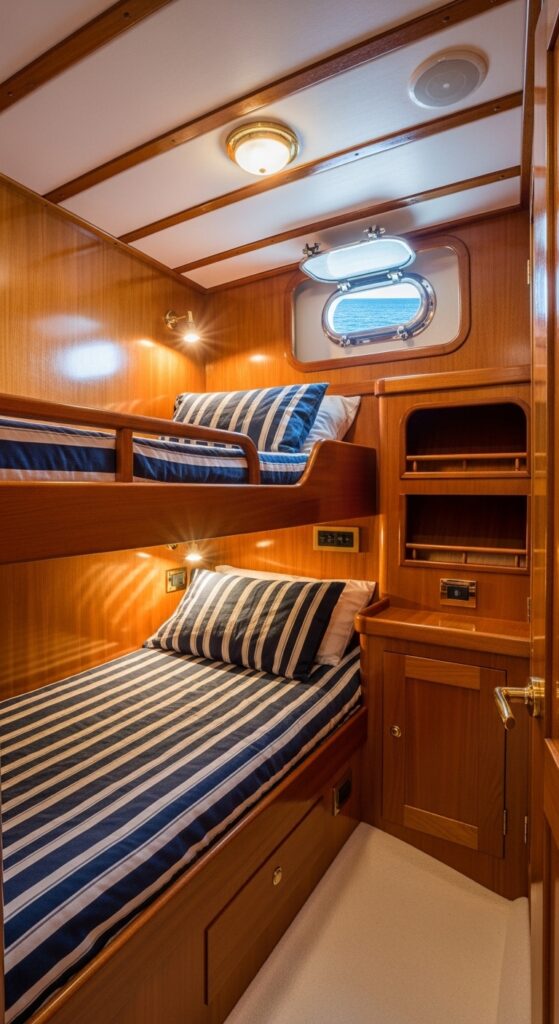
Bunks stack two sleepers into one footprint, but sit-up room is the catch. Leave roughly 30 to 36 inches between the lower mattress and the bunk above, or the lower sleeper lives in a tunnel. Add a guardrail on the open side of the top bunk, and check the maker’s age guidance before children use it. A slanted ladder takes more floor than a vertical one, but it is far easier on bare feet at night.
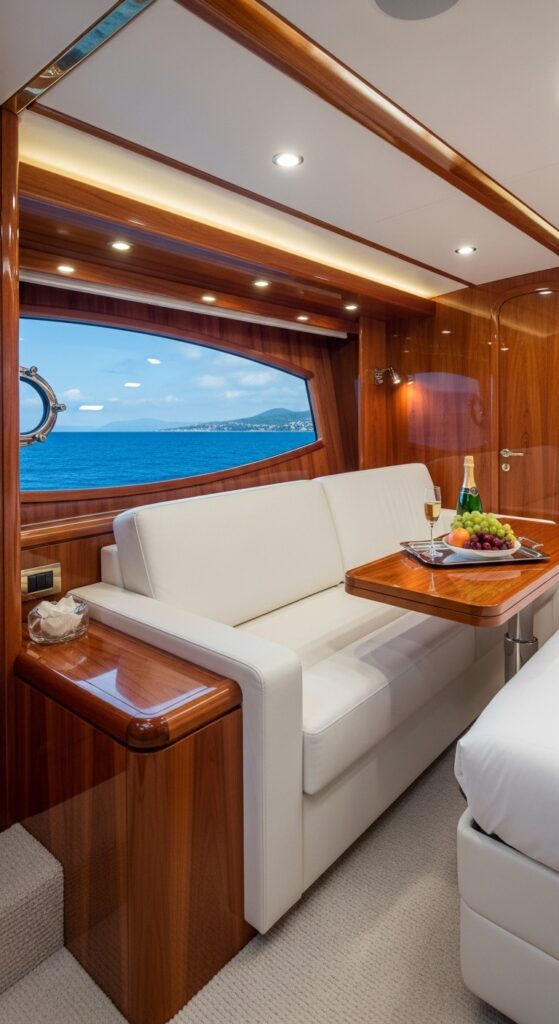
A sofa bed is the other guest option. Measure the unfolded length, often 80 inches or more, plus the swing path of the mechanism. Look for a mattress at least four inches thick, because thinner ones let you feel the bar through the foam. Choose a performance fabric, since guests spill.
Storage Seating at the Foot and Under the Window
A bench at the foot of the bed earns its keep when the lid is right. Specify a lid stay, a small hinged arm that holds the lid open, so it never drops on fingers. Aim for a seat height around 17 to 18 inches and a depth near 16 inches, which fits a folded blanket without bulging.
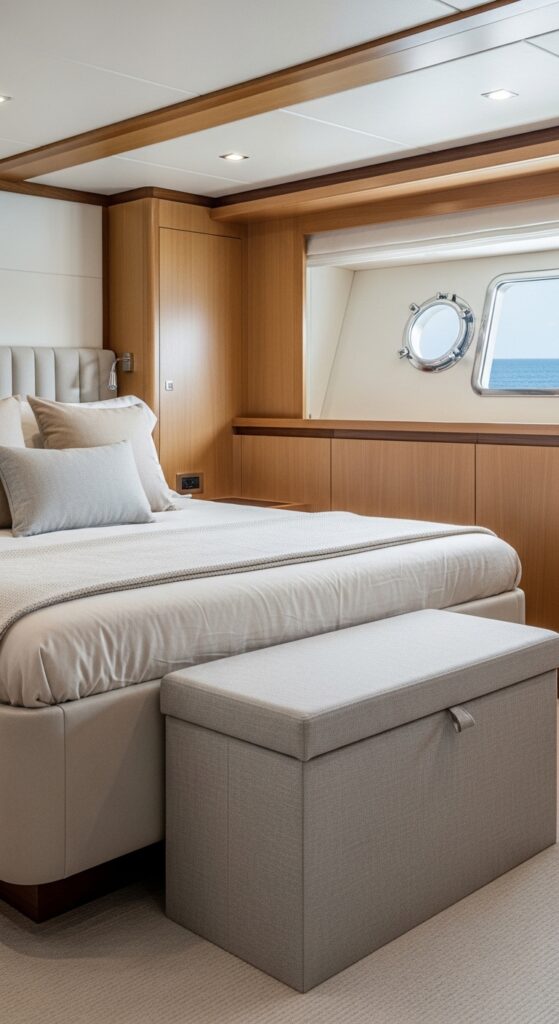
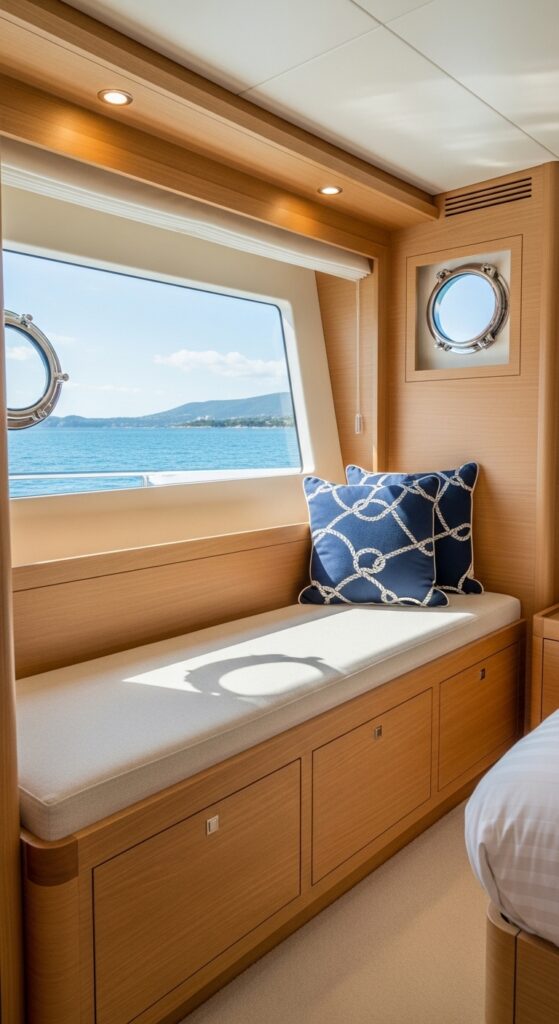
Under a window, check what sits below before you build. A bench over a radiator or vent cooks whatever is stored inside and blocks the heat. Make sure the open lid clears the curtain, too. Add a few small vent holes at the back so stored linens do not smell closed up.
A Palette Borrowed From Teak, Canvas, and Sea Glass
Navy is the obvious pick, and it needs rationing. Keep deep blue to about a quarter of what you see, such as a duvet or one wall, and let pale wood and oatmeal linen carry the rest. A fully navy cabin reads as a cave once the sun sets.
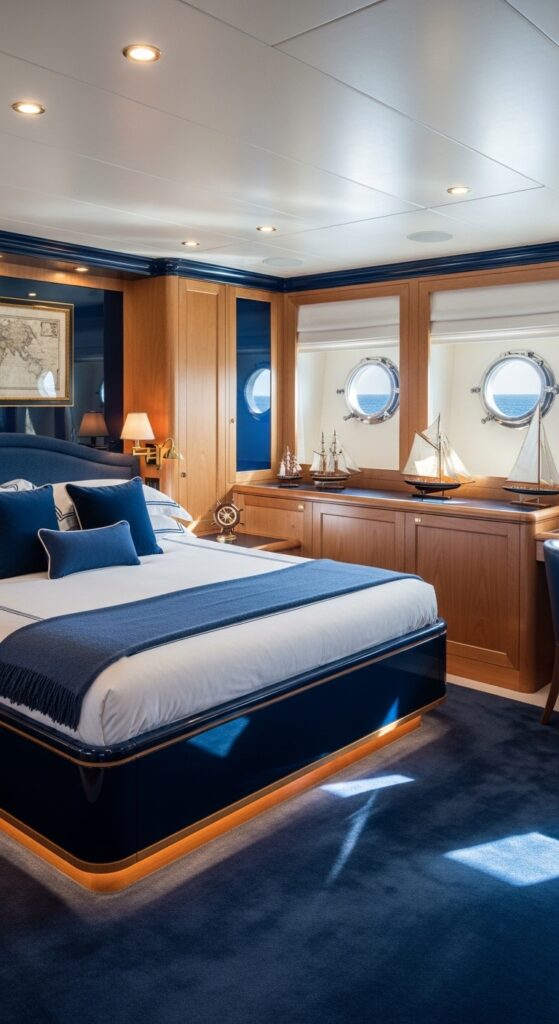
Real teak is expensive, so many cabins use ash or white oak veneer in a matte finish. Matte hides scratches and fingerprints better than gloss.
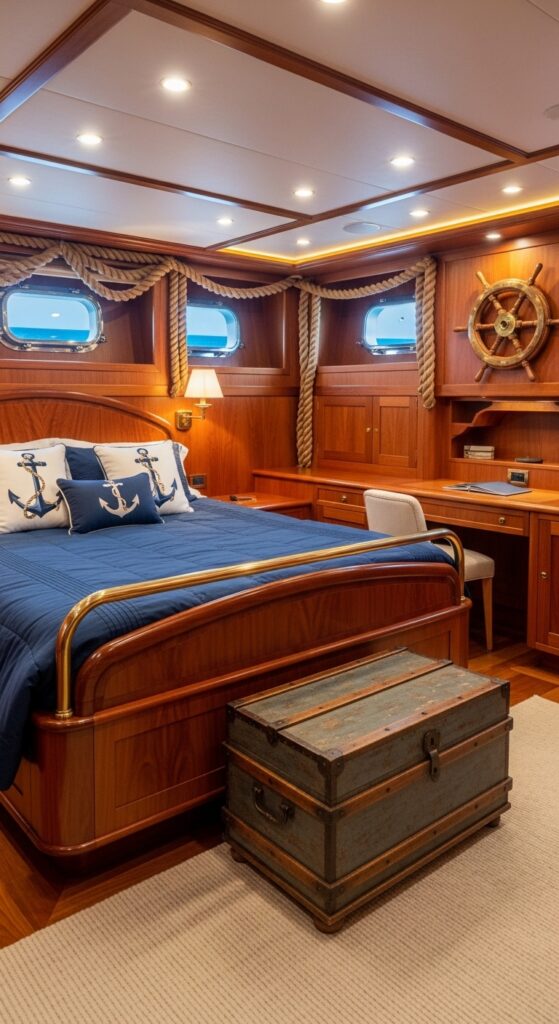
For rope, use three-eighths-inch cotton cord as drawer pulls or a lamp pull, not a knotted wall display. One or two pieces is enough. Striped ticking or plain linen in sand and white keeps the bedding quiet beside the blue. Check swatches at night under your actual bulbs, because warm light turns a cool gray-blue slightly green.
Mirrors and Screens, Placed for Daylight
Yachts bounce light with mirrors because portholes are small. Place a mirror panel opposite the window, not beside it, so it reflects daylight instead of the wall. Choose safety-backed mirror, which holds together if it cracks, and use mirror adhesive on a flat, clean wall rather than double-sided tape. Test the reflection first by holding a large mirror at different heights, because a panel that catches the bed instead of the window defeats the purpose.
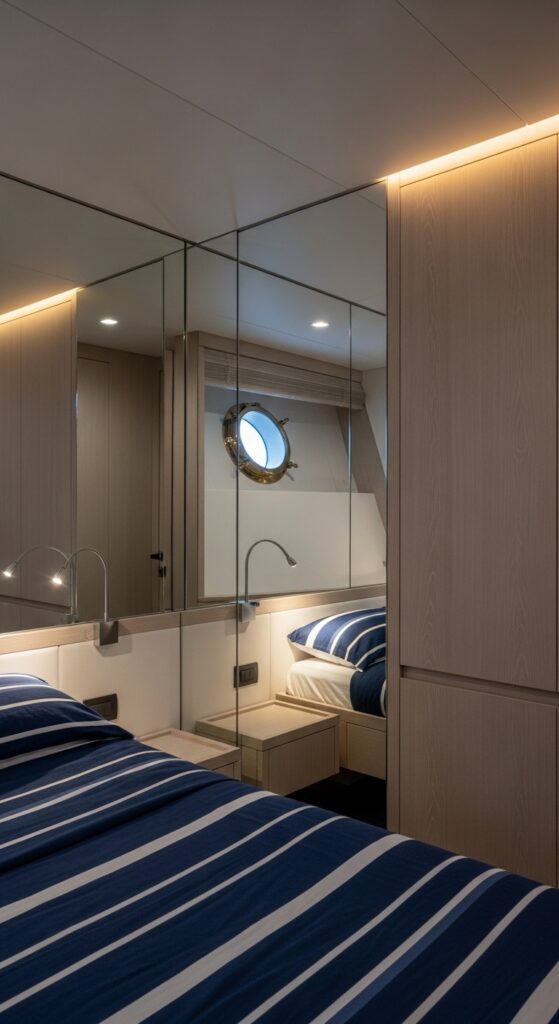
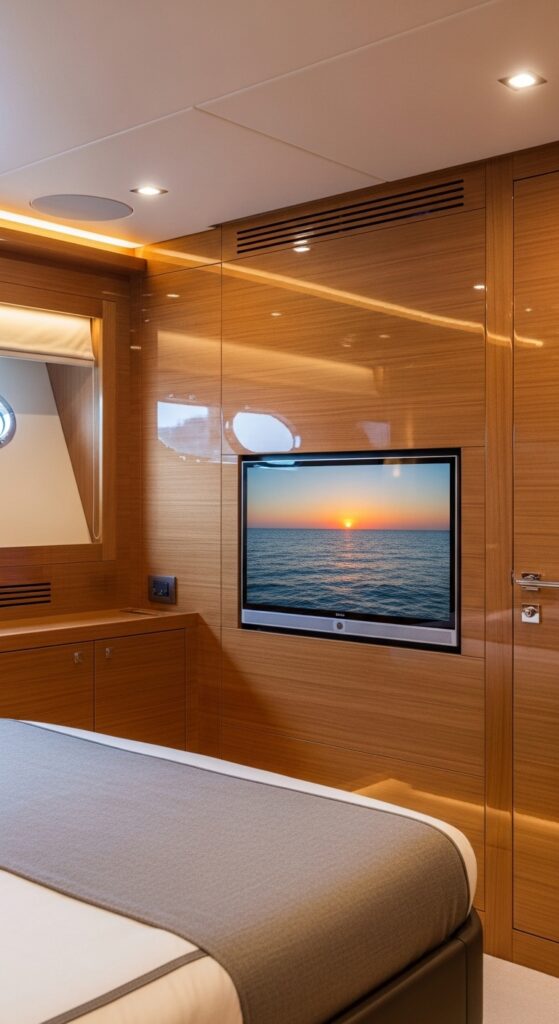
A television needs the same thinking. Use a full-motion arm that folds to two or three inches from the wall, and angle the screen away from the window to avoid glare. Center it near your eye line when you lean on pillows. Hide the cable in a paintable cord channel.
Which Idea to Try First
Pick the constraint that bothers you most and fix that one. If you trip over the aisle, start with berth position. If the floor is full of bags, choose a lift-up base. If you cannot read at night, move the light. One change per weekend beats one big overhaul, and every idea above works on its own.
Frequently Asked Questions
How big is a double bed on a yacht?
Smaller than most people expect. Many yacht double berths measure roughly five to six feet across at the shoulders and about six and a half feet long, tapering at the foot. A standard queen mattress is 60 by 80 inches, so it rarely fits without trimmed corners or a custom-cut foam mattress.
Can you use a regular mattress in a yacht cabin?
Usually only with changes. A rectangular mattress overhangs a tapered berth and traps moisture on a solid deck. Foam shaped with an electric carving knife fits better, and a breathable underlay or ventilation holes in the platform keep the underside dry between trips.
How do you stop mildew in closed cabin storage?
Keep air moving and humidity down. The EPA suggests holding indoor humidity below 60 percent, ideally 30 to 50. Use louvered doors, leave a gap behind stored bags, and never shut damp towels in a sealed compartment. A $10 to $50 hygrometer shows when humidity creeps up.
What kind of reading light works best beside a berth?
A wall-mounted swing arm with a dimmable warm LED. It keeps the nightstand clear and aims light at the page, not your partner’s face. Set the bulb about 30 to 36 inches above the mattress, and choose around 2700 kelvin so the glow stays gentle at midnight.
Are fold-down beds comfortable enough for every night?
Yes, when the mechanism matches the mattress. Look for gas pistons with a stated weight rating, a mattress under about 12 inches thick, and a metal frame instead of particleboard slats. Cheap hinges are the first part to wear out with daily folding, so inspect them before you commit.
1 comment