
Pace out a typical teenage bedroom and you will often land near ten feet by eleven. Drop in a twin XL bed (38 by 80 inches), a desk, and a closet door that swings 30 inches into the floor, and the open floor left over is about the size of a yoga mat.
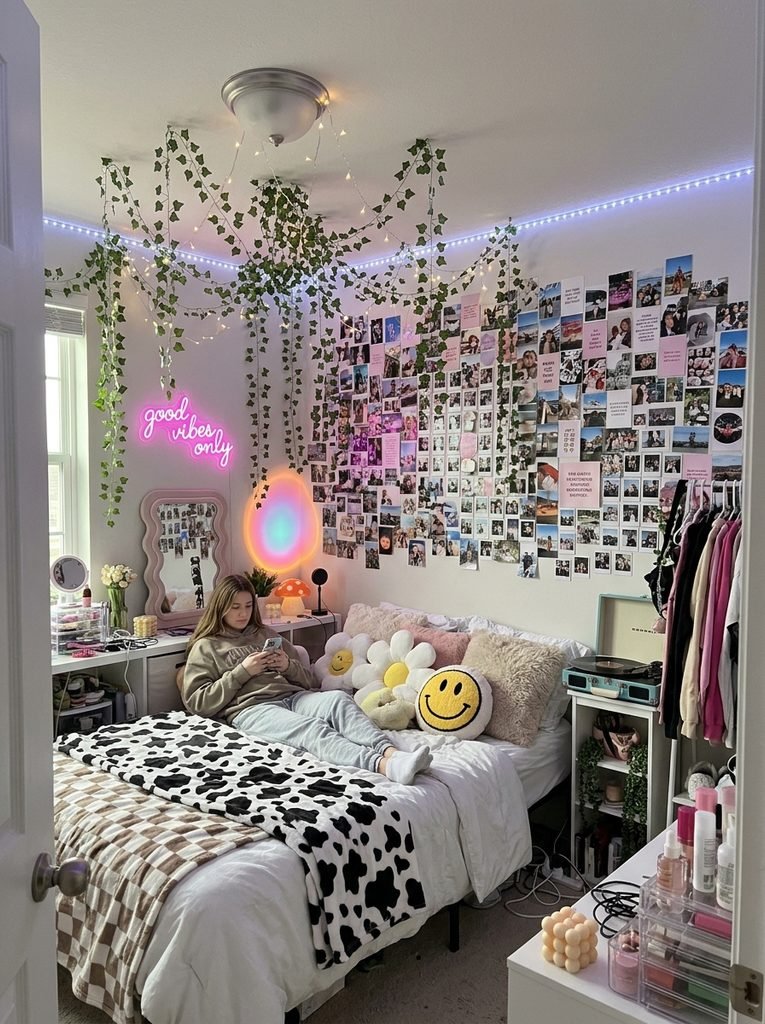
That tight footprint is why a trend-first room fails so fast. In March she sends you a screenshot. By April the neon strips are up, the bedding set matches the posters, and the wall has two coats of something dark. By the next spring she has moved on to a different look, and the room is stuck with a decision made at fourteen.
This is the mistake: building the whole room around one aesthetic, with permanent pieces and trendy pieces bought together. The fix is to sort every purchase into a permanent layer and a swappable layer, then spend accordingly.
How One Screenshot Turns Into a Room She Outgrows
The sequence is predictable. She shares a board titled something like “dark academia” or “Bloxburg pastel.” You shop from it, and retailers make that easy by selling the look as a complete set: comforter, shams, sheets, curtains, and a matching rug, often $100 to $200 together.
Paint is where the cost sneaks in. A 10-by-11-foot room with eight-foot ceilings has roughly 280 square feet of paintable wall after you subtract the door and window. A gallon covers about 350 square feet per coat, so a deep color needs two gallons and usually a primer. Undoing it later means primer, two more coats, and a lost weekend.
Micro-aesthetics also cycle in months, not years. The names change, but the pattern holds. A twelve-year-old’s favorite character becomes a fifteen-year-old’s embarrassment, and the room should be able to follow her without a full redo.
Sort Everything Into Two Layers Before You Spend a Dollar
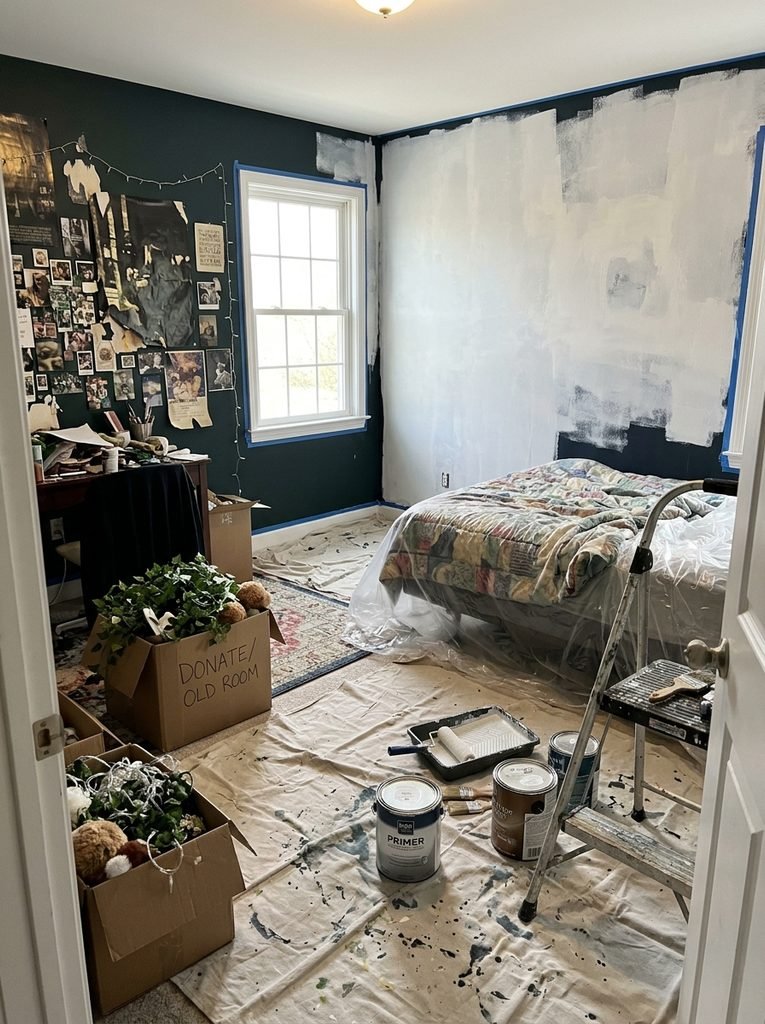
The permanent layer is anything that should last four to six years: wall color, bed frame, mattress, desk, chair, curtain rod, and the base rug. The swappable layer is anything you would happily replace in a year: duvet cover, pillows, posters, lights, shelf styling, and small decor.
Write both lists on paper before you shop. Then put most of the budget into the first list and keep the second list cheap on purpose. If a piece lands on the fence, such as a headboard, ask whether it can be replaced without a drill or a paint roller. If not, it belongs in the permanent layer and should be neutral.
Paint the Walls Quiet and Let the Bedding Be Loud
Pick a wall color you could live with in any of her next three phases: warm white, greige, pale sage, or a gray-leaning lilac. Test it first. Paint two-foot squares on two different walls and check them at 8 a.m. and again at 8 p.m. North-facing rooms turn many blues flat gray by evening.
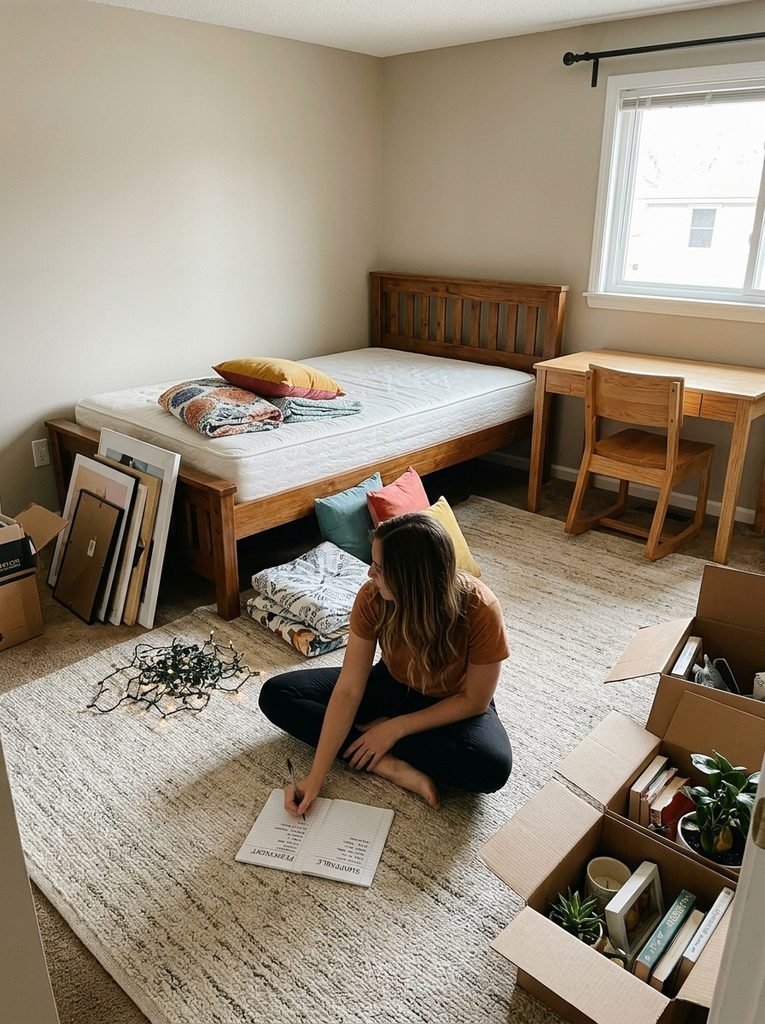
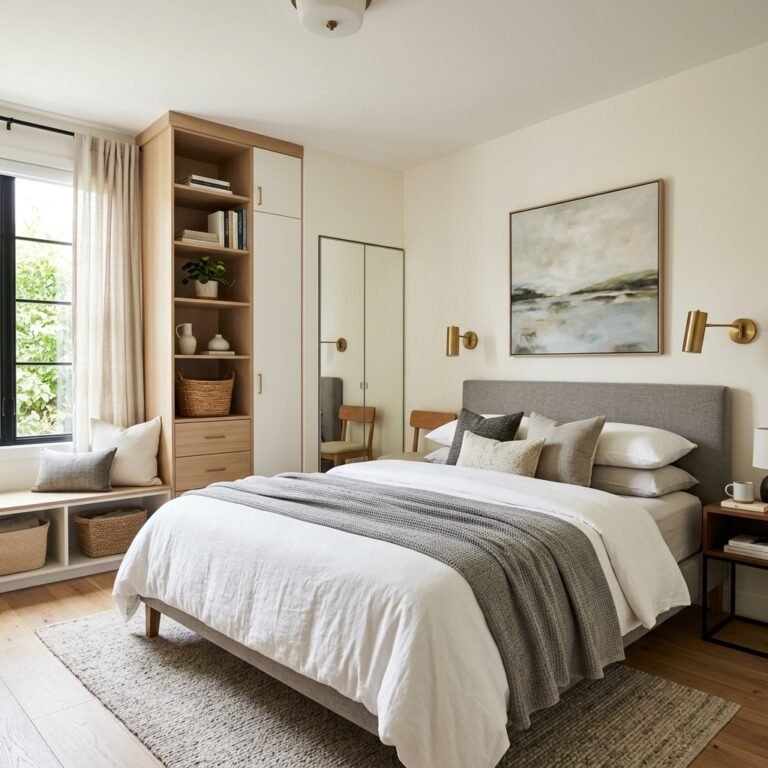
A quiet base lets the trend arrive in fabric. In the Scandinavian-leaning room below, the walls stay white and light oak carries the furniture, while one dusty blue velvet pillow and a slate curtain panel supply the color. Swap those for sage next year and the room reads as new.
The same logic works for black and white. A monochrome room with one electric blue or pastel pink accent costs little to change, because the accent lives in a rug, a throw, and a framed print rather than on the walls.
If she wants purple, keep it dusty. A grayed lilac on the walls pairs with white furniture and rose gold hardware, and it reads as a neutral from across the room. Tiny cost, big payoff: a $10 set of replacement drawer pulls changes the metal finish in ten minutes.
One more paint detail. The EPA’s indoor air quality guidance notes that paints and similar products release organic compounds while in use and, to a smaller degree, while stored. So buy a low-VOC formula, open the window for a few days, and keep the leftover can in the garage rather than the closet she sleeps beside.
Put Trend Pieces on a Twelve-Month Clock
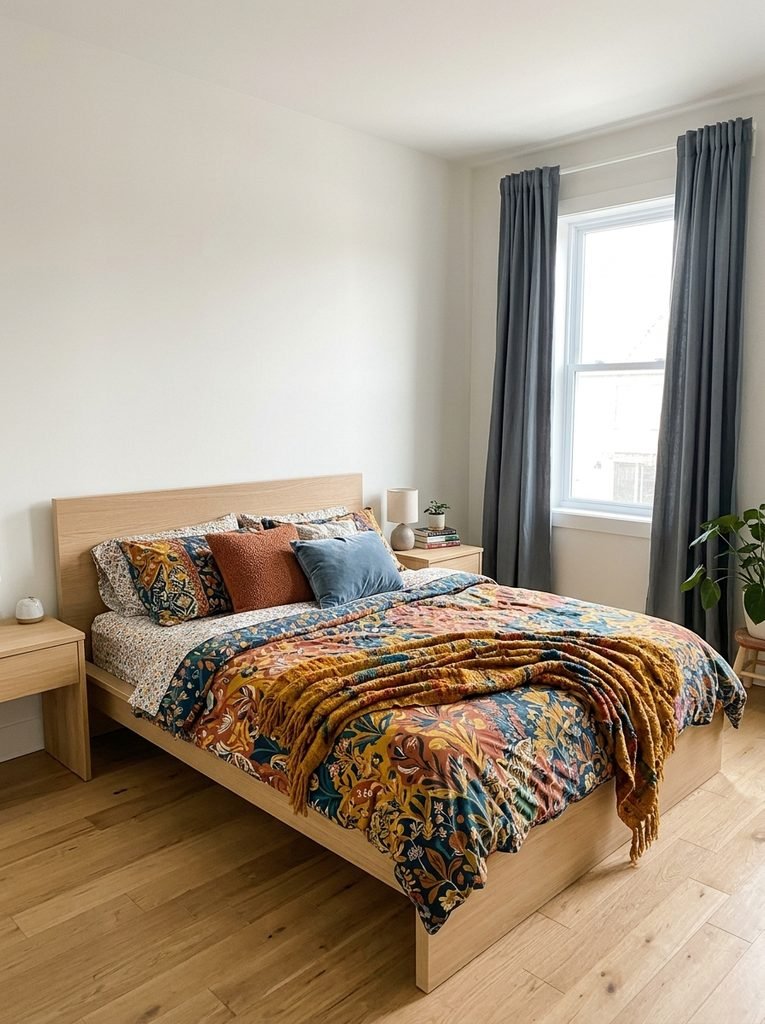
This is where the fun belongs. Treat every swappable item as a twelve-month rental. A duvet cover alone runs $30 to $80, while a full matching set can run triple that. Buy the cover and the pillowcases, and keep the plain sheets she already has.
Pop art is the easiest trend to rotate. Fuchsia prints, a retro quote in a cheap clip frame, and an LED neon sign (often $40 to $90) give the room a loud personality on one wall. When the look fades, the frames take new art and the sign goes on a shelf.
Gaming setups need one extra step: cables. Purple and blue LED strips look great until six power bricks hang off the desk. Mount a power strip under the desktop with screws, bundle cords with hook-and-loop ties, and run the strips behind the monitor, not across the wall. Clean the surface with rubbing alcohol first, because stick-on strips peel from textured walls within weeks.
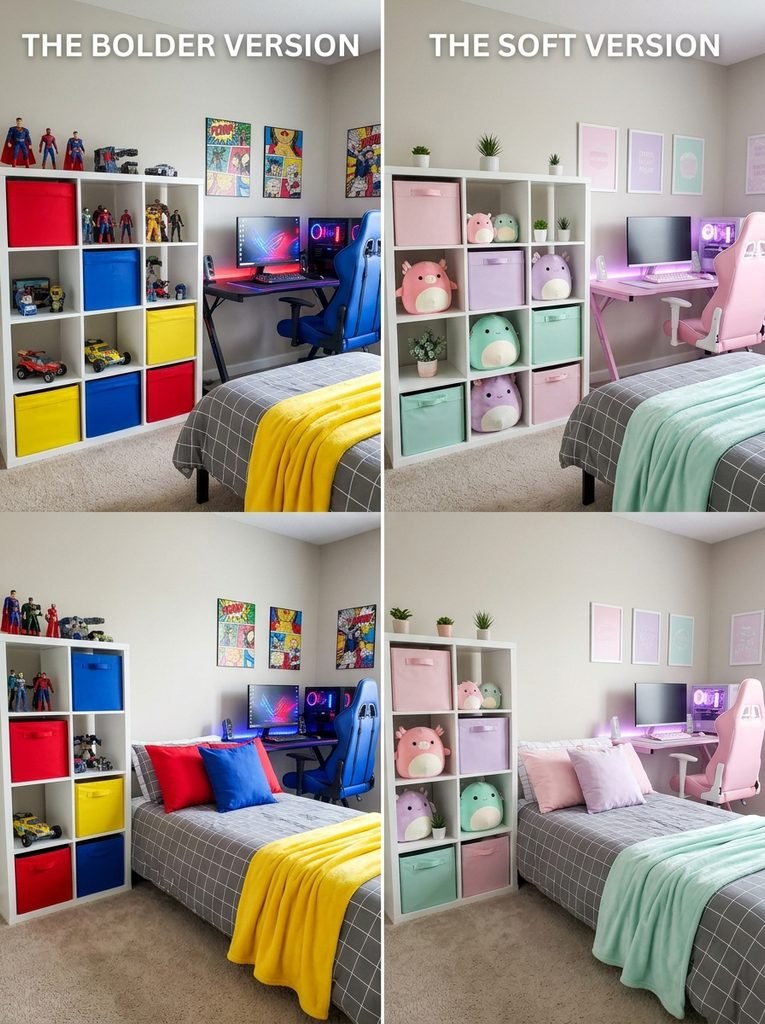
The Bloxburg look is a good test of the two-layer rule. Its grid logic, white cube shelving, and clean color zones are structural, so keep those neutral. The candy colors and glow strips are the trend part. Here is the bolder version, with primary-color zones on a white grid:
And here is the soft version in pink, lilac, and mint, with the same shelving grid underneath. Only the accessories changed, which is the whole point:
Give the Desk Real Estate, Not Whatever Corner Is Left
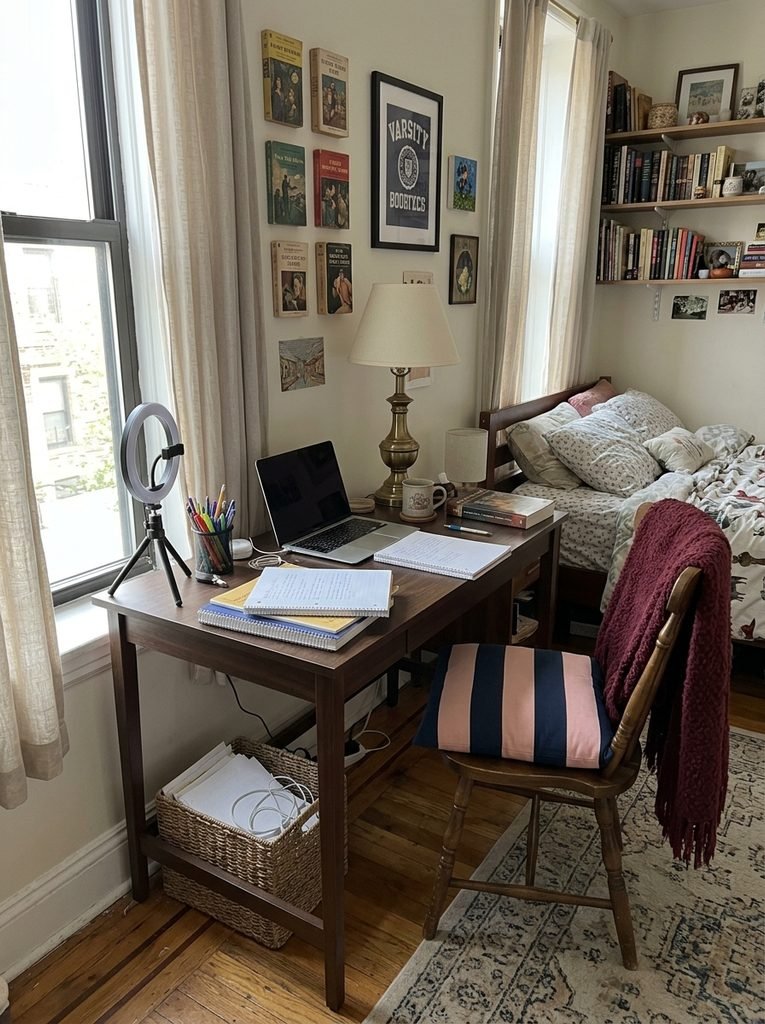
Homework, a laptop, and sometimes a ring light all land on one surface. Aim for at least 48 inches wide and 24 inches deep, and keep it beside a window rather than in front of it, so glare stays off the screen. A fabric-shaded lamp with a bulb around 3500 to 4000K handles evening work without making the room feel clinical.
Dark academia tempts people to buy a heavy walnut desk. In a 110-square-foot room, a deep dark-wood piece can eat the floor. Choose a slim version, then bring the mood through brass lamps, framed book covers, and a burgundy throw. Those can change; the desk stays.
Preppy rooms work well here because the look comes from patterns, not furniture. Navy and soft pink stripes, a monogrammed pillow, and varsity-style prints can all be replaced for the price of a few pillow covers.
The coastal version of preppy leans on rope-wrapped lamp bases and seagrass baskets. Those are sturdy enough to survive a spill, which matters more than people admit near a study desk.
Make One Wall Hers and Keep It Removable
Letting her choose a single wall gives her real control without committing the whole room. Pick the wall behind the bed, because it is the one you see most and the one furniture hides partly anyway.
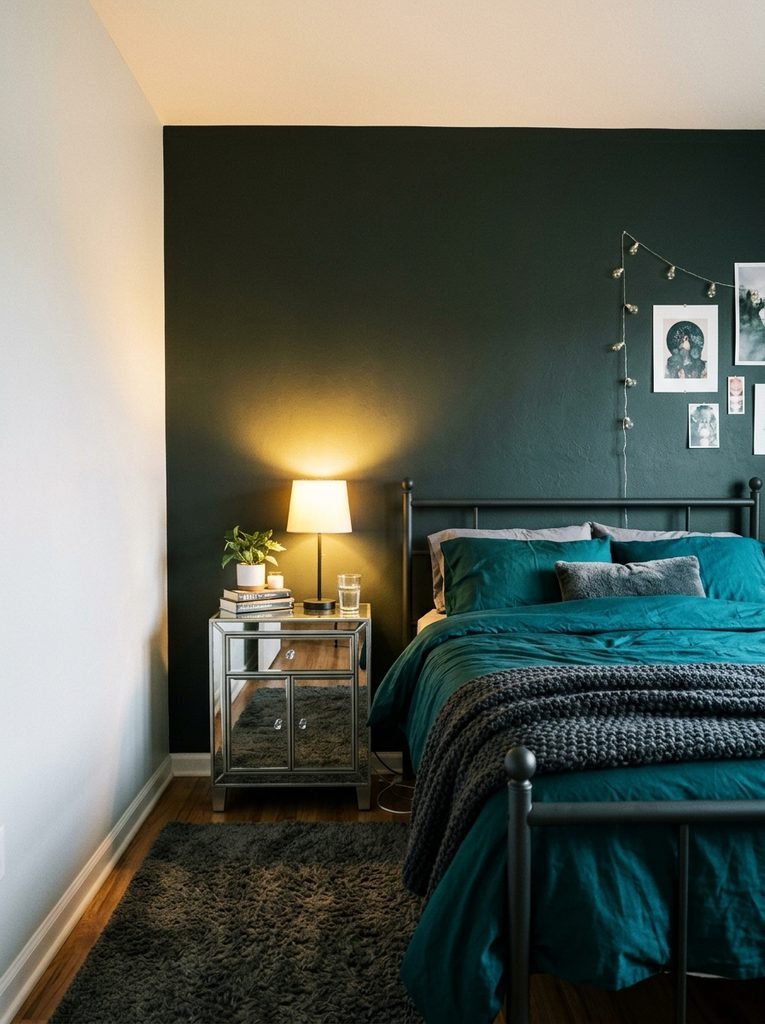
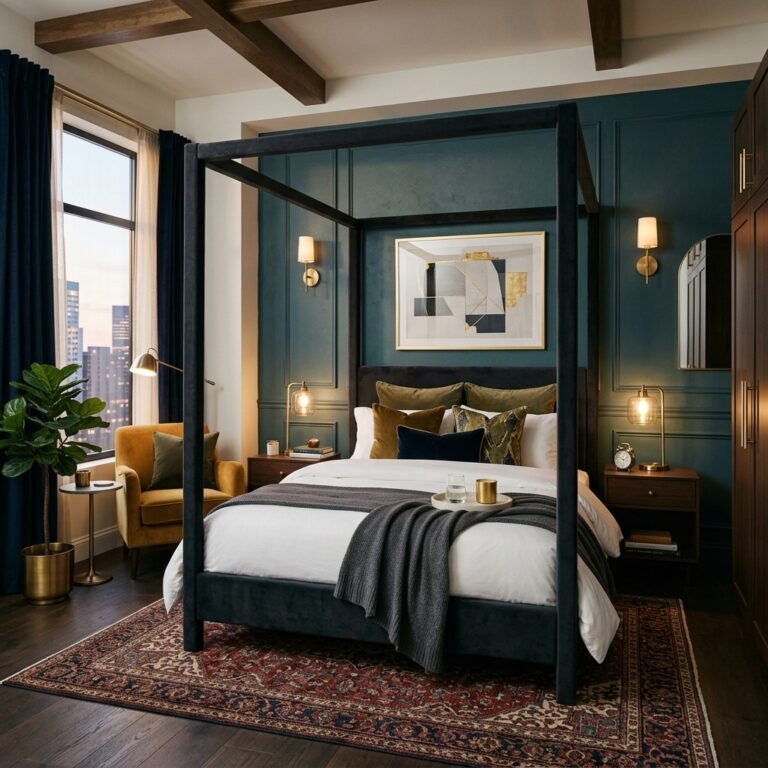
Dark Moody Glamour works well on exactly that wall. Charcoal or forest green behind a mirrored nightstand and a jewel-toned duvet looks dramatic, while the other three walls stay light so the room does not close in. Use a warm 2700K bulb in the lamps. Cooler bulbs make dark walls look flat and dingy.
If paint is off the table, peel-and-stick wallpaper does the same job. Wait about four weeks after fresh paint before applying it, test a hidden patch first, and expect a few seam lines on textured walls. The wall-decor mistake that makes a dorm room feel temporary covers what to do when she heads to college and has to restore the surface.
The denim-and-metal look suits that approach. Deep indigo on one wall, a matte black metal bed frame, and an industrial pendant carry the mood. A chunky knit throw and a charcoal rug keep it from feeling cold.
Color-blocking is the cheapest version of all. Use low-tack painter’s tape, press the edge down with a putty knife, and pull the tape slowly while the paint is still slightly tacky. Teal and olive blocks behind a neutral oak bed look intentional and cost one quart of paint.
Plan Storage Before the Decor Arrives
Storage is the part that keeps a teen room looking styled after week two. A room with 110 square feet and no place for laundry will look cluttered no matter how good the palette is.
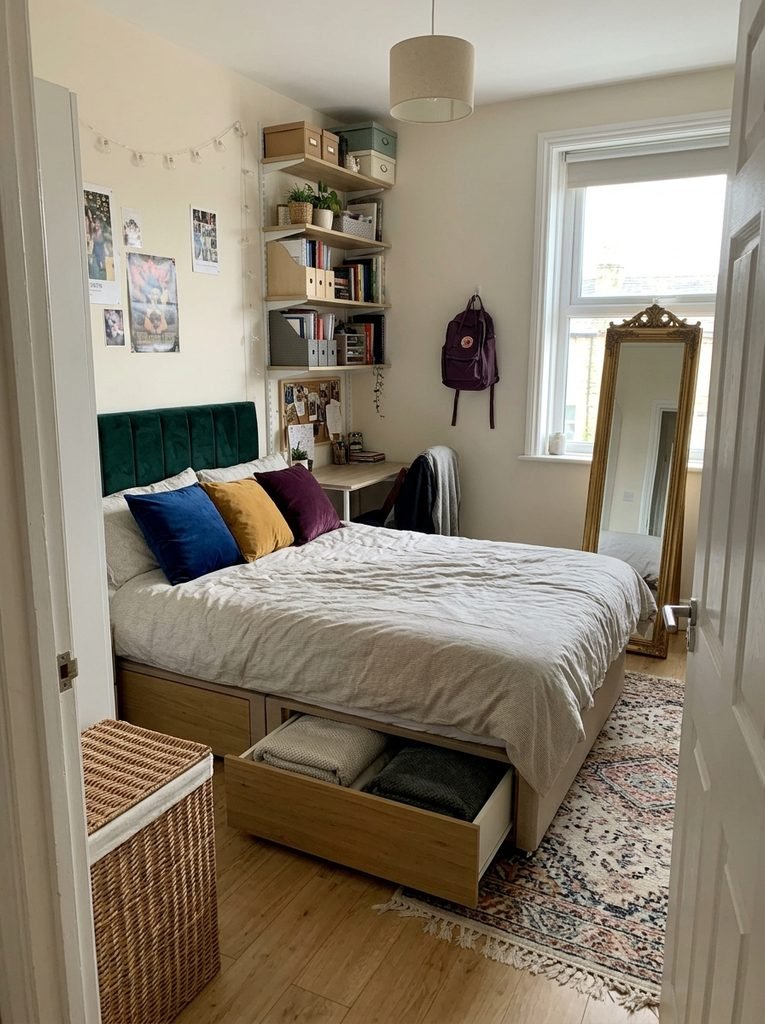
Start with vertical space. A loft bed with a desk underneath frees about 20 square feet of floor, but most need an eight-foot ceiling, so check the manufacturer’s stated minimum before ordering. Under-bed drawers are the budget option; hydraulic-lift frames cost noticeably more but hold bulky winter bedding.
One statement piece beats ten small ones. A single velvet headboard or a tall gold-framed mirror leaning in the corner gives the glam look and doubles as the room’s one big gesture. If she wants it layered with jewel-toned cushions, stop at three.
For where everything should sit, our guide on how to arrange bedroom furniture when the bed takes up most of the room walks through clearances around the bed and door.
Choose Plants and Textures That Survive a Busy Week
Plants fail in teen rooms for a boring reason: nobody remembers to water them. Pothos, snake plant, and ZZ plant forgive a missed week. A fiddle-leaf fig does not. Hang pothos from a ceiling hook or a wall planter, and the room gets its green without losing desk space.
Layering several greens, from sage to emerald, works if the plants are the decor. Fill one wall of floating shelves with trailing plants and ferns, and leave the rest of the room calm.
Natural fibers feel right in a teen room, but they come with chores. Macrame gathers dust and hair, so hang it away from the pillow. Jute rugs are rough underfoot and shed; a flat-weave cotton rug in a similar tone is kinder to bare feet. A hanging egg chair needs a ceiling joist and a stated weight rating, not a drywall anchor.
Cottagecore has a laundry problem. Ruffled bedding looks sweet and takes an iron to stay that way. Choose a cotton percale duvet cover that survives the dryer, and add one frilled sham as the single sweet touch. Lace trim and floral prints can live on pillowcases and a framed botanical.
The Twelve-Month Receipt Test
Before anything goes in the cart, ask one question: if she hates this in a year, what does it cost to undo it? If the answer is a pillowcase swap, buy it. If it is a repaint, a drill, or a new mattress, choose the neutral version and put the trend somewhere you can unhook it.
Then leave one surface empty on purpose. A bare shelf is where the next obsession will land, and she will fill it herself.
Frequently Asked Questions
How much should I spend on a teen girl’s bedroom makeover?
Plan on $300 to $700 for a refresh that keeps her current bed and desk. Paint and primer run roughly $60 to $120, bedding $60 to $150, lighting $30 to $80, and a rug $80 to $200. Put most of the money into what stays for years, and cap trend purchases near $150.
What paint color works best in a small teen bedroom?
A soft, mid-light shade with a gray or warm undertone works best, such as greige, pale sage, or dusty lilac. Avoid saturated color on all four walls in a room near 110 square feet. Sample two-foot patches and check them at 8 a.m. and 8 p.m., since many blues turn gray in north light.
Is it safe to leave LED strip lights on overnight in a teen’s room?
UL-listed strips are generally fine electrically, but bright or colored light late at night can make falling asleep harder. Plug the strips into a $10 outlet timer set to switch off by 10 p.m., and keep the controller box off bedding so it can shed heat.
How do I make a teen girl’s room look more grown-up without painting?
Swap the bedding and lighting first. One muted linen or cotton duvet cover, a single framed print around 24 by 36 inches, and a fabric-shaded lamp with a 2700K bulb change the tone in an afternoon. Take down matching sets and any poster cluster of more than five pieces.
What size rug fits a twin XL or full bed in a teen bedroom?
A 5-by-8-foot rug suits a twin XL bed, set so it extends about 18 inches past the open side. A full bed usually needs 6 by 9. Place it under the bottom third of the bed so no bare floor shows at the foot.
Very good i like it