Grab a tape measure and check the clear counter between your sink and your stove. In many studio kitchens, it’s 18 to 24 inches. That’s one cutting board, with no room left for the onion you’re chopping on it.
A tiny kitchen rarely fails on looks. It fails on three practical limits: counter, power, and storage. A studio kitchen often has one shared electrical circuit, a fridge the size of a filing cabinet, and nowhere to eat. The ideas below work around those limits first, then deal with style.
Start with the idea that fixes your biggest limit, not the one that looks best on a mood board. If you want help with where the sink, stove, and fridge should sit, our guide to small kitchen layouts that make cooking and storage easier covers that. This list assumes your layout is fixed and you’re working inside it.
Before you buy anything, write down three numbers. First, your clear counter in inches. Second, how many outlets you can reach from the counter, and which breaker feeds them. Third, the width and depth of your emptiest cabinet. Those three numbers decide which of these ideas fit, and they stop you from ordering a cart that is two inches too wide.
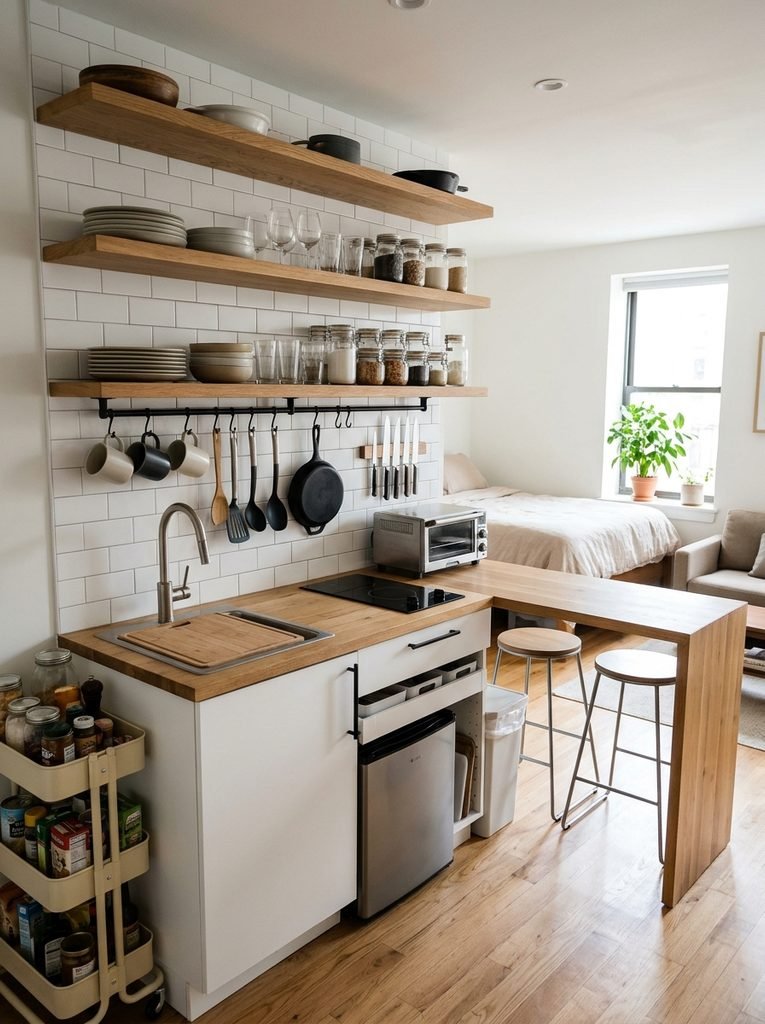
Use the Sink as a Second Counter
A board that rests across the sink rim gives you a flat prep surface exactly where you need water. Measure the inside of the sink bowl and the rim width before you buy. The board needs a lip on both sides so it doesn’t slide.
Choose one with a cutout or a slotted colander, so chopped vegetables go straight into a pot. Bamboo is light and cheap. Stainless steel holds up to hot pans but is louder under a knife.
Rinse the board and stand it on edge after use so it dries. A board that stays flat over a damp sink bowl warps within a few weeks. If you wash dishes by hand, pair it with a roll-up drying rack that sits in the bowl, then store both together under the sink.
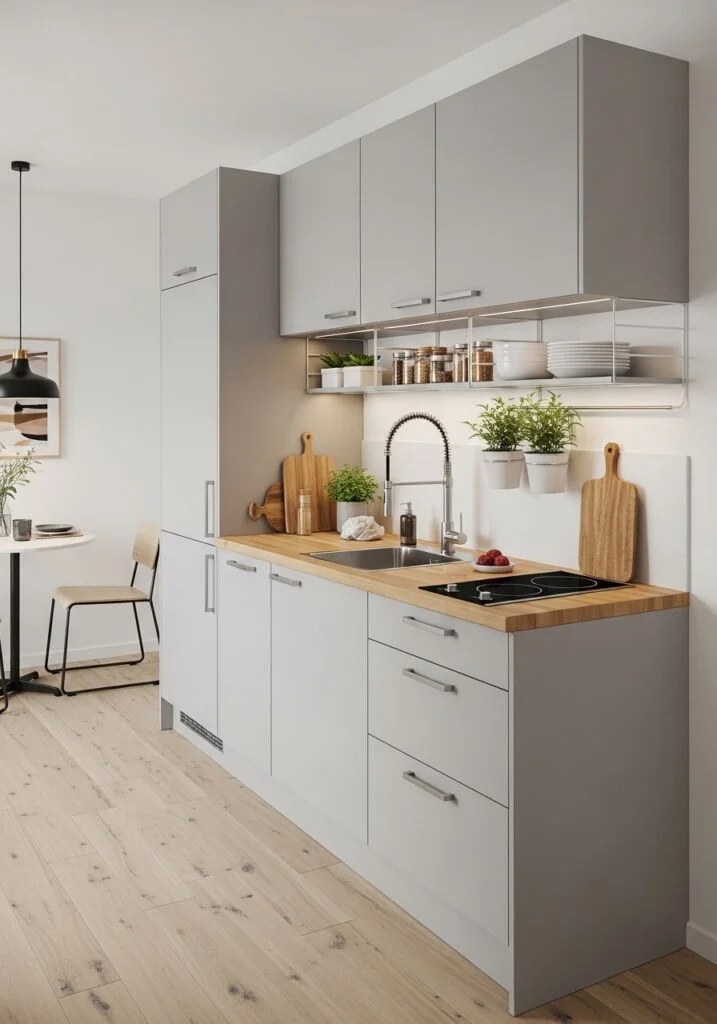
Count Your Watts Before You Buy Appliances
This is the problem nobody mentions in kitchen photos. A standard 15-amp circuit tops out near 1,800 watts. A kettle and a toaster oven each pull around 1,500 watts. Run both at once, and the breaker trips.
Look at the wattage label on every appliance you own. Then check which outlets share a breaker by flipping them off one at a time. Plan to use one heat-producing appliance at a time. NFPA’s cooking safety guidance also advises plugging cooking appliances directly into a wall outlet, never through an extension cord, because cords can overload and start a fire.
Choose an Apartment-Size Refrigerator Over a Dorm Cube
A dorm fridge holds roughly 2 to 4.5 cubic feet. An apartment-size refrigerator that’s 24 inches wide holds around 10 to 12. That’s the difference between shopping once a week and shopping every other day.
Check the door swing before you order. If the hinge opens toward a wall, you’ll only get the door open 90 degrees and the crisper drawers won’t slide out. Many models let you reverse the hinge with a screwdriver in about ten minutes.
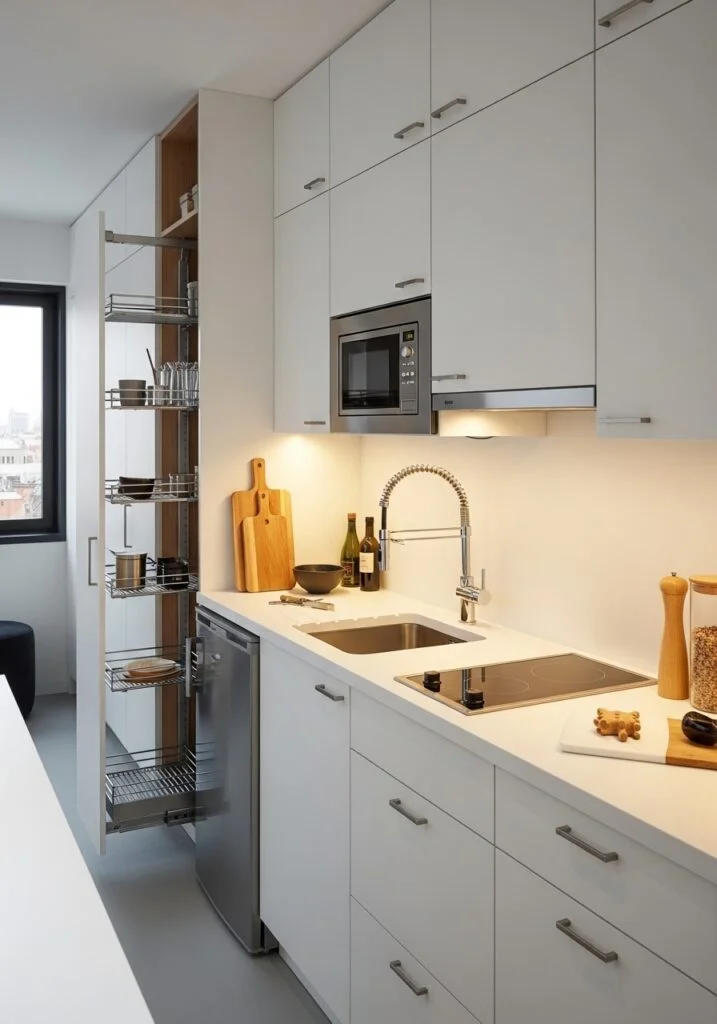
Put a Portable Induction Burner on a Rolling Cart
If your kitchenette has no stove, or a stove with two working burners, a single plug-in induction burner is the cleanest upgrade. It heats the pan, not the surface, so the cooktop stays cooler to the touch. It also cleans with one wipe.
Test your pans first. Hold a magnet to the bottom. If it sticks, the pan works. Most portable units draw about 1,800 watts, so give the burner its own outlet. Park it on a rolling cart with a butcher-block top, and roll it away when you’re done. Keep towels and paper bags well back from it.
Plan on about $50 to $120 for a decent single-burner unit. Pick one with a physical dial or a lock-out timer, so a bumped button doesn’t start it. Open a window or run the hood fan, because a studio holds smells long after dinner.
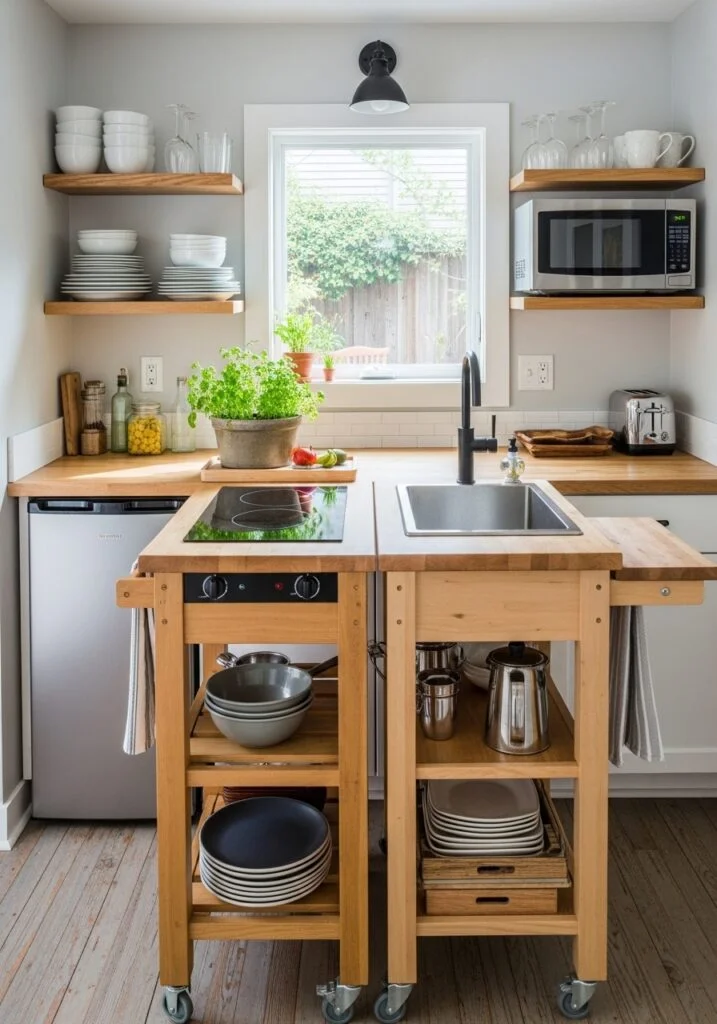
Let a Toaster Oven Do the Oven’s Job
Many studio kitchens have a half-size oven that heats unevenly or none at all. A convection toaster oven fits a 9 by 13 inch pan or a 12 inch pizza, and it preheats in a few minutes. It’s a better daily tool than a full oven for one or two people.
Measure your sheet pans before you shop. A quarter-size sheet pan, about 9 by 13 inches, fits most countertop models, while a standard half-size one often does not. Line the pan with parchment, and the crumb tray stays cleaner between weekly wipe-downs.
Give it a dedicated shelf with breathing room. Check the manual for the side and back clearance, since most call for several inches. Put the shelf near the outlet, so the cord never stretches across the counter.
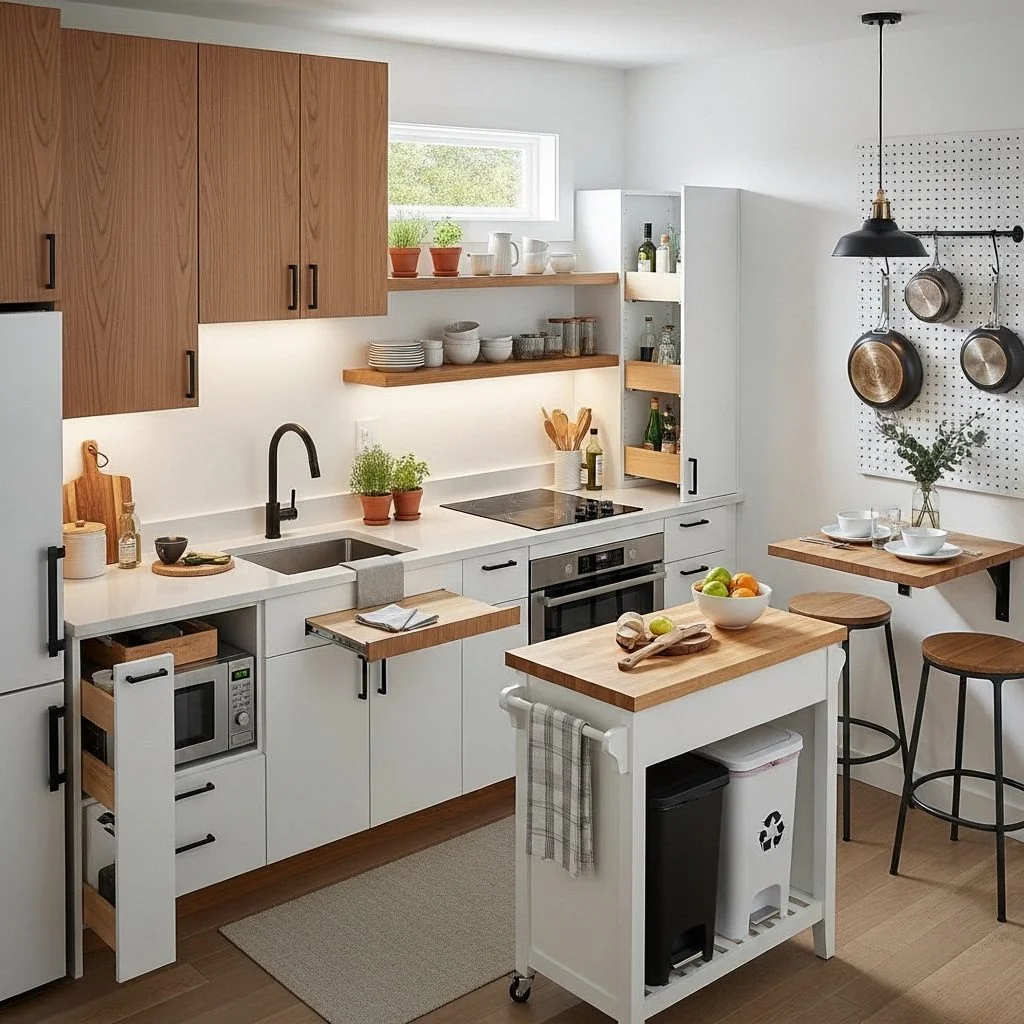
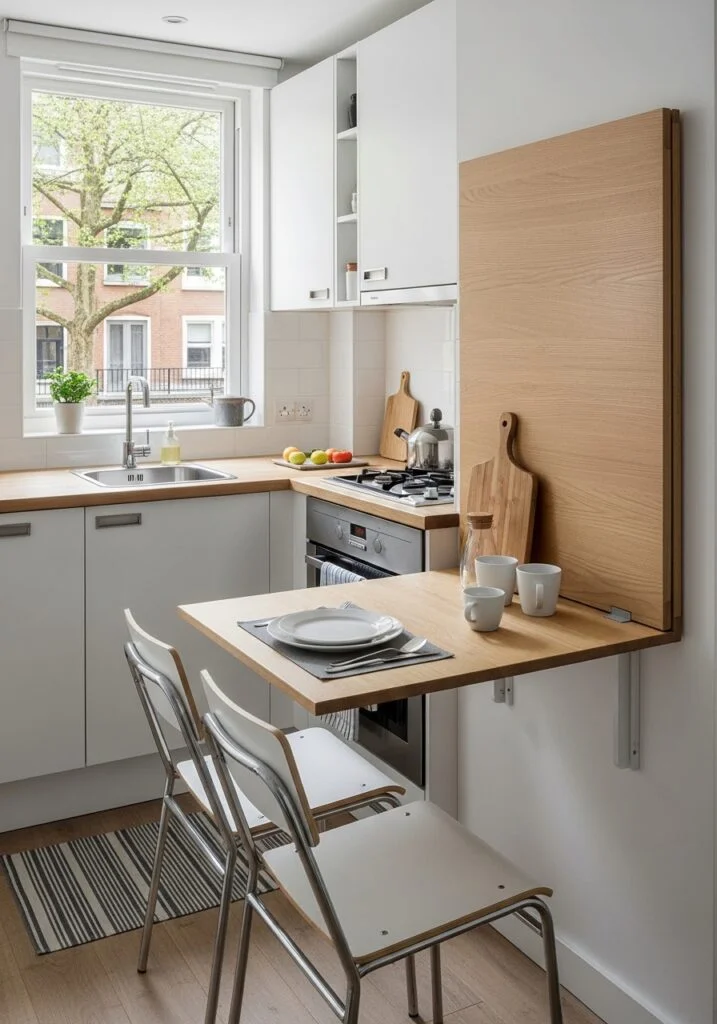
Fold Down a Wall Table for Meals
A fold-down table gives you a place to eat without a permanent dining set. A top around 20 by 30 inches seats one comfortably and two in a pinch. Mount it at about 29 to 30 inches high.
Screw the bracket into studs, not drywall anchors. A table loaded with plates and a laptop puts more leverage on the wall than you’d expect. When it’s folded, the table sits flat, so keep the wall below it free for a stool or a trash bin.
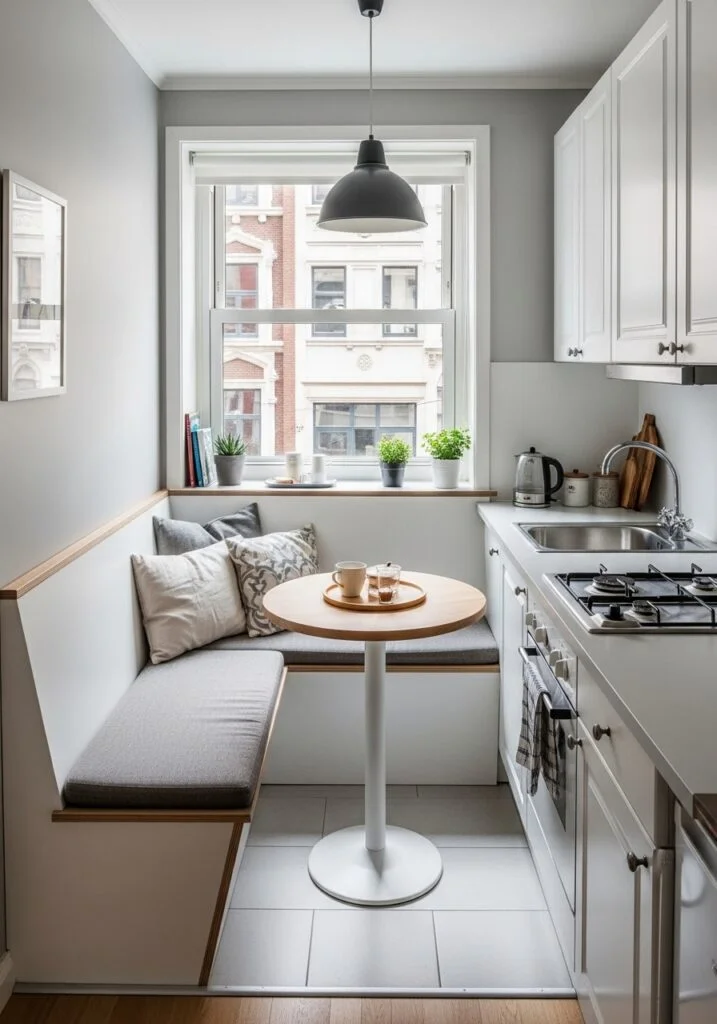
Build Seating Into the Corner With a Storage Bench
If the kitchen has one empty corner, a built-in bench uses it better than two loose chairs. Aim for a seat height of 17 to 18 inches and a depth of 15 to 17 inches. Any deeper, and you can’t sit upright without a cushion behind you.
Make the seat a hinged lid, and store the things you use least: a slow cooker, party platters, a spare set of towels. Add a piano hinge and a lid stay, so the lid doesn’t drop on your fingers.
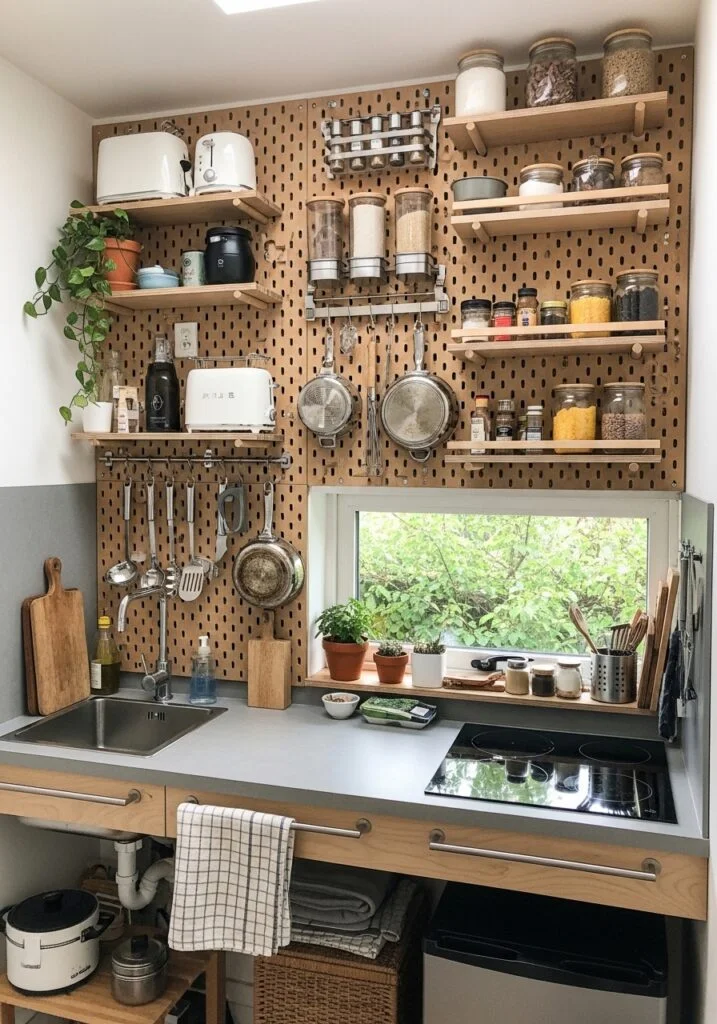
Hang Tools on a Furring-Strip Pegboard
A pegboard clears the drawers of your bulkiest tools: ladles, colander, cutting boards, and a skillet or two. The catch is that hooks need space behind the board. Screw 1 by 2 inch furring strips to the wall first, then mount the board on them.
Weigh what you plan to hang. Hooks hold light tools easily, but a cast-iron skillet can weigh 5 to 8 pounds, so it needs a heavier hook and a stud. Trace each tool’s outline with a marker once you’ve found the right layout, so everything has a home.
Lift Pots to the Ceiling Only If You Hit a Joist
A ceiling pot rack frees an entire cabinet. But eight pans can add 20 pounds or more overhead. Find a joist with a stud finder, and mount the rack into it with lag screws, not toggle bolts.
Set the height by the tallest person in the household. The lowest pan should clear about 6 feet 6 inches from the floor. If the ceiling is too low for that, use a wall-mounted rail above the stove instead.
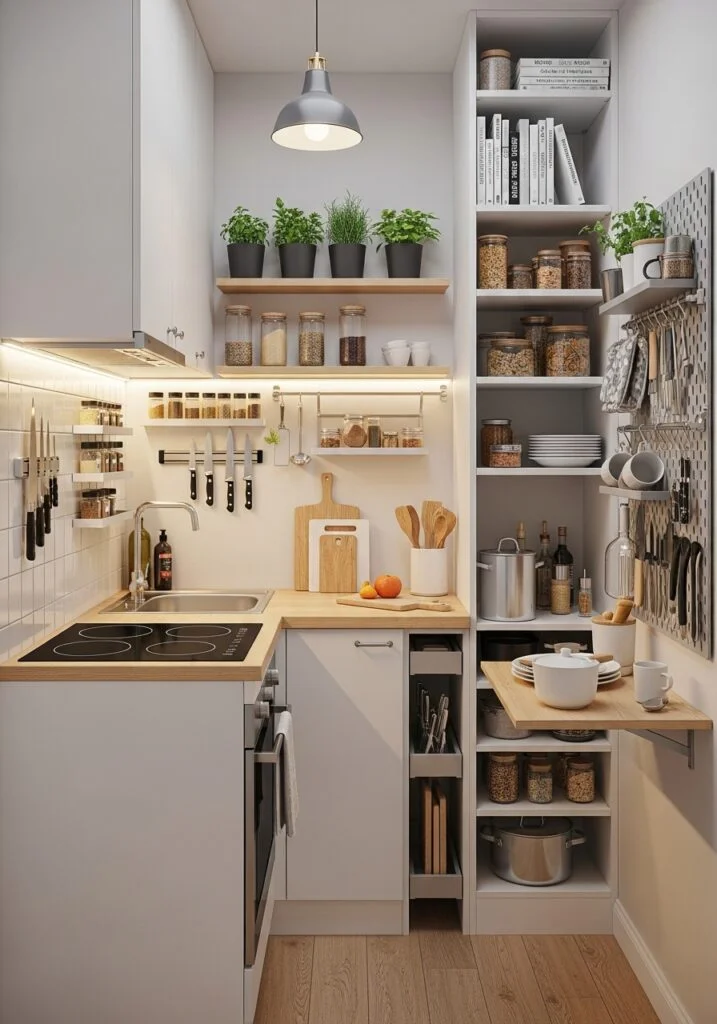
Slide a Rolling Pantry Into the Fridge Gap
Look at the gap beside your refrigerator. Even 6 to 8 inches fits a slim rolling pantry with four tiers of shelves. It holds cans, spices, and oils that would otherwise need an entire cabinet.
Measure the width at the floor and at the top, because walls and appliances aren’t always square. Choose a unit with locking casters. Roll it out to restock, then push it back flush. Put the heaviest items on the bottom tier, and keep oils and spices off the side that faces the stove, since heat shortens their shelf life.
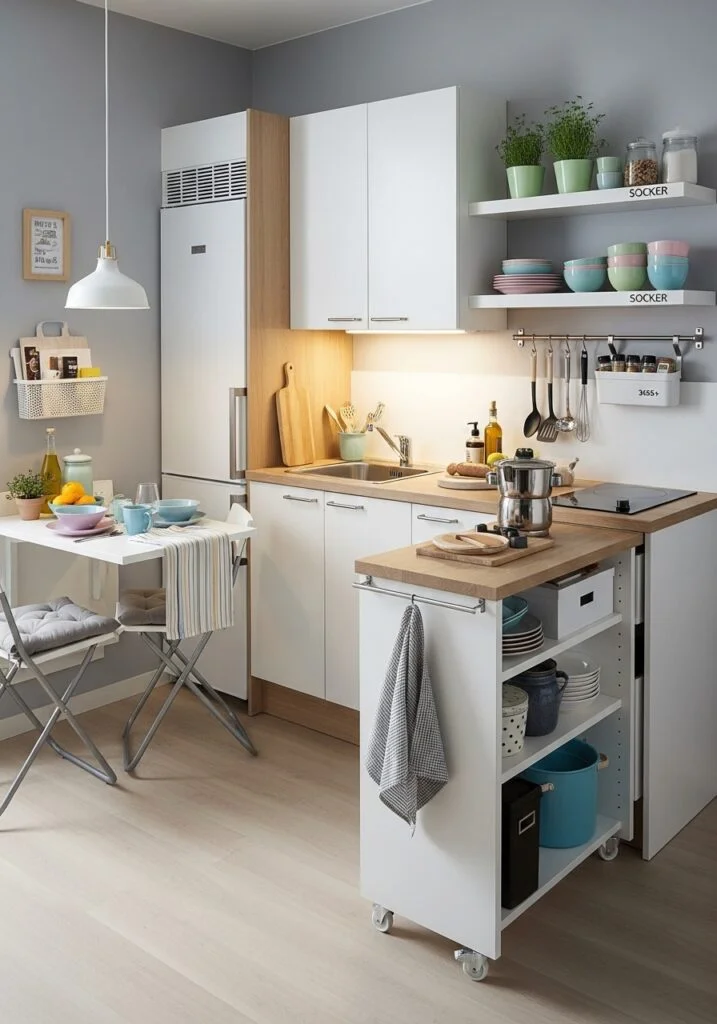
Keep Open Shelves Away From the Stove
Open shelves suit a tiny kitchen only in the right spot. Cooking leaves a fine film of grease in the air, and anything on a shelf above or beside the stove gets coated. Put open shelves near the sink or the window instead.
Match the depth to what you store. Dinner plates run 10 to 11 inches across, so use a 10 to 12 inch shelf for those. Mugs and bowls fit an 8 inch shelf. Save the shelf that’s closest to the stove for items that wash easily, like glass jars.
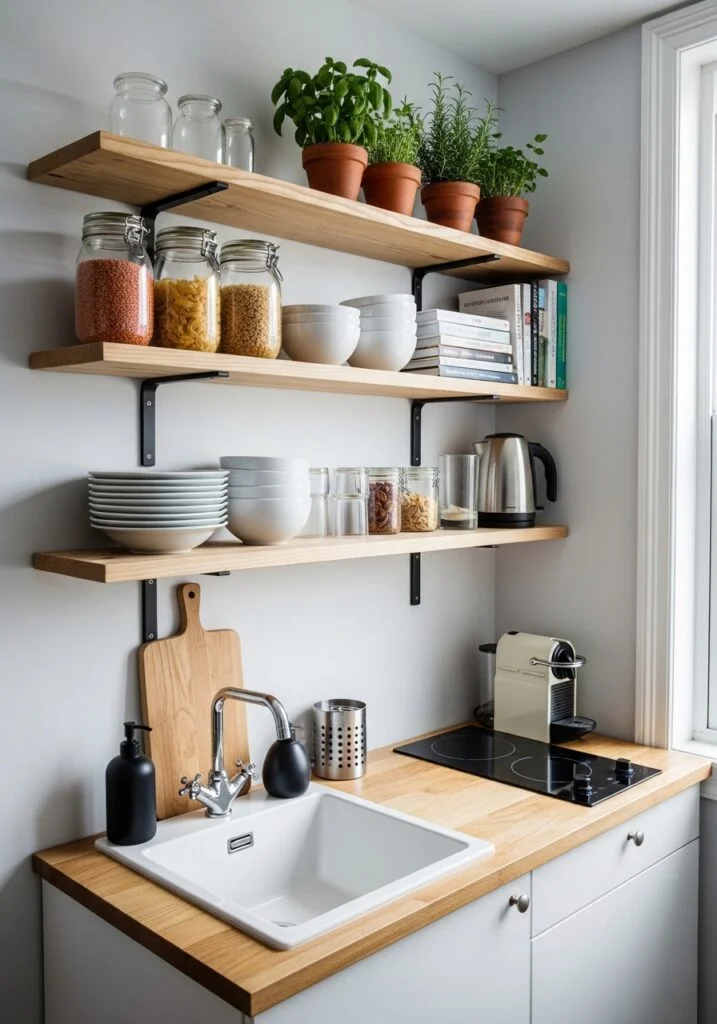
Try Ribbed Glass on Two Cabinet Doors
You don’t need glass on every cabinet. Swapping two upper doors lightens the wall and lets light travel deeper into the room. Ribbed or frosted glass is the better choice for most people, because it blurs what’s inside.
Keep the contents tidy, since people will see shapes. Store matching white plates or glasses behind the glass, and put the odd mugs and mismatched containers in a solid-door cabinet. If you rent, ask your landlord before removing doors, or look for glass-front cabinets that hang over the existing ones.

Add Plug-In Light Where Recessed Cans Aren’t Possible
Recessed lighting needs ceiling access and an electrician. In a studio, you often can’t get either. Under-cabinet LED bars that plug into an outlet, or rechargeable ones that stick on with adhesive, light the counter for far less.
Mount the bar toward the front edge of the cabinet, so the light lands on the board and not on the backsplash. A bar around 18 to 24 inches long suits a standard cabinet. For a deeper look at color and finishes that make a small kitchen feel larger, see our small kitchen ideas that make tiny spaces feel huge.
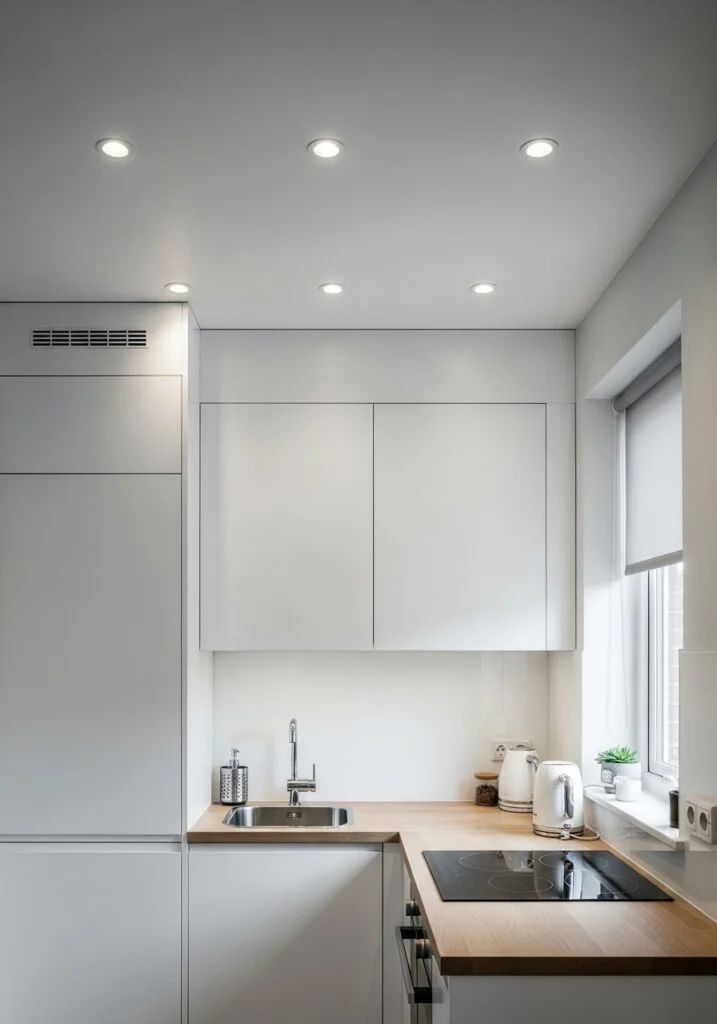
Put Stainless Behind the Cooktop, Not a Mirror
A reflective splashback brightens a dim kitchenette. A regular mirror behind a stove is the wrong choice, though. It isn’t built for heat and can crack. Use a stainless steel panel instead.
Stainless sheets come in sizes like 24 by 30 inches and can be cut to fit. They wipe clean of grease in seconds and bounce a surprising amount of light. If you want a mirror in the room, hang it on the wall opposite the window and away from the cooking zone.
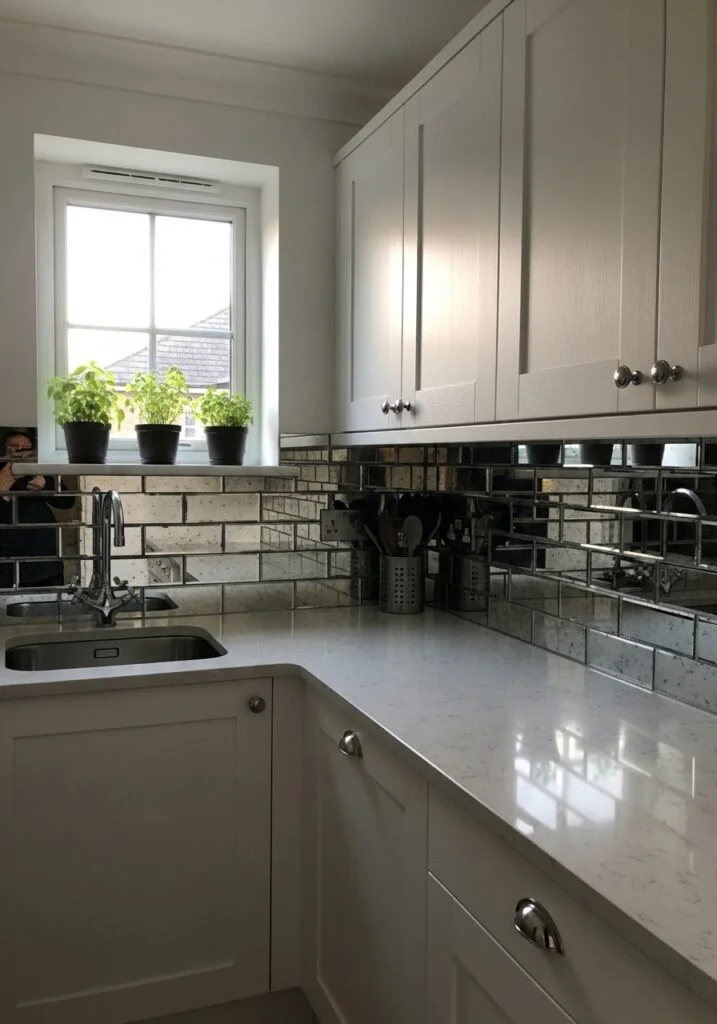
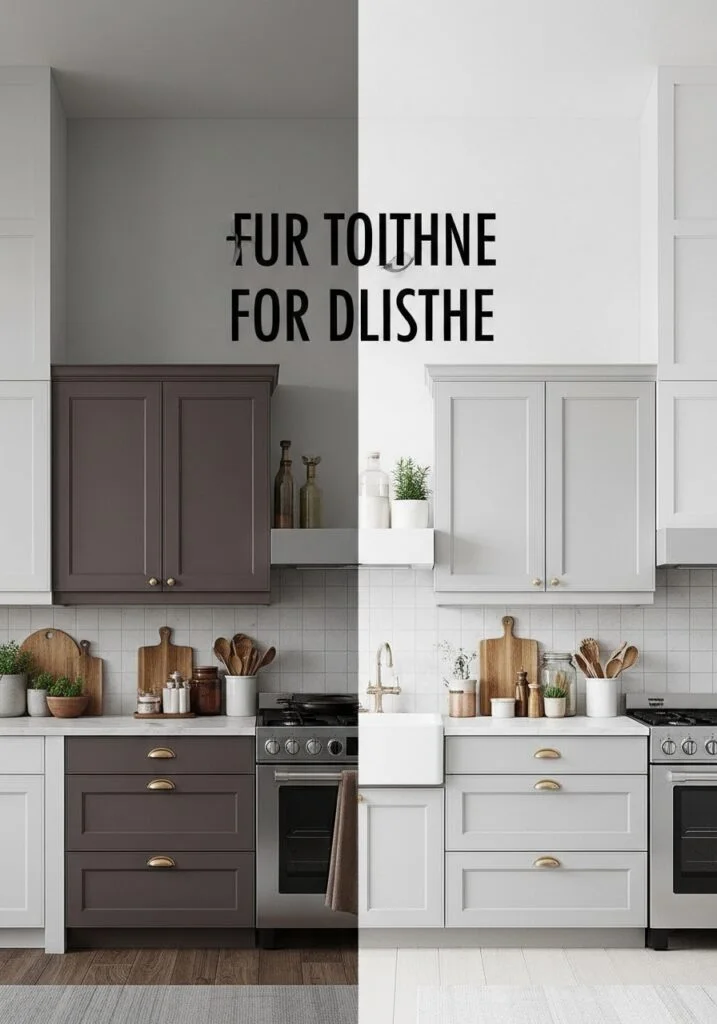
Paint the Kitchen the Same Color as the Living Area
In a studio, you see the kitchen from the sofa. A different color on the cabinets and walls cuts the room into pieces and makes both feel smaller. Pick one wall color and carry it through.
If you want contrast, put it low. A darker shade on lower cabinets hides scuffs from shoes and cart wheels. Use satin or semi-gloss paint near the sink and stove, so grease and splashes wipe off without leaving a mark.
Take the same care with the floor. If the kitchenette meets the living area, run one flooring material across the line instead of switching at the doorway. A runner in a flat weave, about 24 by 60 inches, softens the floor where you stand to cook and gives your feet a break.
Frequently Asked Questions
How much counter space do I need to cook in a studio kitchen?
Aim for one clear stretch of about 24 inches, roughly a large cutting board plus elbow room. You can build that with a sink board or a cart. Keep it free of appliances, so you never have to move a toaster to chop an onion.
Can I use a countertop dishwasher in a studio apartment?
Yes, if your faucet allows it. Countertop models run about 17 to 20 inches wide and hold four to six place settings. Most connect through a faucet adapter, so check your faucet’s thread type first. Some aerators have thread types the adapter can’t attach to.
Do I need special pans for an induction burner?
You need magnetic cookware, meaning cast iron, enameled iron, or stainless steel with a magnetic base. Hold a magnet to the bottom of the pan. If it clings firmly, it’ll work. Pure aluminum, copper, and glass won’t heat unless they have a magnetic plate.
How do I keep cooking smells out of my sleeping area?
Run the range hood or a window fan while you cook and for ten minutes after. If the hood recirculates air through a charcoal filter, replace that filter every three to six months. Cook with lids on, and wash pans soon after, since leftover grease keeps smelling.
How do I store groceries with almost no pantry?
Switch to square containers, which waste less shelf than round ones. Stack identical bins and label them on the short end, so you can read them in a row. Keep heavy items low, and put things you use daily at eye level in the cabinet nearest the stove.