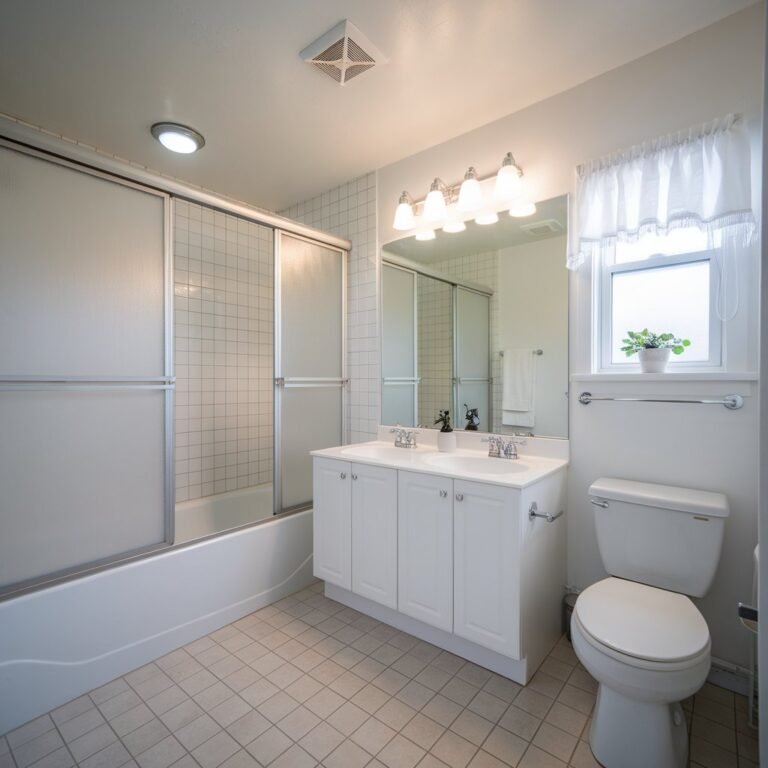
You are standing in the plumbing aisle holding two faucets. One costs $240. The other costs $38 and looks nearly identical from three feet away. You buy the cheap one, and it is the right call. A month later you order a $1,400 floating vanity before checking what sits behind the wall, and that one is not.
Most upgrade lists treat every idea as equal. They are not. A $9 set of drawer pulls and a $2,500 glass enclosure both “improve the space,” but they differ in labor, risk, and how hard they are to undo. This guide sorts fifteen upgrades into four budget tiers, so you can see what each one really involves before you spend.

Check the Fan and the Caulk Before Buying Anything Pretty
A new mirror will not help a bathroom that grows mildew. Before you shop, run two quick checks. First, hold a single square of toilet paper against the fan grille while it runs. If the paper does not stick, the fan is barely moving air. A common rule of thumb is about 1 cubic foot per minute per square foot of floor for rooms up to 100 square feet, so a 5-by-8 bathroom wants a fan rated near 40 CFM, and many people choose more.
Second, press a fingernail along the caulk where the tub meets the wall. If it is cracked, black, or peeling, cut it out with a utility knife and re-caulk with 100 percent silicone before you add anything on top of it. Paint, wallpaper, and wood shelves all fail faster in a room that stays wet. This one-hour fix costs about $10 and protects every upgrade below.
Cheap Fixes You Can Finish Before Dinner
These cost under about $60 each and need a screwdriver, not a contractor. They also change what you see and touch every day, which is why they come first.
Swap Cabinet Pulls and Towel Bars
Measure the distance between the two screw holes on each pull, center to center. Common sizes are 3 inches, 3¾ inches, and 96 millimeters, and a pull that does not match means drilling new holes. Budget roughly $3 to $12 per pull. Match the metal across the towel bar, toilet paper holder, and pulls, then check the faucet finish. Brushed brass beside chrome rarely looks deliberate. If you also want a new faucet, check whether your sink has a 4-inch centerset or an 8-inch widespread layout, because the two do not swap. Mount a towel bar 48 to 52 inches off the floor, and a toilet paper holder about 26 inches up and 8 to 12 inches in front of the bowl.

Replace the Showerhead
Unscrew the old head counterclockwise, wipe the threads, wrap plumber’s tape two or three turns clockwise, and hand-tighten the new one. A wide rainfall head costs about $25 to $90. Federal rules cap flow at 2.5 gallons per minute, so a bigger face spreads the same water over more area and can feel softer. If you want it centered over your head, add a $15 extension arm. Save the old head, so you can reinstall it if you ever move out of a rental.

Clear the Counter and Style One Tray
A counter with eleven bottles reads as clutter even when the room is clean. Keep a soap pump, a toothbrush cup, and one plant or candle, and group them on a single tray around 8 by 12 inches. Marble, wood, and mirrored trays all work. Everything else moves into a drawer or the cabinet below. A simple drawer organizer, around $12 to $25, keeps razors and skincare from sliding into one pile. Wipe the tray weekly, since toothpaste and soap residue show up fast on marble.

Use Baskets, but Pick the Right Material
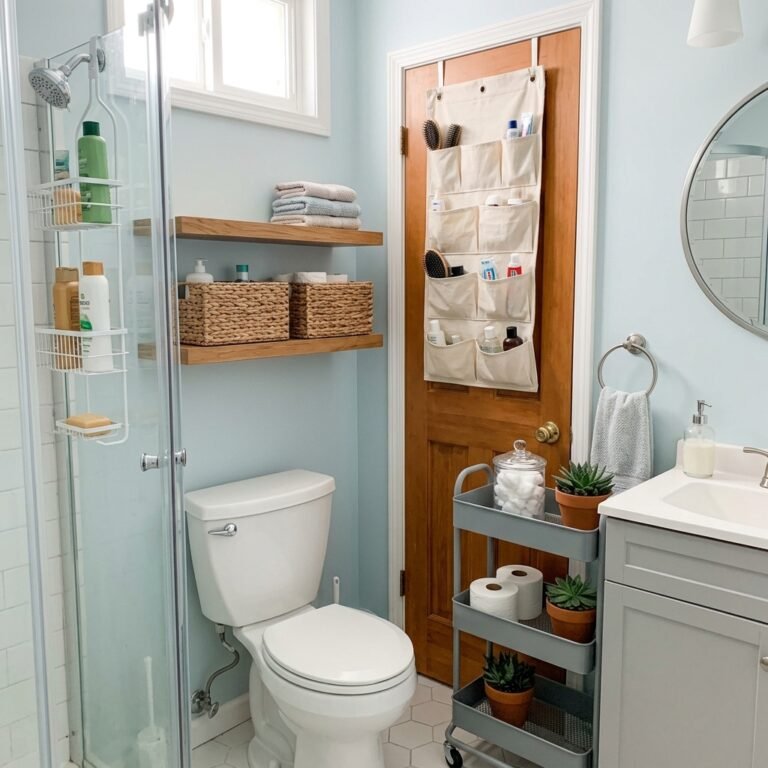
Woven seagrass looks lovely and goes musty if it sits within splash range of a shower. Keep baskets on shelves or under the vanity, away from the tub. For damp-prone spots, choose powder-coated wire or sealed rattan. Line one with a washcloth so small items do not fall through the weave. Label the inside lip with a small tag, and give each person one basket, so towels and hair tools stop migrating to the counter.

Buy Heavier Towels and Wash Them Right
A towel around 600 GSM feels hotel-thick without taking forever to dry. Set one color family, such as white, cream, or soft gray, and buy two bath towels per person plus a few hand towels. Wash new towels once without fabric softener, which coats the loops and reduces absorbency. Hang them on bars with at least 4 inches of air around each one. Towels crowded onto a single hook stay damp, and damp towels are what make a small bathroom smell stale.

Weekend Upgrades With a Modest Budget
Expect roughly $60 to $500 here, plus a drill and a stud finder. A few of these touch electrical wiring, and each idea notes where to hire someone.
Hang a Better Mirror
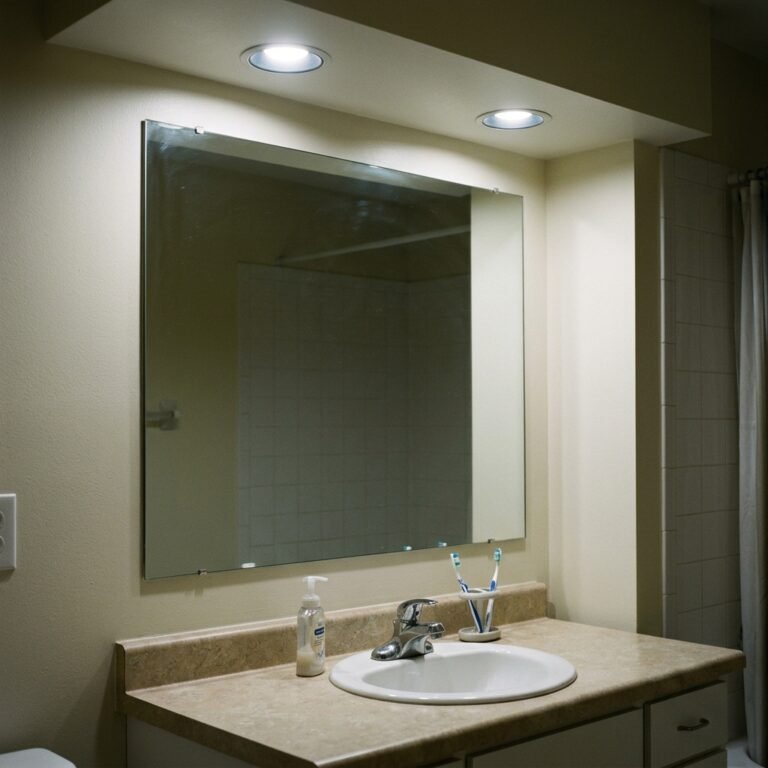
Choose a mirror a few inches narrower than the vanity, so it looks planned rather than crowded. Center it so your eyes land near the middle, which usually puts the center around 57 to 60 inches high. Screw it into studs or use rated anchors, since glass is heavy. A backlit mirror costs about $150 to $500, and a hardwired one needs an electrician. Plug-in versions with a cord cover work well in rentals. Look for a built-in defogger, which saves you from wiping a mirror after every shower.

Add Sconces and Layer the Lighting
Sconces at about 60 to 66 inches above the floor, one on each side of the mirror, light a face evenly. Turn off the breaker before touching any wiring, or hire an electrician. If the box is not on a wall where you need it, moving it adds cost. Our post on the bathroom lighting mistake that makes everyone look tired goes deeper on bulbs and placement.

Paint One Wall in Bathroom-Rated Paint
Use a mildew-resistant paint in satin or semi-gloss, and wash the wall with a degreaser first, since soap film stops paint from sticking. A single quart covers an accent wall behind the vanity. Run the fan and skip long hot showers for about two days. A deep green or navy behind a pale vanity gives the contrast most people try to get from tile. Sample first. Paint two swatches, one beside the vanity and one near the shower, and look at them at night under your actual bulbs, since a deep color can turn nearly black under cool white light.

Install Shelves Into Studs
Studs usually sit 16 inches apart, and a floating shelf screwed into two of them holds far more than one on drywall anchors. Over the toilet, keep the lowest shelf a few inches above the tank so the lid still lifts. A 24-inch wood shelf with brackets costs about $25 to $70. Seal raw wood on all sides with a water-based polyurethane before you hang it, because the underside collects steam. Space shelves 10 to 12 inches apart so a stack of towels fits without crowding the one above.

Bring in Plants and Moisture-Safe Art
Humidity helps plants only if there is light. A windowless bathroom will kill a fern within weeks, so choose a pothos or ZZ plant and add a small grow bulb, or choose a good faux plant. For art, pick an acrylic-faced frame and keep it at least 3 feet from the shower.

Projects That Need a Contractor’s Quote
This is where the budget jumps to the low thousands. Plumbing and waterproofing live behind these upgrades, so get at least two written quotes. Before you commit, check the clearances. The NKBA planning guidelines, as summarized by Supply House Times, recommend about 30 inches of clear floor in front of a lavatory, with 21 inches as the minimum.
Install a Floating Vanity
A wall-hung vanity opens up the floor, but the wall must carry the weight of the cabinet, the stone top, and the water. Ask whether blocking is already behind the drywall. If the old plumbing exits through the floor, the contractor must also move the supply and drain lines, and that can double the labor bill. Ask for the finished height as well. Vanities usually sit with the rim about 32 to 36 inches from the floor, and a floating unit lets you pick the exact height for the tallest person using it.

Replace the Tub Curtain With a Glass Enclosure
Frameless glass is cut to the finished tile, so it is measured after the tile is done and often takes two to four weeks to arrive. Installed prices commonly pass $1,000. Fixed panels with no door cost less than a hinged door and suit a walk-in shower, but they let more spray escape, so the panel should be at least 30 inches wide and the showerhead should face away from the opening. Clean glass with a squeegee after each shower and it will stay clear for years.

Retile Strategically
Labor often costs more than the tile itself, so spend where the eye lands. Large-format tile needs a subfloor flat to roughly an eighth of an inch over ten feet, or the corners will lift. Fluted and textured tile catches soap film, so seal it. On floors, check for a wet-area slip rating (a DCOF of 0.42 or higher), and small mosaics grip better than big glossy squares. Choose a grout color within one shade of the tile, because strong contrast turns every joint into a visible grid. A heated mat under the floor tile adds about $300 to $800 for a small bathroom and is far easier to install before the tile goes down than after.

Big Renovation Moves
These involve opening walls and floors. Expect several thousand dollars, a bathroom out of use for a week or more, and a permit in many places.
Build a Spa-Style Shower
The pretty part, a stone tile and a niche, sits on top of the waterproofing, and that is the part to question. Ask what membrane goes behind the tile and how the niche gets sealed. A standard niche about 12 inches wide fits between studs, and a built-in bench helps if you want to sit while shaving. Place the niche on the wall you do not face while the water runs, and at roughly chest height, so shampoo does not get soaked. Sloped shelves inside the niche drain better than flat ones, and a single tile ledge catches the dirt.

Add a Freestanding Tub and a Spa Corner
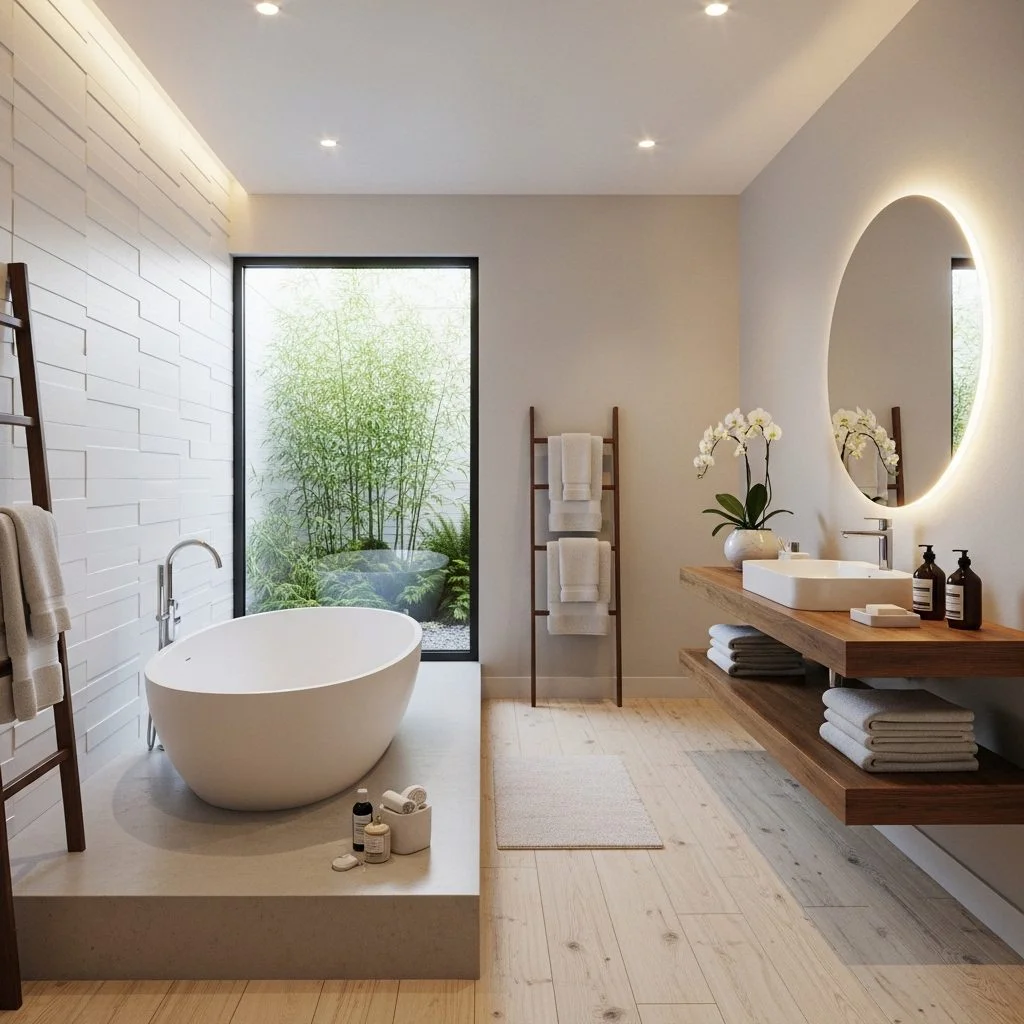
A 60-gallon fill adds about 500 pounds before you step in, and cast iron tubs weigh several hundred pounds empty. Have the floor framing checked. Floor-mounted faucets need a rough-in at the right spot, and you need that 30-inch clear zone beside the tub to reach it. A teak stool and a shelf of salts finish the corner for about $50 to $120.

Where to Start This Weekend
Do the cheap tier first, in this order: showerhead, pulls, towels, tray. Then buy sconces and a mirror, and let the quotes for the contractor tier wait a month. If the room still bothers you after that, you will know exactly what the bigger projects need to fix. For styling ideas that do not depend on any of this, see our bathroom decorating ideas that look expensive.
Frequently Asked Questions
Which bathroom upgrade makes the biggest visible difference for the money?
Lighting and a mirror usually win. New sconces and a correctly sized mirror cost around $150 to $400 together and change how the whole vanity reads. Full remodels often recoup only part of their cost when you sell, so cheap changes are the safer first move.
How much does a basic bathroom refresh cost?
Expect about $300 to $900 for new pulls, a showerhead, towels, a mirror, sconces, and a can of paint, if you install everything yourself. Hiring an electrician for hardwired lights adds a few hundred. Skip the vanity swap unless the cabinet is damaged, because that item alone can exceed the whole refresh.
Is it better to paint a vanity or replace it?
Paint it if the box is sound. Degrease, sand lightly, use a bonding primer, then two coats of cabinet enamel, for roughly $60 to $120 and two days of cure time. Replace it only when the top is cracked, the doors are swollen, or you need a different footprint.
Can I put a rainfall showerhead on any shower?
Most standard shower arms accept one, since the thread is a common half-inch size. Low water pressure can make a wide head feel weak, so test it first by holding the head under the stream. The 2.5-gallon-per-minute federal cap applies to all heads, rainfall or not.
How long should I wait to shower after caulking or painting?
Wait about 24 hours after silicone caulk and about 48 hours after paint before running hot water. Check the cure time on the tube or can, because it varies by product. Keep the exhaust fan running during that window so steam does not soften fresh paint.