Put your palm on a brass tray beside a west-facing window at 4 p.m. in July. Then touch the linen cushion next to it. The metal is hot enough to make you pull back, and the cushion feels like nothing. That gap is why a Neo-Deco room that looked composed in February can feel like a greenhouse by midsummer.
Neo-Deco runs on materials that hold or throw heat: polished metal, glass, dense velvet, dark lacquer. None of that is a mistake. It just needs a summer edit. The ideas below keep the curves, the brass, and the stone, and change where they sit, what touches them, and what covers them. Most cost under $200. A few cost nothing.
If you want the year-round, jewel-toned version of the style first, start with our modern Art Deco revival ideas. This guide covers what changes when the thermometer climbs.
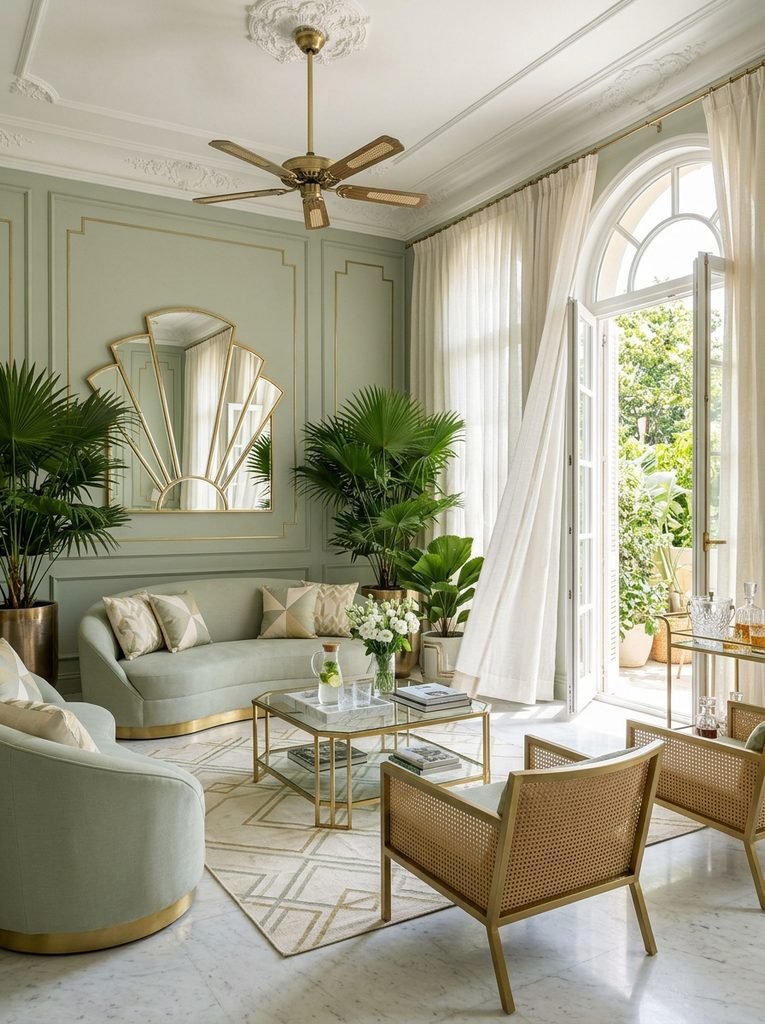
Map the Sun Before You Move a Single Piece
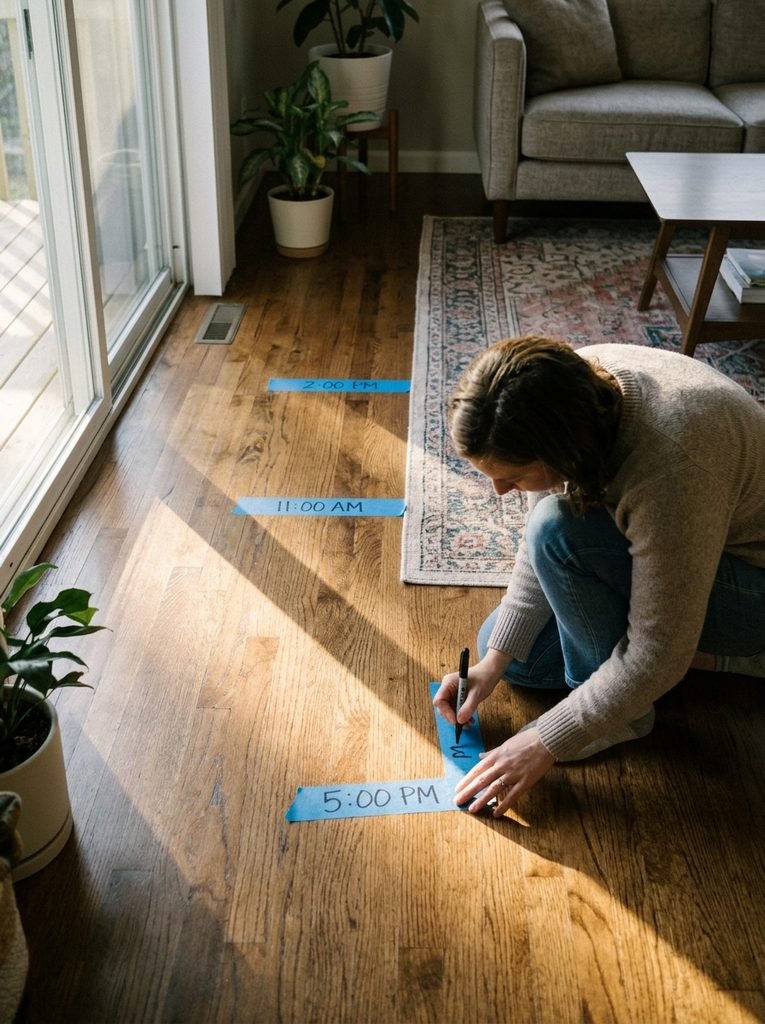
Before you buy anything, spend one afternoon tracking light. At 11 a.m., 2 p.m., and 5 p.m., lay a strip of painter’s tape along the edge of each sun patch on the floor. Label the strips with the time. In one day you will see exactly where the heat travels.
Everything inside those lines is a candidate to move or cover. Polished brass, mirrored furniture, and dark upholstery belong outside them. A west window usually delivers the harshest patch after 3 p.m., and it lasts longest, so start there. A brass tray left in that patch can get too hot to pick up comfortably.
Check the fabric, too. Sun fades dyed upholstery and bleaches wood, usually on the side facing the glass first. If a patch crosses a piece for more than two hours, slide it a foot to the side or cover the window. Rotate loose cushions weekly so one face doesn’t take all the fading.
A Curved Sofa That Breathes
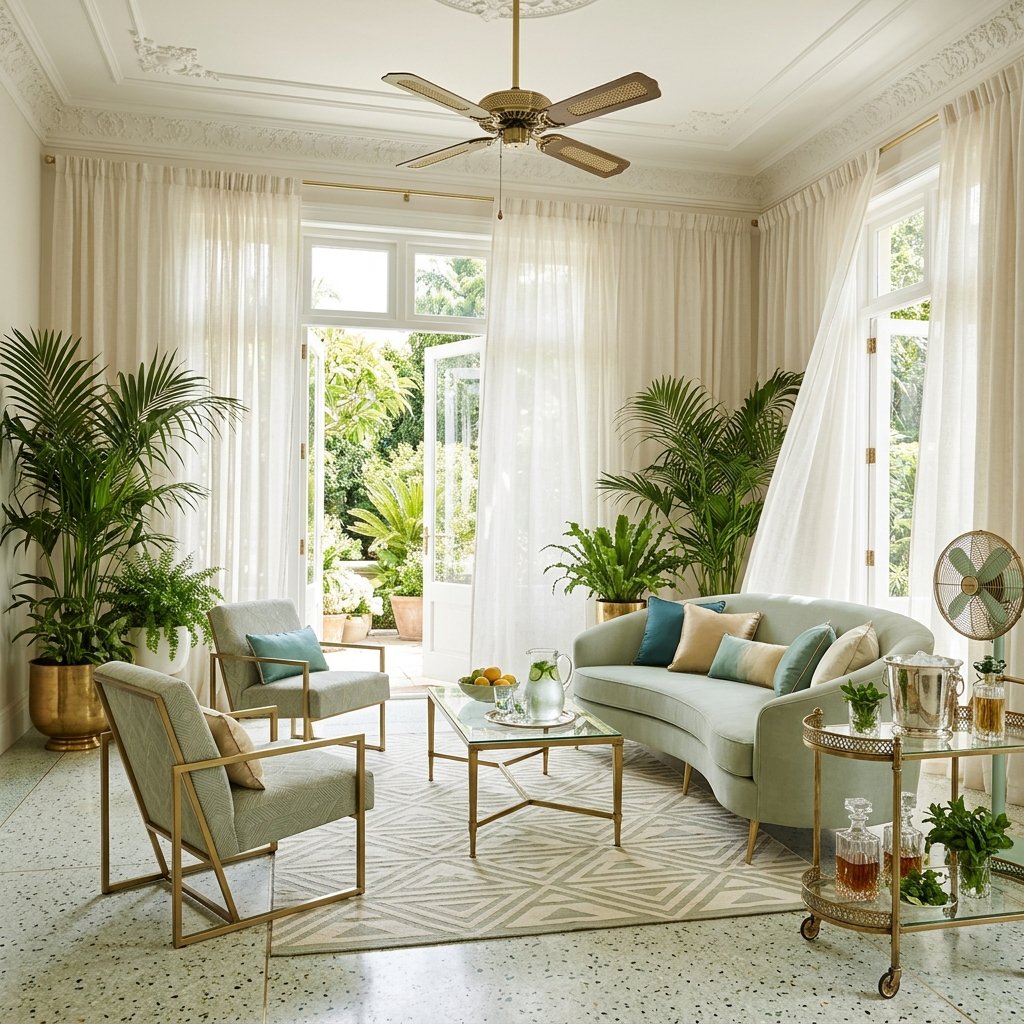
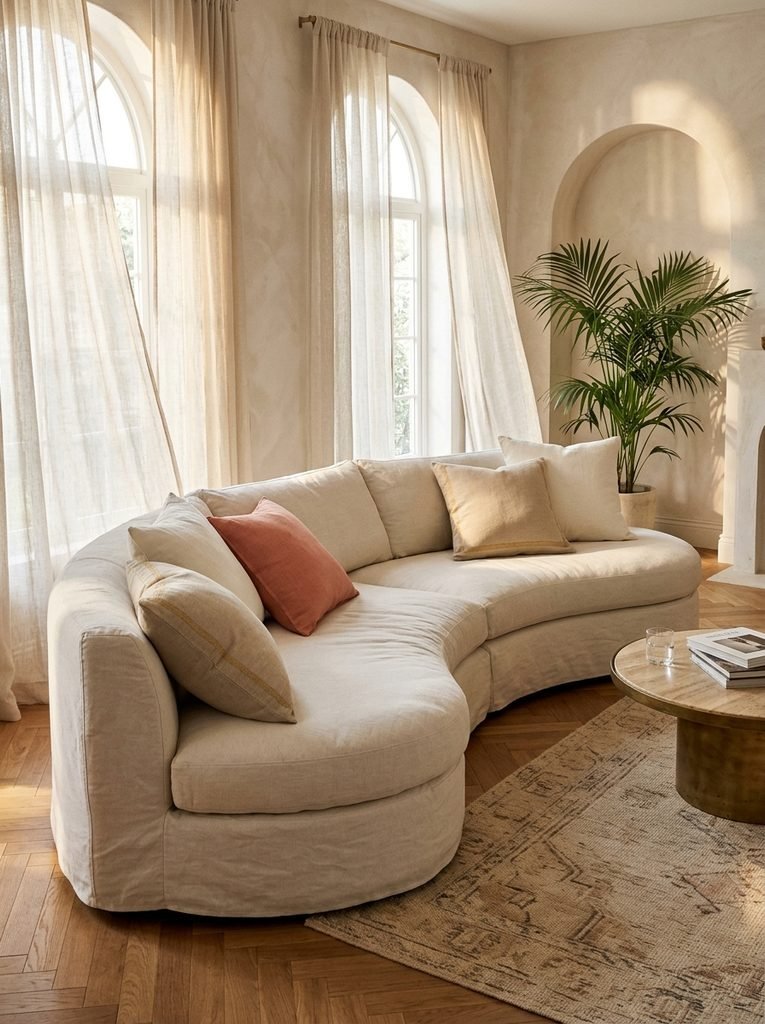
A curved sofa anchors most Neo-Deco rooms, and its fabric decides how it feels to sit on in August. Choose a linen or cotton-linen blend over velvet or faux leather. Natural fibers breathe, so they feel dry against bare legs. The trade-off is wrinkling. Linen creases within a week, and a soft rumple suits a curve better than a stretched-tight look. Pick zippered cushion covers and a washable slipcover if you can. A good curved linen-blend sofa commonly runs $1,500 to $4,000.
Cushions are the cheaper fix. Pull the velvet covers and replace them with cotton or linen in ivory, sand, or a single coral. Buy covers a size under the insert, such as a 22-inch insert in a 20-inch cover, so the corners stay full instead of sagging. Look for gold in a woven stripe or border. All-over metallic embroidery scratches bare arms when it’s hot. Covers usually cost $15 to $40 each.
Stone and Glass That Stay Cool to the Touch
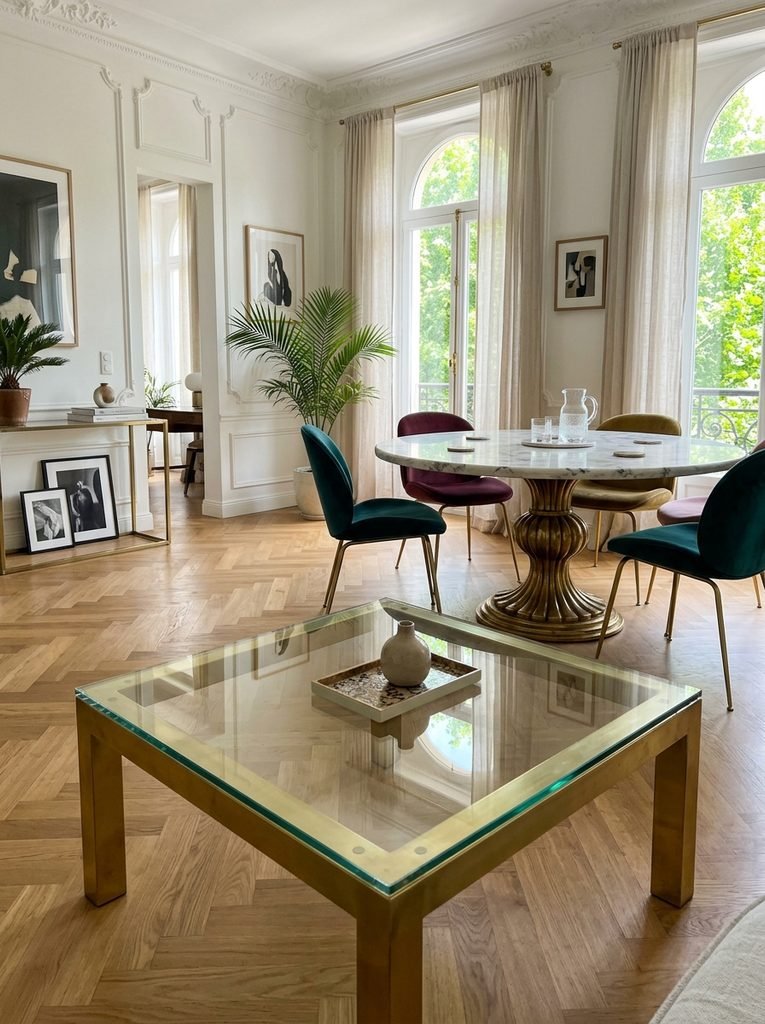
Marble and glass feel cool under your forearm when the air is hot, which makes them the right Neo-Deco surfaces for summer. Marble has one weakness. Lemon, wine, and vinegar-based cleaners etch it, leaving dull patches that no wiping removes. Seal a marble dining top when it arrives, reseal on the maker’s schedule (often yearly), and keep coasters on the table. If you cook and entertain a lot, ask about sintered stone or porcelain tops, which look similar and shrug off acids. A 60-inch marble top on a brass base typically costs $900 to $2,500.
Glass tops have a different catch: thickness. Ask for 3/8-inch tempered glass on a coffee table. Quarter-inch glass looks thin against a chunky brass frame and chips more easily at the corners. Keep the surface to one tray and one object, since a clear top shows everything beneath it, including cords. Felt dots at the corners stop the glass from creeping.
Window Layers for the Hottest Hours
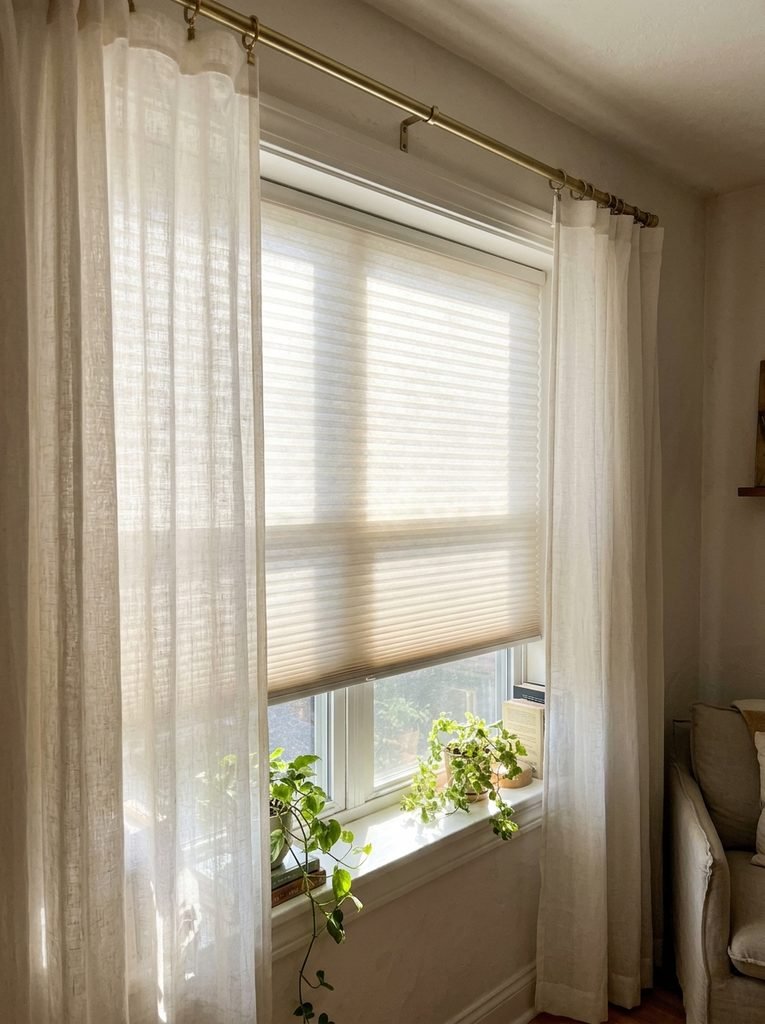
Sheer linen curtains soften glare, but they do little about heat on their own. Think in layers. Behind the sheer, add a light-filtering cellular shade mounted inside the window frame. Close it from late morning on the sunny side and open it at dusk. Measure the frame width at the top, middle, and bottom, and order to the narrowest number so the shade never binds. Cellular shades commonly run $60 to $250 per window, and their honeycomb pockets trap a layer of air against the glass.
For a window you can’t cover, clear UV-blocking film is cheap. A roll that fits a standard window is usually under $60, goes on with soapy water and a squeegee, and cuts fading without changing the view. Keep the brushed brass rod. Once the shade does the heavy lifting, the sheer is just there to look good.
A Ceiling Fan That Still Looks Like Deco
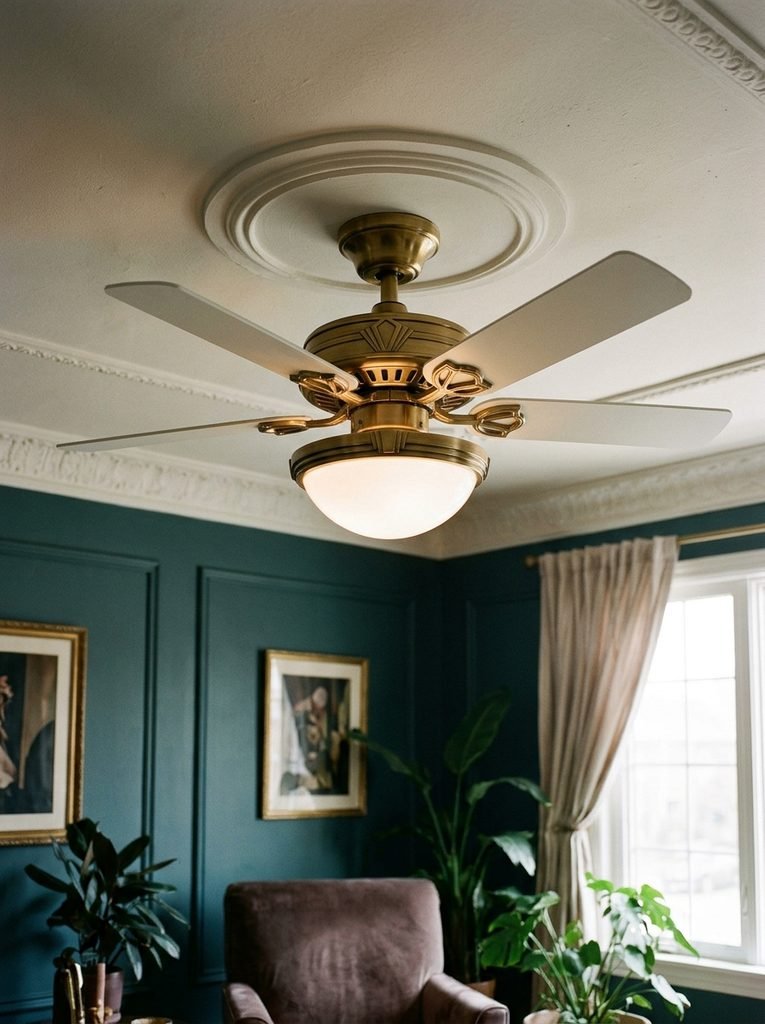
Fans cool people, not rooms, which makes them the cheapest real upgrade on this list. They also have a reputation for ruining a room. Skip dark wood-grain blades. Look for a flush-mount fan in brushed brass or matte white with an opal glass light.
Blades should hang at least seven feet above the floor and about 18 inches from any wall. In a room around 12 by 14 feet, a 44- to 52-inch blade span moves air without whipping the curtains. In summer, set the switch so the blades turn counterclockwise as seen from below. You should feel a breeze, not a draft. Use LED bulbs in the light kit, since halogen adds heat exactly where you’re trying to remove it. Confirm the ceiling box is rated for a fan, because a standard light box can’t handle the weight and wobble. Good-looking fans typically cost $150 to $450, plus an electrician if the box needs replacing.
Cool Colors, Placed by Compass Direction
Aqua, seafoam, and teal are the right summer colors, but they behave differently depending on which way the room faces. Benjamin Moore’s guidance on color and exposure says light from each direction changes a color’s intensity and cast, describes north light as even and muted, and recommends testing samples in your own room across the day and evening.
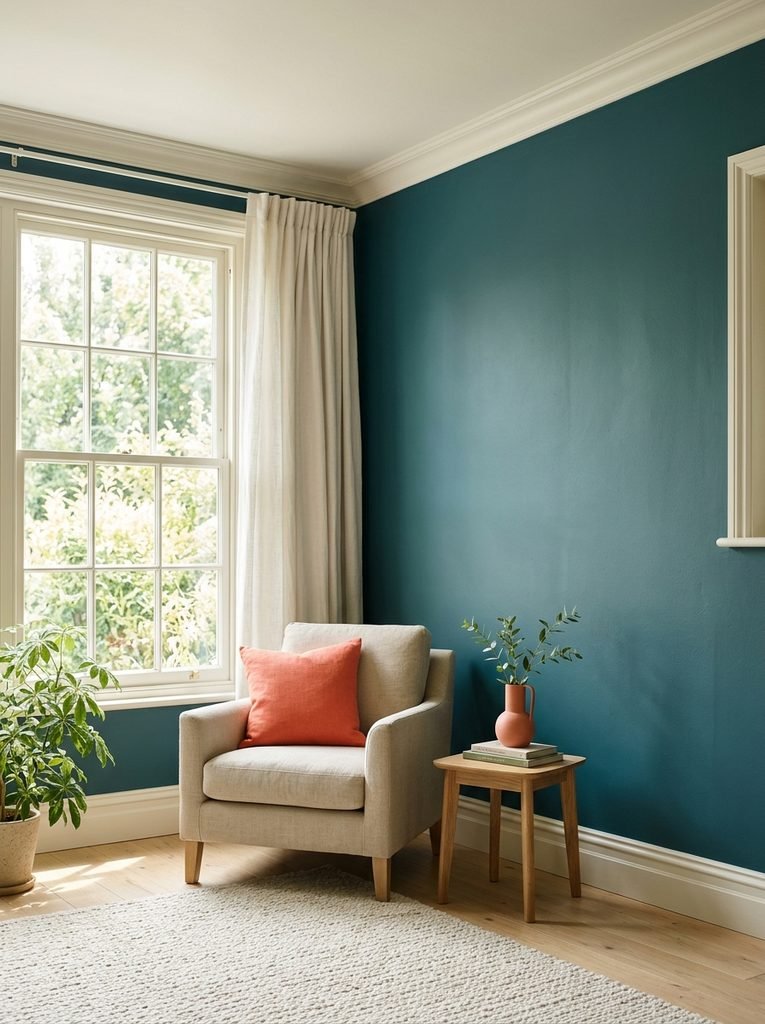
Translate that for summer. In a north-facing room, a pale aqua can go gray and flat, so choose a teal with a little warmth or more depth. In a west-facing room, late sun turns everything golden. A teal with a gray undertone keeps its cool character there, while a bright aqua turns loud. Stick a large peel-and-stick sample on the wall and check it at 2 p.m., at 6 p.m., and at night under your lamps.
Paint the teal on the wall that runs alongside the window, where light rakes across it instead of hitting it head-on. Be honest about what color does: it changes how a room feels, not how hot it is. Save coral for one or two accents, such as a single cushion or a vase, so the palette stays calm. Keep trim and ceilings a soft ivory so the teal has an edge to sit against.
Mirrors Beside the Window, Not Across From It
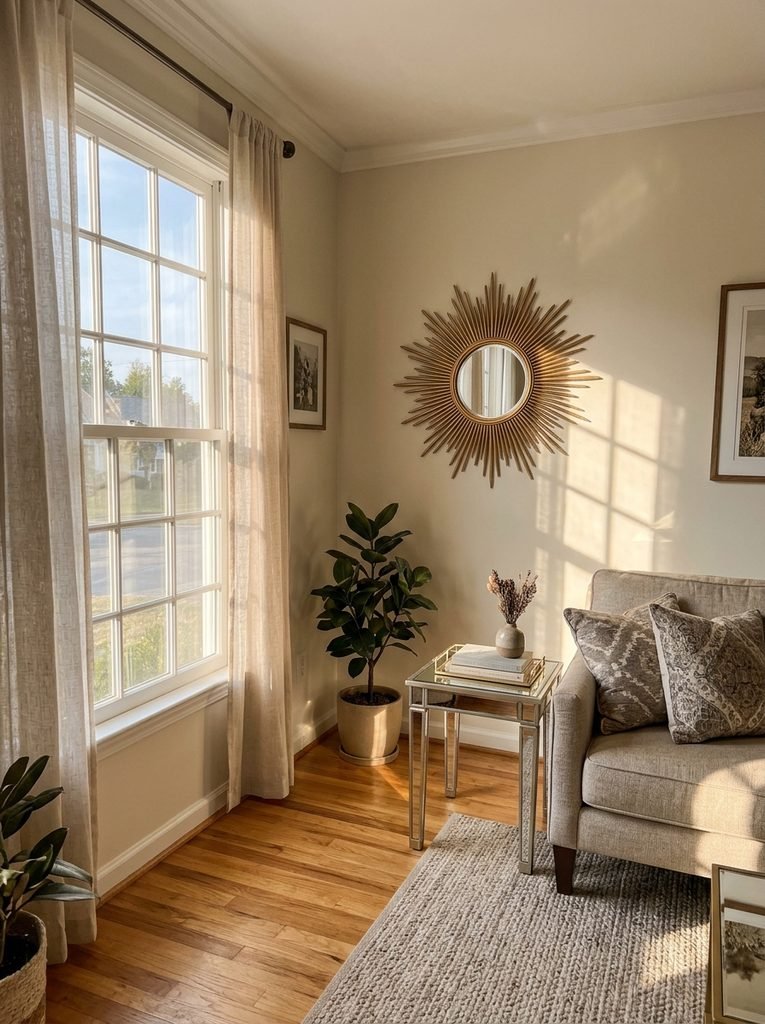
A sunburst mirror hung directly opposite a window can throw a bright beam across the room in summer. The patch lands on your sofa or hardwood floor and fades both. Hang it on the wall beside the window instead. It still pulls daylight deeper into the room, but the reflection arrives sideways and soft.
Test the spot at 4 p.m. Hold a sheet of white paper where the reflection lands. If it’s a hard, bright patch, shift the mirror by a hand’s width and check again. In cooler months you may prefer the mirror across from the glass, and our spring Neo-Deco guide explains how to check what a mirror will double.
Mirrored side tables follow the same rule. Keep them out of the sun path, or the top bounces a spot of glare onto the ceiling. A thin tray on top breaks up the shine so it reads as a detail instead of the room’s main event.
Pattern Wallpaper That Survives Humid Weather
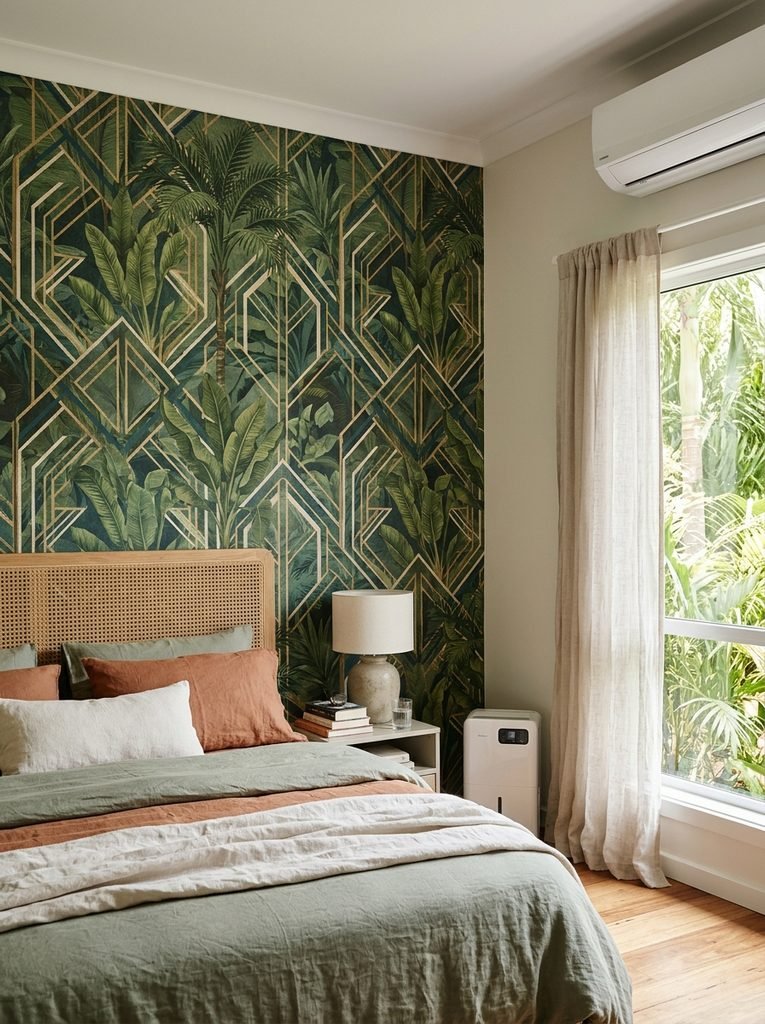
Tropical geometric wallpaper looks right in summer, and humidity is its enemy. In a room that stays above about 60 percent humidity, peel-and-stick seams can lift at the corners within weeks. Choose a paste-the-wall, non-woven paper for a permanent wall, and keep a dehumidifier or air conditioner running in the room.
Hang it behind a headboard or sideboard, away from kitchen and bath steam. Order a sample first and tape it up for a week of real weather. Patterns with a 20- to 24-inch repeat waste more paper, so buy 15 percent extra. Rolls typically cost $40 to $150, depending on the type.
Flowers That Last Past Day Three
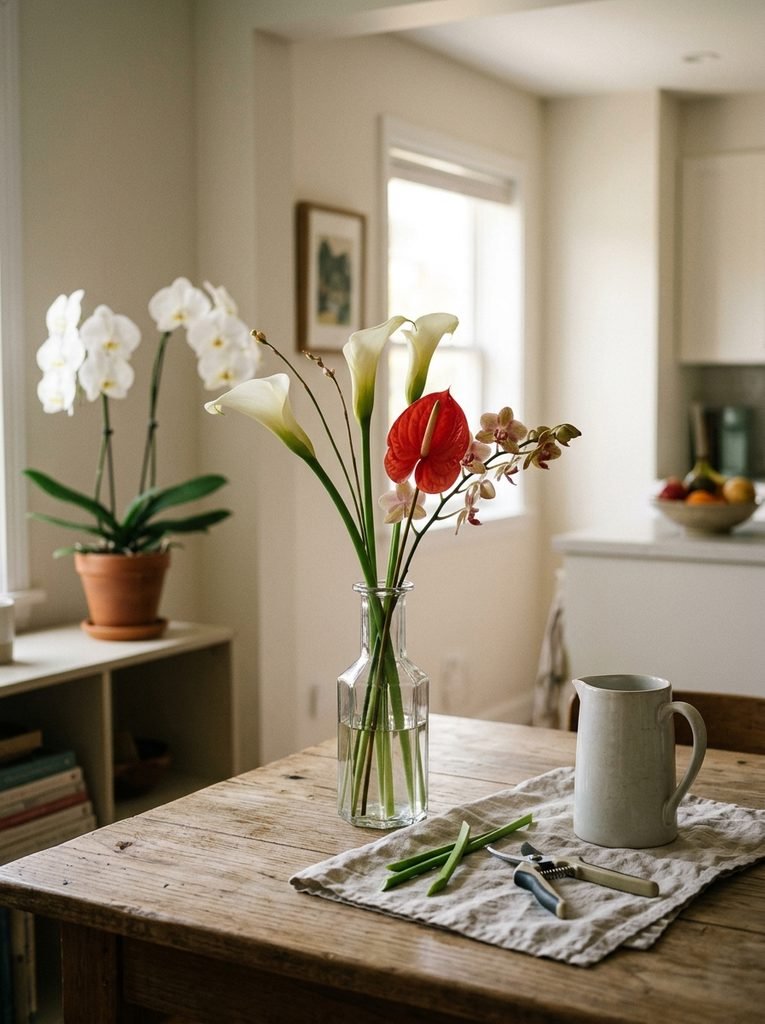
Structured arrangements fall apart fast in a hot room, and one wilted calla lily ruins the geometry. Choose stems that cope with heat. Orchid sprays, calla lilies, and anthurium last far longer than tulips or ranunculus.
Recut the stems at an angle and change the water every two days. Keep the vase away from the fruit bowl, because ripening fruit gives off ethylene gas that shortens bloom life. Keep it away from air-conditioning vents and sunny sills, too. A potted phalaenopsis orchid costs roughly $20 to $45, lasts for weeks, and does well in bright indirect light. A narrow-necked faceted vase hides the stems, so three or five blooms are plenty.
Swap the Rug Instead of Layering It
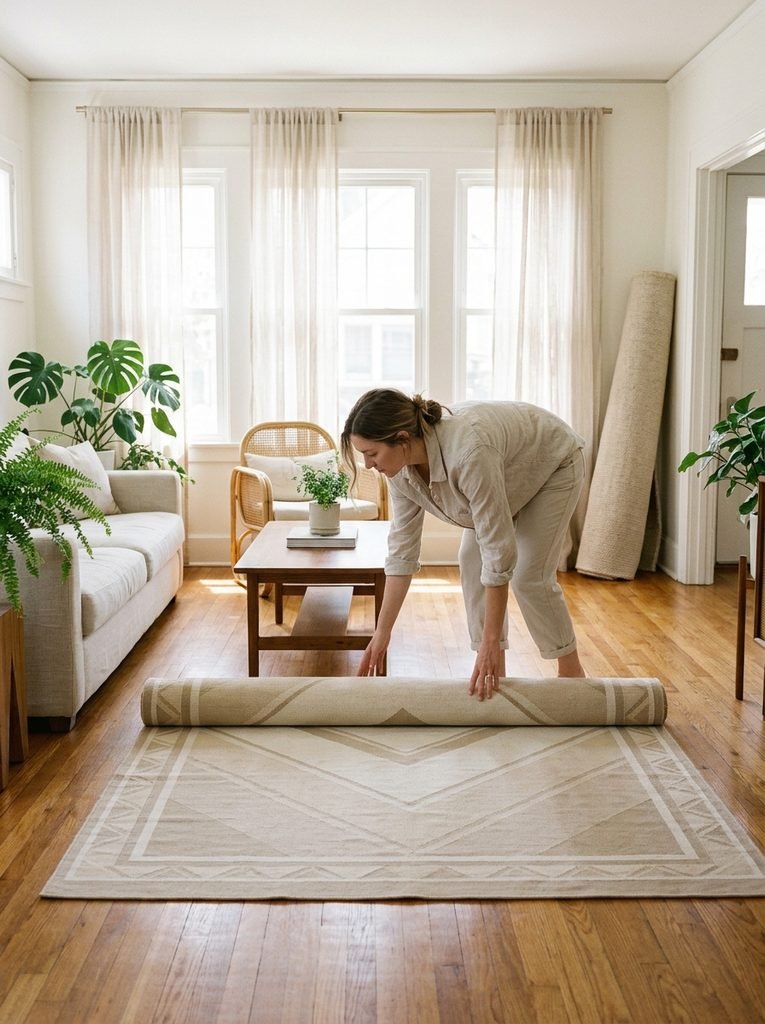
A geometric rug in sand or cream looks light, but a thick wool pile still holds heat and dust in July. Swap it for a flatweave cotton or a washable low-pile rug for the season. An 8-by-10 flatweave in an Art Deco pattern usually costs $150 to $450.
Store the winter rug properly. Roll it around a cardboard tube, wrap it in a cotton sheet, and keep it off the floor. Plastic traps moisture and invites mildew. If you have stone or tile underneath, you may not need a rug at all during the hottest weeks, since bare stone is the coolest surface in the room.
Balcony Lanterns Without the Open Flame
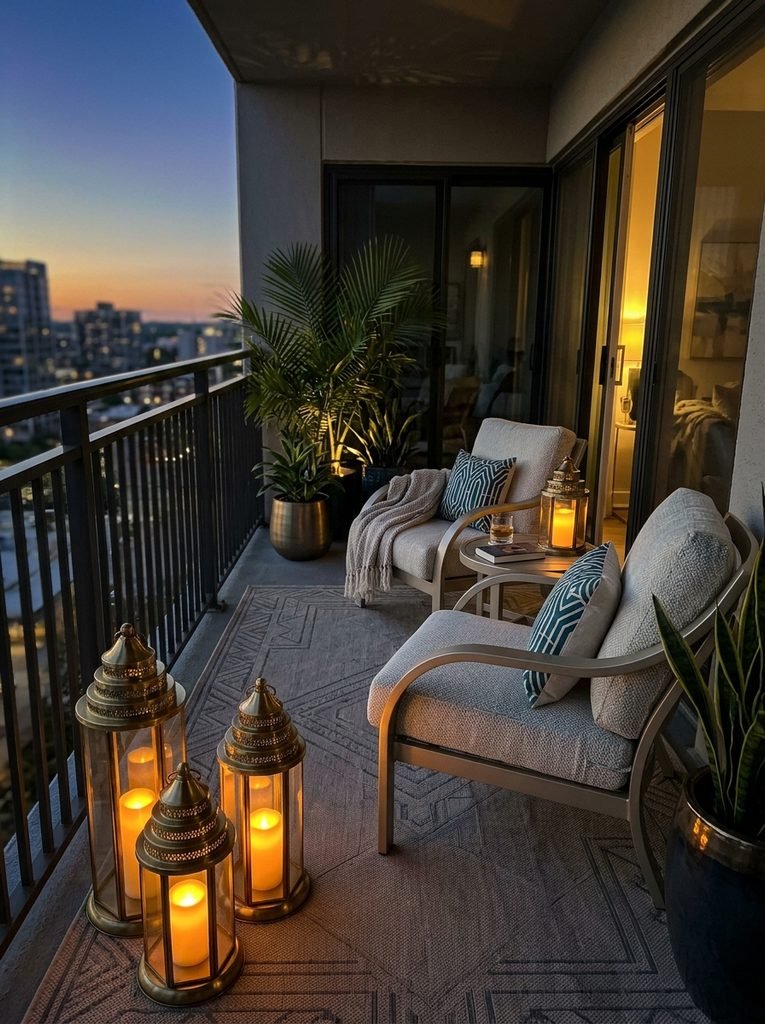
A balcony is where Neo-Deco makes the most sense in summer, because you use it at dusk when the heat breaks. Choose curved aluminum lounge chairs in white or champagne. Dark metal absorbs sun and can burn bare legs by afternoon. Expect $150 to $500 per chair. Add cushions in solution-dyed acrylic fabric, which resists fading far better than printed cotton.
Tiered brass lanterns give the glow. Fill them with flameless LED candles, since many leases ban open flame on balconies. If your building allows real candles, the National Fire Protection Association advises keeping them at least 12 inches from anything that can burn. That means clear of cushions, curtains, and dried flowers.
What to Change This Weekend
You don’t need all eleven ideas. Start with the free one: tape the sun patches on a bright afternoon. Then spend under $60 on window film and cotton cushion covers. If the room still feels close by August, put the savings toward a fan.
Work in that order, because each step informs the next. The sun map tells you where the shades go, and the shades decide whether a fan or a paint color is worth buying. Brass, marble, and curves can stay exactly where they are. They just need to be out of the sun, away from your skin, and surrounded by materials that breathe.
Frequently Asked Questions
What color curtains keep a room cooler in summer?
Pick light or medium curtains with a white or pale lining facing the window. The lining reflects sun back outside instead of absorbing it. Close them while the sun hits the glass, and hang them close to the frame so less warm air circulates behind them. Ivory linen-blend panels suit Neo-Deco and still let some daylight through.
Does gold decor get hot in direct sunlight?
Yes, solid metal does. A brass tray or gold-framed mirror in a sunny window can be too hot to handle comfortably by mid-afternoon, while ceramic with a gold-glaze trim stays cooler. Keep solid metal pieces in shade, or use gold in small doses, like drawer pulls and lamp bases, where the sun rarely reaches.
How do I stop brass from tarnishing in humid weather?
Check whether the piece is lacquered first. Most decor brass is, so wipe it with a dry microfiber cloth and skip polish, which can strip the coating. Unlacquered brass darkens faster in humid air. Keeping the room near 50 percent humidity with a dehumidifier slows the change, and cloth bags protect small items in storage.
What bedding feels coolest in a Neo-Deco bedroom?
Cotton percale feels crisper and cooler than sateen, which sits closer to the skin and holds more warmth. Look for a thread count between 200 and 400, since higher numbers often mean heavier yarns. Linen is cooler still, and ivory or sand shades suit the palette. Keep the velvet headboard and swap the quilt for a cotton coverlet.
How can I tell if my window faces west?
Open a compass app, stand at the window, and face out through the glass. A reading near 270 degrees means west, 90 east, 180 south, and 0 north. Windows between roughly 225 and 315 degrees get the hot late sun. Hold the phone away from speakers and metal, which can skew the reading by several degrees.