
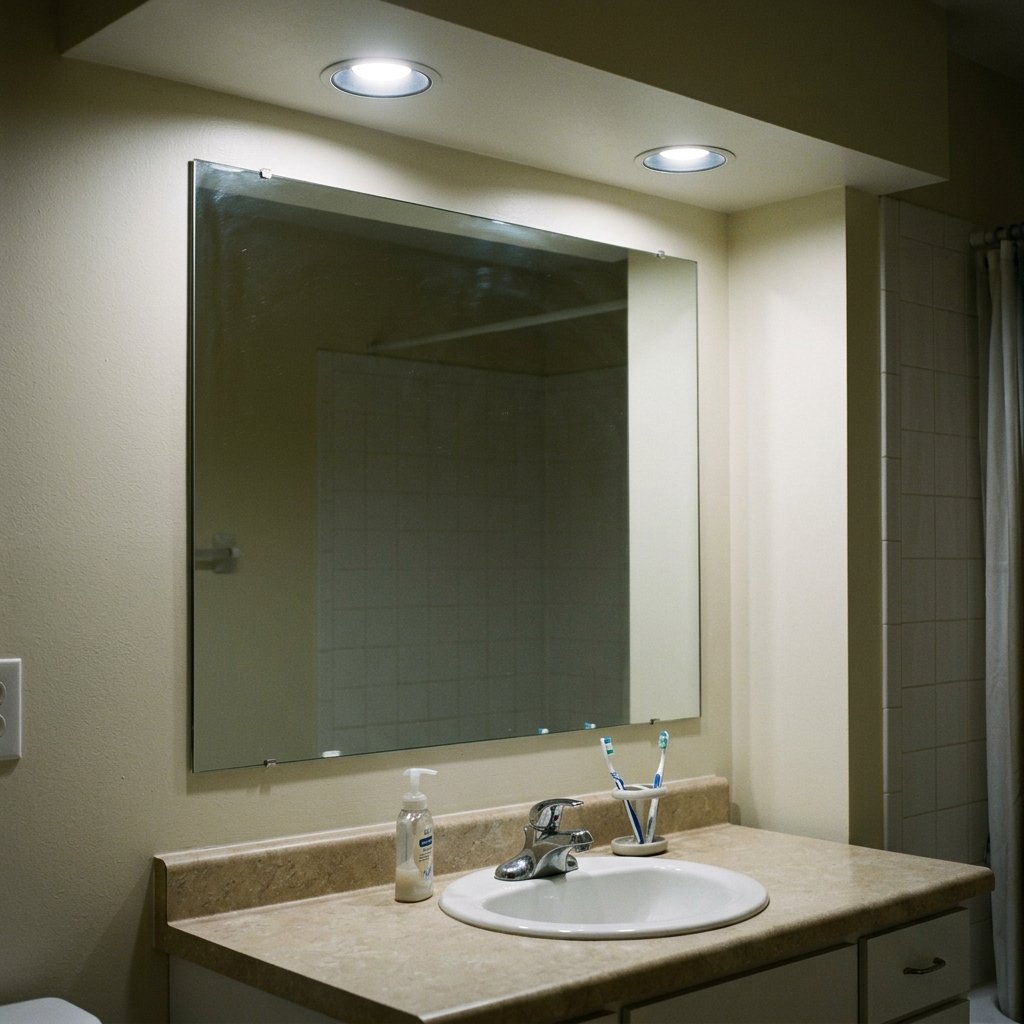
You wake up, shuffle into the bathroom, glance in the mirror, and there it is. Tired eyes, dull skin, shadows in all the wrong places. You assume it’s the late night, the stress, maybe your age catching up with you. But here’s something most people never consider: the problem might not be you at all. It might be your bathroom lighting.
I’ve spent years writing about home design and testing different setups in my own house, and this is one of the most common issues I come across. People spend money on skincare, concealer, and expensive mirrors, yet they overlook the one thing shaping how they look every single morning. The light above your head could be sabotaging your reflection before you’ve even had your coffee.
Let’s break down exactly what’s going wrong and how to fix it, because once you understand this, you’ll never look at your bathroom the same way again.
Why Your Bathroom Lighting Matters More Than You Think
Think about how much time you spend looking at yourself in the bathroom. Brushing your teeth, shaving, applying makeup, checking your hair. This is the room where you form your first impression of yourself each day, and that impression sets the tone for everything that follows.
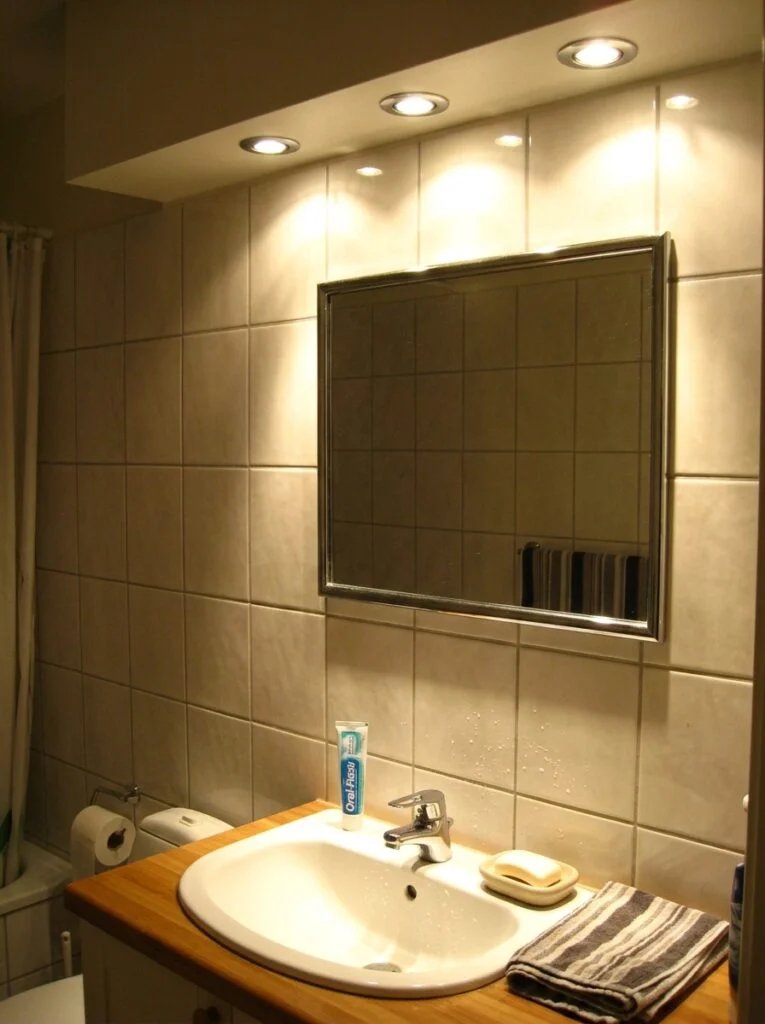
The trouble is that bathrooms are often treated as an afterthought when it comes to lighting. Builders install a single fixture, usually right in the center of the ceiling, and call it done. It lights the room, technically. But lighting a room and lighting a face are two very different things.
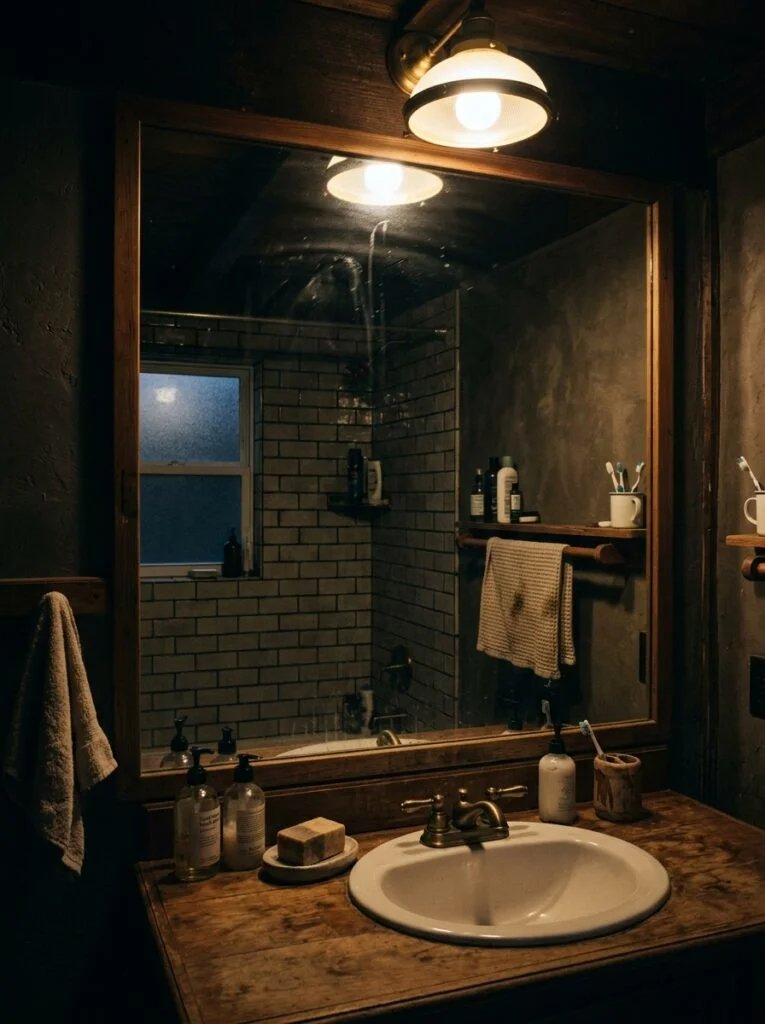
When the only light comes from directly above, it casts harsh shadows downward. Those shadows fall right into the hollows under your eyes, beneath your cheekbones, and along your jawline. The result is a face that looks sunken, exhausted, and older than it actually is. You’re not tired. You’re just poorly lit.
The Overhead Lighting Trap
Here’s the single biggest mistake, and it’s so common that most people don’t even realize it’s a mistake. Relying only on overhead lighting.
A ceiling light positioned above and slightly behind you creates what photographers call unflattering top-down shadows. Imagine holding a flashlight above your head in a dark room. Your eyes disappear into dark pools, your nose casts a long shadow over your mouth, and every little line on your face gets deeper. That’s essentially what your bathroom ceiling light does every morning.
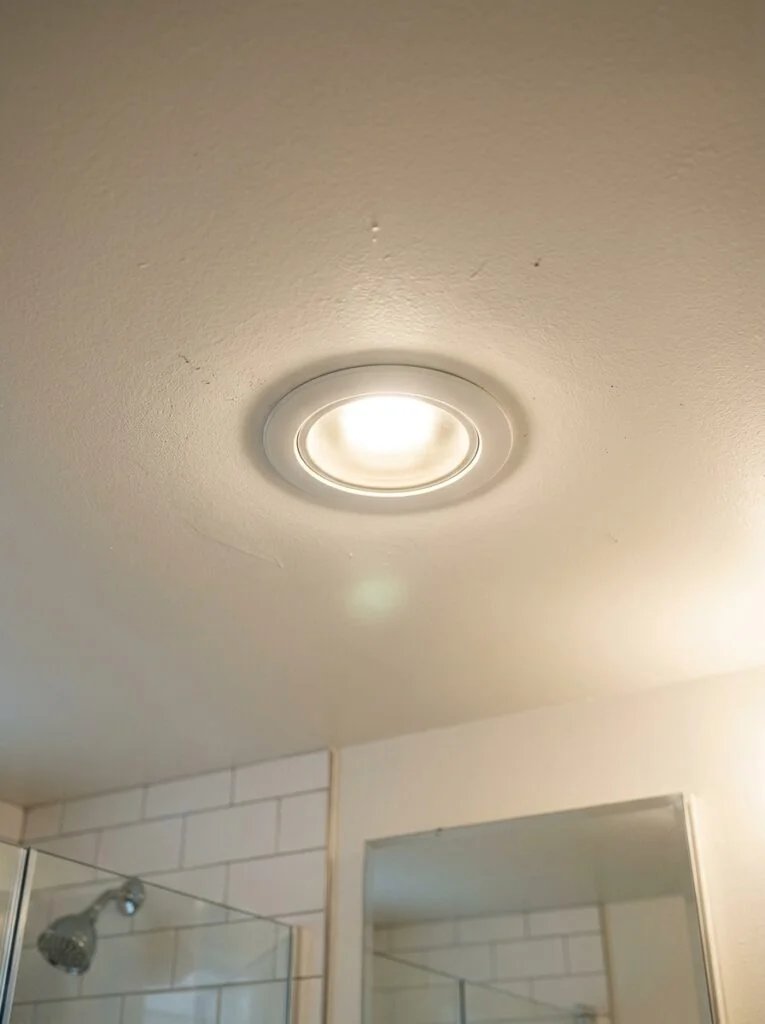
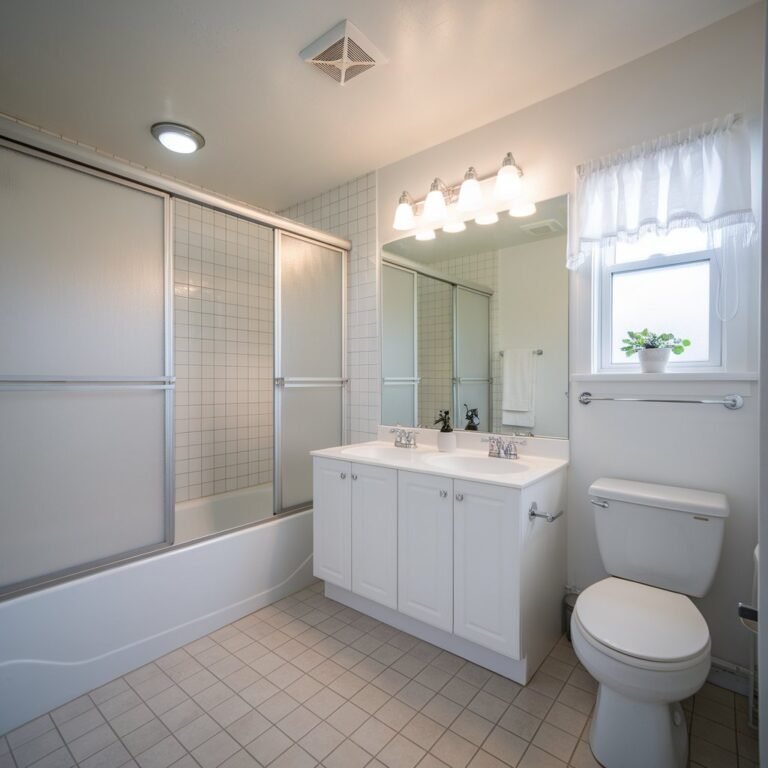
This effect is even worse with recessed can lights, which are those small round fixtures set into the ceiling. They push light straight down in a narrow beam, exaggerating shadows even more. People love them because they look sleek and modern, but for a bathroom mirror, they’re one of the worst choices you can make.
What This Does to Your Reflection
When you stand under overhead-only lighting and look in the mirror, a few things happen at once:
- Dark circles under your eyes become far more pronounced than they really are.
- Fine lines and wrinkles cast tiny shadows that make them look deeper.
- Your skin tone looks uneven because the light hits high points and skips the rest.
- Your whole face reads as tired, drawn, and dull.
The frustrating part is that you might look completely fine in natural daylight or in a well-lit room elsewhere. But because you judge yourself in this specific mirror under this specific light, you walk away thinking you look worse than you do.
The Science of Flattering Light
Good lighting isn’t magic. It follows some pretty simple principles, and once you know them, you can apply them anywhere.
The key idea is that light should hit your face evenly and from the front, not from a single point above. When light comes from multiple directions at eye level, it fills in shadows instead of creating them. This is exactly why professional makeup artists, photographers, and actors care so much about lighting. They know that the right setup can take years off a face, and the wrong setup can add them.
Two factors matter most here: the position of the light and the quality of the light.

Light Position
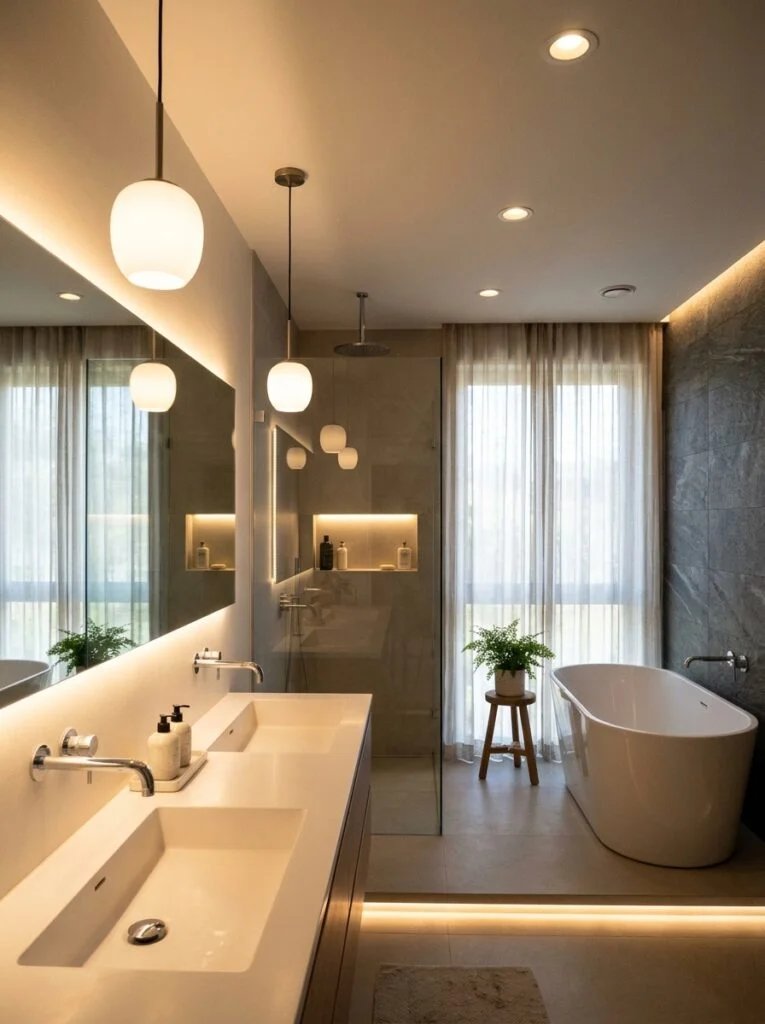
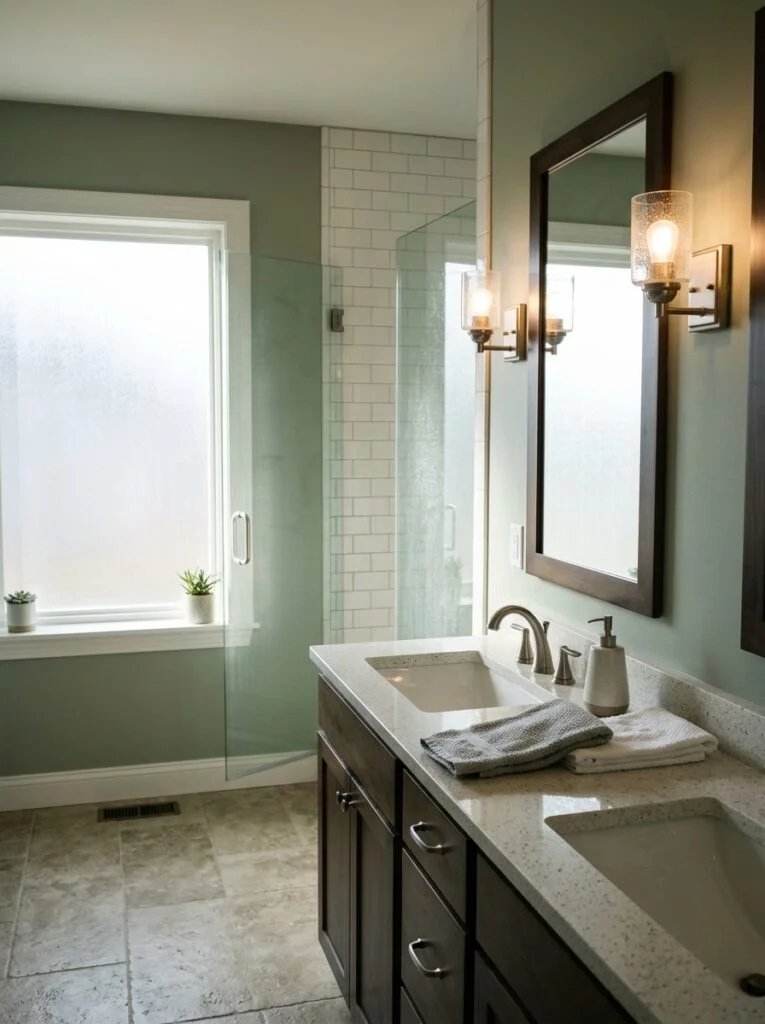
The gold standard for a bathroom mirror is lighting placed on both sides of the mirror at roughly face height. Think of the classic Hollywood dressing room mirror with bulbs running down each side. There’s a reason that design has stuck around for a century. Side lighting wraps around your face, eliminates harsh shadows, and gives you an even, natural glow.
If side lighting isn’t possible, a fixture mounted above the mirror is the next best option, as long as it’s the right kind. A horizontal bar light or a fixture with a diffused cover spreads light forward and down gently, rather than punching straight down like a spotlight.
Light Quality
Position is only half the equation. The other half is the light itself, and this comes down to two measurements: color temperature and the color rendering index.
Color temperature is measured in Kelvin and tells you whether light looks warm and yellow or cool and blue. For bathrooms, the sweet spot is usually between 2700K and 3000K for a soft, warm feel, or around 3500K to 4000K if you prefer something brighter and closer to daylight. Anything higher, like 5000K and up, tends to look clinical and can wash you out or make your skin look sickly.
The color rendering index, or CRI, measures how accurately a light shows colors compared to natural sunlight. It’s rated from 0 to 100. For a bathroom where you’re applying makeup or checking your appearance, you want a CRI of 90 or higher. Cheap bulbs often sit around 80 or lower, which distorts colors and makes it nearly impossible to tell if your foundation actually matches your skin.

How to Fix Your Bathroom Lighting
Now for the good part. Fixing this doesn’t require a full renovation or a professional electrician for every option. Some solutions are quick and cheap, while others are more involved. Here’s a range depending on your budget and situation.
Add Side Lighting
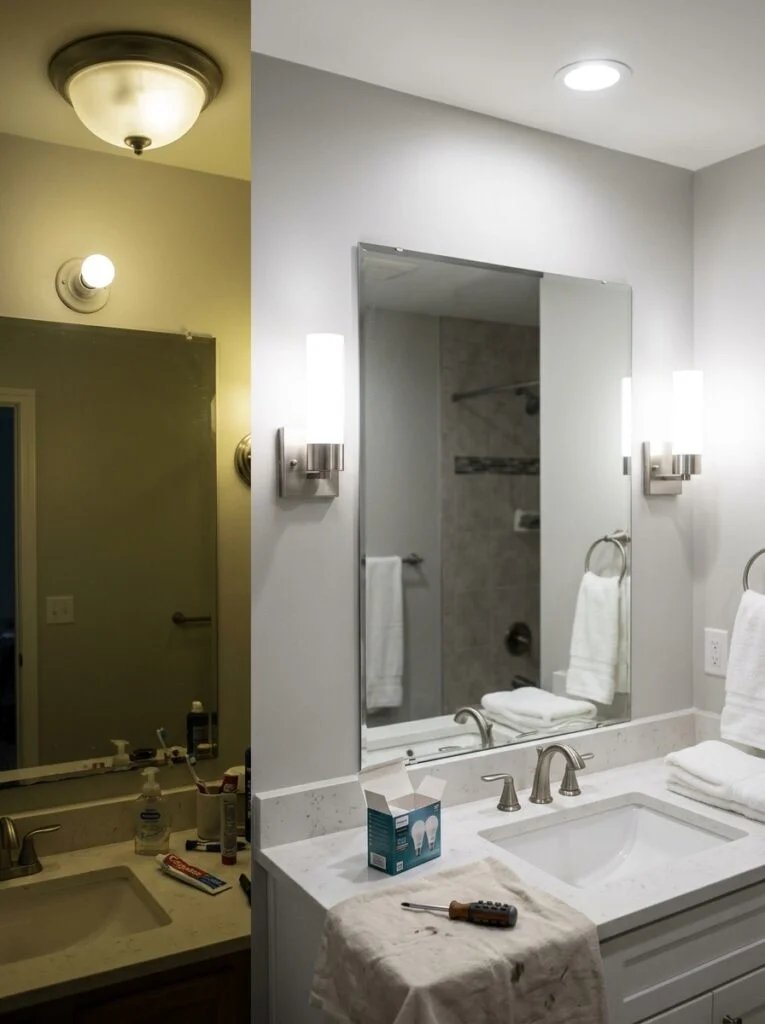
If you can manage it, installing sconces or vertical light bars on either side of your mirror is the single most effective change you can make. Mount them at about eye level, roughly 60 to 66 inches from the floor, and space them to frame your face. This mimics the professional setup and instantly removes those aging shadows.
You don’t need anything fancy. Even simple, affordable wall sconces will do the job as long as they sit at the right height and use good bulbs.

Upgrade Your Bulbs
This is the easiest fix of all, and it costs almost nothing. Swap out your current bulbs for ones with a warm-to-neutral color temperature around 2700K to 3500K and a high CRI of 90 plus. Look at the packaging, since these numbers are usually printed right on the box. This one change alone can dramatically improve how you look in the mirror without touching a single wire.
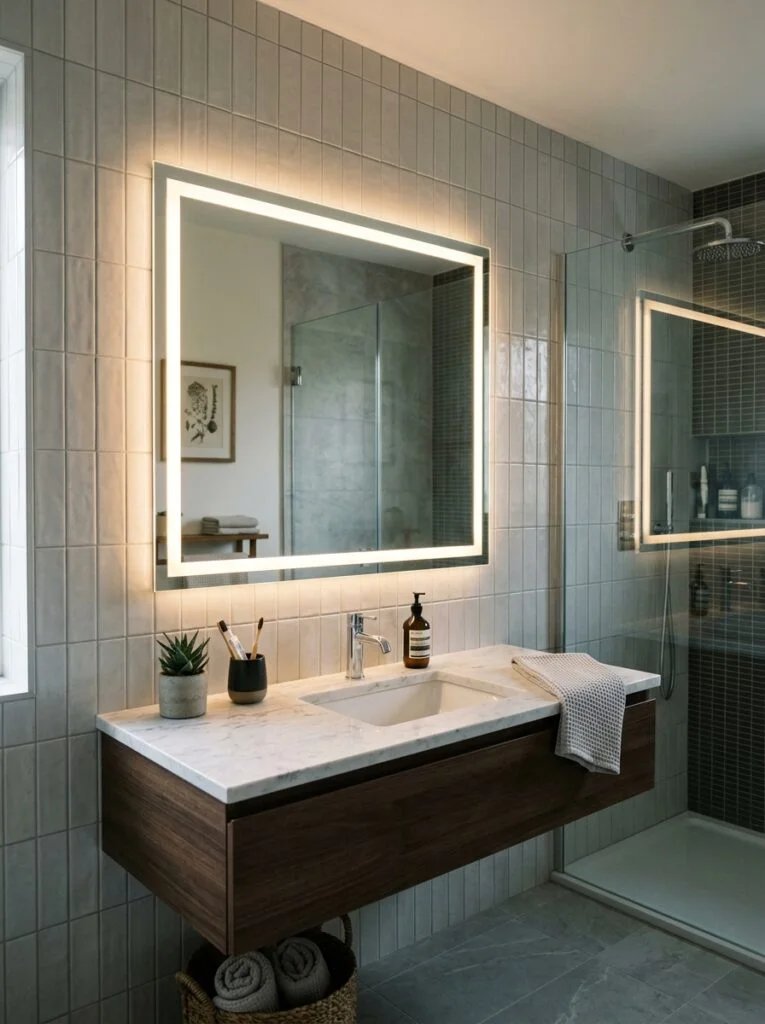
Use a Lighted Mirror
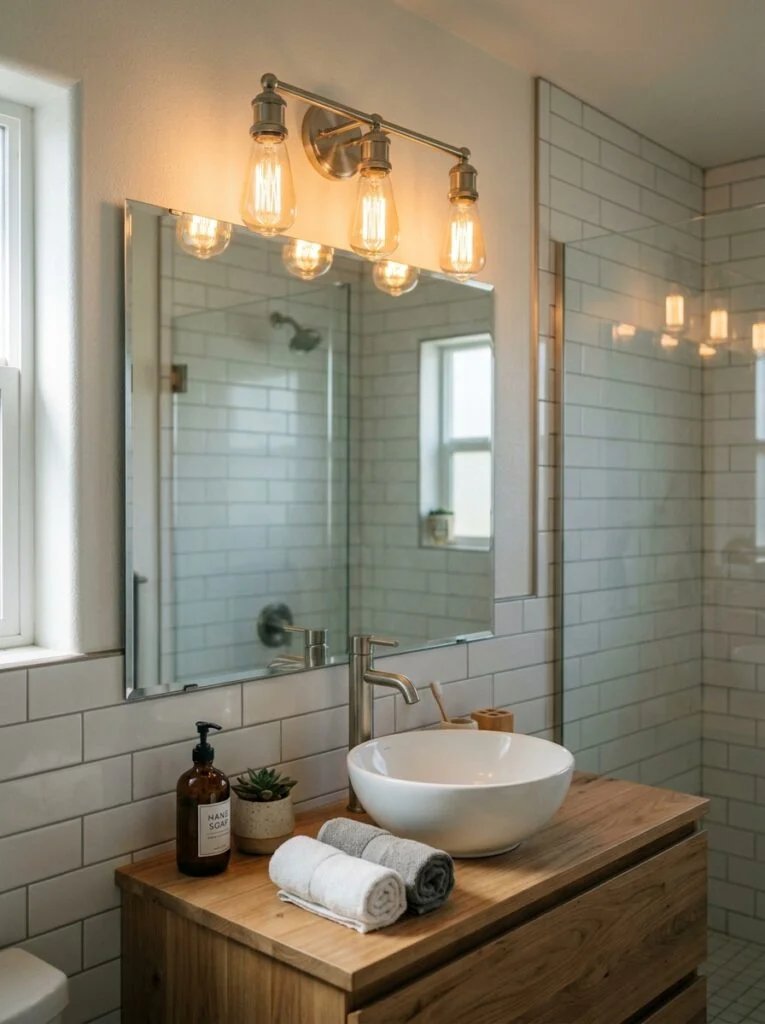
If rewiring isn’t an option, a lighted vanity mirror is a fantastic solution. These have LED lights built right into the frame, usually surrounding the entire mirror, which provides that even, wraparound light. Many of them let you adjust the brightness and even the color temperature, so you can dial in exactly what flatters you most. They plug into a standard outlet, so there’s no electrical work involved.
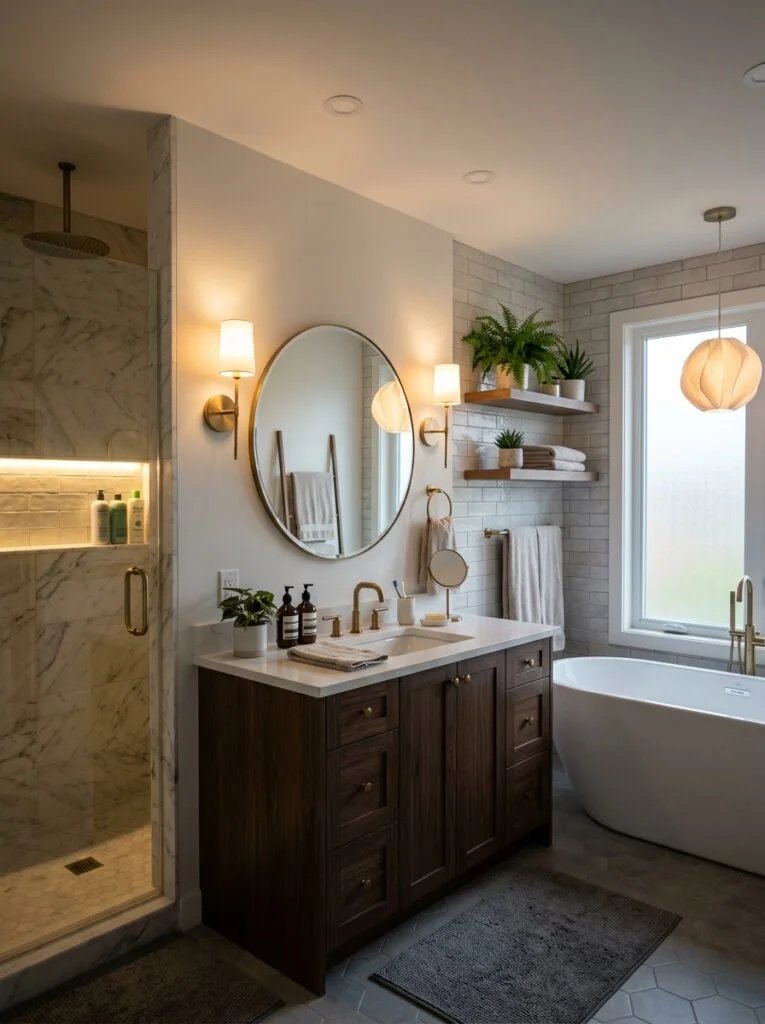
Layer Your Light
The best bathrooms use layered lighting, which means combining a few sources instead of relying on one. You might keep the overhead light for general brightness, add side lighting at the mirror for your face, and include a softer accent light for ambiance. When these work together, you get a space that’s functional, comfortable, and genuinely flattering.
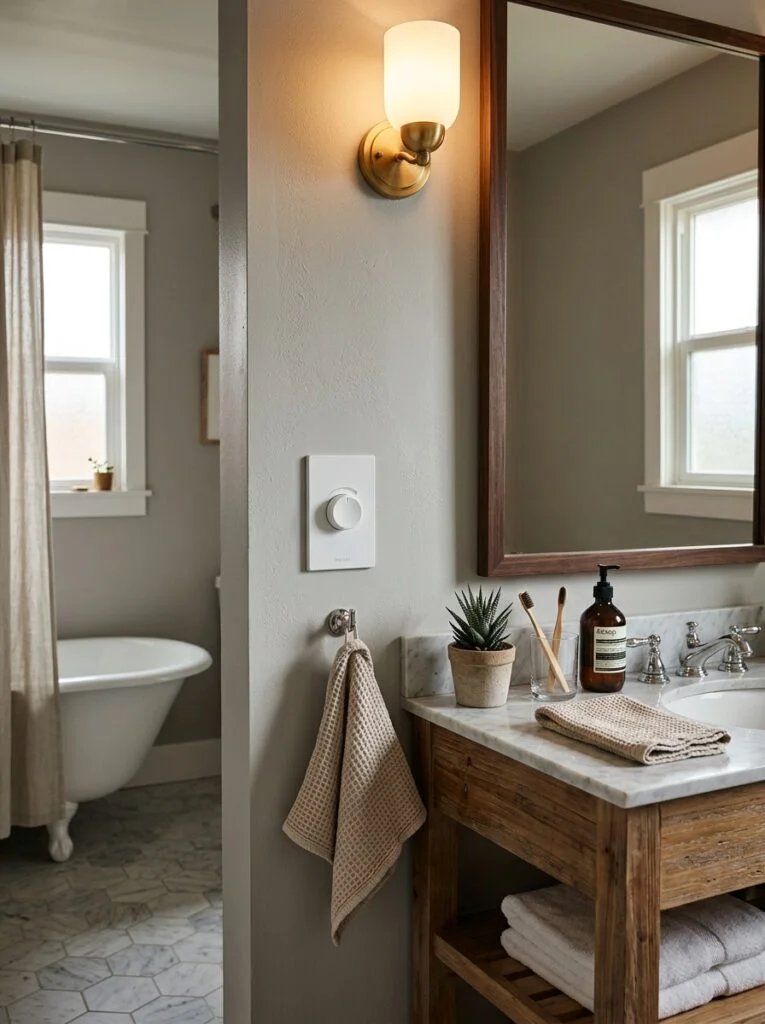
Add a Dimmer
A dimmer switch is an underrated addition. It lets you soften the light in the evening and brighten it when you need detail. Being able to control intensity means you’re never stuck with light that’s too harsh or too dim for the moment.
Common Mistakes People Make With Bathroom Lighting
Beyond the overhead-only problem, there are a handful of other missteps I see constantly. Avoiding these will save you a lot of frustration.
- Choosing bulbs that are too cool. That bright blue-white light might feel clean and modern, but it’s unforgiving on skin and makes everyone look washed out.
- Placing a single light directly above the mirror without diffusion. A bare, downward-facing fixture recreates the same shadow problem you’re trying to escape.
- Ignoring CRI entirely. People obsess over brightness and forget that color accuracy matters just as much for how you look.
- Making the room too dim. Overcorrecting into mood lighting is nice for a bath, but useless when you actually need to see your face.
- Using mismatched bulbs. If one fixture is warm and another is cool, the clashing tones create an uneven, confusing light that flatters nothing.
- Forgetting about glare. Overly bright, undiffused bulbs can bounce off mirrors and tile, creating harsh hotspots that strain your eyes.
Expert Insights Worth Knowing
After all this testing and reading, a few principles stand out as the ones that matter most.
The first is that even, front-facing light beats bright light every time. A moderately bright setup that hits your face evenly will always look better than a blinding fixture that comes from one direction. Don’t chase brightness. Chase balance.
The second is that warmth flatters. Skin simply looks healthier and more alive under warm-to-neutral tones. This is why so many restaurants, hotels, and boutiques use warm lighting. They understand that it makes people look and feel their best.
The third insight comes straight from photography. Diffused light is soft light. When light passes through a frosted cover, a shade, or a translucent panel, it scatters and wraps gently around whatever it touches. Hard, direct light does the opposite, carving out sharp shadows. Whenever you can soften a light source, do it.
Finally, remember that the goal isn’t to look different. It’s to look like yourself on a good day. The right lighting doesn’t fake anything. It simply shows you accurately instead of adding shadows and distortion that were never really there.
Frequently Asked Questions
Why do I look so tired in my bathroom mirror but fine everywhere else?
It’s almost always the lighting. Overhead fixtures cast shadows downward onto your face, deepening the areas under your eyes and cheeks. In other rooms with softer or side lighting, those shadows disappear, so you look more rested.
What is the best color temperature for bathroom lighting?
For most people, somewhere between 2700K and 3500K works best. This range gives warm, natural light that flatters skin. If you want something brighter and closer to daylight, 4000K is acceptable, but avoid anything above 5000K, which tends to look harsh and clinical.
Where should lights be placed around a bathroom mirror?
The most flattering position is on both sides of the mirror at about eye level. This front-facing side light wraps around your face and eliminates shadows. If side lighting isn’t possible, a diffused fixture above the mirror is the next best choice.
What does CRI mean and why does it matter?
CRI stands for color rendering index, and it measures how accurately a light shows colors compared to sunlight. A high CRI of 90 or above means colors look true to life, which is essential for tasks like matching makeup or judging your skin tone.
Can I fix my bathroom lighting without hiring an electrician?
Absolutely. The two easiest fixes are swapping your bulbs for warmer, high-CRI ones and using a plug-in lighted vanity mirror. Both dramatically improve how you look and require no wiring or professional help.
Are LED lights good for bathrooms?
Yes, LEDs are excellent as long as you choose ones with the right color temperature and a high CRI. They’re energy efficient, long lasting, and available in warm tones that flatter skin beautifully.
Final Thoughts
The next time you catch yourself looking exhausted in the mirror, pause before blaming yourself. Take a good look at the light around you. That single overhead fixture, casting shadows in all the wrong places, is doing more damage to your reflection than any sleepless night ever could.
The fix is refreshingly simple. Move your light to the sides, warm up the tone, boost the color accuracy, and soften the source. You don’t need a renovation or a big budget. Sometimes all it takes is a new bulb or a well-placed mirror to transform how you see yourself every morning.
Good lighting won’t change who you are. It’ll just stop hiding the version of you that was there all along. And once you’ve experienced a bathroom that actually flatters you, going back to those harsh overhead shadows will feel unthinkable.


1 comment