Why Kitchen Trends in 2026 Matter
Picture your kitchen at 7 a.m. tomorrow: coffee brewing, a lunch being packed, a laptop open on the island for a quick email before the school run. That’s not a fantasy render from a design magazine — it’s what most kitchens actually do now. In 2026, the room has quietly taken over jobs once split between the office, the dining room, and the living room. According to the National Kitchen & Bath Association’s 2026 Kitchen Trends Report, 76% of surveyed kitchen and bath professionals expect kitchen footprints to keep growing over the next three years, even as overall U.S. home sizes shrink. That single stat tells you everything about where priorities are shifting. You’re not just choosing a backsplash this year — you’re deciding how one room will carry the weight of your whole daily routine. The trends below aren’t fleeting aesthetic fads. They’re responses to how you actually live, cook, work, and unwind. Here’s what’s shaping kitchens in 2026, and how to bring each idea into your own space without overspending or overbuilding. Some of these trends need a full renovation budget. Most don’t — a lot of what follows can be phased in over a weekend, a paycheck, or a single appliance replacement cycle.

Smart Kitchens Powered by AI
Smart kitchen tech has finally moved past the gimmick phase. In 2026, it’s less about novelty and more about shaving minutes off your routine every single day.
Voice-Controlled Appliances
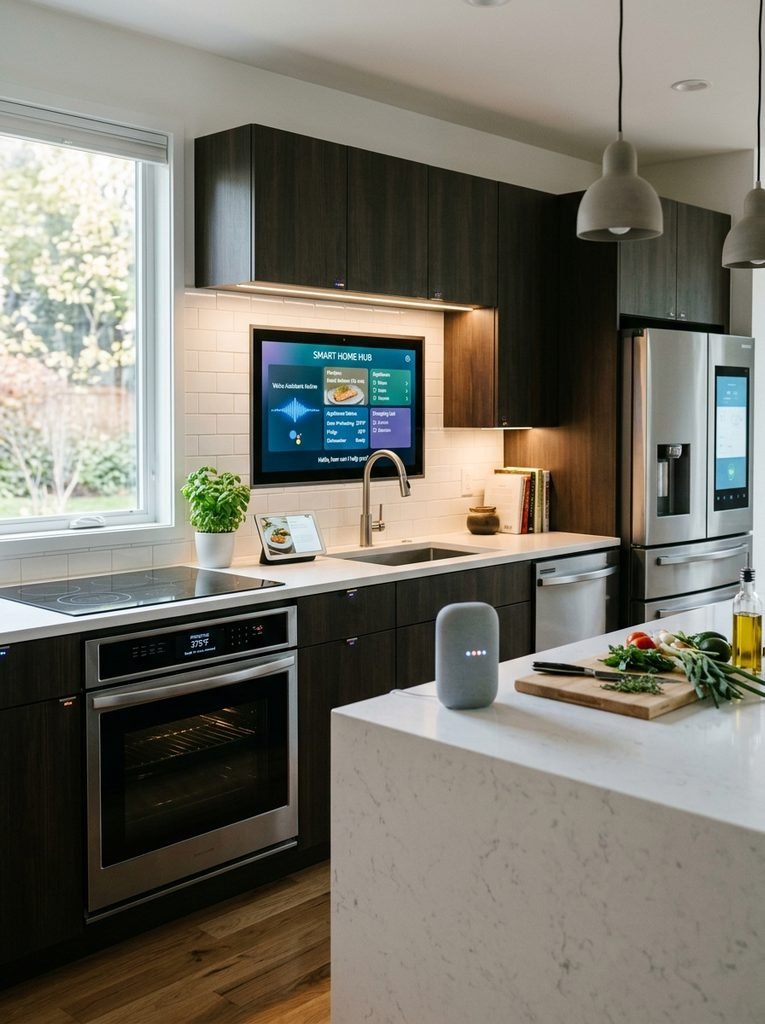
Preheating the oven with flour-covered hands used to mean wiping your fingers on a towel first. Now you just ask. Voice-activated ovens, hoods, and coffee systems respond faster than earlier smart-home generations and hold context between commands — so “add five more minutes” actually works without repeating the whole request. Look for appliances built on Matter or Thread protocols if you want them to talk to your existing smart-home hub instead of living in their own app.
AI Cooking Assistants
AI cooking assistants pull inventory from a connected fridge camera or a quick photo you snap of your shelves, then suggest recipes built around what’s about to expire. Some models track cook times automatically and adjust for altitude or pan size. For a household that wastes food weekly, this is less a luxury feature and more a grocery-budget tool. You don’t need a fully connected fridge to benefit either — a growing number of standalone apps do the same recipe-matching from a photo of your pantry shelf, which is a much cheaper way to test whether the habit actually sticks before buying new appliances.
Sustainable and Eco-Friendly Kitchens
Sustainability stopped being a niche selling point around 2024. By 2026, it’s an expectation buyers and renovators build into the plan from day one.
Recycled and Renewable Materials
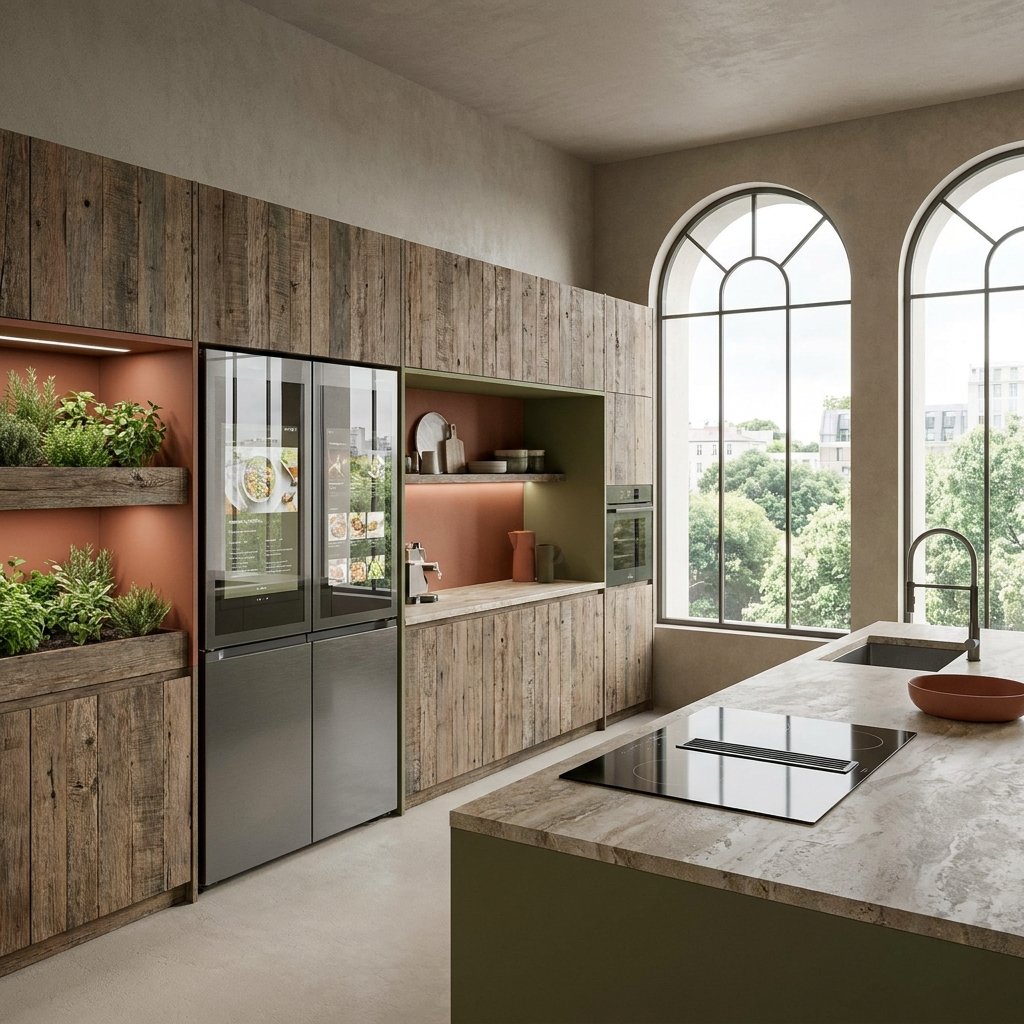
Cabinet boxes made from reclaimed wood fiber, countertops cut from salvaged stone slabs, and low-VOC finishes are showing up in mid-range renovations, not just high-end showrooms. Beyond the environmental case, these materials carry visible grain patterns and mineral veining that mass-produced laminate can’t fake — your kitchen ends up looking more custom for a comparable price. When shopping, an FSC (Forest Stewardship Council) label on cabinet wood and a GREENGUARD Gold certification on finishes are the two credentials worth actually checking before you buy, since “eco-friendly” on its own carries no legal weight as a marketing term.
Energy-Efficient Appliances
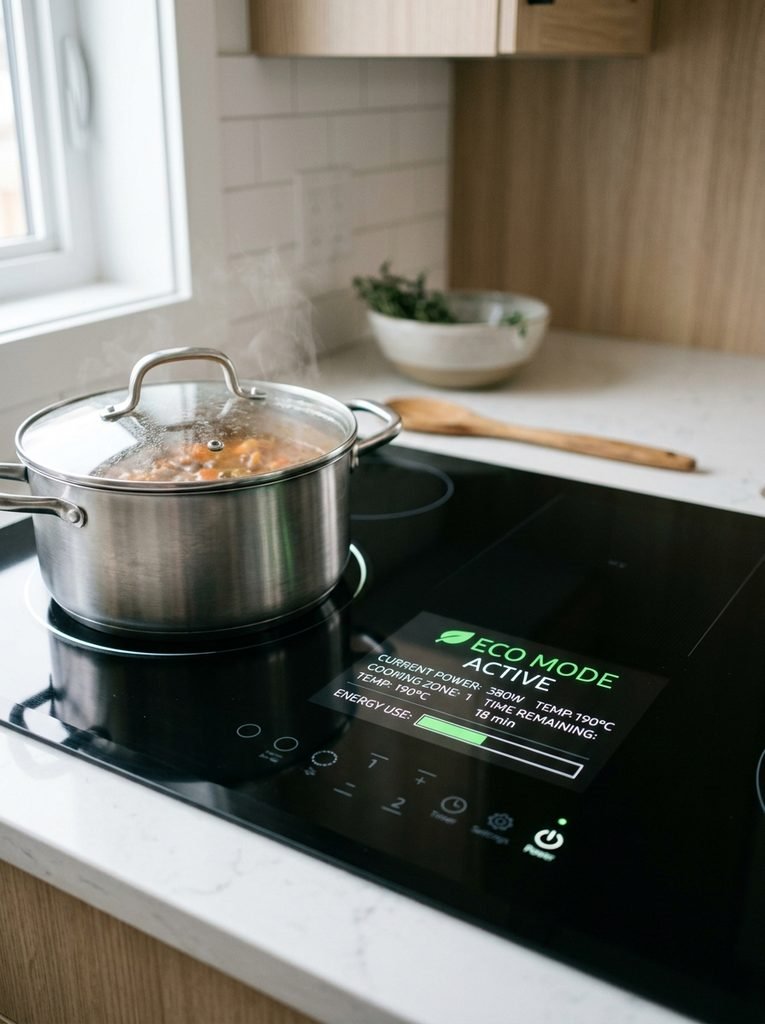
The math on efficient appliances has gotten easier to justify. ENERGY STAR–certified dishwashers use about 12% less energy and roughly 30% less water than standard models, while certified refrigerators run around 9% more efficiently than non-certified counterparts. Multiply that across a decade of daily use and the appliance premium pays for itself well before the warranty runs out.
Warm Minimalism Takes Over
Minimalism used to mean stark white and hard edges. That version is fading fast — in 2026, minimalist kitchens feel lived-in instead of sterile.
Soft Color Palettes
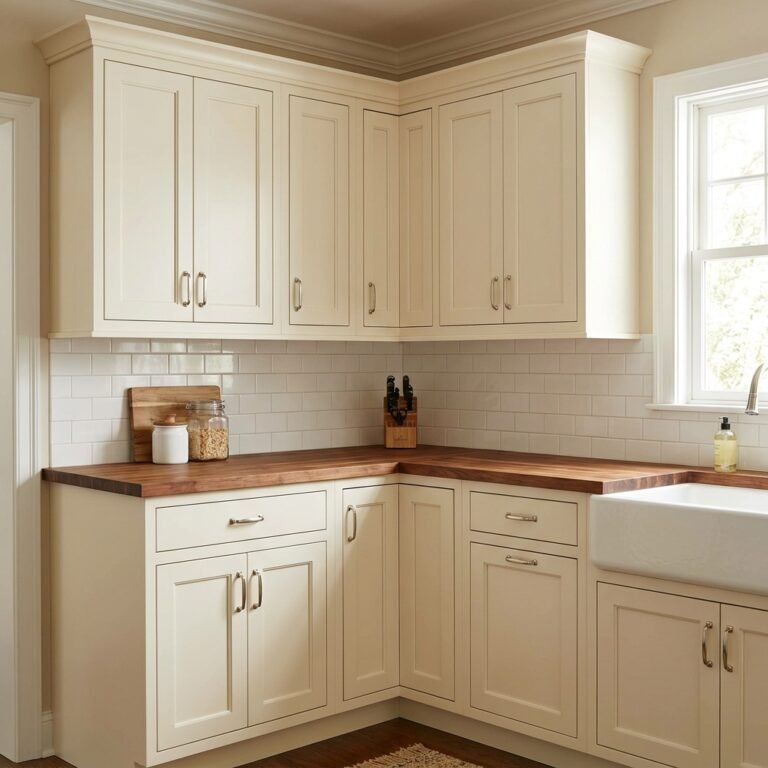
Neutrals aren’t going anywhere — NKBA’s latest survey found 96% of kitchen and bath professionals still rank neutrals as the top color choice for 2026, with green (86%) and blue (78%) close behind. What’s changed is the temperature. Beige, warm taupe, and soft greige are replacing the cooler, blue-white palettes that dominated the last decade, giving all-neutral kitchens a cozier feel without sacrificing resale appeal. Sherwin-Williams named Universal Khaki (SW 6150) its 2026 Color of the Year for exactly this reason — an earthy, mid-tone tan built to pair with natural wood and black hardware instead of fighting them. If you want more contrast than a straight neutral gives you, Benjamin Moore’s 2026 pick, Silhouette, is a warm charcoal-brown that works well on a single accent wall or a lower cabinet run without tipping the whole room cold.
Clutter-Free Storage
Warm minimalism only works if the countertops stay clear, which means the storage has to do more work behind closed doors. Pull-out pantry columns, full-extension drawers instead of shelves, and appliance garages with tambour doors keep small appliances out of sight without losing easy access. The payoff is a kitchen that photographs beautifully and still functions on a Tuesday night.

Natural Stone and Organic Textures
Nature-inspired materials are having a real moment beyond the countertop. Marble, granite, and quartzite are showing up on full-height backsplashes and waterfall islands, not just work surfaces. Pair that with matte wood cabinetry and tactile, hand-finished tile, and the whole room reads as grounded rather than showroom-glossy. If your island already has a stone top, extending the same material up a nearby wall is a lower-cost way to get this look without a full material swap — typically far less than resurfacing every counter in the room, since you’re reusing an existing slab’s fabrication rather than ordering new material. For more ways to style the surfaces you already have, this guide to kitchen countertop styling tips breaks down small changes that make a big visual difference.

Concealed and Handleless Cabinetry
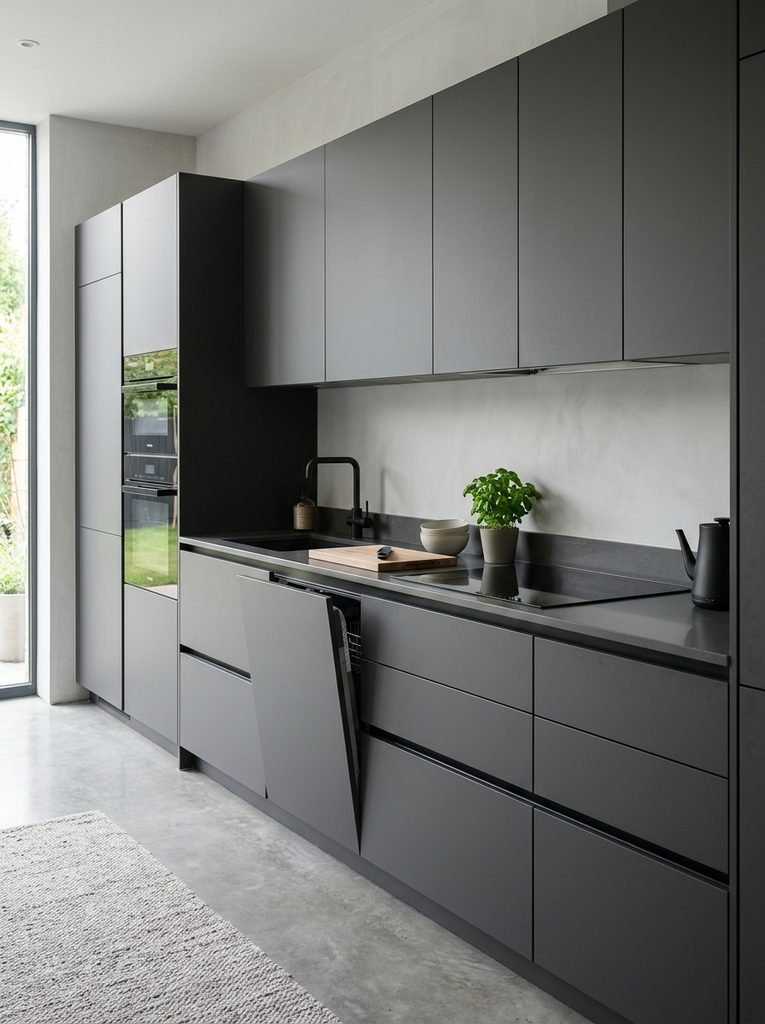
Handleless cabinetry keeps climbing in popularity, and it’s not purely aesthetic. Push-to-open mechanisms remove protruding hardware that snags sleeves and collects grease, which matters most in households with young kids or anyone who cooks daily. The trade-off worth knowing before you commit: push-latch systems need slightly more force to open than a handle, so test the mechanism in a showroom before ordering a full run of cabinets. Recessed J-channel pulls (a routed groove along the top edge of the door) are a middle-ground option — they keep the flat, handleless look while still giving fingers something to grip.
Multi-Functional Kitchen Islands
The island has quietly become the busiest square footage in the house.
Dining, Storage, and Work Zones
One end handles breakfast seating, the other holds a laptop charging station, and the base drawers store everything from linens to laptop chargers. Homeowners are asking designers to zone islands the way they’d zone an open-plan office — a clear task area for each activity instead of one long uninterrupted counter.
Built-In Smart Features
Wireless charging pads set into the countertop, a secondary prep sink, an induction cooktop, and pop-up power outlets are becoming standard asks in mid-to-high-end remodels. Each addition adds plumbing or electrical cost, so prioritize the one or two features you’ll actually use daily rather than specifying all of them at once.

Statement Lighting as a Focal Point
Lighting has stopped being an afterthought picked in the last week of a renovation. Layered plans now combine a sculptural pendant cluster over the island, recessed task lighting under cabinets, and a dimmable ambient layer for evenings. The pendant does double duty as the room’s jewelry — the one piece that signals the whole design direction at a glance — while the layers underneath keep the space usable for actual cooking, not just Instagram shots. A common, budget-friendly starting point: three matching pendants spaced evenly over a standard island, hung so the bottom of each fixture sits roughly 30 to 36 inches above the countertop — low enough to feel intentional, high enough that no one bumps their head reaching across for a serving bowl.

Bold Backsplashes and Artistic Tiles
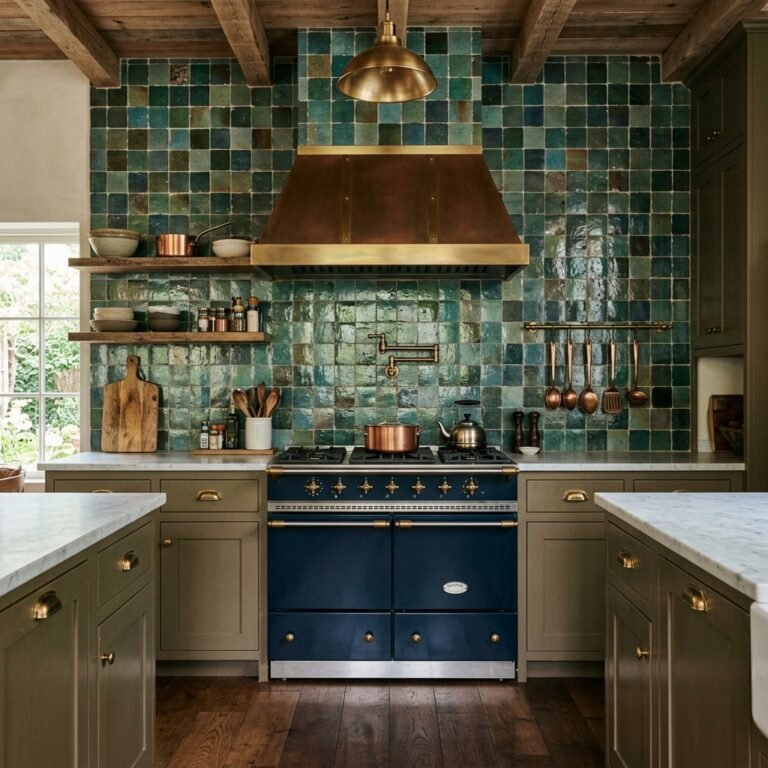
Neutral cabinetry needs somewhere to put personality, and the backsplash has become that outlet. Handmade zellige tile, geometric patterned cement tile, and hand-painted ceramics let a mostly-neutral kitchen carry color and texture in one contained area — low commitment compared to a full cabinet color, easy to update later, and a genuine focal point behind a range or sink. Full-height backsplashes that run from countertop to upper cabinet — rather than stopping at the standard 18-inch band — are also gaining ground, since they turn the tile into a real wall feature instead of a thin strip that gets lost visually.

Smart Storage Solutions for Small Kitchens
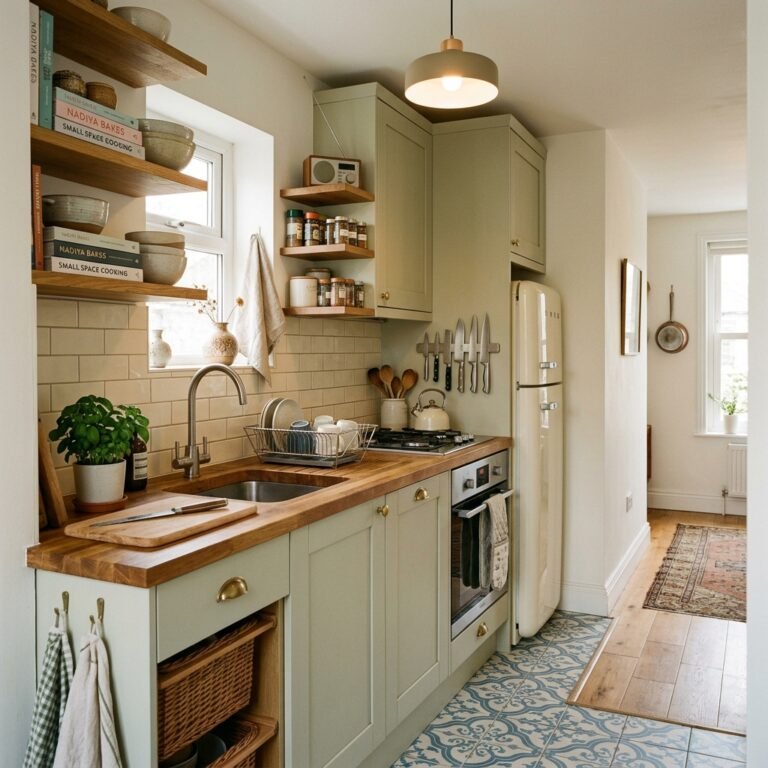
Urban living has made square footage the scarcest resource in kitchen design, and 2026’s storage trends respond directly to that. Corner units with rotating carousels, pull-down upper shelves that bring high storage within reach, and modular drawer inserts custom-fit to a homeowner’s actual cookware are replacing generic shelving. None of these require a full gut renovation — most can be retrofitted into existing cabinet boxes over a weekend, since the inserts are sized to standard 24- and 36-inch cabinet openings rather than requiring custom carpentry. If your kitchen is working with a genuinely tight footprint, this roundup of small kitchen ideas covers layout tricks worth pairing with these storage upgrades.

Mixed Materials and Finishes
The all-one-finish kitchen is giving way to intentional contrast. Wood paired with blackened metal, matte lower cabinets under a glossy upper run, or a fluted glass pantry door next to solid oak — the combinations read as curated rather than mismatched when one material stays dominant and the others act as accents. A simple rule that keeps this from looking chaotic: pick one dominant material, one secondary, and use a third only as a small accent (hardware, a single open shelf, a light fixture). Pairing warm wood with a dark accent like Benjamin Moore’s Silhouette on an island base, for example, gives you contrast without needing a fourth material to tie the room together.

Wellness-Focused Kitchen Design
Wellness has moved from the bathroom into the kitchen, and the numbers back it up: NKBA reports that natural lighting ranks among the most important design considerations for 95% of homeowners surveyed. That’s translating into larger windows over sinks, skylights above islands, and range hoods with genuinely effective ventilation rather than decorative ones that barely move air. The EPA recommends running your range hood the entire time you’re cooking and for 10 to 20 minutes afterward, since cooktop emissions keep dispersing into the room well after the burner is off — a habit that costs nothing but matters more than any appliance upgrade on this list. Some kitchens now carve out a dedicated juicing or herb-growing corner near a window — a small footprint commitment that reinforces daily habits without needing a separate room.

Personalized Kitchens with Character
The biggest shift in 2026 might be the retreat from trend-chasing altogether. Custom cabinet colors, mixed hardware finishes, open shelving styled with actual collected objects instead of staged props, and one or two vintage pieces — a found brass faucet, an inherited light fixture — are what separate a personal kitchen from a showroom copy. Designers are increasingly building rooms around what a client already owns rather than starting from a blank template, which is a useful mindset shift even if you’re doing the work yourself. Before buying anything new, walk through your kitchen and pull out three objects you’d genuinely miss if they disappeared — a ceramic bowl, a specific mug, a cutting board someone made — and build the open-shelf styling around those instead of a curated prop list.

Conclusion: Designing the Kitchen of Tomorrow
None of the twelve trends above require you to gut your kitchen this year. Most work as targeted upgrades: swap the hardware, add a pull-out pantry drawer, replace one appliance with an ENERGY STAR–certified model, or commit to a warmer neutral on your next repaint. The thread running through all of them is the same one driving that 76% growth projection from NKBA — your kitchen is being asked to do more jobs than it used to, and the best 2026 kitchens are the ones built to handle that without losing warmth or personality along the way. Start with whichever trend solves a problem you already have, not the one that photographs best, and the rest of the room will follow. If you’re short on space to begin with, pair these trend picks with layout-specific storage moves first — the visual upgrades land better once the room actually functions.