
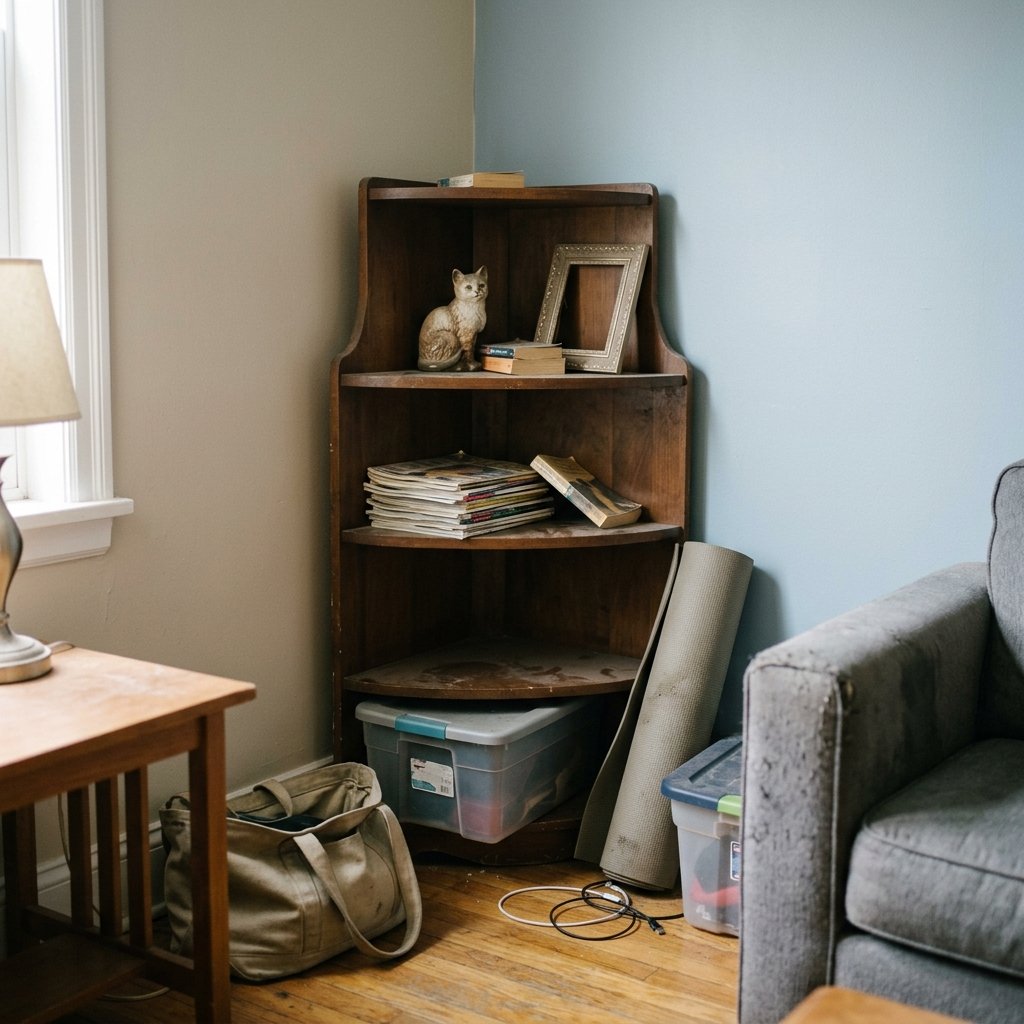
Take a slow look around your small home right now. Chances are your eye slides right past it, the same way it has a hundred times before. There’s a corner in nearly every compact space that quietly swallows square footage and gives almost nothing back. Most people never notice it, because wasted space rarely announces itself. It just sits there, empty and forgotten, while you scramble for storage everywhere else.
I’ve spent years writing about small space living and rearranging my own tight apartment more times than I can count. Through all of it, one lesson keeps surfacing. When you’re short on room, the space you already have but aren’t using matters far more than any clever gadget or storage bin. And in small homes, one particular corner is almost always the biggest culprit.
Let me show you exactly where it is, why it goes to waste, and how to turn it into some of the hardest-working real estate in your home.
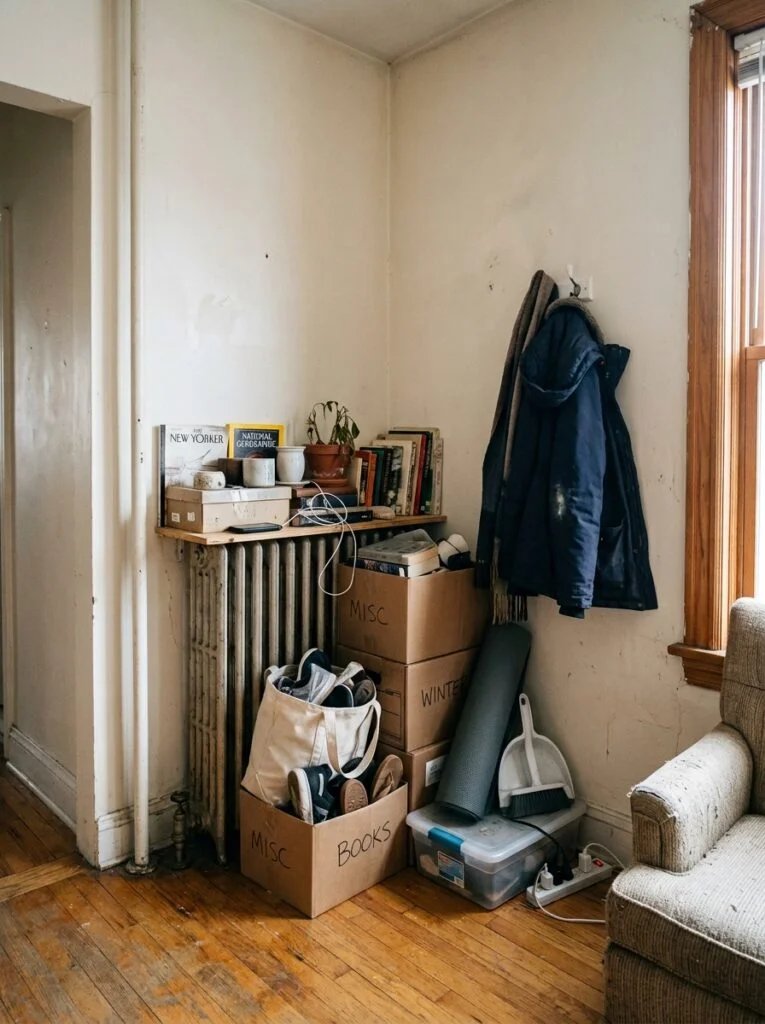
The Corner Everyone Overlooks
Here’s the one that gets neglected most often. The upper corners of a room, the vertical space near the ceiling, especially in corners where two walls meet.
We live in the lower few feet of our homes. Furniture, counters, shelves within easy reach. But everything above eye level, and particularly the corners up there, tends to sit completely empty. In a small home, that’s a genuine loss. You might have three or four feet of unused vertical space in every corner, stretching all the way to the ceiling, and it’s doing absolutely nothing.
Think about it. A room that’s ten feet by ten feet gives you a hundred square feet of floor. But that same room has walls climbing eight or nine feet high. The volume of usable space is enormous, yet we cram everything into the bottom third and leave the rest as air. In a large home, ignoring that is fine. In a small one, it’s the difference between feeling cramped and feeling comfortable.
Corners make this worse because they’re awkward. Furniture doesn’t sit neatly into them, so they become dead zones. Combine an awkward corner with unused height, and you’ve found the single most wasted spot in most small homes.
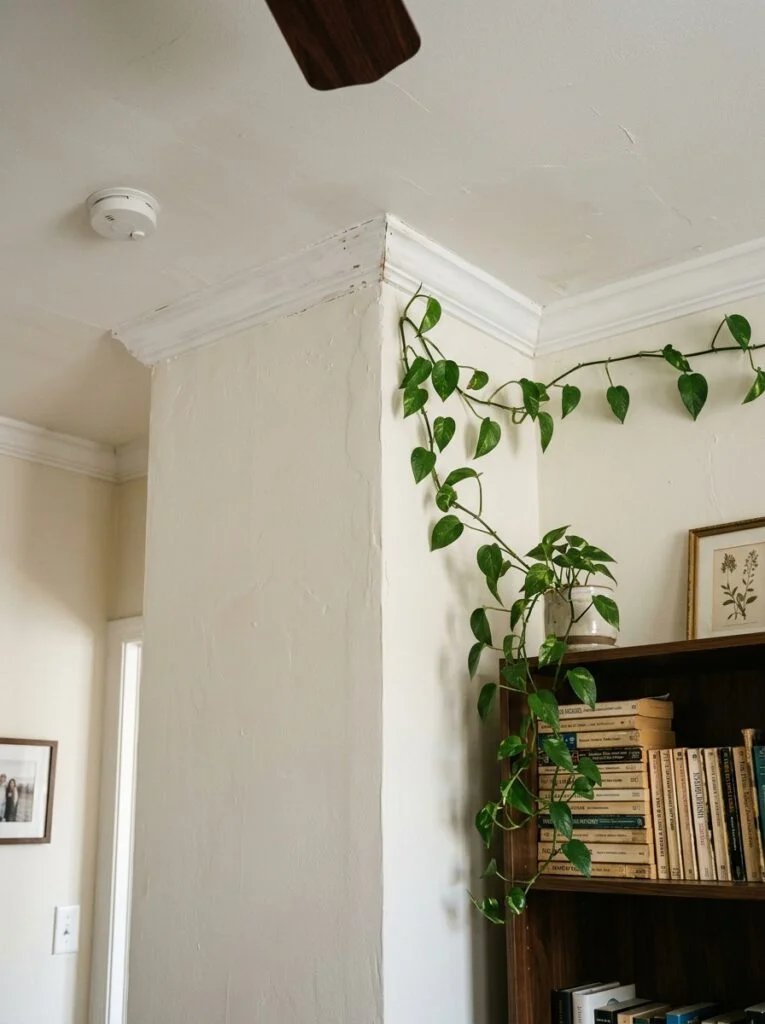
Why This Space Gets Wasted
Understanding why we ignore this space helps explain how to reclaim it. There are a few reasons it slips past us.
The first is simple habit. We’re wired to use what’s within arm’s reach. Anything requiring a stretch or a step stool feels less convenient, so we mentally write it off. Over time we stop seeing it as space at all and start seeing it as just wall.
The second reason is that corners are genuinely tricky. Standard furniture is built with straight lines and flat backs, designed to sit flush against a single wall. Push a bookshelf into a corner and one side always juts out awkwardly, leaving a triangle of dead space behind it. Most people just accept this and move on.
The third reason is that we underestimate vertical storage. When we think about adding storage, we picture wider or deeper furniture, which eats floor space we don’t have. We rarely think taller, even though up is the one direction a small home has plenty of.
Put those three together and you get a corner that climbs several feet toward the ceiling, completely empty, in home after home. The good news is that once you see it, you can’t unsee it, and fixing it is surprisingly satisfying.
How to Reclaim the Corner
Now for the fun part. Turning that dead corner into something useful. There’s a whole range of options here depending on your space, your budget, and whether you rent or own.
Go Vertical With Corner Shelving
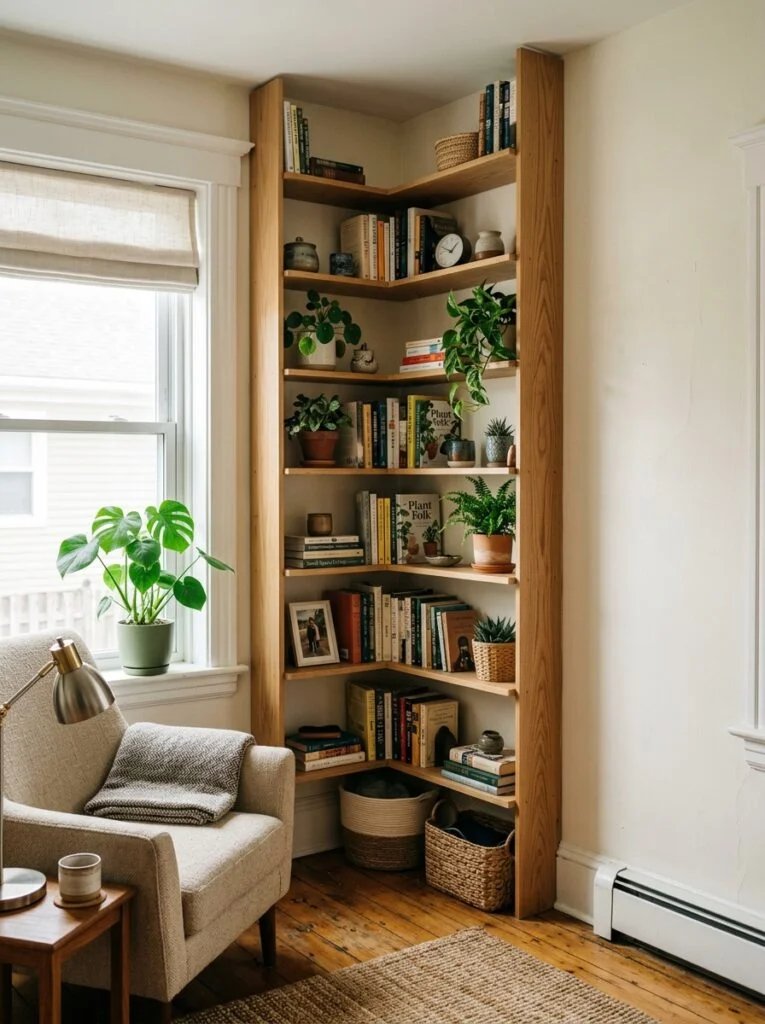
The most obvious fix is also one of the best. Install shelves that climb the corner all the way up. Corner shelves are designed specifically to fit that awkward angle, using the exact space that normally goes to waste. Floating corner shelves look clean and modern, while a tall corner shelving unit gives you serious storage without stealing much floor.
Stack them from a comfortable height right up toward the ceiling. The higher shelves are perfect for things you don’t reach for often, like seasonal items, keepsakes, or backup supplies. The lower ones hold daily items. Suddenly a dead corner becomes a full storage column.
Add a Tall, Narrow Cabinet
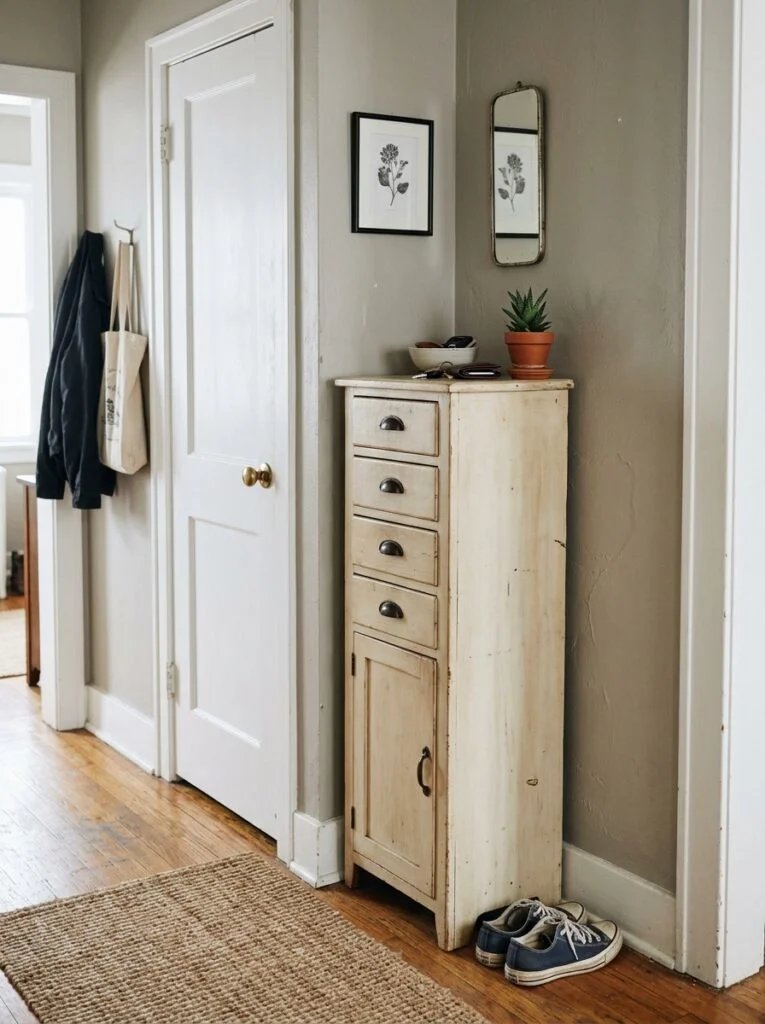
If you want hidden storage rather than open shelves, a tall and slim cabinet tucked into the corner works beautifully. It draws the eye upward, which actually makes the ceiling feel higher, and it hides clutter behind doors. Look for pieces that are narrow in footprint but generous in height. They give you a lot of storage for very little floor.
Use Corner-Specific Furniture
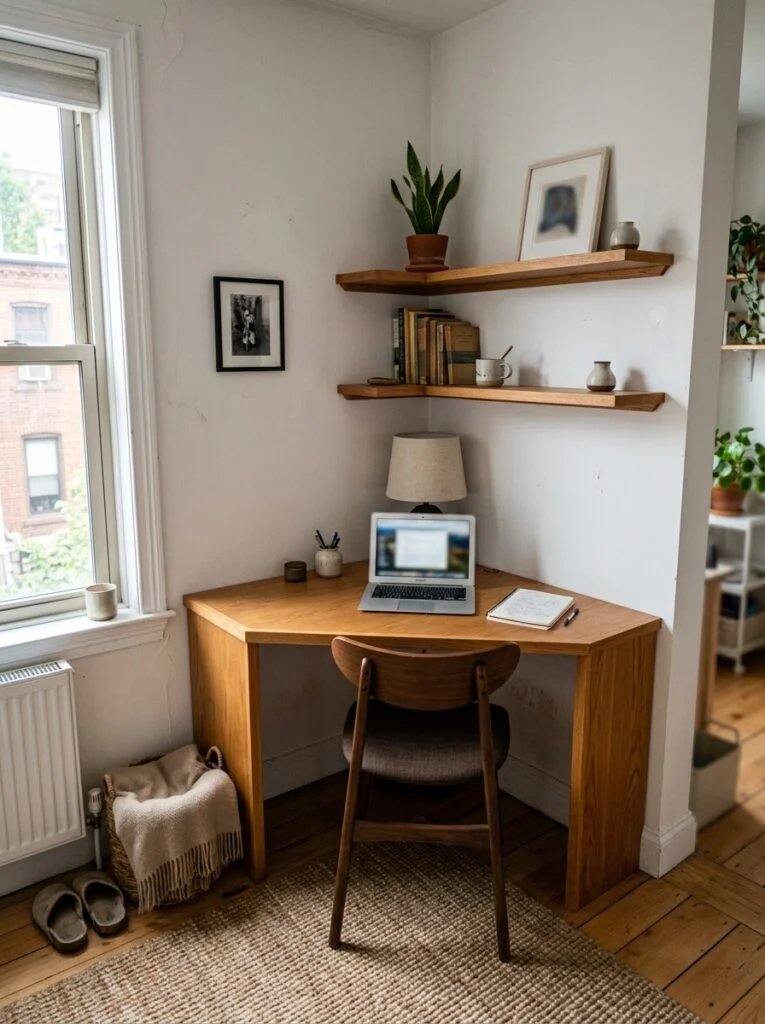
There’s a surprising amount of furniture made specifically for corners, and it’s worth seeking out. Corner desks fit a workspace into an otherwise useless spot. Corner benches with storage underneath work wonders in kitchens and entryways. L-shaped shelving wraps around the angle and turns it into a feature rather than a flaw. These pieces exist precisely because corners are so commonly wasted.
Hang Things High
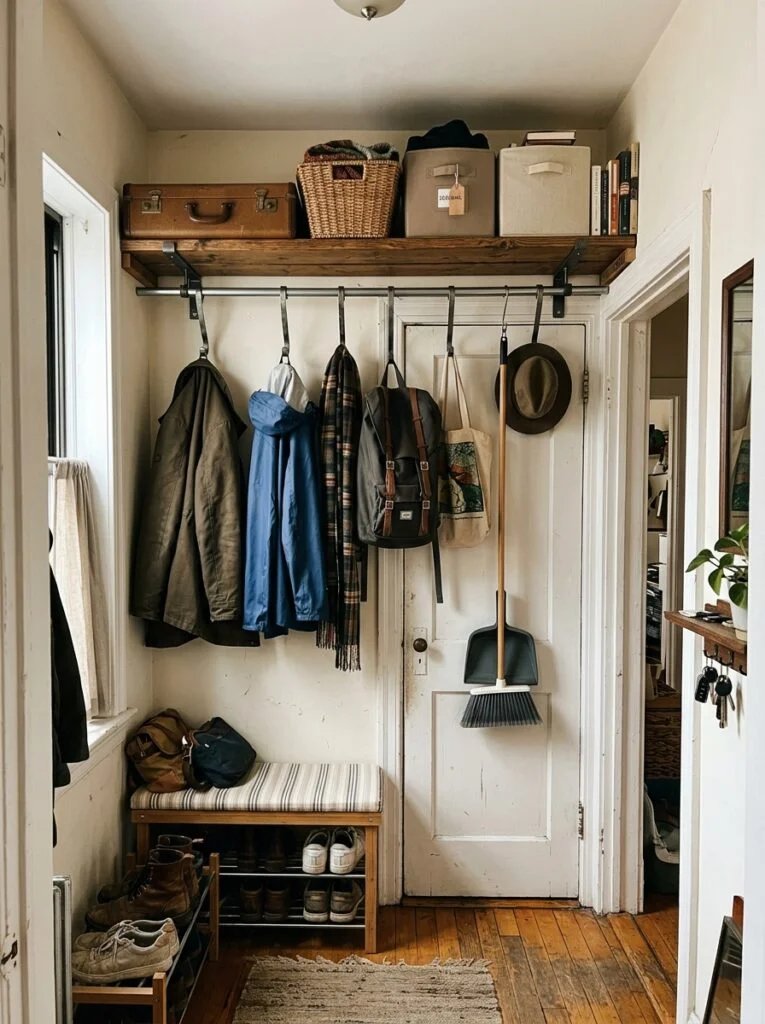
You don’t always need furniture. Sometimes the answer is hooks, rails, or hanging organizers placed high in the corner. In a kitchen, a corner can hold hanging pots and utensils. In an entryway, hooks climbing the corner hold coats and bags. In a bathroom, a corner shelf or caddy uses vertical space for towels and toiletries. Hanging solutions are especially great for renters since many require minimal or no permanent installation.
Create a Cozy Nook
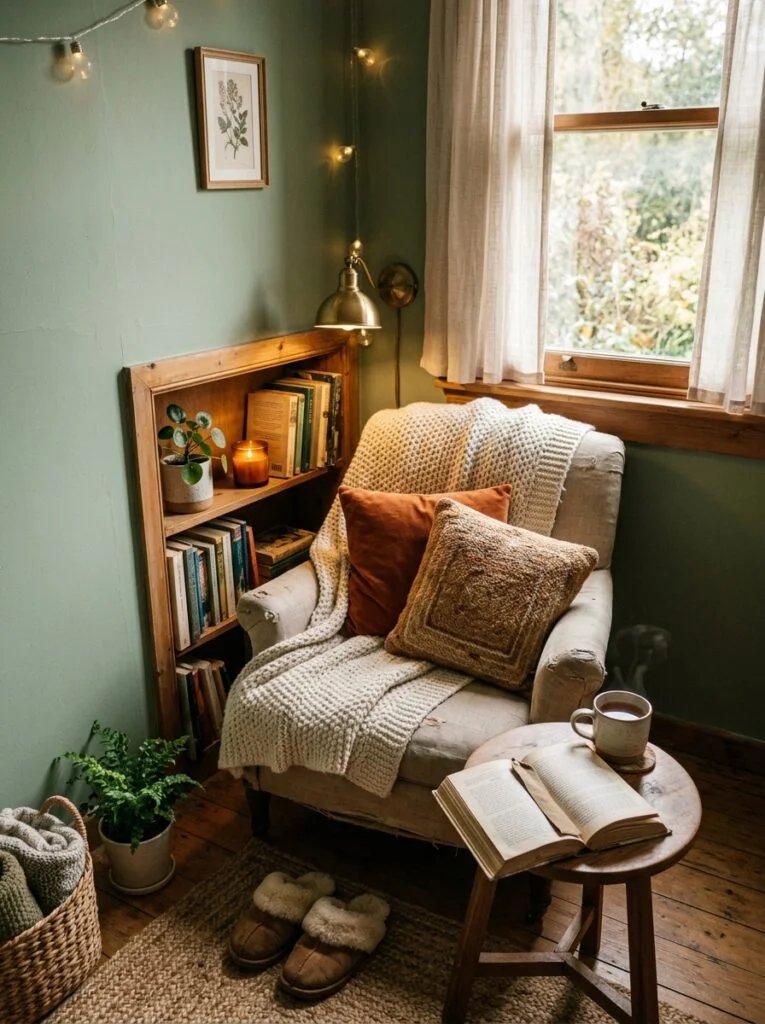
Not every corner has to be about storage. Sometimes the best use is comfort. A tall corner can frame a small reading chair with a slim floor lamp and a hanging plant above, turning dead space into a cozy retreat. The vertical elements draw the eye up and make the whole corner feel intentional and inviting rather than forgotten.
Small Space Rules Worth Following
Reclaiming one corner is a great start, but the same thinking applies across your whole home. A few guiding principles make small space living dramatically easier.
The most important is to always think vertically. Whenever you need more storage, look up before you look wider. Your floor is precious and limited, but your walls climb for feet above your head. Shelves, tall cabinets, hooks, and wall-mounted pieces all add storage without shrinking your floor.
Another key idea is that every piece should earn its keep. In a small home, furniture that does one job is a luxury you can’t always afford. Look for pieces that do double duty, like an ottoman that stores blankets, a bed with drawers underneath, or a bench that hides shoes. The more jobs one item does, the more space you save.
It also helps to keep sight lines open. When you can see across a room without visual obstruction, the space feels bigger. This is why tall, narrow furniture in corners works so well. It stores a lot without blocking the flow of the room, while a bulky low piece in the middle would make everything feel tighter.
Finally, remember that empty floor equals breathing room. Resist the urge to fill every square foot. Keeping some open floor space, and pushing storage upward and into corners instead, makes even the tiniest home feel more open and calm.
Common Mistakes in Small Homes
Even people trying hard to maximize space fall into a few predictable traps. Avoiding these makes a real difference.
- Ignoring vertical space entirely. This is the big one. Storing everything at waist height and below wastes the majority of the room’s actual volume.
- Buying furniture that’s too big. Oversized pieces overwhelm a small room and eat the floor. Slim, tall, and multi-functional almost always beats large and bulky.
- Leaving corners empty by default. Treating corners as unusable is a habit, not a fact. With the right pieces, they become some of your best storage.
- Cramming storage low and wide. Wide dressers and low units gobble floor space. Going tall and narrow stores just as much while freeing the ground.
- Blocking light and sight lines. Placing tall bulky furniture where it blocks a window or cuts the room in half makes everything feel smaller and darker.
- Filling every surface. Even in a small home, some empty space is essential. Overstuffing makes a compact room feel chaotic and cramped rather than cozy.
Expert Insights on Maximizing Small Spaces
After years of experimenting in tight quarters, a few deeper truths stand out about making small homes live large.
The first is that height creates the illusion of space. Drawing the eye upward with tall shelving or vertical decor makes ceilings feel higher and rooms feel bigger than they are. Designers use this trick constantly. Vertical lines expand a space visually, while everything sitting low emphasizes how little room there is.
The second insight is that unused space is stored potential, not wasted space, until you decide to ignore it. Every empty corner and bare stretch of wall is a decision waiting to be made. Small home living rewards people who look at their space and ask what it could do, rather than accepting it as it is.
The third comes straight from professional organizers. Corners are the most underused surface in any home, and they’re often the easiest wins. Because so few people use them well, addressing your corners can dramatically increase storage without changing anything else about your layout. It’s high reward for low effort.
Finally, remember the goal isn’t to cram in as much as physically possible. It’s to use your space intentionally so the home feels open and functional at the same time. A well-used corner should make your home feel roomier, not more crowded. That balance between using space and preserving openness is what small space living is really about.
Frequently Asked Questions
What is the most wasted space in a small home?
The upper vertical space near the ceiling, especially in corners, is the most commonly wasted. Most people store everything within arm’s reach and leave several feet of usable height completely empty, which is a significant loss in a compact home.
How do I use an empty corner for storage?
Install corner shelving that climbs toward the ceiling, add a tall and narrow cabinet, or use corner-specific furniture like an L-shaped shelf or corner desk. You can also hang hooks or organizers high in the corner to use the vertical space.
How can I add storage without losing floor space?
Think vertically instead of wider. Use tall shelving, wall-mounted cabinets, hooks, and corner units that climb upward rather than spreading across the floor. This adds significant storage while keeping your precious floor space open.
Are tall narrow cabinets good for small spaces?
Yes, they’re excellent. A tall, slim cabinet stores a surprising amount while taking up very little floor. It also draws the eye upward, which makes the ceiling feel higher and the room feel larger than it actually is.
How do I make a small room feel bigger?
Keep sight lines open, use tall narrow furniture instead of bulky low pieces, draw the eye upward with vertical storage and decor, and preserve some empty floor space. These choices create a sense of openness even in very small rooms.
Can renters use these corner storage ideas?
Absolutely. Freestanding corner shelves, tall cabinets, and corner furniture require no installation at all. For hanging solutions, look for removable hooks and tension-based systems that use vertical space without damaging walls or requiring permanent changes.
Final Thoughts
The next time you feel like your small home just doesn’t have enough room, resist the urge to declutter yet again or buy another storage bin. Look up instead, straight into that empty corner near the ceiling that you’ve walked past a thousand times. That forgotten space is some of the most valuable real estate you own, and it’s been sitting there unused the whole time.
The fix is refreshingly simple. Think vertically, choose pieces made for corners, and let your storage climb toward the ceiling instead of spreading across your floor. That one shift can transform how much your home holds and how open it feels.
Reclaiming that corner won’t just give you more storage. It’ll make your whole home feel larger, calmer, and more intentional. And once you’ve seen how much a single well-used corner can do, you’ll start looking at every empty space in your home as an opportunity rather than a limitation.

5 comments