You open your front door and step straight into your living room. Or maybe the kitchen. There’s no little hallway, no dedicated foyer, no tidy space to drop your keys and kick off your shoes. Just the door, and then real life immediately. If that’s your home, you already know the frustration. Shoes pile up, coats end up draped over chairs, and mail migrates onto the nearest flat surface. It feels like you’re missing something everyone else has.
Here’s the good news. You don’t need an actual entryway to have a functional one. I’ve written about small space living for years and have created working entryways in homes that technically had none, including my own. The trick isn’t square footage. It’s carving out a defined zone from the space you already have and giving it a clear purpose.
Let me walk you through how to build an entryway where there isn’t one, using ideas that work in even the tightest, most awkward setups.
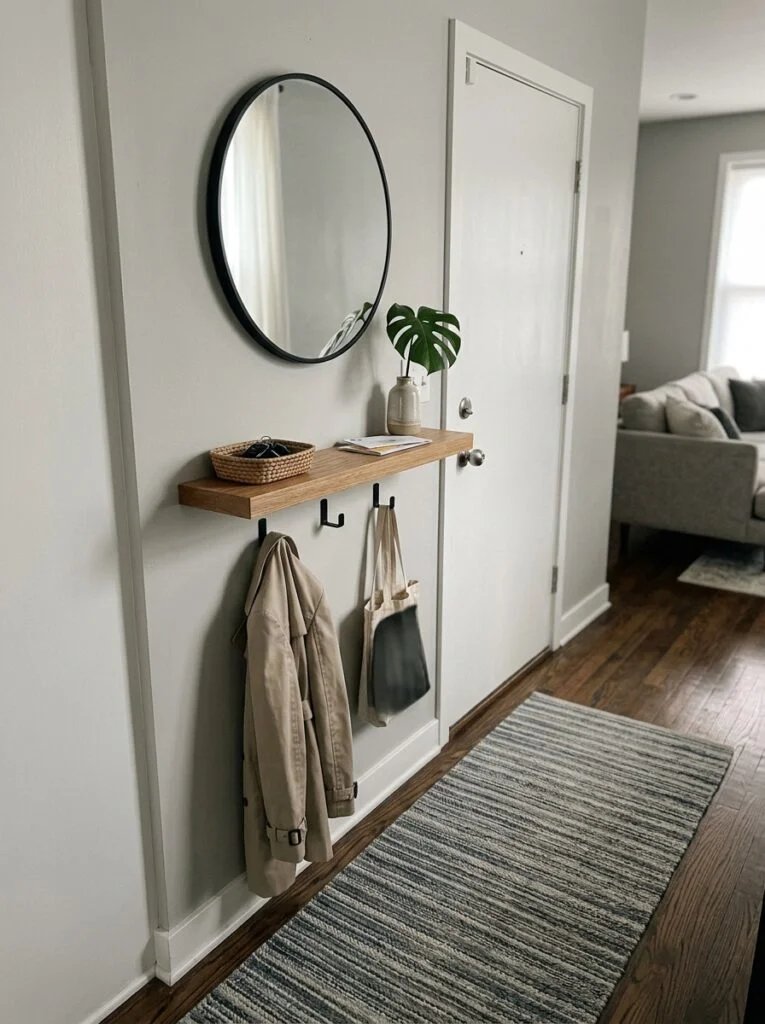
Why You Need an Entryway Even Without the Space
It’s tempting to think an entryway is a luxury, something only bigger homes get to enjoy. But an entryway isn’t really about the space. It’s about the function. It’s the spot where the outside world transitions into your home, where shoes come off, bags get set down, and keys find a home.
Without that transition zone, everything the outside world brings in just spreads throughout your house. Shoes end up scattered across rooms. Coats land wherever there’s a free surface. Keys disappear the moment you need them. The clutter isn’t because you have too much stuff. It’s because that stuff has nowhere to land the second you walk in.
Creating even a tiny defined entryway solves this. It gives incoming items a designated home right at the door, which stops them from drifting into the rest of your space. The result is a calmer home and a much smoother arrival and departure every single day. So even if you have no natural entryway, building one is absolutely worth the effort.
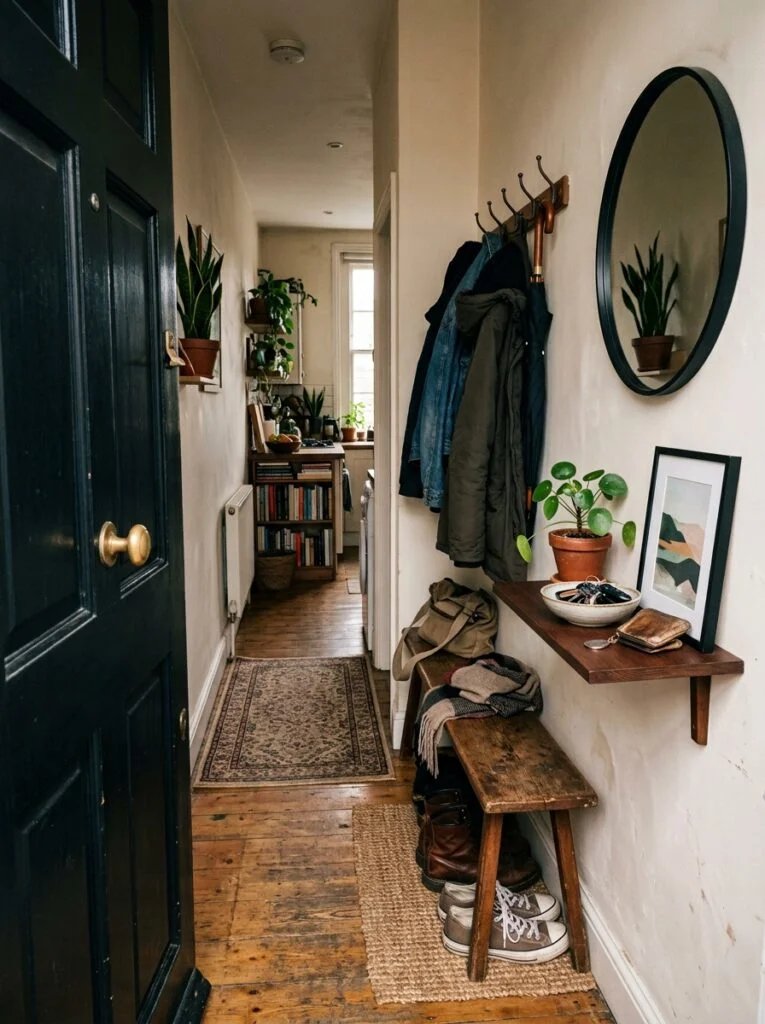
Start by Defining the Zone
The first step in creating an entryway from nothing is claiming a specific spot and making it feel separate, even without walls. This is more about visual and functional boundaries than physical ones.
Look at the area right by your front door. Even if it opens directly into a room, there’s usually a small stretch of wall or floor near the entrance you can dedicate. It might be just a couple of feet wide. That’s completely fine. An entryway can be surprisingly small and still do its job.
The goal is to make that spot read as a distinct zone. You want anyone walking in, including yourself, to instantly understand that this little area is the landing spot. A few simple techniques create that separation without any construction.
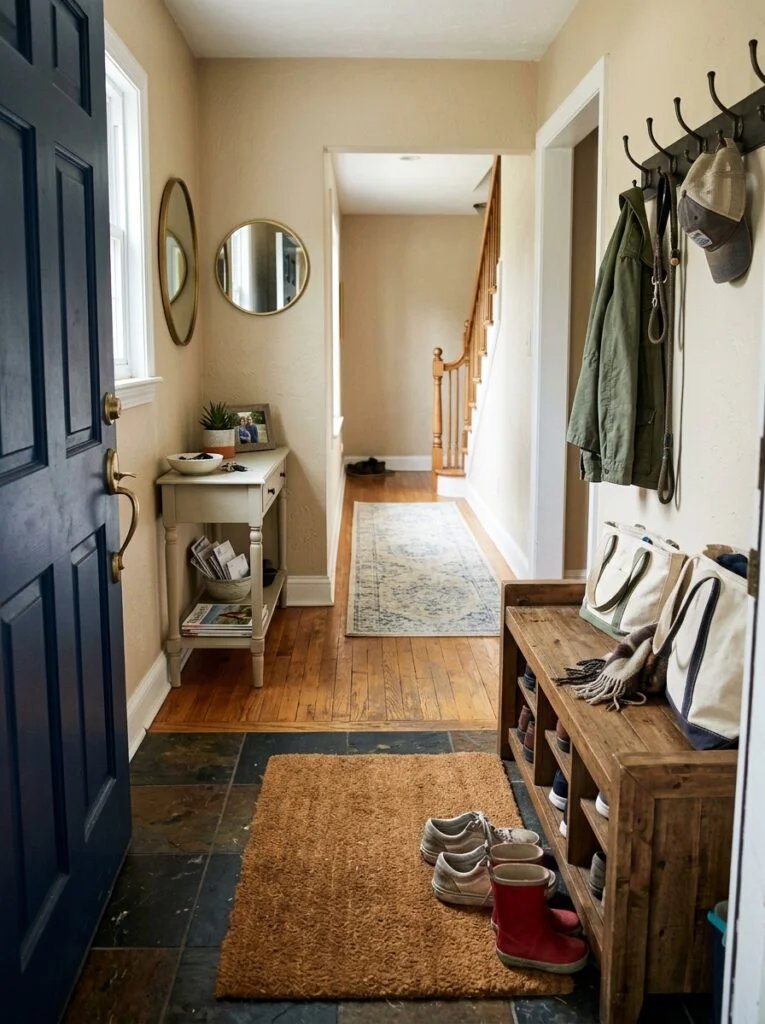
Use a Rug to Anchor the Space
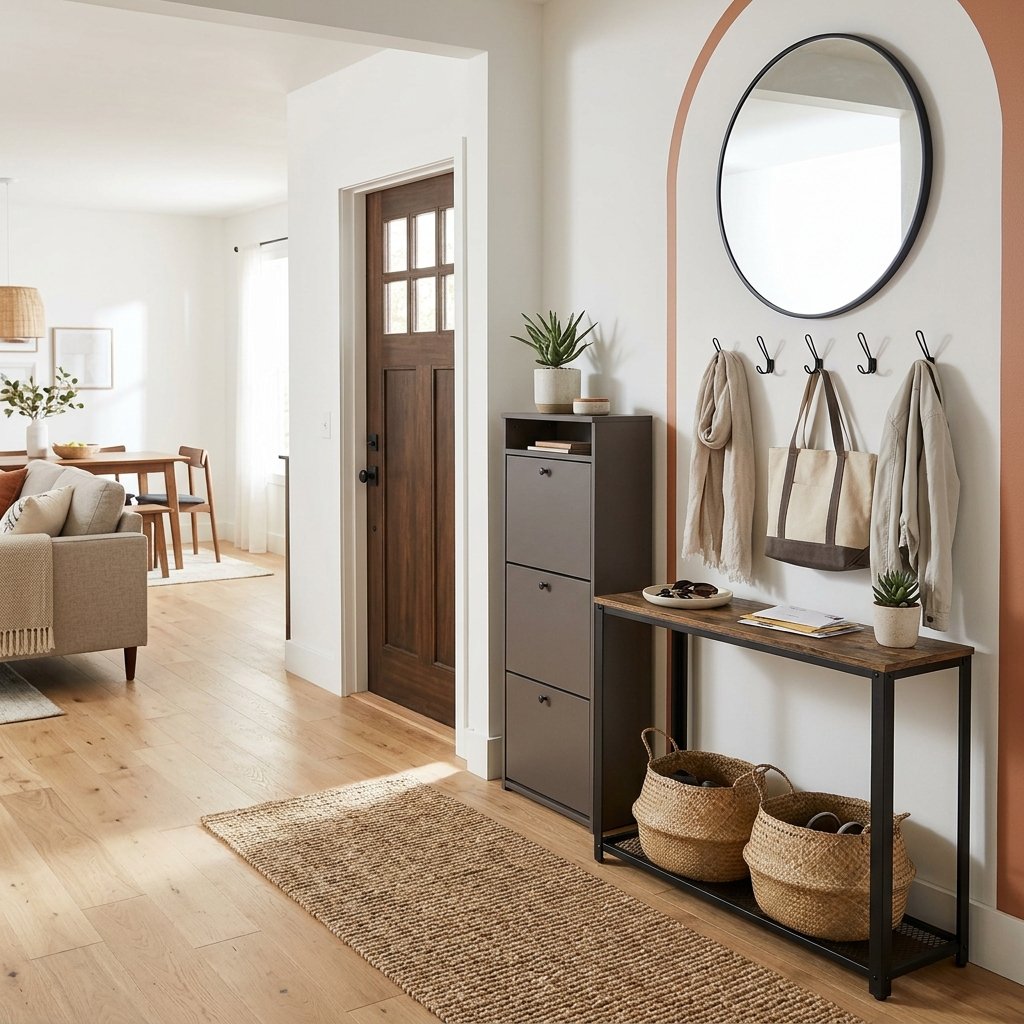
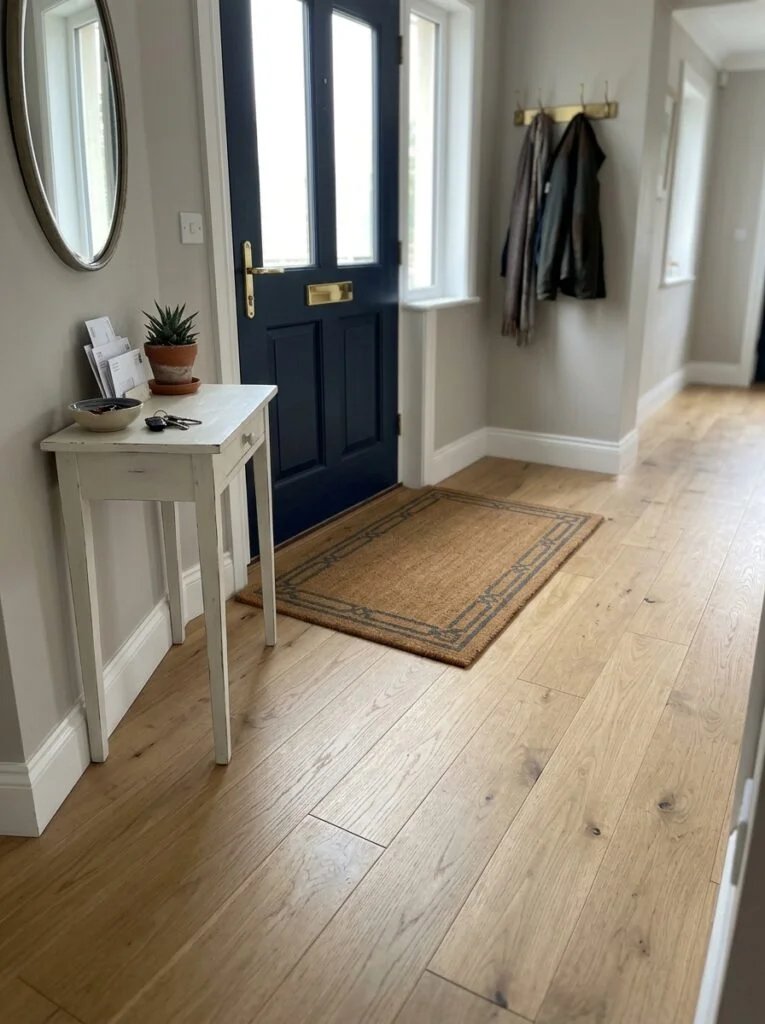
One of the easiest ways to define an entryway is with a rug or a doormat placed just inside the door. A rug instantly signals “this is a separate area” even in the middle of a larger room. It visually carves out the zone, catches dirt from shoes, and gives the space a clear boundary. This one simple addition does a huge amount of the work.
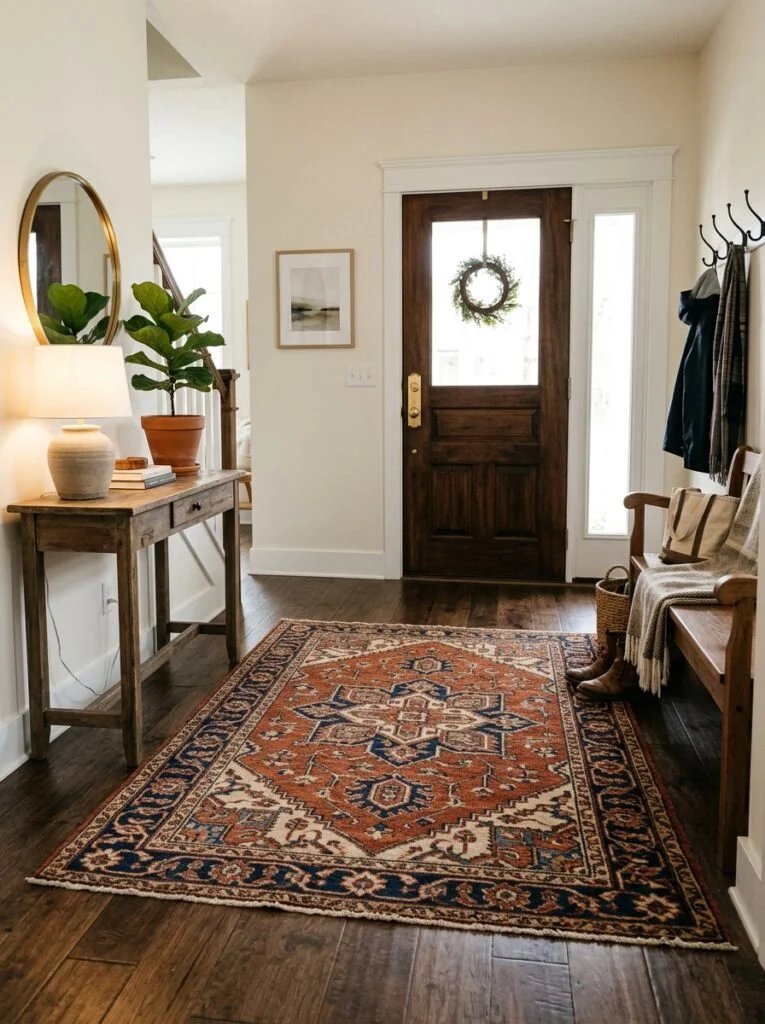
Change the Flooring or Add a Mat
If you want something more permanent, a small section of different flooring, like tile just inside the door, creates a natural entryway feel and handles wet shoes well. But if that’s not possible, a durable, washable mat achieves a similar effect for a fraction of the cost and effort.
Create a Visual Break
You can also define the zone with what you place around it. A narrow console table, a slim shelf, or even a tall plant beside the door signals where the entryway ends and the rest of the room begins. These visual cues train the eye, and your habits, to treat that spot as the entrance.
The Essentials Every Entryway Needs
No matter how small your space, a functional entryway comes down to solving a few basic needs. Nail these, and your entryway works, regardless of size.
Think about what actually happens when you walk in. You need somewhere for keys, somewhere for coats and bags, somewhere for shoes, and ideally somewhere to set things down for a moment. You don’t need much for each. You just need something.
Here’s what a working entryway typically handles:
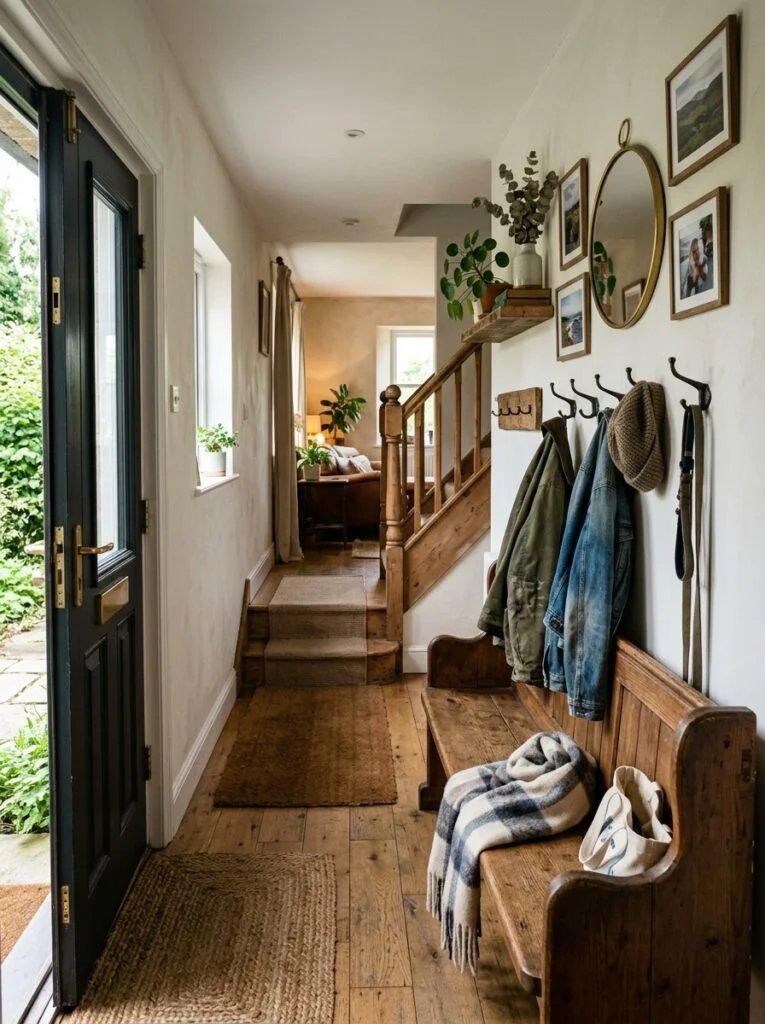
- A spot for keys and small items. A hook, a small dish, or a wall-mounted key holder keeps keys from vanishing.
- A place for coats and bags. Even a few wall hooks solve this without needing a closet or floor space.
- Somewhere for shoes. A slim shoe rack, a tray, or a small basket contains the pile.
- A surface to set things down. A narrow shelf or console gives mail and pockets a temporary home.
- A place to sit, if space allows. Somewhere to perch while putting on shoes is a nice bonus, not a requirement.
You won’t always fit all of these, and that’s okay. Prioritize based on your biggest daily frustration. If shoes are your problem, start there. If it’s lost keys, hooks and a dish come first.
Smart Solutions for Different Spaces
Every no-entryway home is a little different, so let’s look at solutions tailored to the most common situations. Find the one that matches yours.
When You Open Straight Into the Living Room
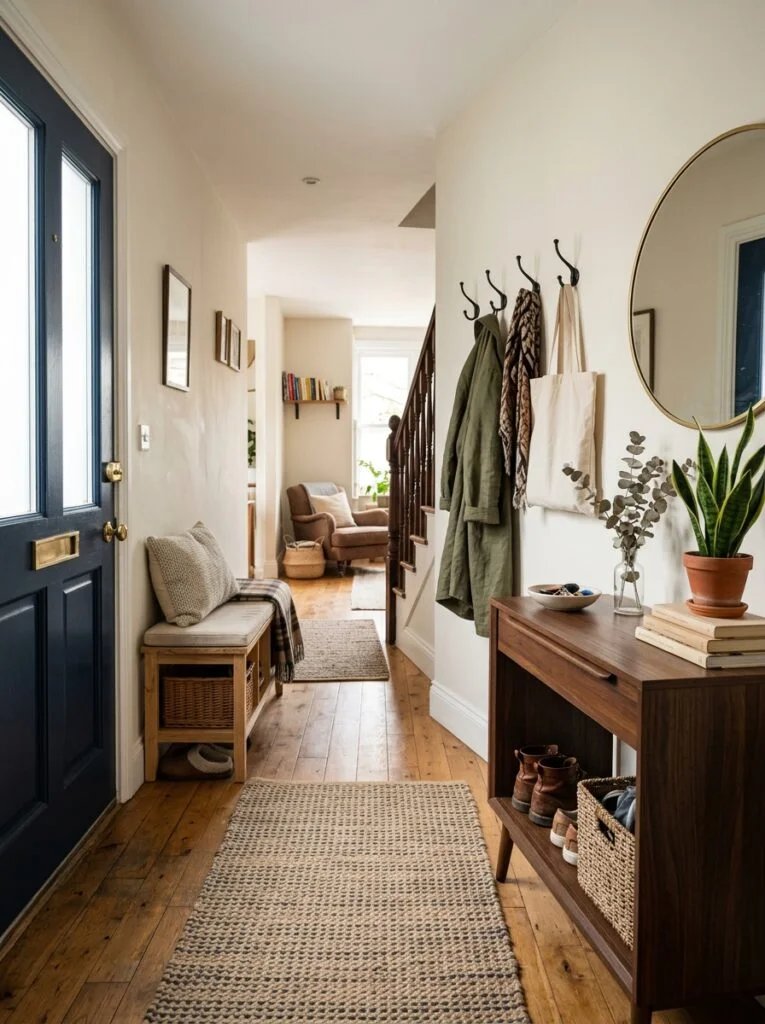
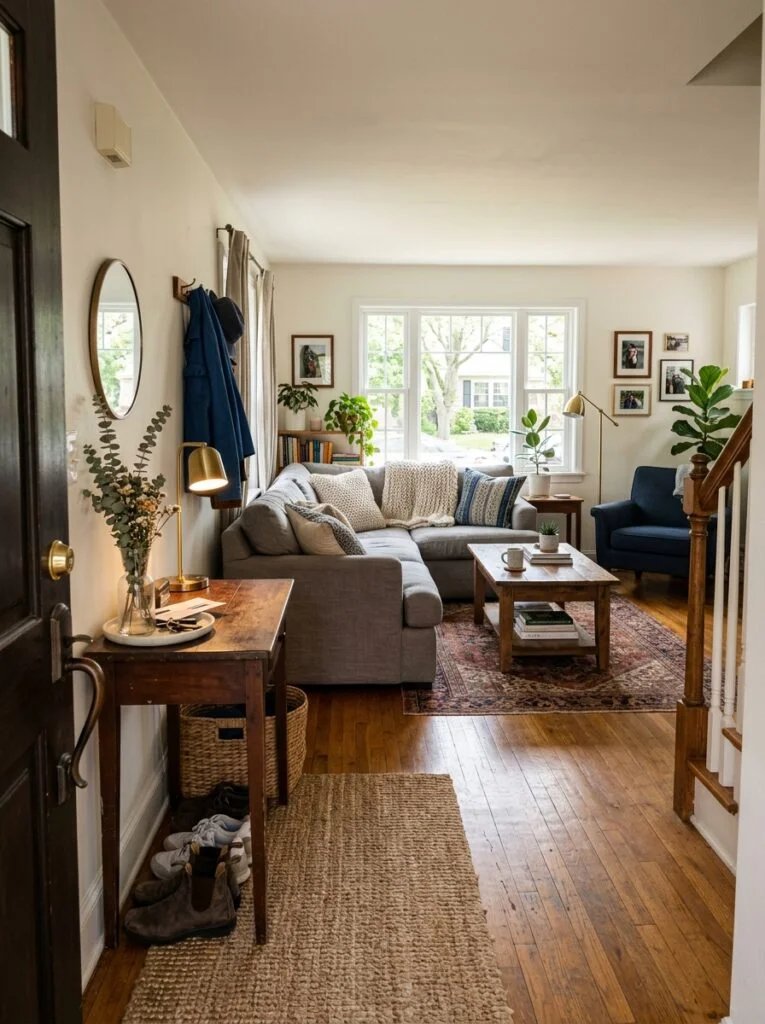
This is the most common setup. The key here is furniture that pulls double duty and blends with your living room decor. A slim console table against the wall by the door gives you a surface plus a spot for a key dish and a small lamp. Add wall hooks above it for coats, and slide a shoe tray or basket underneath. It looks intentional, like part of the room, while functioning as a full entryway.
A storage bench is another excellent choice here. It gives you a place to sit while removing shoes, hides shoe storage inside, and doubles as extra seating for the living room. One piece, several jobs.
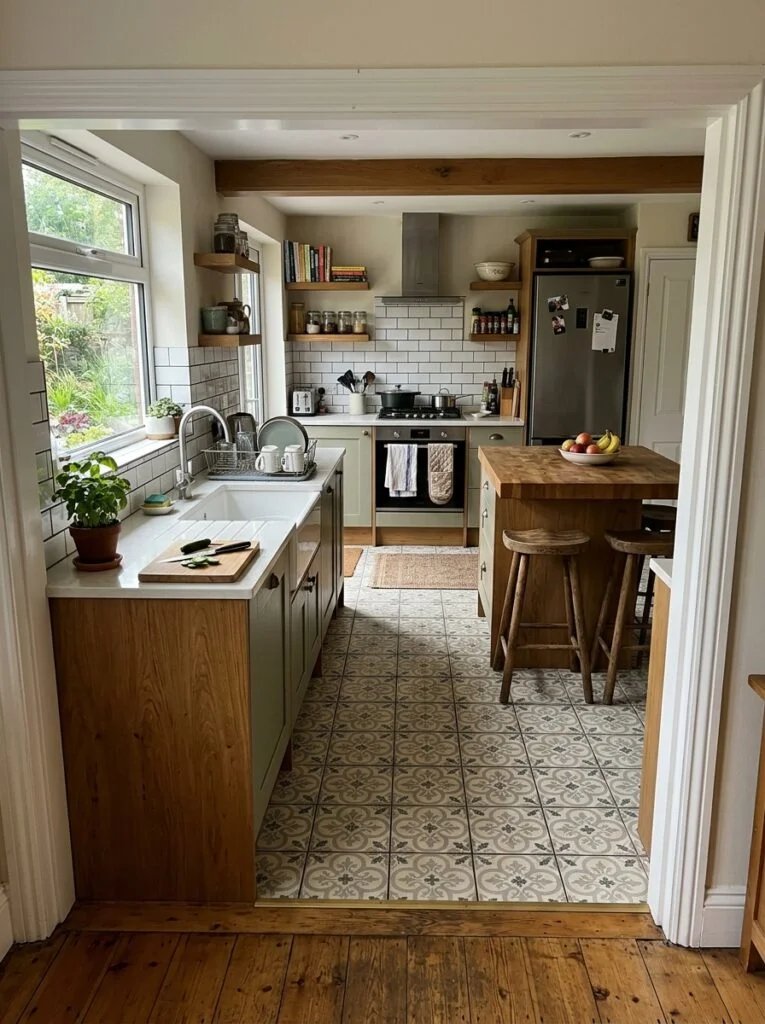
When You Open Straight Into the Kitchen
Kitchens bring their own challenge since counter and wall space are already precious. Focus on vertical and wall-mounted solutions to avoid eating into kitchen storage. A row of hooks by the door handles coats and bags. A small wall shelf or a floating ledge holds keys and mail. For shoes, tuck a slim tray or basket into a nearby corner or the end of a cabinet run.
Keep it compact and clean so it doesn’t blur into the kitchen workspace. The goal is a clear little landing zone that stays separate from where you cook.
When You Have a Tiny Awkward Nook
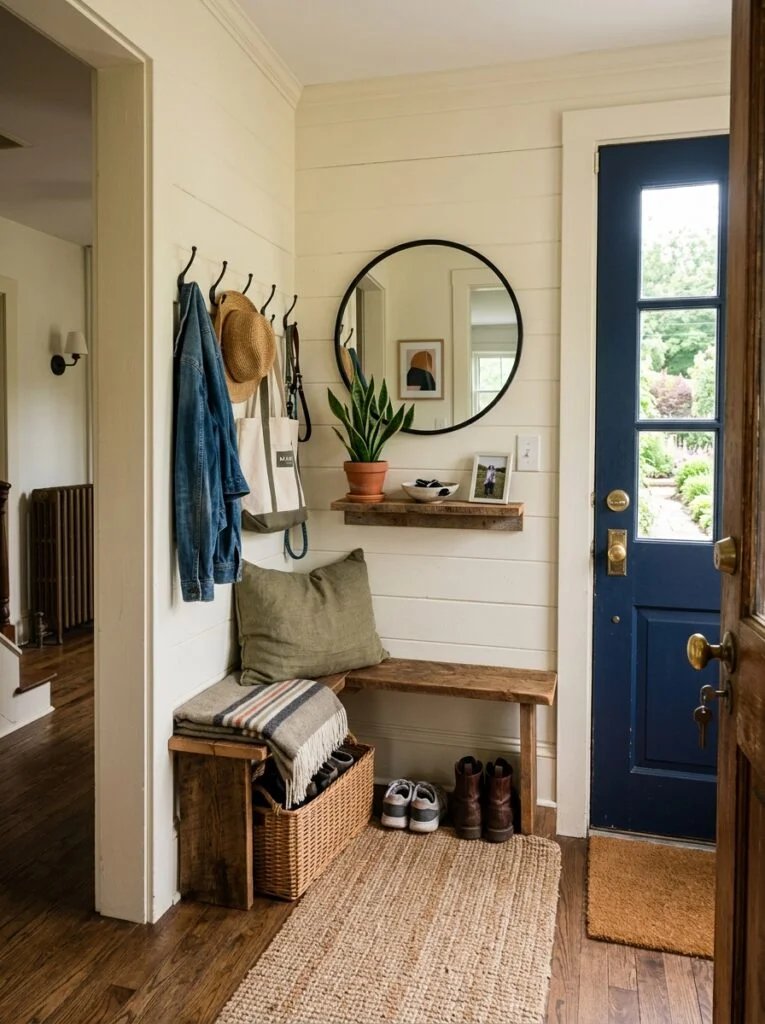
Sometimes there’s a small, oddly shaped space near the door that doesn’t seem good for anything. These awkward nooks are actually perfect entryway spots. A narrow corner can hold a tall, slim shoe cabinet. An alcove can fit a compact bench with hooks above. Even the side of a staircase can become an entryway with a few mounted hooks and a shelf. Awkward spaces and entryways are a great match, because entryways don’t need much room.
When You Have Almost No Space at All
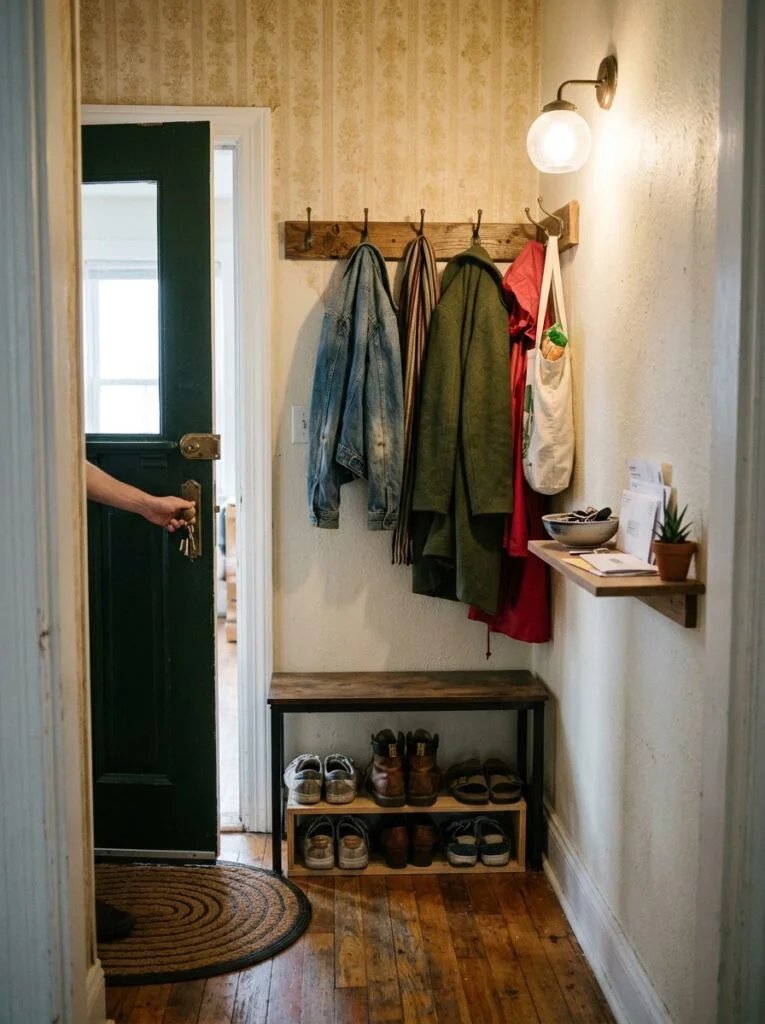
If you genuinely have just the door and a sliver of wall, go fully vertical and minimal. A single multi-hook rail mounted on the door itself or the wall beside it can hold coats, bags, and even a small key hook. Add an over-the-door organizer for shoes if the floor is truly full. It’s amazing how much a few well-placed hooks can accomplish when there’s nothing else to work with.
Making the Most of Vertical Space
When floor space is scarce, and in a no-entryway home it almost always is, the walls become your best friend. Thinking vertically is what makes a functional entryway possible in the tightest spots.
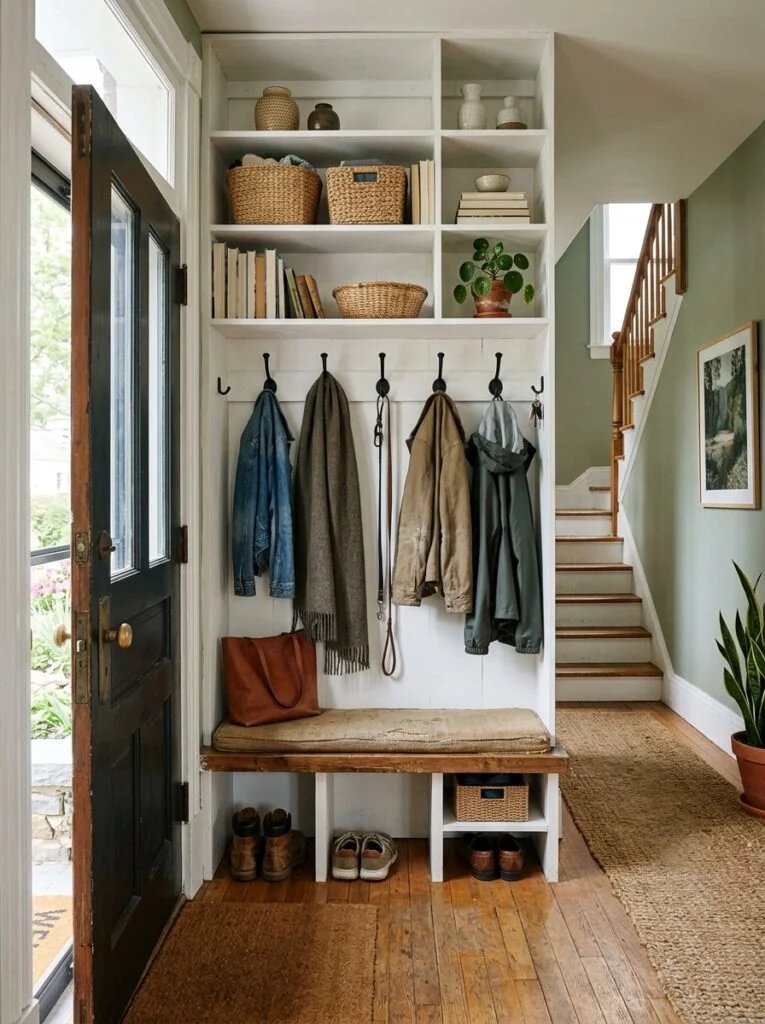
The single most useful entryway tool is the humble wall hook. Hooks take up virtually no space and handle coats, bags, hats, umbrellas, and even keys. A row of hooks by the door instantly creates a coat storage system without a closet or an inch of floor. Mount them at a comfortable height, and add a lower row if kids are using them too.
Wall-mounted shelves are the next layer. A single floating shelf gives you a surface for mail, keys, and a small dish, all without a table taking up floor room. Stack a couple of shelves and you’ve got even more storage climbing the wall instead of crowding the ground.
Don’t overlook the back of the front door itself. Over-the-door organizers, hooks, and racks turn that unused surface into shoe storage, coat hanging, or a spot for bags. It’s one of the most overlooked surfaces in any home, and in a no-entryway setup, it’s pure gold.
Common Mistakes to Avoid
Even with the best intentions, a few missteps can keep your makeshift entryway from working. Steer clear of these.
- Trying to cram in too much. Overstuffing a tiny entryway zone makes it cluttered and defeats the purpose. Keep it to the essentials that solve your real problems.
- Choosing furniture that’s too bulky. A deep, wide table or a large cabinet overwhelms the space and blocks the flow. Slim and wall-mounted almost always wins.
- Skipping a defined zone. Without a rug, mat, or visual anchor, the entryway blurs into the room and stops functioning as a landing spot.
- Ignoring vertical space. Relying only on the floor wastes the walls, which are your most valuable resource in a small entryway.
- Not having a home for keys. Keys are the number one lost item at the door. A hook or dish is small but solves a daily frustration.
- Letting it become a dumping ground. An entryway works only if you actually put things away. Clear it regularly so it doesn’t spiral into a pile.
Expert Insights for No-Entryway Homes
After creating entryways in all kinds of tricky spaces, a few deeper principles stand out that make everything work better.
The first is that a defined zone beats a big zone every time. It doesn’t matter how small your entryway is. What matters is that it’s clearly marked and consistently used. A two-foot stretch with a rug, a hook, and a dish will outperform a large but undefined space where nothing has a home.
The second insight is that consistency is what makes it work. The most beautifully designed entryway fails if you don’t actually use it. The real magic is in the habit of hanging your coat on the hook and dropping your keys in the dish every single time. Build the habit, and even a minimal setup keeps your whole home tidier.
The third comes from how designers approach small spaces. Every entryway element should look intentional, like it belongs, rather than tacked on. When your entryway pieces coordinate with the surrounding room, the whole area feels designed rather than improvised. That intentionality is what makes a no-entryway solution feel like a real entryway.
Finally, remember that the goal is function first, beauty second, and ideally both. A gorgeous entryway that doesn’t hold your stuff is useless, and a functional one that’s an eyesore drags down your space. Aim for the sweet spot where it looks good and genuinely works. That balance is what turns a doorway into a true entrance.
Frequently Asked Questions
How do I create an entryway when my door opens into the living room?
Define a small zone near the door with a rug, then add a slim console table or storage bench with wall hooks above for coats and a shoe tray underneath. Choose pieces that match your living room so the entryway looks intentional rather than tacked on.
What are the essentials for a small entryway?
A functional entryway needs a spot for keys, a place for coats and bags, somewhere for shoes, and ideally a small surface to set things down. You don’t need much for each. Even a few hooks, a dish, and a basket can cover the basics.
How do I make an entryway without any floor space?
Go fully vertical. Use wall hooks or a mounted rail for coats and bags, a floating shelf for keys and mail, and an over-the-door organizer for shoes. These solutions use walls and the door itself, requiring almost no floor space at all.
What furniture works best for a no-entryway home?
Slim, multi-functional pieces work best. A narrow console table, a storage bench that hides shoes and adds seating, or a tall, thin shoe cabinet all provide function without eating up space. Avoid bulky, deep furniture that blocks the flow.
How do I stop shoes from piling up by the door?
Give shoes a designated container like a slim shoe rack, a tray, or a basket right at the entrance. Contained shoe storage stops the scattered pile, and an over-the-door shoe organizer works well when floor space is completely full.
Can I create an entryway in a rental without damaging walls?
Yes. Use freestanding pieces like a console table or shoe bench, removable adhesive hooks for coats, and over-the-door organizers that require no installation. A rug and a freestanding shelf can define and equip an entryway with zero wall damage.
Final Thoughts
The next time you trip over shoes by the door or spend ten minutes hunting for your keys, remember that you don’t need a real entryway to fix it. You just need to carve one out of the space you already have. That little stretch of wall or floor by your door is all it takes to create a landing zone that keeps the whole home in order.
The approach is refreshingly simple. Define the zone with a rug, add a few hooks and a small surface, contain your shoes, and give your keys a home. Lean on your walls and the back of your door when floor space runs out. Suddenly a home with no entryway has one that works beautifully.
A functional entryway won’t just tidy up your door area. It’ll smooth out your daily arrivals and departures and make your whole home feel more organized. And once you’ve experienced walking in and having everything land exactly where it belongs, you’ll wonder how you ever managed without it.