
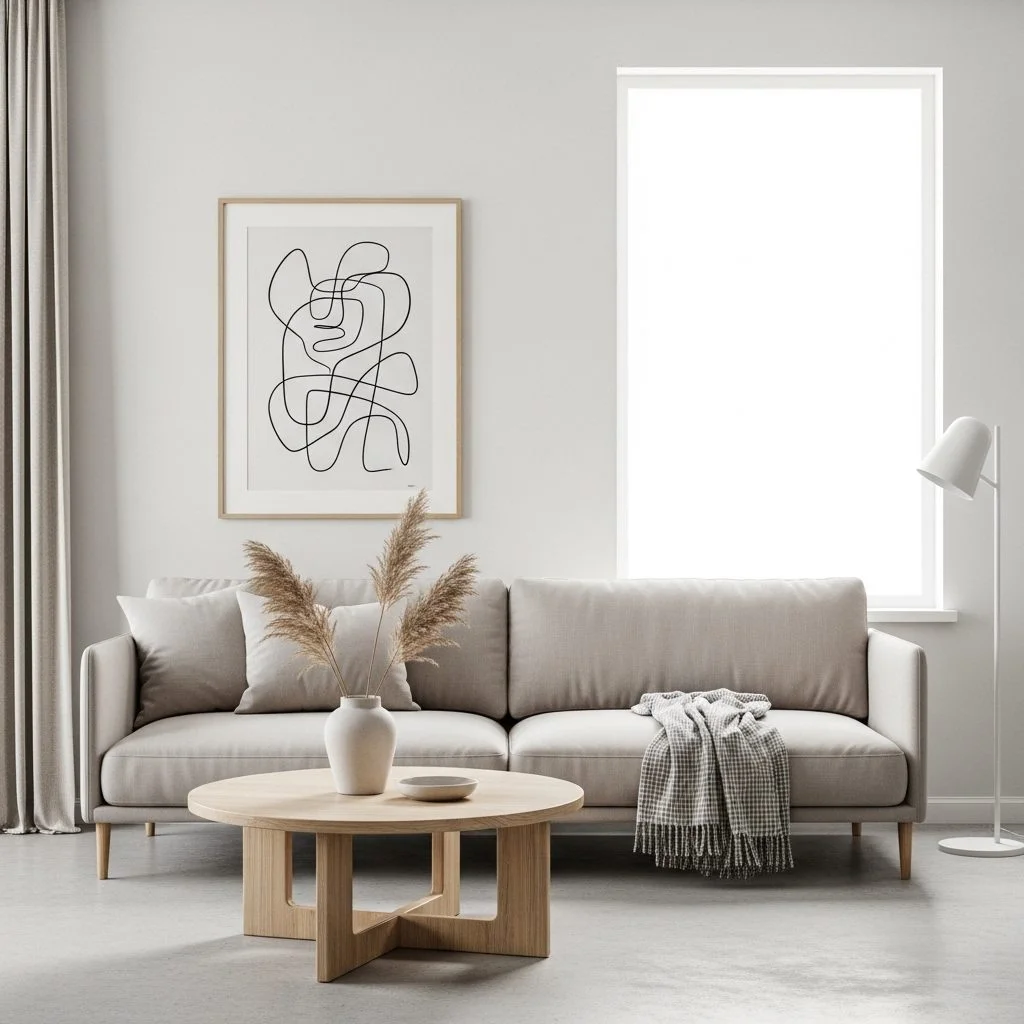
Clap once in the middle of your living room. If a quick, sharp echo snaps back, you are standing in a minimalist room with nothing soft left to absorb sound.
Most people never run this test. They clear the shelves, repaint the walls white, and give away the extra armchair. Then they sit in the finished room and feel oddly on edge, even though every surface is tidy.
The mistake is treating calm as a headcount of objects. Calm is the absence of noise, and objects are only one source. Bare floors bounce sound. Glossy walls throw glare. Sharp corners, loose cords, and rows of printed labels keep your eyes working even when the surfaces are clear.
Below are the kinds of noise a stripped-back room tends to keep, a two-minute way to spot each one, and the fix, with sizes and rough costs.
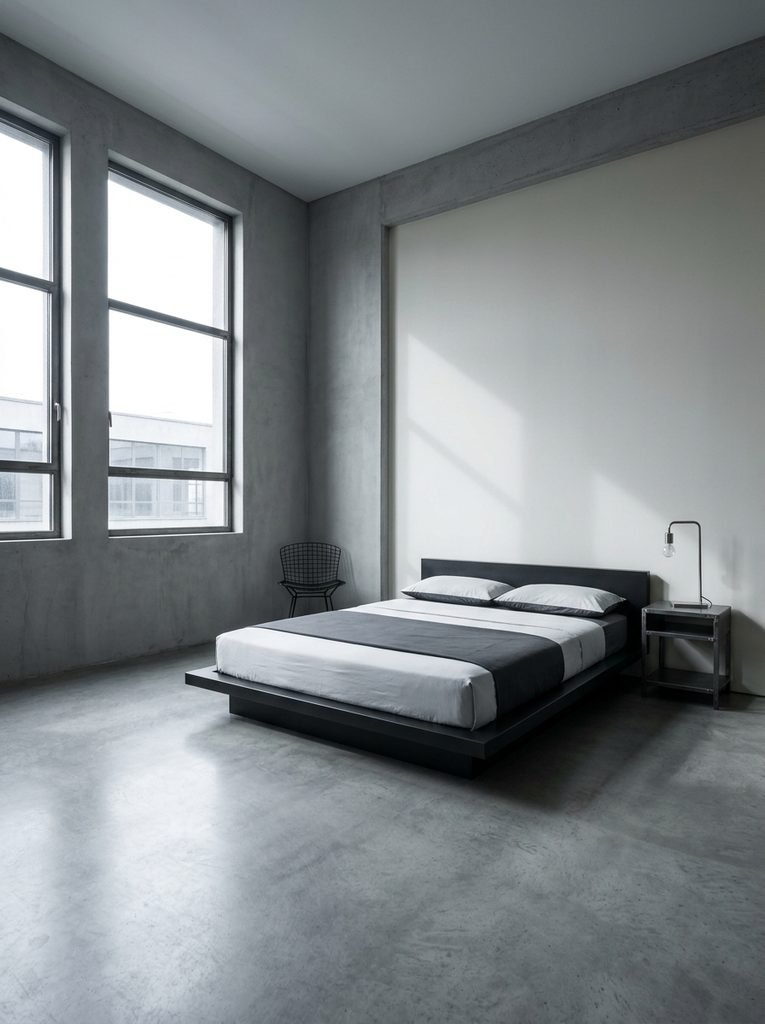
Why a Clean Room Can Still Feel Loud
Every hard, flat surface sends something back at you: sound, light, or a straight line. When a room has few soft things to soak that up, the reflections stack. You may not consciously notice them. Your body does, and it stays slightly alert.
Run four checks before you buy anything:
- Clap. A fast flutter or ring means bare parallel walls and a bare floor are bouncing sound.
- Squint. Bright patches on walls, tables, or the floor are glare, and they are what your eyes keep returning to.
- Sit. Look straight ahead from your usual seat. Whatever sits at eye level, usually about 40 inches up, is the view you live with.
- Count the repeats. Black cords, printed labels, mismatched whites. Small things that repeat read as visual static.
Most rooms fail two of the four. Start with the one that bothers you most.
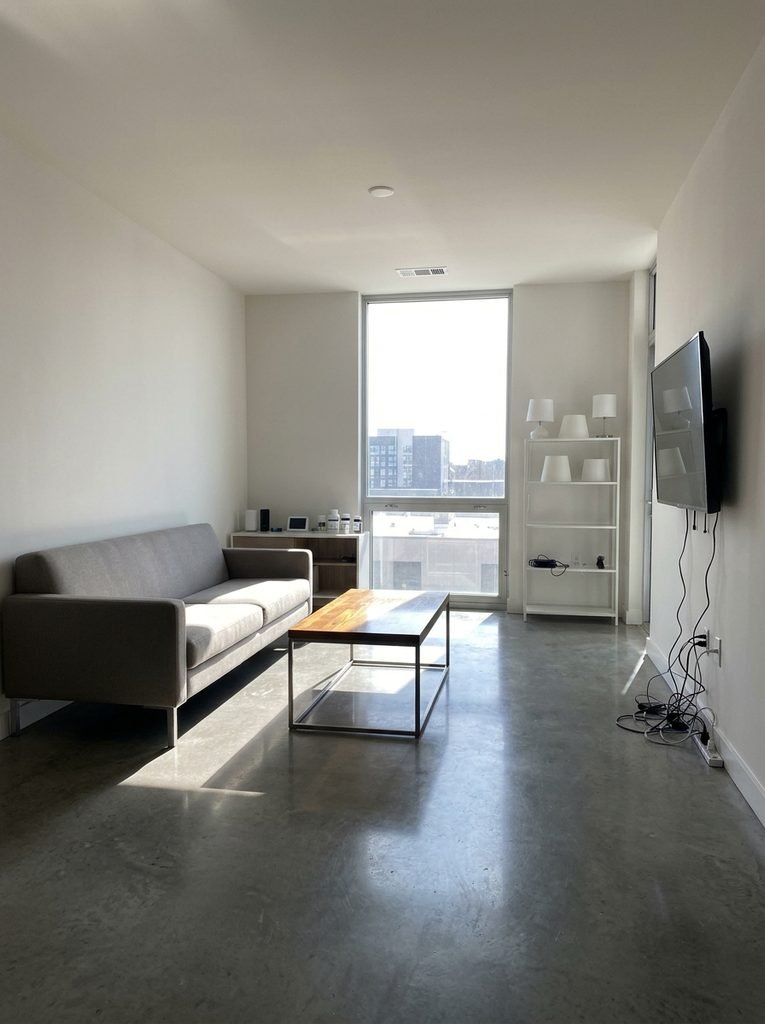
Soft Surfaces Fix an Echo Faster Than Decor Does
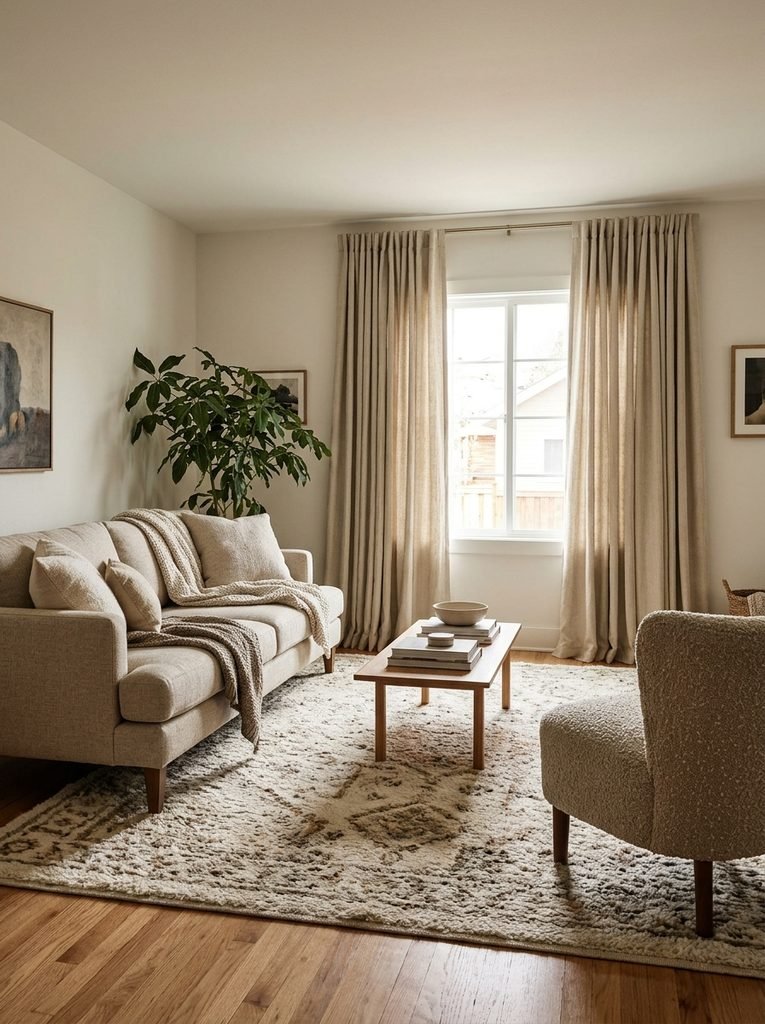
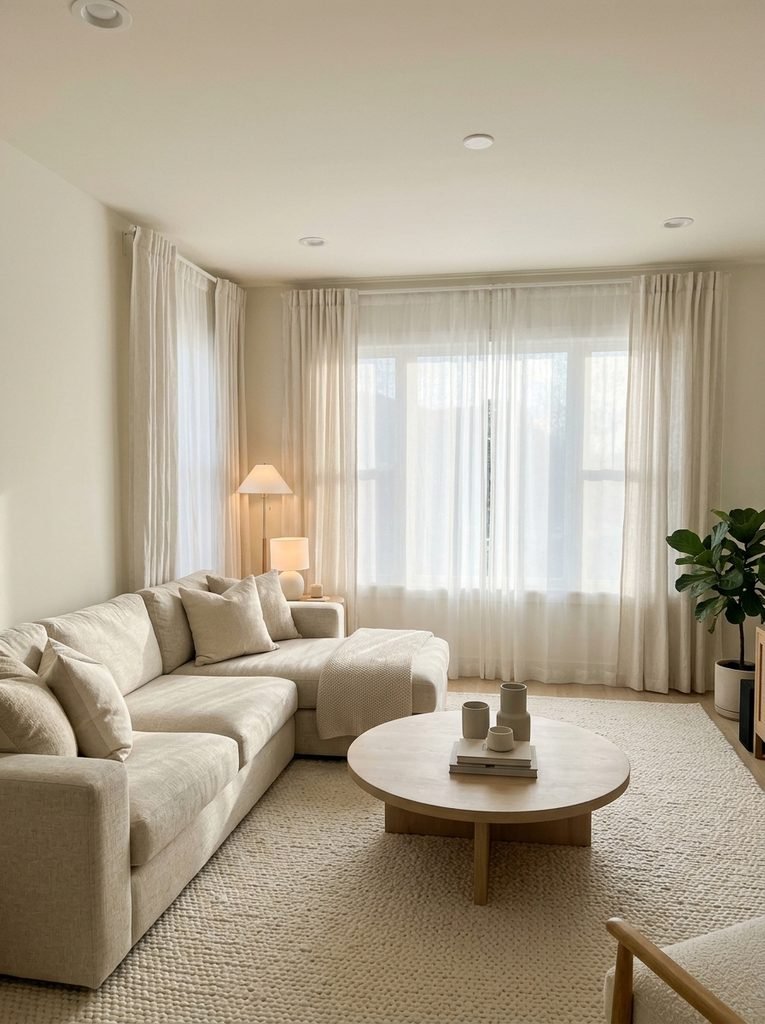
Rugs do most of the work, and most minimalist rooms own one that is too small. A 5 by 8 rug in a 12 by 14 foot living room covers about a quarter of the floor. An 8 by 10 covers nearly half and leaves a 2-foot border of bare floor on every side, which is the proportion that reads as deliberate. Slide the front legs of the sofa and chairs onto it.
Add a pad. A felt-and-rubber pad about a quarter inch thick takes the hollow, drumlike edge off footsteps and stops the rug creeping. Plan on roughly $50 to $100 for an 8 by 10 pad.
Windows are the second target. Bare glass reflects sound like a wall does. Floor-length lined curtains, hung 4 to 6 inches above the frame, absorb far more than a roller shade. Buy fabric about twice the width of the window so the panels fold instead of hanging flat. Lined linen-blend panels run roughly $40 to $120 each.
Quiet the Bedroom Next, and Think Twice Before Adding a Fountain
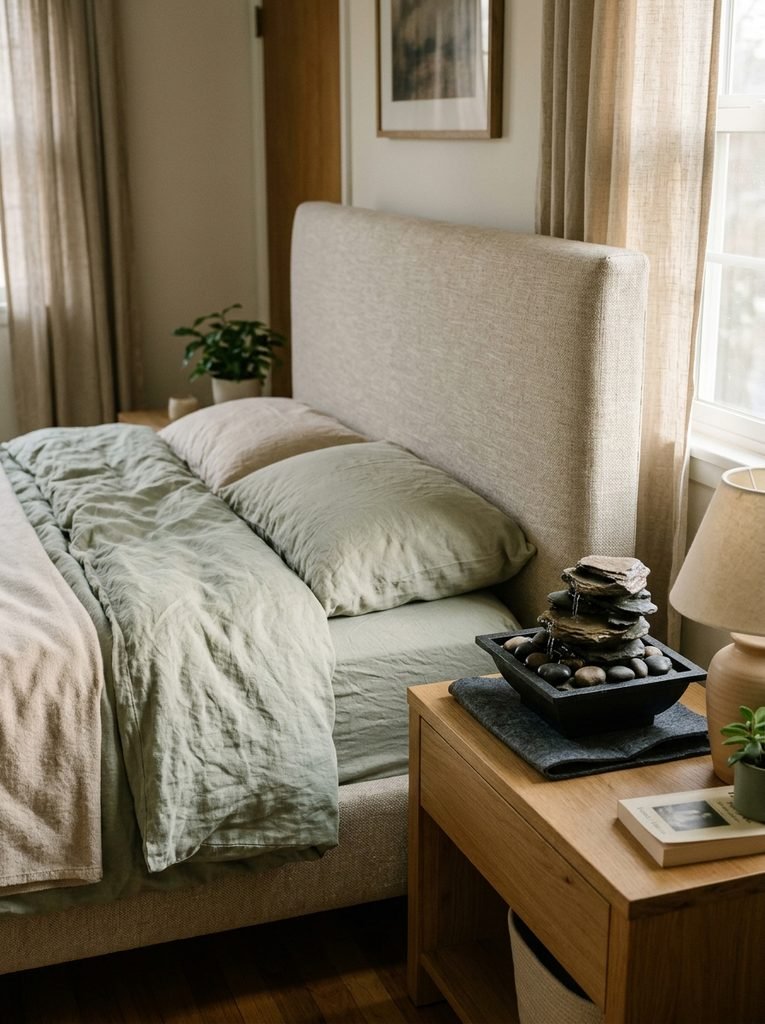
Bedrooms echo less because the bed is one big soft block. One cheap fix still pays off. An upholstered headboard about as wide as the bed puts a soft panel exactly where sound bounces back toward your head. Fabric-wrapped headboards start around $150. Keep the bedding to two or three plain layers so the bed itself stays quiet.
Fountains are a different story. People add them to cover silence, but a cheap pump can bring its own buzz. Run it for an evening before you commit. If you can hear the motor from the doorway, or the water slaps instead of trickling, you have added noise rather than masking it. A folded felt pad under the unit stops vibration travelling through the table.
Glare Is the Noise Hiding in All-White Rooms
Stand at the far end of an all-white room at 4 p.m. and squint. Gloss and satin paint, white lacquer furniture, and glass tabletops throw the window back as a bright smear. Your eyes keep landing on it.
Use a flat or matte finish on the walls and keep eggshell for trim. Pick a white with a drop of cream or gray in it rather than a stark one. Paint a 2 by 2 foot swatch, then check it in the morning, late afternoon, and under lamps at night before you roll the whole room.
Bulbs matter as much as paint. ENERGY STAR explains that certified bulbs come in both warm tones that imitate old incandescent light and cooler, whiter ones, so you can choose by color, not just brightness. For living rooms and bedrooms, pick the warm end, look for 2700K on the box, and use the same number in every fixture in the room. A bare bulb behind a clear fixture is glare. Swap it for a frosted or opal shade.
Daylight needs managing too. A white sheer hung behind your main curtain turns a hard shaft of sun into a soft wash. Expect $25 to $60 per panel.
Hard Corners and Straight Lines Add Tension
Walk through your living room as if the lights were off. Where do your hips meet a corner? A square coffee table at knee height in a walkway is a bruise and a visual jab at once.
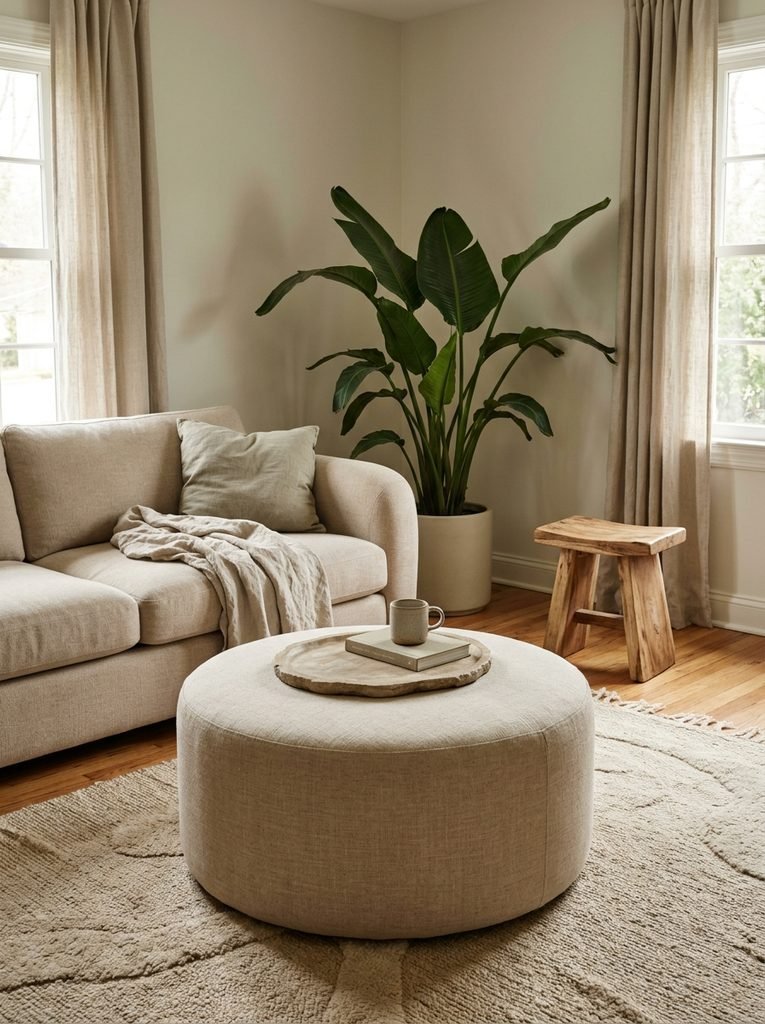
Soften the edges you pass most. Look for a coffee table with a corner radius of about 2 inches or more, or swap it for a round ottoman 30 to 36 inches across. Leave 14 to 18 inches between the sofa and the table, and 30 to 36 inches for the main walking path. A sofa with rounded arms rather than track arms does the same job on a larger scale.
A big leafy plant helps where two walls meet at a hard 90-degree corner. A 4 to 5 foot rubber plant or bird of paradise costs roughly $40 to $120 at a garden center, and its leaves break the vertical line. Keep it in a plain pot so it adds softness without adding another pattern.
Natural materials relax a straight line because their edges are never perfectly even. One hand-finished wood stool or stone tray does more than a matched set of factory-straight pieces.
Check the View From Where You Actually Sit
Sit where you sit every evening and look straight ahead. Then lie on your bed and look at the ceiling and the far wall. Most people have never studied their room from these two spots, and they are the views you live with.
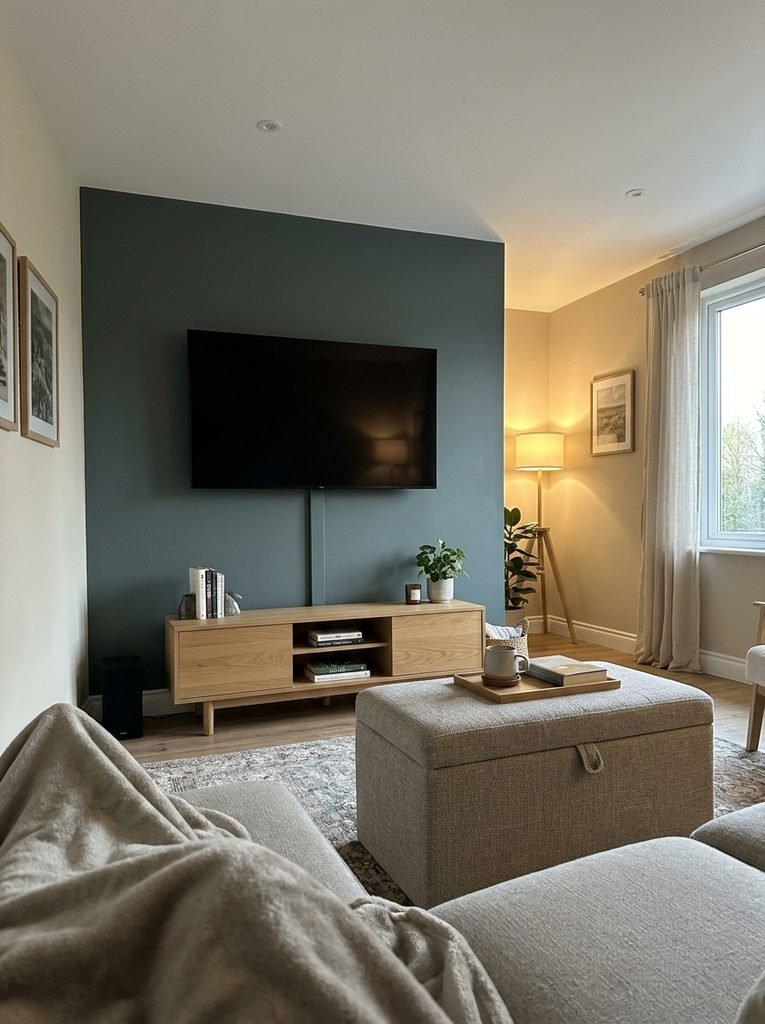
A switched-off TV is the usual offender. A 55 inch screen is about 48 inches wide, a big black rectangle in the middle of a calm wall. Paint that wall one or two shades deeper than the rest so the screen stops reading as a hole. Then hide the cord drop with a paintable adhesive cover, about $10 to $25 for a 6-foot run, which needs no drilling.
Check the path too. Stand in the doorway and trace a clear line to the farthest window. If a chair or console blocks it, your eye hits an obstacle before it reaches the light.
Closed storage does the rest. A lidded storage bench or ottoman swallows remotes, throws, and chargers at seated height, exactly where clutter is most visible.
Small Repeated Details Create Visual Static
Three different whites on one wall, five black charger cables, and a dozen brand logos add up. Each is tiny. Together they hum.
Four quick fixes:
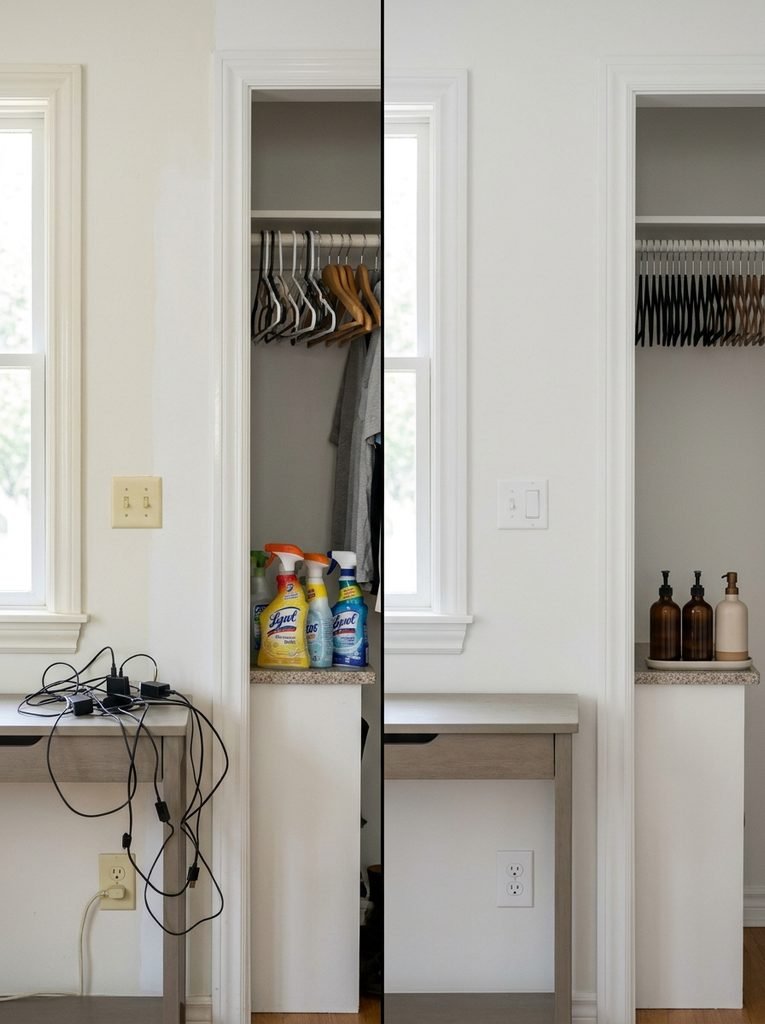
- Replace yellowed outlet covers and switch plates. A cream plate on a white wall is a repeated spot, and new ones cost a few dollars each.
- Decant soap and cleaning sprays into plain pump bottles. Printed labels on a bathroom or kitchen counter are the loudest thing in the room.
- Use one hanger type in an open wardrobe. Thirty slim matching hangers run about $15 to $25.
- Match sheens. A matte wall beside a glossy cabinet in the same color looks like a mistake, not a match.
One-color rooms are where this matters most. When everything shares a hue, a single piece with the wrong sheen or undertone stands out more than it would in a mixed room.
Shelves Look Calmer When the Books Follow One Rule
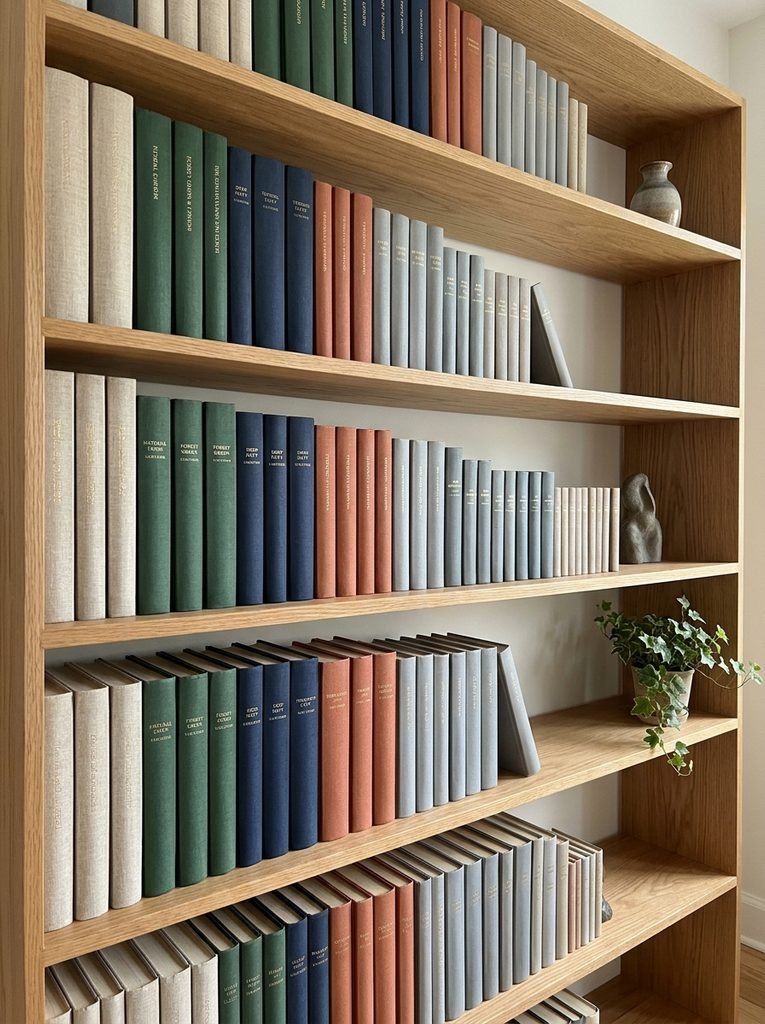
Open shelves fail when every item follows a different logic. Pick one rule and stick to it. Sorting books by height, tallest on the left, makes the tops form a gentle slope instead of random peaks.
If the spines are loud, remove the dust jackets. Many hardcovers have plain cloth bindings underneath, and the shelf quiets down at once. Keep objects to one end of each shelf, so the rest reads as a clean run. Standard shelves are 10 to 12 inches deep, so lean a few books forward rather than lining everything flush.
Mirrors and Art Can Quiet a Wall or Make It Louder
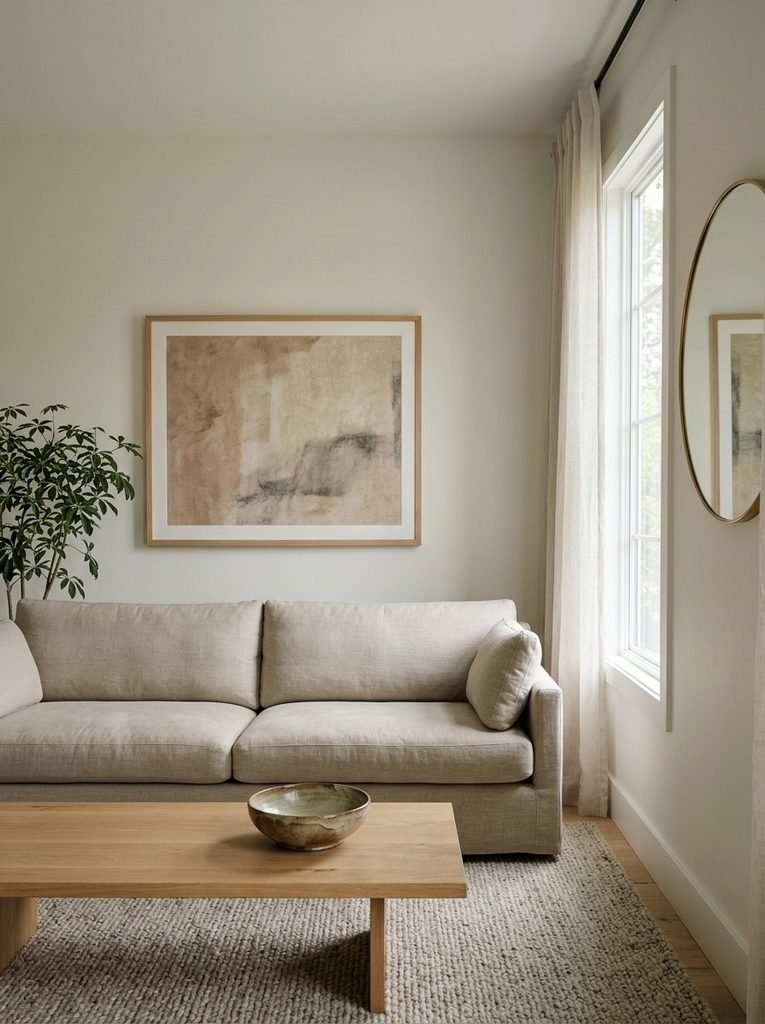
A mirror hung directly across from a window can send a bright patch back into the room at certain hours, especially around sunset. Hang it on the wall next to the window instead, where it catches daylight at an angle and brightens the corner without doubling the glare.
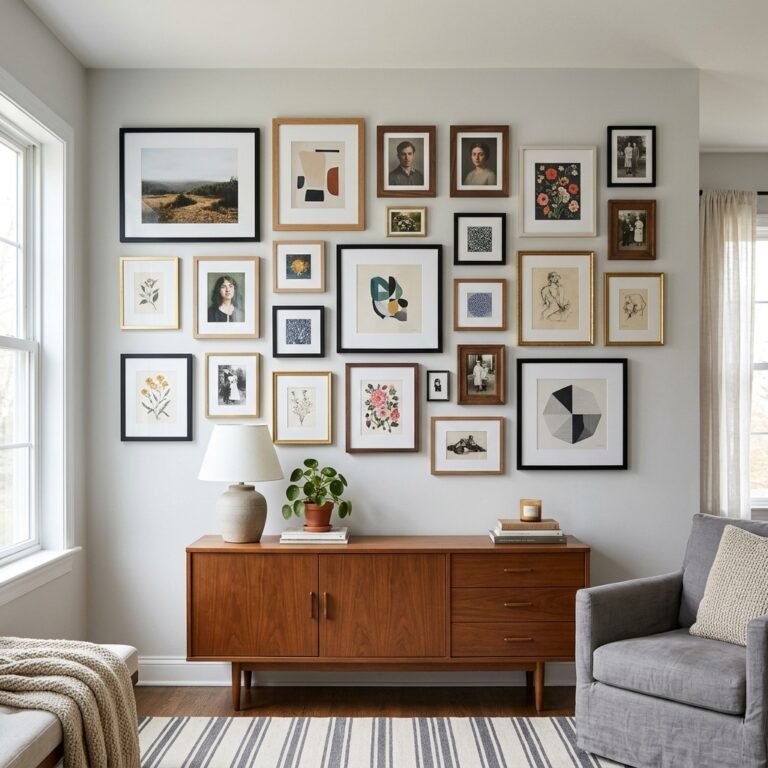
For art, one piece about two-thirds the width of the sofa, centered roughly 57 inches from the floor, beats a scatter of small frames. Our guide to minimalist wall decor with exact sizes and spacing covers the measurements in detail.
For objects, choose one with a story over three with none. A hand-thrown bowl with an uneven glaze, around $30 to $80, gives the eye something to rest on.
Keep One Corner Deliberately Quiet
Every room needs one spot with nothing to read, hear, or look at. Give it a footprint of about 3 by 3 feet: a chair 28 to 32 inches wide, a side table 16 to 18 inches across, and one lamp on a dimmer. Keep the walls around it bare.
Place the chair at least 2 feet from the window so daylight does not hit your face. Choose a lamp with a shade that hides the bulb. If the corner starts collecting mail and mugs, move the side table out for a week and see what you miss.
A Two-Weekend Order of Operations
Fix the biggest sources first. Buying a vase before the rug is how rooms stay noisy.
| Step | Time | Typical cost |
|---|---|---|
| Rug, rug pad, lined curtains | 2 to 3 hours | $250 to $700 |
| Matching warm bulbs, frosted shades, sheers | 1 hour | $40 to $150 |
| Cord covers, outlet plates, hangers, bottles | 1 to 2 hours | $40 to $100 |
| Art, shelf edit, one object | 1 hour | $0 to $150 |
For palette and furniture proportion, read Homedecorio’s calm luxury minimalist tips. That guide covers color and shape. This one covers the noise left behind.
Run the Clap Test Again
When the last panel is hung, stand in the same spot and clap. A short, dry sound means the room is absorbing instead of reflecting. A faint tail is normal, and a little life in a room is fine.
Then sit down, look straight ahead, and notice what is missing: the glare, the cords, the corner hitting your hip. A room that feels calm is usually one where nothing is asking for attention.
Frequently Asked Questions
Why does my minimalist room still echo with a sofa in it?
A sofa absorbs little on its own, and the echo comes from bare, parallel walls facing each other. Break the pattern by putting a bookcase or a large fabric wall hanging on one of them. A lined curtain across the opposite wall helps, and even a 4 by 6 felt panel makes a noticeable difference.
Where should I put a Wi-Fi router in a minimalist home?
Place it at mid-height in an open spot, such as on a shelf near the center of the home, rather than inside a sealed cabinet. Routers need ventilation and clear airflow. A ventilated basket or a slim shelf box hides the blinking lights, and a short, color-matched cable keeps the setup quiet.
What color should bulbs be in a minimalist bedroom at night?
Use warm bulbs and keep the overhead fixture off after dinner. Many warm LED bulbs go as low as 2200K, and a dimmer lets the same lamp drop even further. Two or three low lamps at different heights feel calmer than one ceiling light, and they remove the glare you would otherwise see lying down.
Is a white sofa practical in a minimalist home with kids or pets?
It can be, if the fabric is built for it. Choose a performance weave or a slipcover you can machine-wash, and keep two covers so one is always clean. Slipcovered sofas typically cost $300 to $800 more than standard ones, but they save the cost of replacing stained upholstery.
How do I know if my room is empty or just calm?
Sit in your usual seat and let your eyes wander for 30 seconds. In a calm room they settle somewhere, usually on a lamp, a window, or one object. In an empty room they keep searching. If that happens, add one thing with texture, such as a wool throw or a ceramic bowl.
1 comment