
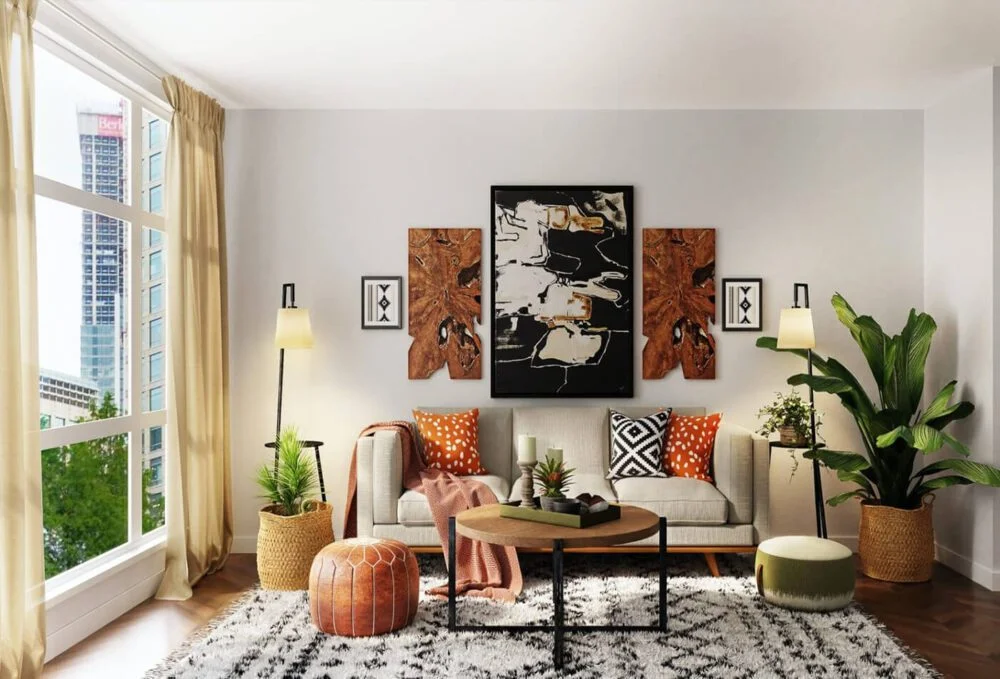
Redecorating your living room on a budget is not only possible it’s genuinely fun. You don’t need a renovation or pricey new furniture to make the room feel pulled-together. Small, specific changes usually beat one big purchase. Below are 20 living room glow-ups, each one under $100, that actually move the needle.

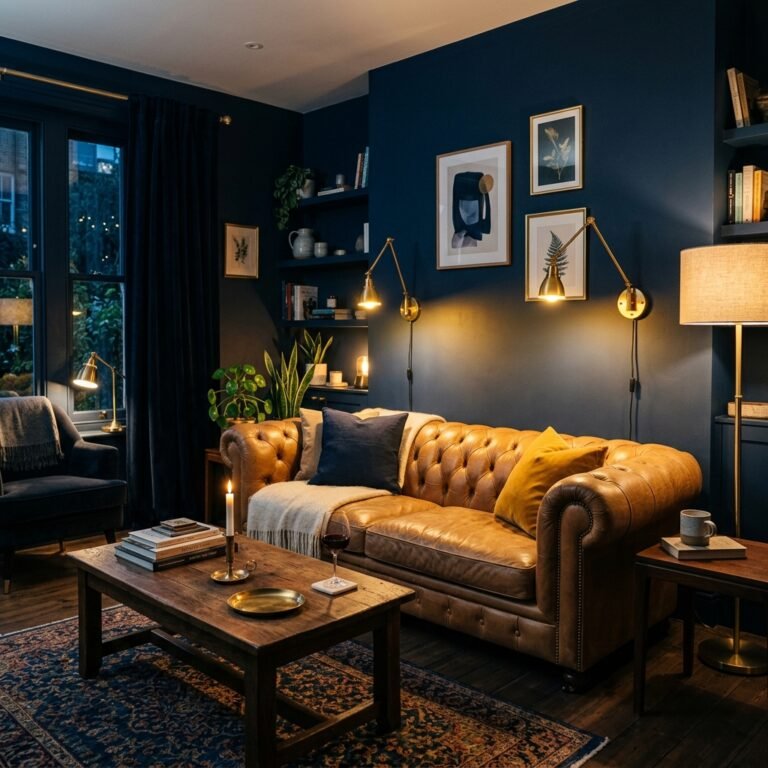
Before you start buying, it helps to know which few moves do the most work. Anchor the room with one or two earth-toned accents a terracotta planter or a sage-green throw pillow both instantly warm up a neutral sofa. Add a low-maintenance plant, like a snake plant or pothos, for real texture without a watering schedule. Swap in warmer bulbs, and layer in a strip light behind the console for a custom glow. Then update one small piece of hardware a drawer pull, a curtain rod for that “someone thought about this” feeling.

Oversized Wall Art
One large print does more for a room than five small ones scattered across a gallery wall. A single abstract canvas or a bold piece of typography, roughly 30×40 inches or larger, gives the eye one clear place to land. It also reads as intentional instead of accidental. This works in both open-plan living rooms and small apartments the scale of the piece matters more than the size of the room it’s in.

Swap Pillow Covers Instead of Full Pillows
New pillow covers cost a fraction of new pillows, and they solve the same storage problem full replacements create. Slide a rich velvet cover on for winter or a breathable linen one for summer, using your existing inserts underneath. Covers in the $12–$20 range per pillow let you try a seasonal color terracotta or sage, for instance without committing to it long-term.

Add a Textured Throw
A textured throw breaks up the flat, straight lines of most modern furniture. Drape a chunky knit, an organic cotton weave, or a faux fur across the back of your couch or an accent chair. It adds visible dimension in seconds, and it costs less than almost anything else on this list. Fold it neatly along the arm for a tidier look, or toss it loosely over one corner if you want the room to feel more lived-in. A quality throw in the $25–$45 range usually holds its shape and color far longer than the $10 versions from a big-box clearance rack.

Decorative Tray Styling
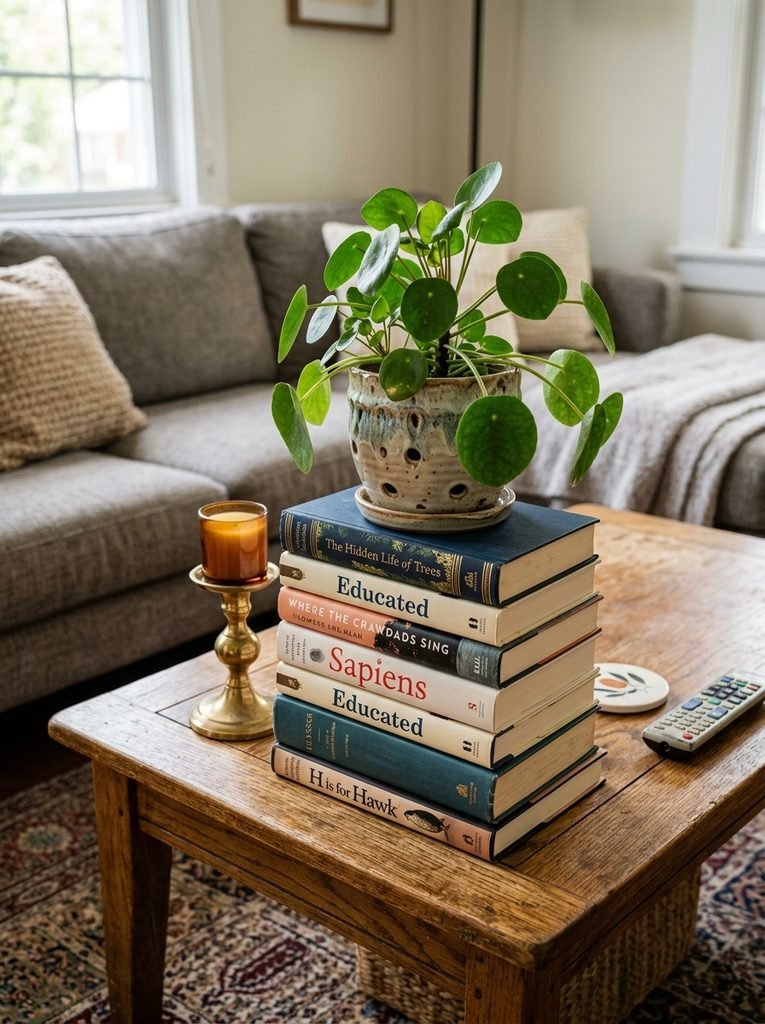
A $10–$25 tray in wood, marble, or metal gives your coffee table’s clutter a home. Group your remote, a candle, and a coaster or two inside its edges, and the whole surface reads as styled instead of scattered. This is the smallest item on this list, and arguably the highest-impact one per dollar spent.

LED Strip Lights Behind the TV
A warm-toned LED strip mounted behind your TV or media console turns a flat screen into a soft focal point. Instead of a black rectangle on the wall, you get a glowing edge that reads as designed. It also cuts eye strain during evening viewing by softening the contrast between a bright screen and a dark room. Strip lights with adhesive backing run $15–$25 and take about ten minutes to install. Stick to warm white, in the 2,700K to 3,000K range, rather than the cool white many kits default to.

Peel-and-Stick Wallpaper
Peel-and-stick wallpaper is the closest thing to a full accent wall a renter can get without losing a deposit. A single roll, usually $30 to $60, covers a small nook or the back of a bookshelf. A bolder geometric or linen-textured pattern works best as one lone accent wall rather than an all-over treatment, since it holds more drama in a smaller dose. It goes up in an afternoon with just a squeegee and a level, and comes down just as easily when you’re ready for a change.

Warm Light Bulbs
Swapping cool white bulbs for warm ones is one of the least expensive changes on this list and one of the most noticeable. ENERGY STAR’s lighting guide puts most living rooms in the 2,700K to 3,000K range for a warm, relaxed glow. Kitchens and workspaces do better at 3,500K or higher, where crisper light helps with tasks. A four-pack of warm LED bulbs typically runs under $15 and drops right into your existing lamps, with no new fixtures required.

Curtain Tie-Backs
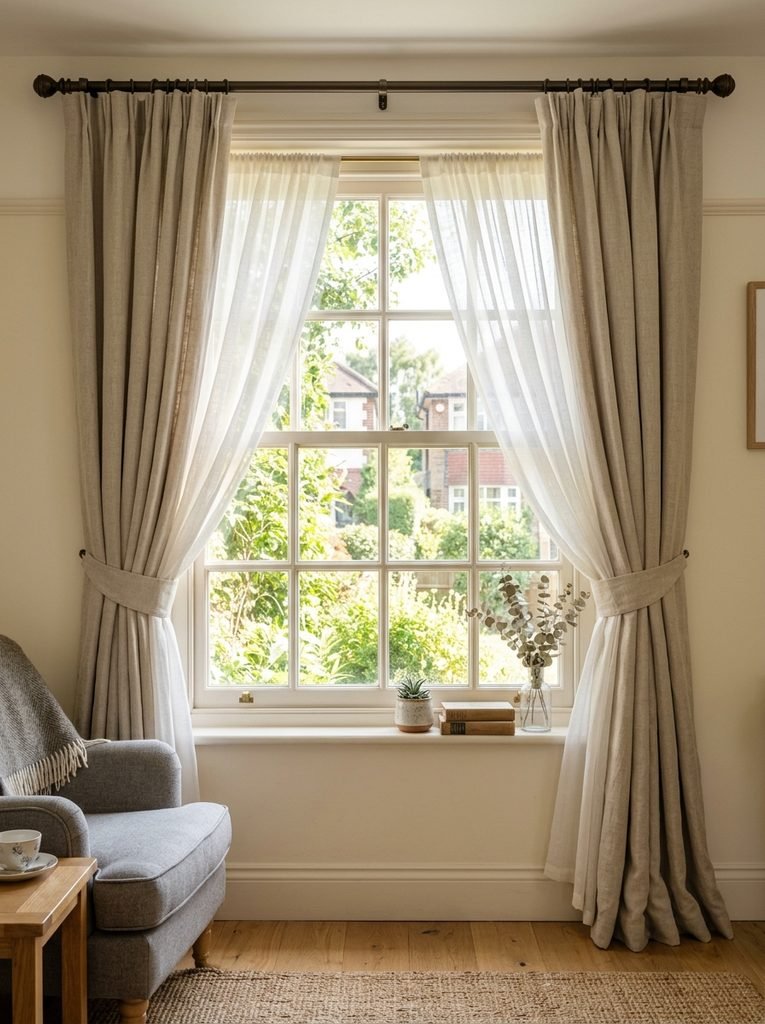
Tie-backs turn flat, hanging drapes into a shaped, architectural detail. Magnetic clips give a clean, minimal look; a heavier rope tie leans more organic and textured. Either style, pulled back about a third of the way down the curtain, creates a soft “swag” that frames the window and lets in more light. A pair usually costs less than $15.

Layer a Smaller Rug Over Your Existing Rug
If your area rug is worn or just feels flat, lay a smaller, higher-impact rug over the center of it instead of replacing the whole thing. A faux-hide or a bold geometric weave over a neutral jute base adds visual richness while hiding wear at the same time. This trick works especially well under a coffee table, where the smaller rug’s edges won’t reveal the size mismatch underneath.

Add a Tall Plant or Two Small Ones
A single tall plant, somewhere in the 4- to 6-foot range, fills an empty corner in a way almost nothing else can for the price. If floor space is tight, two smaller plants grouped on a shelf do a similar job at eye level instead. High-quality faux plants are a completely reasonable choice here nobody’s judging, and they hold up better in low-light apartments than real ones do.

DIY Floating Shelves
Floating shelves free up floor space that a bulky bookcase would otherwise eat up, which matters most in small or open-plan living rooms. A single long “picture ledge” or a staggered pair of shorter shelves gives your framed art, books, and small plants a dedicated spot off the ground. Basic floating shelf kits run $20–$40 each and mount with a stud finder and a drill in under an hour.

Change Drawer or Cabinet Handles
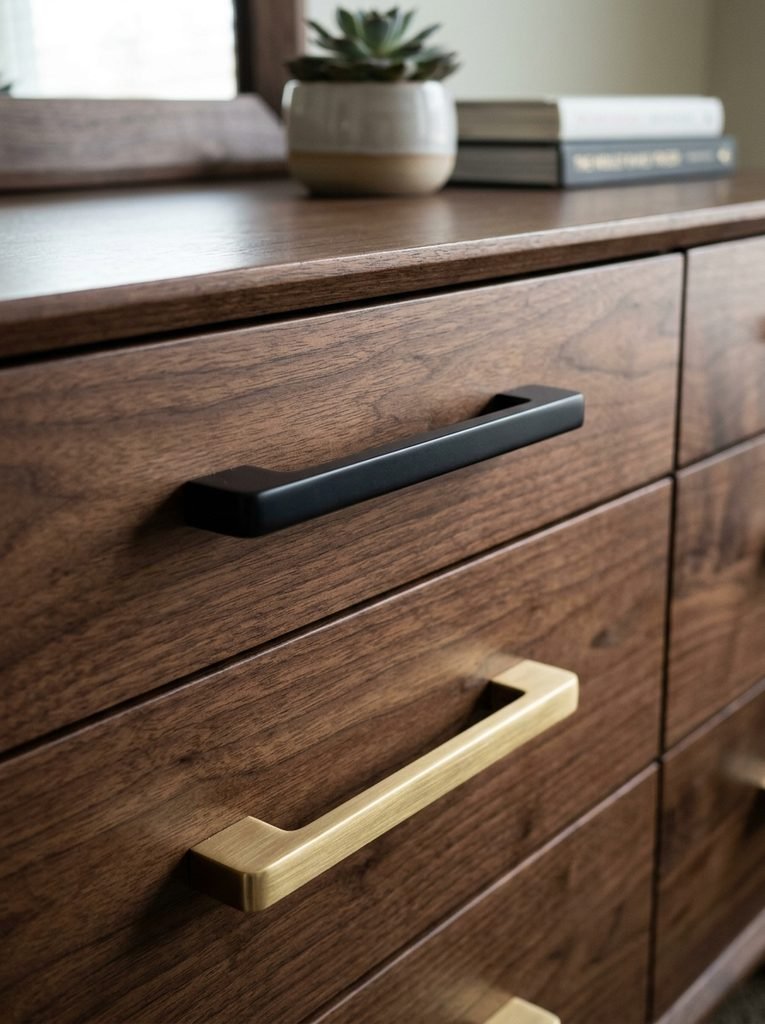
New hardware is one of the cheapest ways to make an old piece of furniture look intentional again. Swapping a TV stand’s or dresser’s builder-grade knobs for matte black, brushed brass, or leather pulls costs $5–$20 per set and takes a screwdriver, nothing more. It’s a small detail, but it’s the kind of thing that makes people assume a piece is newer than it is.
Upcycle a Lamp Base
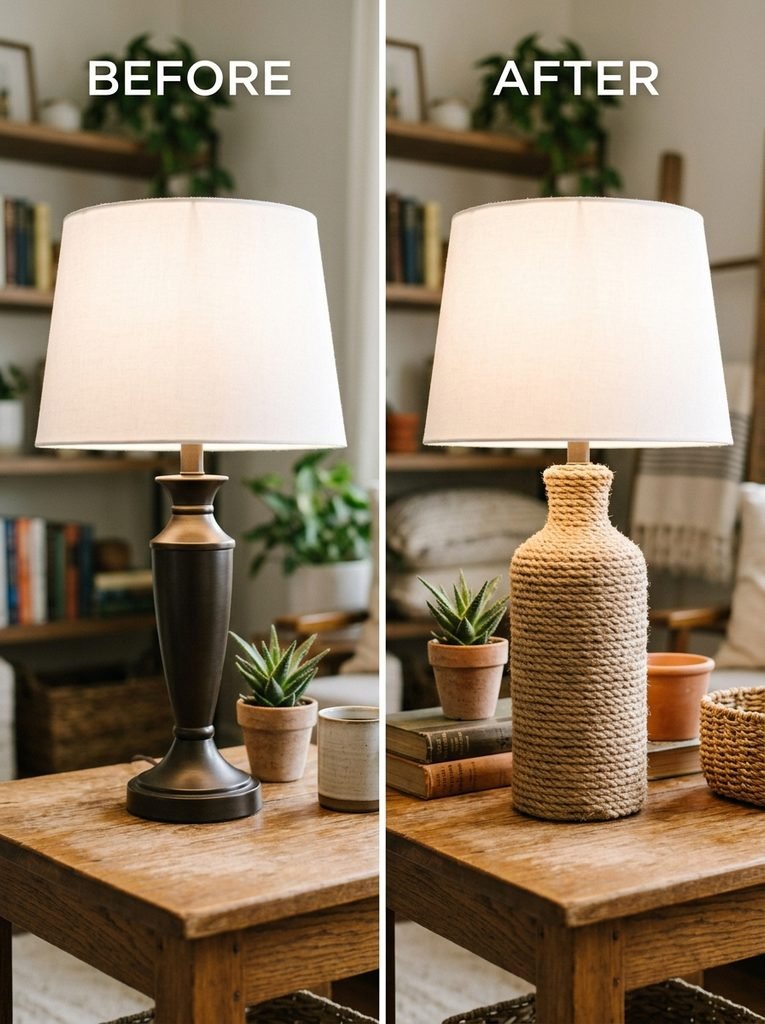
Lighting is usually the priciest thing in a room, which makes an old or thrifted lamp base a great candidate for a redo instead of a replacement. A coat of matte stone-textured spray paint can turn a dated brass or ceramic base into something that looks custom. So can jute rope, wrapped tightly around the neck and secured with a dab of hot glue. The whole project usually costs under $15 in materials and dries in an afternoon, lampshade included.
Use Contact Paper on a Tabletop
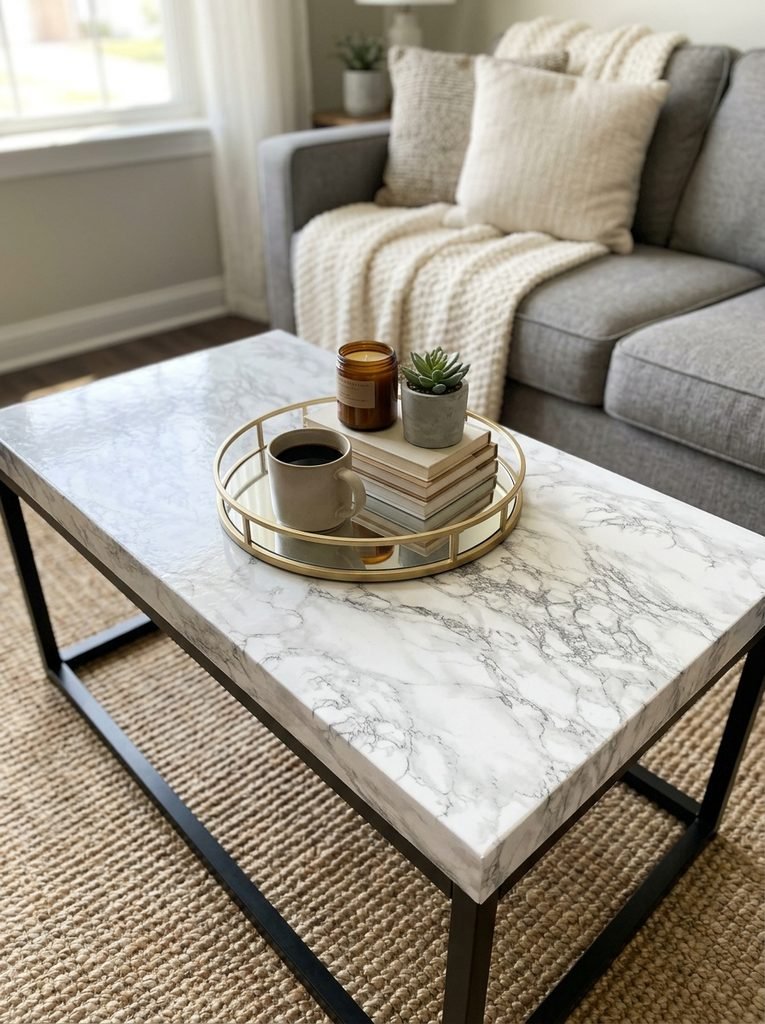
Contact paper is an underrated resurfacing trick for a coffee table or side table that’s scratched, dated, or just the wrong tone for the room. A marble-look or solid matte finish, applied for under $20, changes the entire feel of the piece without touching its actual function. Smooth it on with a credit card or a plastic scraper to avoid air bubbles. It’s not a permanent fix, but it easily lasts a year or two of daily use.
Add Sheer Curtains Behind Existing Curtains
A layer of sheer curtains behind your existing drapes adds softness and height without losing privacy or light control. This double-rod setup diffuses daylight into a gentler glow during the day and gives the window a fuller, more finished look at night. A basic sheer panel runs $15 to $25 and mounts on a second, inexpensive rod set just behind your current one. Choose a sheer that’s a shade lighter than your main curtains, so the two layers read as intentional rather than mismatched.
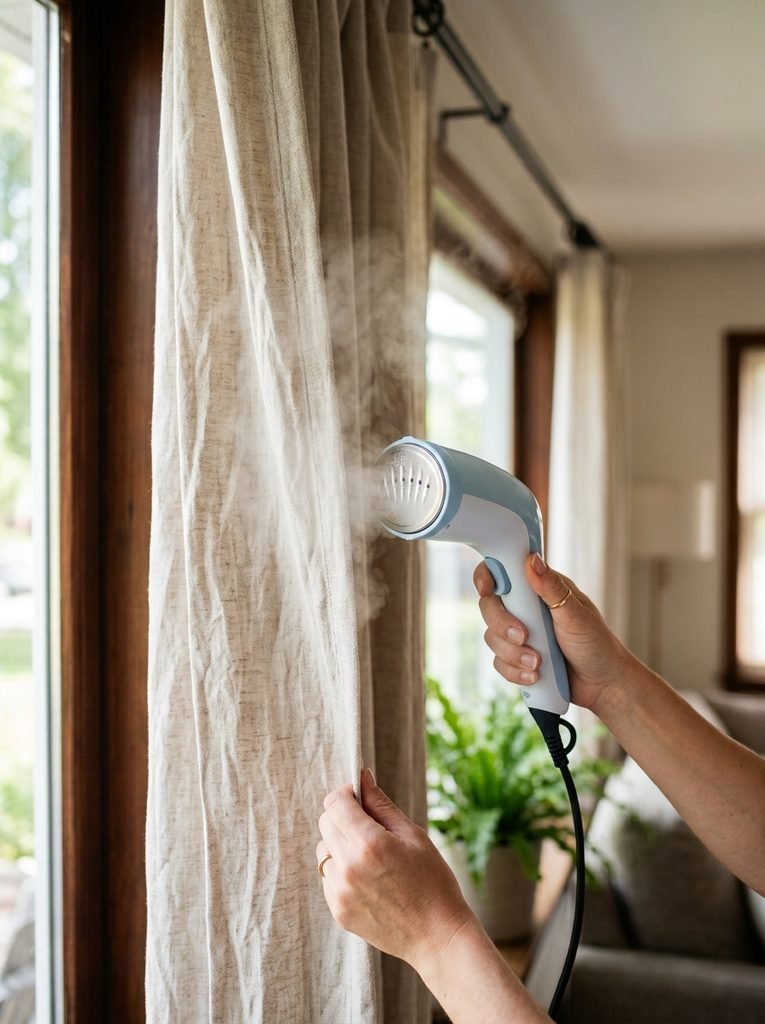
Steam Your Curtains
This one costs nothing but ten minutes. Wrinkled fabric is often the one thing separating a “fine” living room from a finished one, and packing creases are especially noticeable on floor-length drapes. A handheld garment steamer, which you likely already own or can borrow, lets the fabric hang the way it was designed to. It’s the fastest fix on this entire list.
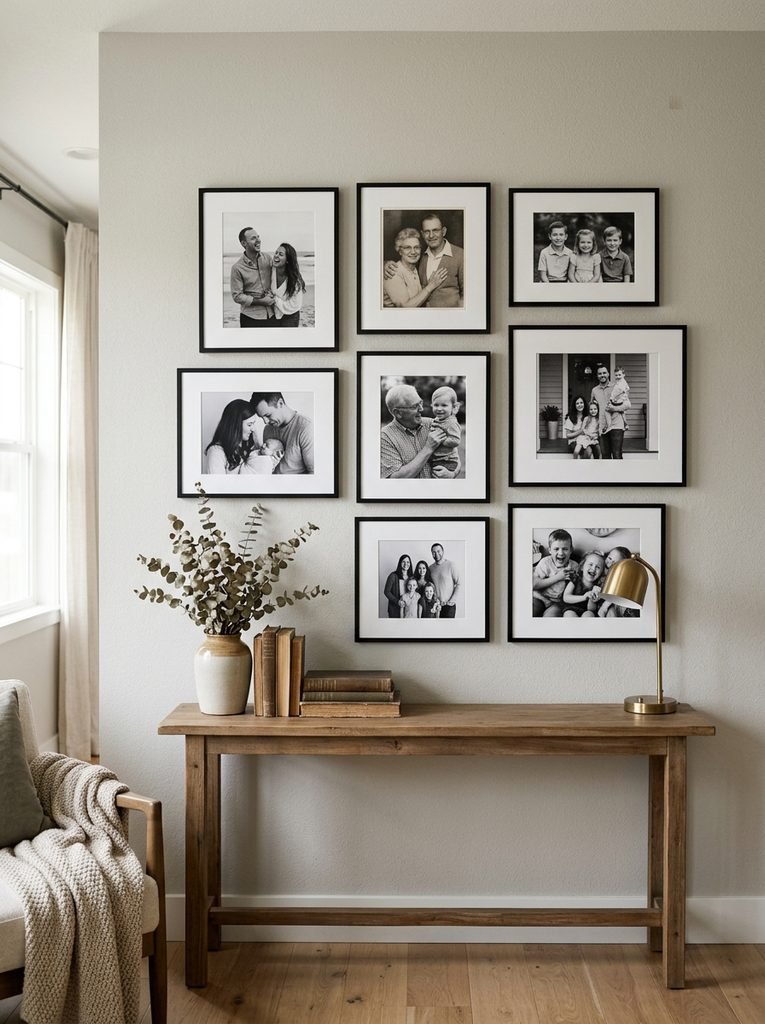
Add Framed Family Photos
Black-and-white prints in matching frames turn a cluttered photo corner into something closer to a curated gallery wall. Stripping out color creates visual consistency, so the photos read as art rather than a scattered collection of memories. A set of five to seven matching frames, often under $30 total from a discount retailer, is enough to fill a small wall grouping. Keep the spacing even, roughly 2 to 3 inches between frames, and the whole arrangement will read as one cohesive piece instead of separate photos.
Decorate With Books
Books add color, height, and texture for the price of what you probably already own. Stack a few thrifted hardcovers to raise a lamp or a small plant on a coffee table. Or group them by spine color on a shelf for a calmer, more curated look. It’s one of the only decor ideas on this list that can cost literally nothing, since most people already have a stack sitting in a closet somewhere.
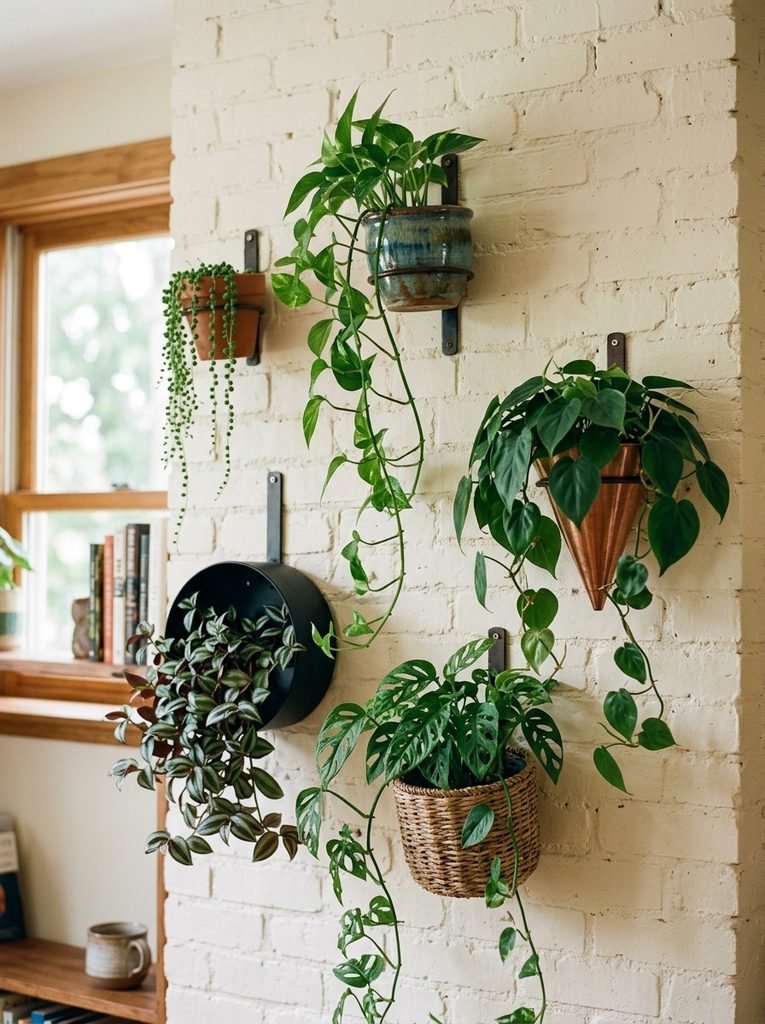
Add Wall-Mounted Planters
Wall-mounted planters bring in greenery without using an inch of floor or tabletop space, which matters most in small living rooms. Look for versions with damage-free adhesive mounts if you’re renting most hold several pounds and come off cleanly at move-out. A trio of small planters staggered at slightly different heights reads as more intentional than one alone, and trailing plants like pothos or ivy fill the vertical space between them as they grow.
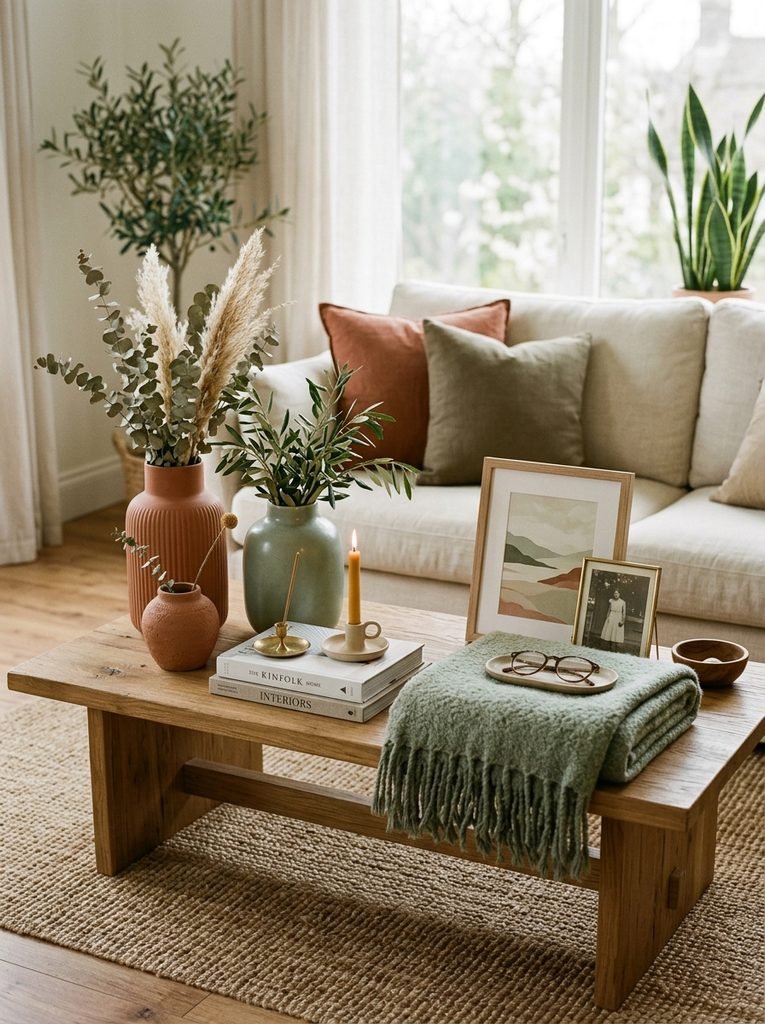
Add a DIY Color Palette
You don’t need to paint a wall to bring in color. Vases, frames, pillow covers, and curtains can all carry it instead, at a fraction of the cost and effort. This is the lowest-commitment way to try a trend color like terracotta or sage before deciding whether you like it enough for something more permanent, like a paint color. Because none of these pieces are fixed to the wall, you can rotate the palette by season without spending much at all.
Common Budget Decorating Mistakes to Avoid
- Buying many small decor items instead of one statement piece
- Hanging curtains too low, which shortens the wall visually
- Ignoring bulb color temperature and sticking with harsh, cool white light
- Picking accent colors at random instead of choosing two or three that repeat
- Overfilling a small room with too many small pieces

Living Room FAQ
How can I decorate my living room cheaply?
Focus on lighting, pillow covers, curtains, one piece of wall art, and a plant. These five categories give the most visible change for the least money.
What decor makes a living room look modern?
Clean lines, a neutral base palette, and higher curtain placement all read as modern. So do warm LED lighting, one large piece of wall art instead of several small ones, and matte or brushed hardware finishes.
What color makes a living room look expensive?
Emerald green, navy blue, and terracotta all read as high-end when used in small accents like vases, pillows, or frames. You don’t need to repaint a wall to get the effect a few well-placed pieces do the job.
Working with a tighter footprint? See our guide to Small Space Ideas post for layout-specific tricks that go beyond what fits here.
Final Conclusion
Upgrading your living room for under $100 is one of the most satisfying home projects you can take on. A clean color palette, a couple of curtain fixes, warmer lighting, and a few intentional styling swaps can take a room from forgettable to photo-worthy. None of that requires a big budget. These changes work because they’re specific, not because they’re expensive. Good style isn’t about how much you spend it’s about which few things you choose to change.
Now go make that room glow.
1 comment