
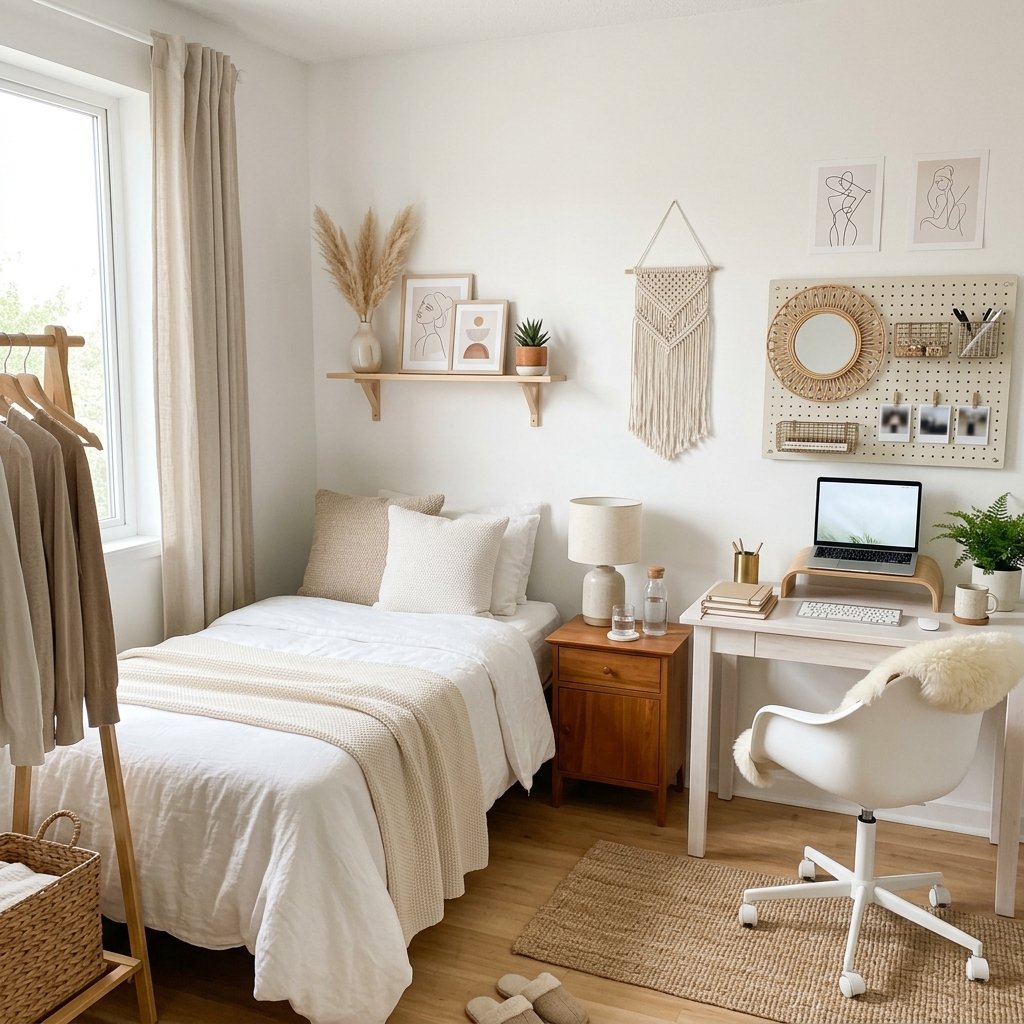
A minimalist dorm room isn’t just fewer things. It’s specific rules about which things stay. Most “minimalist” dorm posts just mean beige and call it a day. That’s not minimalism, it’s a color choice. Real minimalism is a set of decisions. How many items you allow on a surface. What kind of furniture actually opens up a room. What gets stored instead of displayed. These 12 rules are built around actual design mechanics, not just a soft palette. Use even three or four of them and a 130-square-foot room will feel noticeably less cramped by the end of move-in weekend. None of them require a specific color scheme or a big budget. They work whether your bedding is white and gray or a deep forest green. The rules are about quantity and arrangement, not about which shade of neutral you pick. Some of them cost nothing at all, since they’re about what you choose to leave out rather than what you buy.
Set a Hard Cap on Visible Objects
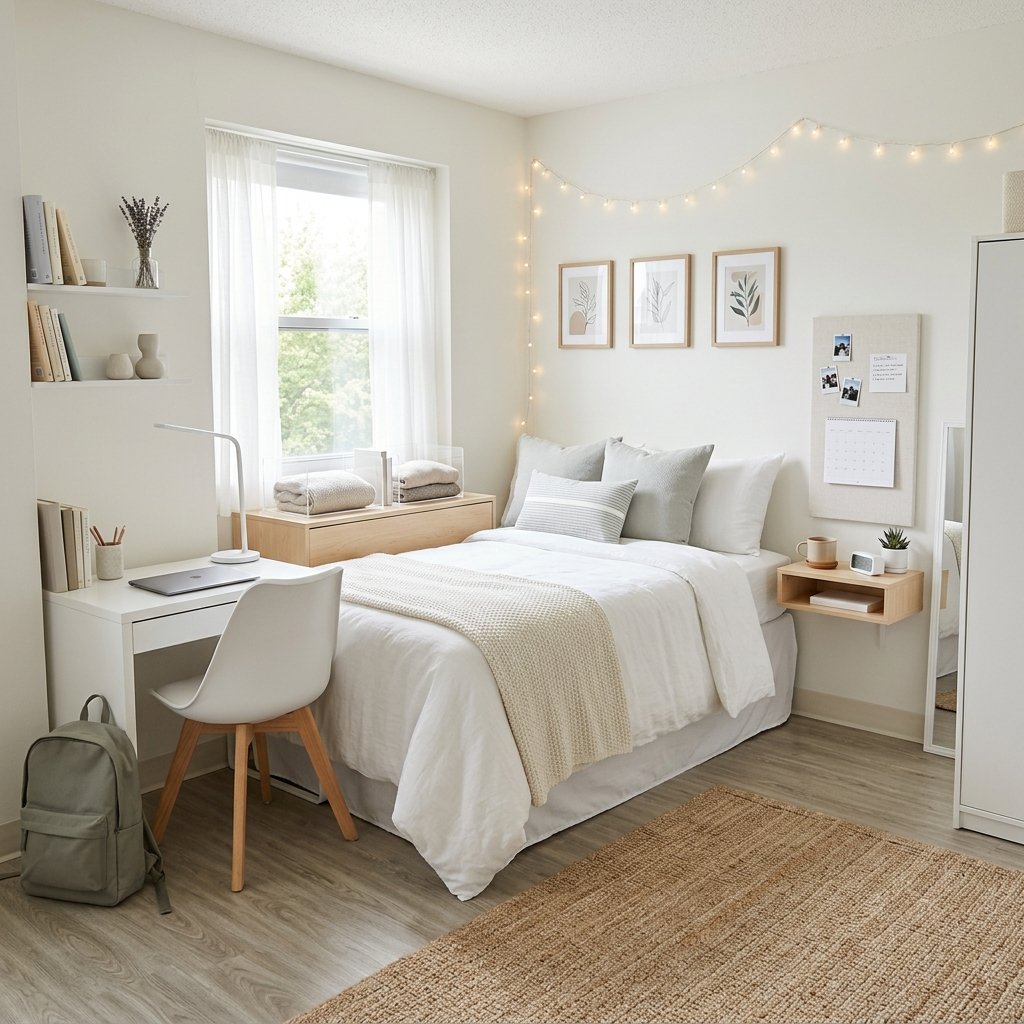
Pick a number before you start decorating: 10 to 12 visible objects, total, outside of storage. That includes everything on your desk, shelves, and windowsill, down to the pen cup and the phone charger. It sounds restrictive. But it forces real choices instead of letting a room fill up by accident. Count what you already own before buying anything new. Most students are closer to that cap than they think. If you’re already at the limit, something has to go before something new comes in. That might be a duplicate item, or a decoration that’s stopped feeling special. This one rule does more to keep a small room calm than any color scheme, and it costs nothing to apply. Write the number somewhere you’ll actually see it, like a sticky note inside a drawer, so it’s easy to check yourself against later in the semester.
Store Everything You’re Not Actively Using
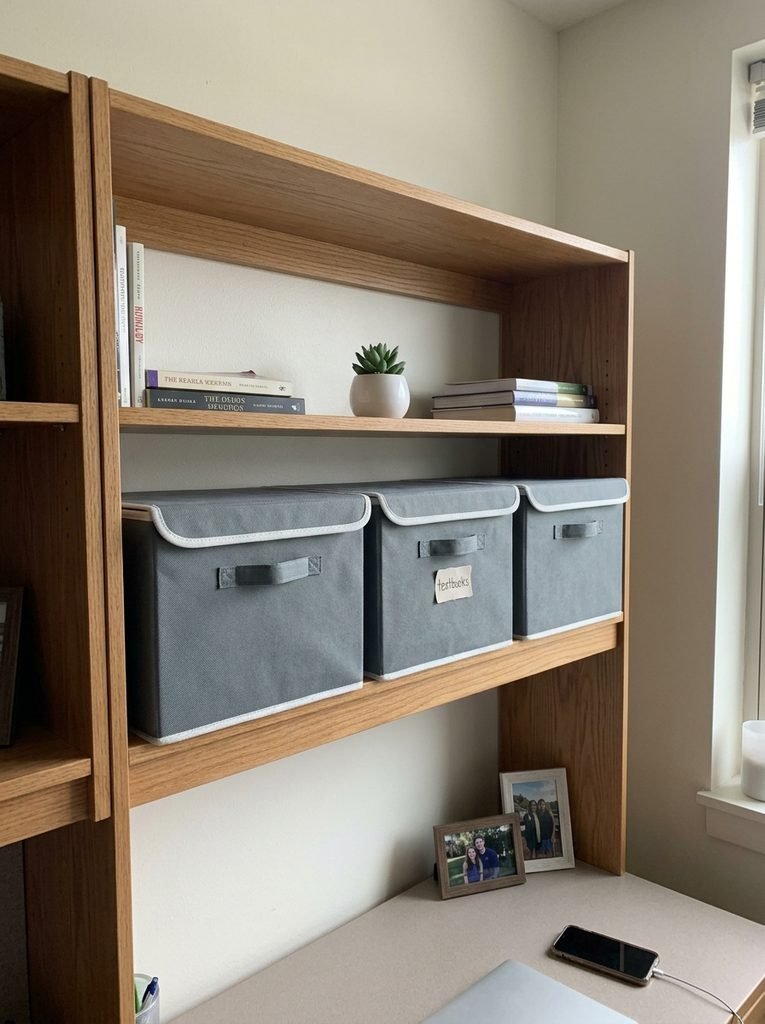
Minimalism in a tiny room isn’t about owning less, necessarily. It’s about seeing less. Off-season clothes, extra chargers, and spare school supplies belong in closed bins. Not on open shelves, where they compete for attention with the things you actually want to look at. Under-bed storage and a lidded ottoman handle most of this. Neither takes up any new floor space, since that space would otherwise sit empty anyway. A room can hold a completely normal amount of stuff and still look minimal. The test isn’t how much you own. It’s how much of it you can see from the doorway on a random Tuesday afternoon.
Buy One Great Piece Instead of Five Okay Ones
A minimalist room depends on each visible item earning its spot. That’s harder than it sounds standing in a home goods aisle with a cart. Five $8 dollar-store decorations compete with each other. They read as clutter even when they’re all the same neutral color. One $35 ceramic vase or a single well-made desk lamp does more visual work alone. The eye has somewhere clear to land, instead of scanning a shelf of small competing shapes. Before buying anything decorative, ask if you’d still want it as the only thing on that shelf. If the honest answer is no, skip it. Save the money for the one piece that would actually earn the spot, even if that means waiting a few extra weeks to find it.
Keep Every Surface Half-Empty on Purpose
Fill a desk or shelf completely and a small room feels smaller. It doesn’t matter how coordinated the items sitting on it are. Leave real, visible empty space on every flat surface, roughly half of it clear at any given time. That can feel wasteful in a room where every inch supposedly counts. But that empty space isn’t wasted. It’s what makes the room read as calm instead of packed. It’s the difference between a shelf that looks styled and one that looks like a landing zone for whatever arrived that week. This is the hardest rule to stick to once move-in gifts and new purchases start arriving. Revisit it every few weeks rather than assuming it’ll hold on its own.
Choose Furniture With Legs, Not Solid Bases
Design experts at Apartment Therapy point to exposed furniture legs as one of the simplest ways to make a small room feel bigger. Light passes underneath instead of stopping at a solid base that visually cuts the room in half at floor level. A desk or shelving unit on visible legs takes up the exact same floor footprint as a solid one. But it reads as far less heavy, since your eye can see straight through to the floor beneath it. If you’re choosing between two similar pieces secondhand, pick the one with legs every time. Even if the solid option looks slightly nicer in the listing photo. The same source recommends floor and table lamps over harsh overhead lighting. Low, warm light illuminates the lower half of a room and makes ceilings feel higher than they actually are.

Limit Your Textile Count Per Bed
A bed piled with eight decorative pillows and three throws looks busy, not cozy. It doesn’t matter how neutral the colors are underneath it all. Cap it at one comforter, two sleeping pillows, one or two accent pillows, and a single throw blanket. That’s enough to look intentional and finished. It stops the bed from becoming the most cluttered surface in the room, which is what usually happens once decorative pillows start multiplying. Fewer, better-made textiles also mean less laundry and less to store when you’re not using them. It also makes the bed faster to actually get into at the end of a long day, instead of clearing off half a dozen pillows first.

Skip the Gallery Wall, Choose One Piece of Art
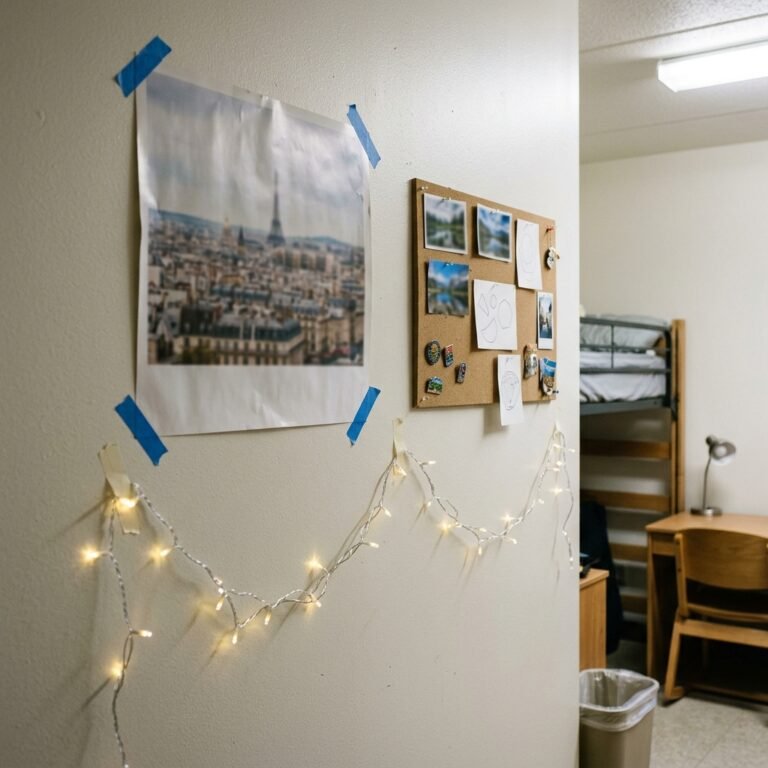
A gallery wall works well for a maximalist or eclectic room. It fights against a true minimalist one, since it draws the eye to a dozen small focal points instead of one clear one. One large piece of art, or a small, tightly spaced set of two or three prints in matching frames, does more for a minimalist wall than a dozen scattered pieces. Leave real blank wall space around it rather than filling every inch out to the edges. If a full wall of personal photos matters more to you than a minimalist look, that’s a completely reasonable trade to make. Just be honest with yourself that it changes the overall style you’re going for, and plan the rest of the room around a slightly busier wall.

Use Closed Storage Over Open Shelving
Open shelves look great in photos and get messy within two weeks of actual use. Once real college life sets in, that is. Every item on an open shelf has to be individually tidy, evenly spaced, and dust-free to look intentional. That’s a lot to maintain during midterms. A cabinet, closed bin, or drawer unit hides the daily mess of college life instead: notebooks, chargers, snacks, extra hangers. None of it needs any ongoing maintenance to still look neat from across the room. Reserve open shelving for the handful of items you picked under the one-great-piece rule. Put everything else behind a door, a lid, or a curtain if your storage doesn’t have one built in.
Standardize Your Hangers and Bins
Minimalism doesn’t stop at the closet door. Open it on move-in day and you’ll usually find a mismatched pile of wire hangers left over from previous residents. Swap them all for one type of matching hanger, wood or slim velvet, before you hang a single shirt. It costs about $10 for a pack of 20 and makes the closet look intentional even when it’s completely full. Do the same with storage bins under the bed. Pick one color and one shape, rather than whatever mismatched containers you happen to have on hand. A closet or under-bed space that stays hidden most of the time still shapes how calm the room feels, since you open it daily even if guests never see inside. It also makes packing up at the end of the year faster, since everything already matches and stacks the same way instead of being a mismatched grab bag.
Give Function-Only Items a Real Look
A trash can, a laundry hamper, and a drying rack are easy to overlook while decorating, since they’re purely functional. But they sit in view every day, often more visibly than any decor piece you carefully chose. A plain white or black version blends into a minimalist room far better than the mismatched plastic bin your dorm ships with. Spend a small amount here on purpose, $10 to $15 each, rather than treating these items as an afterthought once the fun shopping is done. A room can have every other rule on this list applied perfectly and still feel unfinished if the trash can is the loudest object in it. The same logic applies to power strips and cable clutter behind the desk; a $6 cord organizer or a simple zip tie keeps that visual noise out of sight without any real effort.
Apply the Rule of Three When You Do Decorate
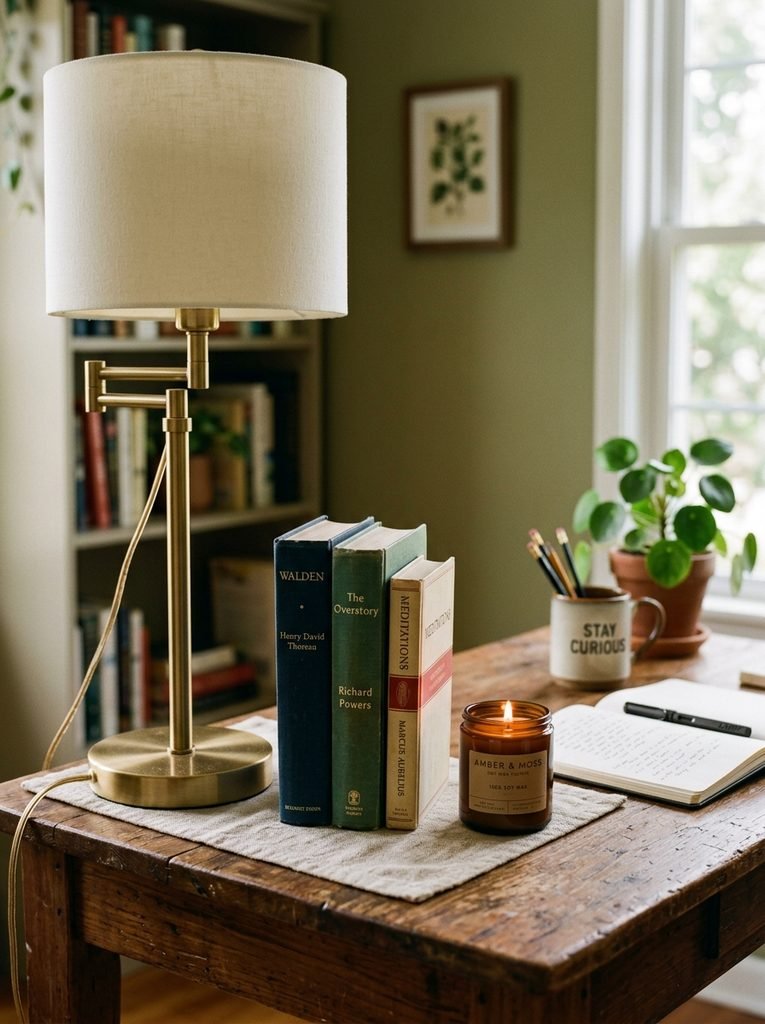
When you do want to style a shelf or desk corner, group items in threes of varying height. Don’t spread single items evenly across a surface. A tall item, a medium item, and a low, flat item read as a deliberate vignette instead of random placement. It’s the same idea a photographer uses when they avoid centering a subject dead in the frame. This works whether your palette leans toward soft neutrals, a light academia mix of books and warm wood, or something else entirely. The rule of three is about arrangement, not color. Try it on one shelf first: a tall lamp, a stack of two or three books, and a single small object like a candle or a small plant. Once it looks right there, repeat the same pattern on other surfaces in the room. A nightstand, a windowsill, and the top of a bookshelf can each carry their own small grouping without ever feeling crowded, as long as you stop at three and resist adding a fourth item just because there’s still space left.
Reassess Monthly, Not Just at Move-In
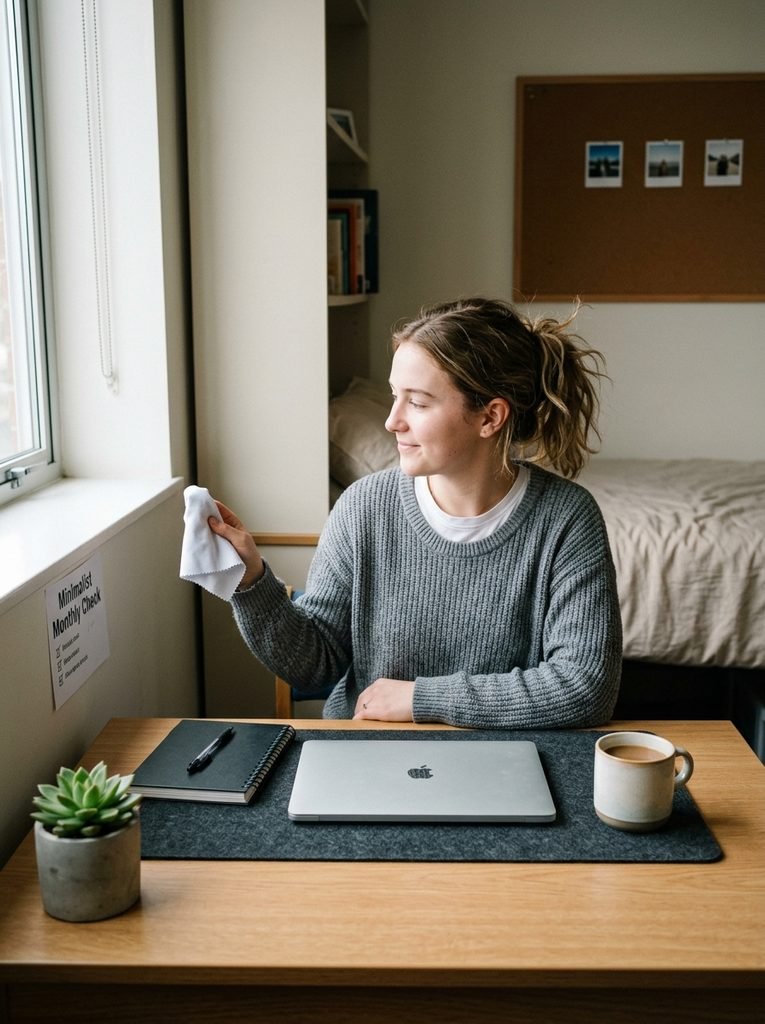
Minimalism at move-in is easy, since the room starts empty and every choice feels deliberate. Minimalism by November is the real test. Care packages, new posters, and semester souvenirs arrive steadily once classes start. Each one feels too small to matter on its own. Set a recurring reminder once a month to walk the room. Ask what’s crept past your object cap since the last check. Anything extra gets stored, given away, or sent home over a break, before it becomes permanent clutter you’ve stopped noticing entirely. This monthly habit matters more than any single purchase on this list. It’s the only thing standing between a room that starts minimal and one that quietly stops being minimal by Thanksgiving. If you’d rather build toward a specific look before you start collecting extras, our guide to building a cohesive dorm aesthetic covers how to pick a direction from day one.

None of these rules require a big budget, since minimalism is mostly about restraint rather than purchases. If cost is still a factor while you build out the room, our guide to budget-friendly dorm room decor breaks down where to spend on the few pieces that matter most. A minimalist dorm room isn’t about having less personality. The personality just shows up in fewer, more deliberate choices instead of a hundred small ones. It’s about giving each object enough room to actually be seen, rather than losing it in a crowd of similar items. Pick a handful of rules from this list. Stick to them past week one. A small room will keep feeling calm and open long after the rest of the floor has filled up with clutter, and you’ll spend less time each week fighting a mess that a few upfront decisions could have prevented.
2 comments