
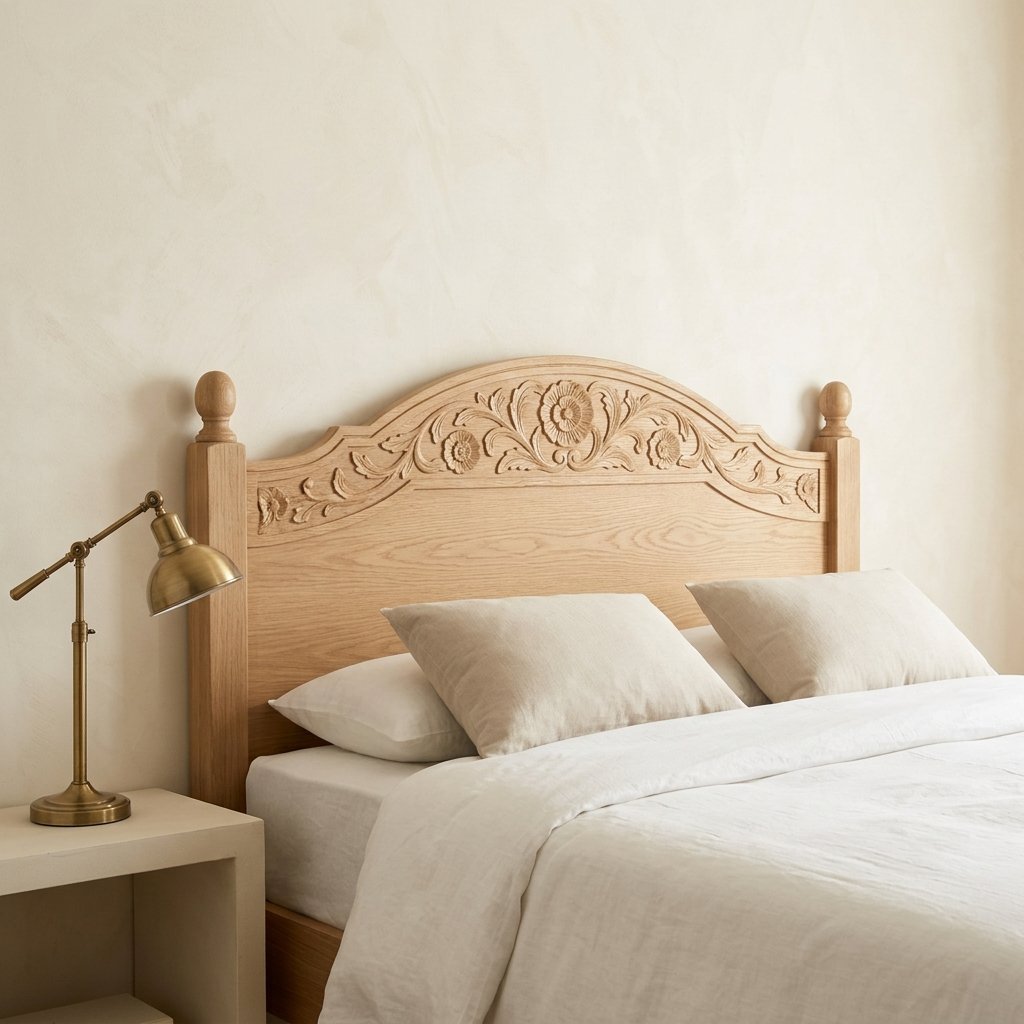
You spend a whole weekend on the bedroom. New paint on the accent wall. A duvet you finally splurged on. The art you’d been saving on Pinterest for months, hung at exactly the right height. Then you slide the new headboard into place and step back to admire it. Something is off. The bed looks smaller than it did in the showroom photo, or the headboard looks like it’s floating in a sea of blank wall, or your nightstand lamps sit awkwardly higher than the top edge. You can’t quite name the problem, so you blame the paint color, or the bedding, or the lighting. The real culprit is almost always the headboard itself. Not its style or its fabric, but its size.
The Mistake Hiding in Plain Sight
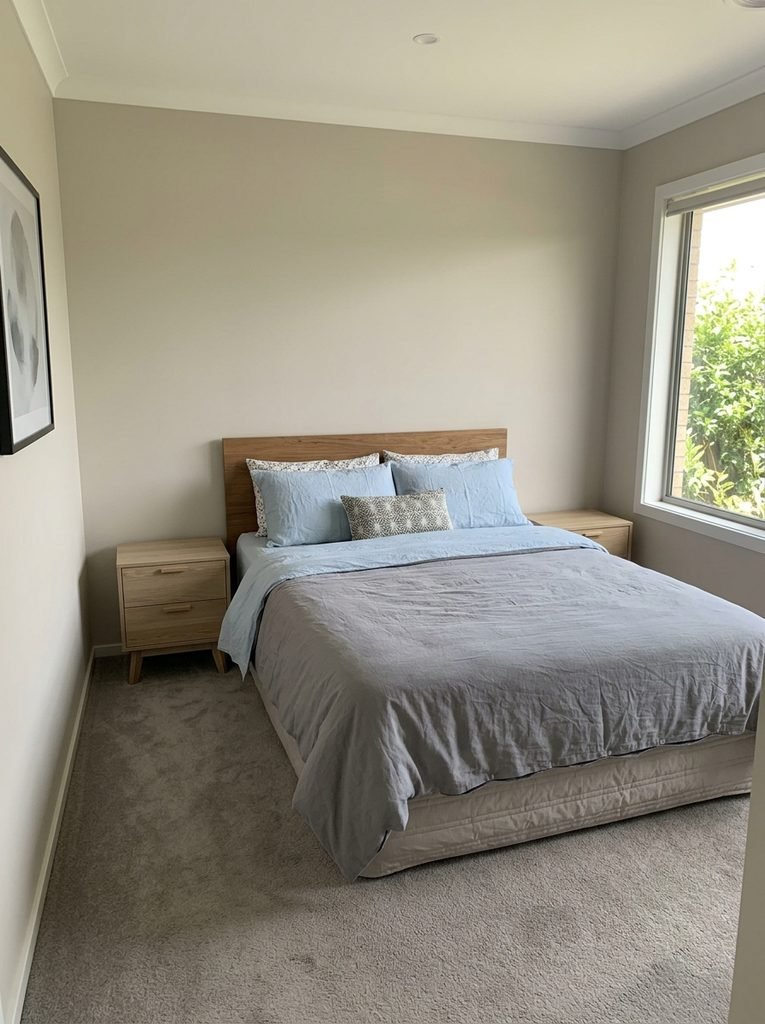
Most people choose a headboard the same way they choose a phone case: by the label, not the measurements. If the bed is a queen, they buy a “queen headboard” and assume the fit is automatic. It isn’t. Bed sizes are standardized. Headboard sizes are not. Two headboards both marketed for a queen mattress can differ by several inches in width and more than a foot in height, and neither one is technically wrong. The mismatch only becomes obvious once the piece is sitting against your specific wall, next to your specific nightstands, under your specific ceiling.
This is a proportion mistake, and proportion mistakes are sneaky because nothing is technically broken. The headboard fits the bed frame. It just doesn’t fit the room, and a room that’s out of proportion reads as “cheap” or “unfinished” even when every individual item in it was expensive.
Why This Mistake Is So Easy to Make
Online furniture shopping sets you up to get this wrong. Product photos almost always show the headboard alone, cropped tight, with no ceiling, no nightstands, and no sense of scale. A headboard that looks dramatic and generous in a square product thumbnail can look undersized the moment it’s installed against an eight-foot wall. Retailers also use size categories loosely. “Queen” headboards on the market range anywhere from about 60 to 64 inches wide, and heights swing from a low 24 inches to a dramatic 50-plus inches, all under the same size label. Nobody tells you which one will actually look balanced in your room, because that depends on your room, not the product page.
Bedding adds another layer of distortion. A thick duvet, a stack of European shams, and a few oversized throw pillows can visually eat into the lower third of a headboard, especially on a shorter model. What looked plenty tall in the store can end up two-thirds hidden behind pillows within a week of normal use.

The Numbers Behind a Well-Proportioned Headboard
Designers rely on a few consistent rules of thumb, and they’re worth writing down before you shop. For width, a headboard should match your mattress width or extend two to four inches beyond it on each side. A headboard narrower than the mattress looks unfinished, like it was borrowed from a smaller bed. One that’s more than four or five inches wider on each side starts to look clunky and disconnected from the frame beneath it.
For height, the standard range above the top of the mattress runs from about 14 inches for a twin, to roughly 28 inches for a full or queen, up to around 58 inches for a king or California king. A common shorthand designers use is the one-third rule: the visible headboard should read as roughly a third of the total vertical stack formed by the bed frame, mattress, and headboard together. Go much shorter and the headboard reads as an afterthought. Go much taller without matching the ceiling height, and it can dominate the room instead of anchoring it.
Interior designer Crystal Hackl, owner of Eagle & Vine Interiors, told Better Homes & Gardens that scale and proportion problems are the most common issue she sees in client homes, more common than color or style missteps. Choosing pieces that are too large or too small for a space is the single mistake she flags most often, and a headboard is one of the largest single objects most people ever place against a bedroom wall. Get the scale wrong there, and it colors how the entire room reads, whether or not anything else in the space is objectively well chosen.

Different Bed Sizes, Different Traps
The math shifts depending on which bed you own, and the mismatch tends to show up differently at each size. A twin mattress measures about 38 inches wide, so a headboard around 41 inches keeps the two-to-four-inch overhang without looking oversized in what’s usually a smaller room, like a guest room or a kid’s room. A full mattress runs about 54 inches wide, and a matching headboard closer to 56 or 58 inches keeps the proportion tight, since full-size rooms are often only slightly larger than twin rooms despite the bigger bed.
Queen beds are where the mismatch shows up most often, simply because queen is the best-selling size and the market floods it with options. A queen mattress is 60 inches wide, so a headboard between 62 and 64 inches is the sweet spot. Anything narrower starts to look like it belongs on a full bed that got upgraded without anyone swapping the headboard. King and California king mattresses run 76 to 72 inches wide respectively, and headboards around 80 inches keep pace, though this is also the size range where dramatic, taller headboards genuinely earn their scale, since the wall behind a king bed is usually large enough to support it.
Mattress thickness adds one more variable people rarely account for. A modern mattress with a pillow top or memory foam layer can run 14 to 16 inches thick, well above the 9- or 10-inch mattresses most headboard height charts were originally built around. That extra thickness eats directly into a headboard’s visible portion, since every height guideline is measured from the top of the mattress, not the floor. If your mattress is on the thicker side, size up a few inches on headboard height to compensate, or the top third of the design you picked may end up sitting below your pillow line entirely.
How Nightstands and Bedding Throw Off the Illusion
A perfectly sized headboard can still look wrong if the furniture around it fights it. Nightstands taller than the headboard’s midpoint pull the eye sideways and make the headboard look shorter than it is. Nightstands that sit well below the headboard’s lower third can leave it looking like it’s hovering, disconnected from the rest of the furniture grouping. As a rough guide, aim for nightstand height to land somewhere between a third and half of the headboard’s total height, so the eye reads the grouping as one composed unit rather than three unrelated pieces.
Bedding volume matters just as much. Oversized European shams, a thick duvet fold, and decorative bolsters can cover ten or more inches of a headboard’s face. If you’ve picked a headboard near the shorter end of the standard range, ambitious pillow styling can hide most of what you paid for. In that case, either scale back the pillow stack or size up the headboard height by a few inches to account for what bedding will realistically cover.

The Ceiling Height Trap
Ceiling height changes every one of these numbers. In a standard eight-foot room, a headboard taller than about 58 to 60 inches can start to feel oppressive, crowding the space between the top of the frame and the ceiling. Designers generally recommend leaving at least 24 to 36 inches of open wall between the top of the headboard and the ceiling, or between the headboard and any art hung above it. Skip that breathing room and the wall looks stuffed, no matter how attractive the headboard is on its own.
The opposite trap shows up in rooms with nine- or ten-foot ceilings. A short, 24-inch headboard that would look fine in a standard bedroom can look lost against a tall wall, leaving an awkward stretch of bare paint above it. Taller ceilings generally call for taller headboards, more dramatic upholstery, or a full accent-wall treatment that extends the visual line of the headboard up toward the ceiling instead of stopping abruptly partway up the wall.
The Fix: A Measuring Method to Use Before You Buy
The good news is that fixing this mistake, or avoiding it in the first place, takes fifteen minutes and a tape measure. Start by measuring from the floor to the top of your mattress, since every headboard height guideline is calculated from that point, not from the floor. Next, measure the width of your bed frame edge to edge, then add two to four inches on each side to find your target headboard width.
For height, pick a number inside the standard range for your bed size, then mark it on the wall with painter’s tape before you buy anything. Step back and view the marked line from the doorway, from each side of the bed, and while sitting up against the pillows, since that’s the vantage point you’ll actually use every night. If you already own bedding, stack it against the wall at the marked line to see how much of the headboard it’s likely to cover once styled.
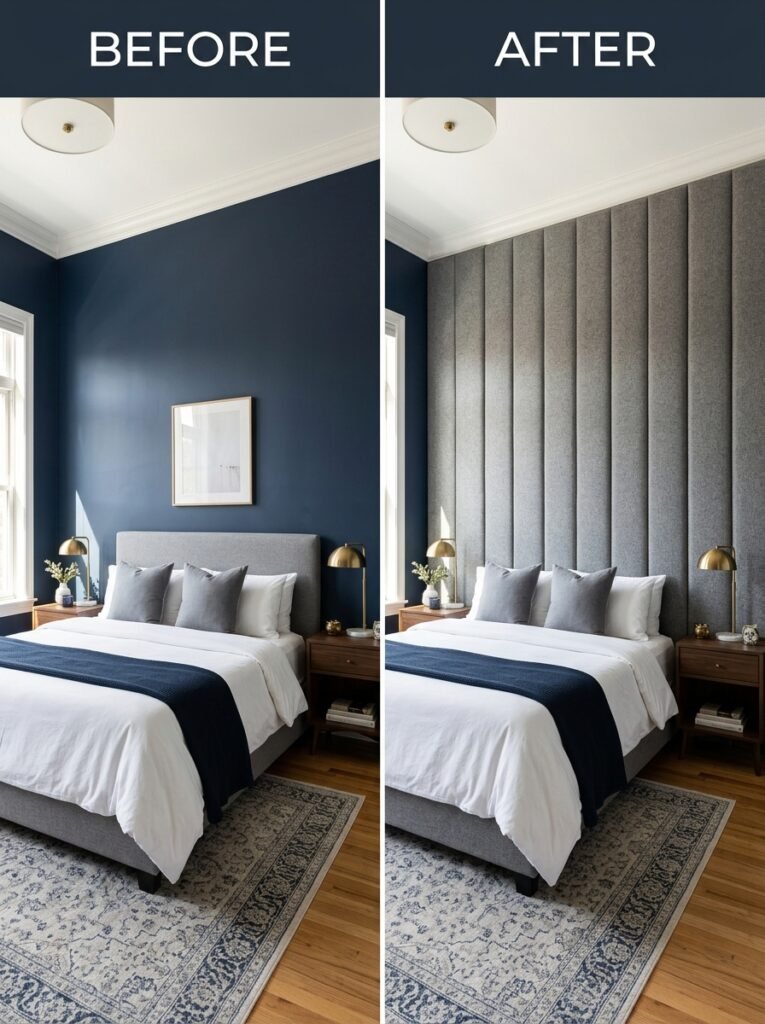
Finally, check the width against your nightstands. Lay a string or a strip of tape along the floor to represent the full headboard width, and confirm your nightstands sit comfortably inside that footprint rather than jutting out beyond it. A headboard that’s narrower than the space its nightstands occupy will always look pinched, regardless of how well it’s built.
Budget Fixes If Your Headboard Is Already the Wrong Size
If you’re reading this after the headboard is already installed, you don’t need to replace it to fix the proportion problem. A headboard that’s too narrow can be visually widened with a painted arch, a panel of removable wallpaper, or a pair of matching wall sconces mounted just beyond its edges, extending the visual footprint without touching the furniture itself. For more ideas along these lines, our guide to budget-friendly bedroom upgrades under $300 covers several low-cost ways to rework a bedroom wall without buying new furniture.
A headboard that’s too short benefits from the opposite trick: build height above it instead of replacing it. A row of floating shelves, a tall leaning mirror, or an oversized piece of art positioned to align with the headboard’s width can extend the visual line upward and close the gap to the ceiling. Even repainting just the section of wall behind the bed in a slightly deeper tone than the surrounding walls can trick the eye into reading the headboard as part of a larger, intentional feature rather than a small object stranded on a big wall.

When “Bigger” Becomes the New Mistake
It’s worth saying plainly: oversizing causes the same problem in reverse. A headboard that runs wall to wall in a small bedroom, or one that reaches 65-plus inches under a standard eight-foot ceiling, can make the whole room feel like it was built around the furniture instead of the other way around. Custom and floor-to-ceiling headboards are genuinely striking in the right room, and if you want a closer look at that end of the spectrum, our full guide to headboard styles and materials covers oversized, built-in, and statement options in detail. But scale still has to match the room. The same tape-measure test that catches an undersized headboard will just as reliably catch one that’s too large.

Getting the Proportion Right for Your Room
A headboard is one of the few pieces of furniture that has to succeed at two different distances at once: up close, where you lean against it every night, and across the room, where it sets the tone for the whole space. Getting the width within a few inches of your bed frame, the height proportioned to your ceiling, and enough breathing room above it isn’t a design luxury. It’s the difference between a bedroom that looks curated and one that looks like it’s still missing something, even when you can’t say exactly what. Measure before you buy, check it against the furniture you already own, and the rest of your styling choices will finally have the foundation they need to look intentional.



1 comment