
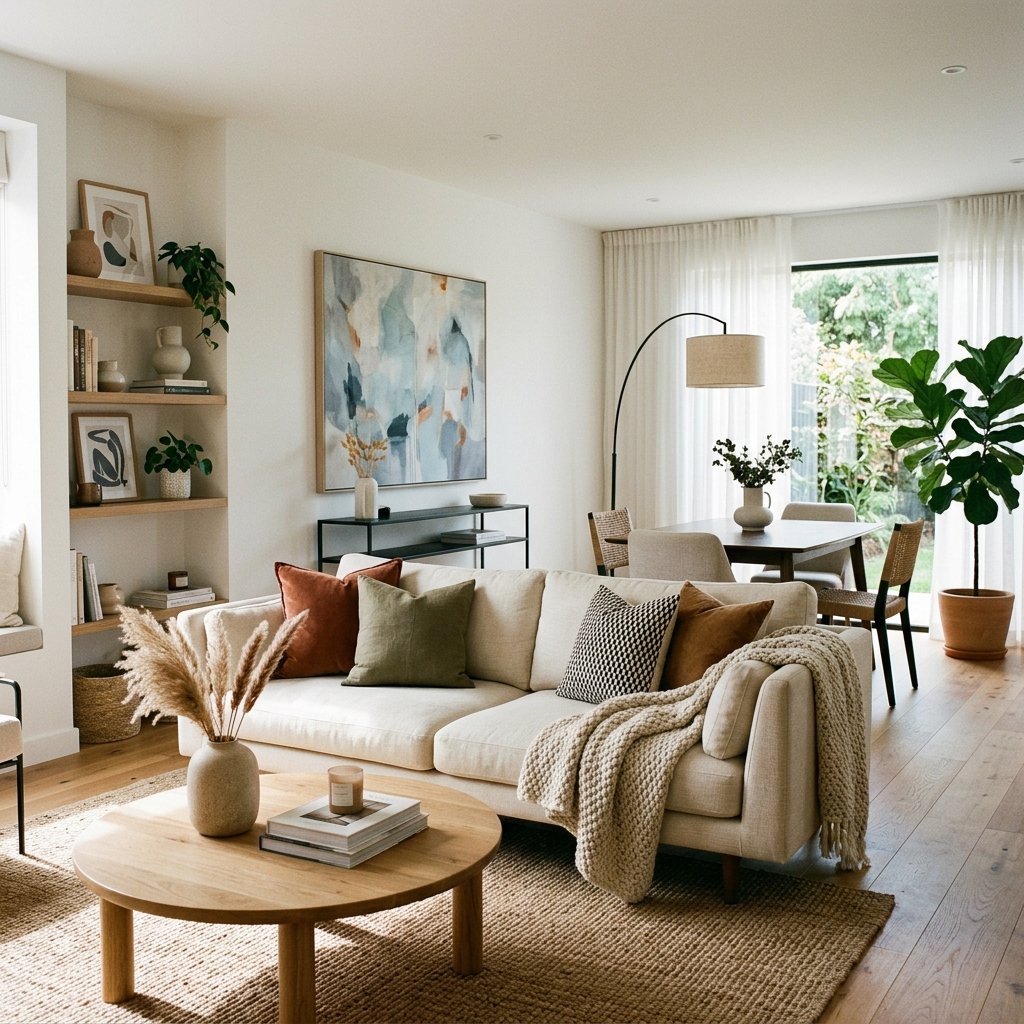
You walk into a friend’s living room and feel calmer within about ten seconds, even though you can’t immediately say why. Nothing there is expensive. Nothing is trying too hard. That’s what modern home decor is actually chasing not a rigid rulebook, and definitely not recreating a picture-perfect feed from social media. It’s a home that reflects your personality while still balancing comfort, style, and function, whether you’re working with a studio apartment or a full house. This matters more than it used to, because your home is doing more jobs than it ever has: office, gym, creative studio, and social hub, often on the same afternoon. The American Society of Interior Designers has found that 63% of homeowners believe the products and design choices in their homes directly affect their health and wellbeing. A thoughtfully designed room isn’t just decoration it’s one of the few environmental factors you have full control over, unlike your commute or your work schedule. And you don’t need a full renovation budget to act on that. Most of what separates a home that feels “modern and stylish” from one that feels dated or chaotic comes down to a handful of repeatable decisions, not a single expensive purchase. Every idea below is something you can phase in gradually one room, one weekend, or one paycheck at a time rather than something that demands a full redesign before it starts working. Below are eight ideas that define modern decor in 2026, plus where to look next if you want to go deeper on any one of them.
Clean Lines and Comfort-First Layouts
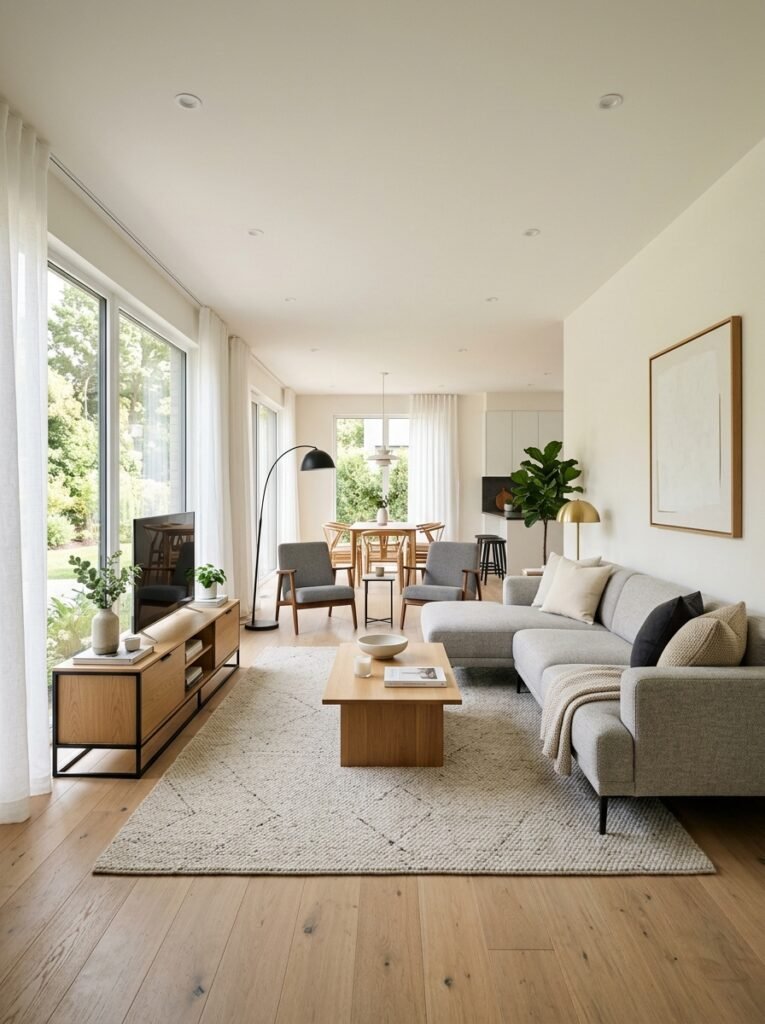
Modern interior style leans on simplicity with intention, not simplicity for its own sake. Clean furniture lines and open layouts create a balanced, uncluttered look, but the comfort has to be real a stiff, delicate sofa you’re afraid to sit on defeats the point. Plush cushions, well-chosen rugs, and a couple of soft throws add warmth without sacrificing that clean silhouette.
The “Would You Actually Use It” Test
The test worth applying to any new piece: would you actually put your feet up on it, or is it there purely to be looked at? Furniture chosen for both should win every time. A low, deep-seated sofa in a durable performance fabric will outlast a delicate velvet piece in almost every real household, and it photographs just as well.
Give the Room Breathing Room
Open layouts fail when they’re used as an excuse to fill every open surface. Leave at least one wall or corner genuinely empty in each main room a spot with nothing but a plant or a single lamp. That negative space is what makes the rest of the furniture read as intentional instead of accumulated.
A Warm Neutral Foundation
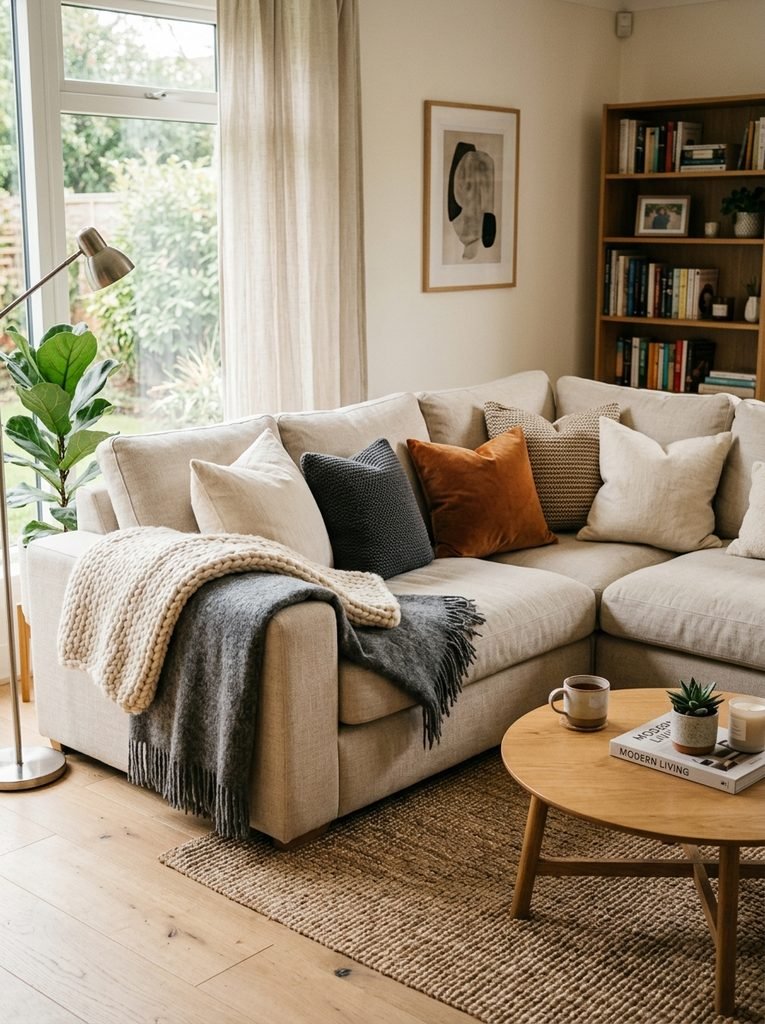
Neutral palettes stay popular because they’re calm, versatile, and never fight the rest of the room. Beige, warm white, soft grey, and earthy tan reflect light well, which makes rooms feel brighter and larger than they measure on paper. They also make refreshing a room cheap swap the cushions and art instead of repainting everything.
Use the 60-30-10 Split
A simple ratio keeps a neutral room from feeling either boring or chaotic: 60% dominant color (walls, largest furniture), 30% secondary color (rugs, curtains, upholstery), and 10% accent color (art, pillows, small objects). Skipping straight to an all-one-color room is what usually makes neutral decor read as flat rather than calm the ratio is what creates depth without adding a bold hue.
Where the Texture Comes From
The trick that keeps an all-neutral room from reading flat is texture: mix linen, wool, natural wood, ceramic, and matte metal finishes in the same space so the eye has something to move across even without strong color contrast. Aim for at least three different textures per room a woven rug, a smooth ceramic vase, and a nubby wool throw will do more for the space than a fourth matching neutral cushion. If you want seasonal neutral styling specifically for fall, this neutral fall decor guide covers that angle in more depth than we will here.
Furniture That Works Harder in Small Footprints
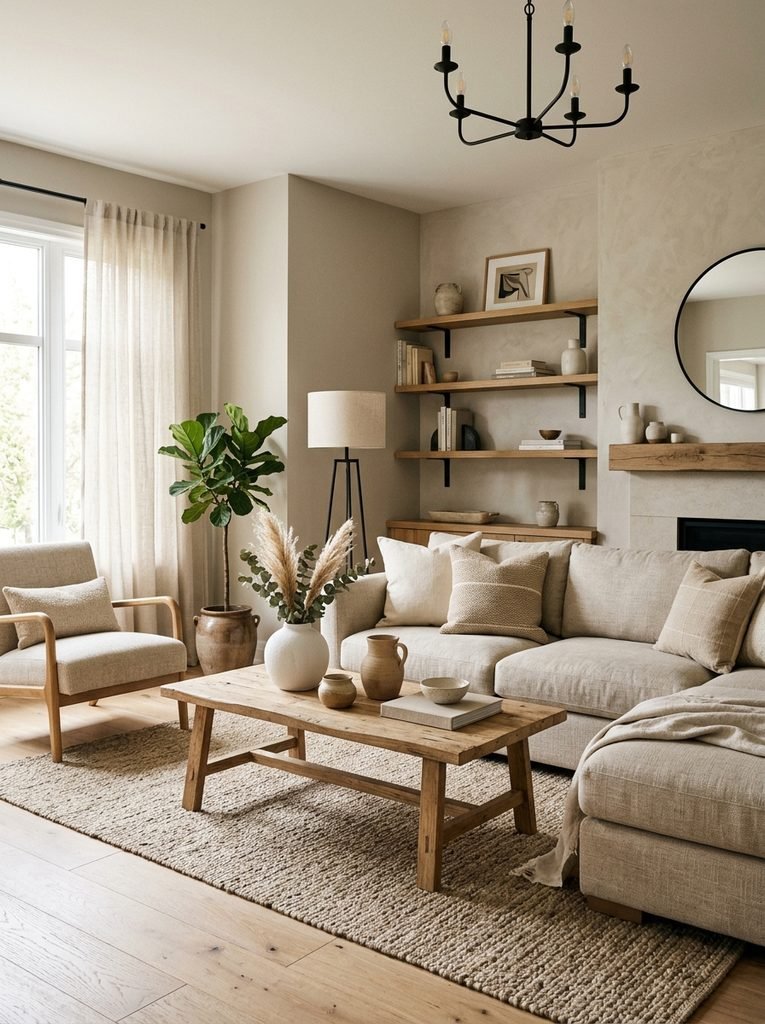
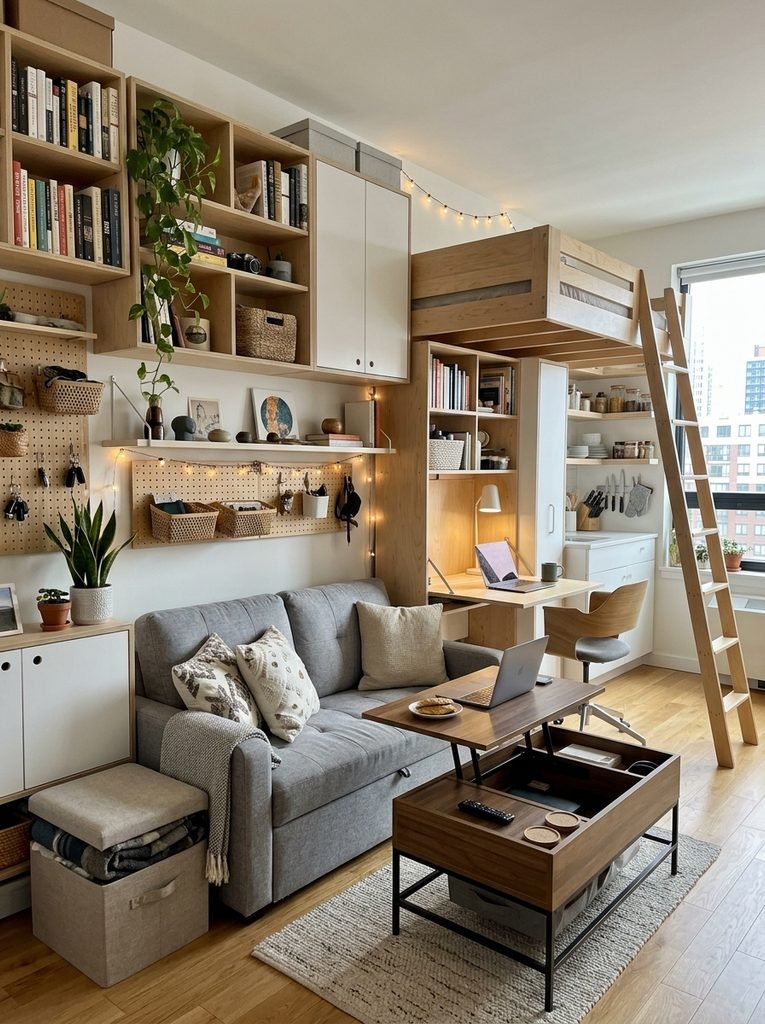
Whether you’re in a one-bedroom apartment or a compact starter home, the same three moves make the biggest difference: arrange furniture to keep walkways clear, choose fewer well-sized pieces over more small ones, and use vertical space before you assume you need more square footage.
Furniture That Does Two Jobs
A sofa bed, a storage ottoman, or a nesting side table can replace two single-purpose pieces without the room feeling more crowded. Before buying anything for a small room, ask whether it could serve a second function a bench with hidden storage, a coffee table with a lift-top for laptop work, a console that folds out into a dining surface for guests.
Go Vertical Before You Go Wider
Tall shelves, wall-mounted cabinets, and hanging storage draw the eye upward and free up floor space that would otherwise get used for another low piece of furniture. This does double duty: it adds real storage capacity and makes ceilings feel higher, which is often what makes a small room feel cramped in the first place, more than the square footage itself. We go much deeper on layout tricks and space-stretching furniture picks in our dedicated small space design guide, which is worth a full read if square footage is your main constraint.
Layered Lighting and Natural Materials
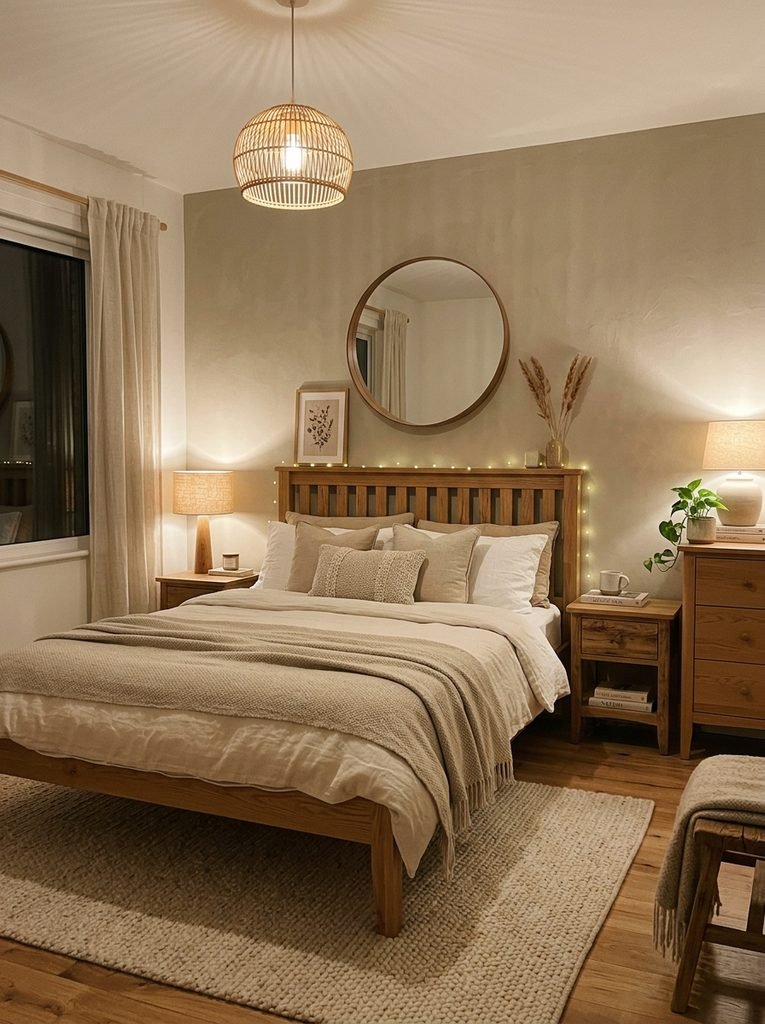
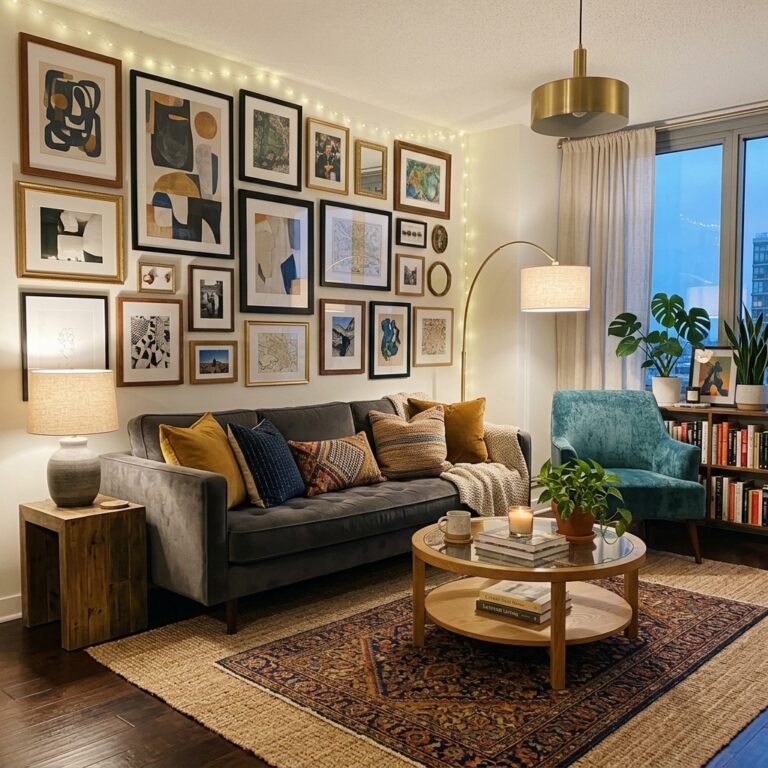
Lighting does more to set a room’s mood than almost any other single choice. Combining ambient, task, and accent light sources rather than one overhead fixture doing everything — adds depth that a single bright bulb never will.
The Three Layers, Explained
Ambient lighting is your base layer an overhead fixture or recessed lights that light the whole room evenly. Task lighting is aimed at a specific job, like a reading lamp beside a chair or under-cabinet strips over a desk. Accent lighting is purely mood: a picture light, a floor lamp in a corner, or a dimmable strip behind a shelf. A room with only the first layer feels flat and clinical no matter how nice the furniture is; adding the other two is usually a same-day fix with lamps you already own.
Bring in Natural Materials
Pair that lighting with natural materials like wood, wool, stone, and a few indoor plants, and even a fairly plain room starts to feel grounded instead of staged. In bedrooms specifically, soft palettes, layered bedding, and warm bedside lighting turn the room into an actual retreat rather than just a place to store a bed. Warm-toned bulbs, generally in the 2700K to 3000K range, make a noticeable difference here cooler, bluer bulbs read as office lighting even in a beautifully furnished room.
Personal Touches That Make a Room Feel Lived-In
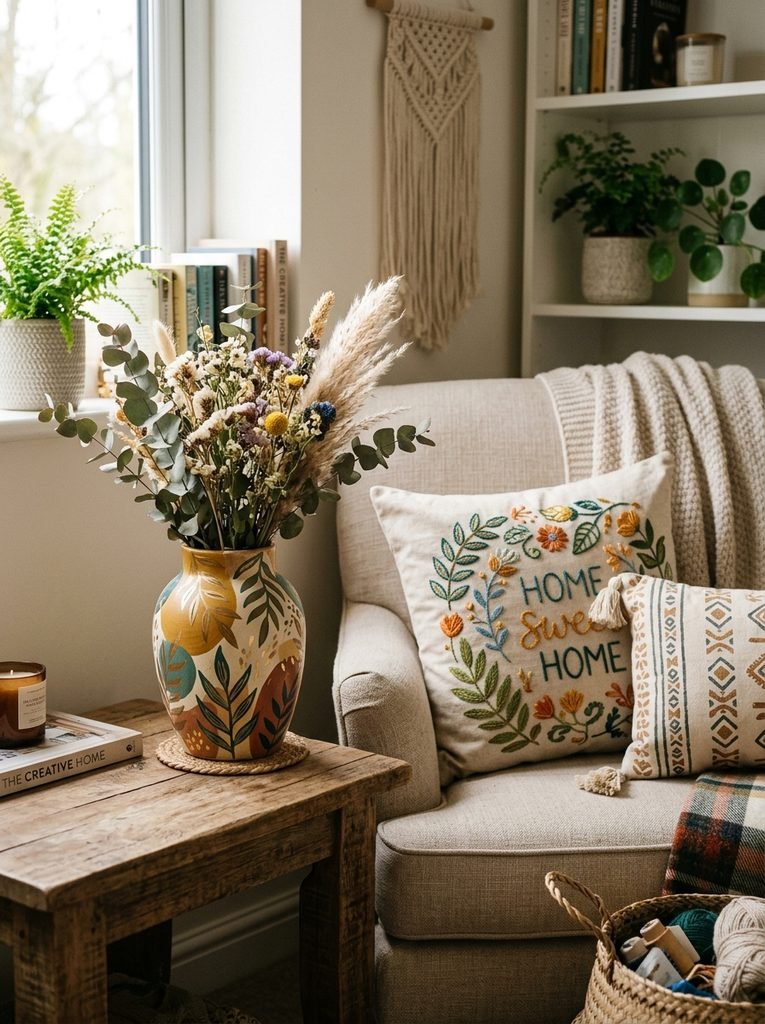
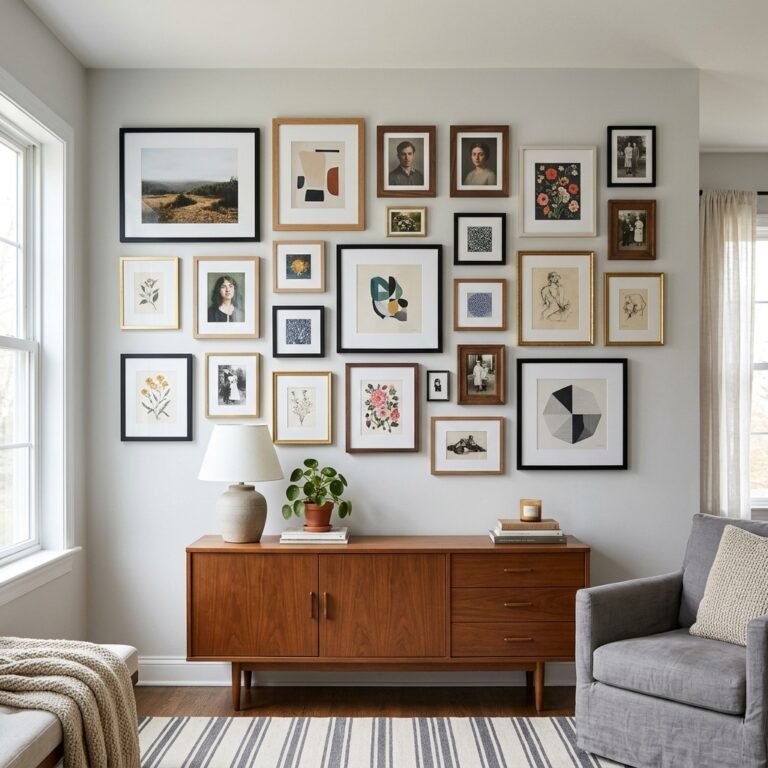
The fastest way to make a home stop feeling like a showroom is to display things that actually mean something artwork, family photos, travel finds, a handmade piece from someone you know. These items create the emotional connection that a store-bought art print never will.
Where Overdecorating Starts
One caution worth naming directly: overdecorating with too many personal items at once creates visual clutter instead of character, so give a few standout pieces room to breathe rather than filling every shelf. A useful ceiling: no more than three to five personal objects grouped together on any one surface, with the rest edited out or rotated in seasonally.
Cheap, Handmade Personality
Small handmade projects are a low-cost way to add this kind of personality a painted vase, a custom cushion cover, an upcycled crate turned into a shelf, glass jars repurposed as planters or candle holders. None of these require special tools or a big time commitment, and they read as more original than anything bought off a shelf in multiples. If budget-friendly DIY projects are what you’re after specifically, our DIY home decor ideas guide has twenty of them broken down step by step.
Materials That Actually Hold Up Over Time
A room can look perfect on move-in day and start looking tired within a year if the underlying materials weren’t built for real use. Modern decor that stays modern-looking depends as much on durability as on style.
Fabric and Finish Choices
Performance fabrics stain-resistant weaves originally developed for outdoor furniture now come in the same soft textures and neutral tones as standard upholstery, so there’s rarely a style trade-off for choosing one on a sofa that sees daily use. Matte finishes on cabinets and furniture hide fingerprints and light scratches far better than high-gloss surfaces, which show every mark within weeks in a household with kids or pets.
Solid Materials Over Veneers Where It Counts
You don’t need every piece in solid wood or natural stone that’s rarely realistic on a normal budget but it’s worth spending the extra amount on solid materials for the two or three pieces that get the most daily contact: a dining table, a coffee table, a well-used countertop or console. Veneers and laminates are fine for pieces that see lighter use, like a bookshelf or a side table tucked in a corner, and the cost savings there can be redirected toward the pieces that need to last.
Low-Maintenance Greenery
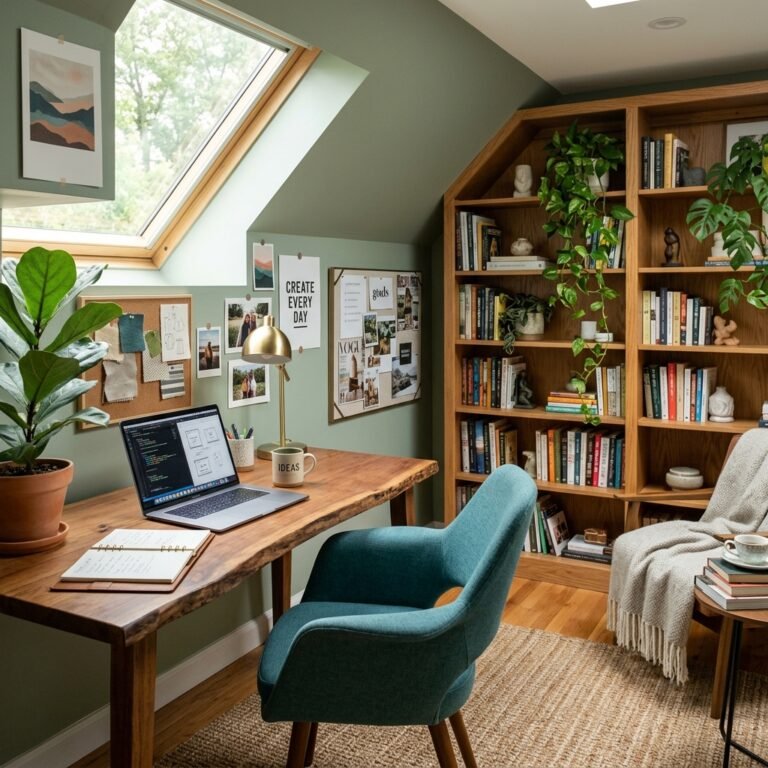
If indoor plants are part of your natural-materials plan, choose ones that survive real schedules rather than aspirational ones. Snake plants, pothos, and ZZ plants tolerate irregular watering and low light far better than fussier options like fiddle-leaf figs, and they deliver the same visual softness without becoming a maintenance chore that eventually gets abandoned in a corner.
Elegant Details That Don’t Require a Big Budget
Before choosing furniture or colors for any room, it helps to picture how you actually want it to feel first warm and relaxing, airy and open, or quiet and cozy. Elegance in modern decor usually comes down to a handful of small, deliberate choices rather than expensive statement pieces.
The Details That Actually Register
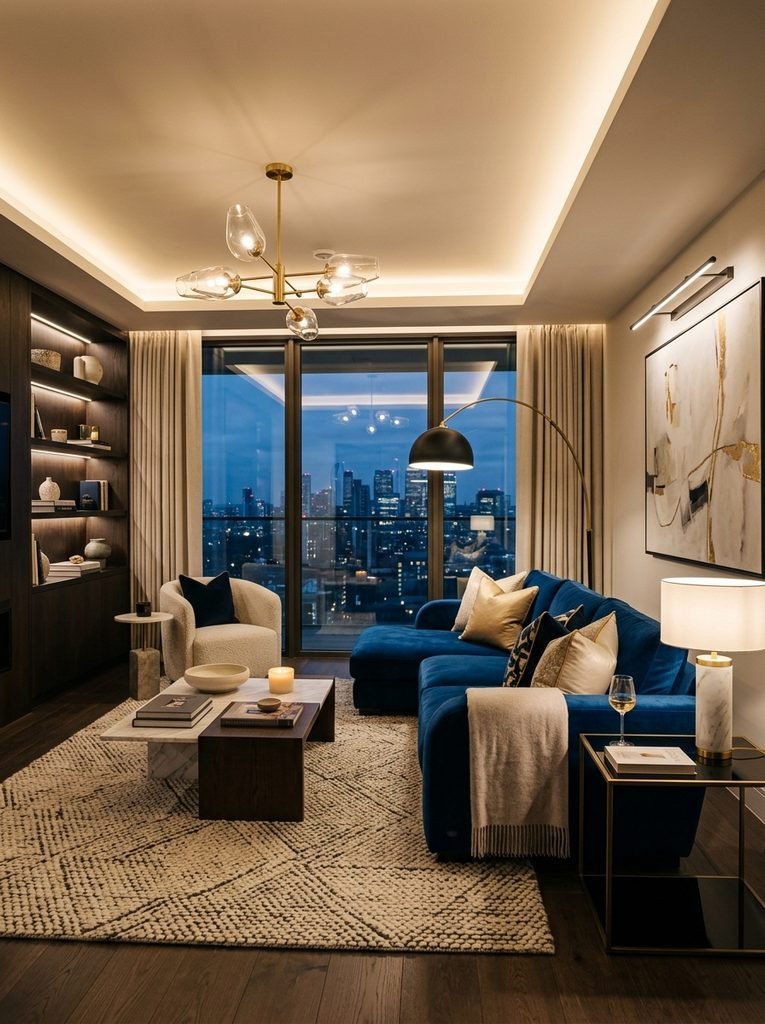
Layered lighting instead of one harsh bulb, seating you’d genuinely choose to sit in, and materials that age well instead of looking worn after a year all do more for a room’s perceived value than a single expensive centerpiece. A well-placed lamp or one high-quality finish a real wood shelf instead of laminate, a linen rather than polyester throw can shift how a whole room reads without touching the rest of the budget.
Where to Splurge Versus Save
If you’re deciding where limited budget should go, prioritize the pieces you touch daily a sofa, your bed, main task lighting over the ones you only look at. Decorative accents are the cheapest and easiest thing to upgrade later once the daily-use pieces are solid. If you specifically want higher-end styling ideas and are working with more budget, our luxury home decor ideas post covers that ground in detail.
Conclusion: Invest in Basics, Update the Accents
The most stylish homes usually aren’t the ones with the biggest budgets they’re the ones where money went to the right things. A well-made sofa, a durable rug, and solid lighting fixtures cost more upfront but carry a room for a decade, while cushions, vases, and seasonal art can be swapped cheaply to keep things feeling current. A rough guide worth following: put roughly 70% of any decorating budget toward furniture and lighting you’ll use every day, and save the remaining 30% for the accents that let you refresh the room’s personality each season without touching the big pieces again. That split invest in the basics, update the accents is the single habit that keeps a home from feeling dated three years after you decorated it. Start with whichever idea above solves the problem your space actually has right now, whether that’s a cramped layout, a flat color scheme, or a room that just doesn’t feel like yours yet, and build outward from there.
1 comment