Elevate your home’s aesthetic by mastering strategic rug placement, a fundamental interior design technique that defines open-concept spaces, adds essential warmth, and creates a perfectly balanced living room layout. Often considered the “anchor” of a room, the right area rug does more than just protect flooring; it acts as a visual boundary that harmonizes your furniture arrangement and can even make a small living room feel significantly larger. To achieve a professional, polished look, interior designers typically follow the “all legs on” or “front legs on” rule, ensuring the rug is large enough to connect seating elements rather than floating awkwardly in the center of the floor. Choosing high-quality materials like wool, jute, or performance synthetics adds a layer of tactile texture and acoustic comfort, making your space feel more intimate and inviting. This home styling approach is a high-impact, low-effort way to refresh your decor, providing a cohesive foundation for minimalist, boho, or traditional interiors alike. By prioritizing proper scale and orientation—such as placing a large rectangular rug parallel to your sofa—you create a sophisticated focal point that balances the room’s proportions. Ultimately, a well-placed rug transforms a disjointed collection of furniture into a curated, functional sanctuary that reflects a high-end, designer-grade finish.
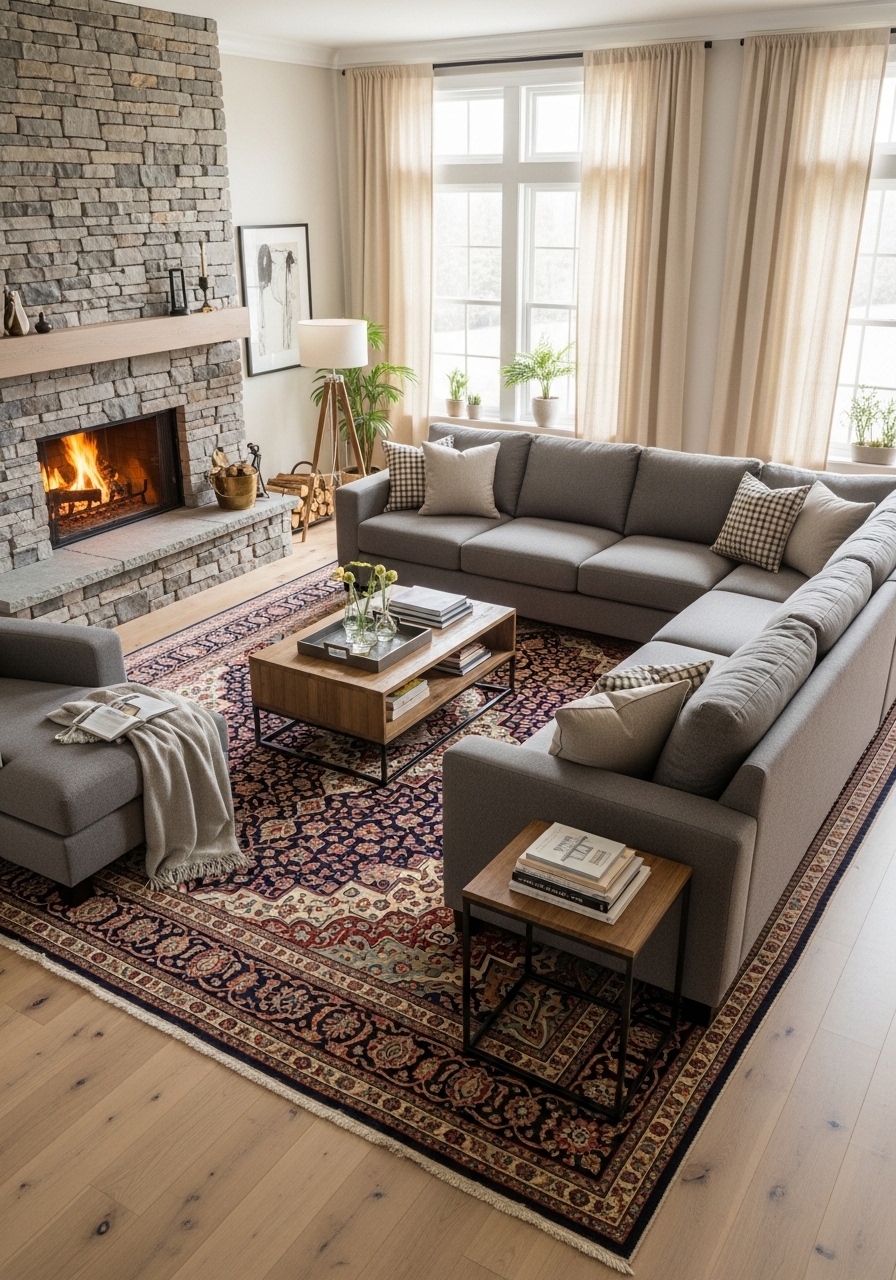
1. Place the Rug Fully Under the Sofa Set
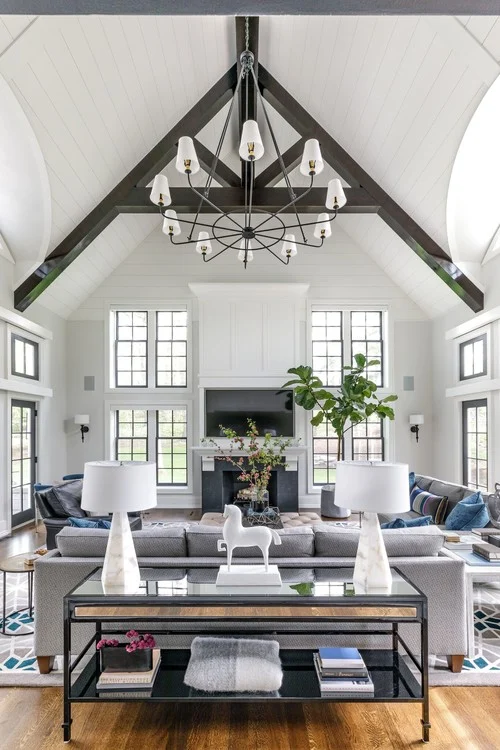
Elevate your home’s luxury appeal by mastering the “all legs on” rug placement, a premier interior design technique that involves positioning a large area rug completely under the sofa, armchairs, and coffee table. This sophisticated layout is ideal for spacious living rooms and open-concept floor plans, as it creates a unified, “island” effect that visually anchors the seating area and defines it as a distinct functional zone. By ensuring the rug extends at least 6 to 12 inches beyond the edges of the furniture, you achieve a balanced and intentional look that mimics high-end hotel lobbies and professional gallery spaces. This home styling method not only adds immediate warmth and acoustic softness to hardwood or tile floors but also prevents a disjointed aesthetic by physically connecting every piece of furniture in the arrangement. Opting for a high-quality oversized area rug in neutral tones or subtle textured patterns provides a cohesive foundation that makes the room feel more expansive and expensive. Whether you are aiming for a modern minimalist or a classic traditional aesthetic, placing the rug fully under the sofa set is the most effective way to achieve a polished, designer-grade finish that radiates comfort and architectural stability.
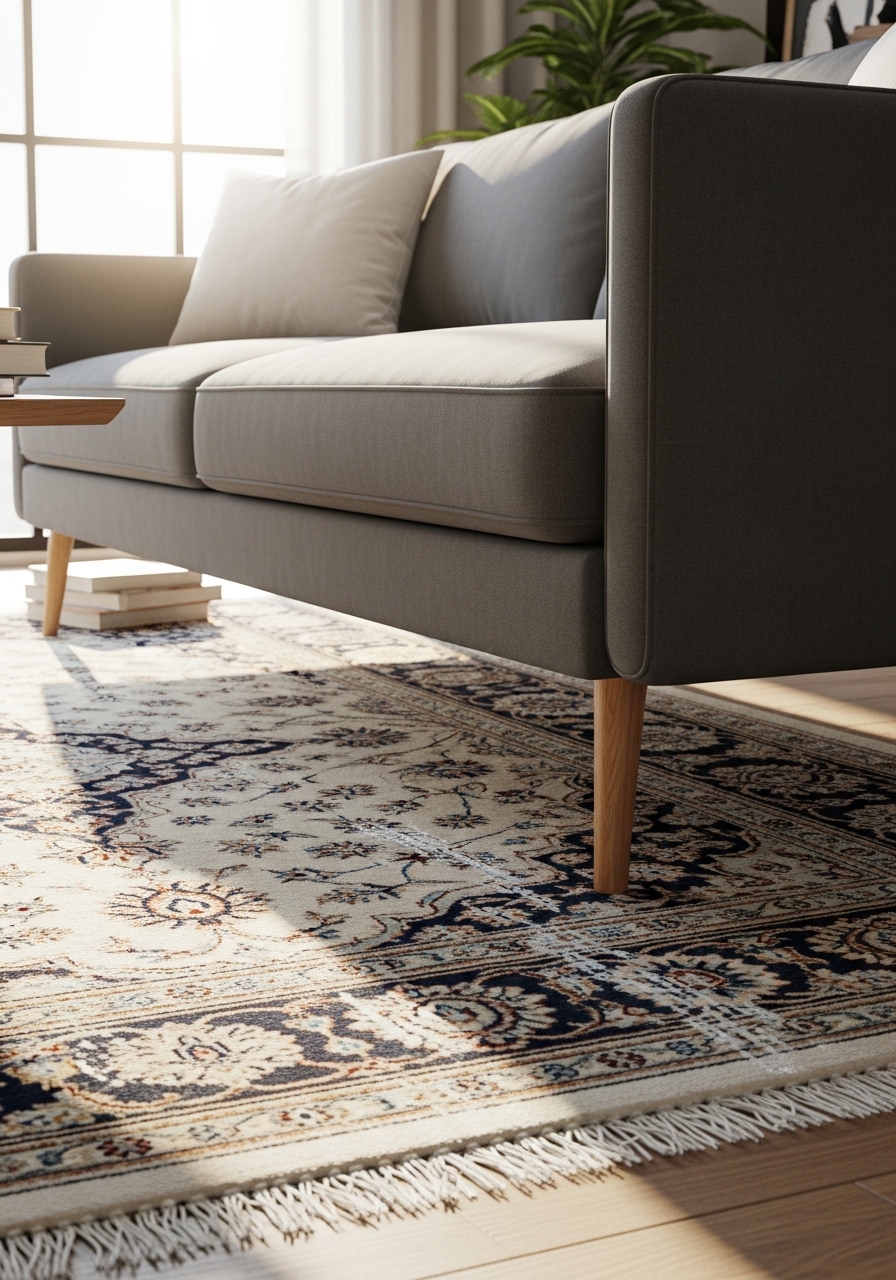
2. Front Legs of Furniture on the Rug
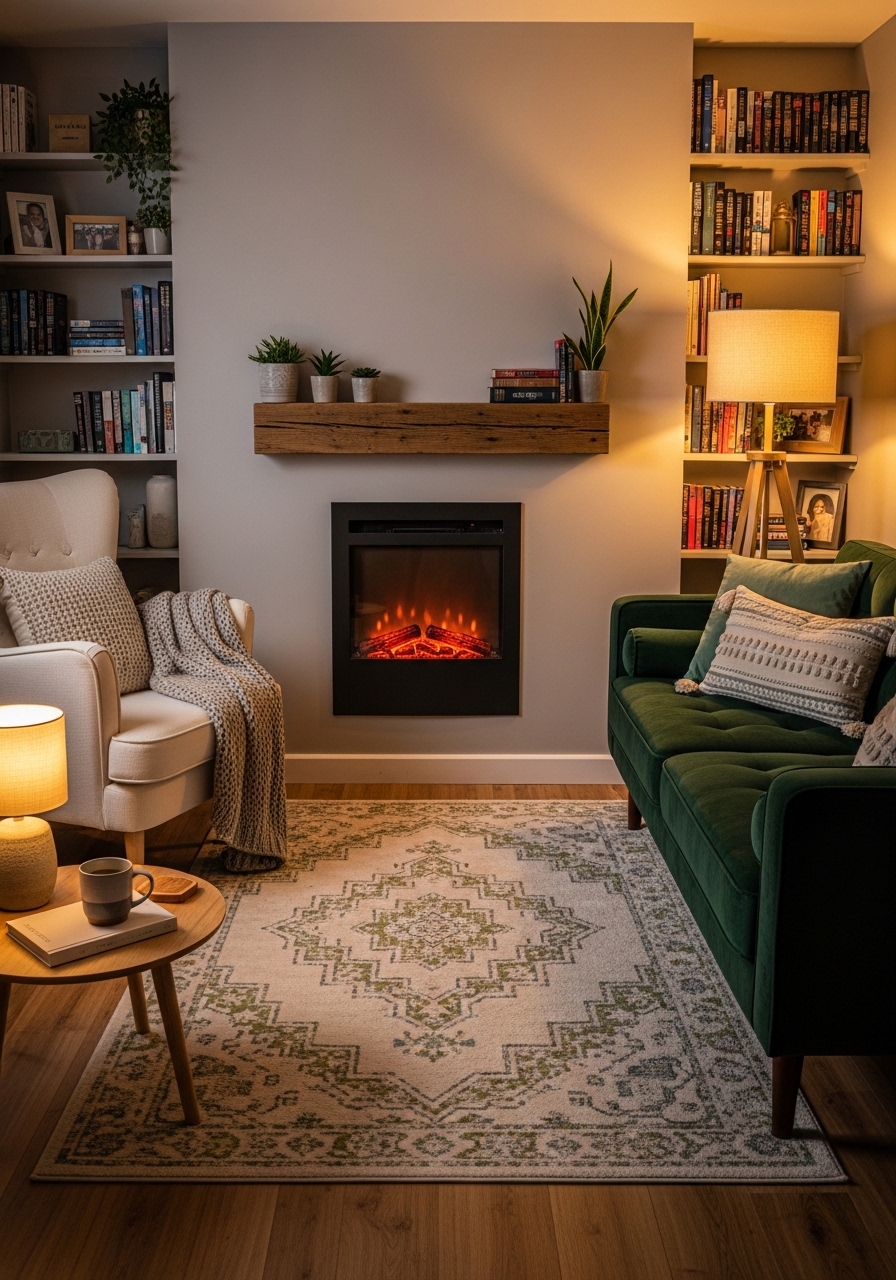
Optimize your interior layout by mastering the “front legs on” rug placement, a versatile and practical design technique that perfectly balances medium-sized living rooms. By positioning only the front legs of your sofa and accent chairs on the rug, you create a cohesive visual anchor that connects your seating arrangement without the need for an oversized, wall-to-wall carpet. This method is a favorite among interior designers for its ability to maintain an open and airy floor space, preventing the room from feeling cluttered while still providing a soft, tactile foundation for the conversation area. To achieve the best results and maintain proportional harmony, select a rug that extends at least 6 to 8 inches beyond each side of the sofa, ensuring the transition between the rug and the bare floor looks intentional and polished. This home styling strategy is especially effective in modern apartments or transitional homes where you want to highlight beautiful hardwood or tile flooring while still defining a cozy “zone” for relaxation. By adopting this balanced approach, you transform a standard furniture set into a professionally curated environment that feels both spacious and grounded, making it an essential rule of thumb for achieving a high-end, designer-grade living room on any budget.
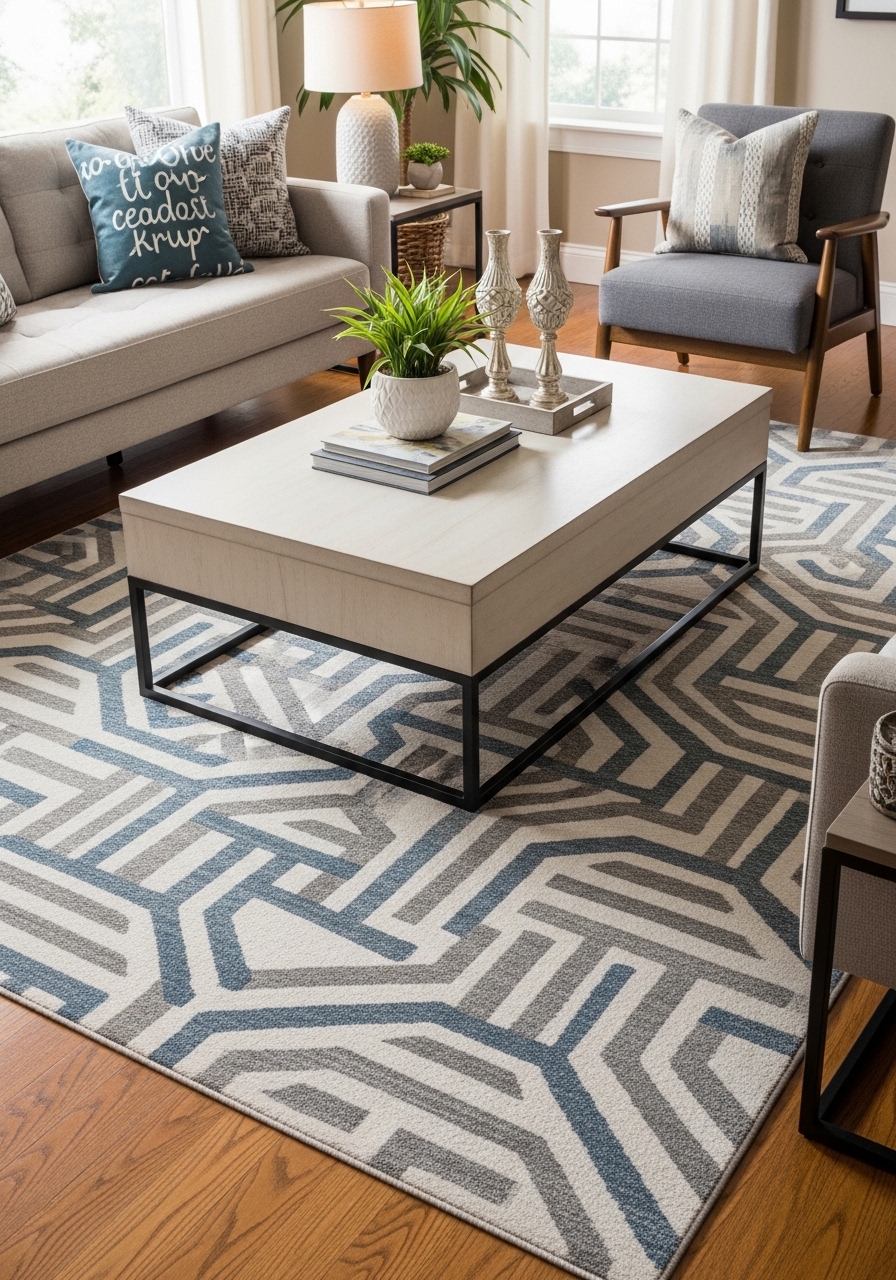
3. Rug Only Under the Coffee Table
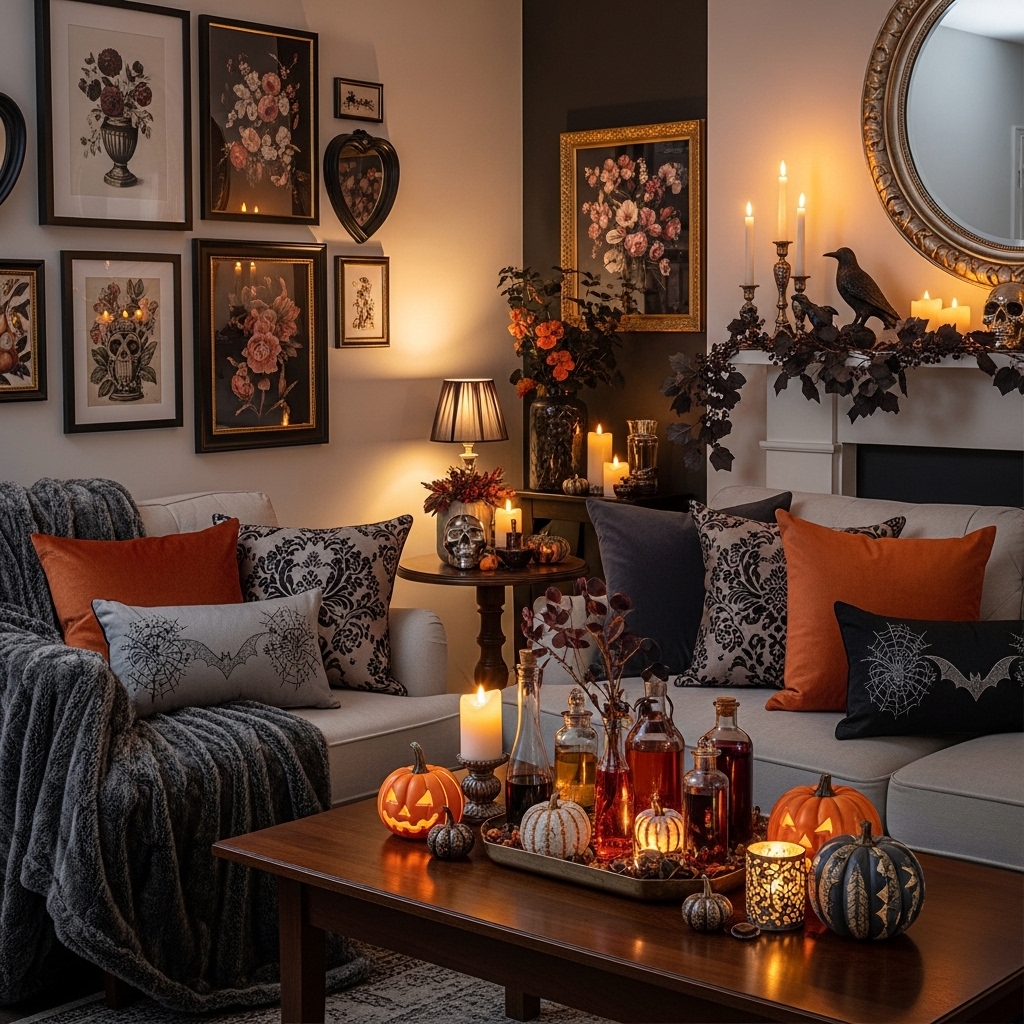
Optimize your compact living space by mastering the “coffee table only” rug placement, a strategic interior design technique specifically engineered for small apartments or minimalist floor plans. By positioning a smaller area rug directly under the center table, you create a subtle yet effective decorative focal point that anchors the heart of your seating area without overwhelming the room’s square footage. To achieve a professional, balanced look, ensure the rug is at least 12 to 18 inches larger than the coffee table on all sides, allowing the edges to peek out and provide a textured frame for your furniture. This home styling method is ideal for showcasing beautiful hardwood or polished concrete floors while still introducing a layer of warmth and “hygge” to the room’s center. Utilizing patterned rugs or high-texture materials like jute or faux sheepskin in this layout draws the eye inward, creating an intimate conversation zone that feels intentionally designed. This approach is a favorite for modern minimalist and urban interiors where maintaining an open, airy flow is a priority. By selecting a bold or uniquely shaped rug—such as a round or octagonal piece—you can transform a simple functional area into a sophisticated, designer-grade statement that balances practical utility with high-end aesthetic appeal.
4. Layer Rugs for a Designer Look
Elevate your interior’s textural depth by mastering the layered rug trend, a high-impact design strategy that instantly creates a curated, professional-grade aesthetic in any living space. This sophisticated technique involves using a large, neutral-toned base rug—typically made of durable natural fibers like jute or sisal—and topping it with a smaller, more decorative accent rug, such as a vintage Persian or a bold geometric pattern. By layering materials like wool over seagrass, you introduce an extra dimension of warmth and visual interest that is a hallmark of Boho, Scandinavian, and Modern Transitional interiors. This home styling method is not only visually stunning but also highly functional; it allows you to define a specific conversation area while protecting your primary flooring. To achieve the perfect “designer look,” ensure the bottom rug is large enough to anchor all furniture legs, while the top layer sits centered to draw the eye inward. This approach provides a versatile platform to experiment with contrasting textures and colors without the commitment of a single, massive patterned carpet. Whether you are aiming for a cozy “hygge” atmosphere or a sophisticated gallery feel, incorporating layered area rugs is the ultimate way to make your living room feel more intentionally styled, acoustically balanced, and architecturally grounded.
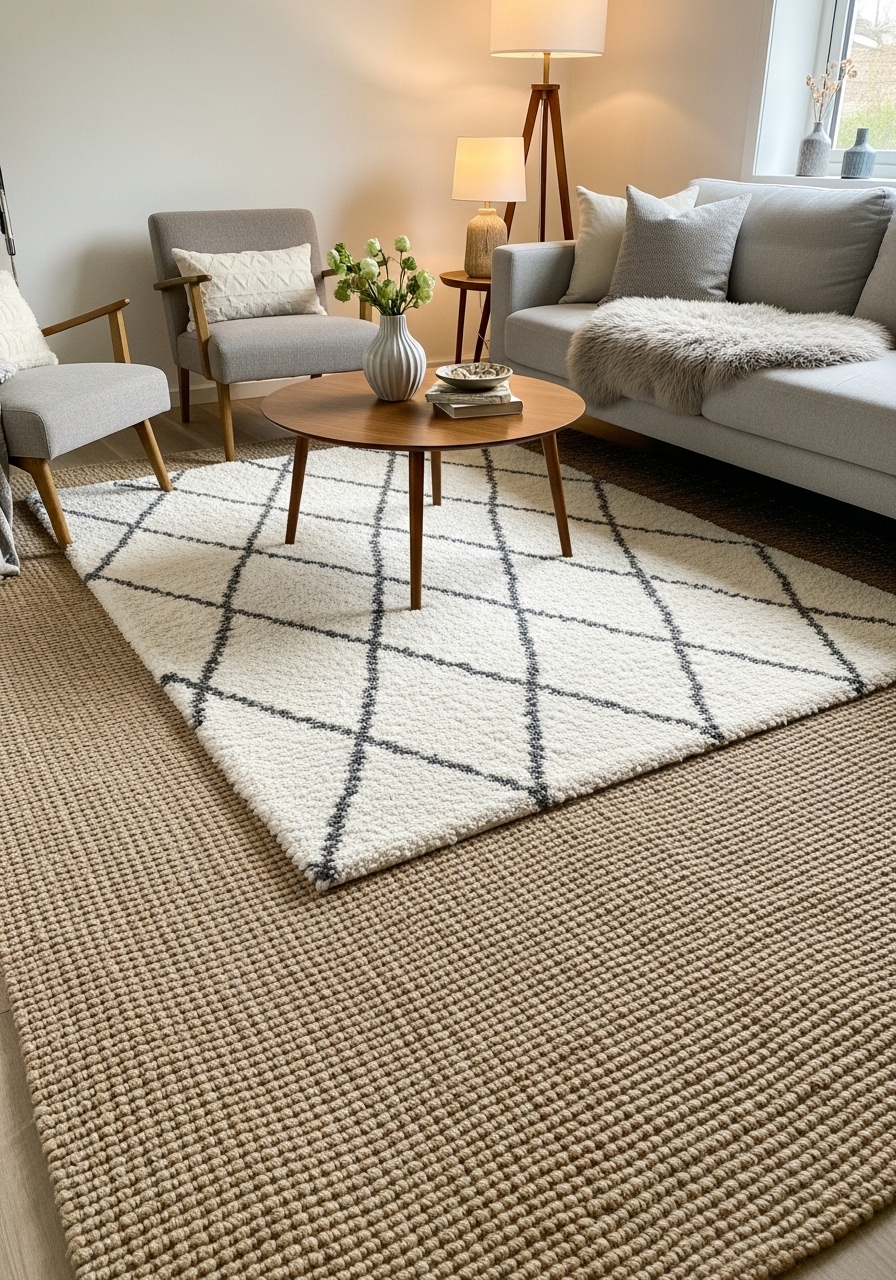
5. Center the Rug with the Seating Area
Master the art of interior symmetry by centering your area rug within the seating arrangement, a foundational design principle that creates a perfectly balanced and harmonious living room layout. To achieve this professional look, ensure the rug is precisely aligned with the midpoint of your sofa and coffee table, effectively acting as a visual anchor that organizes your furniture into a cohesive conversation zone. This home styling technique is essential for defining open-concept spaces, as it provides a clear structural boundary that prevents your decor from feeling scattered or disjointed. By maintaining equal margins on all sides of the primary seating, you establish a sense of architectural symmetry and polish that is a hallmark of modern and transitional interiors. Selecting the correct rug scale—typically an 8×10 or 9×12 for standard living rooms—is crucial for ensuring every piece of furniture feels physically and visually connected to the center. Whether you are aiming for a minimalist aesthetic or a cozy traditional feel, a centered rug placement transforms a simple room into a curated sanctuary by grounding the layout and emphasizing the room’s proportions. This simple yet high-impact adjustment is the most effective way to make your living area feel more spacious, intentional, and expertly designed.
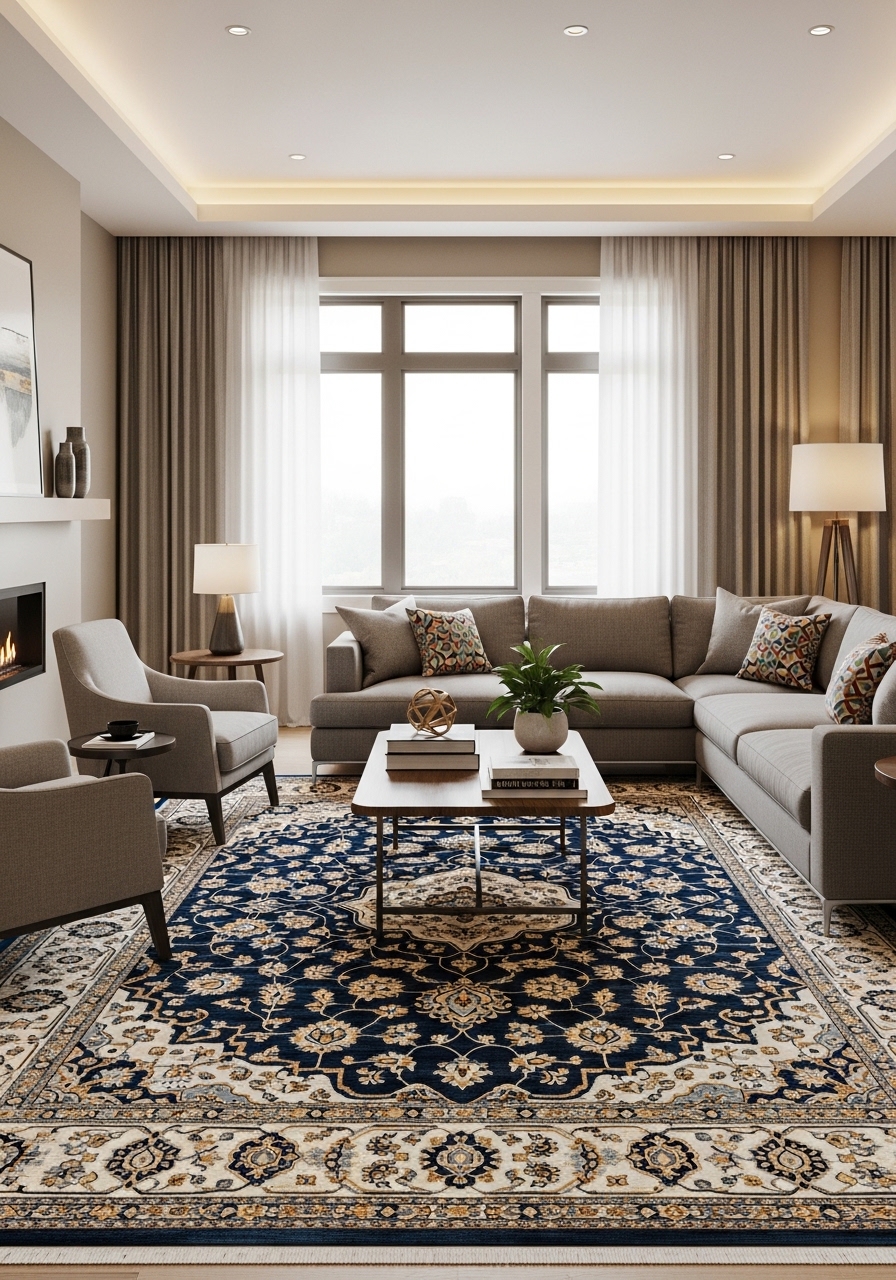
6. Use a Rug to Define an Open Concept Space
In open-concept homes, using a rug to define separate areas is a premier interior design strategy for creating structure and organization within a large, multi-functional space. By placing a high-quality area rug specifically under your living room furniture, you create a clear visual boundary that distinguishes the lounge from adjacent dining or kitchen zones without the need for intrusive physical barriers. This zoning technique is essential for maintaining an airy, modern flow while ensuring each “room” within the open floor plan has its own unique identity and purpose. To achieve a professional, curated look, choose a rug that complements your living room’s color palette but provides a subtle textural contrast to the surrounding flooring. This helps anchor the seating arrangement, making the furniture feel like a cohesive unit rather than a scattered collection of pieces. Whether you are styling a minimalist loft or a traditional great room, a well-placed zonal rug acts as a functional anchor that improves the room’s acoustics and architectural balance. By prioritizing scale and placement—ensuring the rug is large enough to touch or sit under all primary seating—you transform an expansive floor plan into a series of intimate, expertly designed living environments that feel both expansive and intentionally grounded.
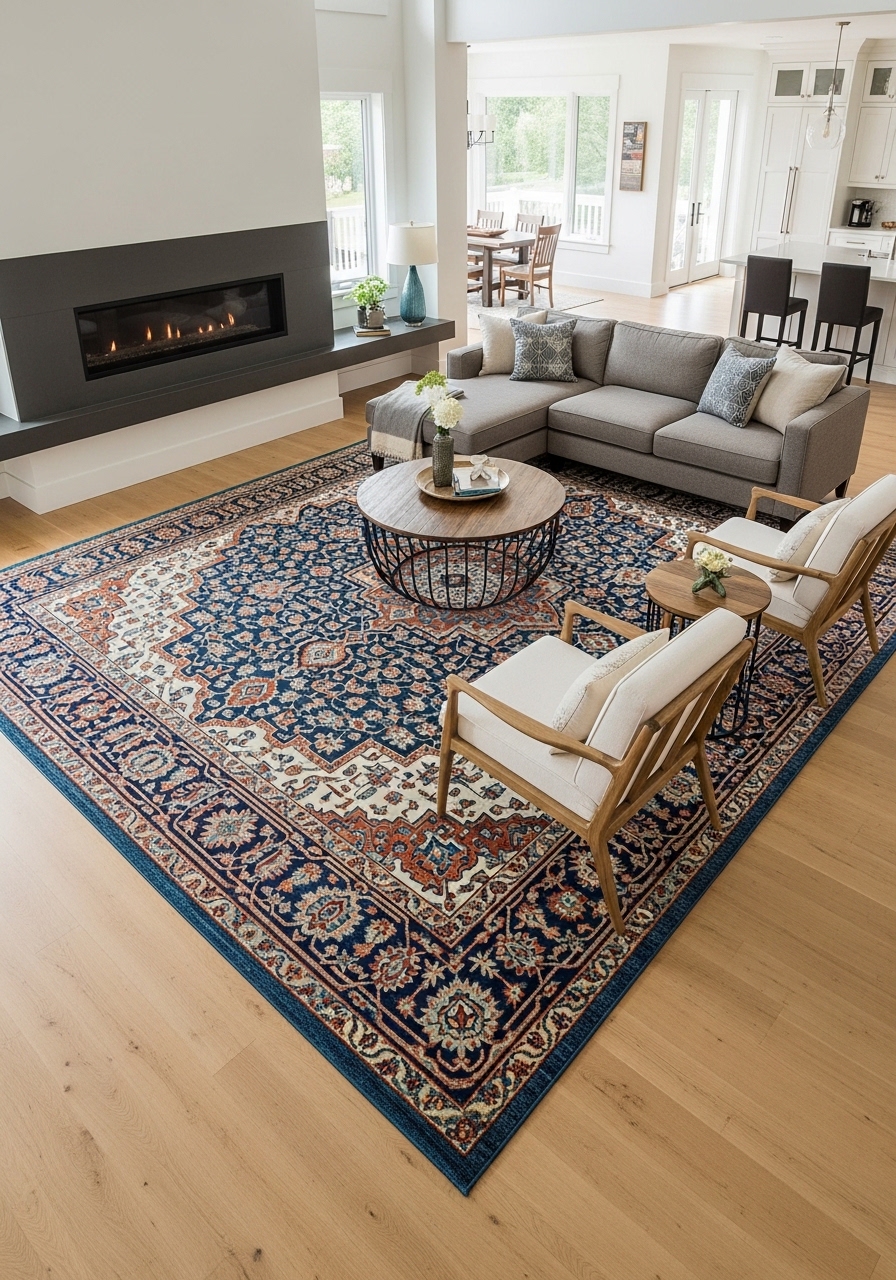
7. Place a Rug Diagonally for a Creative Layout
Elevate your interior’s energy by experimenting with a diagonal rug placement, a dynamic design technique that introduces an unexpected, creative element to your living room layout. By angling a high-quality area rug slightly—typically under the coffee table or the front corner of a sofa—you break away from traditional linear symmetry and introduce visual movement to your floor plan. This “off-axis” styling is a favorite for contemporary and eclectic interiors, as it helps soften the rigid lines of a rectangular room and creates a more fluid, organic flow between furniture pieces. To maximize the impact of this design trend, choose a rug with bold geometric patterns or distinct textures that emphasize the change in direction. This placement is particularly effective in smaller rooms or awkward layouts where you want to draw the eye away from narrow walls and toward a central, artistic focal point. Beyond its aesthetic appeal, a diagonally placed rug acts as a sophisticated tool for “rule-breaking” decor, making your living space feel more personalized and intentionally curated. Whether you’re styling a modern loft or a creative home office, shifting your rug’s orientation is the ultimate way to add architectural interest and a sense of designer-grade flair to your home without purchasing new furniture.
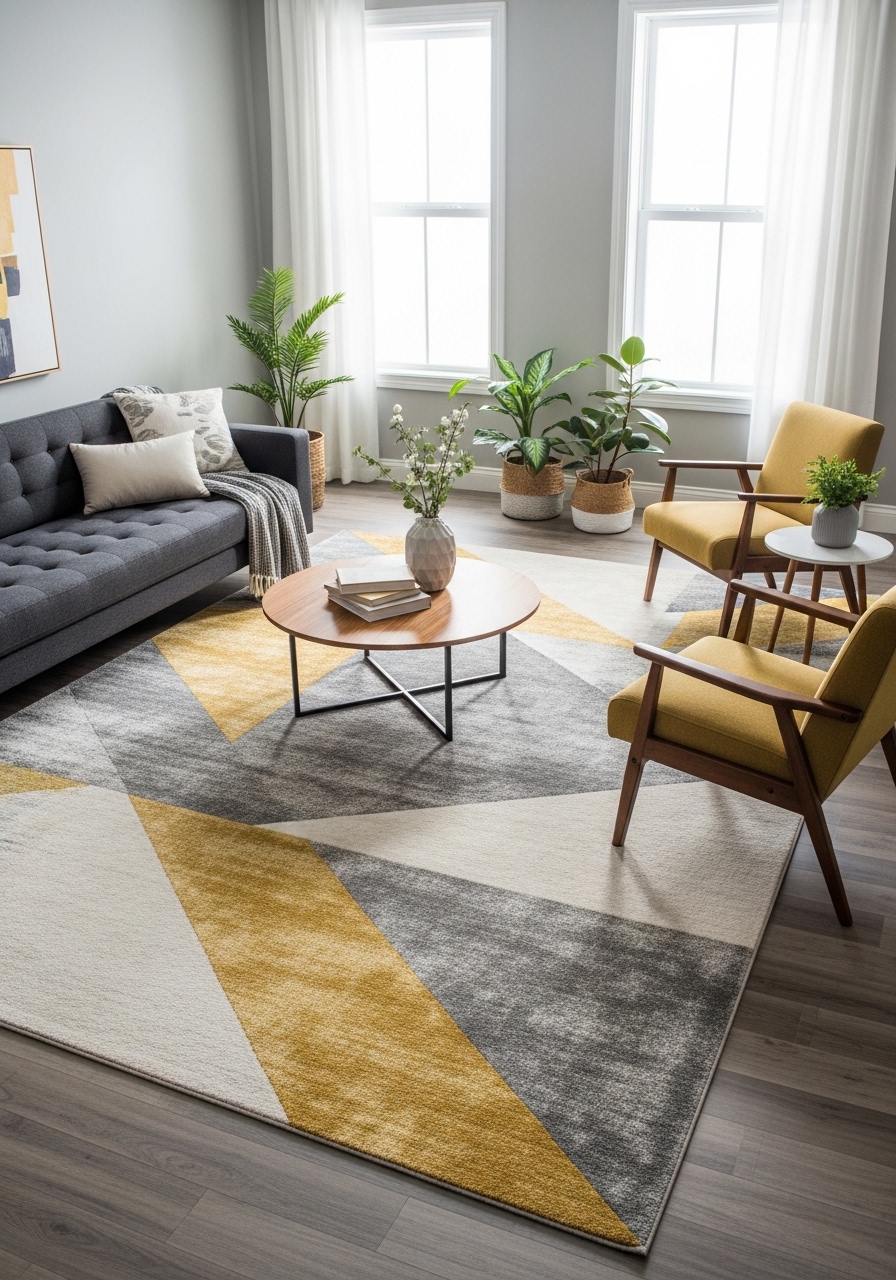
8. Use a Round Rug for Curved Layouts
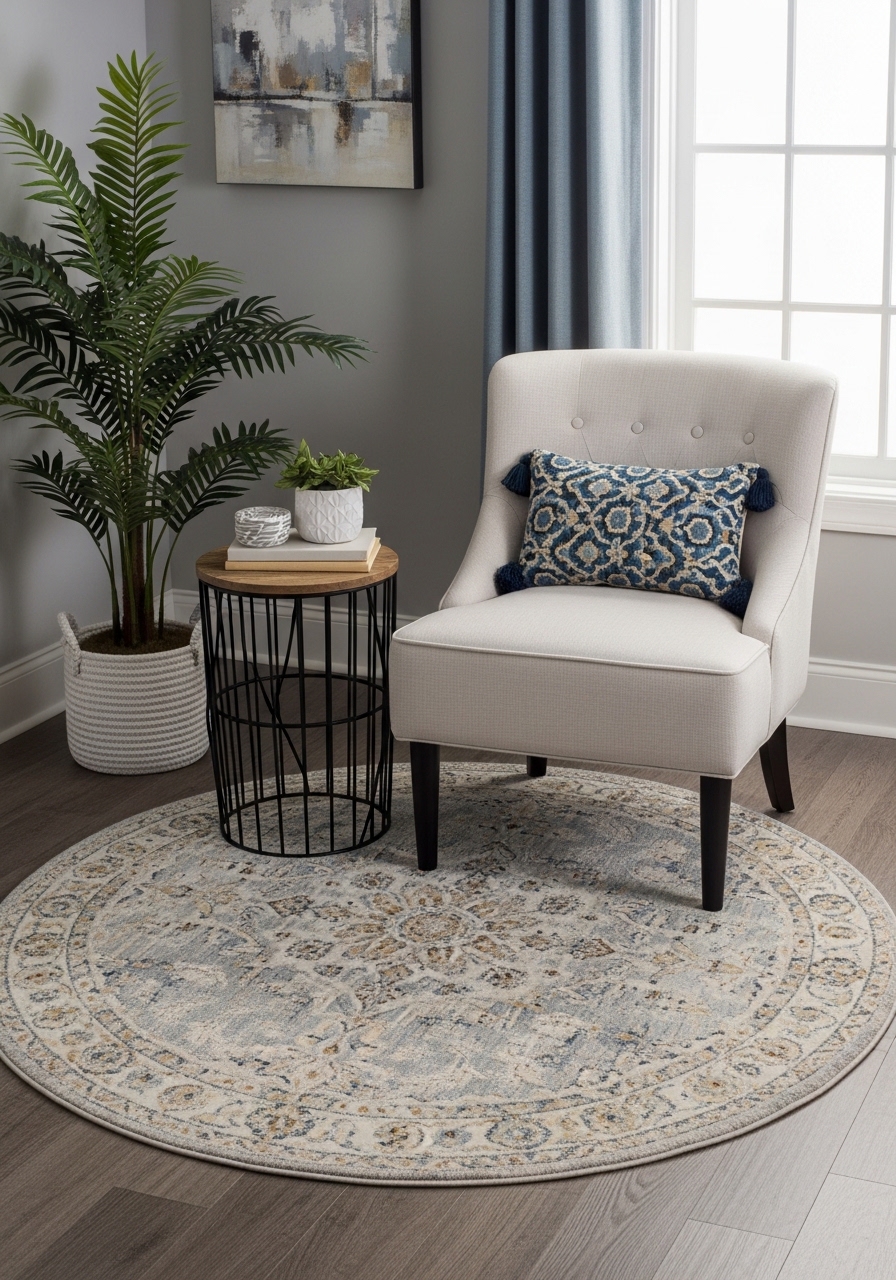
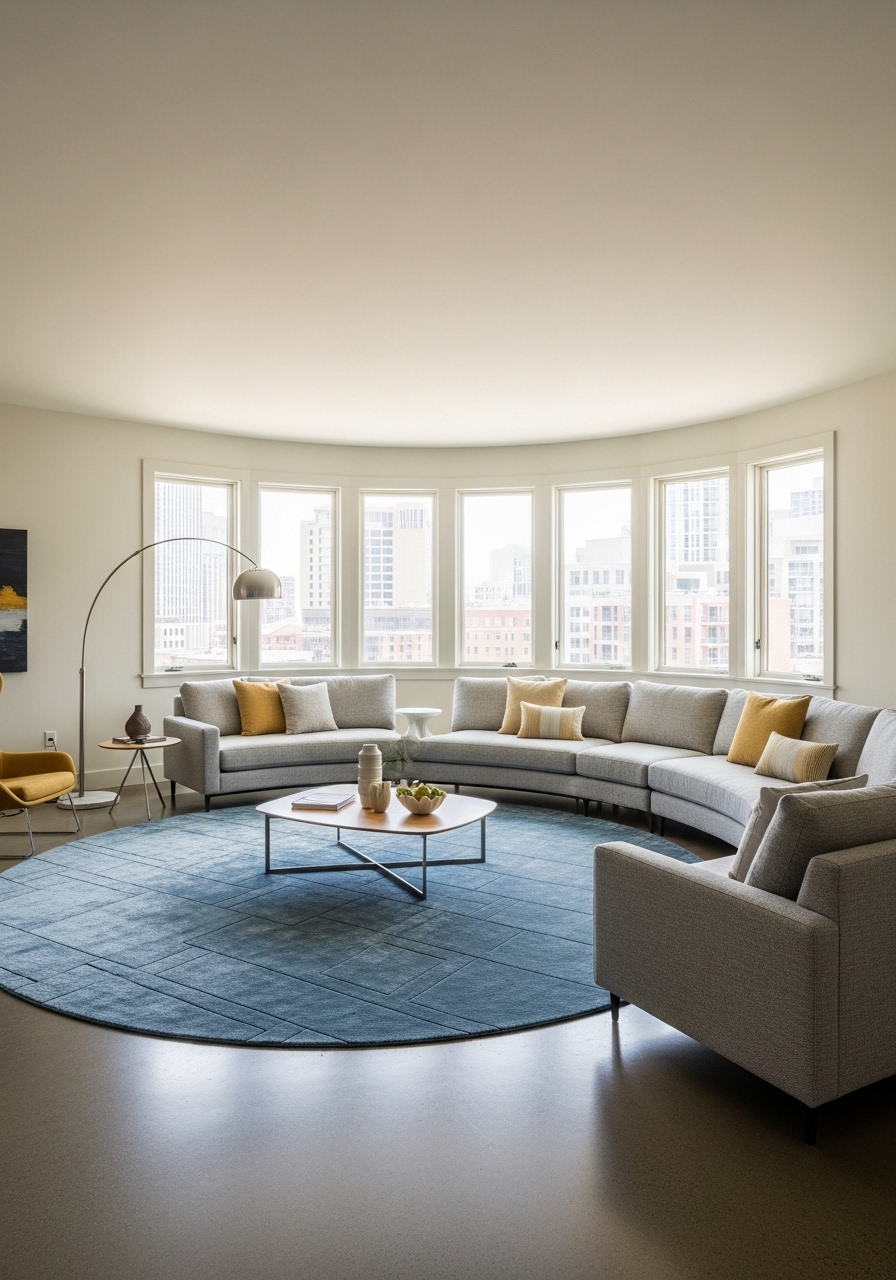
Soften your interior’s architectural lines by incorporating a round area rug, a brilliant design solution for breaking up the “boxiness” of standard rectangular rooms. Perfectly suited for curved sofas or circular coffee tables, a round rug introduces a sense of fluid movement and visual variety that linear rugs often lack. This placement is a favorite for small living rooms and studio apartments because the lack of sharp corners creates an illusion of more floor space, making the layout feel airy rather than constricted. By centering a round rug within a seating group, you create an intimate “conversation circle” that naturally draws people together, enhancing the room’s overall “hygge” and comfort. This styling tip is especially effective in modern and eclectic interiors where you want to highlight unique furniture shapes or soften a room filled with hard-edged cabinets and shelving. Whether you choose a minimalist jute weave or a plush, high-pile Moroccan design, a circular rug placement adds a playful yet sophisticated touch that transforms a functional area into a dynamic, designer-grade sanctuary.
9. Extend the Rug Beyond the Sofa
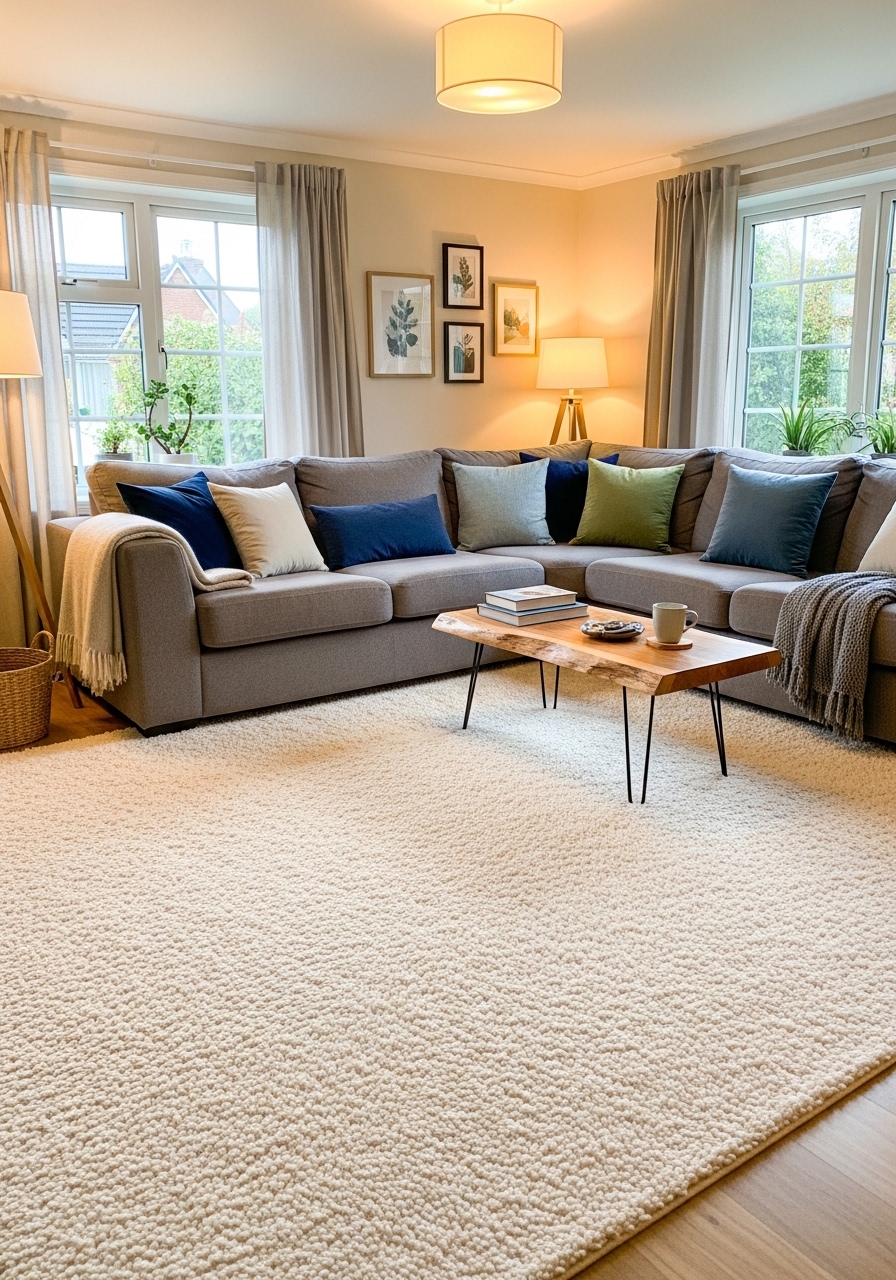
Achieve a sense of expansive, high-end luxury by extending your rug beyond the sofa edges, a critical interior design rule for creating a spacious and well-proportioned living room. One of the most common decor mistakes is choosing a rug that is too small, which can make a room feel fragmented and “shrunken.” By selecting an oversized area rug that extends at least 12 to 18 inches past the sides and back of your seating, you provide a generous frame that anchors your furniture and prevents the “floating island” effect. This styling technique is a favorite among professional designers because it visually expands the floor plan, making even modest rooms feel more grand and intentional. A larger rug acts as a unifying element, physically and visually connecting multiple furniture pieces—such as end tables, floor lamps, and accent chairs—into a single, cohesive conversation zone. Whether you are using a plush wool rug or a flat-weave natural fiber, ensuring the rug’s perimeter is visible beyond your sofa adds a layer of architectural stability and softness to the room. This approach not only enhances the acoustic comfort of your home but also ensures your living room looks professionally curated, balanced, and ready for a magazine feature.
10. Highlight a Statement Rug
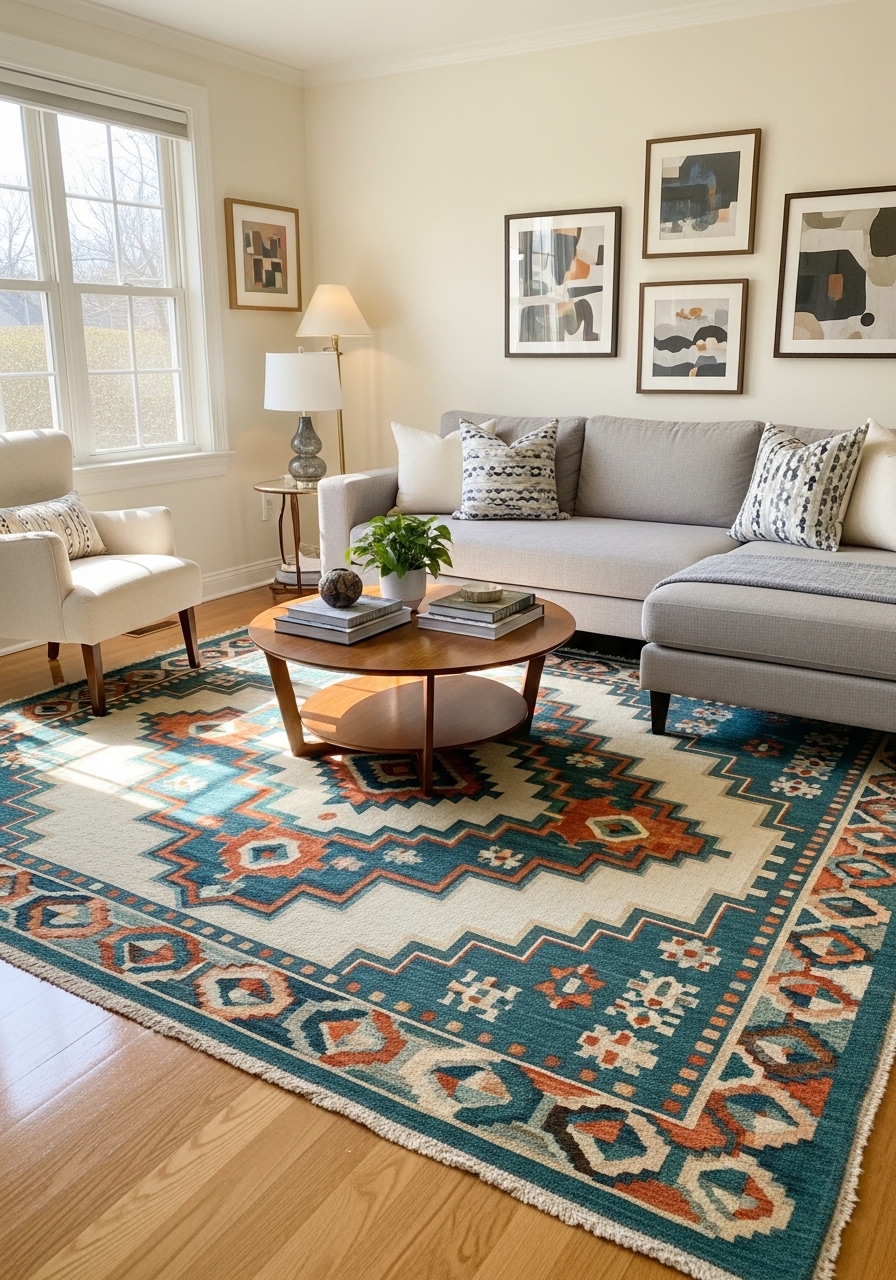
Transform your living room into a high-design sanctuary by highlighting a statement rug, a powerful interior design technique where the floor covering serves as the primary artistic centerpiece. In a neutral interior, a bold patterned or vibrantly colored rug provides the essential “soul” of the room, introducing personality, texture, and a definitive color palette that anchors the entire decor scheme. To execute this home styling strategy effectively, interior designers recommend a “less is more” approach with furniture; arrange your seating and tables around the rug’s perimeter or use glass-topped coffee tables to ensure the intricate motifs and craftsmanship remain visible. This layout shifts the focus from the architectural walls to the horizontal plane, creating a grounded yet visually stimulating focal point. Whether you select a hand-knotted Oriental rug, a modern geometric weave, or a high-texture abstract piece, a statement area rug acts as a canvas that dictates the room’s energy. By coordinating small accents—like throw pillows or ceramic vases—with the rug’s secondary colors, you achieve a sophisticated, professionally curated look that feels both intentional and daring. This approach is ideal for homeowners looking to make a massive impact with a single investment piece, proving that the right rug can truly “make” the room.
11. Use a Neutral Rug for Minimalist Interiors
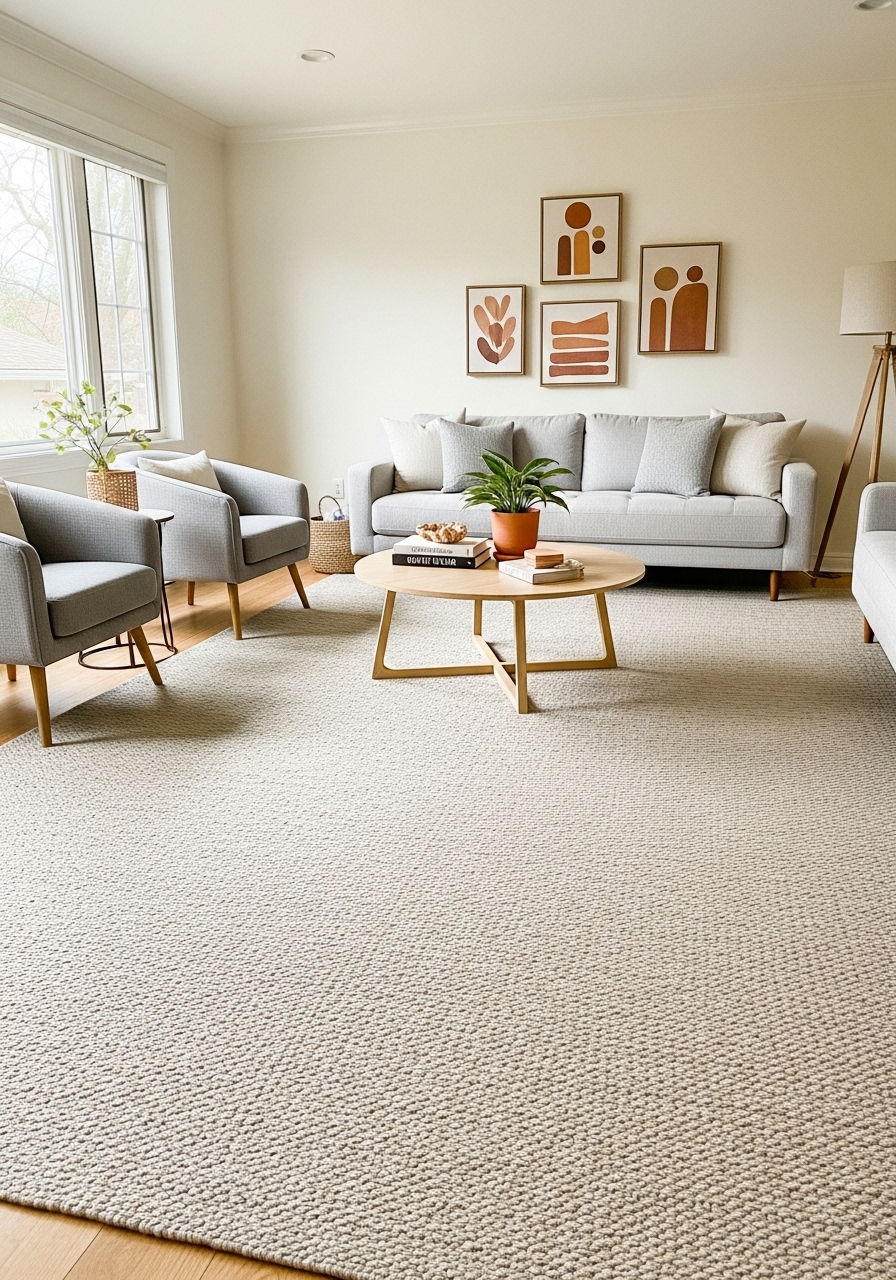
Achieve a serene, sophisticated aesthetic by integrating a neutral rug into your minimalist interior, a foundational design choice that provides essential warmth and comfort without disrupting a clean, monochromatic palette. In a minimalist living room—where “less is more”—a soft beige, ivory, or charcoal gray rug acts as a subtle textural layer that bridges the gap between sleek furniture and hard flooring surfaces like polished concrete or light oak. By placing a large, understated rug under your seating area, you introduce a sense of tactile luxury that softens the room’s acoustic profile and prevents a modern space from feeling cold or sterile. This home styling strategy relies on “quiet” patterns—such as a subtle high-low pile or a delicate marled weave—to add depth and visual interest while keeping the overall design calm and uncluttered. Interior designers often use neutral rugs to balance architectural proportions, ensuring the furniture feels grounded in the space. Whether you prefer a plush wool shag for a “soft-minimalism” vibe or a flat-weave linen for a more clinical, sharp look, a tonal area rug serves as a versatile canvas that allows your high-quality furniture pieces to take center stage. Ultimately, this approach creates a functional, cohesive sanctuary that radiates a sense of “zen” and professional-grade curation.
12. Create a Cozy Corner with a Small Rug
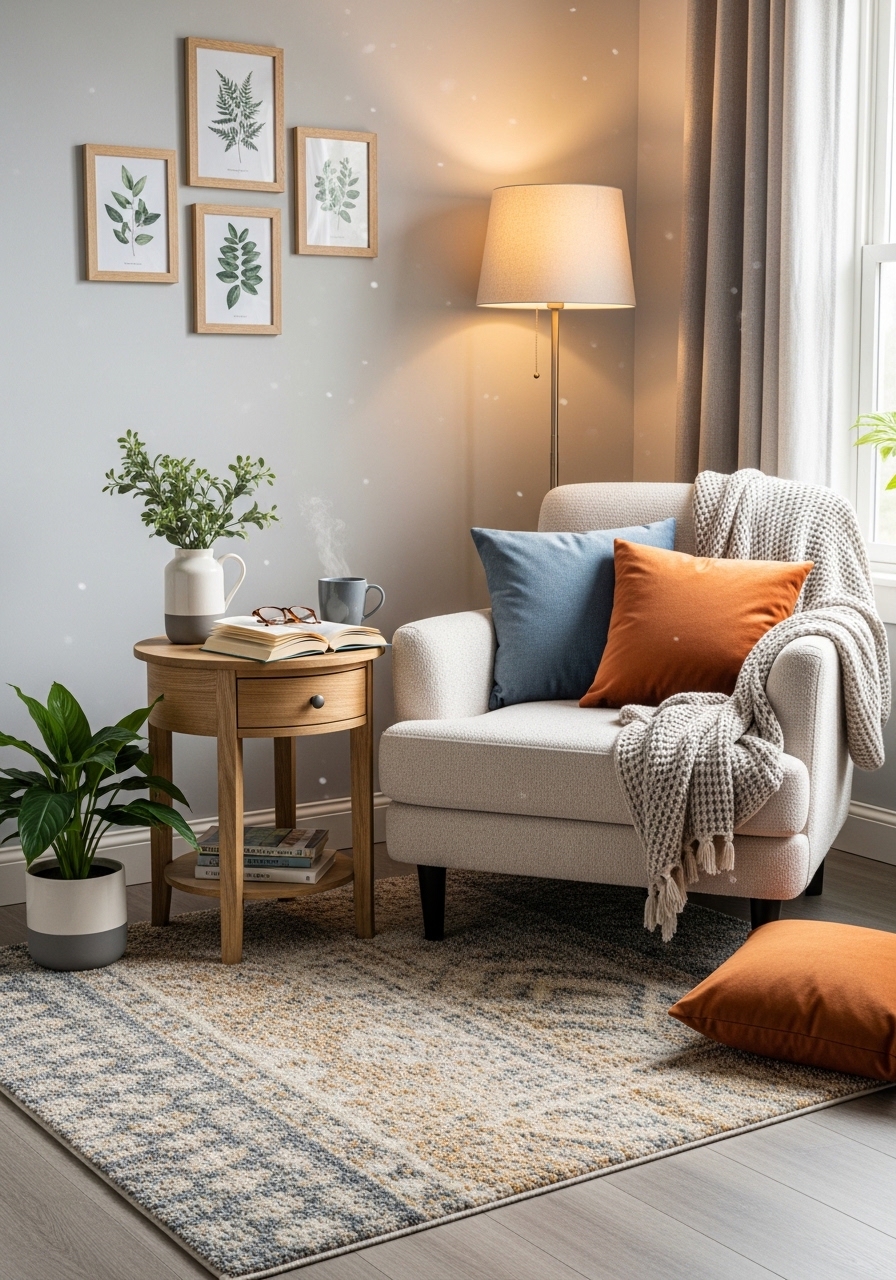
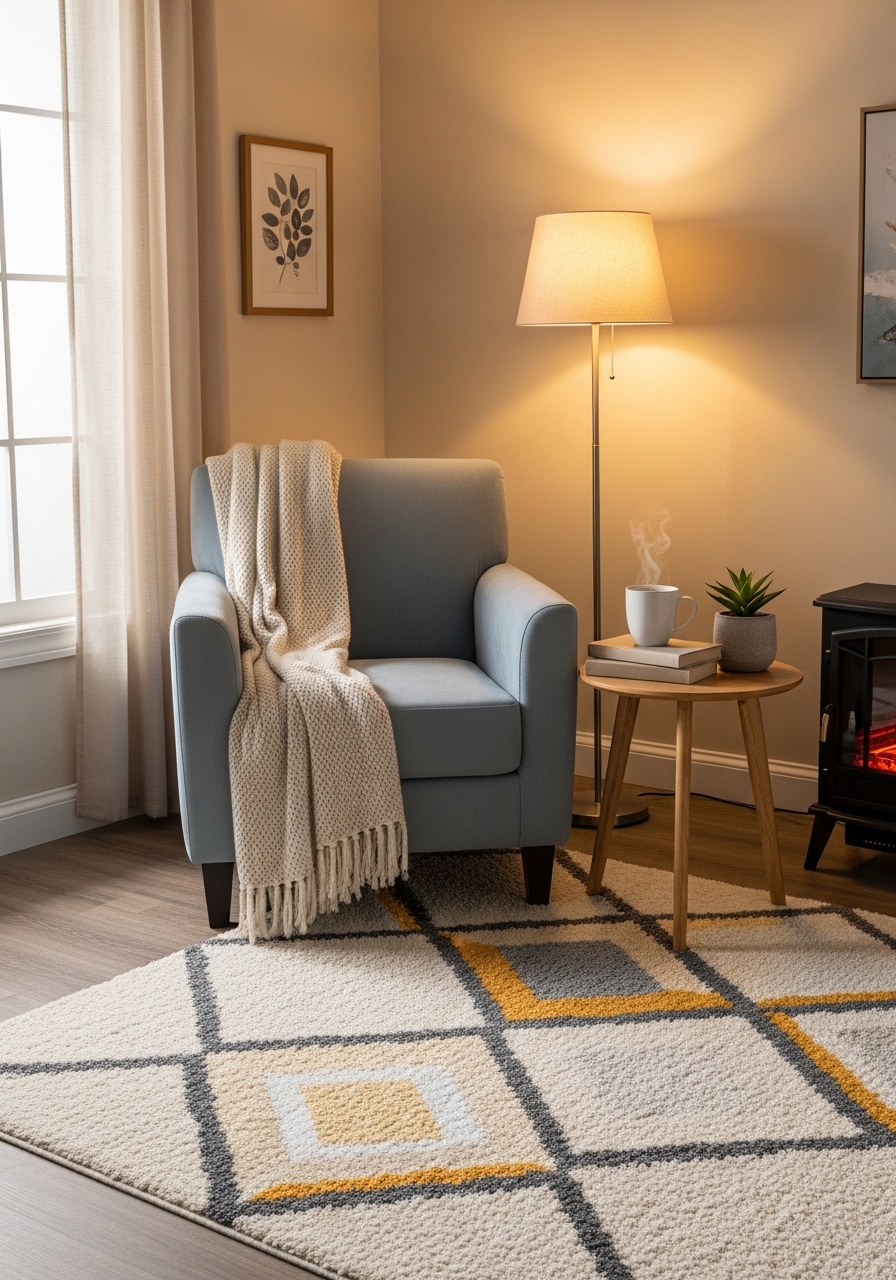
Create a dedicated sanctuary within your home by styling a cozy corner with a small area rug, a brilliant interior design technique for transforming underutilized nooks into functional, high-comfort zones. In larger, open-plan living rooms, a small rug—typically a 3×5 or 4×6—acts as a visual anchor for an accent chair, a floor lamp, and a side table, effectively “zoning” the area for reading, meditation, or quiet relaxation. By physically grouping these furniture pieces on a soft, tactile surface, you create a room-within-a-room effect that adds architectural depth without the need for walls or dividers. This home styling approach is highly effective for breaking up vast floor spaces and introducing a secondary layer of “hygge” to your floor plan. To achieve a designer-grade finish, choose a rug with a plush high-pile or a rich faux-fur texture to contrast with the more structured, lower-pile rug in the main seating area. This layering of functional zones ensures your living room feels both expansive and intimately curated. Whether you are highlighting a sun-drenched window or a quiet corner by a bookshelf, a zonal accent rug is the ultimate tool for adding character, warmth, and professional-grade intentionality to your home’s layout.
Conclusion
Rug placement can dramatically change the look and feel of your living room. The right rug layout not only enhances the beauty of your space but also helps organize furniture and define different areas within the room. Whether you choose a large rug under the entire seating area, layer rugs for added texture, or highlight a bold statement rug, each approach offers a unique way to elevate your interior design. By selecting the correct rug size, placement, and style, you can create a living room that feels balanced, comfortable, and visually appealing while reflecting your personal decorating style.