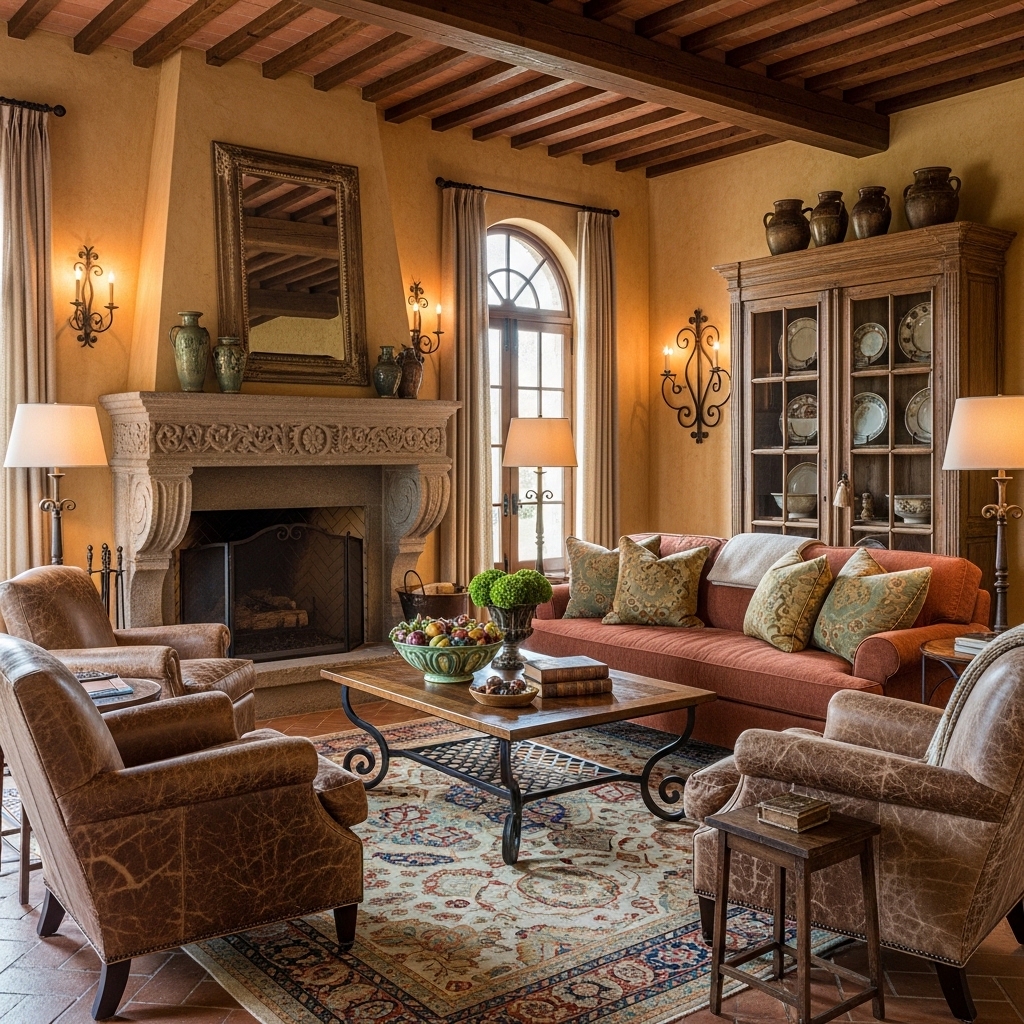
Tuscan design captures the romantic beauty of the Italian countryside and brings it into your home with warmth, texture, and rustic sophistication. Inspired by sun-soaked hills, olive groves, and centuries-old stone villas, this style celebrates natural materials, earthy color palettes, and handcrafted furniture. A Tuscan living room feels historic yet welcoming — a perfect balance of comfort and elegance. From distressed wood tables to wrought iron accents and warm plaster walls, every detail reflects craftsmanship and tradition. Below are 30 inspiring Tuscan living room ideas to help you create a space filled with Old World charm.
1. Rustic Italian Farmhouse Living Room
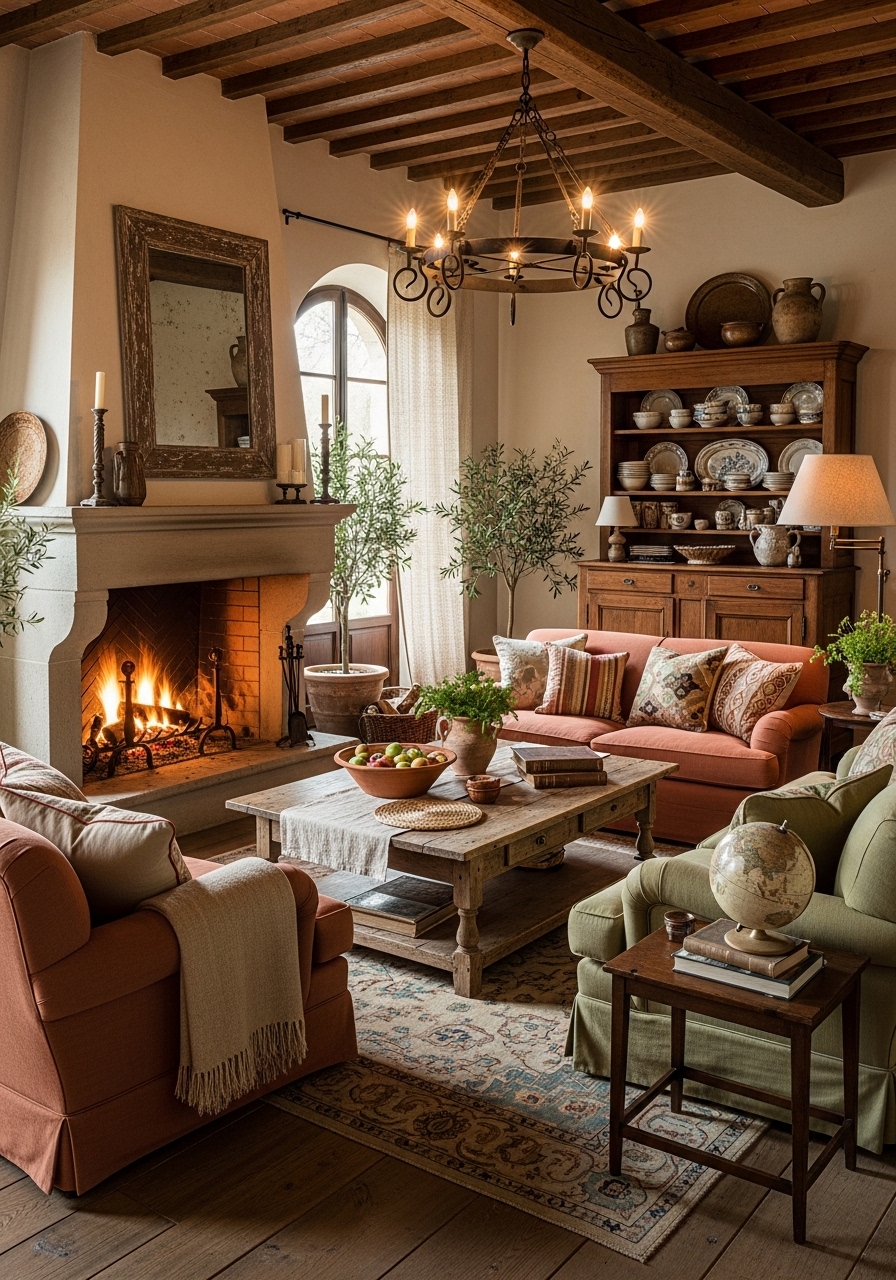
To create a rustic Italian farmhouse living room, focus on heavy, distressed wood furniture that feels aged and authentic. Choose a solid wood trestle coffee table, chunky sideboards, and open shelving with visible grain and imperfections. Pair these with oversized linen or cotton sofas in neutral tones like beige, cream, or warm gray. Add woven baskets, ceramic pottery, and soft throws for layered texture. Keep walls in warm stucco or plaster finishes to enhance the rustic mood. Natural light is essential, so use sheer curtains to soften sunlight while highlighting the wood’s character and creating a cozy countryside retreat.
2. Modern Tuscan Living Room
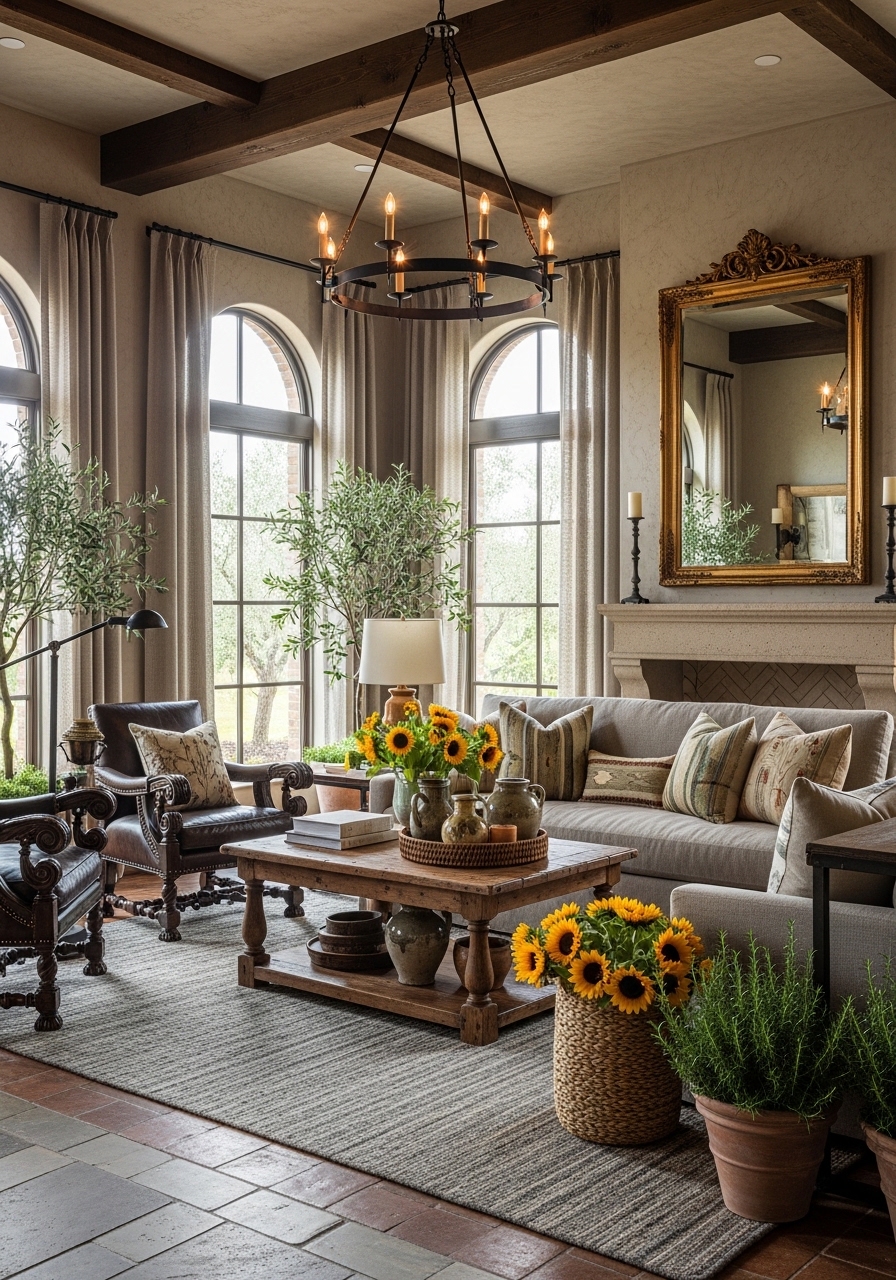
A modern Tuscan living room balances tradition with simplicity by using clean-lined furniture made from natural materials like oak or walnut. Choose streamlined sofas in warm neutral fabrics and avoid overly ornate carvings. Incorporate texture through wool rugs, linen drapes, and matte plaster walls in soft beige or ivory. Keep décor minimal to allow architectural features to stand out. Introduce wrought iron lighting or subtle metal accents for authenticity. The goal is to maintain Tuscan warmth while embracing open space, natural light, and functional furniture placement that feels current without losing Old World charm.
3. Mediterranean Villa Living Room
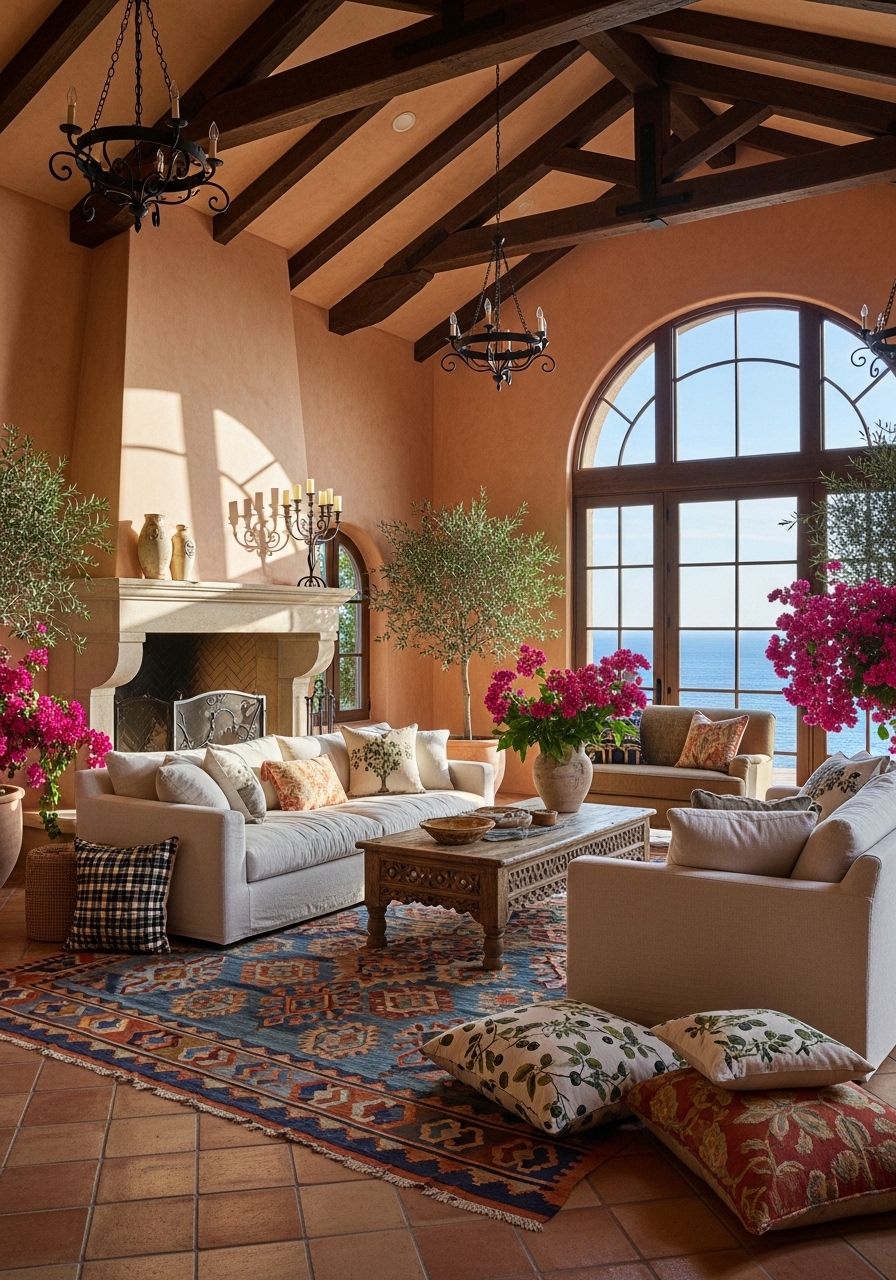
Design a Mediterranean villa living room by emphasizing grandeur and openness. Use high ceilings, large arched windows, and expansive seating arrangements. Select substantial wooden tables, deep sofas, and plush accent chairs that can accommodate guests comfortably. Layer textures like limestone floors, woven rugs, velvet cushions, and linen drapes. Choose a warm yet airy color palette with creams, sandy tones, and soft terracotta. Incorporate decorative elements such as ceramic urns or iron chandeliers for elegance. The space should feel luxurious yet relaxed, blending coastal freshness with the timeless sophistication of an Italian countryside villa.
4. Old World European Living Room
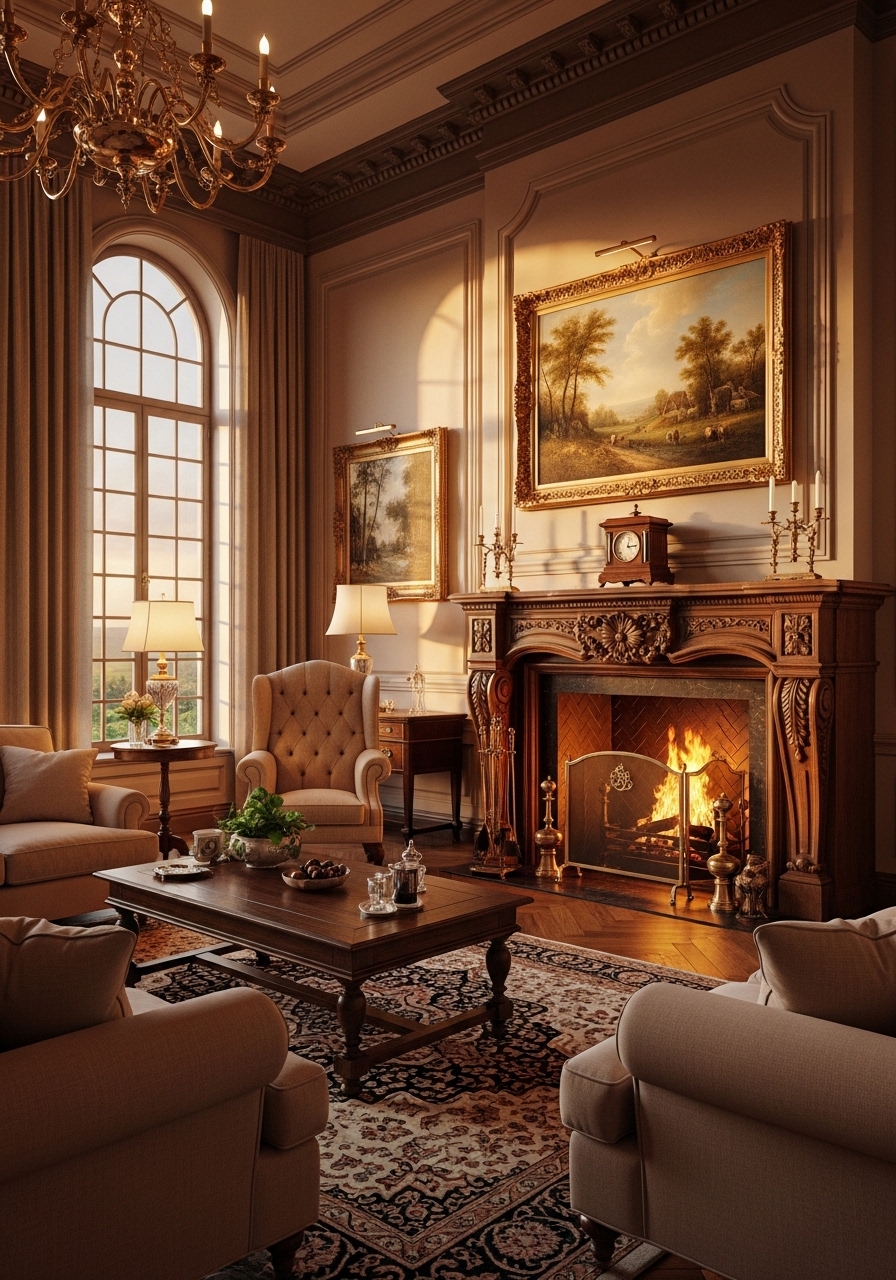
An Old World European Tuscan living room celebrates heritage through antique-inspired furniture and rich materials. Choose carved wooden armoires, distressed leather armchairs, and heavy wood coffee tables with intricate detailing. Incorporate deep tones like burgundy, forest green, or chocolate brown to create contrast against lighter plaster walls. Use luxurious fabrics such as brocade, velvet, or tapestry for curtains and cushions. Decorative accents like framed oil paintings and vintage mirrors enhance the historic ambiance. Lighting should be warm and soft, often from iron chandeliers or table lamps, creating a space that feels curated over generations.
5. Earth Tone Living Room
To achieve an earth tone Tuscan living room, build your palette around terracotta, ochre, olive green, and warm brown. Choose upholstered furniture in burnt orange or caramel leather and balance it with cream walls and stone or wood flooring. Incorporate natural elements such as wooden side tables, clay pots, and indoor plants to reinforce the connection to nature. Use woven rugs and textured fabrics to soften the look. Ensure adequate natural lighting to prevent the space from feeling heavy. The goal is to create a grounded, peaceful environment inspired by Tuscany’s rolling hills and earthy landscapes.
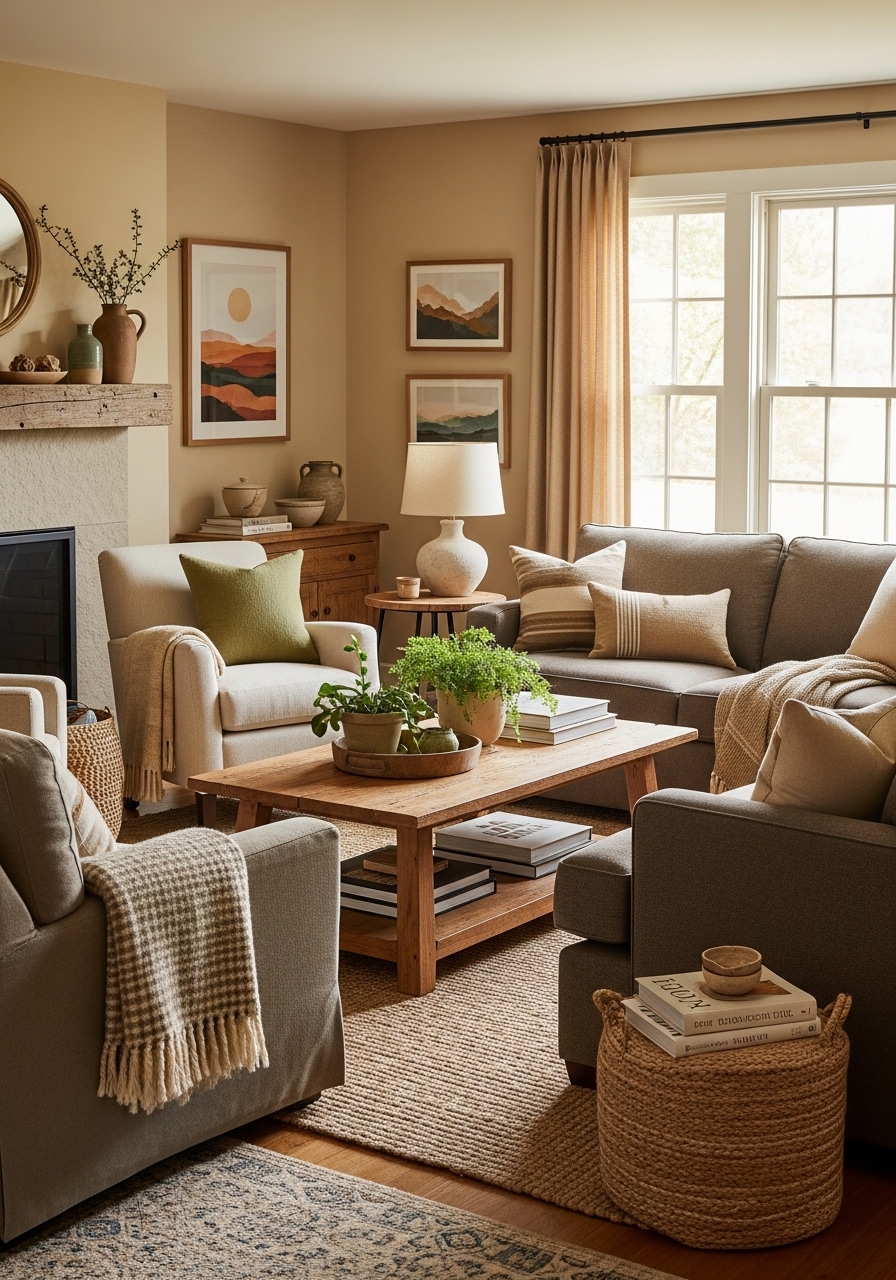
6. Sun-Drenched Tuscan Living Room
A sun-drenched Tuscan living room relies heavily on natural light to create warmth and openness. Keep window treatments minimal with sheer curtains that allow sunlight to flow freely. Use light plaster walls in cream or sand tones to reflect brightness. Choose light oak furniture and soft ivory or beige upholstery that glows under sunlight. Incorporate subtle textures like linen cushions and jute rugs for depth without overwhelming the space. Mirrors can amplify natural light and enhance spaciousness. This design captures the golden warmth of an Italian summer afternoon while maintaining comfort and understated elegance.
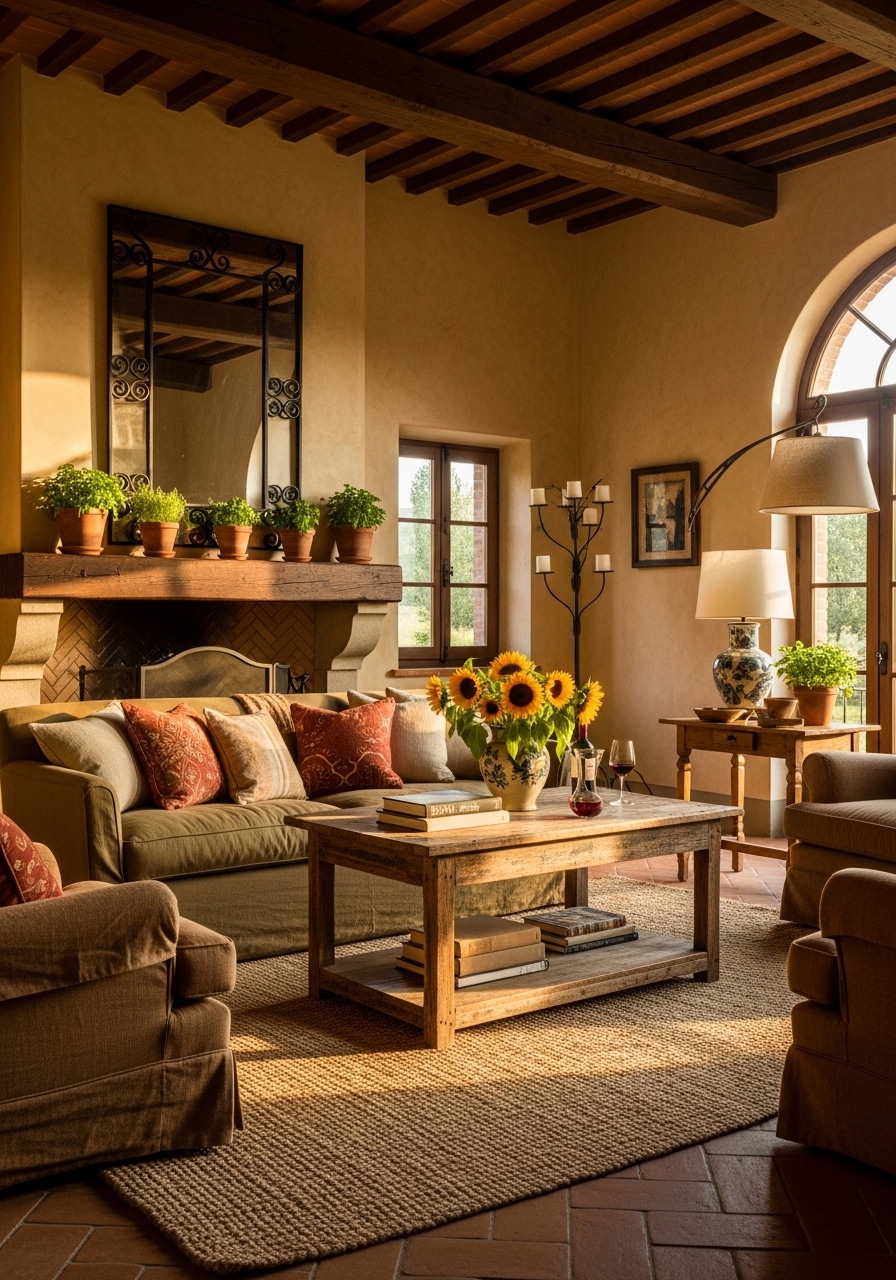
7. Stone Wall Living Room
Incorporating a stone wall adds instant Tuscan authenticity and texture. Choose natural stone in warm gray, beige, or sandy hues for depth and visual interest. Keep furniture simple and sturdy, such as a dark wood coffee table and neutral sectional sofa. Balance the ruggedness of stone with plush textiles like wool throws and layered rugs. Soft lighting, such as wall sconces or iron chandeliers, enhances the stone’s texture in the evening. Avoid overdecorating; let the stone feature wall remain the focal point. This blend of hard and soft materials creates a harmonious, cozy atmosphere.
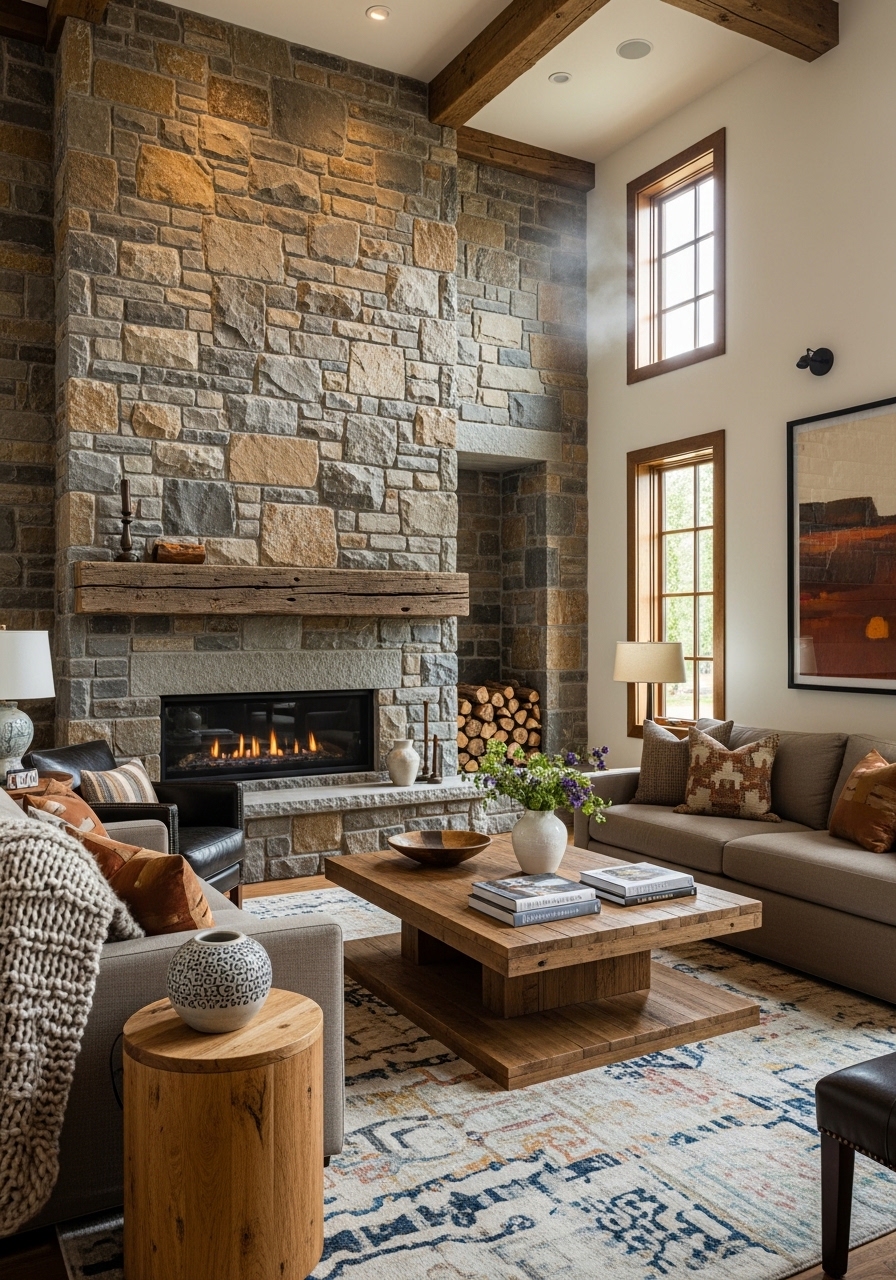
8. Open Concept Tuscan Living Room
An open concept Tuscan living room connects the seating area seamlessly with dining or kitchen spaces. Maintain consistency by using terracotta tiles or hardwood flooring throughout. Define the living zone with a large area rug and strategically placed furniture. Incorporate exposed wooden beams to add architectural character and unify the space. Choose warm, cohesive colors across rooms to maintain flow. Furniture should feel substantial yet not overcrowded. This layout promotes social interaction and modern functionality while preserving Tuscan warmth through natural textures and earthy tones.
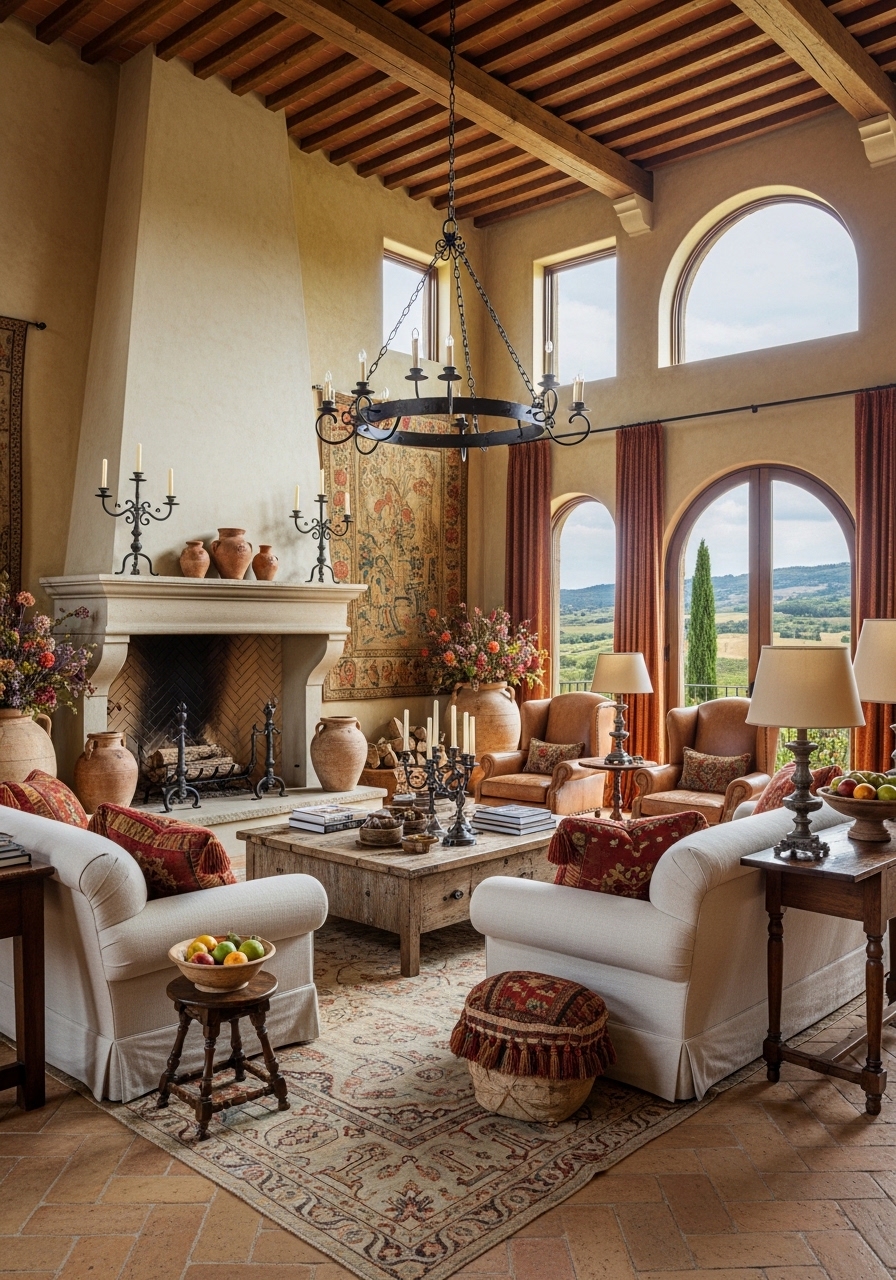
9. Coastal Tuscan Living Room
A coastal Tuscan living room softens traditional rustic elements with lighter hues. Combine whites, creams, and soft blues with driftwood tables and linen sofas. Incorporate woven textures like seagrass rugs and wicker baskets for breezy appeal. Keep décor minimal and airy, with large windows maximizing sunlight. Add wrought iron accents sparingly to maintain Tuscan authenticity. The overall feel should be relaxed and refreshing, blending Mediterranean seaside charm with countryside warmth. This variation works especially well in homes seeking a lighter, beach-inspired take on classic Tuscan interiors.
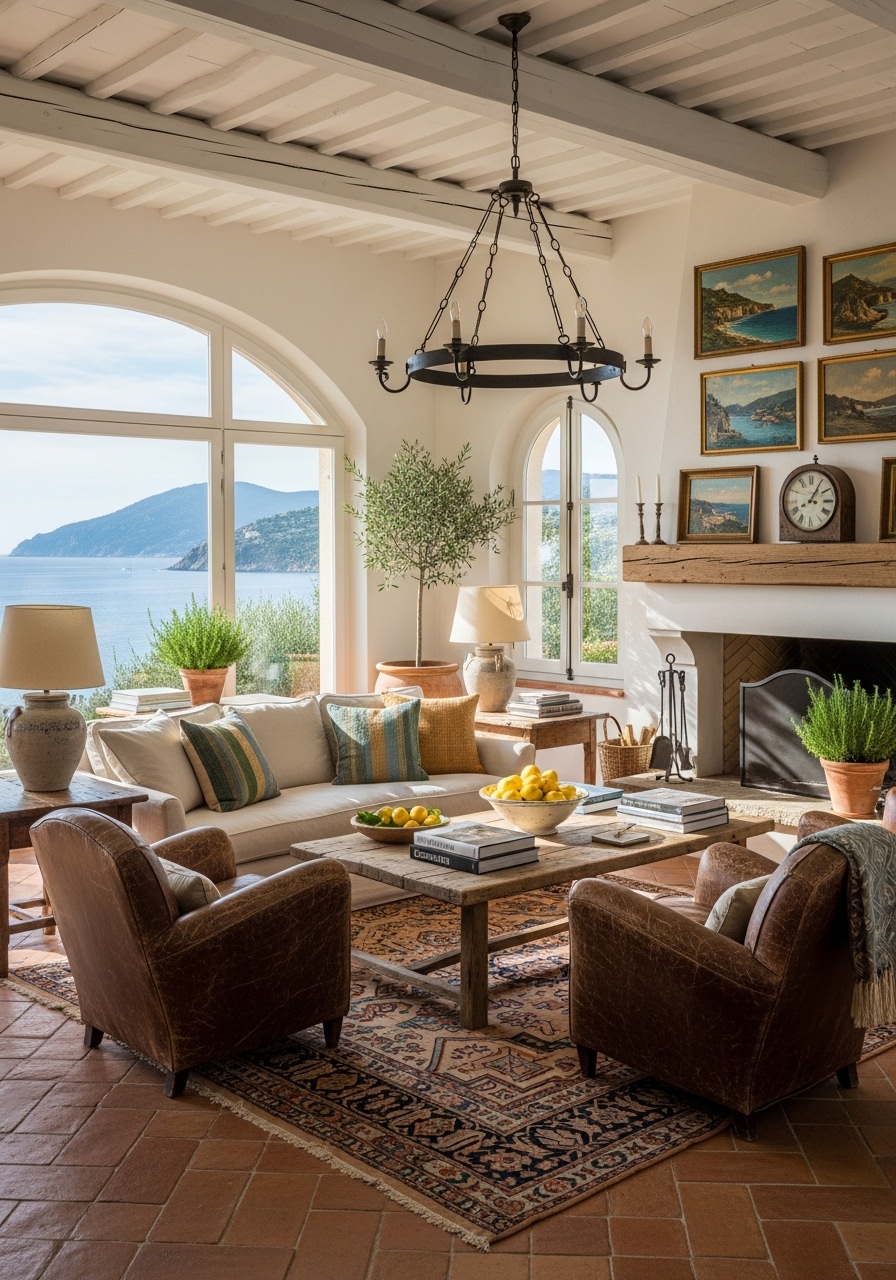
10. Formal Tuscan Living Room
Design a formal Tuscan living room with symmetry and elegance in mind. Use high-quality furniture such as tufted velvet chairs, carved wooden tables, and a grand stone fireplace as the focal point. Install a wrought iron chandelier with warm lighting to elevate sophistication. Incorporate framed art, ornate mirrors, and structured layouts for balance. Rich fabrics and deep hues add luxury without losing warmth. This style prioritizes refined entertaining while maintaining the inviting character central to Tuscan design.
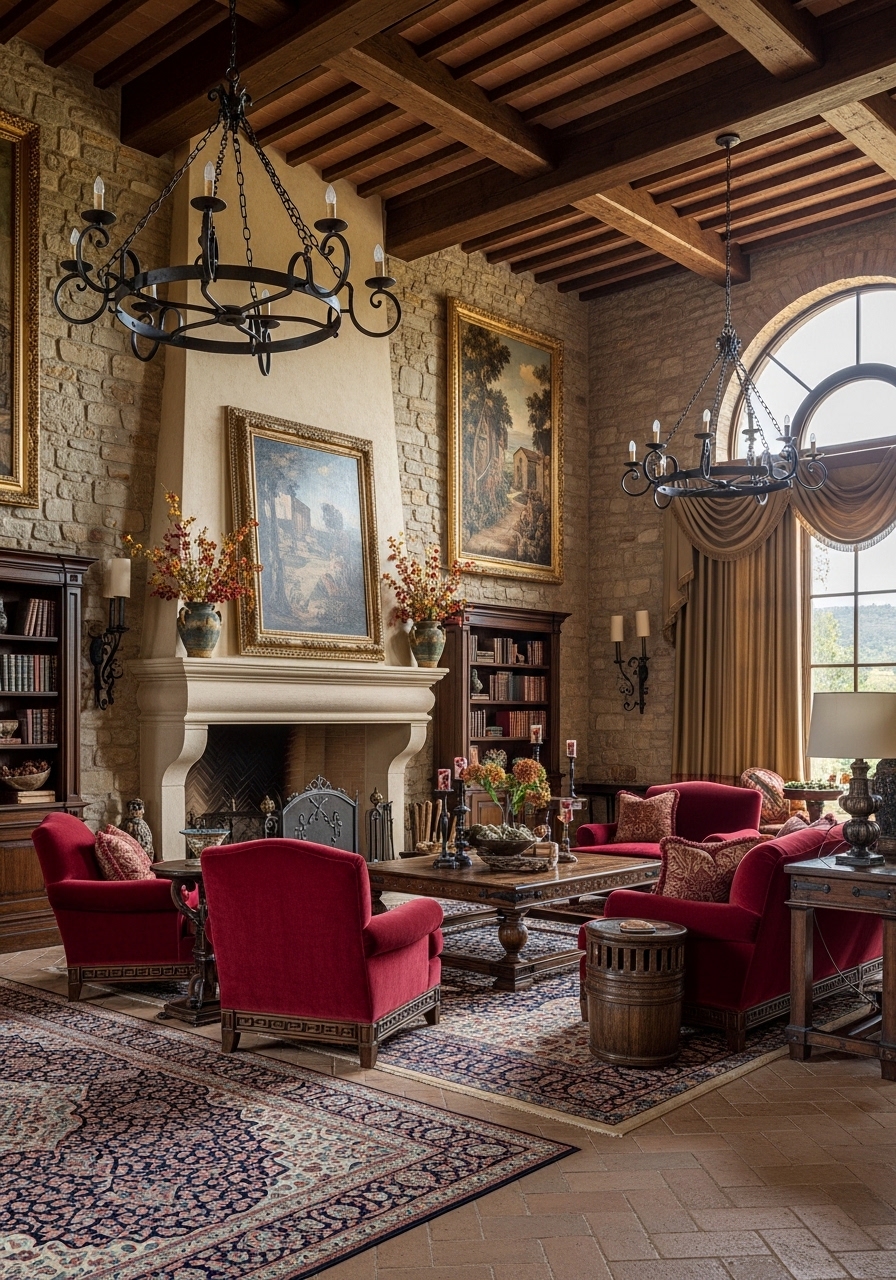
11. Cozy Tuscan Living Room
A cozy Tuscan living room centers around warmth, intimacy, and comfort. Arrange seating close together to encourage conversation, using deep, plush sofas and armchairs upholstered in warm earthy fabrics. A fireplace often becomes the heart of the room, adding both visual charm and physical warmth. Layer woven rugs over stone or wood floors to soften the space, and include textured throw blankets and cushions in terracotta, olive, or golden hues. Use warm lighting from table lamps or iron sconces to create a soft glow in the evenings. The goal is to design a snug retreat that feels welcoming year-round.
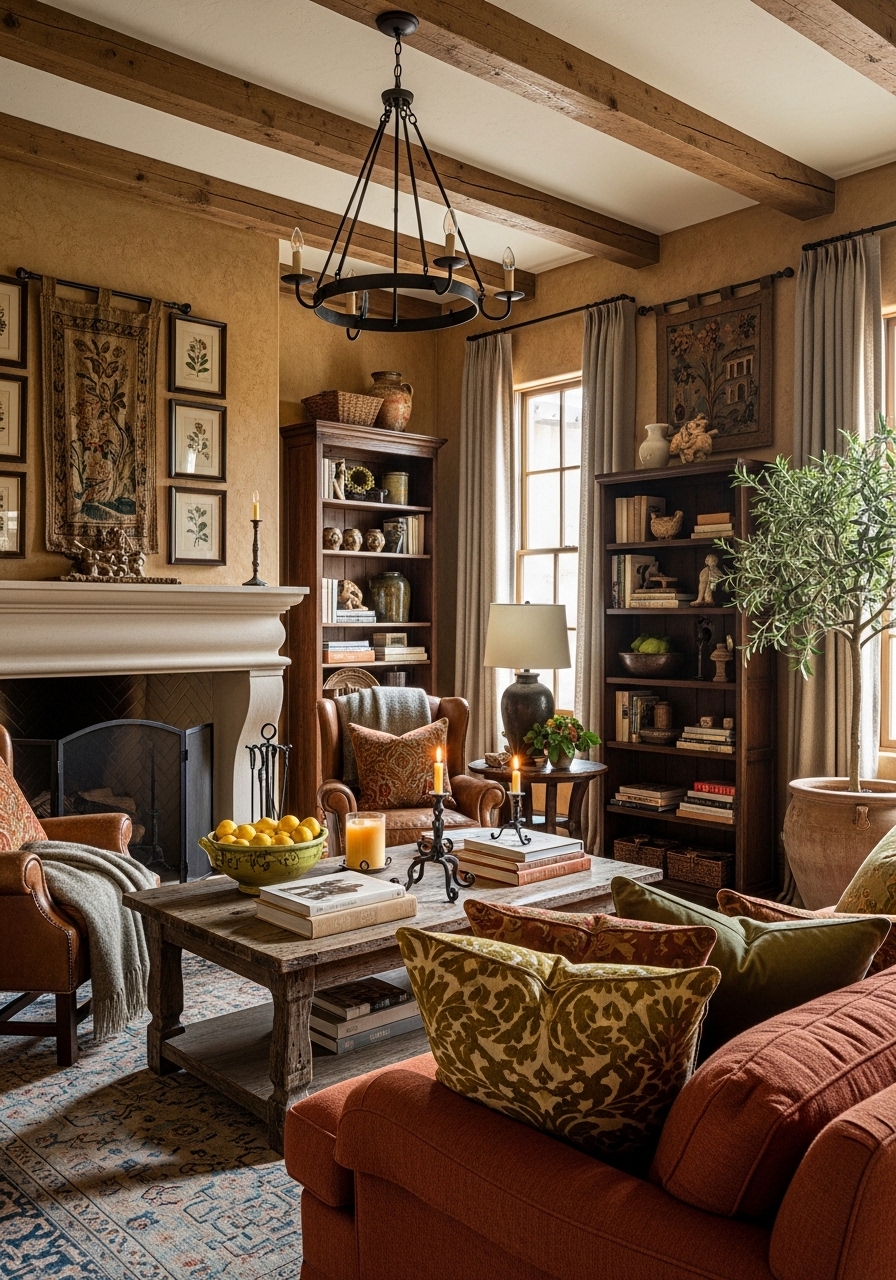
12. Luxury Tuscan Living Room
A luxury Tuscan living room highlights premium materials and refined craftsmanship. Invest in hand-carved wood furniture, marble or stone-topped tables, and rich leather seating. Use silk or velvet curtains to frame tall windows and add softness. Incorporate architectural details such as arches, coffered ceilings, or decorative molding for grandeur. A statement chandelier in wrought iron or crystal enhances sophistication. Keep the color palette warm but rich, using deep browns, golds, and creams. Balance opulence with comfort so the space feels inviting rather than overwhelming. The overall atmosphere should reflect timeless European elegance with unmistakable Tuscan warmth.
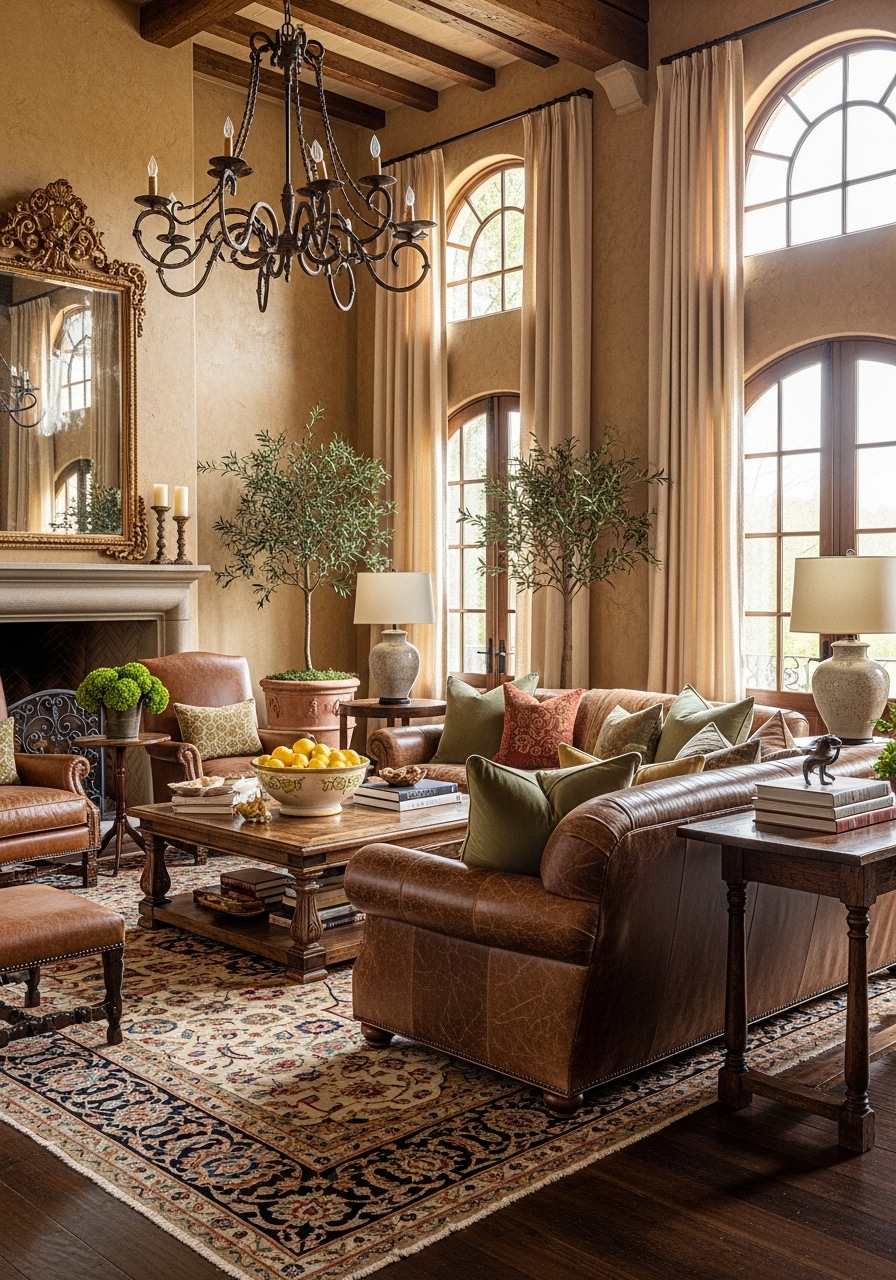
13. Minimalist Tuscan Living Room
A minimalist Tuscan living room focuses on simplicity while preserving warmth and authenticity. Limit furniture to essential, high-quality pieces made from natural wood or stone. Choose neutral shades such as white, beige, or soft gray to allow textures to shine. Avoid clutter and heavy ornamentation; instead, emphasize clean lines and open space. A single wooden coffee table, linen sofa, and subtle iron lighting fixture can define the entire room. Keep décor intentional and understated. This approach proves Tuscan style does not require excess—natural materials, thoughtful design, and soft lighting are enough to create a calm, timeless environment.
14. Traditional Italian Living Room
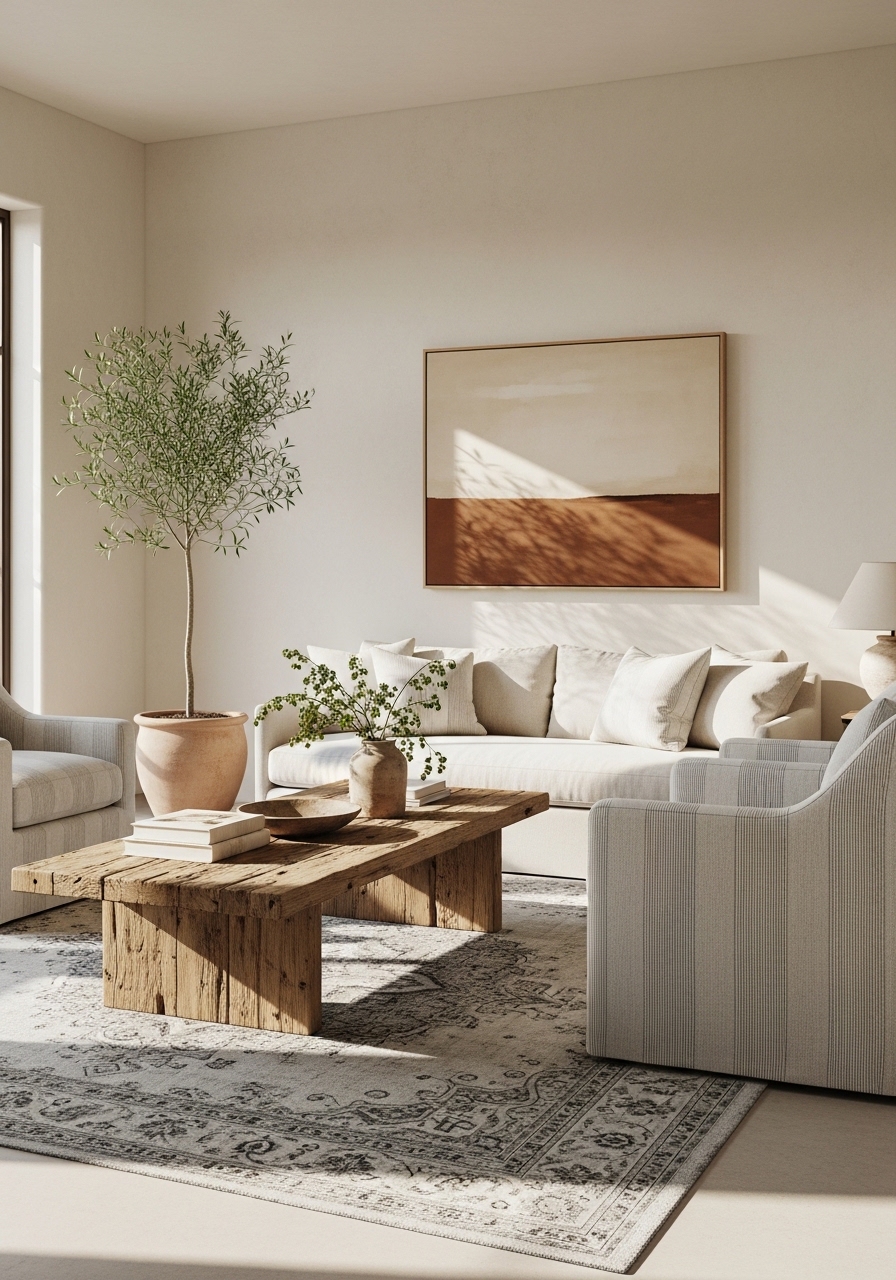
A traditional Italian living room celebrates classic Tuscan elements with dark wood furniture and ornate details. Select carved armoires, sturdy coffee tables, and high-backed chairs with decorative craftsmanship. Use warm plaster walls in shades of cream or soft terracotta. Flooring can include patterned rugs or mosaic tiles for historical character. Incorporate wrought iron lighting fixtures and decorative metal accents for authenticity. Fabrics should be rich yet warm, such as velvet or heavy linen. This style honors Italian heritage by combining permanence, functionality, and artistry to create a space that feels rooted in centuries-old European design traditions.
15. Rustic Wood Beam Living Room
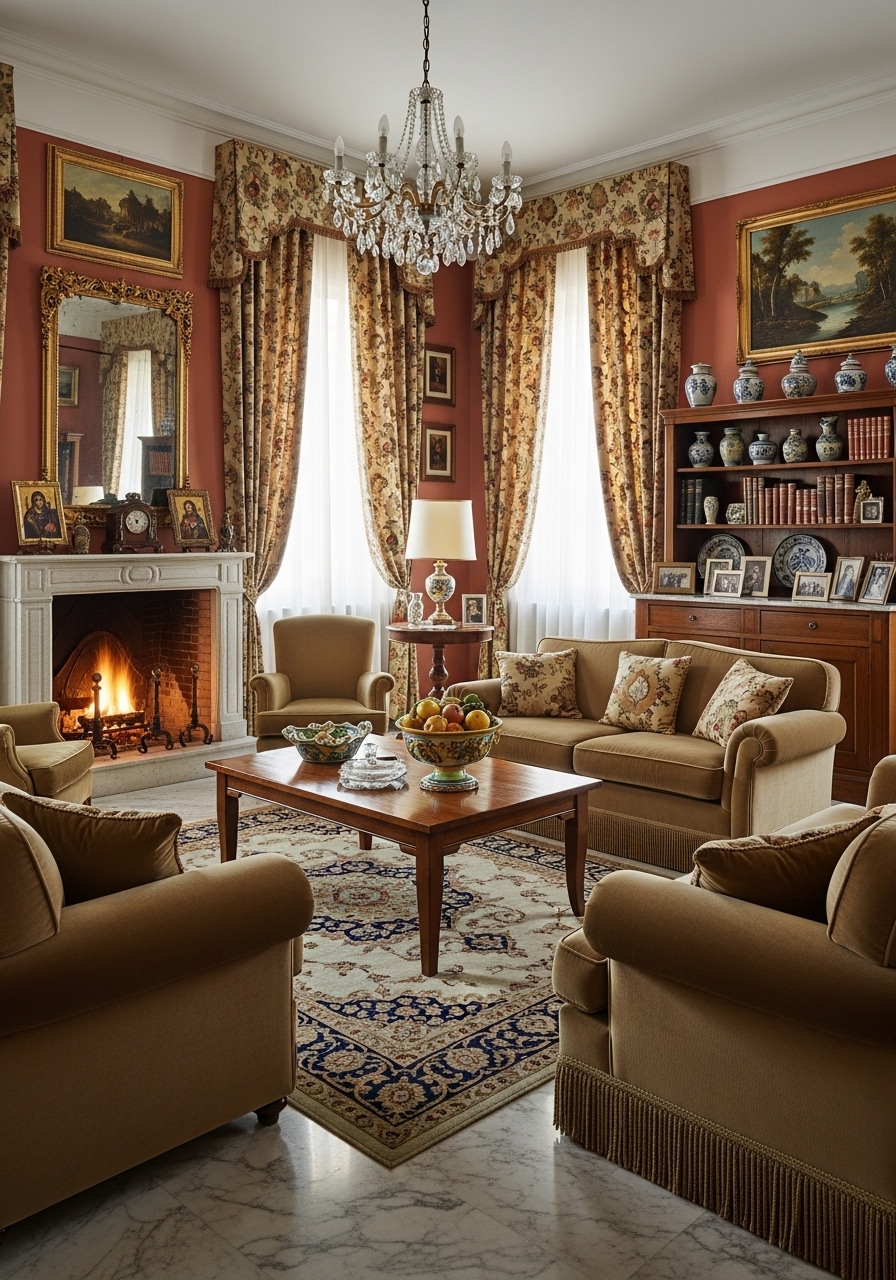
Exposed wooden ceiling beams instantly establish Tuscan authenticity and architectural charm. Choose beams in natural or slightly distressed finishes to highlight texture and warmth. Pair them with smooth plaster walls to create contrast. Keep furniture sturdy and comfortable, such as a neutral sectional and solid wood coffee table. The beams naturally draw the eye upward, adding depth and dimension to the room. Warm lighting enhances their texture during evening hours. Avoid overcrowding the space so the beams remain the focal point. This feature adds history and character while maintaining balance between rustic structure and comfortable living.
16. Warm Plaster Wall Living Room
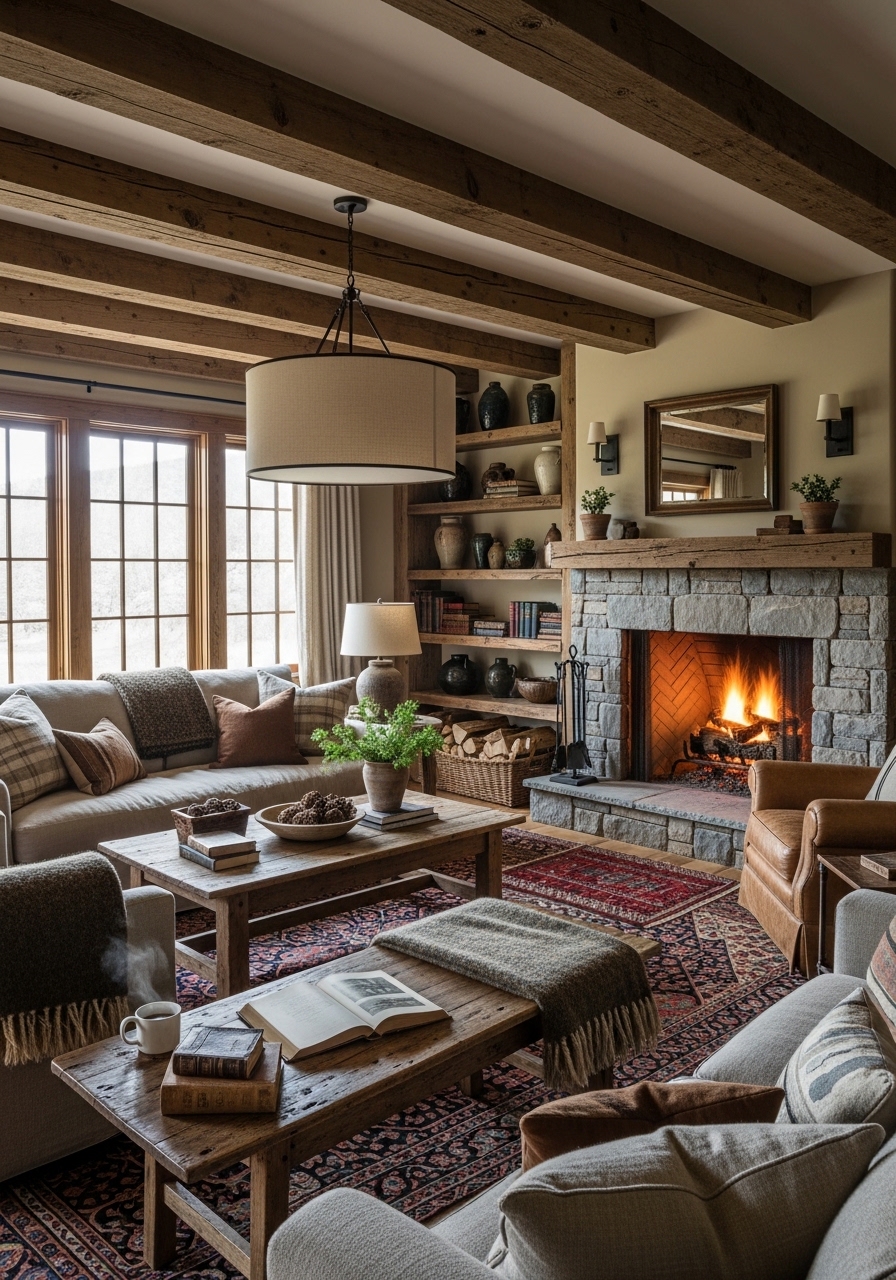
Warm plaster walls are essential in Tuscan design, offering a soft, textured finish that feels organic and timeless. Choose tones like sand, cream, or light terracotta to reflect natural sunlight. The subtle variation in plaster adds depth without overwhelming the room. Pair these walls with dark wood furniture and wrought iron accents for contrast. Keep décor minimal so the wall texture remains visible and appreciated. Soft lighting enhances the plaster’s natural dimension in the evening. This simple yet powerful design element sets the foundation for a welcoming, authentic Tuscan atmosphere rooted in natural materials.
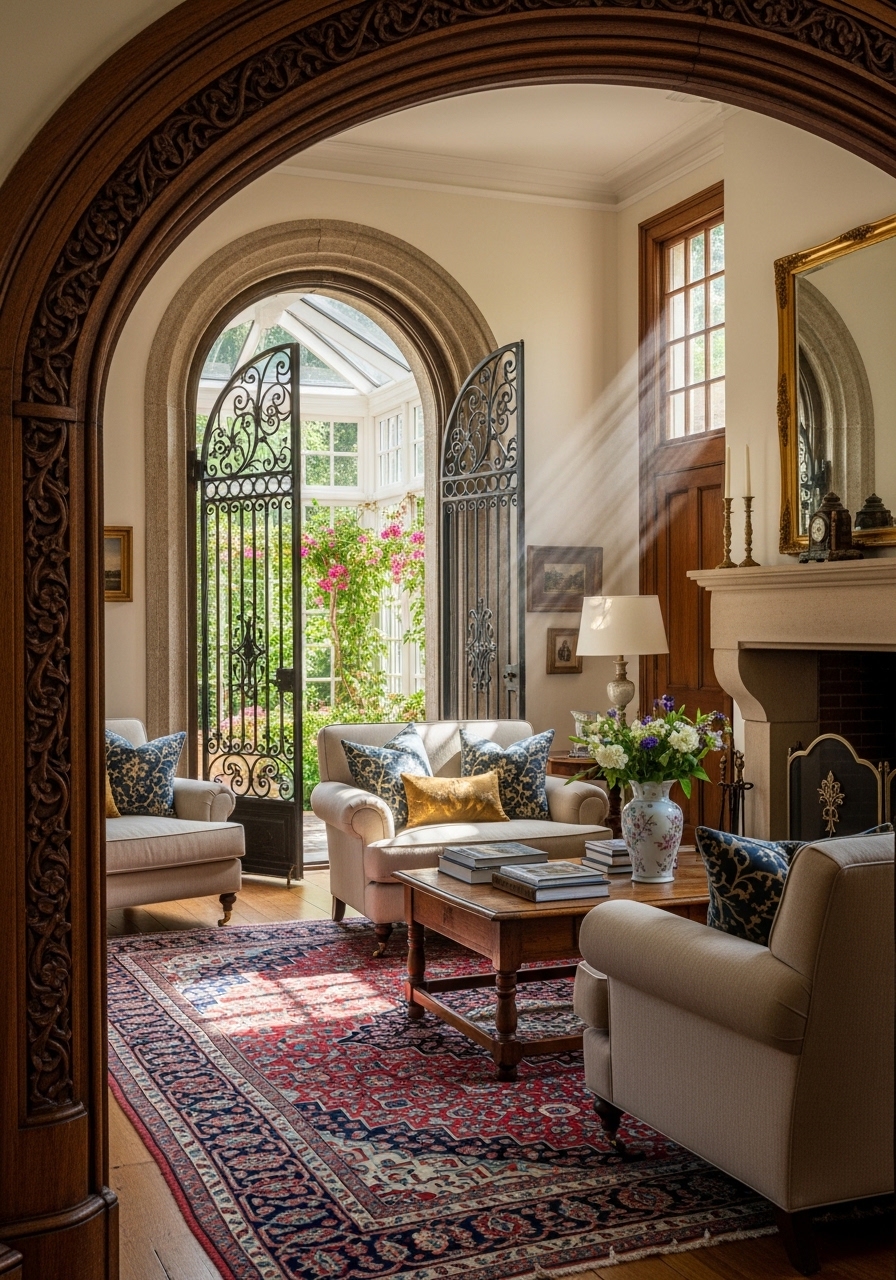
17. Arched Doorway Living Room
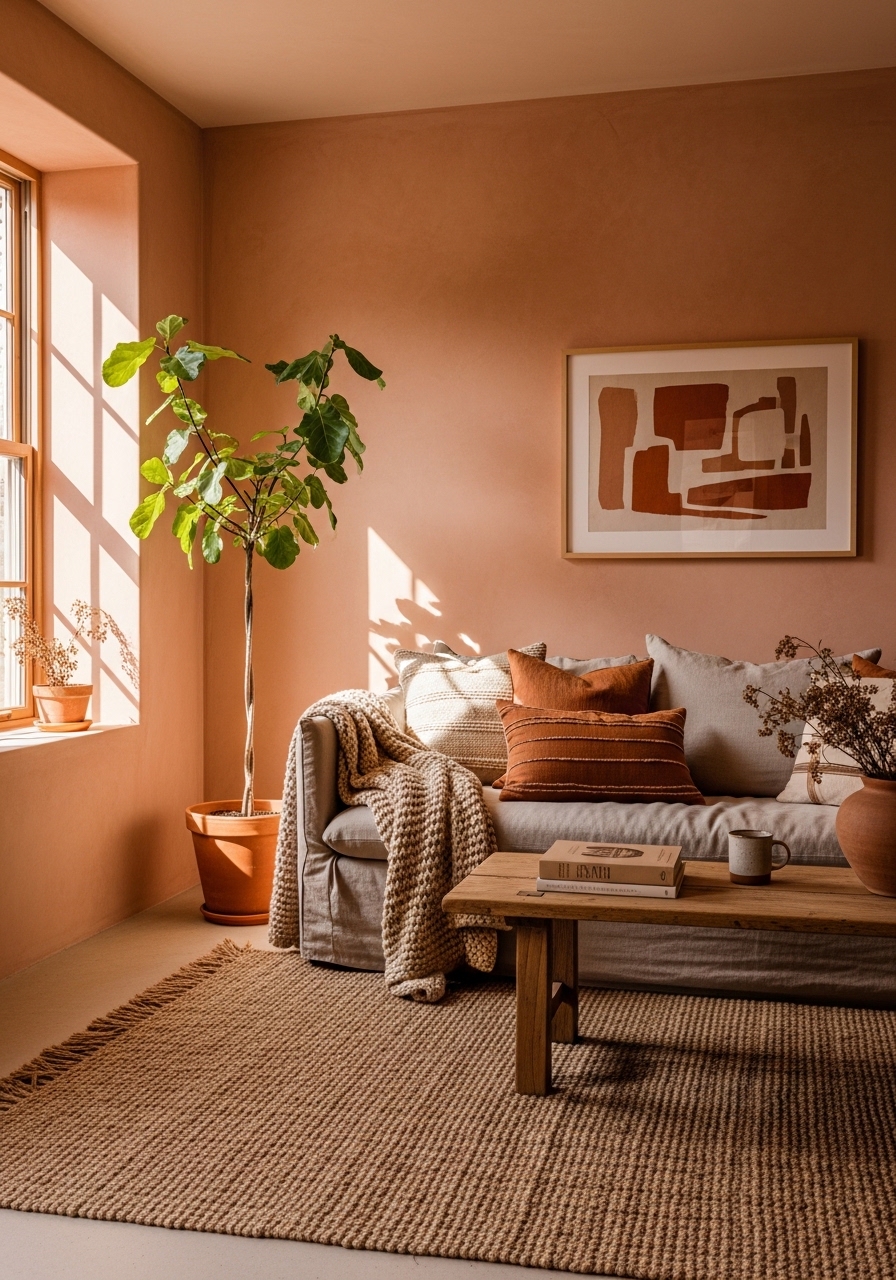
Arched doorways add elegance and fluidity to a Tuscan living room. These curved architectural features soften straight lines and create graceful transitions between spaces. Highlight arches with stone or dark wood trim to enhance character. Arrange furniture to complement the curves, such as round tables or subtly curved sofas. Maintain an open flow so the arches remain visible and unobstructed. Warm lighting can accentuate the shape, adding depth and sophistication. This timeless architectural detail evokes European villas and enhances the authenticity of the design while adding visual interest and a sense of spacious continuity.
18. Wrought Iron Accent Living Room
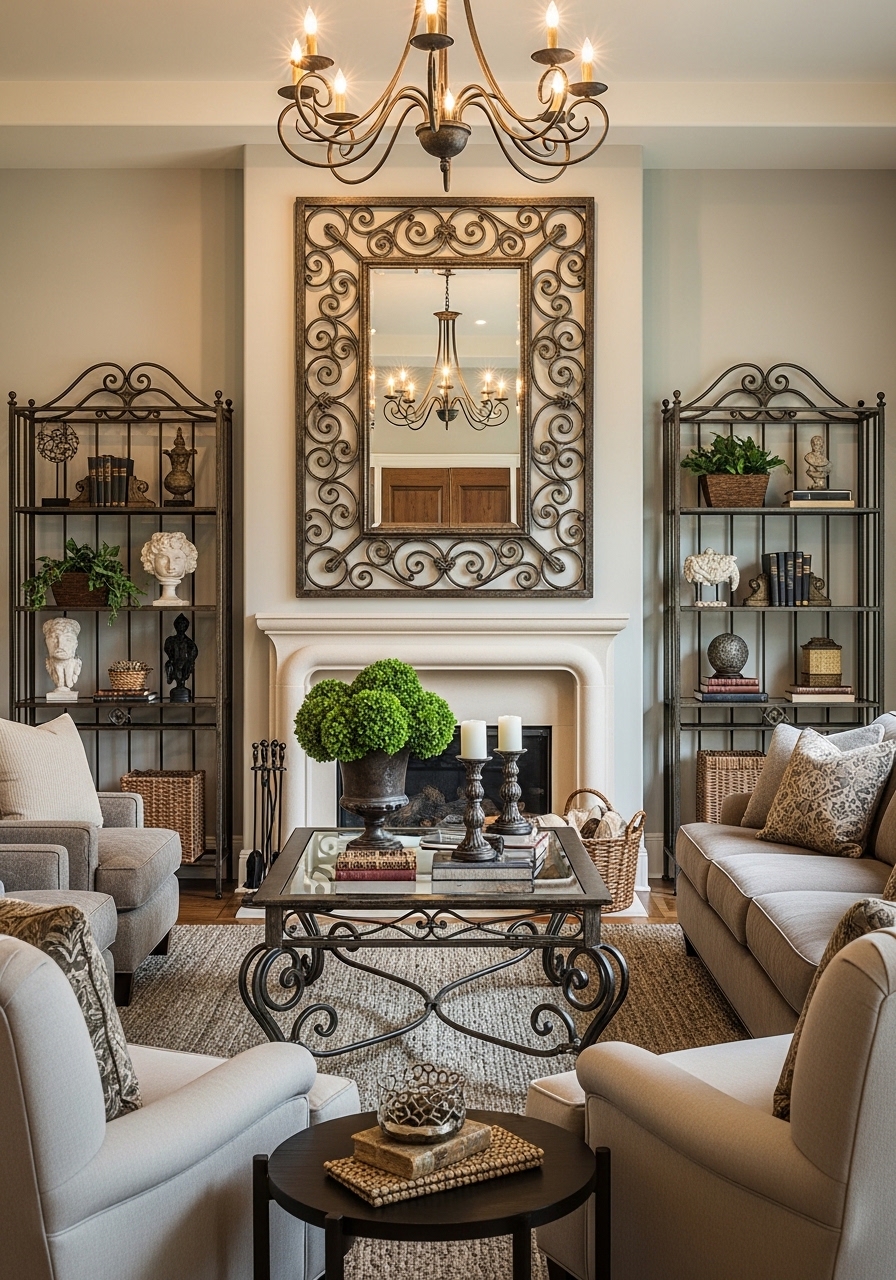
Wrought iron accents are a hallmark of Tuscan interiors, adding durability and artisanal beauty. Incorporate iron through chandeliers, curtain rods, coffee tables, or decorative wall art featuring intricate scrollwork. The dark metal contrasts beautifully against warm plaster walls and wooden furniture. Use iron sparingly to avoid overwhelming the space; balance is key. Pair iron fixtures with warm lighting to soften their appearance. These elements reinforce the handcrafted feel central to Tuscan style. When thoughtfully integrated, wrought iron enhances texture, depth, and historical authenticity without compromising comfort or elegance.
19. Terracotta Tile Living Room
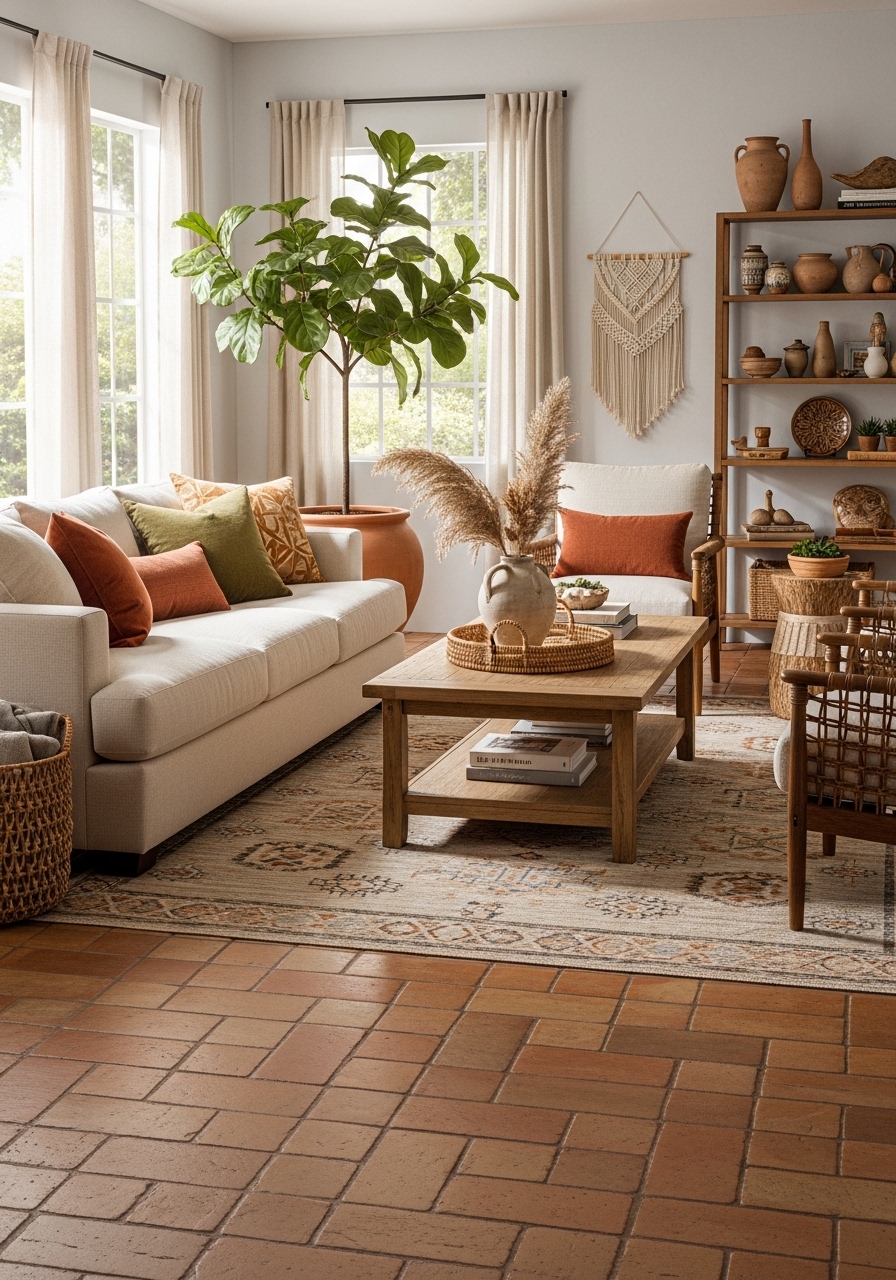
Terracotta tile flooring provides warmth, durability, and unmistakable Tuscan charm. Its earthy red and orange tones create a strong foundation for neutral furniture and natural textures. Lay tiles in traditional patterns to enhance authenticity. To soften the surface, layer large woven or patterned rugs for added comfort. Pair terracotta floors with wooden furniture and iron details for cohesion. Natural light enhances the richness of the clay tones. This flooring choice connects the interior to the Tuscan landscape and creates a grounded, rustic atmosphere that ages beautifully over time.
20. Neutral Tuscan Living Room
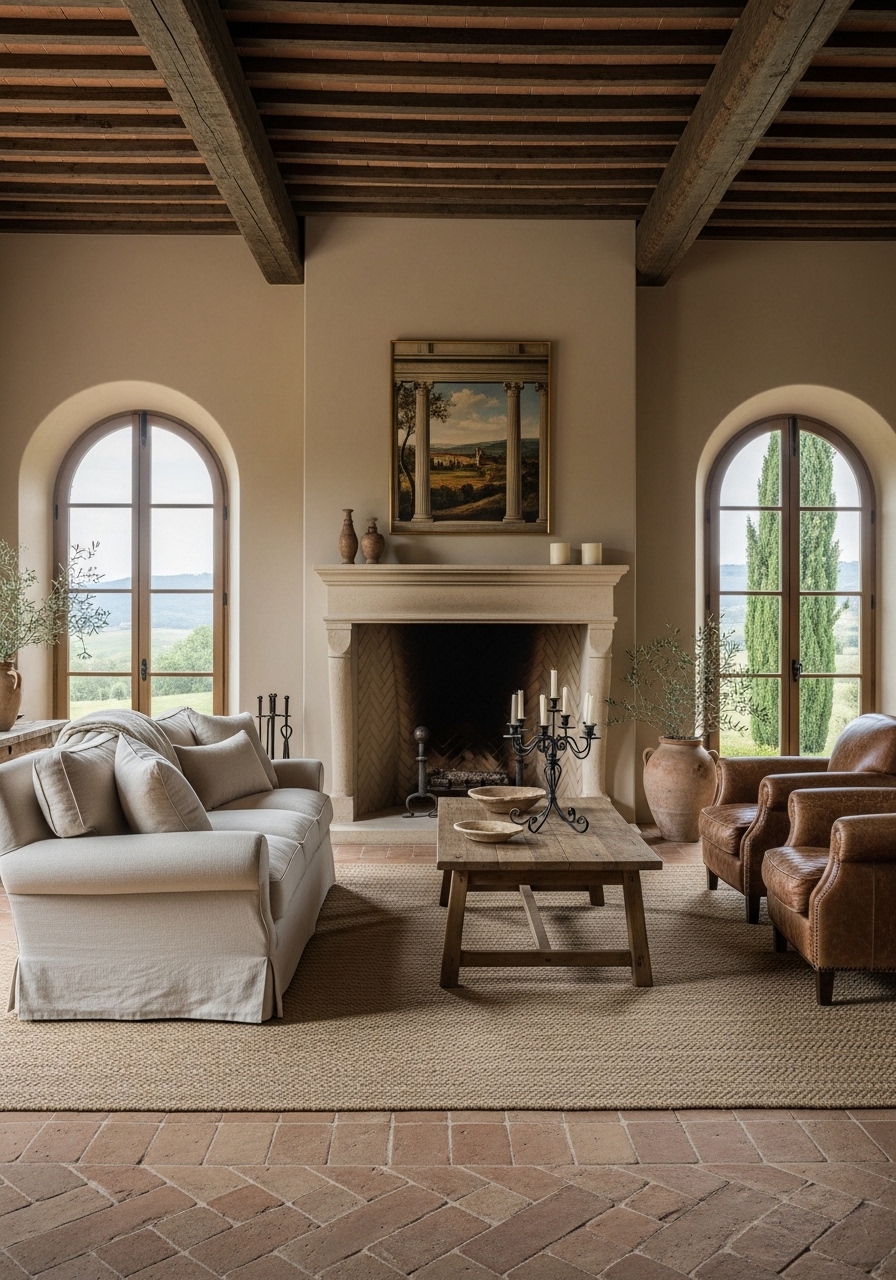
A neutral Tuscan living room emphasizes calmness and subtle sophistication. Use a palette of creams, beiges, and soft whites to create an airy environment. Choose linen sofas, light oak tables, and textured cushions to maintain warmth without bold color. Highlight architectural features like beams or arches rather than heavy décor. Keep the space uncluttered to allow natural light to enhance textures. Layer rugs and soft fabrics for dimension. This restrained approach maintains Tuscan authenticity while appealing to modern tastes, resulting in a timeless and elegant space that feels open yet cozy.
21. High Ceiling Tuscan Living Room
High ceilings provide a dramatic canvas for Tuscan elements. Install exposed beams or a large wrought iron chandelier to fill vertical space effectively. Use tall windows with soft drapery to maximize light. Choose substantial furniture pieces so they do not appear lost in the room. Add large-scale artwork or mirrors to balance proportions. Warm color palettes and layered textures prevent the space from feeling cold. This combination of height, structure, and warmth creates a luxurious, open environment that reflects the grandeur of Mediterranean villas.
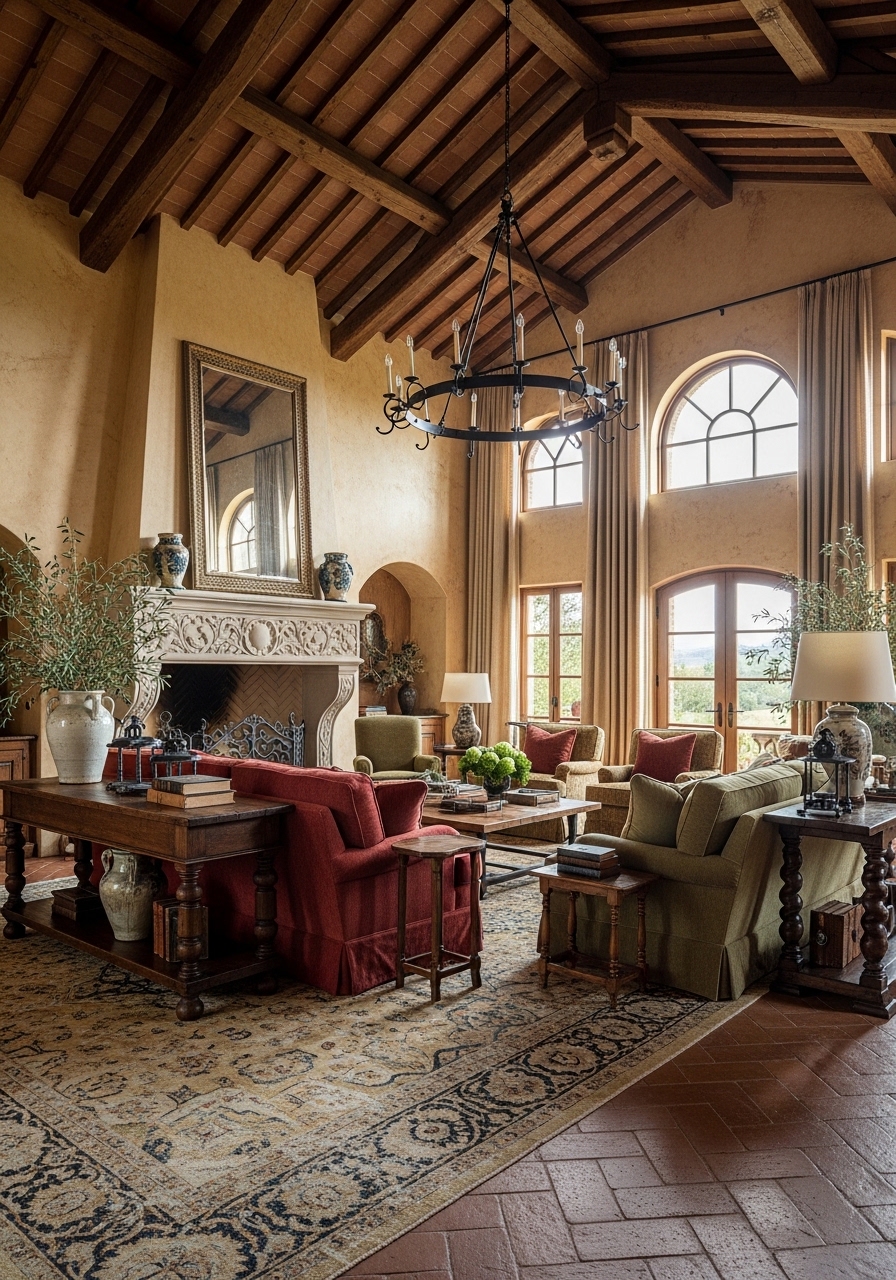
22. Small Tuscan Living Room
Designing a small Tuscan living room requires thoughtful scaling. Choose compact yet sturdy furniture in natural wood finishes. Light plaster walls and mirrors help expand visual space. Use a limited earthy palette to maintain cohesion. Incorporate subtle wrought iron accents for authenticity without clutter. Multi-functional furniture, such as storage ottomans, maximizes practicality. Layer textures carefully to avoid overcrowding. With careful balance, even a small room can capture Tuscan warmth and charm while remaining comfortable and functional.
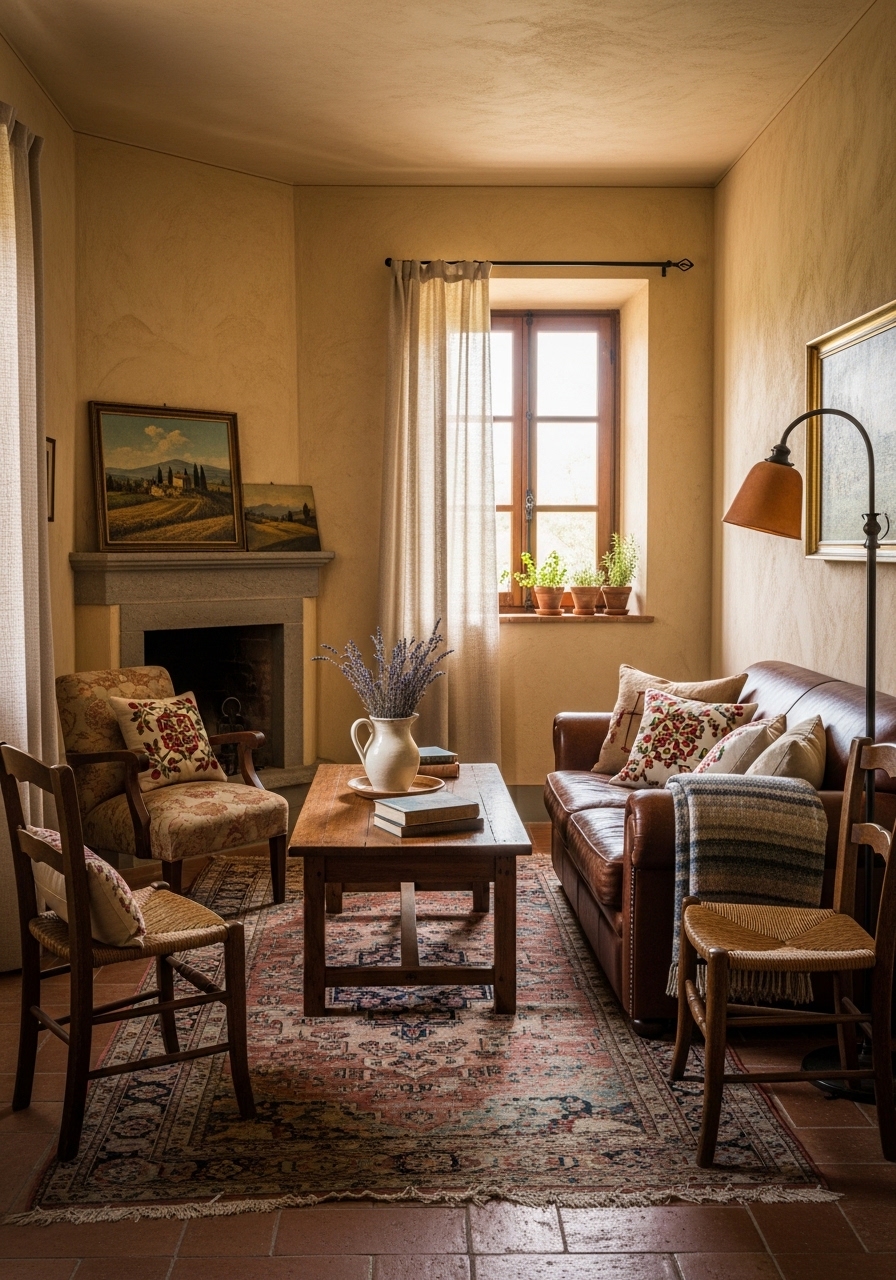
23. Dark Wood Furniture Living Room
Dark wood furniture creates depth and permanence in a Tuscan living room. Select walnut, mahogany, or distressed oak pieces with visible grain and sturdy craftsmanship. Balance darker tones with light plaster walls and neutral upholstery to prevent heaviness. Use matching or complementary wood finishes for cohesion. Add soft textiles and warm lighting to create contrast and comfort. This approach establishes a rich, grounded atmosphere rooted in tradition while remaining inviting and harmonious.
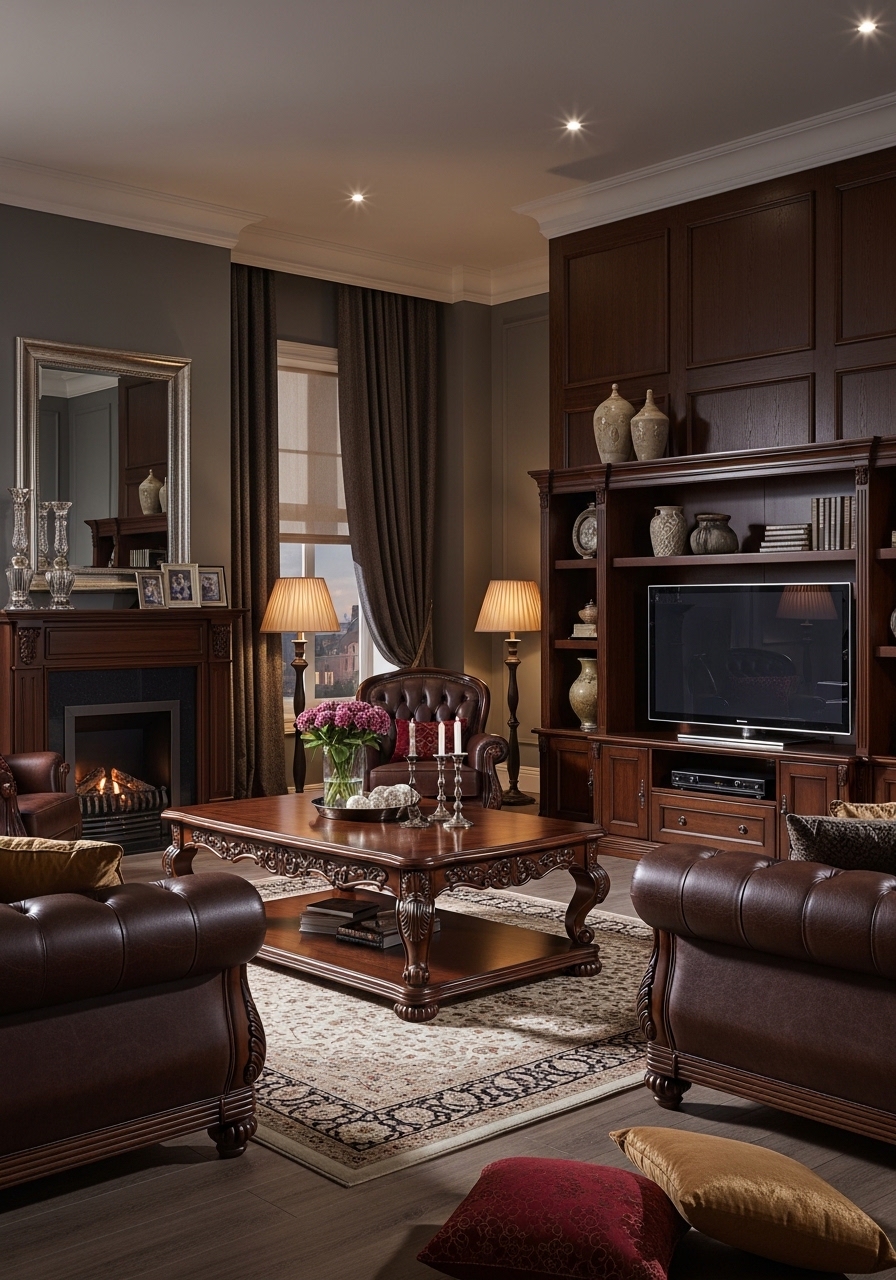
24. Vintage Tuscan Living Room
A vintage Tuscan living room incorporates aged and antique-inspired pieces to tell a story. Choose weathered wooden chests, restored chairs, and distressed leather seating. Embrace imperfections like chipped paint or worn textures to enhance authenticity. Decorative ceramics, vintage maps, and framed art add character. Maintain a warm, cohesive palette so collected items feel intentional rather than chaotic. This style celebrates craftsmanship and nostalgia while creating a personal, lived-in environment full of charm.
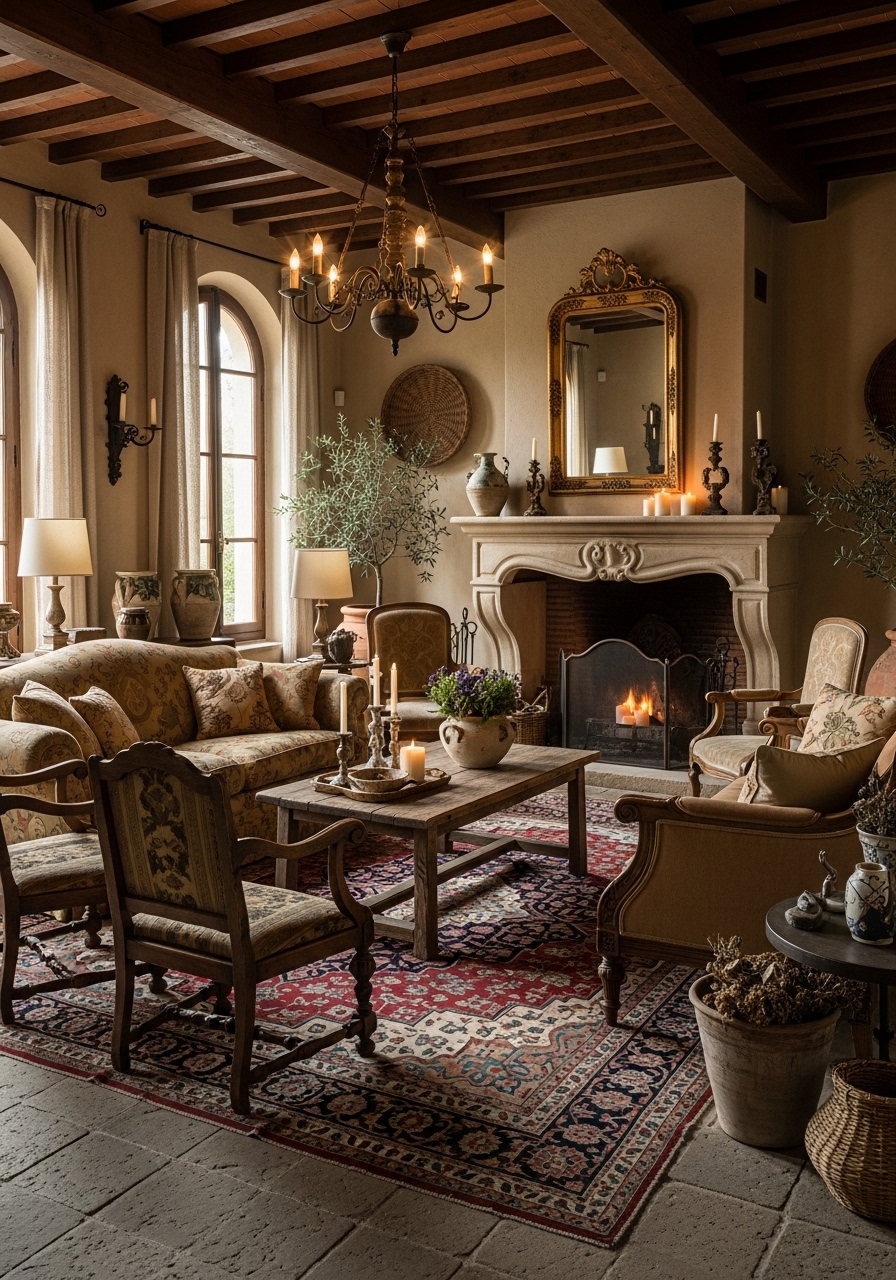
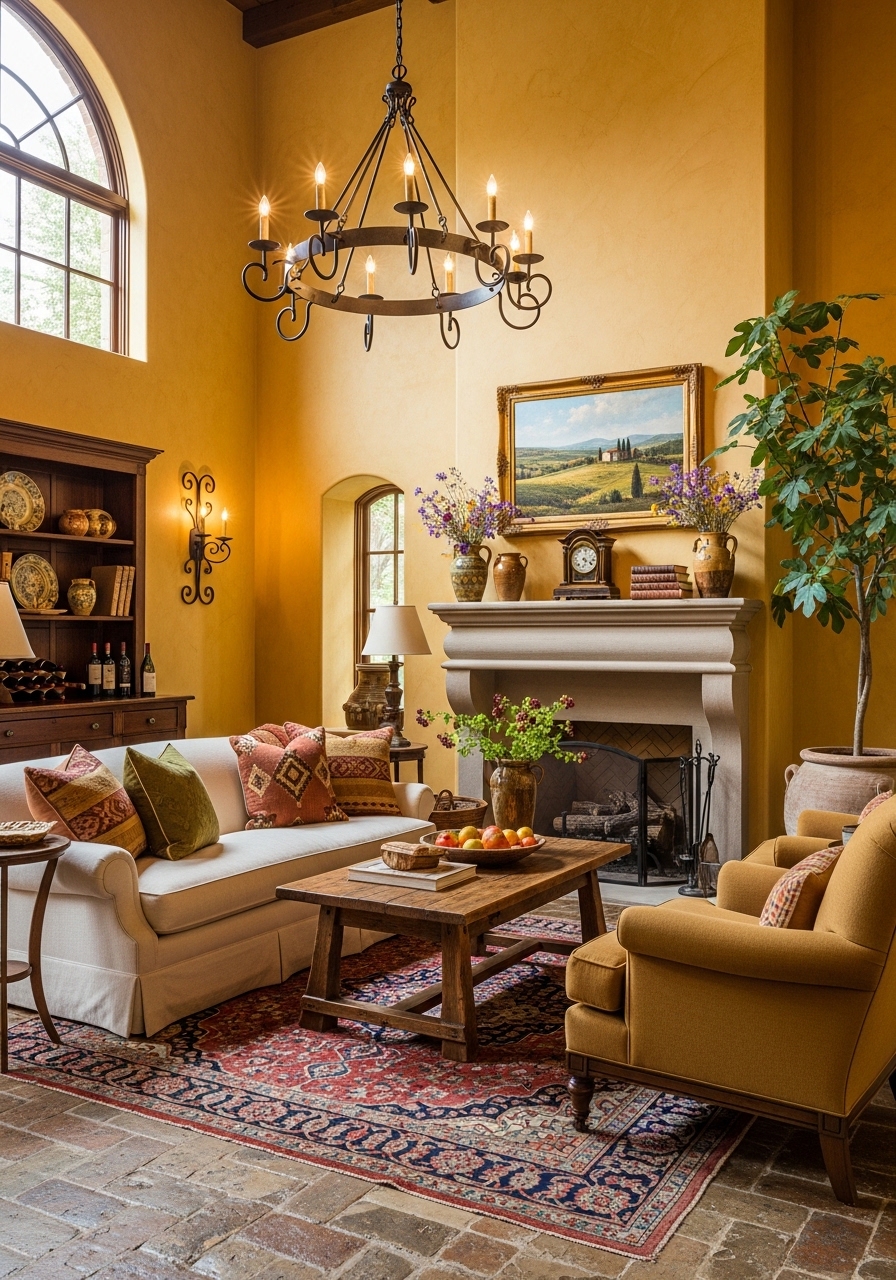
25. Yellow Tuscan Living Room
Yellow hues inspired by the Italian sun bring warmth and cheerfulness to a Tuscan living room. Use ochre or buttery tones on walls or in textiles. Pair with dark wood furniture and wrought iron accents for balance. Keep the shade muted rather than overly bright to preserve sophistication. Add natural textures like linen and jute for depth. The result is an energetic yet inviting space that radiates Mediterranean warmth.
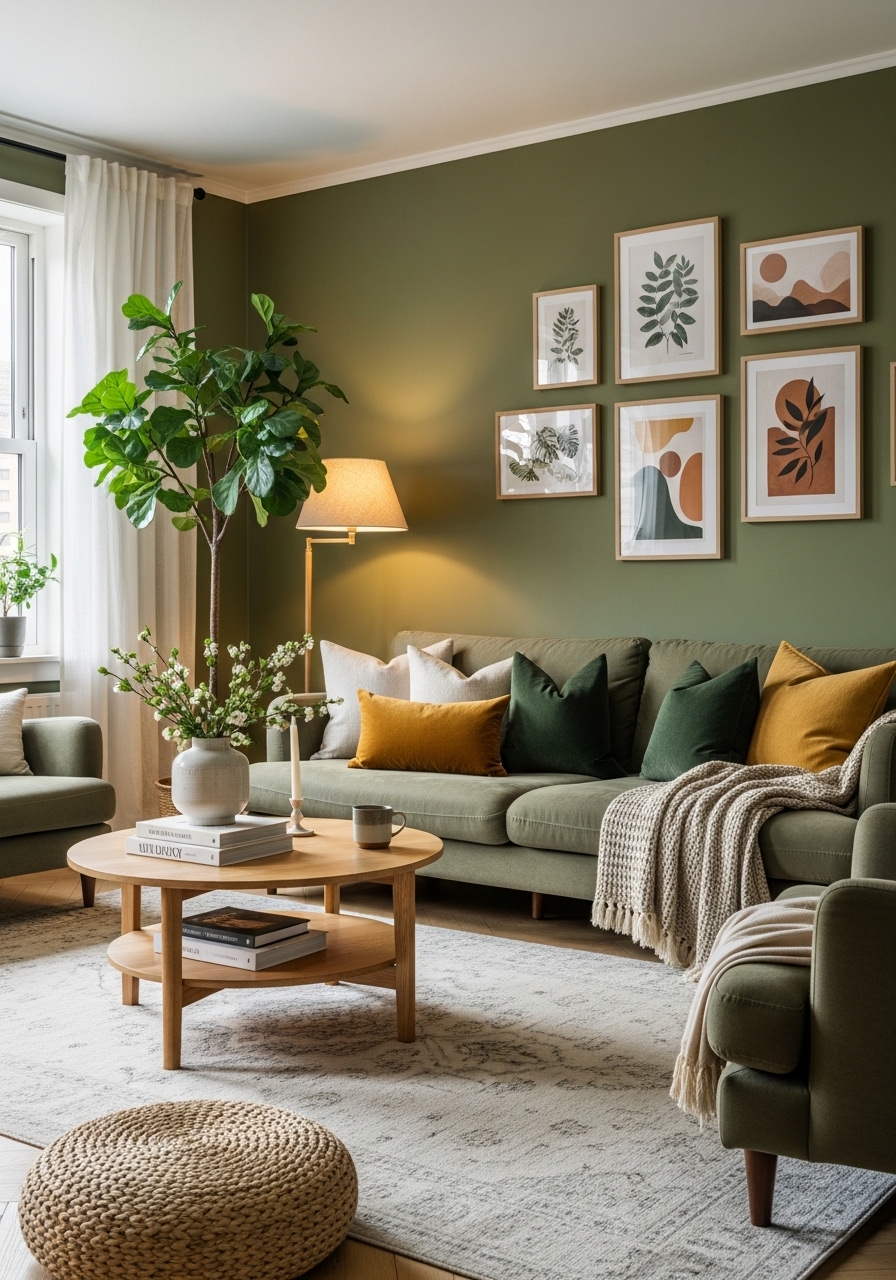
26. Olive Green Living Room
Olive green reflects Tuscany’s rolling hills and olive groves. Use it in upholstery, accent walls, or decorative accessories. Pair with warm woods and stone textures for natural harmony. Incorporate plants to enhance the connection to nature. Balance green with neutral tones to avoid overpowering the room. This palette creates a peaceful, grounded environment that feels organic and timeless.
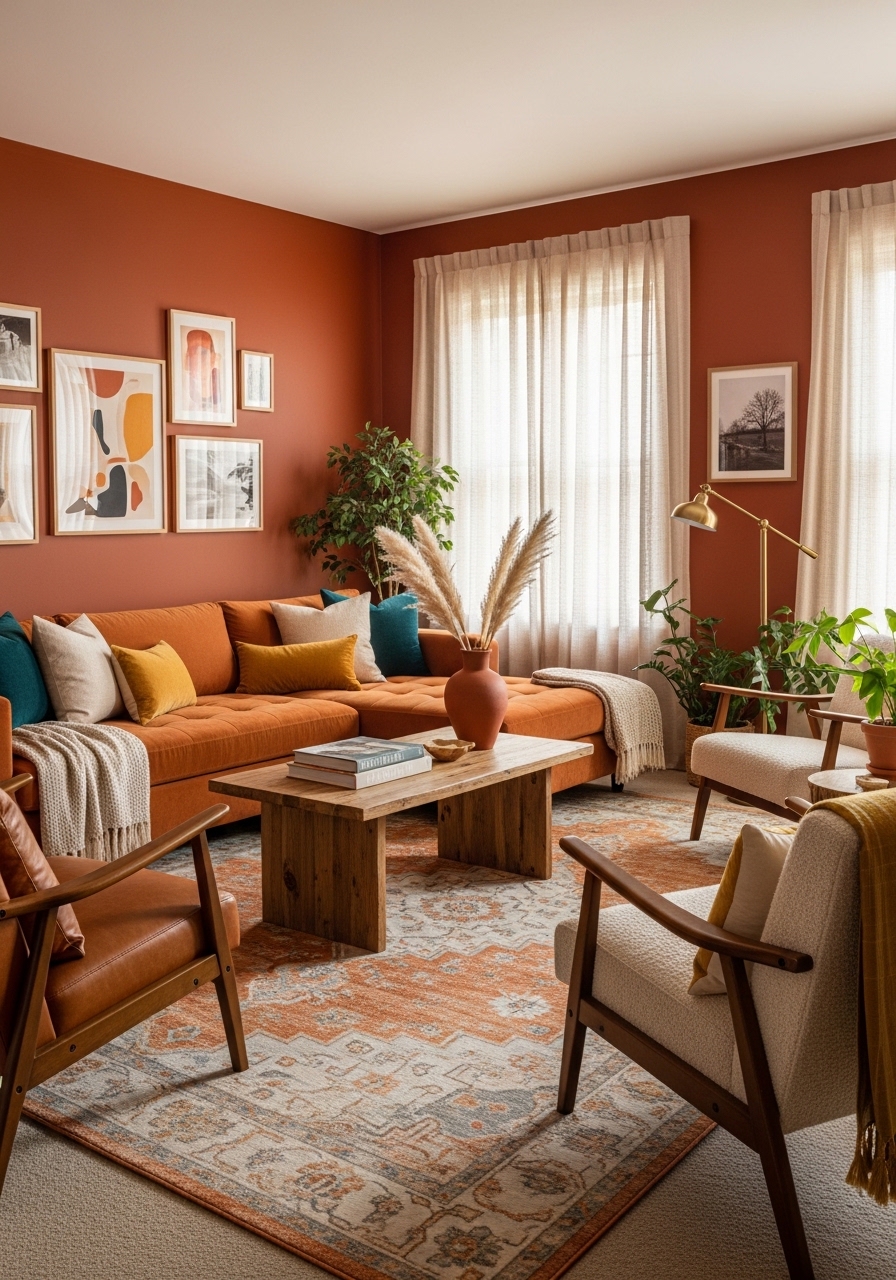
27. Burnt Orange Living Room
Burnt orange introduces vibrancy and warmth into a Tuscan setting. Use it in throw pillows, blankets, rugs, or a statement chair. Combine with cream walls and dark wood furniture for contrast. Keep the tone earthy rather than bright to maintain authenticity. Layer textures to balance bold color with softness. This shade evokes terracotta landscapes and sunset skies, creating a lively yet grounded atmosphere.
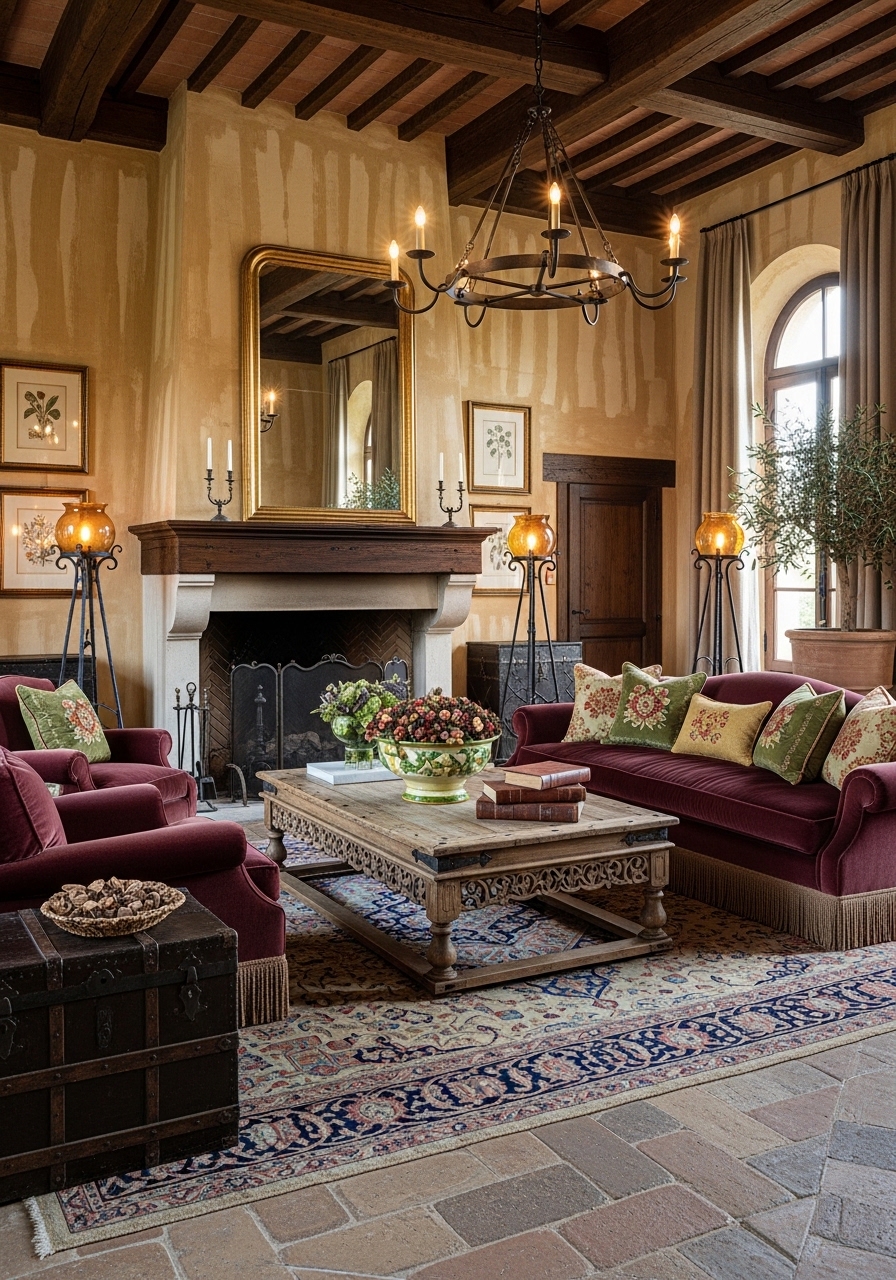
28. Antique Tuscan Living Room
An antique Tuscan living room focuses on heirloom-quality furniture arranged with symmetry and intention. Incorporate gilded mirrors, carved tables, and rich fabrics like silk or brocade. Maintain a warm color scheme to unify ornate elements. Lighting should be soft and ambient to highlight details. This approach blends history, luxury, and craftsmanship into a refined yet welcoming space.
29. Layered Texture Living Room
Layered texture defines Tuscan interiors. Combine stone floors, wood beams, linen upholstery, woven rugs, and iron accents to create depth. Focus on tactile contrast rather than bold patterns. Keep colors earthy and cohesive. Lighting enhances the interplay of textures throughout the day. This strategy builds richness and visual interest while maintaining warmth and authenticity.
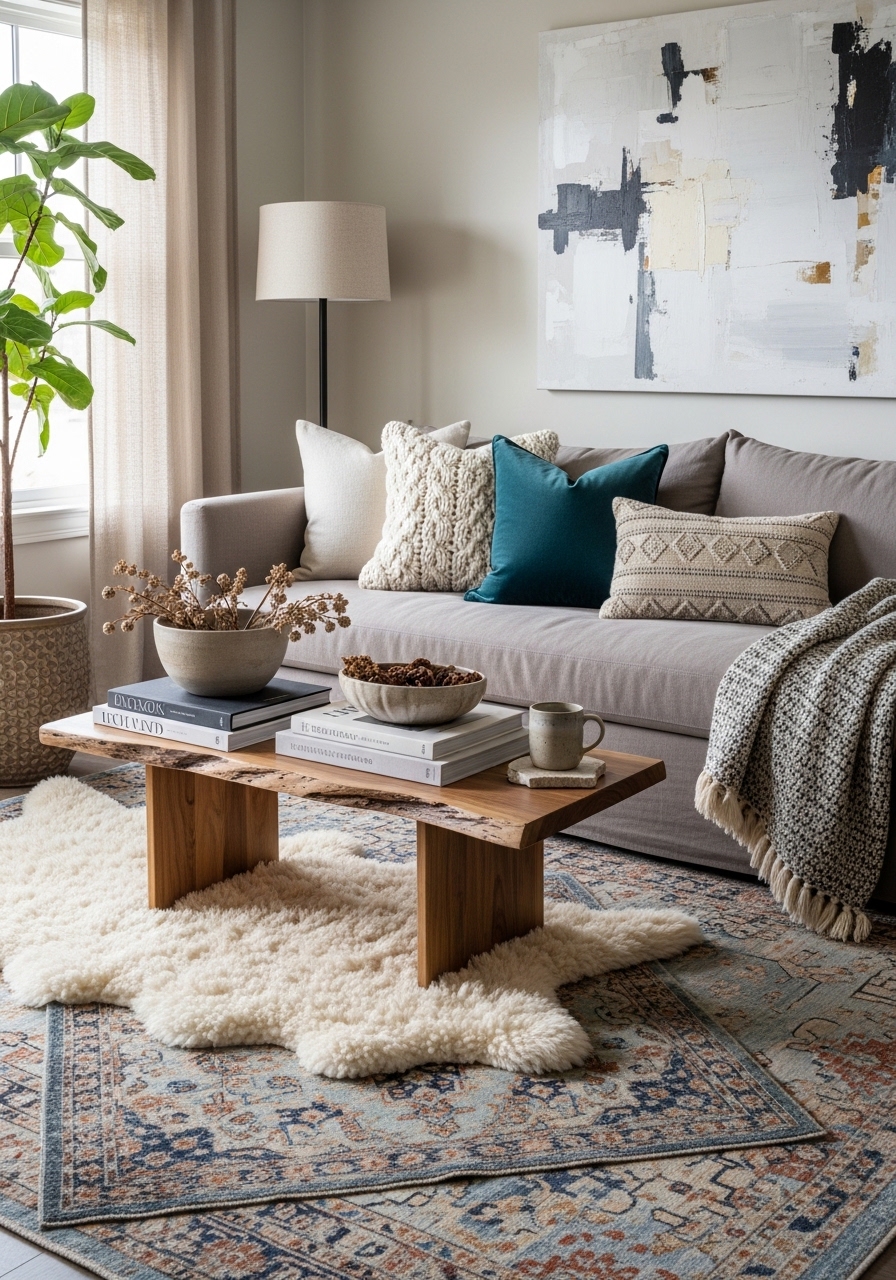
30. Italian Countryside Living Room
An Italian countryside living room embraces simplicity and connection to nature. Use natural materials like wood, stone, and linen. Keep décor minimal and functional. Large windows should frame outdoor views and allow abundant light. Choose comfortable yet sturdy furniture designed for everyday living. Earthy tones and subtle textures complete the look. This timeless design captures the peaceful spirit of rural Tuscany, creating a serene retreat rooted in tradition and comfort.
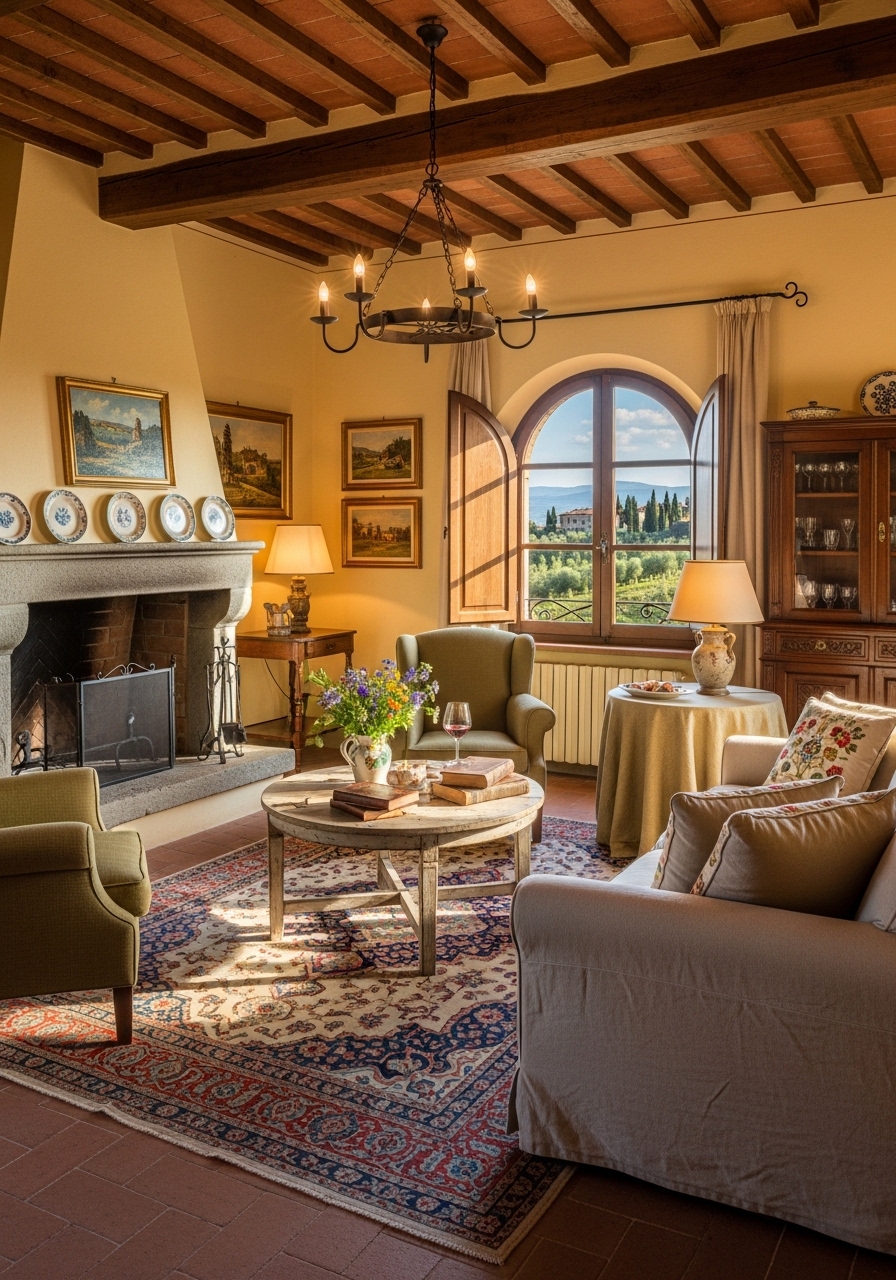
Conclusion
Designing a Tuscan living room is about creating an atmosphere that honors history, craftsmanship, and comfort. Whether you prefer rustic farmhouse charm or refined villa elegance, the key lies in natural materials, warm colors, and timeless furniture. By incorporating wrought iron, distressed wood, stone textures, and earthy tones, you can transform your living room into a serene Italian-inspired sanctuary that feels welcoming for years to come.