
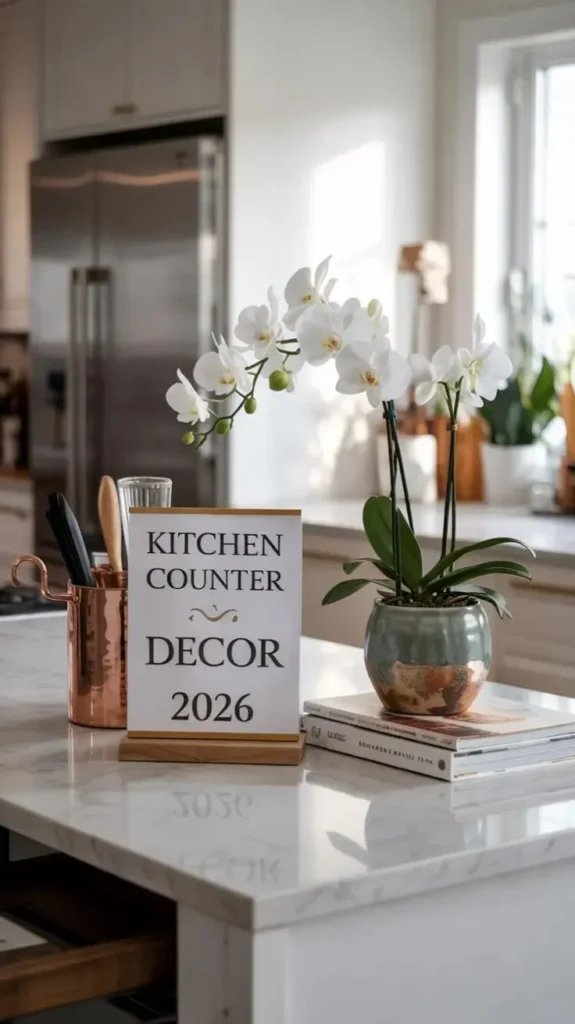
It is usually around 5 p.m. when you notice it: the kitchen is clean, but the countertops still feel unfinished. The coffee maker is out, the olive oil sits beside the stove, a cutting board leans against the wall, and the whole room feels busier than it should.
That is the challenge of kitchen countertop styling. These surfaces have to work hard, yet they also take up a large part of what you see. The goal is not to make every inch decorative. It is to create a few intentional zones that make useful objects look considered while leaving enough breathing room for everyday cooking.
These 10 countertop styling tips help you strike that balance. They suit compact kitchens, open-plan rooms, rental-friendly updates, and larger spaces that need a more polished finish. The focus is on proportion, material, color, function, and visual calm rather than buying more accessories.

Edit the Countertop Before You Style It
The most expensive-looking countertop is often the one with the least on it. Before adding a tray, vase, or decorative bowl, remove everything that has not earned its place.
Sort your countertop items into three groups: used every day, used several times a week, and rarely used. Daily items can stay visible. Weekly items need a deliberate home. Rarely used items usually belong in a cabinet, pantry, or drawer.
This edit creates negative space, which is especially valuable in a compact kitchen. When every section of counter is occupied, the eye has nowhere to rest, and even beautiful objects start to look like clutter.
Keep one clear section beside your main prep area. You need room to set down a hot pan, unload groceries, chop vegetables, or place a serving dish. Styling should support that routine, not interrupt it.

Build Small Styling Groups With Varied Height
A countertop looks more intentional when accessories belong to small visual groups. Instead of placing a candle at one end, a bowl in the middle, and a bottle near the sink, create one or two compact arrangements.
Groups of three often create more visual movement than two identical pieces. Try a wooden board, a ceramic vessel, and one functional bottle, or a tray, a small plant, and a lidded container. This is not a rigid rule. Vary the shape and texture slightly so the arrangement feels natural.
Height keeps a group from looking flat. Lean a substantial cutting board against the backsplash, place a medium-height ceramic vessel beside it, and add a low bowl or tray in front. That simple progression adds depth without increasing the footprint. A short stack of books can lift a decorative piece, though use them sparingly in a kitchen where spills are part of daily life.
Keep each group proportional to the counter. A large arrangement on a narrow surface feels crowded, while tiny accessories disappear on a generous island. Also be careful with height near windows, outlets, cooktops, and frequently used cabinets. A beautiful arrangement becomes frustrating when it blocks a door, catches grease, or keeps you from reaching something you use every morning.

Use a Tray to Create a Clear Countertop Zone
A tray does more than look good. It gives several unrelated objects a visual boundary, which makes the surface easier to read at a glance.
Place a tray beside the cooktop for everyday oils, salt, and pepper. Near the coffee maker, use one for mugs, sugar, and a small canister. Beside the sink, a shallow tray can hold hand soap and a small brush.
Match the tray to the scale of the kitchen. A slim rectangular tray suits a narrow counter, while a larger stone, wood, or metal tray can anchor a spacious island. Leave a little space around it instead of pushing it against every nearby object.
There is a practical benefit too. When it is time to clean, you can lift one tray instead of moving several individual pieces. That small convenience is one reason functional styling holds up better over time.

Layer Natural Materials Against Hard Surfaces
Modern kitchens contain plenty of hard finishes: quartz, porcelain, stainless steel, glass, painted cabinetry, and polished hardware. Without a softer counterpoint, the room can feel visually flat.
Wood is one of the easiest ways to add warmth. A large cutting board, wooden utensil holder, or small bowl softens a sleek countertop without changing the kitchen itself. Ceramic adds another layer through handmade-looking texture and irregular forms.
You do not need five different materials. Two or three repeated materials usually look more refined. Try pale oak with cream ceramic, or walnut with brushed metal against a darker stone surface.
The countertop itself is worth considering as well. Houzz’s 2026 coverage points to warm neutral surfaces, richer texture, and more distinctive finishes as notable directions in kitchens. See the Houzz countertop trends overview for more material inspiration.

Make Everyday Essentials Part of the Design
If an item lives on your countertop, it does not have to read as clutter. Choose versions of frequently used objects that contribute to the room’s palette.
A glass olive-oil bottle often looks more intentional than a brightly labeled plastic one. Matching ceramic canisters can replace several mismatched packages, and a substantial pepper mill can serve as a sculptural detail instead of something you hide.
This does not mean decanting everything. Only transfer products into containers when it genuinely improves your routine. The aim is to make visible necessities look coordinated, not to create another chore.
Pick one finish family and repeat it. If your cabinet hardware is brushed brass, a small brass detail connects the countertop to the rest of the room. If your hardware is black, charcoal or black accessories create the same link.

Add Greenery Where It Will Not Fight the Workflow
A little greenery makes a kitchen feel more alive, but placement matters. The best plant is not necessarily the largest. It is the one that suits your light, stays out of your work area, and can handle kitchen conditions.
A small herb pot near a bright window is both useful and attractive. A trailing plant can soften an open shelf or a corner that does not interfere with prep. A compact vase of fresh stems adds color without the commitment of a permanent plant.
Keep greenery away from areas with splashing, heat, or constant chopping, where upkeep becomes annoying. On a small counter, one well-placed botanical accent is usually enough.
The visual payoff comes from contrast. Green leaves break up the straight lines of cabinets and the hard geometry of appliances, giving a modern kitchen a softer, more lived-in quality.

Give an Empty Counter Corner a Purpose
Counter corners tend to become accidental storage zones. A blender lands there because it has no other home, followed by mail, keys, receipts, and whatever else came in with you that day.
Rather than filling the corner with several small objects, give it one clear job. It could become a coffee station, a baking zone, a compact beverage setup, or a single sculptural focal point.
Scale is important. A tall vase or ceramic vessel works well in a corner because it fills vertical space without taking over the countertop. A small lamp can add a softer evening layer if the location and electrical setup make it practical.
For a full list of ideas, see our guide to kitchen counter corner decor.

Repeat Two or Three Colors Across the Countertop
Color repetition is one of the easiest ways to make countertop styling look deliberate. Not every object has to match. You just need enough repetition for the pieces to feel related.
Start with the kitchen’s permanent colors: cabinets, countertop, flooring, backsplash, and hardware. Then choose one or two accessory colors that already appear somewhere in the room.
A warm white kitchen, for example, works well with cream ceramics, walnut accessories, and small touches of aged brass. A charcoal-and-white kitchen looks stronger with black accessories, clear glass, and one natural wood element.
Avoid introducing a new accent color for every decorative object. Too many unrelated colors create visual noise, especially on a compact countertop. A restrained palette lets shapes and materials do more of the work.
If paint is part of your refresh, check how the color behaves in your kitchen’s actual light. Sherwin-Williams explains that Light Reflectance Value (LRV) affects how much light a color reflects, and that room orientation can change how warm or cool a color appears. Its neutral-color guidance is useful when coordinating wall color with cabinets and counters.

Change One or Two Details Instead of Restyling Everything
The easiest way to keep a kitchen feeling fresh is to make small seasonal changes rather than replacing the whole countertop arrangement.
In spring, a small vase of fresh stems brings color to a neutral kitchen. In summer, a bowl of lemons or oranges adds a simple burst of warmth. In fall, swap in a darker wooden board or a textured ceramic vessel. In winter, lean into cream, charcoal, natural wood, and softer textures.
The key is restraint. Change one or two pieces and keep the core arrangement intact, so the kitchen stays recognizable and seasonal decor does not take over your work surfaces.
This approach is also budget-friendly. You can build a small collection of versatile pieces and rotate them instead of buying a new set every season.

Keep the Best-Looking Zone Where You See It Most
Countertop styling does not need to be equally elaborate across the whole kitchen. Concentrating your strongest arrangement in one visible zone makes the entire room feel more intentional.
Look at the kitchen from the doorway and from the adjacent living or dining area. The counter section that naturally sits in your line of sight is usually the best place for your strongest composition.
Keep the other areas practical. The counter beside the cooktop may need oils, utensils, and a cutting board. The area near the refrigerator should stay open for unloading groceries. The space beside the sink has its own demands.
This is what separates good styling from simply placing pretty objects on a surface. You are designing a visual rhythm around real life, and the countertop should still work when dinner is underway, groceries are being unpacked, and breakfast is happening five minutes before everyone leaves.
Common Kitchen Countertop Styling Mistakes to Avoid
Even a well-planned countertop can lose its polish if a few common errors creep in. Watch for these as you style.
- Styling before editing. Decorating around items you do not need only adds to the clutter. Remove first, then add.
- Scattering accessories everywhere. Single objects spread across the counter read as clutter. Group them instead.
- Covering the whole surface. Without negative space, even attractive pieces look crowded and the counter stops being usable.
- Blocking the prep zone. Always keep one clear section near your main work area.
- Choosing scale poorly. Oversized arrangements overwhelm narrow counters, and tiny accessories get lost on large islands.
- Using too many colors or materials. Stick to two or three repeated tones and materials for a cohesive look.
- Ignoring function. Decor that blocks outlets, cabinet doors, or cooktop areas quickly becomes a daily frustration.
- Placing plants or decor in splash and heat zones. Grease, steam, and water make upkeep a chore and shorten the life of delicate pieces.
- Decanting everything. Transferring every product into matching containers creates extra work. Do it only where it truly helps.
- Restyling the whole counter every season. Swap one or two items instead to keep the look consistent and affordable.
Frequently Asked Questions About Kitchen Countertop Styling
How do I style kitchen countertops without making them look cluttered?
Start by removing anything you do not use regularly. Then group the remaining items on a tray or in small clusters, keep a clear prep area, and limit your palette to two or three repeated colors and materials.
What should I keep on my kitchen counter?
Keep items you use every day, such as a coffee maker, cutting board, oil and seasonings, or a utensil holder. Items you use occasionally are better stored in a cabinet, pantry, or drawer.
How many decorative items should be on a kitchen countertop?
There is no fixed number, but fewer is usually better. One or two small groupings, each with two or three pieces, is typically enough. Scale the amount to your counter space so the surface stays functional.
What is the best way to use a tray on a kitchen counter?
Use a tray to group related items in one zone, such as oils and seasonings near the stove or mugs and sugar beside the coffee maker. It creates a visual boundary and makes cleaning easier because you can lift the whole tray at once.
What colors work best for countertop decor?
Choose one or two accent colors that already appear in your kitchen, such as the cabinets, backsplash, or hardware. Warm neutrals, natural wood, and a single metal finish are reliable choices for a cohesive, polished look.
Are plants a good idea on kitchen counters?
Yes, as long as they suit the light and stay clear of your work area. A small herb pot near a window or a compact vase of fresh stems adds life without getting in the way. Avoid spots with heavy splashing or heat.
How often should I change my kitchen counter decor?
Small seasonal updates work best. Swap one or two items, such as a vase, a bowl of fruit, or a cutting board, and leave the core arrangement in place. This keeps the kitchen fresh without becoming expensive or time-consuming.
How do I style a small kitchen countertop?
Prioritize function. Keep only essentials out, use a single tray to organize daily items, and add one vertical element, such as a tall vessel or leaning cutting board. On a small counter, one well-placed accent is often enough.
Final Thoughts
A beautifully styled kitchen countertop is not created by filling every empty space. It comes from deciding what deserves to stay visible, grouping useful pieces with intention, and leaving enough breathing room for the kitchen to feel calm.
Start with editing. Then add one strong tray, a natural material, a useful decorative object, a touch of greenery, and a controlled color palette. Add height where the arrangement feels flat, and keep your most detailed styling in the area that naturally catches the eye.
The result should still look like a kitchen, not a showroom. Your coffee maker can stay out, your favorite cutting board can be visible, and a bowl of fruit can sit on the island. The difference is that every item has a reason to be there.
That is what makes countertop styling so effective. You are not changing the footprint of the room. You are changing how deliberately the existing space is presented.
2 comments